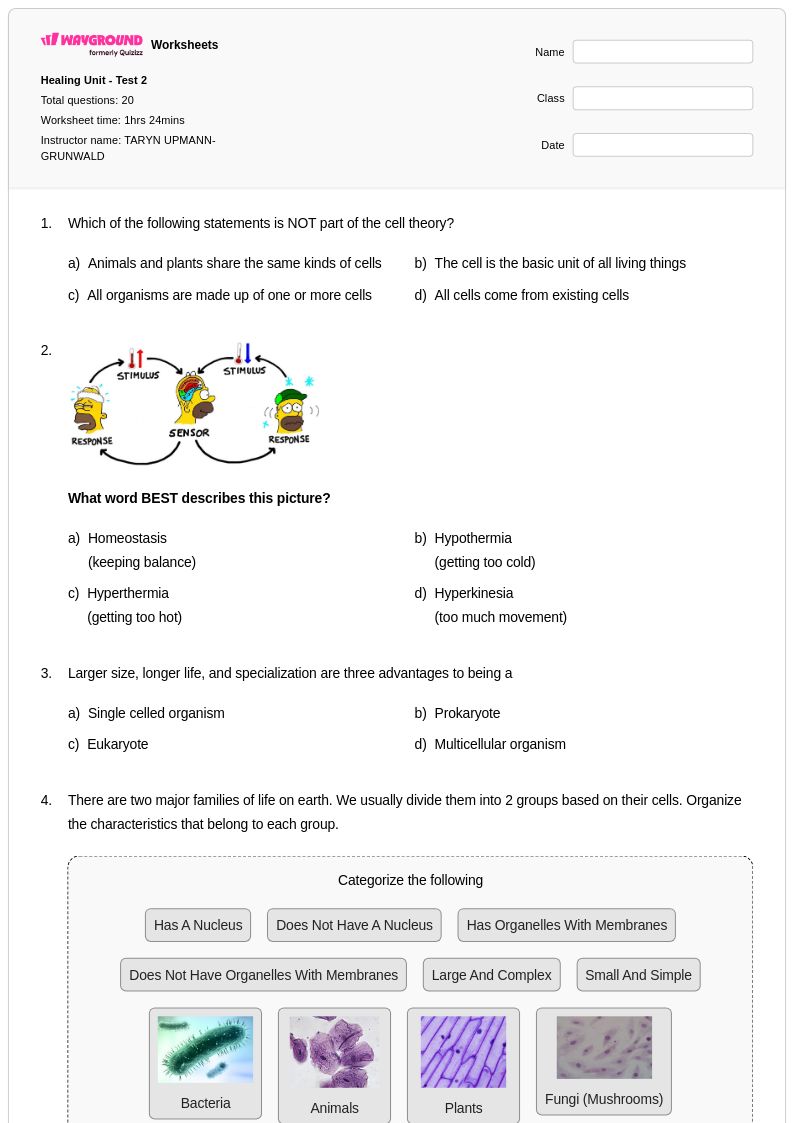
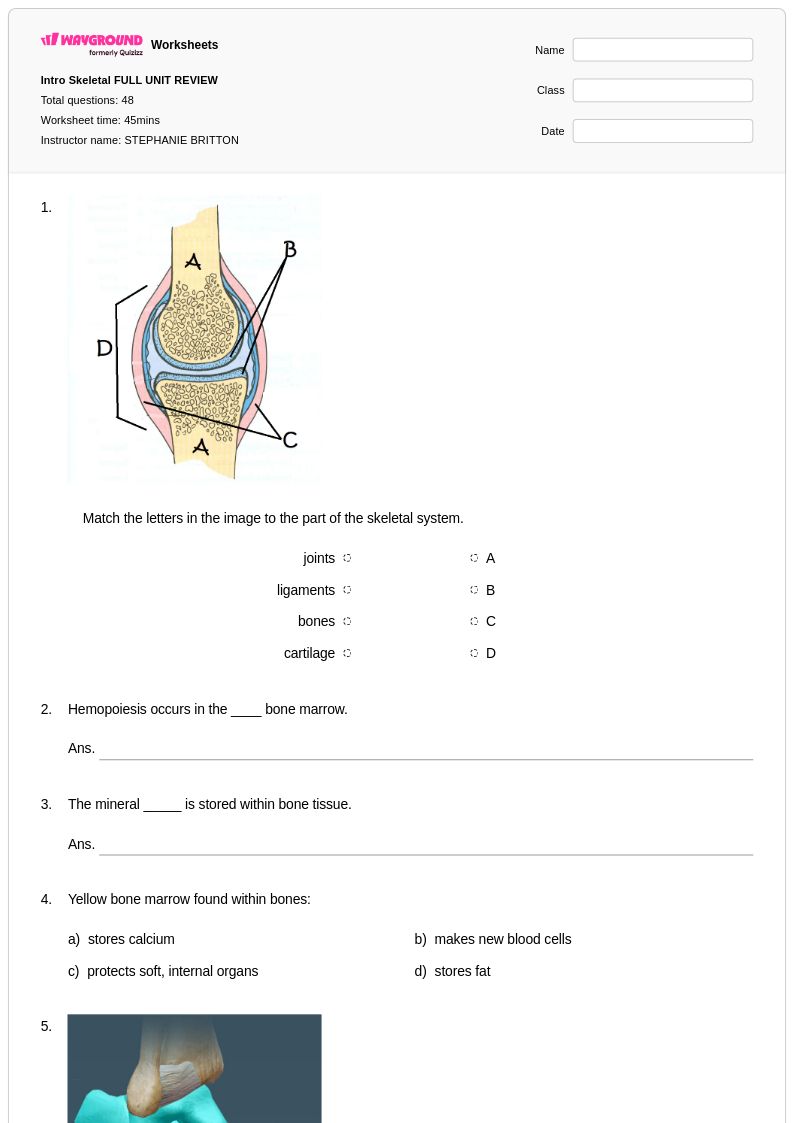
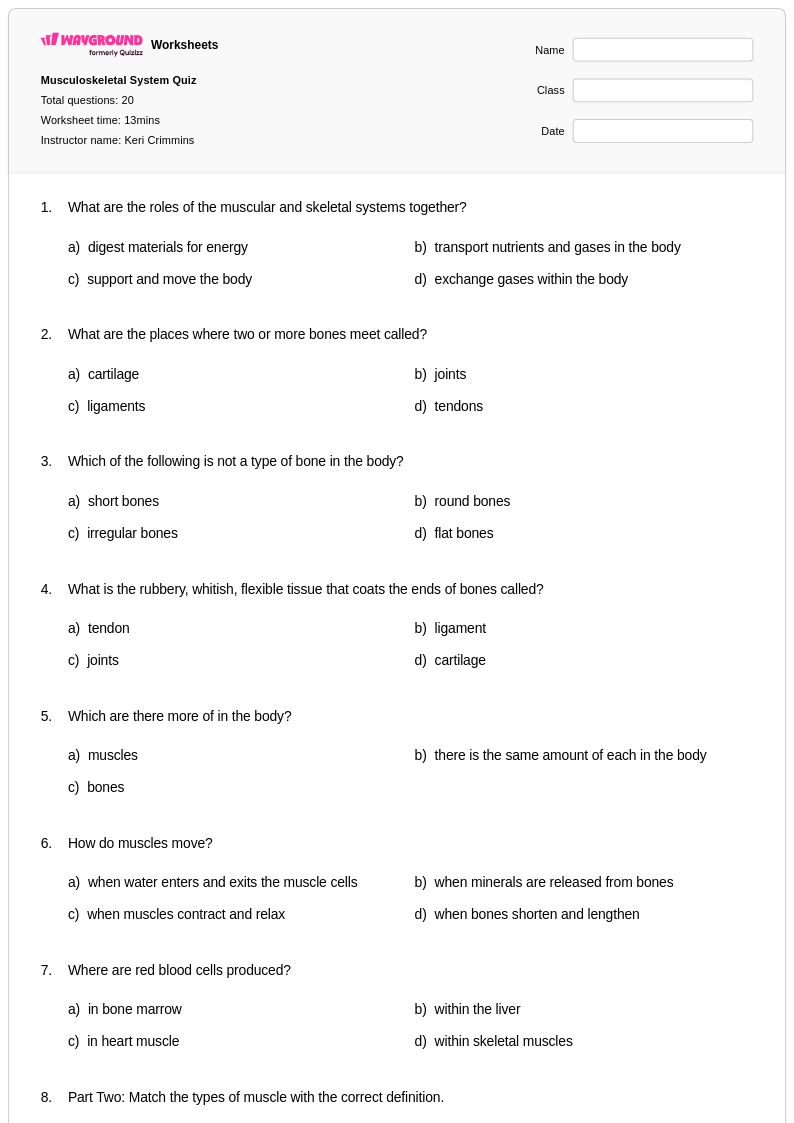
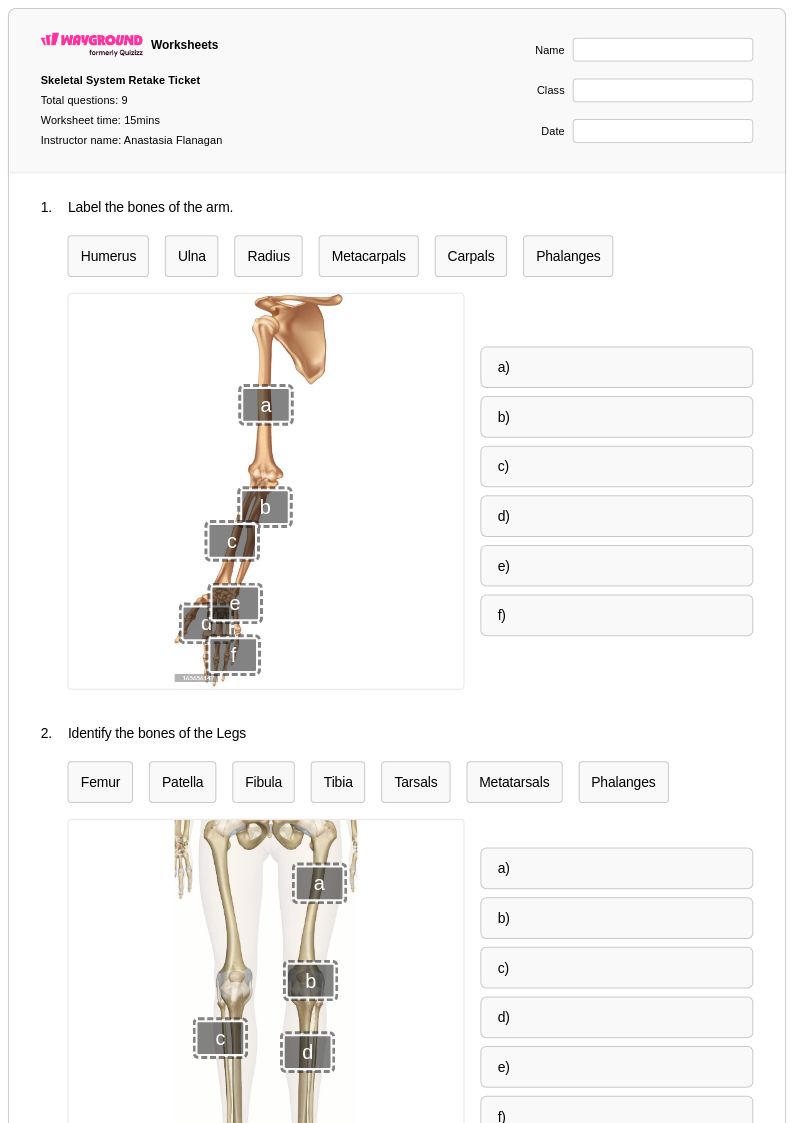
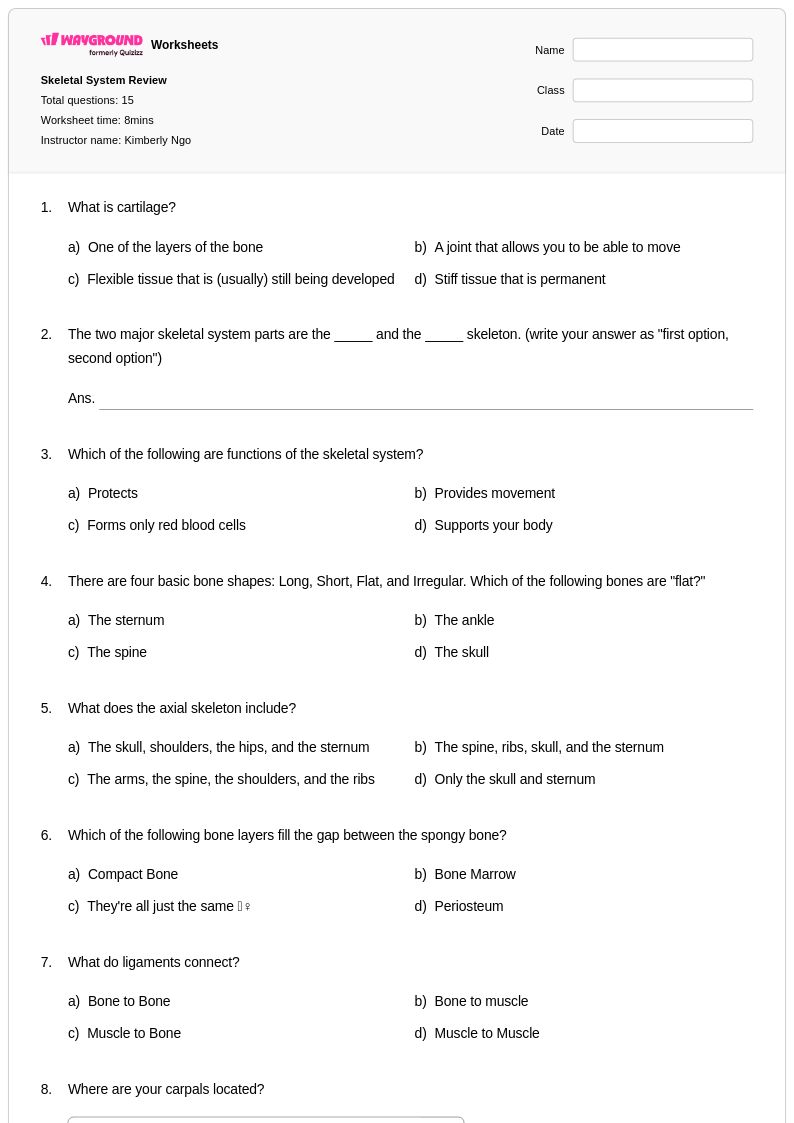
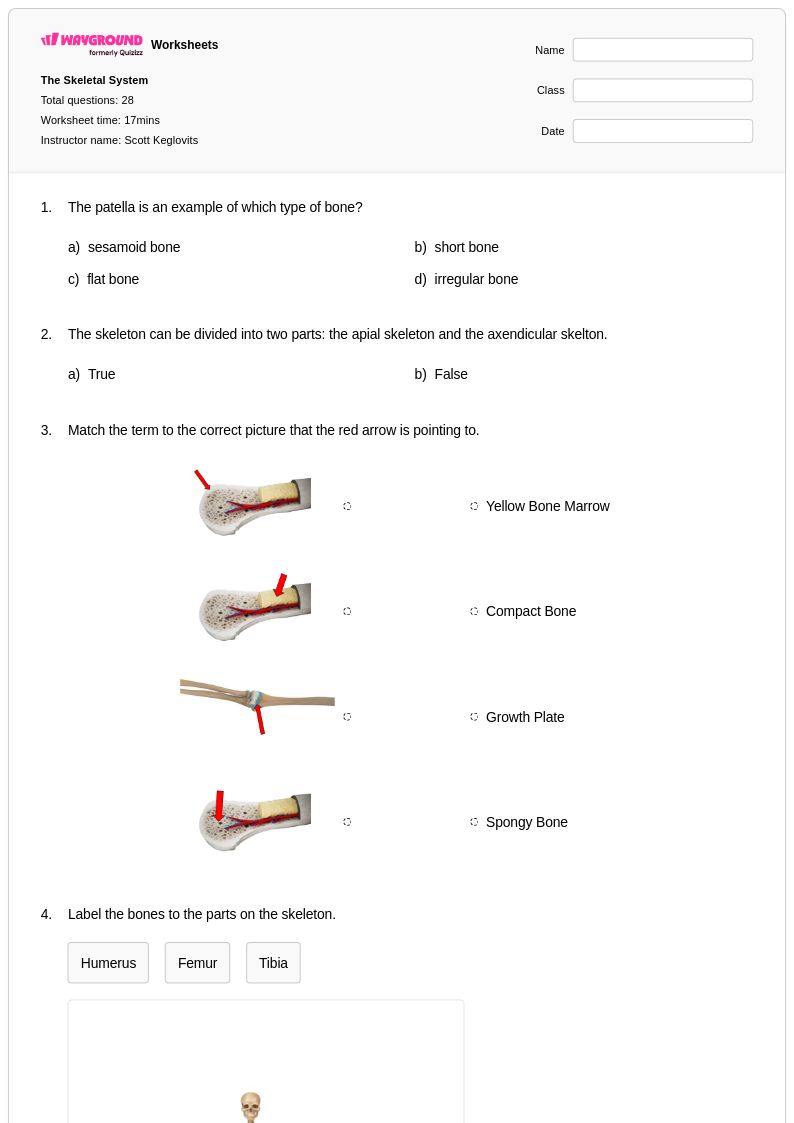
Explore Wayground's comprehensive collection of bone cells biology worksheets featuring free printables and PDF resources with answer keys to help students master cellular structure, osteoblasts, osteoclasts, and bone tissue formation through engaging practice problems.
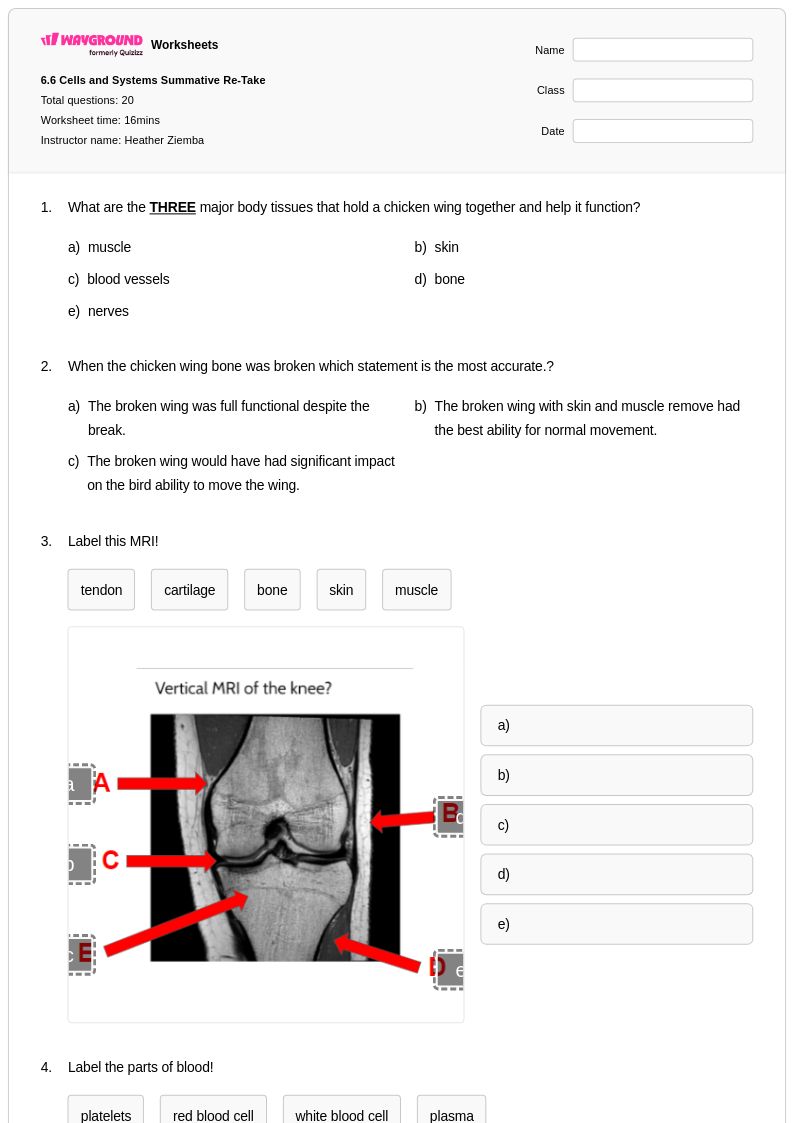
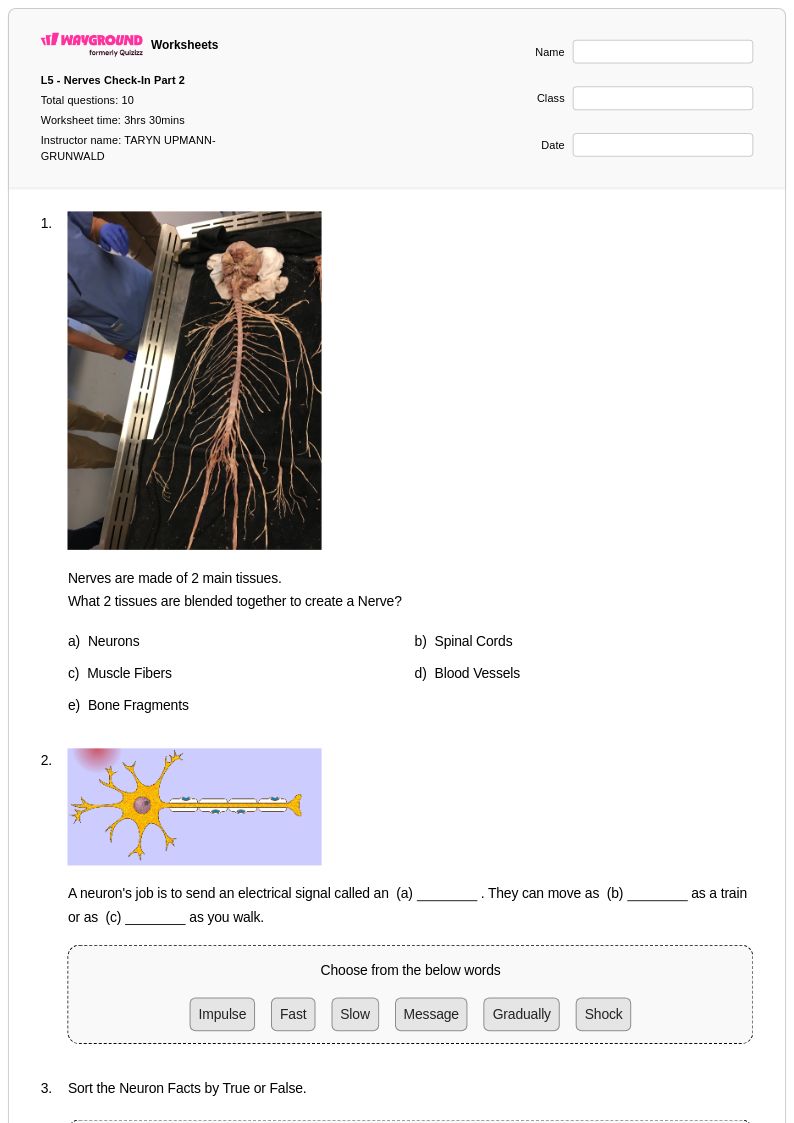
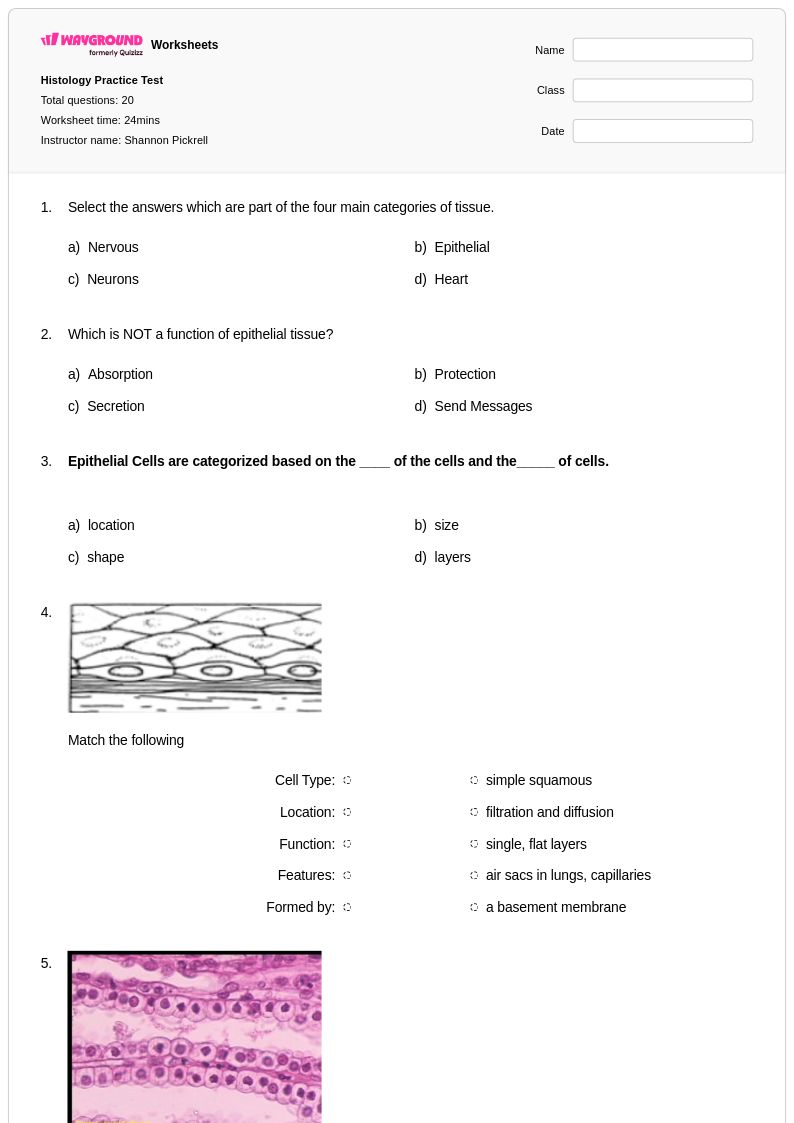
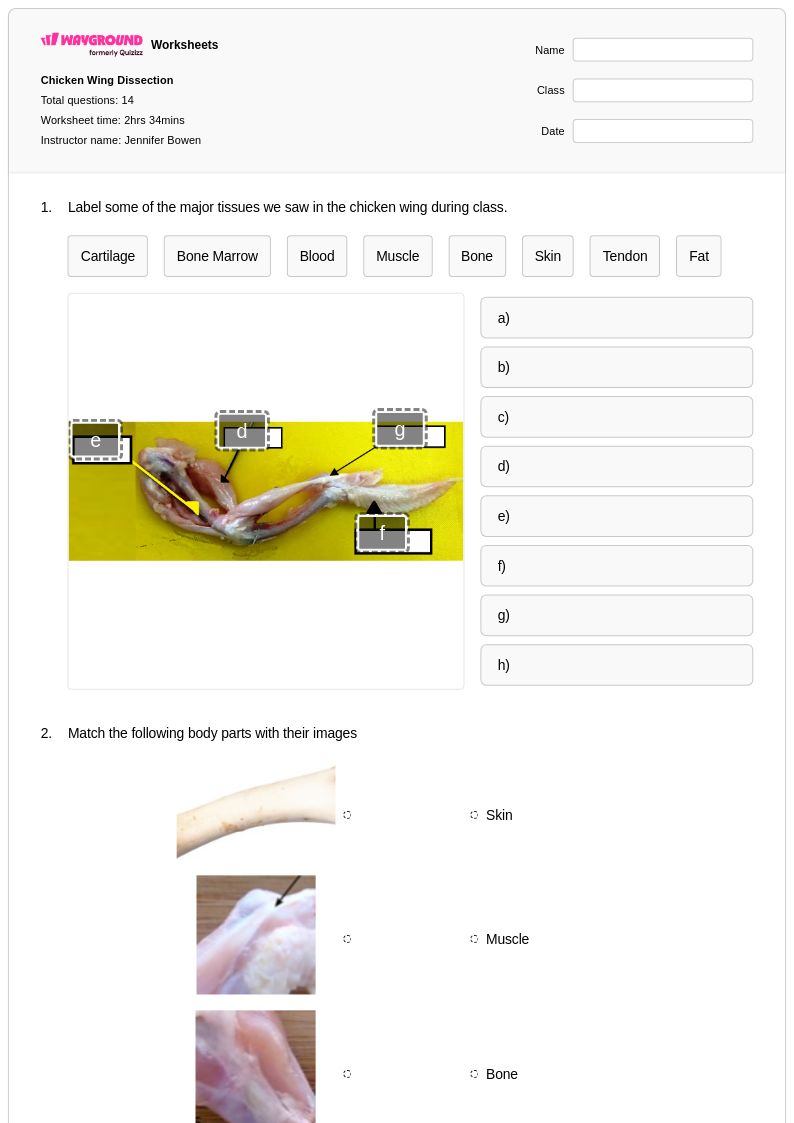
Bone cells worksheets available through Wayground (formerly Quizizz) provide comprehensive coverage of the specialized cellular components that form and maintain skeletal tissue in vertebrate organisms. These educational resources focus on the three primary types of bone cells: osteoblasts that build new bone matrix, osteocytes that maintain existing bone tissue, and osteoclasts that break down and remodel bone structures. Students engage with detailed practice problems exploring cellular morphology, physiological functions, and the intricate processes of bone formation, resorption, and homeostasis. The worksheets strengthen critical thinking skills through activities examining bone cell interactions during fracture healing, calcium regulation, and age-related skeletal changes, with each resource including a complete answer key and available as free printable pdf downloads for convenient classroom distribution.
Wayground (formerly Quizizz) supports biology educators with an extensive collection of millions of teacher-created bone cell worksheets that feature robust search and filtering capabilities to locate materials aligned with specific curriculum standards and learning objectives. The platform's differentiation tools enable teachers to customize content complexity and format, accommodating diverse learning needs through both printable pdf versions and interactive digital formats that can be modified for individual student requirements. These comprehensive resources facilitate effective lesson planning by providing ready-to-use materials for initial instruction, targeted remediation for struggling learners, and enrichment activities for advanced students, while the platform's organizational features streamline the process of selecting appropriate worksheets for skill practice across various bone cell biology concepts and assessment scenarios.
FAQs
How do I teach the three types of bone cells to biology students?
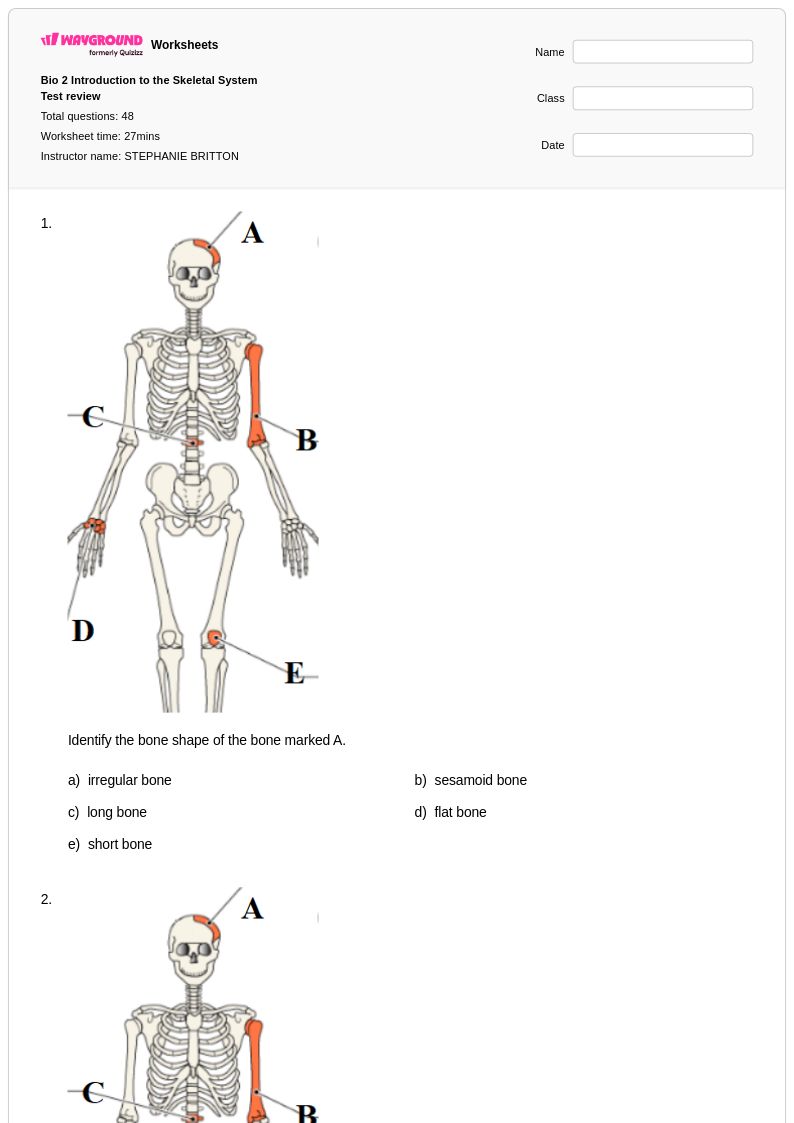
Start by grounding students in the functional roles of each cell type before introducing terminology: osteoblasts build new bone matrix, osteocytes maintain existing bone tissue, and osteoclasts break down and remodel bone. Using visual diagrams alongside functional comparisons helps students distinguish these roles rather than simply memorizing names. Connecting each cell type to a real-world process, such as fracture healing or calcium regulation, gives students a concrete scaffold for understanding how these cells interact as a system.
What exercises help students practice identifying osteoblasts, osteocytes, and osteoclasts?
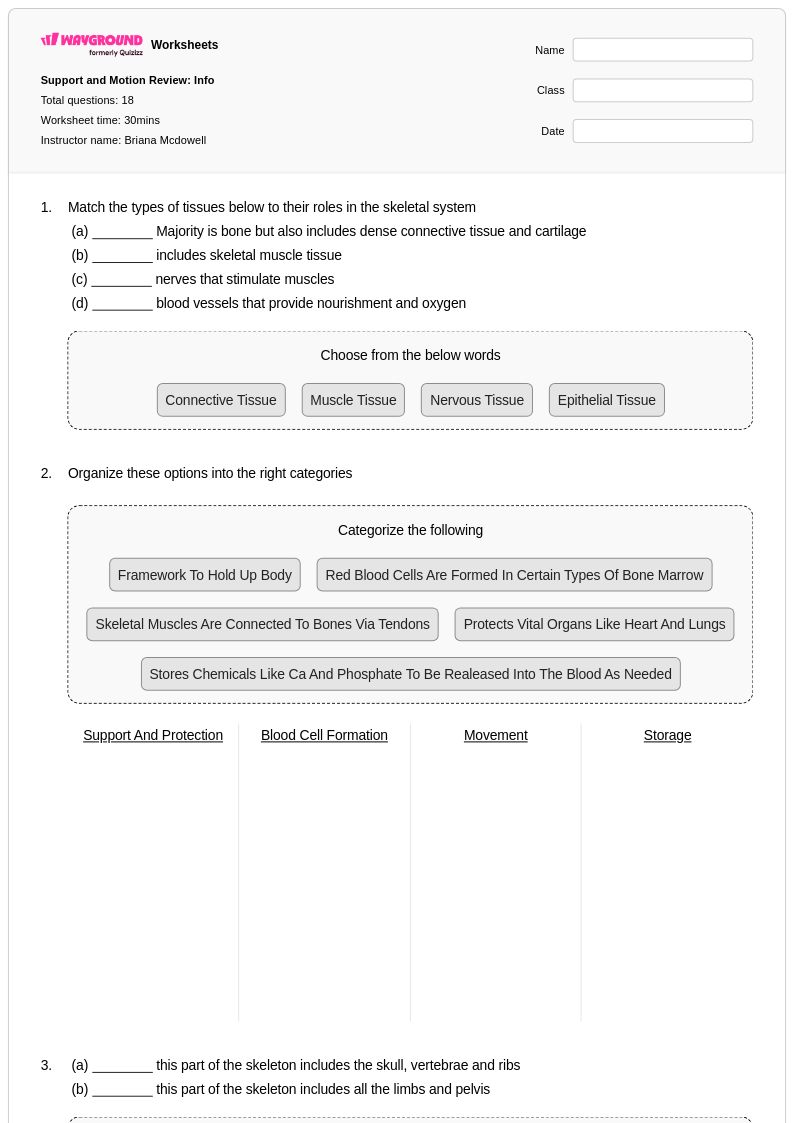
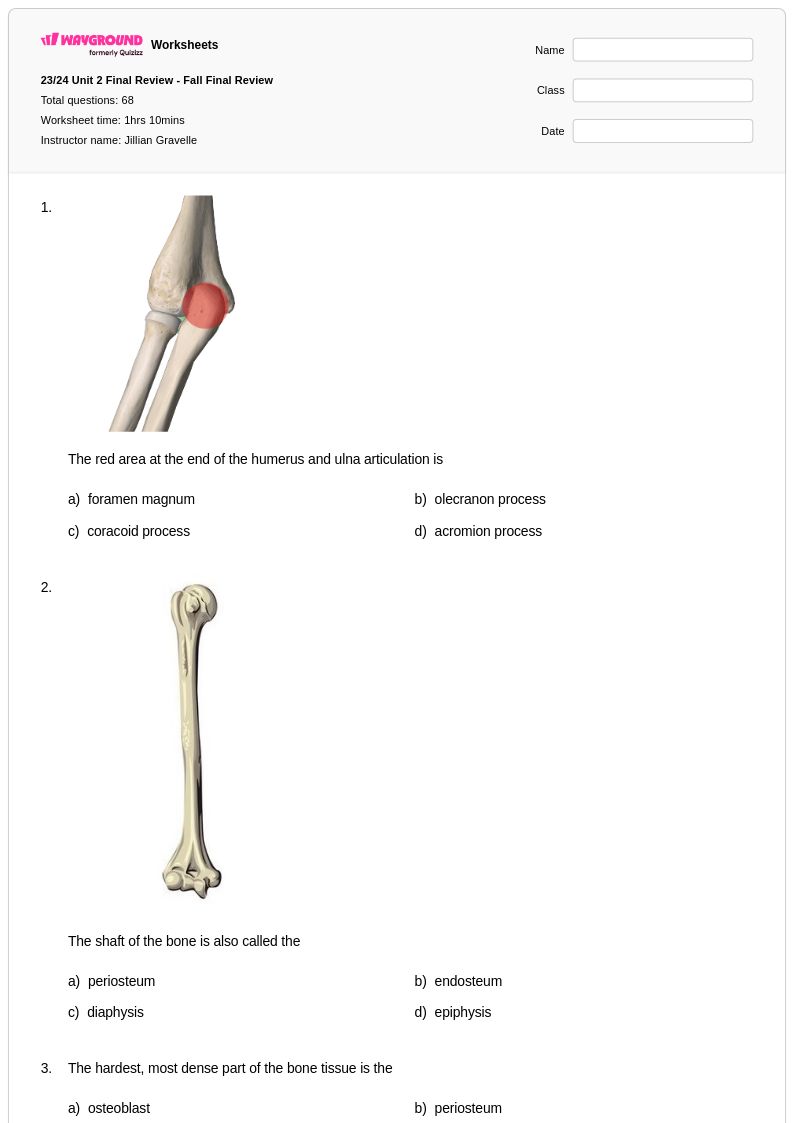
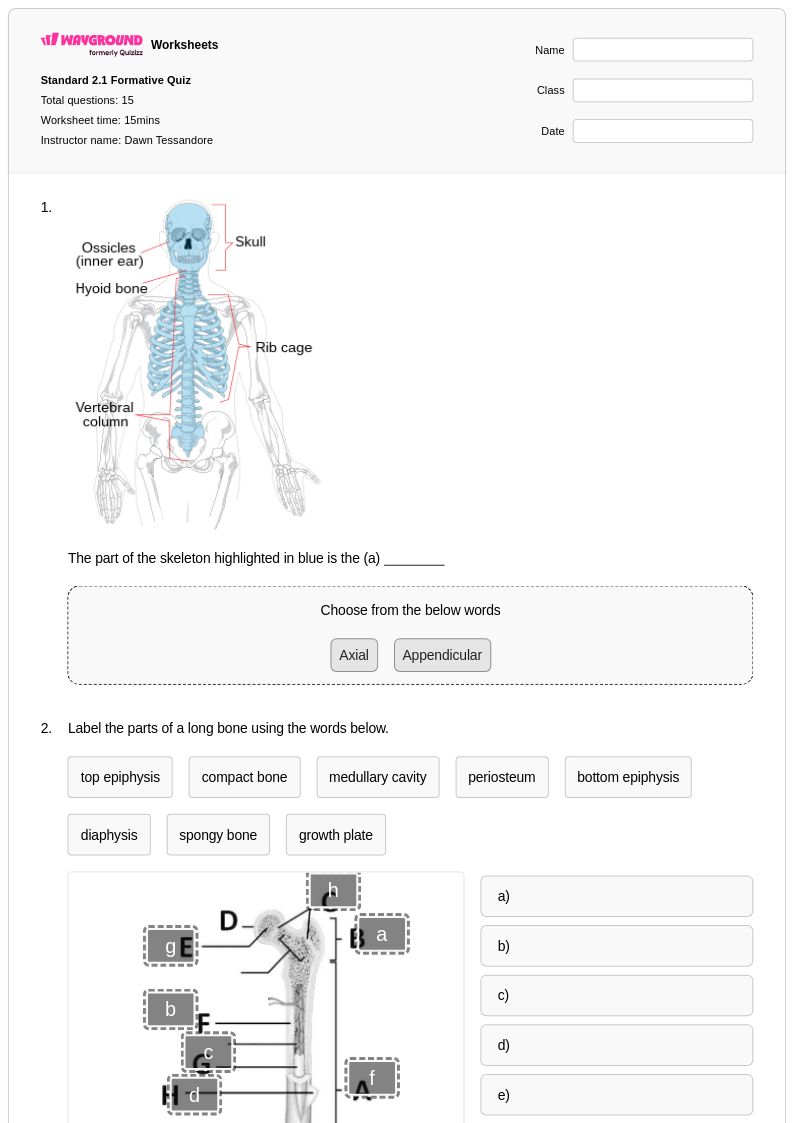
Effective practice exercises include labeling diagrams of bone tissue cross-sections, matching each cell type to its primary function, and completing fill-in-the-blank scenarios that describe physiological events like fracture repair or calcium homeostasis. Short-answer questions that ask students to explain why a disruption in osteoclast activity would affect bone density push beyond recall into application. Combining these exercise types across a single worksheet builds both recognition and conceptual understanding of bone cell biology.
What mistakes do students commonly make when learning about bone cells?
The most frequent error is conflating osteoblasts and osteoclasts, particularly reversing which builds and which breaks down bone tissue. Students also tend to overlook osteocytes entirely, treating them as passive when in fact they play an active role in maintaining bone matrix and signaling during mechanical stress. Another common misconception is viewing bone as a static structure rather than a dynamic tissue constantly undergoing remodeling through coordinated bone cell activity.
How does bone cell function connect to broader topics like calcium regulation and skeletal homeostasis?
Osteoclast and osteoblast activity is directly regulated by parathyroid hormone and calcitonin in response to blood calcium levels, making bone cells central to understanding endocrine feedback loops. When blood calcium drops, osteoclasts are stimulated to resorb bone and release calcium into the bloodstream, while rising calcium levels trigger osteoblast-driven deposition. Teaching bone cells in this hormonal context helps students see skeletal tissue not as an isolated system but as an active participant in whole-body homeostasis.
How can I use Wayground's bone cells worksheets in my classroom?
Wayground's bone cells worksheets are available as free printable PDF downloads for traditional classroom distribution and in digital formats for technology-integrated or hybrid learning environments, including the option to host them as an interactive quiz directly on Wayground. Each worksheet includes a complete answer key, making them practical for independent practice, guided instruction, or formative assessment. Wayground also supports student-level accommodations such as read aloud, extended time, and reduced answer choices, which can be configured individually so that students with diverse learning needs receive appropriate support without disrupting the rest of the class.
How do I differentiate bone cells instruction for students at different skill levels?
For students who are still building foundational knowledge, focus first on the three cell types and their primary functions before introducing processes like remodeling cycles or fracture healing. Advanced students benefit from activities that require them to analyze what happens when one cell type malfunctions, such as connecting excess osteoclast activity to osteoporosis. On Wayground, teachers can further support diverse learners using built-in accommodations including read aloud for students who need audio support and reduced answer choices to lower cognitive load for those who need it, all configurable at the individual student level.