
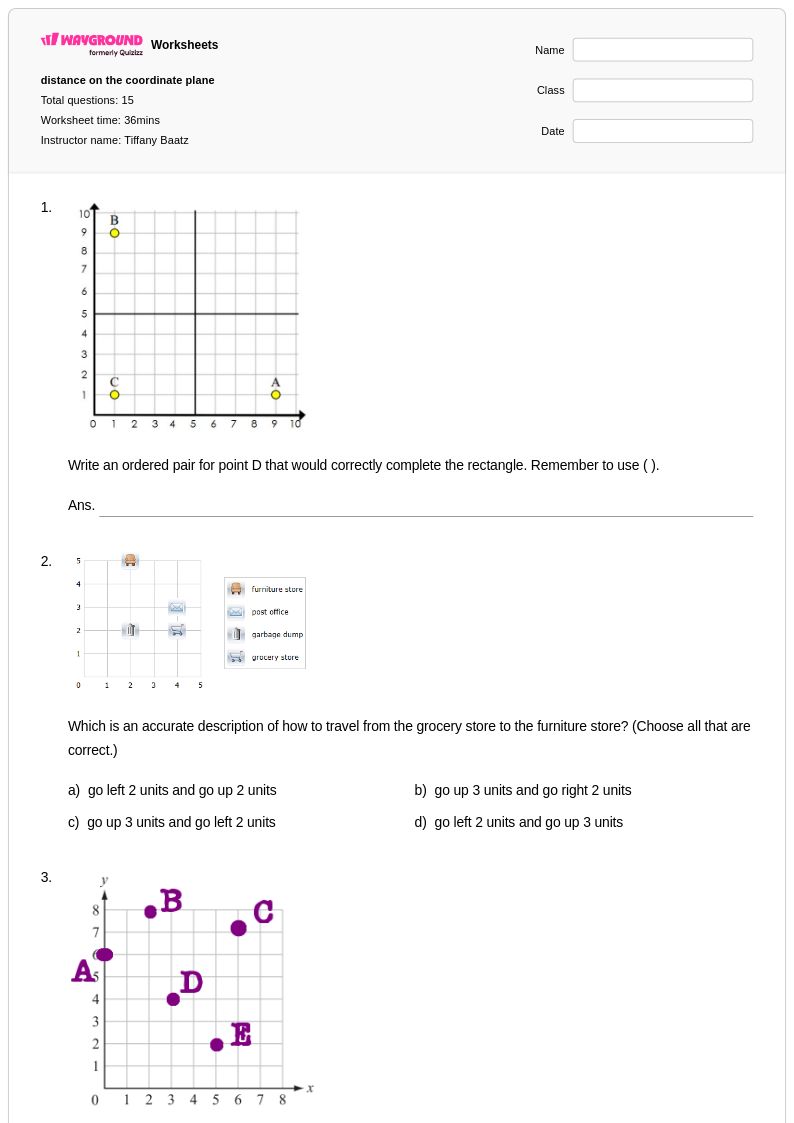
15 Q
6th
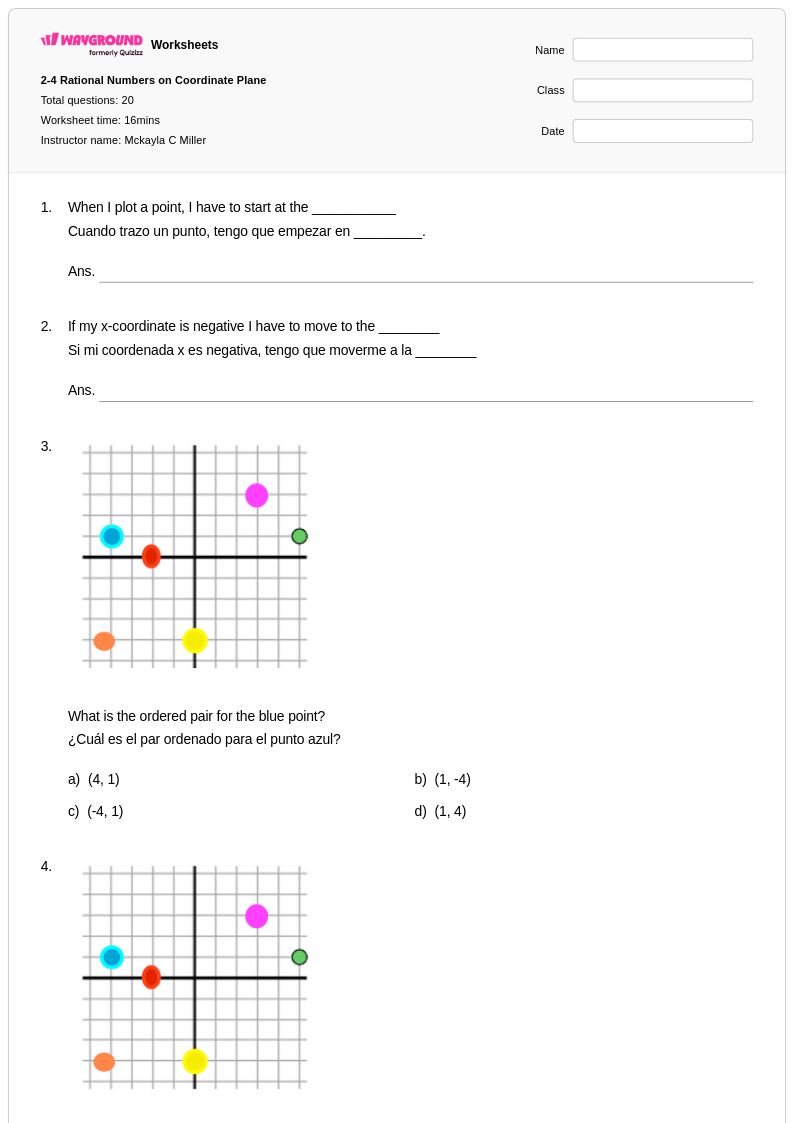
20 Q
6th
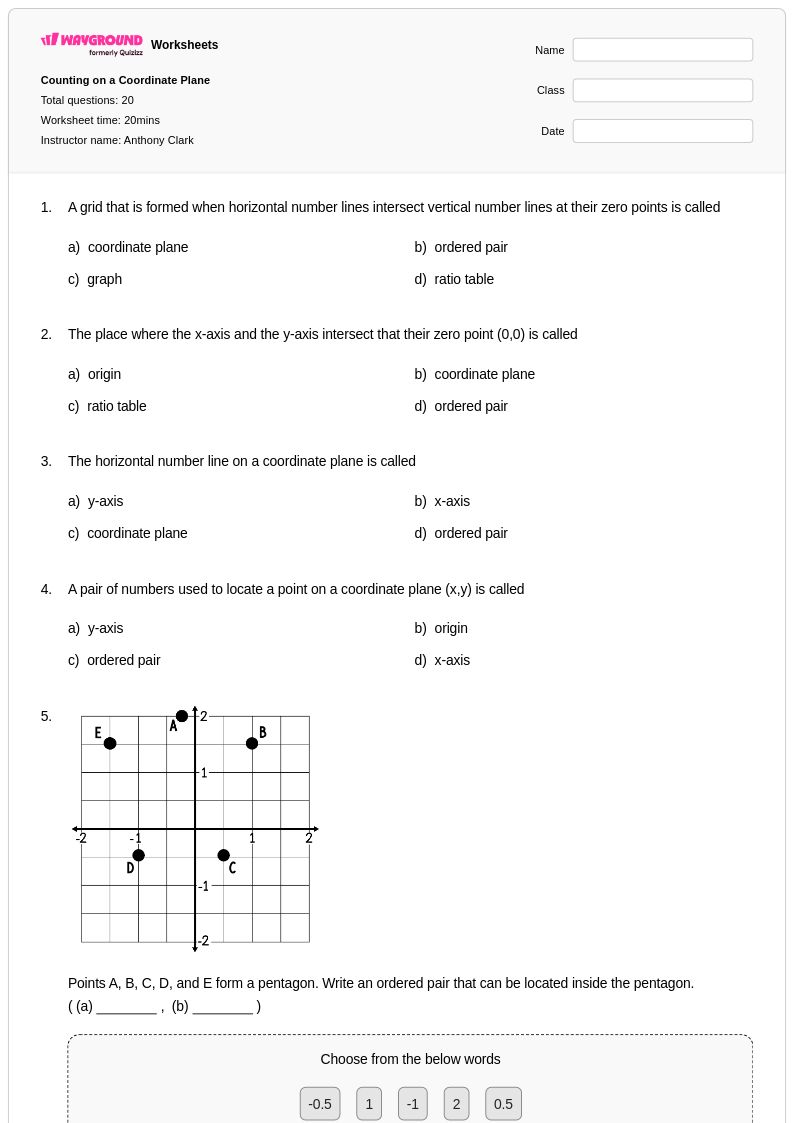
20 Q
6th - Uni
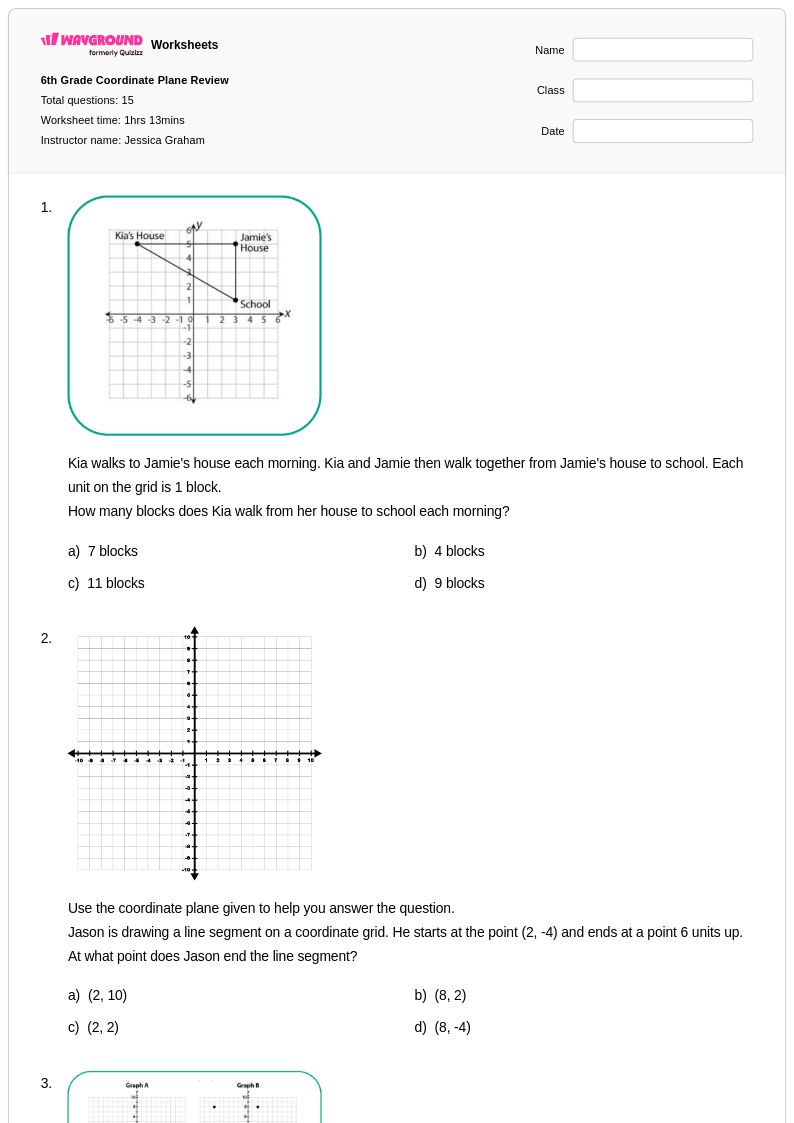
15 Q
6th
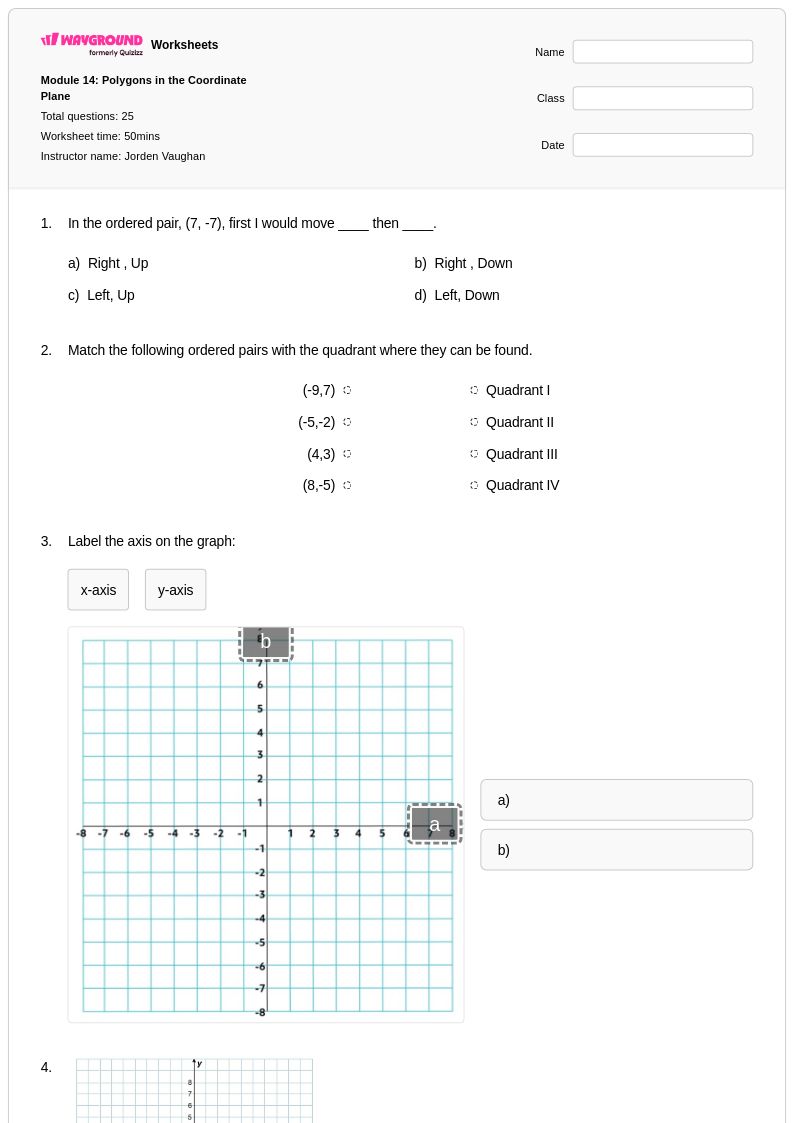
25 Q
6th
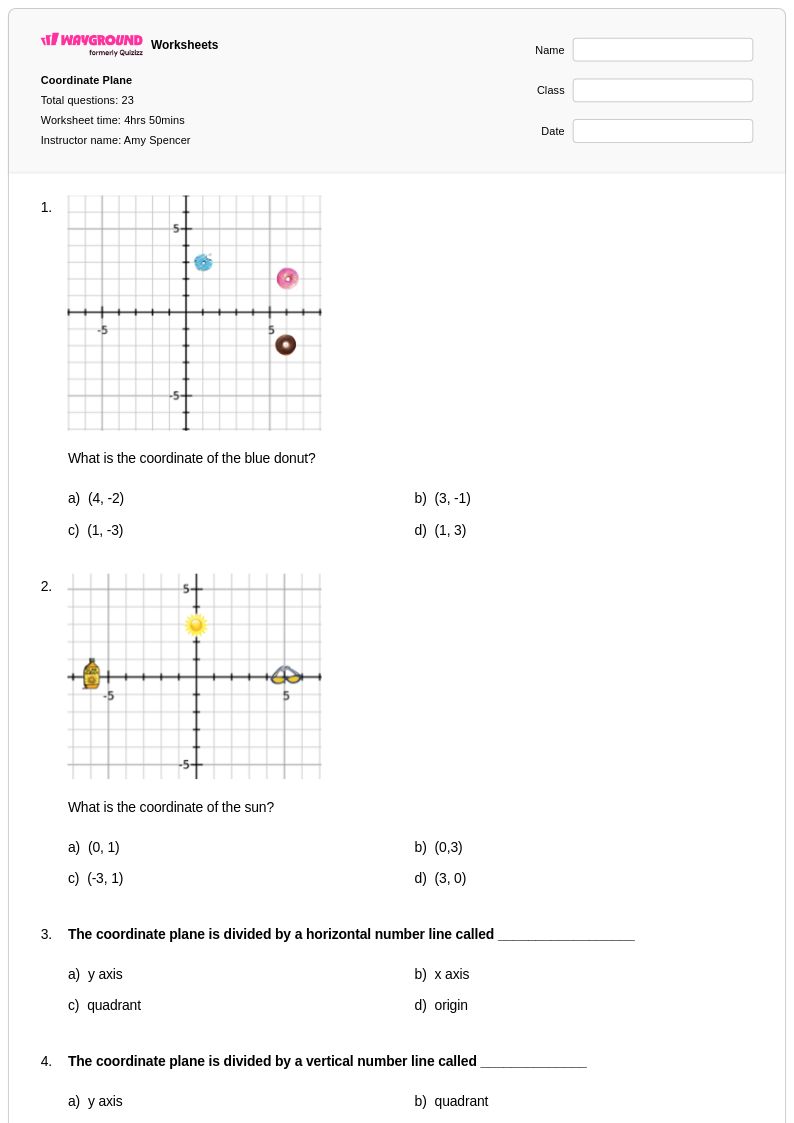
23 Q
6th
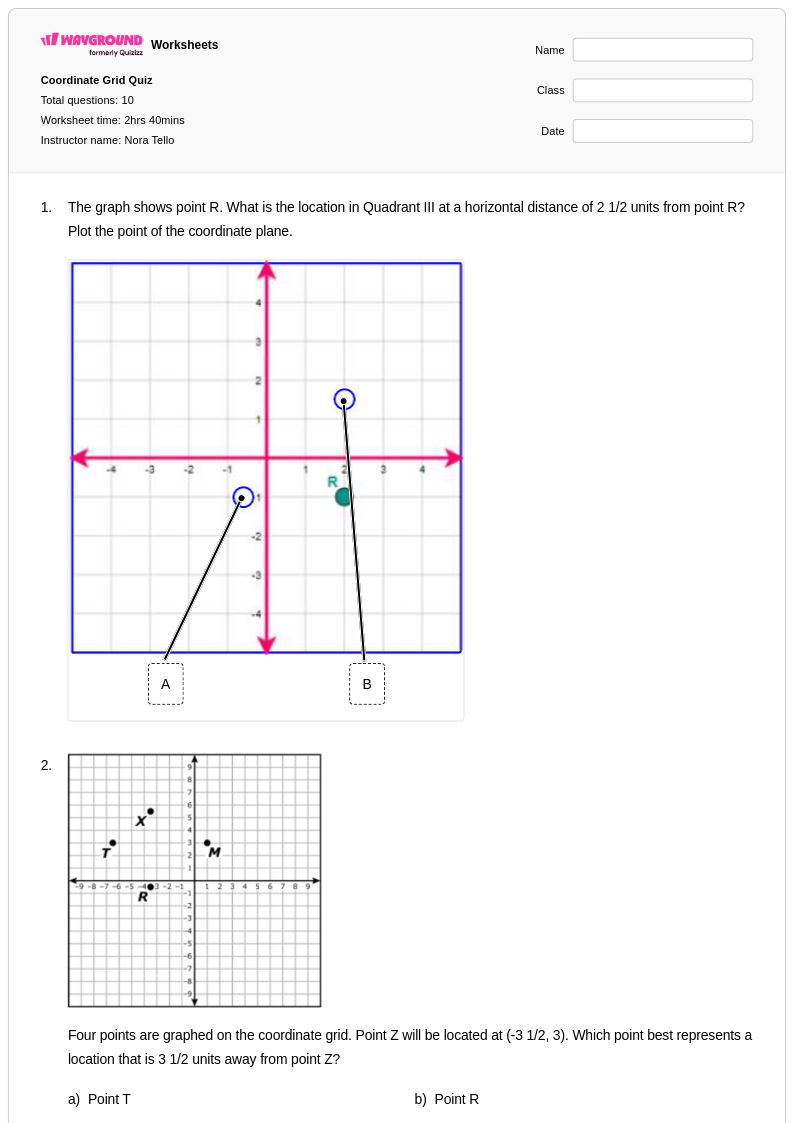
10 Q
6th
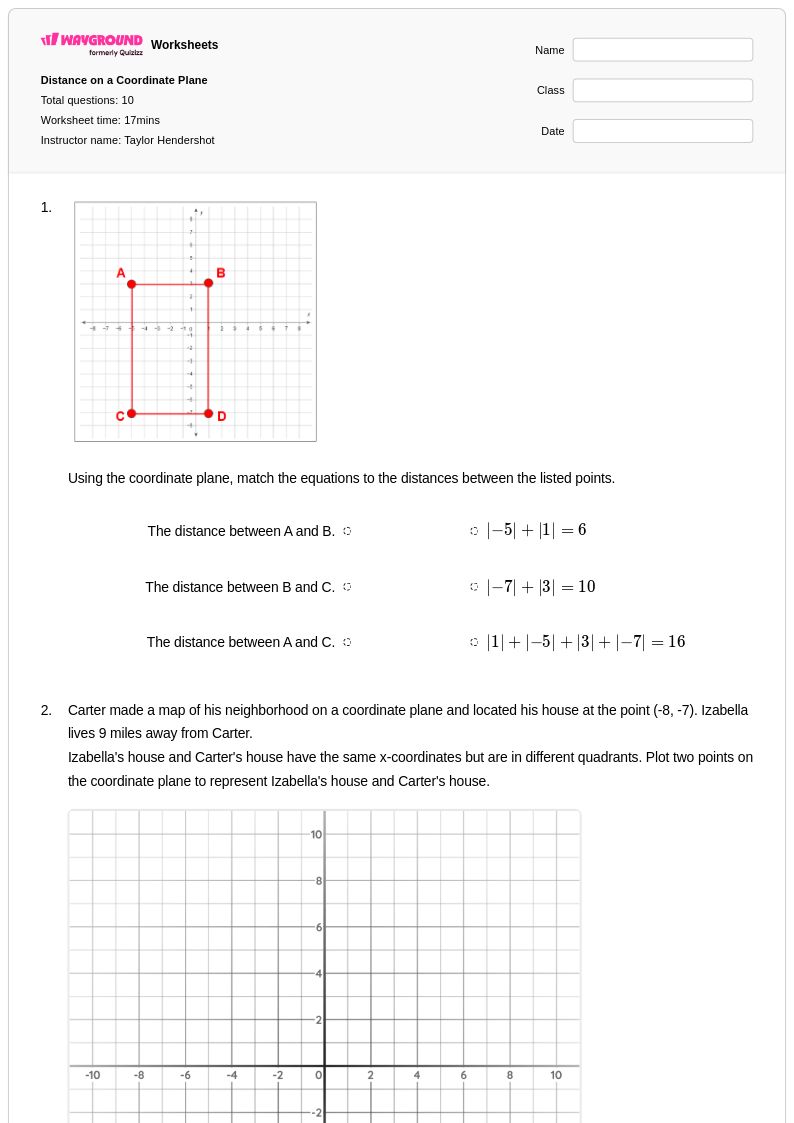
10 Q
6th
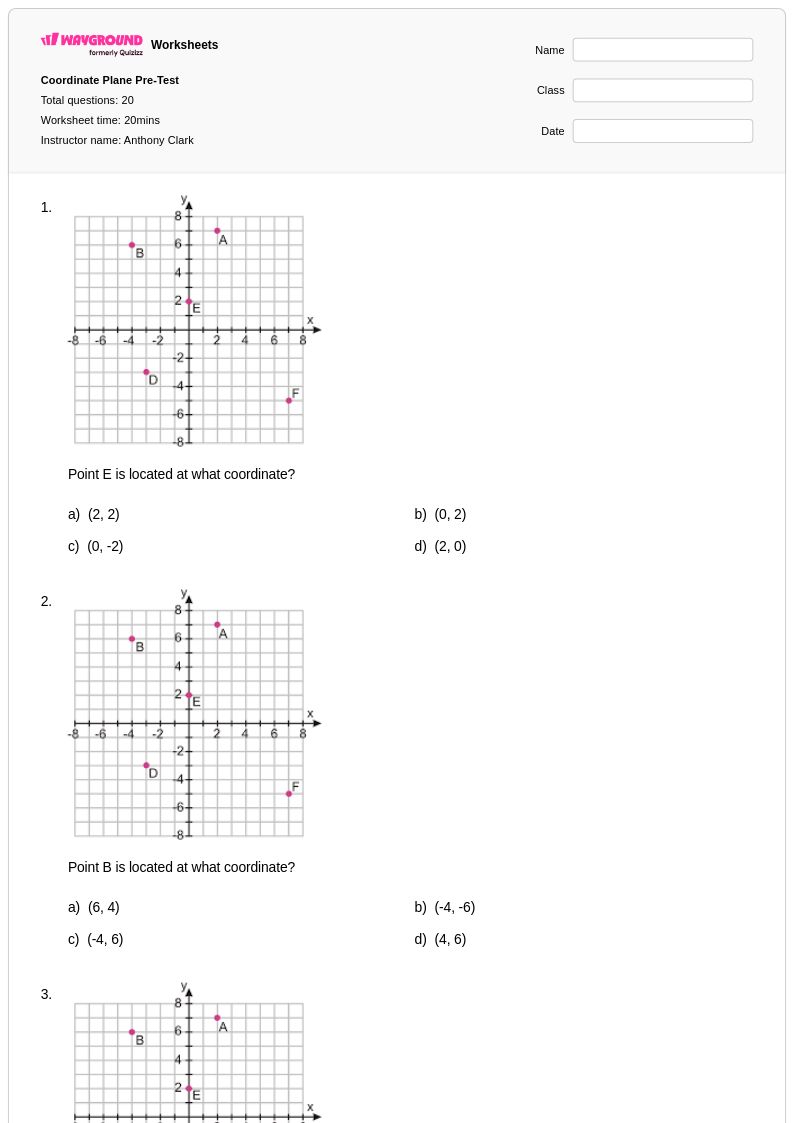
20 Q
6th - Uni
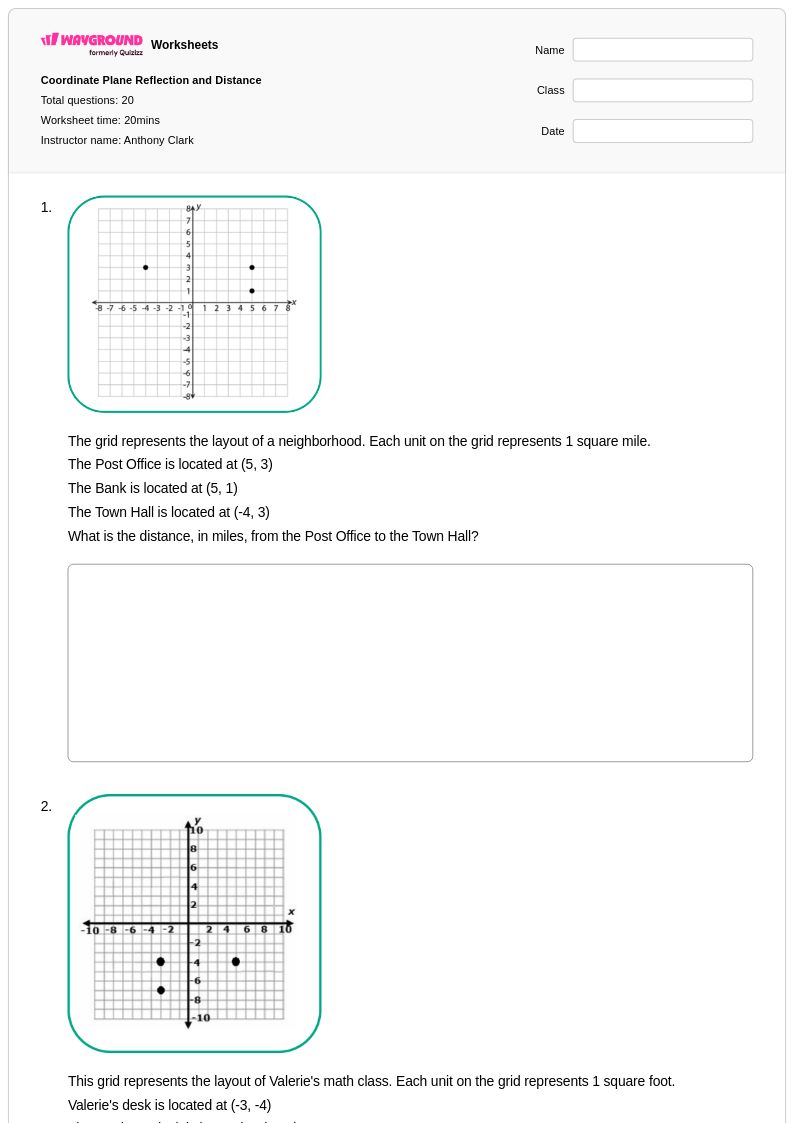
20 Q
6th - Uni
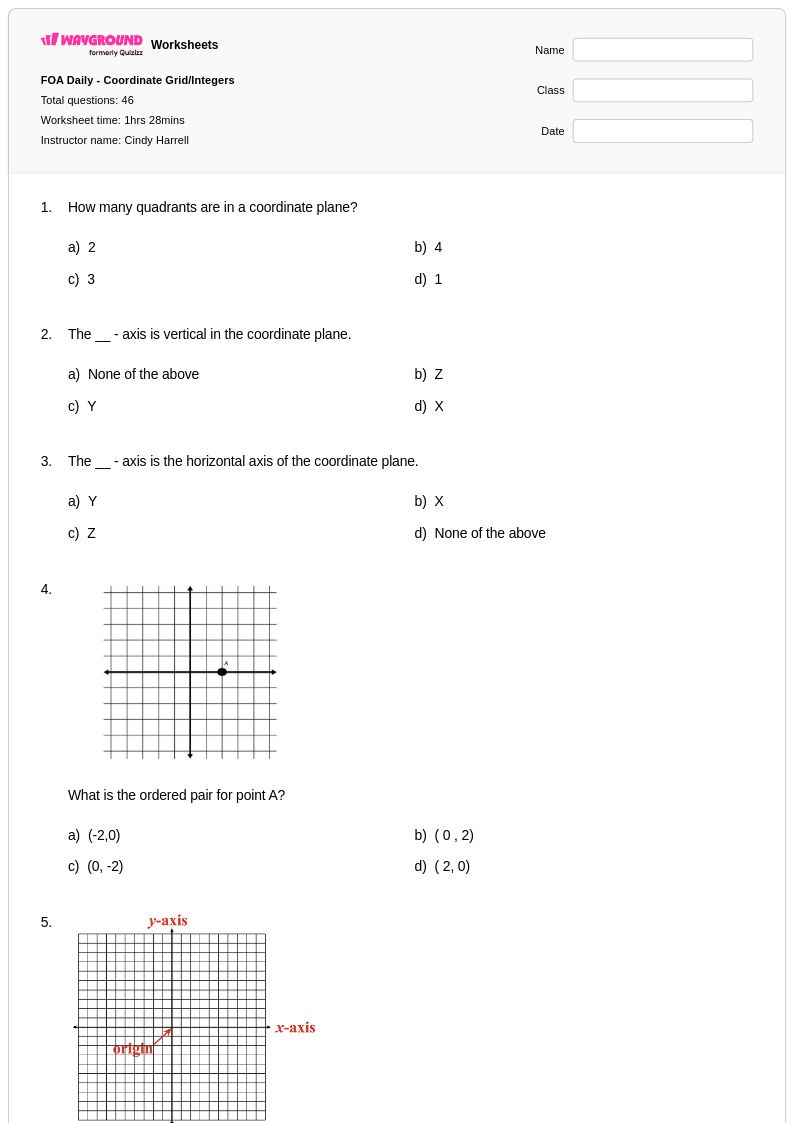
46 Q
6th - 8th
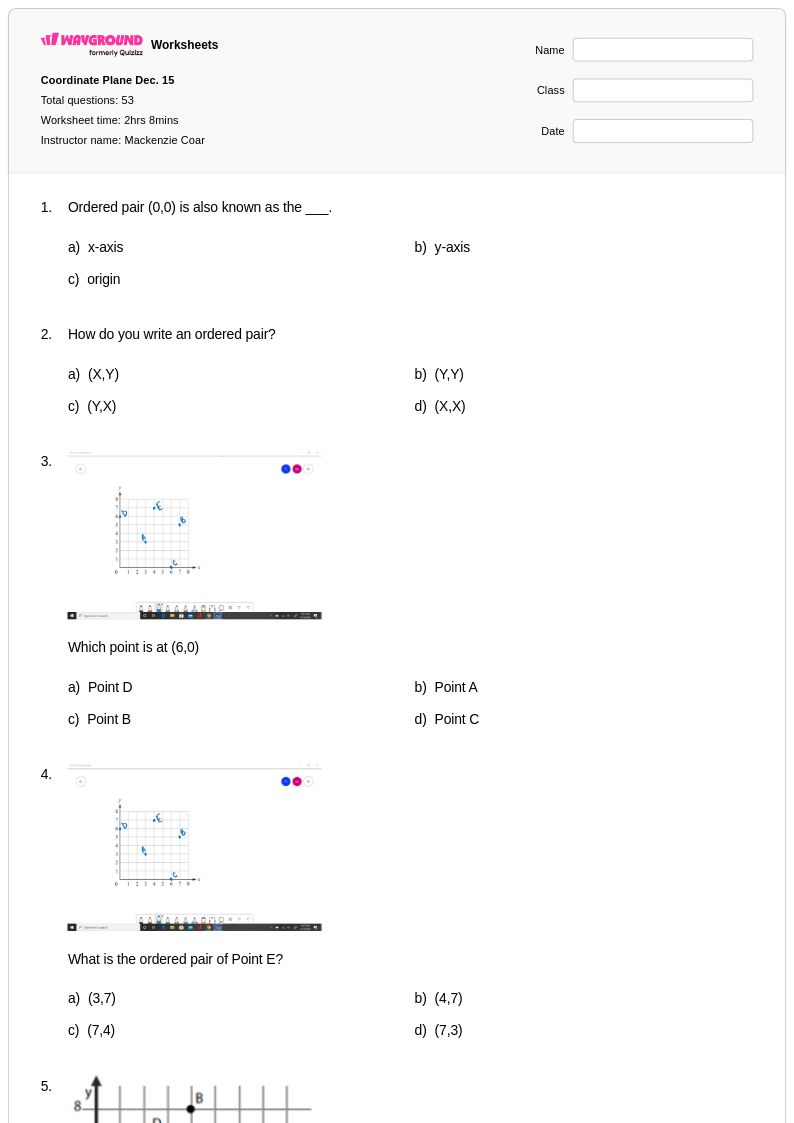
53 Q
6th
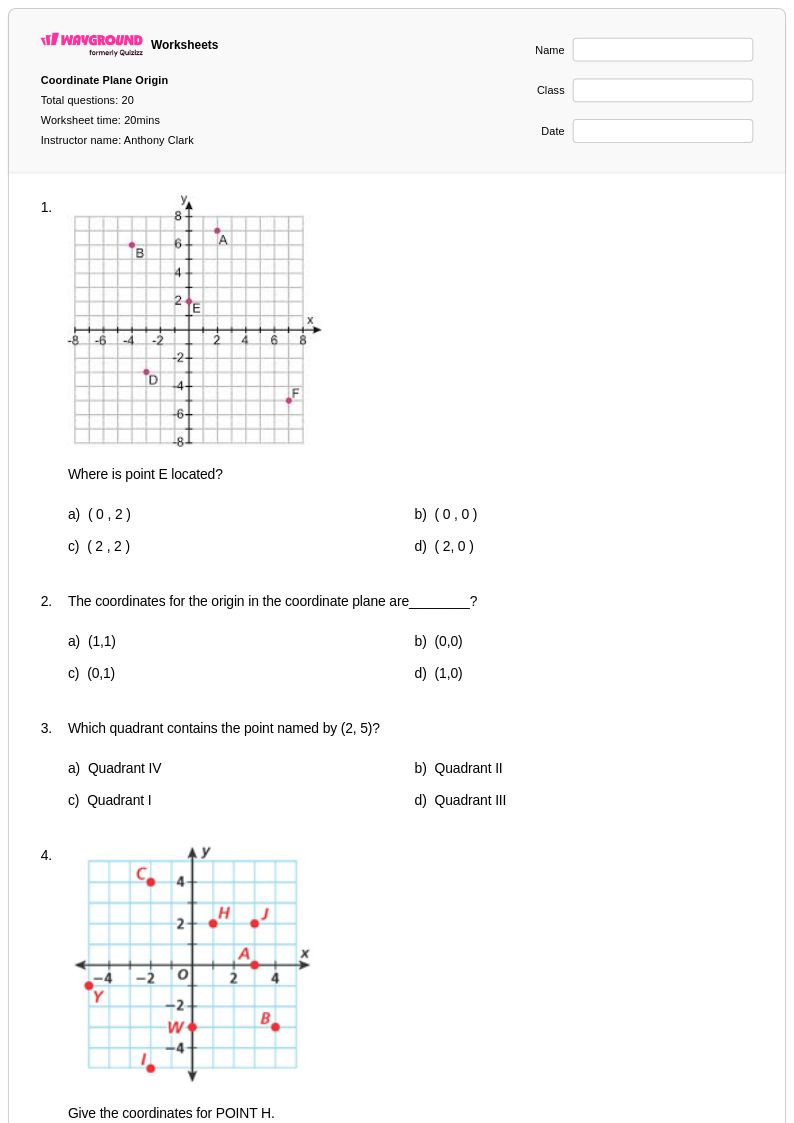
20 Q
6th - Uni
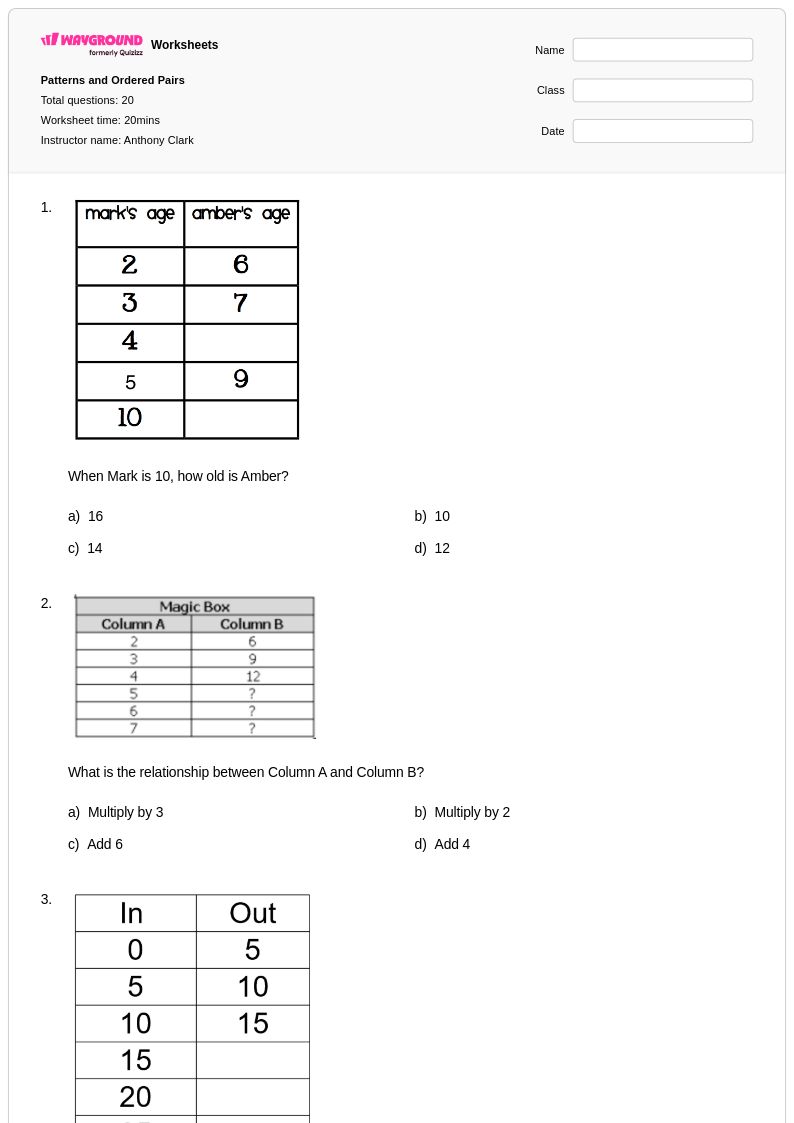
20 Q
5th - Uni
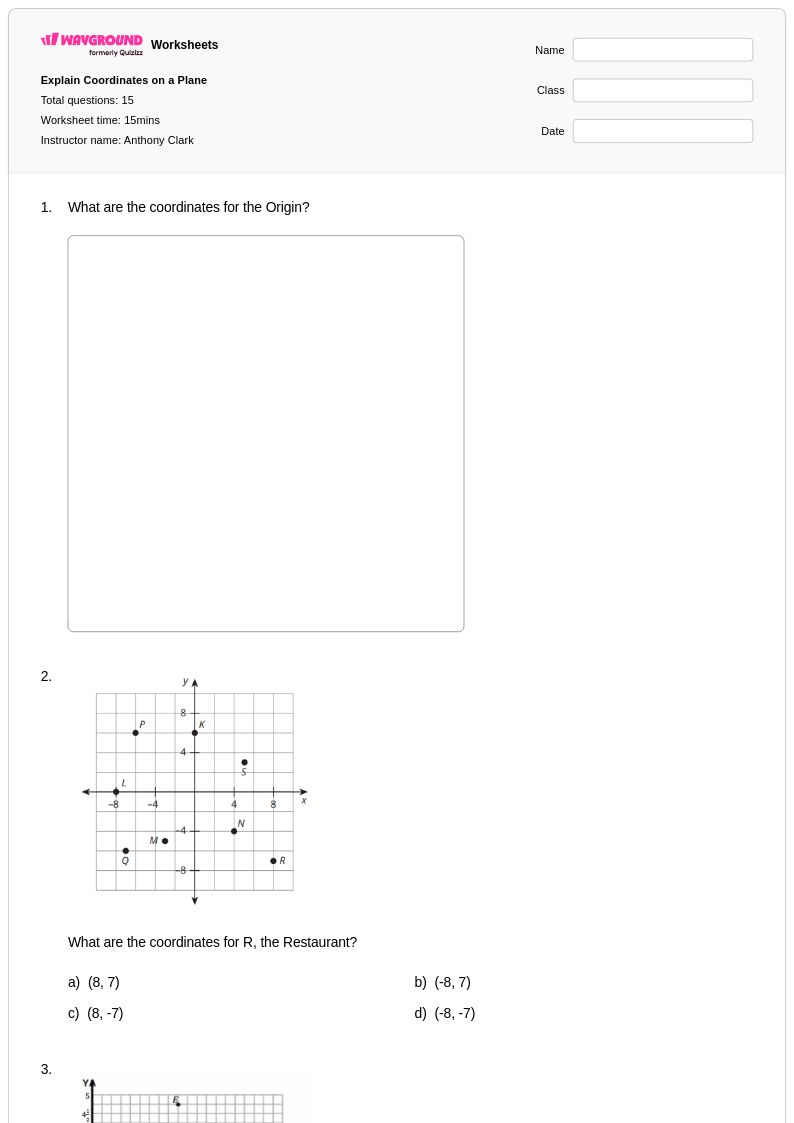
15 Q
6th - Uni
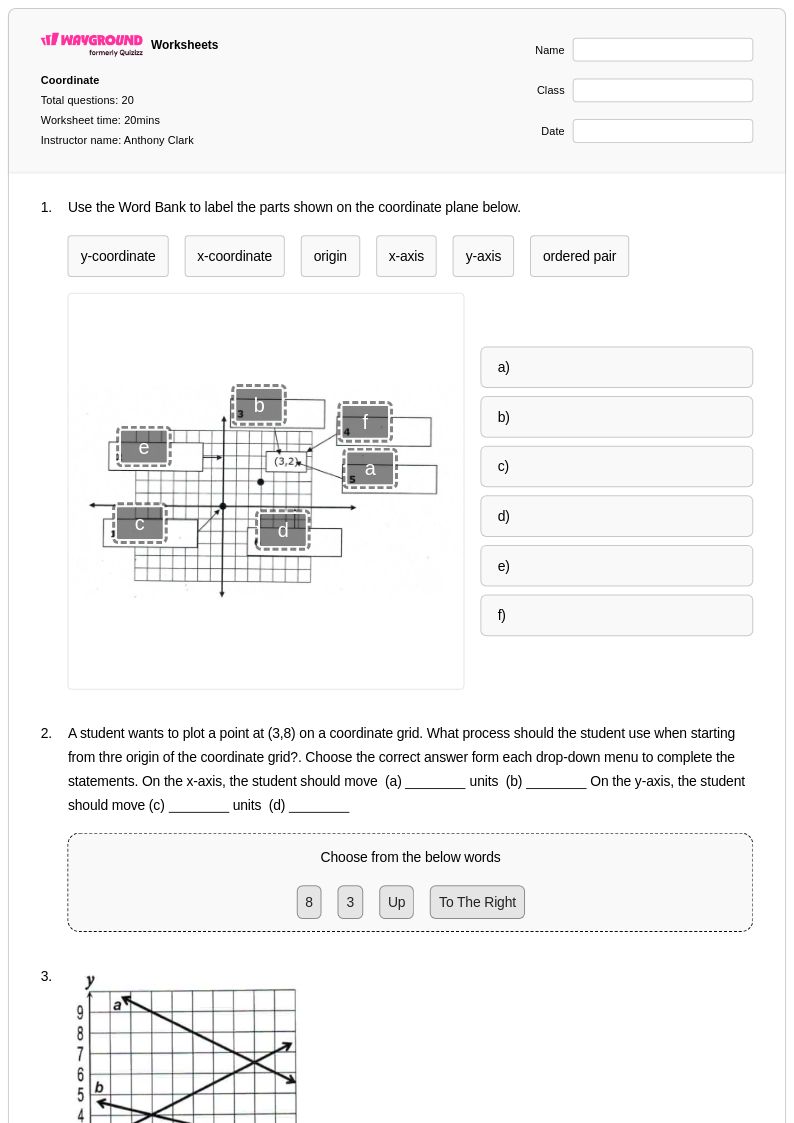
20 Q
5th - Uni
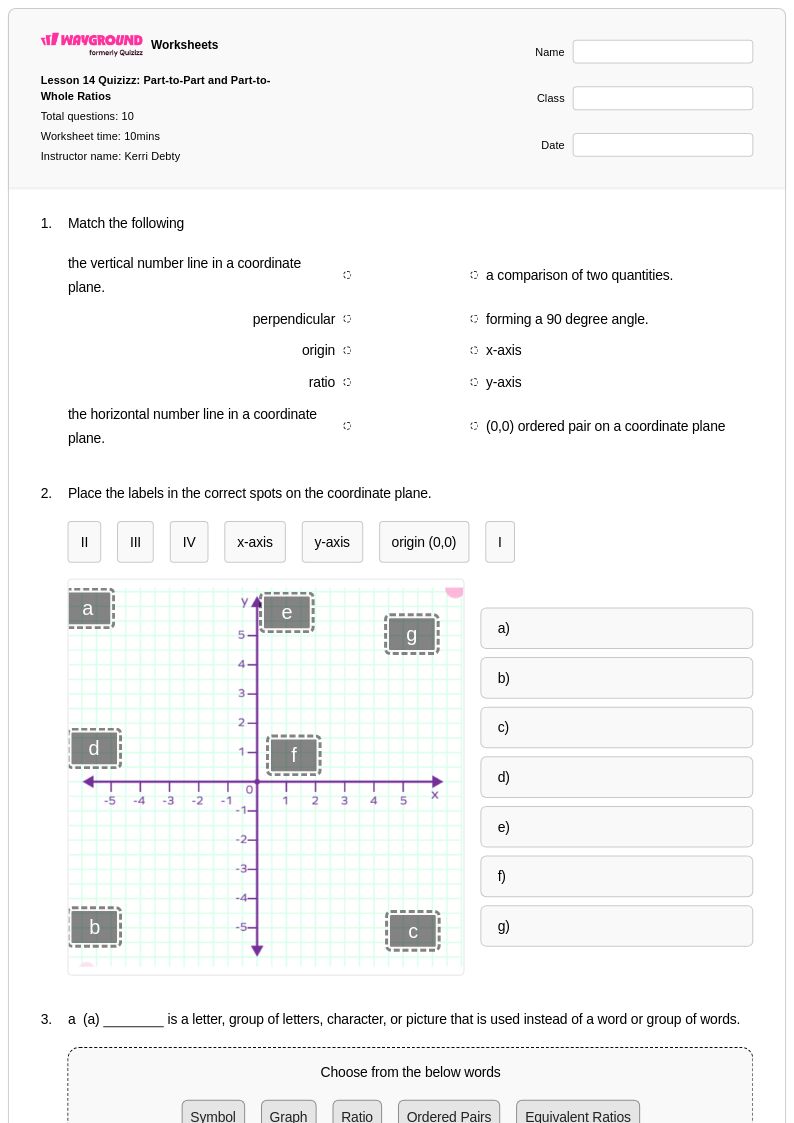
10 Q
6th
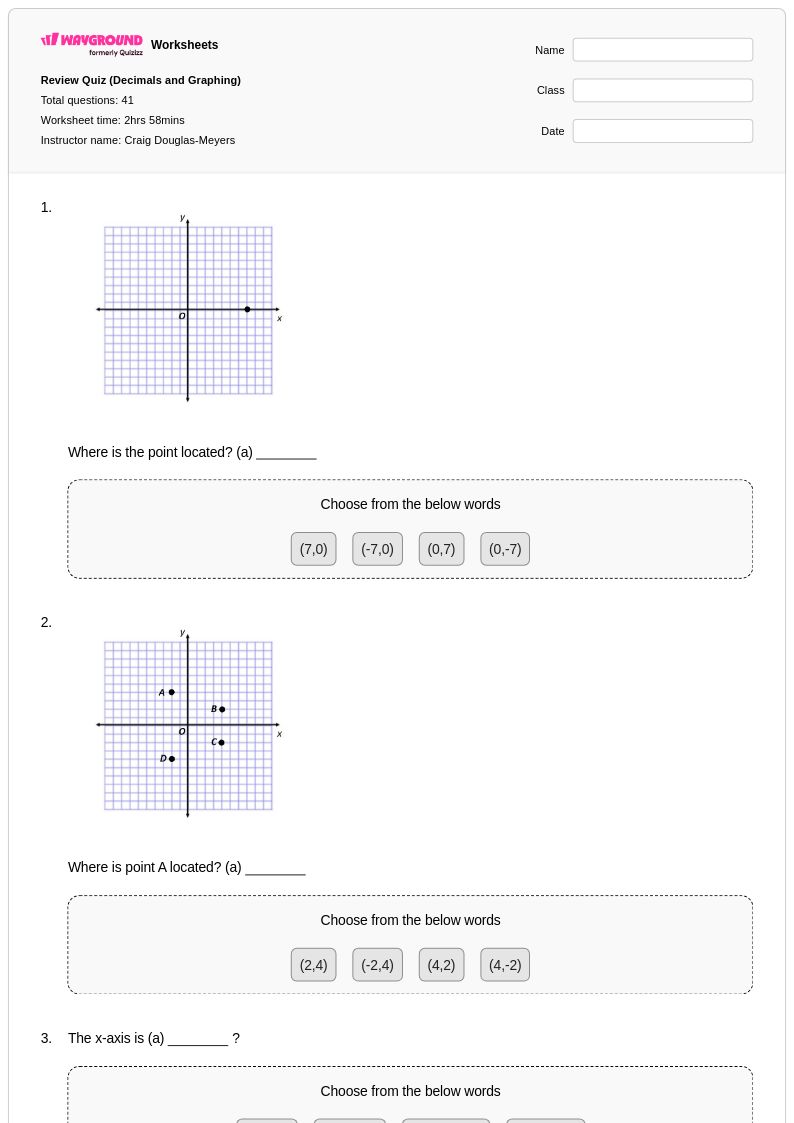
41 Q
6th
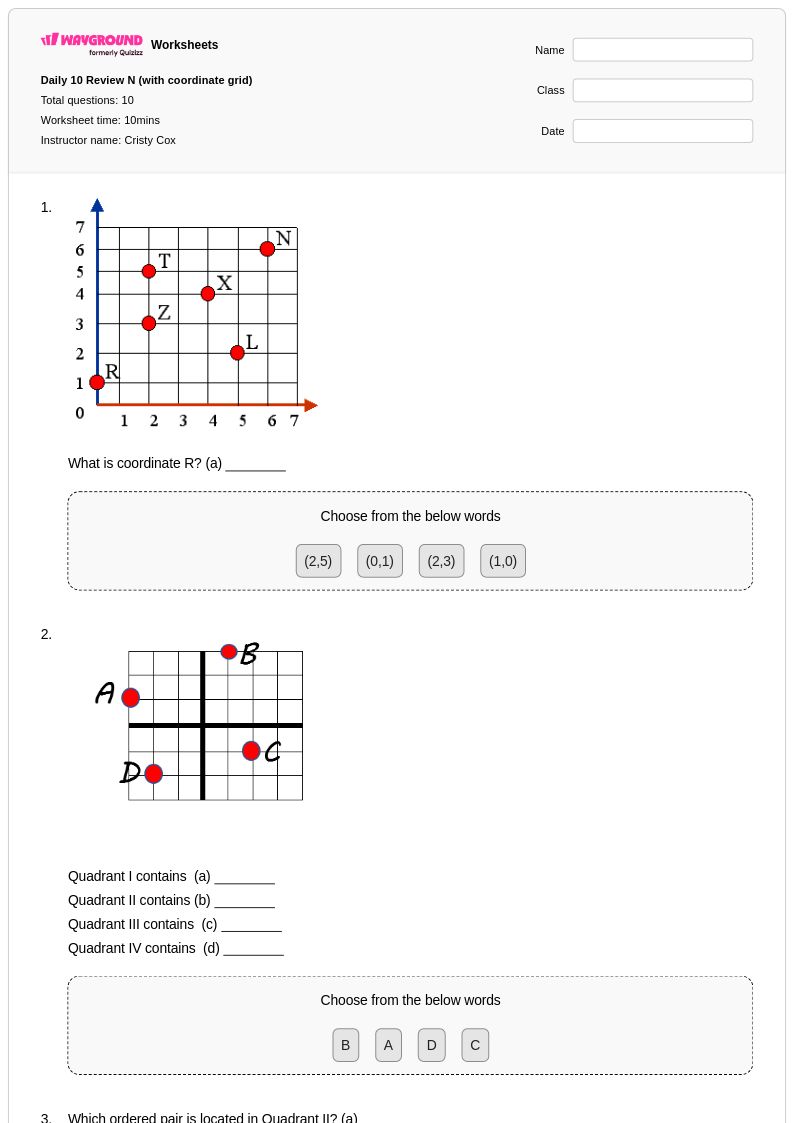
10 Q
6th - 8th
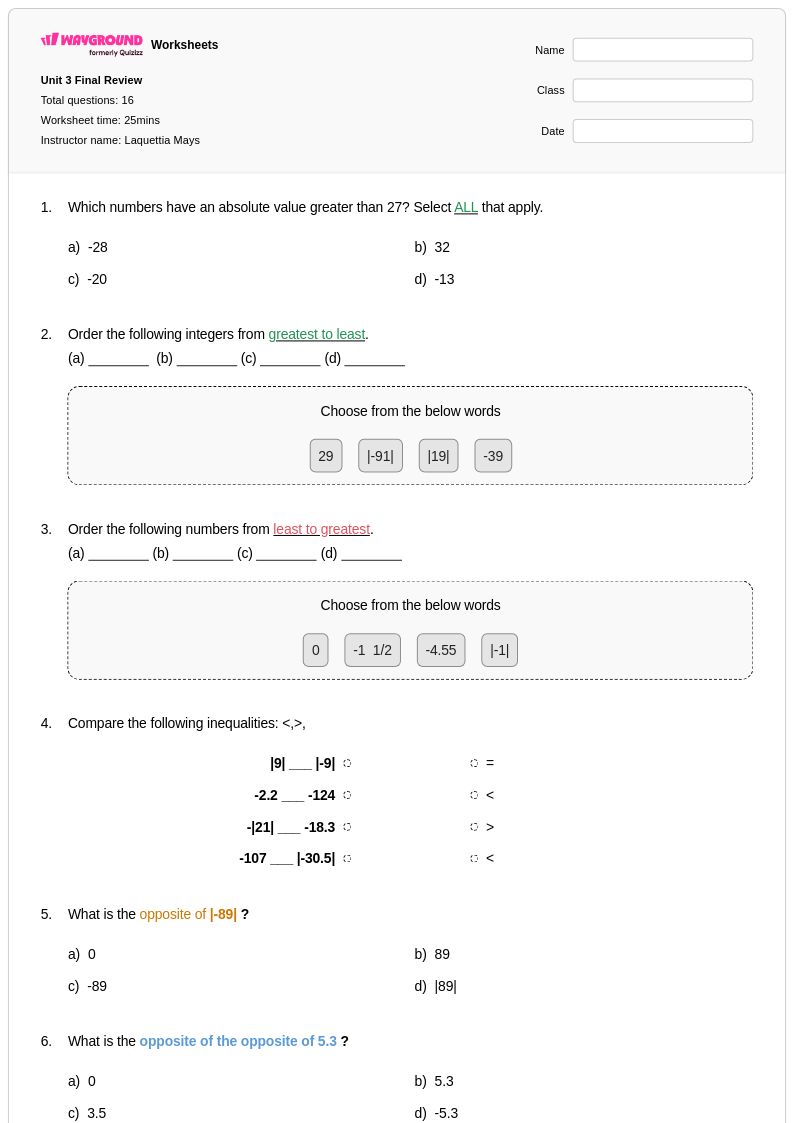
16 Q
6th
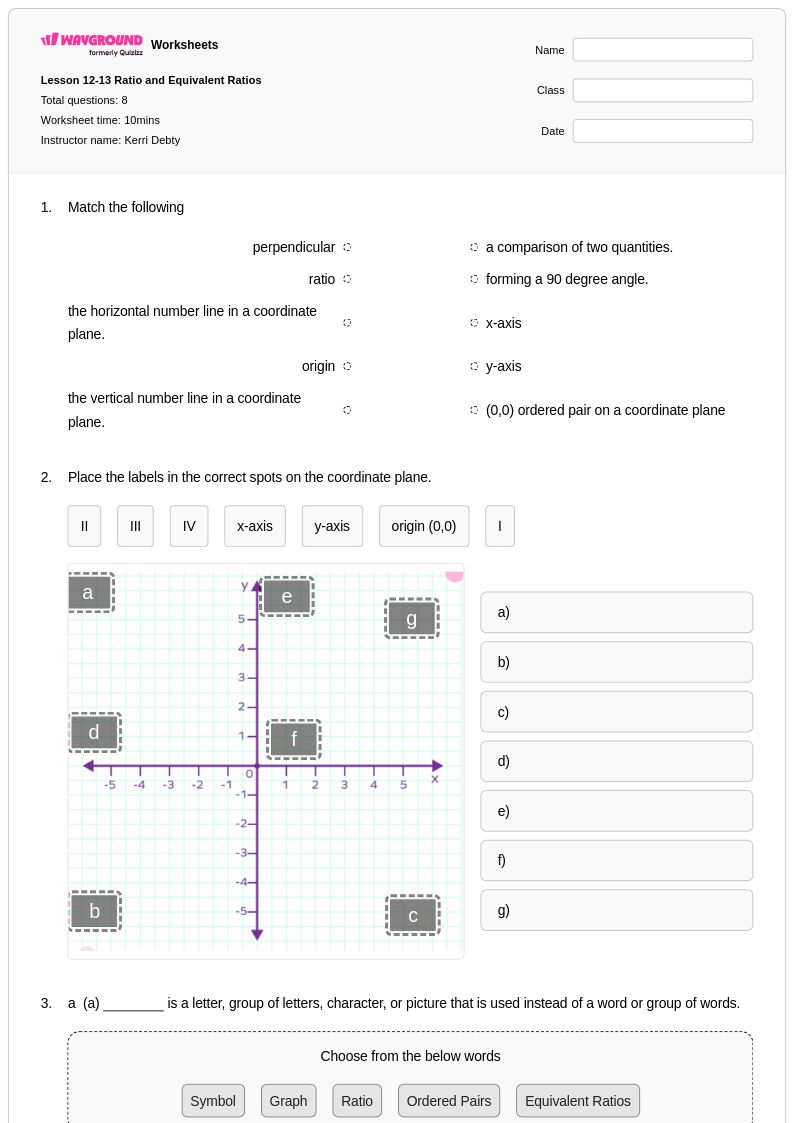
8 Q
6th
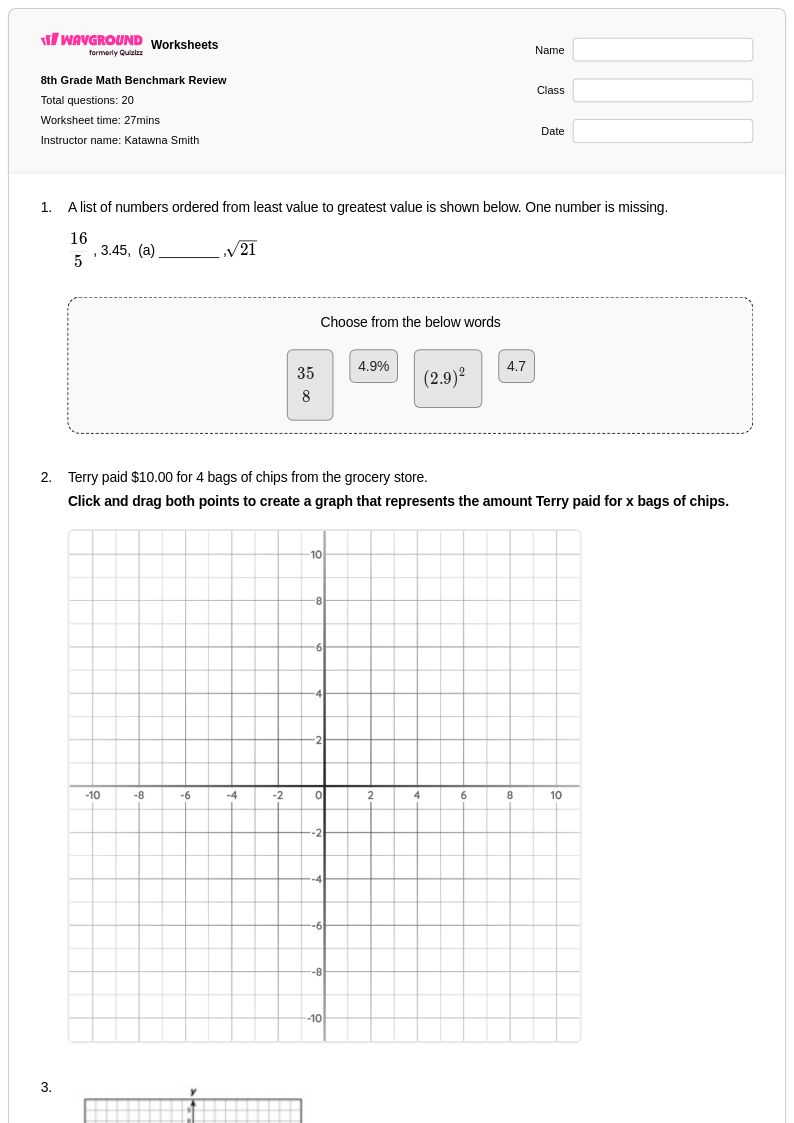
20 Q
6th - 8th
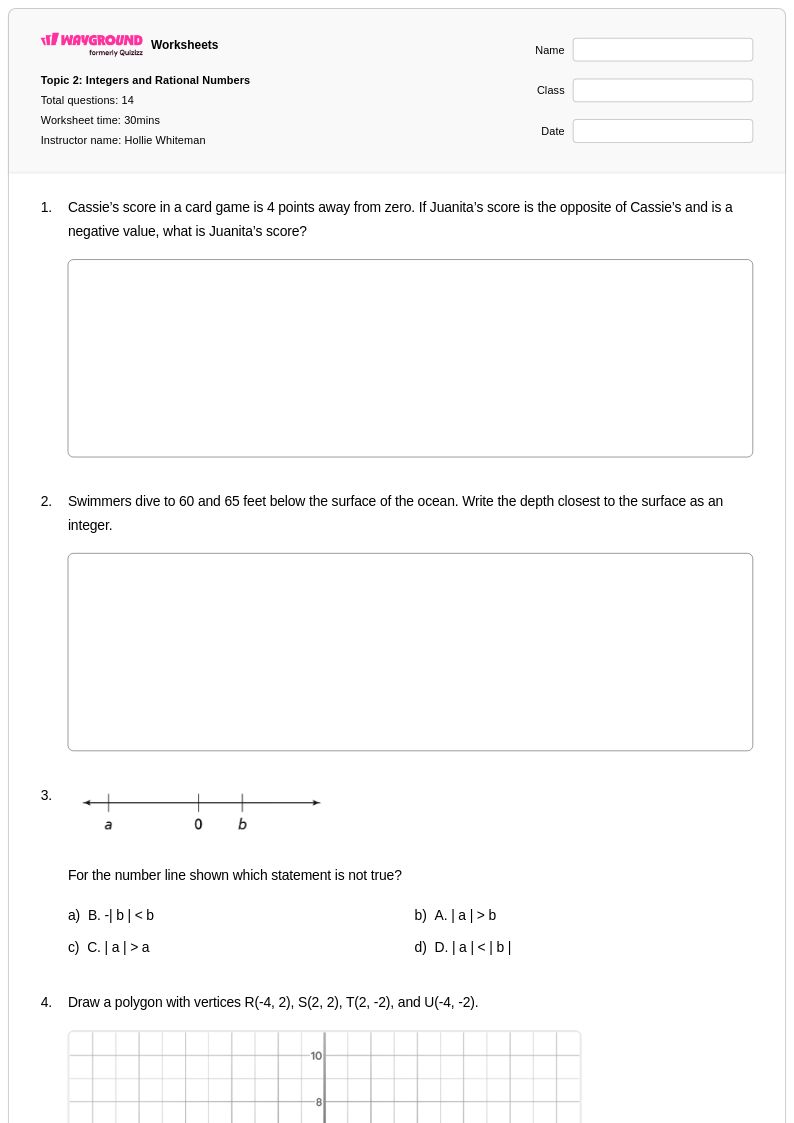
14 Q
6th
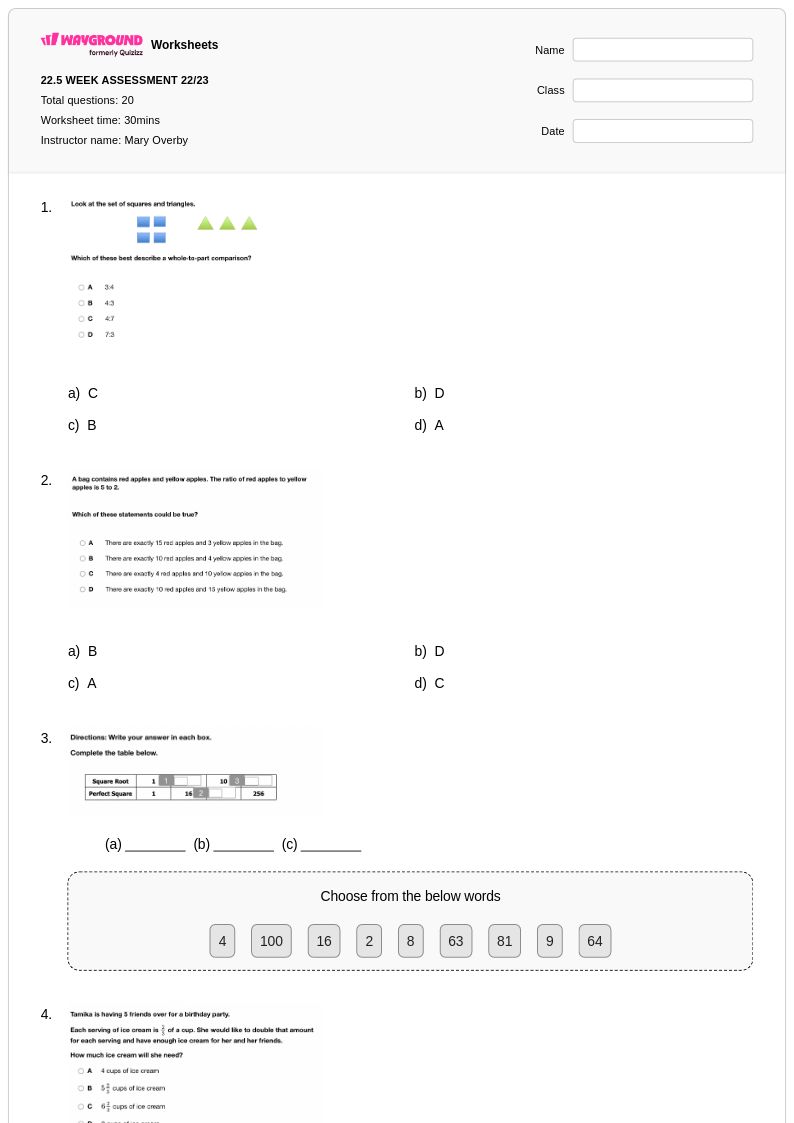
20 Q
6th
Explore Coordinate Pairs Worksheets by Grades
Explore Other Subject Worksheets for grade 6
Explore printable Coordinate Pairs worksheets for Grade 6
Coordinate pairs worksheets for Grade 6 students available through Wayground (formerly Quizizz) provide essential practice in understanding and working with ordered pairs on the coordinate plane. These comprehensive resources strengthen foundational skills in plotting points, identifying coordinates, and interpreting graphical relationships that form the backbone of algebraic thinking. Students develop spatial reasoning and analytical skills through practice problems that progress from basic point identification to more complex applications involving patterns, transformations, and real-world scenarios. Each worksheet collection includes detailed answer keys and is available as free printables in convenient pdf format, allowing educators to seamlessly integrate coordinate geometry concepts into their mathematics instruction while supporting diverse learning needs.
Wayground (formerly Quizizz) empowers teachers with millions of educator-created coordinate pairs resources that streamline lesson planning and differentiated instruction for Grade 6 mathematics. The platform's robust search and filtering capabilities enable quick access to standards-aligned materials that target specific coordinate plane skills, from introductory plotting exercises to advanced applications involving distance and midpoint concepts. Teachers can customize worksheets to match their students' proficiency levels, creating targeted remediation activities for struggling learners while providing enrichment opportunities for advanced students. Available in both printable pdf and interactive digital formats, these resources support flexible classroom implementation and individual skill practice, ensuring that all students develop confidence and competency in working with coordinate pairs across various mathematical contexts.
FAQs
How do I teach coordinate pairs to sixth graders?
What coordinate-pair exercises are appropriate for Grade 6?
What coordinate-pair mistakes do sixth graders commonly make?
How can I use Grade 6 coordinate pairs worksheets on Wayground?
How do coordinate pairs fit into the Common Core progression for Grade 6?
How can I differentiate Grade 6 coordinate-pair practice?
What coordinate-pair skills should Grade 6 students know?