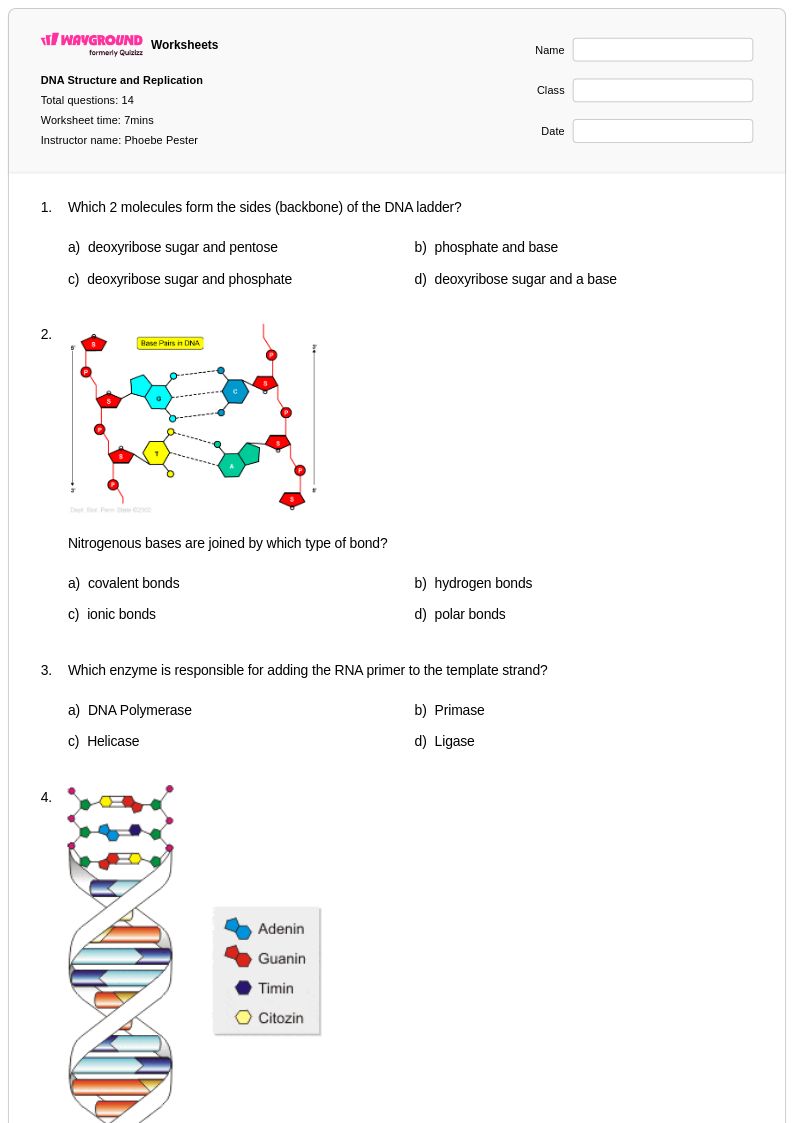
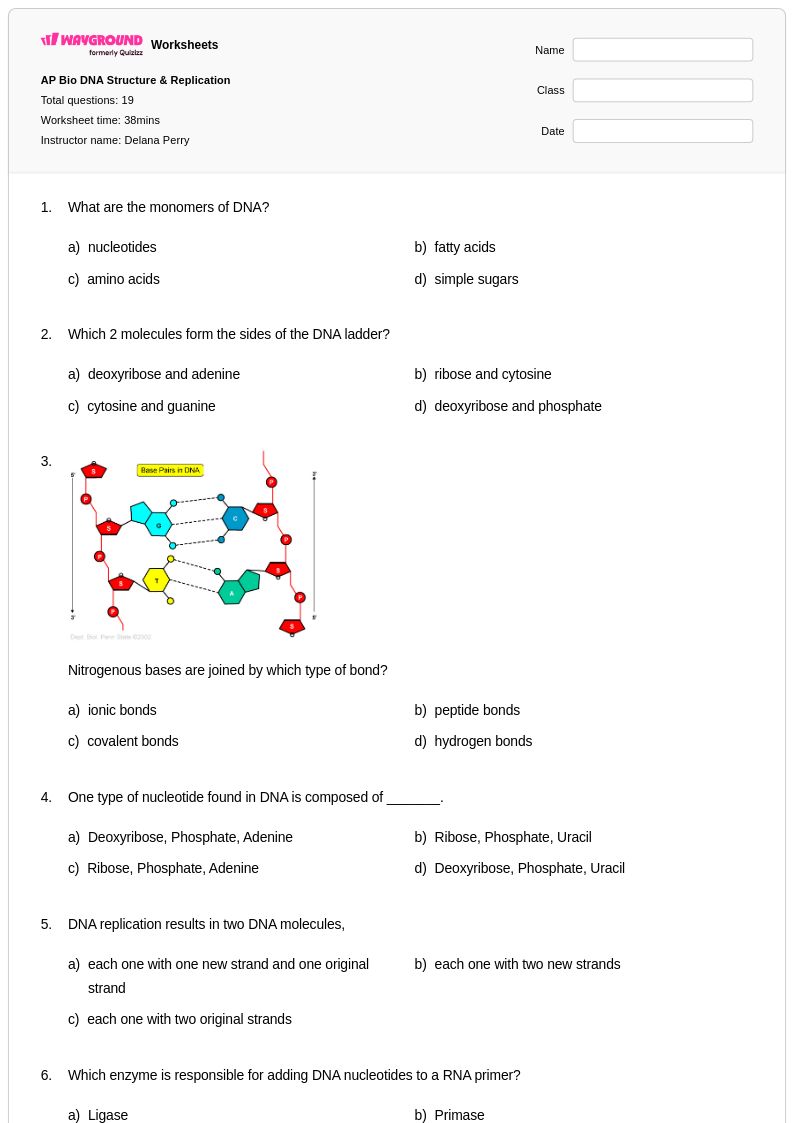
Free Printable DNA Structure and Replication worksheets
Master DNA structure and replication with Wayground's comprehensive collection of free biology worksheets, featuring detailed printables, practice problems, and answer keys to help students understand genetic processes.
Explore printable DNA Structure and Replication worksheets
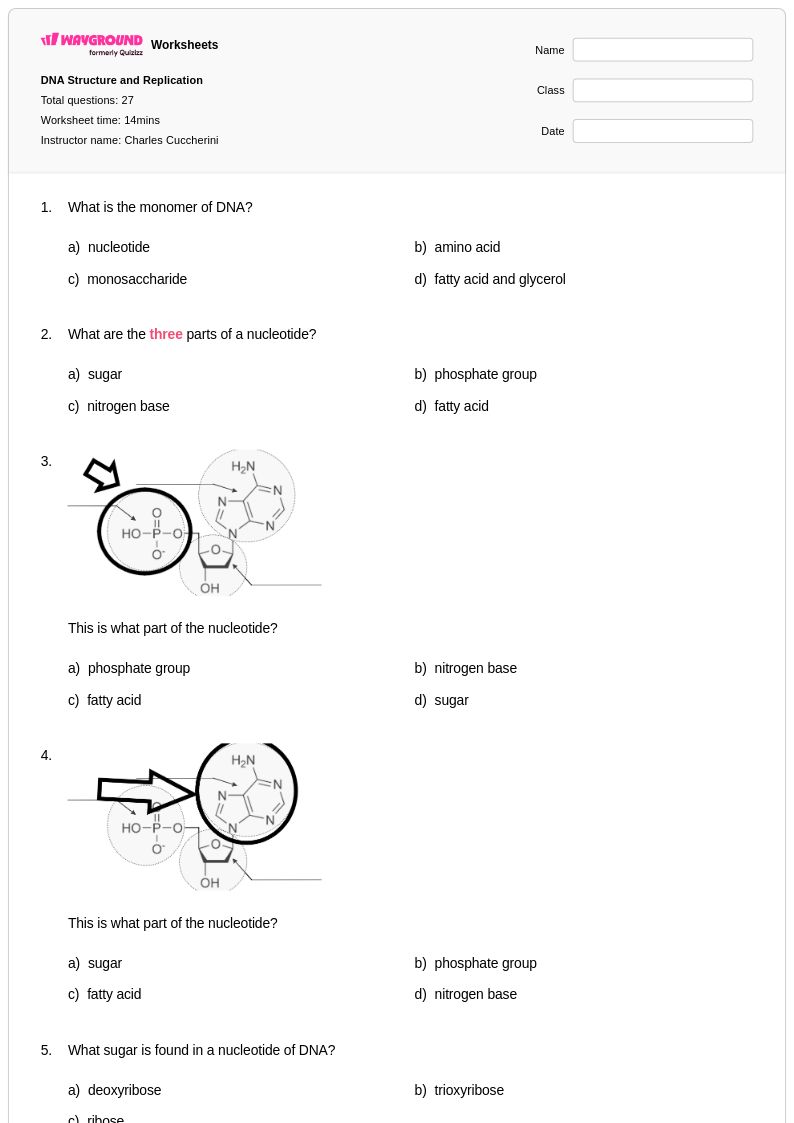
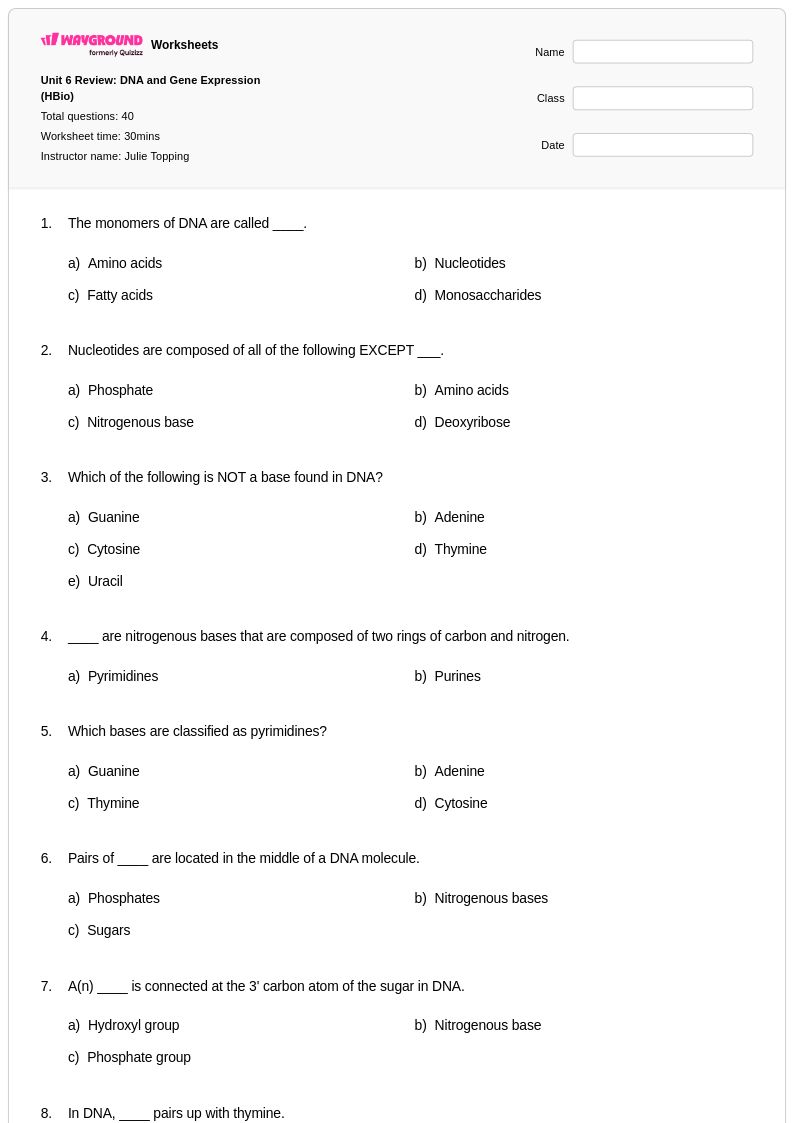
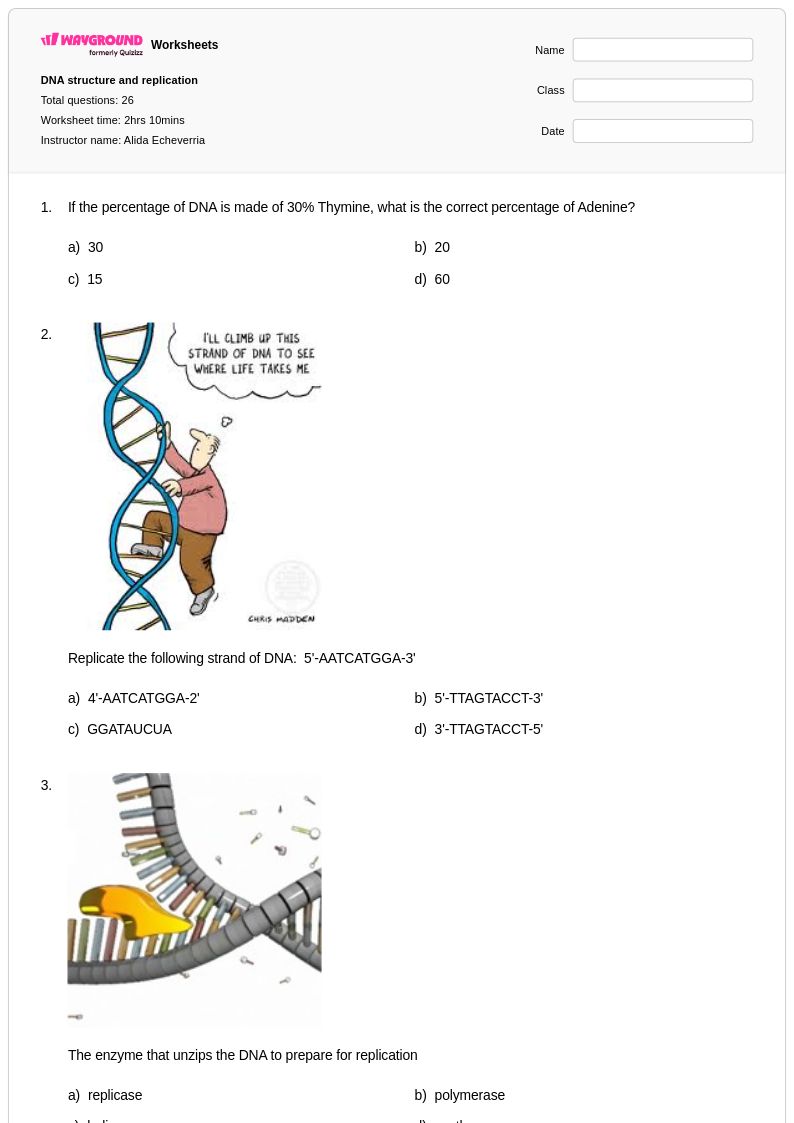
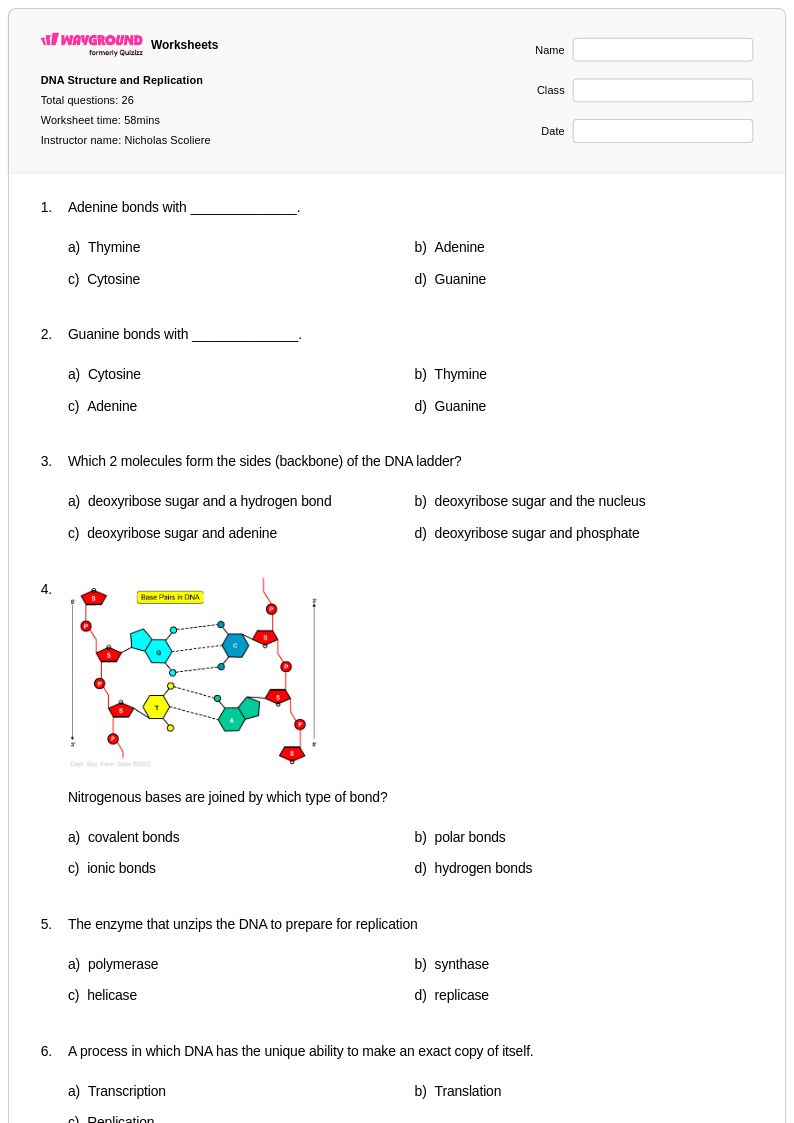
DNA Structure and Replication worksheets through Wayground (formerly Quizizz) provide comprehensive practice materials that help students master the fundamental concepts of molecular biology's most critical processes. These expertly crafted worksheets guide learners through the double helix structure of DNA, including the complementary base pairing of adenine with thymine and guanine with cytosine, while also exploring the intricate mechanisms of DNA replication including the roles of helicase, DNA polymerase, and ligase enzymes. Each worksheet collection includes detailed answer keys and is available as free printables in convenient pdf format, ensuring students can work through practice problems that reinforce their understanding of semiconservative replication, leading and lagging strand synthesis, and the formation of Okazaki fragments during the replication process.
Wayground (formerly Quizizz) empowers educators with millions of teacher-created resources specifically designed for DNA Structure and Replication instruction, featuring robust search and filtering capabilities that allow teachers to quickly locate materials aligned with specific learning standards and curriculum requirements. The platform's differentiation tools enable instructors to customize worksheets for varying skill levels, supporting both remediation for struggling students and enrichment opportunities for advanced learners, while the flexible format options include both printable and digital versions in pdf format for seamless integration into any classroom environment. These comprehensive collections streamline lesson planning by providing ready-to-use practice materials that support skill development in molecular biology concepts, helping teachers efficiently address diverse learning needs while ensuring students build strong foundational knowledge in DNA structure and the complex processes that govern genetic replication.
FAQs
How do I teach DNA structure and replication in a biology class?
Start by grounding students in the double helix model, emphasizing the antiparallel orientation of the two strands and the complementary base pairing rules: adenine with thymine and guanine with cytosine. From there, introduce replication as a sequential process, walking students through the roles of helicase (unwinding), DNA polymerase (synthesizing new strands), and ligase (sealing gaps). Using labeled diagrams alongside procedural explanations helps students connect structure to function before tackling the mechanics of leading and lagging strand synthesis.
What are good practice exercises for DNA replication?
Effective practice exercises include base pairing completion activities where students fill in the complementary strand of a given DNA sequence, enzyme role-matching tasks, and sequencing exercises that ask students to order the steps of replication. Problems that specifically target semiconservative replication, leading versus lagging strand synthesis, and Okazaki fragment formation give students targeted exposure to the concepts most likely to appear on assessments. Layering these exercise types helps students move from recall to applied understanding.
What mistakes do students commonly make when learning DNA replication?
One of the most common errors is confusing the directionality of DNA strands — students often forget that DNA polymerase can only synthesize in the 5' to 3' direction, which is why a lagging strand must be built in fragments. Students also frequently mix up the roles of helicase and DNA polymerase, or incorrectly assume both new strands are synthesized continuously. Misapplying base pairing rules (for example, pairing adenine with uracil in a DNA context rather than an RNA one) is another persistent error worth addressing explicitly.
What common misconceptions do students have about DNA structure?
Many students initially think the two strands of the double helix run in the same direction, not understanding antiparallel orientation. Another frequent misconception is treating the double helix as a rigid ladder rather than a twisted, three-dimensional structure. Students also sometimes conflate DNA structure with protein structure, especially when first introduced to the idea that the sequence of bases carries genetic information — a concept that requires deliberate reinforcement through targeted practice.
How do I use DNA structure and replication worksheets in my classroom?
These worksheets are available as printable PDFs for traditional classroom use and in digital formats for technology-integrated learning environments, and they can also be hosted as a quiz directly on Wayground. Printable versions work well as guided note companions or independent practice following direct instruction, while digital formats allow for self-paced review or homework assignments. Wayground's differentiation tools let teachers customize worksheets for varying skill levels, supporting both students who need remediation and those ready for enrichment.
How do I support students who struggle with DNA replication concepts?
For struggling students, breaking replication into discrete, labeled stages — initiation, elongation, and termination — reduces cognitive overload and gives them a scaffold to hang each enzyme's role on. Wayground supports student-level accommodations including read aloud for students who benefit from hearing questions, reduced answer choices to lower cognitive load on multiple-choice items, and extended time settings that can be configured per student. These accommodations can be assigned individually without notifying other students, making differentiation seamless during digital worksheet sessions.