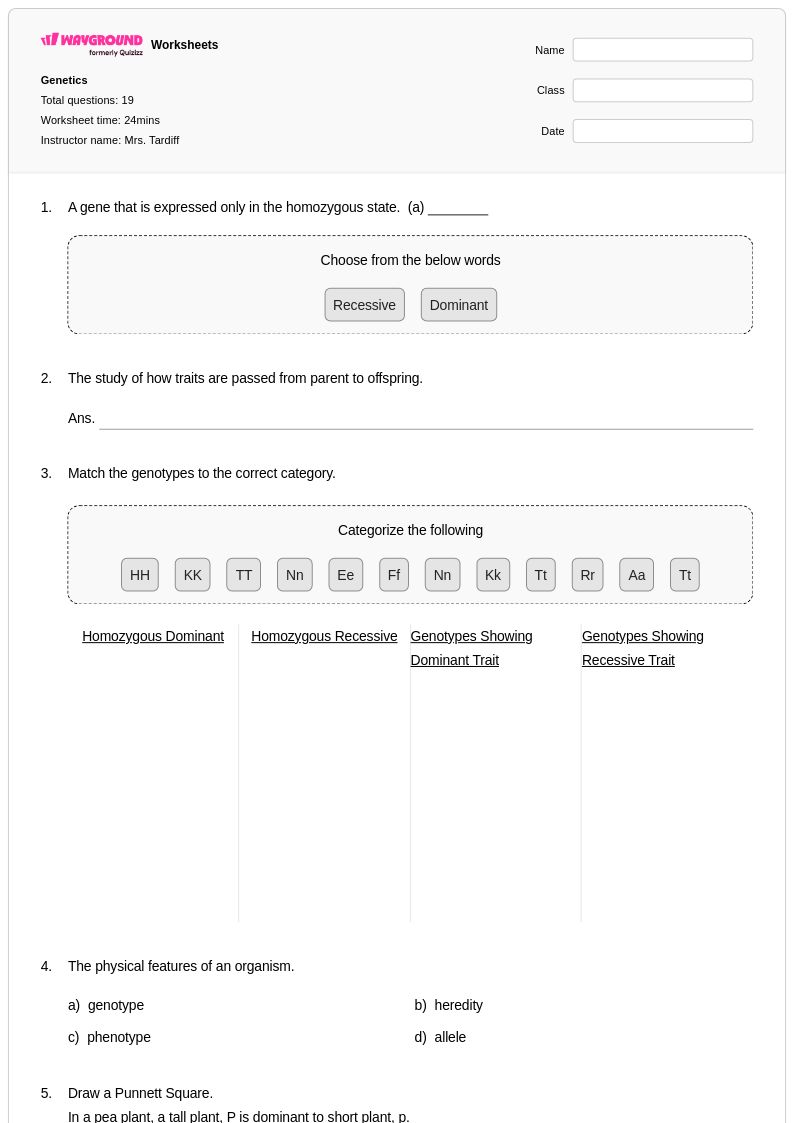
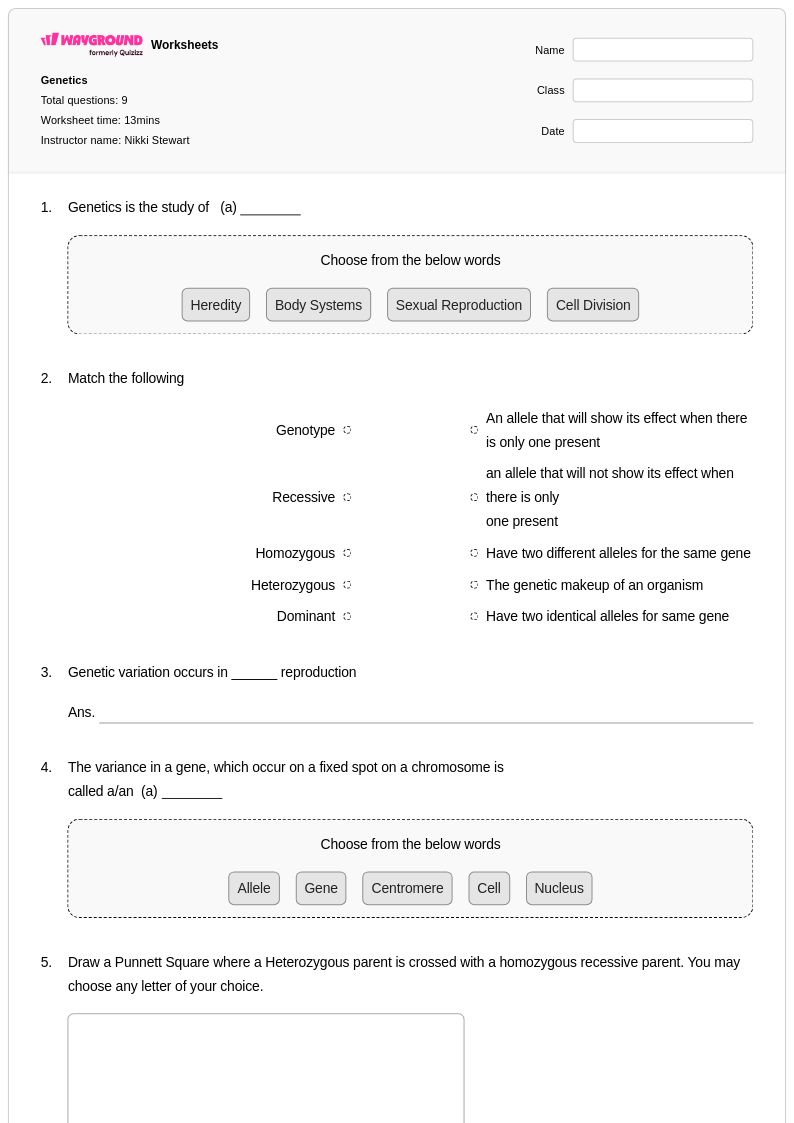
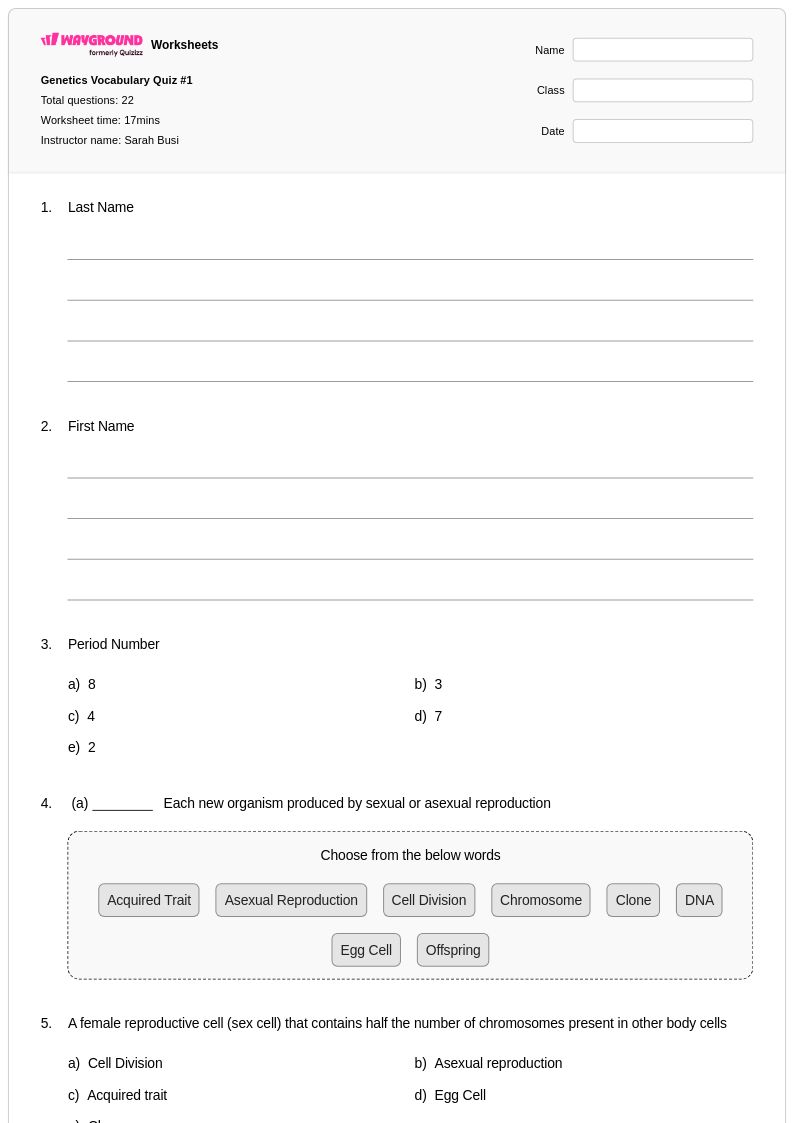
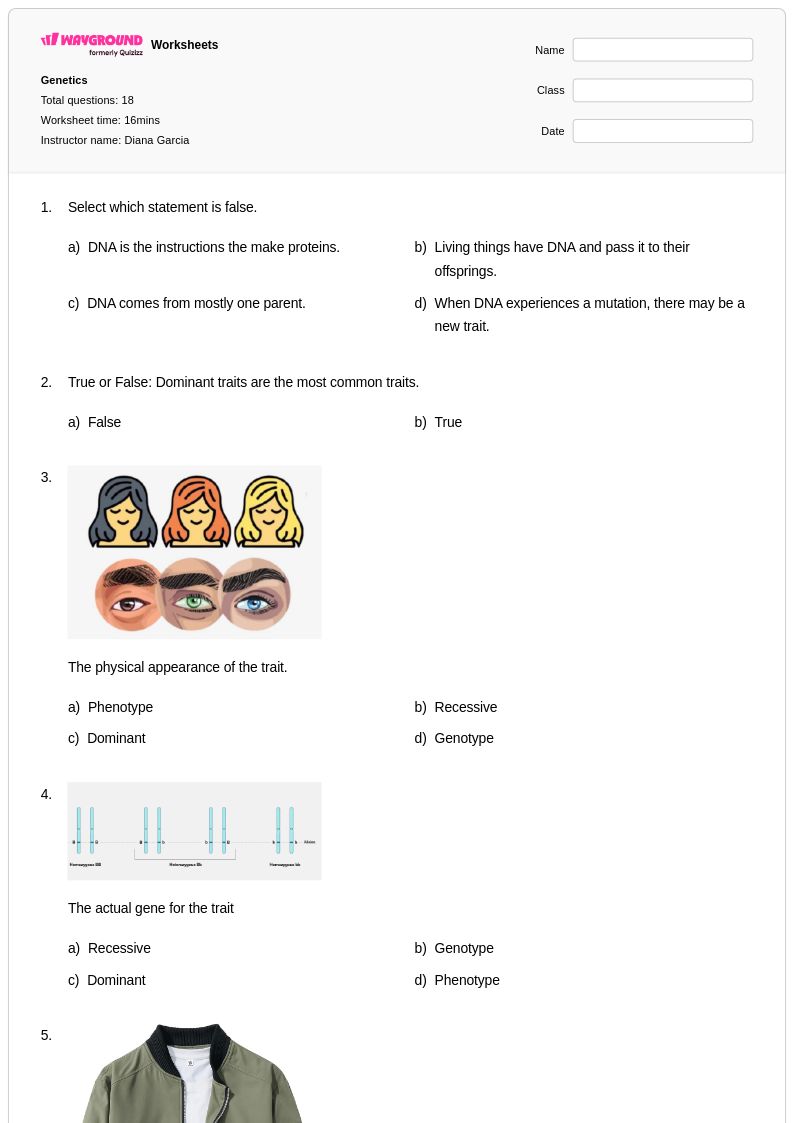
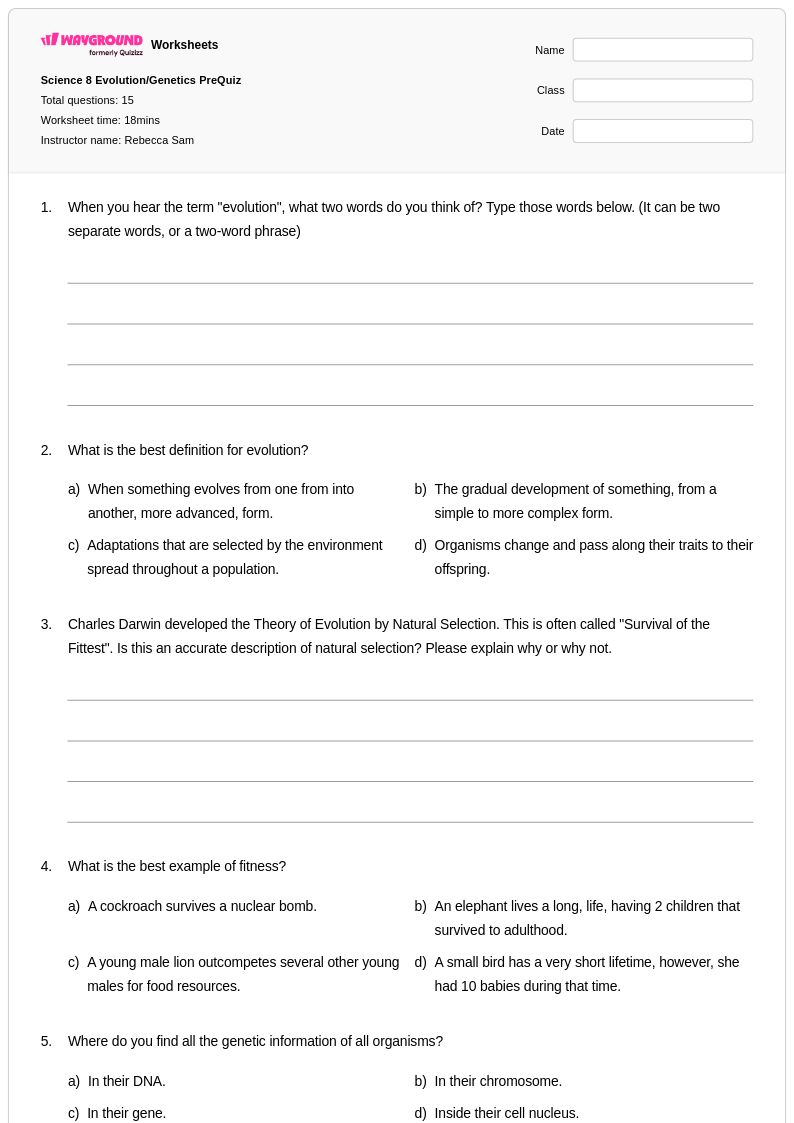
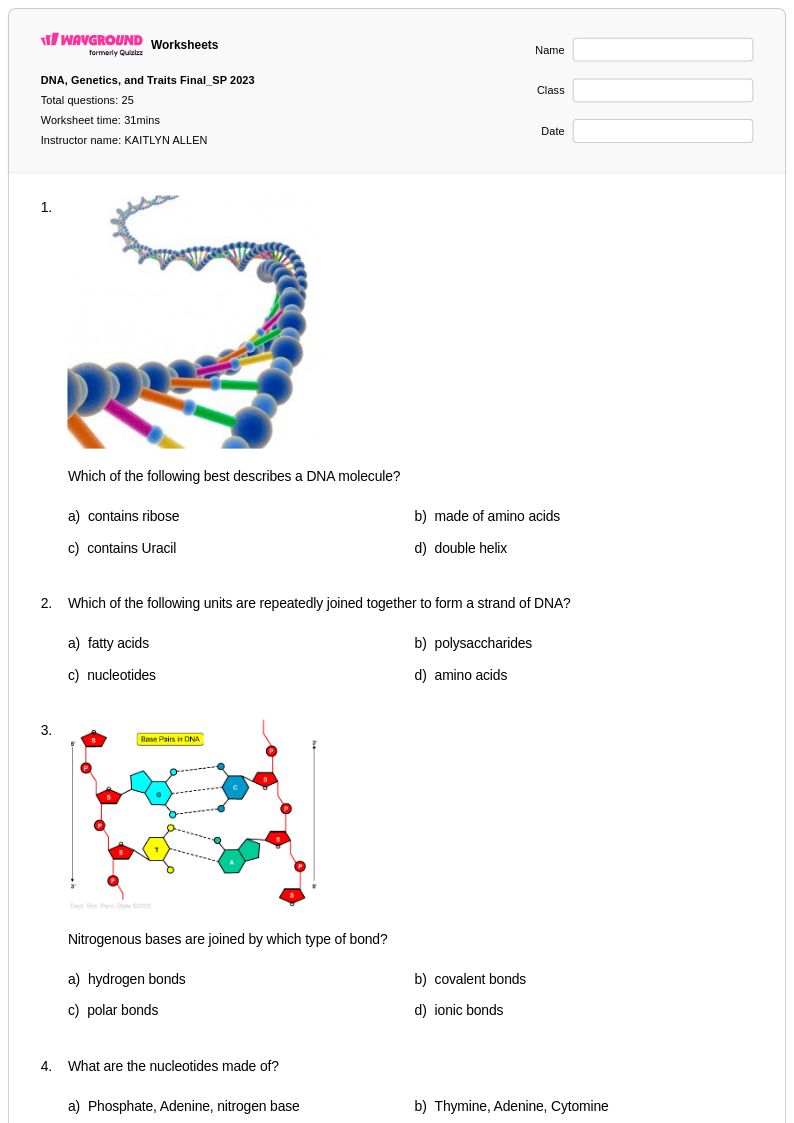
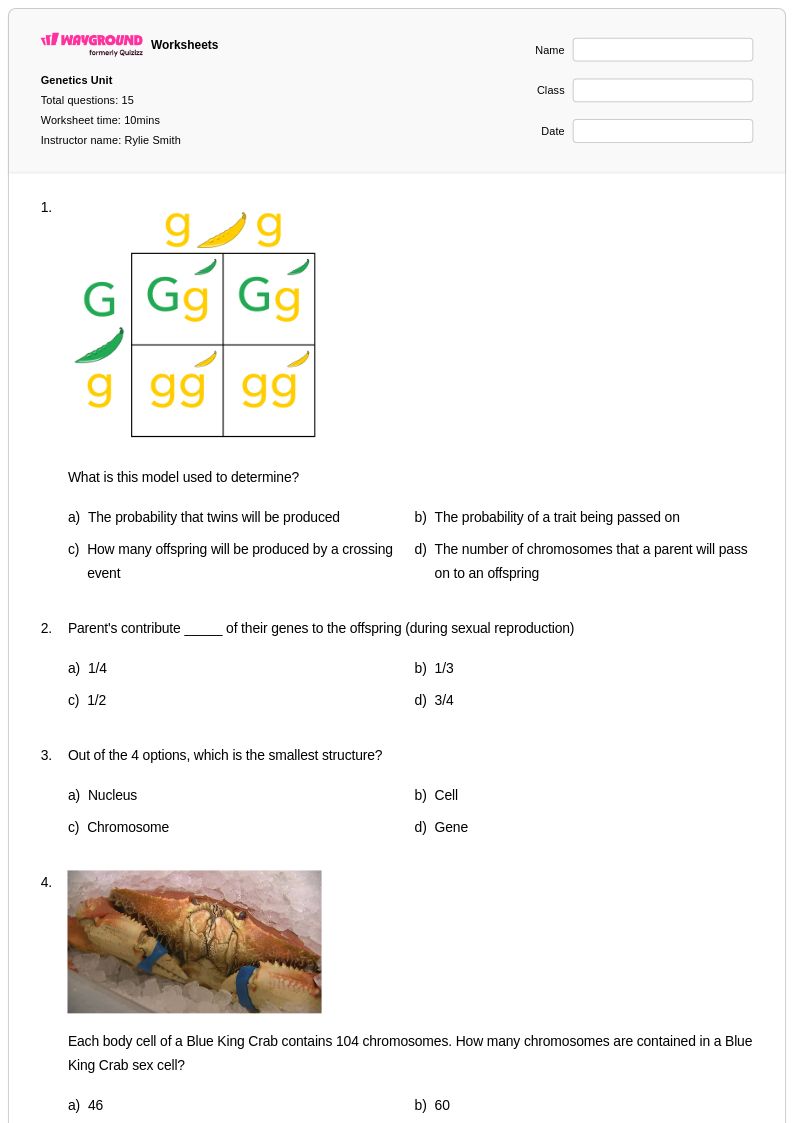
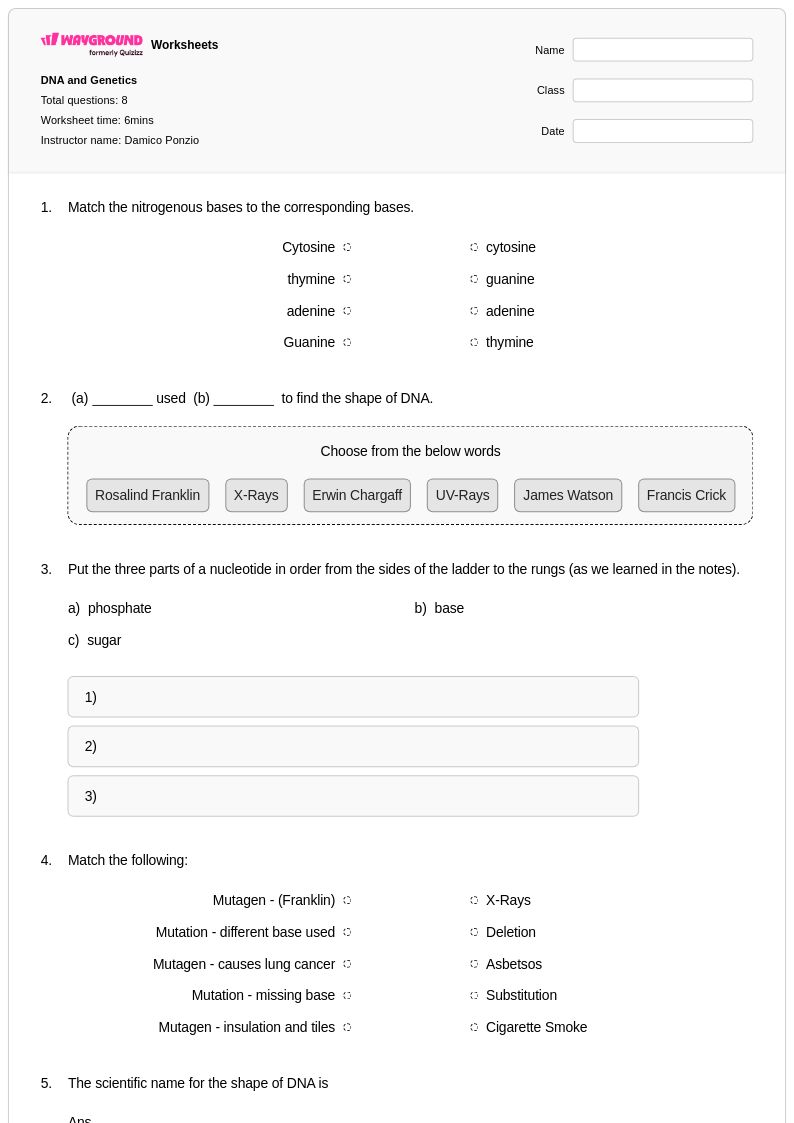
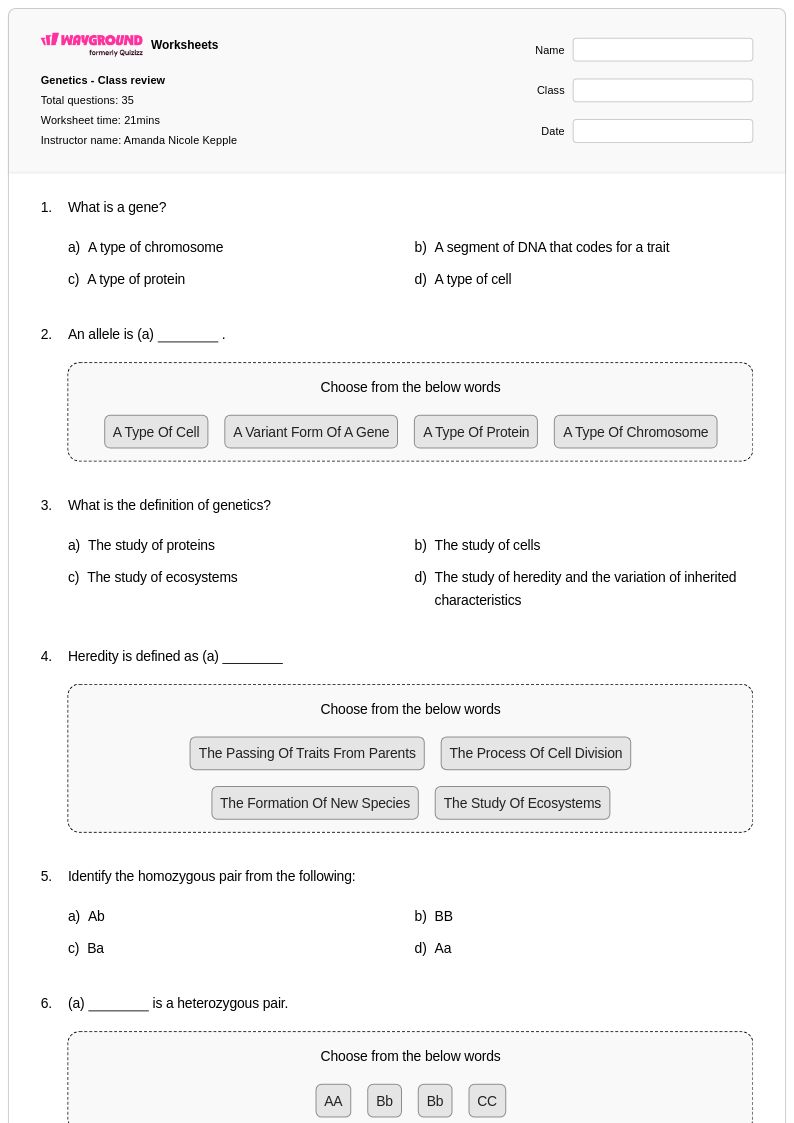
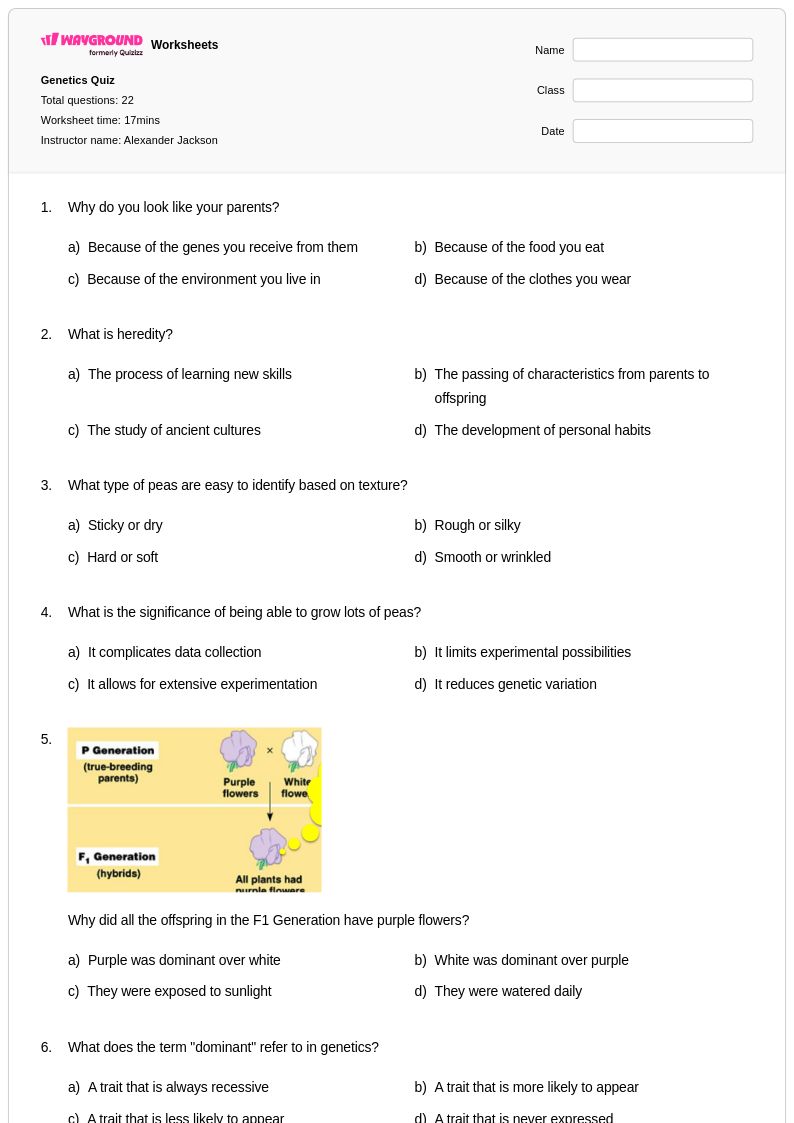
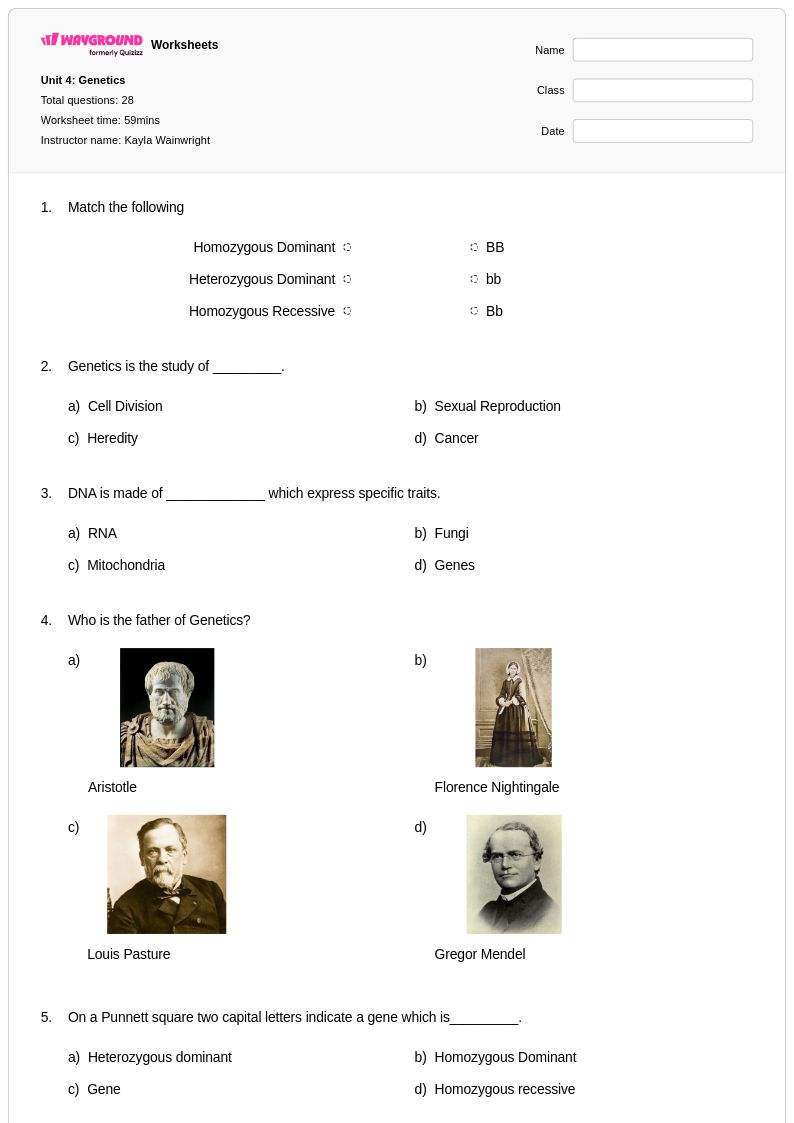
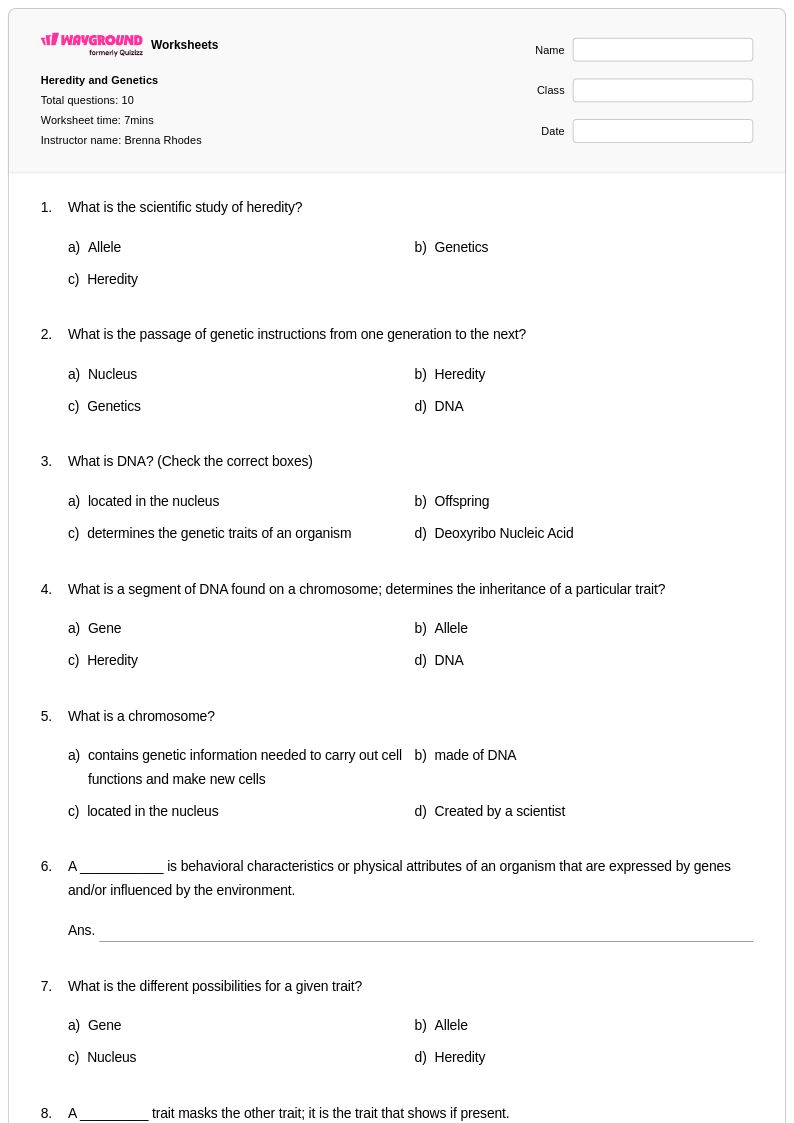
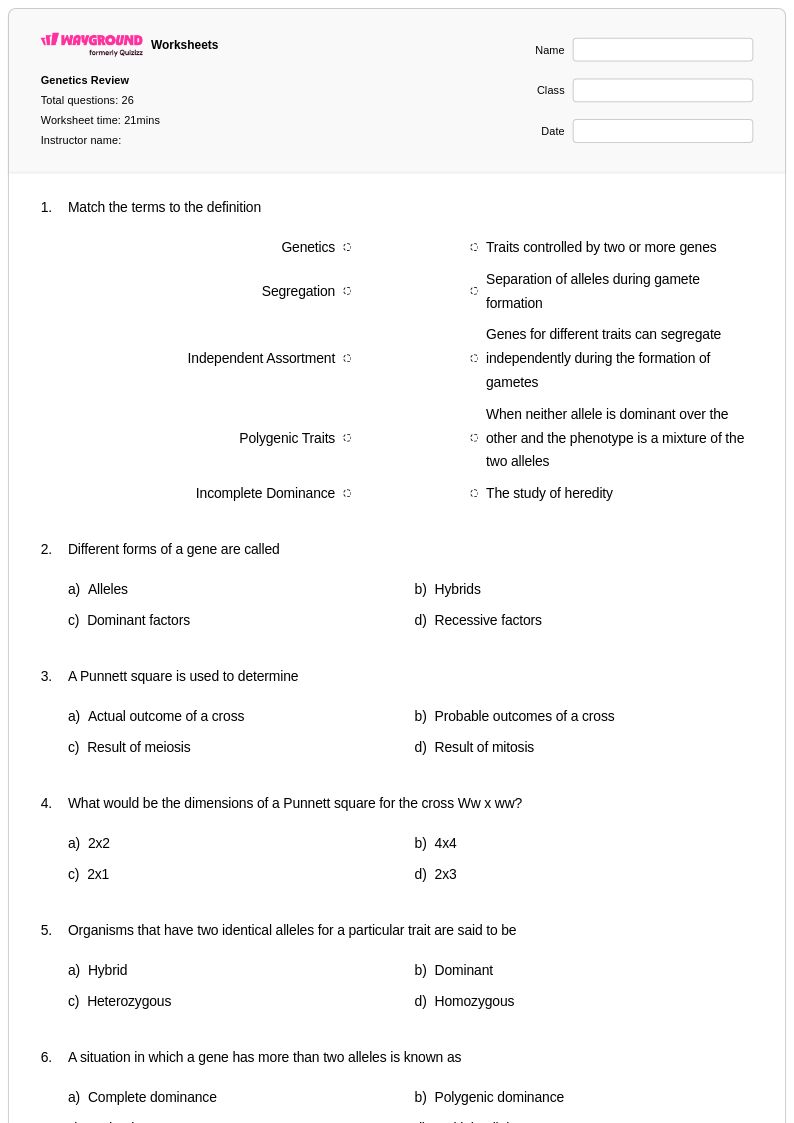
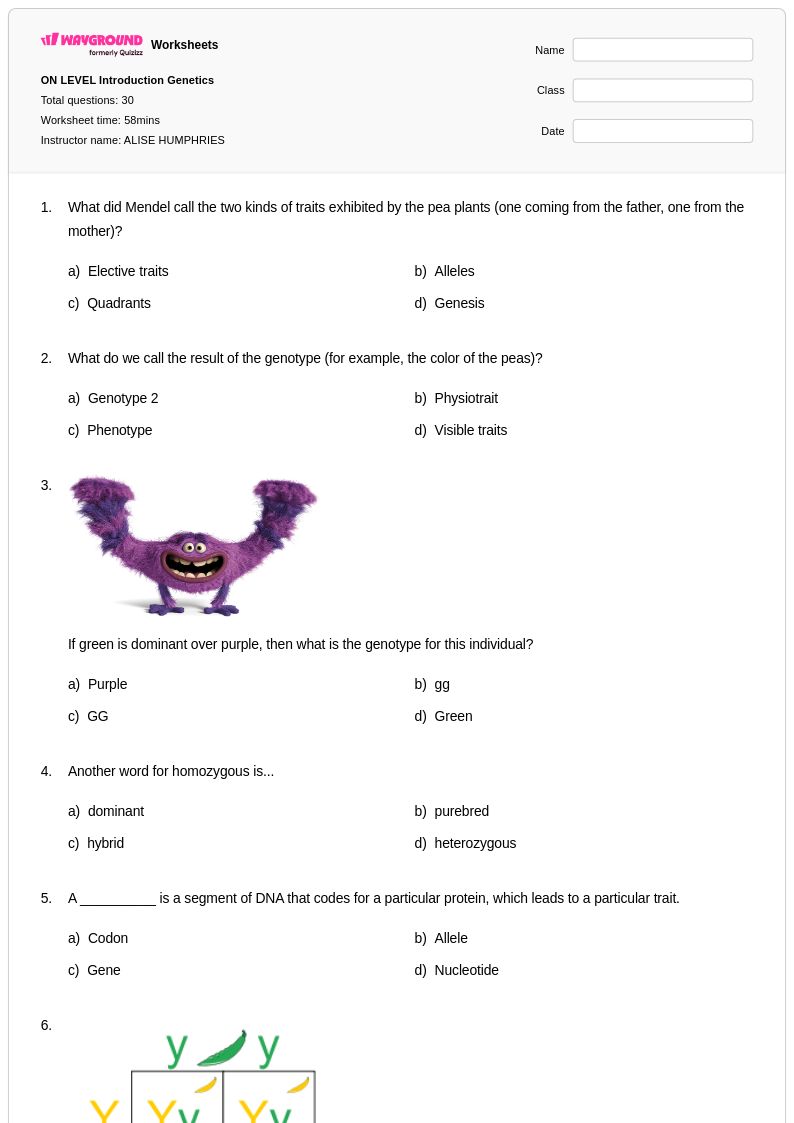
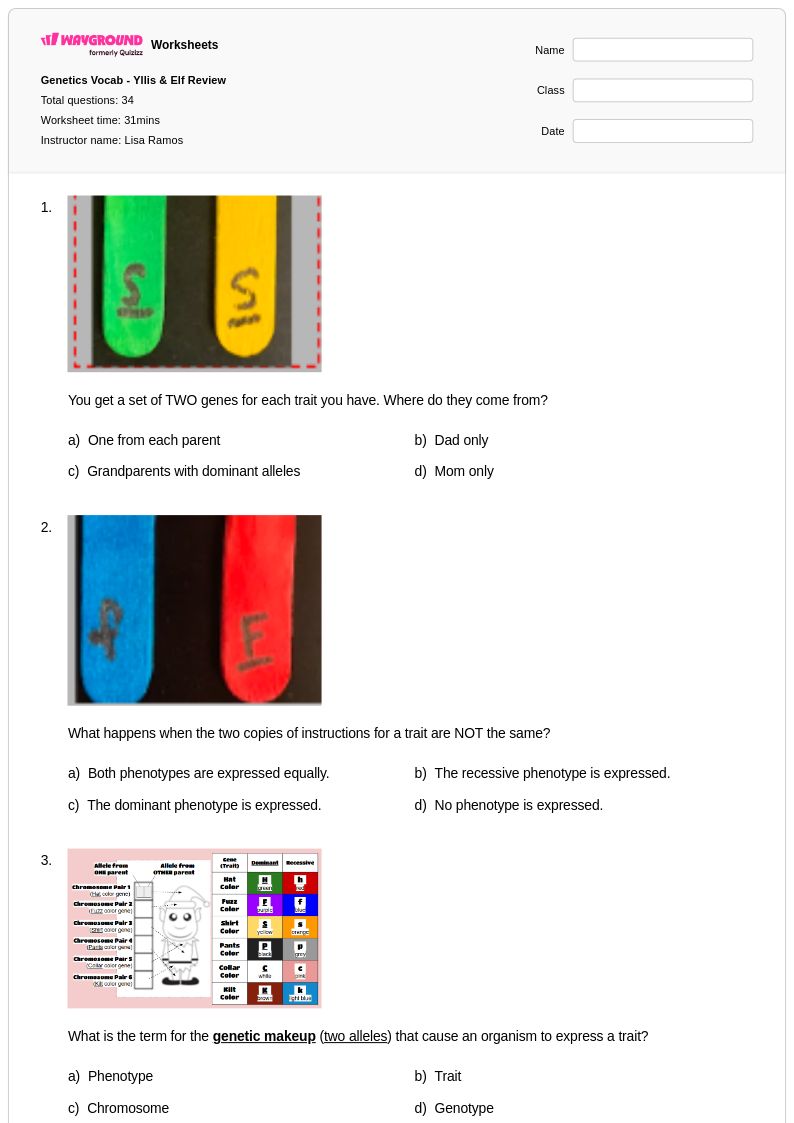
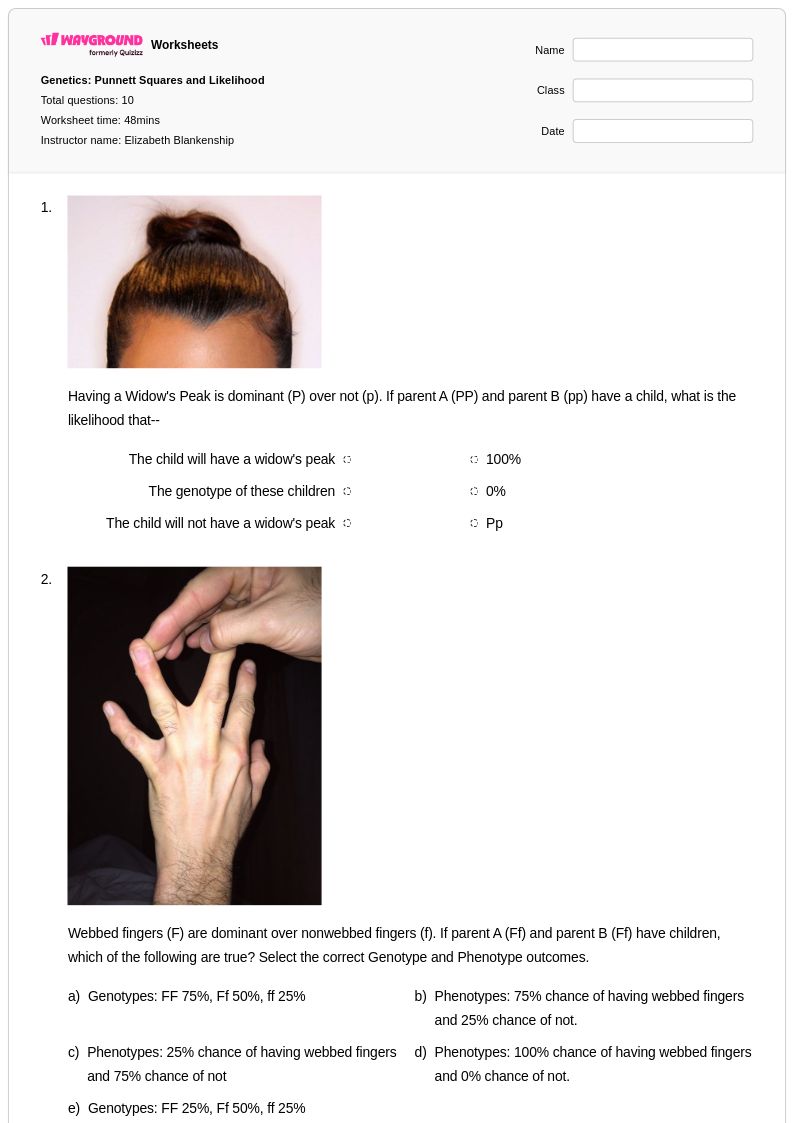
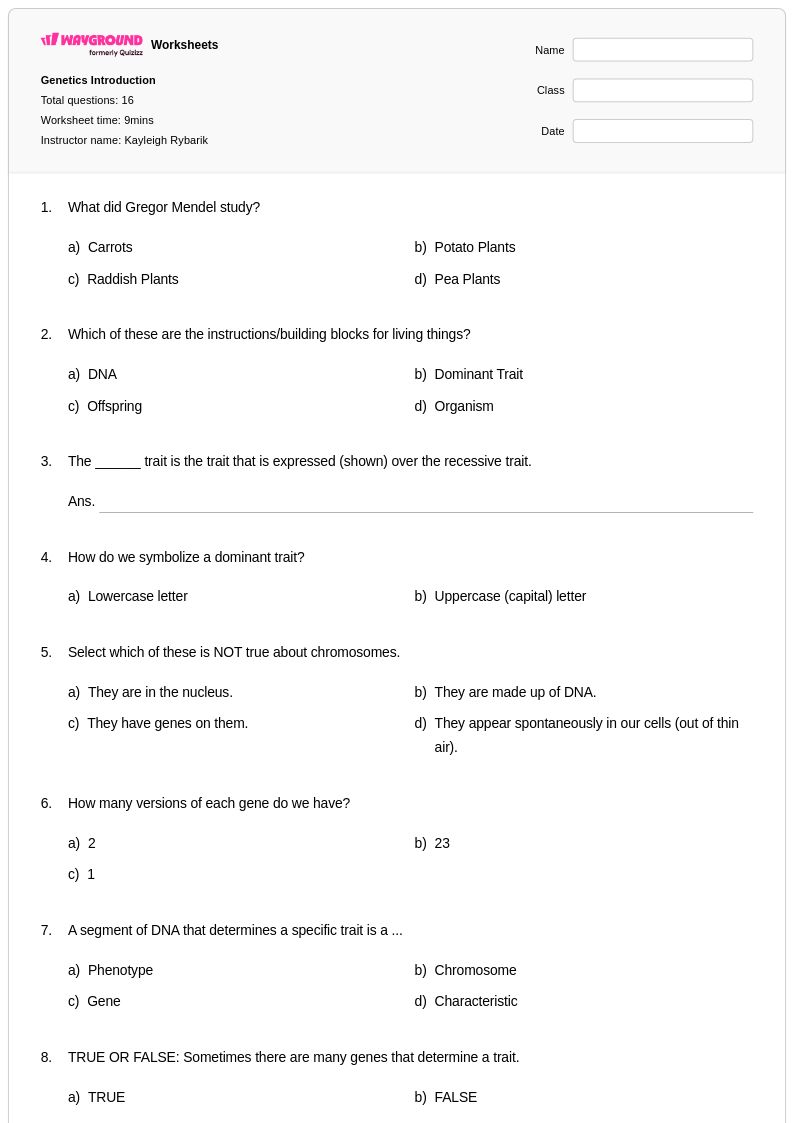
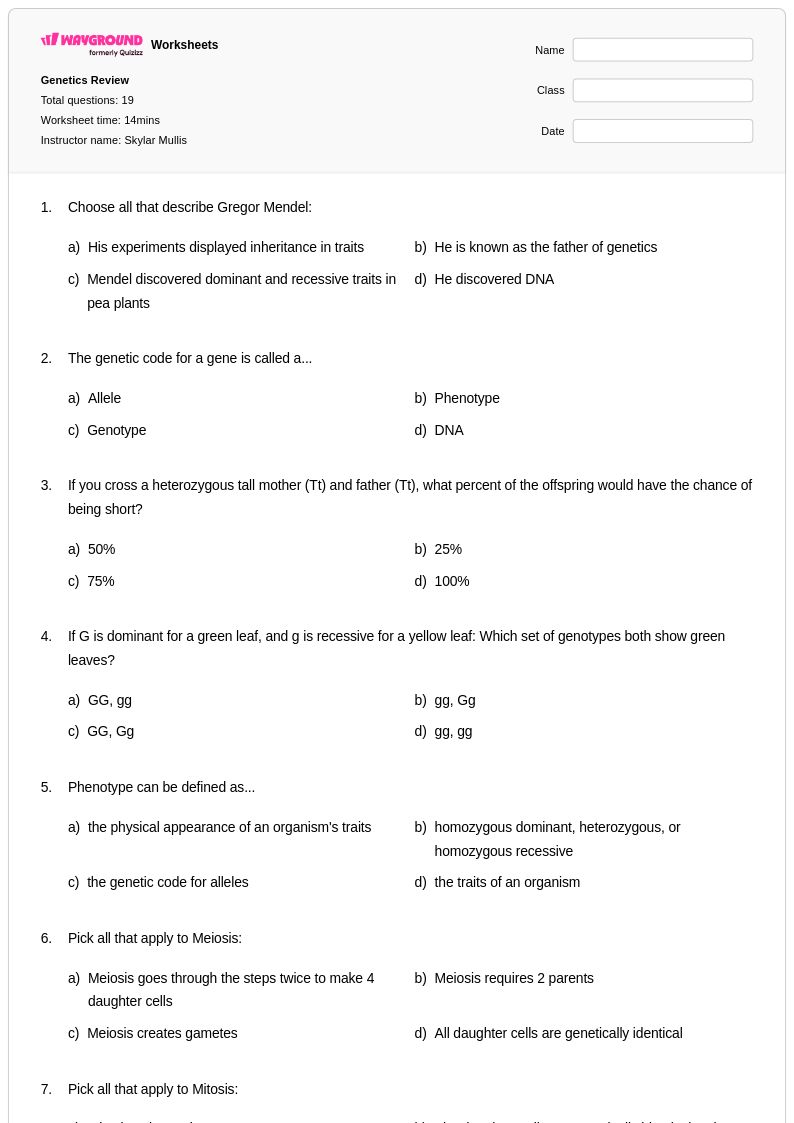
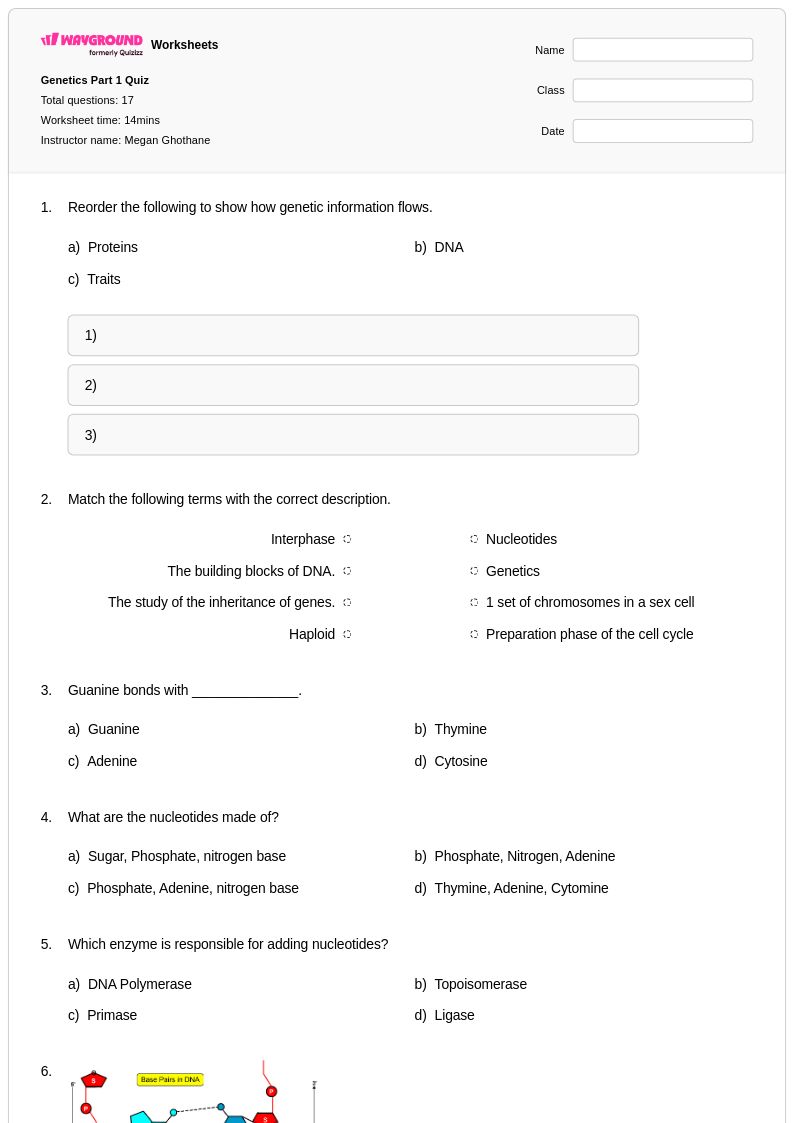
Explore Wayground's comprehensive collection of free genetics worksheets and printables that help students master heredity, DNA structure, and genetic principles through engaging practice problems with detailed answer keys.
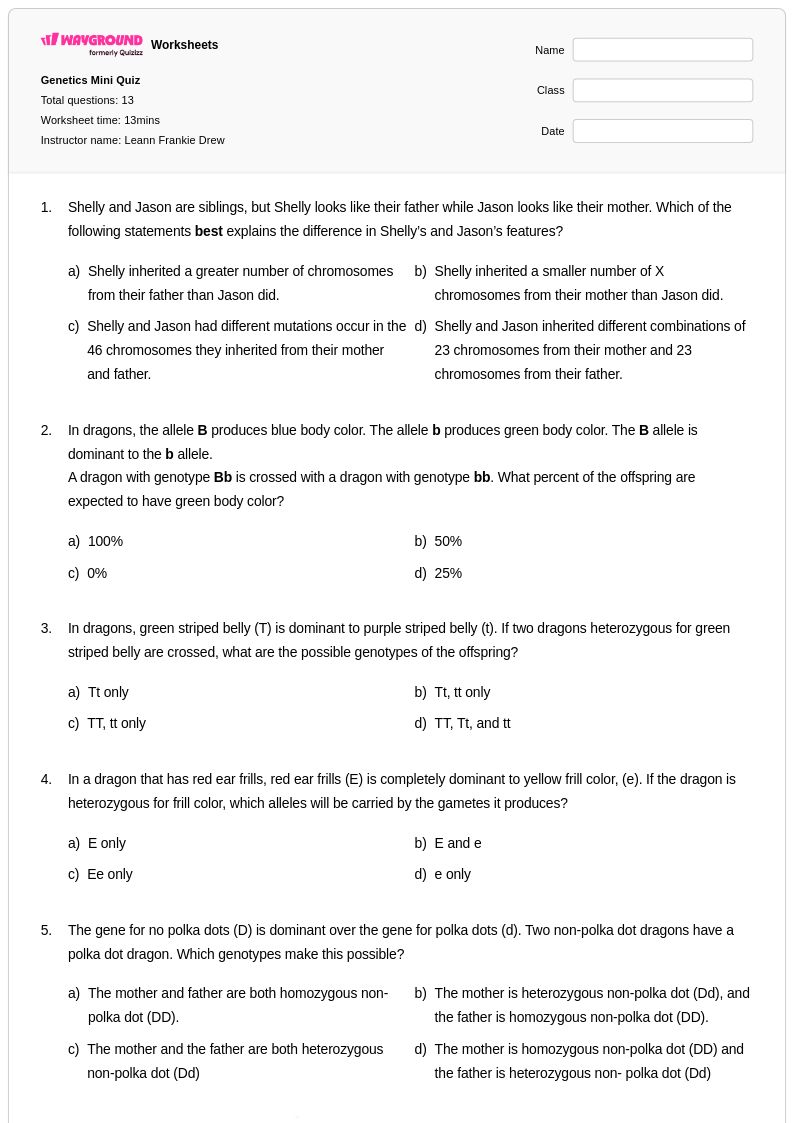
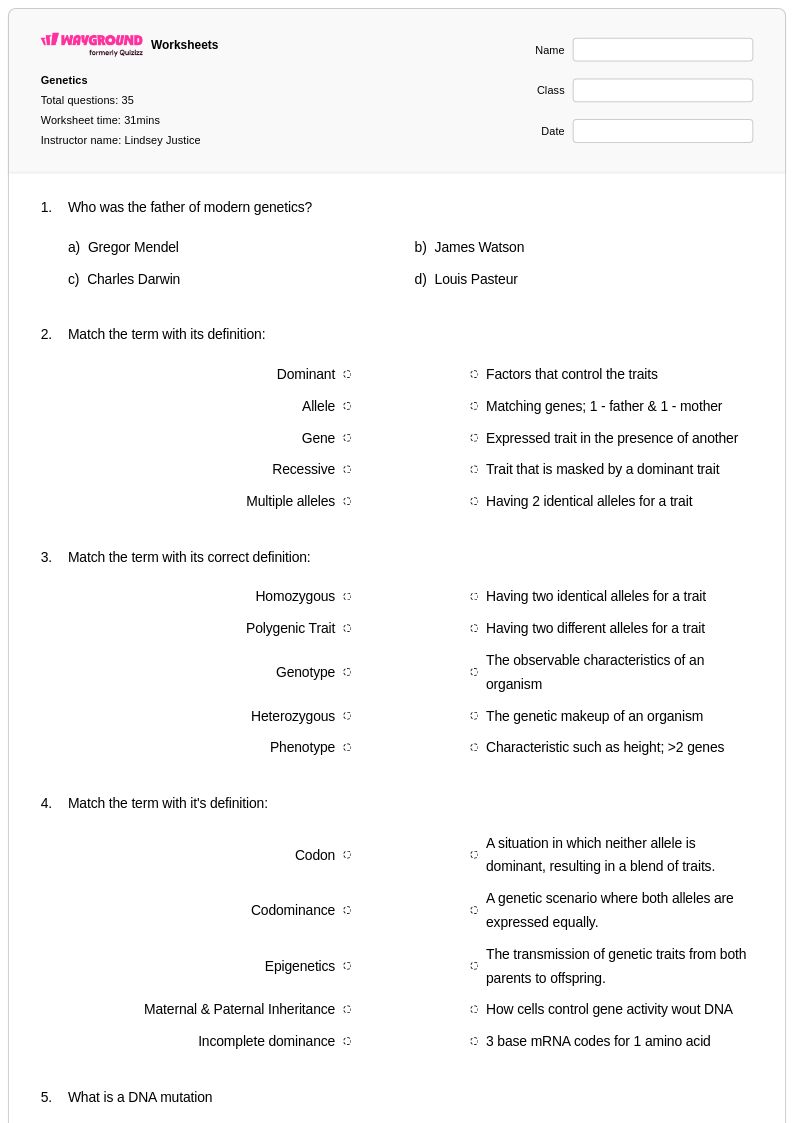
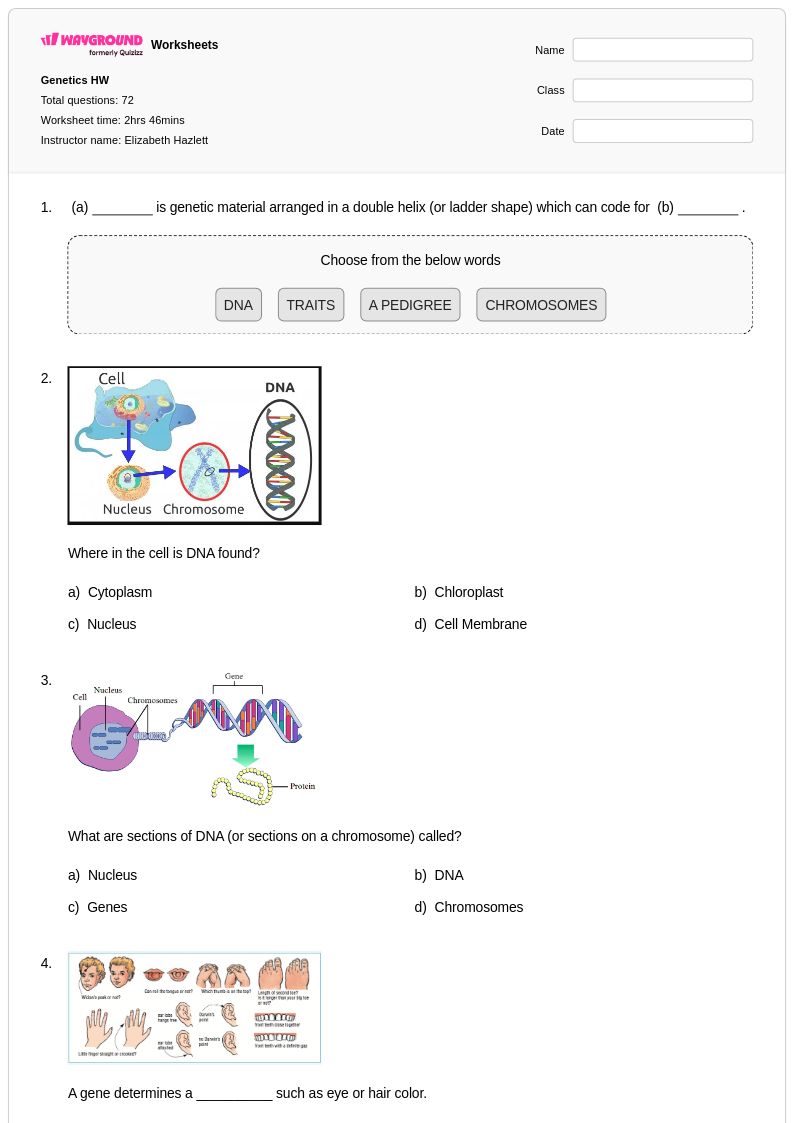
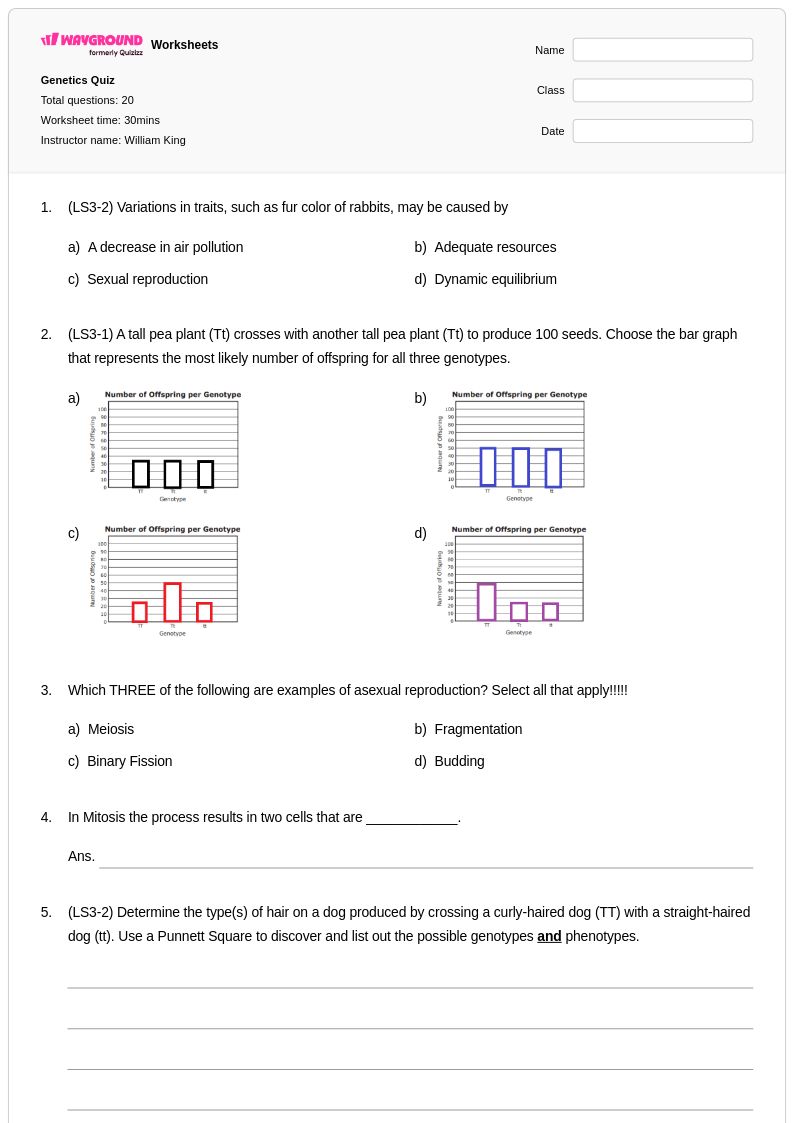
Genetics worksheets available through Wayground (formerly Quizizz) provide comprehensive educational resources that help students master fundamental concepts in heredity, DNA structure, gene expression, and molecular biology. These expertly crafted materials strengthen critical thinking skills through hands-on practice problems that cover Punnett squares, inheritance patterns, genetic crosses, and chromosome behavior during meiosis and mitosis. Students develop proficiency in analyzing genotypes and phenotypes, calculating probability ratios, and understanding complex genetic phenomena through structured exercises that include detailed answer keys for immediate feedback. The printable pdf format ensures accessibility for classroom use, homework assignments, and independent study sessions, while free practice problems allow educators to supplement their existing curriculum with targeted skill-building activities that reinforce key genetic principles.
Wayground (formerly Quizizz) supports educators with an extensive collection of millions of teacher-created genetics resources that streamline lesson planning and enhance instructional effectiveness. The platform's robust search and filtering capabilities enable teachers to quickly locate worksheets aligned with specific learning standards, whether focusing on basic Mendelian genetics or advanced topics like population genetics and biotechnology applications. Differentiation tools allow instructors to customize content complexity and modify practice problems to meet diverse student needs, supporting both remediation for struggling learners and enrichment opportunities for advanced students. Available in both printable and digital formats, these genetics worksheets facilitate flexible implementation across various teaching environments while providing the scaffolded practice necessary for students to develop confidence in genetic analysis and problem-solving skills essential for success in advanced biology coursework.
FAQs
How do I teach genetics concepts like Punnett squares and inheritance patterns in high school biology?
Start with monohybrid crosses using clear, concrete examples such as flower color or seed shape before introducing dihybrid crosses and more complex inheritance patterns. Punnett squares work best when students first understand the difference between genotype and phenotype and can calculate basic probability ratios. Once students are comfortable with Mendelian genetics, layer in exceptions like sex-linked traits and codominance to show how inheritance patterns vary. Pedigree analysis is a strong culminating activity because it requires students to apply multiple inheritance rules simultaneously to real family scenarios.
What are common mistakes students make when solving genetics problems?
One of the most frequent errors is confusing genotype with phenotype, particularly when dealing with dominant and recessive alleles — students often assume a dominant phenotype means homozygous dominant. Students also commonly misread pedigree charts, failing to distinguish between carriers and affected individuals, especially in autosomal recessive and sex-linked inheritance problems. When working with blood type genetics, students frequently overlook the codominant relationship between the I^A and I^B alleles, defaulting to simple dominant-recessive logic. Requiring students to show all work, including allele assignments and cross setup, helps surface these errors before they become entrenched misconceptions.
What practice problems help students get better at pedigree analysis and sex-linked traits?
Pedigree analysis improves most when students practice determining inheritance patterns from multiple generations of family data, starting with autosomal recessive cases before moving to sex-linked pedigrees. For sex-linked traits specifically, problems that require students to identify carrier females and explain why affected males cannot pass the trait to sons are especially effective at exposing gaps in understanding. Blood type inheritance problems that combine ABO and Rh factor also provide strong multi-step practice that mirrors real-world genetics applications. Varied problem sets that mix monohybrid crosses, pedigrees, and probability calculations build the fluency students need for genetics assessments.
How do I support students who struggle with genetics probability calculations?
Students who struggle with genetics probability often have gaps in foundational math skills around fractions and ratios, so briefly revisiting these concepts in a biology context can make a significant difference. Breaking problems into steps, such as setting up the Punnett square first, then reading phenotype ratios separately, reduces cognitive load and helps students avoid compounding errors. On Wayground, teachers can enable reduced answer choices for specific students to lower the difficulty of multiple-choice genetics questions while keeping the conceptual content consistent with the rest of the class. Accommodations like extended time and read-aloud support can also be applied individually, so struggling learners get targeted support without disrupting the experience for other students.
How do I use genetics worksheets from Wayground in my classroom?
Wayground genetics worksheets are available as printable PDFs for traditional classroom use and in digital formats for technology-integrated environments, giving teachers flexibility to assign them as in-class practice, homework, or assessments. Teachers can also host worksheets as a live quiz on Wayground, which allows for real-time student response tracking and immediate feedback through built-in answer keys. The collection covers a range of subtopics including monohybrid crosses, pedigrees, sex-linked traits, blood type inheritance, and crossing over, making it easy to align specific worksheets to your current unit without building materials from scratch.
How do I differentiate genetics instruction for advanced students versus those who need remediation?
For students who need remediation, focus on single-trait monohybrid crosses with clear visual scaffolds like labeled Punnett squares before introducing multi-trait problems. Advanced students benefit from open-ended pedigree problems where the inheritance pattern is not given, requiring them to evaluate multiple possible modes of inheritance before selecting the most likely one. Topics like crossing over and its effect on genetic recombination are well-suited for enrichment because they connect Mendelian genetics to molecular-level chromosome behavior. Wayground's differentiation tools allow teachers to customize content complexity so that both remediation and enrichment needs can be addressed within the same assignment structure.