
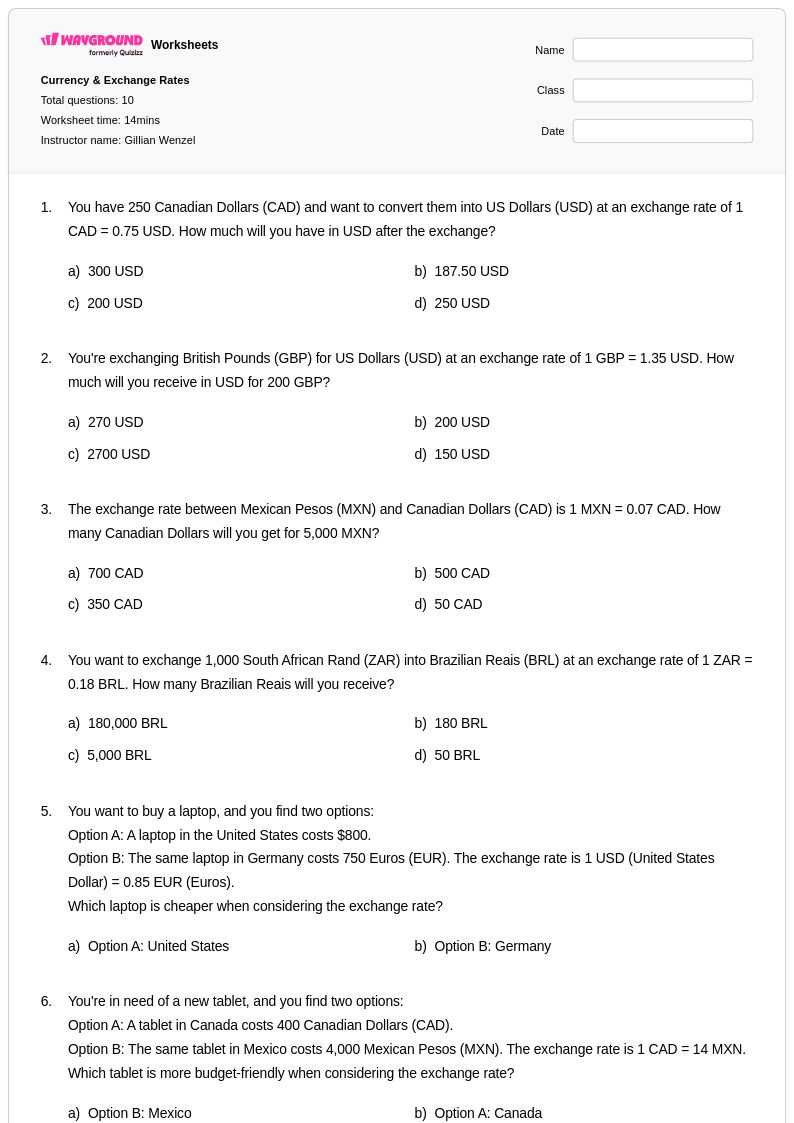
10 Q
12th
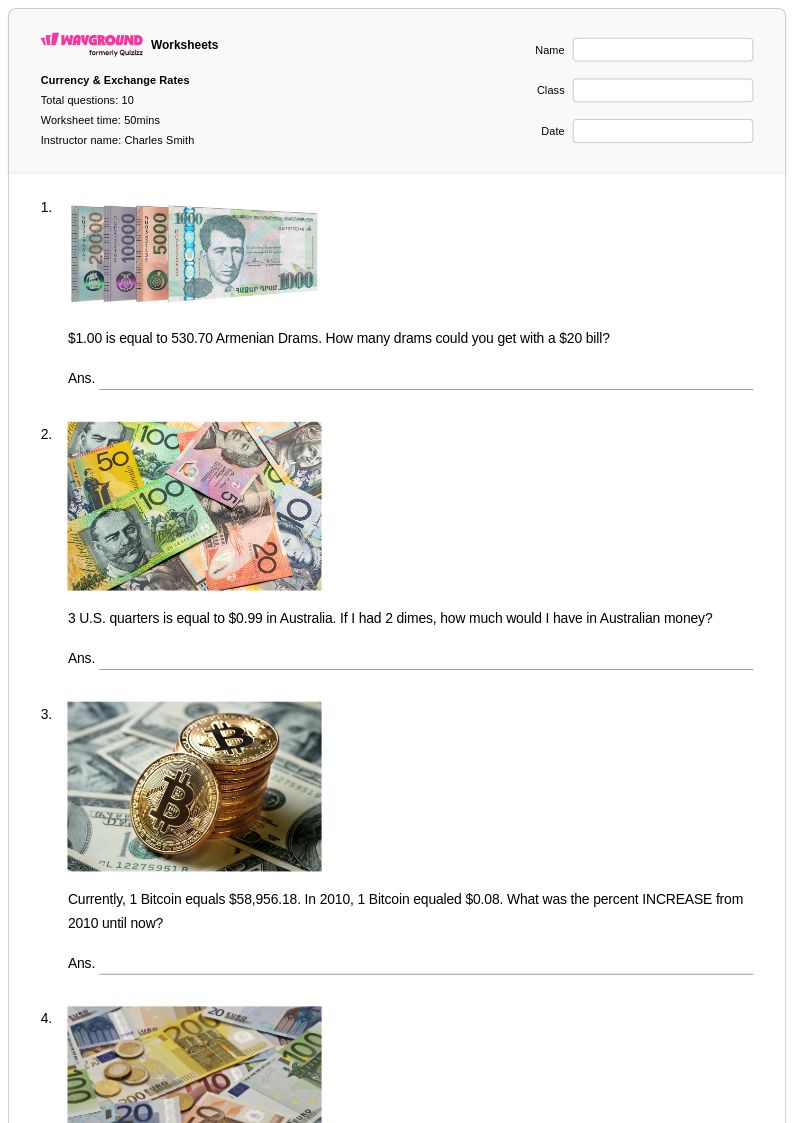
10 Q
6th - 8th
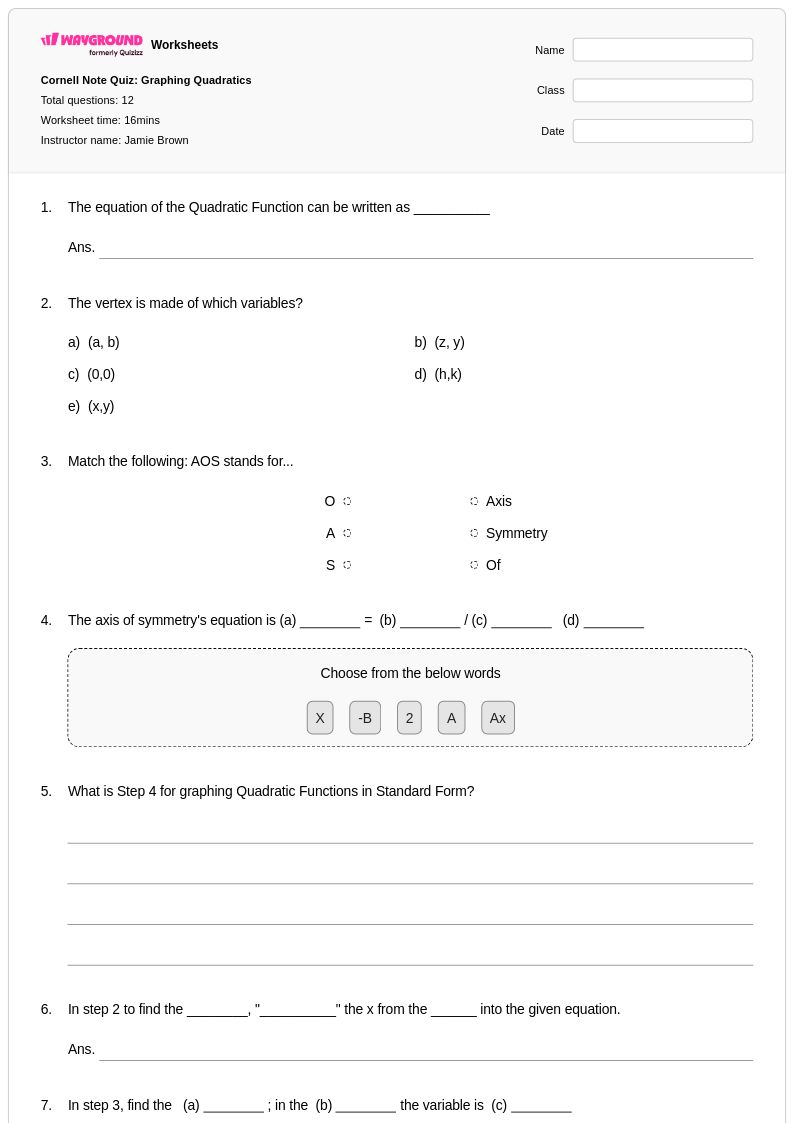
12 Q
9th
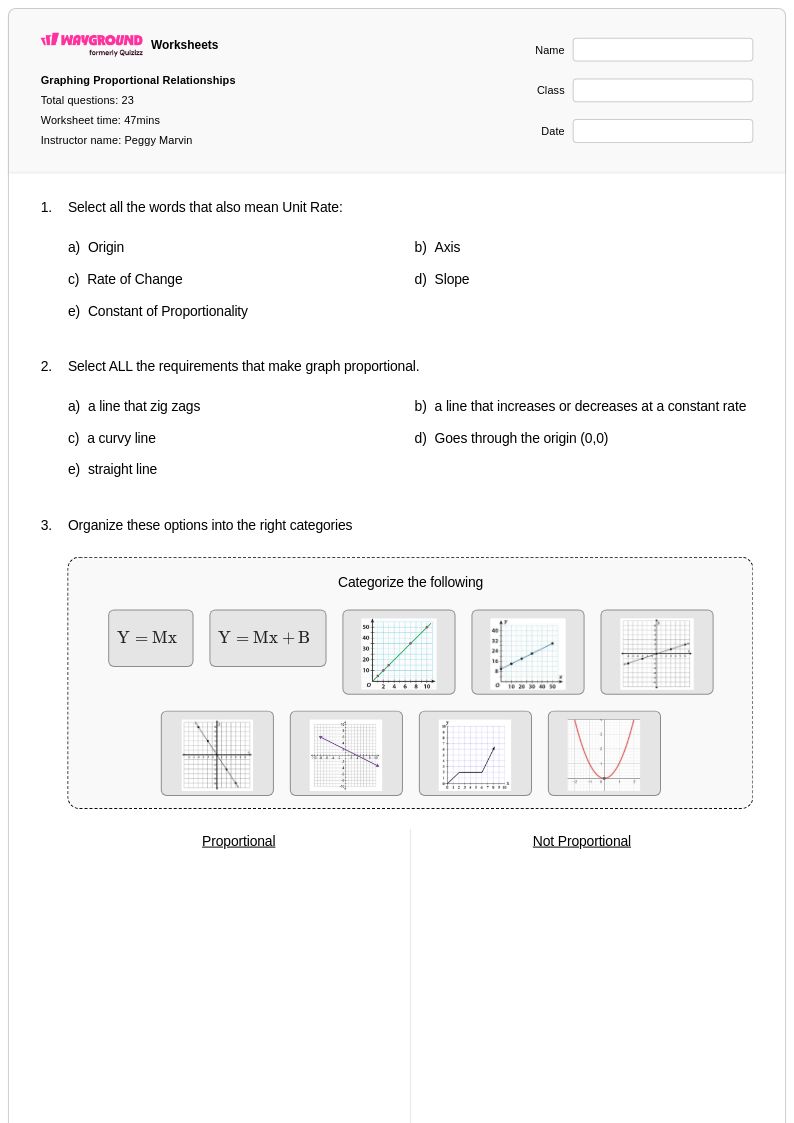
19 Q
7th
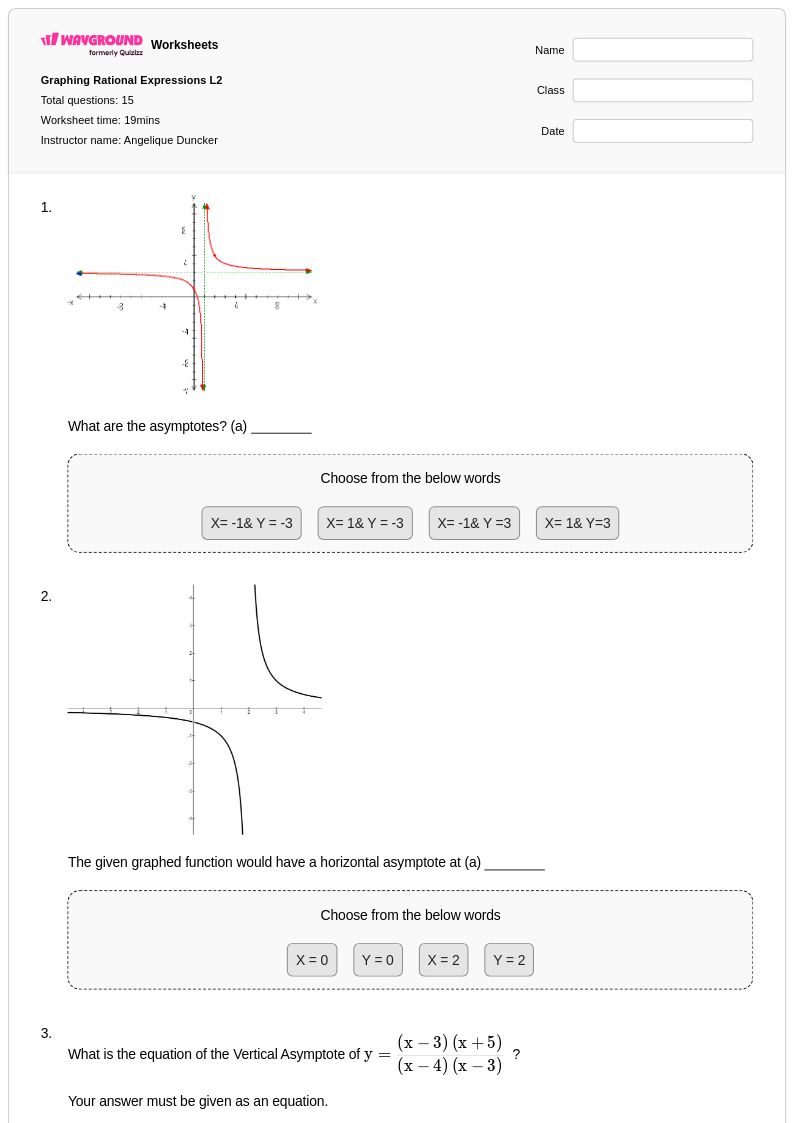
15 Q
KG
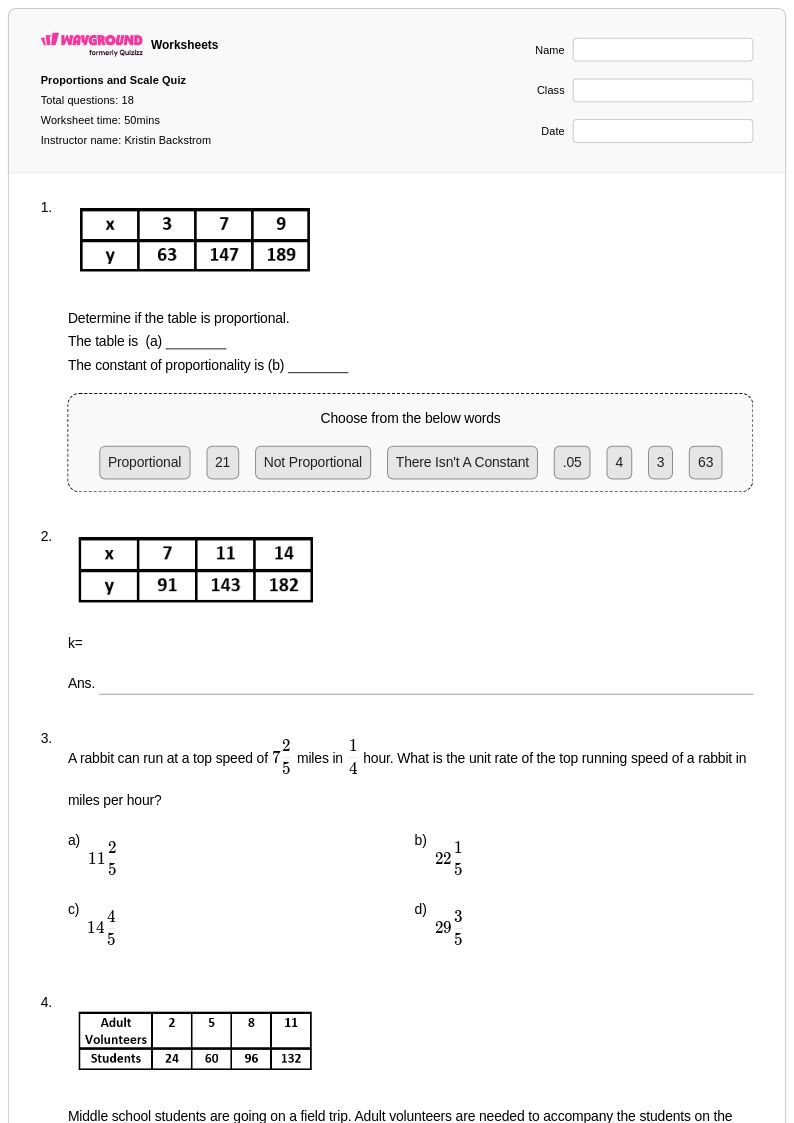
18 Q
7th
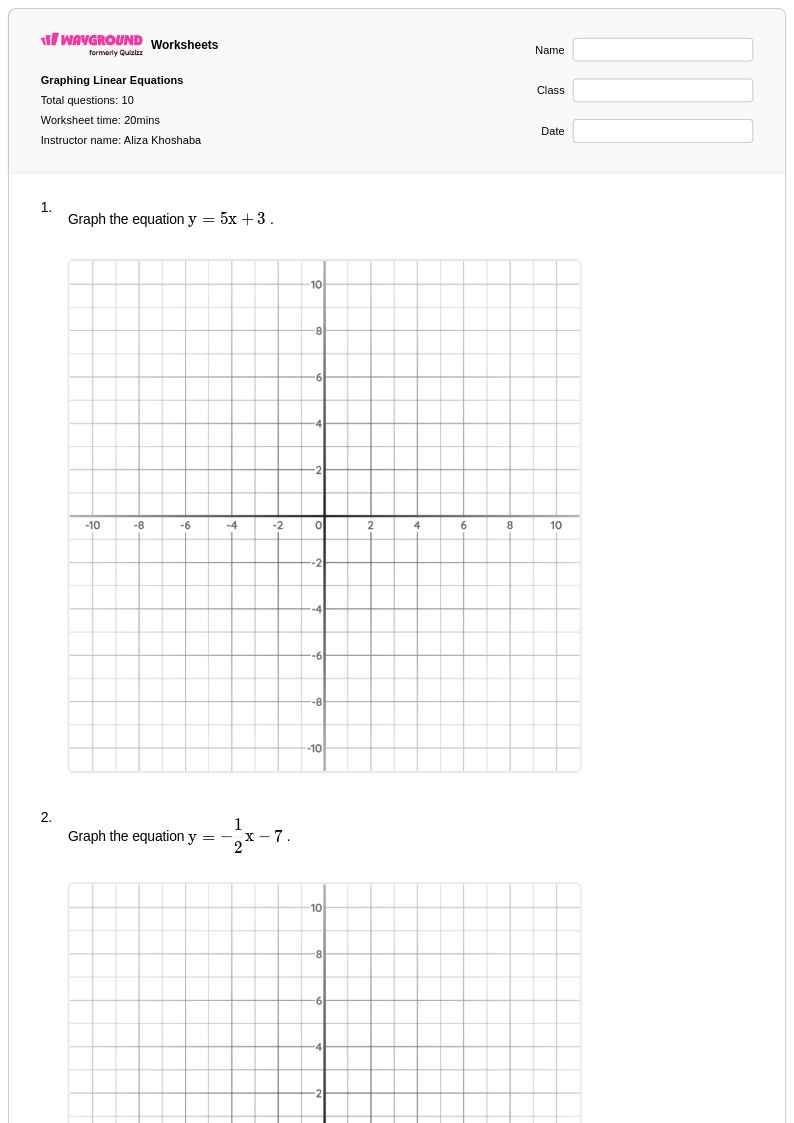
10 Q
8th
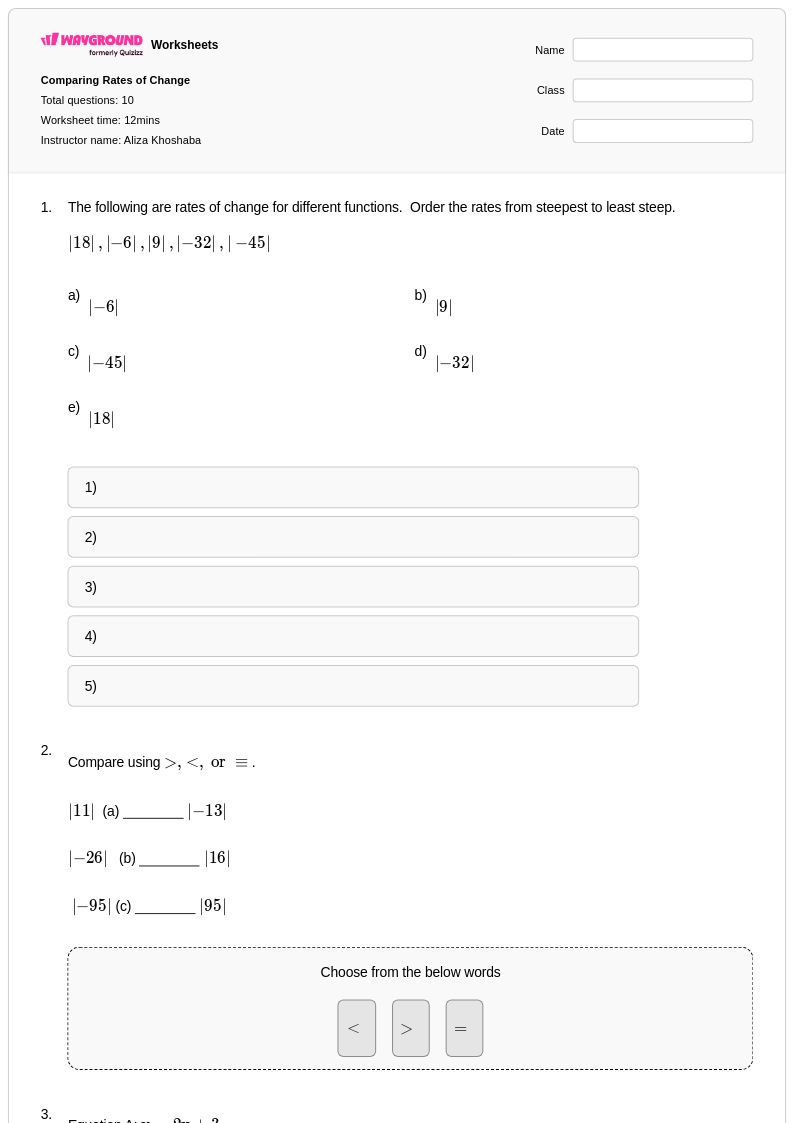
10 Q
8th
16 Q
9th
10 Q
8th
8 Q
6th
23 Q
6th
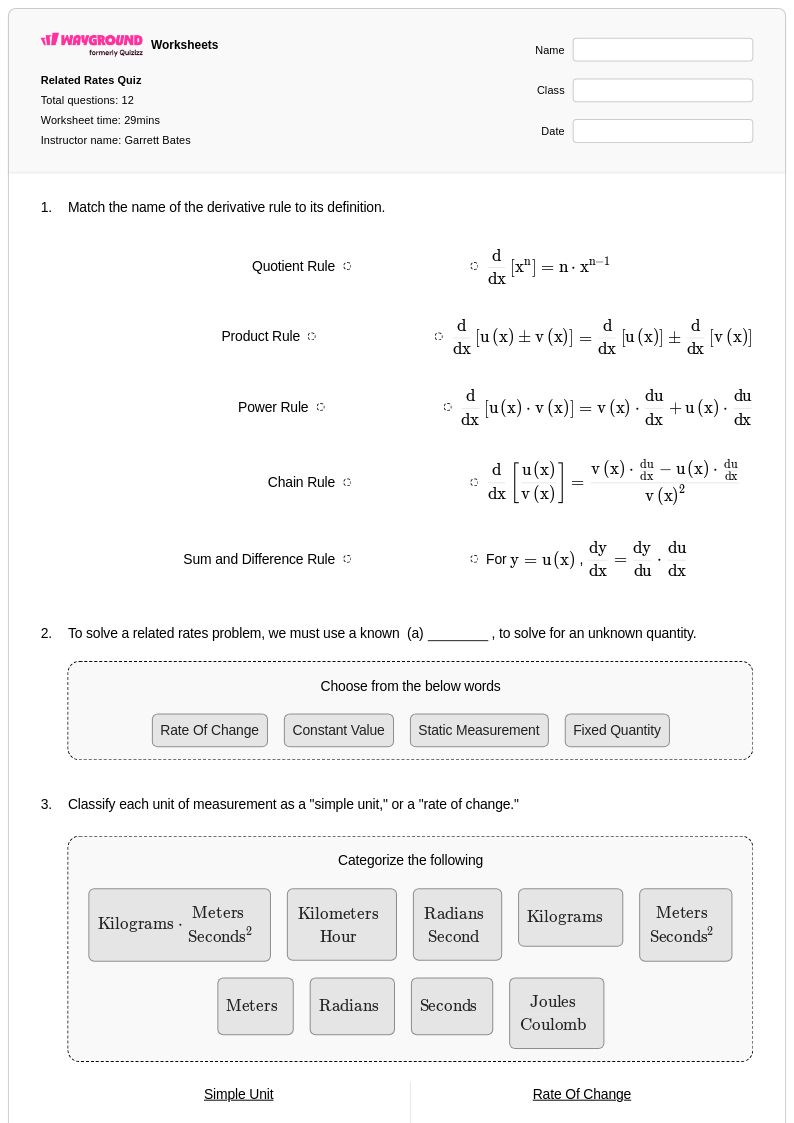
12 Q
12th
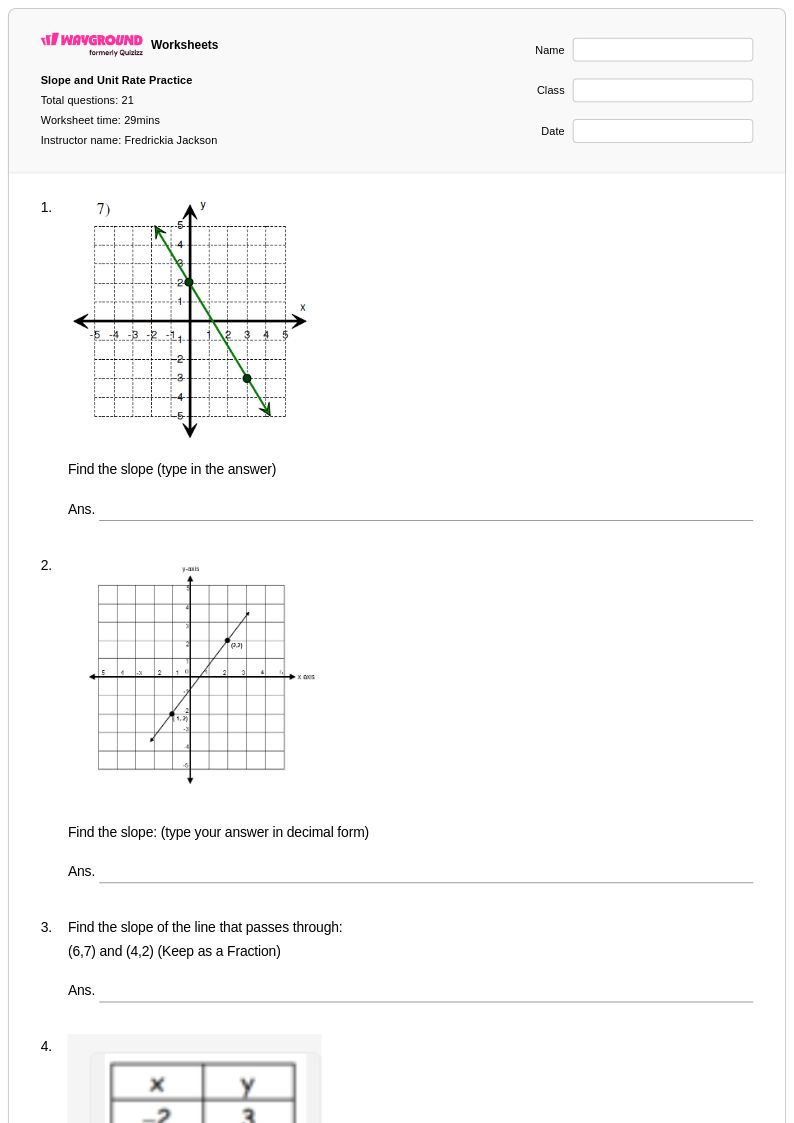
21 Q
8th
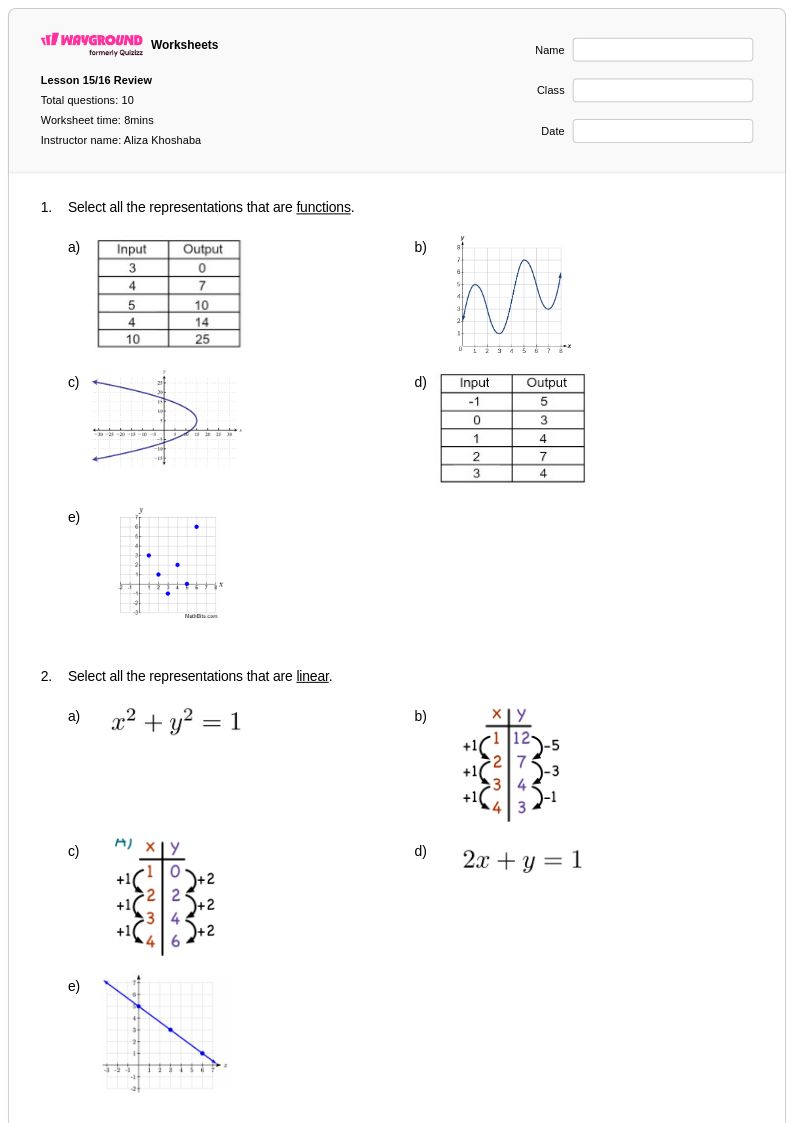
10 Q
8th
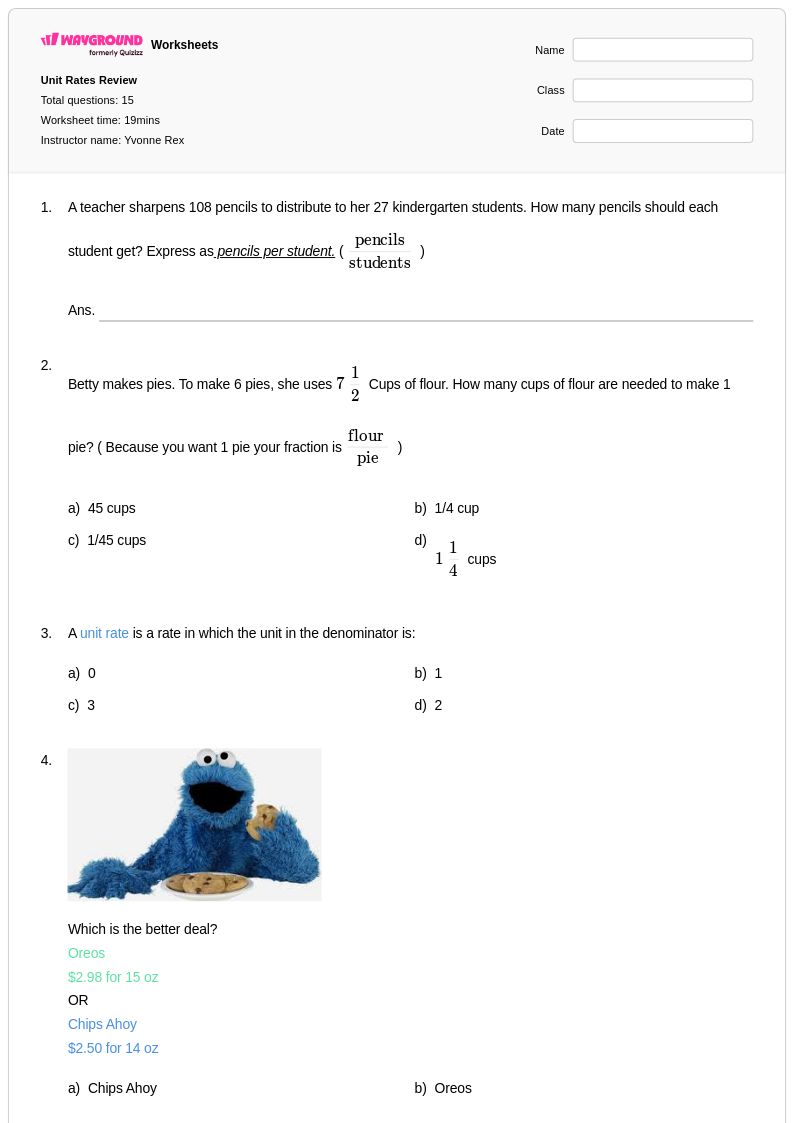
15 Q
7th
24 Q
5th
13 Q
8th
11 Q
7th
14 Q
6th - 8th
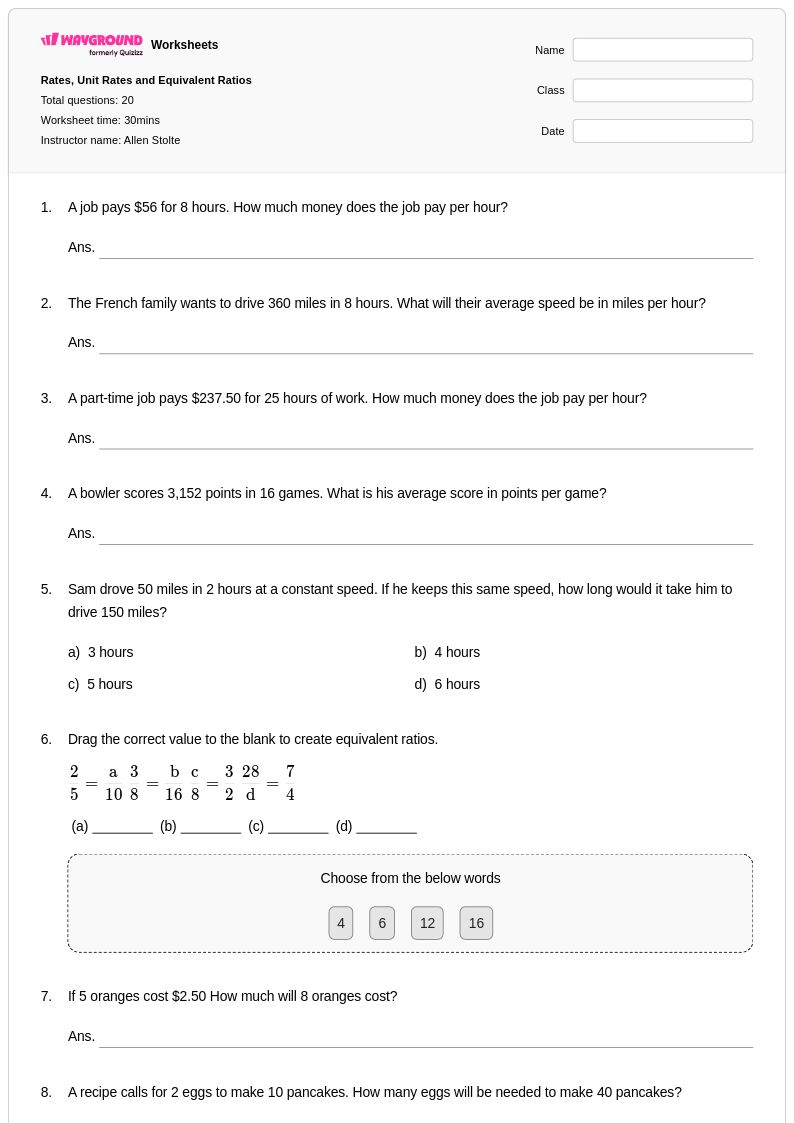
20 Q
6th - 8th
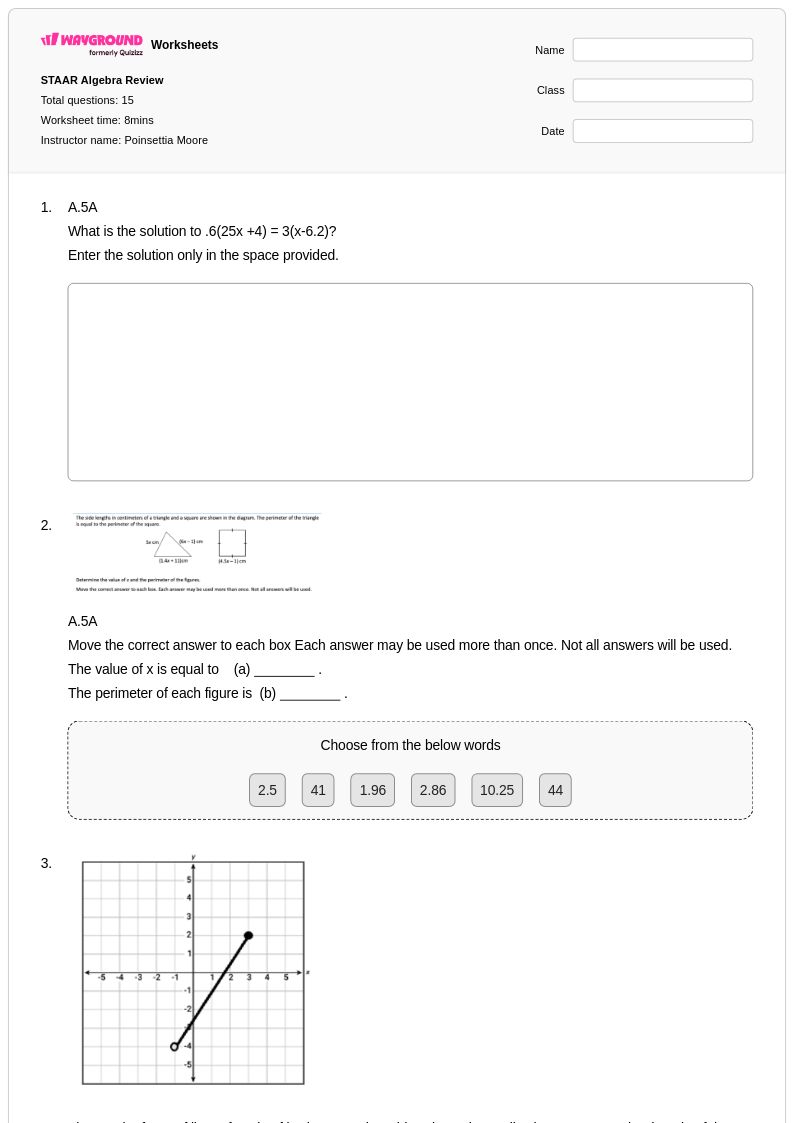
15 Q
8th
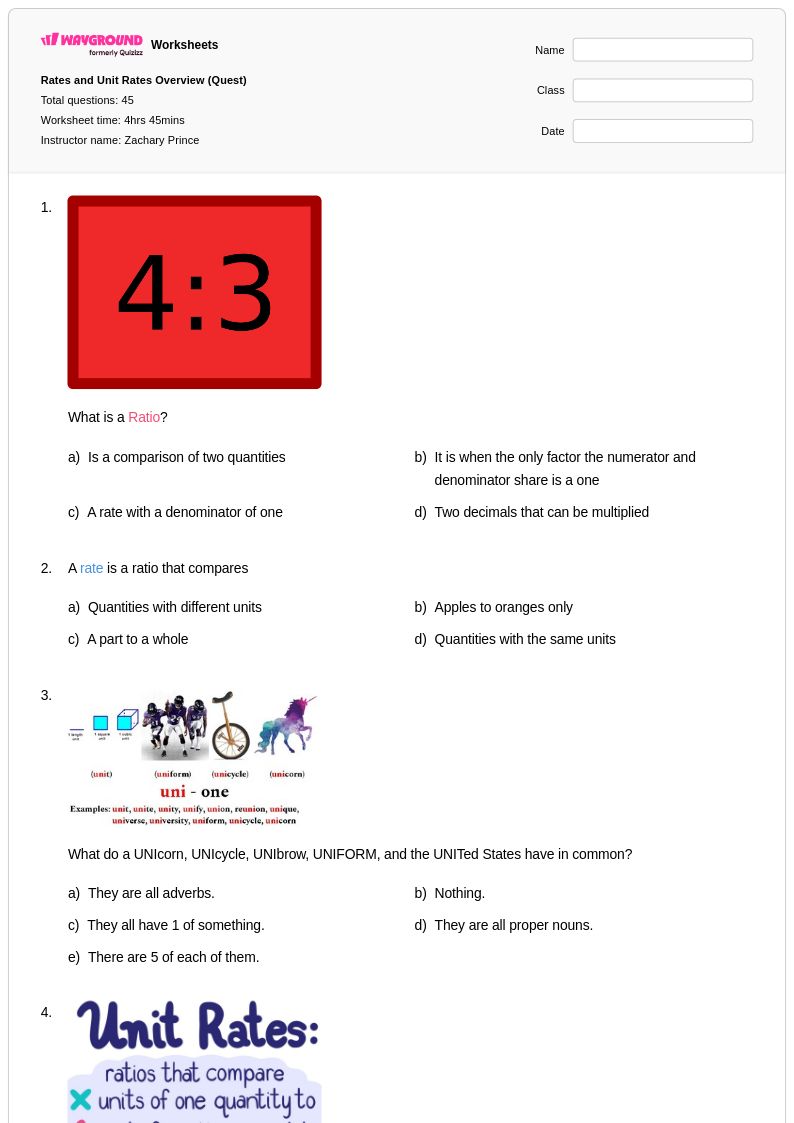
45 Q
6th
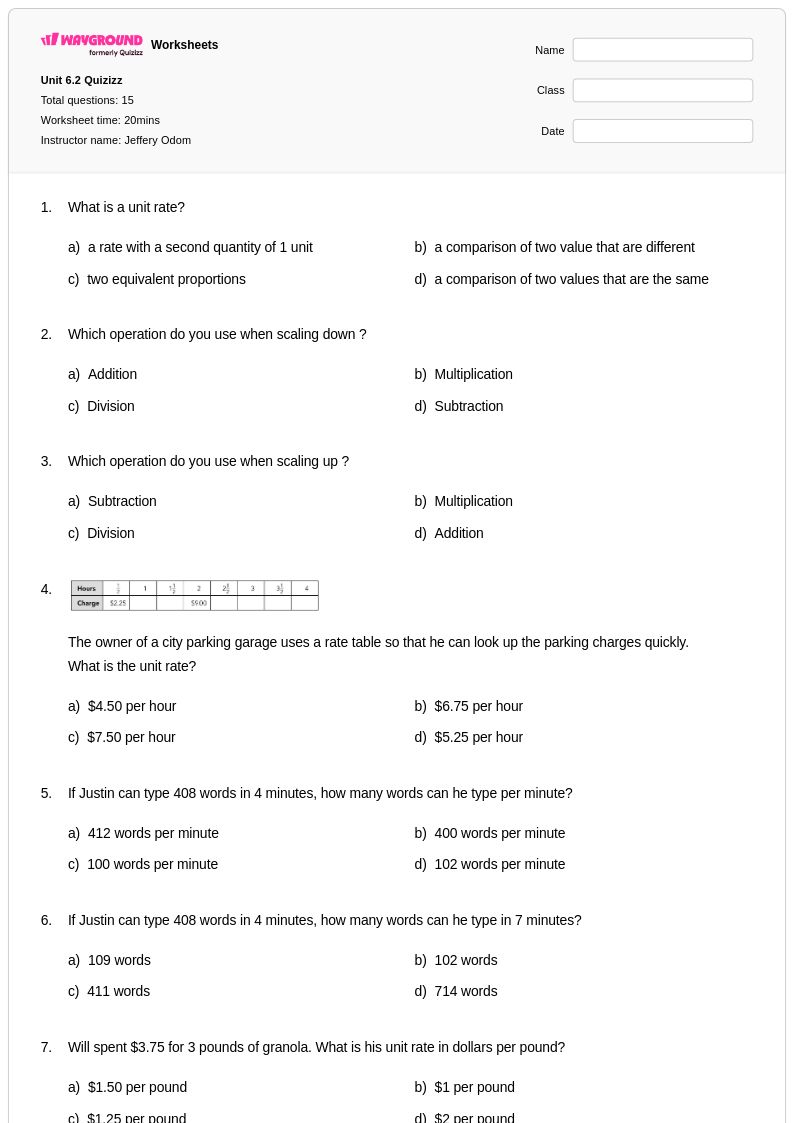
15 Q
6th
Explore Worksheets by Subjects
Explore printable Graphing Exchange Rates worksheets
Graphing exchange rates worksheets available through Wayground (formerly Quizizz) provide students with essential practice in interpreting and creating visual representations of currency fluctuations over time. These comprehensive resources strengthen critical mathematical skills including reading coordinate graphs, analyzing trends in data sets, calculating percentage changes, and making predictions based on graphical information. Students work with real-world economic data to construct line graphs, bar charts, and scatter plots that illustrate how different currencies perform against each other across various time periods. Each worksheet comes with a complete answer key and is available as a free printable pdf, featuring practice problems that range from basic graph interpretation to complex multi-currency comparisons that require students to synthesize information from multiple data sources.
Wayground (formerly Quizizz) empowers educators with access to millions of teacher-created graphing exchange rates resources that can be easily searched, filtered, and customized to meet diverse classroom needs. The platform's robust collection includes materials aligned with mathematical standards for data analysis and graphing, offering differentiation tools that allow teachers to modify complexity levels for remediation or enrichment purposes. These versatile worksheets are available in both printable and digital formats, including downloadable pdf versions, making them ideal for traditional classroom instruction, homework assignments, or remote learning environments. Teachers can seamlessly integrate these resources into their lesson planning to provide targeted skill practice, assess student understanding of graphical data interpretation, and help students develop the quantitative literacy skills necessary for understanding global economic concepts through mathematical analysis.
FAQs
How can I introduce the topic of graphing exchange rates?
What skills do students practice with exchange rate graphing worksheets?
What are common mistakes when students graph exchange rates?
How do I use this graphing exchange rates worksheet with my class?
How does graphing exchange rates fit into the math curriculum?
How can I support struggling students with this topic?