
15 Q
8th - 7th
10 Q
8th
15 Q
8th
13 Q
8th
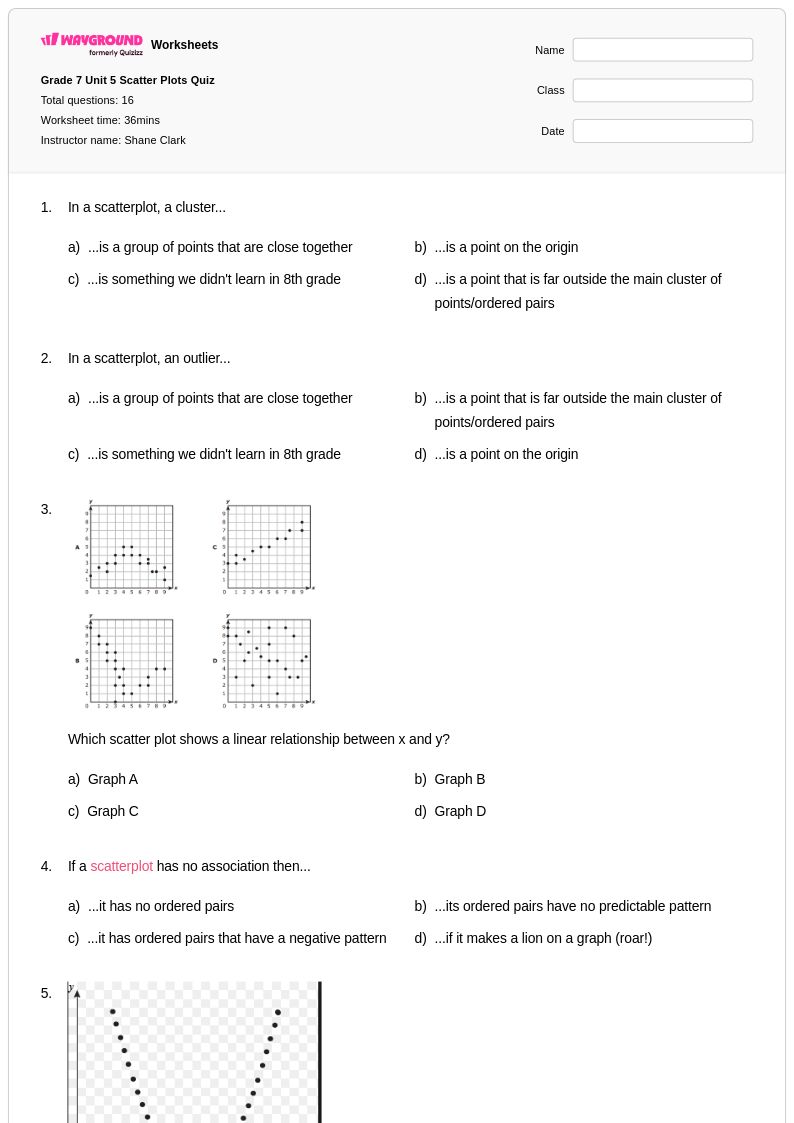
16 Q
8th
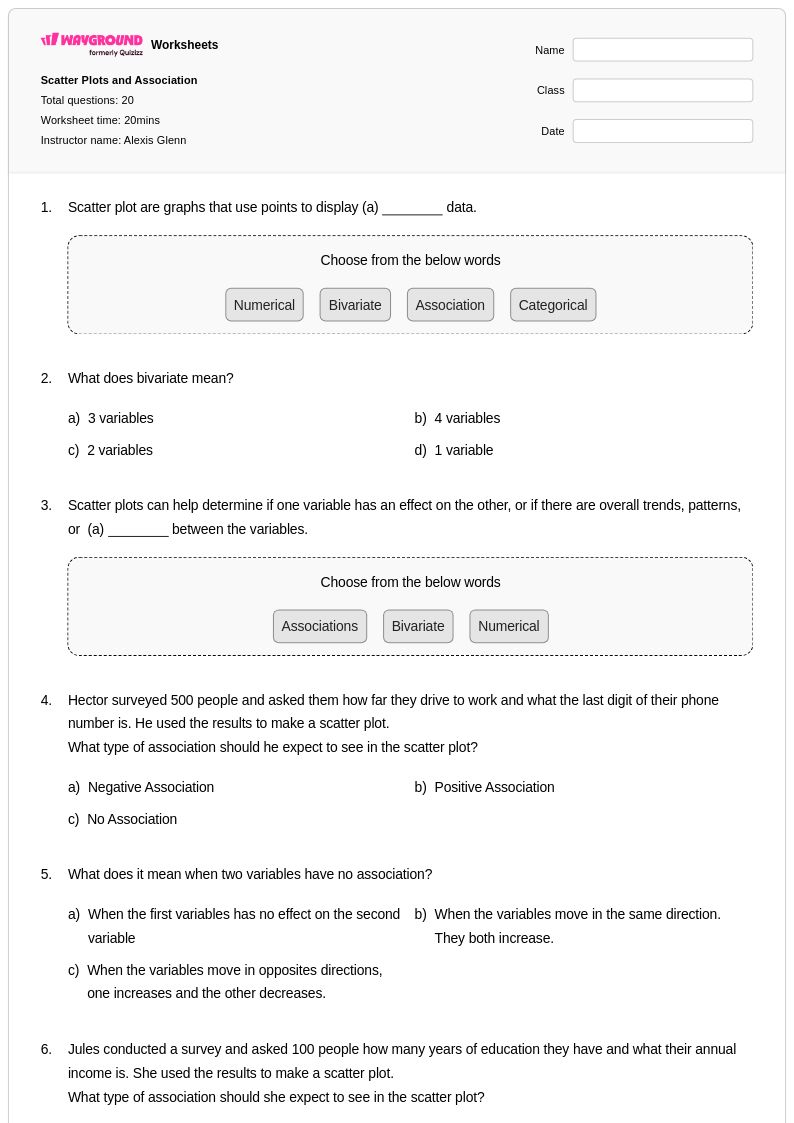
20 Q
9th - 12th
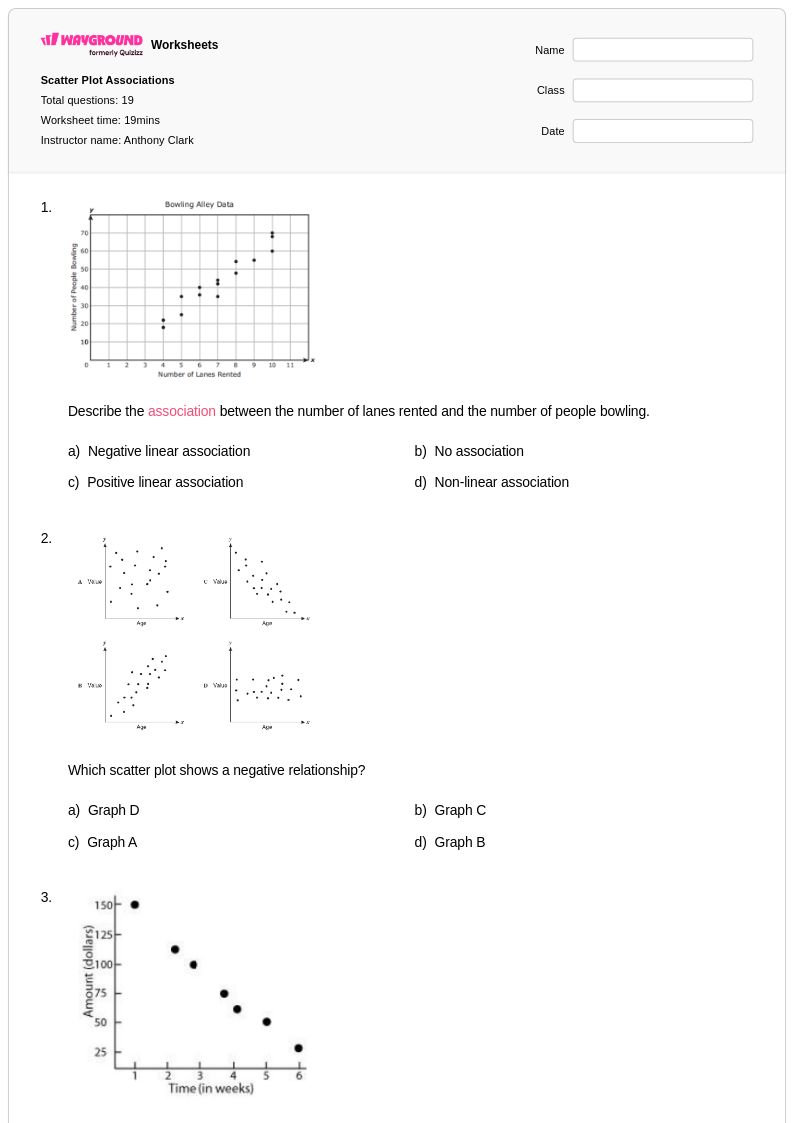
19 Q
8th - Uni
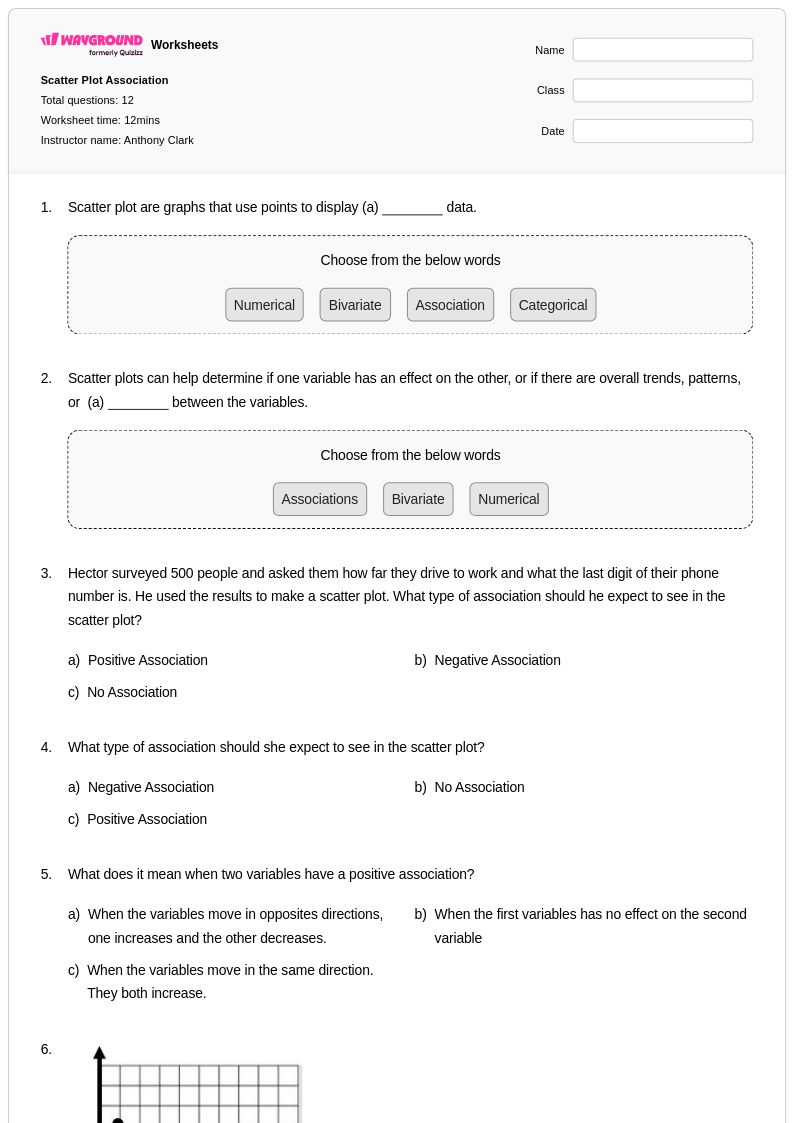
12 Q
8th - Uni
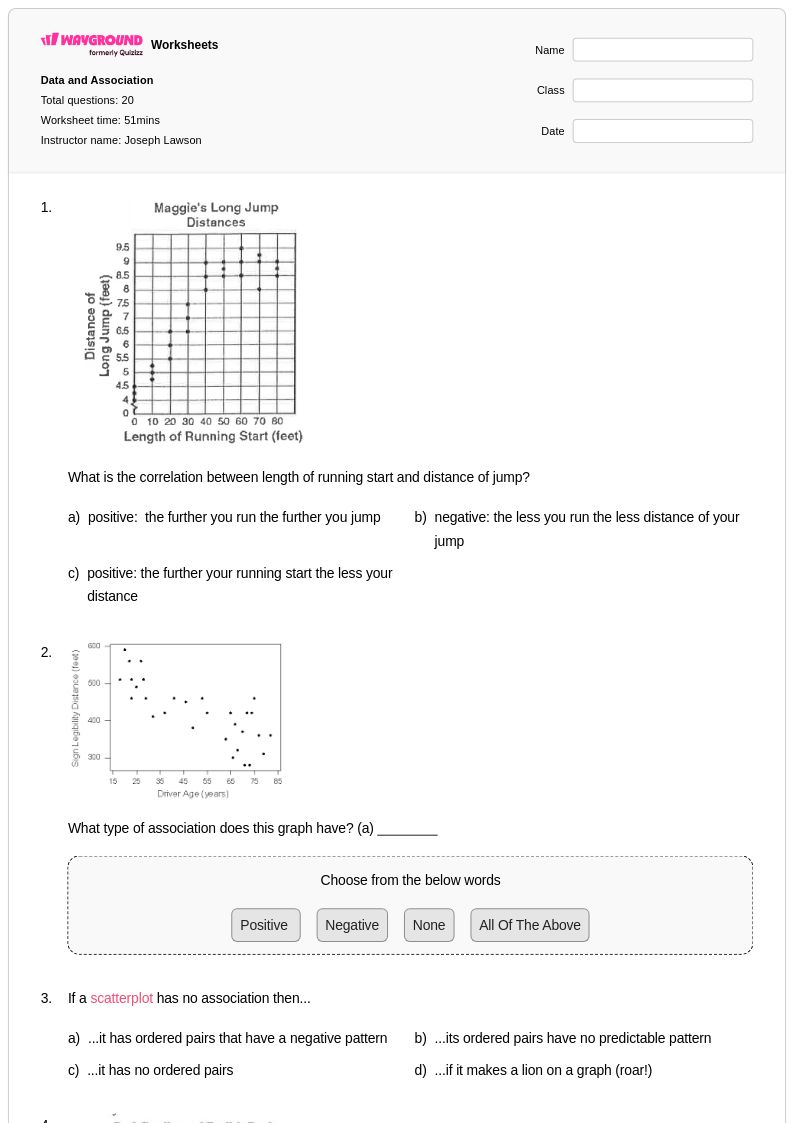
20 Q
8th
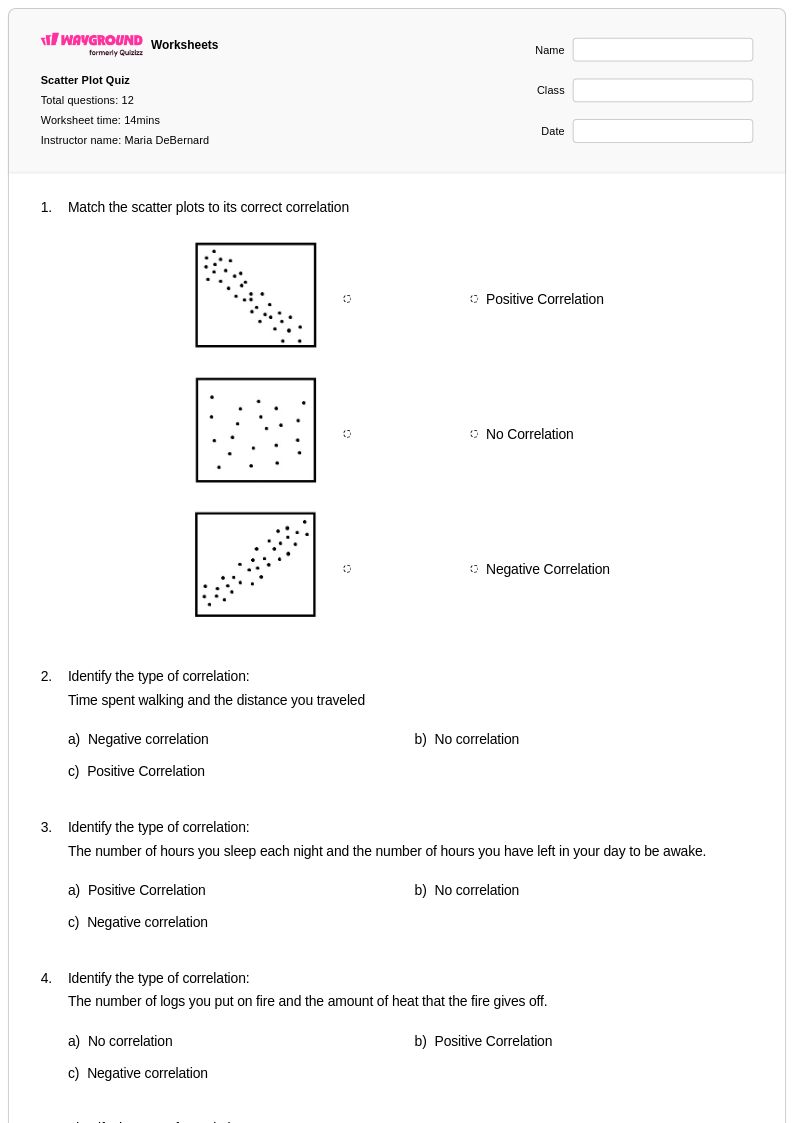
12 Q
8th
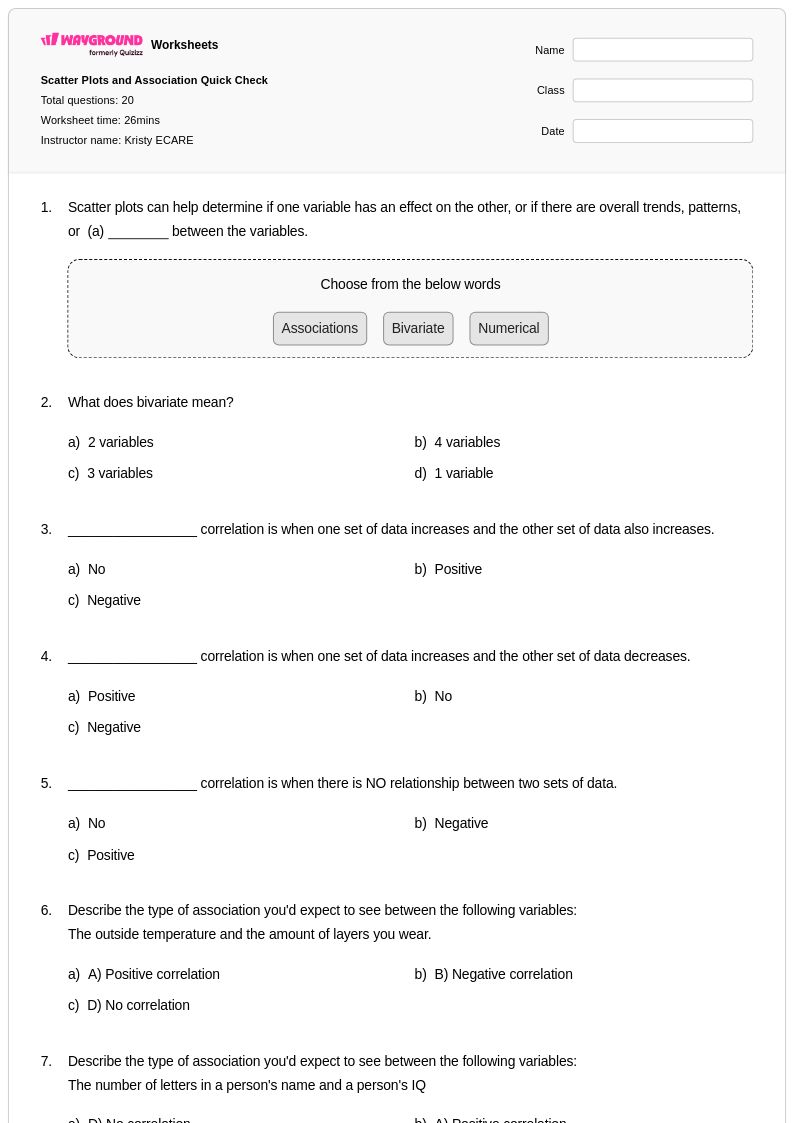
20 Q
8th
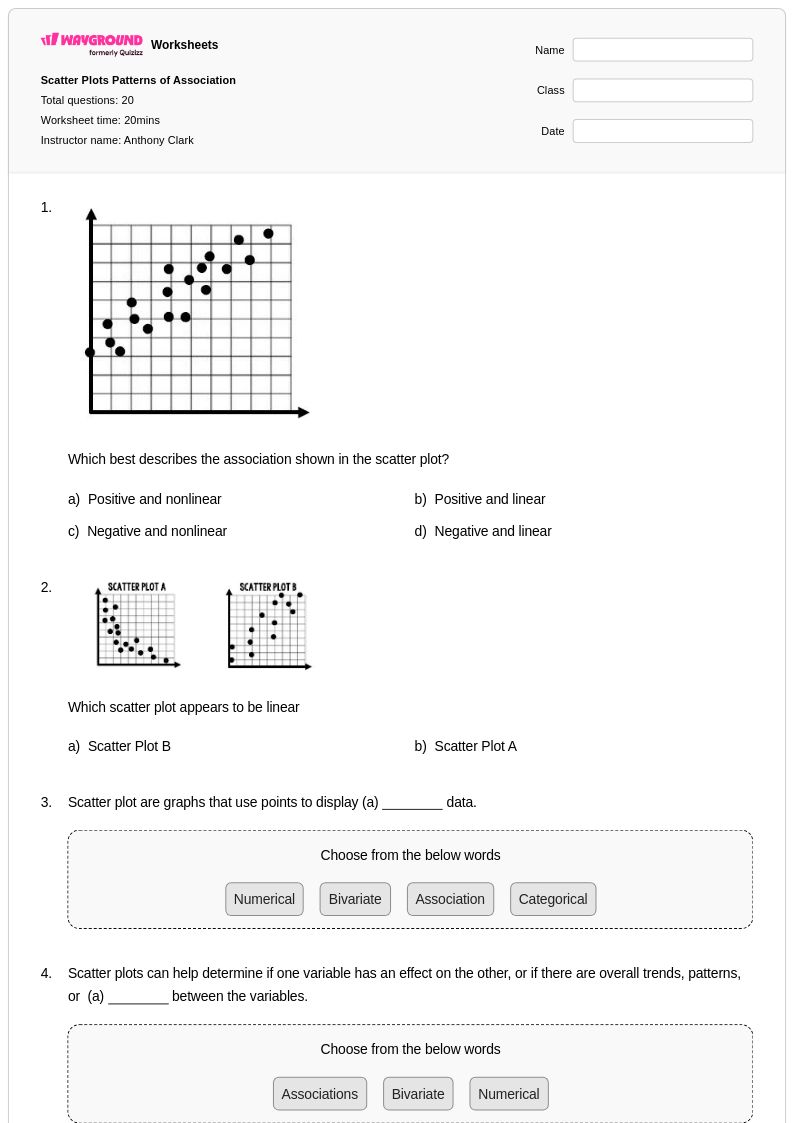
20 Q
8th - Uni
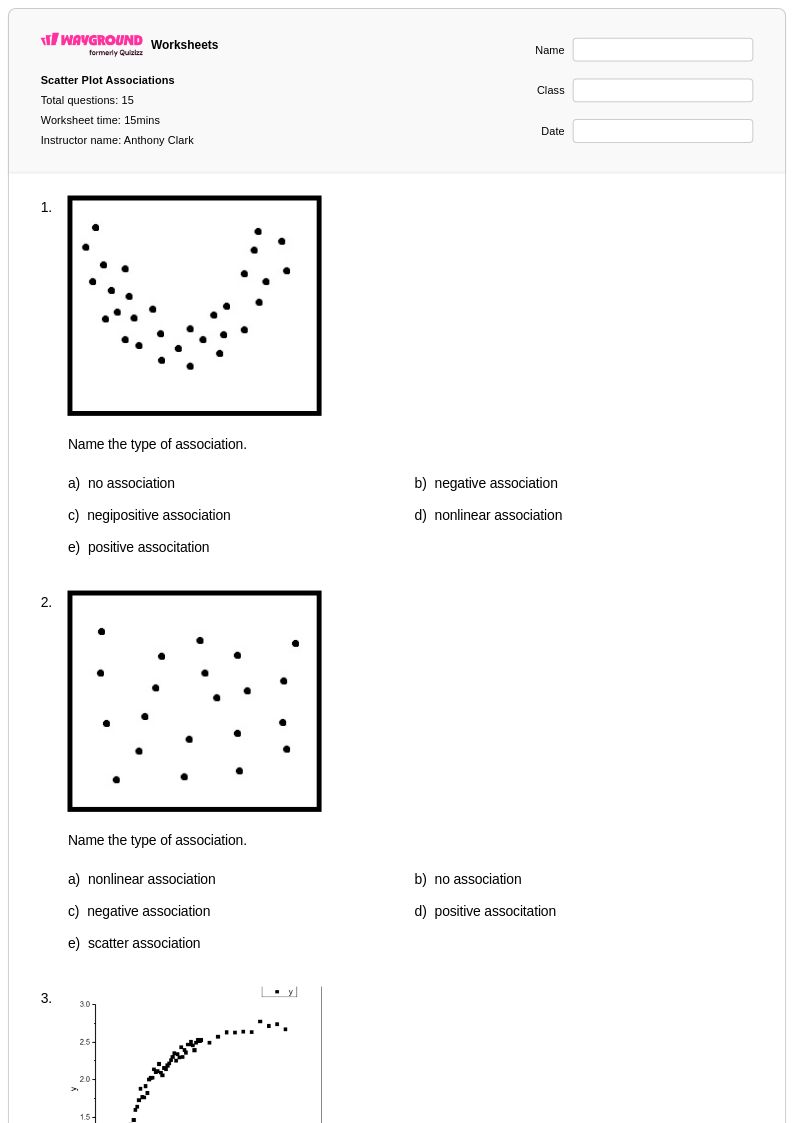
15 Q
8th - Uni
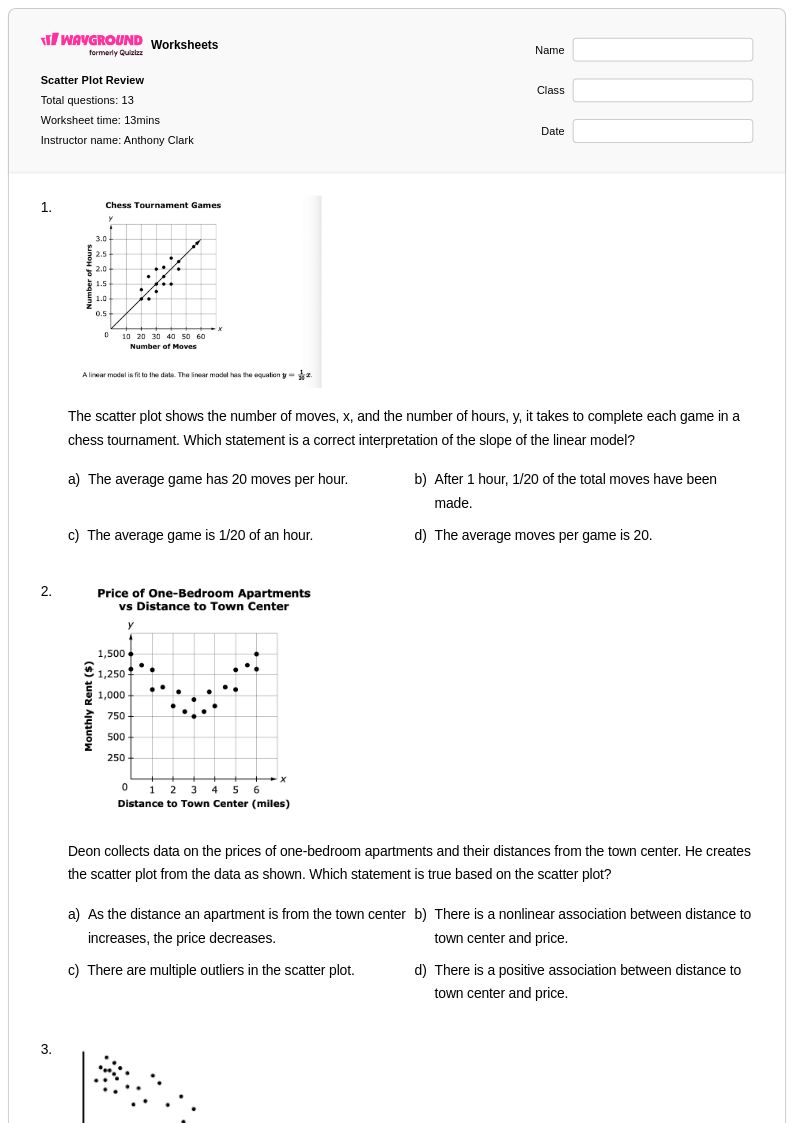
13 Q
8th - Uni
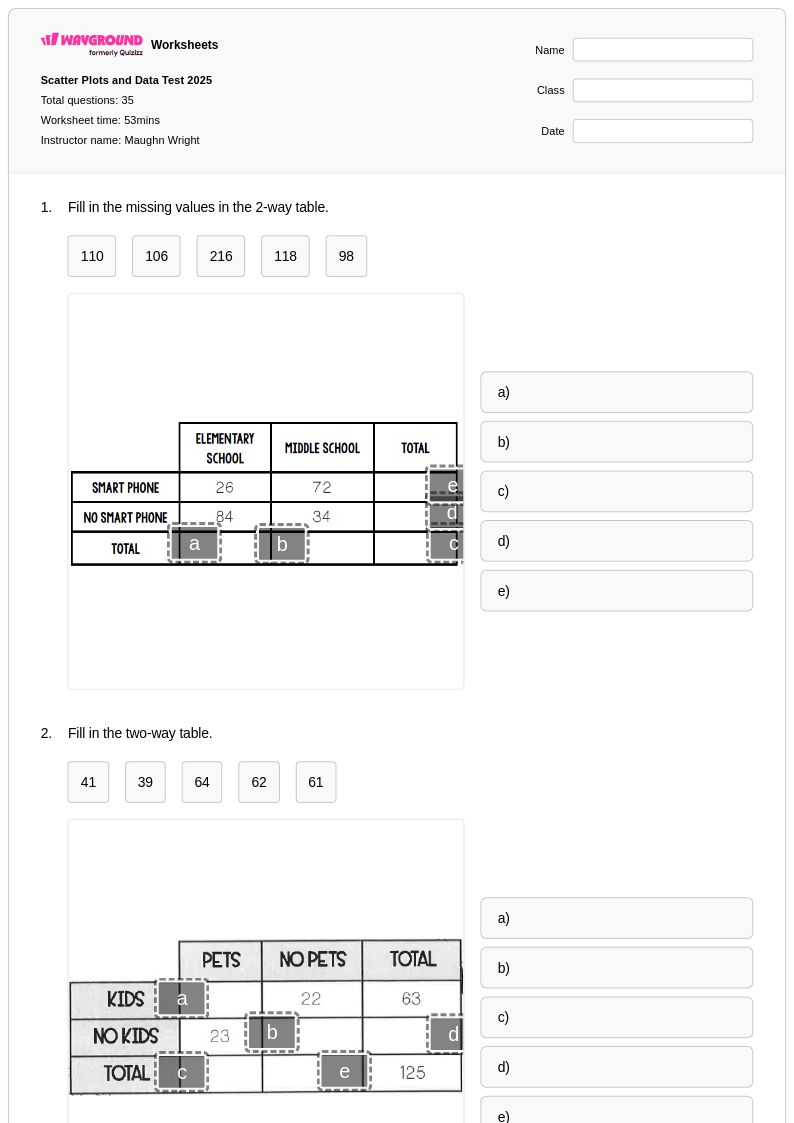
35 Q
8th
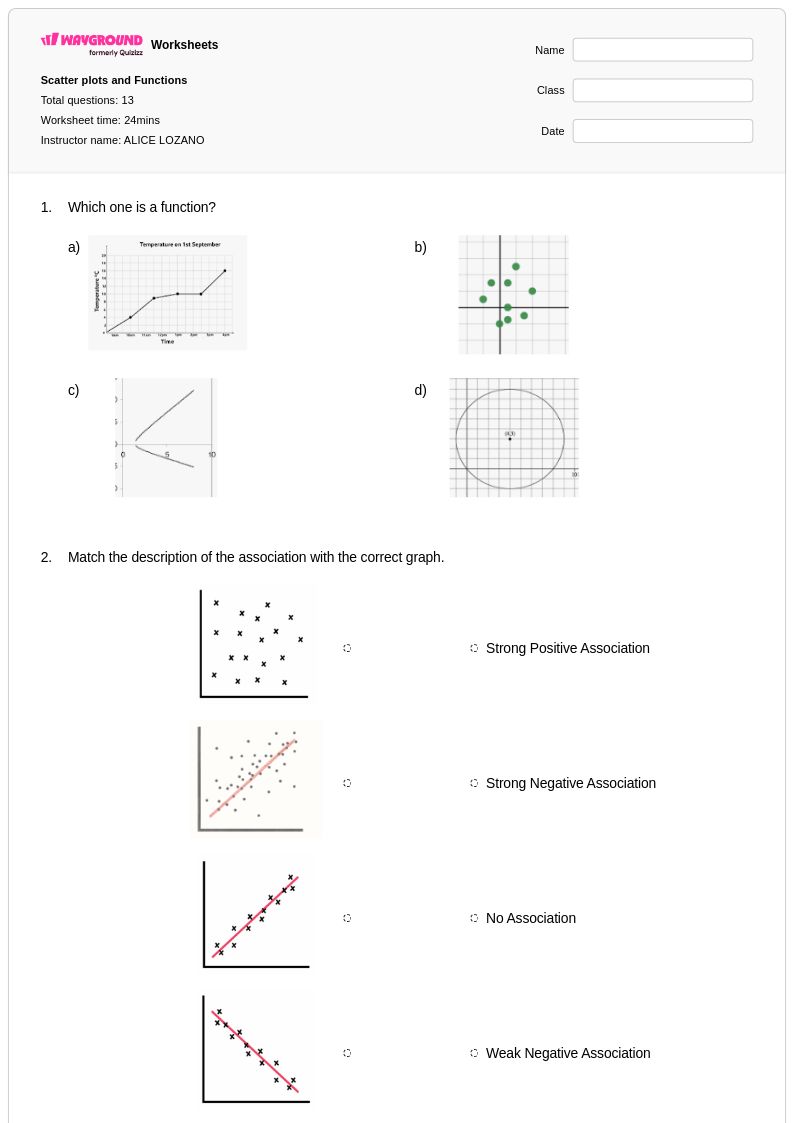
13 Q
8th
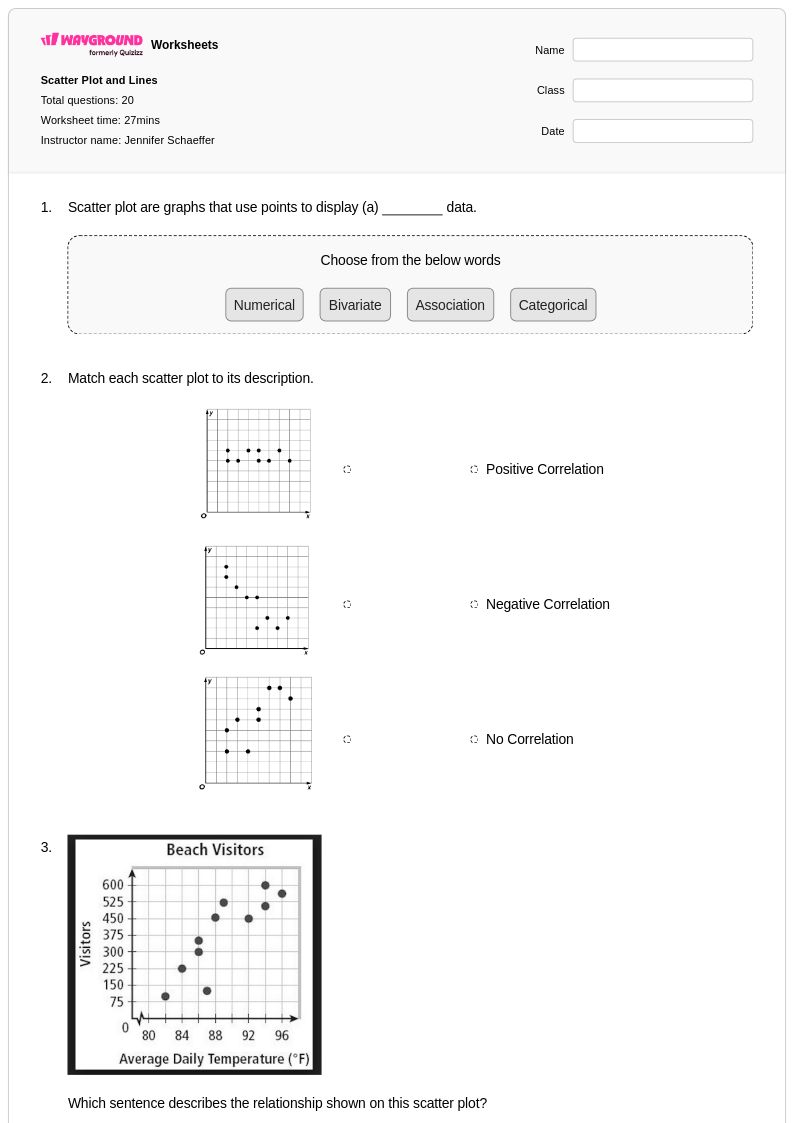
20 Q
9th - 12th
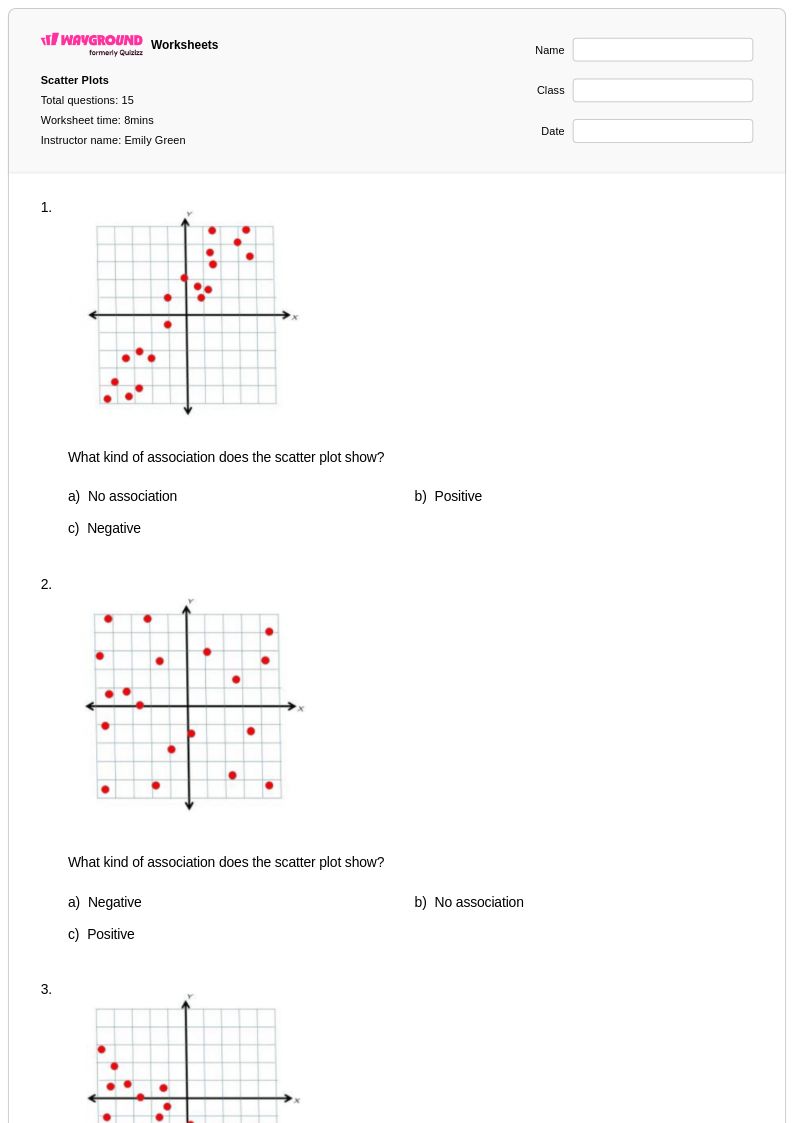
15 Q
8th
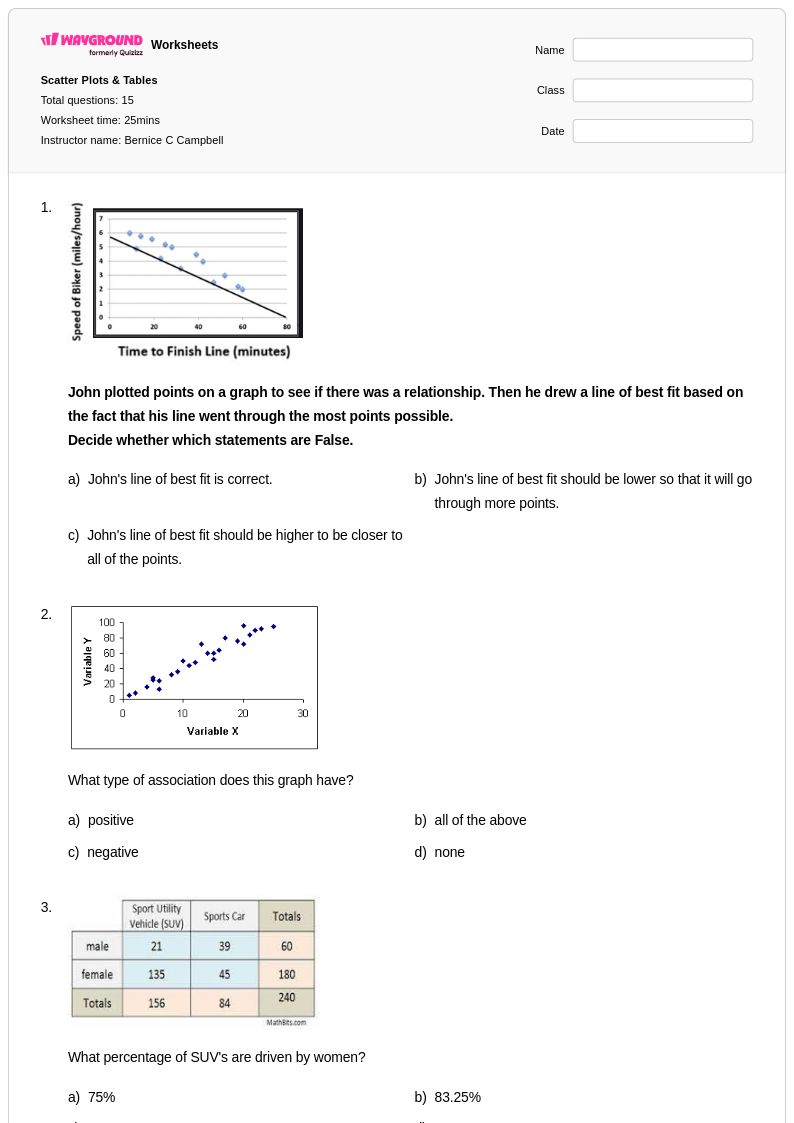
15 Q
8th
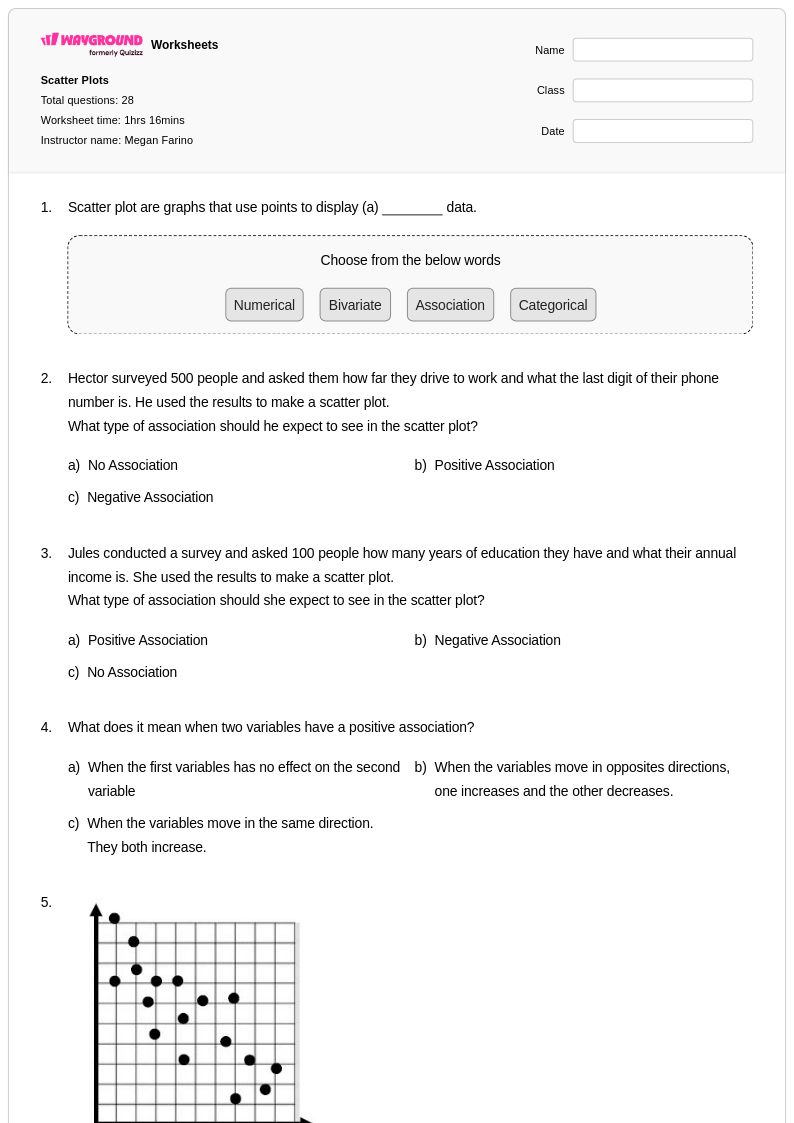
28 Q
8th
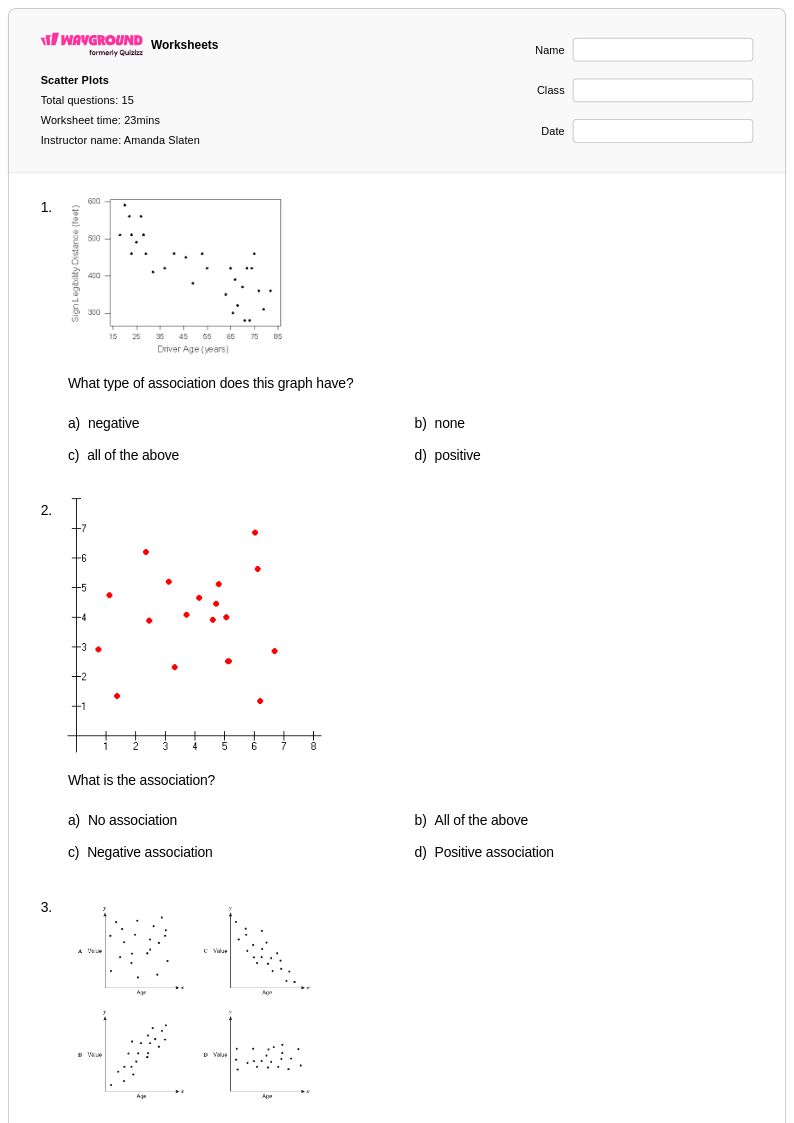
15 Q
8th
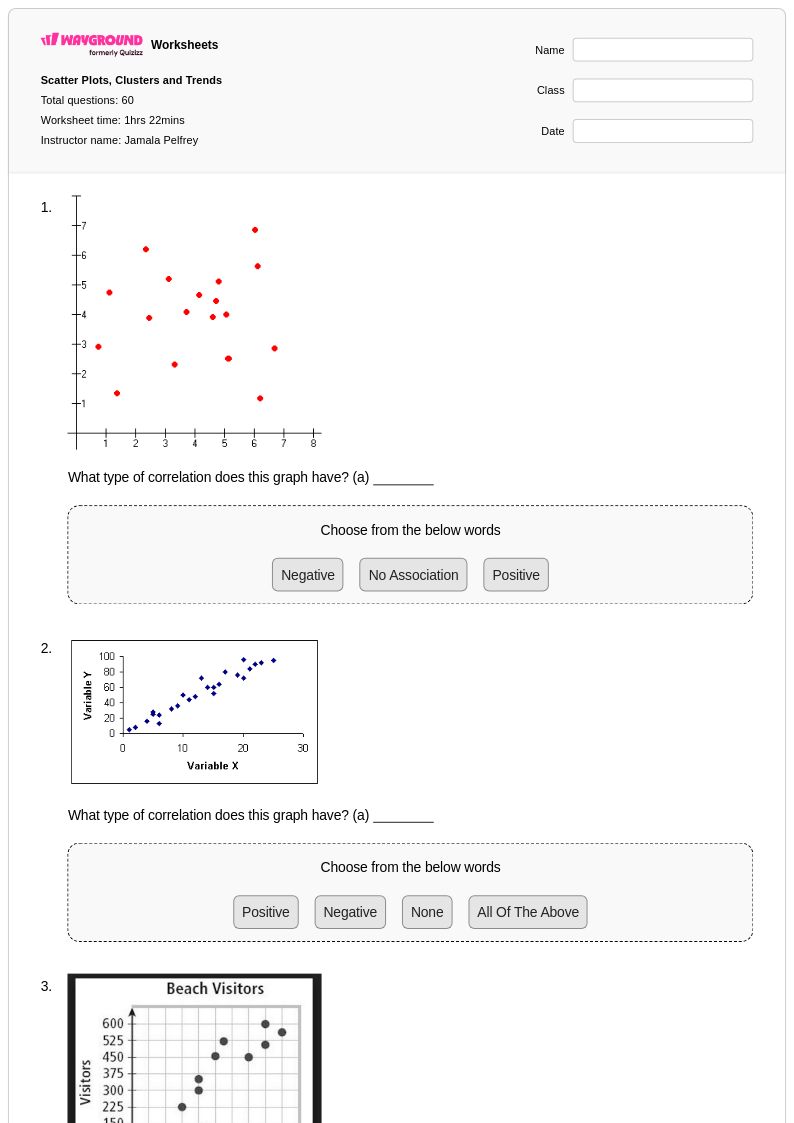
60 Q
8th - 9th
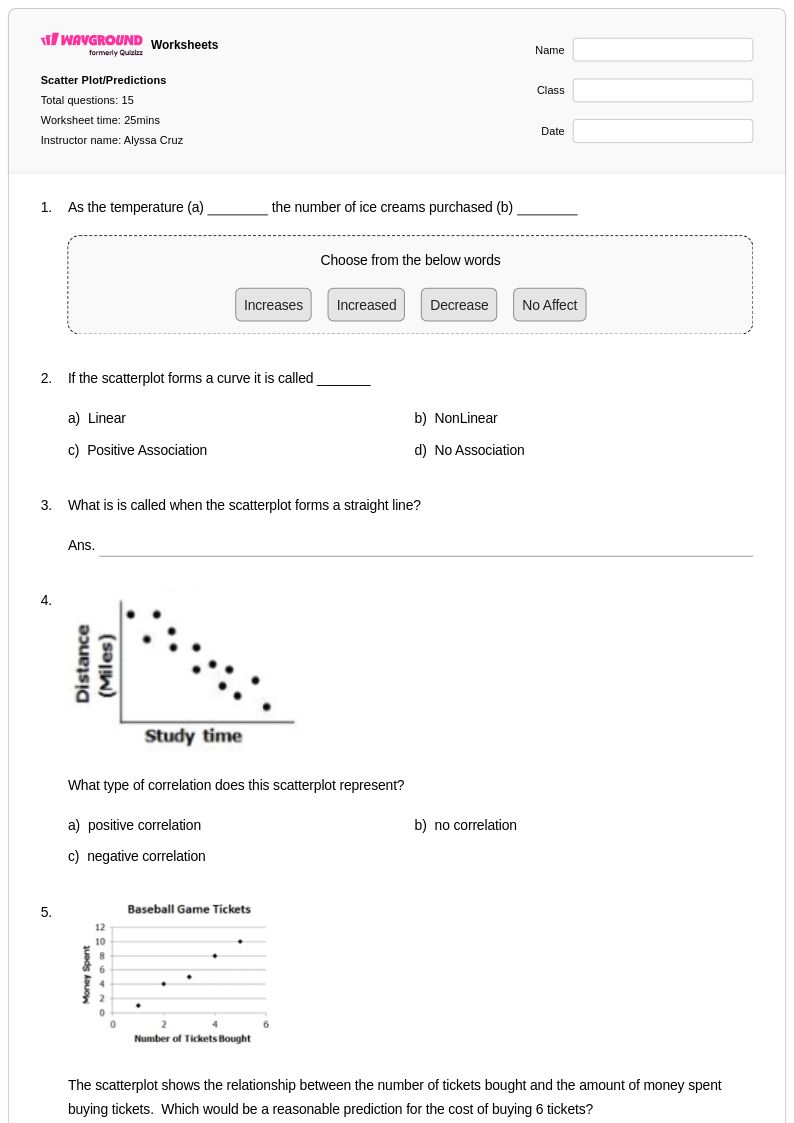
15 Q
8th
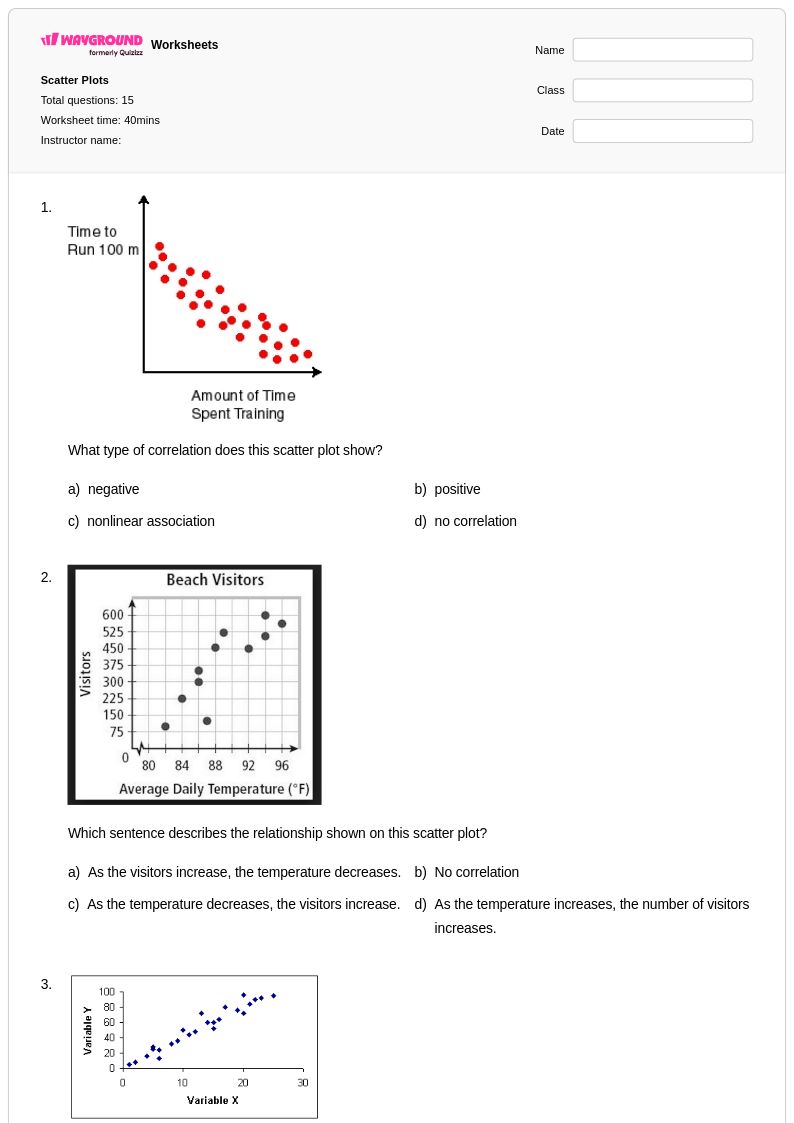
15 Q
9th
Explore Worksheets by Subjects
Explore printable Scatter Plot Association worksheets
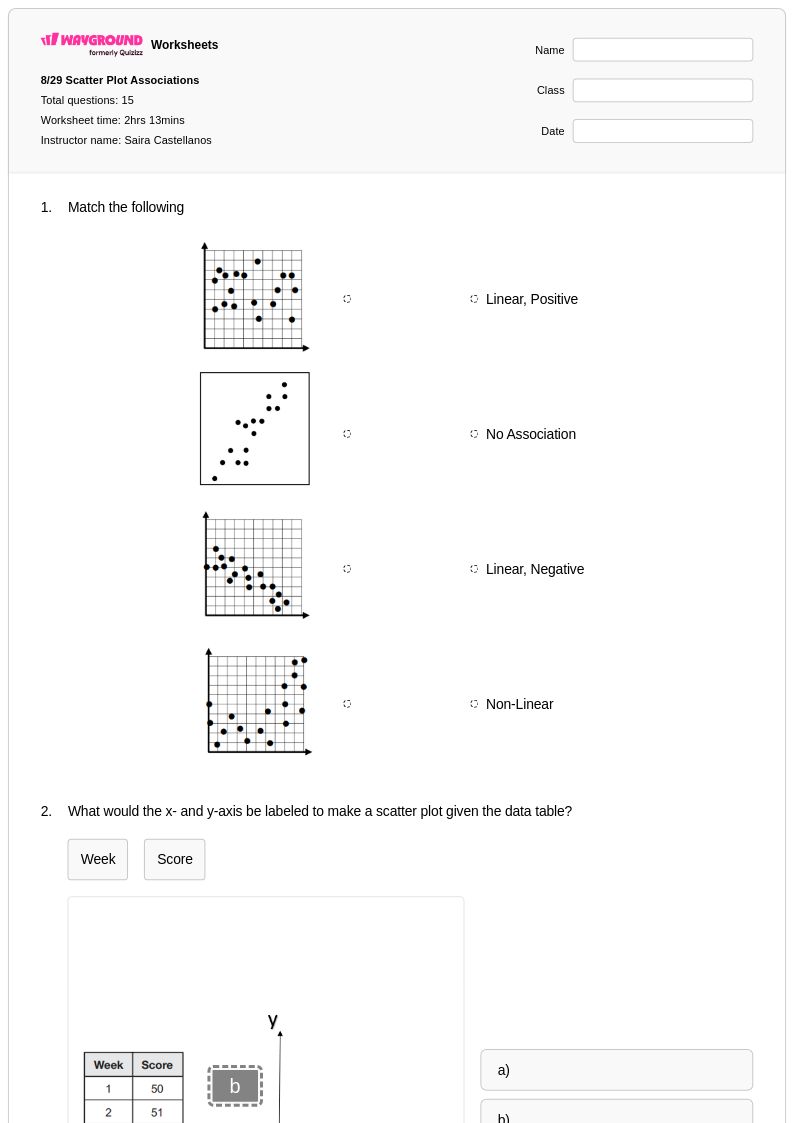
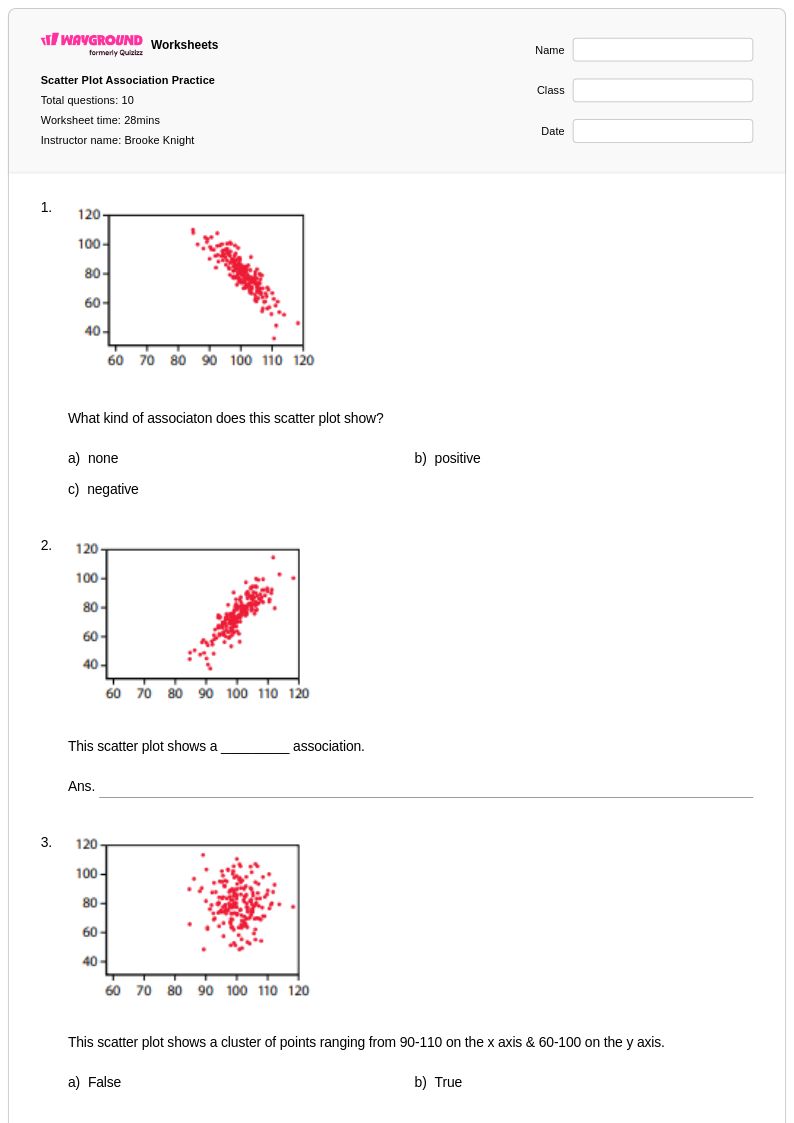
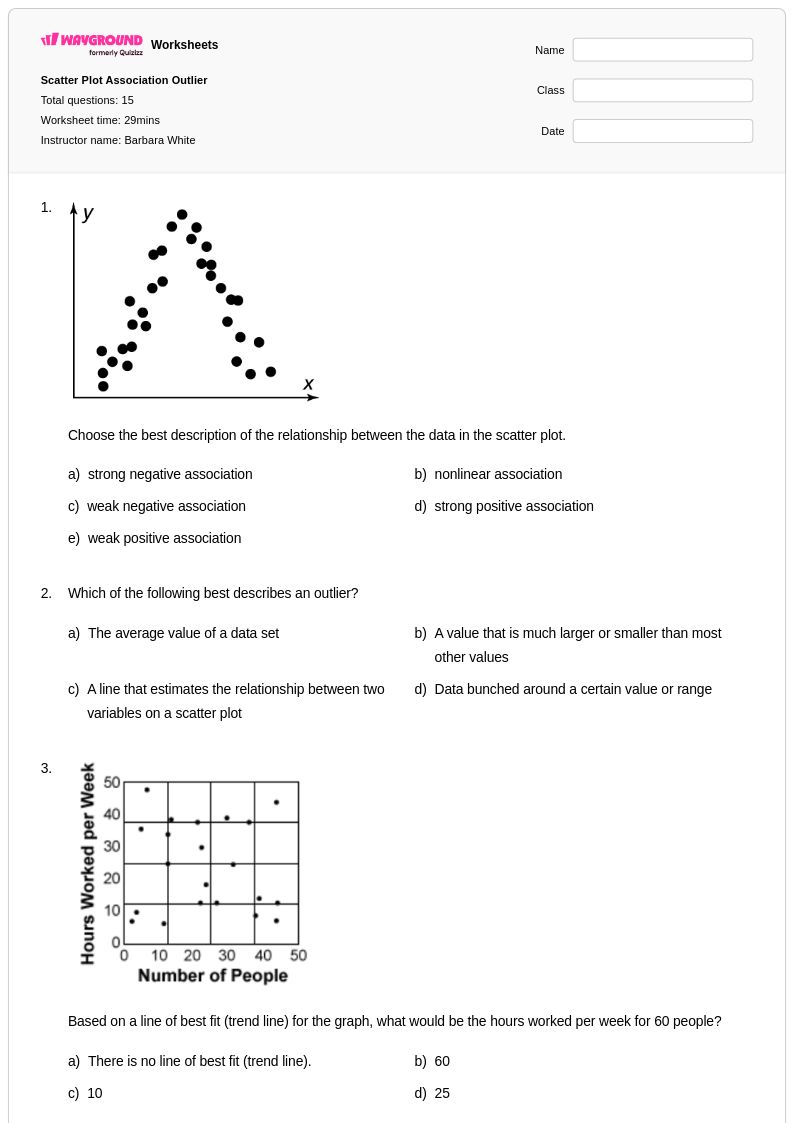
Scatter plot association worksheets available through Wayground (formerly Quizizz) provide comprehensive practice for students learning to analyze relationships between variables in bivariate data sets. These educational resources focus on developing critical statistical thinking skills, including identifying positive, negative, and no correlation patterns, distinguishing between strong and weak associations, and understanding how outliers can influence data interpretation. The worksheets feature varied practice problems that challenge students to examine real-world data scenarios, from analyzing the relationship between study time and test scores to exploring connections between temperature and ice cream sales. Each worksheet collection includes detailed answer keys and is available as free printables in convenient PDF format, allowing educators to seamlessly integrate scatter plot analysis into their mathematics curriculum.
Wayground (formerly Quizizz) supports mathematics educators with an extensive library of millions of teacher-created scatter plot association resources that can be easily discovered through robust search and filtering capabilities. The platform's comprehensive worksheet collections align with national and state mathematics standards, ensuring that content meets rigorous academic expectations while providing differentiation tools that accommodate diverse learning needs and skill levels. Teachers can customize these materials for targeted remediation, enrichment activities, or regular skill practice sessions, with resources available in both printable PDF formats for traditional classroom use and digital formats for technology-enhanced learning environments. This flexibility empowers educators to efficiently plan data analysis lessons, provide individualized support for students struggling with correlation concepts, and offer advanced challenges for learners ready to explore more complex statistical relationships.
FAQs
How do I teach scatter plot association?
What exercises help students practice interpreting scatter plots?
What are common student mistakes with scatter plots?
How can I use this scatter plot worksheet?
How does understanding scatter plots fit into the math curriculum?
How can I differentiate scatter plot practice for my students?