
18Q
11th - 12th
10Q
12th
25Q
9th - 12th
10Q
11th
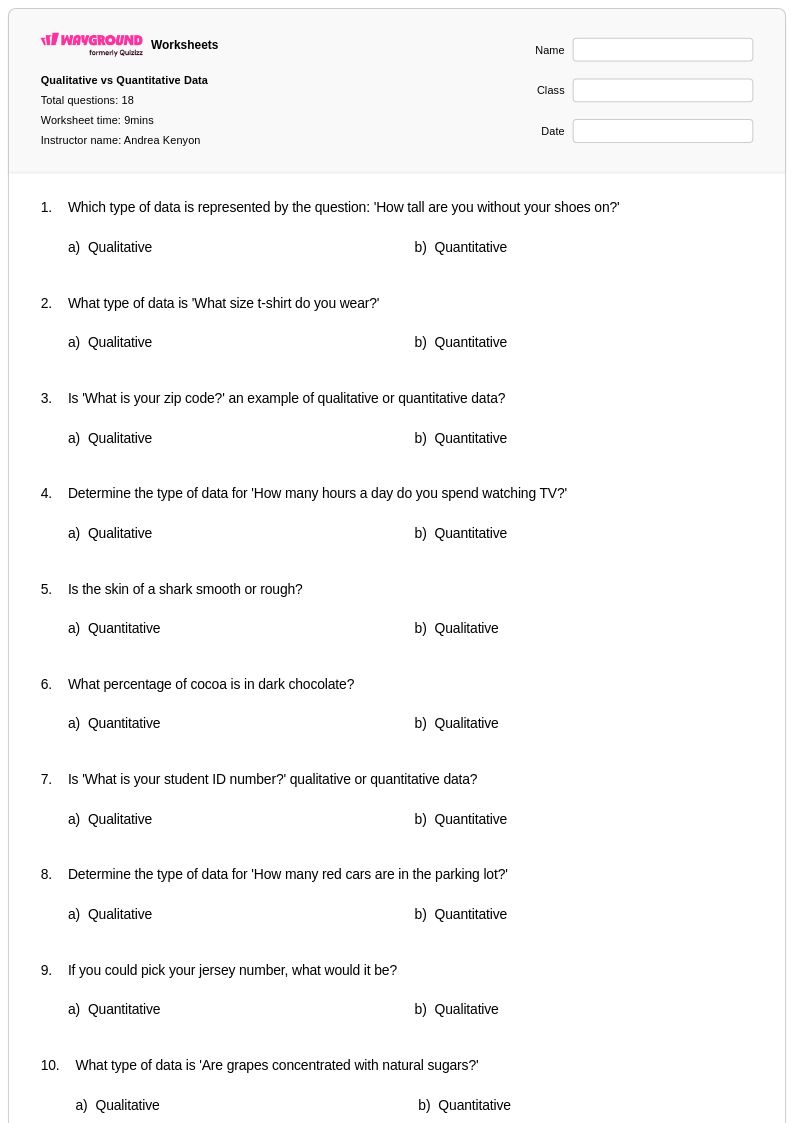
18Q
9th
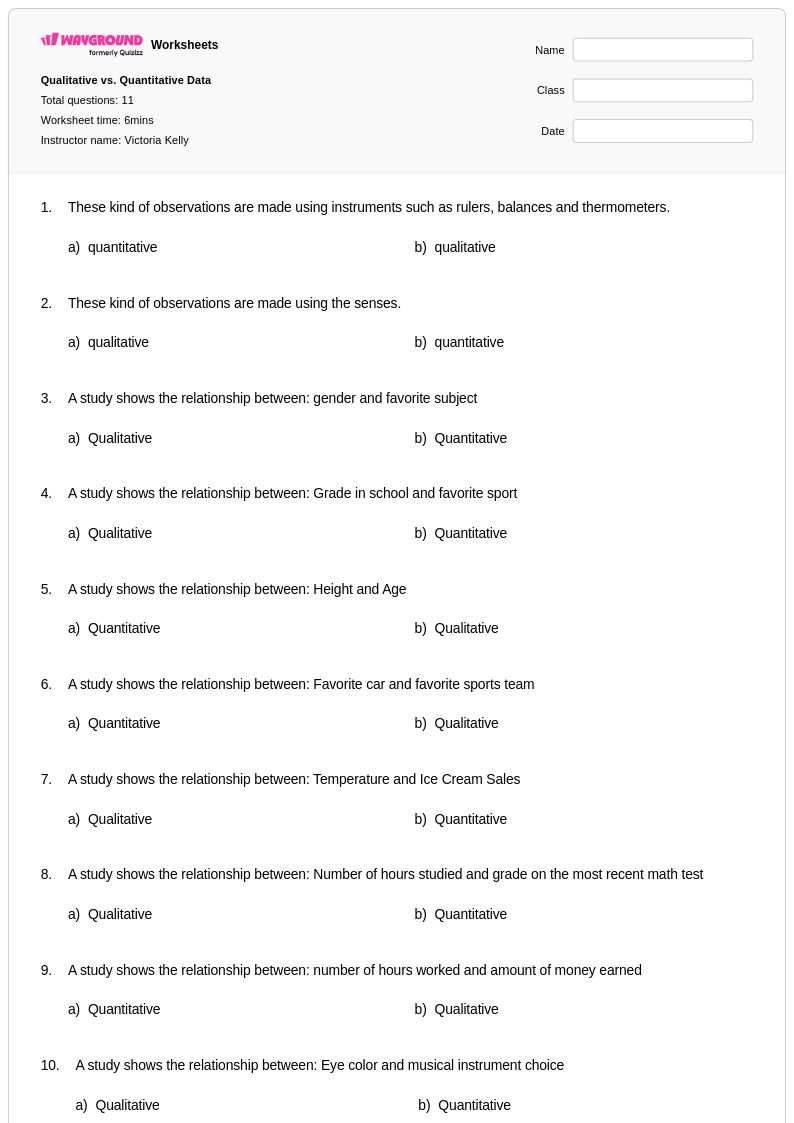
11Q
8th
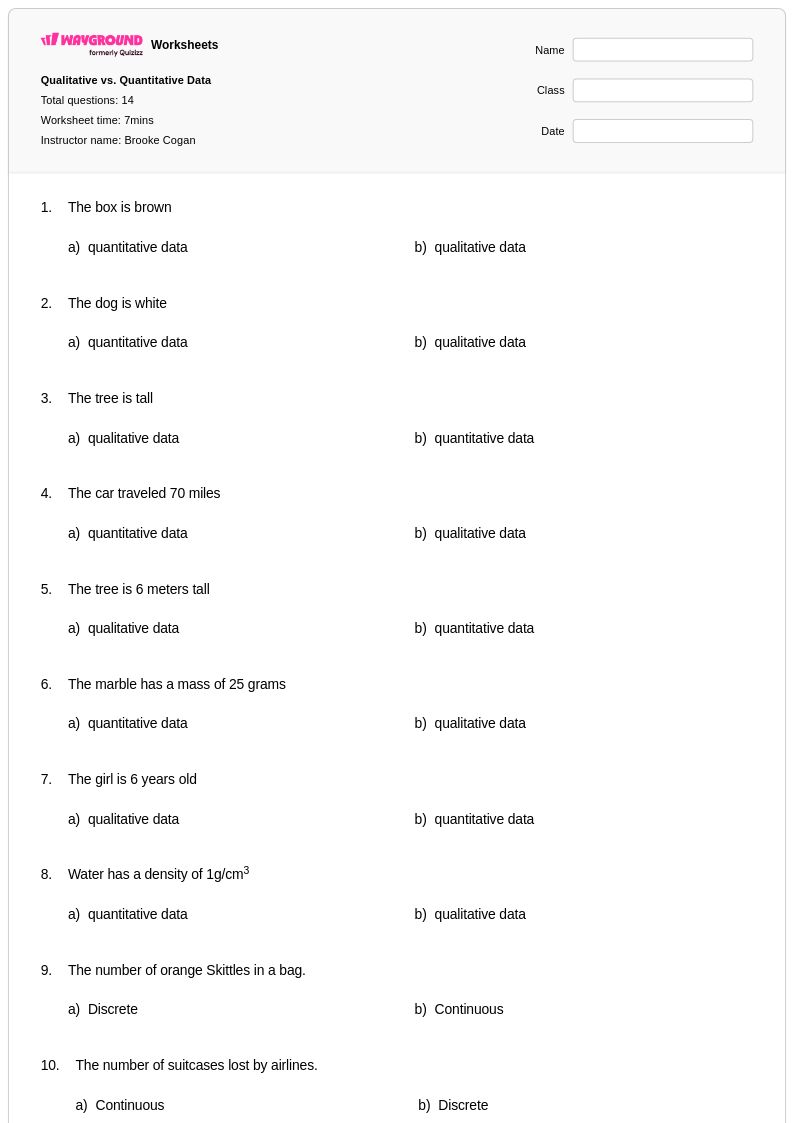
14Q
12th
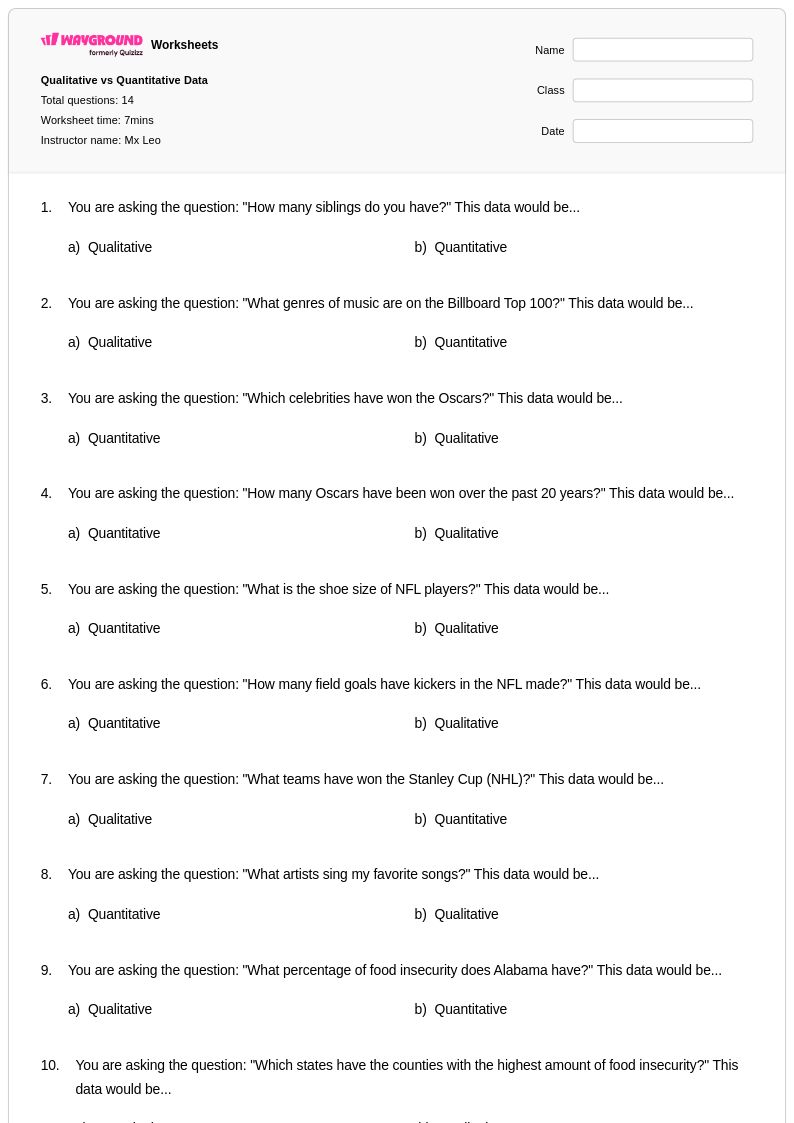
14Q
6th - 7th
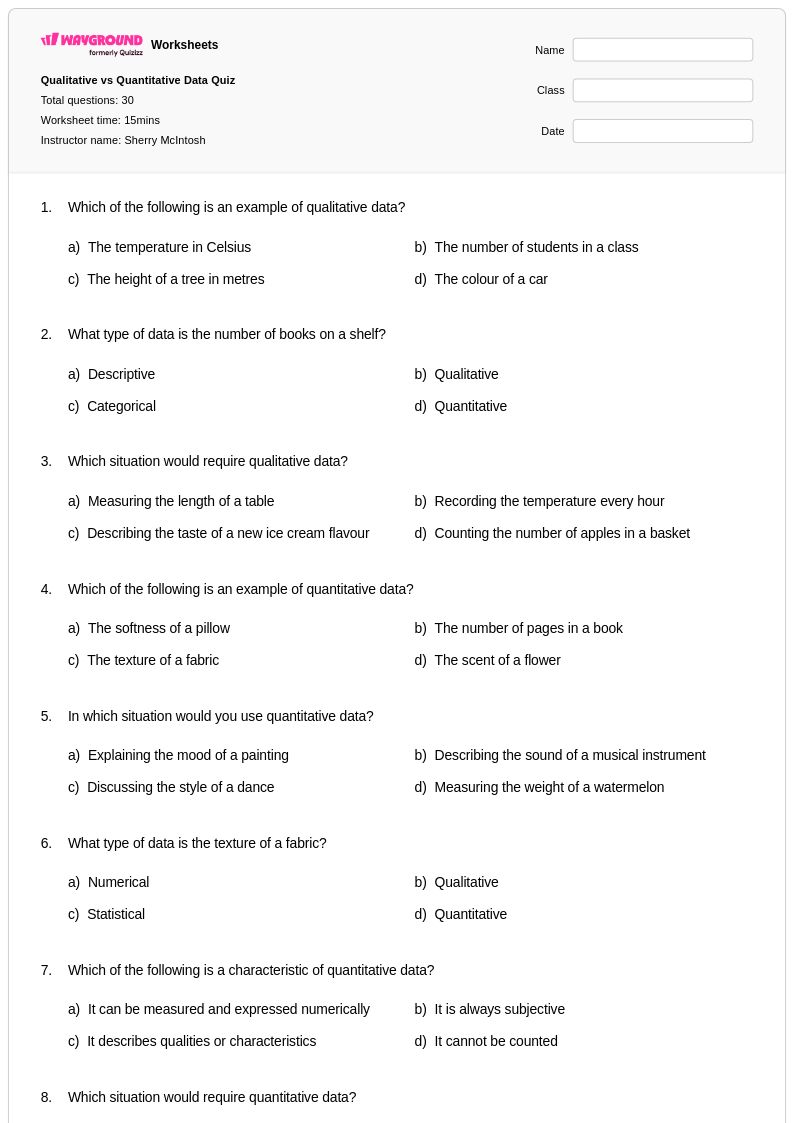
30Q
4th
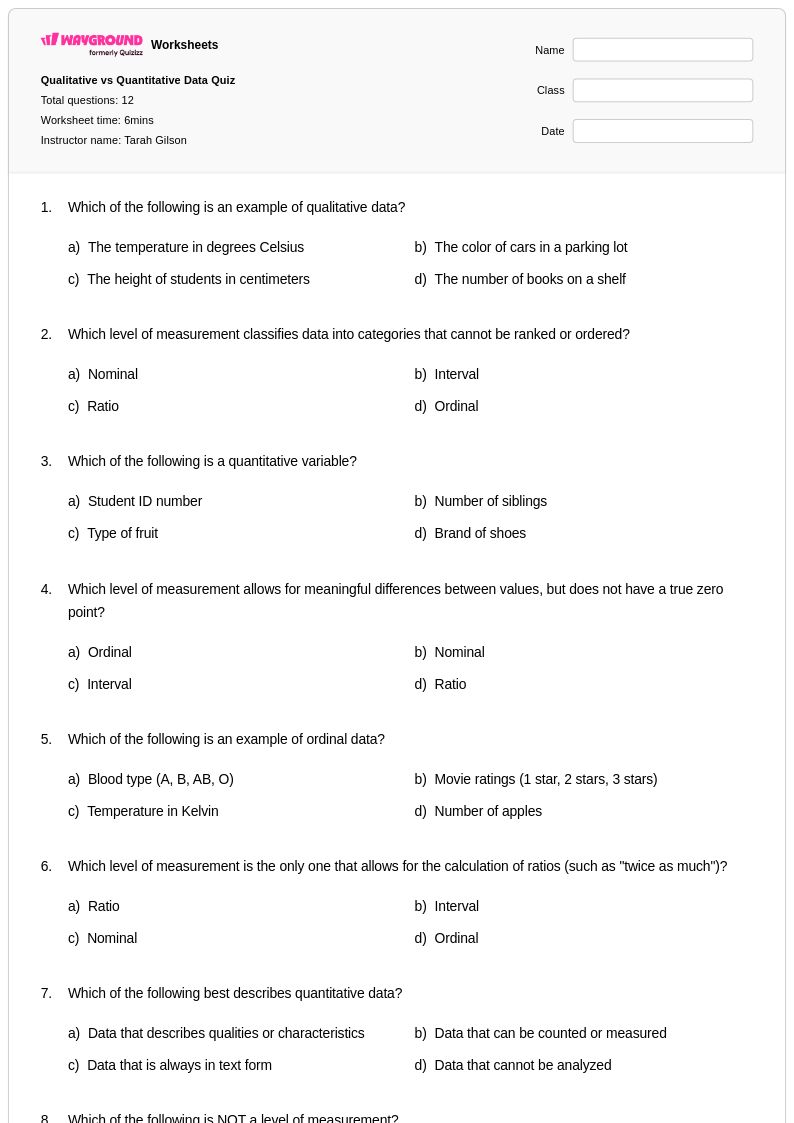
12Q
9th
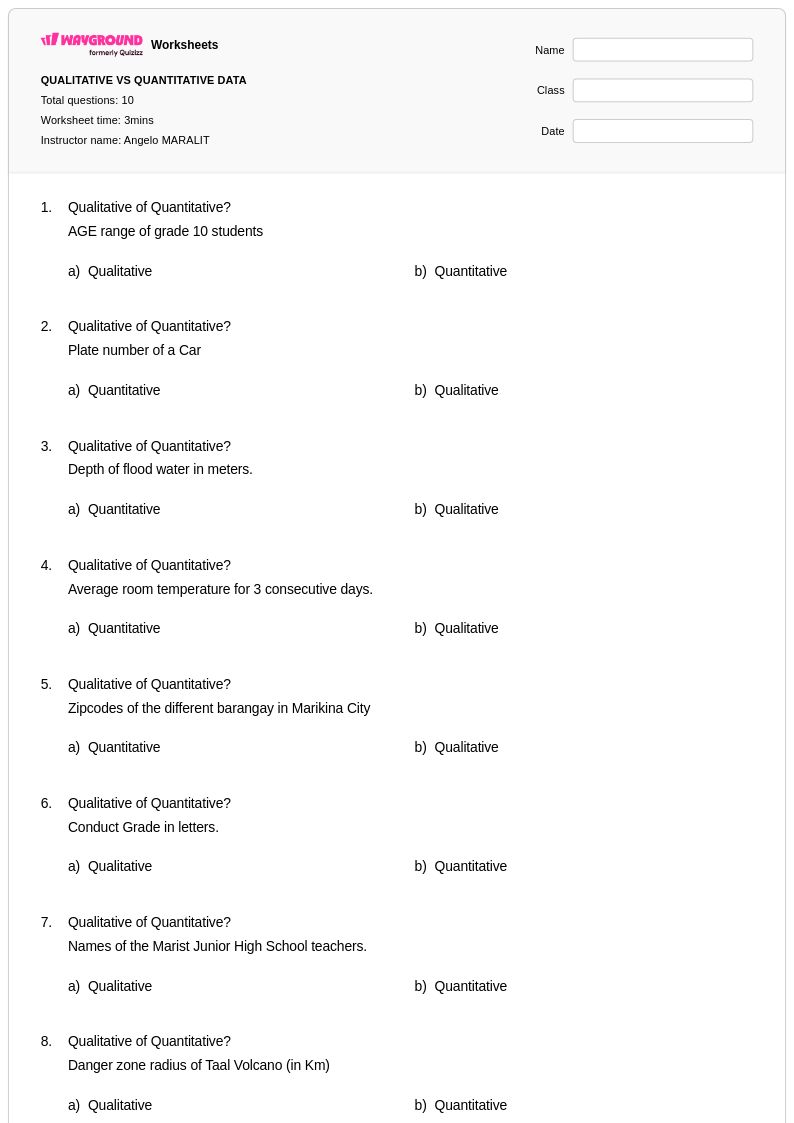
10Q
10th
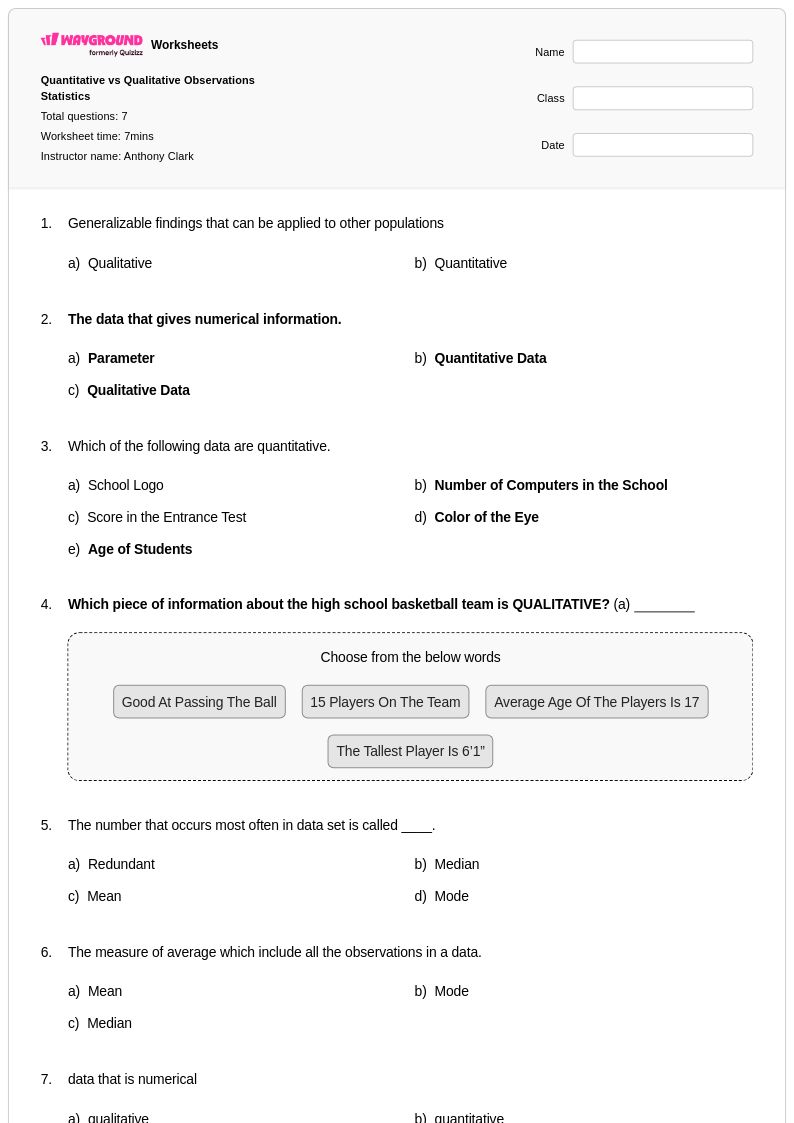
7Q
12th - Uni
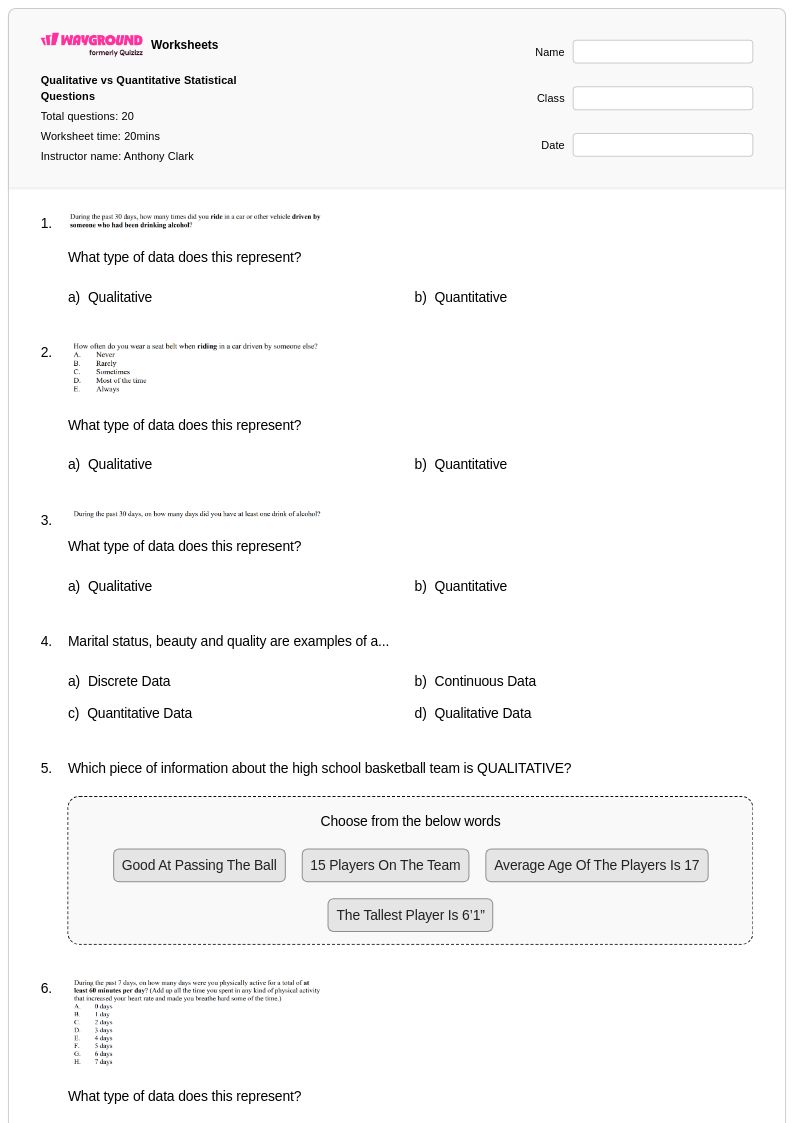
20Q
12th - Uni
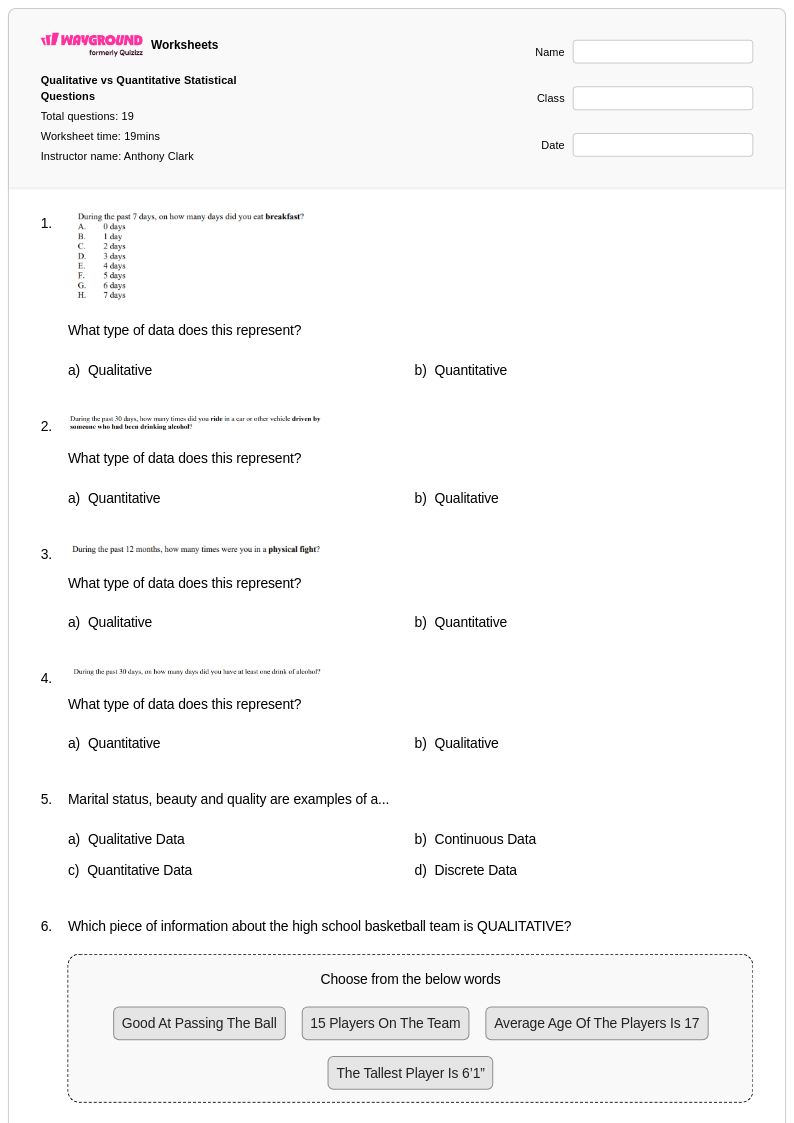
19Q
12th - Uni
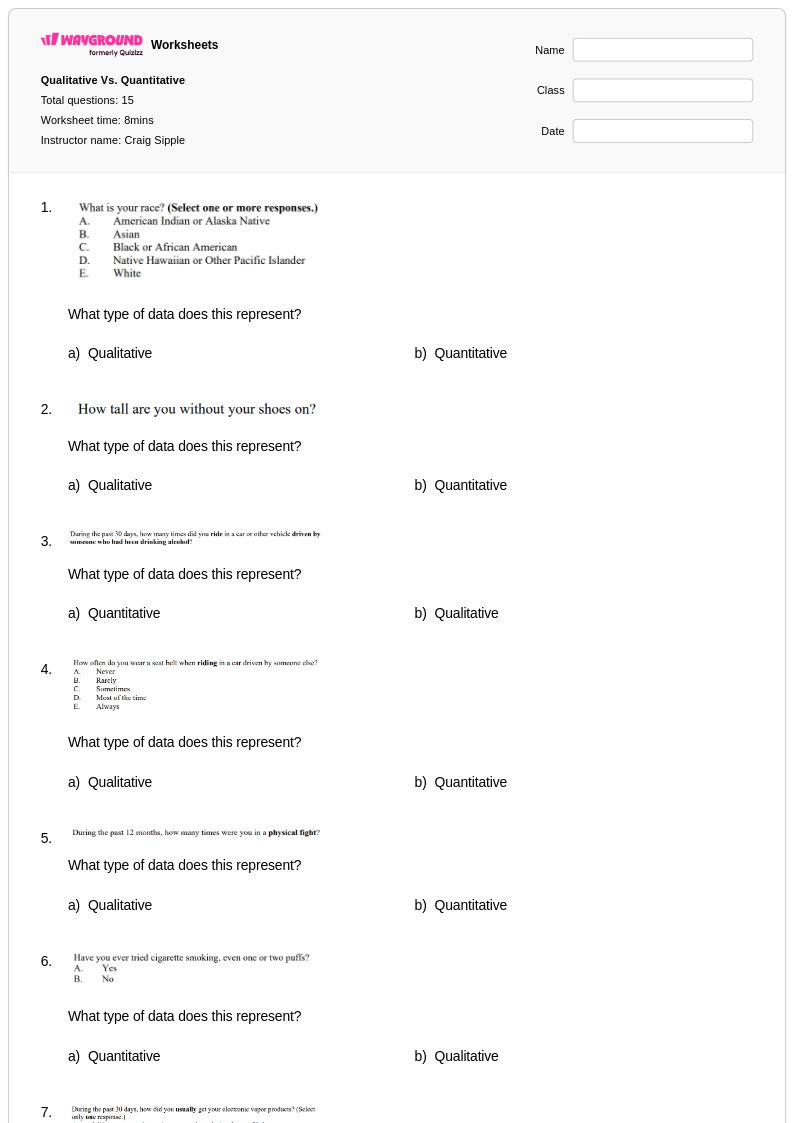
15Q
9th - 12th
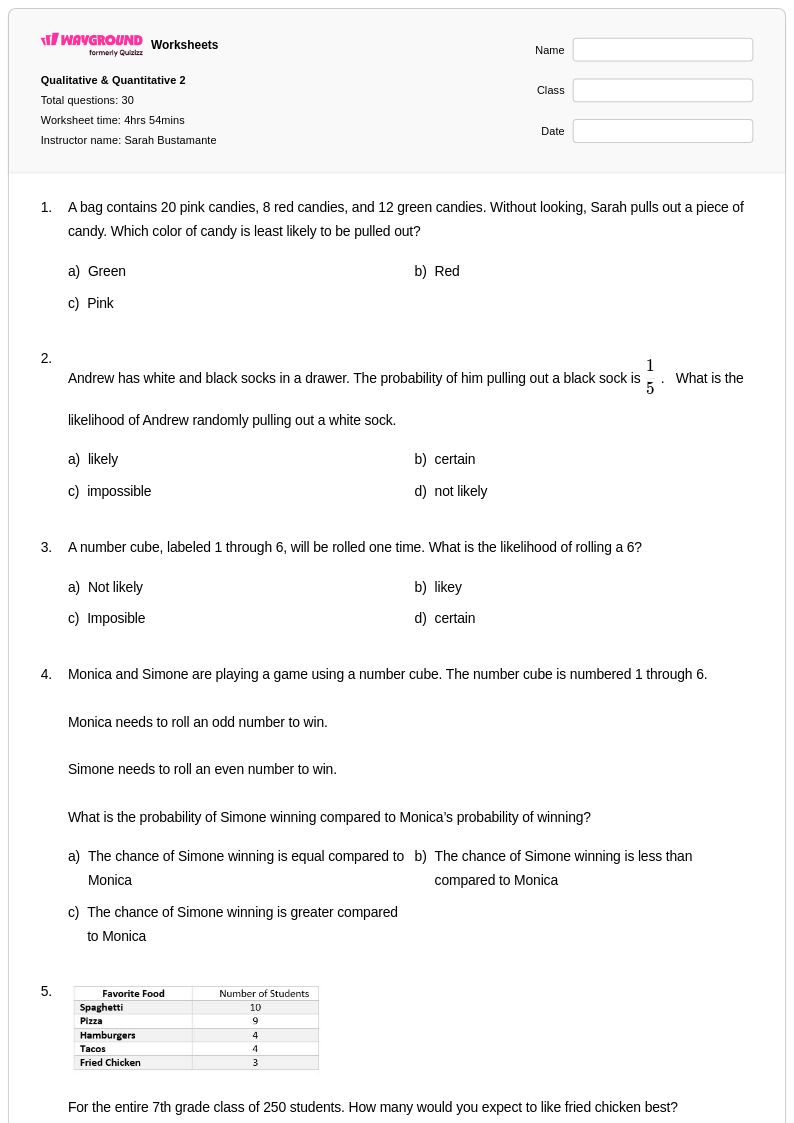
30Q
7th
24Q
12th - Uni
21Q
10th - 12th
15Q
11th - 12th
11Q
11th
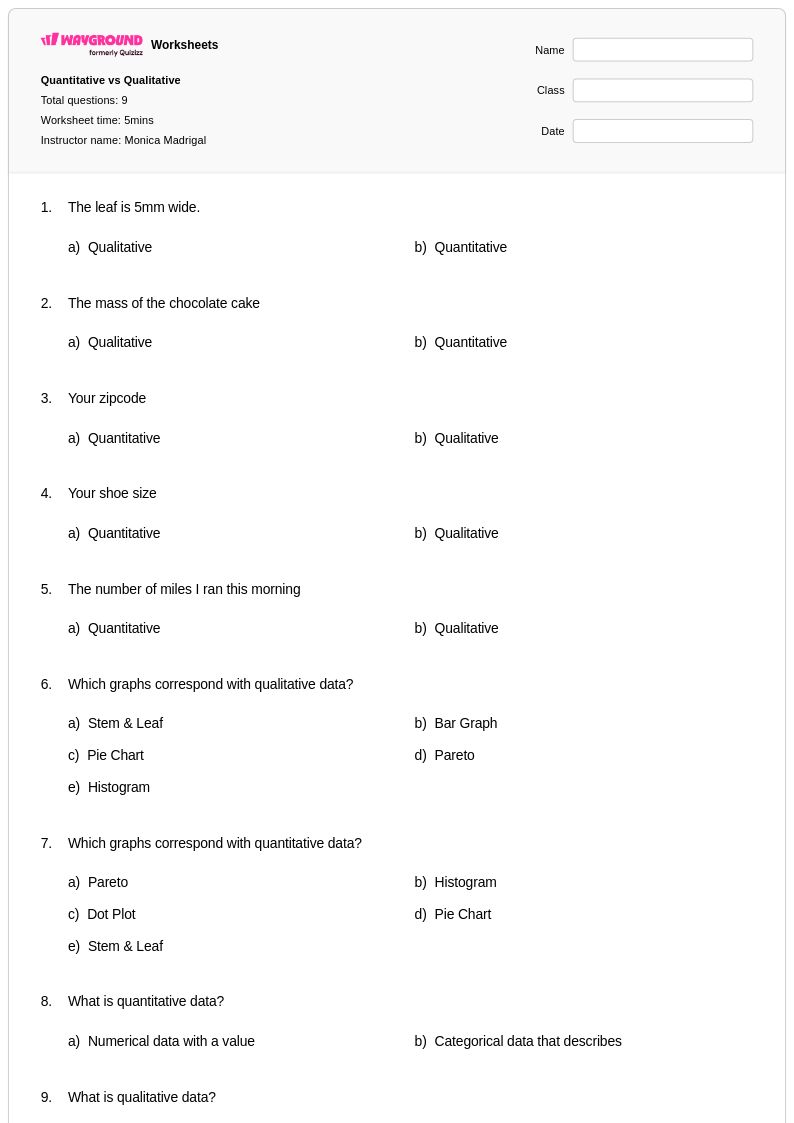
9Q
PD

45Q
4th - 5th
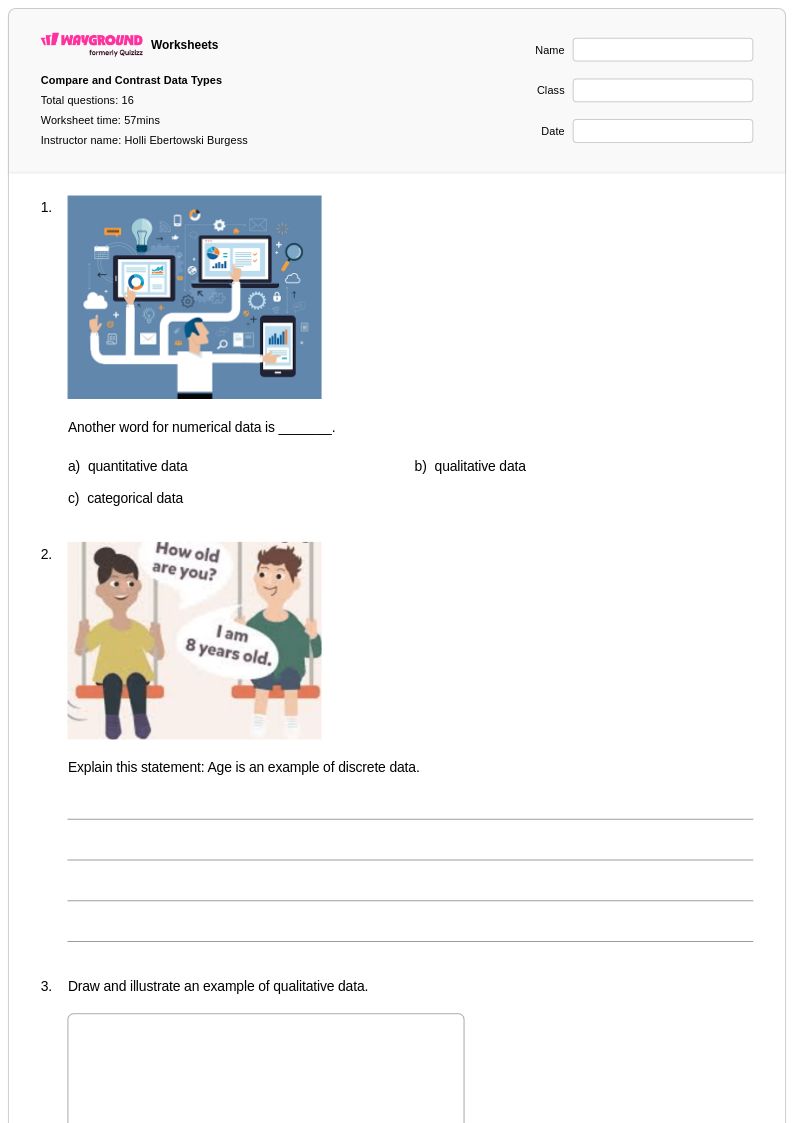
16Q
3rd - 5th
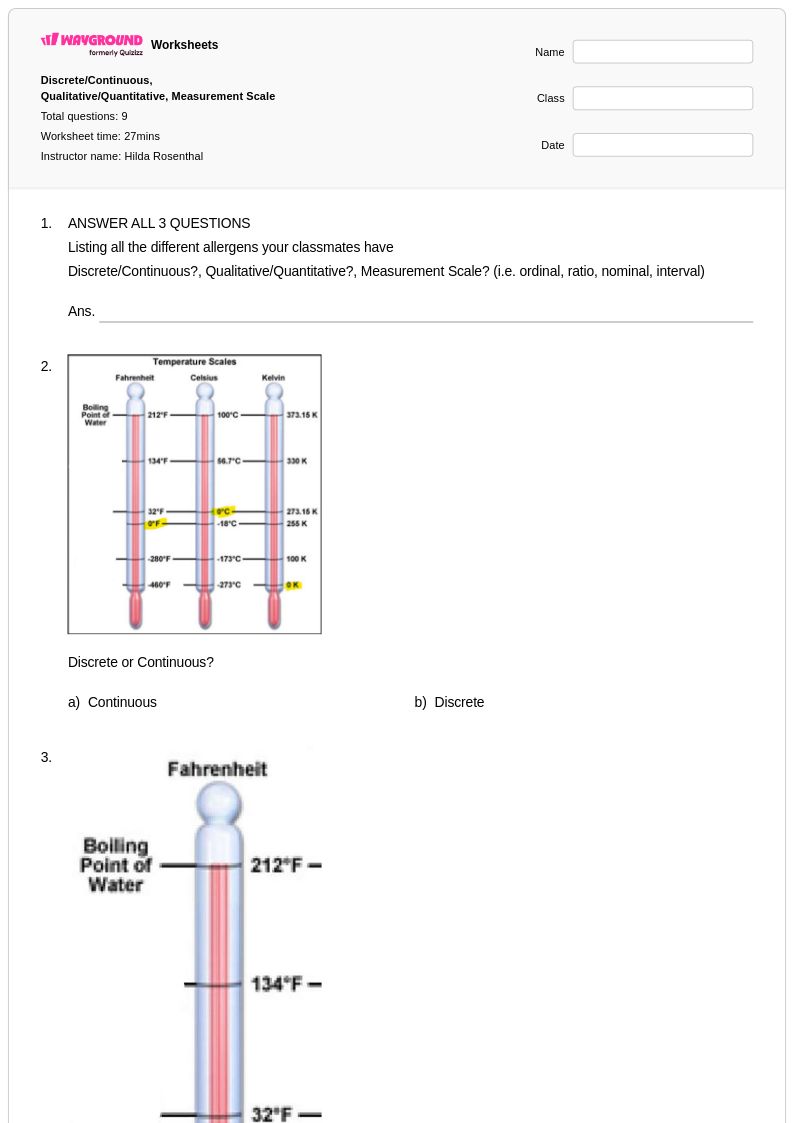
9Q
Uni
Explore planilhas por assuntos
Explore printable Qualitative Vs Quantitative Data worksheets
Qualitative vs quantitative data worksheets available through Wayground (formerly Quizizz) provide students with essential practice in distinguishing between categorical and numerical information, a fundamental skill in data analysis and statistical reasoning. These comprehensive printables guide learners through identifying qualitative data such as colors, names, and preferences versus quantitative data including measurements, counts, and numerical values. Each worksheet collection includes varied practice problems that challenge students to classify real-world examples, analyze data sets, and understand when different data types are most appropriate for specific research questions. The accompanying answer key allows for immediate feedback and self-assessment, while the free pdf format ensures accessible distribution across diverse learning environments.
Wayground (formerly Quizizz) empowers educators with millions of teacher-created resources specifically designed for data and graphing instruction, including extensive collections focused on qualitative versus quantitative data concepts. The platform's robust search and filtering capabilities enable teachers to quickly locate worksheets aligned with specific learning standards and differentiated for various skill levels. Customization tools allow educators to modify existing materials or create personalized practice sets that address individual student needs, whether for remediation of foundational concepts or enrichment of advanced analytical thinking. Available in both printable and digital formats, these resources support flexible lesson planning and provide teachers with reliable materials for skill practice, formative assessment, and targeted instruction in data literacy fundamentals.
FAQs
How do I teach the difference between qualitative and quantitative data?
What exercises help students practice classifying data?
What is a common mistake students make with this topic?
How can I use this Wayground worksheet?
How does this topic fit into the math curriculum?
How can I support diverse learners with this worksheet?