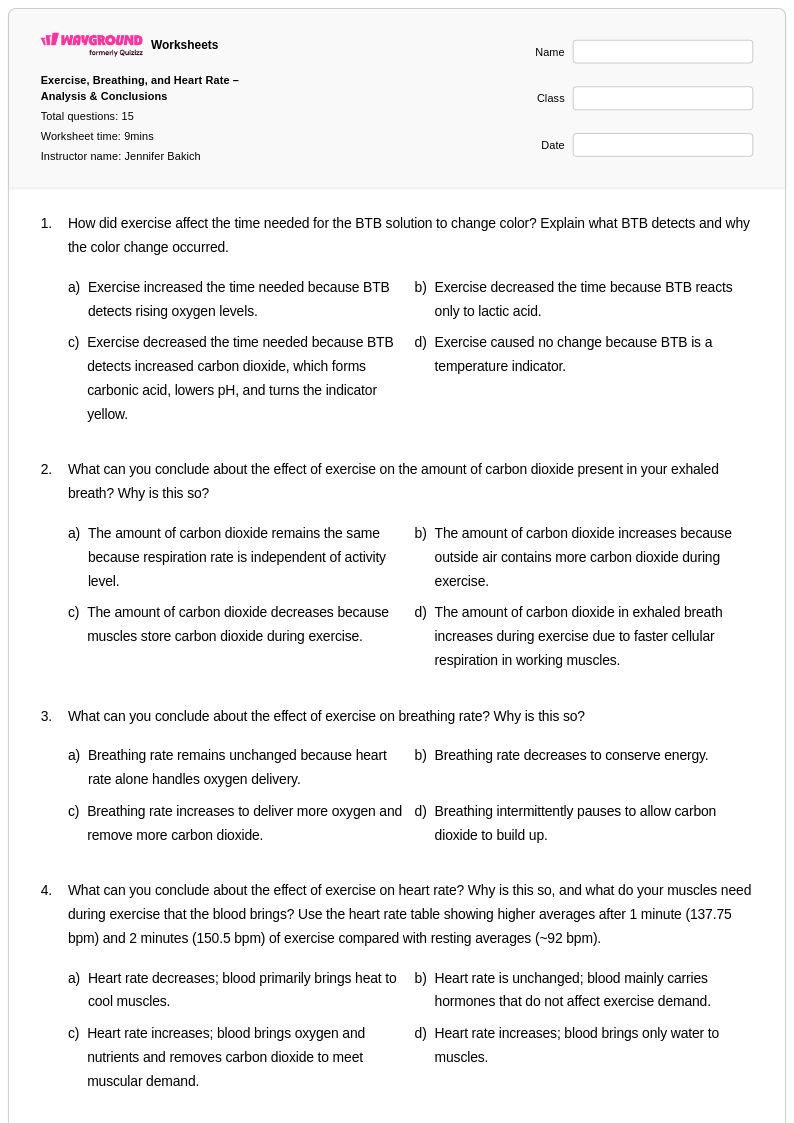
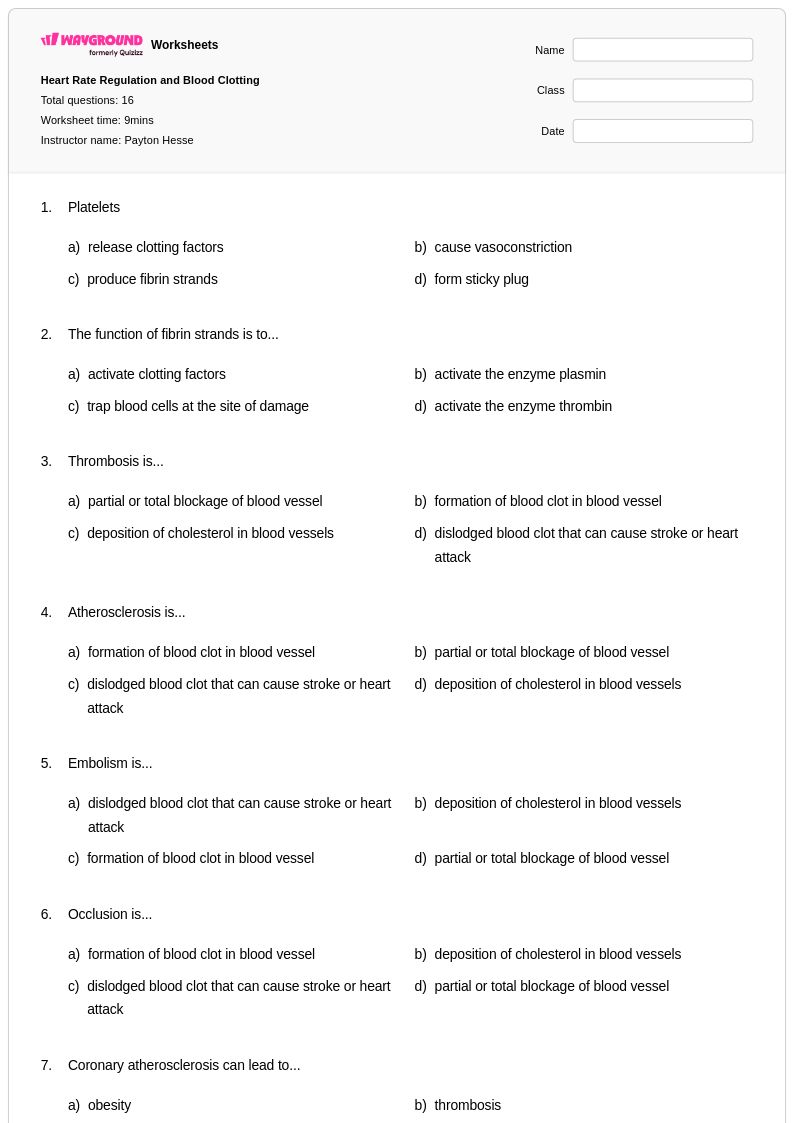
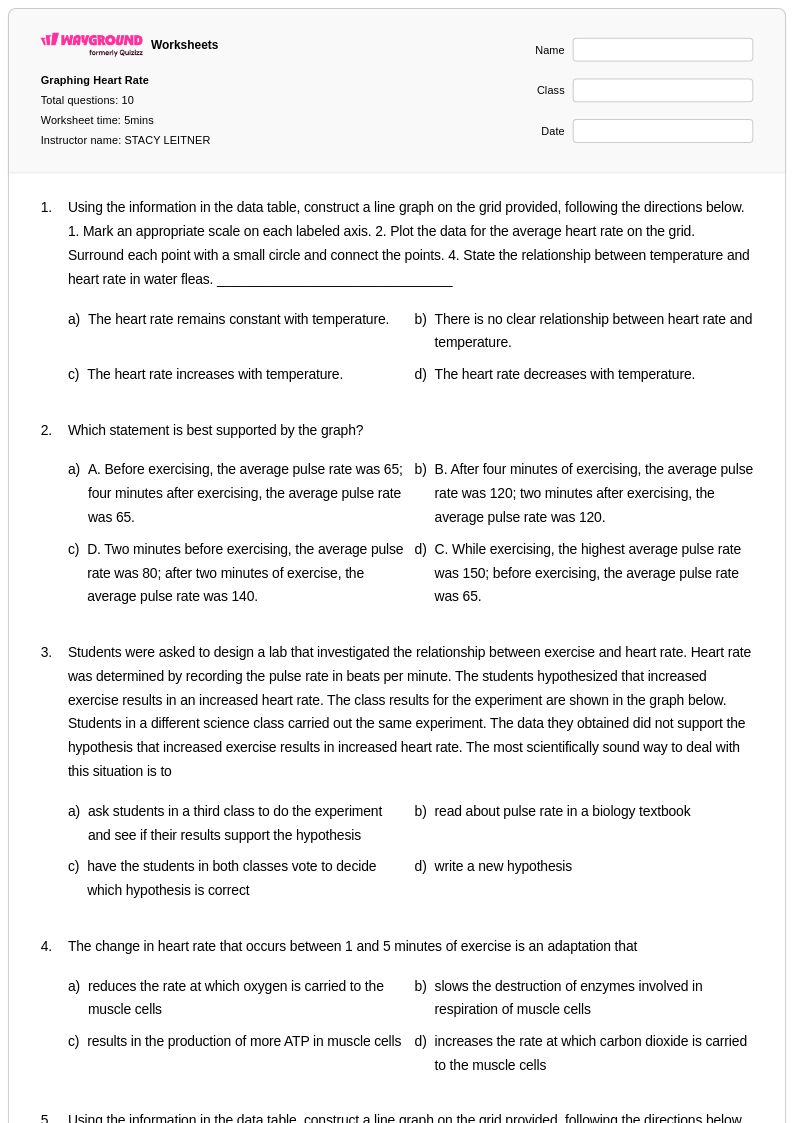
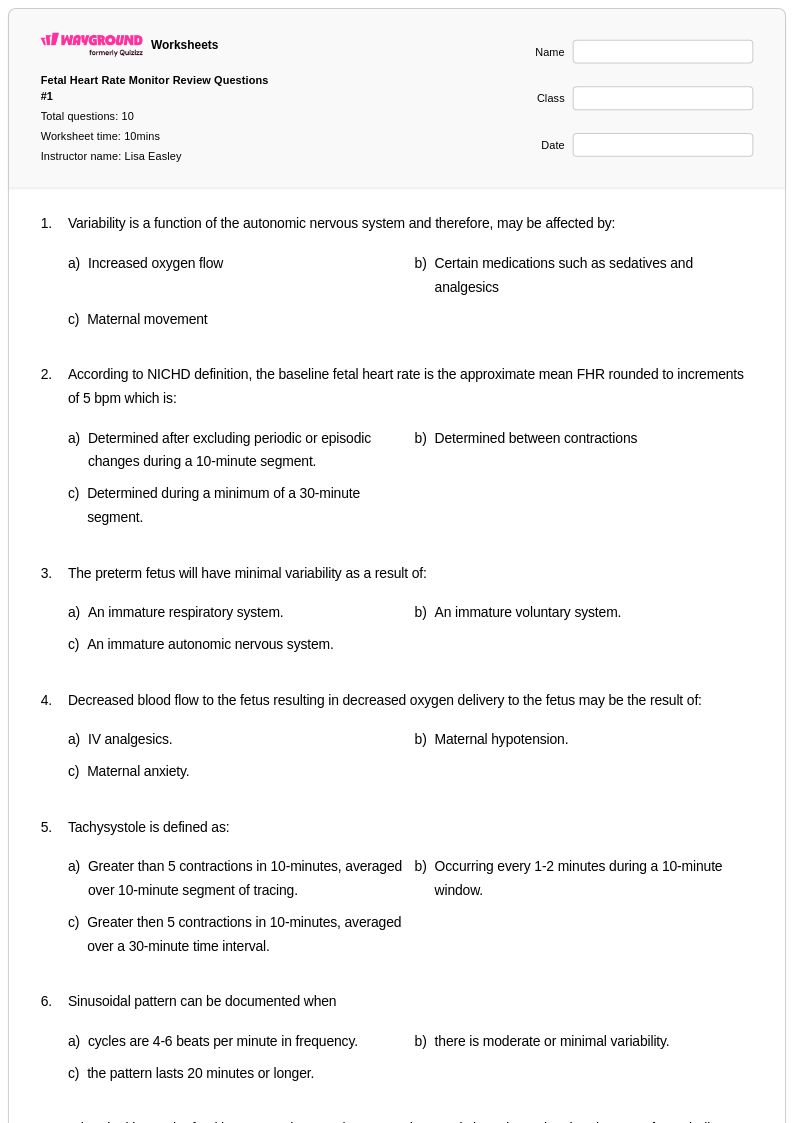
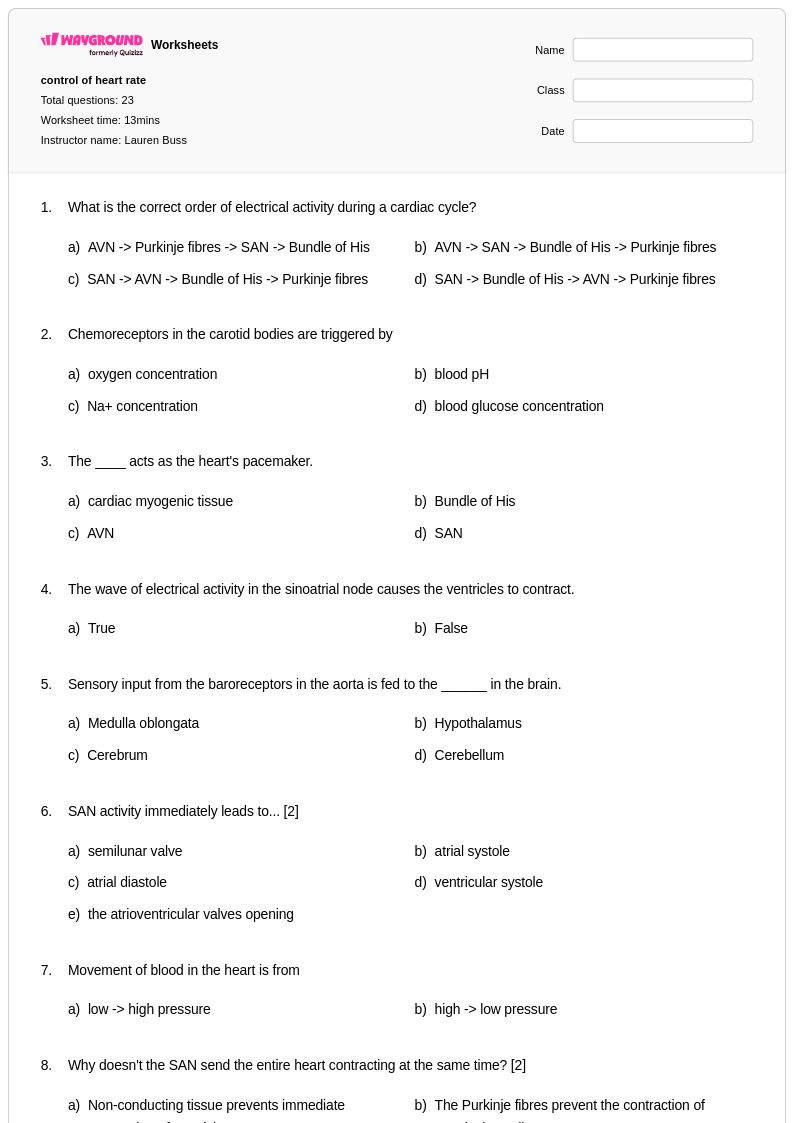
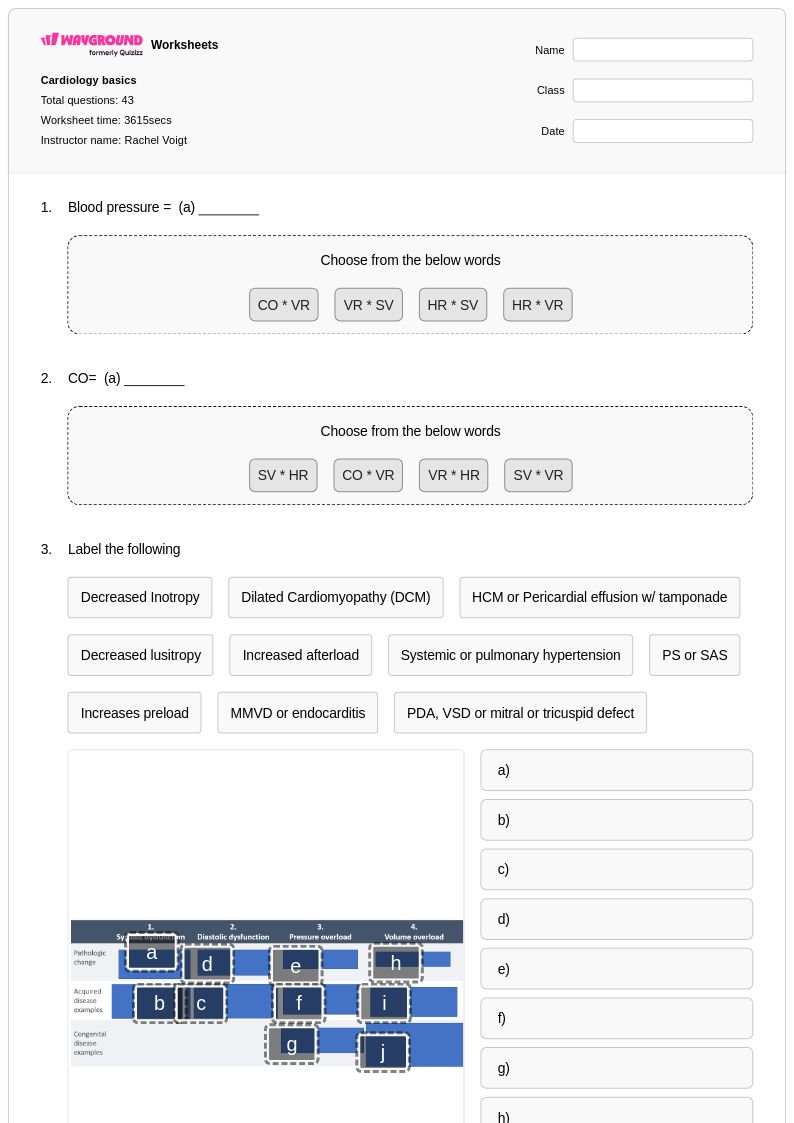
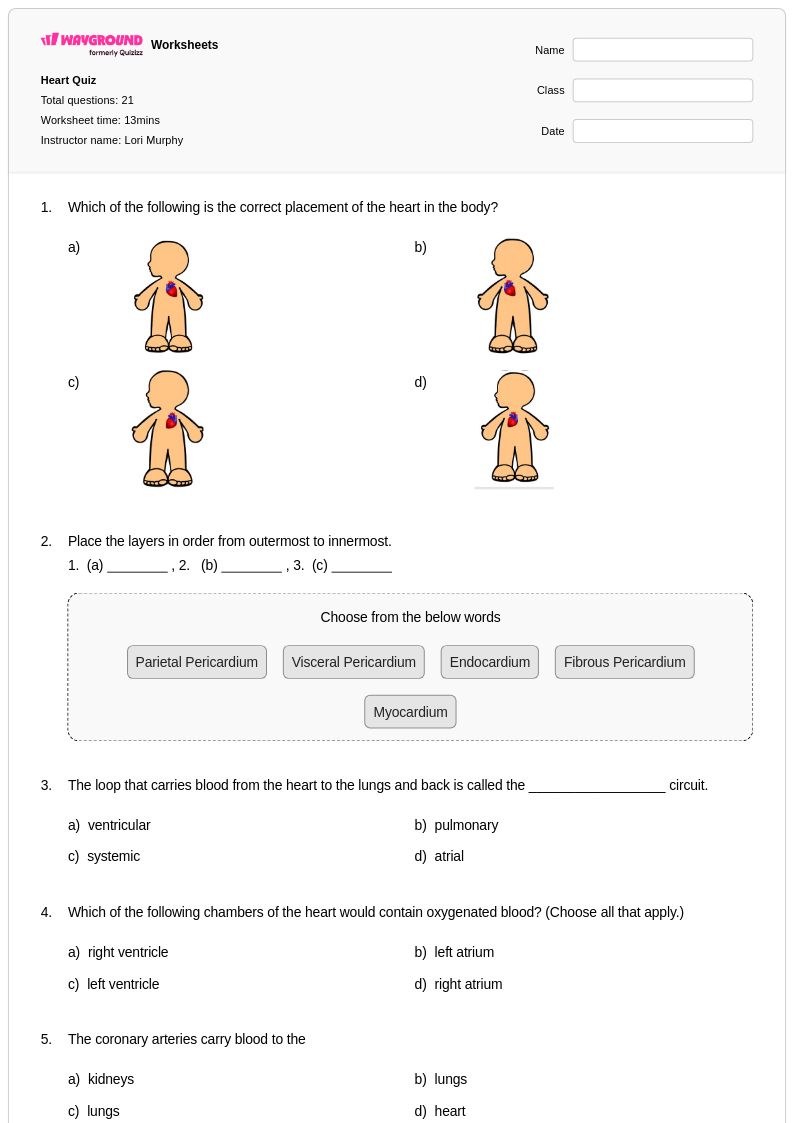
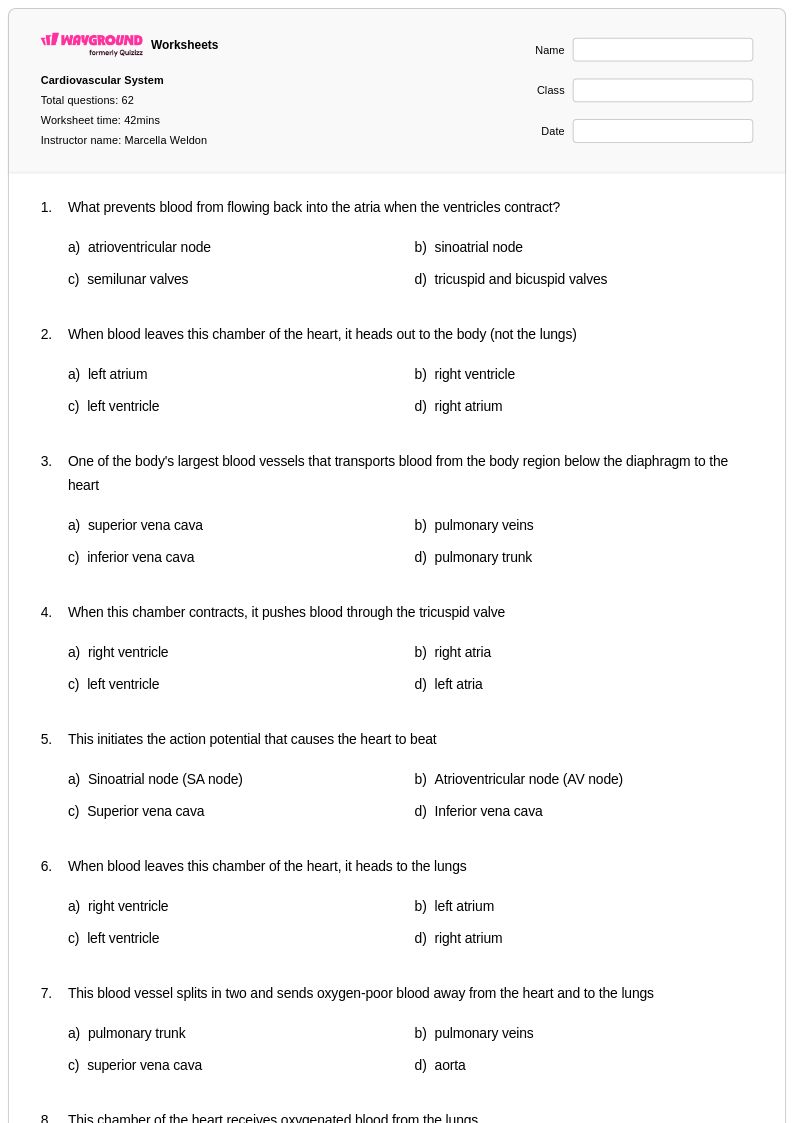
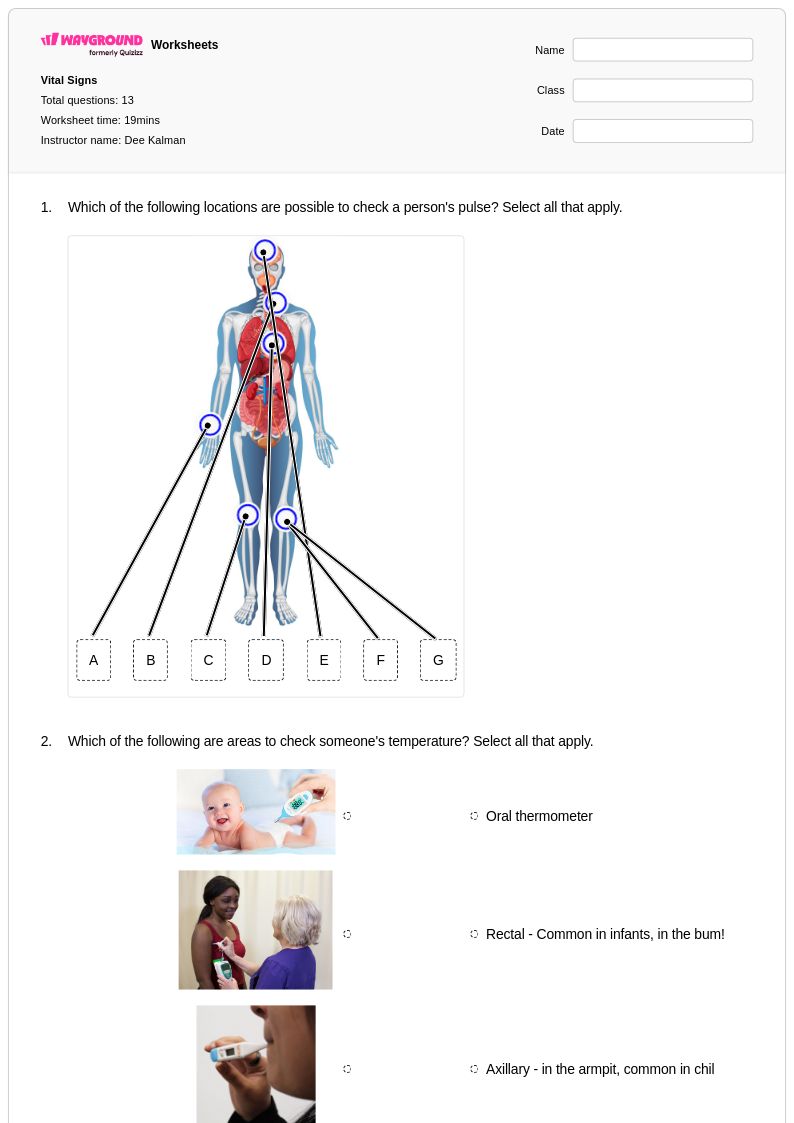
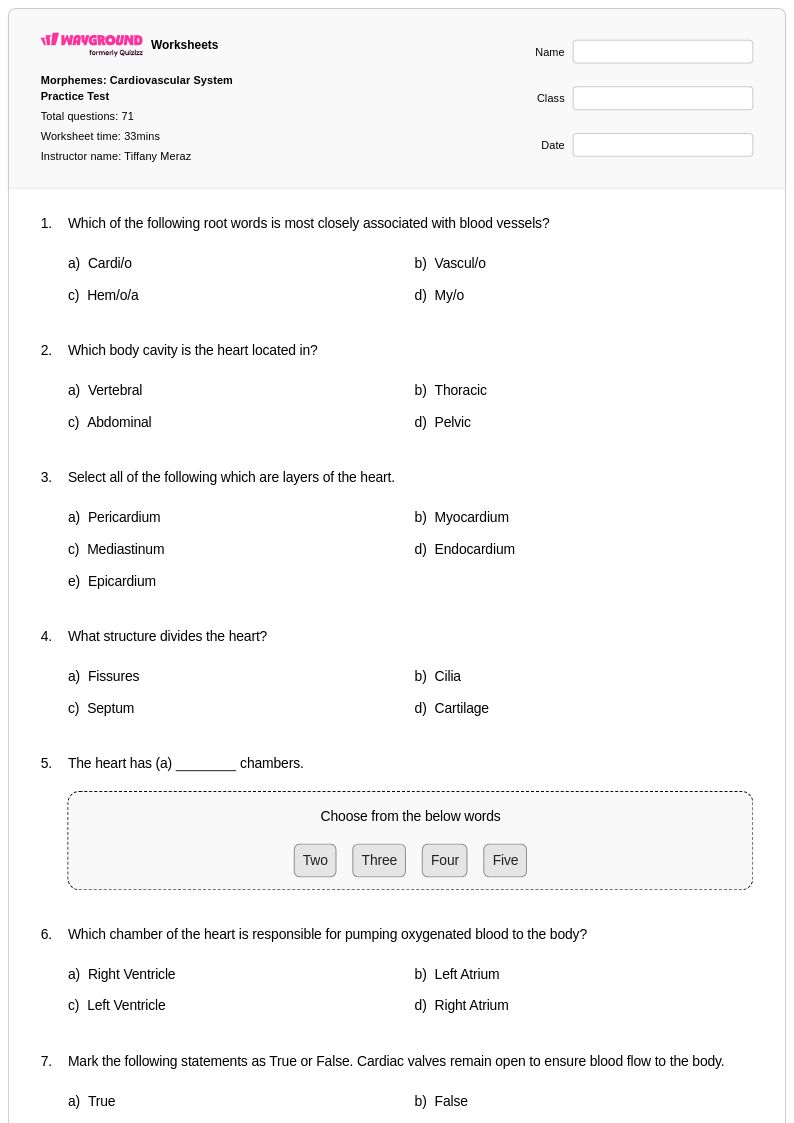
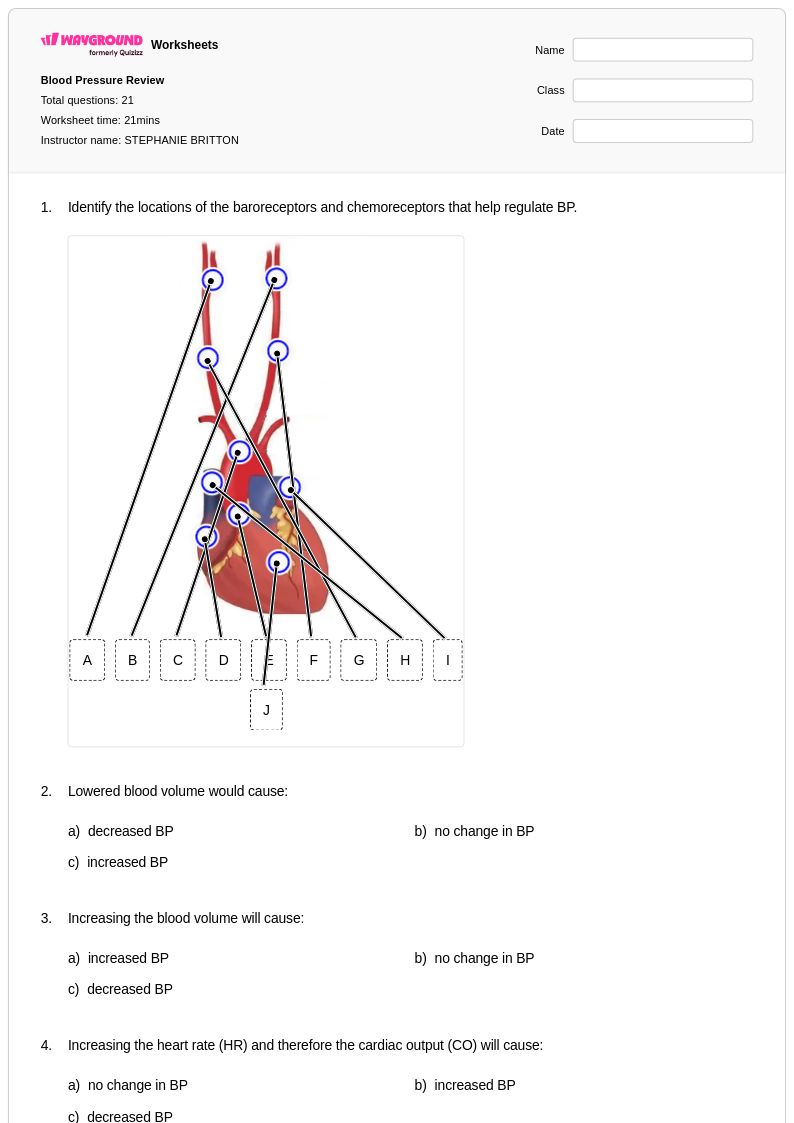
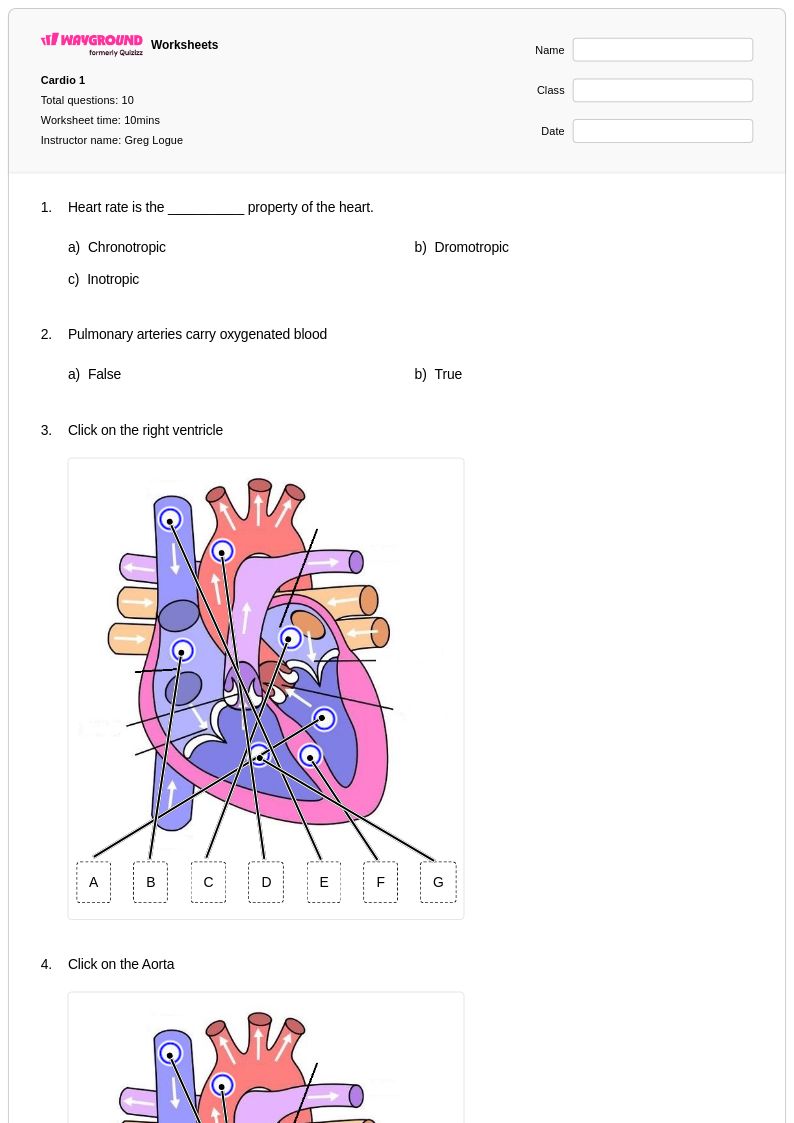
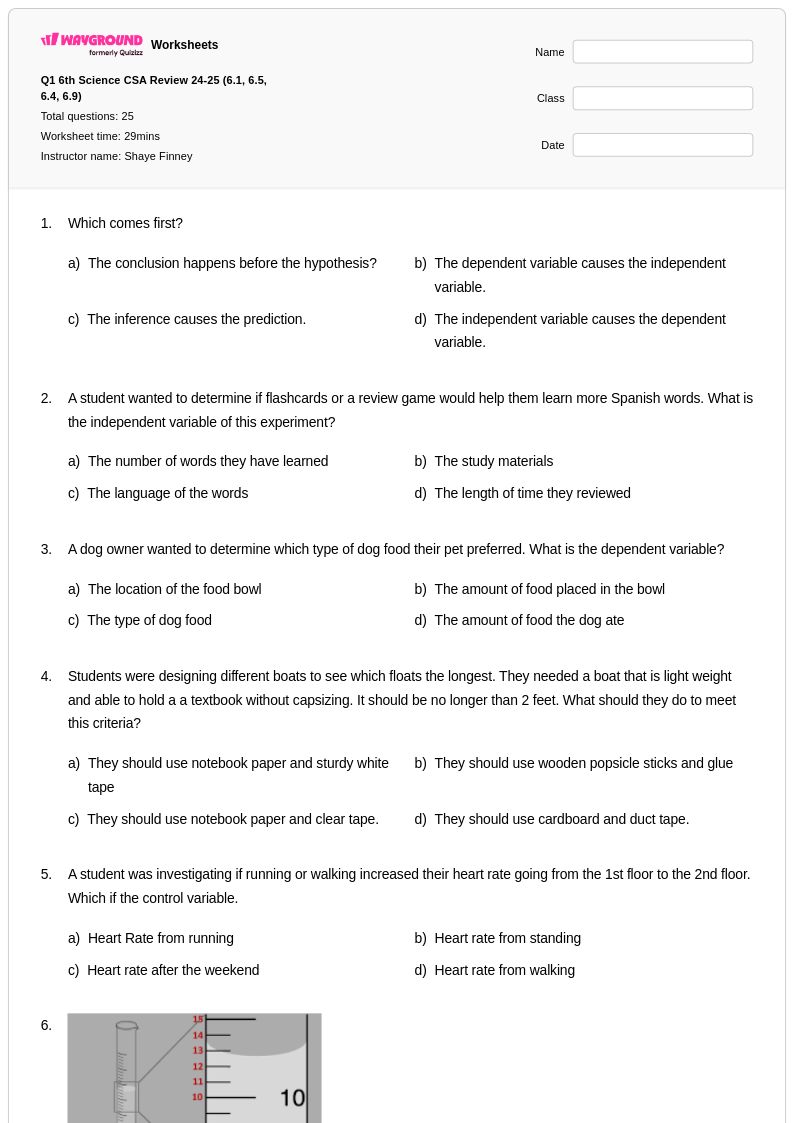
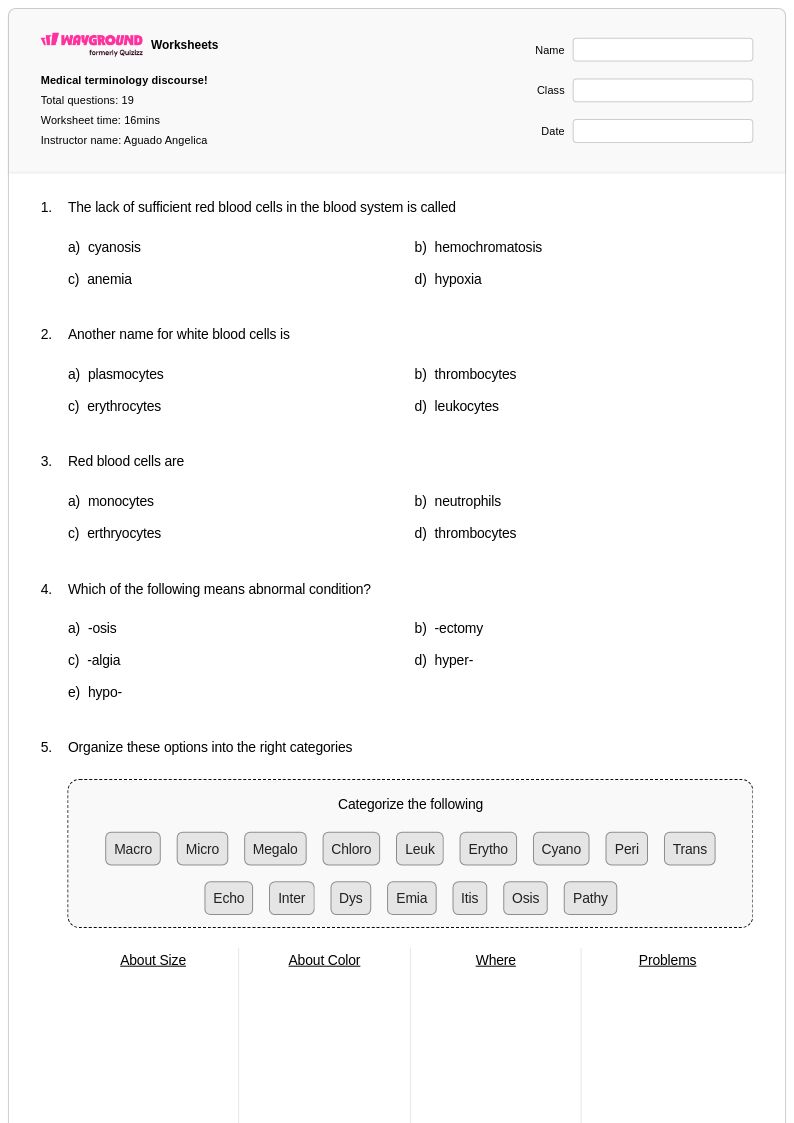
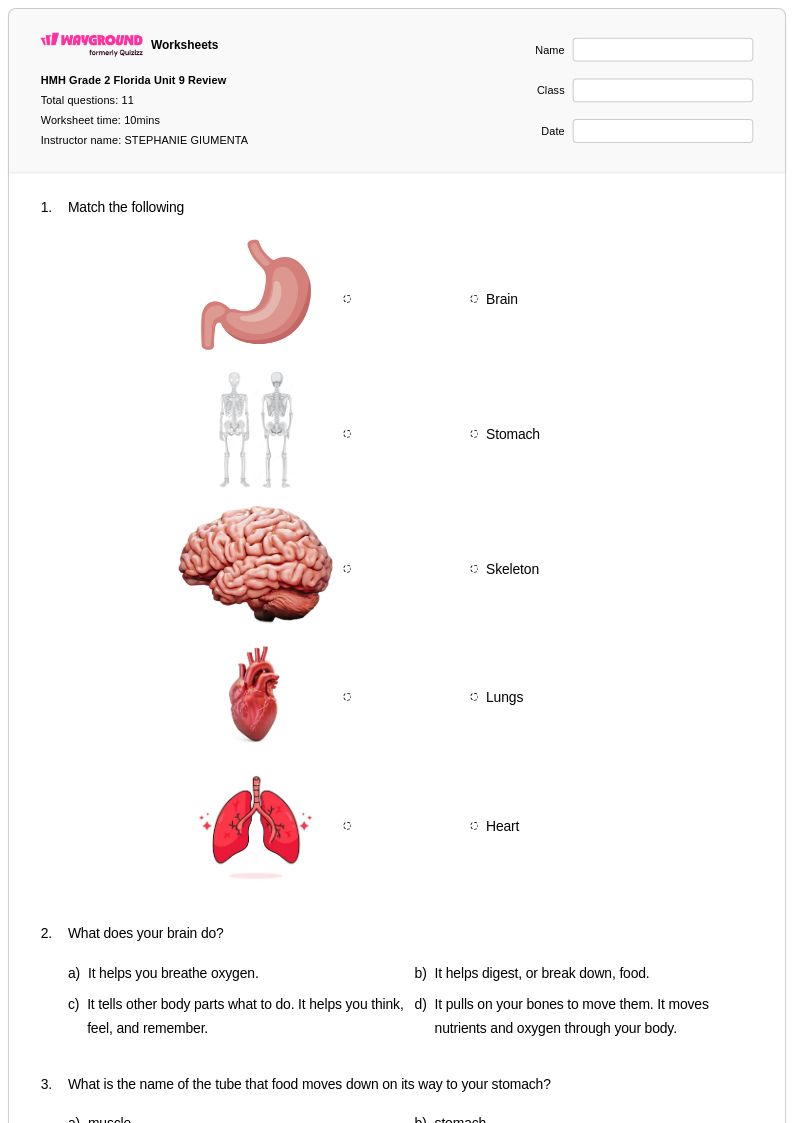
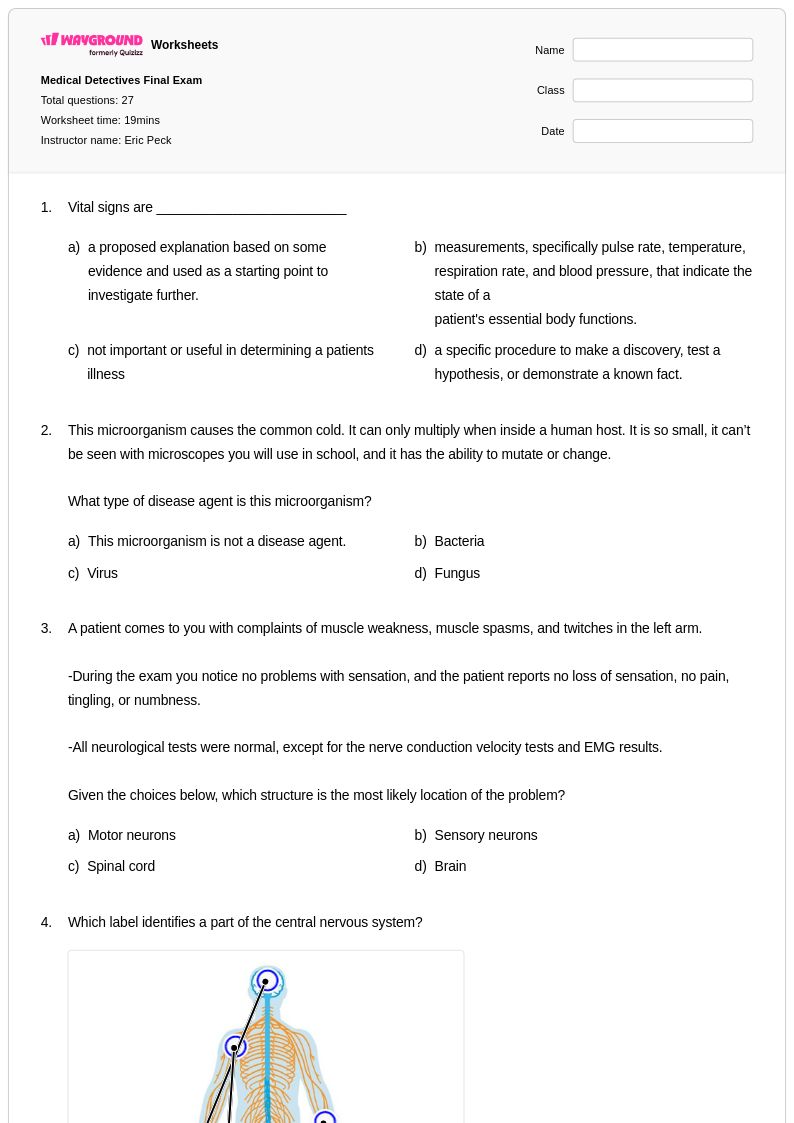
Explore Wayground's free heart rate biology worksheets and printables with answer keys to help students understand cardiovascular function through engaging practice problems and interactive PDF activities.
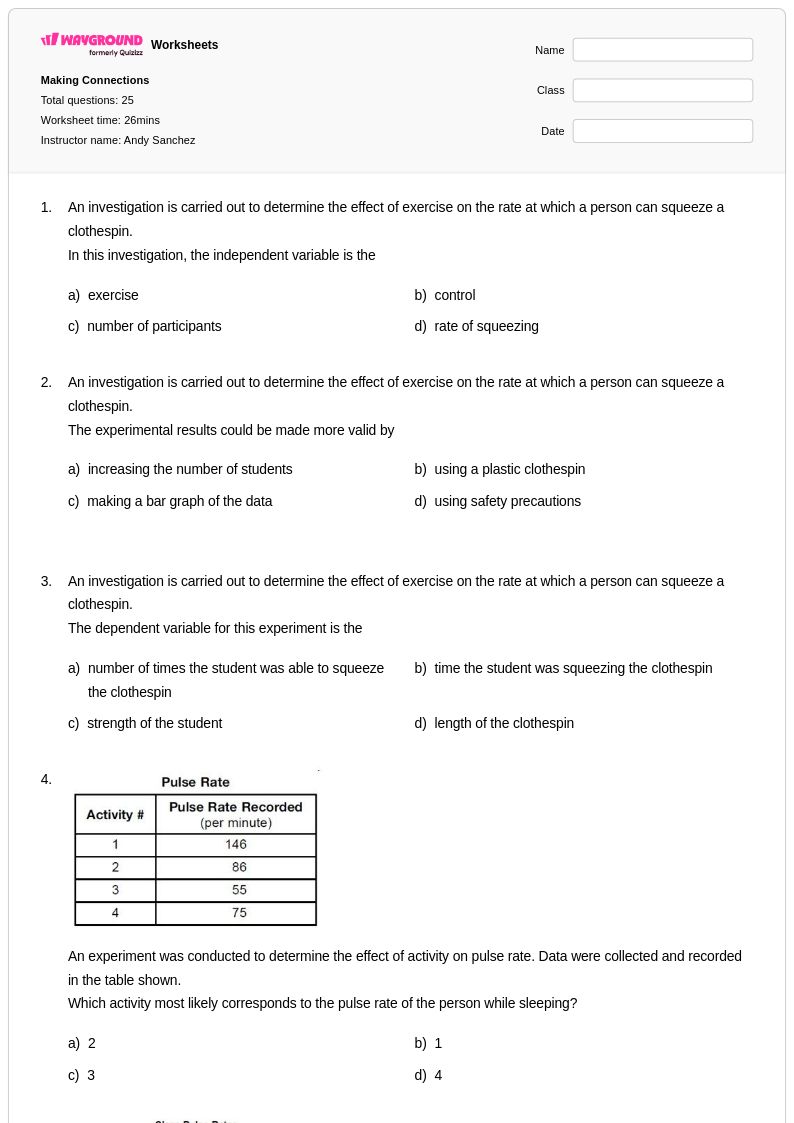
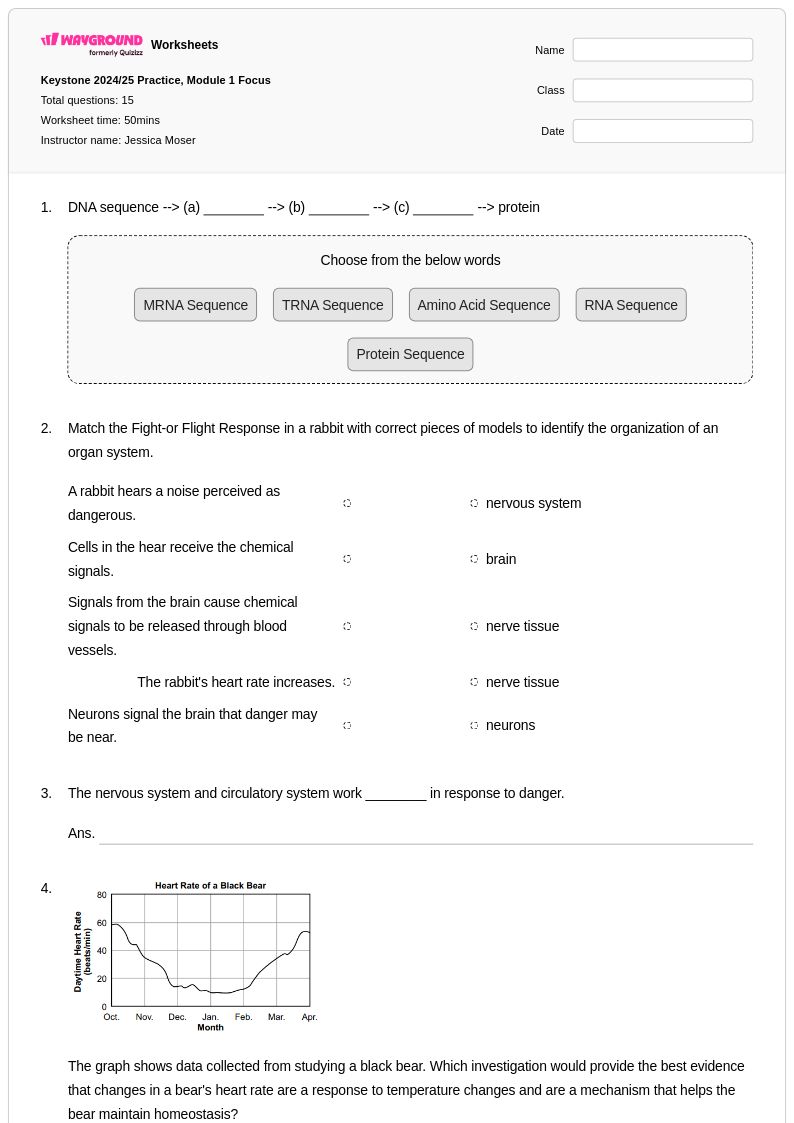
Heart rate worksheets available through Wayground (formerly Quizizz) provide comprehensive resources for students to explore cardiovascular physiology and understand the vital role of cardiac function in human biology. These expertly crafted worksheets strengthen essential scientific skills including data collection and analysis, graphing heart rate variations, calculating target heart rate zones, and understanding the physiological factors that influence cardiac output. Students engage with practice problems that examine how exercise, age, fitness level, and environmental conditions affect heart rate patterns, while developing proficiency in measuring pulse rates and interpreting cardiovascular data. Each worksheet includes detailed answer keys that support independent learning, and the free printable pdf format ensures accessibility for diverse classroom environments and home study sessions.
Wayground (formerly Quizizz) empowers educators with millions of teacher-created heart rate worksheet resources that feature robust search and filtering capabilities to locate materials perfectly aligned with specific learning objectives and scientific standards. The platform's differentiation tools enable teachers to customize worksheets for varying skill levels, ensuring that both struggling learners and advanced students can access appropriate cardiovascular content that challenges their understanding. Available in both printable and digital pdf formats, these worksheet collections support flexible lesson planning while providing targeted resources for remediation of basic cardiac concepts and enrichment activities exploring advanced cardiovascular physiology. Teachers can seamlessly integrate these materials into laboratory investigations, homework assignments, and skill practice sessions, creating comprehensive learning experiences that build deep understanding of heart rate regulation and cardiovascular health principles.
FAQs
How do I teach heart rate and cardiovascular physiology in a biology class?
Effective heart rate instruction begins with grounding students in the mechanics of cardiac output — how the heart adjusts its rate in response to oxygen demand. From there, connect abstract physiology to measurable experience by having students collect real pulse data before, during, and after physical activity, then analyze their own results. Graphing heart rate changes over time helps students visualize concepts like recovery rate and cardiovascular efficiency, making the physiology tangible rather than theoretical.
What exercises help students practice calculating and interpreting heart rate data?
Effective practice activities include calculating target heart rate zones using age-based formulas, graphing heart rate changes across different exercise intensities, and comparing resting versus active pulse data collected during lab activities. Worksheets that ask students to interpret cardiovascular data sets — rather than simply recall definitions — build the analytical skills biology standards require. Problems that vary the variables (age, fitness level, environmental conditions) also help students generalize their understanding rather than memorize a single scenario.
What mistakes do students commonly make when learning about heart rate?
A frequent misconception is that a higher heart rate always indicates poor health, when in fact context matters — an elevated rate during vigorous exercise is a normal physiological response. Students also often confuse heart rate with blood pressure, treating them as interchangeable measures of cardiovascular function. When calculating target heart rate zones, errors commonly arise from misapplying the formula or failing to account for resting heart rate in more advanced calculations.
How do I differentiate heart rate worksheets for students at different skill levels?
For students who need additional support, simplify data sets and reduce the number of variables students must analyze at once, focusing first on the relationship between exercise and heart rate before introducing factors like age or fitness level. Advanced students can be challenged with multi-step problems that require calculating cardiac output, comparing heart rate recovery curves, or evaluating real-world cardiovascular data. On Wayground, teachers can apply reduced answer choices for students who need less cognitive load, or enable Read Aloud for students who benefit from audio support, without other students being notified of individualized settings.
How do I use Wayground's heart rate worksheets in my classroom?
Wayground's heart rate worksheets are available as printable PDFs for traditional classroom and lab use, and in digital formats for technology-integrated or remote learning environments. Teachers can also host the material as a quiz directly on Wayground, allowing students to complete activities interactively while the platform tracks responses. Each worksheet includes a complete answer key, which supports independent student review and reduces grading time for teachers.