
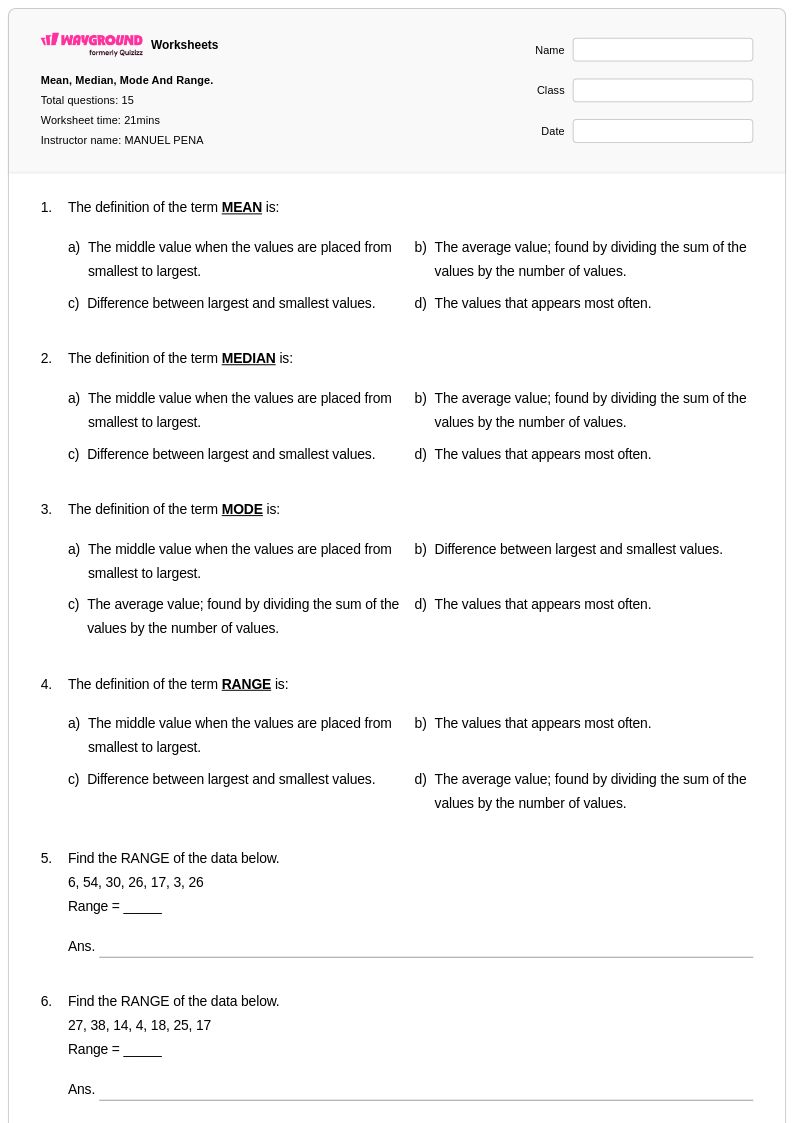
15 Q
6th
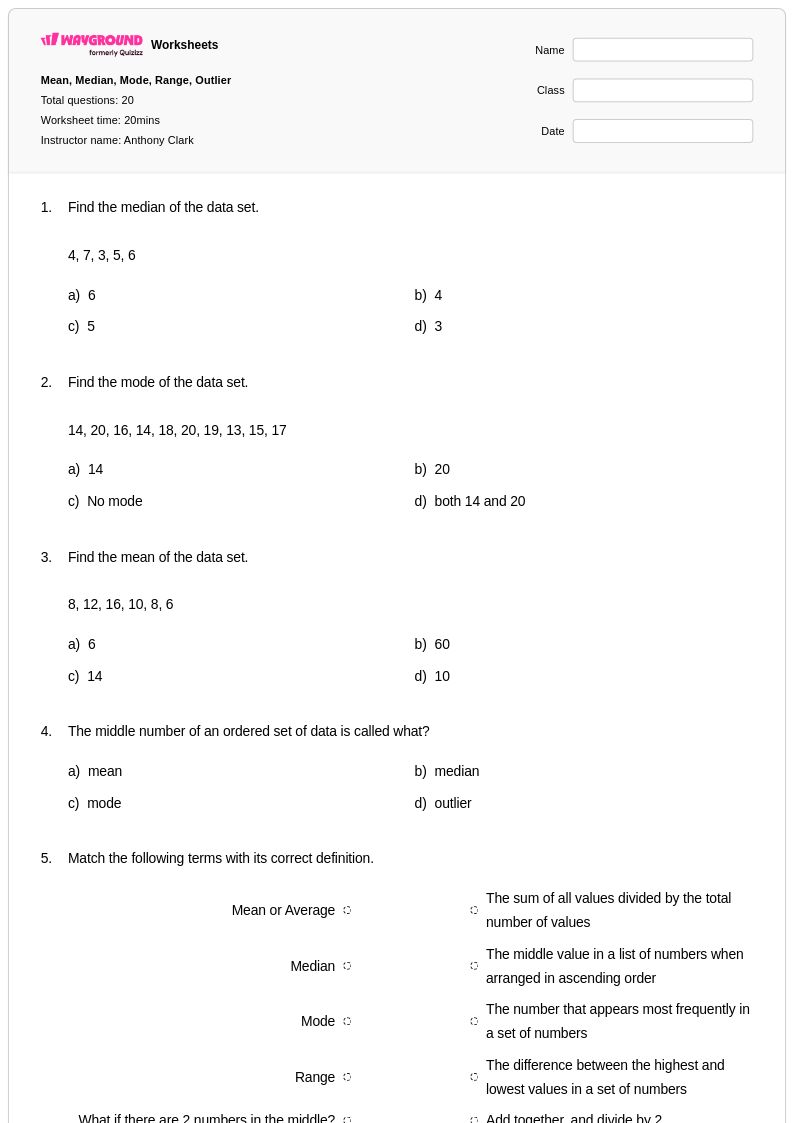
20 Q
6th - Uni
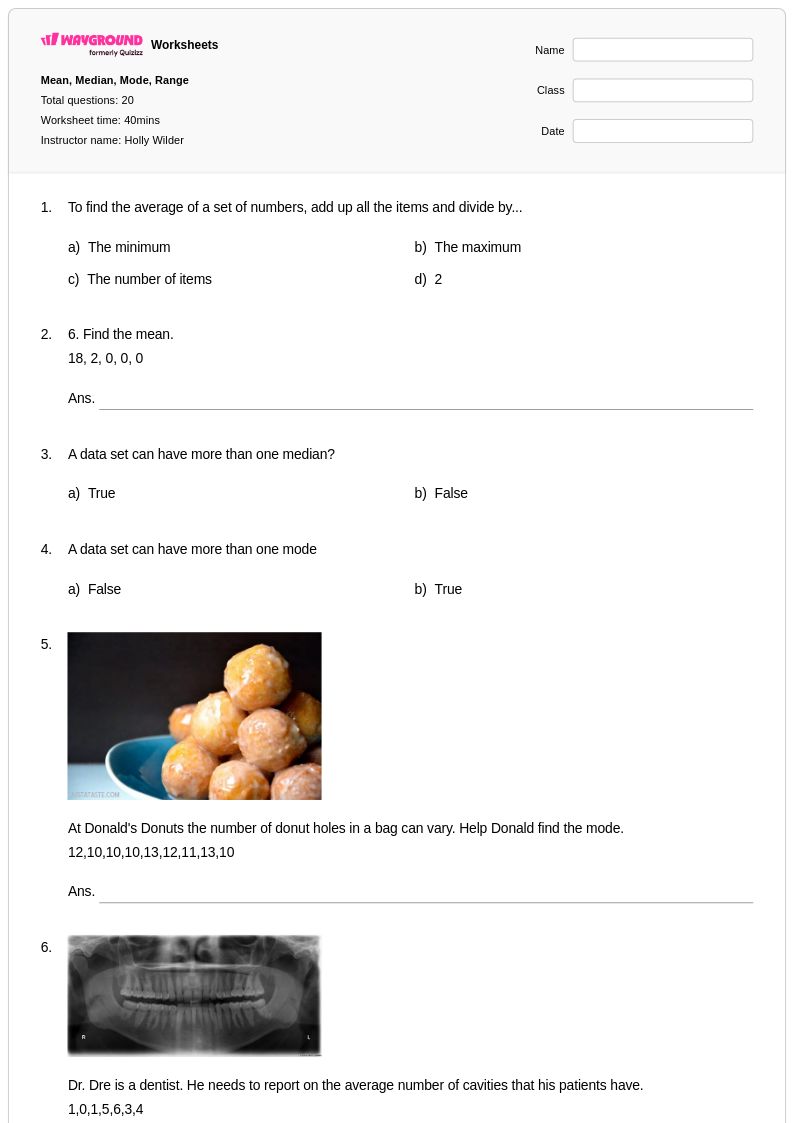
20 Q
6th - 8th
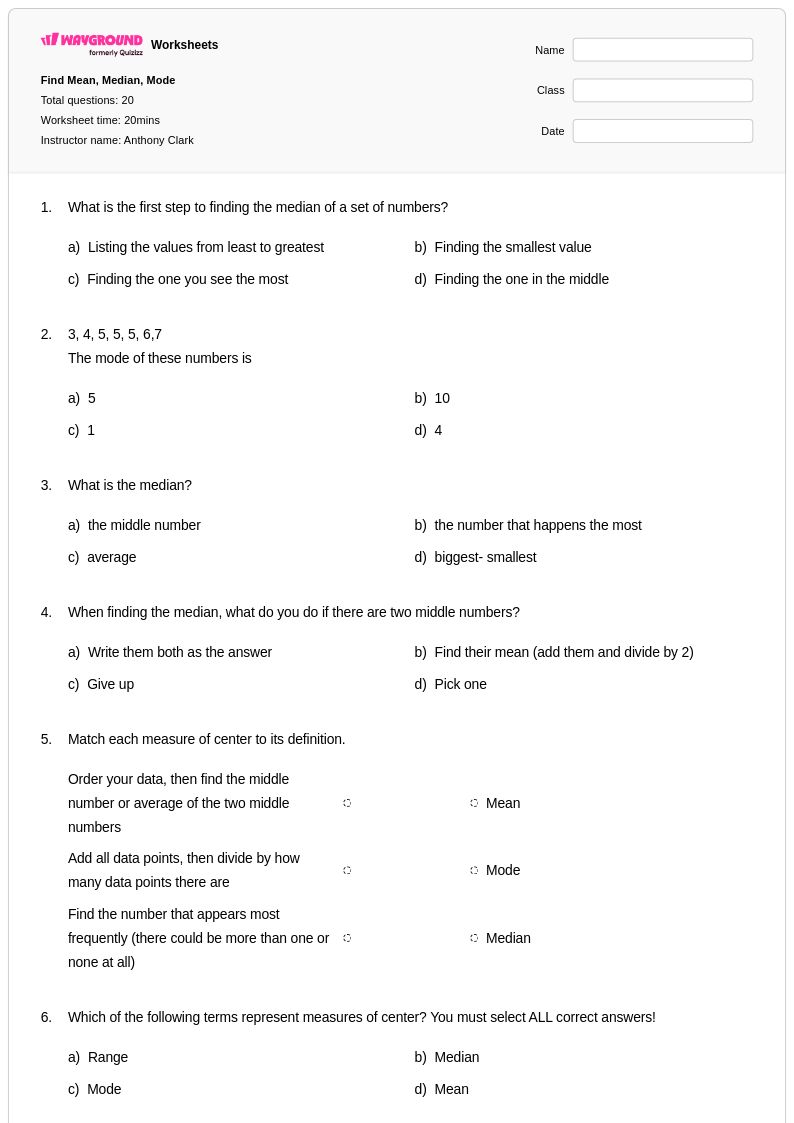
20 Q
6th - Uni
20 Q
6th - Uni
20 Q
6th - Uni
13 Q
6th
15 Q
6th
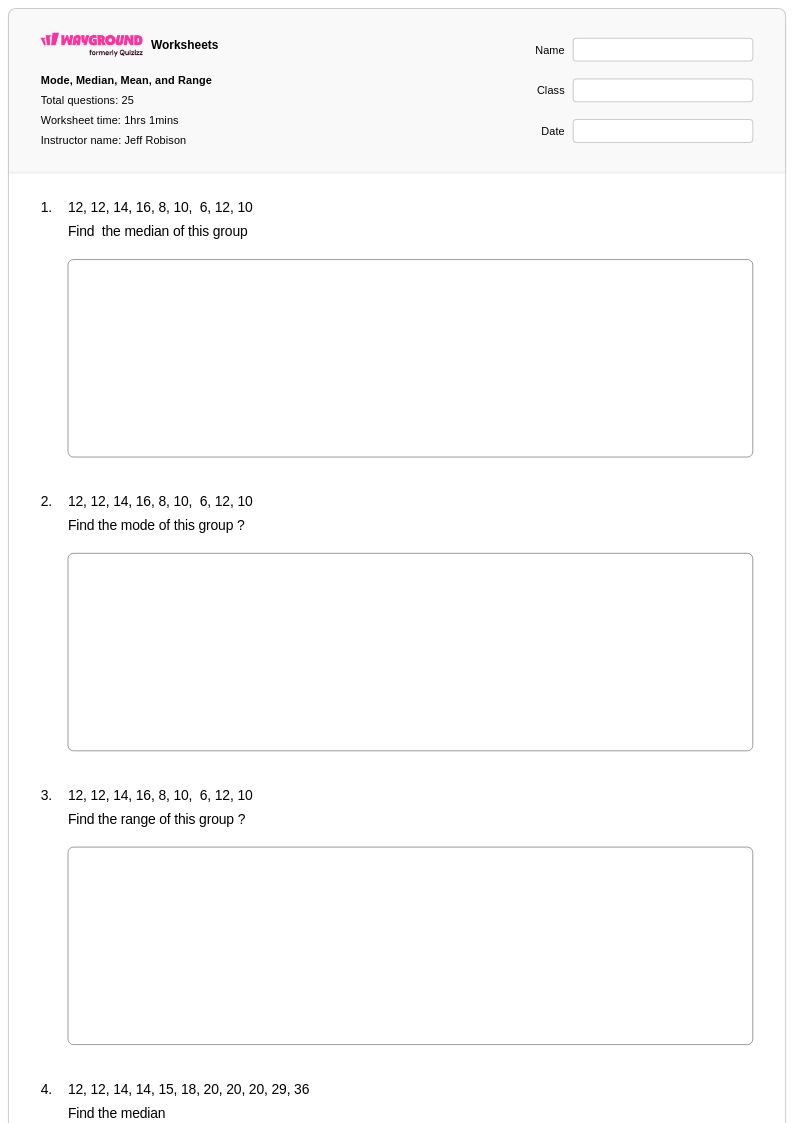
25 Q
6th
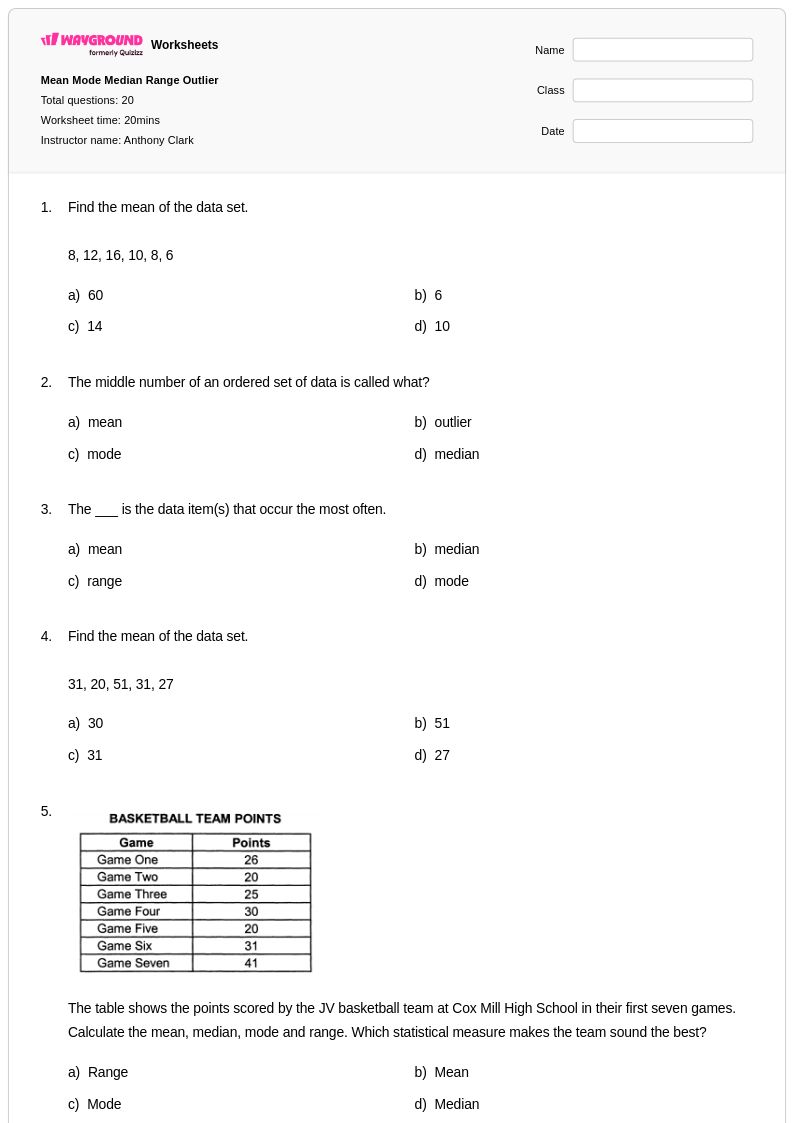
20 Q
6th - Uni
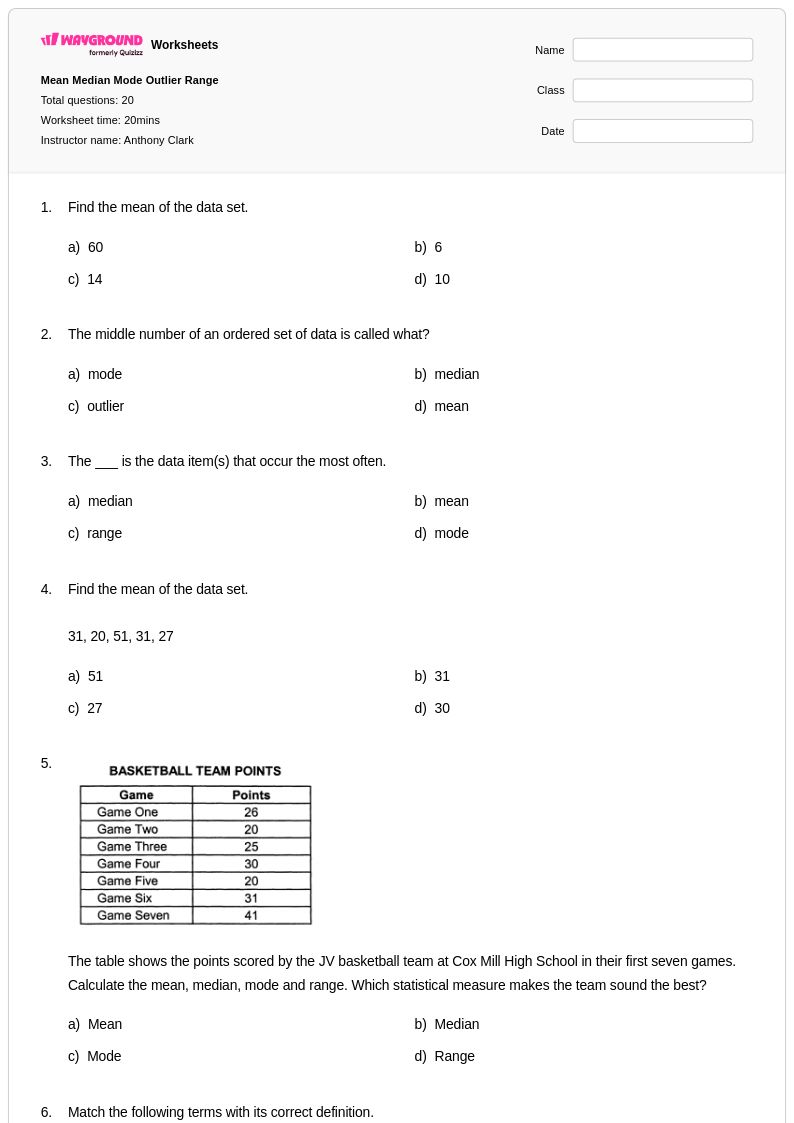
20 Q
6th - Uni
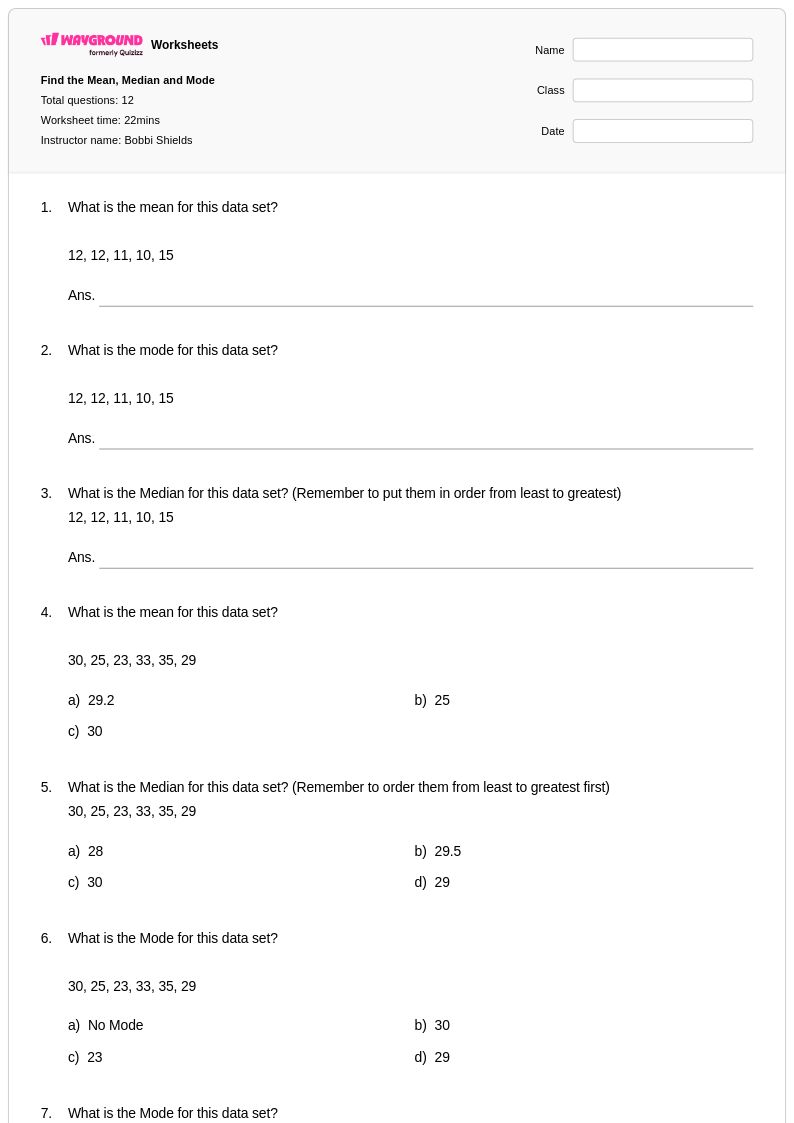
12 Q
6th
20 Q
6th - Uni
20 Q
6th - Uni
20 Q
5th - Uni
20 Q
6th - Uni
16 Q
6th
20 Q
6th - Uni
22 Q
6th
16 Q
6th - 8th
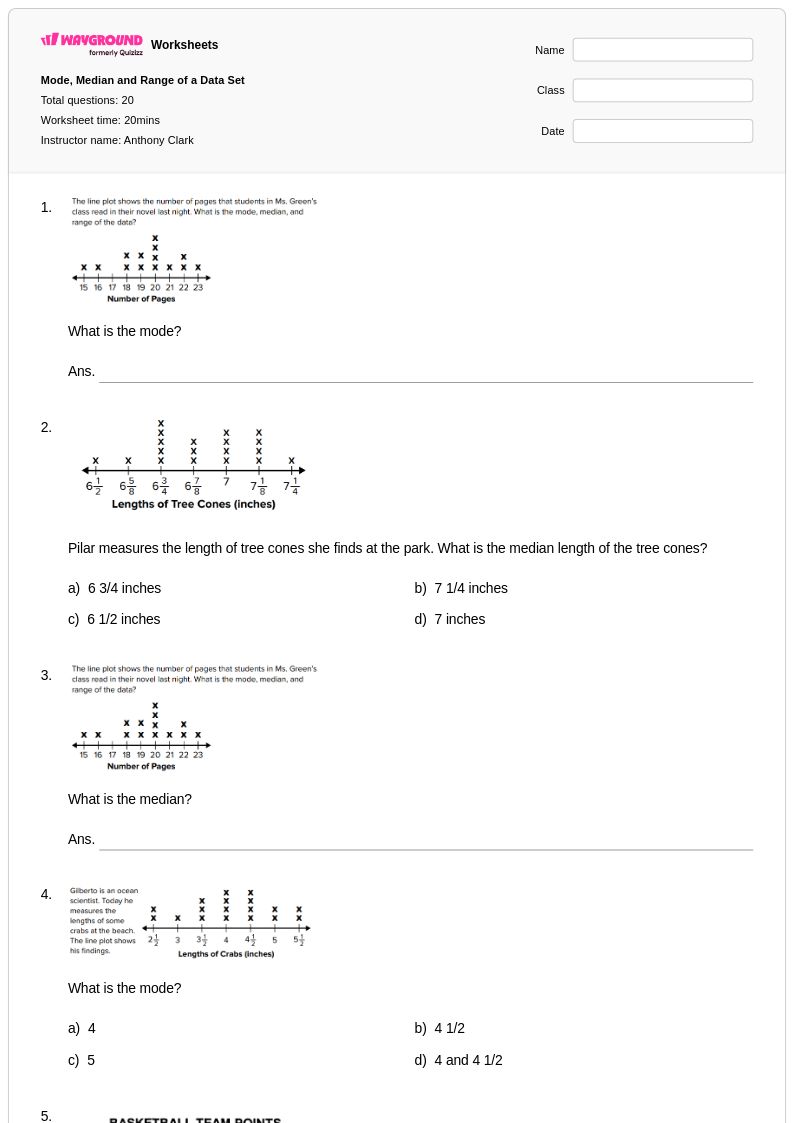
20 Q
6th - Uni
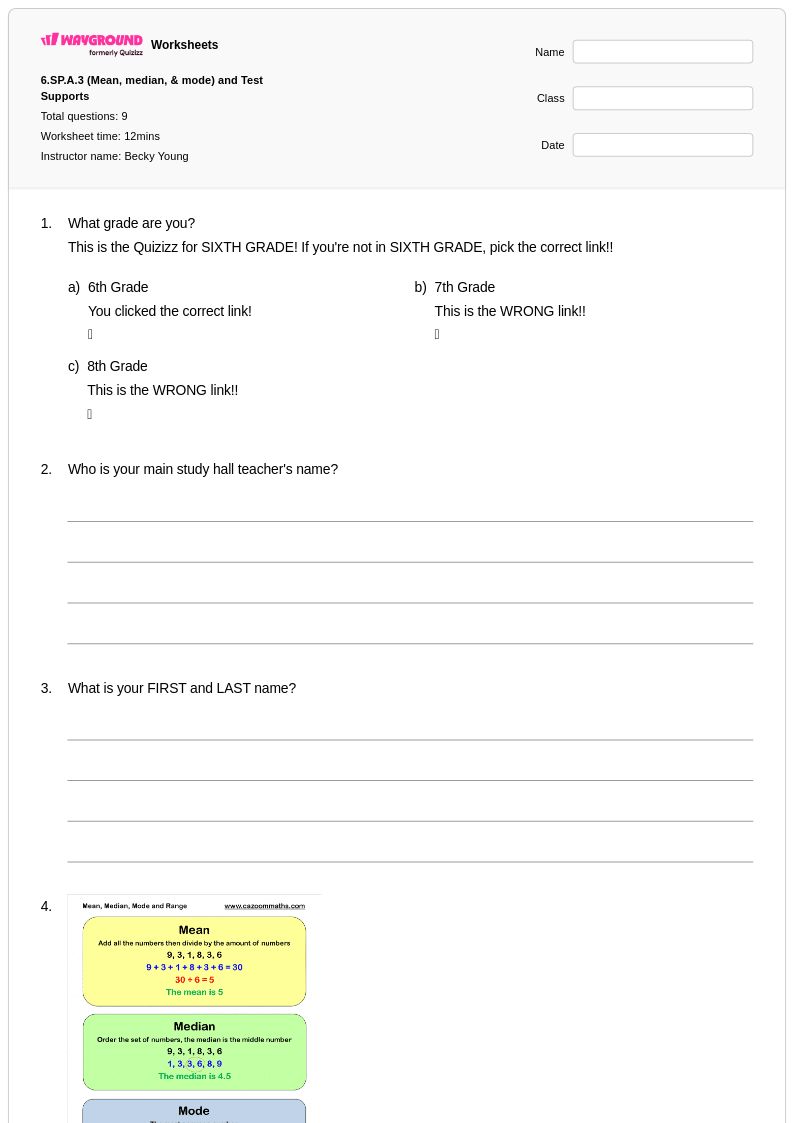
9 Q
6th
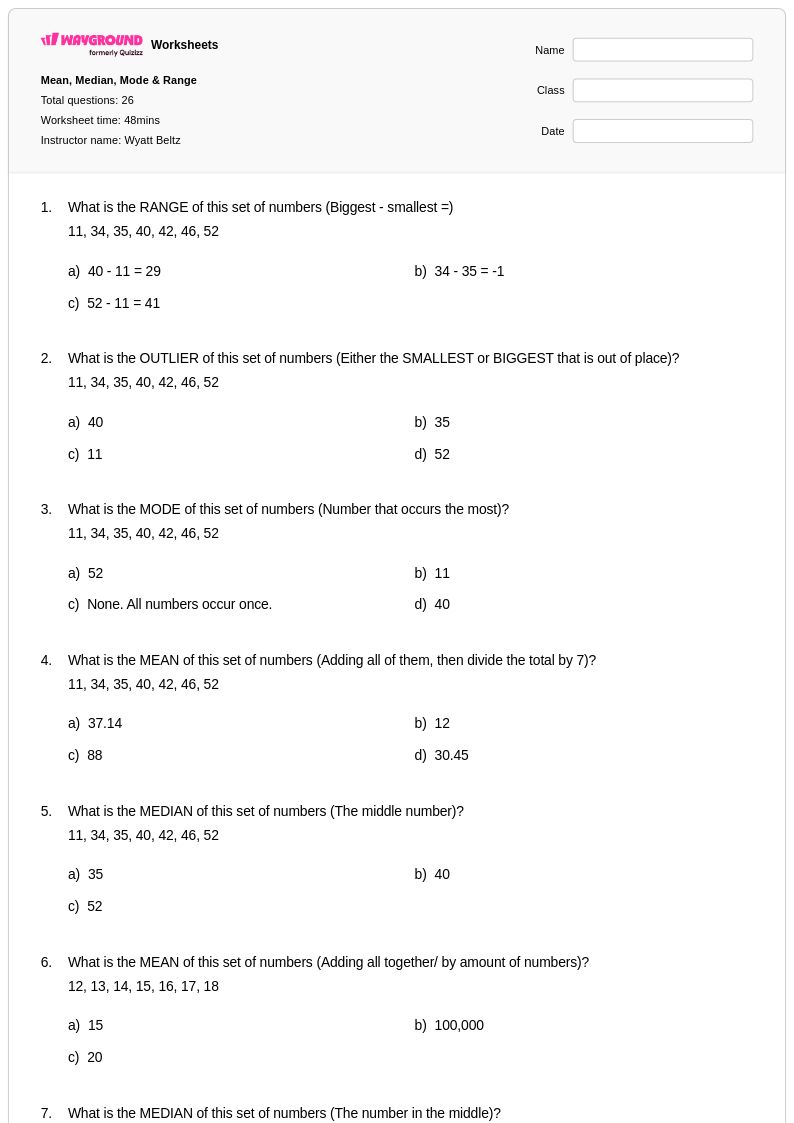
26 Q
6th - 9th
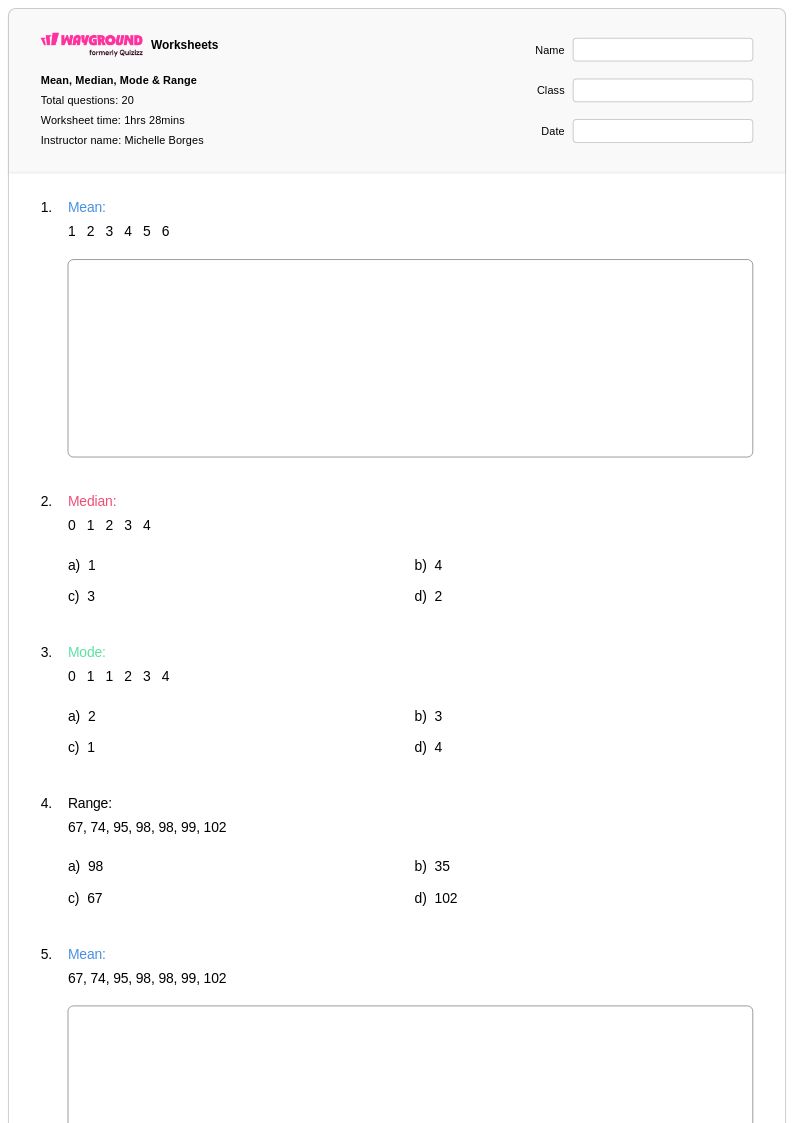
20 Q
6th
Explore Other Subject Worksheets for grade 6
Explore printable Mode worksheets for Grade 6
Mode worksheets for Grade 6 students through Wayground (formerly Quizizz) provide comprehensive practice with identifying the most frequently occurring value in data sets, a fundamental concept in introductory statistics. These carefully designed resources help sixth-grade students develop essential data analysis skills by working through systematic practice problems that range from simple number lists to more complex real-world scenarios involving surveys, sports statistics, and classroom data. Each worksheet collection includes detailed answer keys and step-by-step solutions that guide students through the process of organizing data, counting frequencies, and determining which value appears most often. Available as free printables in convenient PDF format, these worksheets strengthen students' ability to interpret data patterns and build confidence in statistical reasoning that will serve as a foundation for more advanced mathematical concepts.
Wayground (formerly Quizizz) empowers educators with access to millions of teacher-created mode worksheets specifically tailored for Grade 6 mathematics instruction, featuring robust search and filtering capabilities that allow teachers to quickly locate materials aligned with their curriculum standards and learning objectives. The platform's differentiation tools enable instructors to customize worksheet difficulty levels and problem types to meet diverse student needs, while flexible formatting options provide both printable PDF versions for traditional classroom use and digital formats for interactive learning environments. These comprehensive resources support teachers in planning targeted lessons, implementing remediation strategies for struggling learners, offering enrichment opportunities for advanced students, and providing consistent skill practice that reinforces mode identification techniques across various mathematical contexts and real-world applications.
FAQs
How do I teach mode as part of 6th-grade statistics?
What exercises are best for 6th graders practicing mode?
What are the key challenges for 6th graders with measures of center?
How can I use this 6th-grade mode worksheet with my students?
How does mode fit into the 6th-grade Common Core standards?
When is the mode the most useful measure of central tendency?