
10 Hỏi
2nd
7 Hỏi
2nd - 12th
10 Hỏi
1st - 10th
11 Hỏi
2nd
16 Hỏi
1st - 3rd
22 Hỏi
2nd - 4th
14 Hỏi
1st - 3rd
10 Hỏi
2nd - 3rd
13 Hỏi
1st - 2nd
30 Hỏi
2nd
10 Hỏi
1st - 5th
10 Hỏi
1st - 3rd
60 Hỏi
1st - 5th
20 Hỏi
2nd
16 Hỏi
1st - 5th
30 Hỏi
2nd
6 Hỏi
1st - PD
9 Hỏi
2nd
15 Hỏi
1st - 5th
10 Hỏi
2nd - 3rd
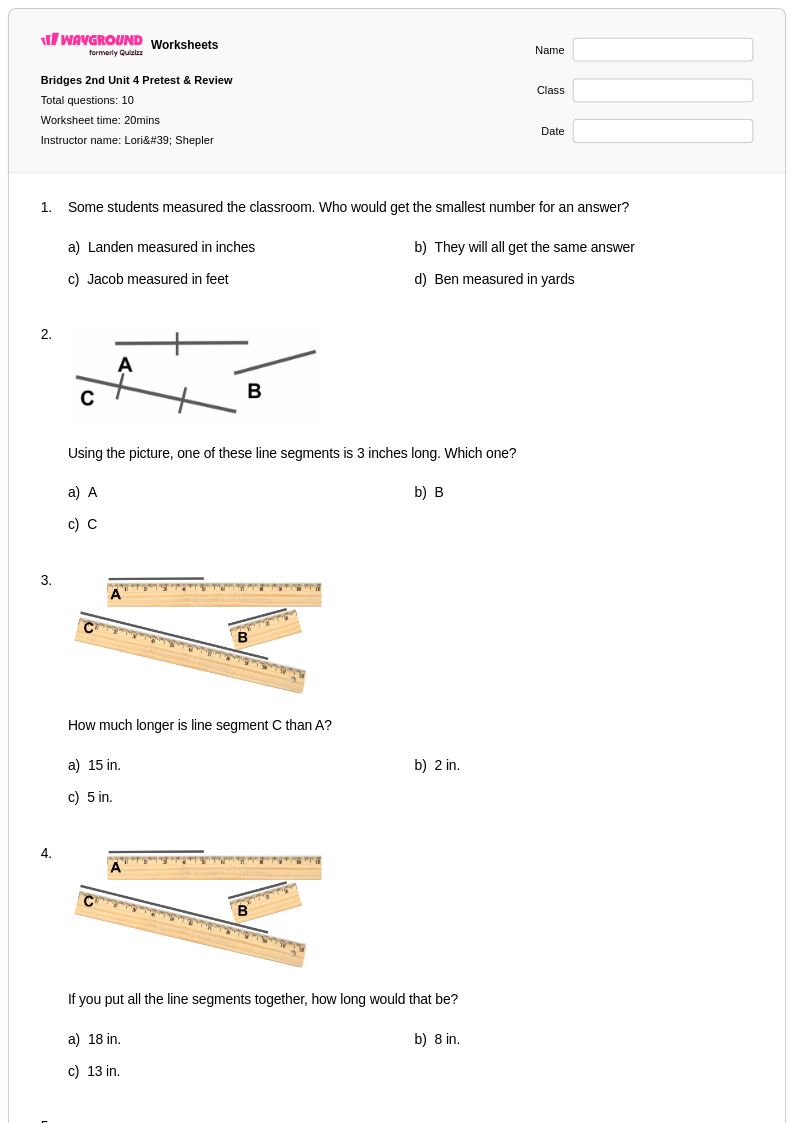
10 Hỏi
2nd
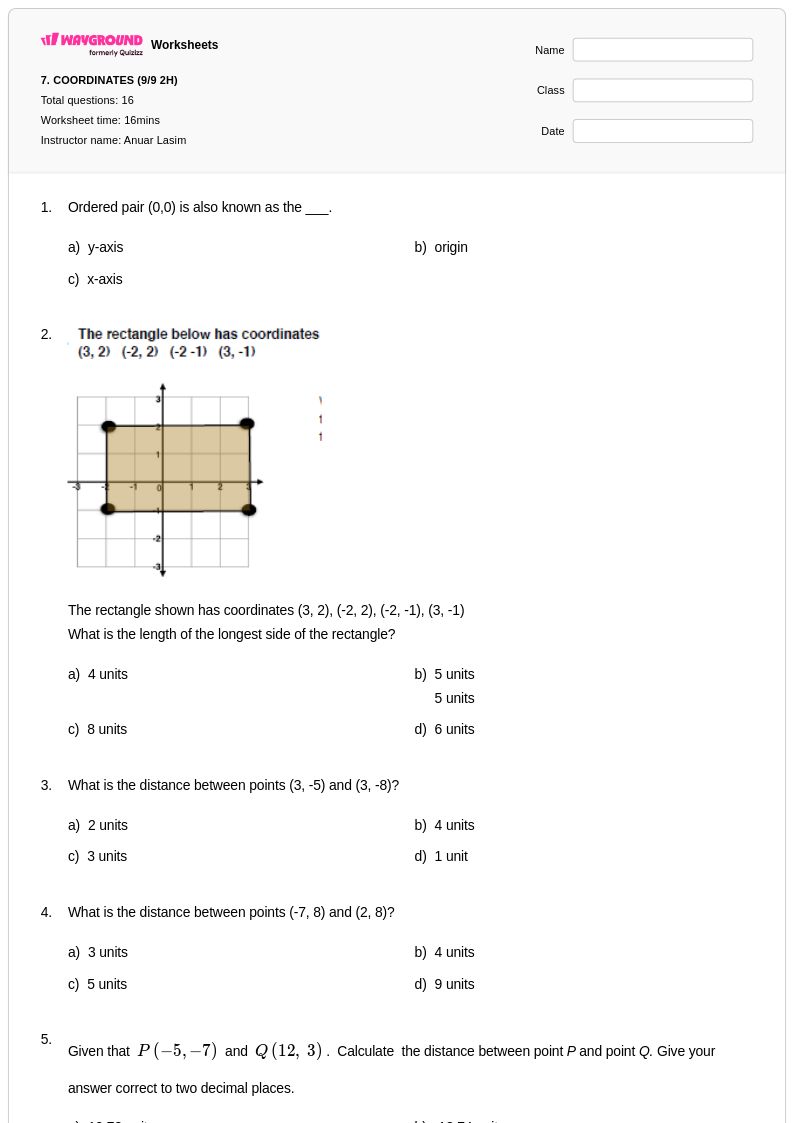
16 Hỏi
2nd - 3rd
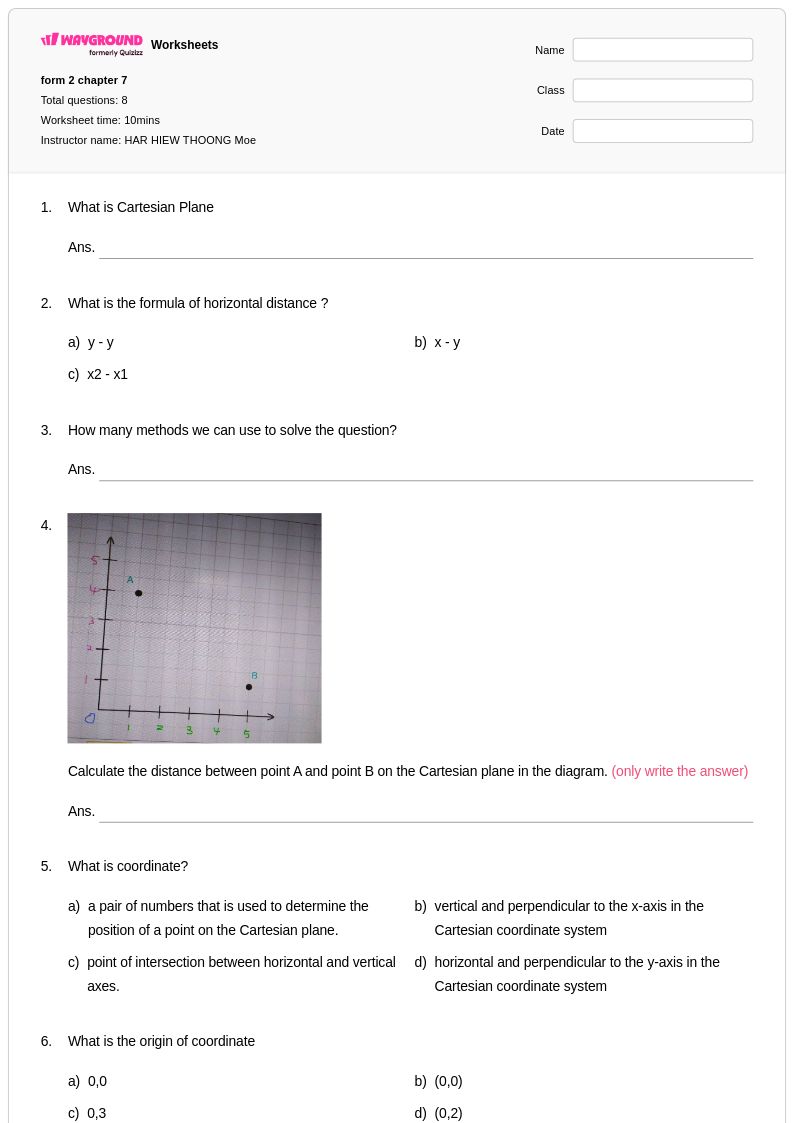
8 Hỏi
2nd
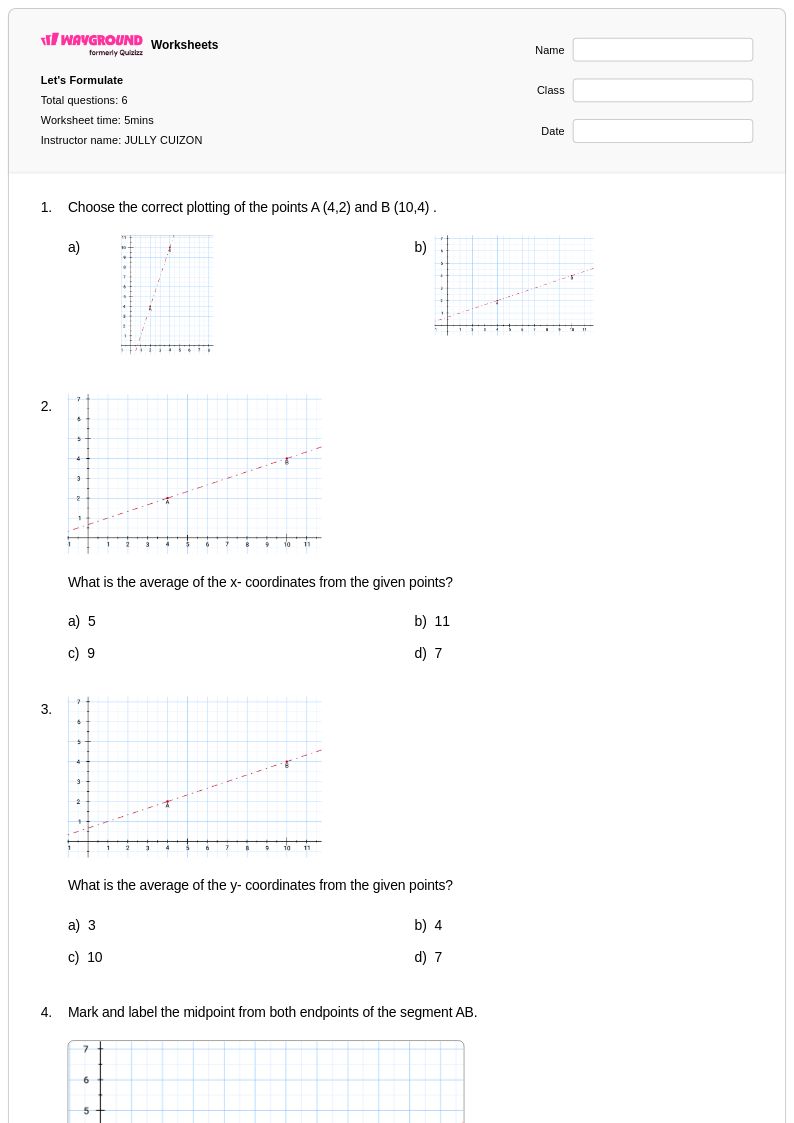
6 Hỏi
1st - 3rd
Khám phá các bảng tính chủ đề khác cho grade 2
Explore printable Segment Midpoint worksheets for Grade 2
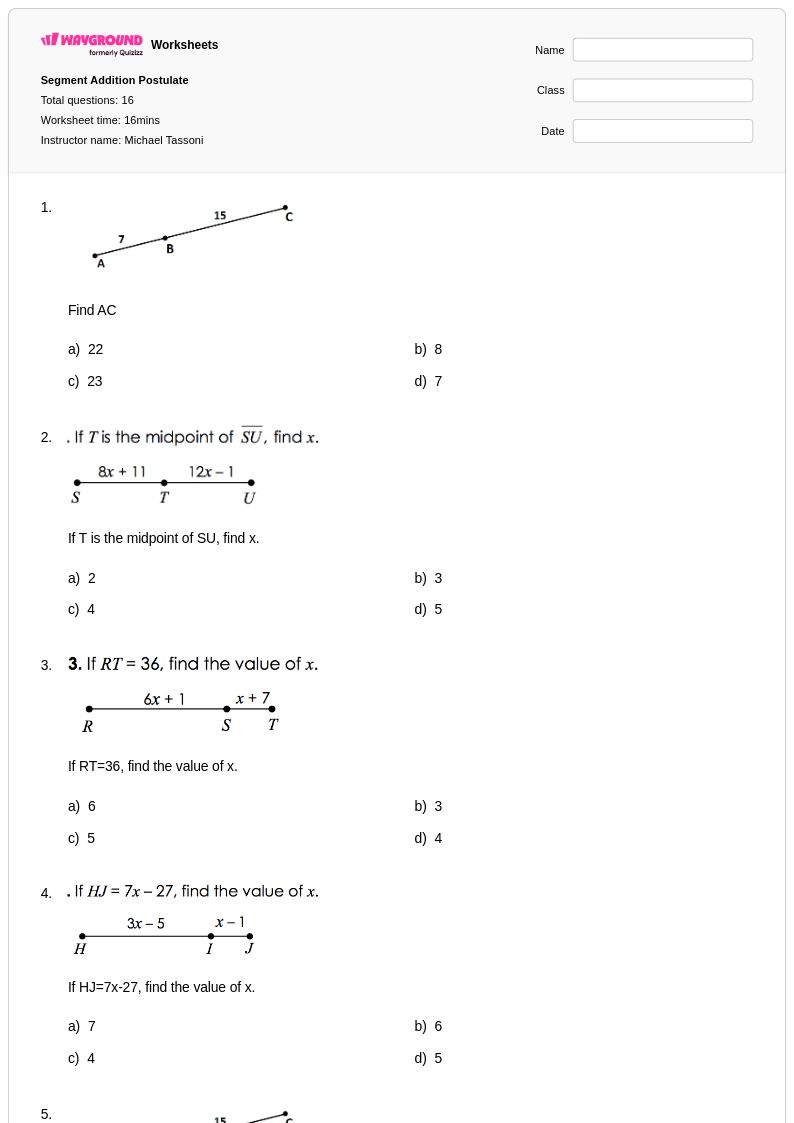
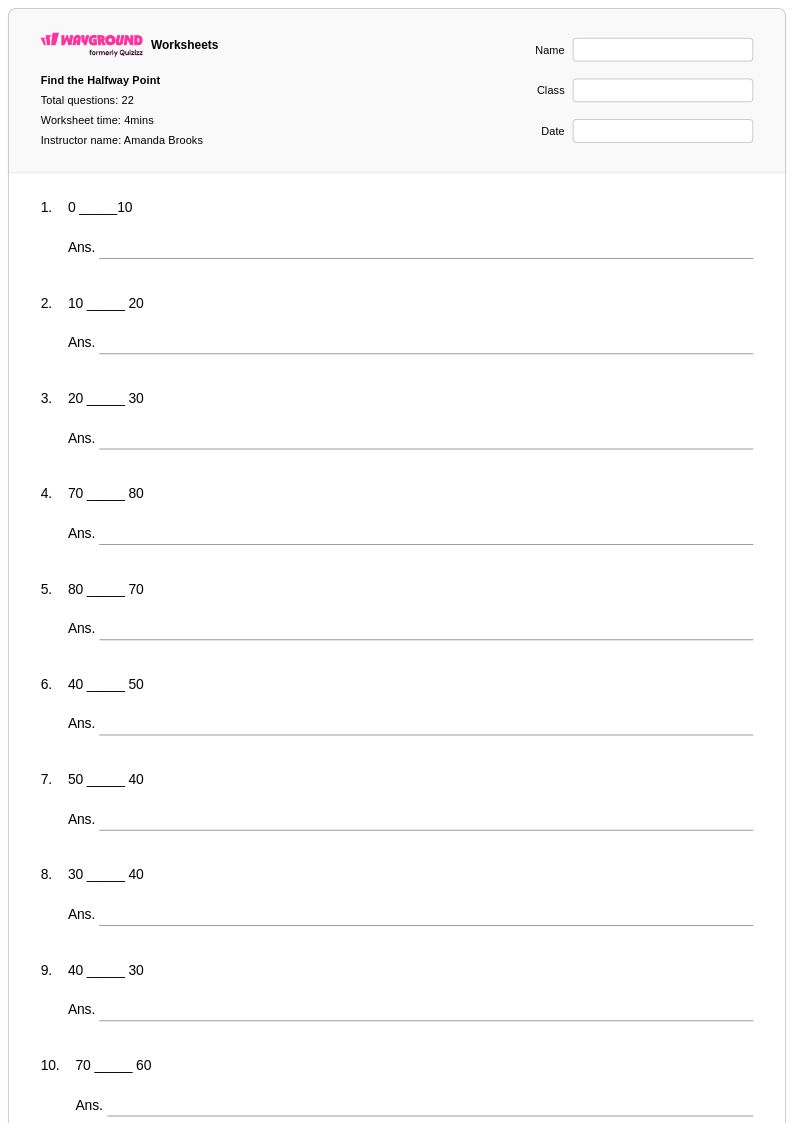
Segment midpoint worksheets for Grade 2 students available through Wayground (formerly Quizizz) provide foundational geometry practice that introduces young learners to the essential concept of finding the middle point of a line segment. These carefully designed practice problems help students develop spatial reasoning skills and geometric intuition by working with visual representations of segments and identifying their center points through hands-on activities and guided exercises. The worksheet collections include comprehensive answer keys that support independent learning and self-assessment, while the free printable format ensures accessibility for all classrooms and home learning environments, making it easy for educators to incorporate segment midpoint concepts into their mathematics instruction.
Wayground (formerly Quizizz) empowers teachers with millions of educator-created resources specifically designed for Grade 2 geometry instruction, including extensive collections of segment midpoint worksheets that align with elementary mathematics standards. The platform's robust search and filtering capabilities allow teachers to quickly locate age-appropriate materials that match their students' developmental needs, while built-in differentiation tools enable customization for learners at varying skill levels. These versatile worksheet collections are available in both printable pdf format and digital versions, providing flexibility for classroom instruction, homework assignments, targeted remediation sessions, and enrichment activities that strengthen students' understanding of fundamental geometric concepts and spatial relationships.
FAQs
What do second graders learn about the midpoint of a segment?
How do I teach second graders to find a midpoint using a ruler?
What mistakes do second graders make when finding midpoints with a ruler?
What's the best way for students to practice finding midpoints in Grade 2?
How can I use these Grade 2 midpoint worksheets?
How does finding a midpoint support Grade 2 math standards?