
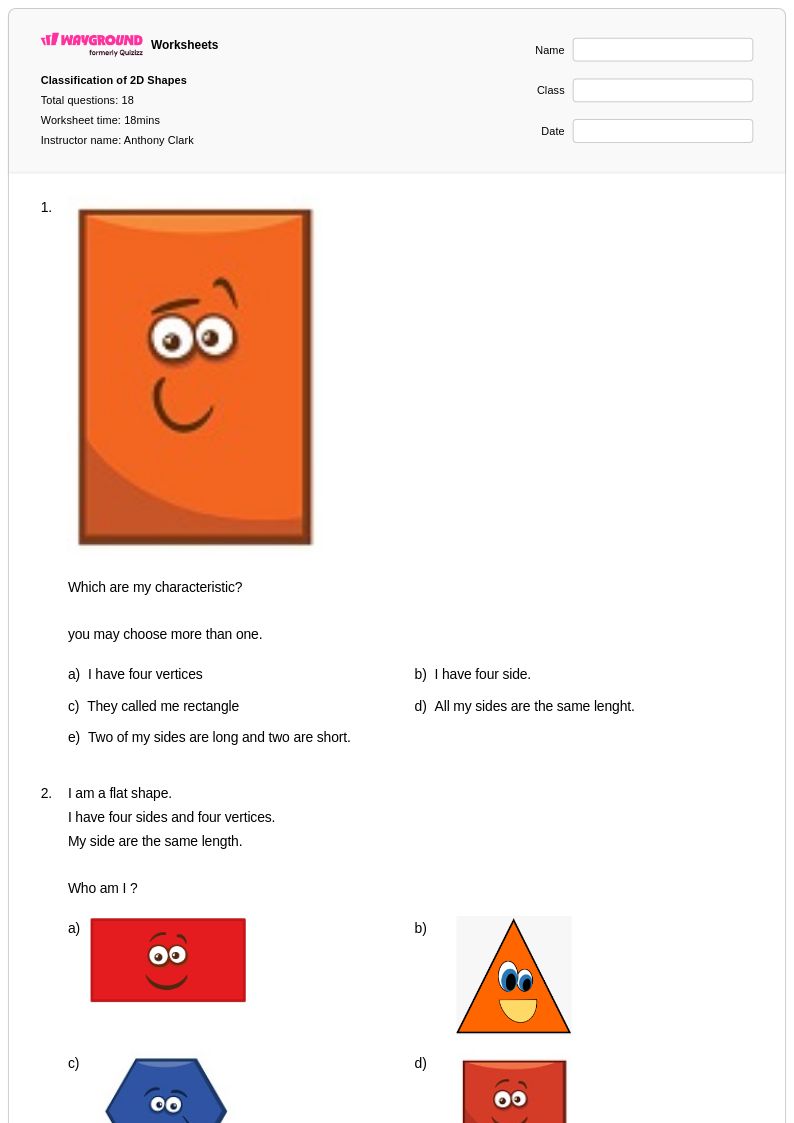
18 Q
1st - Uni
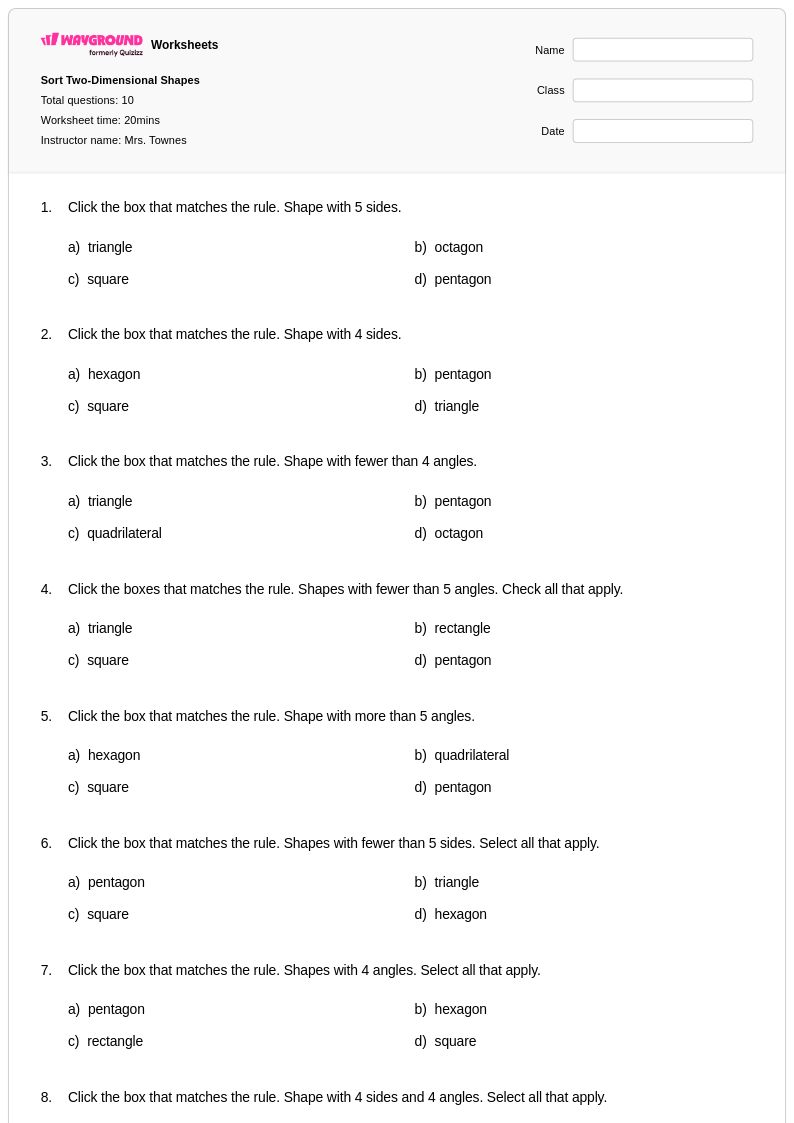
10 Q
2nd
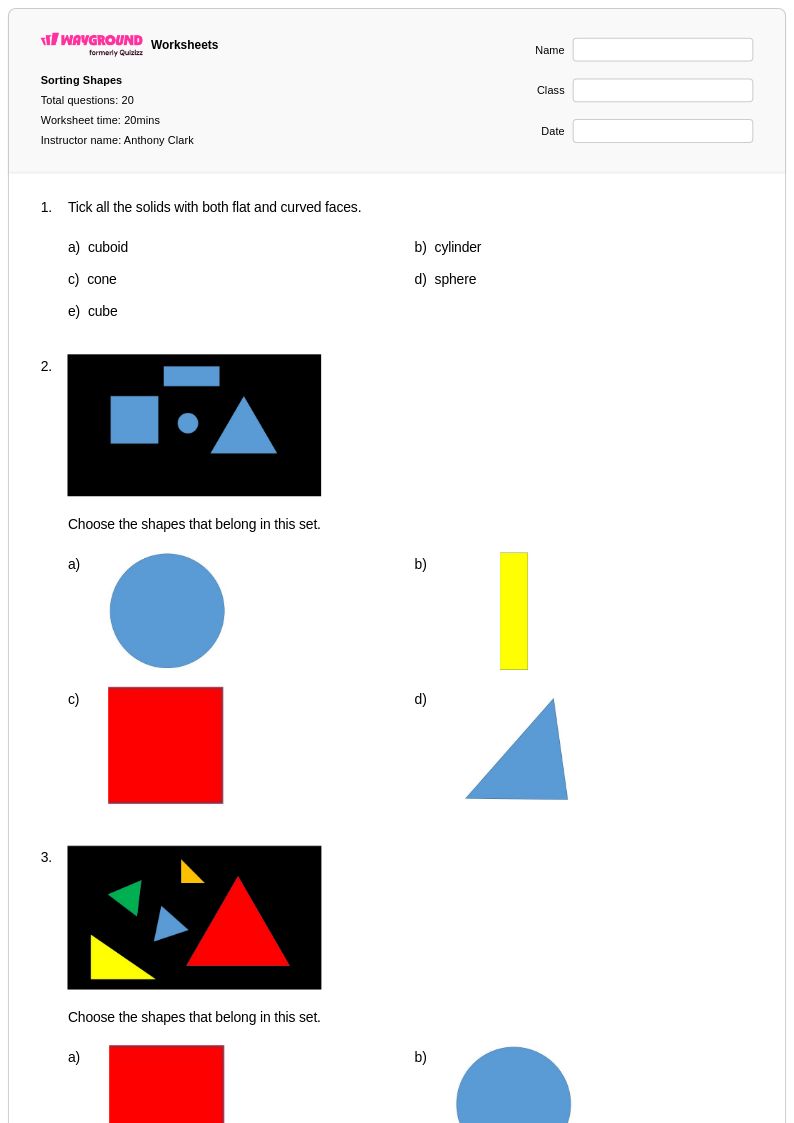
20 Q
1st - Uni
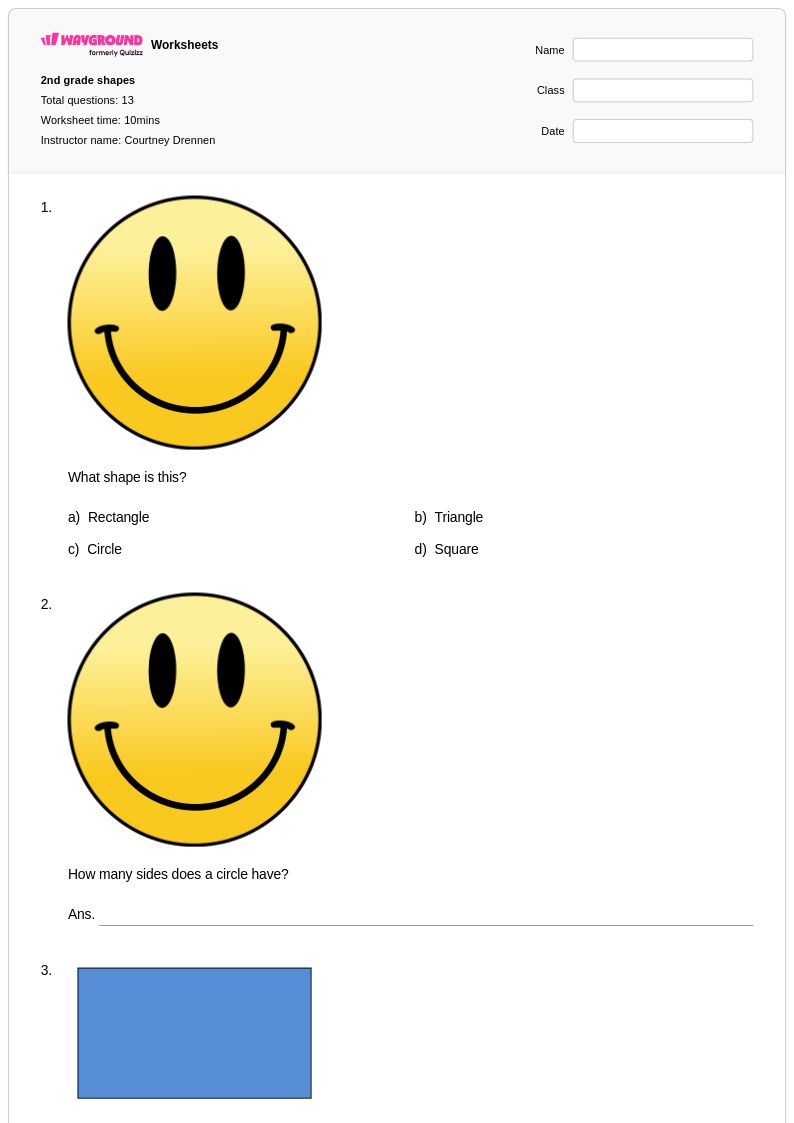
13 Q
2nd
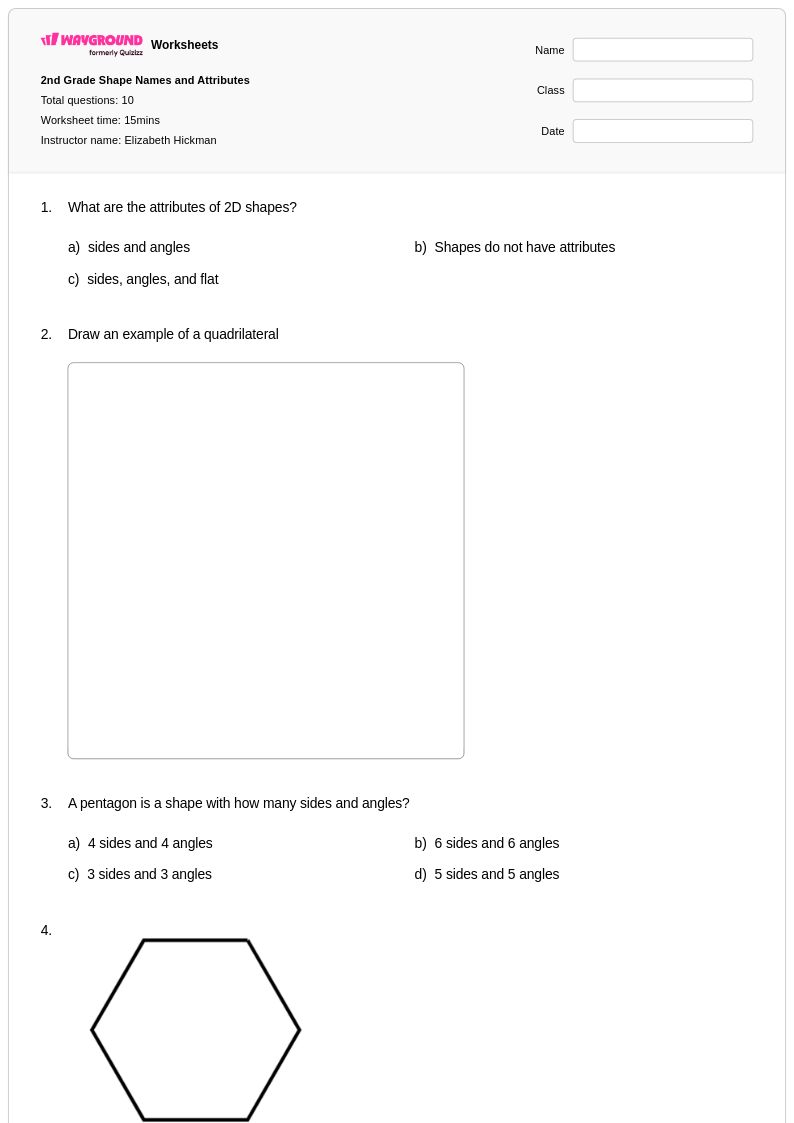
10 Q
2nd
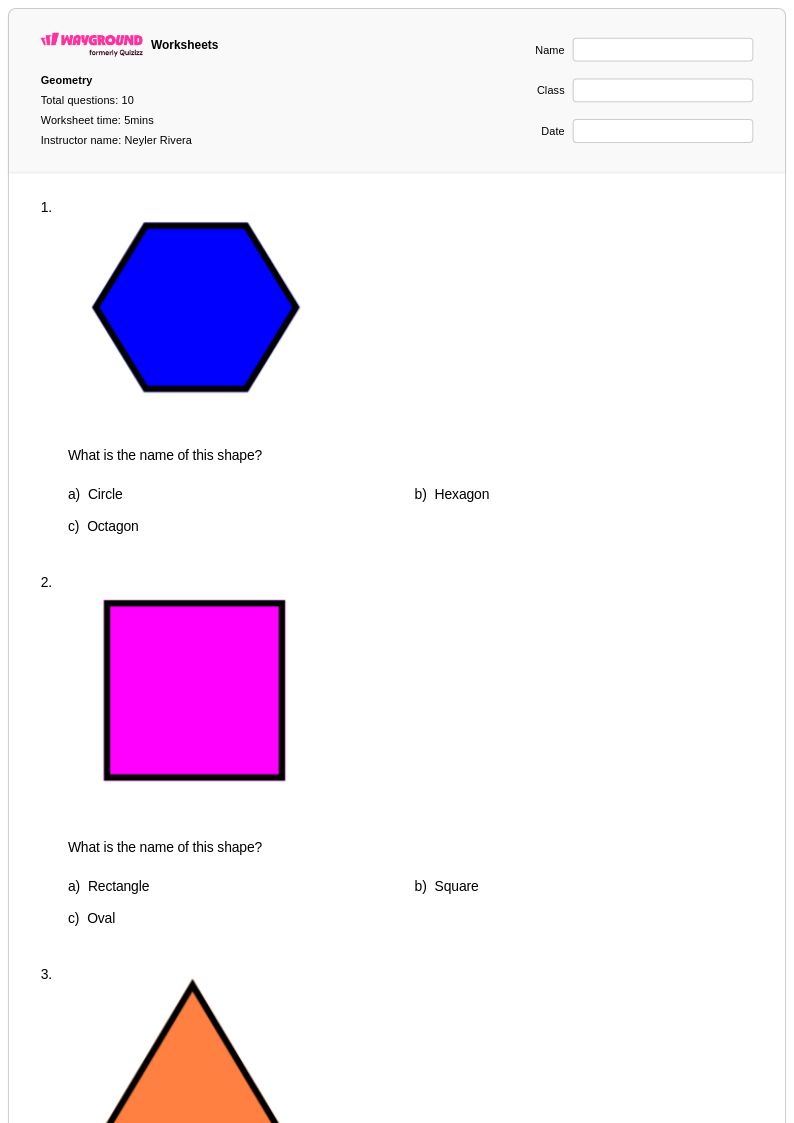
10 Q
2nd - 3rd
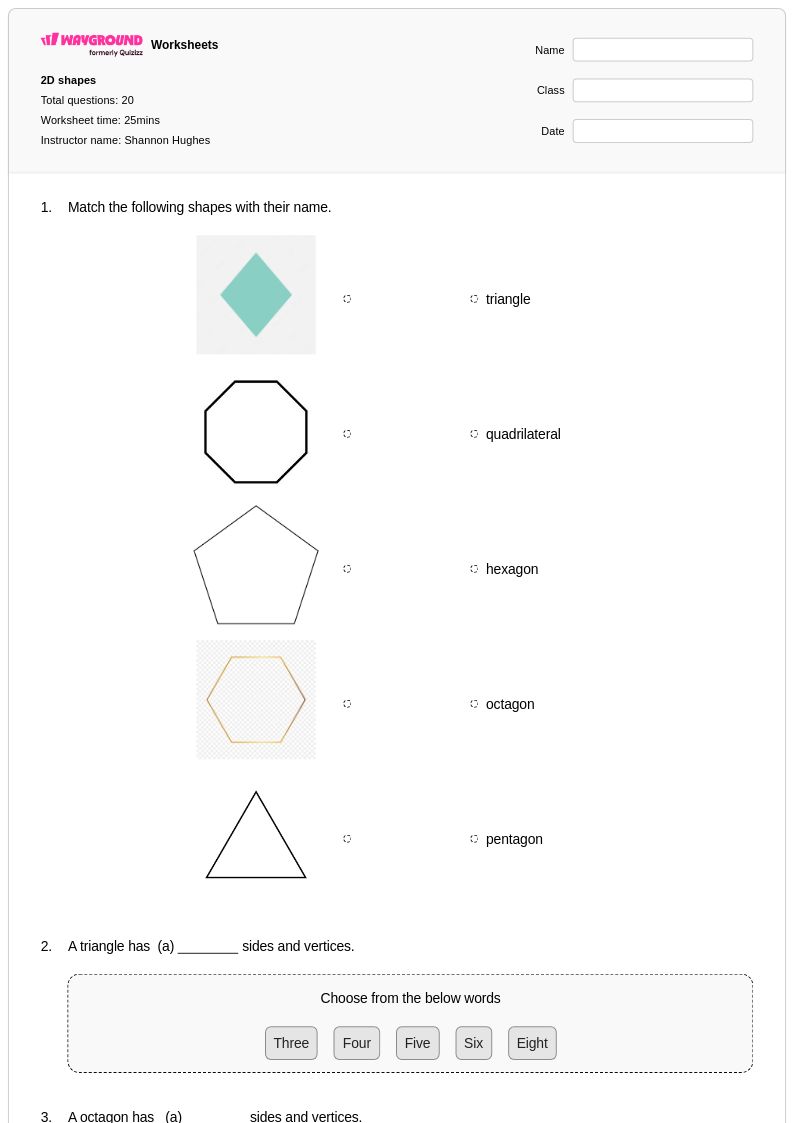
20 Q
2nd
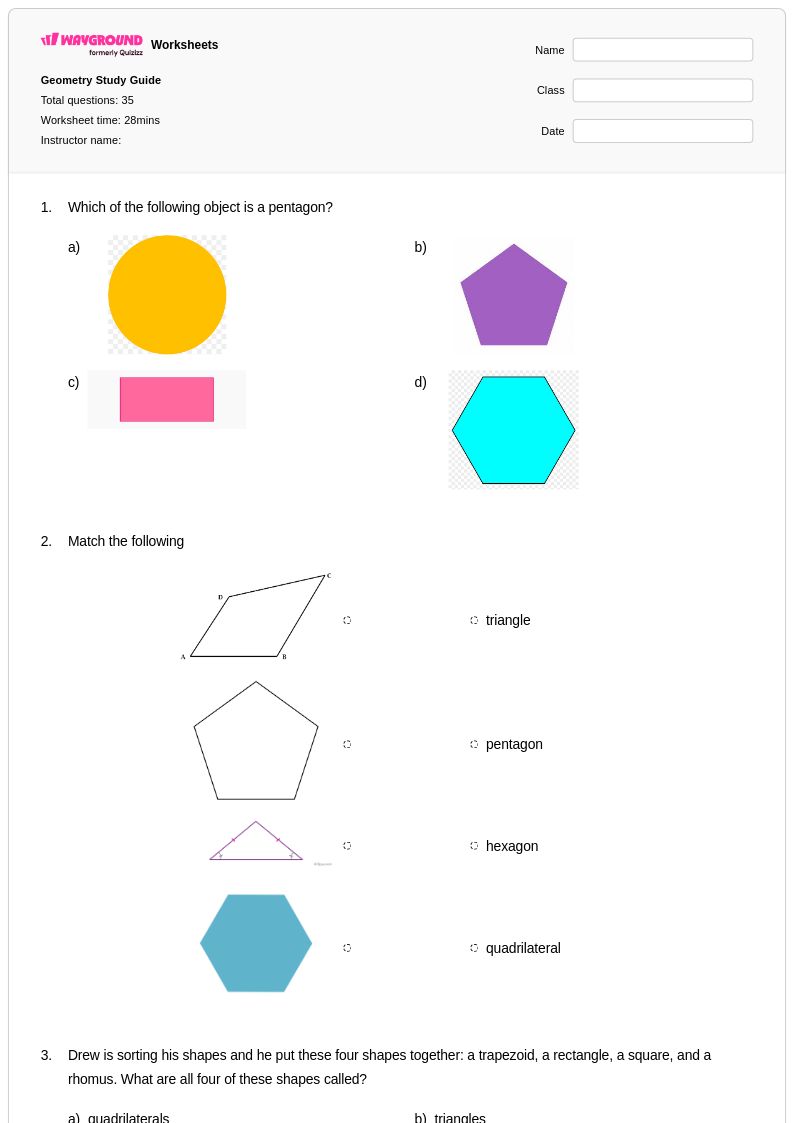
35 Q
2nd
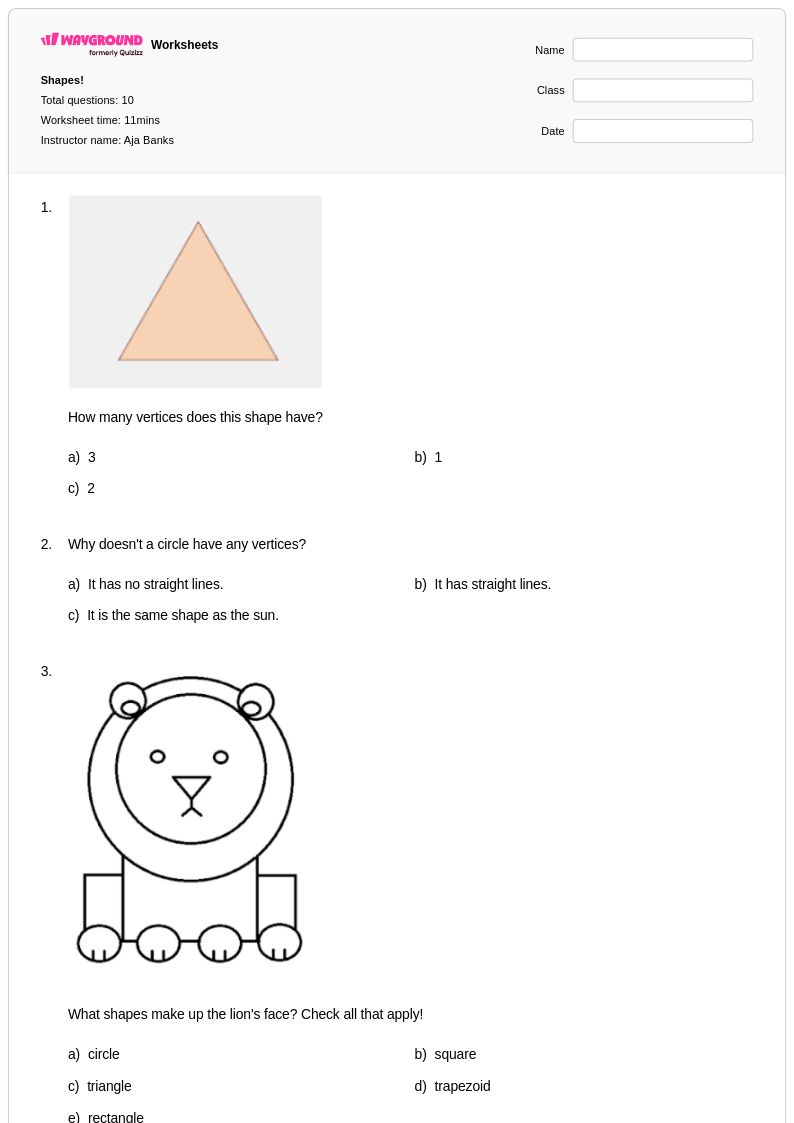
10 Q
1st - 2nd
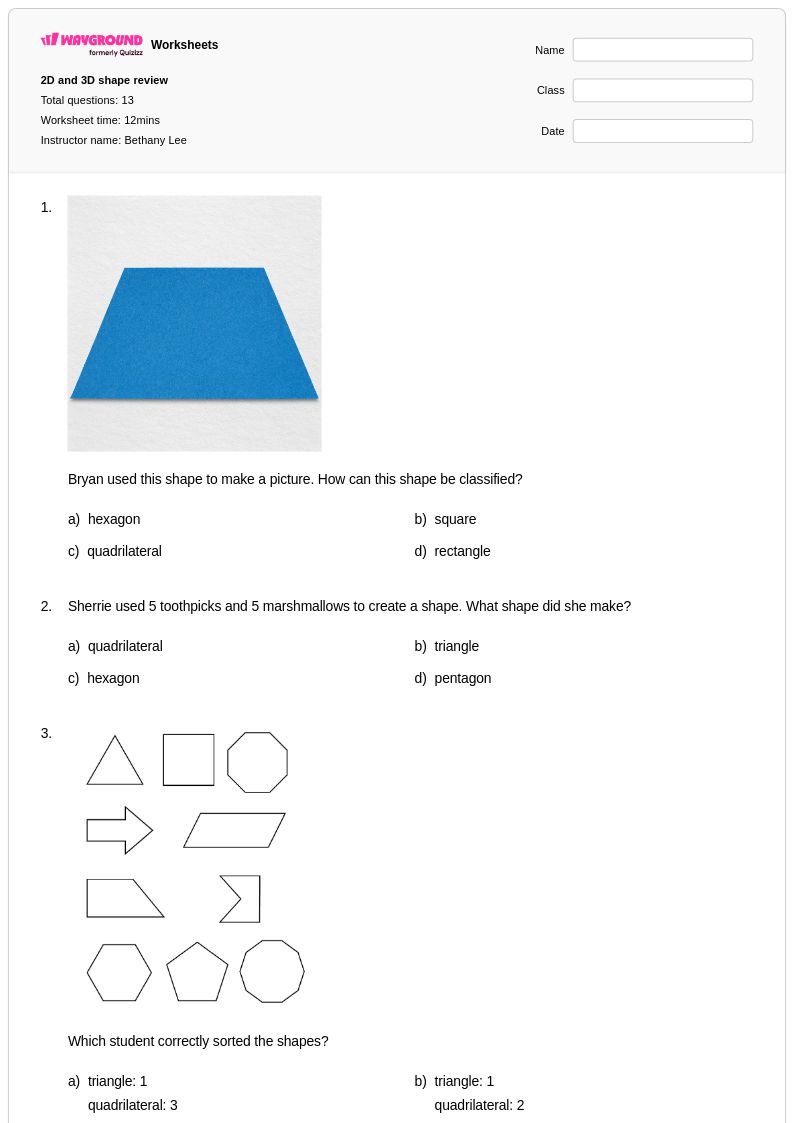
13 Q
2nd
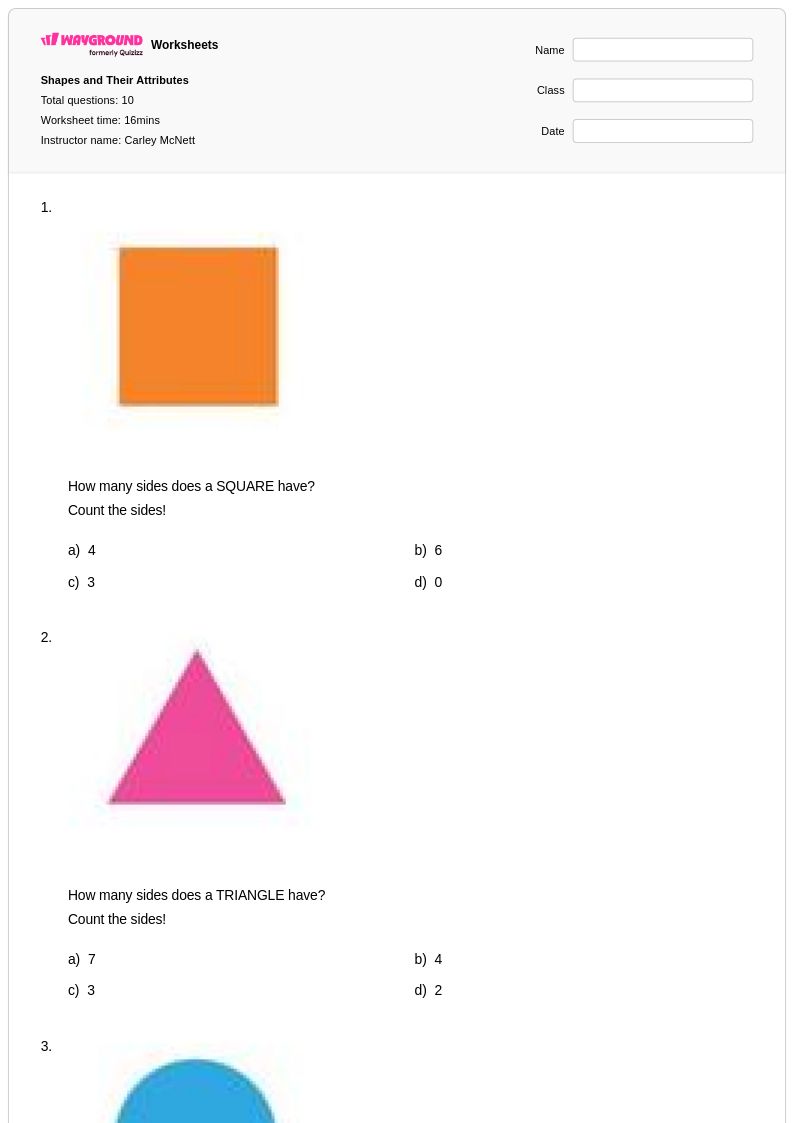
10 Q
2nd
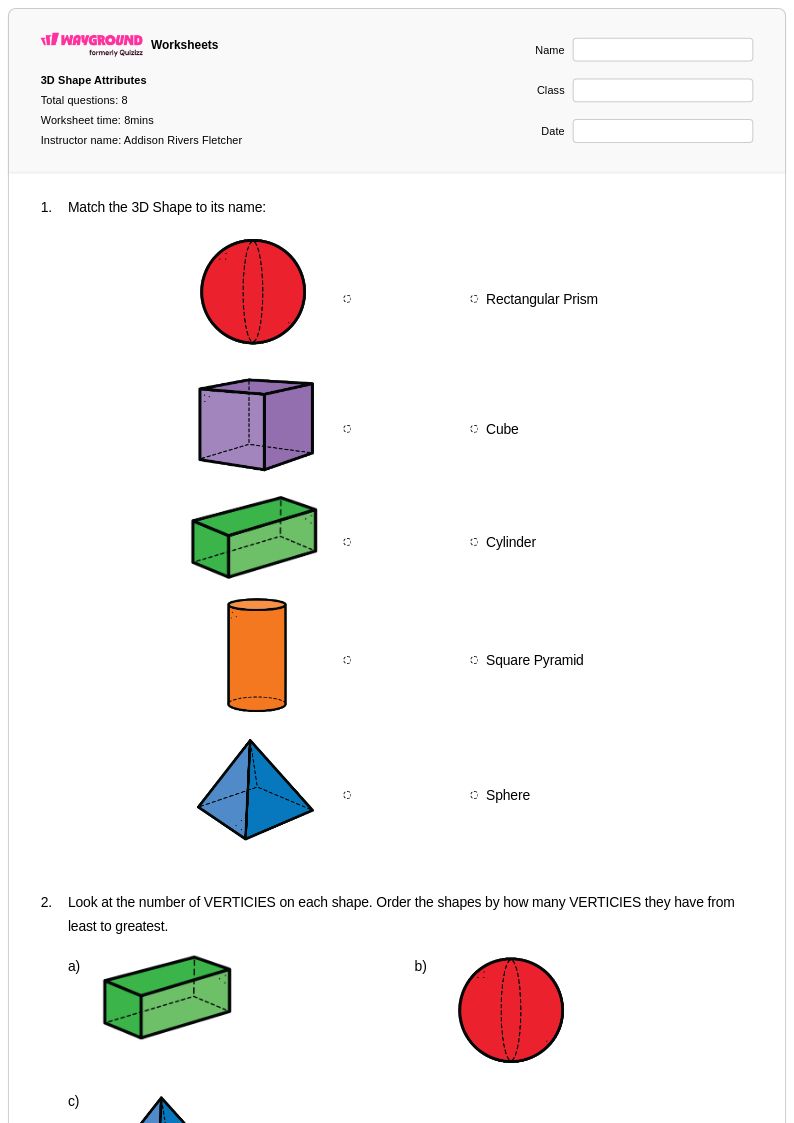
8 Q
2nd
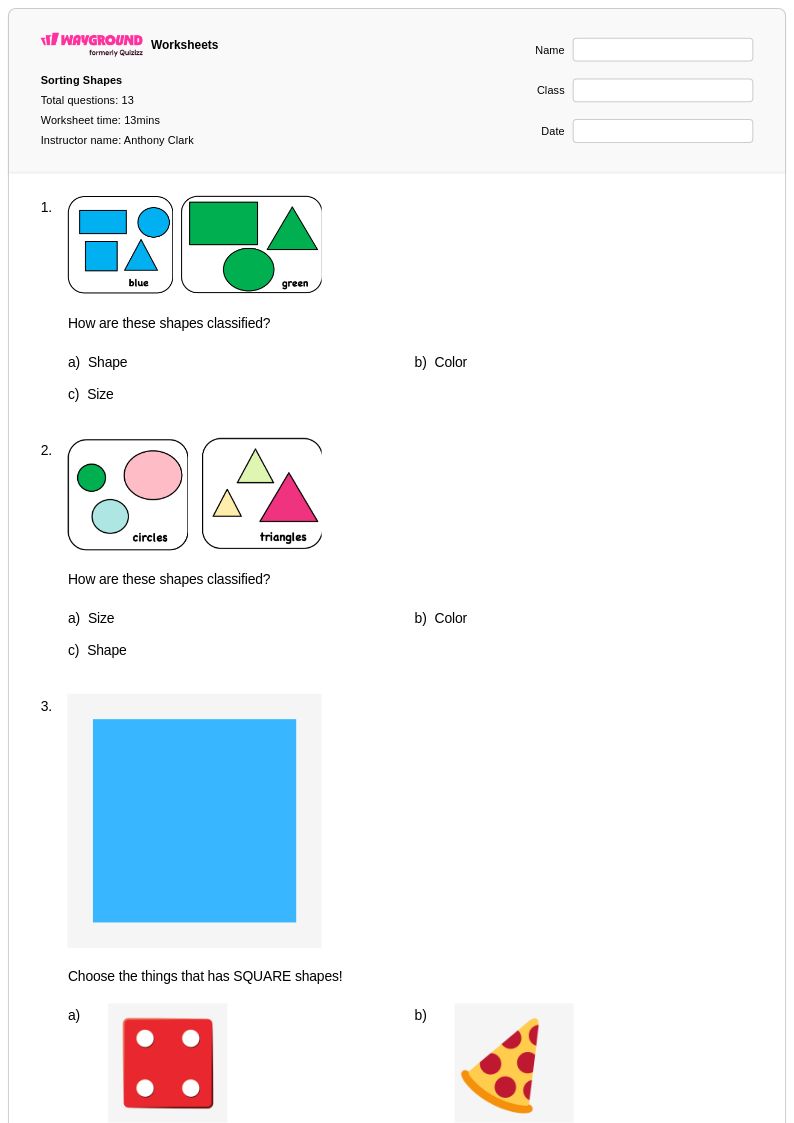
13 Q
1st - Uni
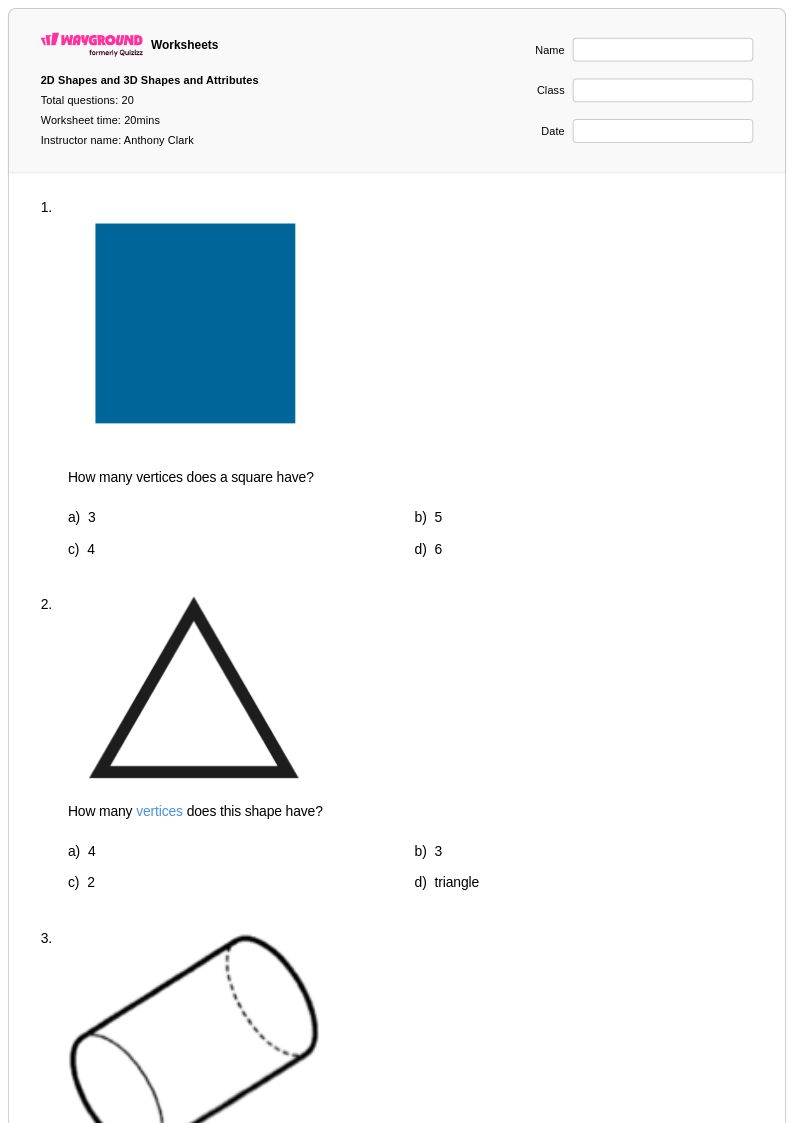
20 Q
2nd - Uni
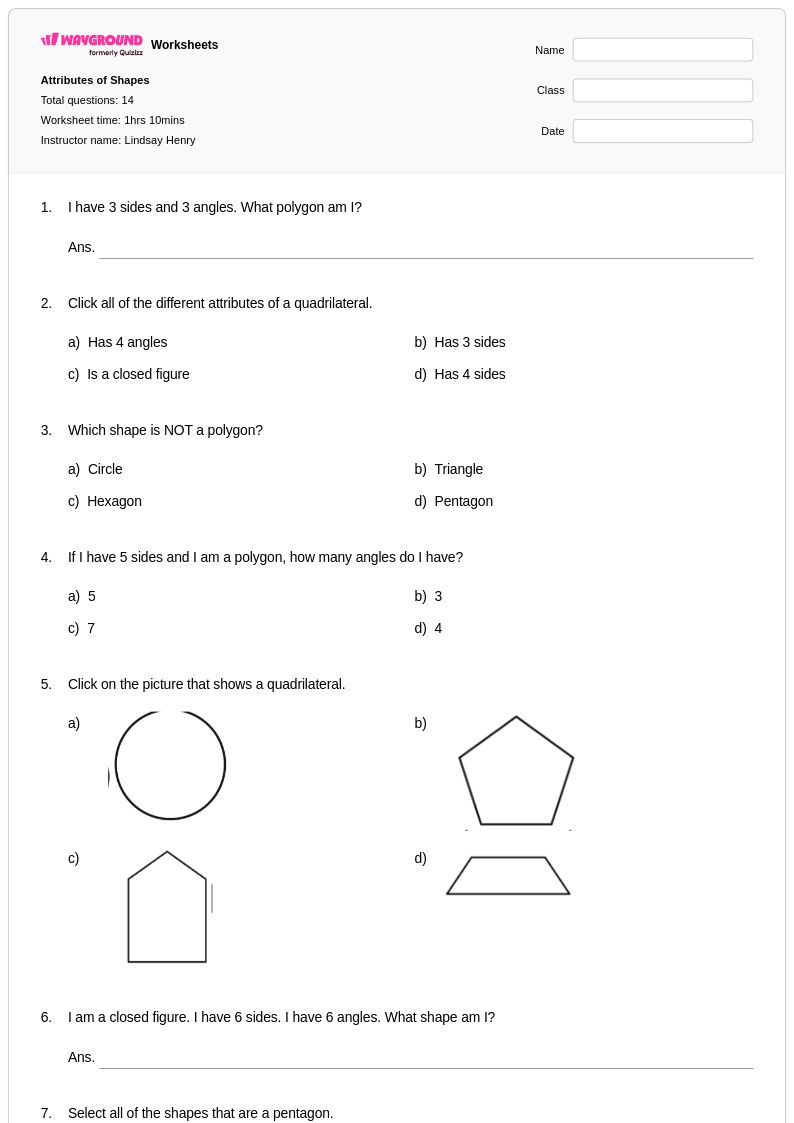
14 Q
2nd
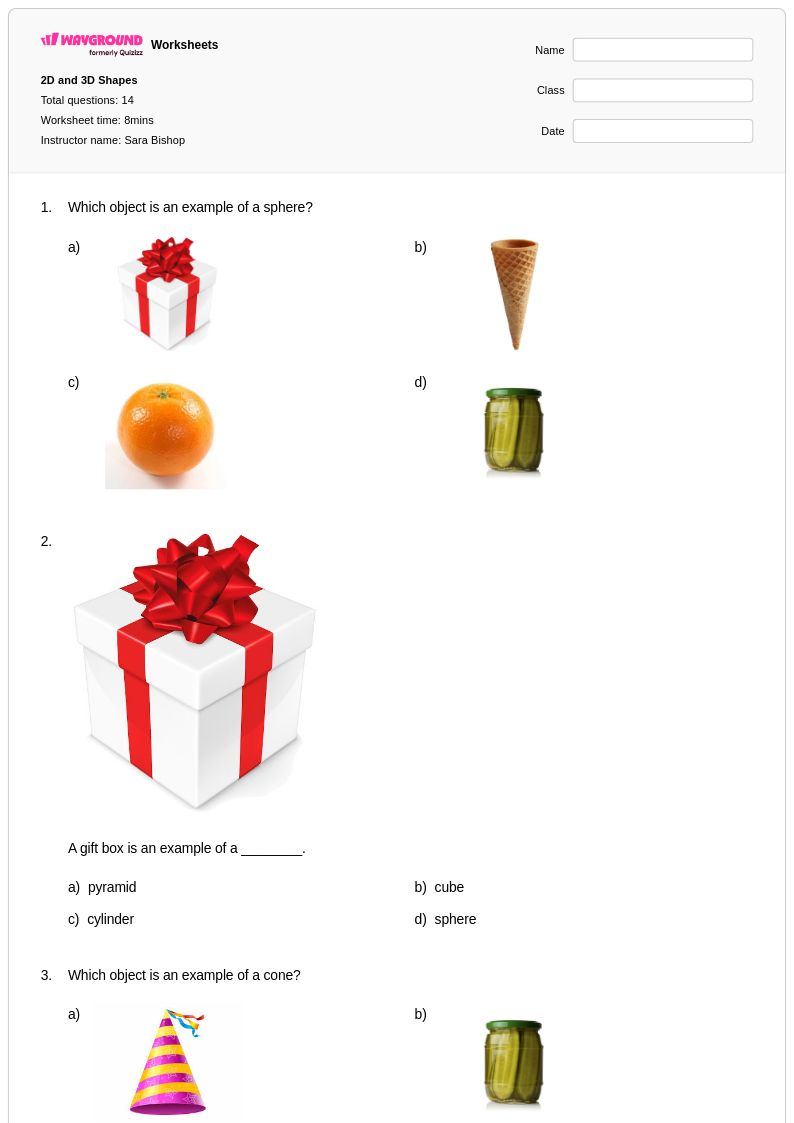
14 Q
2nd
20 Q
1st - 2nd
17 Q
1st - 3rd
20 Q
2nd
12 Q
2nd
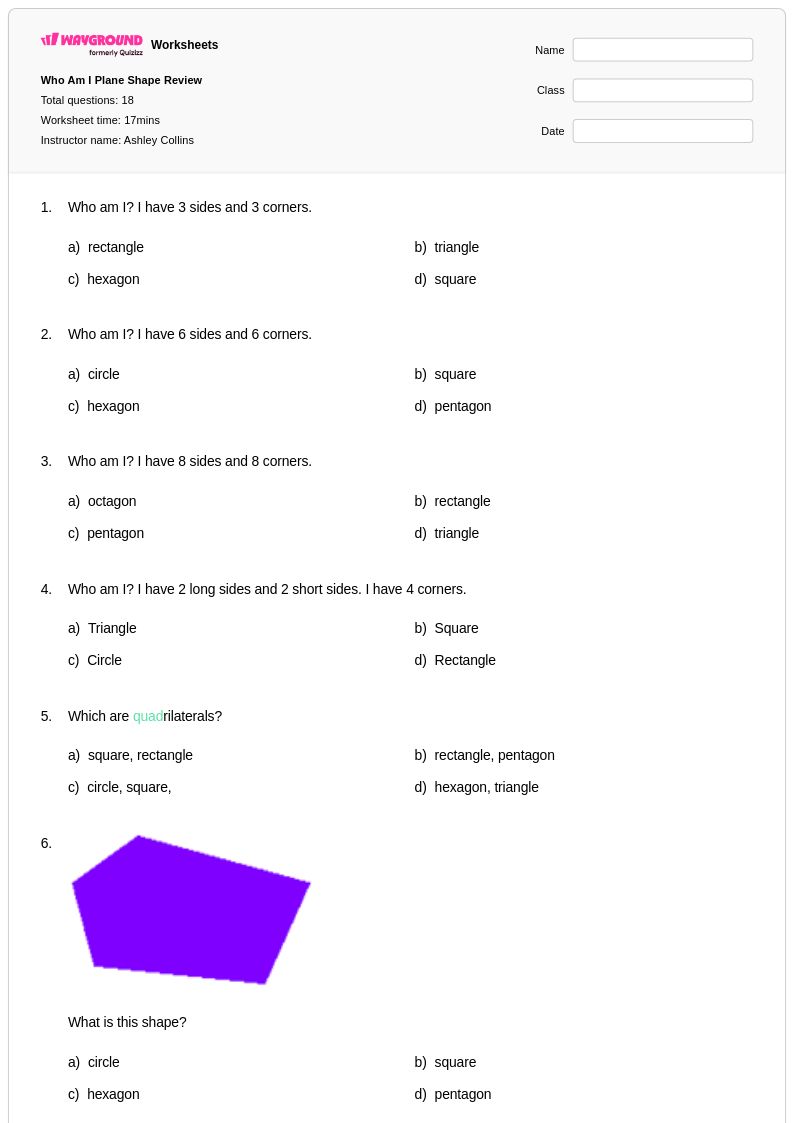
18 Q
2nd
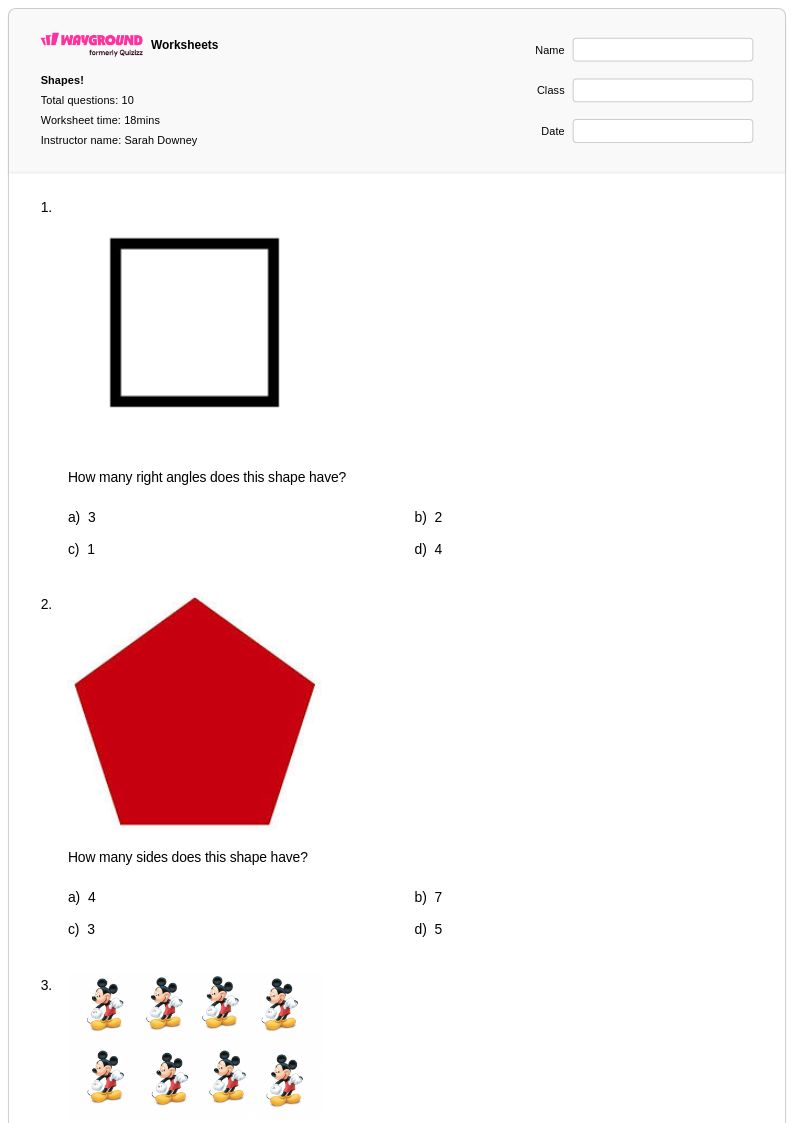
10 Q
2nd
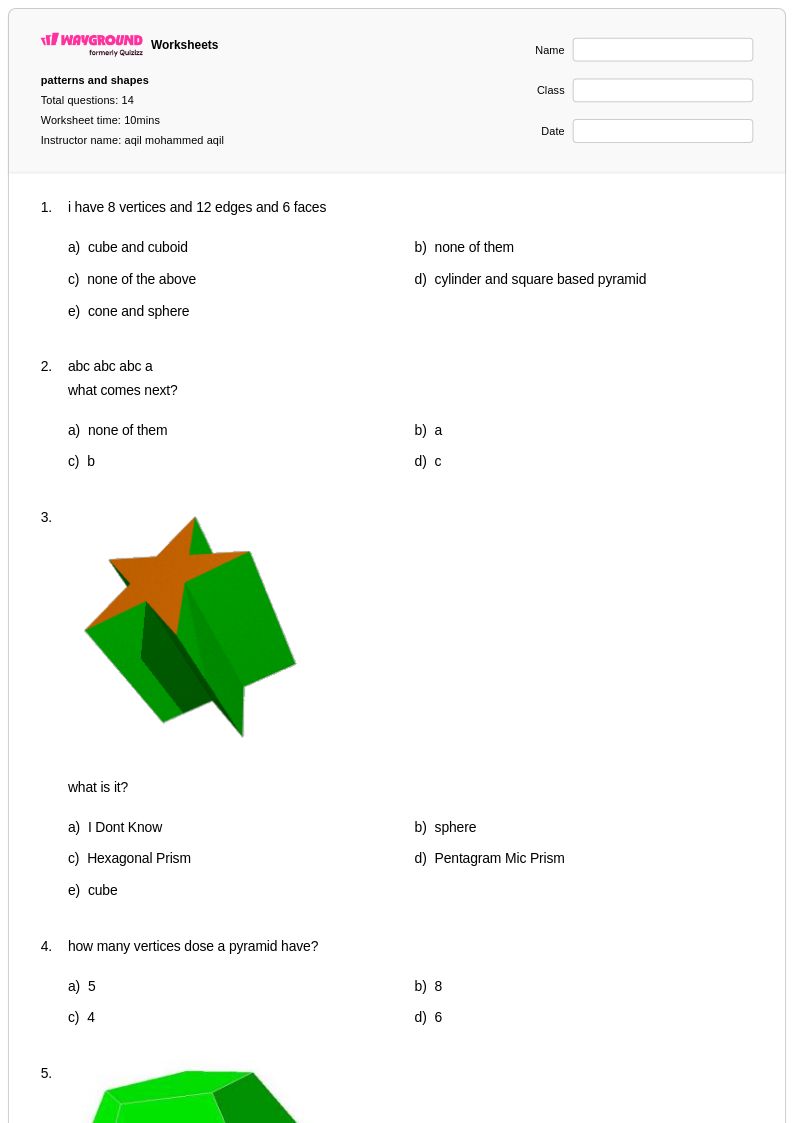
14 Q
2nd
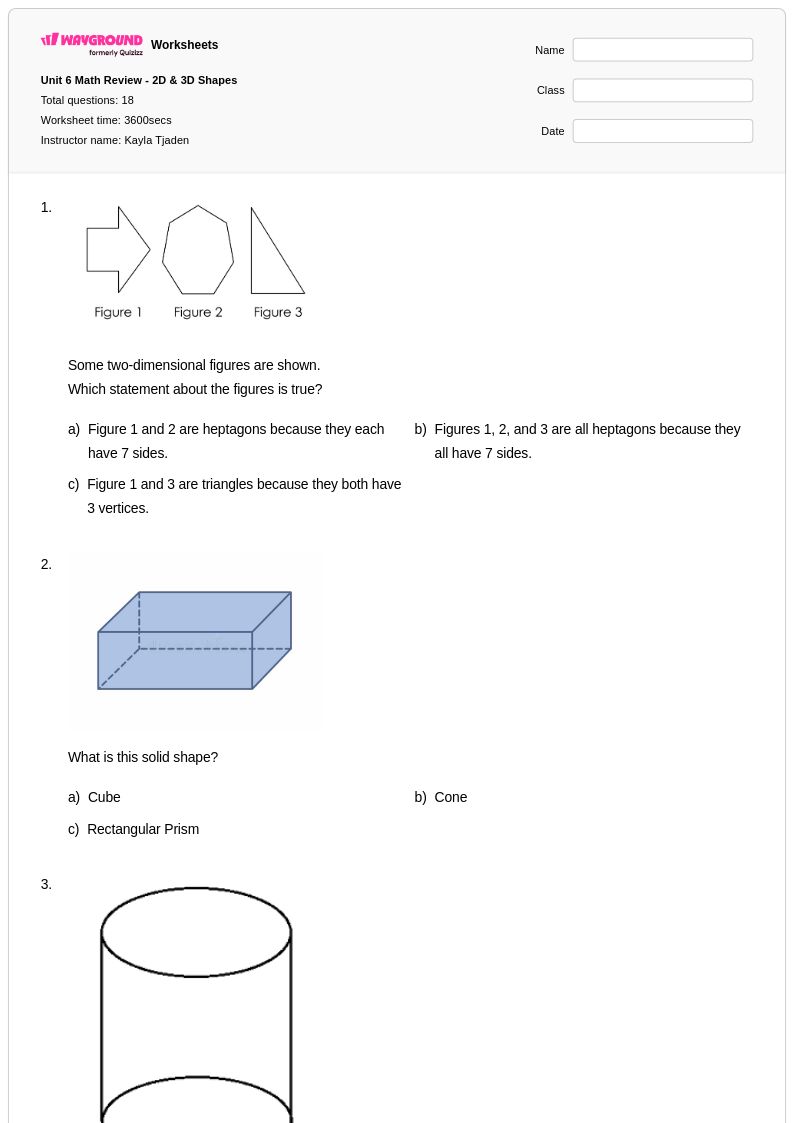
18 Q
2nd
Explore Shape Sorting and Classification Worksheets by Grades
Explore Other Subject Worksheets for grade 2
Explore printable Shape Sorting and Classification worksheets for Grade 2
Shape sorting and classification worksheets for Grade 2 students provide essential foundational experiences that develop spatial reasoning and geometric thinking skills. These comprehensive printable resources guide young learners through systematic identification of two-dimensional and three-dimensional shapes based on their defining attributes such as number of sides, vertices, and angles. Students engage with practice problems that require them to categorize circles, squares, triangles, rectangles, and other polygons while building critical analytical skills that form the cornerstone of geometric understanding. Each worksheet collection includes detailed answer keys and free pdf downloads that support both independent practice and guided instruction, enabling students to strengthen their ability to recognize patterns, make comparisons, and understand the fundamental properties that distinguish different geometric forms.
Wayground, formerly Quizizz, empowers educators with millions of teacher-created shape sorting and classification worksheet resources specifically designed for Grade 2 mathematics instruction. The platform's robust search and filtering capabilities allow teachers to quickly locate materials aligned with specific learning standards and differentiate instruction based on individual student needs. Teachers can customize these printable and digital worksheets to target particular skill gaps, provide enrichment opportunities for advanced learners, or create remediation materials for students requiring additional support. The comprehensive collection includes both traditional pdf printables and interactive digital formats, giving educators the flexibility to adapt their geometry instruction for various learning environments while ensuring students receive consistent, high-quality practice with shape identification, classification, and attribute analysis skills.
FAQs
What new geometry concepts are introduced in Grade 2?
How do I teach shape classification in second grade?
What are good practice activities for Grade 2 shape sorting?
What is a typical struggle for second graders with shape classification?
How can I use these Grade 2 shape worksheets for practice or assessment?
How do Grade 2 geometry standards advance from Grade 1?