
15 Q
4th
15 Q
4th
8 Q
3rd - 6th
15 Q
4th
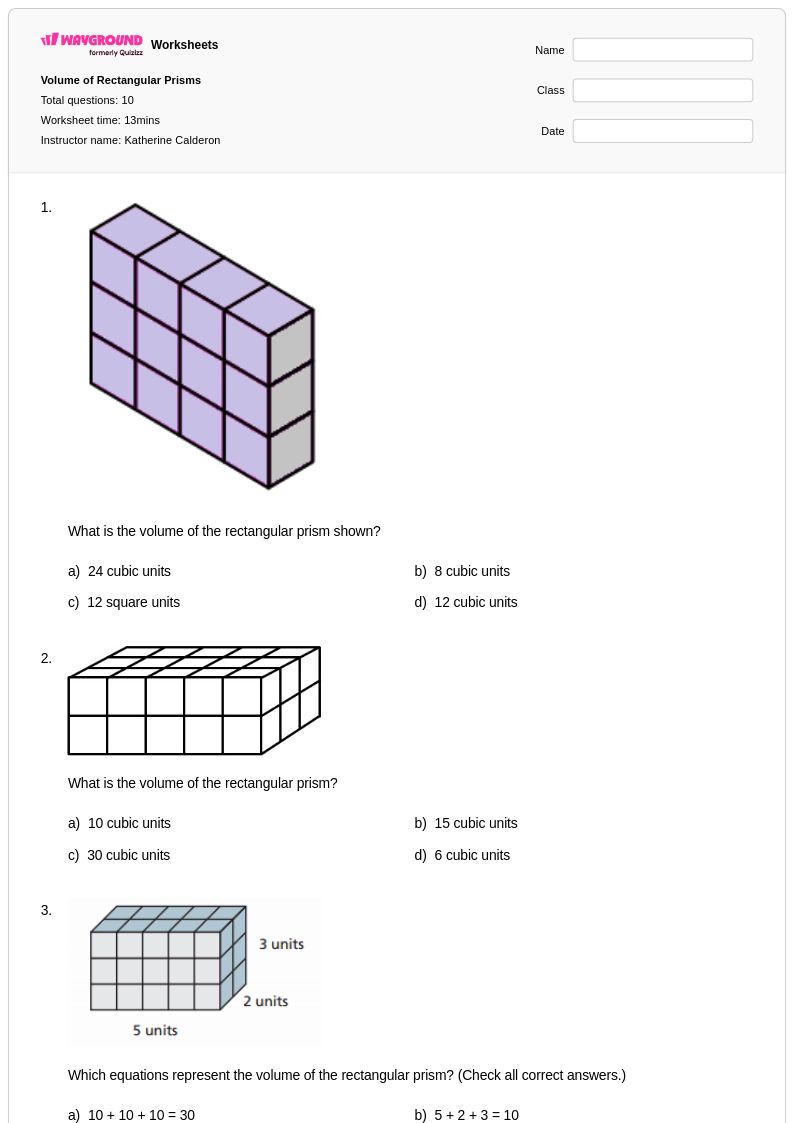
10 Q
4th - 6th
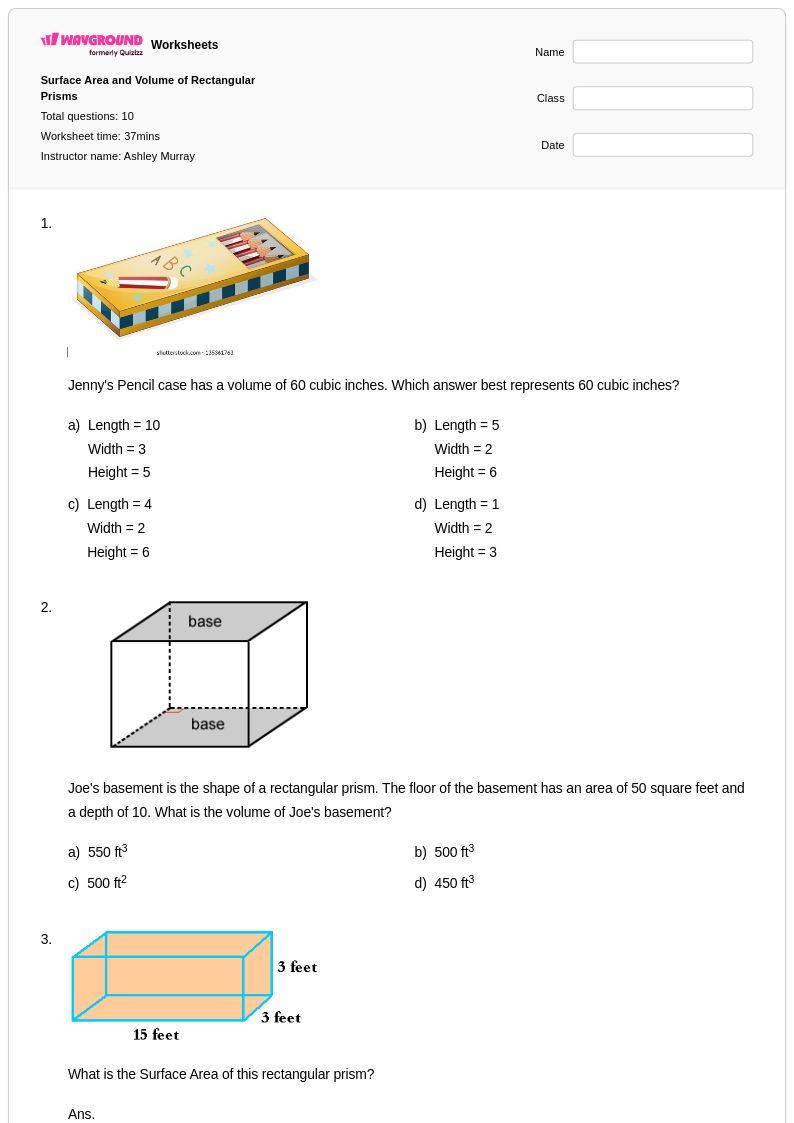
10 Q
4th - 5th
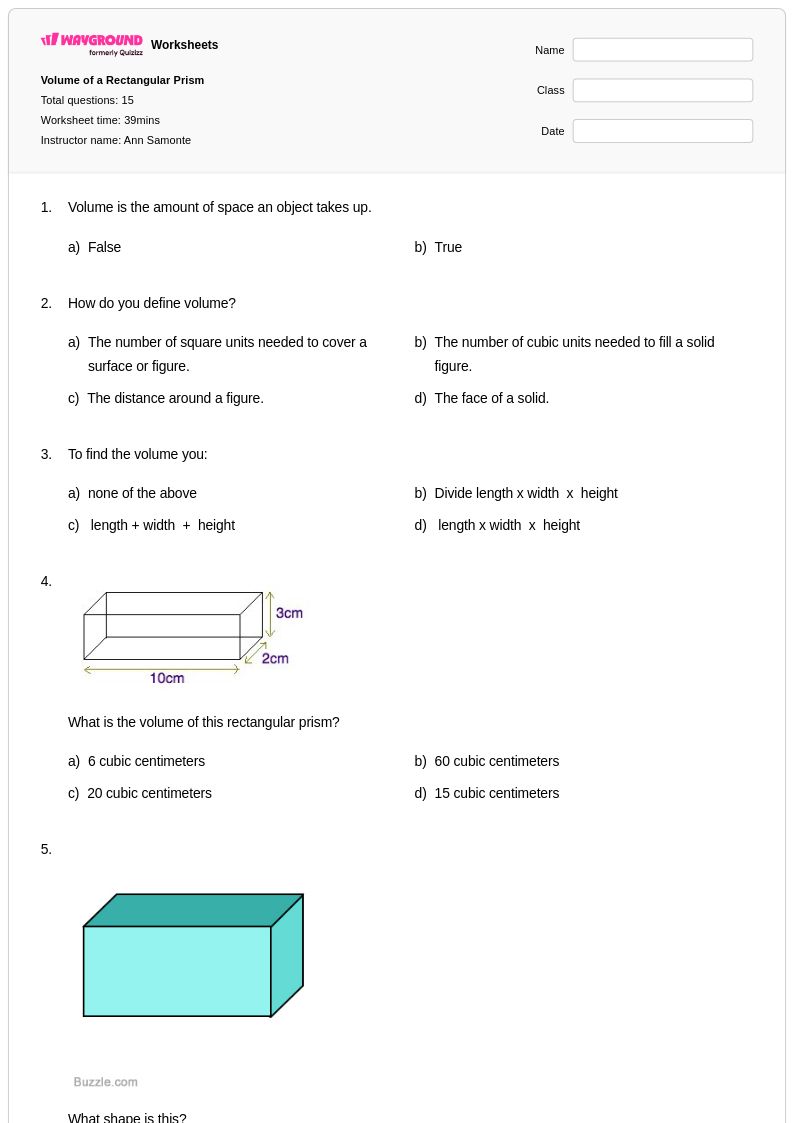
15 Q
4th
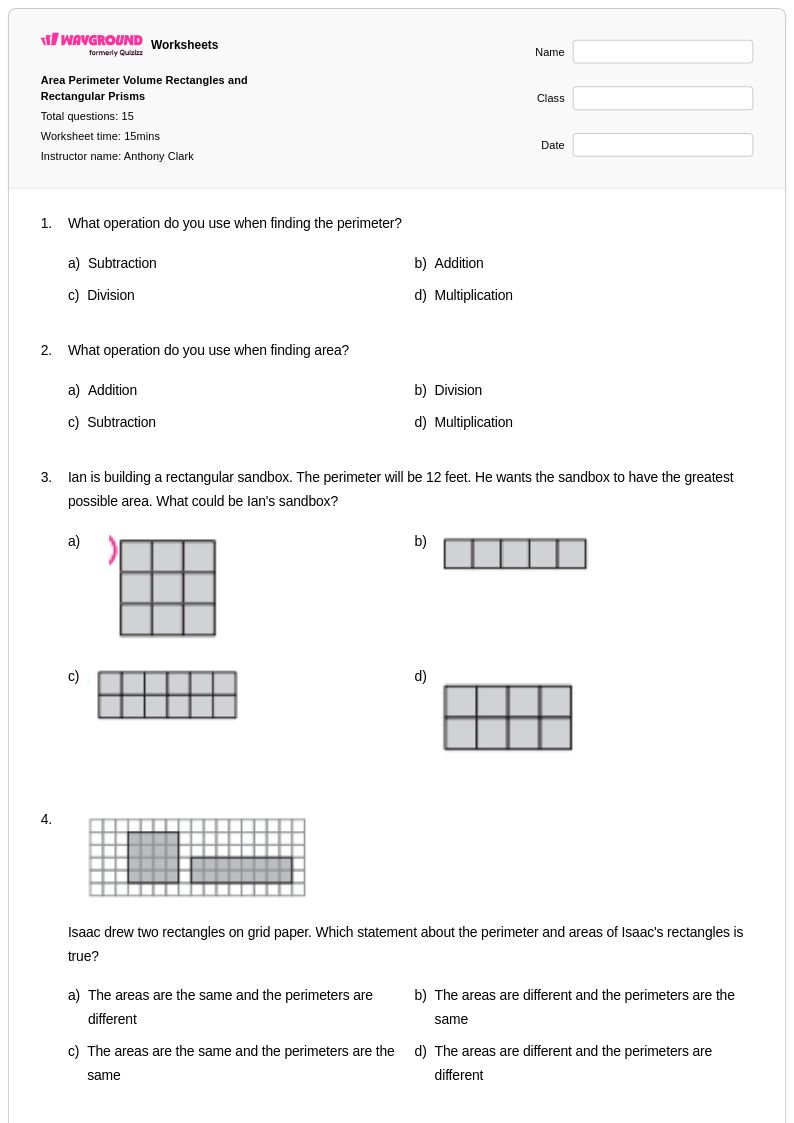
15 Q
4th - Uni
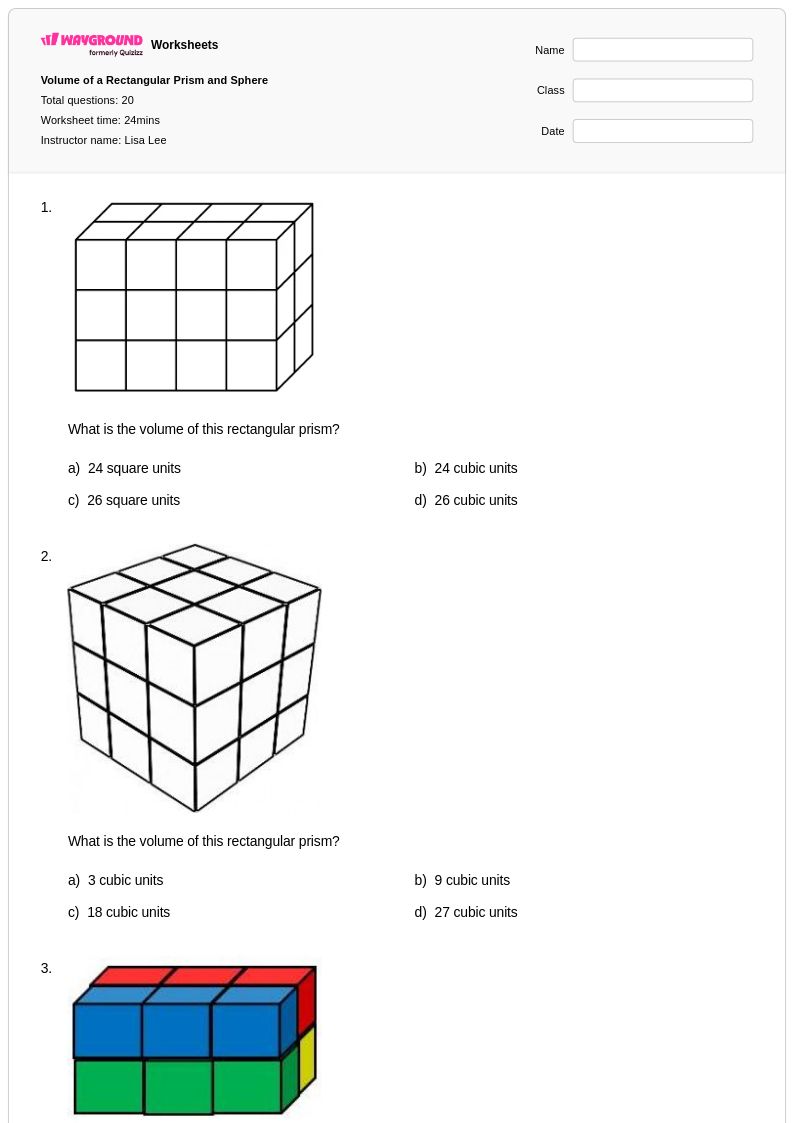
20 Q
4th - 6th
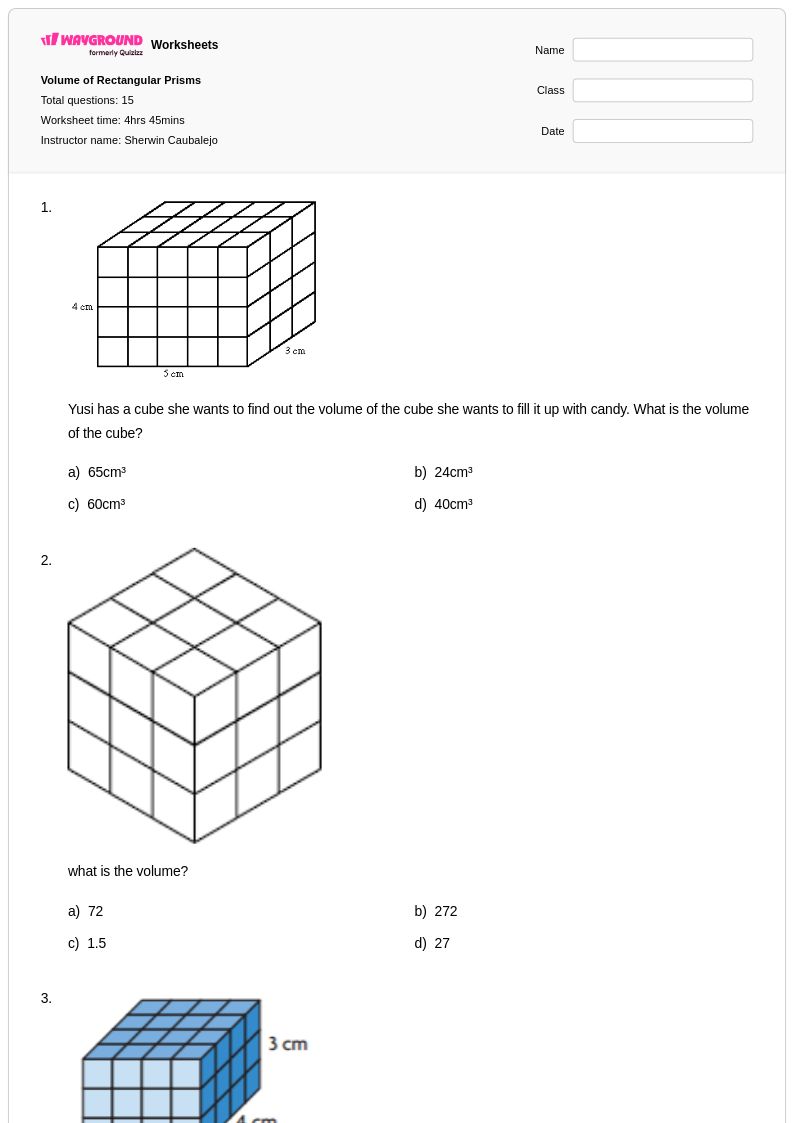
15 Q
4th - 7th
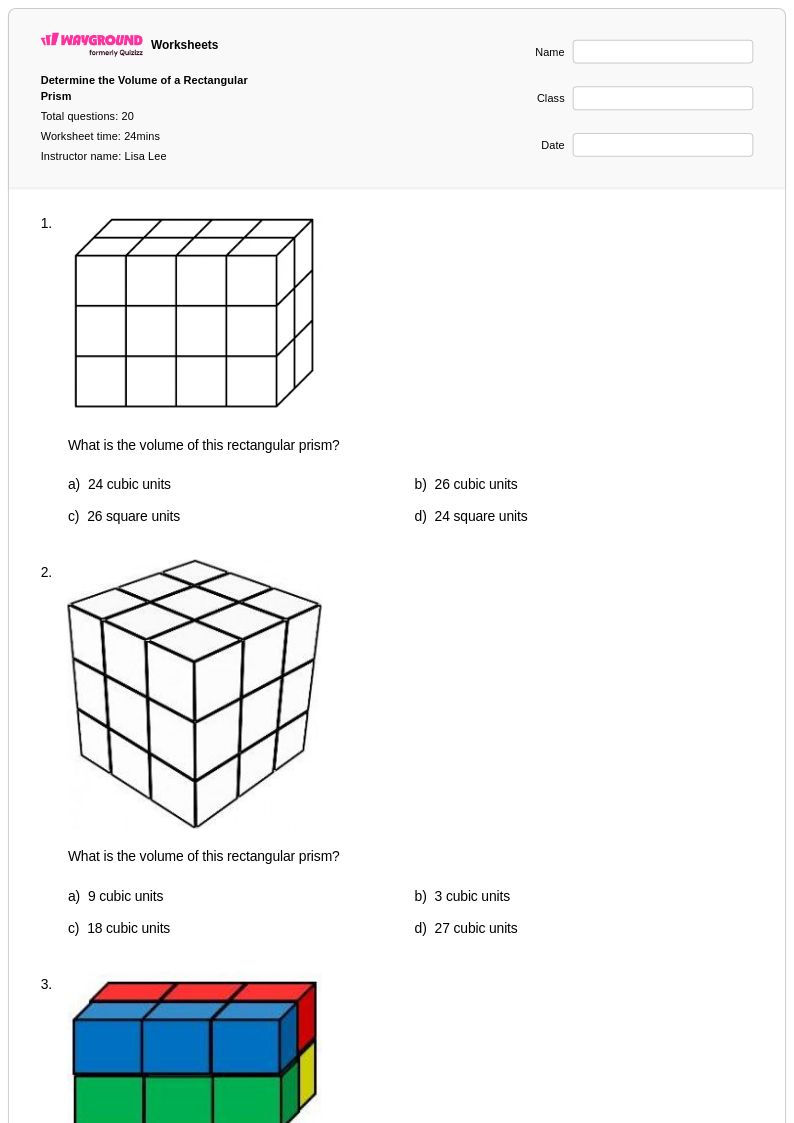
20 Q
4th - 6th
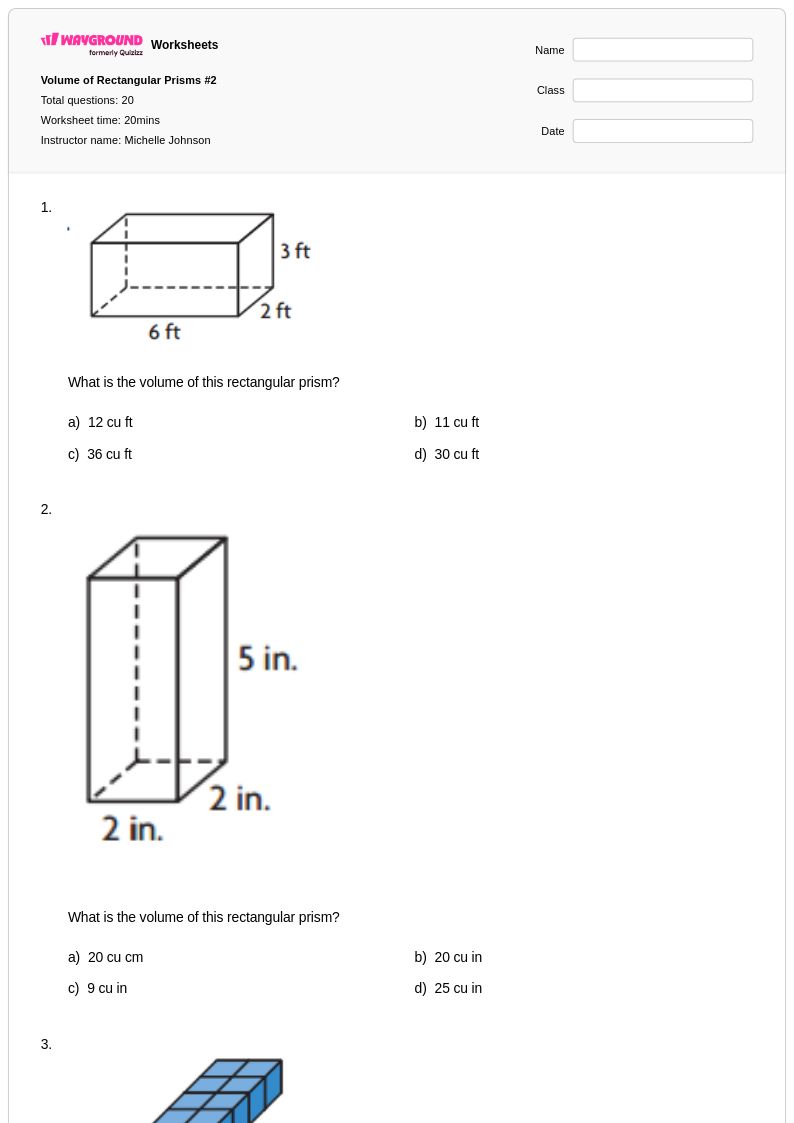
20 Q
4th - 5th
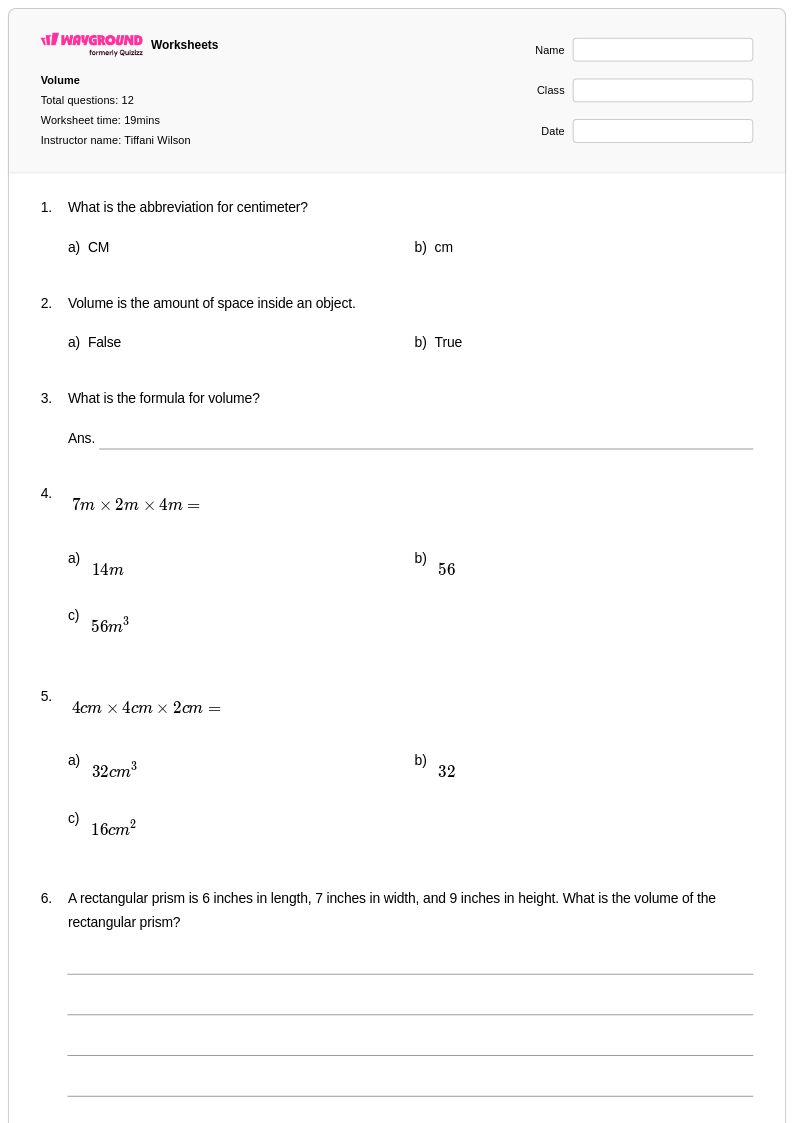
12 Q
4th - 5th
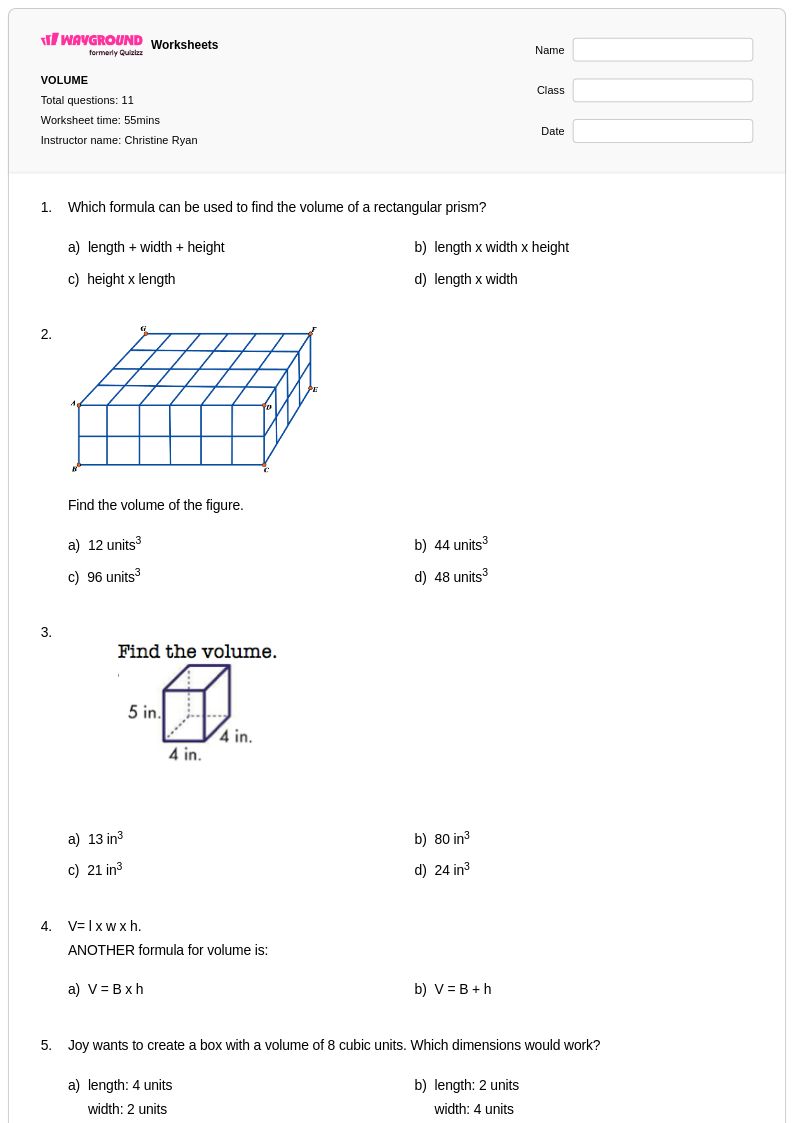
11 Q
4th - 5th
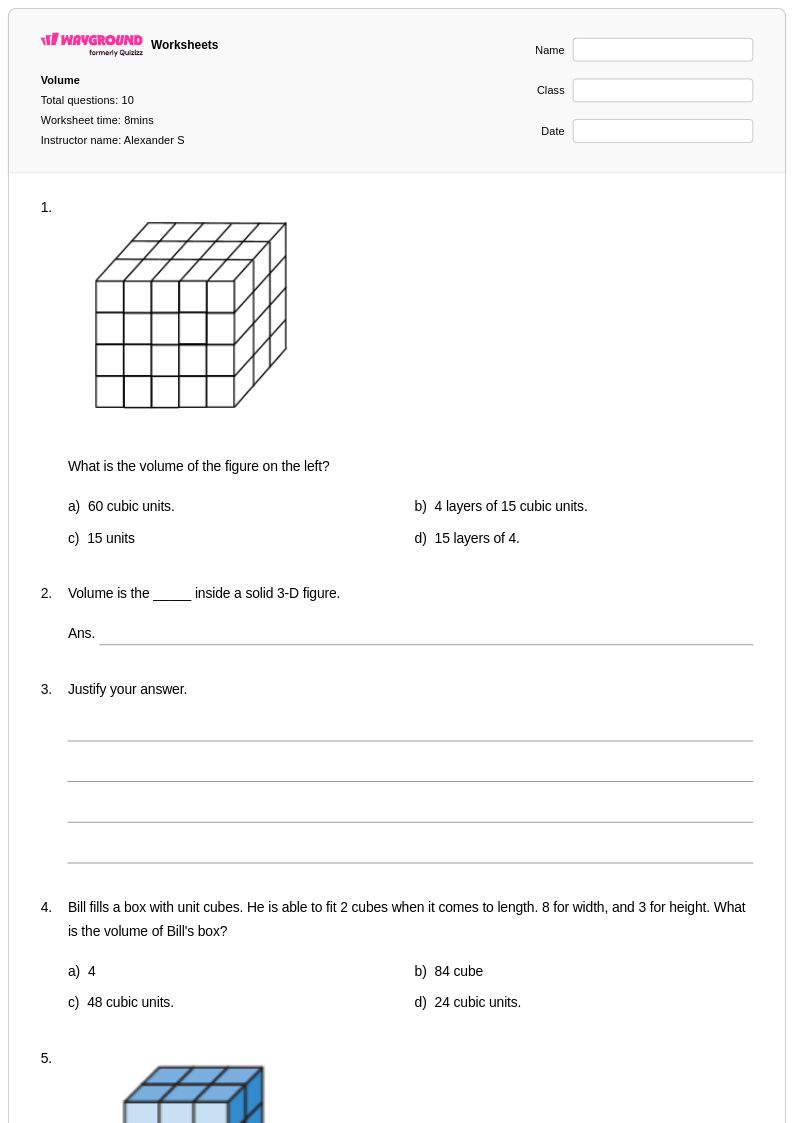
10 Q
1st - 5th
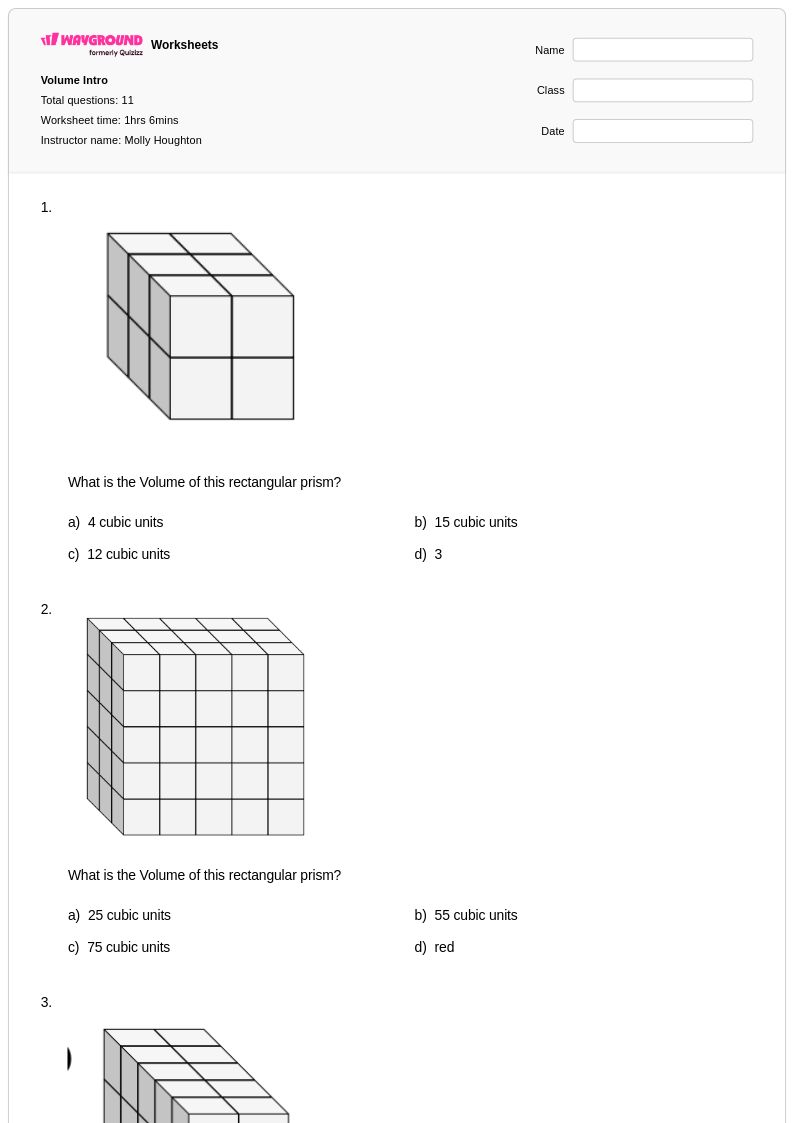
11 Q
4th - 5th
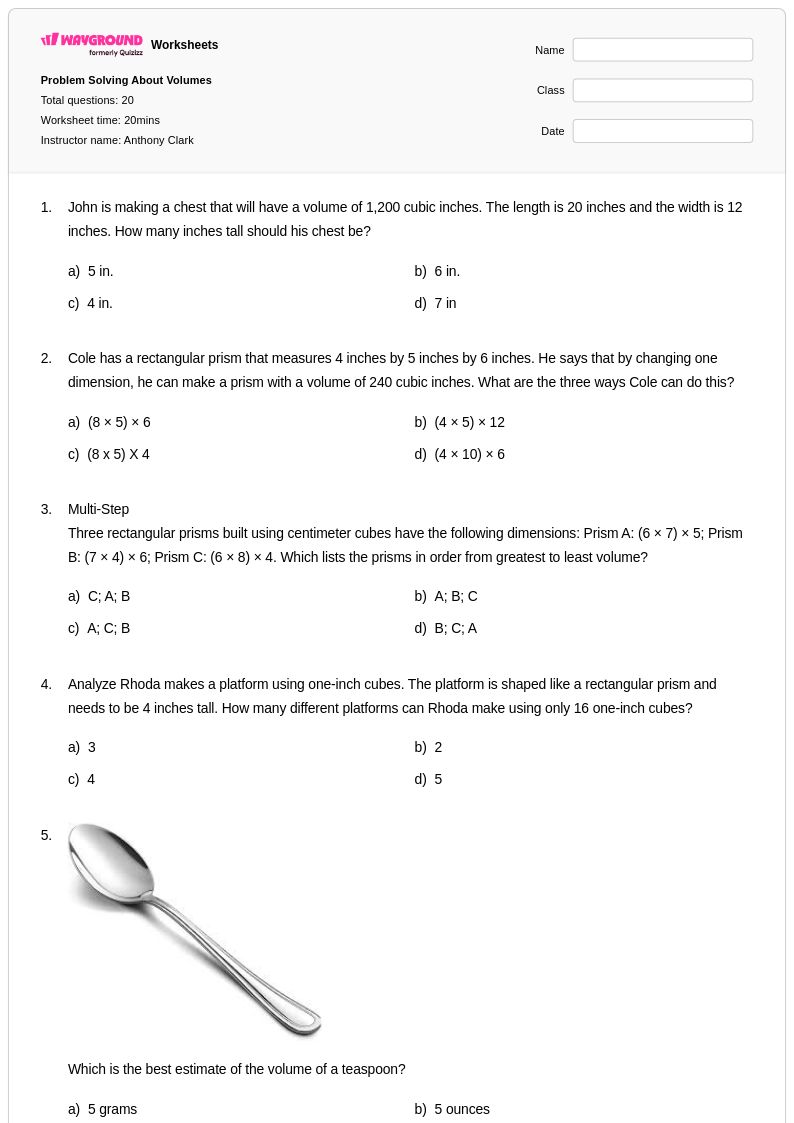
20 Q
3rd - Uni
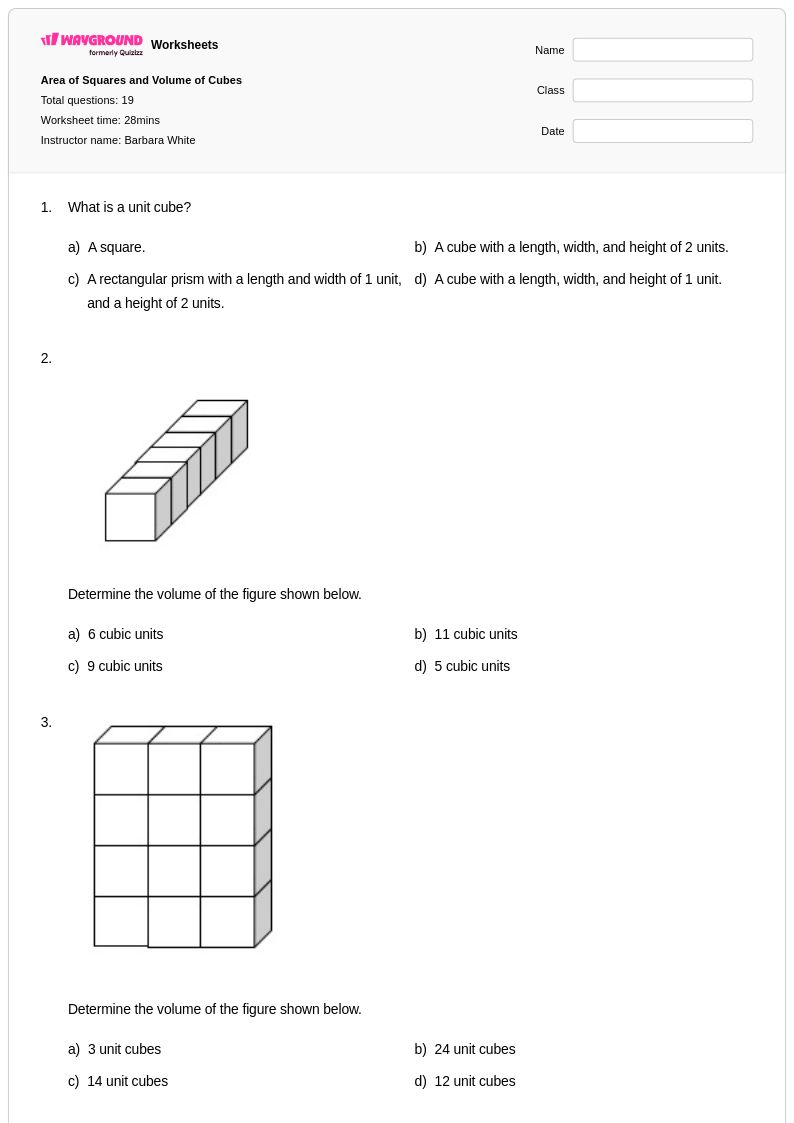
19 Q
4th - 5th
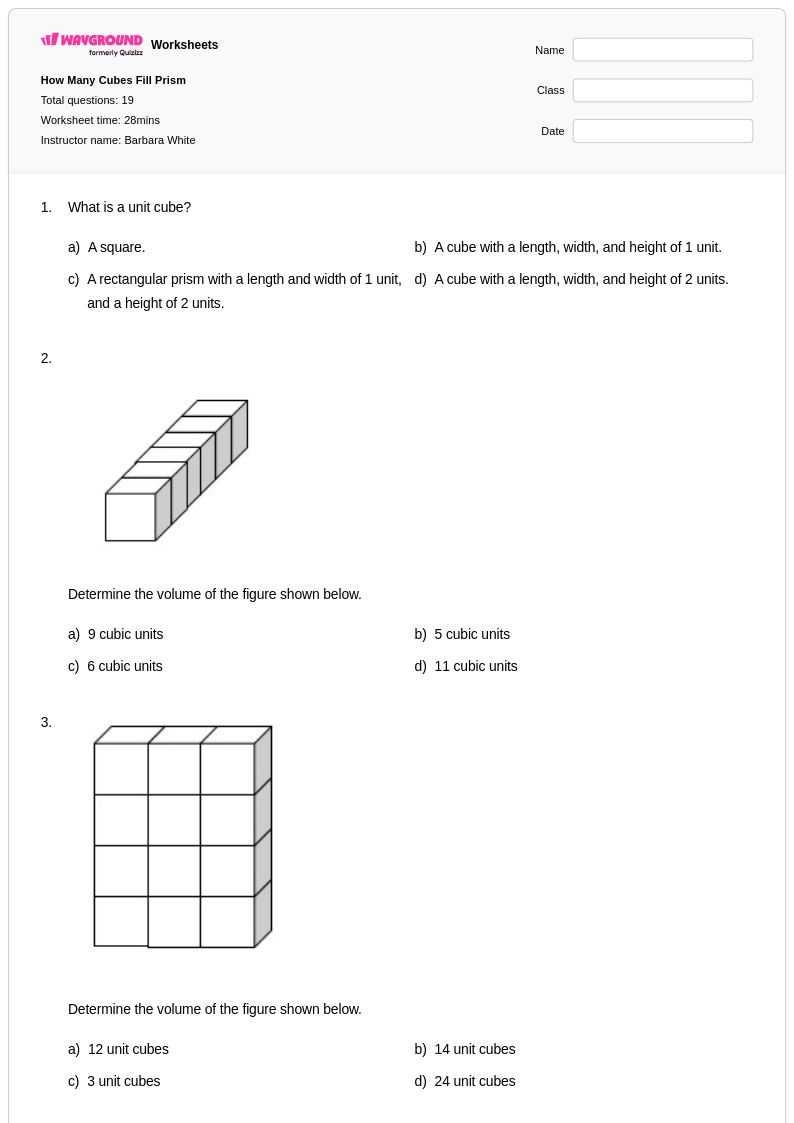
19 Q
4th - 5th
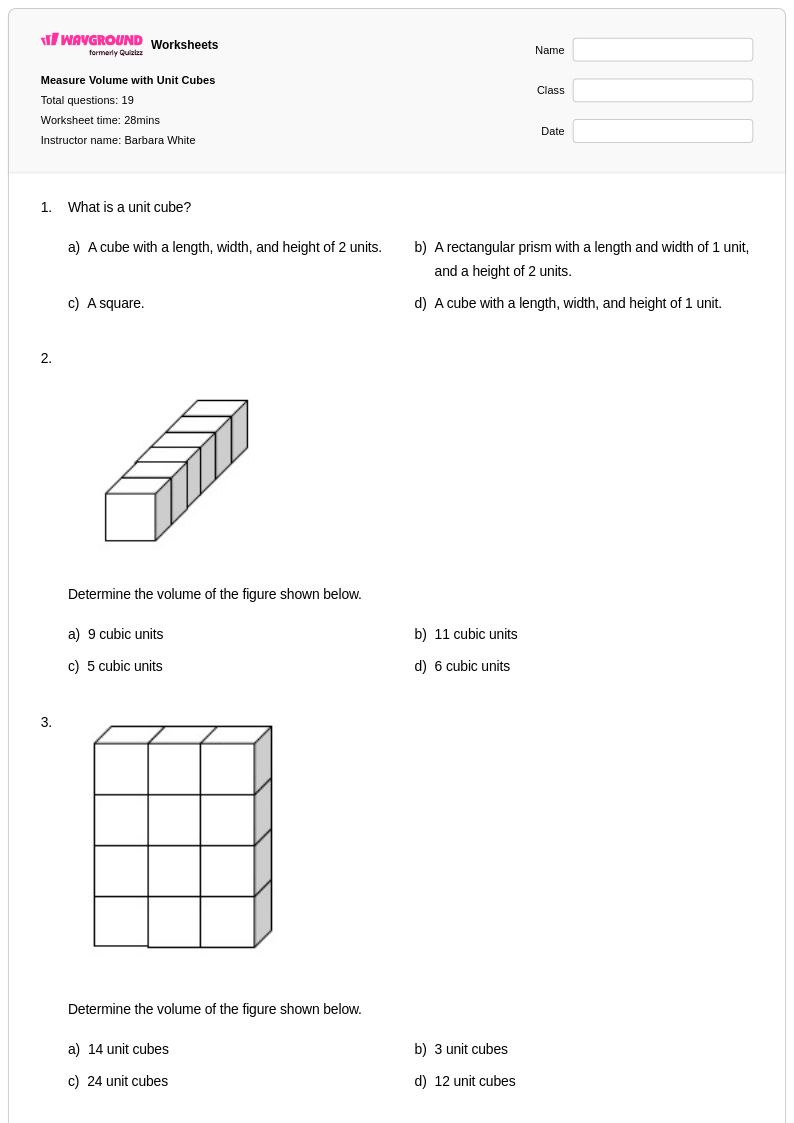
19 Q
4th - 5th
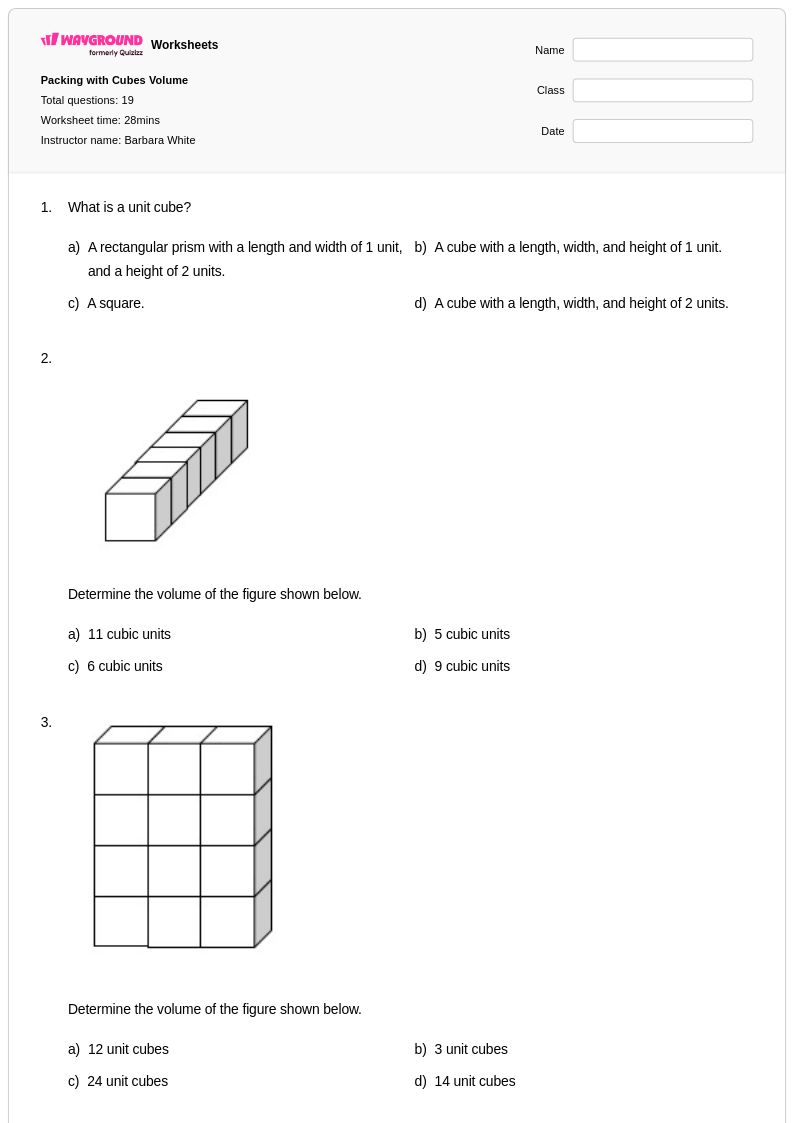
19 Q
4th - 5th
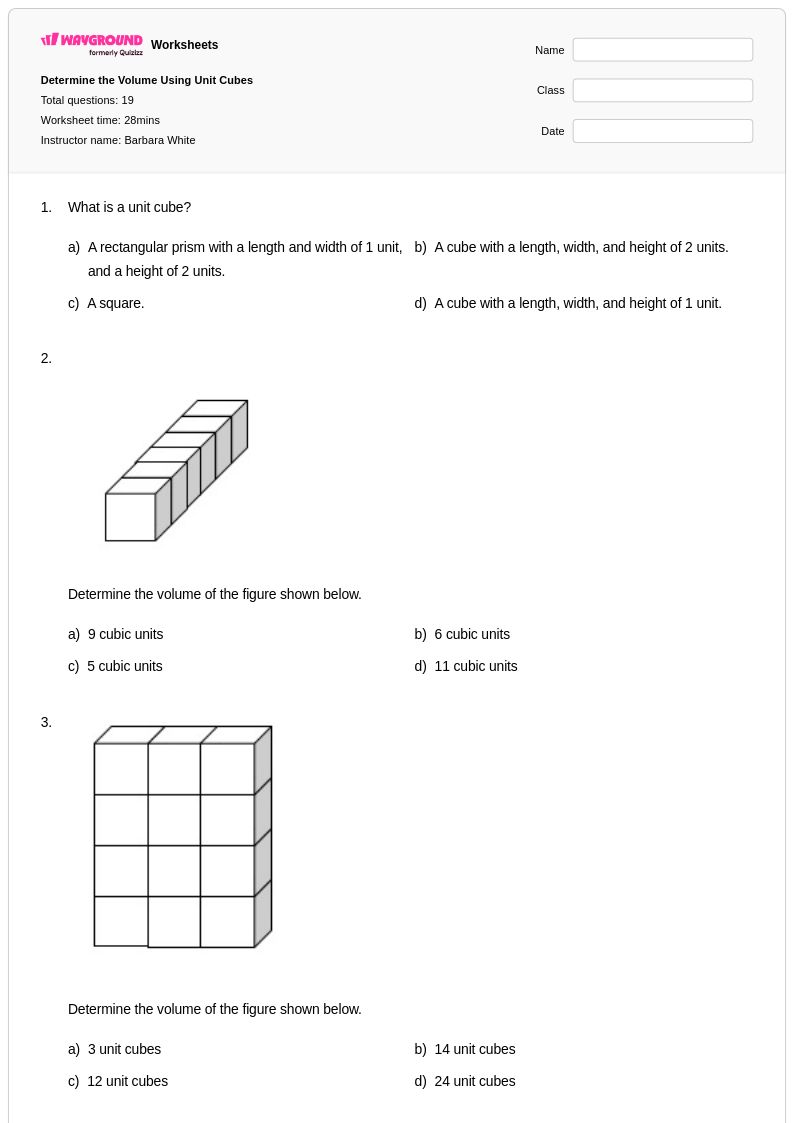
19 Q
4th - 5th
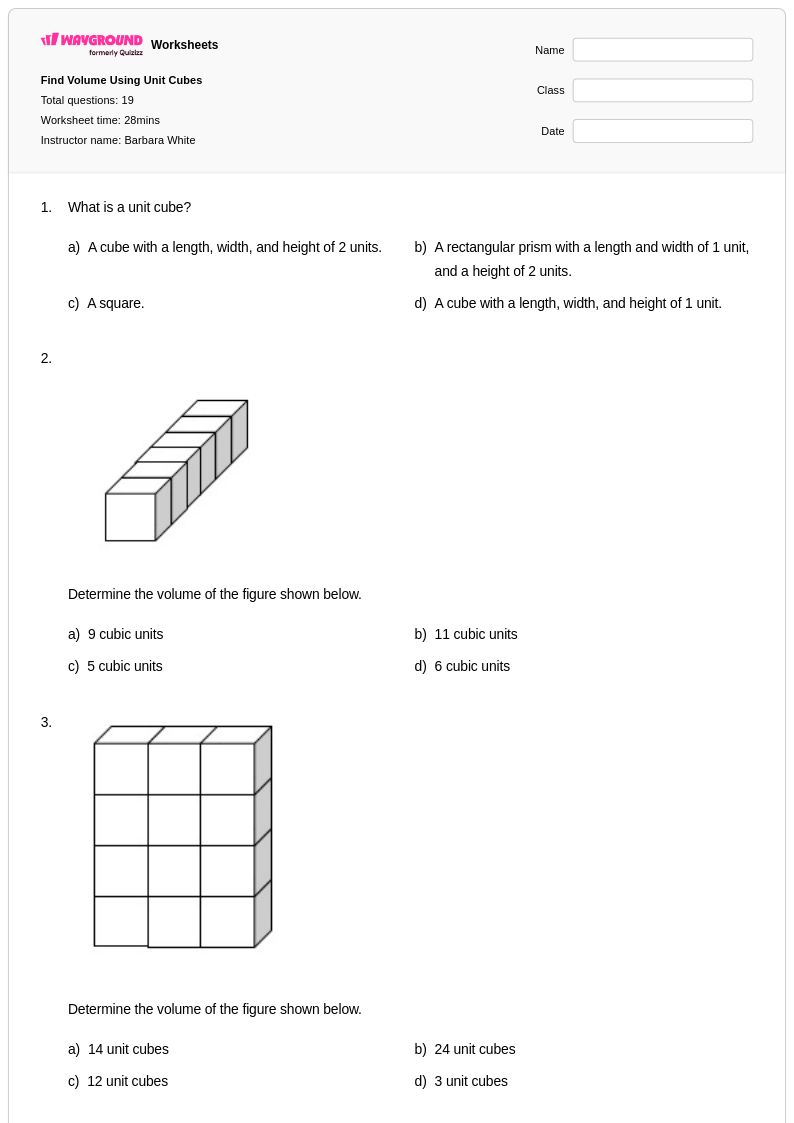
19 Q
4th - 5th
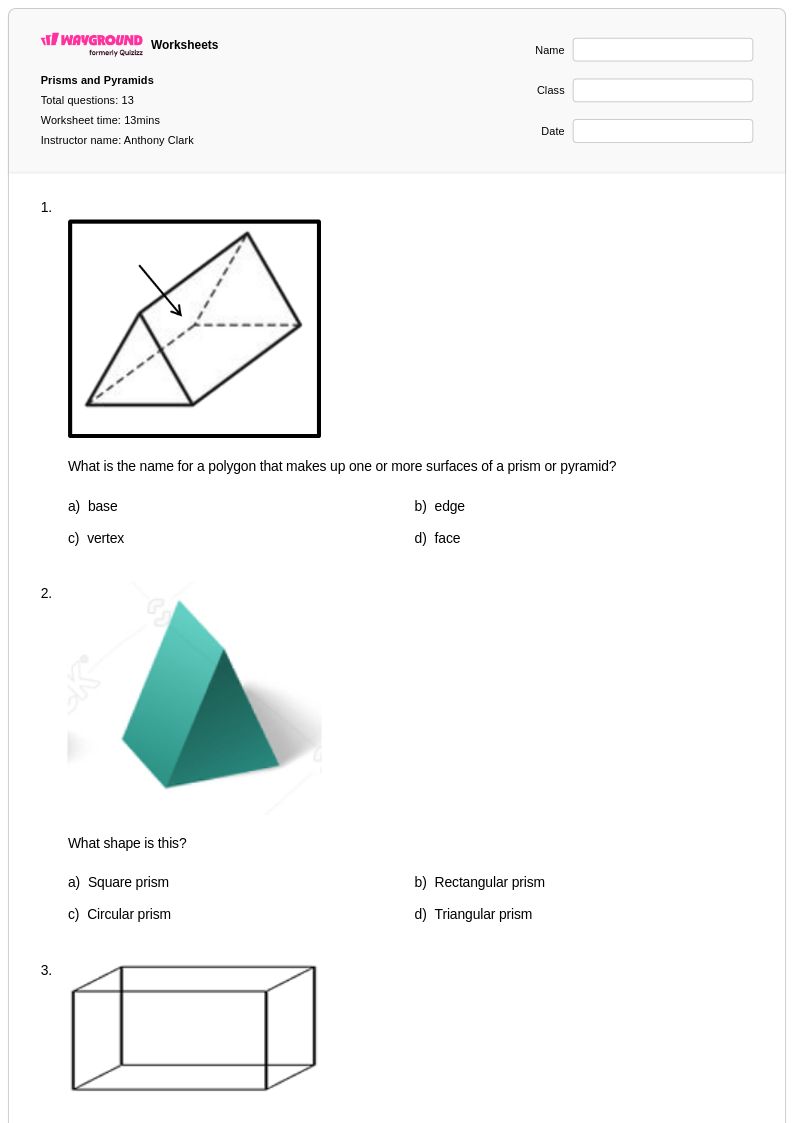
13 Q
4th - Uni
Explore Volume of a Rectangular Prism Worksheets by Grades
Explore Other Subject Worksheets for grade 4
Explore printable Volume of a Rectangular Prism worksheets for Grade 4
Volume of a rectangular prism worksheets for Grade 4 students available through Wayground provide essential practice in calculating three-dimensional space using length, width, and height measurements. These comprehensive printables guide students through the fundamental concept of multiplying dimensions to find cubic units, building critical spatial reasoning skills that form the foundation for advanced geometry concepts. Each worksheet collection includes varied practice problems that progress from simple whole-number calculations to more complex scenarios, complete with detailed answer keys that help teachers efficiently assess student understanding. The free pdf resources emphasize hands-on learning through visual representations of rectangular prisms, enabling students to connect abstract mathematical formulas with concrete geometric shapes they encounter in everyday life.
Wayground's extensive library features millions of teacher-created volume worksheets that support diverse classroom needs through sophisticated search and filtering capabilities. Teachers can easily locate Grade 4 rectangular prism resources that align with specific learning standards while utilizing built-in differentiation tools to modify content complexity for varying skill levels. The platform's flexible customization options allow educators to adapt existing worksheets or create entirely new practice sets, with seamless availability in both printable pdf format and interactive digital versions. These comprehensive features streamline lesson planning while providing targeted resources for remediation, skill reinforcement, and enrichment activities that help students master volume calculations through repeated practice and application across multiple learning contexts.