Free Printable Alkanes Cycloalkanes and Functional Groups Worksheets for Class 10
Class 10 Chemistry students can master alkanes, cycloalkanes, and functional groups through Wayground's comprehensive collection of free worksheets, printable PDFs, practice problems, and detailed answer keys for organic chemistry fundamentals.
Explore printable Alkanes Cycloalkanes and Functional Groups worksheets for Class 10
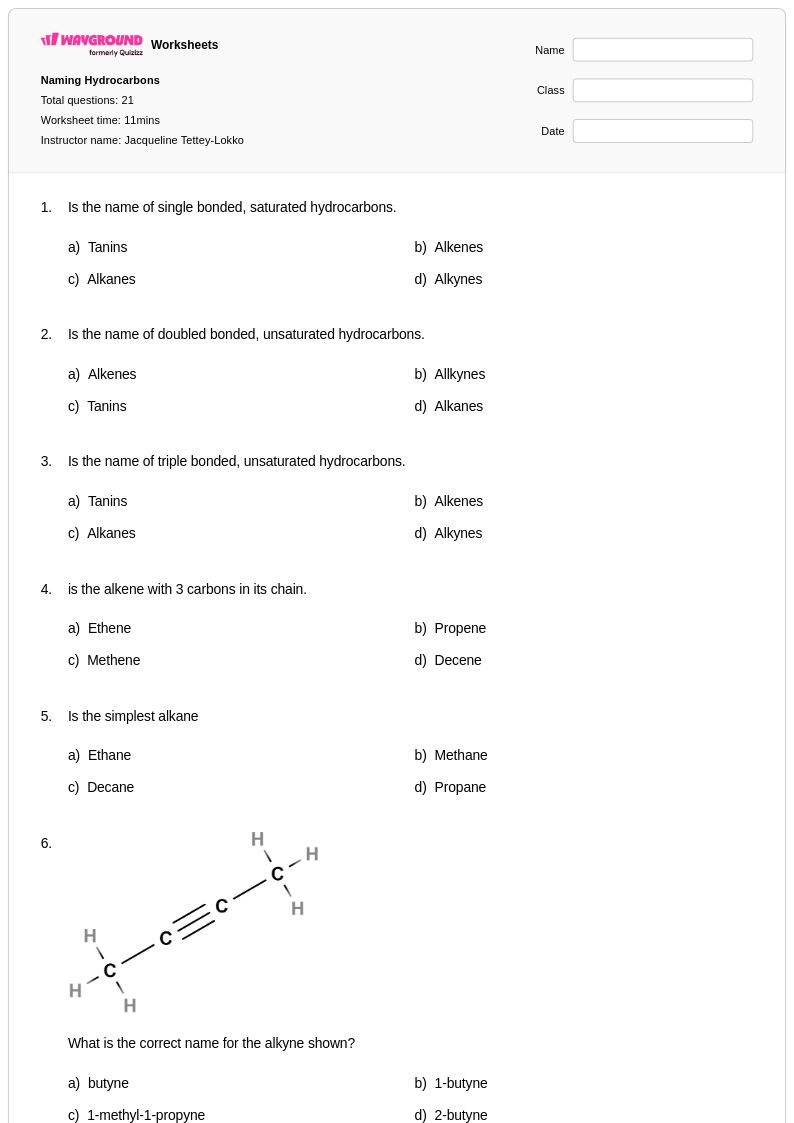
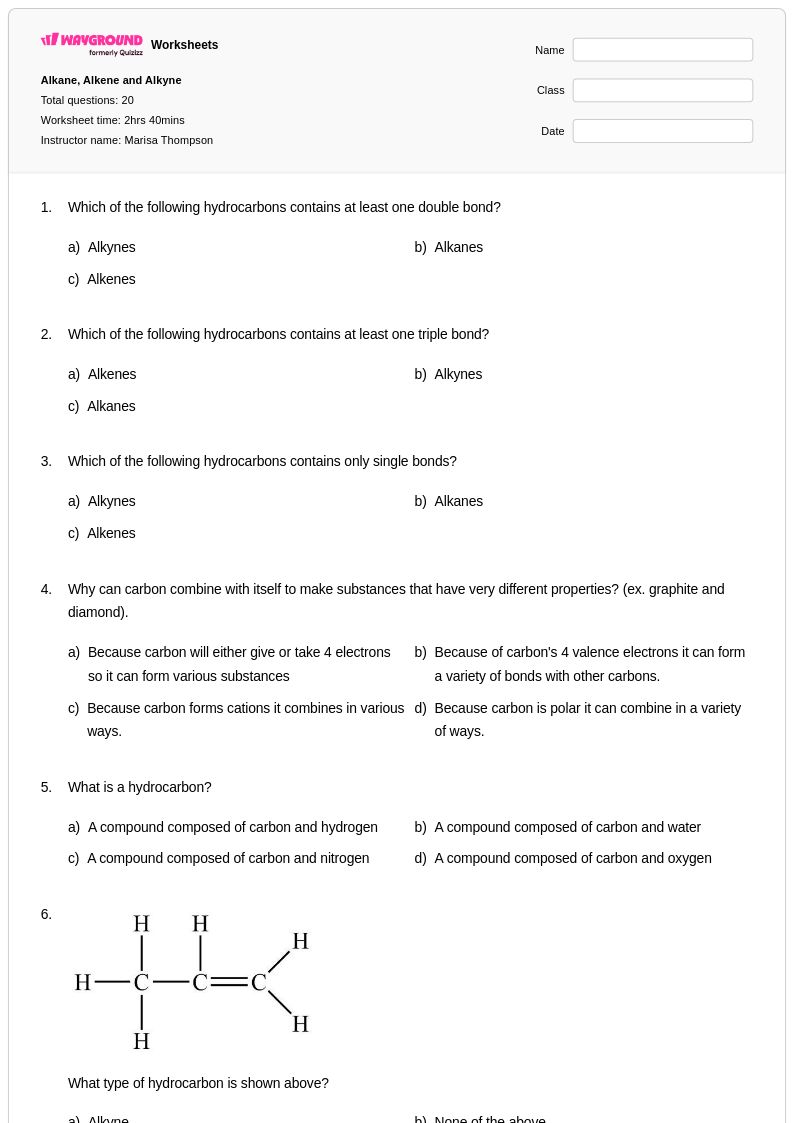
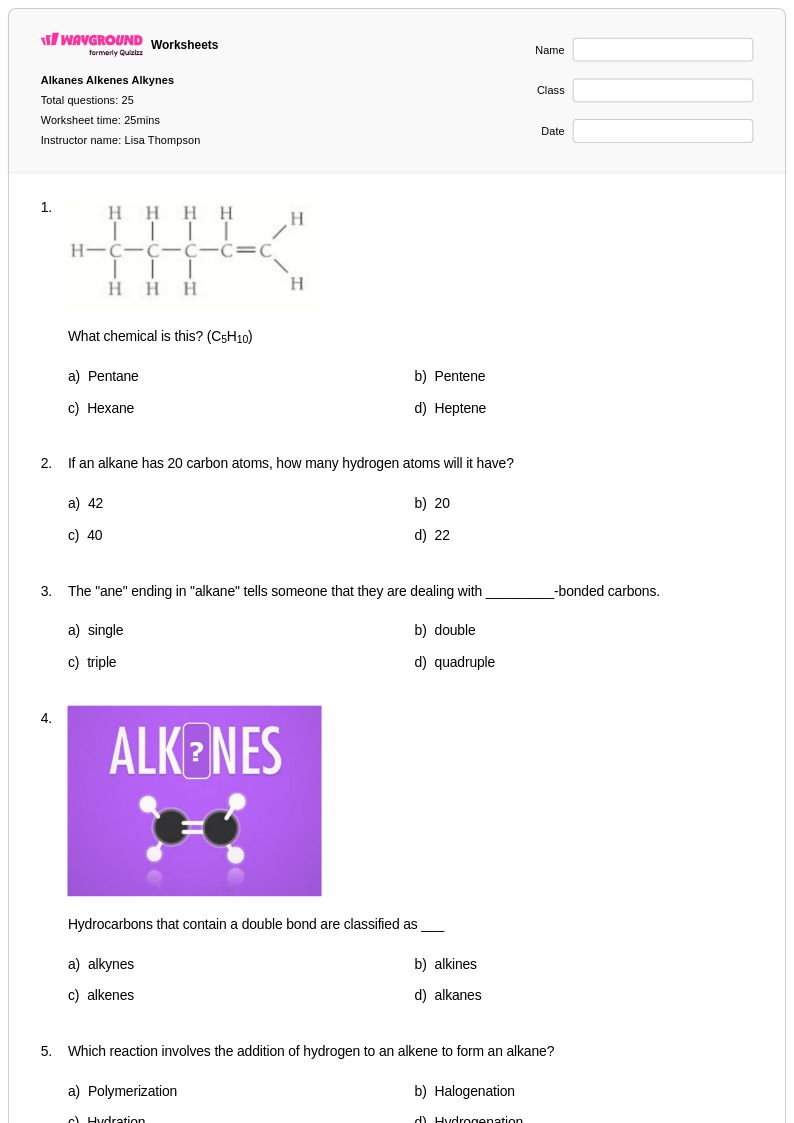
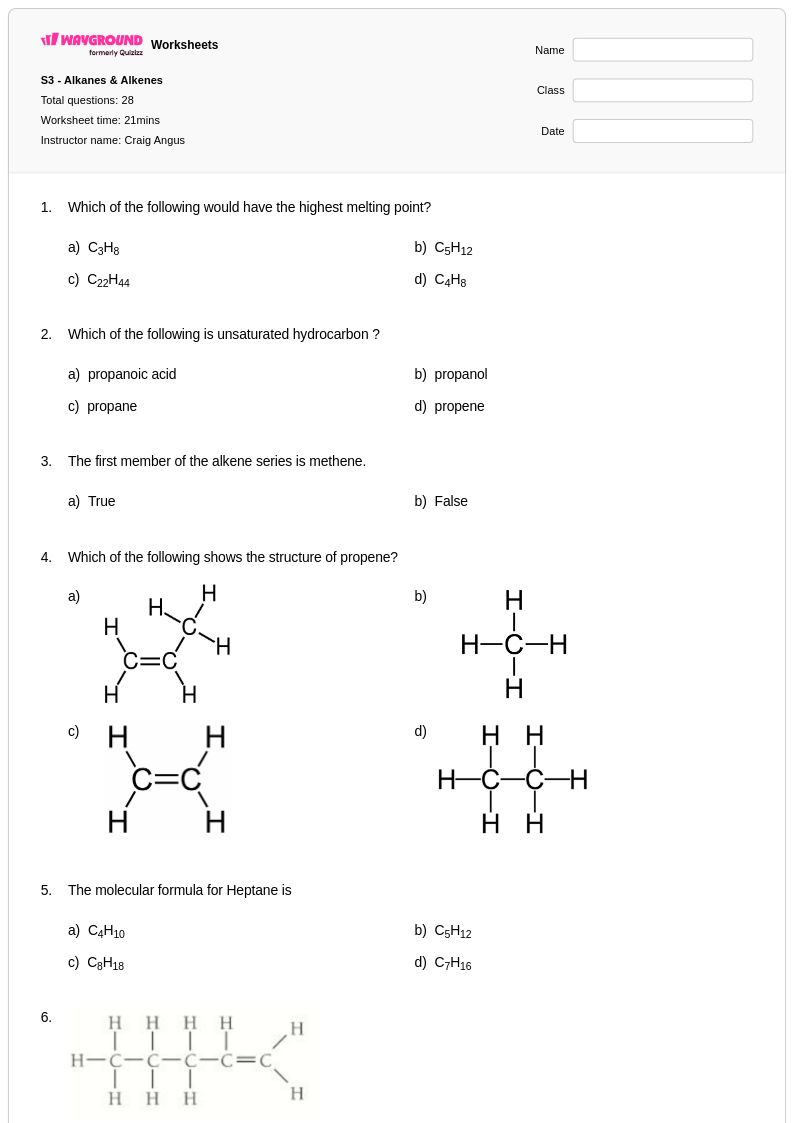
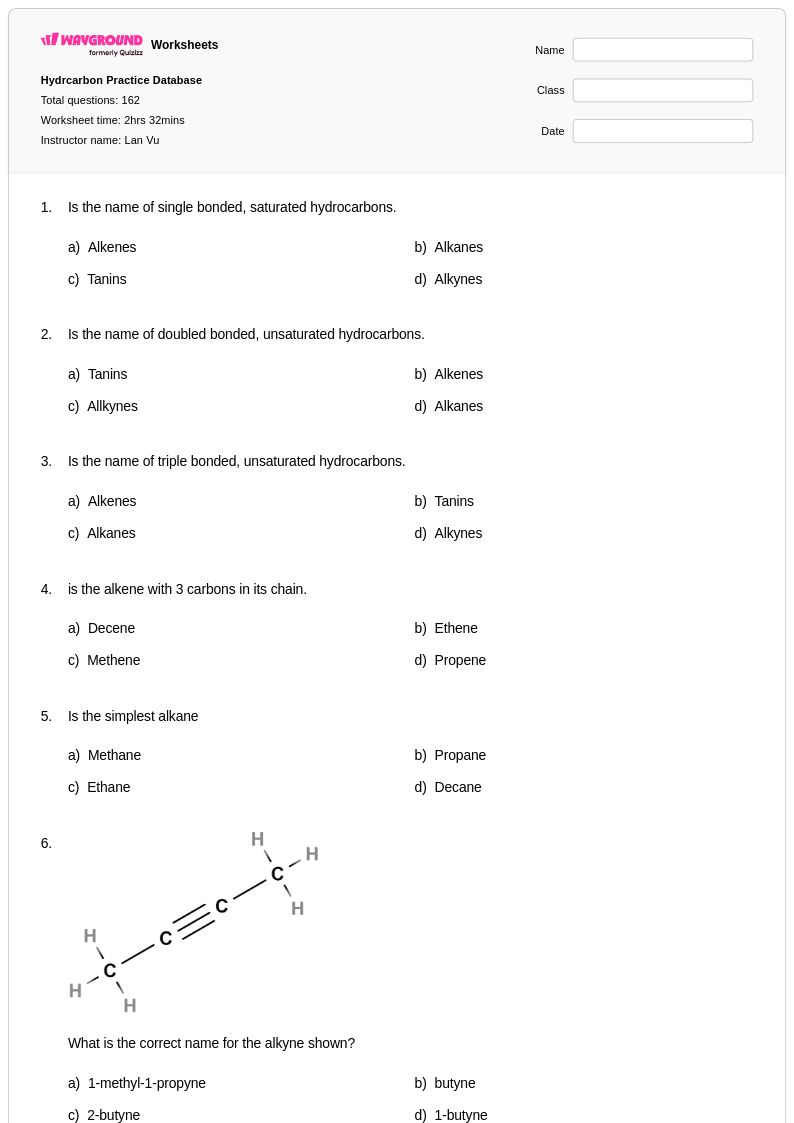
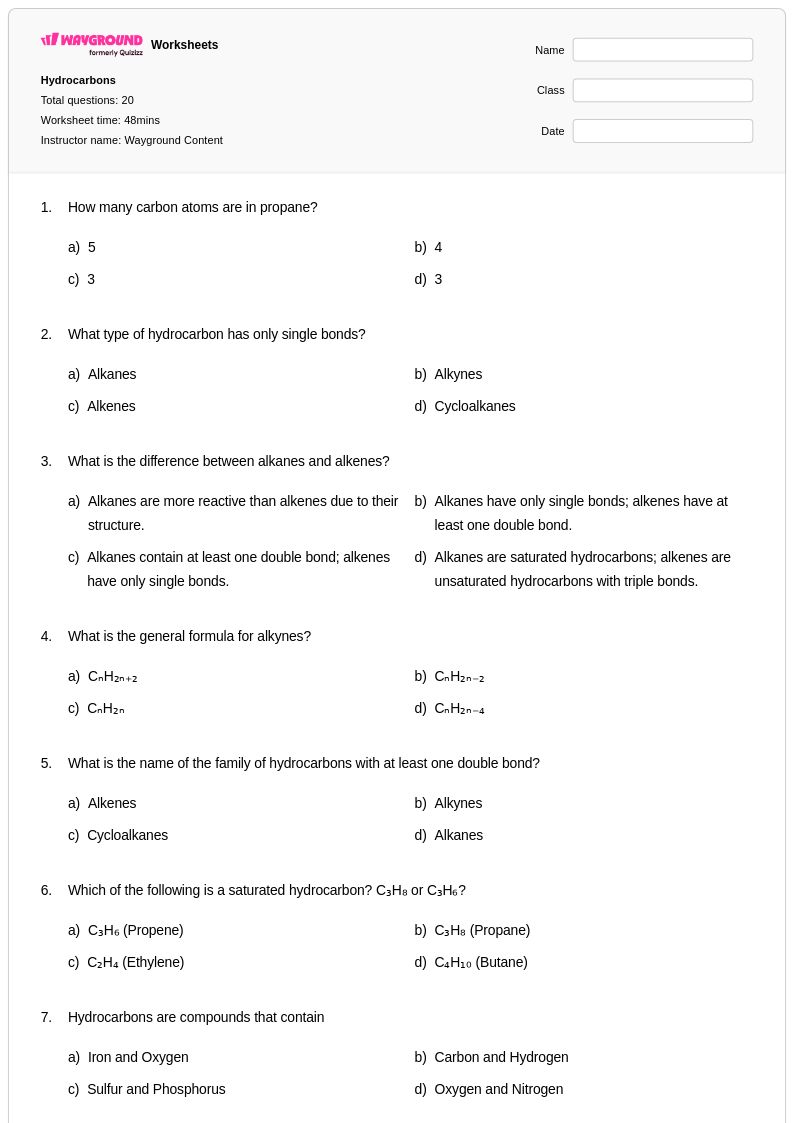
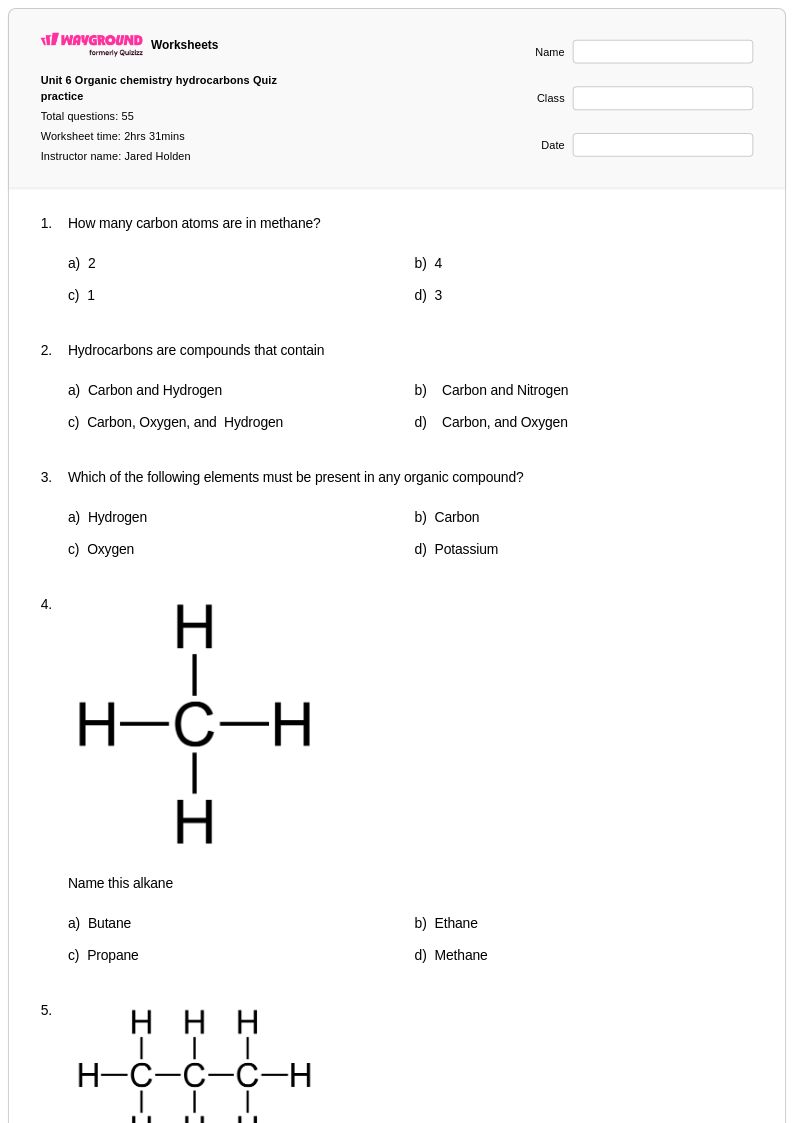
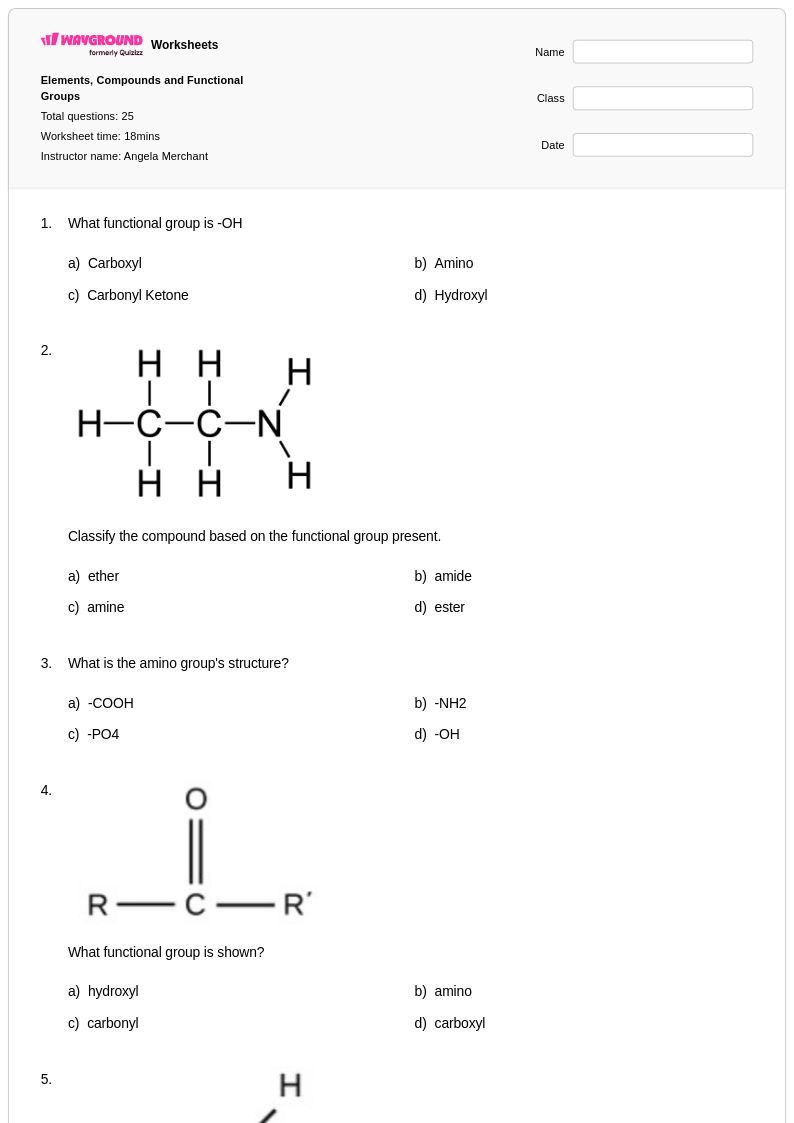
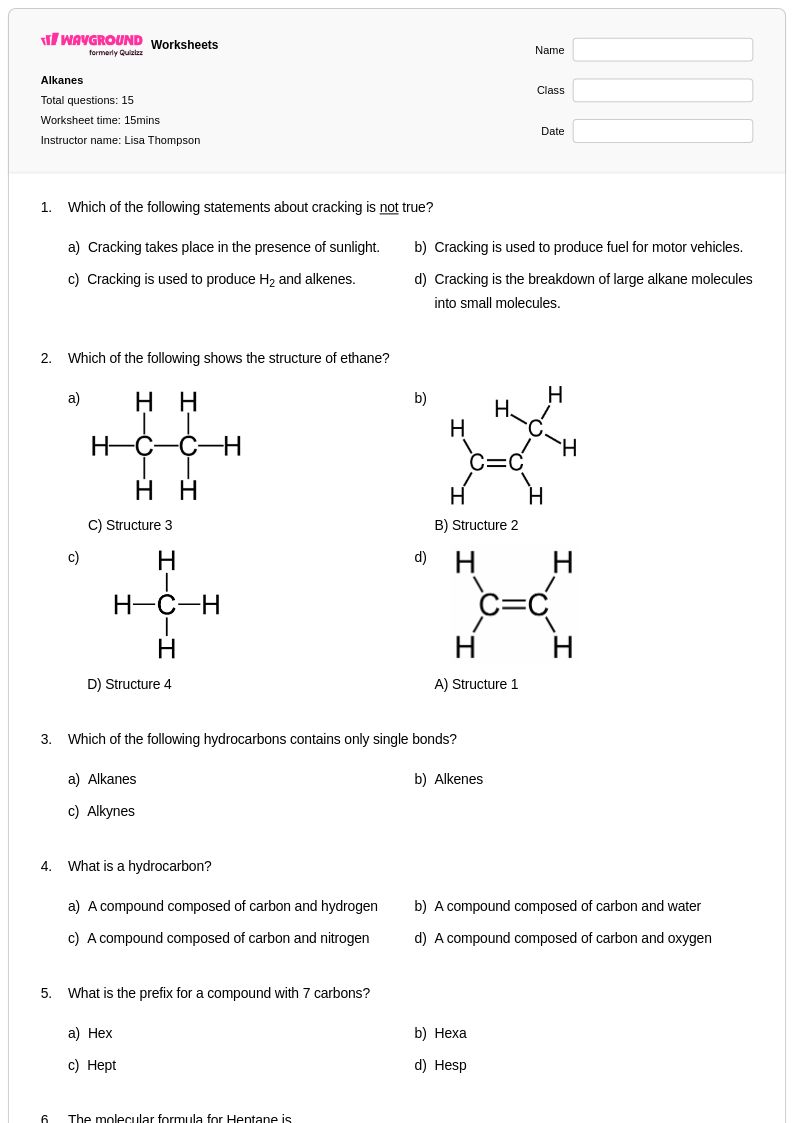
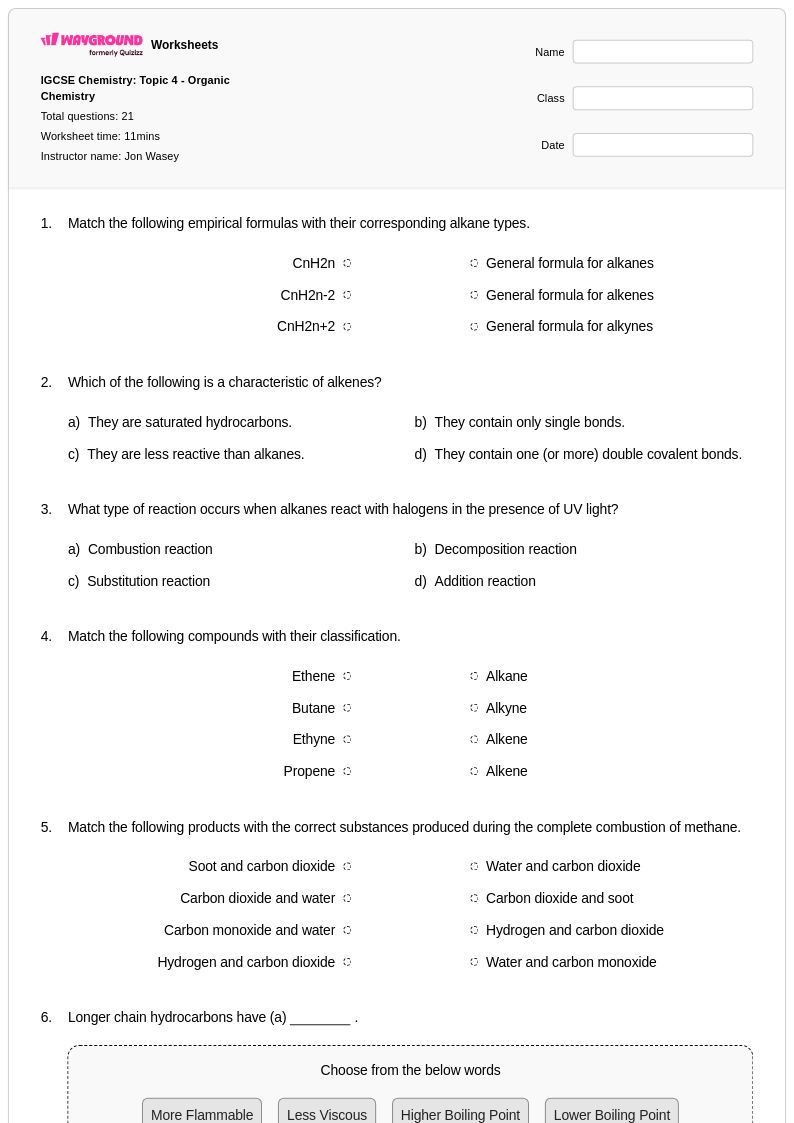
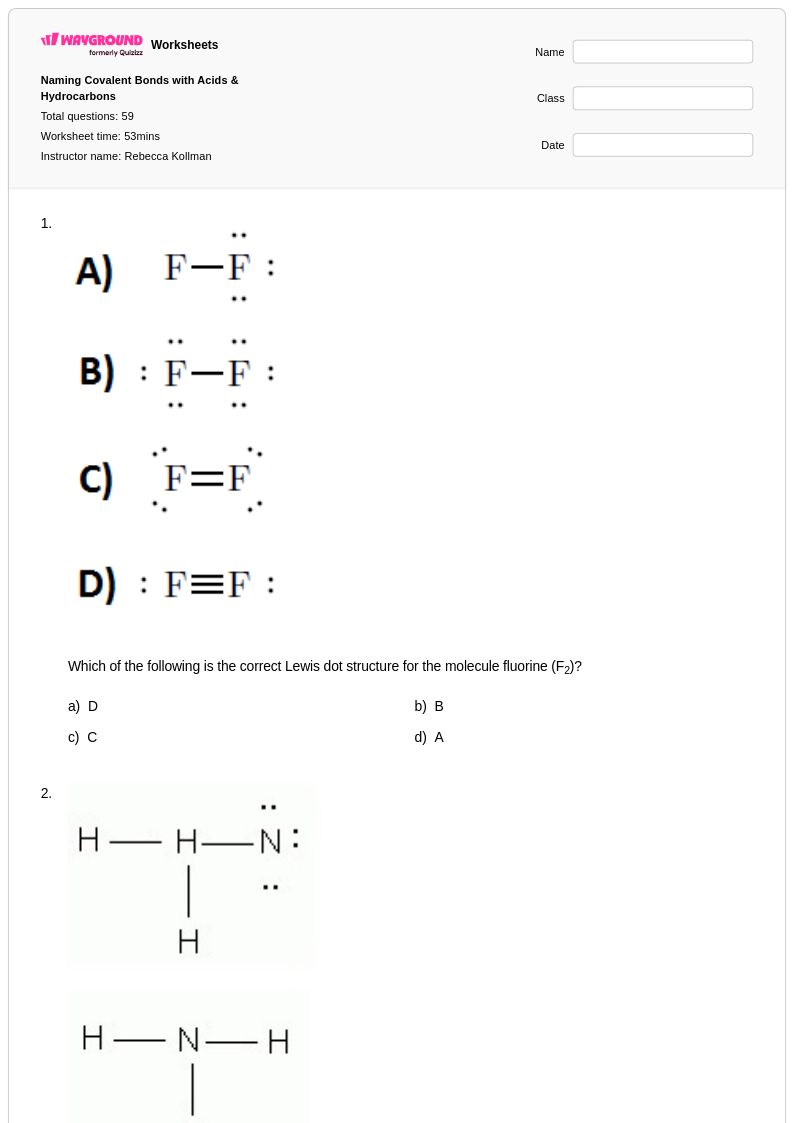
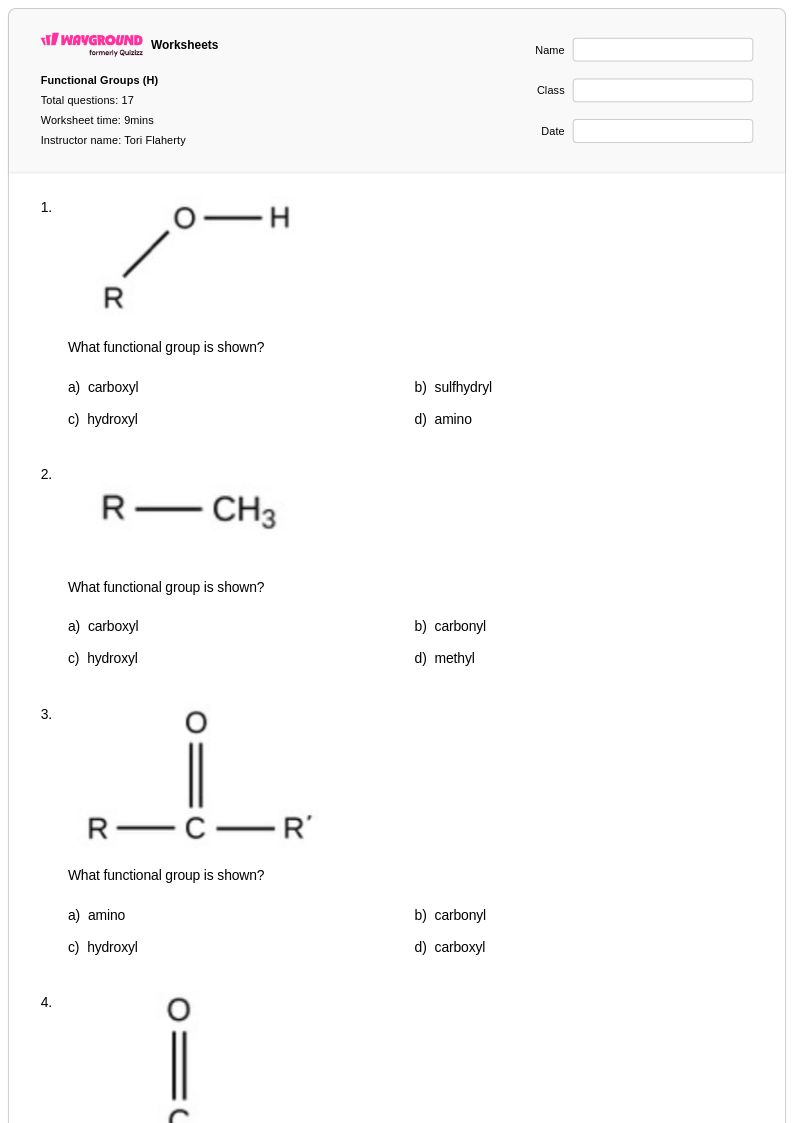
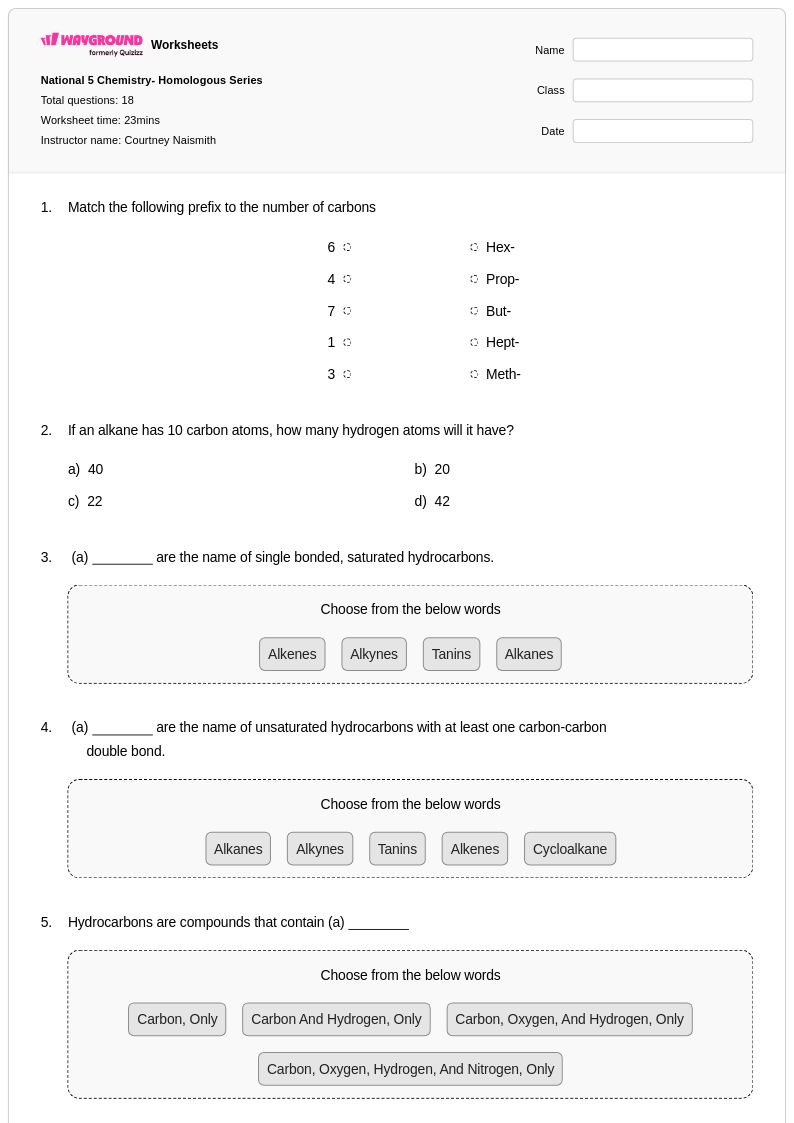
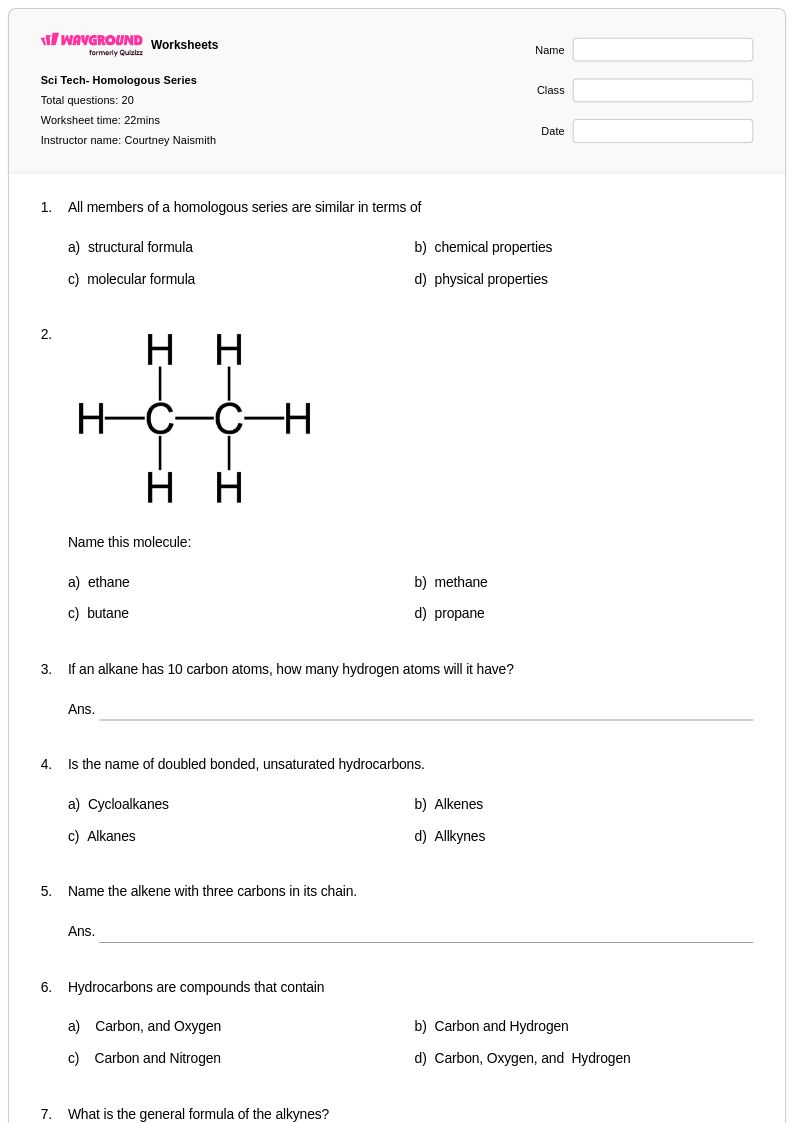
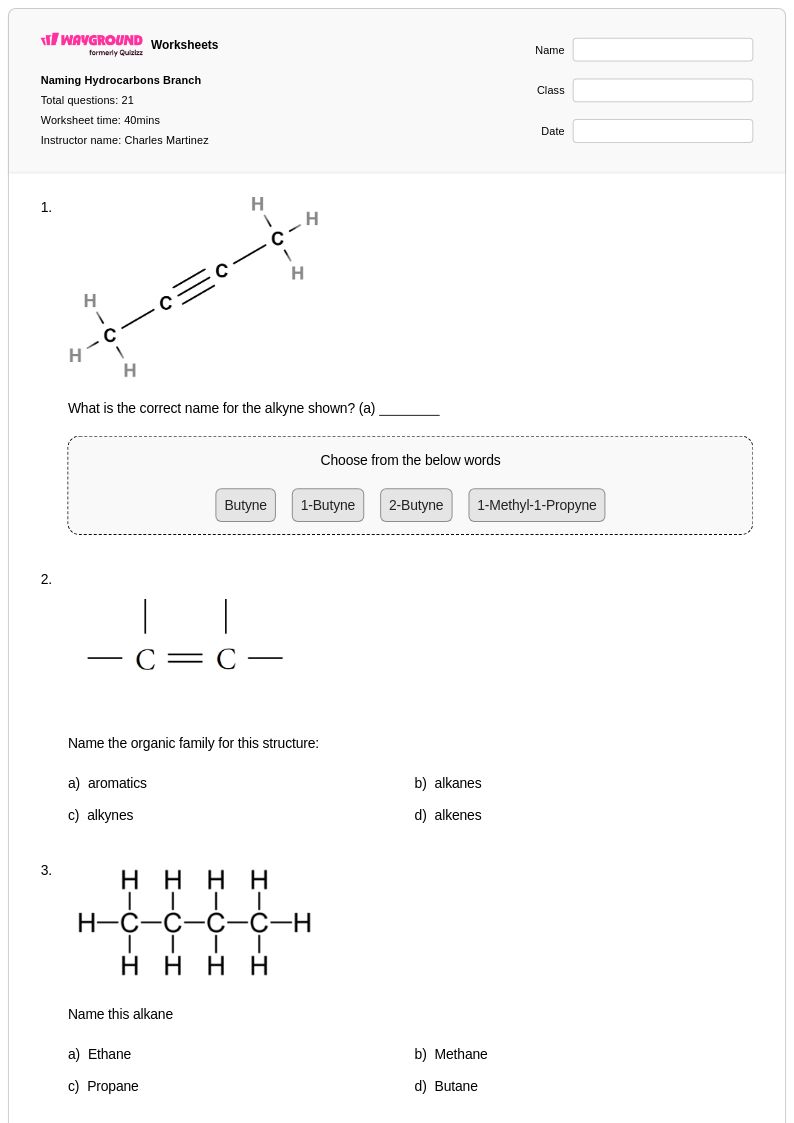
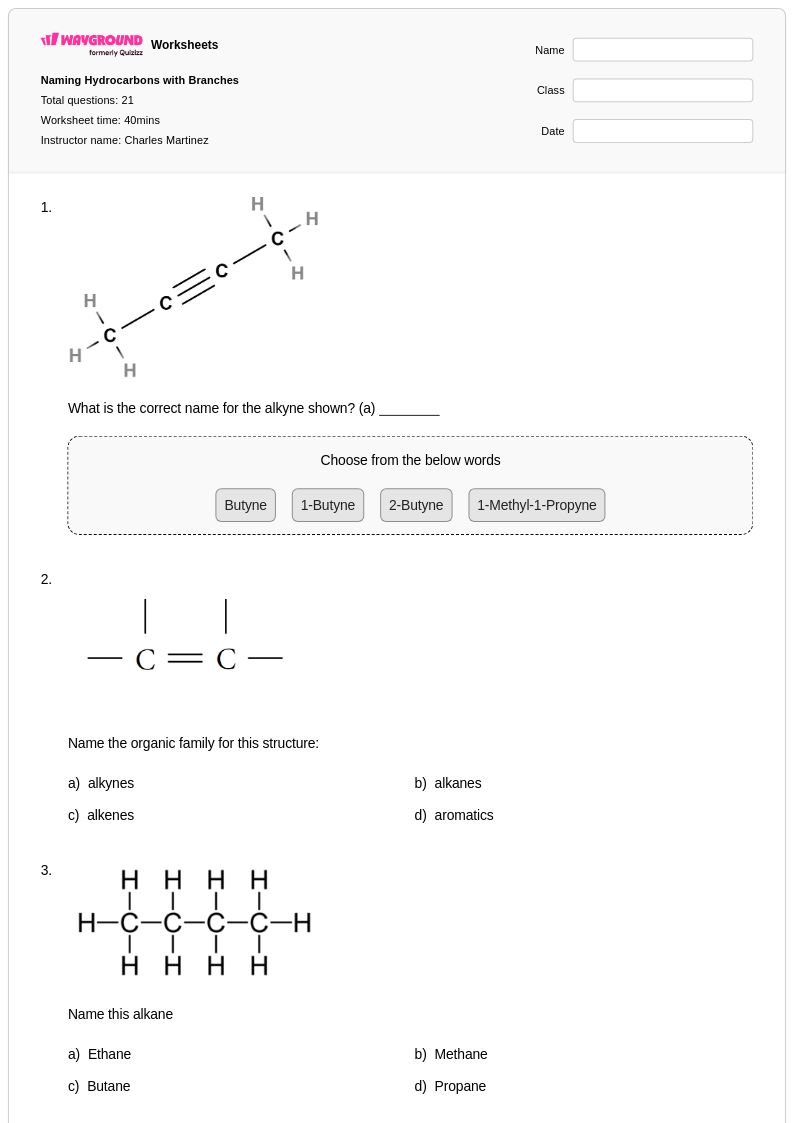
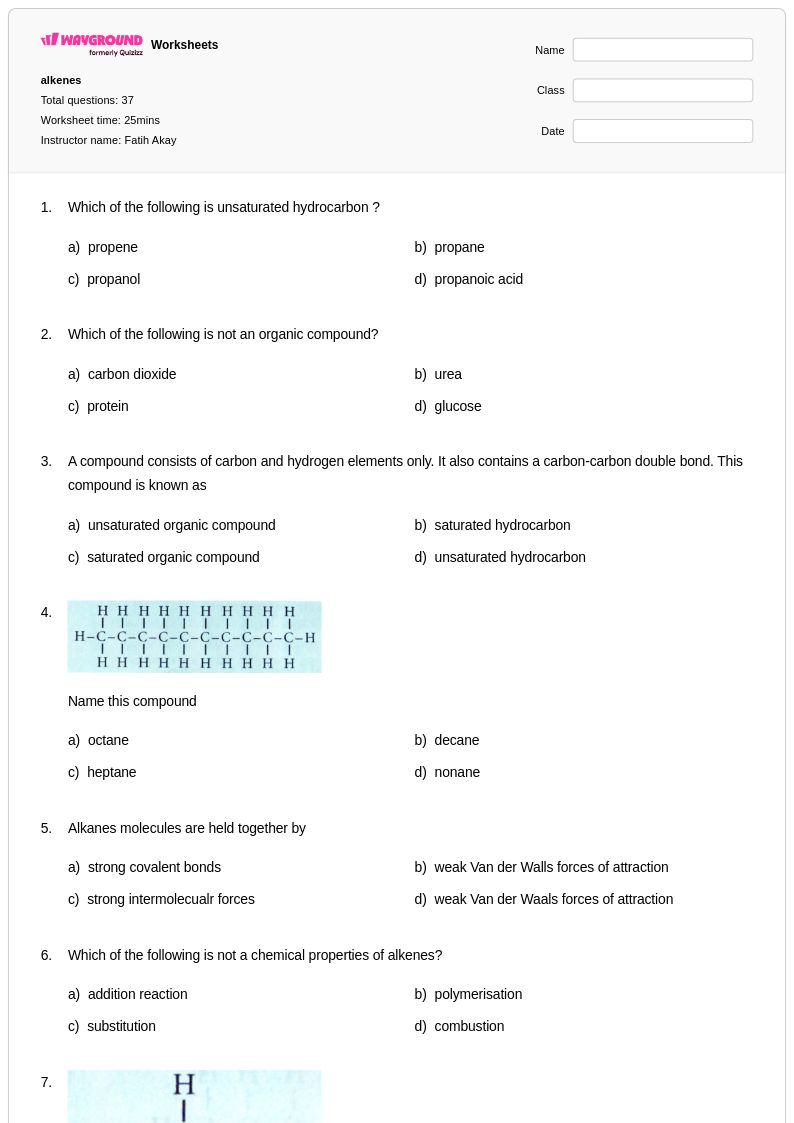
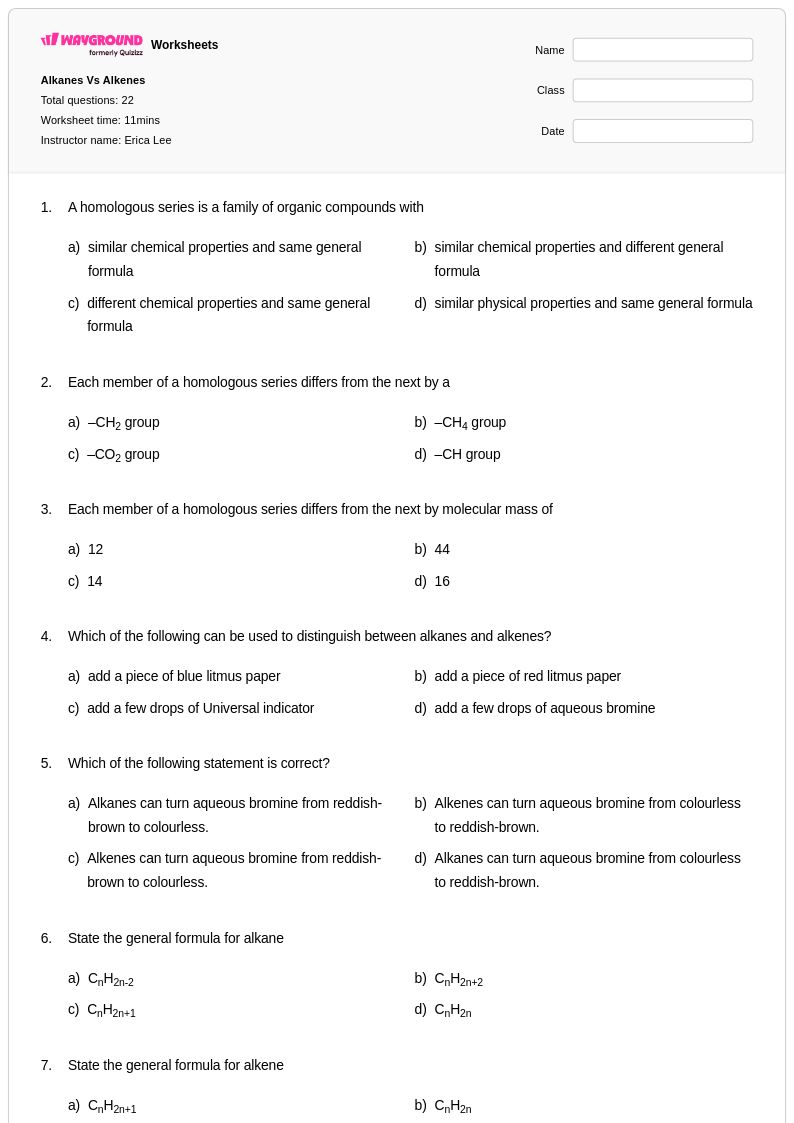
Class 10 alkanes, cycloalkanes, and functional groups worksheets available through Wayground provide comprehensive practice materials that strengthen students' understanding of organic chemistry fundamentals. These expertly designed worksheets guide students through the systematic study of saturated hydrocarbons, exploring both straight-chain and cyclic alkane structures while introducing essential functional groups that define organic molecule behavior. Students develop critical skills in molecular structure identification, nomenclature systems, and chemical property analysis through targeted practice problems that reinforce theoretical concepts with hands-on application. Each worksheet includes detailed answer keys and is available as free printable pdf resources, enabling students to work independently while building confidence in recognizing structural patterns, drawing Lewis structures, and predicting molecular properties based on functional group presence.
Wayground supports chemistry educators with an extensive collection of teacher-created resources specifically designed for Class 10 organic chemistry instruction, featuring millions of worksheets that can be easily located through advanced search and filtering capabilities. Teachers benefit from standards-aligned materials that address varying skill levels, with robust differentiation tools that accommodate diverse learning needs within the classroom. The platform's flexible customization options allow educators to modify existing worksheets or combine multiple resources to create targeted practice sets for remediation, enrichment, or focused skill development. Available in both printable and digital formats including downloadable pdf versions, these alkanes, cycloalkanes, and functional groups worksheets streamline lesson planning while providing immediate access to high-quality practice materials that support comprehensive understanding of organic chemistry principles.
FAQs
How do I teach alkanes and cycloalkanes to chemistry students?
Start by establishing the concept of carbon's four bonding sites, then introduce straight-chain alkanes using molecular models or structural diagrams before moving to cycloalkanes, where ring strain and bond angles become relevant. Emphasize IUPAC nomenclature early and consistently, since naming conventions underpin every subsequent organic chemistry topic. Connecting molecular structure to physical properties — boiling points, solubility, reactivity — gives students a concrete reason to care about structural differences.
What exercises help students practice identifying functional groups?
Functional group identification exercises work best when students must both name the group and locate it within a larger organic molecule, rather than recognizing isolated examples. Practice problems that mix multiple functional groups in a single structure — such as a molecule containing both a ketone and a carboxylic acid — build the discrimination skills students need for more advanced organic chemistry. Structural formula interpretation tasks, where students convert between condensed and full structural formulas, reinforce functional group recognition alongside broader molecular literacy.
What mistakes do students commonly make when naming alkanes using IUPAC nomenclature?
The most frequent error is failing to identify the longest continuous carbon chain as the parent chain, especially when the chain is drawn in a non-linear or branched format. Students also frequently number the parent chain from the wrong end, resulting in incorrect locants for substituents. A third common mistake is misidentifying branch points, particularly when two branches are attached to the same carbon, which leads to errors in both naming and structural reconstruction.
How do students commonly confuse alkanes with cycloalkanes?
Students often overlook that cycloalkanes share the same general formula (CnH2n) as alkenes, which creates confusion when comparing compound classes by molecular formula alone. They also frequently miss that cycloalkanes lack the degree of unsaturation associated with double bonds, since ring closure itself accounts for the reduced hydrogen count. Emphasizing that cycloalkanes are still fully saturated — containing only single bonds — helps students distinguish ring structure from unsaturation.
How can I use Wayground's alkanes, cycloalkanes, and functional groups worksheets in my classroom?
Wayground's worksheets on this topic are available as free printable PDFs for traditional classroom use and in digital formats for technology-integrated or remote learning environments, and can also be hosted as a quiz directly on Wayground. Each worksheet includes detailed answer keys, so students receive immediate feedback on complex organic chemistry problems without requiring additional teacher preparation. Wayground also supports individual student accommodations — such as read aloud, extended time, and reduced answer choices — which can be assigned per student so the rest of the class is unaffected.
How do I differentiate alkanes and functional groups instruction for students who are struggling versus those who are advanced?
For students who are struggling, focus on single-functional-group identification and basic straight-chain alkane naming before introducing branching or cyclic structures. Advanced students benefit from problems involving polyfunctional molecules, where they must prioritize principal functional groups according to IUPAC hierarchy rules and predict reactivity differences between compound classes. On Wayground, differentiation tools allow teachers to customize worksheets by student need — supporting remediation of foundational hydrocarbon concepts or enrichment with complex organic structures — without requiring separate lesson plans.