Free Printable Types of Chemical Reactions Worksheets for Class 10
Class 10 chemistry students can master types of chemical reactions with Wayground's comprehensive collection of free worksheets, printables, and practice problems featuring detailed answer keys and PDF downloads.
Explore printable Types of Chemical Reactions worksheets for Class 10
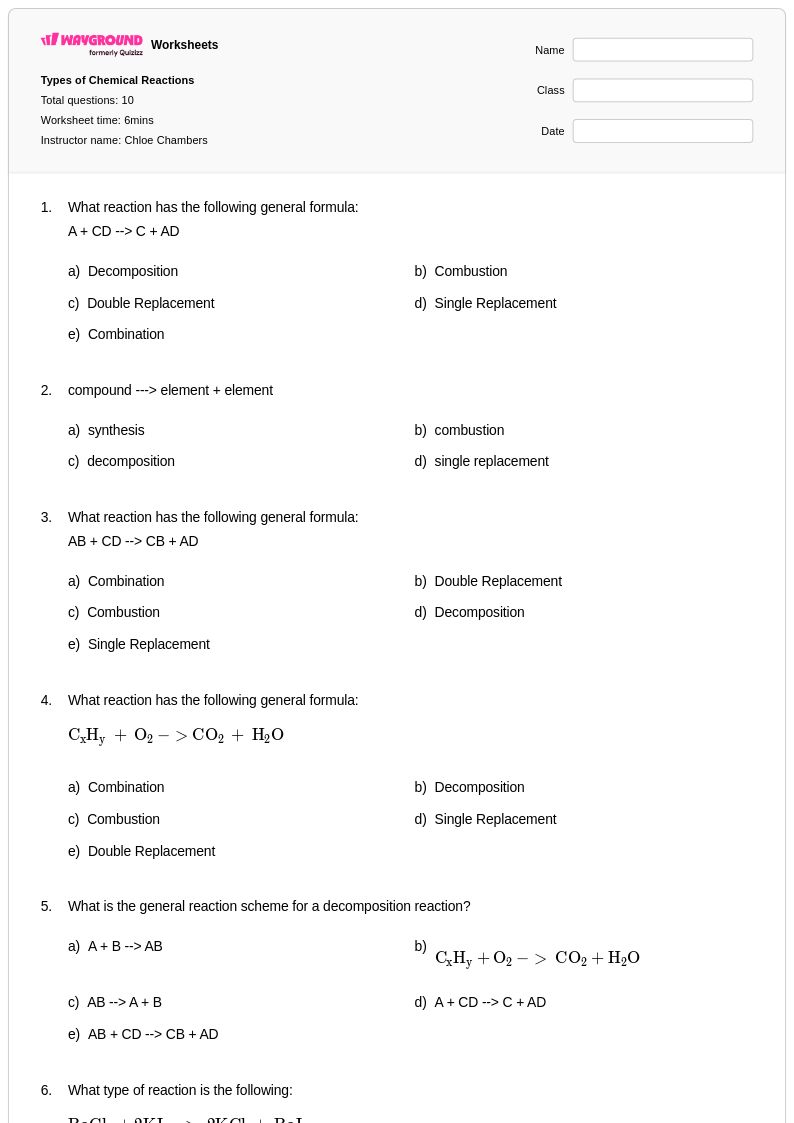
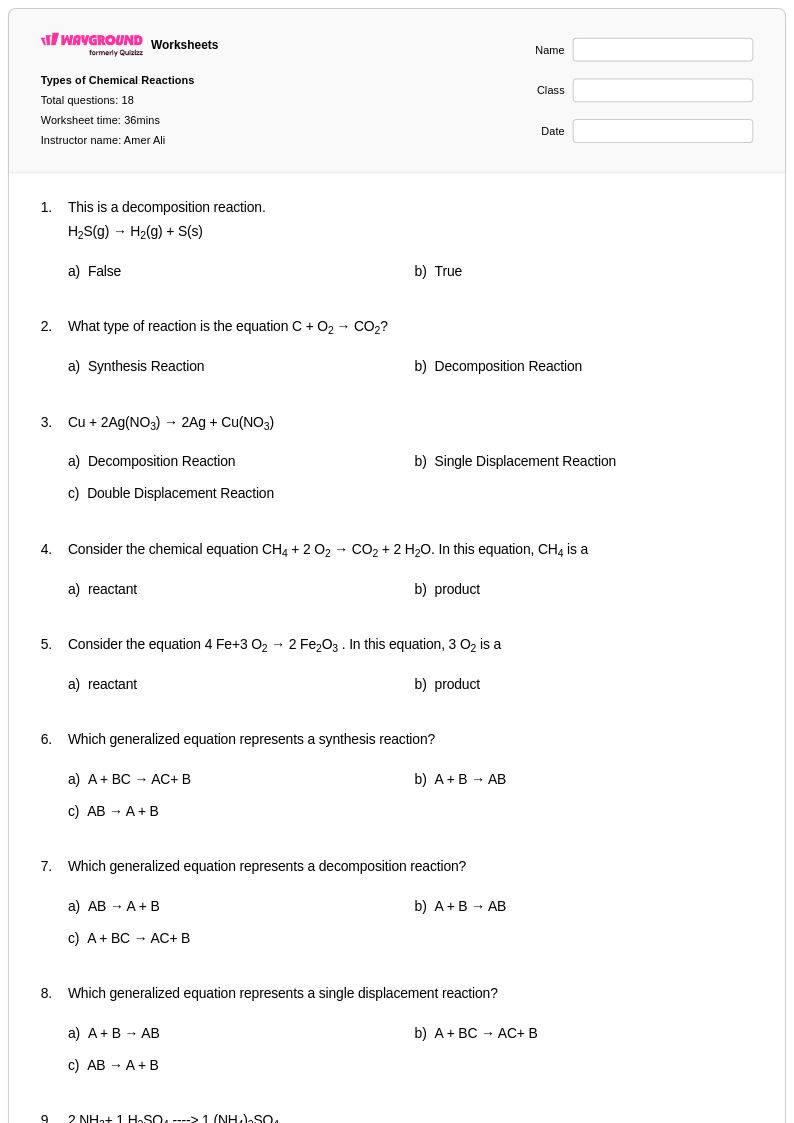
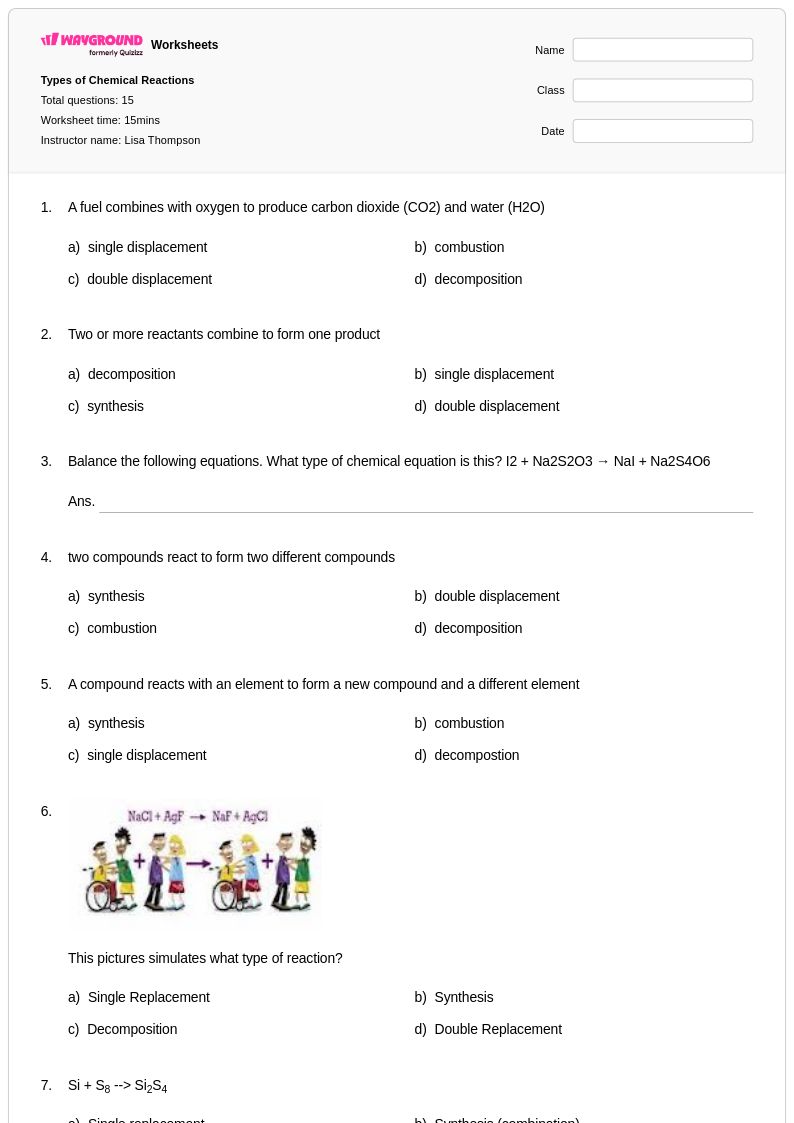
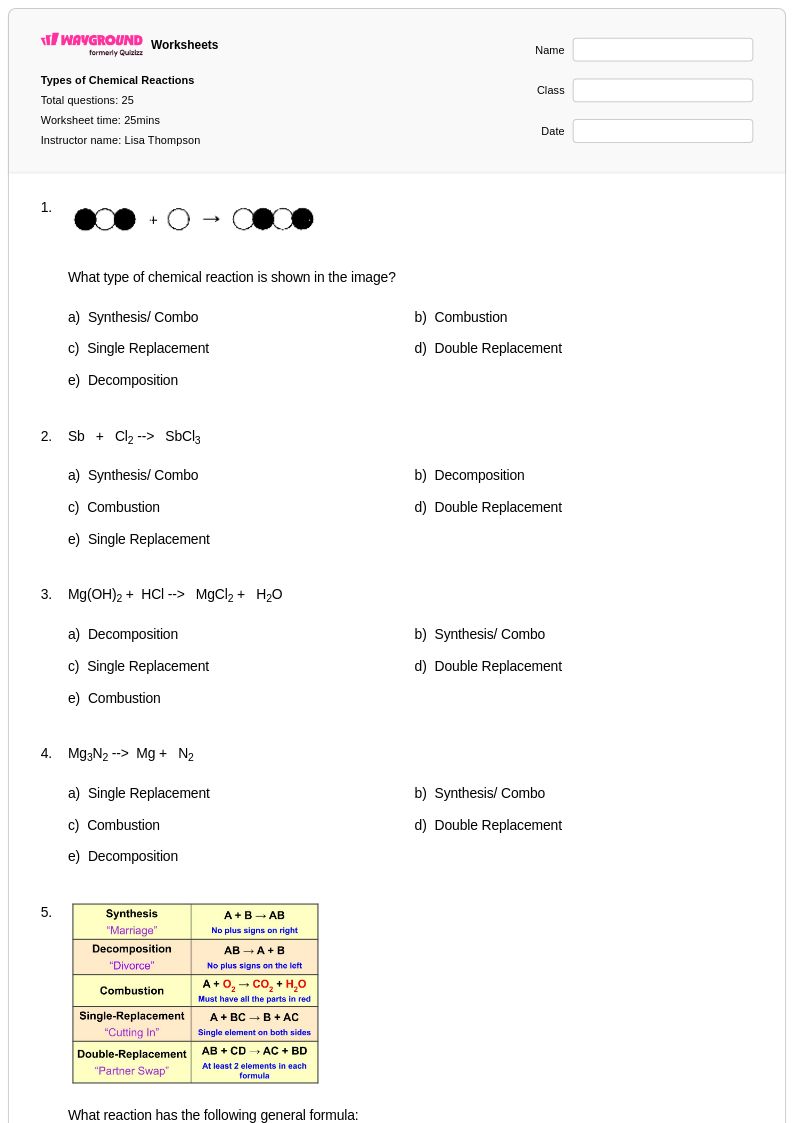
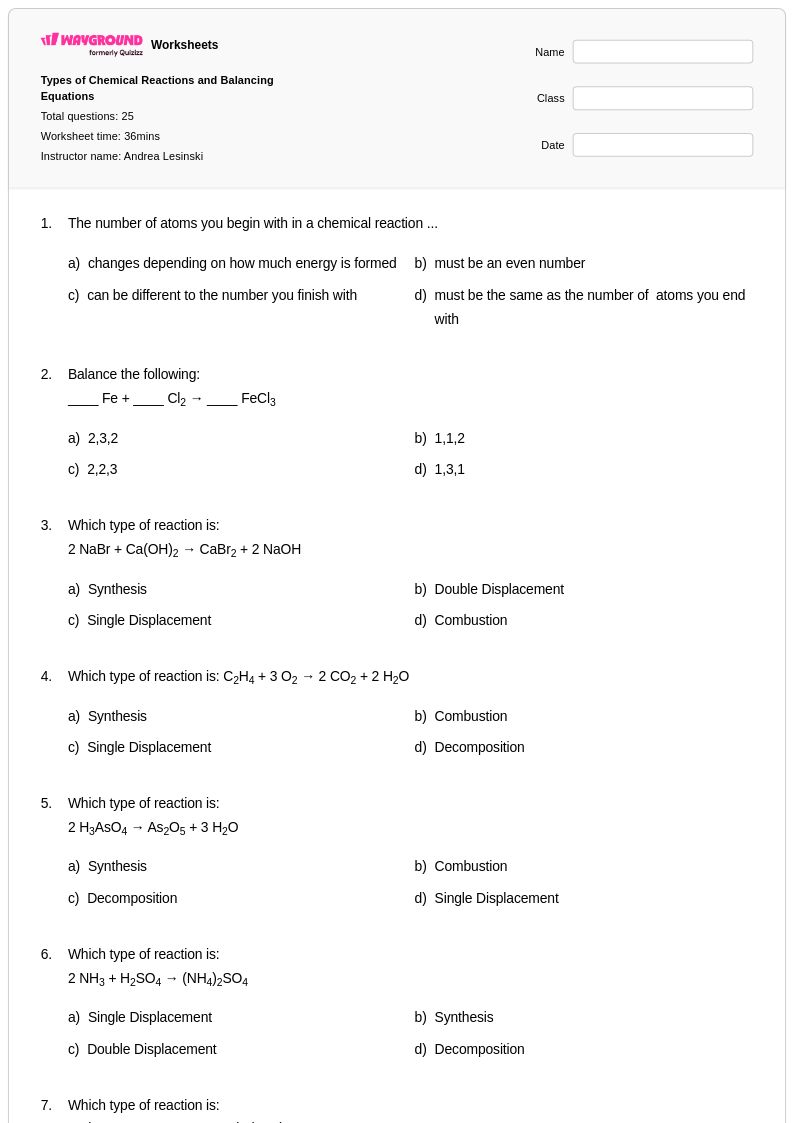
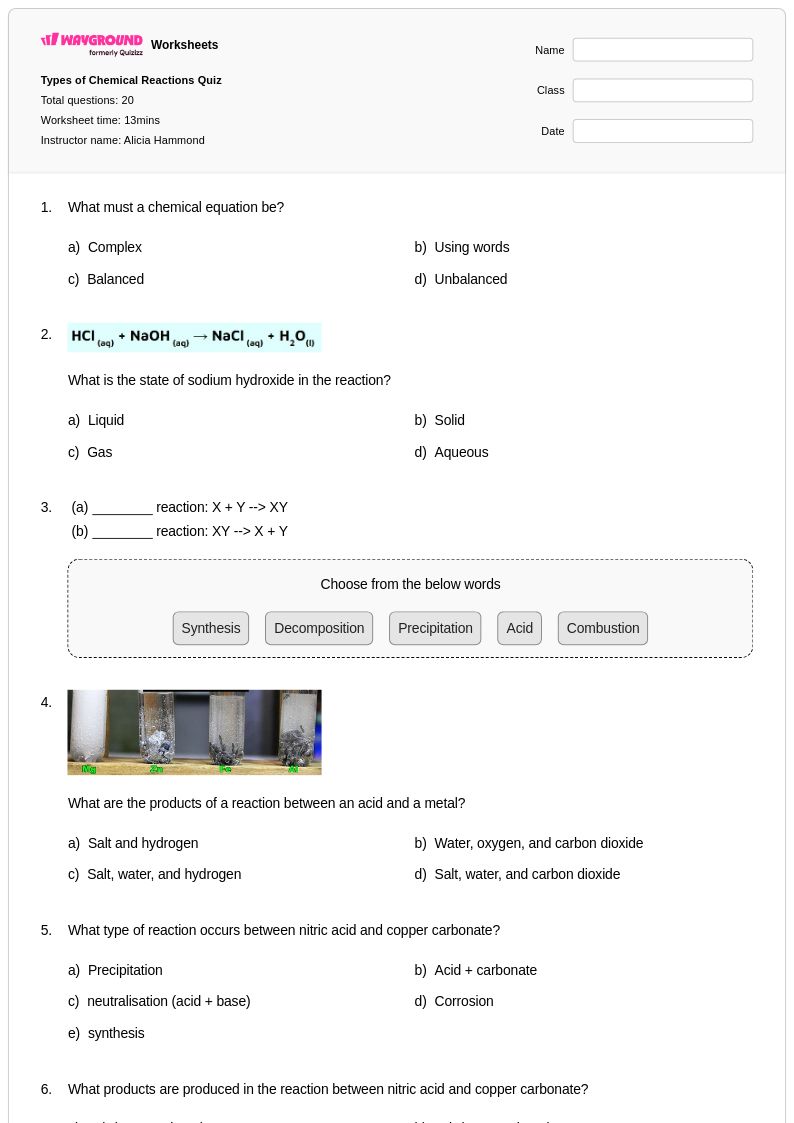
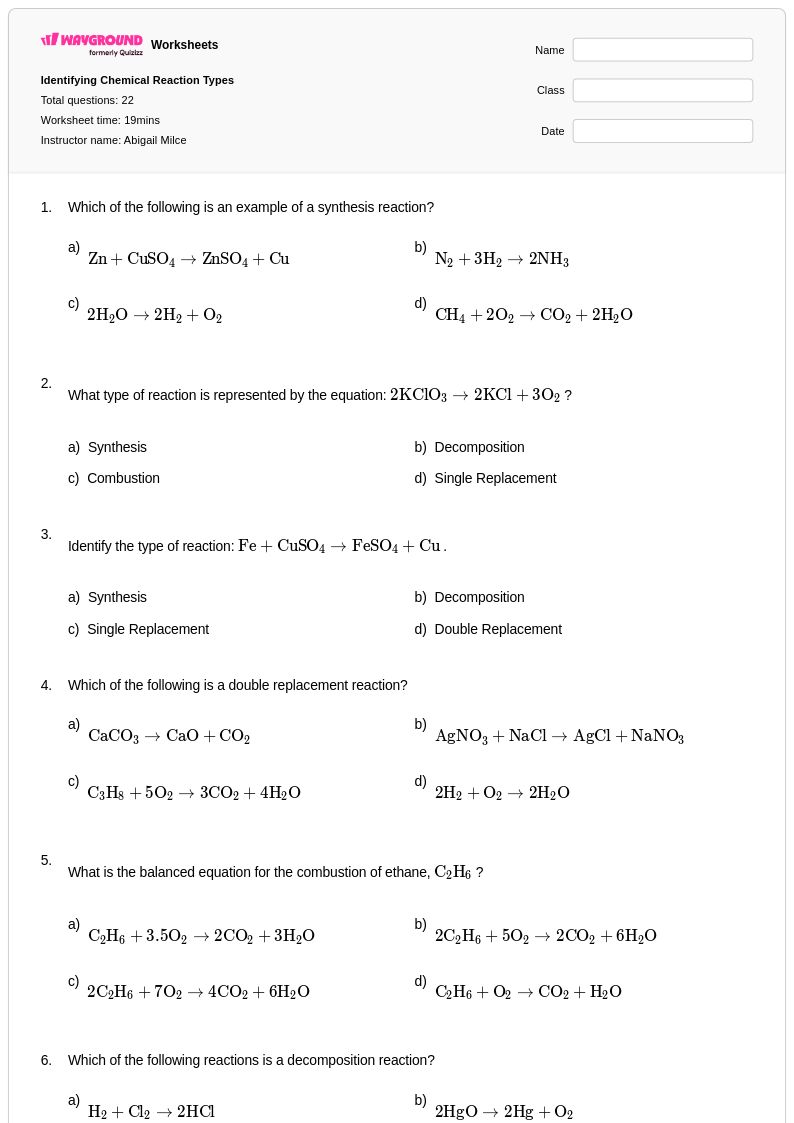
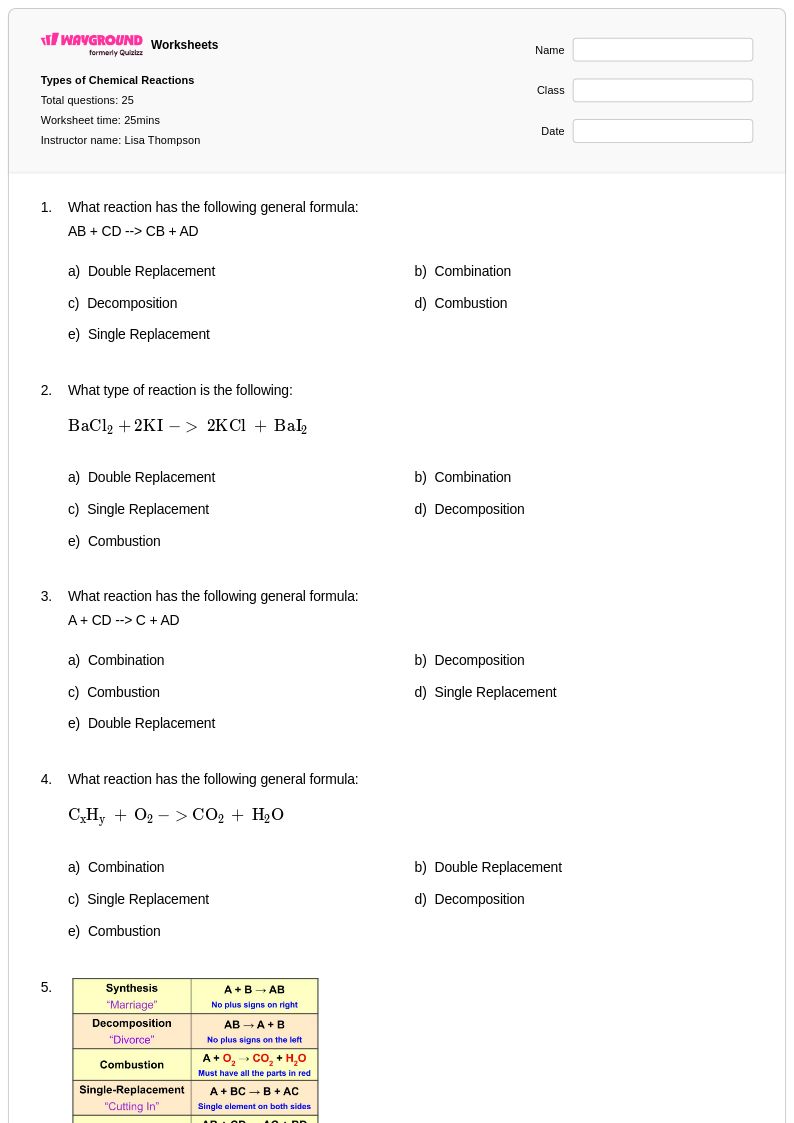
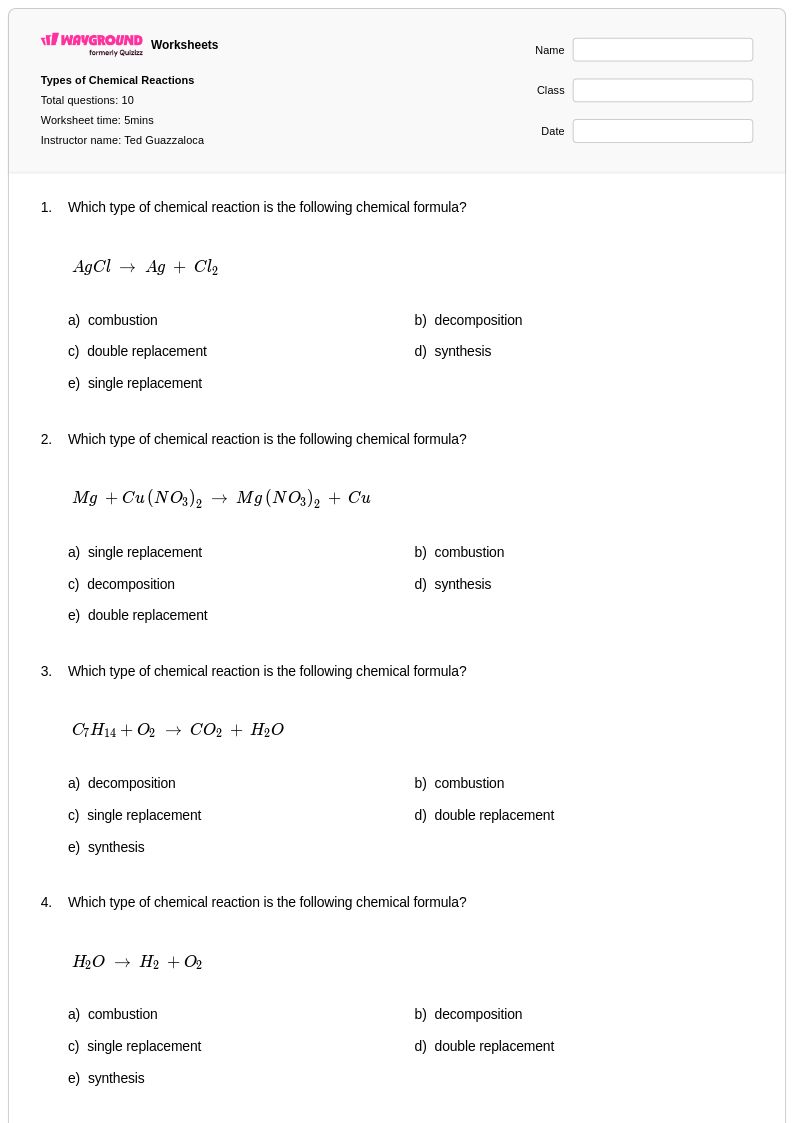
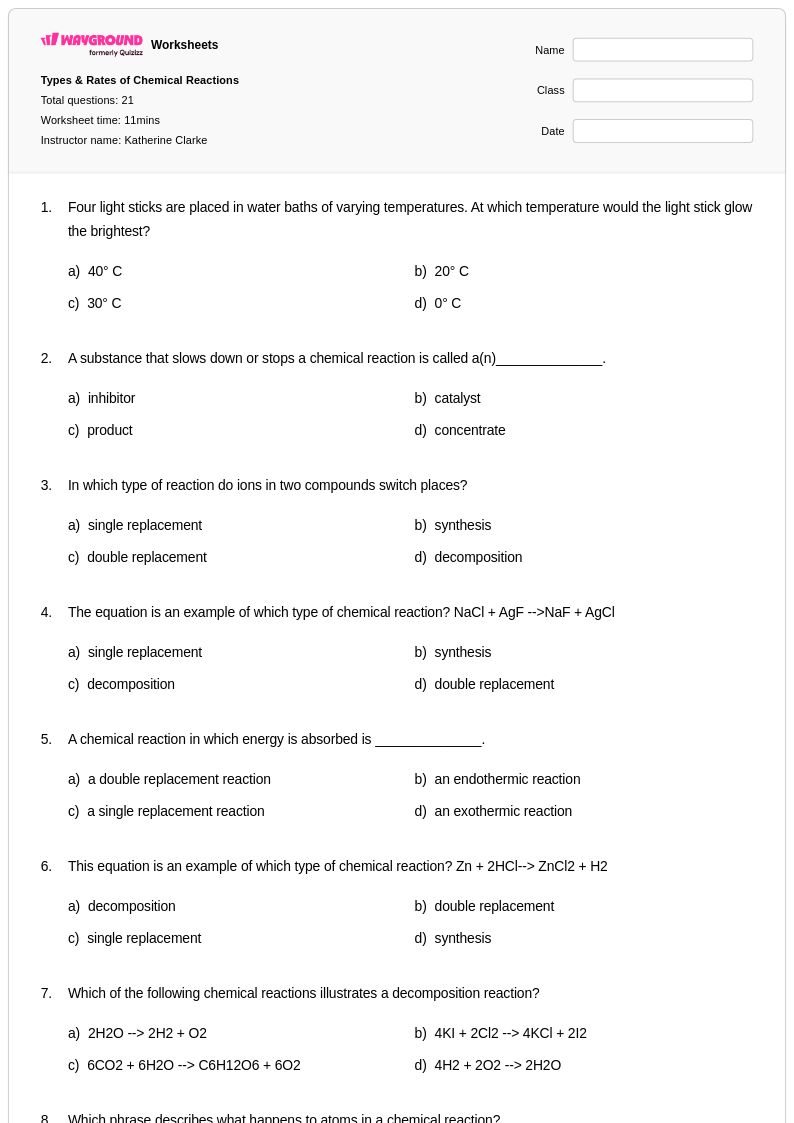
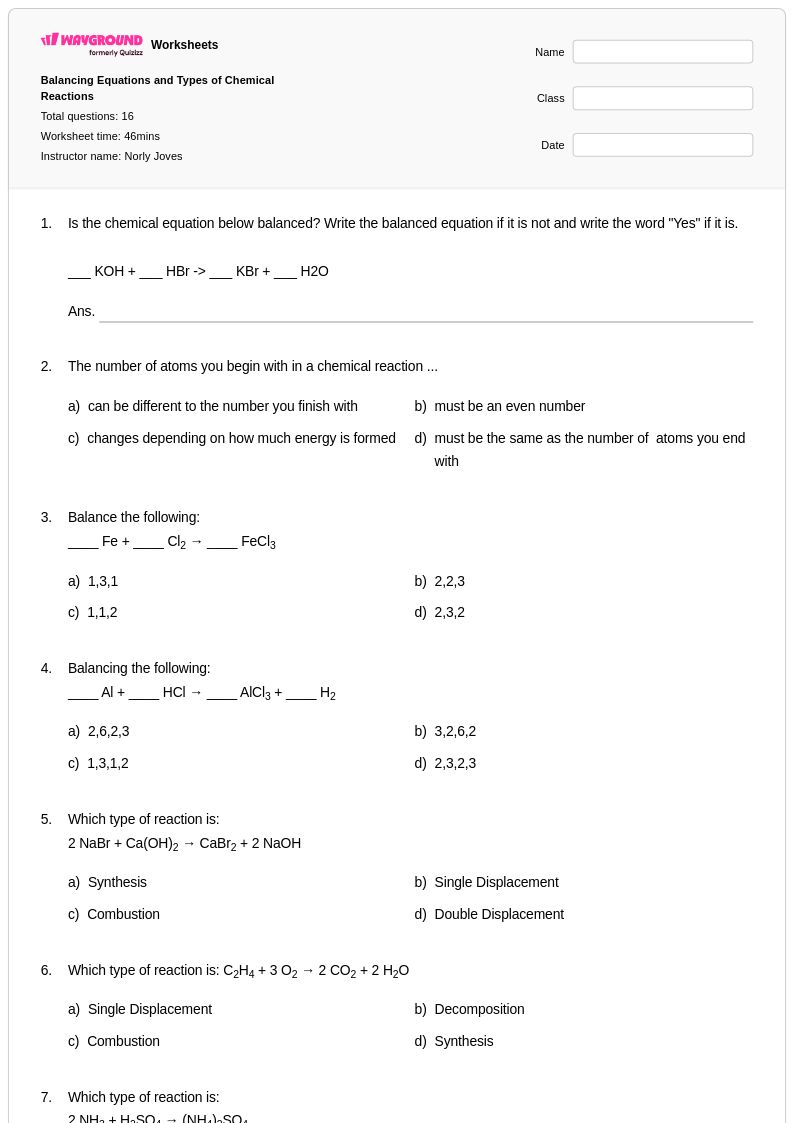
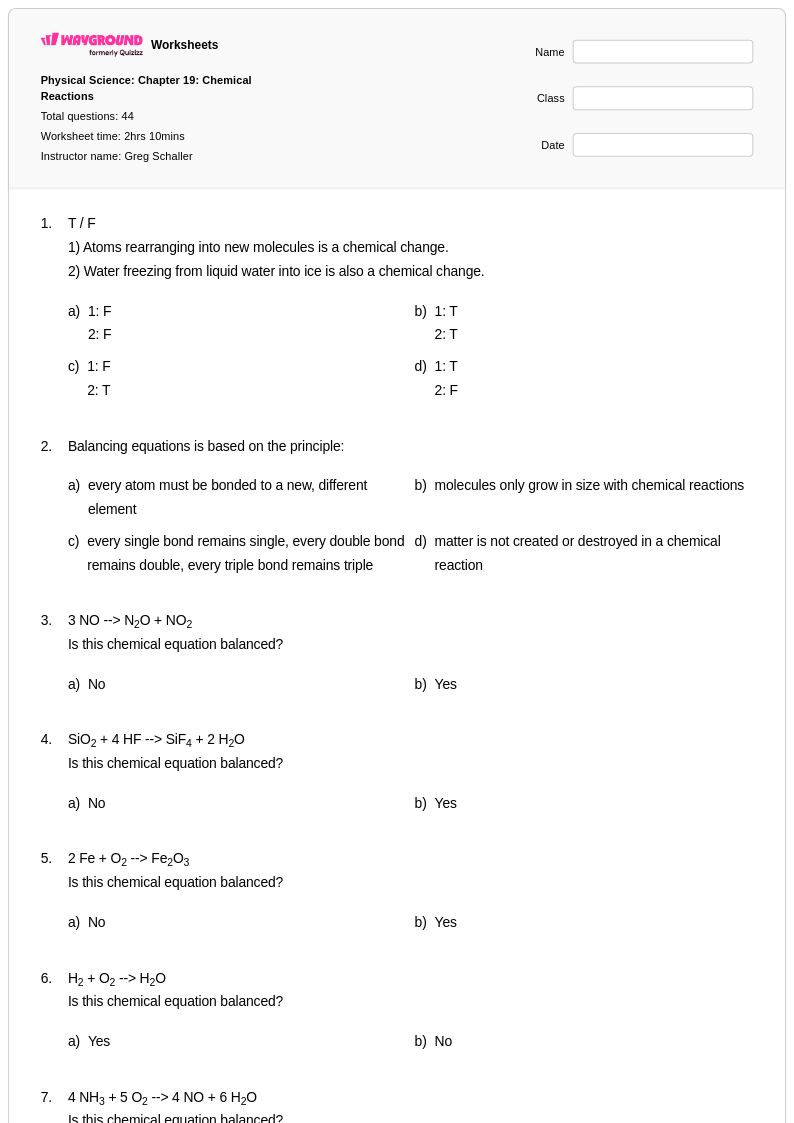
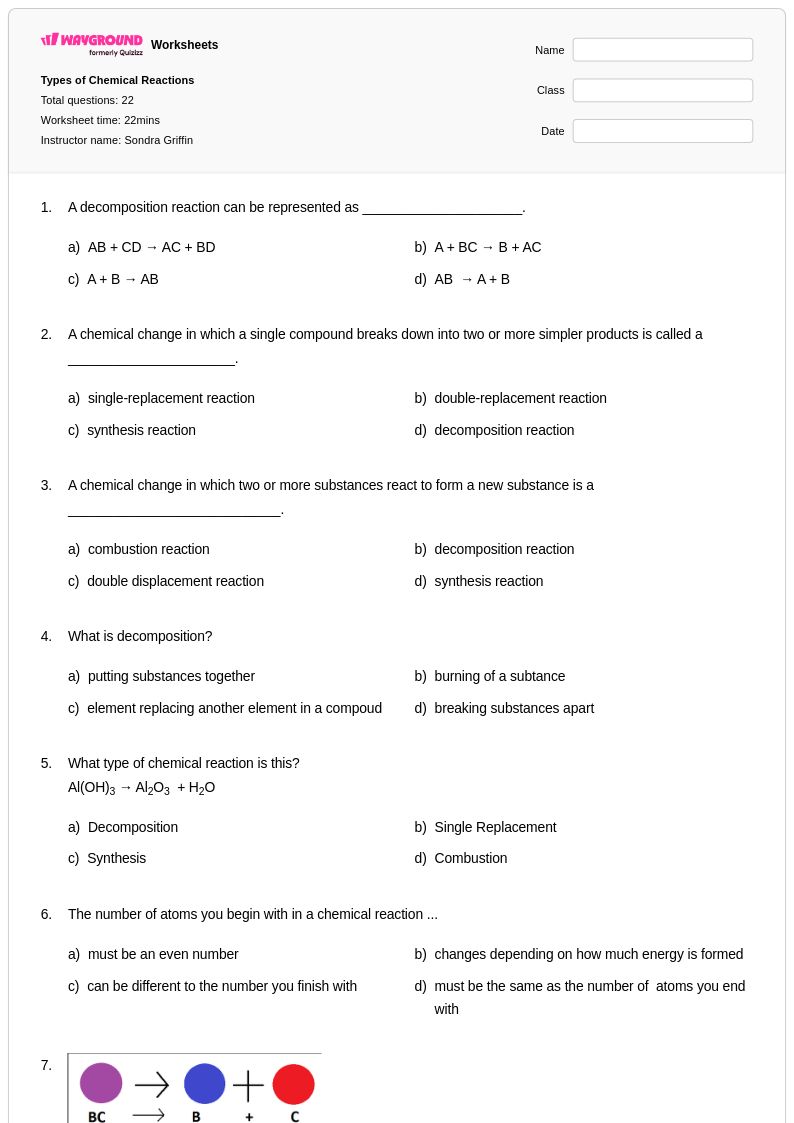
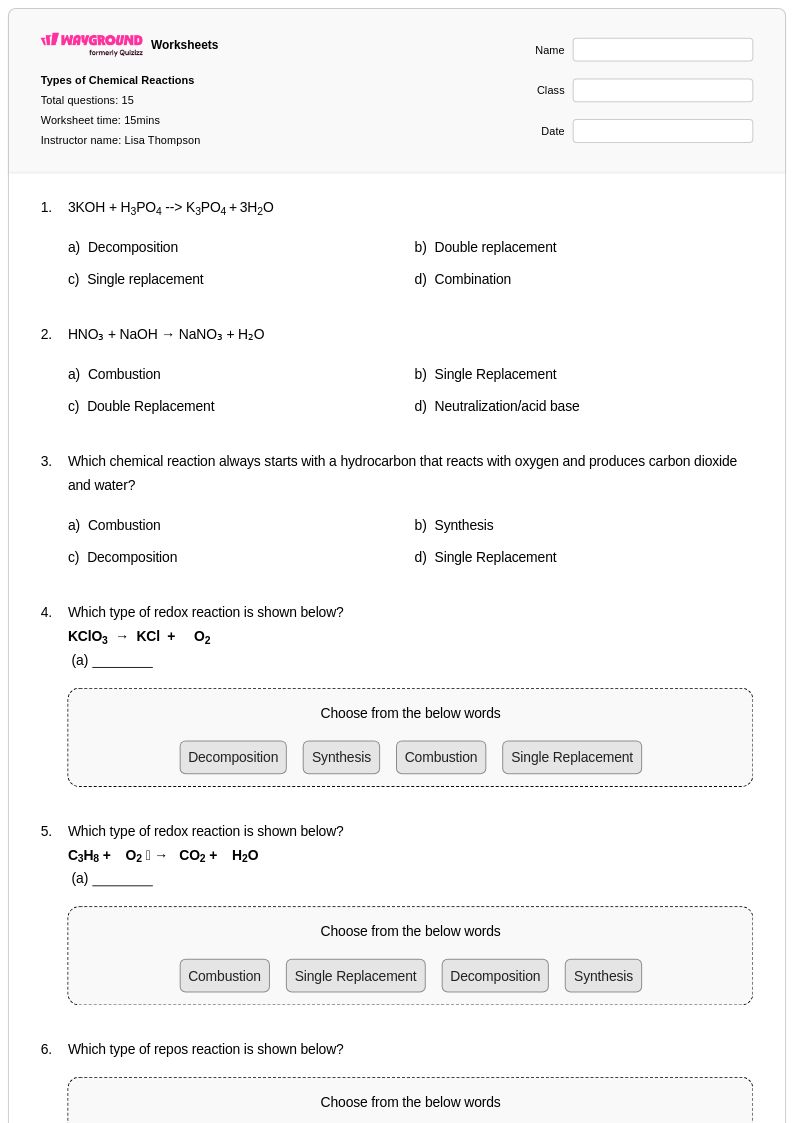
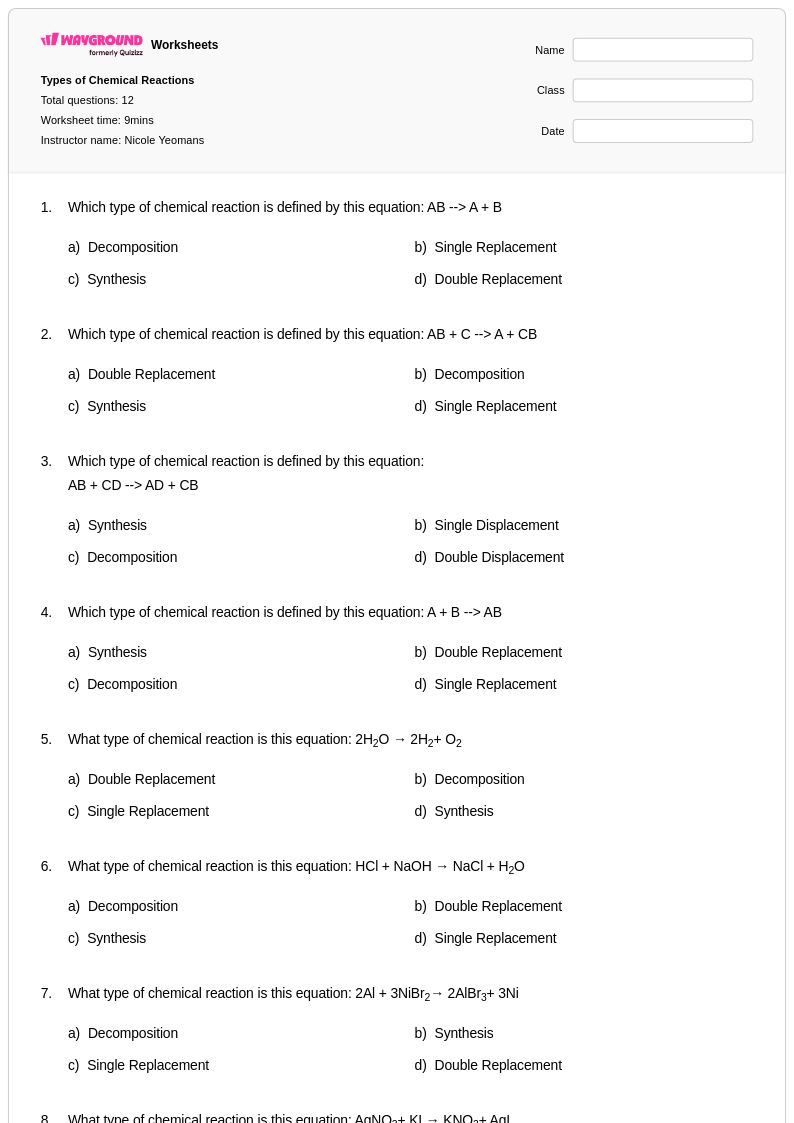
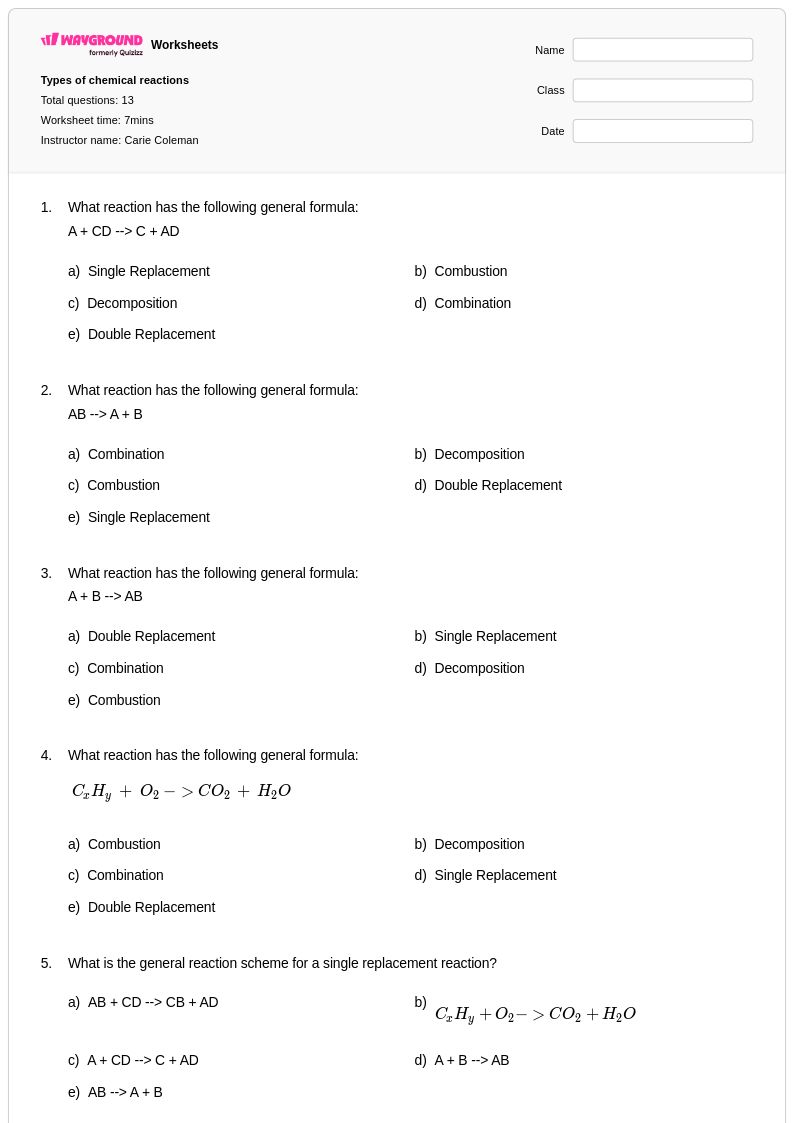
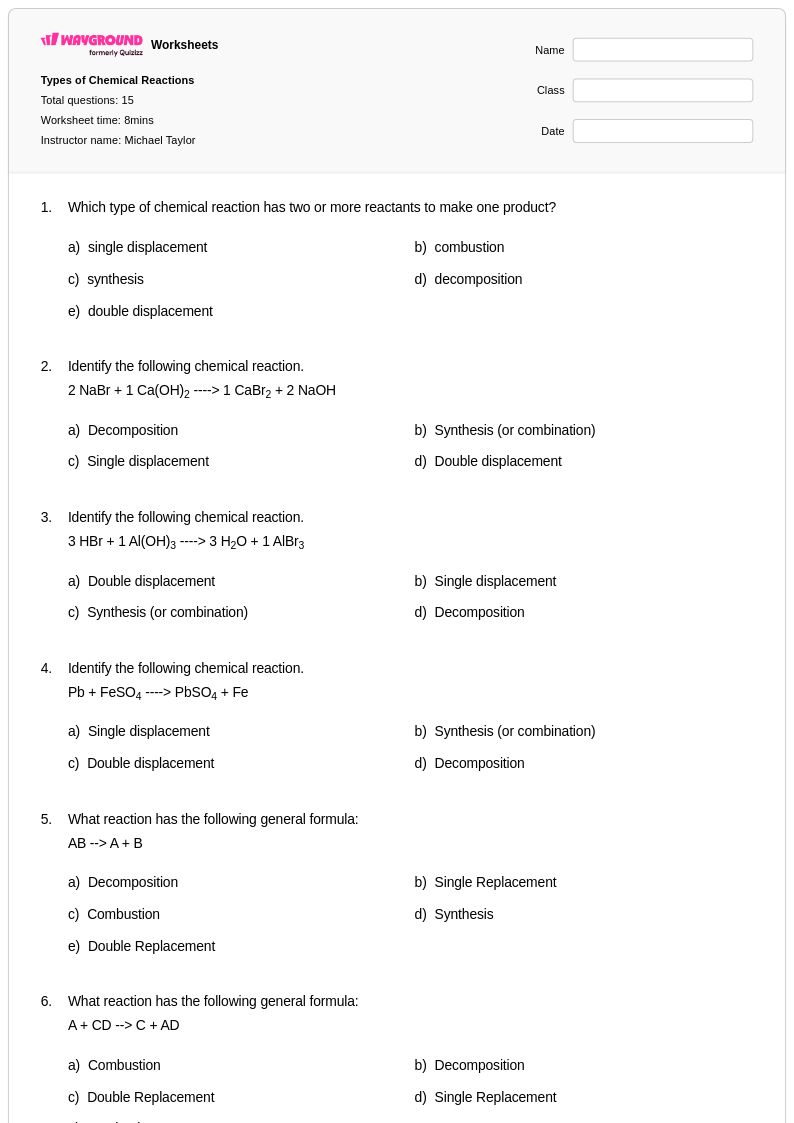
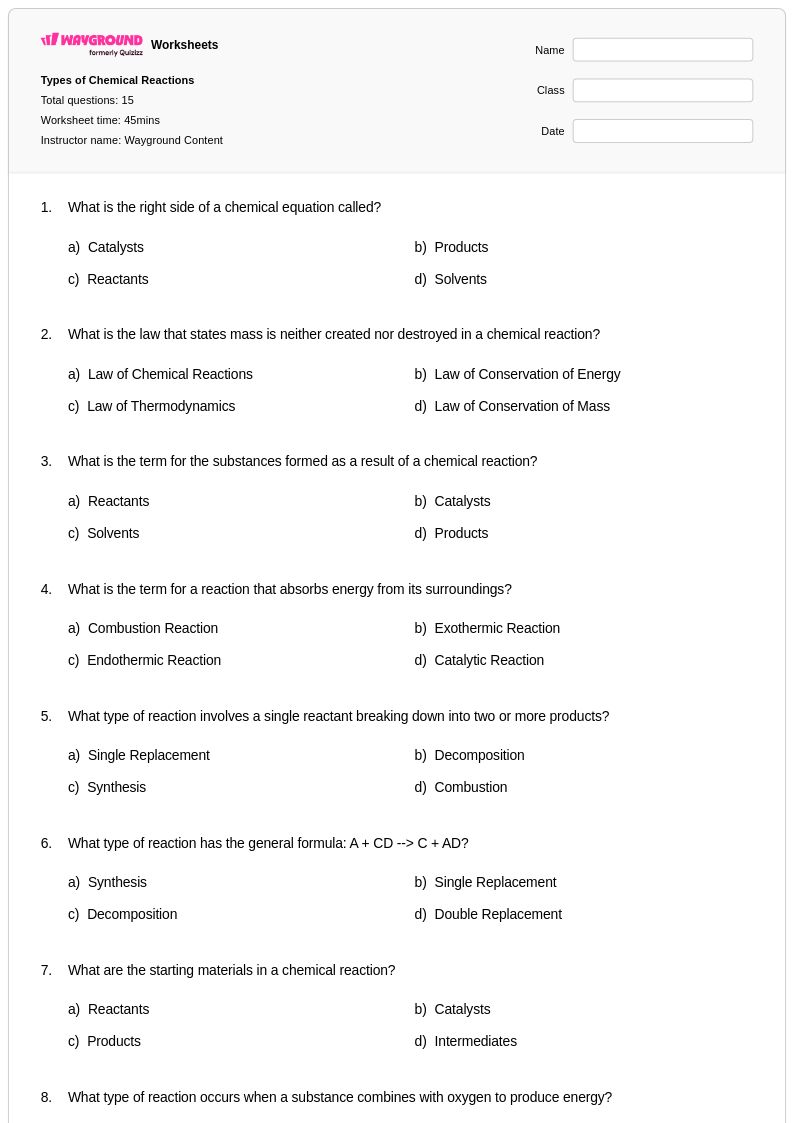
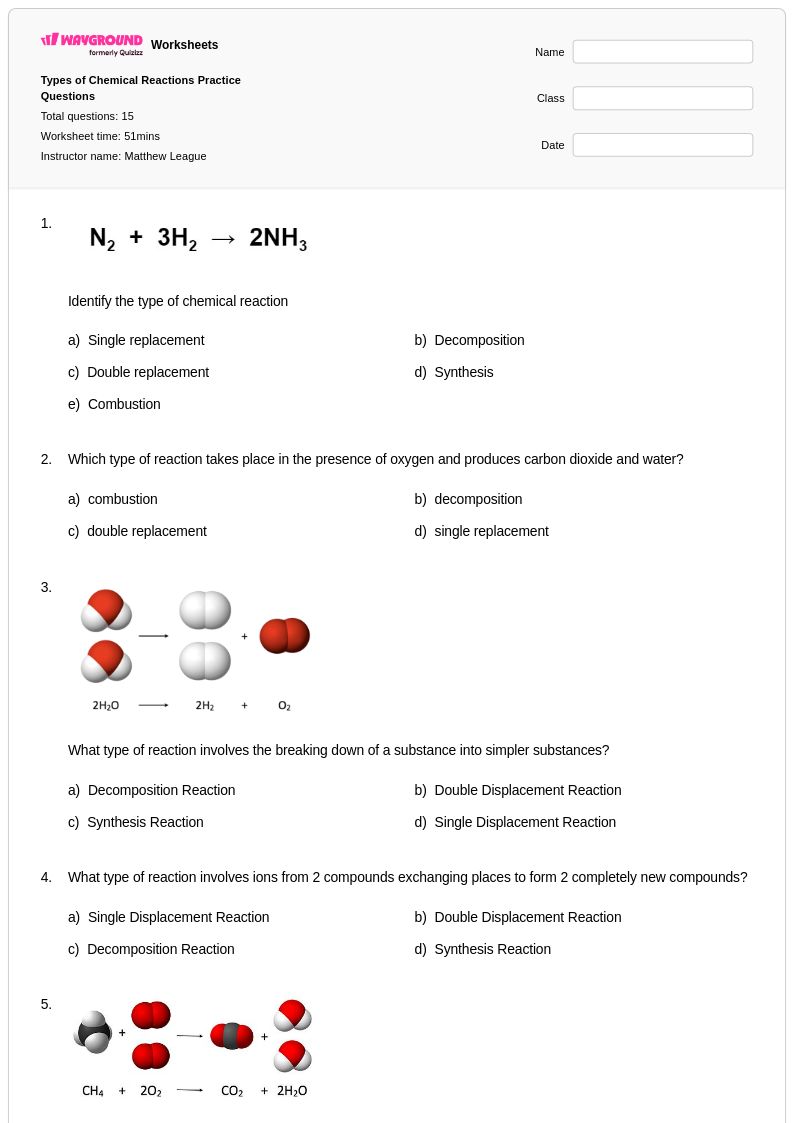
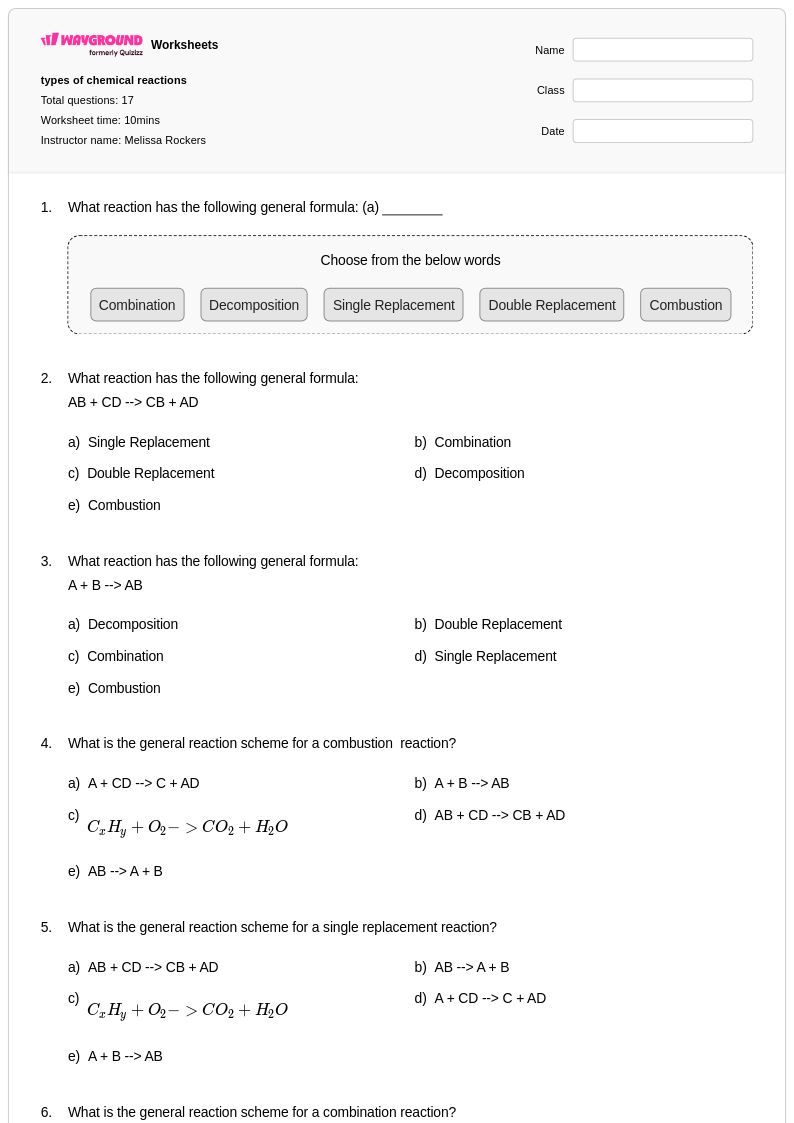
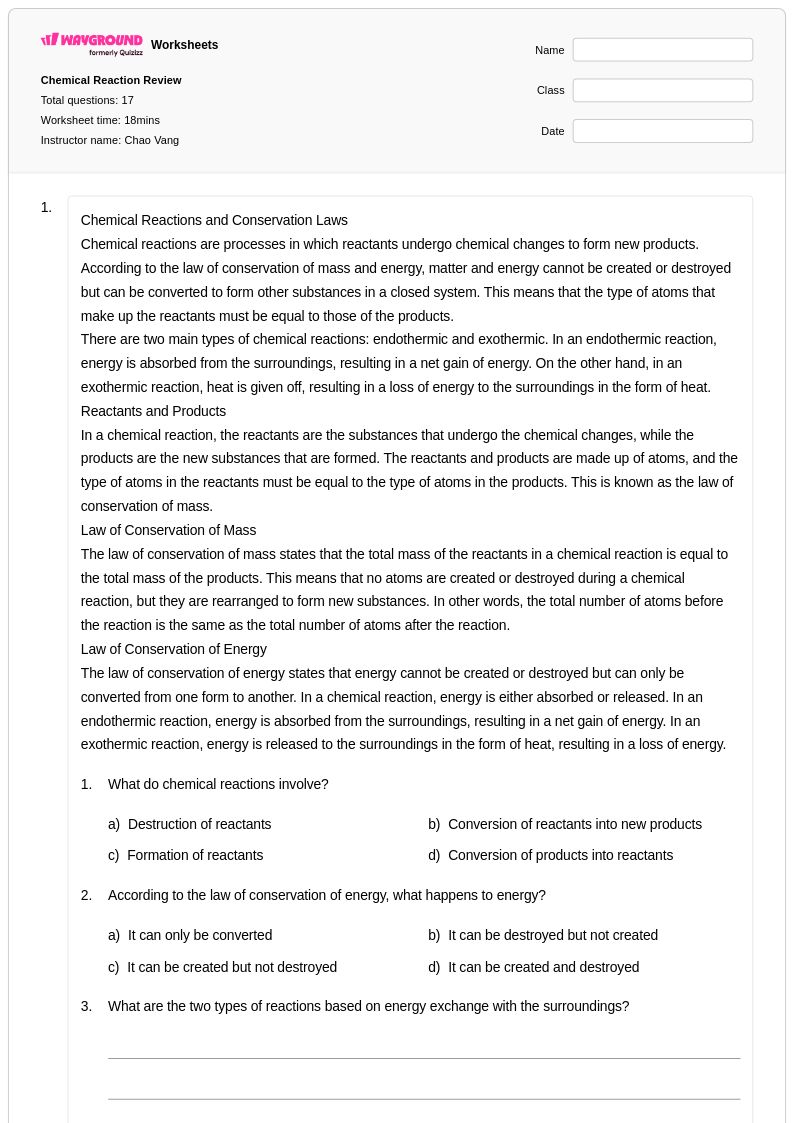
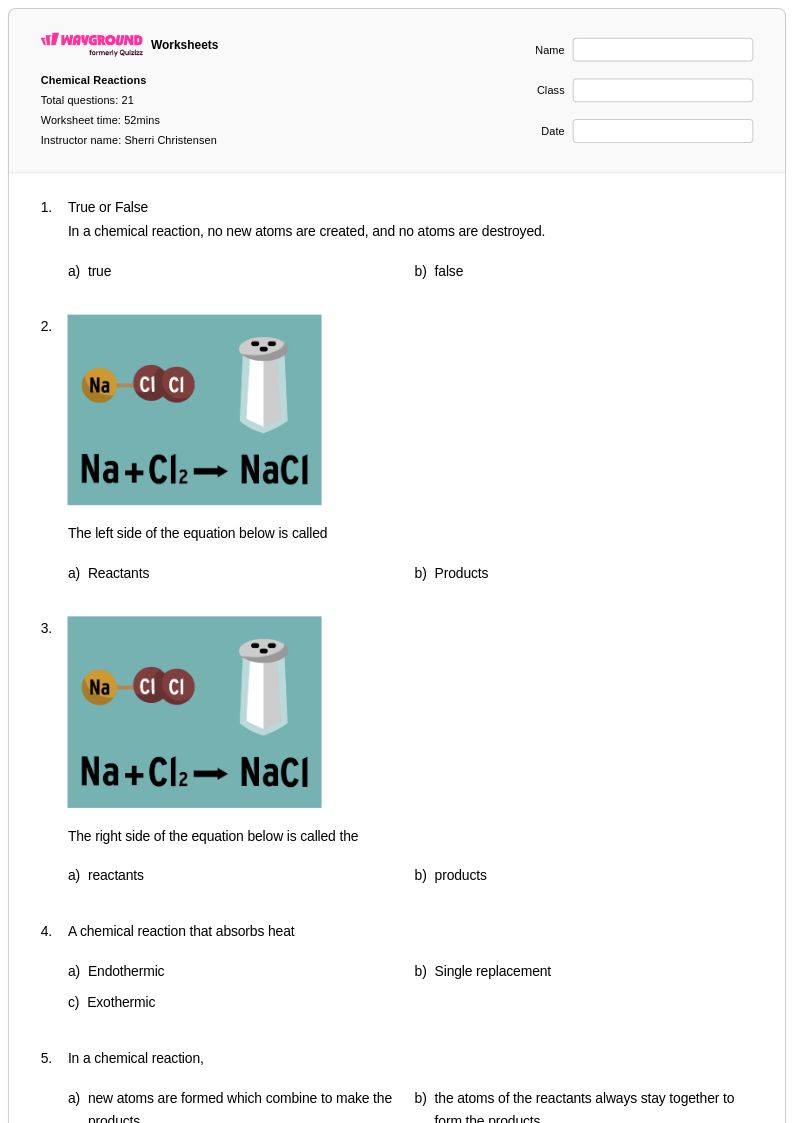
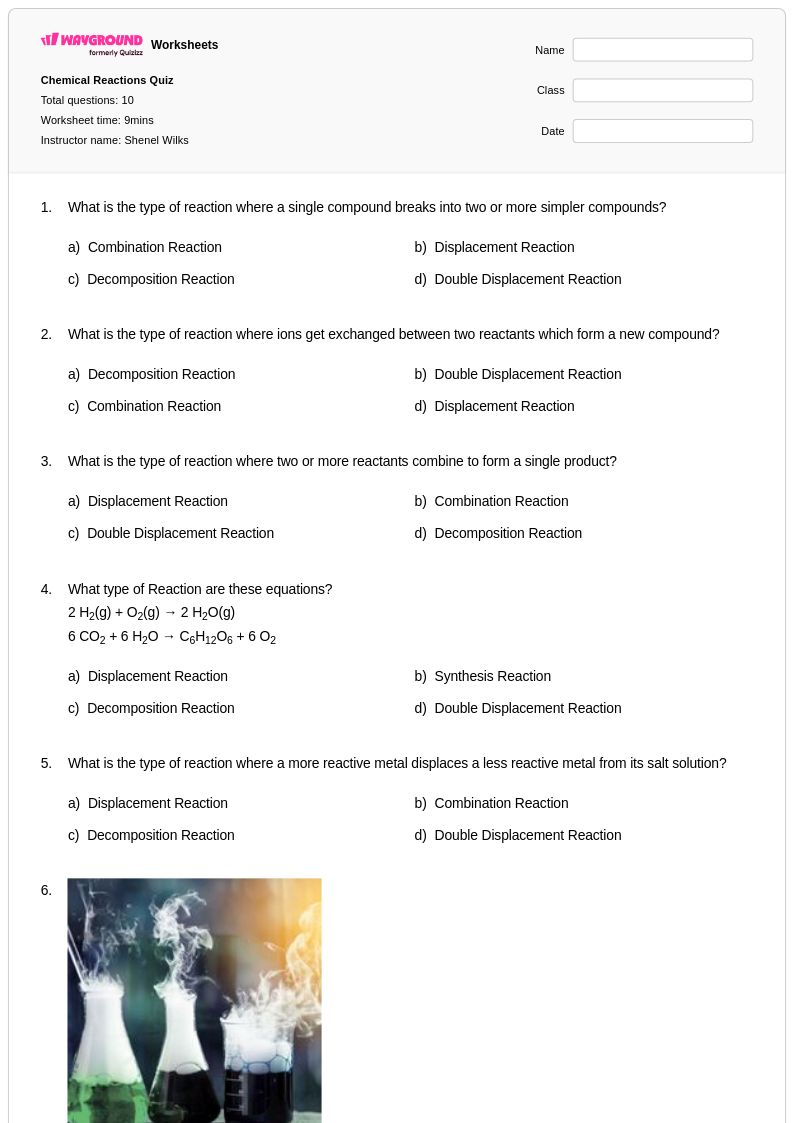
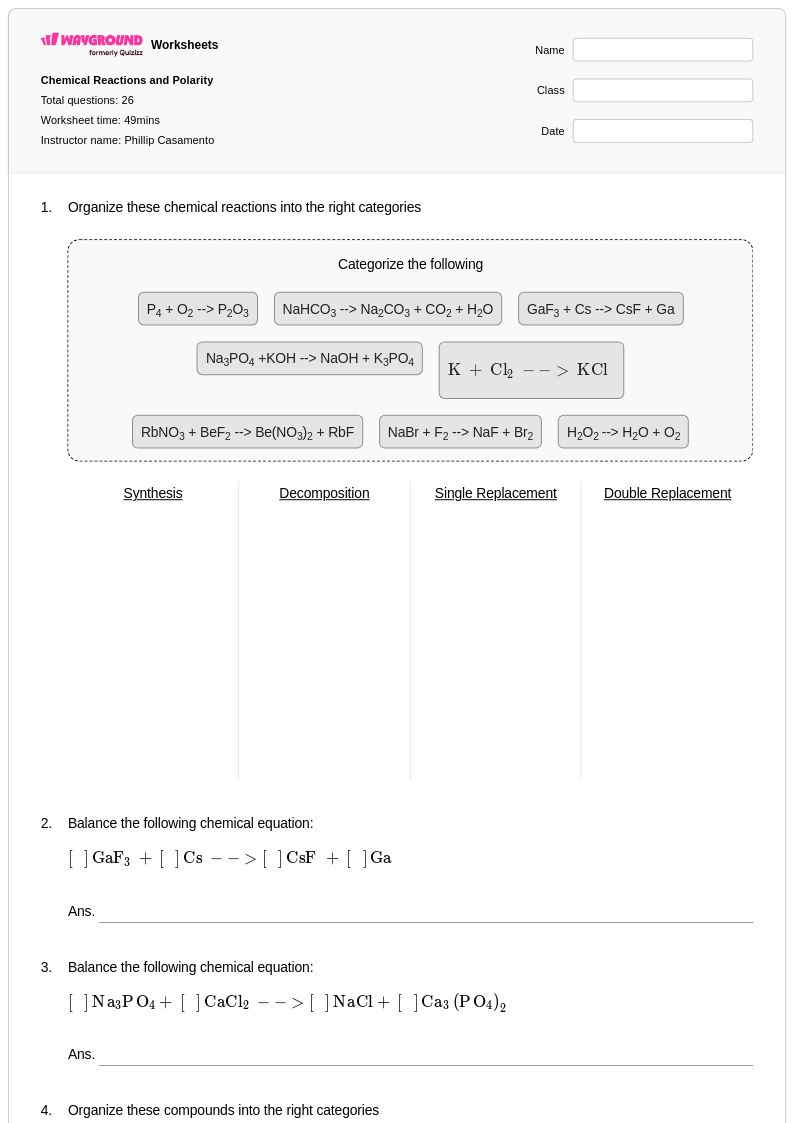
Types of chemical reactions form a cornerstone of Class 10 chemistry education, and Wayground's comprehensive worksheet collection provides students with essential practice in identifying, predicting, and balancing the five main reaction types: synthesis, decomposition, single replacement, double replacement, and combustion. These expertly crafted worksheets strengthen critical analytical skills by challenging students to recognize reaction patterns, predict products based on reactivity series and solubility rules, and apply conservation of mass principles through equation balancing. Each printable resource includes detailed answer keys that guide students through step-by-step problem-solving processes, while free practice problems range from basic pattern recognition exercises to complex multi-step reactions that mirror real-world chemical processes.
Wayground supports chemistry educators with millions of teacher-created resources specifically designed for chemical reaction instruction, featuring robust search and filtering capabilities that allow teachers to quickly locate materials aligned with state and national science standards. The platform's differentiation tools enable instructors to customize worksheets for varying skill levels within their Class 10 classrooms, while flexible formatting options provide both digital and printable PDF versions to accommodate diverse learning environments and teaching preferences. These comprehensive resources prove invaluable for lesson planning, targeted remediation of students struggling with reaction classification, enrichment activities for advanced learners, and ongoing skill practice that builds confidence in chemical equation manipulation and reaction prediction.
FAQs
How do I teach the types of chemical reactions to high school chemistry students?
Start by teaching students to recognize the structural patterns of each reaction type before introducing balancing. Synthesis reactions combine two or more reactants into one product, decomposition breaks one compound into simpler substances, single replacement swaps one element for another in a compound, double replacement exchanges ions between two compounds, and combustion involves a hydrocarbon reacting with oxygen to produce carbon dioxide and water. Using color-coded equation templates and real-world examples (such as rusting for single replacement or burning fuel for combustion) helps students internalize the patterns before practicing equation writing.
What exercises help students practice identifying and classifying chemical reactions?
The most effective practice moves students from recognition to prediction: begin with pre-written equations where students label the reaction type, then progress to exercises where students predict products given the reactants and reaction type. Practice problems that require both identification and balancing in the same question reinforce the connection between reaction classification and stoichiometry. Scaffolded worksheets that group problems by reaction type first, then mix all five types together, build the fluency students need for assessments.
What mistakes do students commonly make when classifying chemical reactions?
The most frequent error is confusing single and double replacement reactions, particularly when students focus on the number of reactants rather than the ion exchange pattern. Students also misclassify combustion reactions as synthesis because both produce a single product from multiple reactants, overlooking that combustion specifically requires oxygen and produces carbon dioxide and water. A targeted misconception is treating any reaction involving an element and a compound as automatically single replacement without checking whether actual substitution occurs.
How do I differentiate chemical reactions worksheets for students at different skill levels?
For struggling learners, provide reference cards listing the structural template for each reaction type alongside the worksheet so students can focus on pattern matching rather than recall. Advanced students benefit from open-ended problems that require predicting products and writing balanced equations without reaction-type cues. On Wayground, teachers can apply accommodations such as reduced answer choices for individual students, which lowers cognitive load without changing the core content, and extended time settings can be assigned per student directly from the Students or Classes tab.
How can I use Wayground's types of chemical reactions worksheets in my classroom?
Wayground's types of chemical reactions worksheets are available as printable PDFs for traditional classroom use and in digital formats for technology-integrated environments, giving teachers flexibility based on their setup. Digital versions can be hosted as a quiz directly on Wayground, allowing teachers to track student performance and review results in real time. Each worksheet includes a complete answer key, making them suitable for independent practice, homework assignments, or instructor-led review sessions.
How do I help students balance chemical equations after they've identified the reaction type?
Once students can correctly identify a reaction type, the next step is using the structural pattern as a scaffold for balancing. For synthesis and decomposition reactions, students should start by confirming the number of compounds involved before adjusting coefficients. For combustion reactions, a consistent strategy is to balance carbon first, then hydrogen, and oxygen last. Pairing reaction-type identification with immediate balancing practice on the same problem set reinforces that classification and balancing are complementary skills, not separate tasks.