Free Printable Heat of Fusion Worksheets for Class 10
Explore Class 10 heat of fusion worksheets and printables through Wayground that help students master phase change calculations with practice problems, free PDF downloads, and comprehensive answer keys.
Explore printable Heat of Fusion worksheets for Class 10
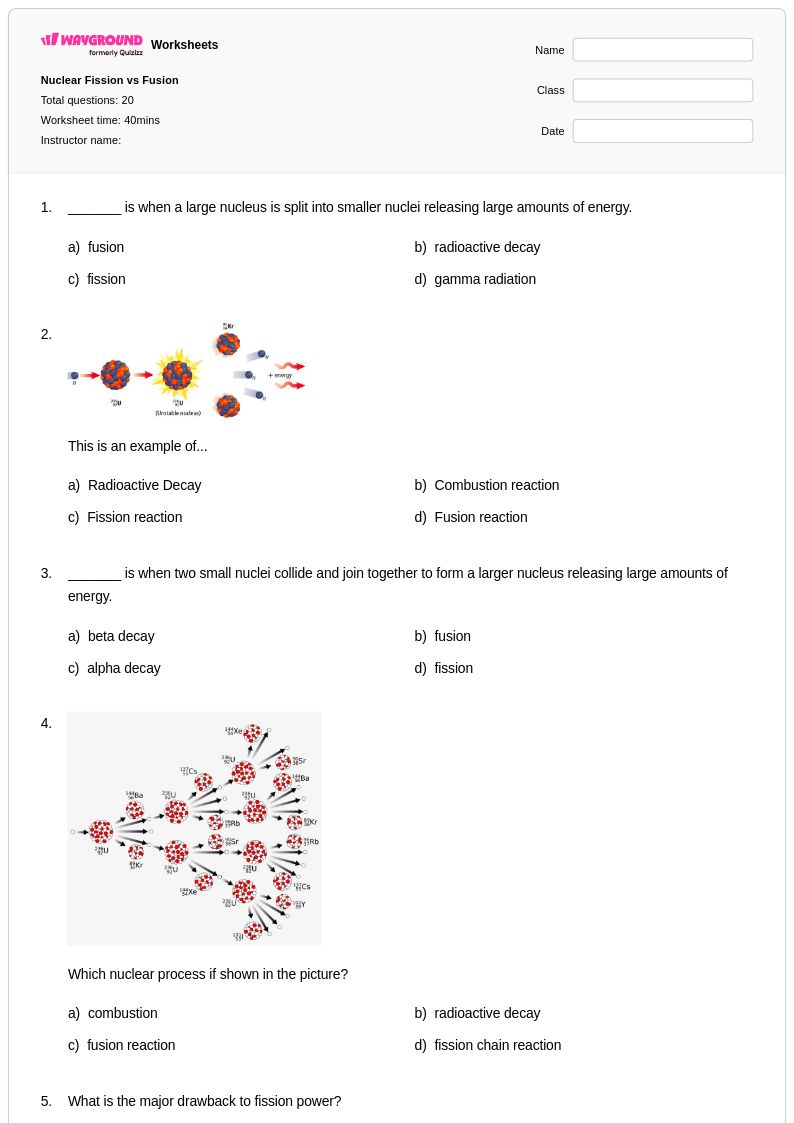
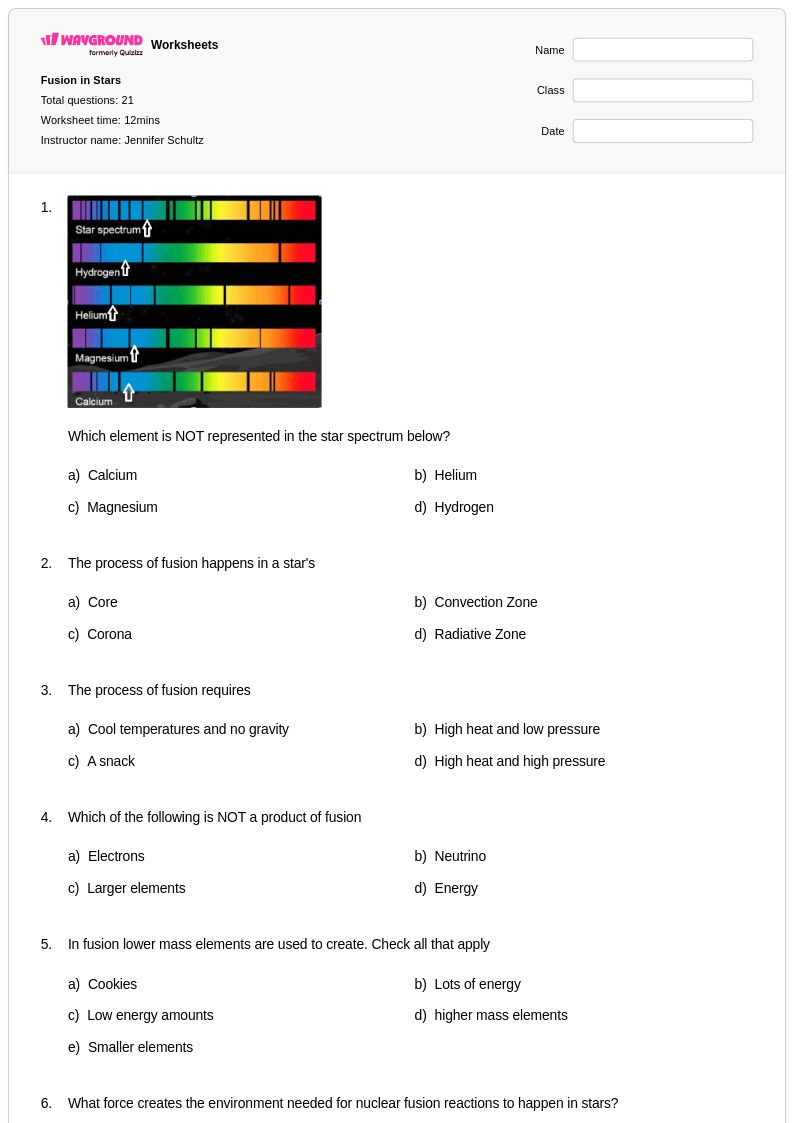
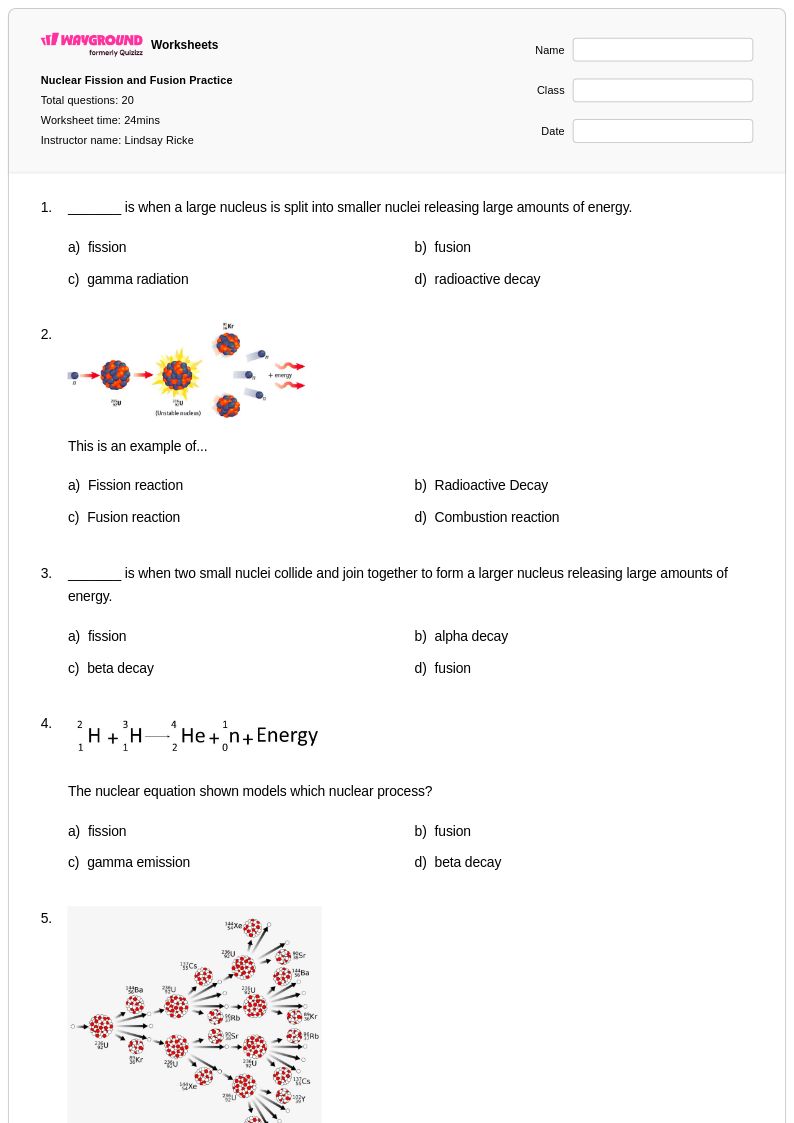
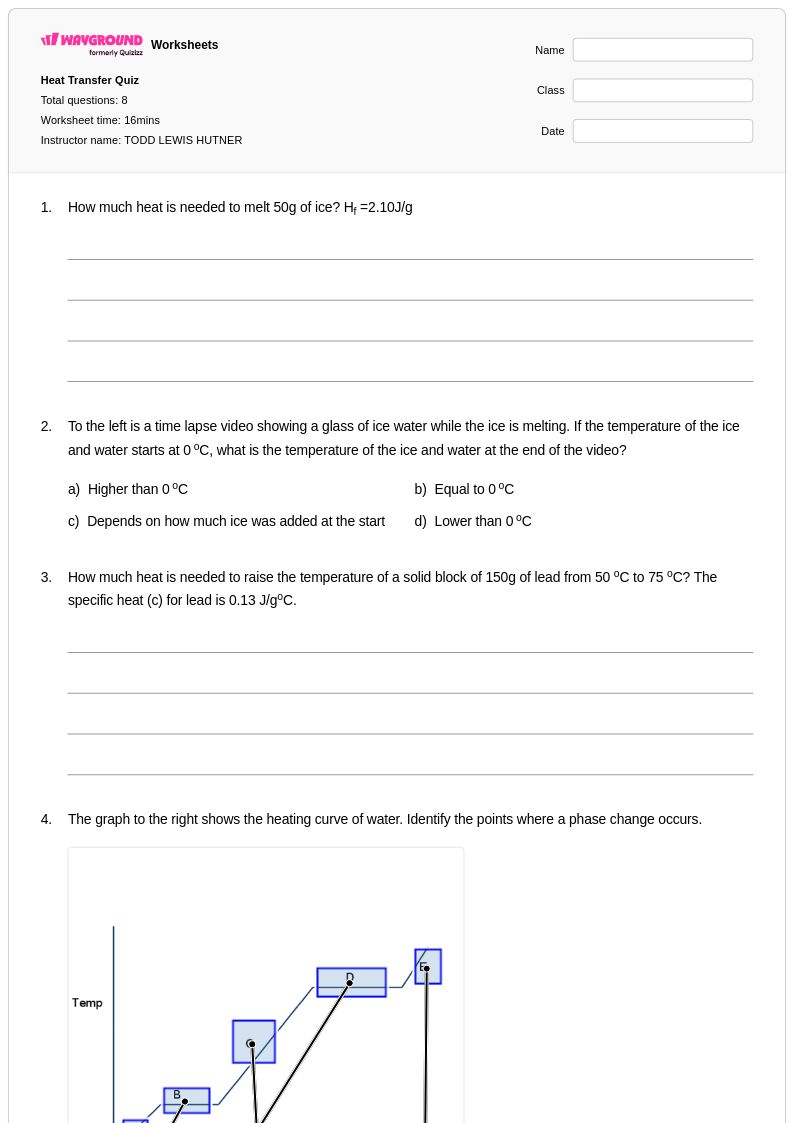
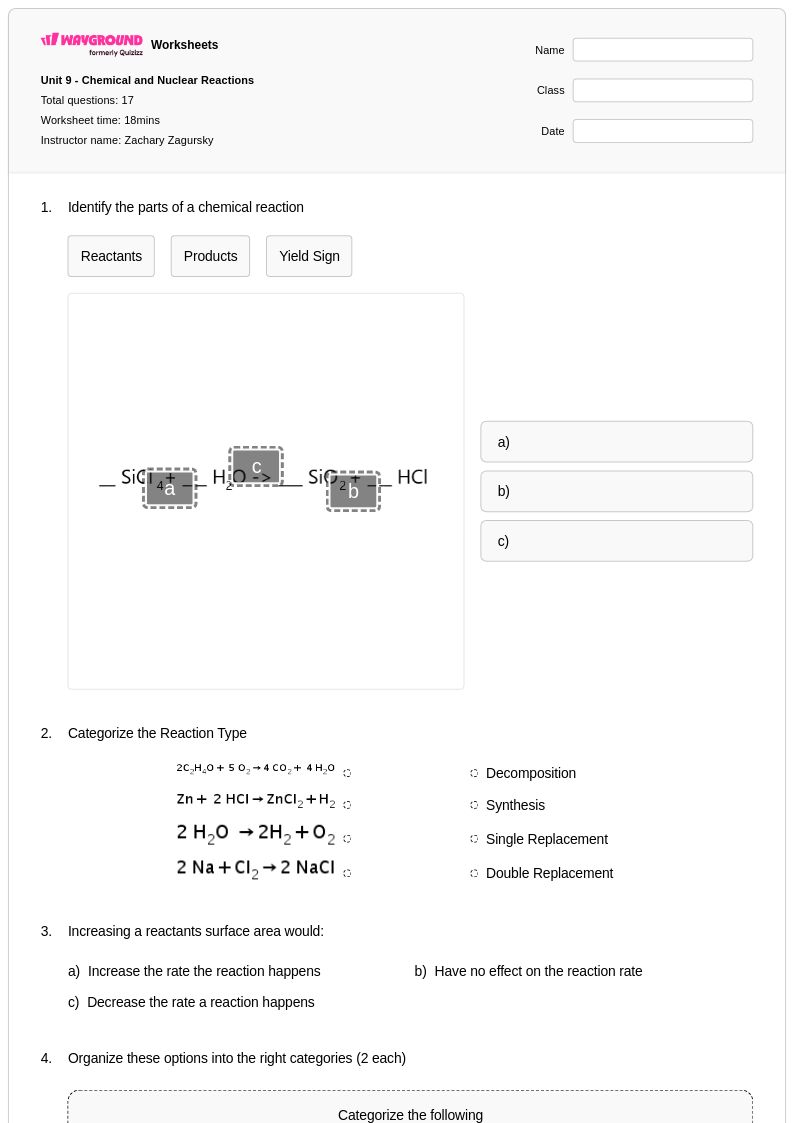
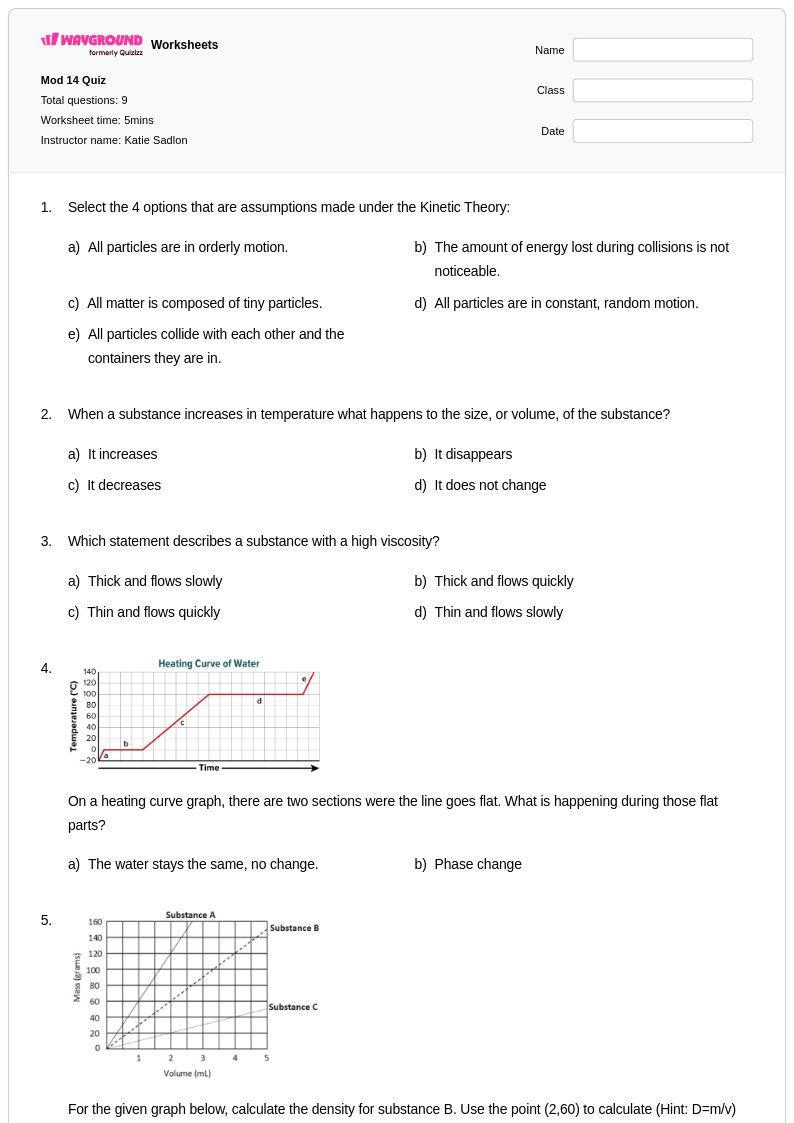
Heat of fusion represents a fundamental concept in Class 10 chemistry that students must master to understand phase transitions and energy changes in matter. Wayground's comprehensive collection of heat of fusion worksheets provides students with structured practice problems that develop their ability to calculate the energy required to change substances from solid to liquid states at constant temperature. These carefully designed printables include detailed answer keys that guide students through complex calculations involving latent heat, mass, and energy relationships. The free pdf worksheets strengthen essential skills in unit conversions, formula application, and data interpretation while reinforcing the molecular-level understanding of how thermal energy overcomes intermolecular forces during melting processes.
Wayground, formerly Quizizz, empowers chemistry teachers with millions of educator-created resources specifically designed for heat of fusion instruction and assessment. The platform's robust search and filtering capabilities allow teachers to quickly locate worksheets aligned with curriculum standards and differentiated for varying student ability levels. Teachers can seamlessly customize existing materials or create original content using flexible digital tools, then distribute resources in both printable pdf format and interactive digital versions. These comprehensive worksheet collections support diverse instructional needs including initial concept introduction, guided practice sessions, remediation for struggling learners, and enrichment challenges for advanced students, enabling teachers to efficiently plan lessons that build conceptual understanding and computational proficiency in thermodynamics.
FAQs
How do I teach heat of fusion to chemistry students?
Start by grounding students in the concept of phase transitions, specifically what happens at the molecular level when a solid absorbs enough energy to become a liquid without a temperature change. Use heating curve diagrams to make the plateau visible, then introduce the formula q = mHf to connect the concept to calculation. Relating fusion values to real substances like ice helps students build intuition before tackling more abstract problems.
What kinds of practice problems help students master heat of fusion calculations?
Effective practice should progress from single-step calculations using q = mHf to multi-step calorimetry problems that combine heat of fusion with specific heat capacity. Problems that require students to analyze heating curves and identify the fusion plateau build conceptual understanding alongside procedural fluency. Including problems with varied substances reinforces that heat of fusion is a material-specific constant, not a universal value.
What mistakes do students commonly make with heat of fusion problems?
The most common error is confusing heat of fusion with specific heat capacity and incorrectly applying q = mcΔT during the phase change, where temperature does not change. Students also frequently forget to convert units, particularly grams to kilograms or joules to kilojoules, which throws off calculations significantly. A third common mistake is misreading heating curves and failing to identify where the solid-to-liquid transition is actually occurring.
How do I differentiate heat of fusion worksheets for students with different ability levels?
For struggling students, start with problems that isolate a single variable and provide the heat of fusion value directly before introducing problems where students must look it up or derive it. Advanced students benefit from multi-substance calorimetry problems and real-world thermodynamic scenarios that require combining fusion and temperature-change calculations. On Wayground, teachers can apply accommodations such as read aloud, extended time, and reduced answer choices to individual students, allowing the same worksheet to serve the full range of learners without singling anyone out.
How can I use Wayground's heat of fusion worksheets in my classroom?
Wayground's heat of fusion worksheets are available as printable PDFs for traditional classroom and homework use, as well as in digital formats for technology-integrated or remote learning environments. Teachers can also host worksheets as a quiz directly on Wayground, giving students an interactive experience while generating automatic results. Answer keys are included with every worksheet, supporting both independent student practice and efficient teacher grading.
How does heat of fusion relate to calorimetry, and how do I connect the two in instruction?
Heat of fusion is a key component of calorimetry because it quantifies the energy absorbed or released during melting and freezing at constant temperature. When teaching calorimetry broadly, use heat of fusion problems as the bridge between temperature-dependent heat transfer and phase-change energy transfer, since students must apply different formulas to each segment of a heating curve. Problems that walk students through the full heating curve, from solid warming through melting to liquid warming, are the most effective at building this integrated understanding.