Free Printable Ionic and Covalent Compounds Worksheets for Class 10
Class 10 ionic and covalent compounds worksheets from Wayground offer comprehensive printables and practice problems to help students master chemical bonding, molecular structures, and compound properties with detailed answer keys.
Explore printable Ionic and Covalent Compounds worksheets for Class 10
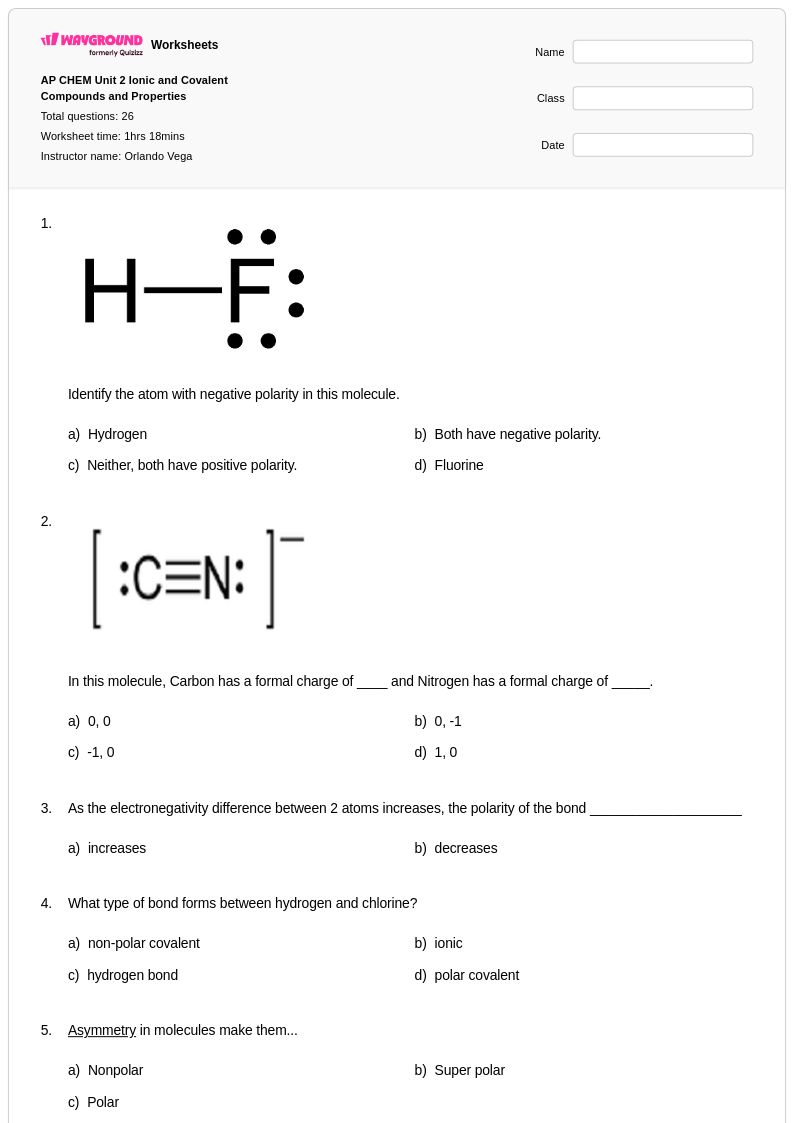
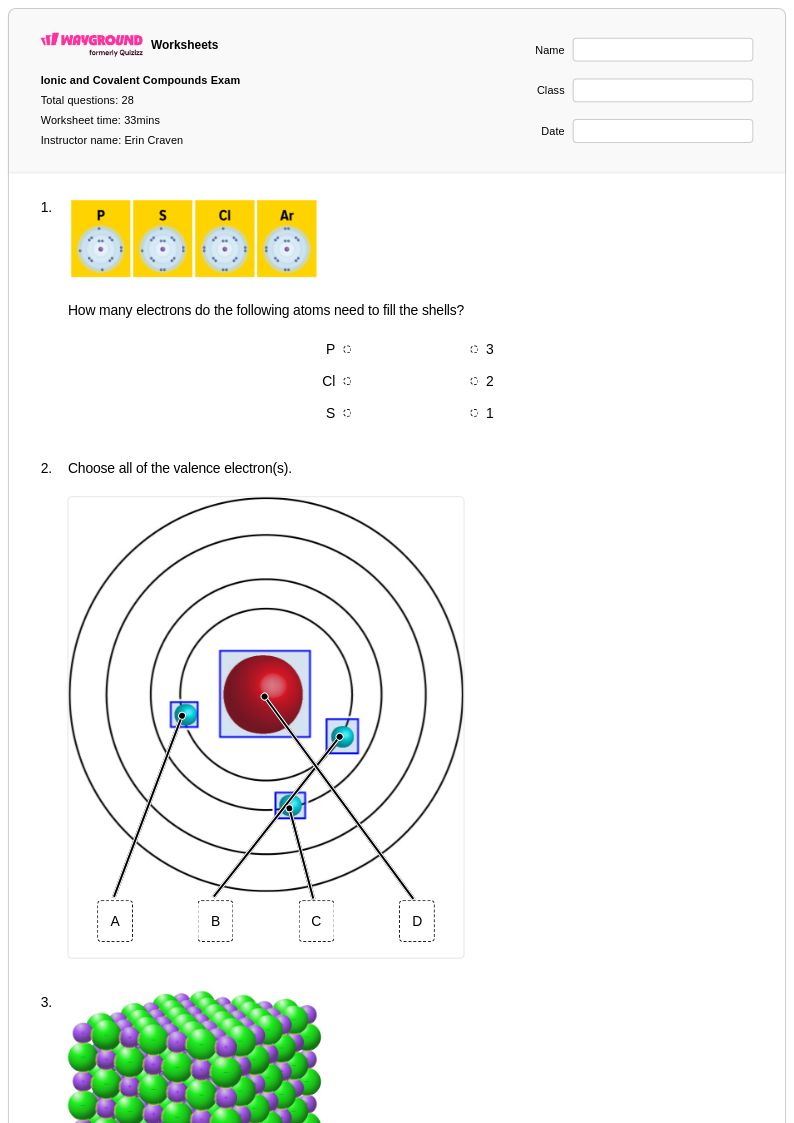
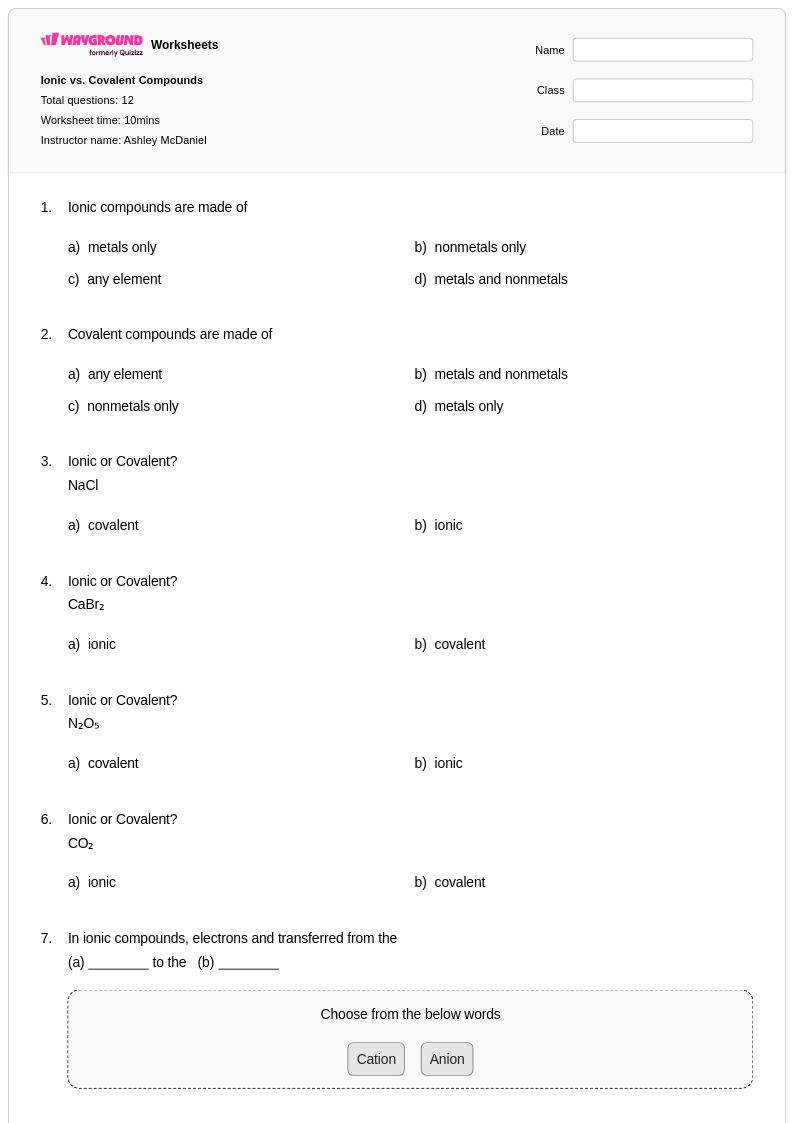
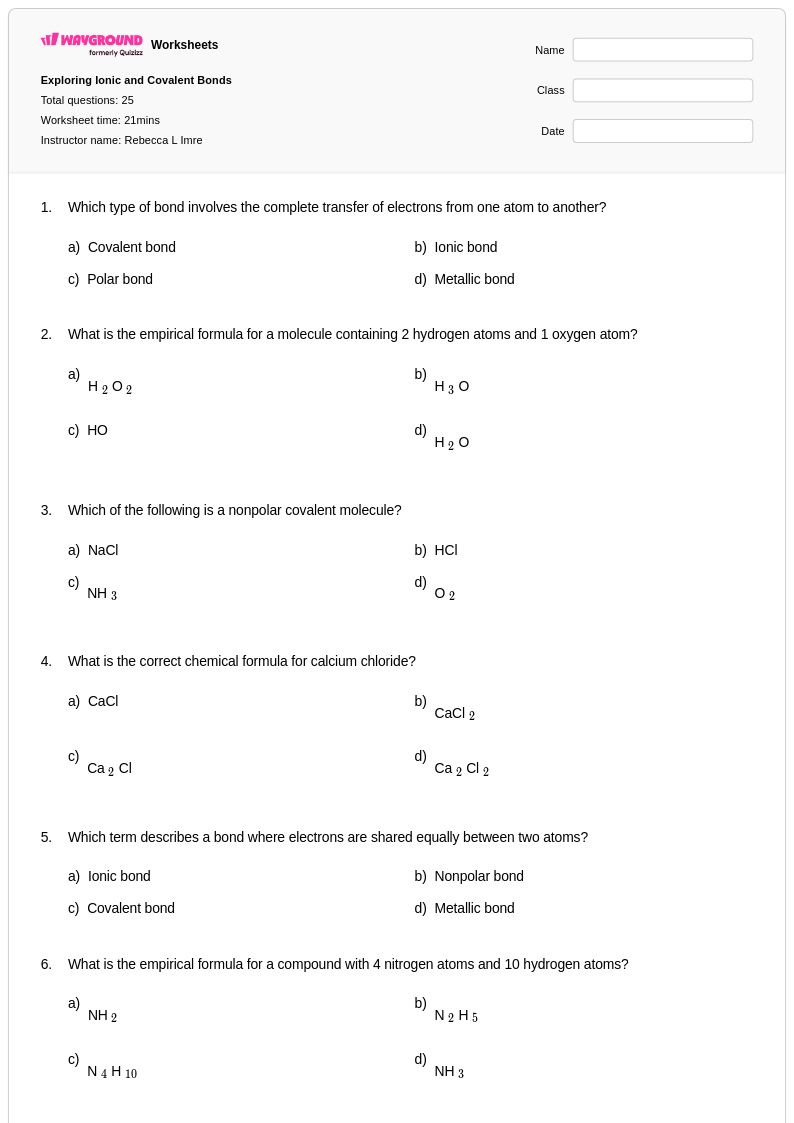
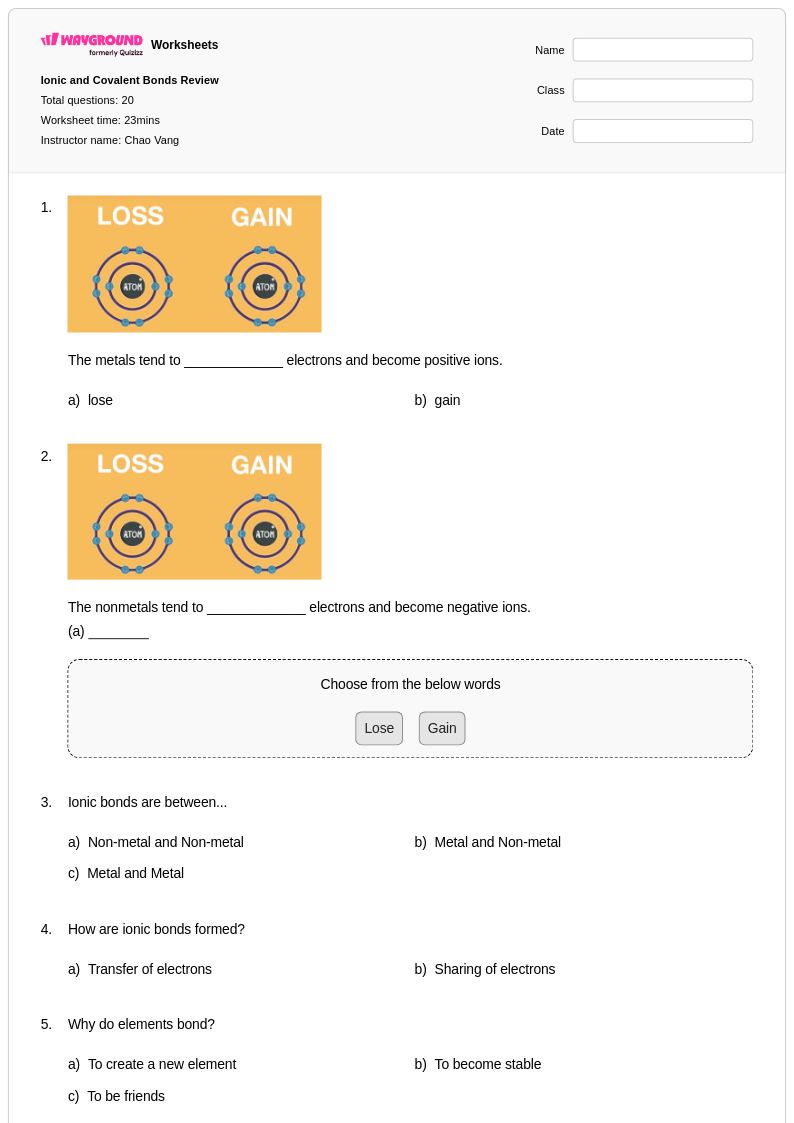
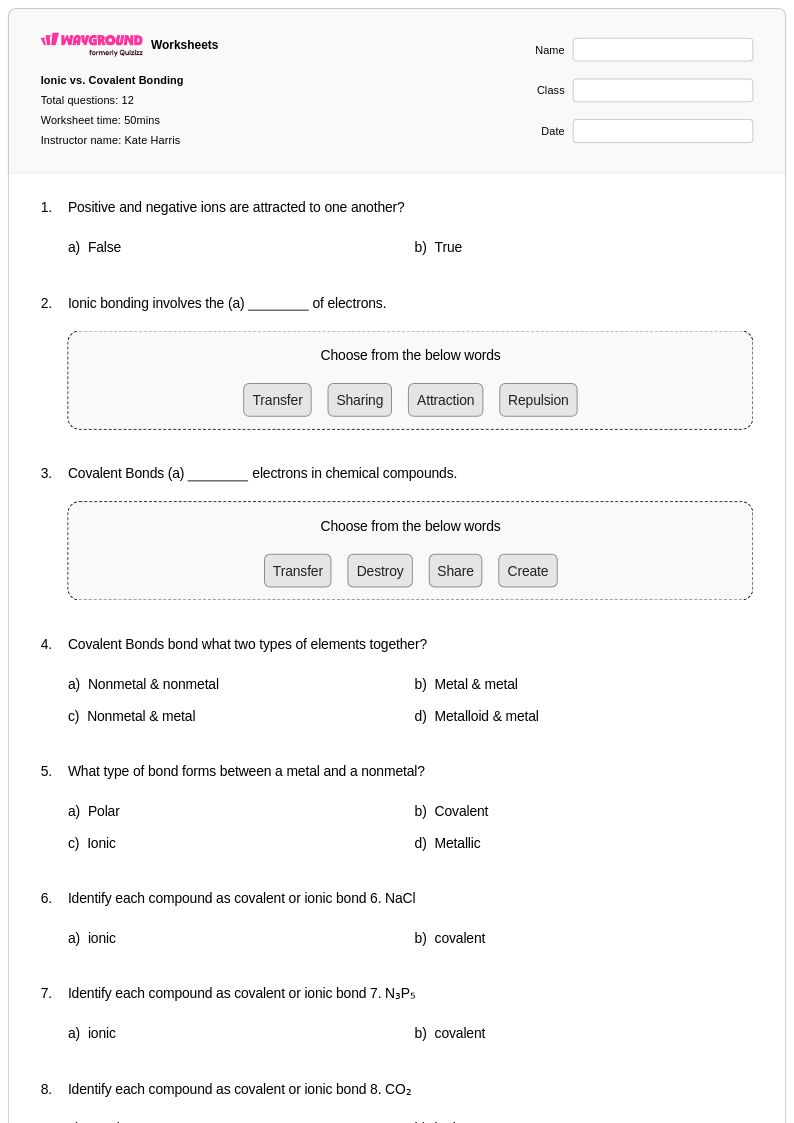
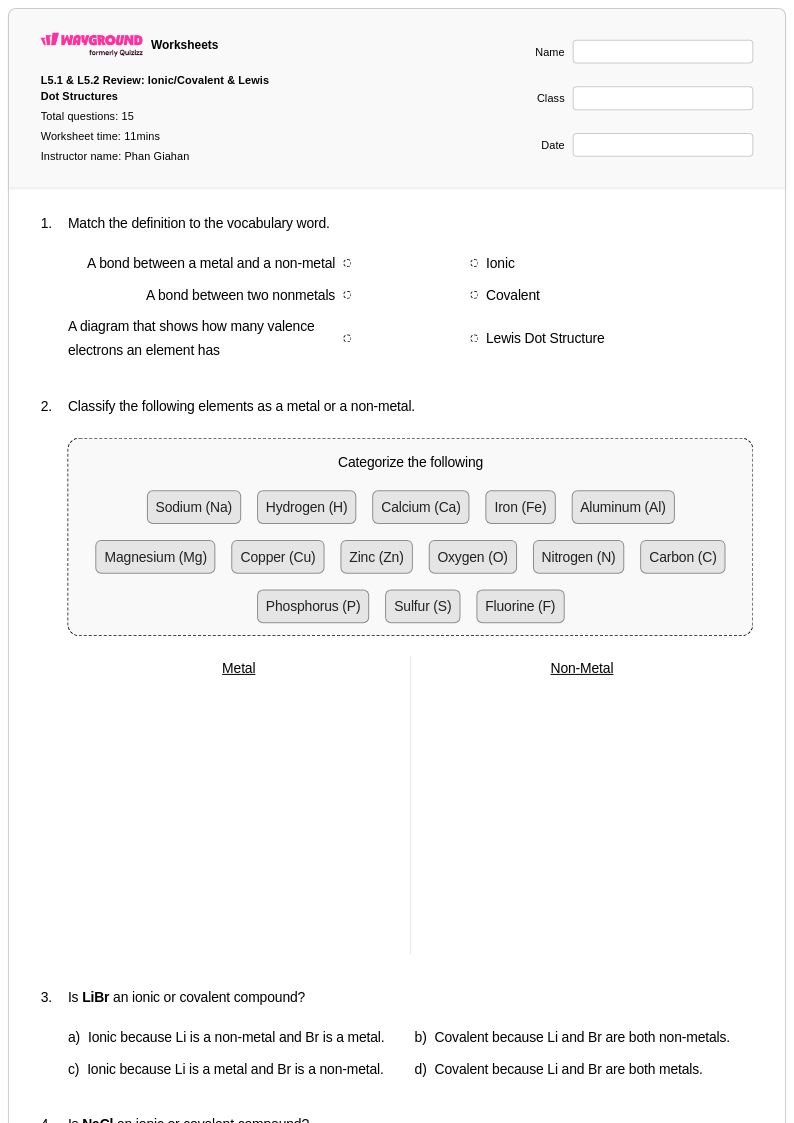
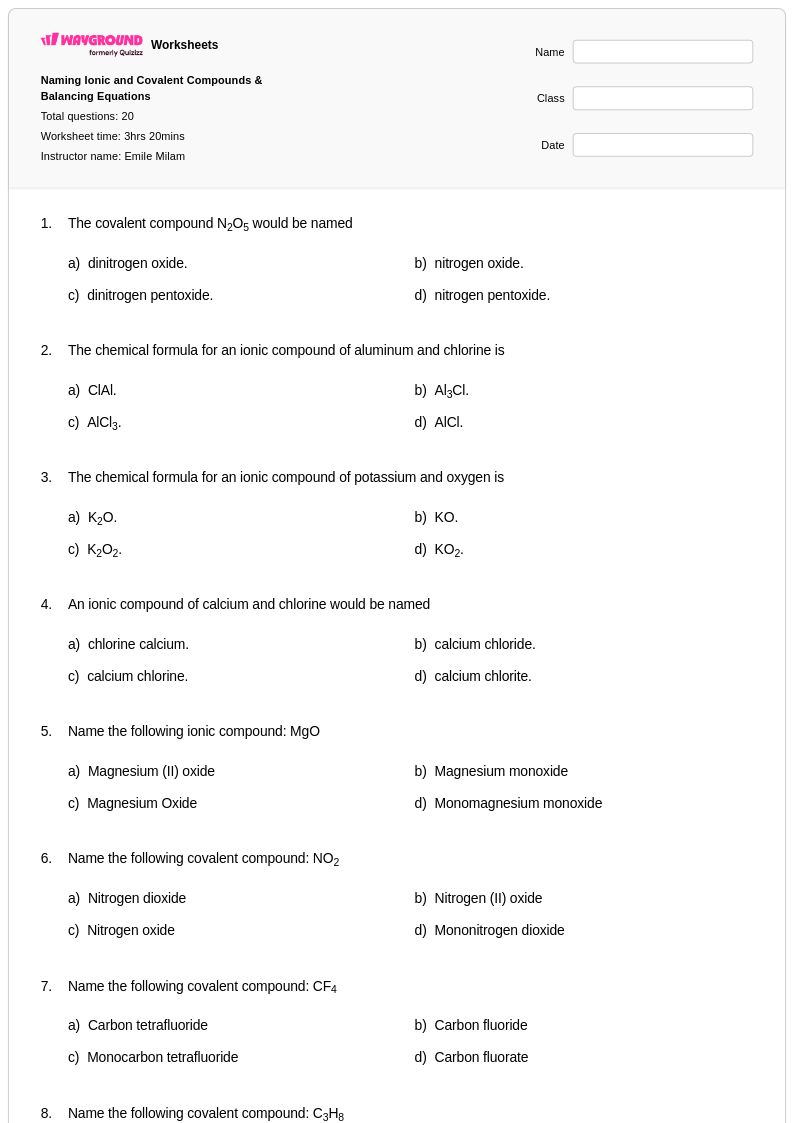
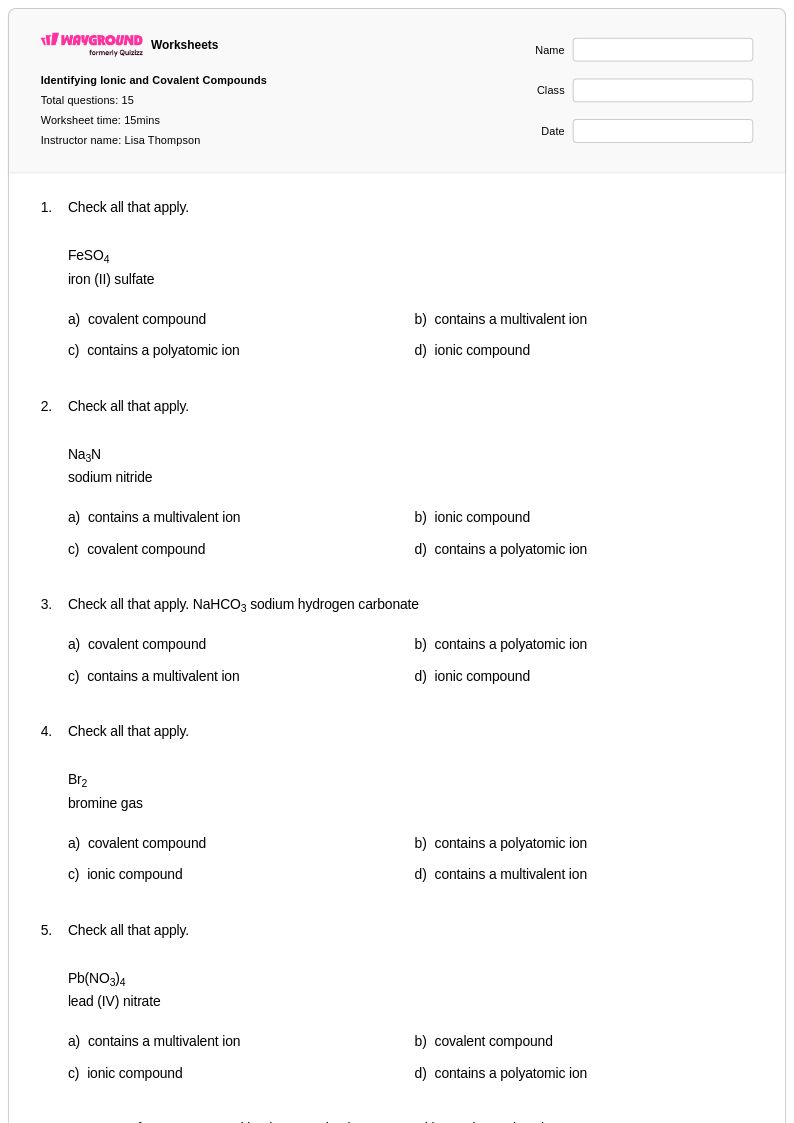
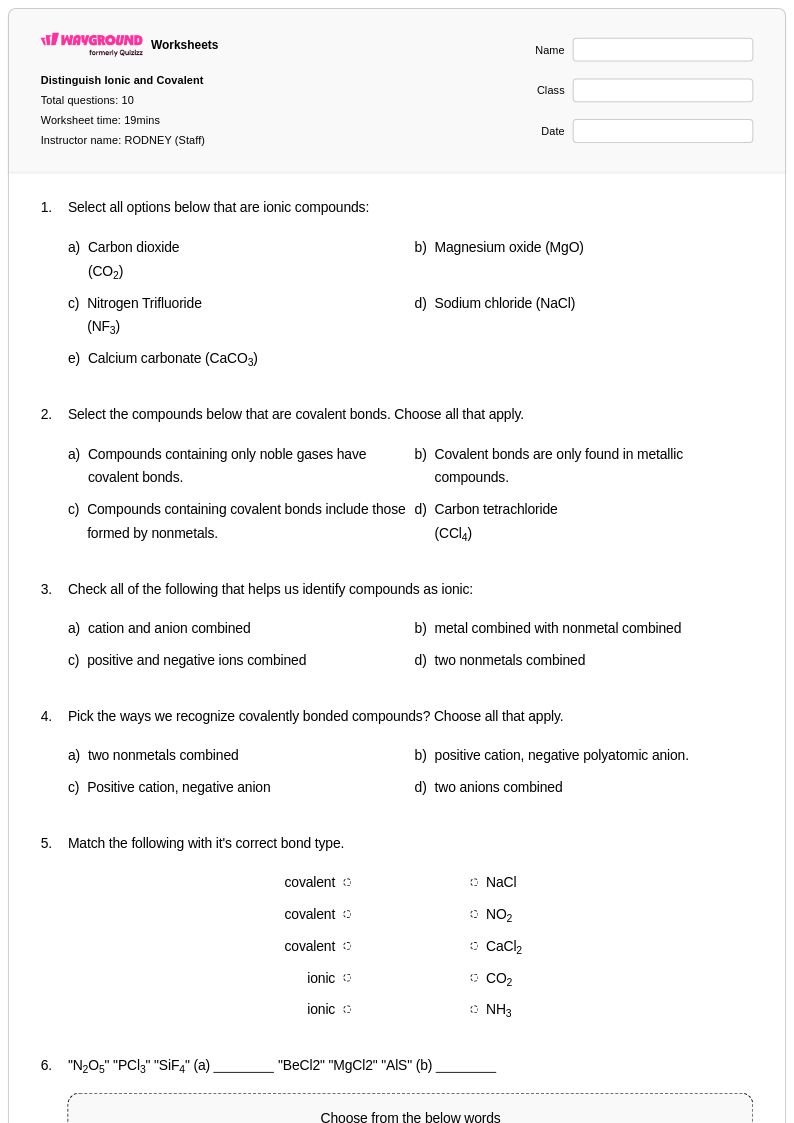
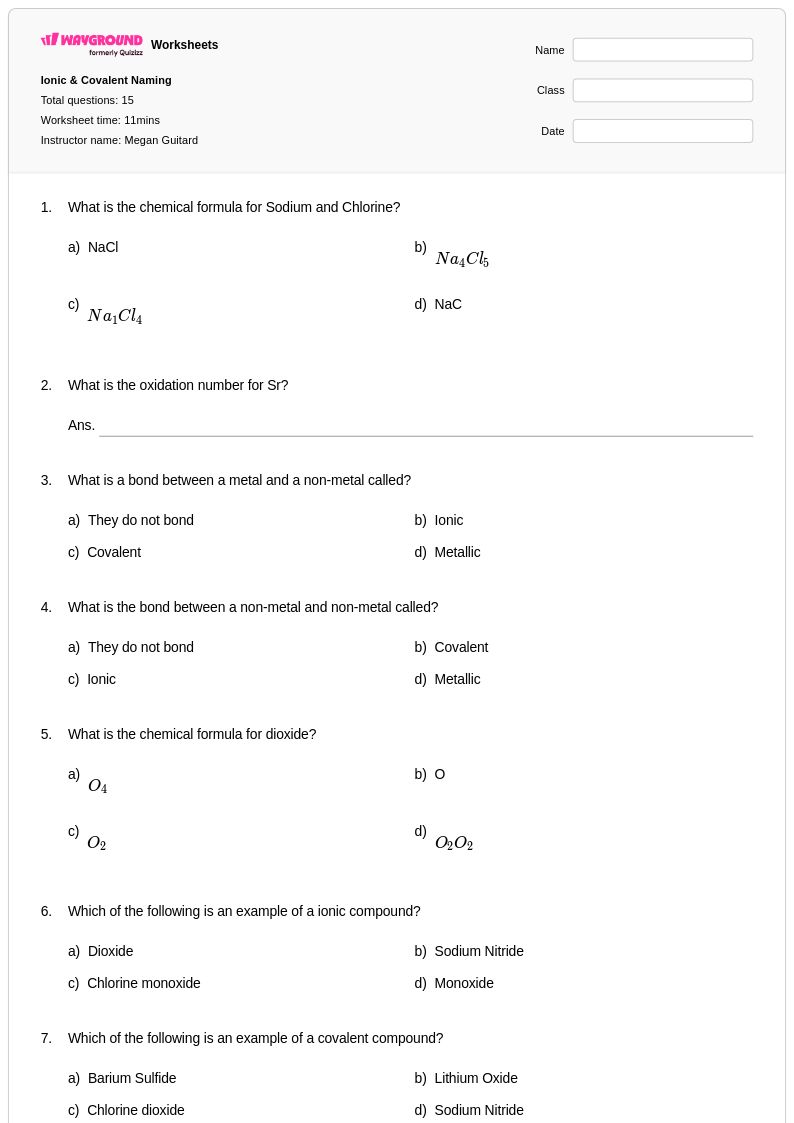
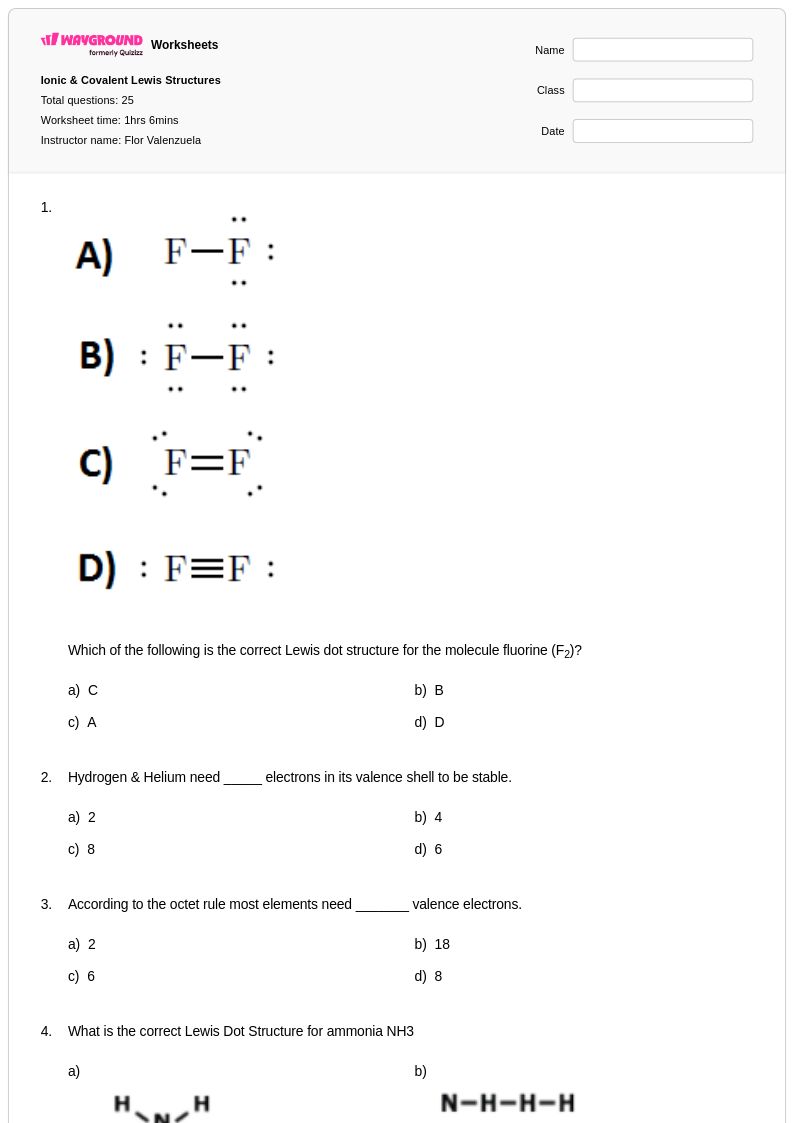
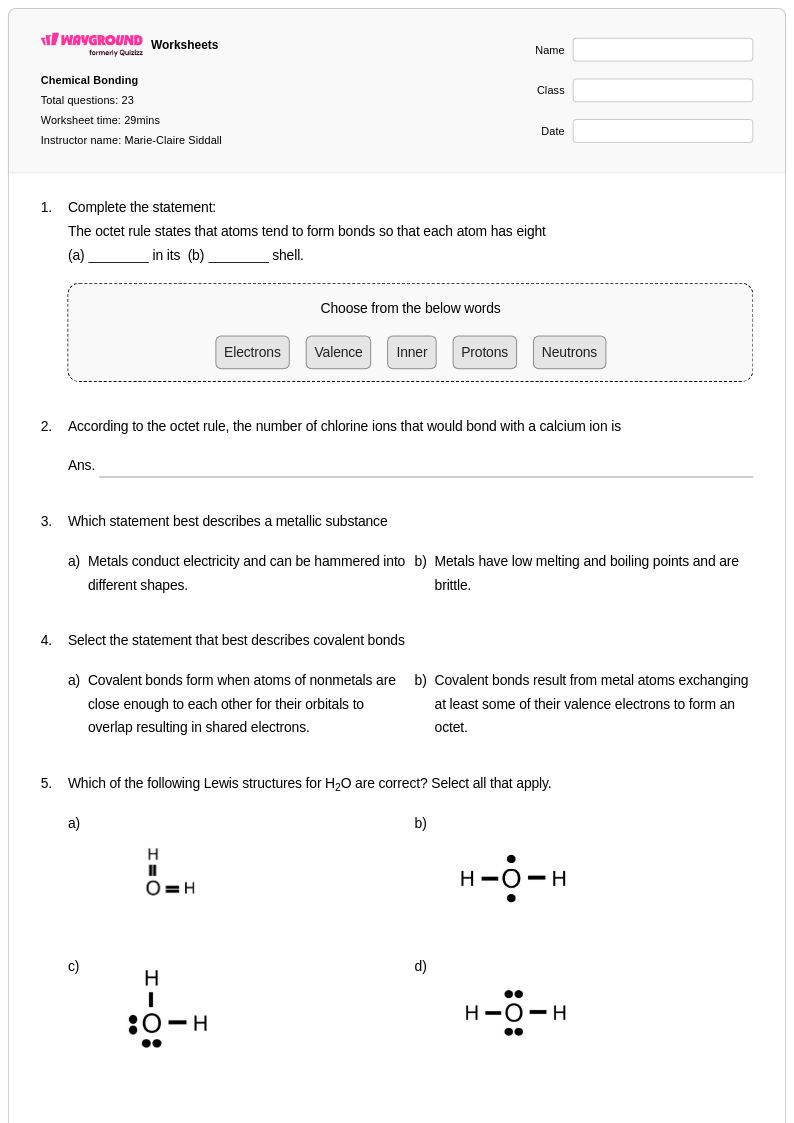
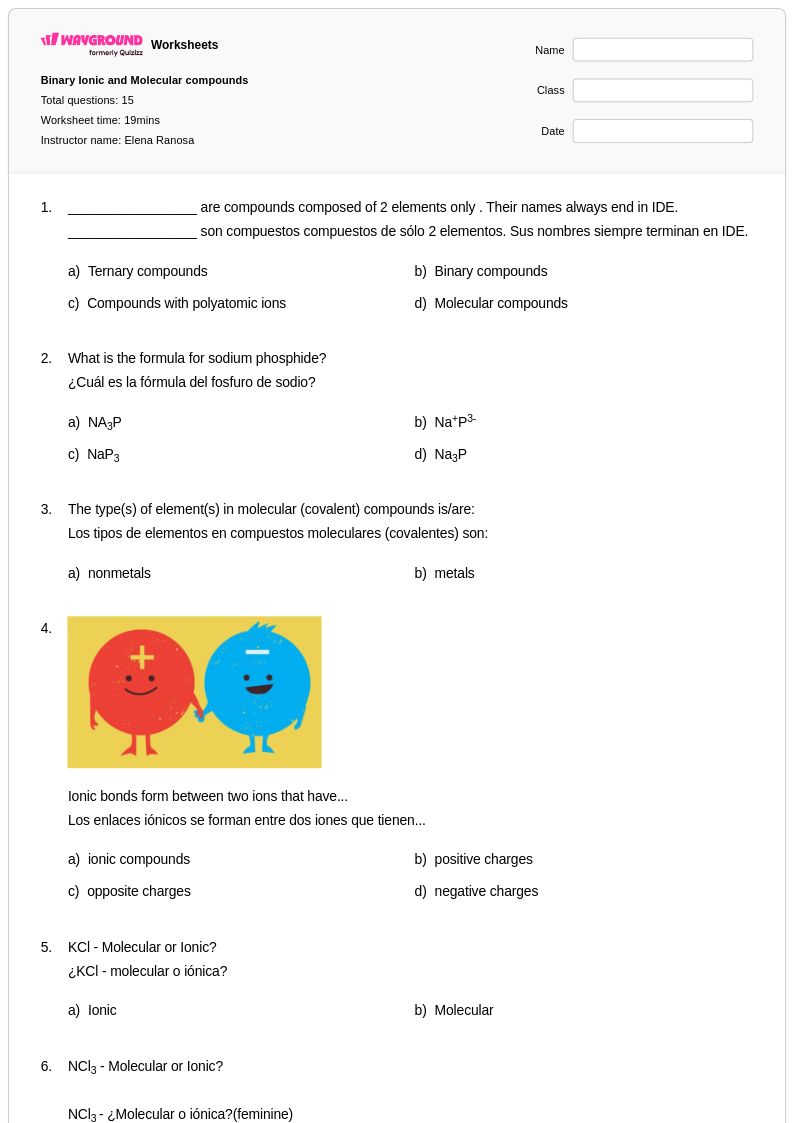
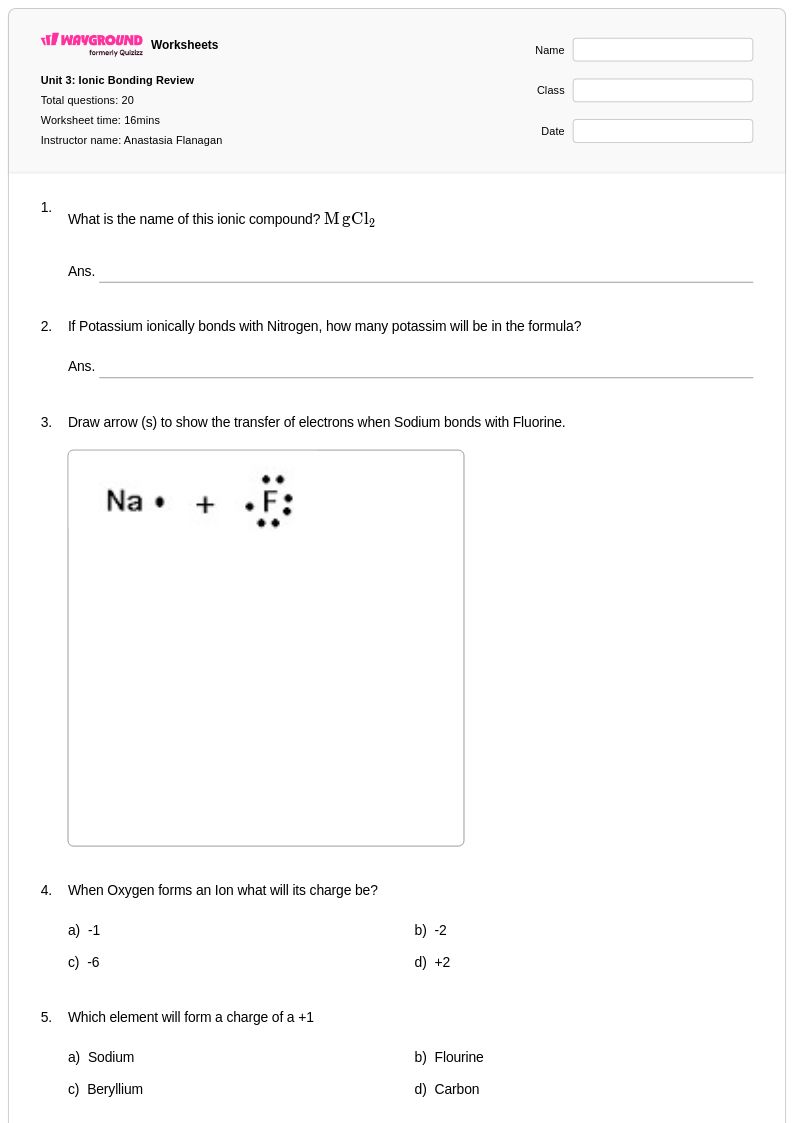
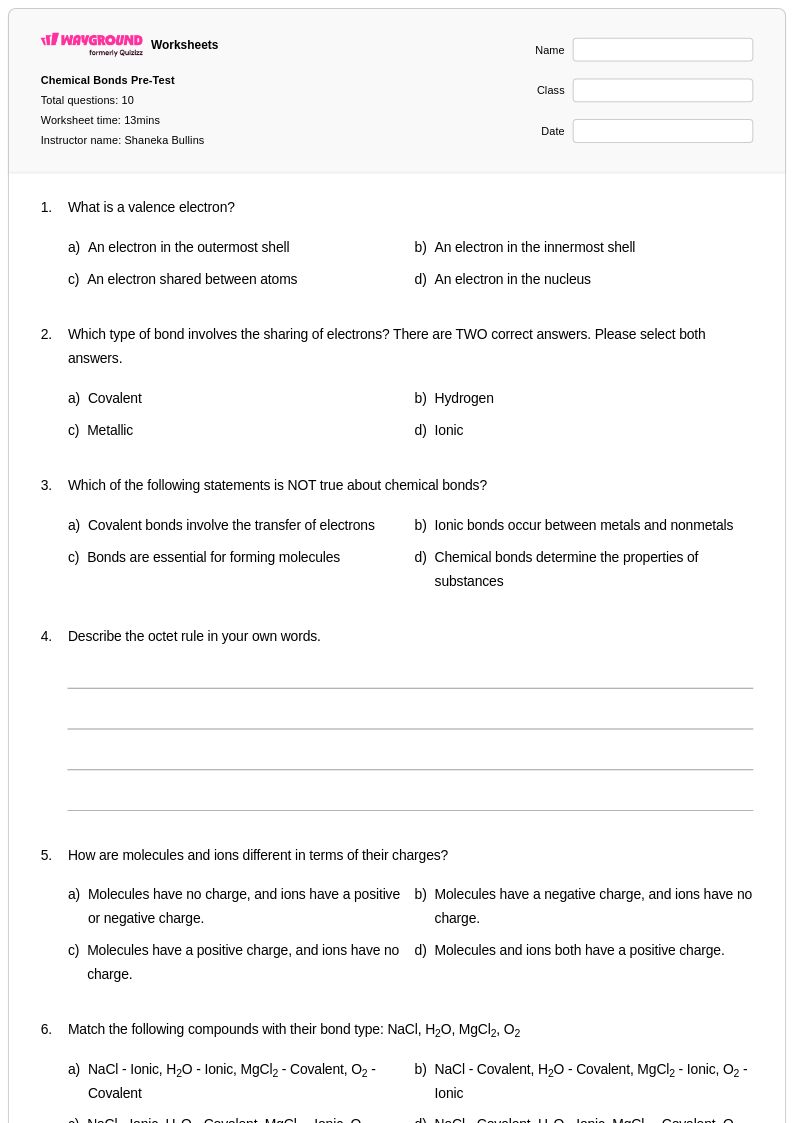
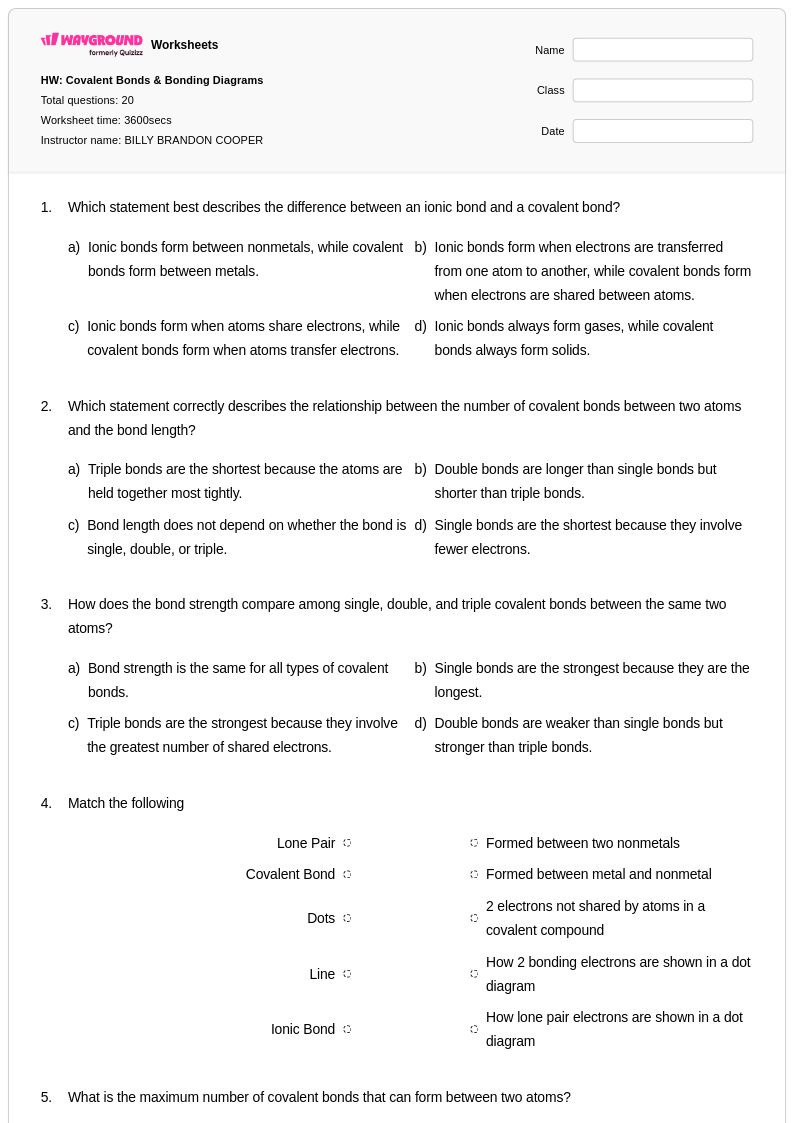
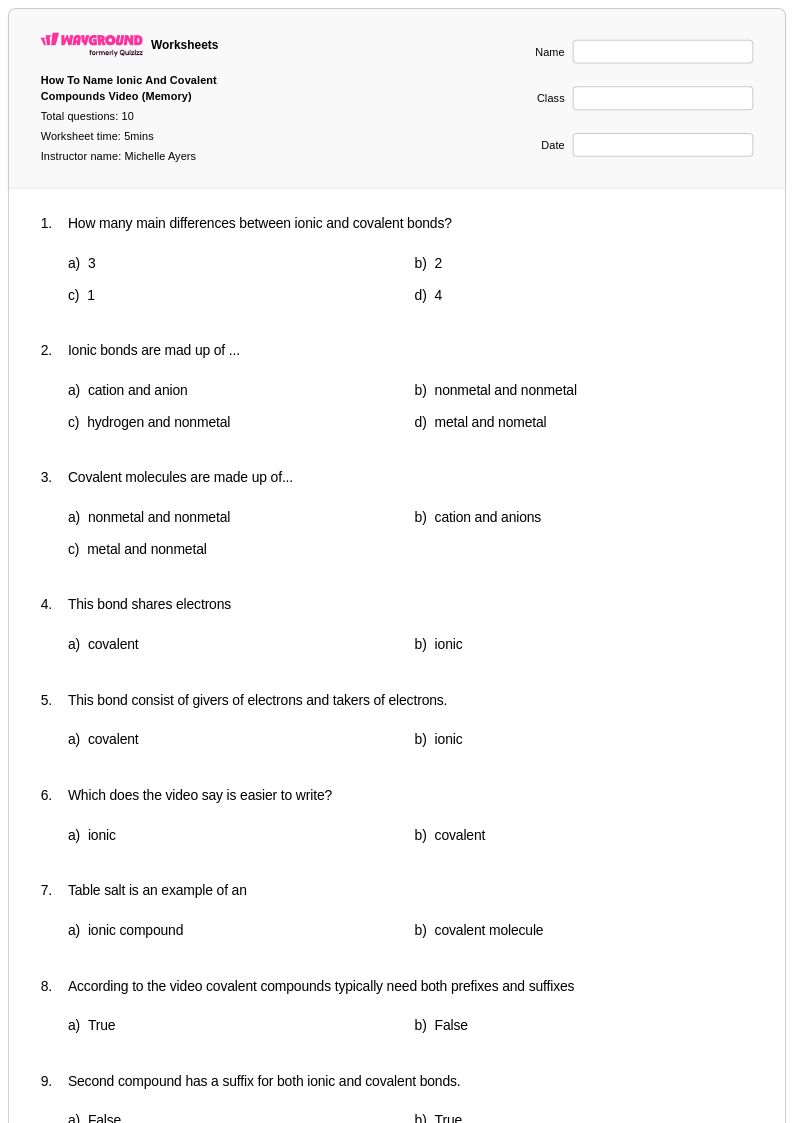
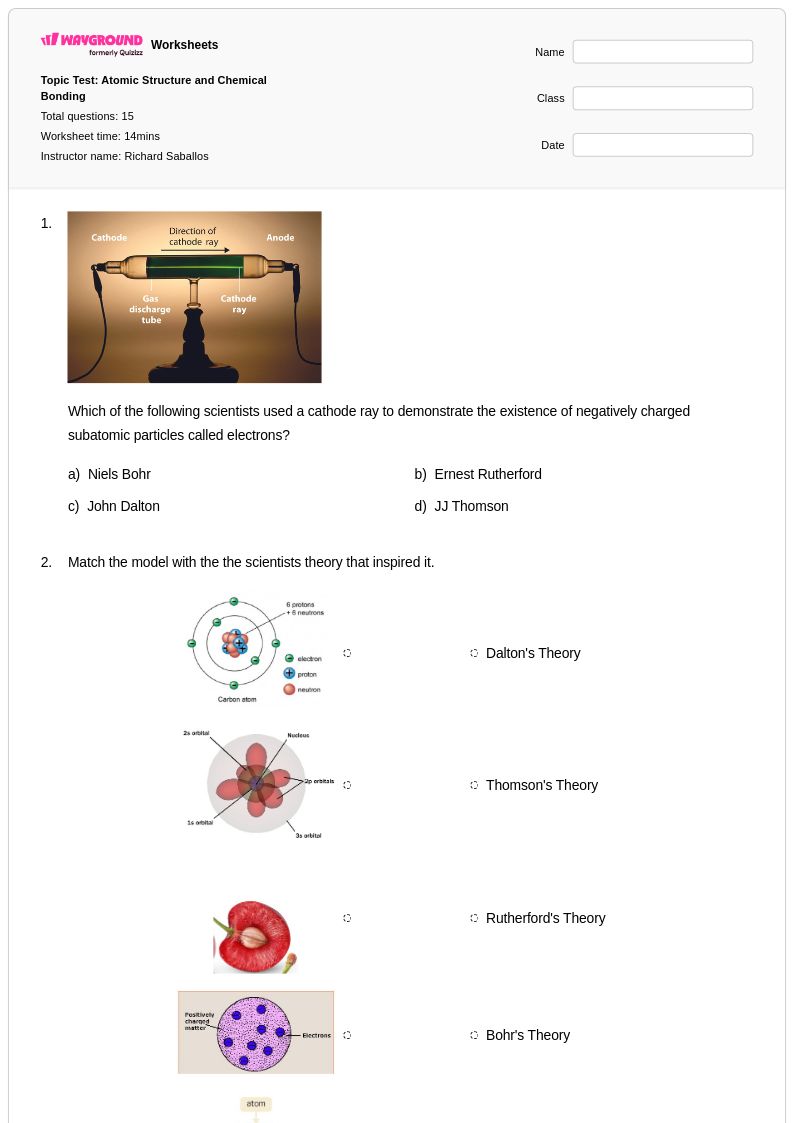
Ionic and covalent compounds represent fundamental concepts in Class 10 chemistry that determine how atoms bond and interact to form the materials around us. Wayground's comprehensive collection of worksheets on ionic and covalent compounds provides students with structured practice problems that build mastery of electron transfer, sharing mechanisms, and compound properties. These printable resources include detailed answer keys and cover essential skills such as identifying bond types, predicting molecular geometry, writing chemical formulas, and understanding the relationship between bonding and physical properties like melting points and conductivity. Students work through free pdf worksheets that progress from basic ionic bonding concepts involving metal and nonmetal interactions to more complex covalent structures and polar molecule behavior, ensuring thorough comprehension of these critical chemical principles.
Wayground's platform supports chemistry educators with millions of teacher-created resources specifically designed for ionic and covalent compound instruction at the Class 10 level. Teachers can efficiently search and filter through extensive worksheet collections that align with chemistry standards, accessing materials that range from introductory bonding concepts to advanced molecular structure analysis. The platform's differentiation tools enable educators to customize content for diverse learning needs, while flexible formatting options provide both digital and printable pdf versions for seamless classroom integration. These comprehensive resources facilitate effective lesson planning by offering ready-to-use materials for skill practice, targeted remediation of bonding misconceptions, and enrichment activities that challenge advanced students to explore complex molecular interactions and real-world applications of ionic and covalent compounds.
FAQs
How do I teach students the difference between ionic and covalent compounds?
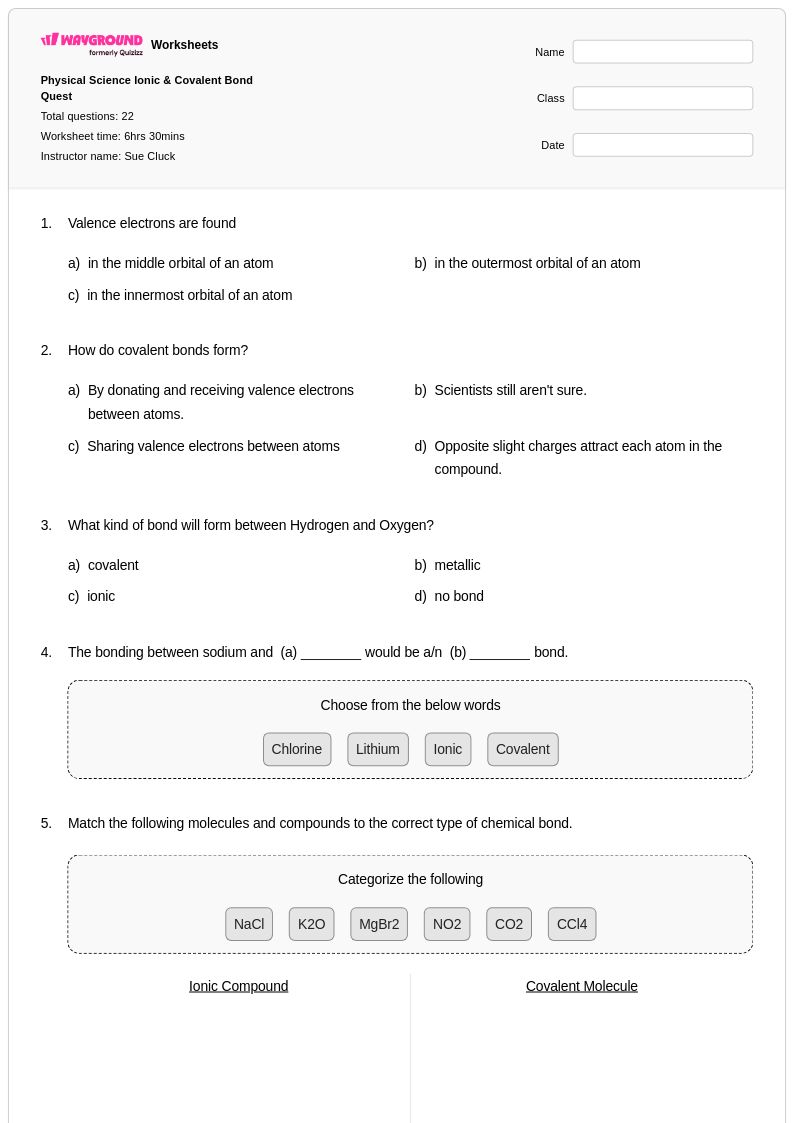
Start by grounding students in electronegativity differences: ionic bonds form when one atom transfers electrons to another (typically metal to nonmetal), while covalent bonds form when two nonmetals share electrons. Use visual models showing electron dot structures and lattice diagrams to make the distinction concrete. From there, connect bonding type to observable properties such as melting point, conductivity, and solubility so students see why the distinction matters beyond the naming rules.
What are effective practice exercises for naming ionic and covalent compounds?
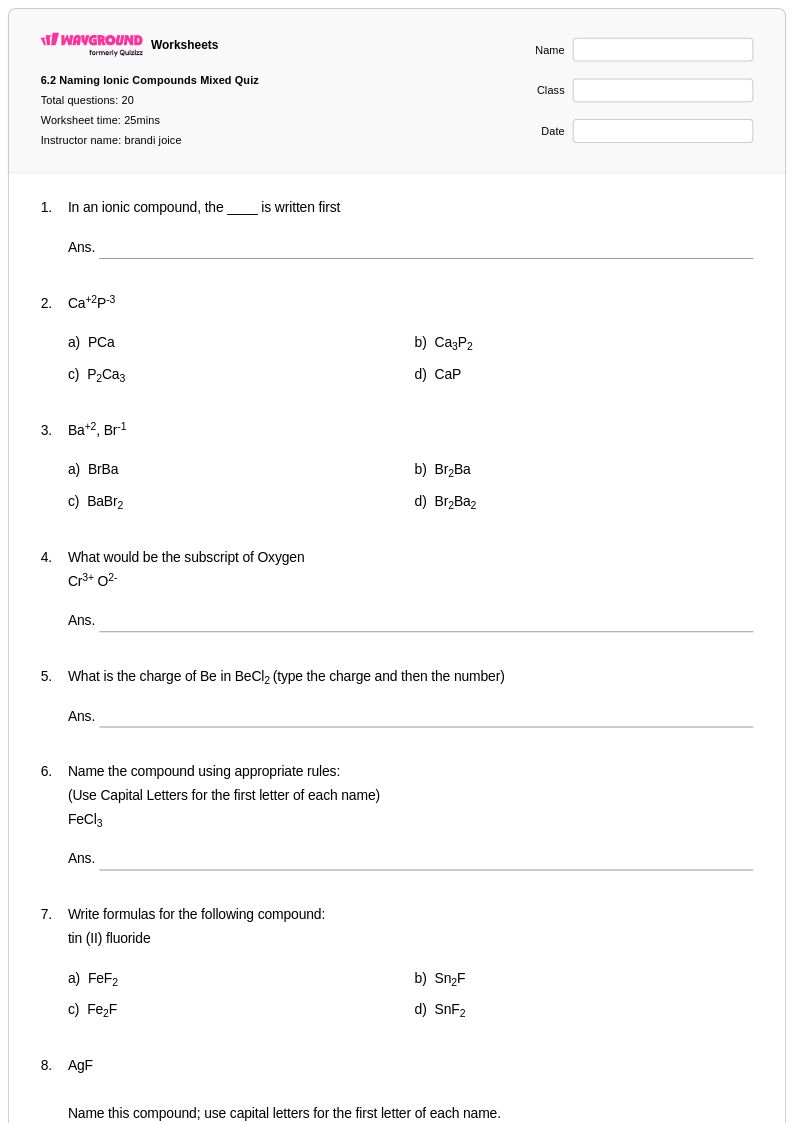
Naming practice should be sequenced: begin with binary ionic compounds using fixed-charge metals, then introduce transition metals requiring Roman numerals, and finally move to covalent naming using Greek prefixes. Formula-writing exercises that reverse the process are equally important, as they force students to apply oxidation states and valence rules rather than memorize patterns. Mixed practice sets that require students to first classify a compound before naming it are especially effective at building flexibility.
What mistakes do students commonly make when identifying ionic vs. covalent compounds?
The most frequent error is assuming that any compound containing a metal must be ionic, which breaks down with organometallic compounds and causes confusion with polyatomic ions like ammonium. Students also routinely misapply Greek prefixes to ionic compounds or forget Roman numerals for variable-charge transition metals. Another common misconception is conflating polarity with bond type, leading students to incorrectly label all polar covalent bonds as ionic.
How can I use worksheets to help students practice predicting properties of ionic and covalent compounds?
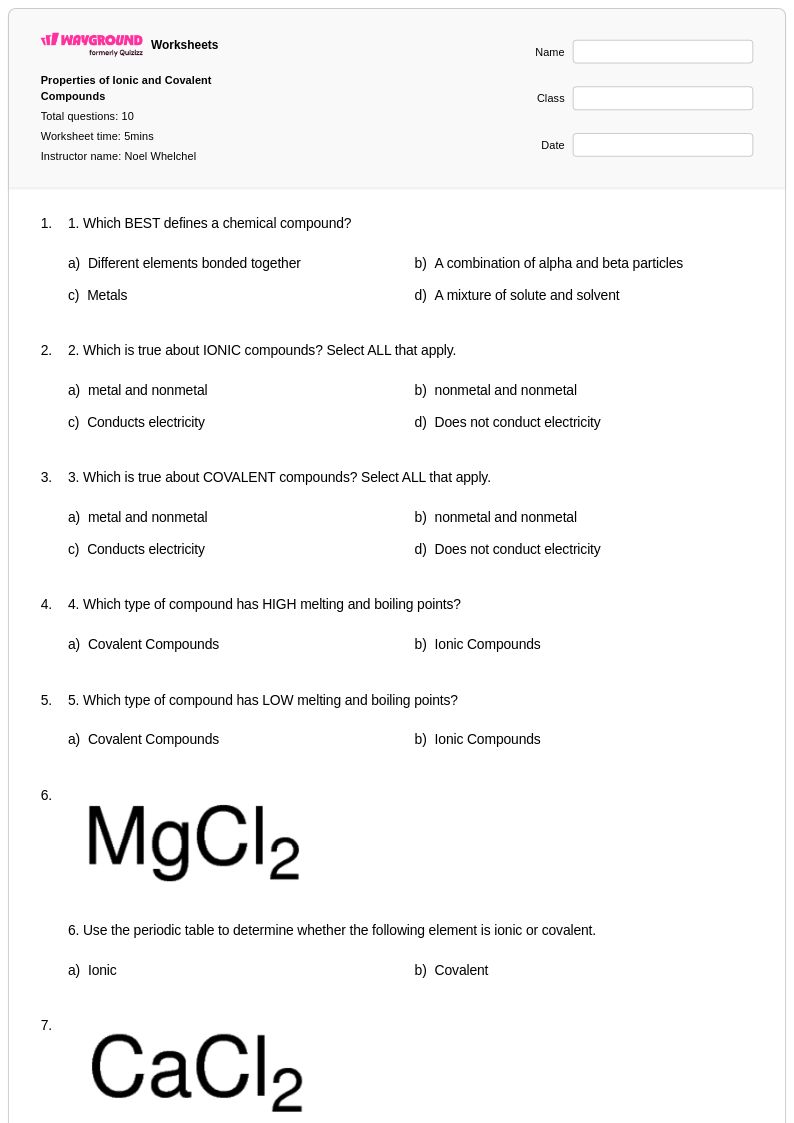
Worksheets that pair compound identification with property prediction are highly effective because they push students beyond rote naming into applied reasoning. Tasks might ask students to predict whether a compound will conduct electricity in solution, estimate relative melting points, or explain solubility trends based on bonding type. These exercises reinforce that ionic compounds form lattice structures with high melting points and electrolytic behavior, while covalent compounds are generally molecular, lower-melting, and non-conductive.
How do I use Wayground's ionic and covalent compounds worksheets in my classroom?
Wayground's ionic and covalent compounds worksheets are available as printable PDFs for traditional classroom use and in digital formats for technology-integrated environments, making them flexible for in-class instruction, homework, or test prep. Teachers can also host worksheets as a quiz directly on Wayground, enabling real-time student response and progress tracking. Each worksheet includes a complete answer key, so students can self-check independently while teachers focus their review time on persistent gaps.
How do I differentiate ionic and covalent compounds practice for students at different skill levels?
For foundational learners, start with binary ionic and simple covalent compounds before introducing polyatomic ions and molecular geometry. On Wayground, teachers can apply student-level accommodations such as reduced answer choices to lower cognitive load for struggling students, or enable Read Aloud for students who need questions read to them. Advanced students can be directed toward problems involving electronegativity values, lattice energy comparisons, and molecular polarity to extend their understanding beyond naming conventions.