Free Printable Naming Chemical Compounds Worksheets for Class 10
Class 10 chemistry students can master naming chemical compounds with Wayground's comprehensive collection of free worksheets, printables, and practice problems complete with answer keys to build confidence in chemical nomenclature.
Explore printable Naming Chemical Compounds worksheets for Class 10
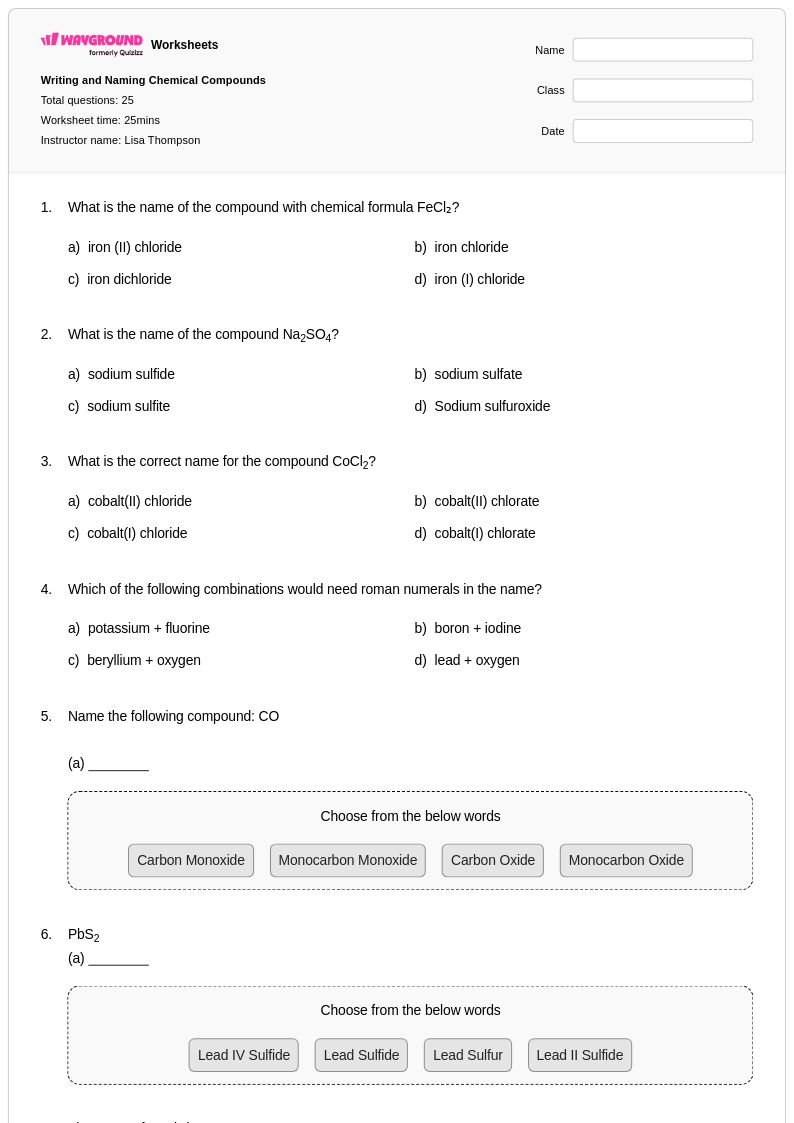
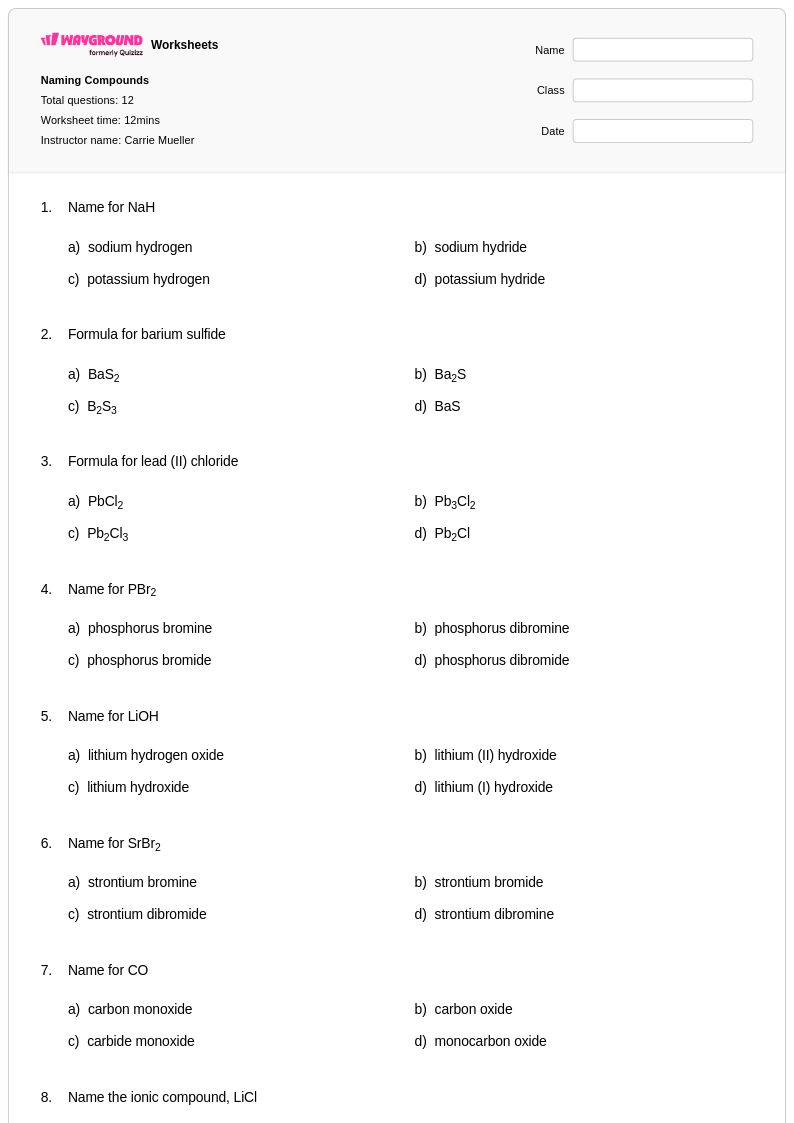
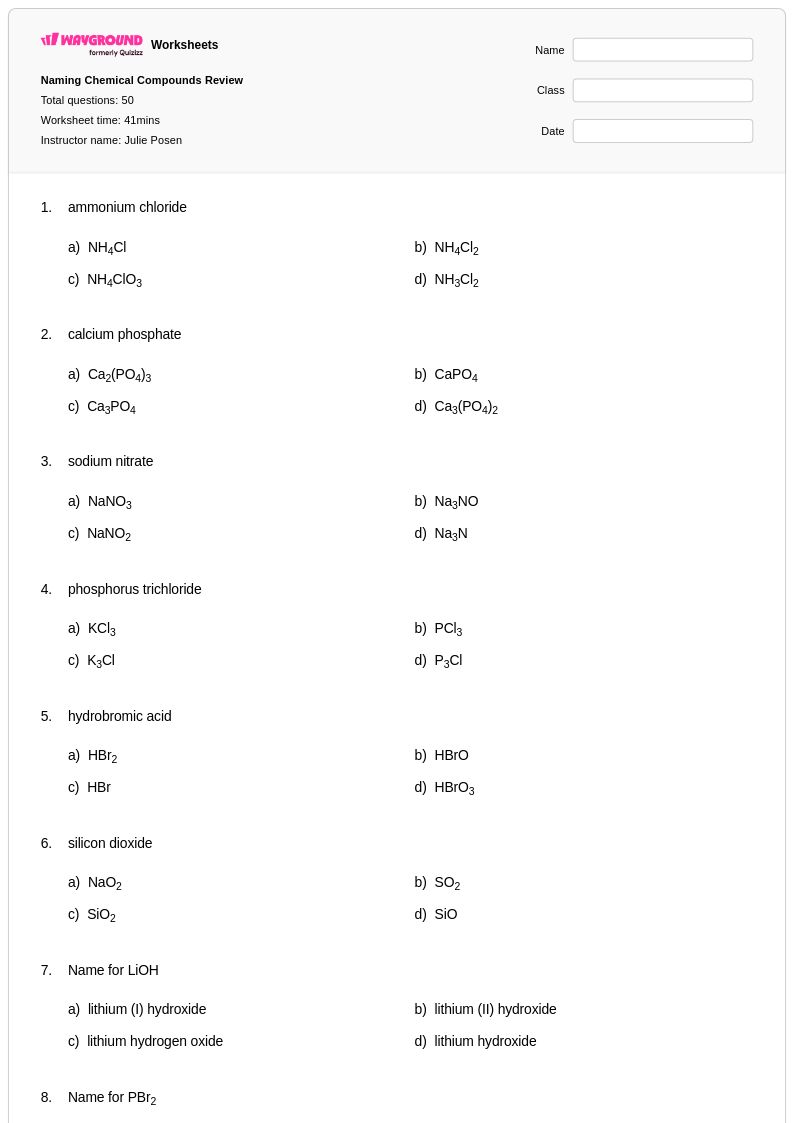
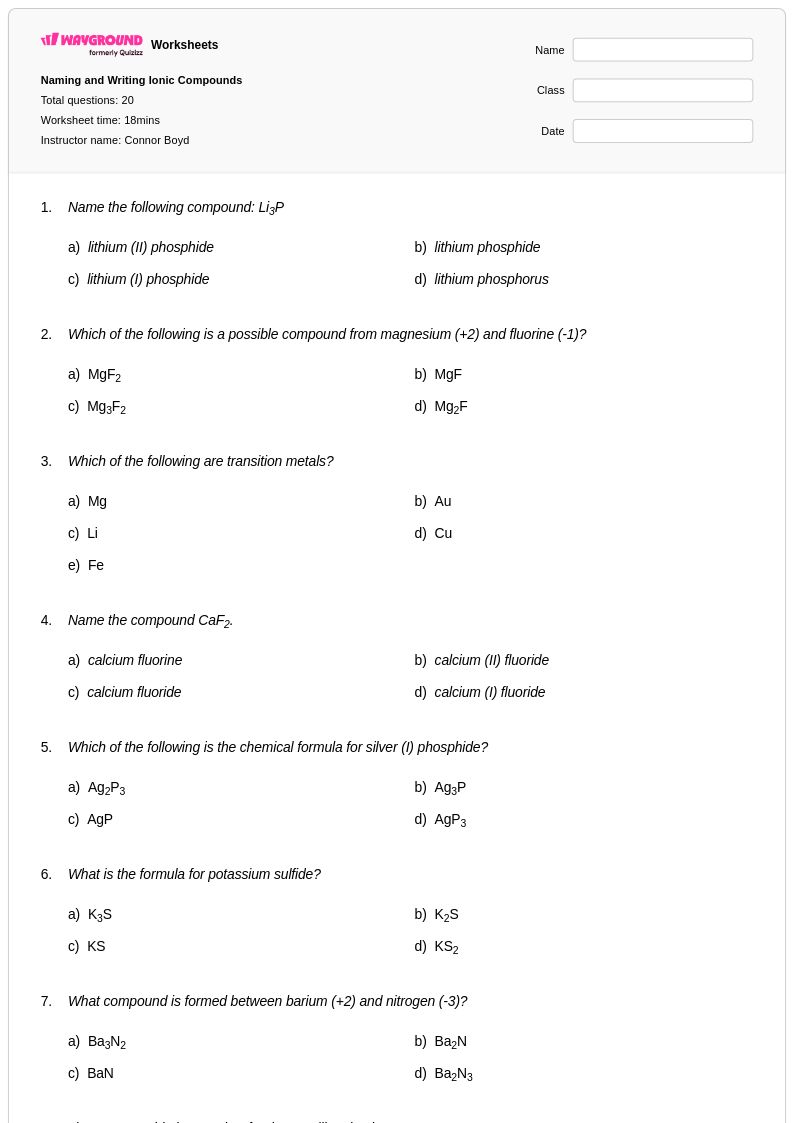
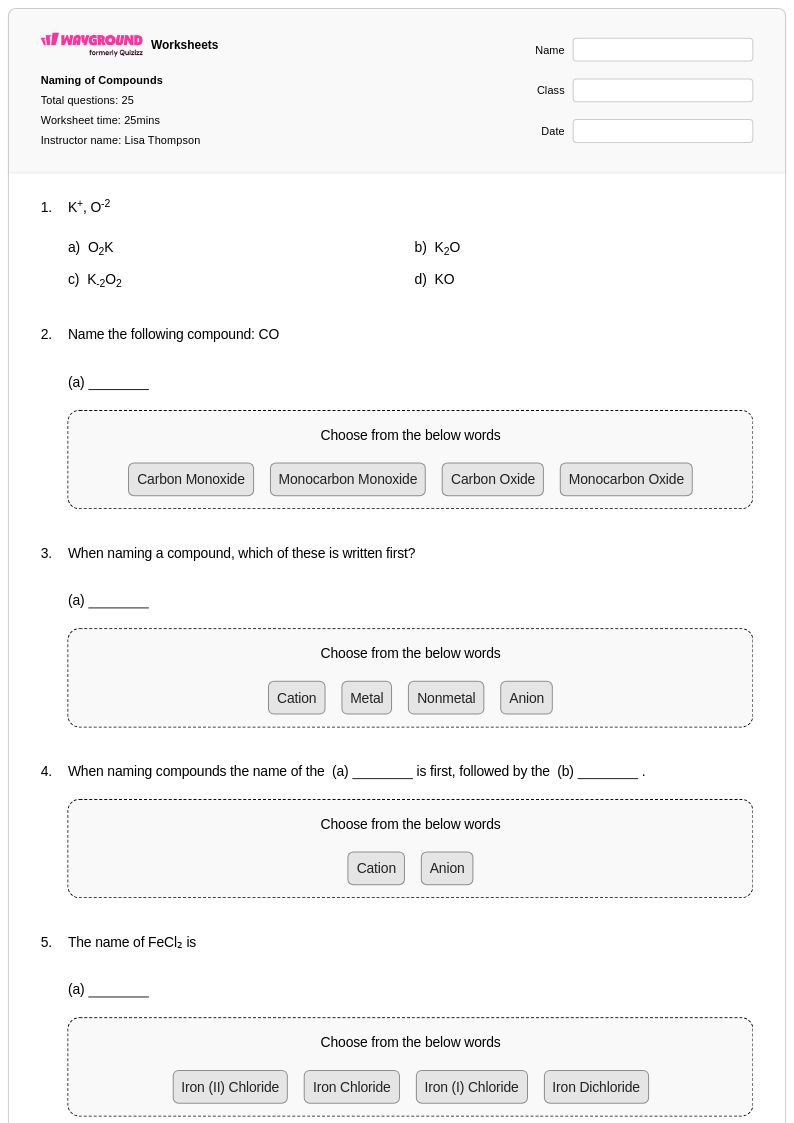
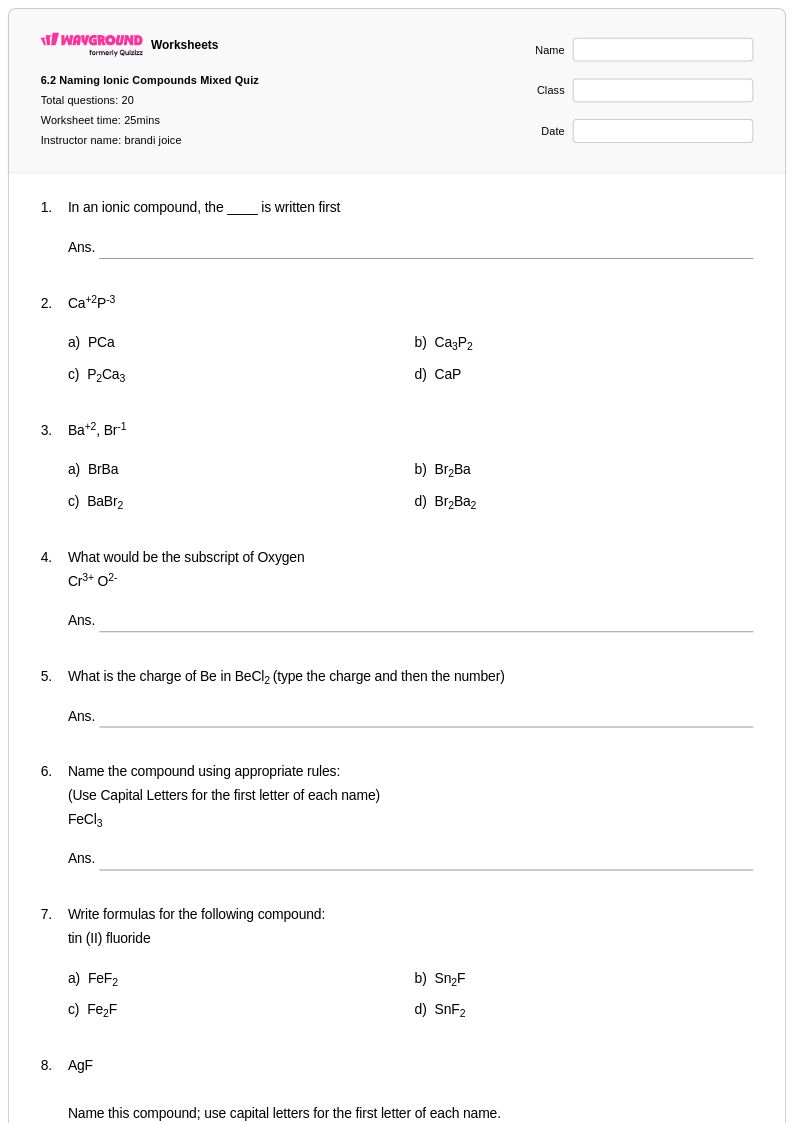
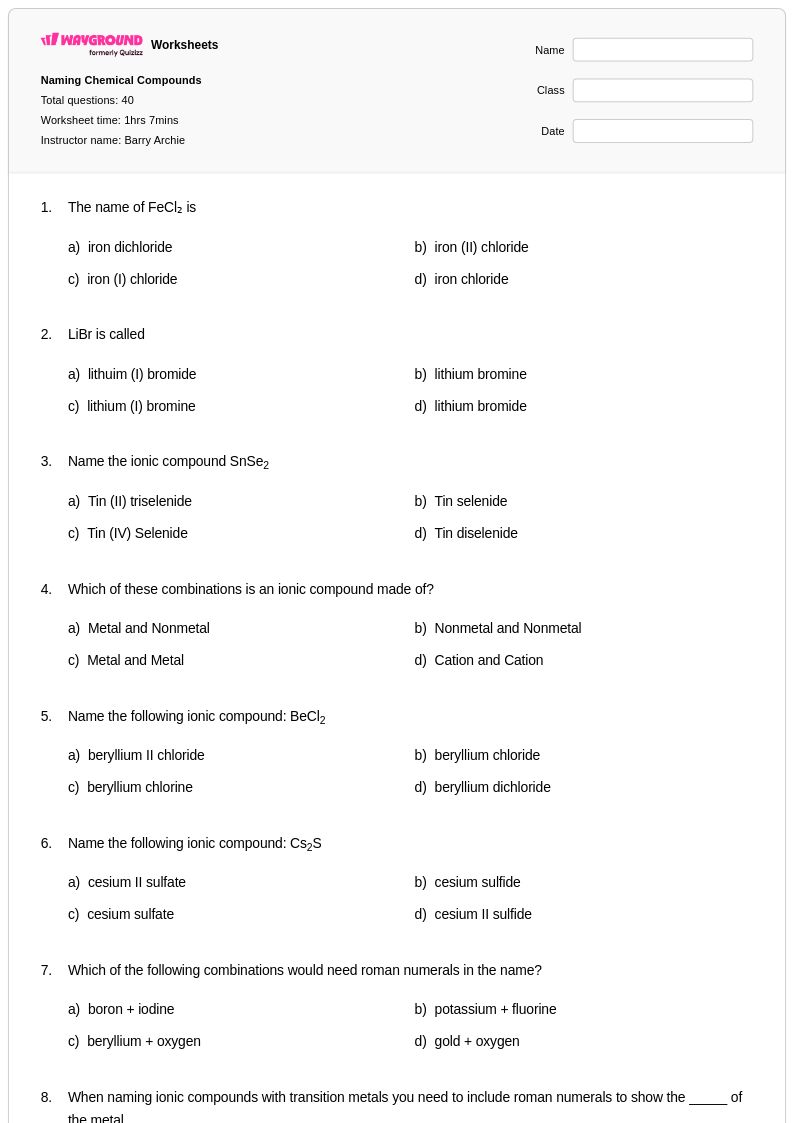
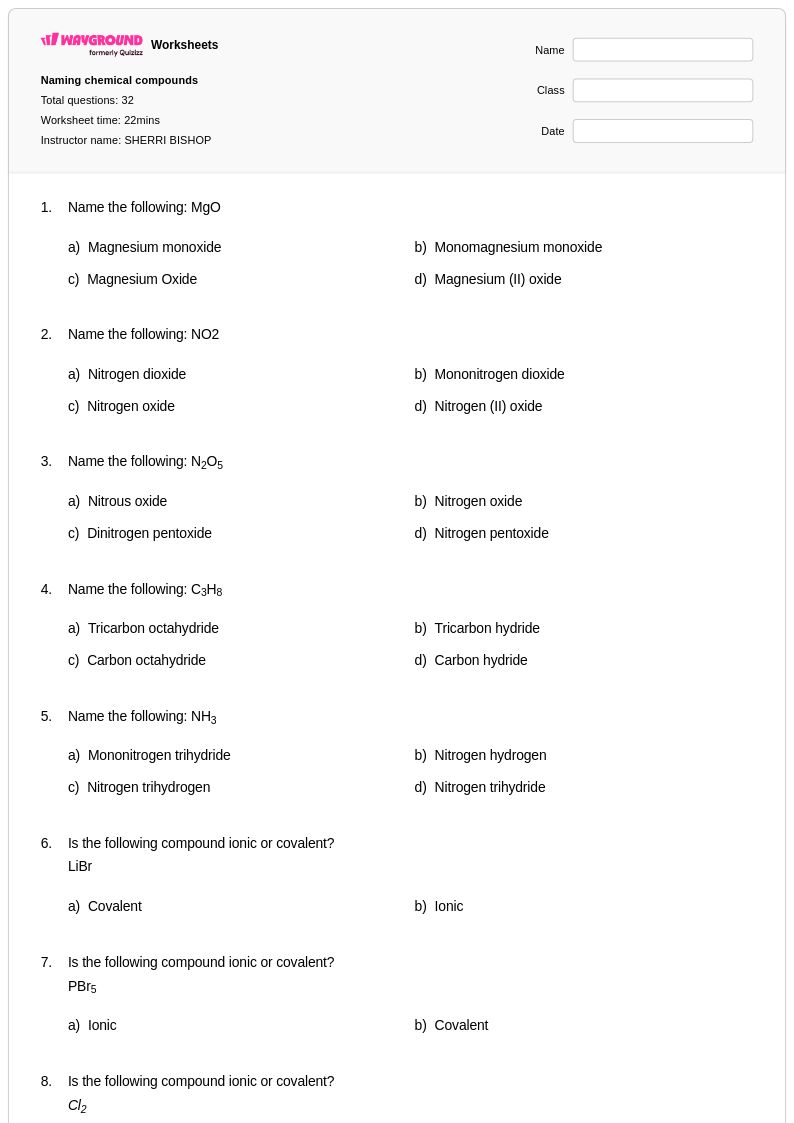
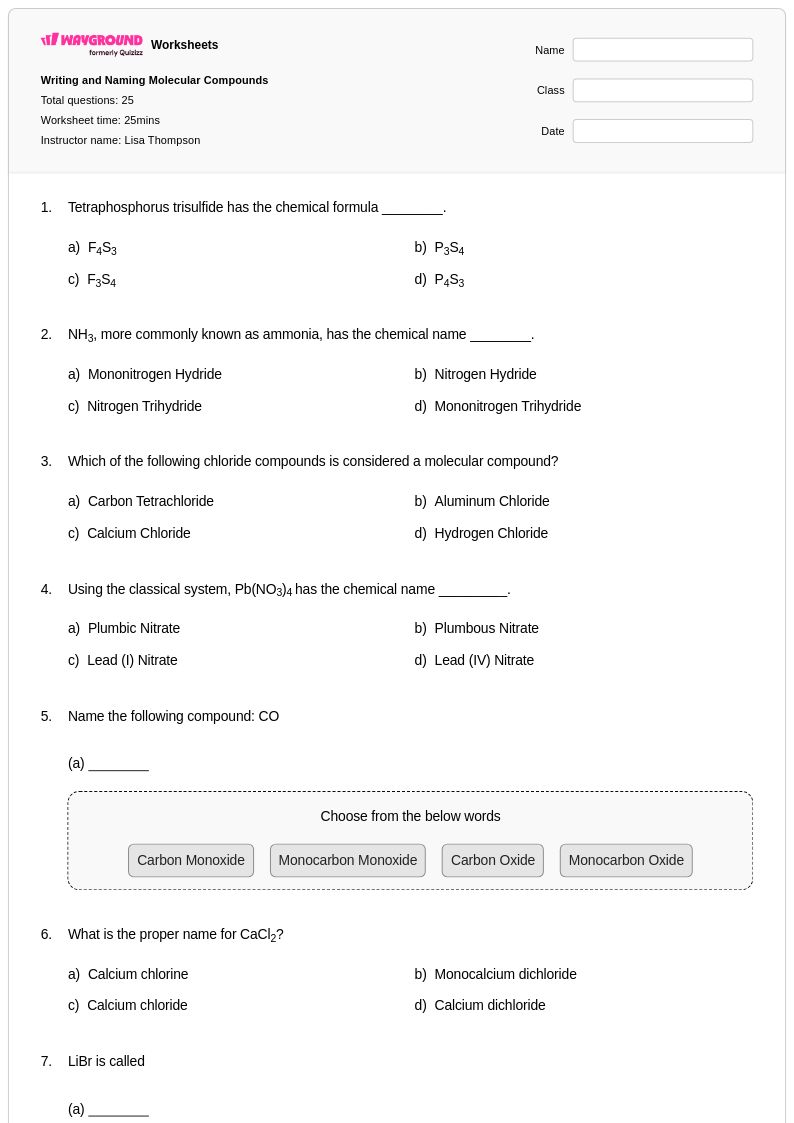
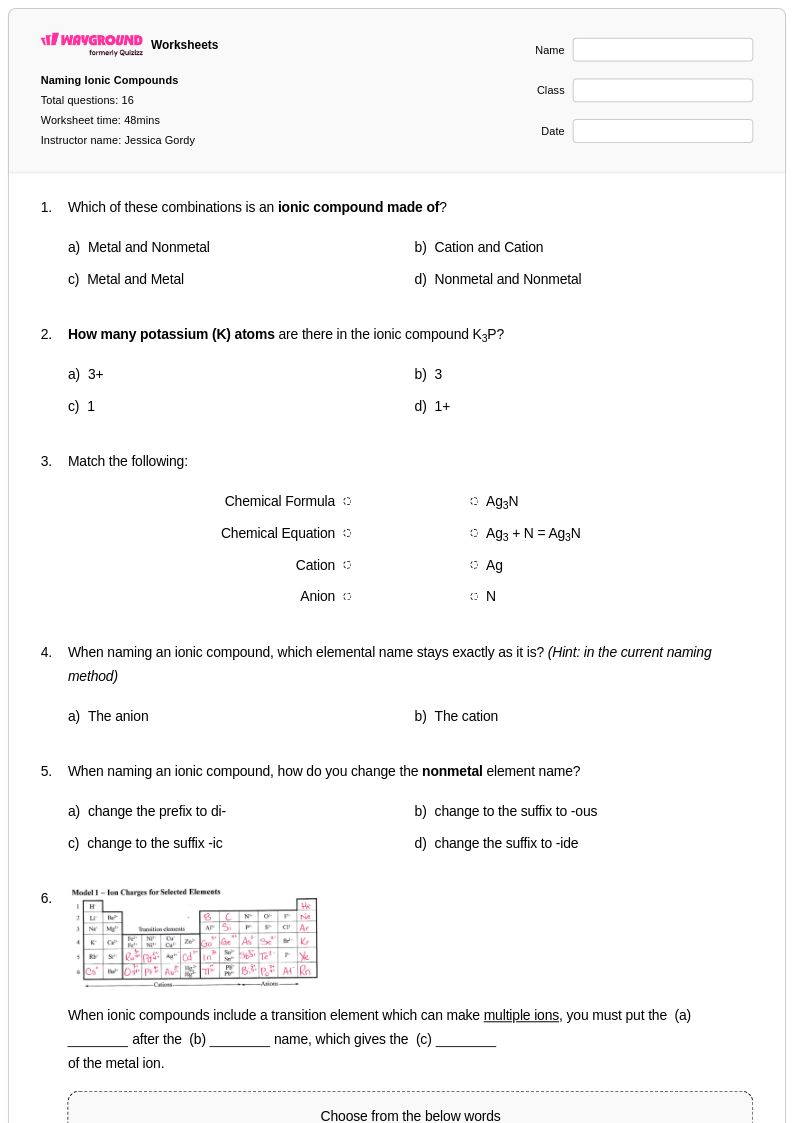
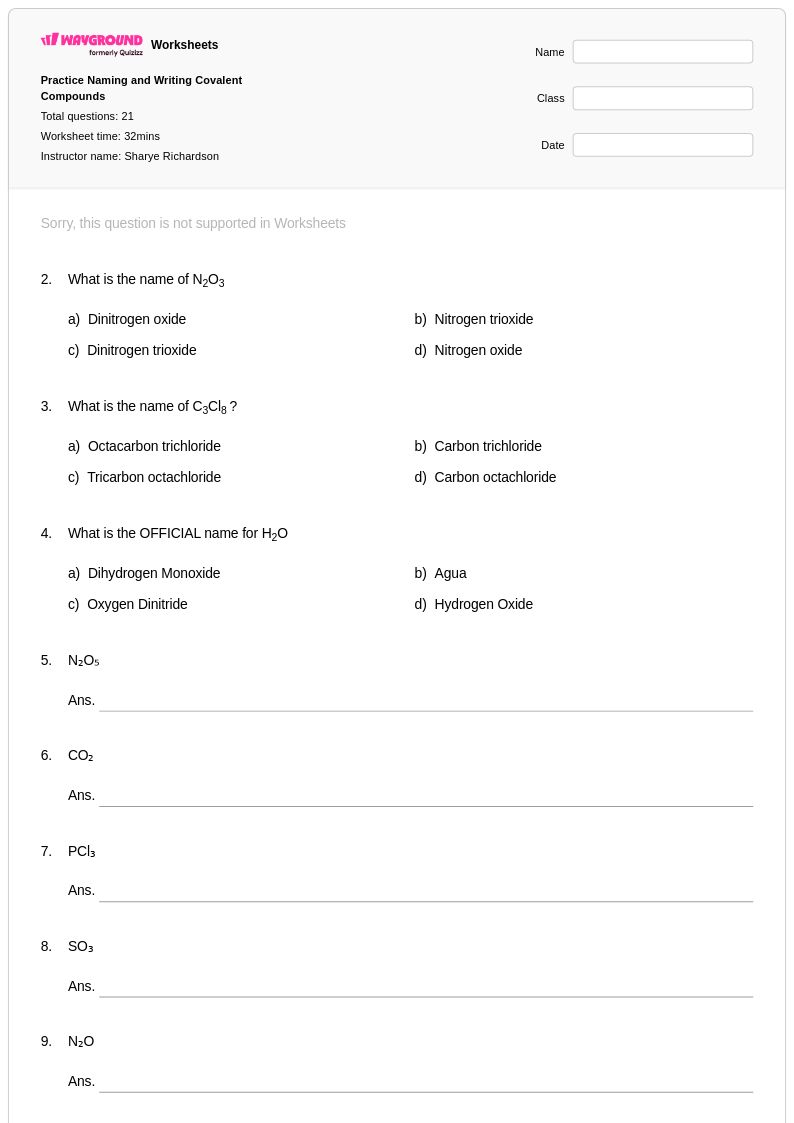
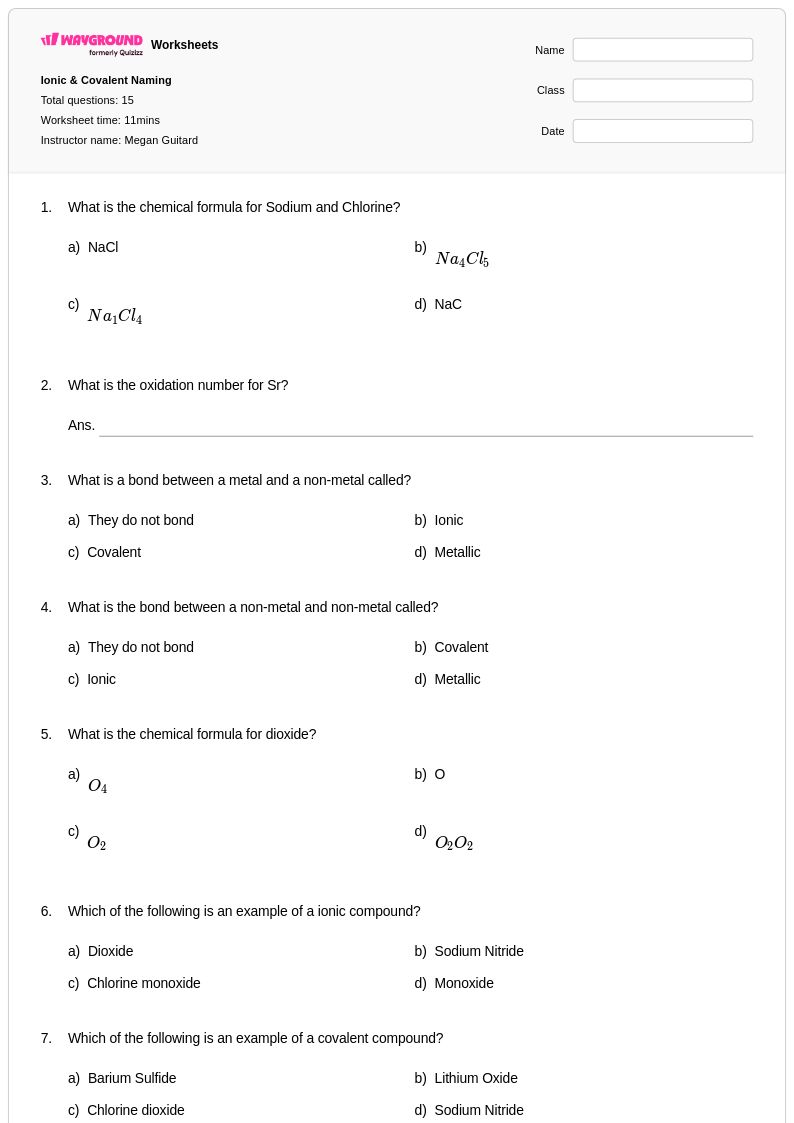
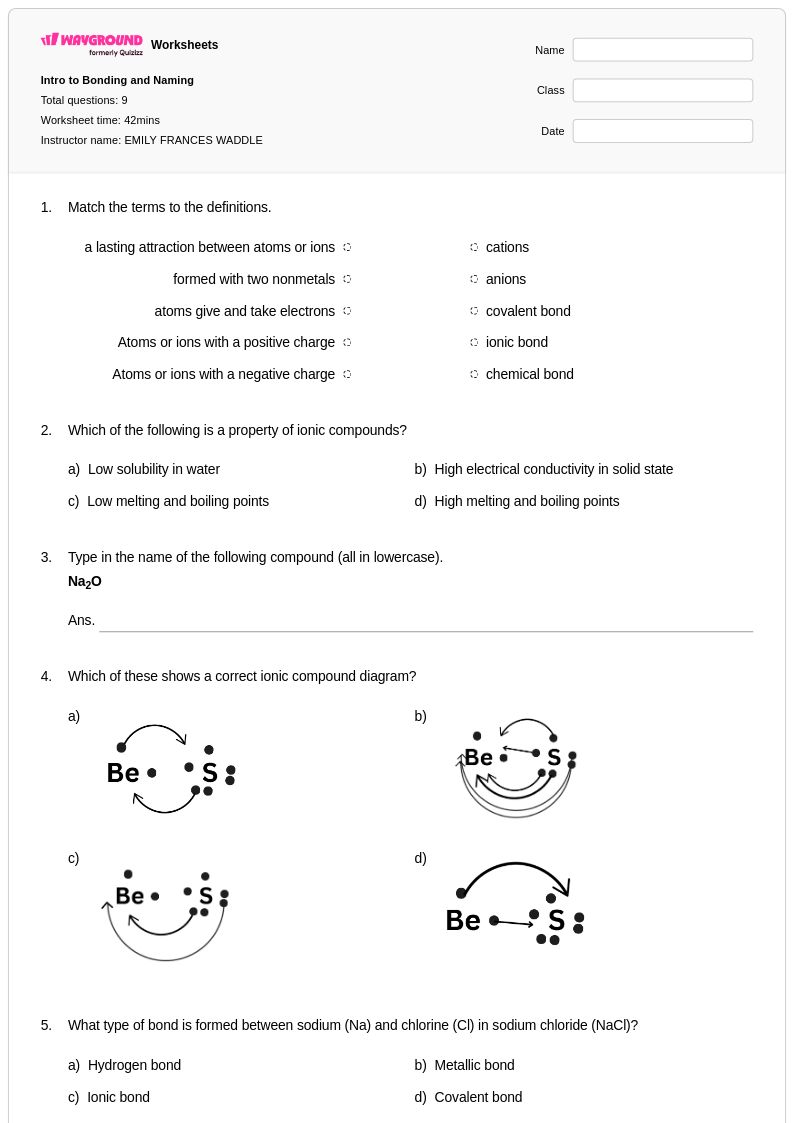
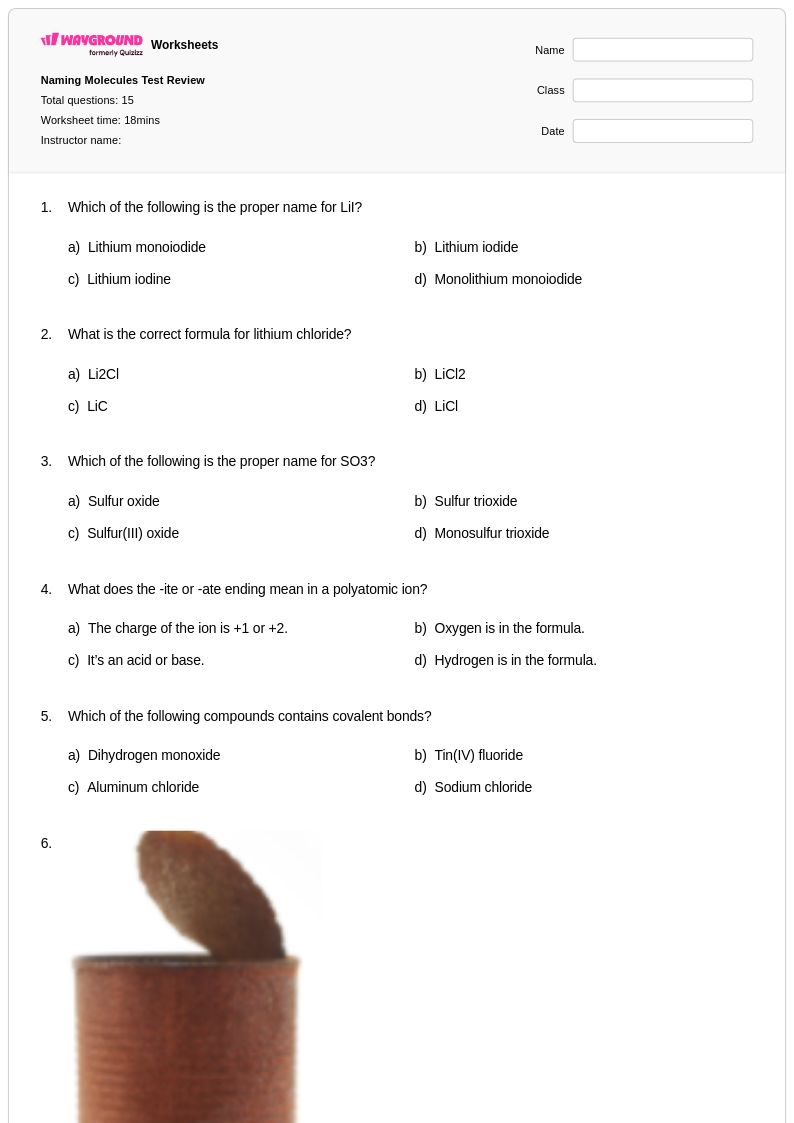
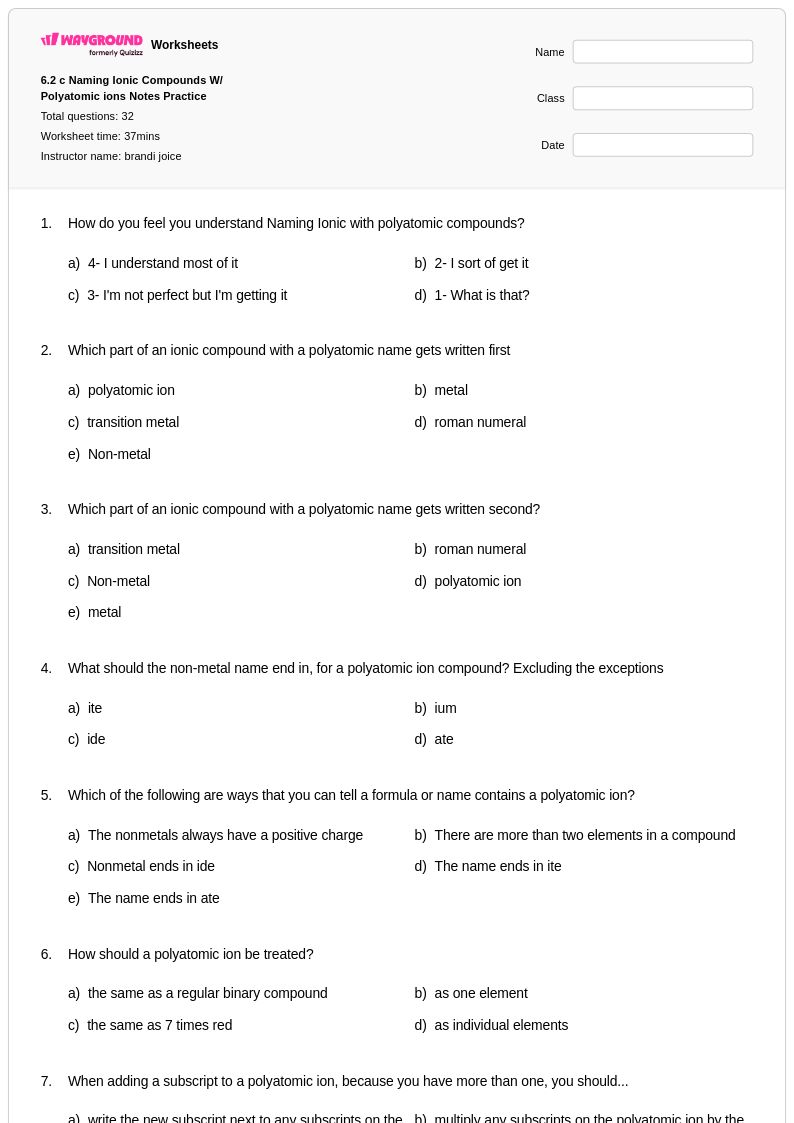
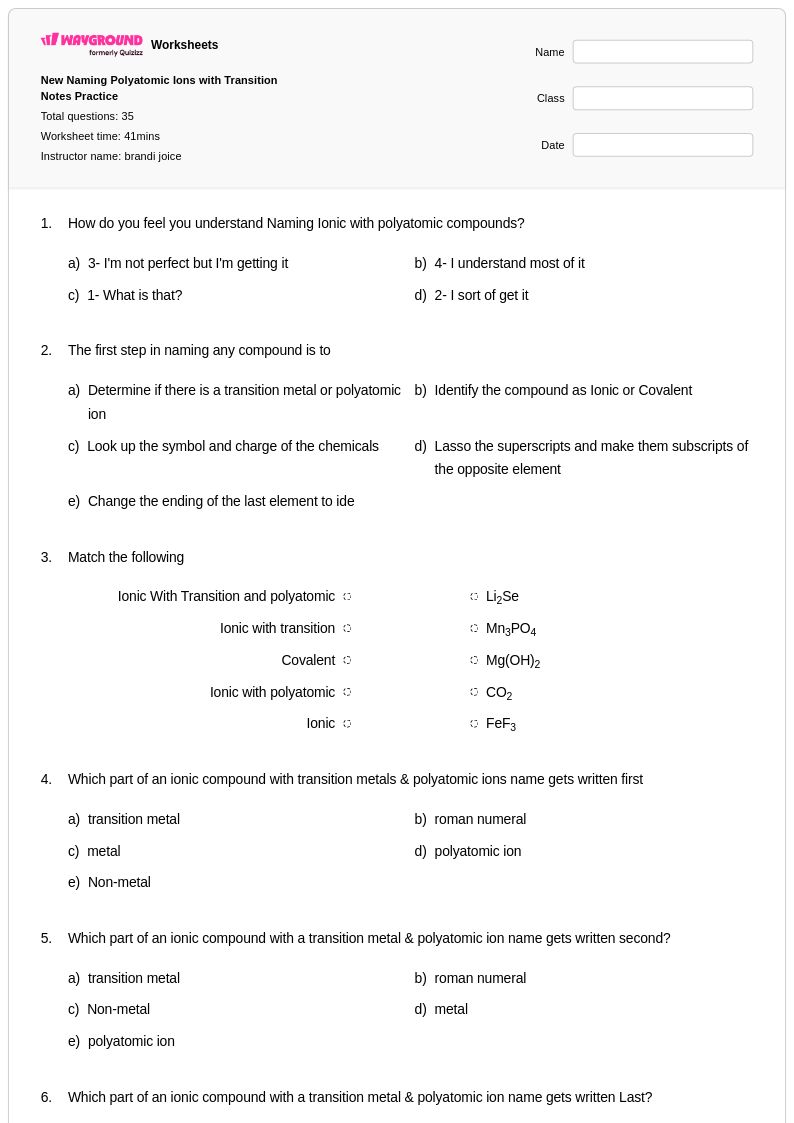
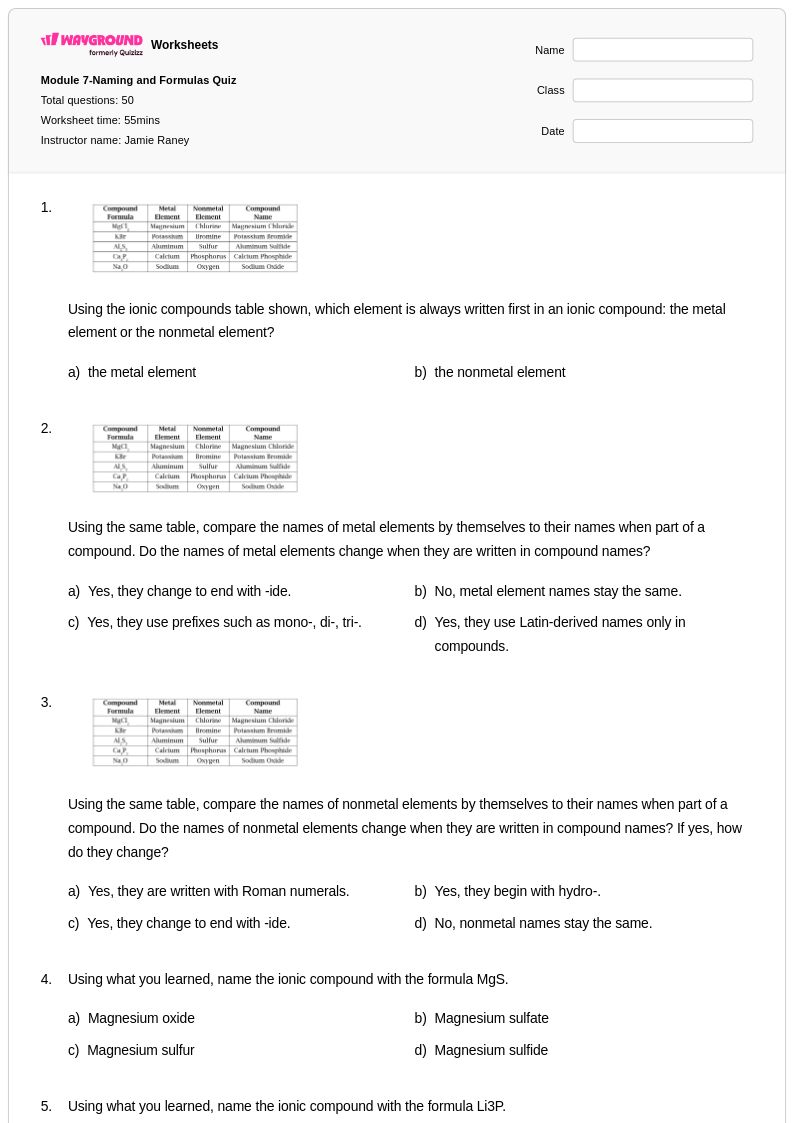
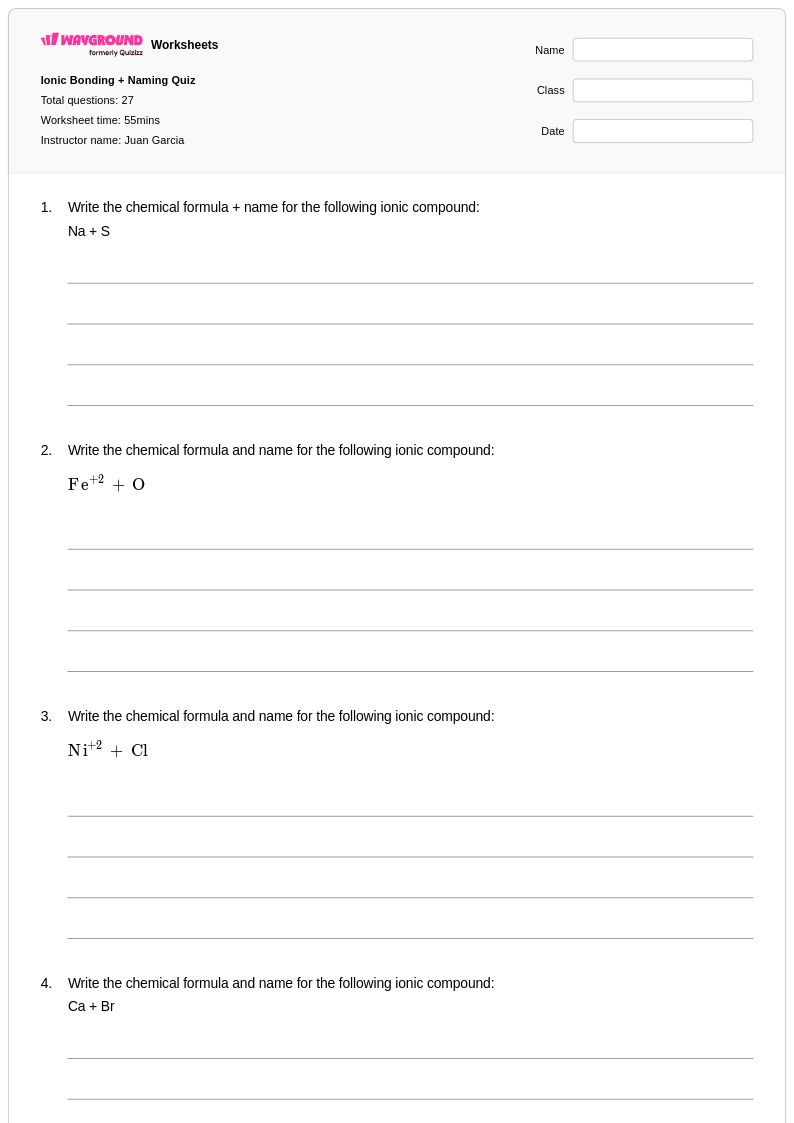
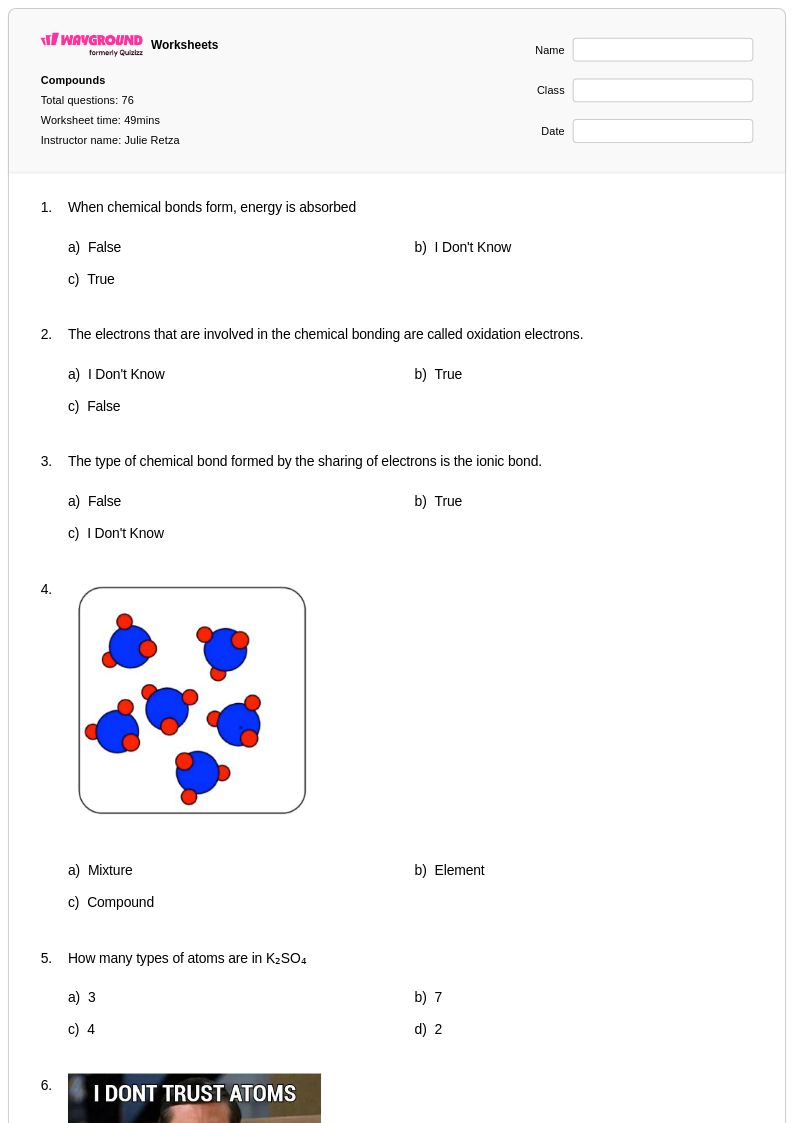
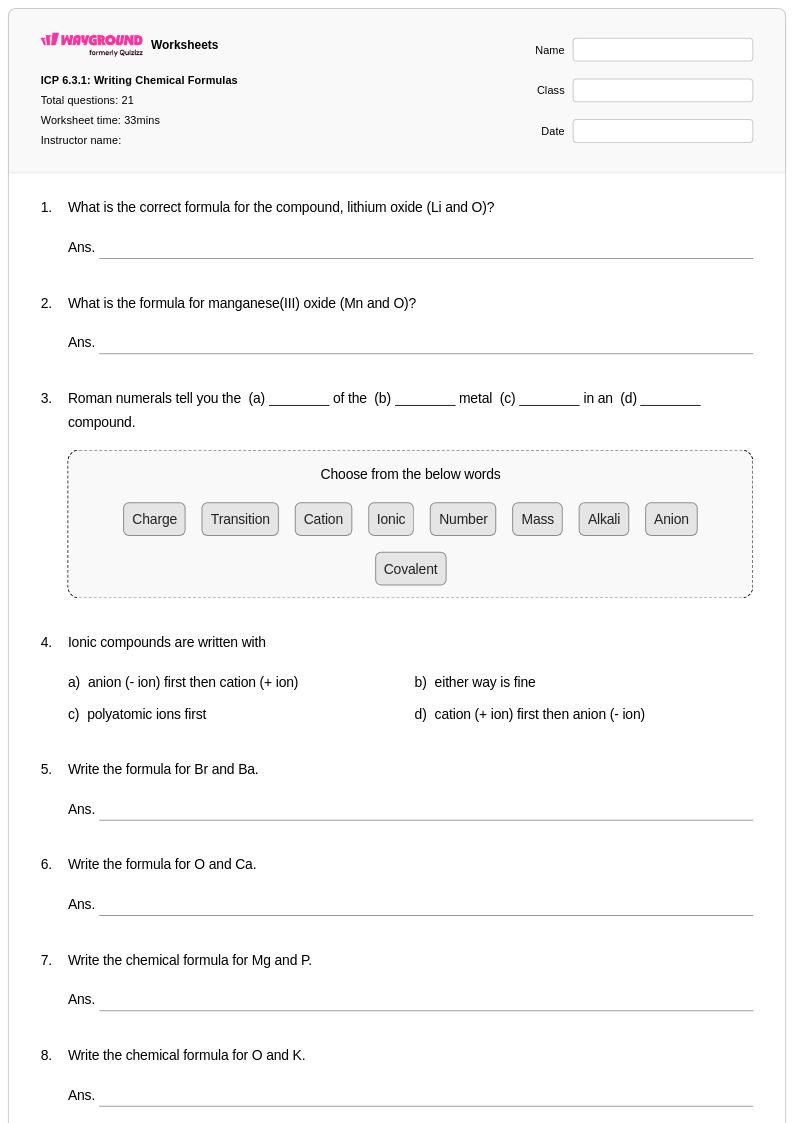
Naming chemical compounds represents a fundamental skill in Class 10 chemistry that bridges theoretical understanding with practical laboratory applications. Wayground's comprehensive collection of naming chemical compounds worksheets provides students with systematic practice in identifying and writing correct names for ionic compounds, covalent compounds, acids, and polyatomic ions according to IUPAC nomenclature rules. These expertly crafted worksheets strengthen critical thinking skills by challenging students to recognize patterns in chemical formulas, apply oxidation state concepts, and master the systematic approach required for accurate chemical communication. Each worksheet includes detailed answer keys and step-by-step solutions, available as free printables and downloadable pdf formats, ensuring students can practice independently while teachers can efficiently assess progress through structured practice problems that build from basic binary compounds to more complex polyatomic structures.
Wayground's robust platform, formerly known as Quizizz, empowers educators with millions of teacher-created resources specifically designed to support Class 10 chemistry instruction in naming chemical compounds. The platform's advanced search and filtering capabilities allow teachers to quickly locate worksheets aligned with specific curriculum standards, whether focusing on ionic nomenclature, molecular compounds, or acid naming conventions. Differentiation tools enable seamless customization of worksheet difficulty levels, supporting both remediation for struggling learners and enrichment opportunities for advanced students. Available in both printable and interactive digital formats, including downloadable pdf versions, these resources integrate effortlessly into diverse teaching environments and provide flexible options for homework assignments, classroom practice, test preparation, and skill reinforcement activities that accommodate various learning styles and pacing needs.
FAQs
How do I teach students to name chemical compounds systematically?
Start by establishing the ionic vs. covalent distinction, since the naming rules diverge based on compound type. Teach ionic compounds first using fixed-charge metals, then introduce transition metals with Roman numerals before moving to molecular compounds and prefixes. Anchoring each rule set to a decision flowchart helps students know which naming system to apply before they attempt any problem.
What exercises help students practice naming ionic and covalent compounds?
Effective practice sequences move from simple binary compounds toward more complex polyatomic structures, so students build confidence before encountering multivalent ions or acids. Worksheets that ask students to both name a compound from its formula and write a formula from its name reinforce the skill bidirectionally, which deepens retention. Regular timed drills on polyatomic ion recognition are especially valuable because students cannot apply nomenclature rules correctly without first memorizing common ions like sulfate, nitrate, and phosphate.
What mistakes do students commonly make when naming chemical compounds?
The most frequent error is applying molecular prefix rules (mono-, di-, tri-) to ionic compounds, where those prefixes do not belong. Students also routinely confuse -ide, -ite, and -ate suffixes for polyatomic anions, particularly when distinguishing between sulfite and sulfate or nitrite and nitrate. A third common mistake is omitting Roman numerals for transition metals with variable oxidation states, such as writing 'iron chloride' instead of 'iron(III) chloride.' Targeted practice that isolates each error type helps students self-correct before confusion becomes entrenched.
How do I use naming chemical compounds worksheets in my classroom?
Naming chemical compounds worksheets on Wayground are available as printable PDFs for traditional classroom use and in digital formats for technology-integrated environments, including the option to host them as a live quiz on the Wayground platform. Printable versions work well for guided notes, independent practice, or homework, while digital formats allow for immediate feedback and real-time monitoring of student responses. The included answer keys support both teacher-led correction and student self-assessment.
How do I differentiate naming chemical compounds instruction for students at different skill levels?
Begin lower-level learners with fixed-charge binary ionic compounds and a reference sheet of polyatomic ions before introducing any variable-charge metals or molecular naming. Advanced students benefit from problems that integrate acid naming, hydrate nomenclature, and introductory organic compound names. On Wayground, teachers can apply accommodations such as reduced answer choices to decrease cognitive load for struggling students or enable Read Aloud for students who need auditory support, without affecting the experience of other students in the same session.
What IUPAC rules should students know before attempting chemical nomenclature worksheets?
Students should understand four foundational rules before working independently: how to identify whether a compound is ionic or covalent, how to use electronegativity and metal type to assign oxidation states, the correct suffixes for monatomic and polyatomic anions, and the Greek prefix system for naming molecular compounds. Without these prerequisites, students tend to guess rather than reason through compound names, which makes worksheet practice unproductive. A brief pre-assessment or warm-up identifying compound type can ensure students are ready to benefit from structured nomenclature practice.