Free Printable Concentrations Worksheets for Class 10
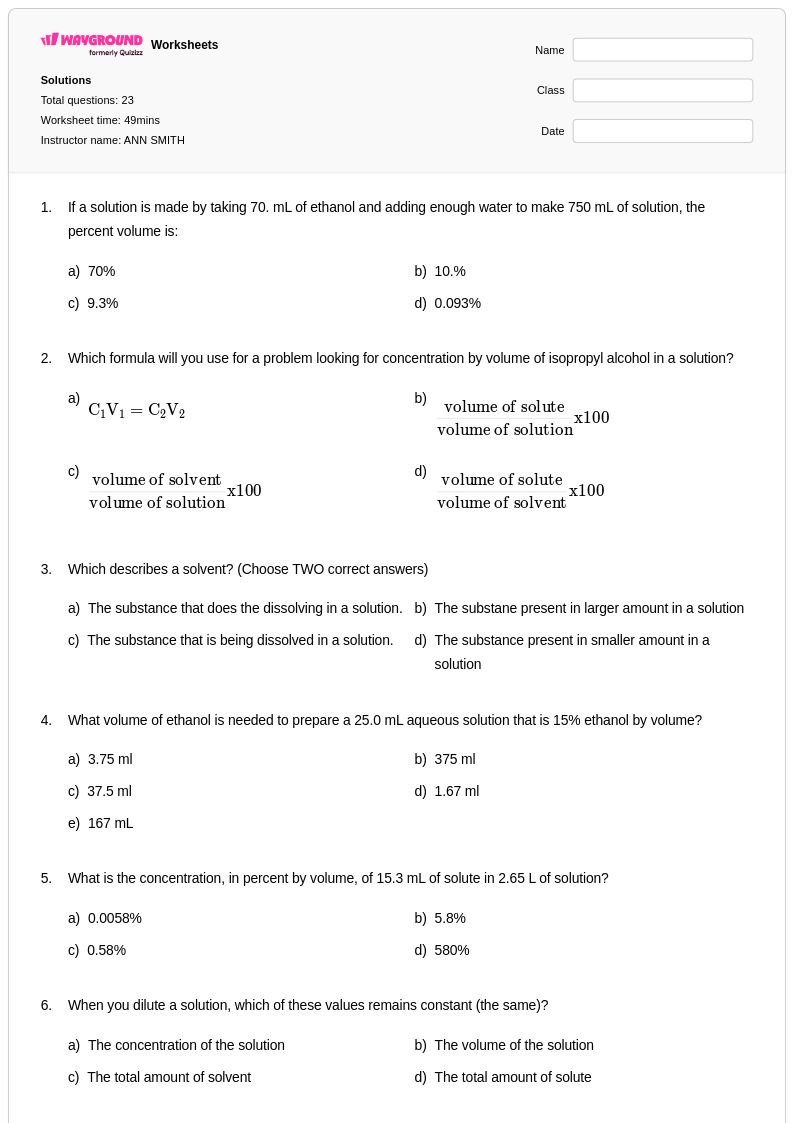
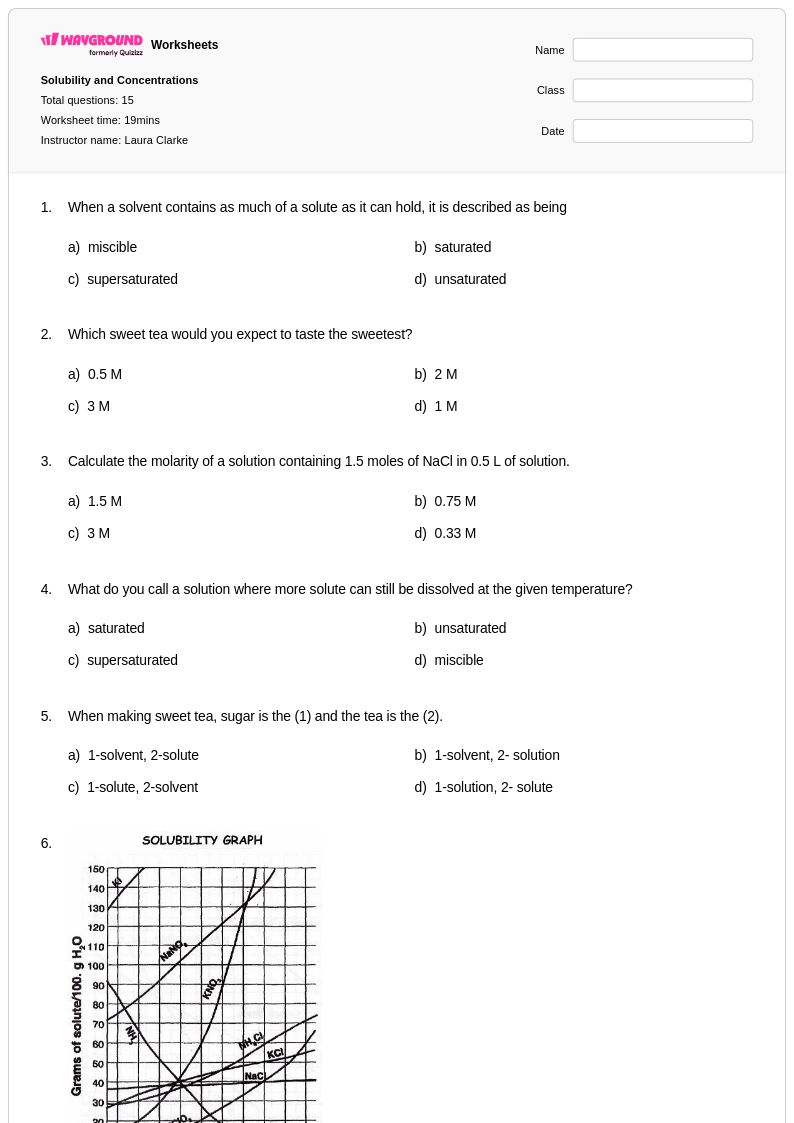
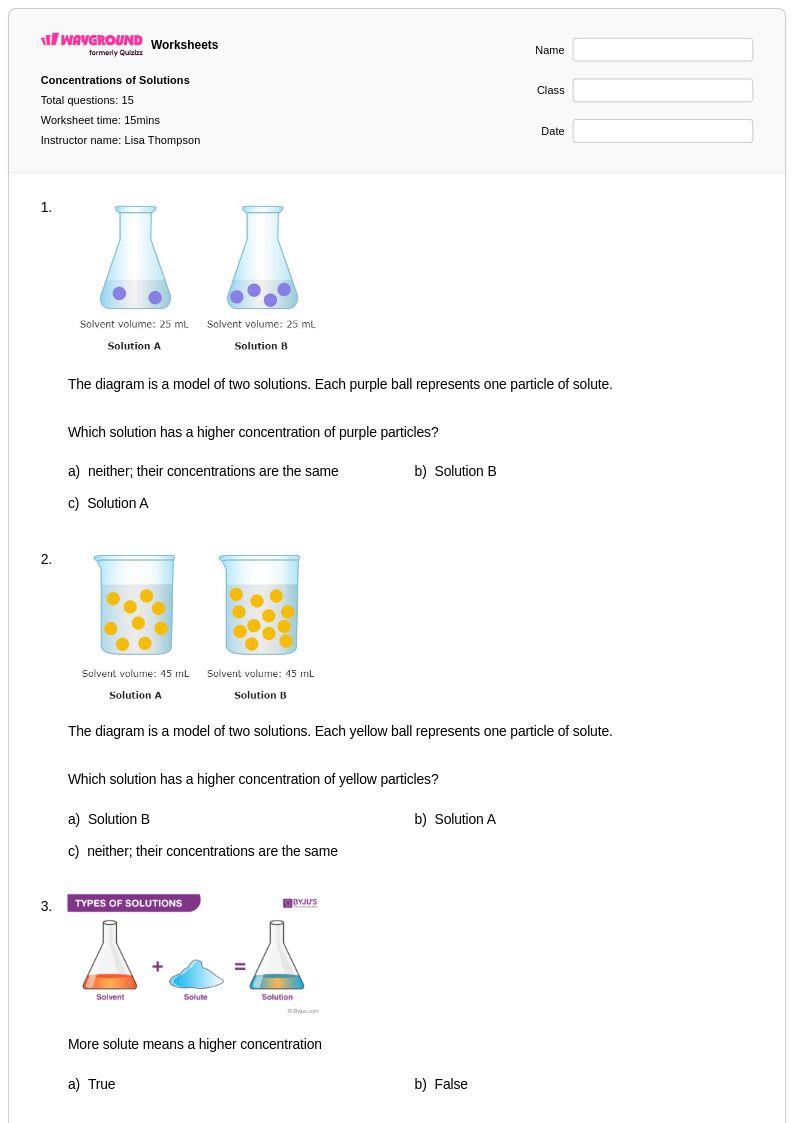
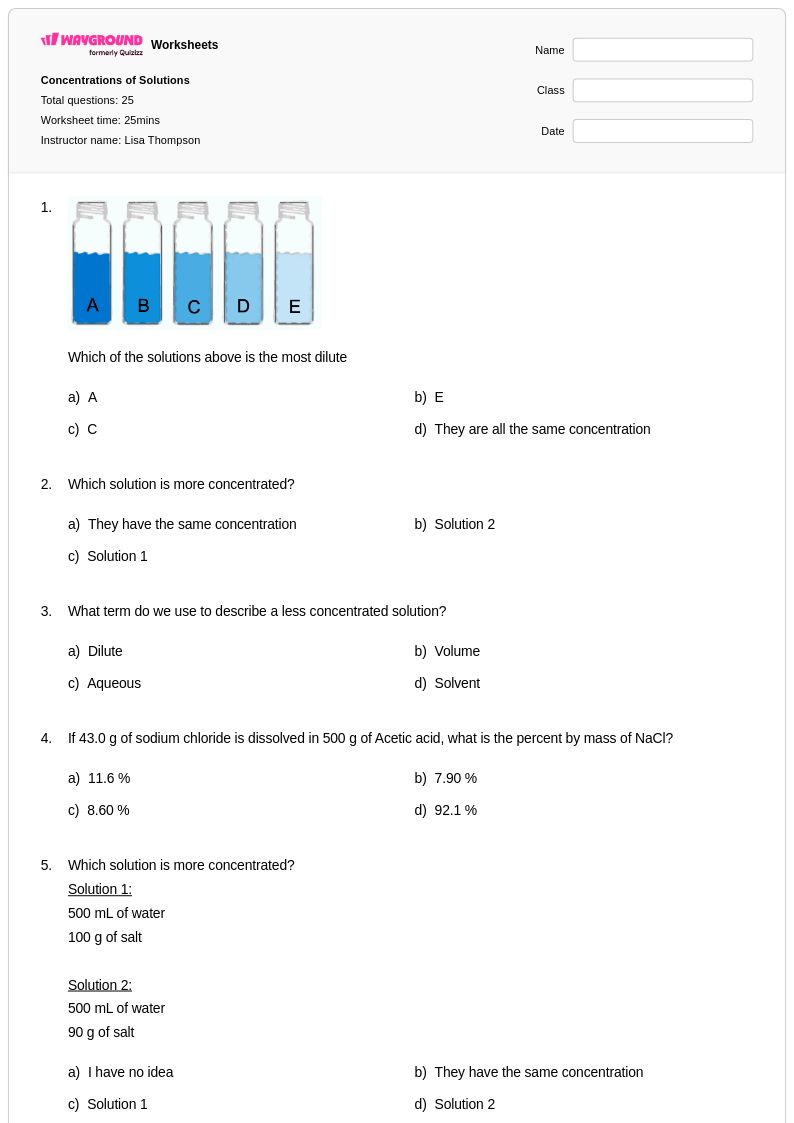
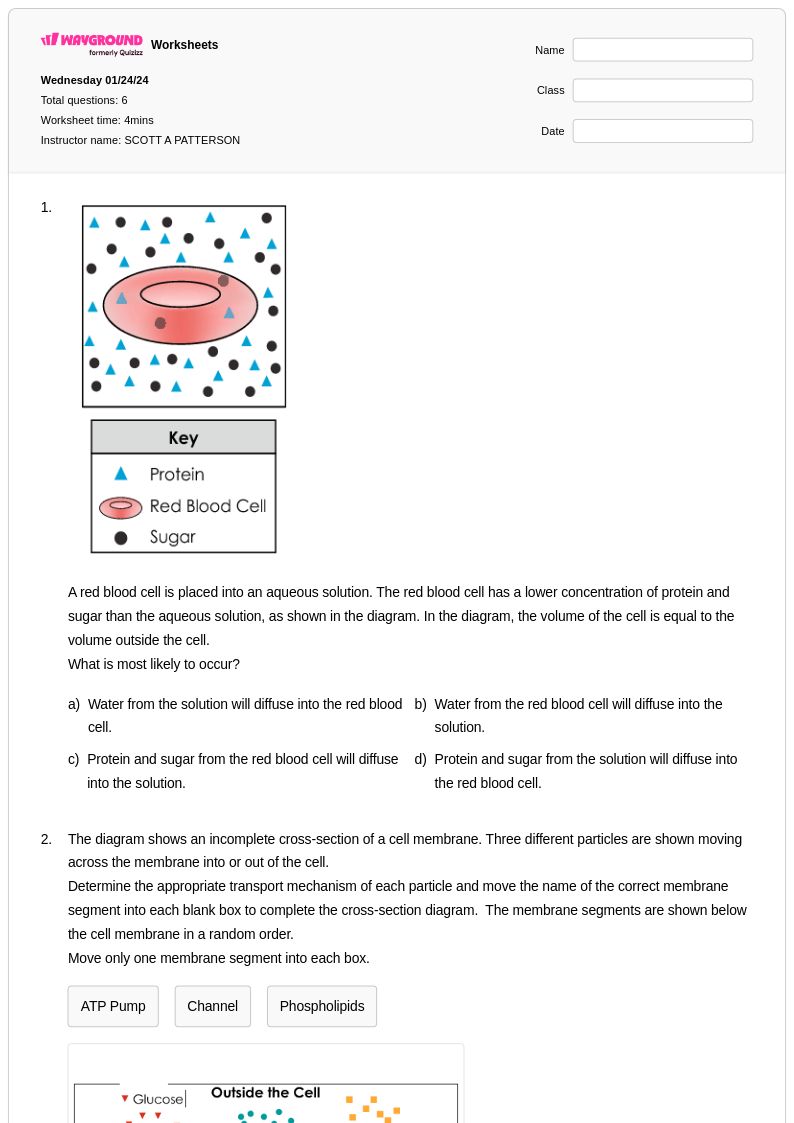
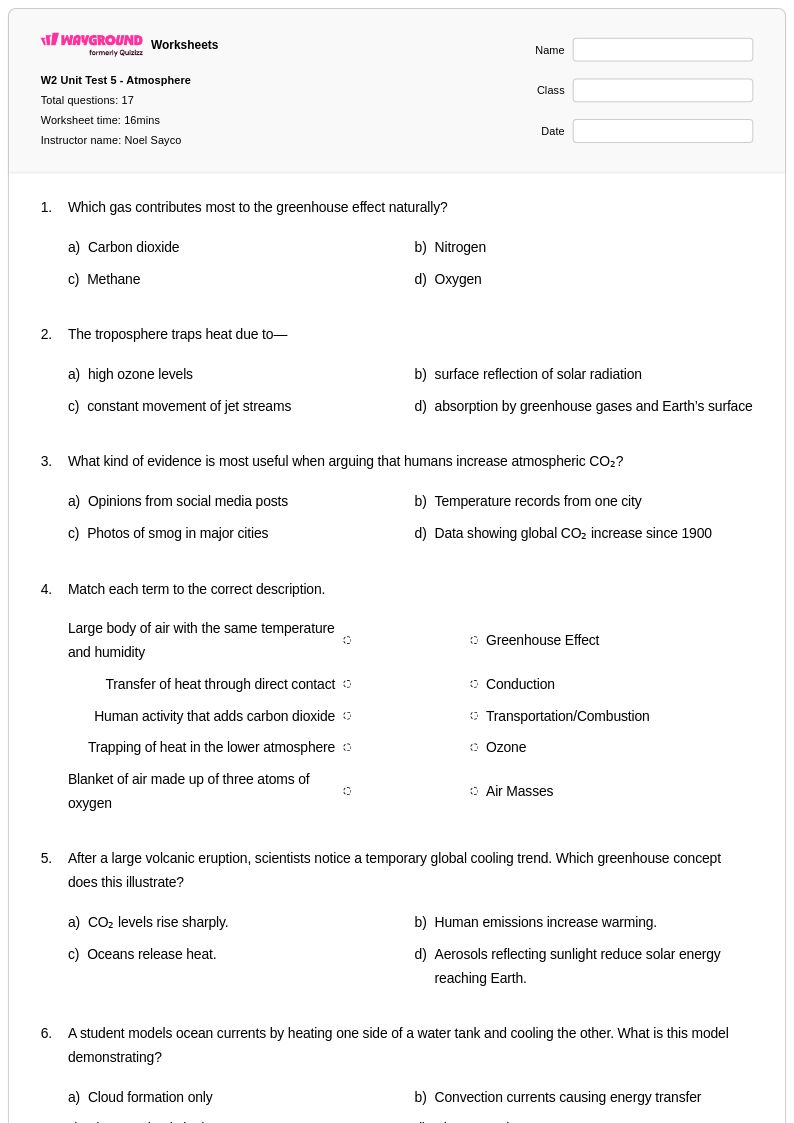
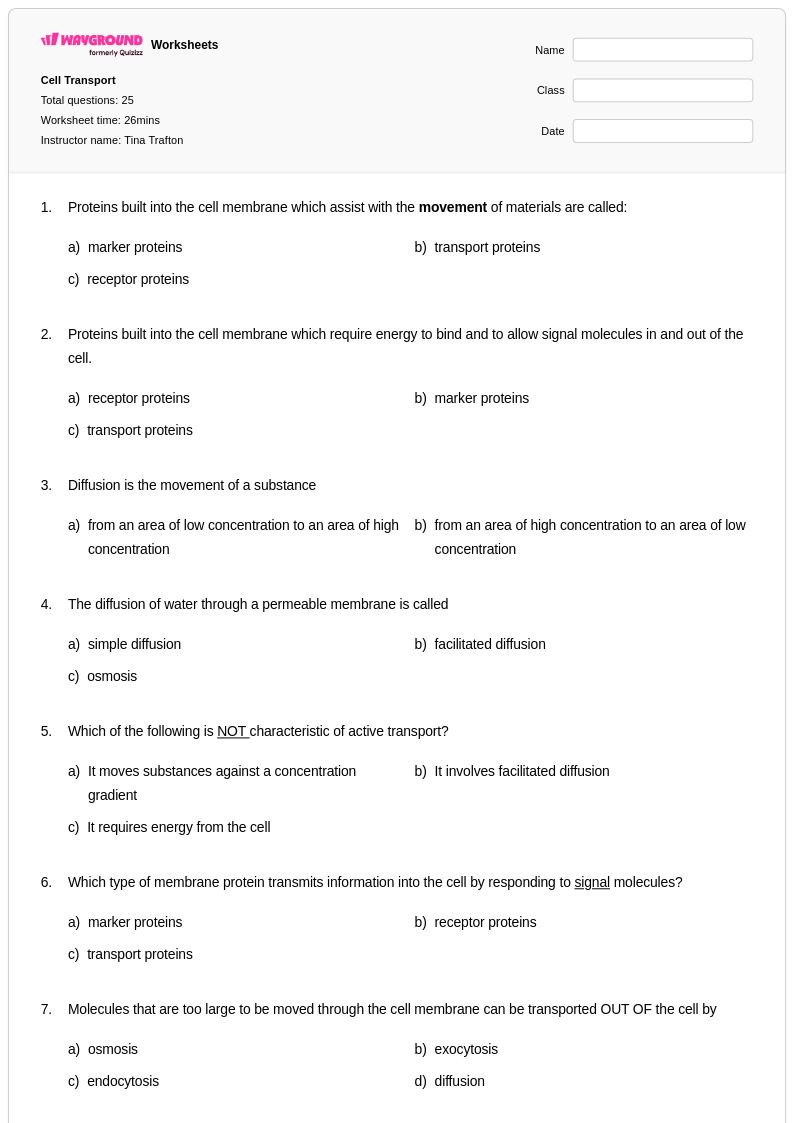
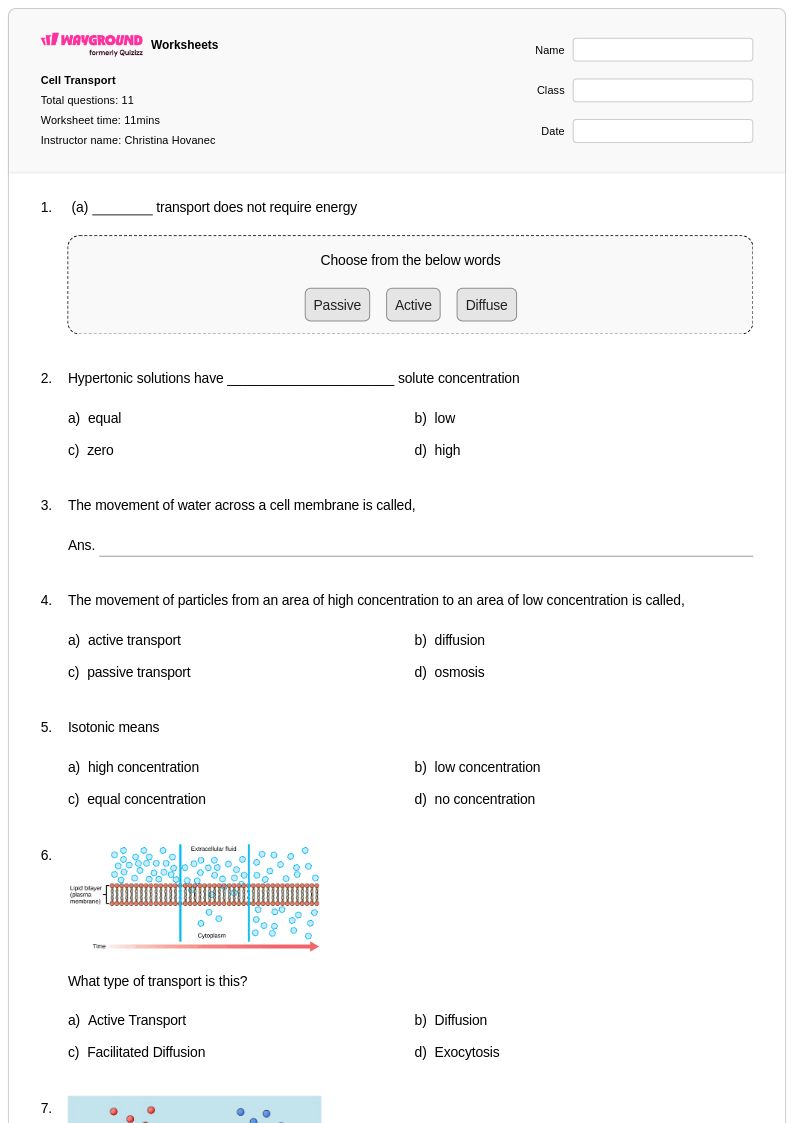
Free Class 10 chemistry concentration worksheets and printables help students master molarity, dilutions, and solution calculations through comprehensive practice problems with detailed answer keys and step-by-step solutions.
Explore printable Concentrations worksheets for Class 10
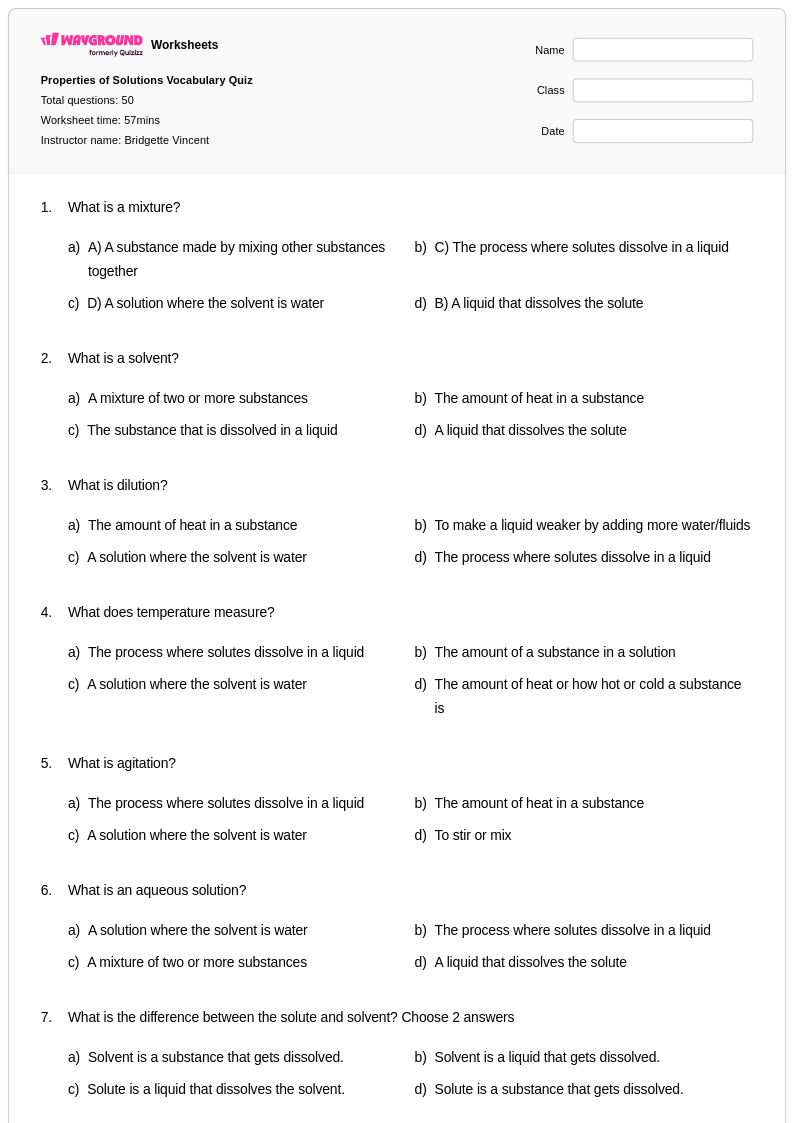
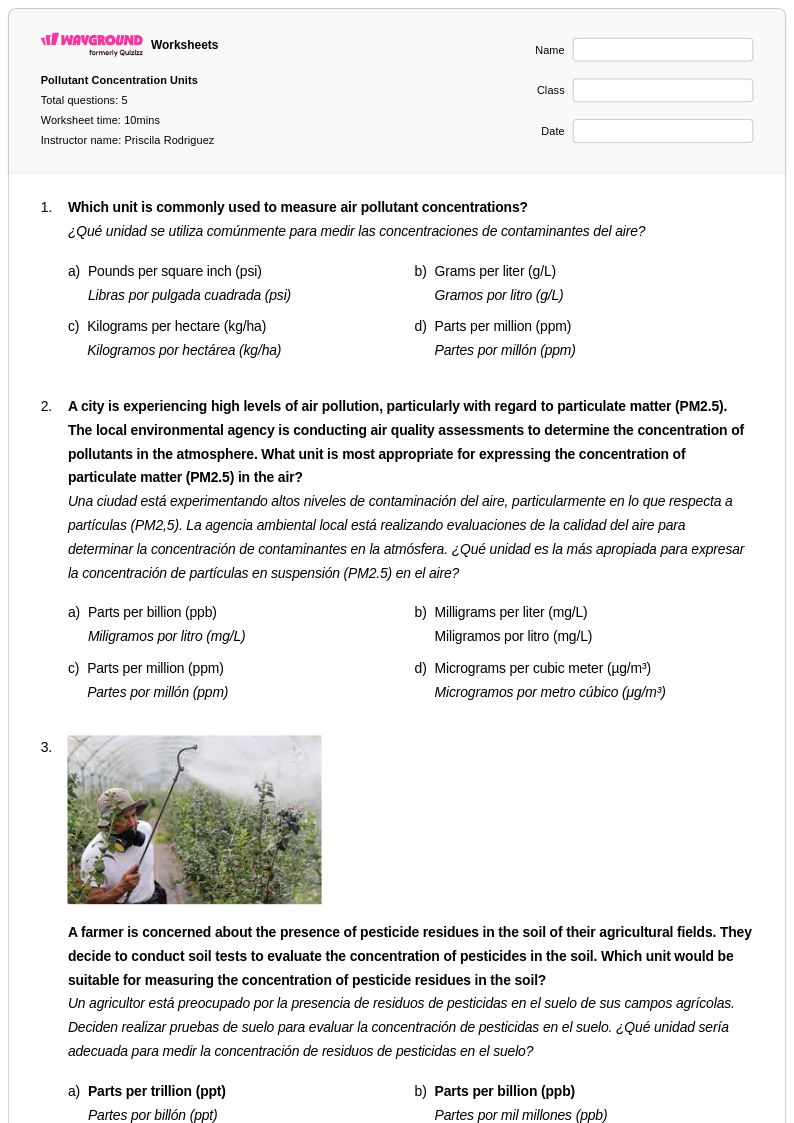
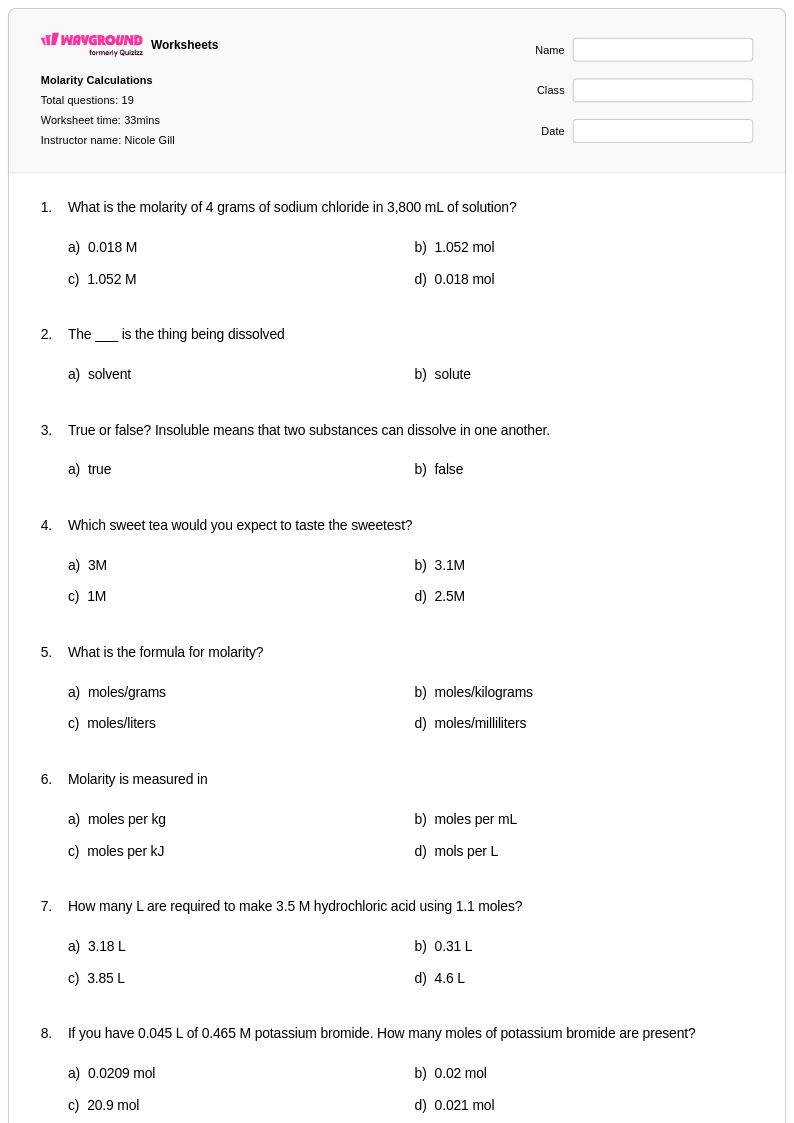
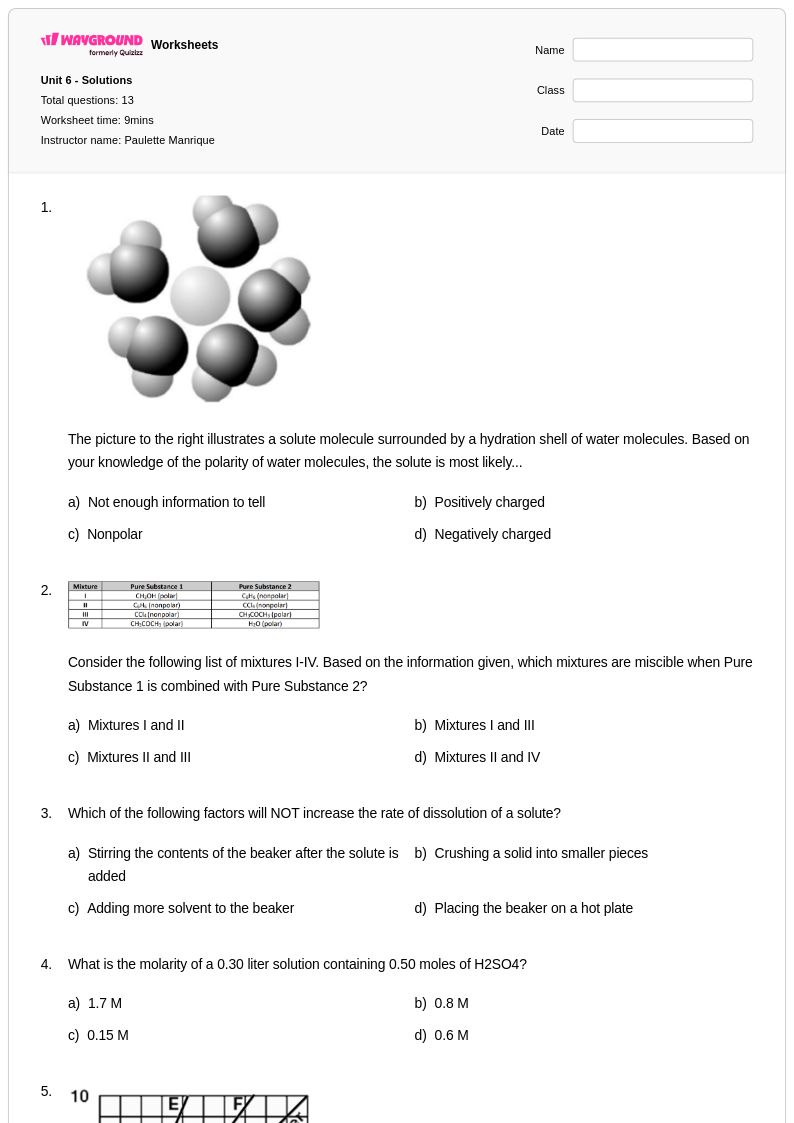
Class 10 chemistry concentrations worksheets available through Wayground (formerly Quizizz) provide comprehensive practice materials that strengthen students' understanding of solution chemistry fundamentals. These educational resources focus on essential concentration calculations including molarity, molality, mass percent, and parts per million, helping students master the quantitative relationships between solutes and solvents. The worksheets feature structured practice problems that progress from basic concentration definitions to complex dilution calculations and solution preparation scenarios. Each worksheet includes detailed answer keys that guide students through step-by-step problem-solving processes, while the free printable format ensures accessibility for both classroom instruction and independent study. These pdf resources emphasize the mathematical skills necessary for advanced chemistry coursework while reinforcing conceptual understanding of how concentration affects chemical reactions and solution properties.
Wayground (formerly Quizizz) supports chemistry educators with millions of teacher-created concentration worksheets that streamline lesson planning and differentiated instruction. The platform's advanced search and filtering capabilities allow teachers to locate materials aligned with specific curriculum standards, whether focusing on introductory molarity calculations or advanced colligative properties. These digital and printable resources offer flexible customization options that enable educators to modify problem sets for remediation or enrichment based on individual student needs. Teachers can seamlessly integrate these pdf worksheets into their existing curriculum to provide targeted skill practice, assess student understanding of concentration concepts, and prepare learners for standardized chemistry assessments. The comprehensive collection ensures that educators have access to varied problem types and difficulty levels, supporting effective instruction across diverse Class 10 chemistry classrooms while maintaining consistent academic rigor.
FAQs
How do I teach solution concentration to chemistry students?
Start by building conceptual understanding of what concentration means before introducing formulas — students should be able to explain in plain language why a more concentrated solution has more solute per unit of solvent. From there, introduce molarity as the most commonly used unit, then layer in molality, mass percent, and parts per million with explicit attention to when each unit is appropriate. Connecting calculations to real laboratory contexts, such as preparing a buffer solution or diluting a stock reagent, helps students see concentration as a practical tool rather than an abstract formula.
What exercises help students practice molarity and dilution calculations?
Effective practice moves students from single-step molarity calculations (moles of solute divided by liters of solution) toward multi-step dilution problems using the C1V1 = C2V2 relationship. Worksheets that include unit conversion within the problem — for example, giving volume in milliliters or mass in grams rather than moles — force students to manage multiple skills at once, which reflects actual exam and lab conditions. Mixing problem types within a single worksheet, rather than grouping identical formats together, builds the flexibility students need for assessments.
What mistakes do students commonly make with concentration calculations?
The most frequent error is confusing the volume of solution with the volume of solvent — students often add solute volume to solvent volume rather than recognizing that solution volume is measured after mixing. A second common mistake is unit inconsistency: students use milliliters where liters are required, or grams where moles are needed, without converting first. For dilution problems, students frequently misidentify which concentration or volume is the unknown, leading to algebraic errors even when they understand the underlying concept.
How do I differentiate concentration worksheets for students at different skill levels?
Tiered worksheets work well here: foundational problems should provide the formula and walk students through identifying each variable, while advanced problems omit scaffolding and require students to select the appropriate concentration unit themselves. For students who need additional support, Wayground's reduced answer choices accommodation can limit the number of options displayed on digital questions, reducing cognitive load without changing the underlying chemistry content. Extended time settings can also be applied per student for those who need more processing time on multi-step calculations.
How do I use Wayground's concentration worksheets in my classroom?
Wayground's concentration worksheets are available as printable PDFs for traditional classroom distribution and in digital formats for technology-integrated instruction, making them flexible for in-class practice, homework, and lab preparation. Teachers can also host worksheets directly as a quiz on Wayground, allowing students to complete problems digitally while the platform tracks responses. Each worksheet includes an answer key, so teachers can use them for self-paced review or assign them as formative checks without additional grading overhead.
How do I help students understand the difference between molarity and molality?
The key distinction is the denominator: molarity uses liters of solution, while molality uses kilograms of solvent. This matters most in contexts where temperature changes affect volume — such as colligative property calculations — because molality remains constant while molarity shifts as the solution expands or contracts. A direct comparison problem, where students calculate both values for the same solution, makes the difference concrete and reinforces when each unit is the appropriate choice.