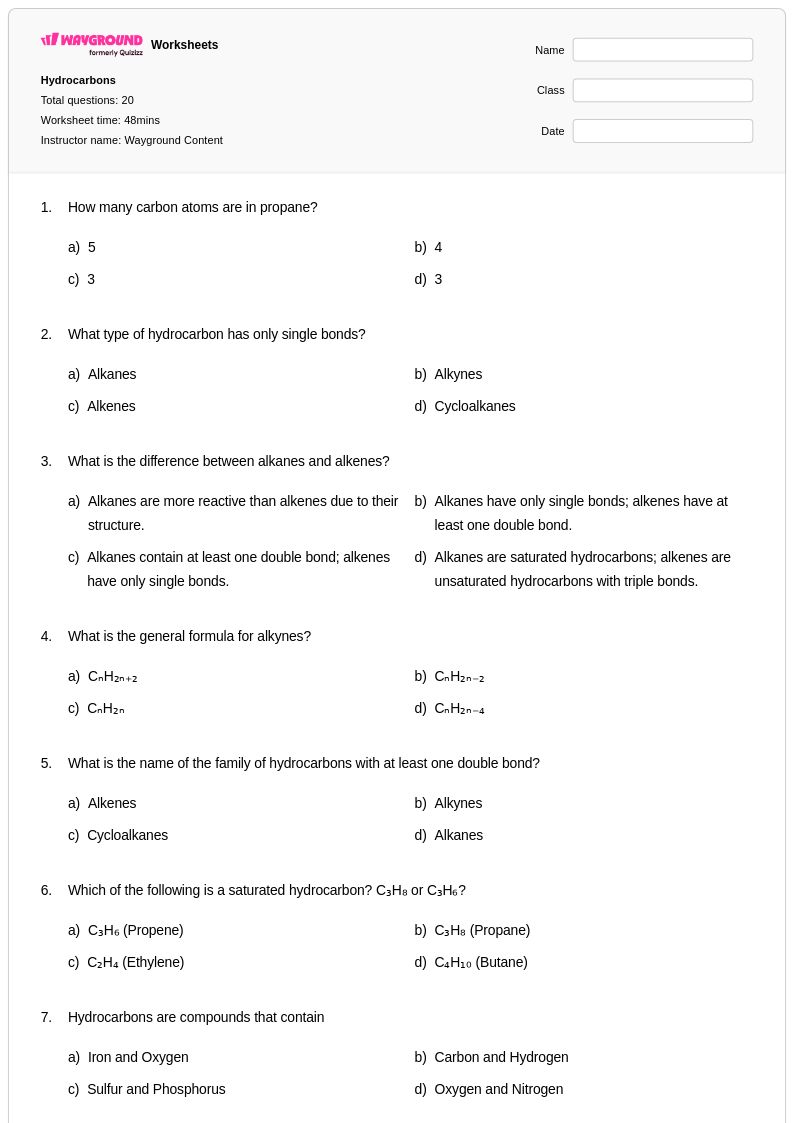
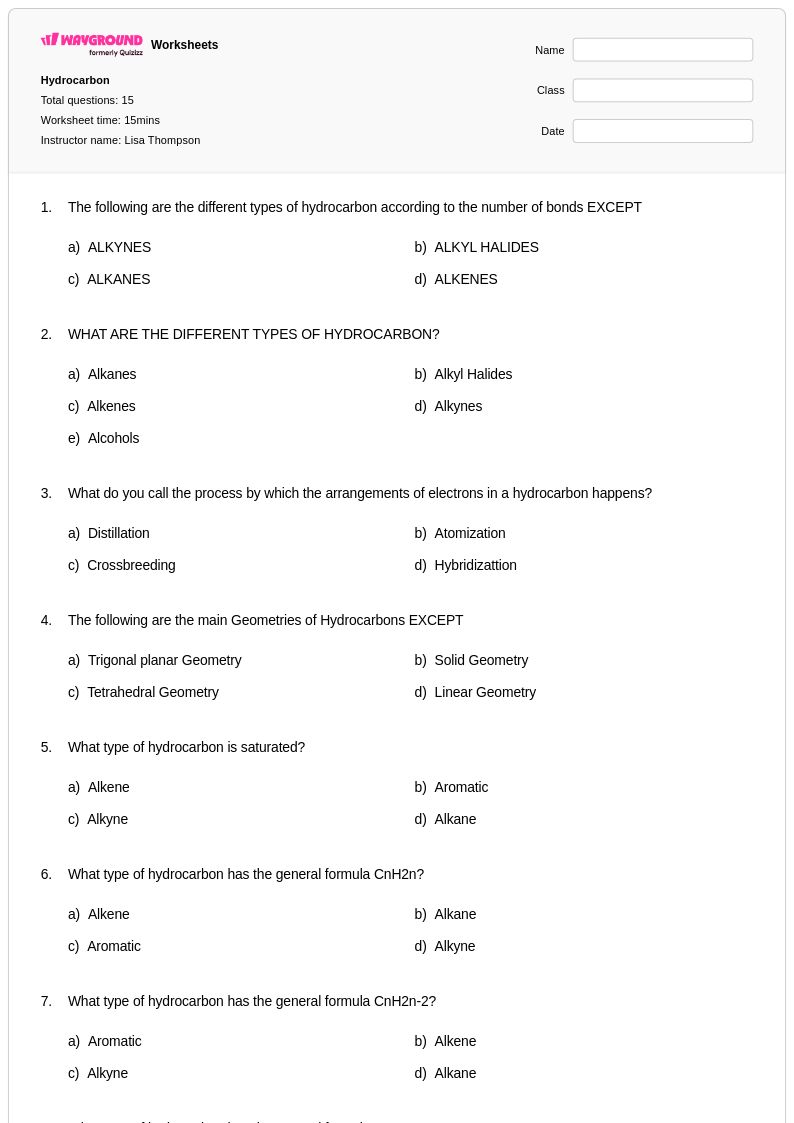
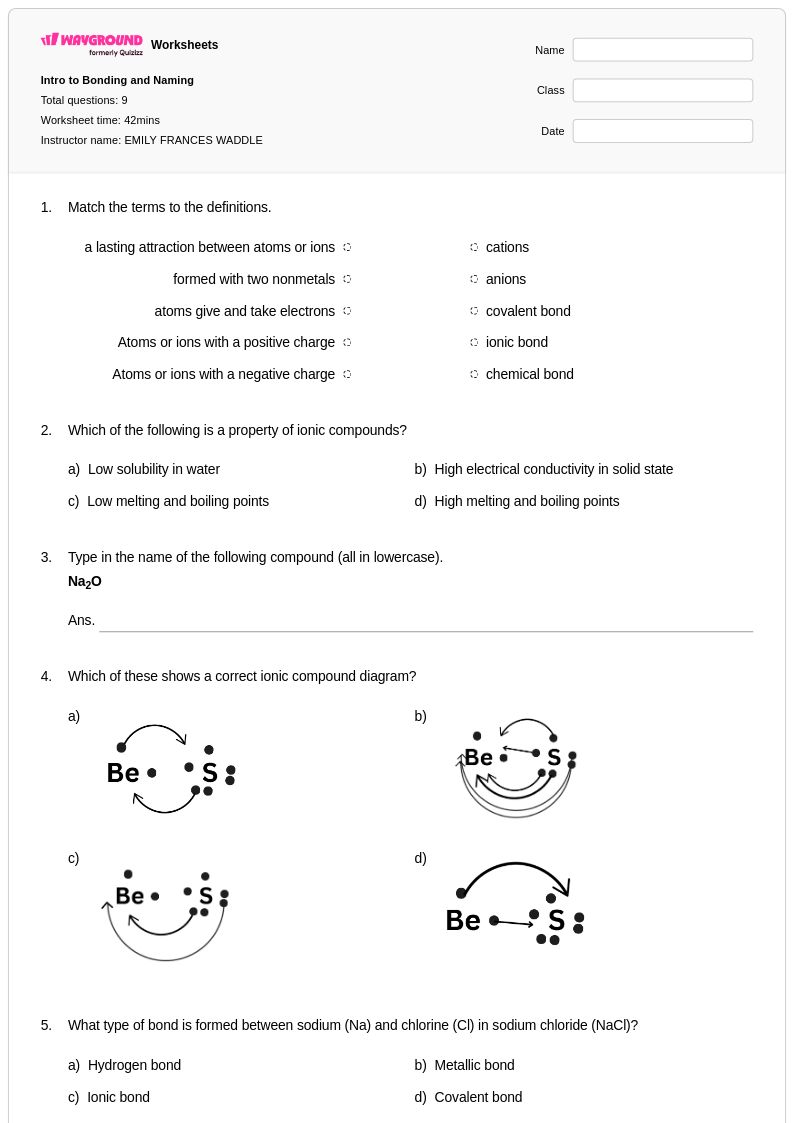
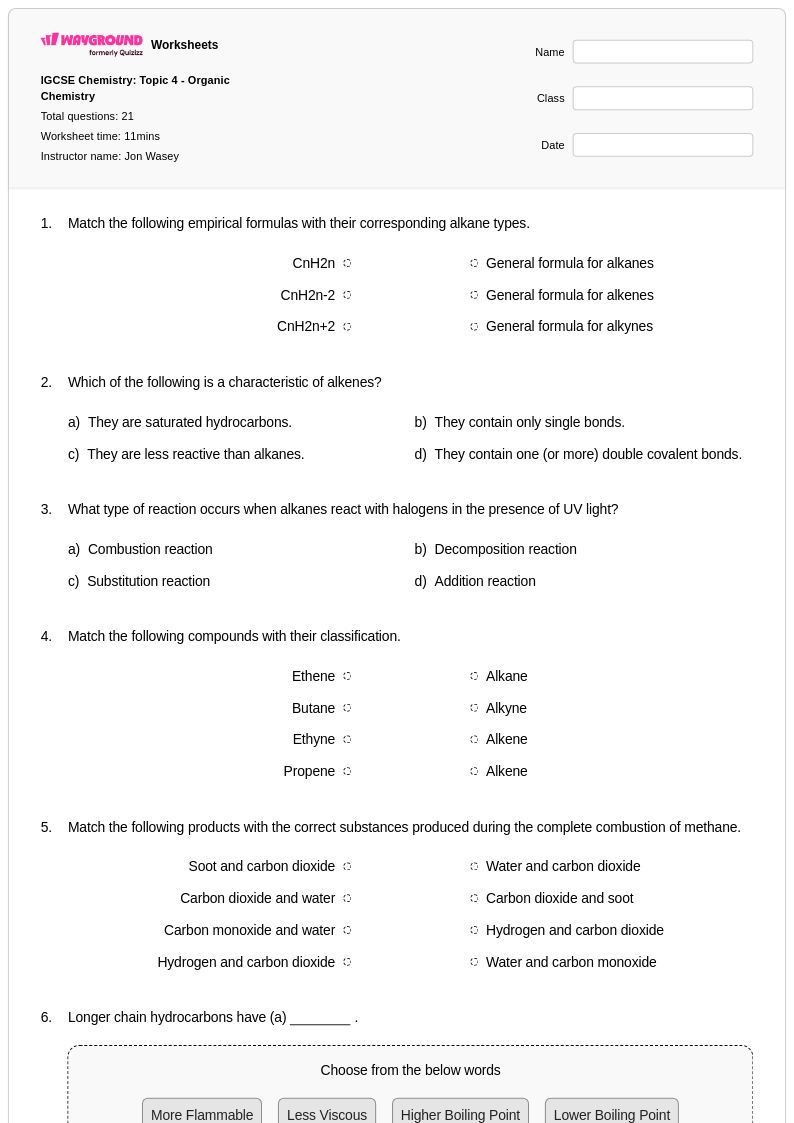
Free Printable Nomenclature of Alkanes Worksheets for Class 10
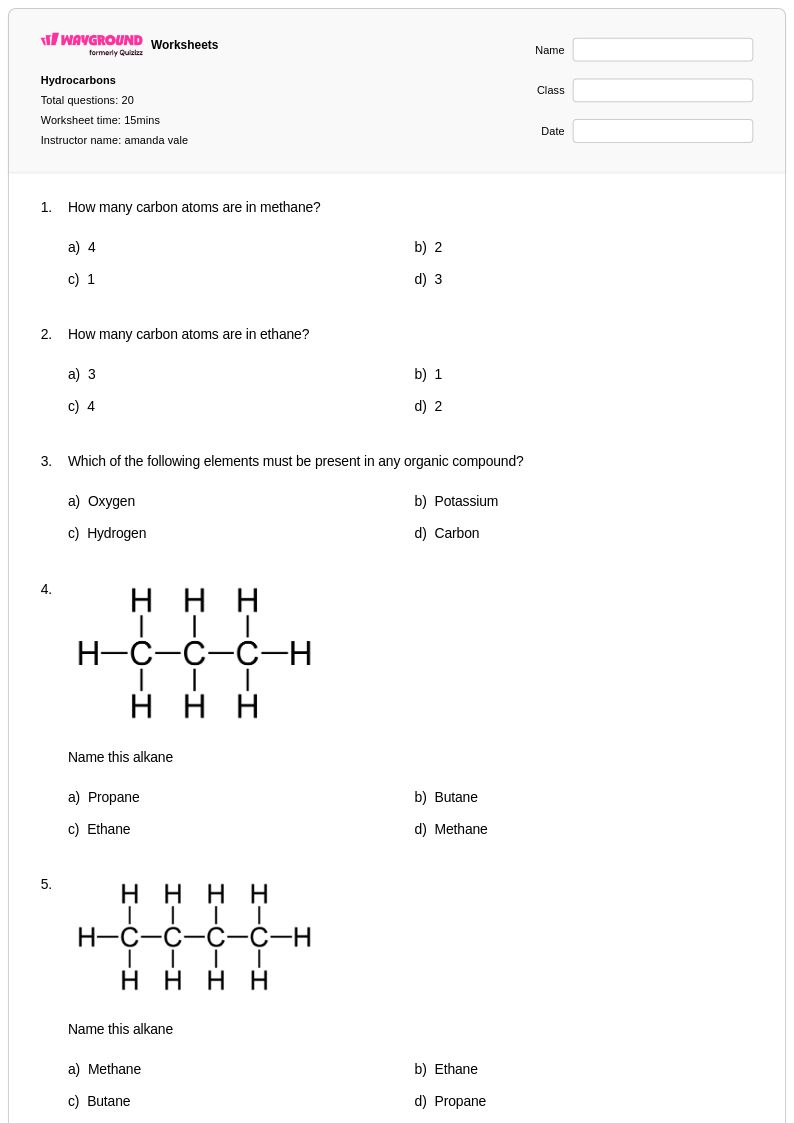
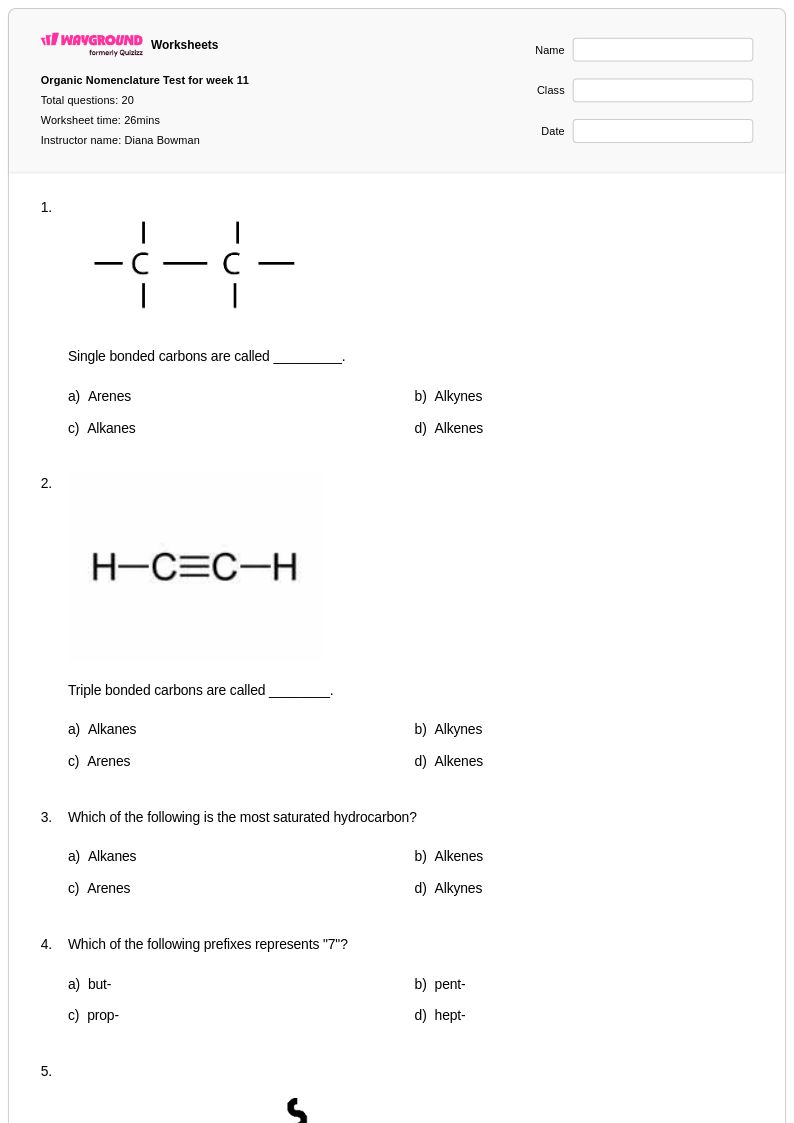
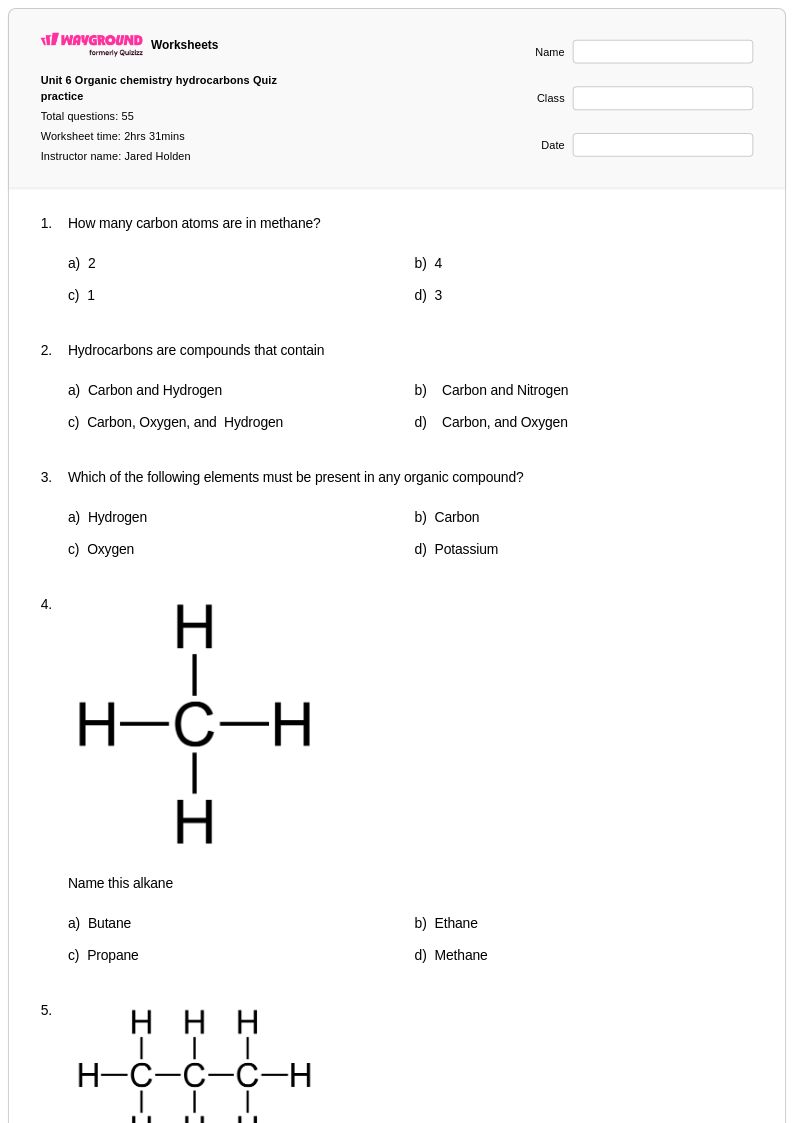
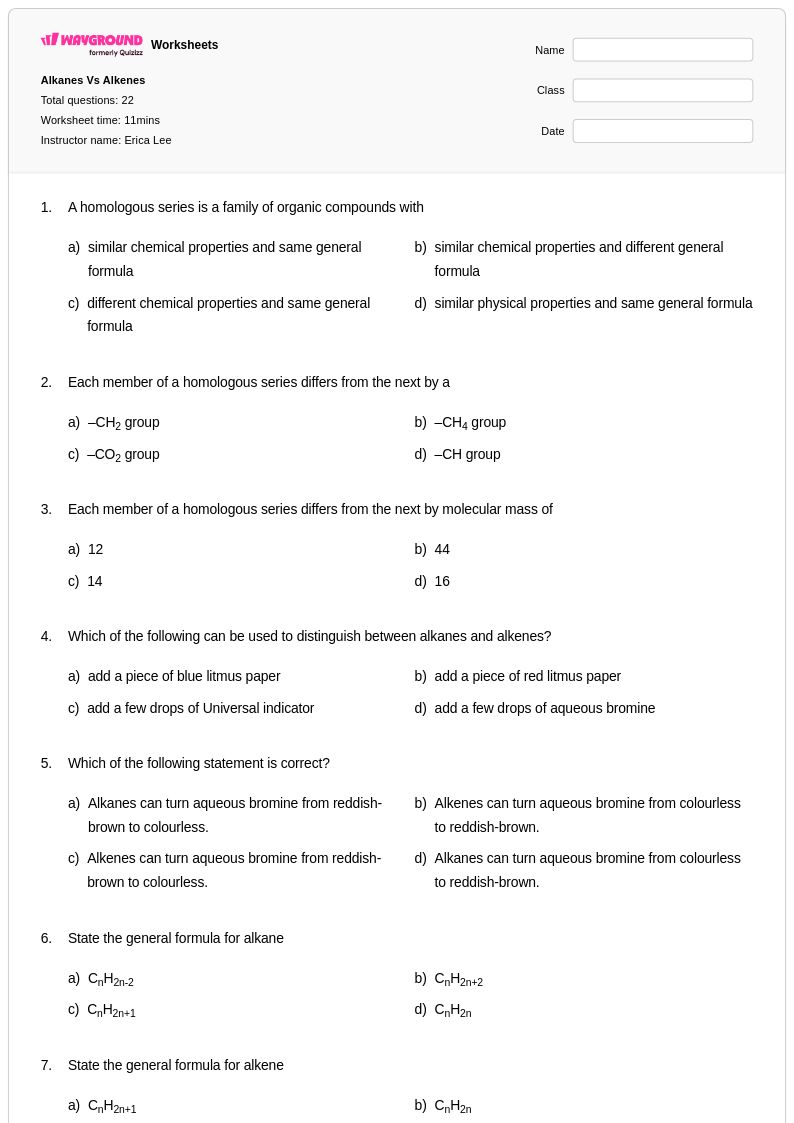
Class 10 nomenclature of alkanes free worksheets and printables from Wayground help students master systematic naming conventions for saturated hydrocarbons through practice problems with comprehensive answer keys.
Explore printable Nomenclature of Alkanes worksheets for Class 10
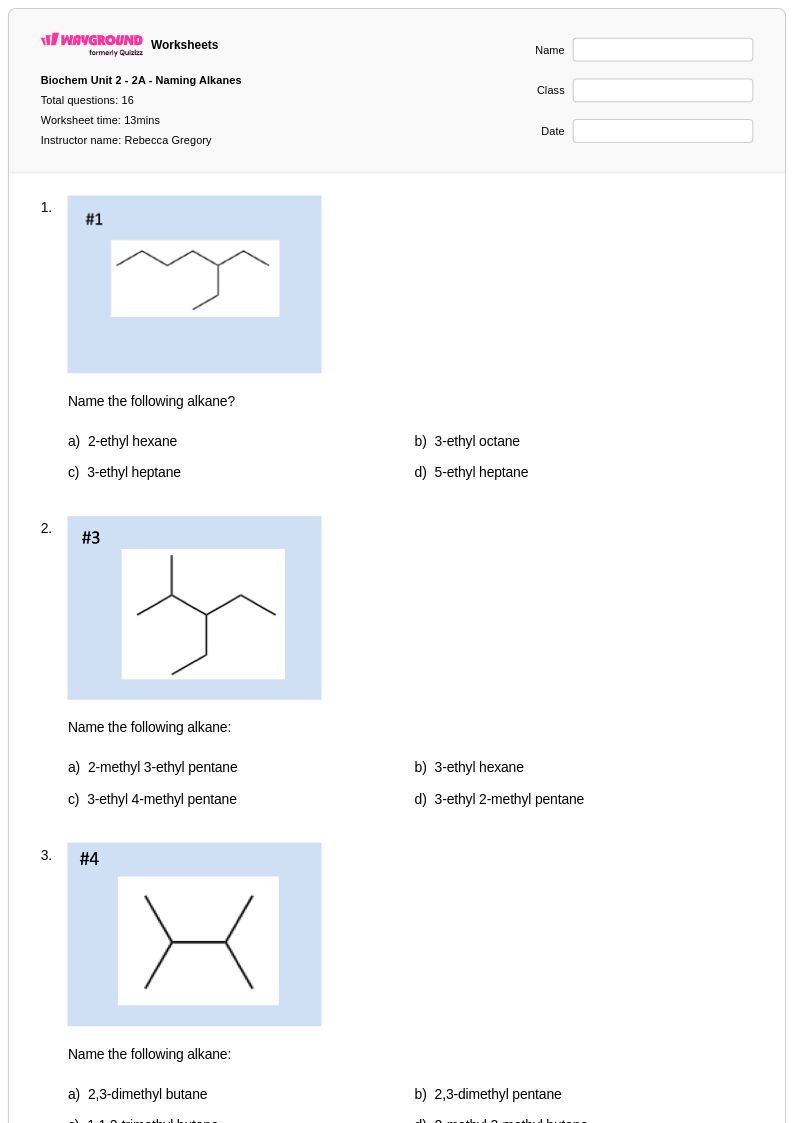
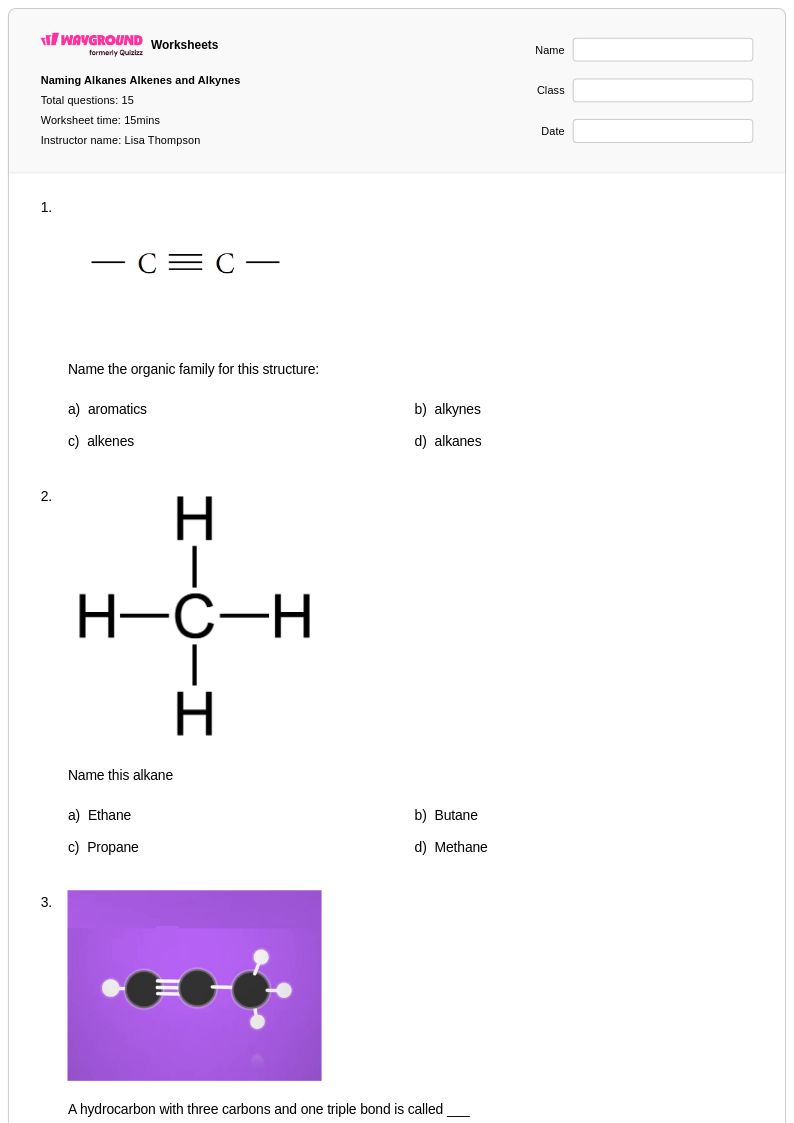
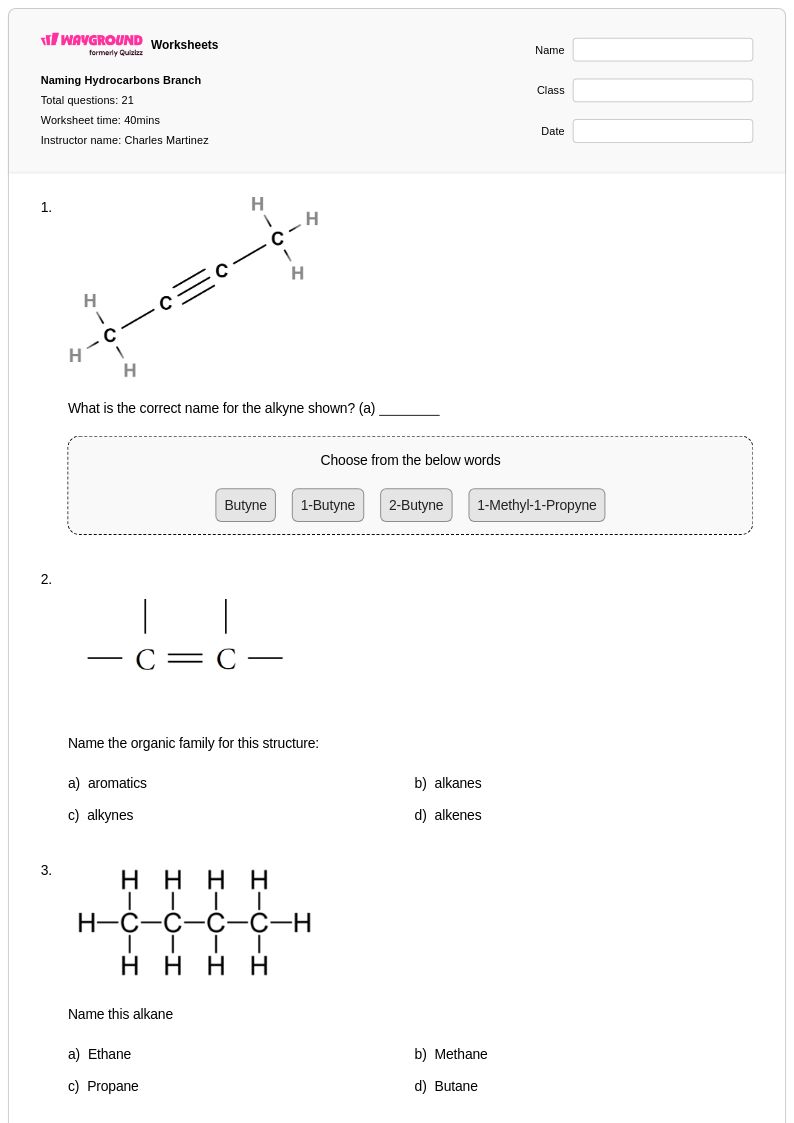
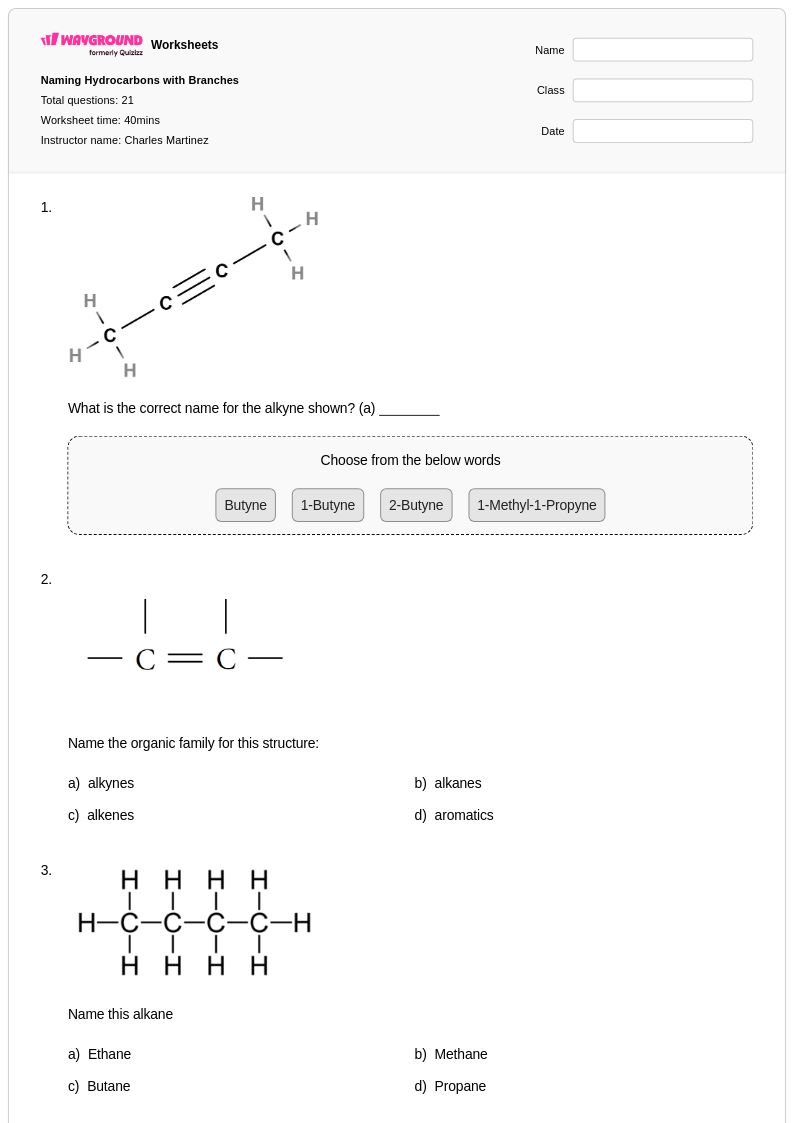
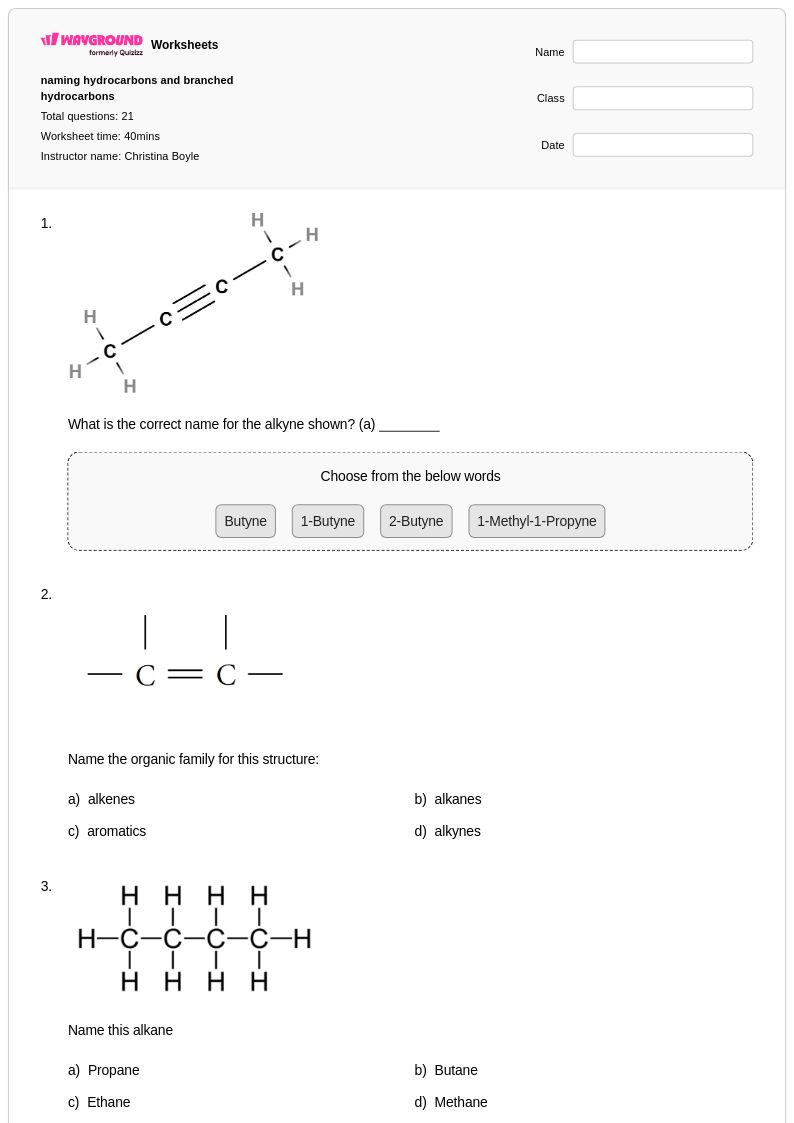
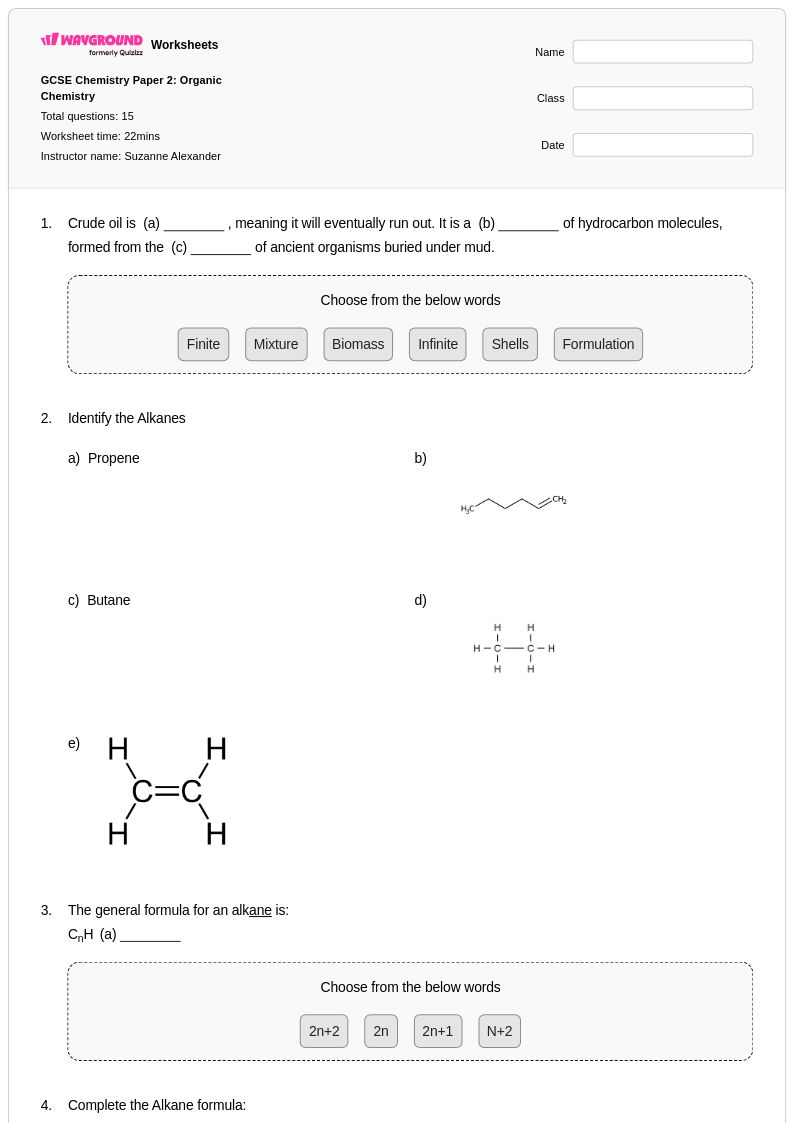
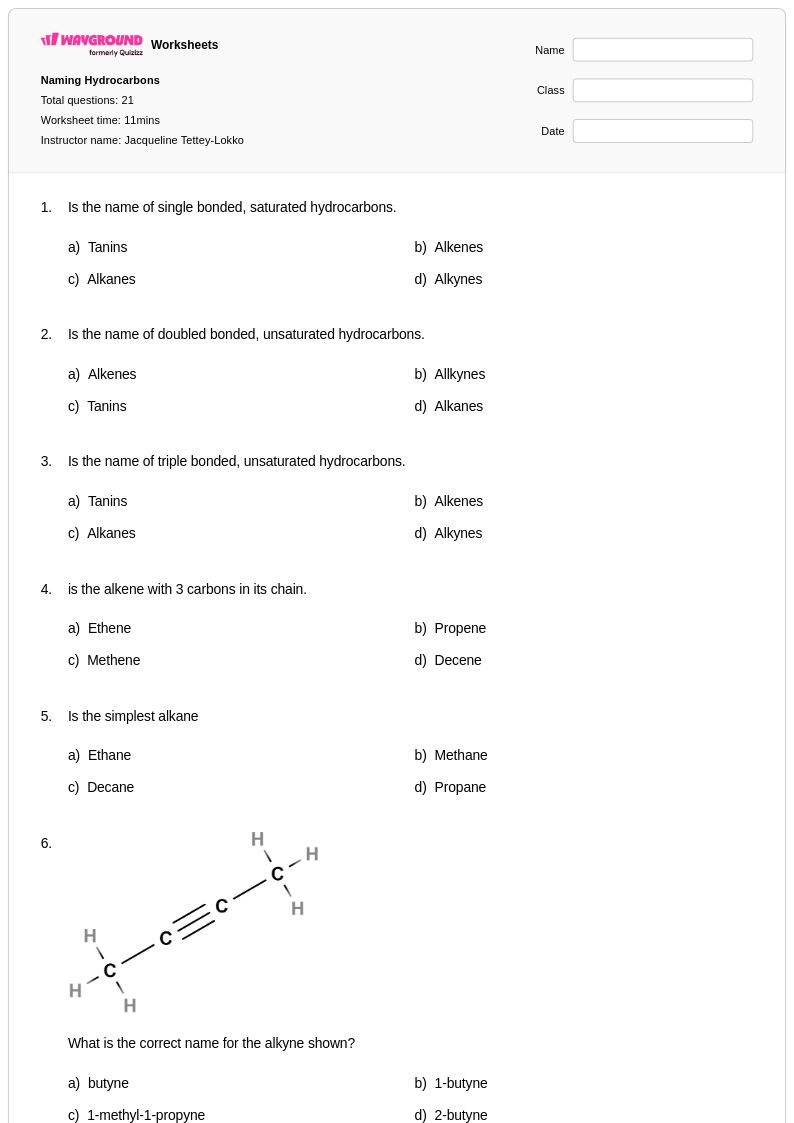
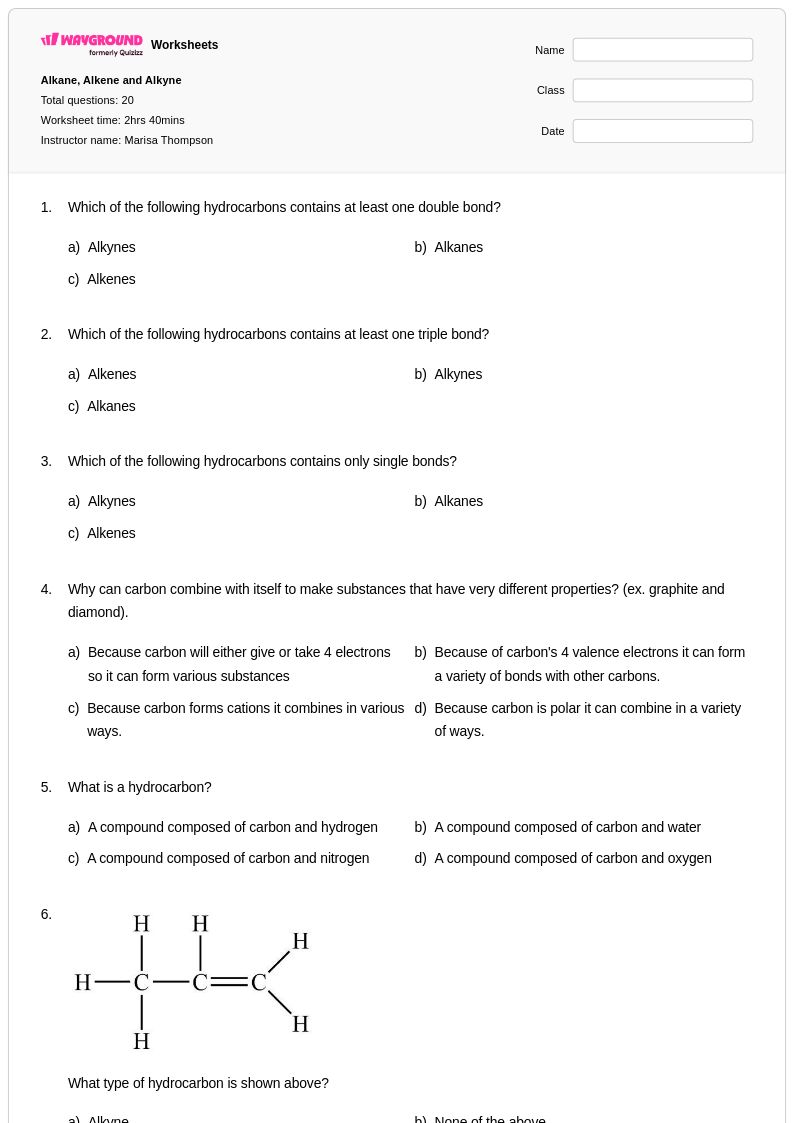
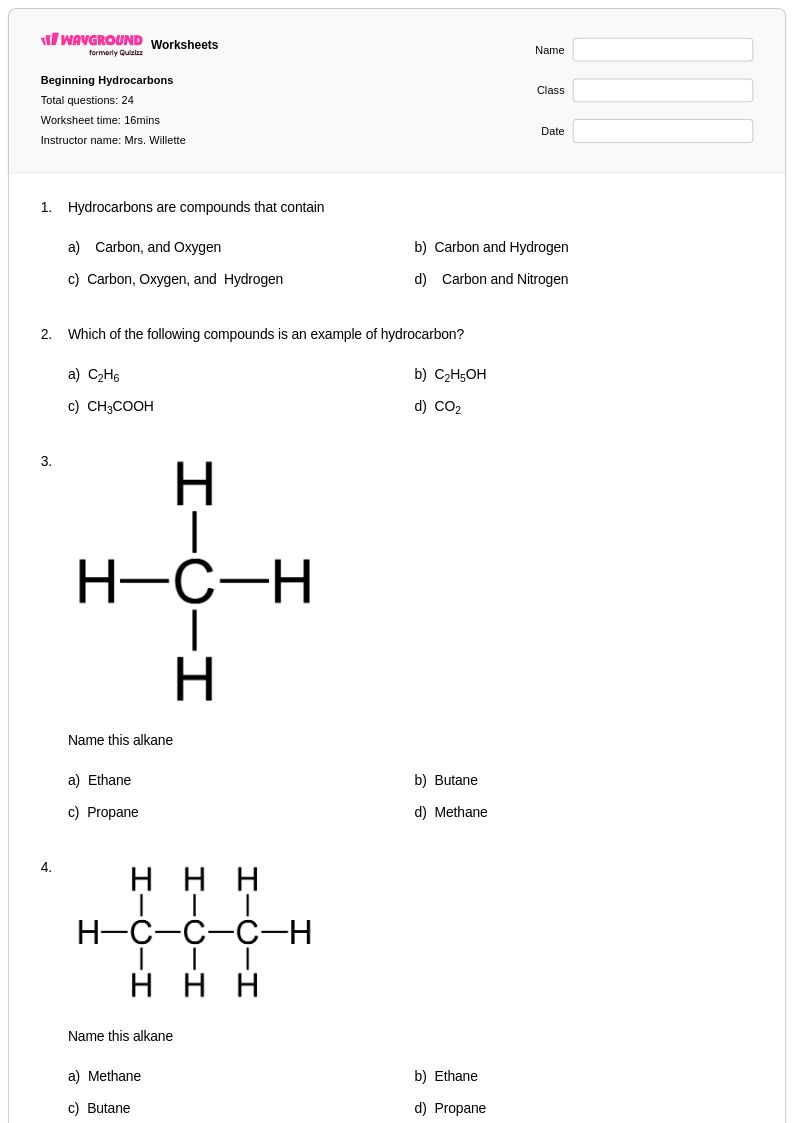
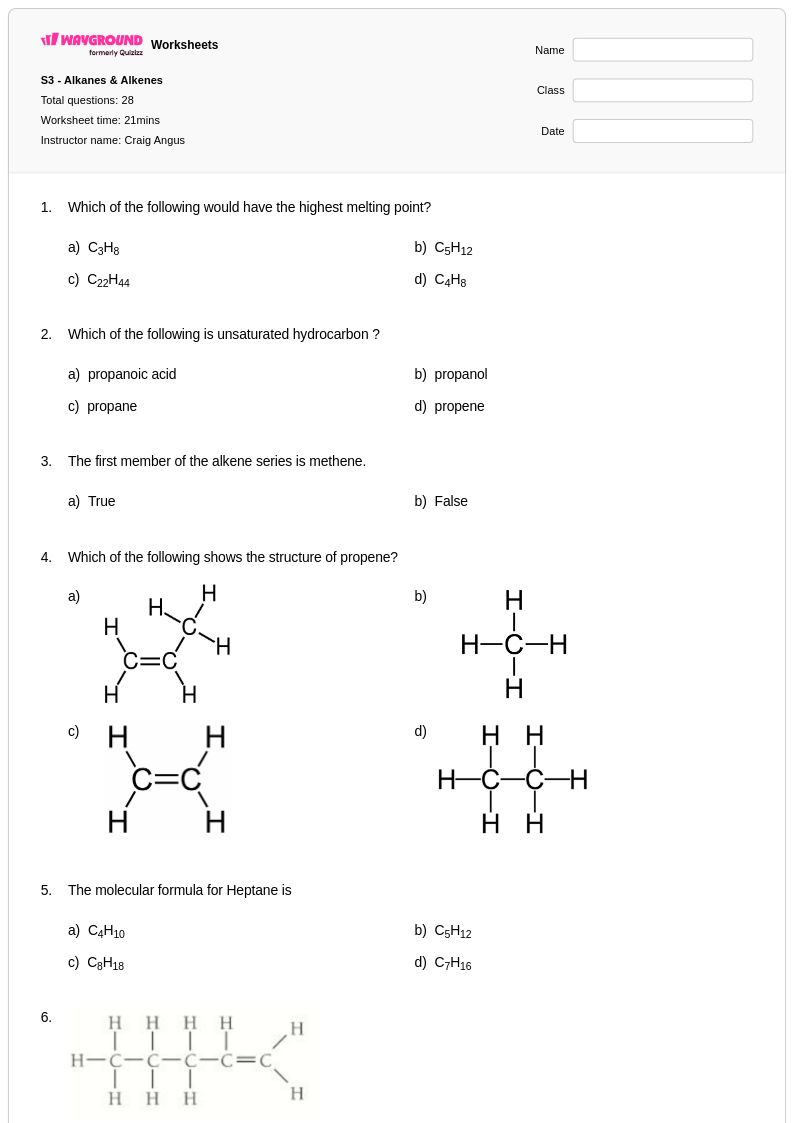
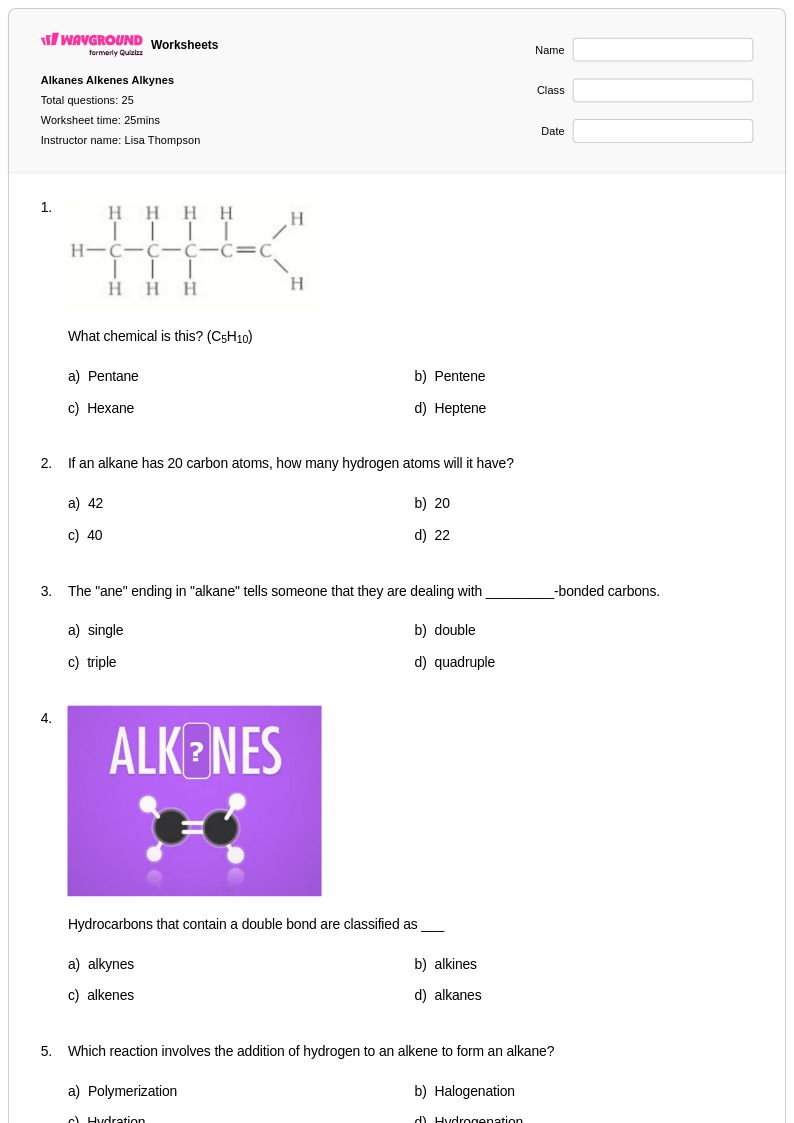
Nomenclature of alkanes represents a fundamental cornerstone of organic chemistry that Class 10 students must master to build their understanding of molecular structure and chemical communication. Wayground's comprehensive collection of nomenclature of alkanes worksheets provides students with systematic practice in applying IUPAC naming conventions, identifying parent chains, numbering carbon atoms, and recognizing branched structures in saturated hydrocarbons. These expertly crafted practice problems strengthen critical thinking skills as students learn to analyze molecular formulas, draw structural representations, and convert between different naming systems. Each worksheet includes detailed answer keys that guide students through the step-by-step process of systematic nomenclature, while the free printable PDF format ensures accessibility for both classroom instruction and independent study sessions.
Wayground (formerly Quizizz) empowers chemistry educators with millions of teacher-created resources specifically designed to support nomenclature instruction at the Class 10 level. The platform's advanced search and filtering capabilities allow teachers to quickly locate worksheets that align with specific curriculum standards and learning objectives, while differentiation tools enable customization for diverse student needs and ability levels. Teachers can seamlessly integrate these digital and printable resources into their lesson planning, using them for initial skill development, targeted remediation for struggling learners, or enrichment activities for advanced students. The flexible format options support various teaching approaches, from traditional paper-based assignments to interactive digital practice, ensuring that every student receives appropriate support in mastering the complex rules governing alkane nomenclature.
FAQs
How do I teach IUPAC nomenclature of alkanes to chemistry students?
Start by establishing the root names for carbon chain lengths (meth-, eth-, prop-, but-, and so on) before introducing branched structures. Teach students to identify the longest continuous carbon chain as the parent chain, then number carbons from the end closest to a substituent. Systematic practice with progressively complex structures, moving from straight-chain alkanes to multiply branched ones, builds the pattern recognition students need to apply IUPAC rules reliably.
What exercises help students practice naming alkanes?
The most effective practice exercises combine structural formula-to-name and name-to-structural formula tasks, since students need fluency in both directions. Problems that isolate one skill at a time, such as identifying the parent chain only or numbering carbons only, before combining all steps help prevent cognitive overload. Worksheets that systematically increase complexity, from unbranched alkanes to structures with multiple substituents at various positions, are particularly effective for building lasting proficiency.
What mistakes do students commonly make when naming alkanes?
The most frequent error is failing to identify the longest carbon chain as the parent chain, especially when the chain is drawn in a non-linear or branched arrangement. Students also commonly number carbons from the wrong end, giving substituents higher locants than necessary, which violates IUPAC rules. A third common mistake is omitting multiplying prefixes such as di-, tri-, or tetra- when the same substituent appears more than once on the parent chain.
How do I use Wayground's alkane nomenclature worksheets in my classroom?
Wayground's alkane nomenclature worksheets are available as printable PDFs for traditional classroom use and in digital formats for technology-integrated environments, giving teachers flexibility for in-class work, homework, or lab periods. Teachers can also host the worksheet as a quiz directly on Wayground, enabling real-time student responses and instant feedback. Each worksheet includes a complete answer key, making them suitable for self-directed practice, peer review, or teacher-led assessment.
How can I differentiate alkane naming practice for students at different skill levels?
For students who are still building foundational skills, begin with straight-chain alkanes before introducing any branching, and use worksheets that label the parent chain explicitly. Advanced learners can be challenged with structures featuring multiple different substituents, requiring correct alphabetical ordering in the final name. On Wayground, teachers can apply built-in accommodations such as reduced answer choices or read-aloud support for individual students, allowing the same worksheet session to serve learners across a range of readiness levels.
How do I help students who struggle with translating structural formulas into IUPAC names?
Students who struggle often lack a consistent step-by-step procedure, so providing an explicit algorithm, such as identify the parent chain, number from the correct end, name substituents with locants, and arrange alphabetically, reduces errors significantly. Annotated worked examples alongside practice problems help students see each decision point in context before attempting problems independently. Targeted remediation worksheets that isolate the specific step causing difficulty, rather than repeating full naming tasks, are the most efficient path to mastery.