Free Printable Animal Cells Worksheets for Class 3
Explore Wayground's free Class 3 animal cells worksheets and printables that help students discover cell structures, functions, and basic biology concepts through engaging practice problems with complete answer keys.
Explore printable Animal Cells worksheets for Class 3
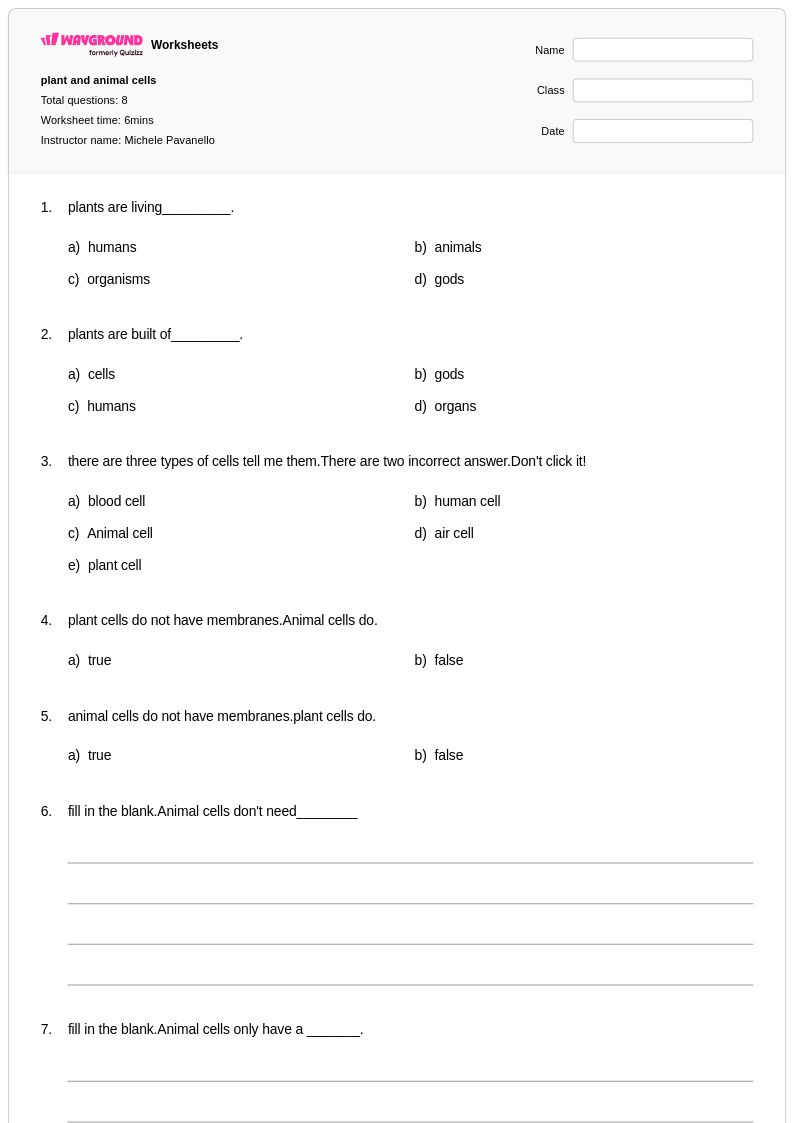
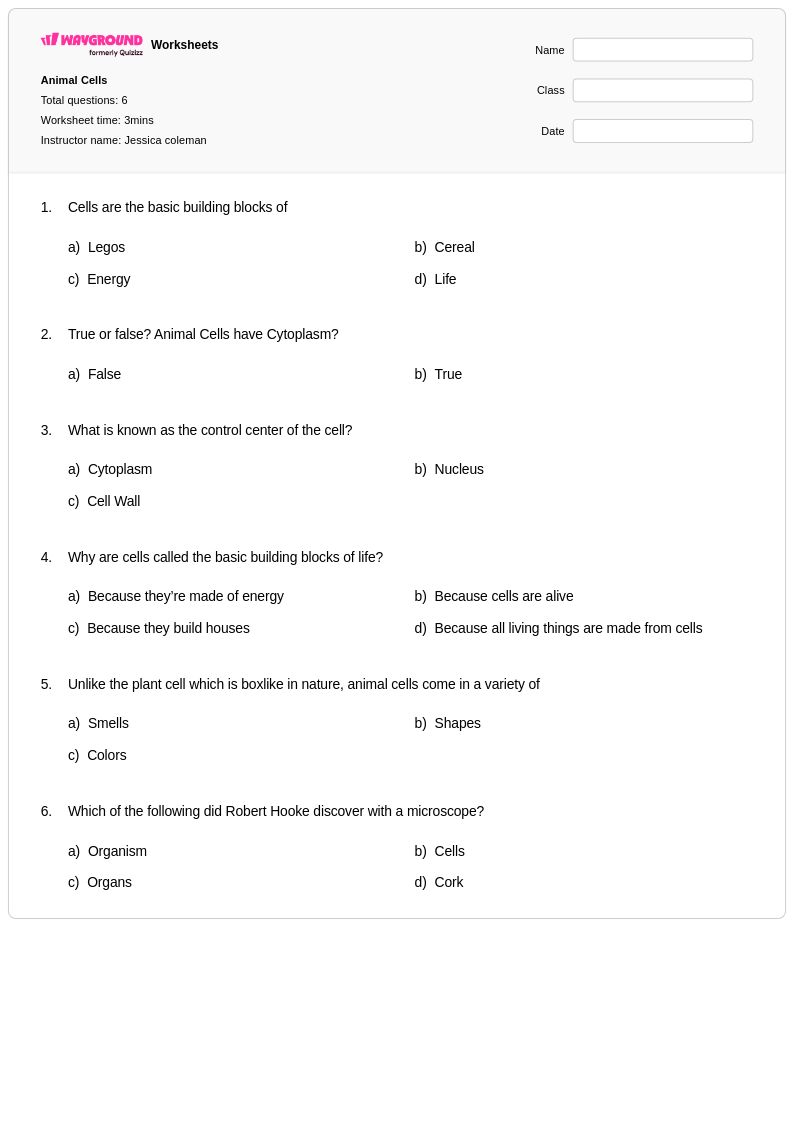
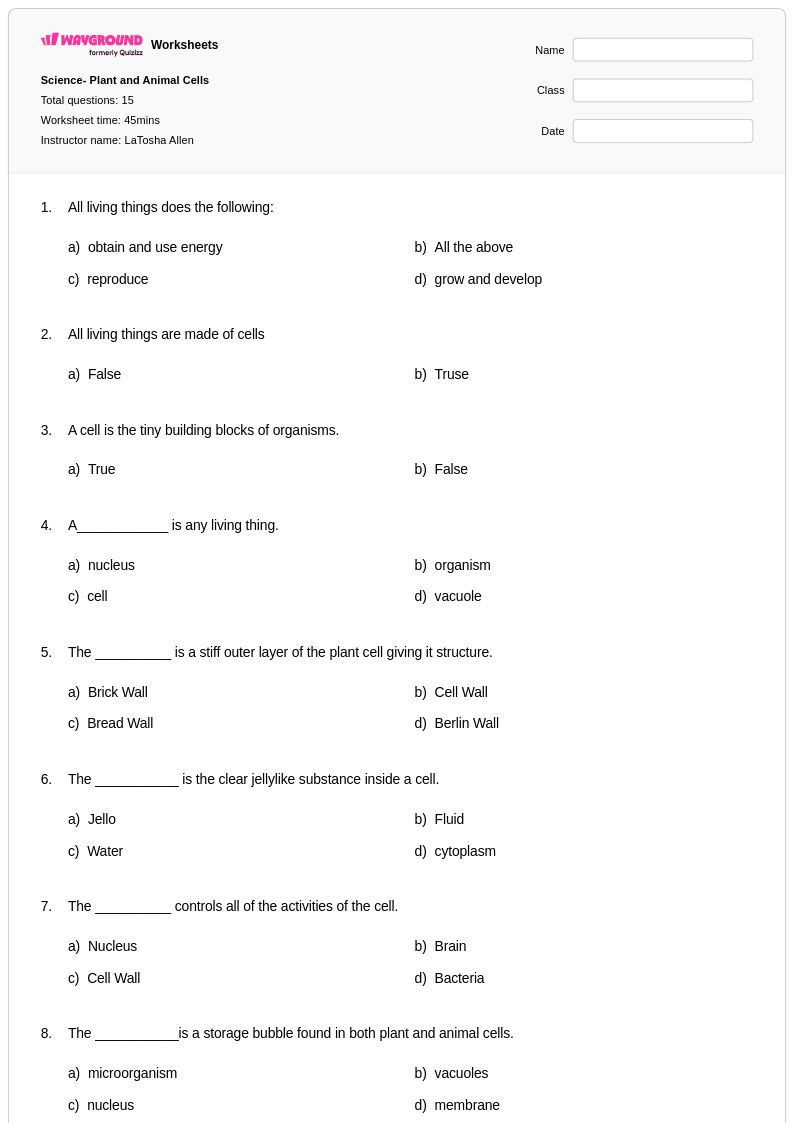
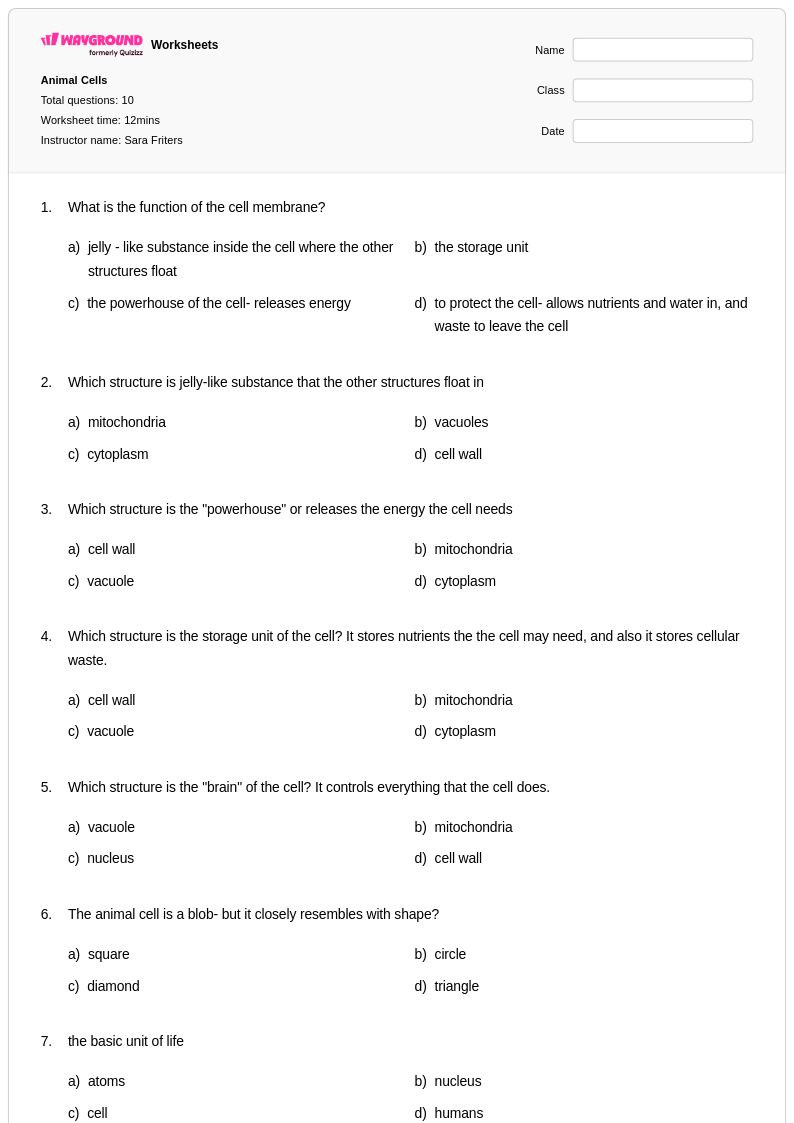
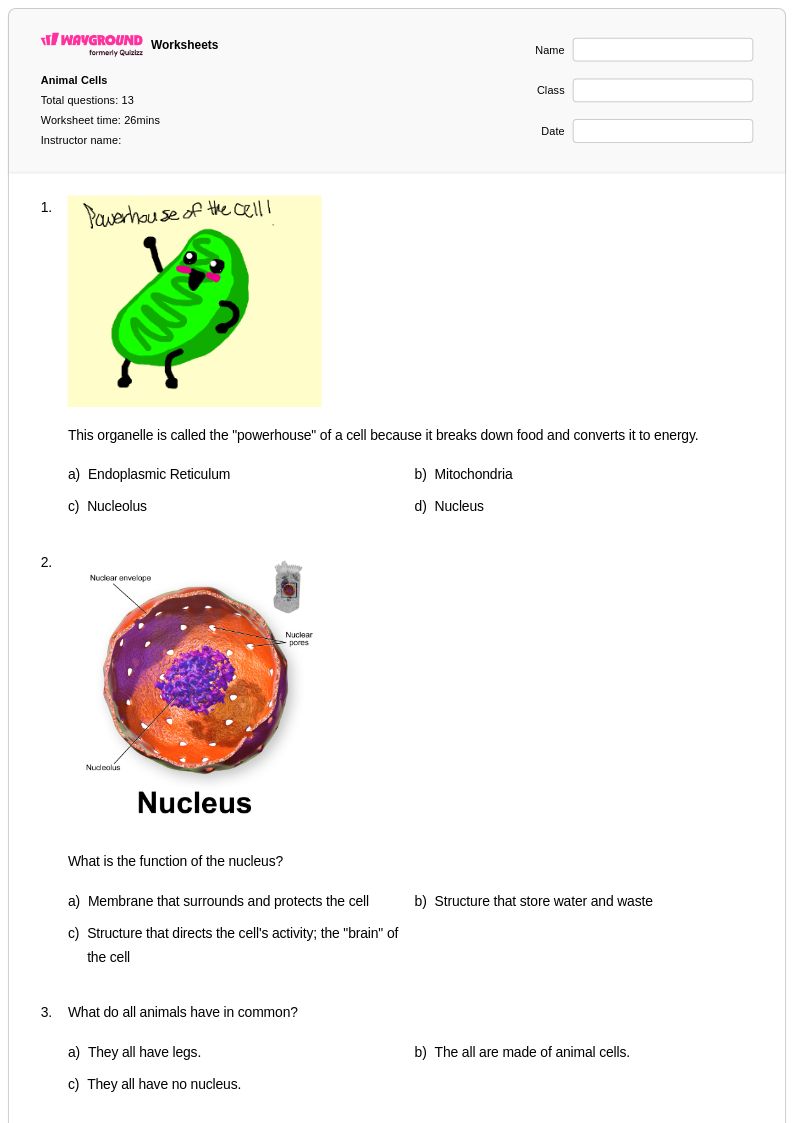
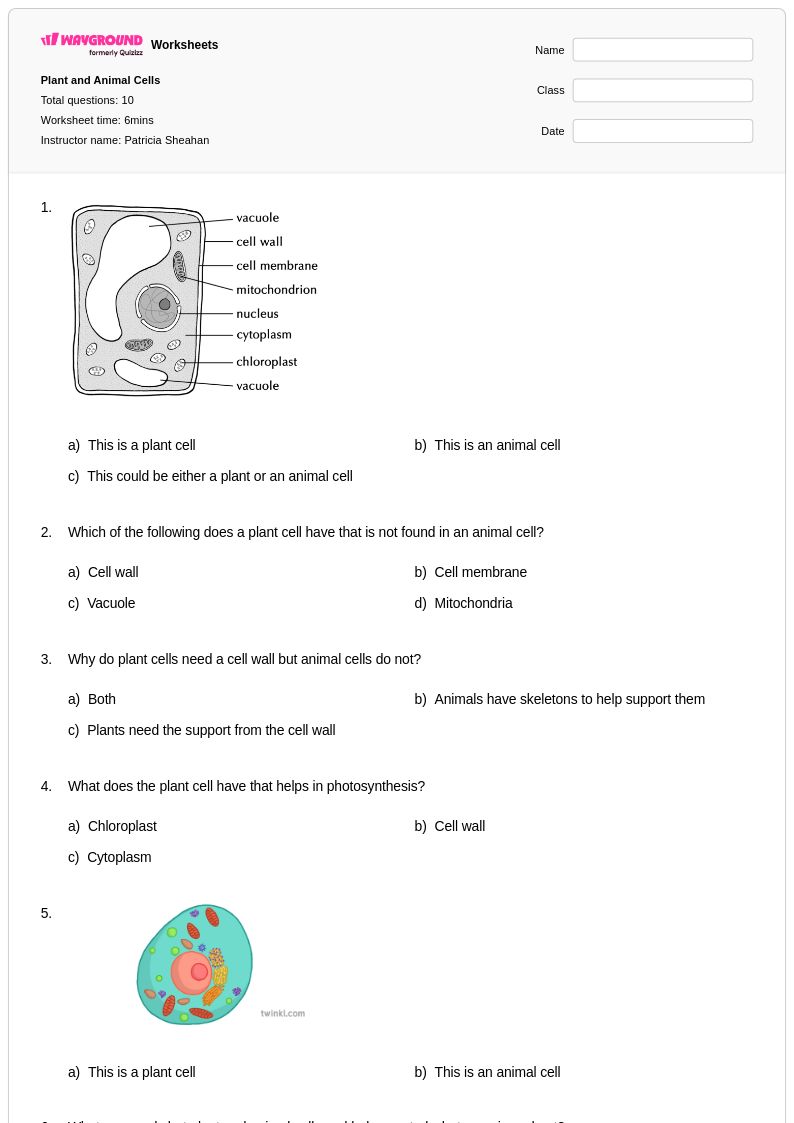
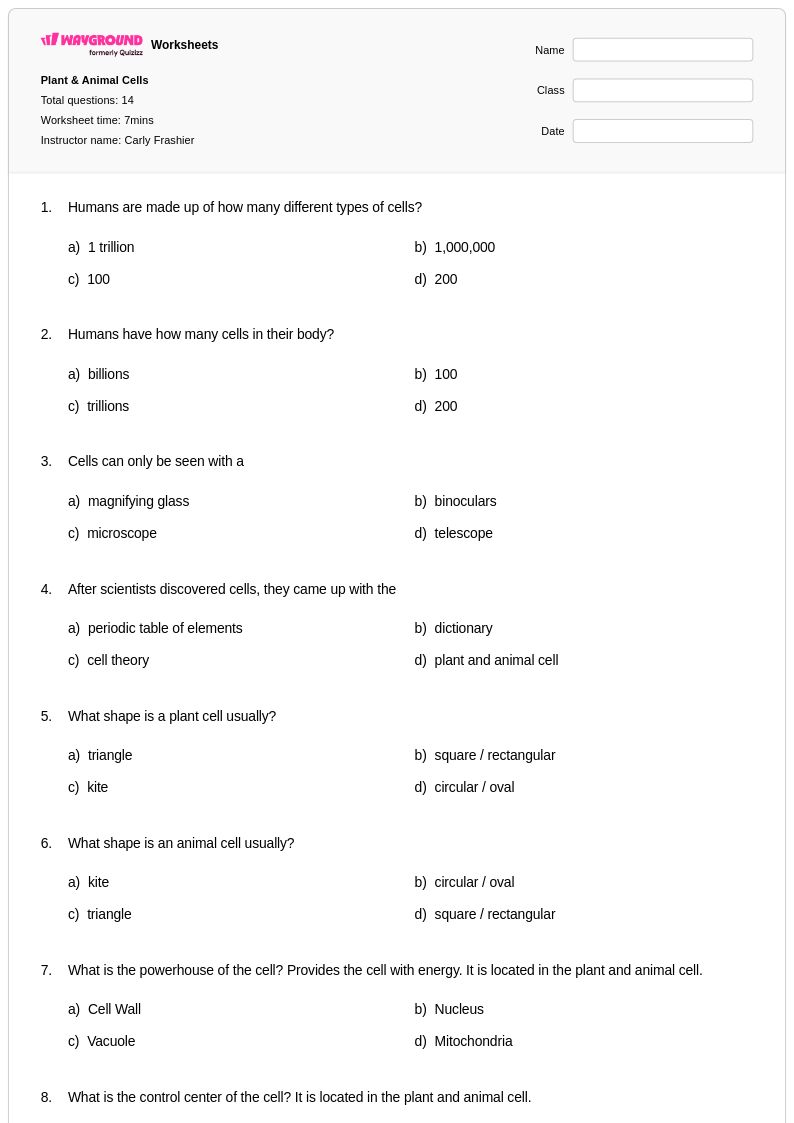
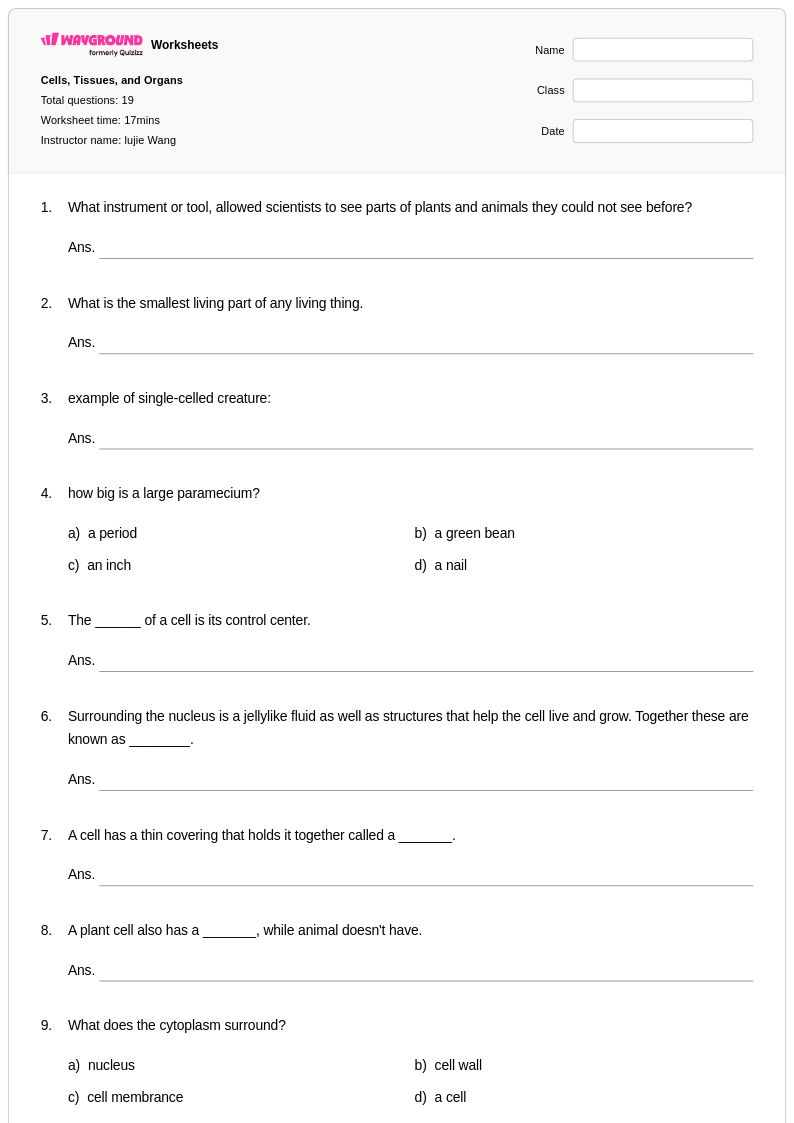
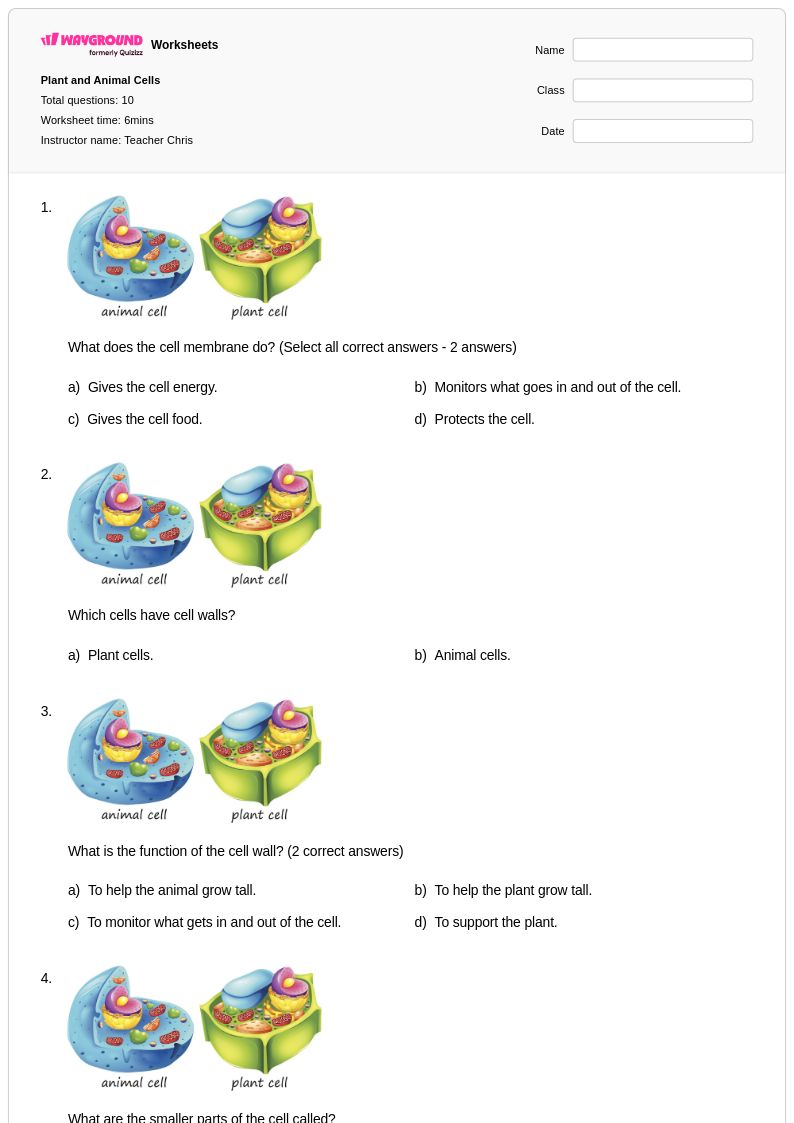
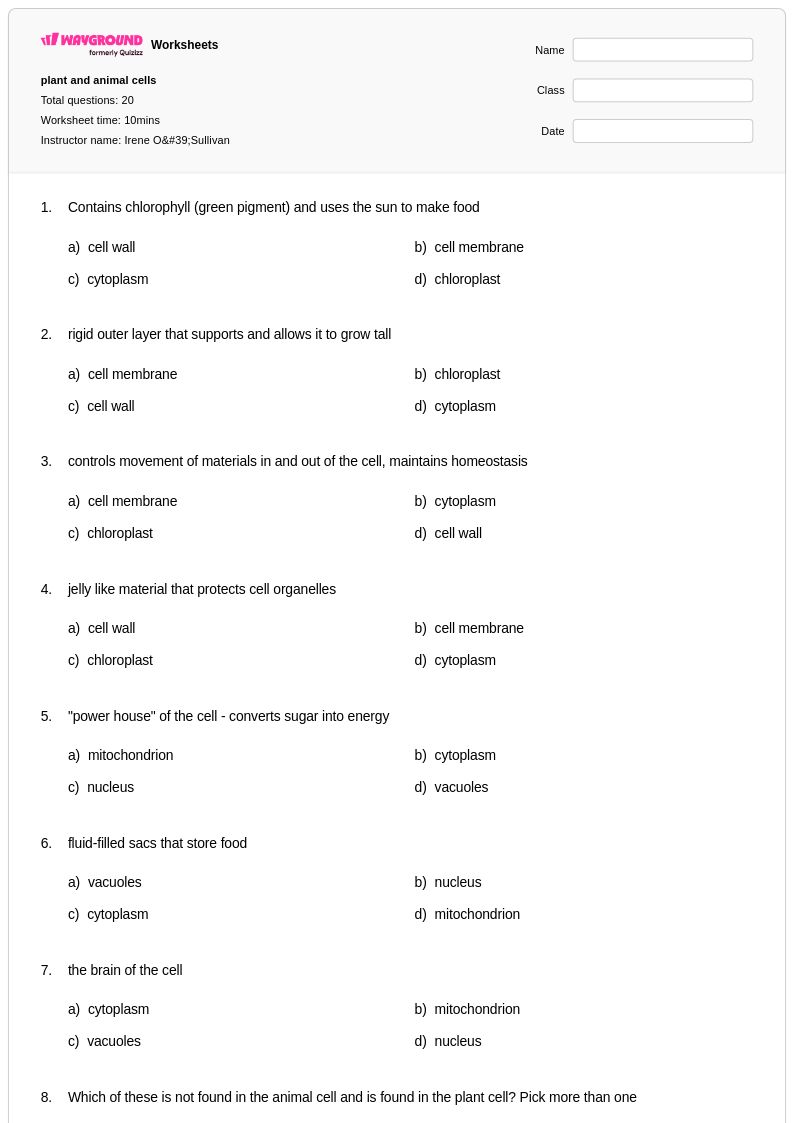
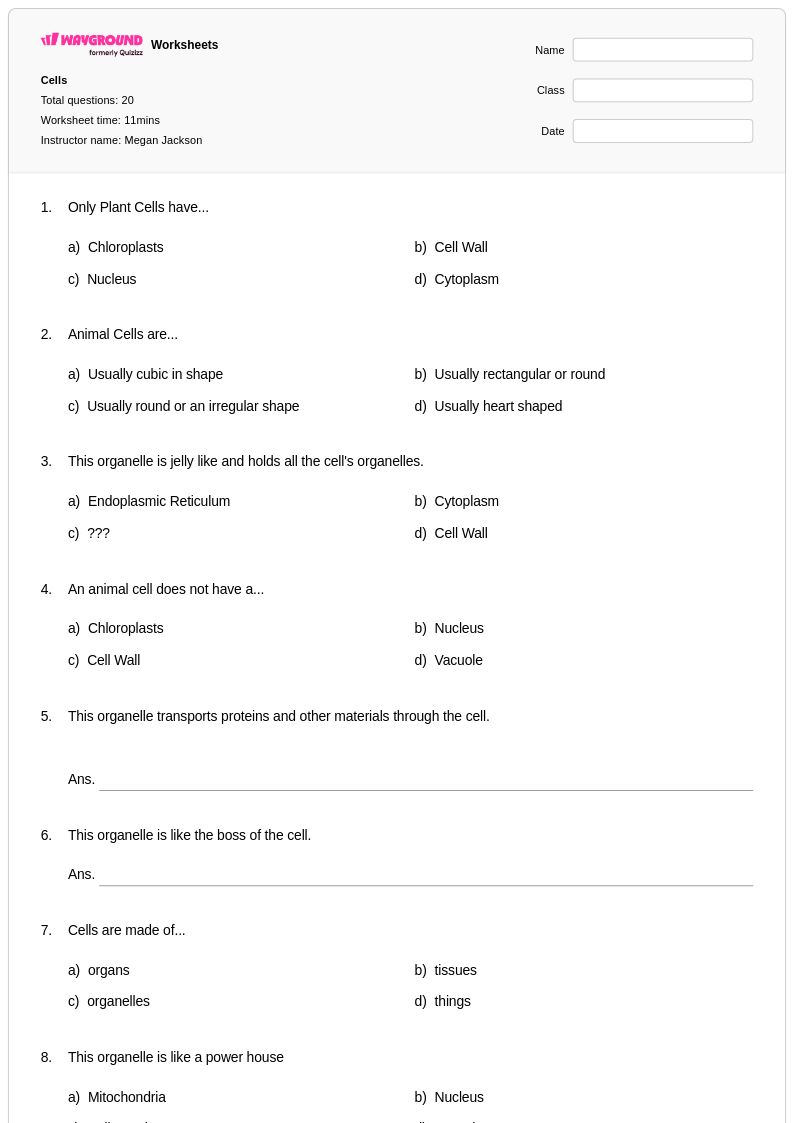
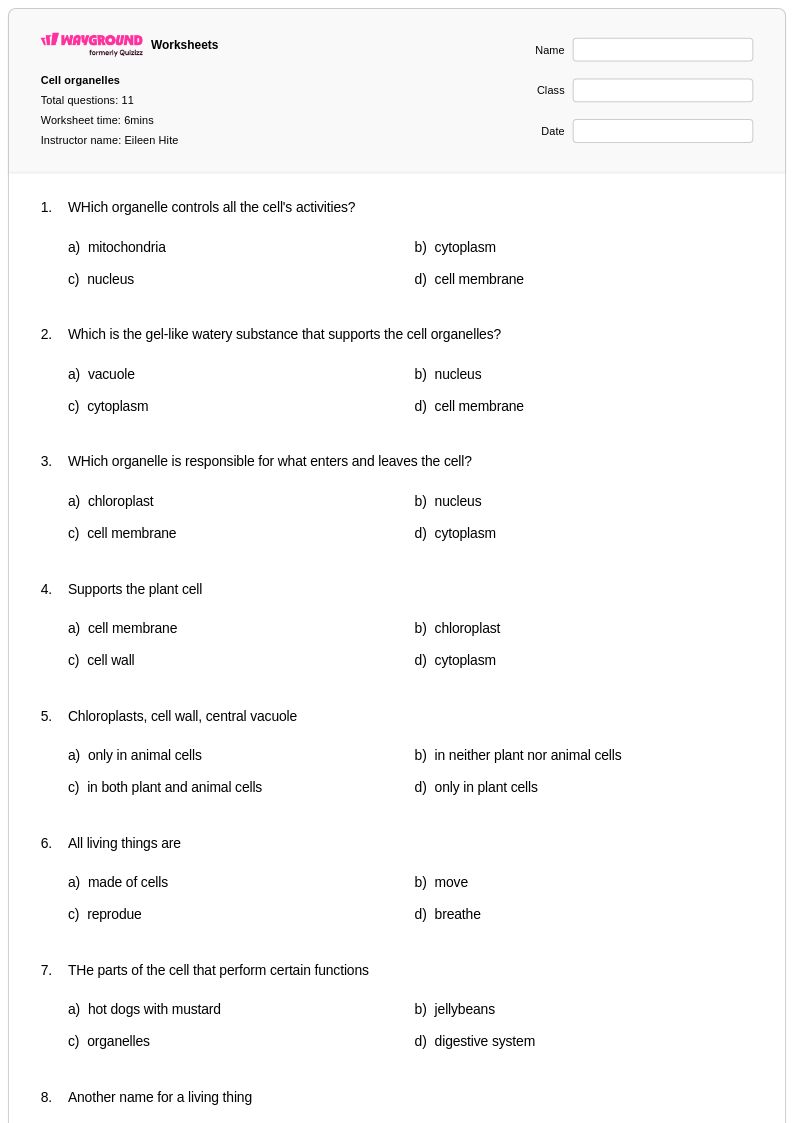
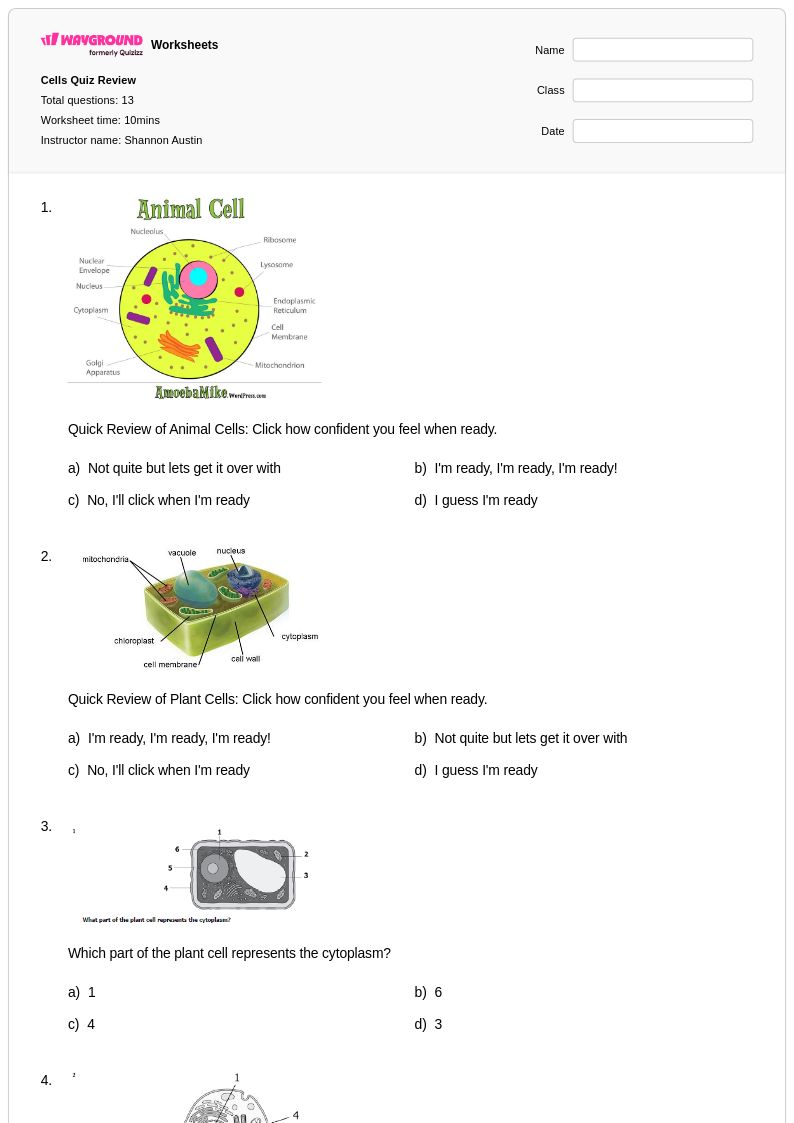
Animal cells worksheets for Class 3 students available through Wayground (formerly Quizizz) provide young learners with essential foundational knowledge about the basic building blocks of life. These comprehensive worksheets introduce elementary students to the fundamental components of animal cells, including the cell membrane, cytoplasm, and nucleus, through age-appropriate activities and visual exercises. The practice problems are specifically designed to help third graders develop their scientific observation skills, vocabulary acquisition, and basic understanding of cellular structures that make up all living animals. Each worksheet collection includes detailed answer keys and is available in convenient pdf format, making these free printables accessible for both classroom instruction and home study reinforcement.
Wayground (formerly Quizizz) empowers educators with an extensive library of millions of teacher-created resources specifically focused on Class 3 animal cell instruction, supported by robust search and filtering capabilities that allow teachers to quickly locate materials aligned with their curriculum standards. The platform's differentiation tools enable instructors to customize worksheets based on individual student needs, whether for remediation support or enrichment challenges, while the flexible format options include both printable pdf versions and interactive digital activities. Teachers benefit from streamlined lesson planning through the comprehensive collection of animal cell resources, which seamlessly integrate into existing science curricula and provide consistent opportunities for skill practice, formative assessment, and concept reinforcement throughout their cellular biology instruction units.
FAQs
How do I teach animal cell structure to middle school students?
Start by introducing the cell as a system where each organelle has a specific job, using analogies like comparing the nucleus to a control center or the mitochondria to a power plant. Visual labeling activities are especially effective because they require students to connect structure names with locations and functions simultaneously. Building from the cell membrane inward, moving through the cytoplasm to the nucleus, gives students a spatial framework that supports retention and accurate diagram work.
What exercises help students practice identifying animal cell organelles?
Labeling diagrams is the most direct practice method, asking students to identify organelles such as the nucleus, mitochondria, endoplasmic reticulum, Golgi apparatus, and cell membrane from an unlabeled cell diagram. Function-matching activities, where students pair each organelle with its biological role, deepen understanding beyond simple recall. Practice problems that ask students to explain how organelles work together, such as tracing protein synthesis from the ribosome through the endoplasmic reticulum to the Golgi apparatus, build the analytical skills needed for assessments.
What mistakes do students commonly make when learning about animal cells?
The most common error is confusing animal cells with plant cells, particularly forgetting that animal cells lack a cell wall and chloroplasts. Students also frequently mix up the rough and smooth endoplasmic reticulum, not understanding that ribosomes are what distinguish them structurally and functionally. Another persistent misconception is treating organelles as independent units rather than understanding that processes like protein production and energy conversion depend on organelles working in coordinated sequences.
How do I differentiate animal cell worksheets for students at different levels?
For struggling students, reduce the number of organelles required in a single task and provide a word bank to lower recall demands. Advanced students benefit from open-ended questions that require them to explain how a disruption in one organelle, such as the mitochondria failing to produce ATP, would affect other cellular processes. On Wayground, teachers can apply accommodations such as reduced answer choices, read aloud support, and extended time on a per-student basis, so differentiation happens at the individual level without disrupting the rest of the class.
How can I use Wayground's animal cell worksheets in my classroom?
Wayground's animal cell worksheets are available as printable PDFs for traditional classroom use and in digital formats for technology-integrated or remote learning environments. Teachers can also host worksheets directly as a quiz on Wayground, giving students an interactive experience while automatically collecting results. Each worksheet includes a complete answer key, which supports both independent student review and efficient teacher-led correction.
How do I assess whether students truly understand organelle functions versus just memorizing them?
Move beyond fill-in-the-blank recall by giving students scenario-based questions, such as asking what would happen to a cell if the Golgi apparatus stopped functioning or if the cell membrane became fully permeable. These questions reveal whether students understand function and consequence rather than isolated definitions. Requiring students to explain organelle interactions in their own words, such as describing the relationship between mitochondria and cell activity levels, is a reliable indicator of conceptual understanding over memorization.