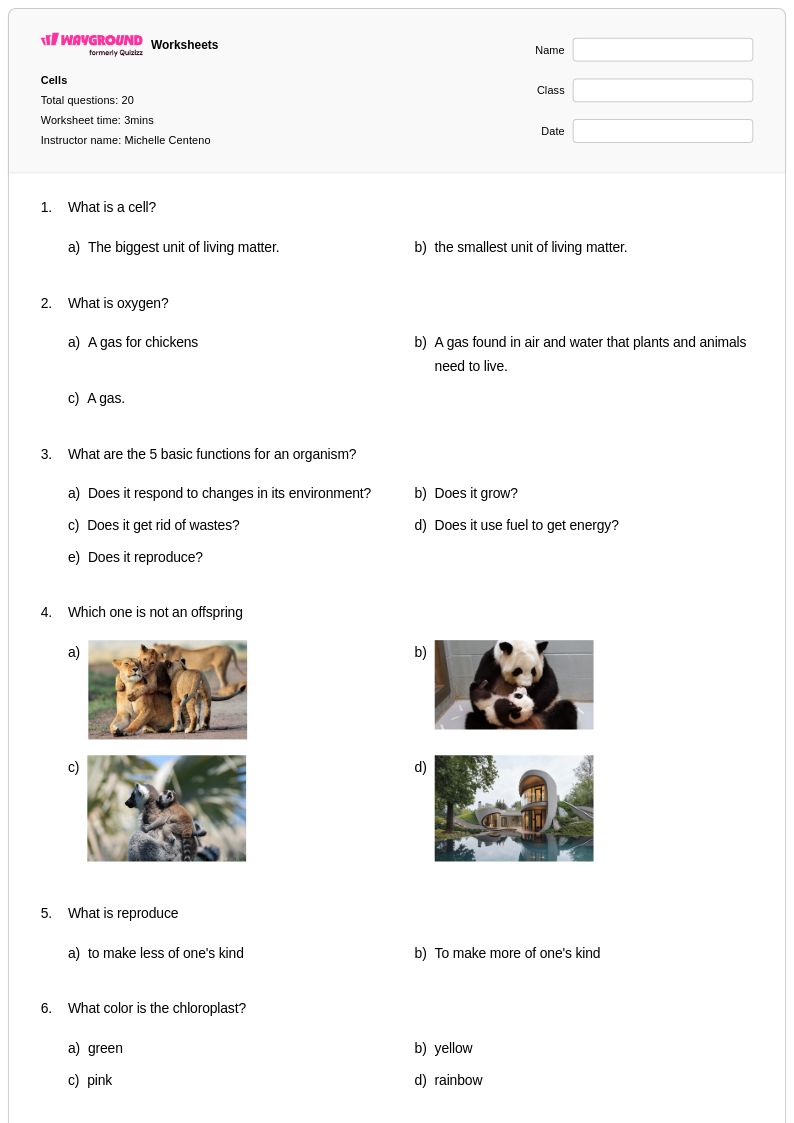
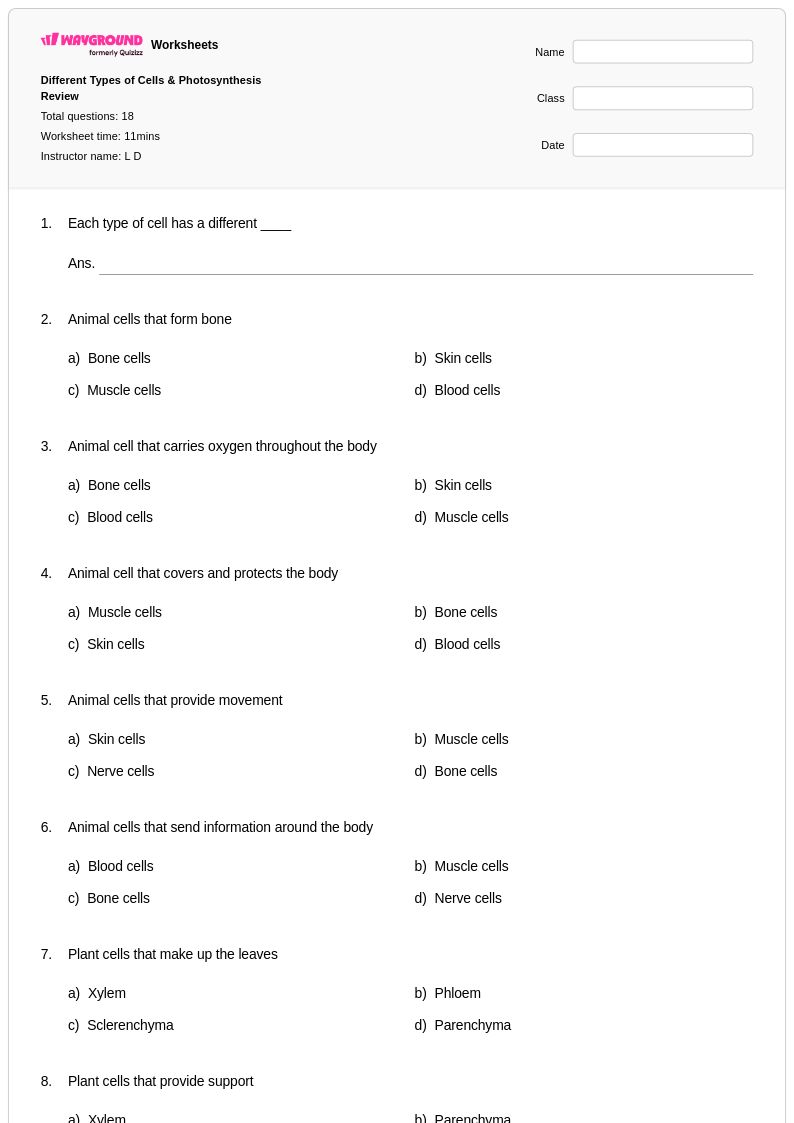
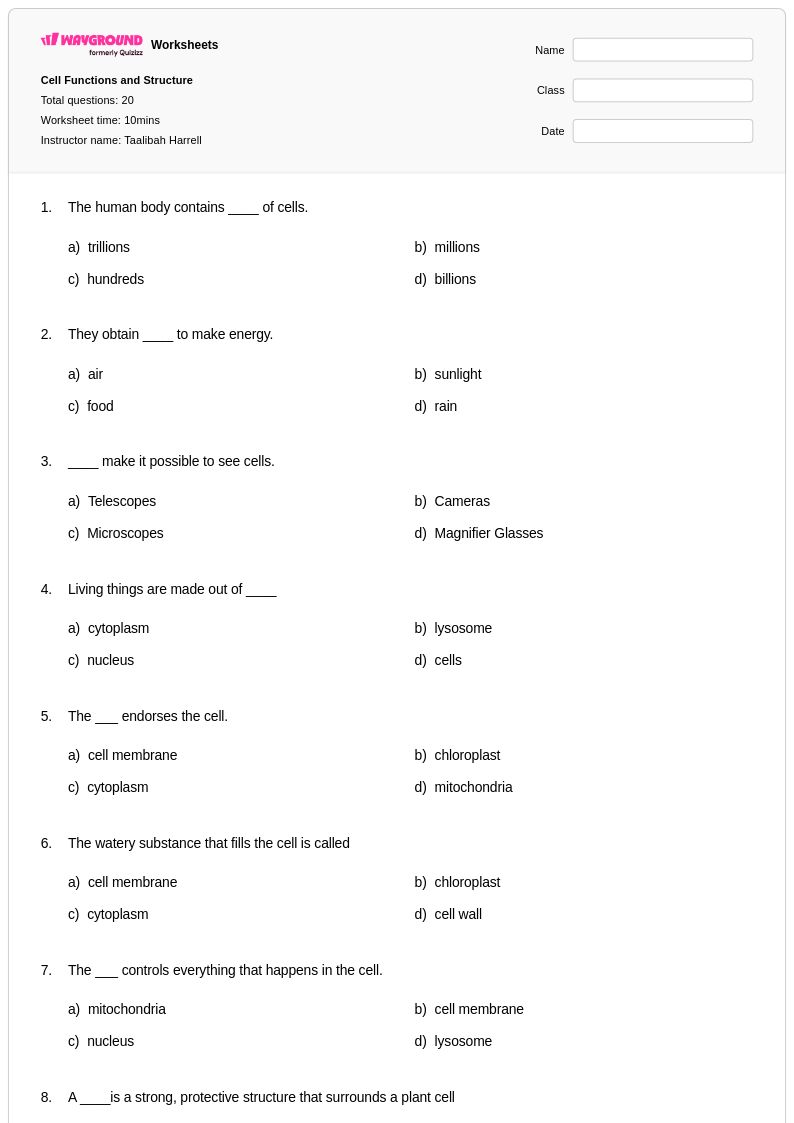
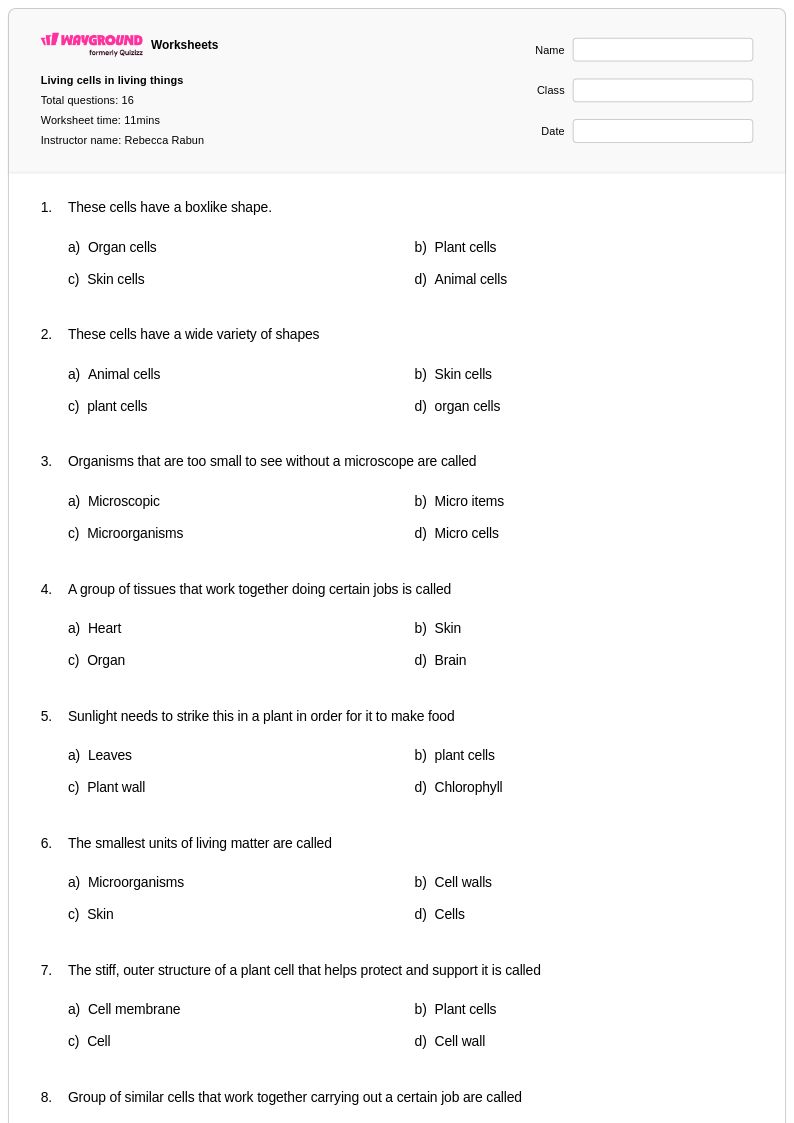
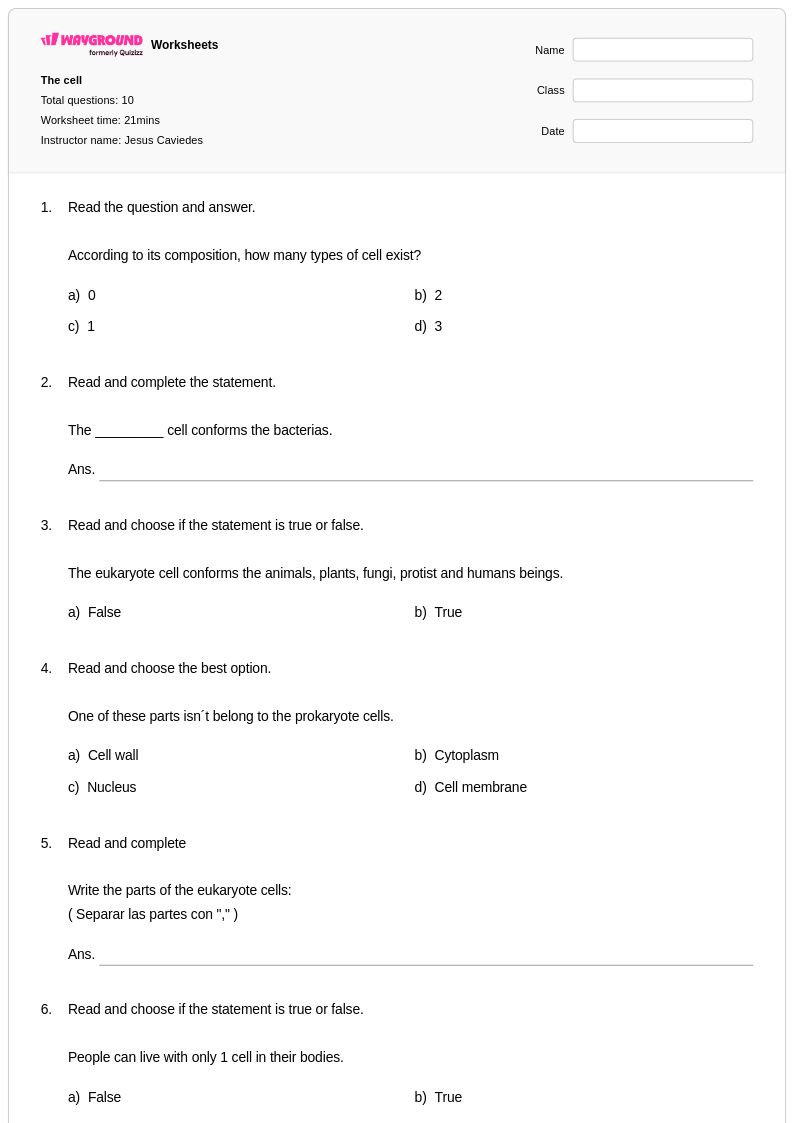
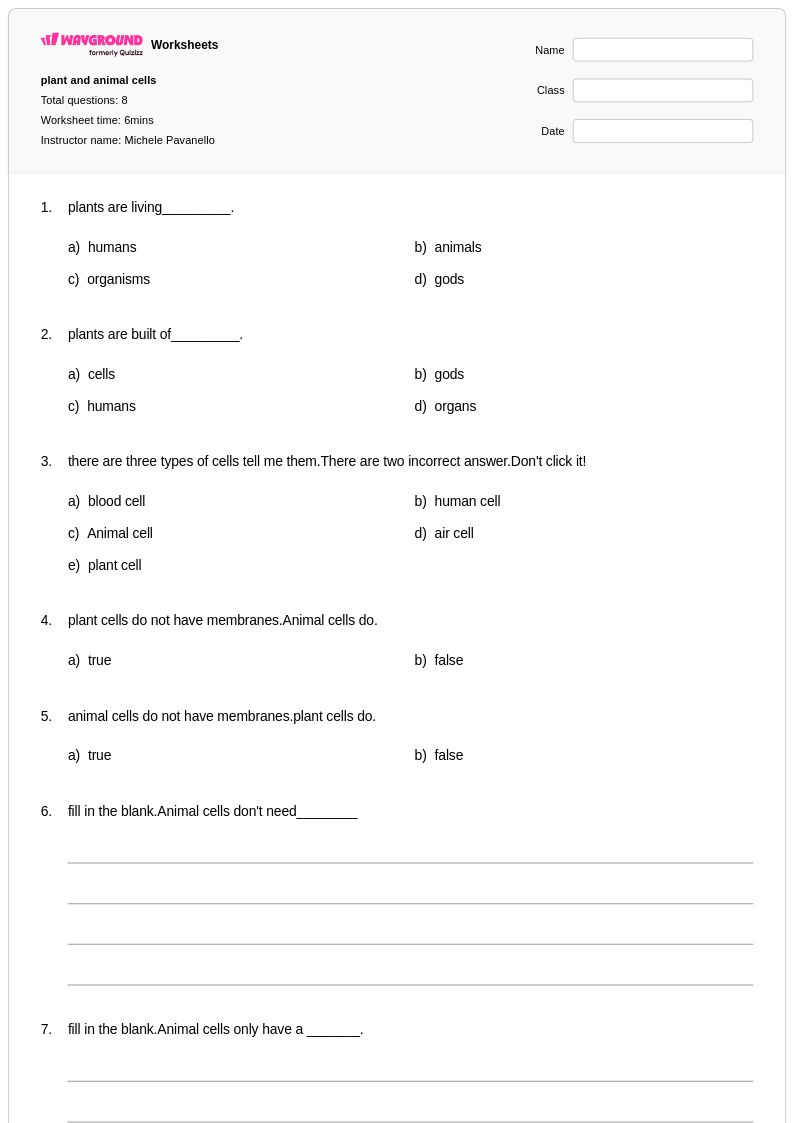
Free Printable Cell Analogy Worksheets for Class 3
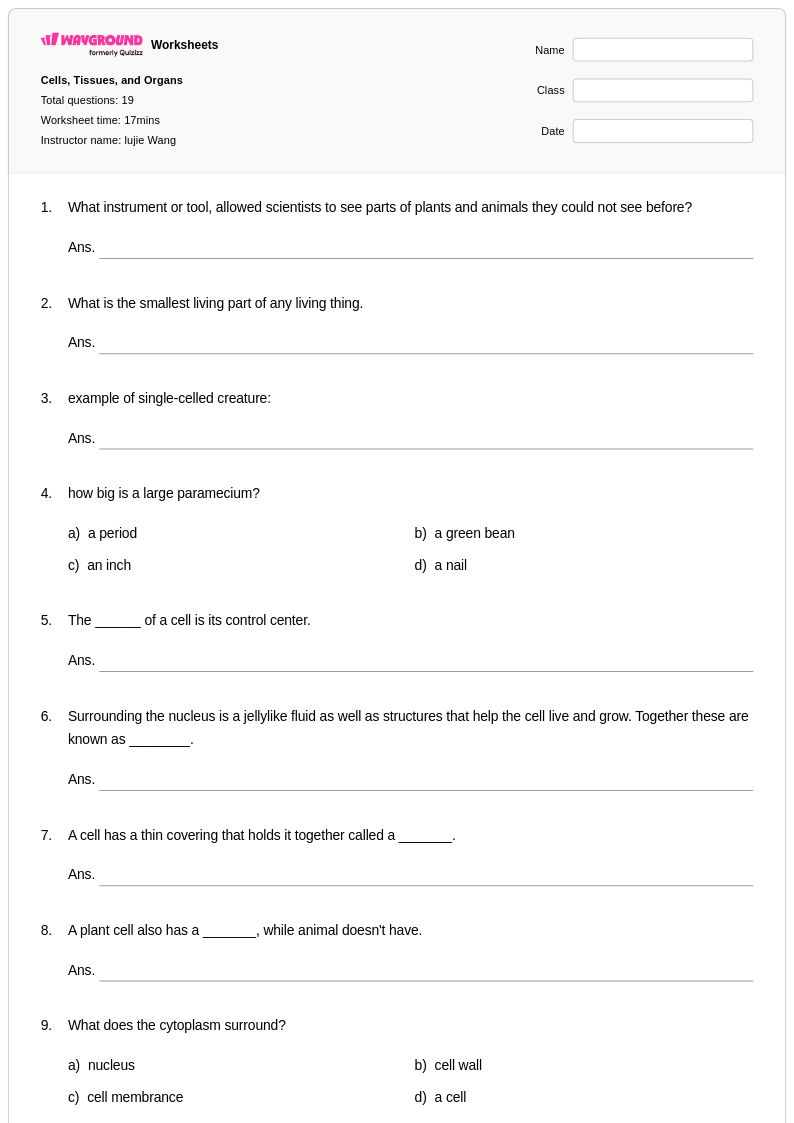
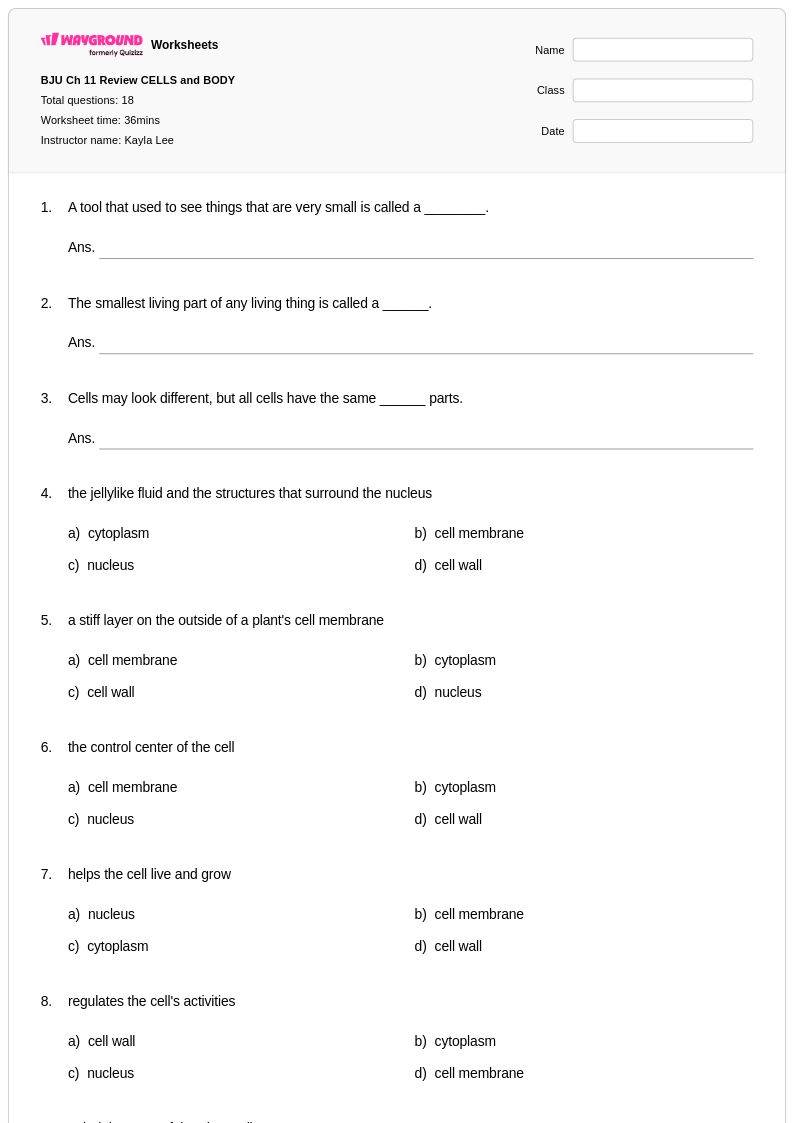
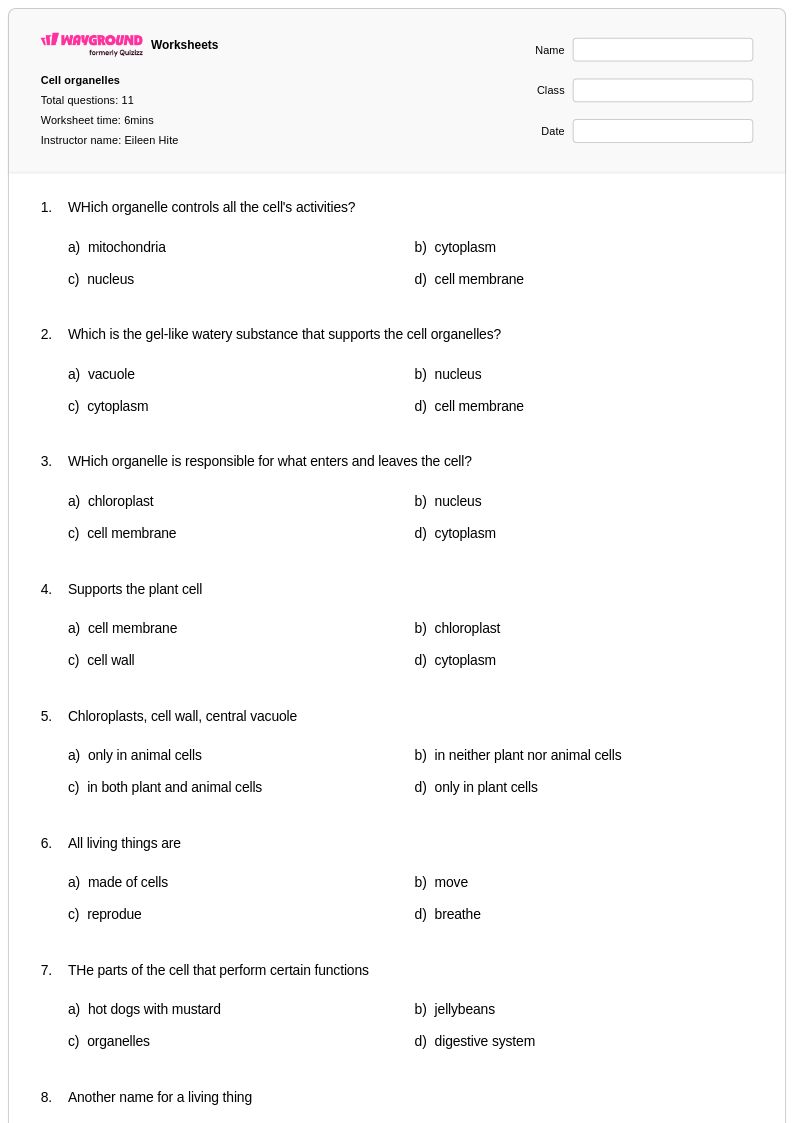
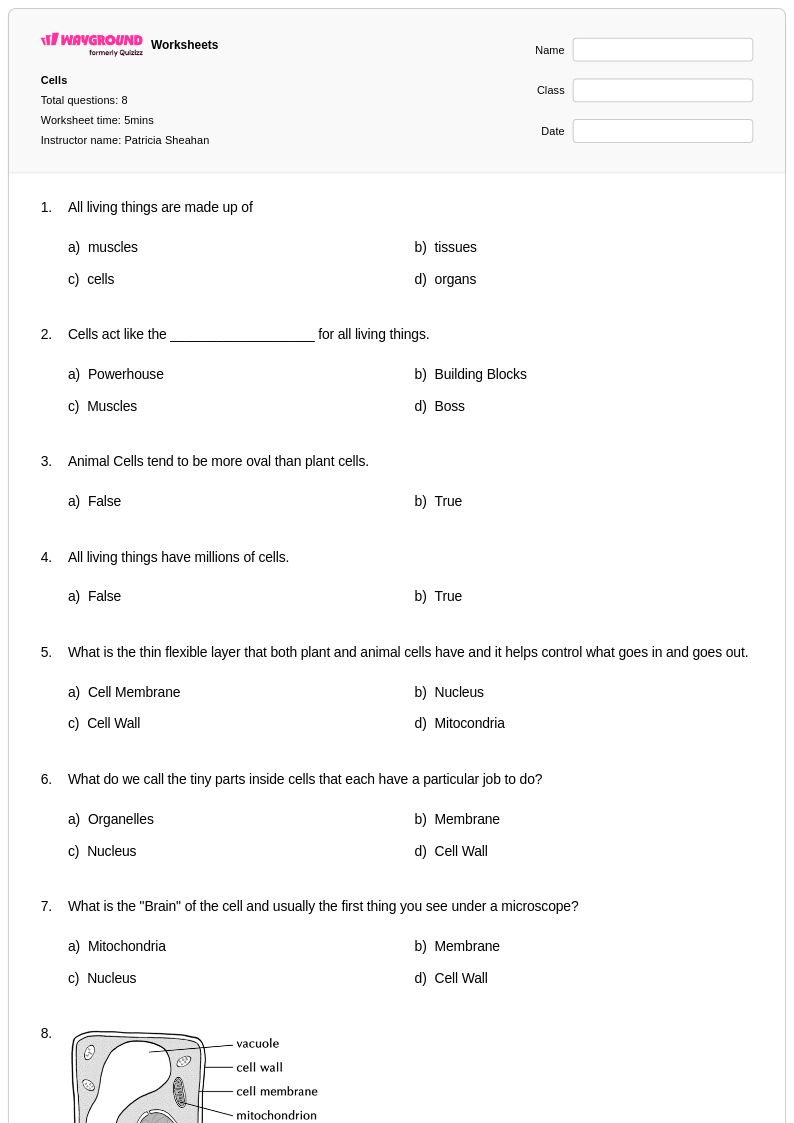
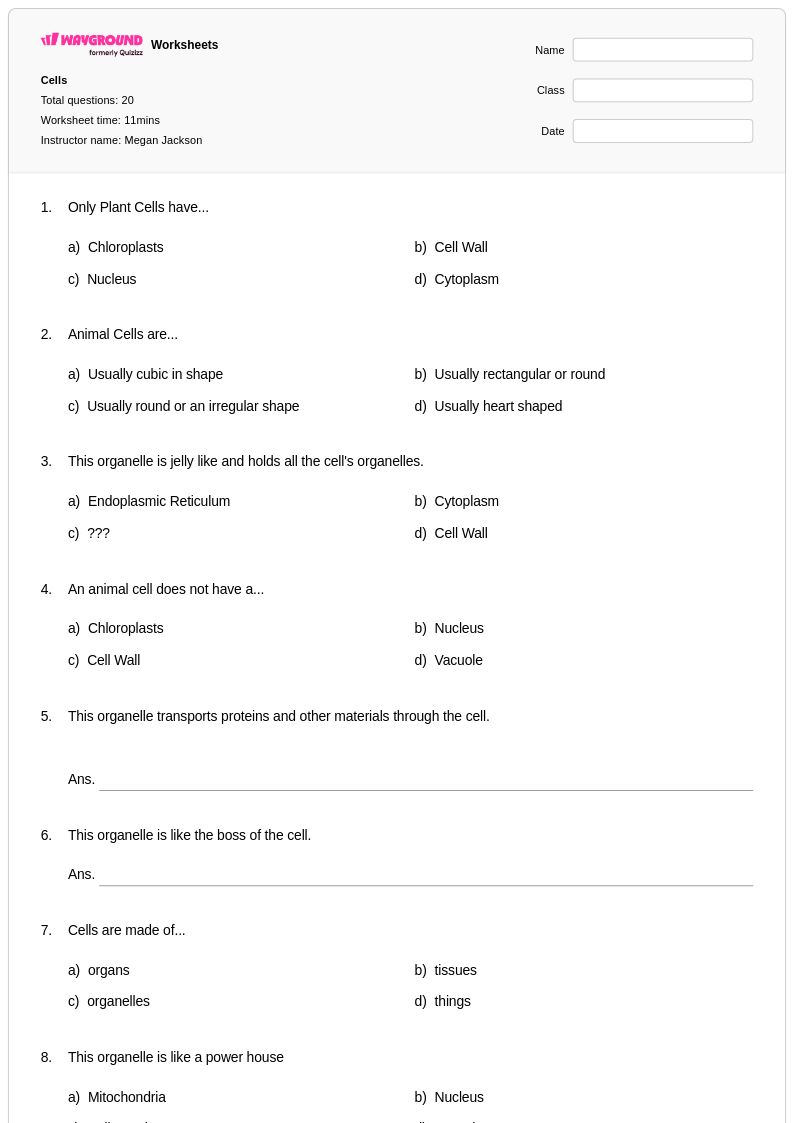
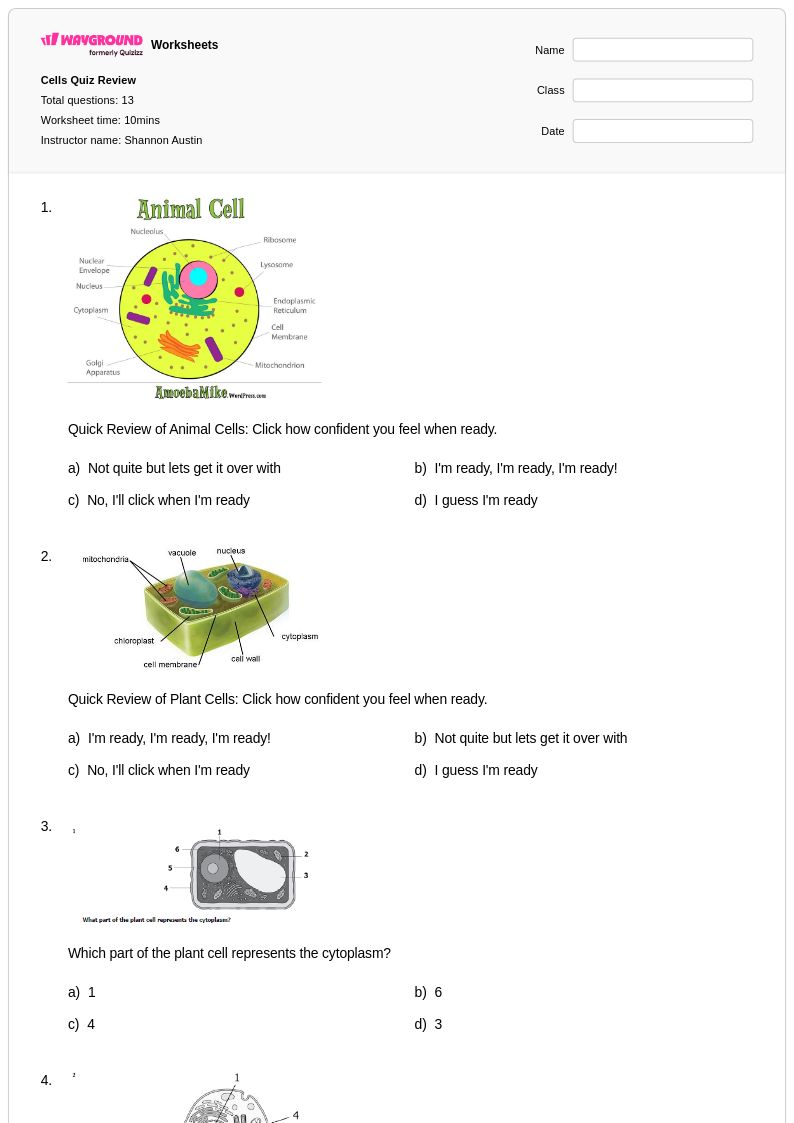
Class 3 cell analogy worksheets help students understand cellular structures by comparing them to familiar objects through engaging printables, free practice problems, and comprehensive answer keys.
Explore printable Cell Analogy worksheets for Class 3
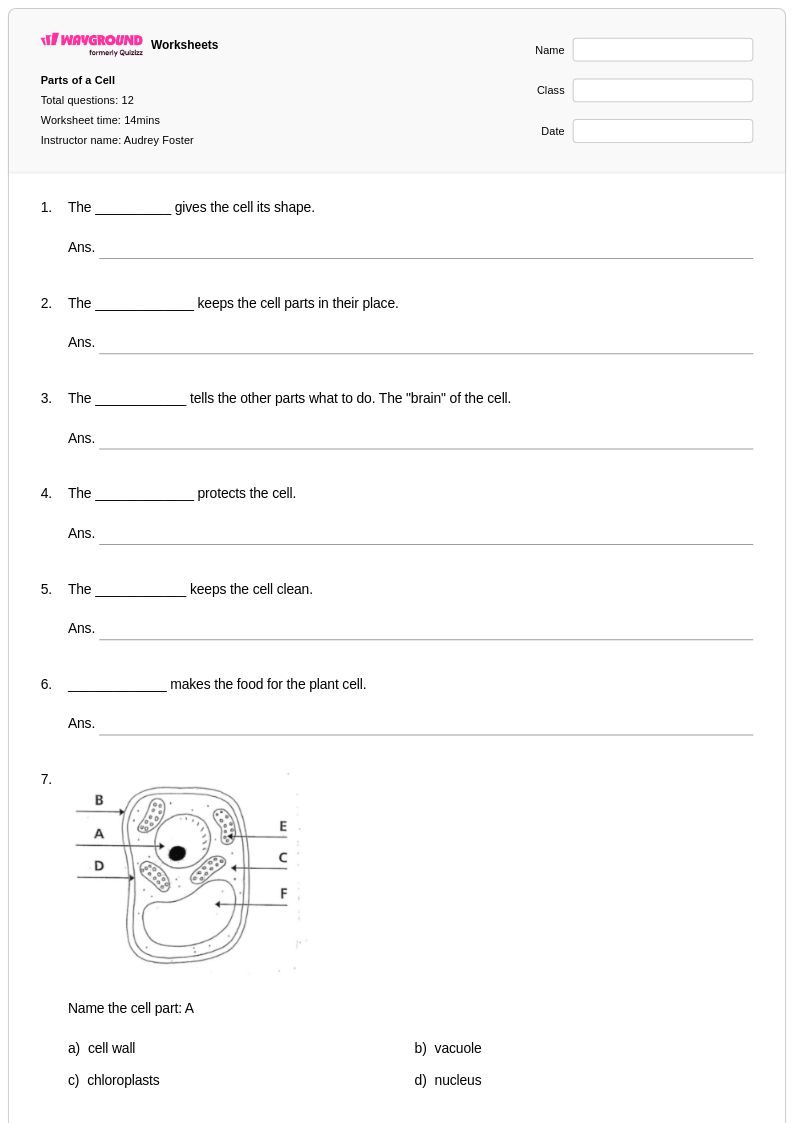
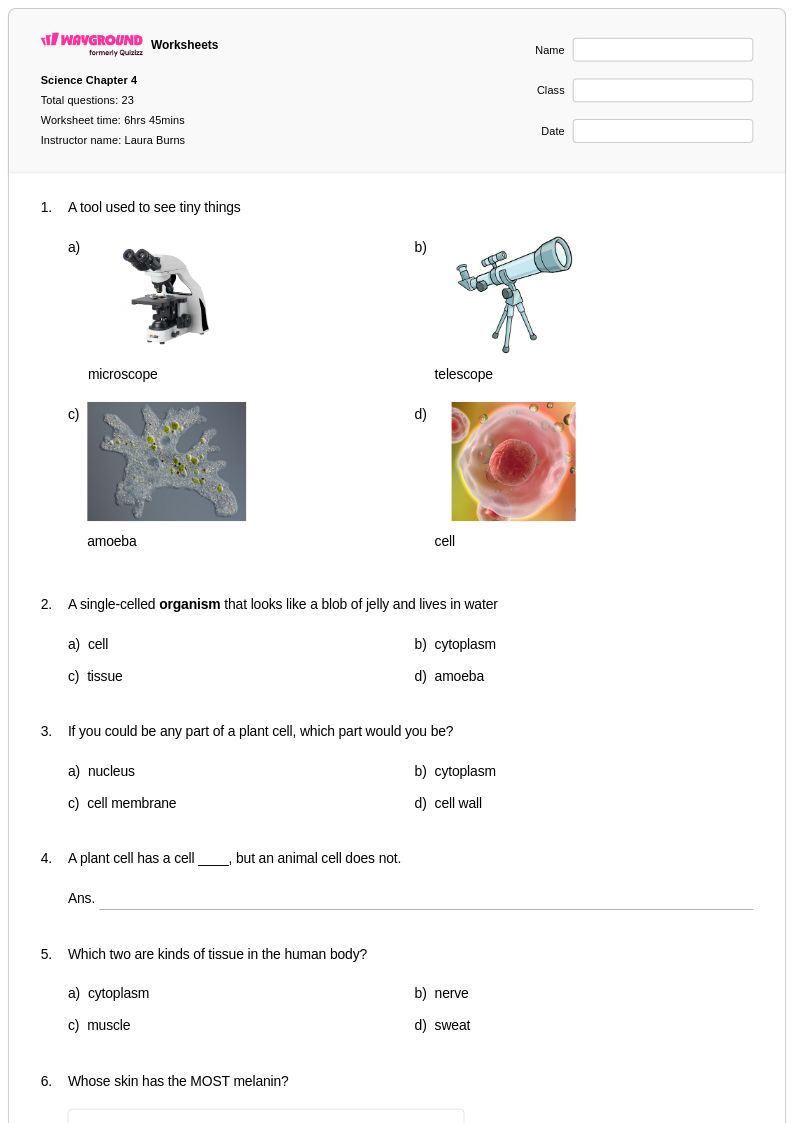
Cell analogy worksheets for Class 3 students through Wayground (formerly Quizizz) introduce young learners to the fundamental concept that cells are the basic building blocks of all living things by comparing cellular structures to familiar objects and places. These educational resources help third-grade students develop critical thinking skills as they explore how organelles function like different parts of a city, factory, or school, making abstract biological concepts accessible and memorable. The worksheets strengthen analytical reasoning abilities through engaging practice problems that ask students to identify similarities between cellular components and everyday items, while comprehensive answer keys support both independent learning and guided instruction. Available as free printables in pdf format, these resources provide structured opportunities for students to visualize and understand how mitochondria act like power plants, how the nucleus functions as a control center, and how cell membranes work like security guards protecting the cell's interior.
Wayground (formerly Quizizz) empowers educators with millions of teacher-created cell analogy resources specifically designed for Class 3 biology instruction, featuring robust search and filtering capabilities that allow teachers to quickly locate materials aligned with specific learning standards and student needs. The platform's differentiation tools enable instructors to customize worksheets for various ability levels, ensuring that all students can successfully engage with cellular concepts through appropriate analogical reasoning exercises. Teachers benefit from flexible formatting options that include both printable pdf versions for traditional classroom use and digital formats for interactive learning experiences, making lesson planning more efficient and responsive to diverse teaching environments. These comprehensive resources support effective remediation for struggling learners, provide enrichment opportunities for advanced students, and offer consistent skill practice that reinforces understanding of how cellular structures relate to familiar real-world systems and organizations.
FAQs
How do I teach cell analogies to my students?
Teaching cell analogies works best when students first have a solid understanding of each organelle's function before attempting comparisons. Start by modeling one analogy together as a class — for example, comparing the nucleus to a city hall because both serve as the control center — then have students generate their own comparisons for remaining organelles. Encouraging students to justify why their chosen analogy works, not just name it, deepens conceptual understanding and builds critical thinking skills.
What exercises help students practice cell analogies?
Effective practice exercises ask students to do more than match organelles to objects — they should require written explanations of the functional similarities between each organelle and its analogy. Worksheets that prompt students to compare a cell to a real-world system, such as a city, school, or factory, and then explain the role each organelle plays within that system reinforce how cellular components work together as an integrated whole. Requiring students to justify their analogical reasoning is what separates meaningful practice from surface-level matching.
What common mistakes do students make when creating cell analogies?
The most frequent mistake is choosing analogies based on physical appearance rather than function — for example, comparing the cell membrane to a wall because both are boundaries, without addressing the membrane's selective permeability. Students also commonly confuse the roles of the nucleus and the cell membrane, or conflate the functions of mitochondria and chloroplasts when working with plant cells. Asking students to explicitly state what each organelle does before selecting an analogy helps prevent these errors.
How can I differentiate cell analogy worksheets for students at different ability levels?
For struggling learners, providing a word bank of organelles and a partially completed analogy chart reduces cognitive load while still requiring students to make functional connections. Advanced students benefit from open-ended prompts that ask them to design an entirely original analogy system and defend each comparison in writing. On Wayground, teachers can apply accommodations such as reduced answer choices, read aloud support, and extended time to individual students, so differentiation can be managed at the student level without disrupting the rest of the class.
How do I use Wayground's cell analogy worksheets in my classroom?
Wayground's cell analogy worksheets are available as printable PDFs for traditional classroom use and in digital formats for technology-integrated learning environments, giving teachers flexibility depending on their setup. Teachers can also host the worksheets as a quiz directly on Wayground, making it easy to assign, track, and review student responses. Each worksheet includes a complete answer key, so teachers can use them for guided instruction, independent practice, or formative assessment without additional preparation.