
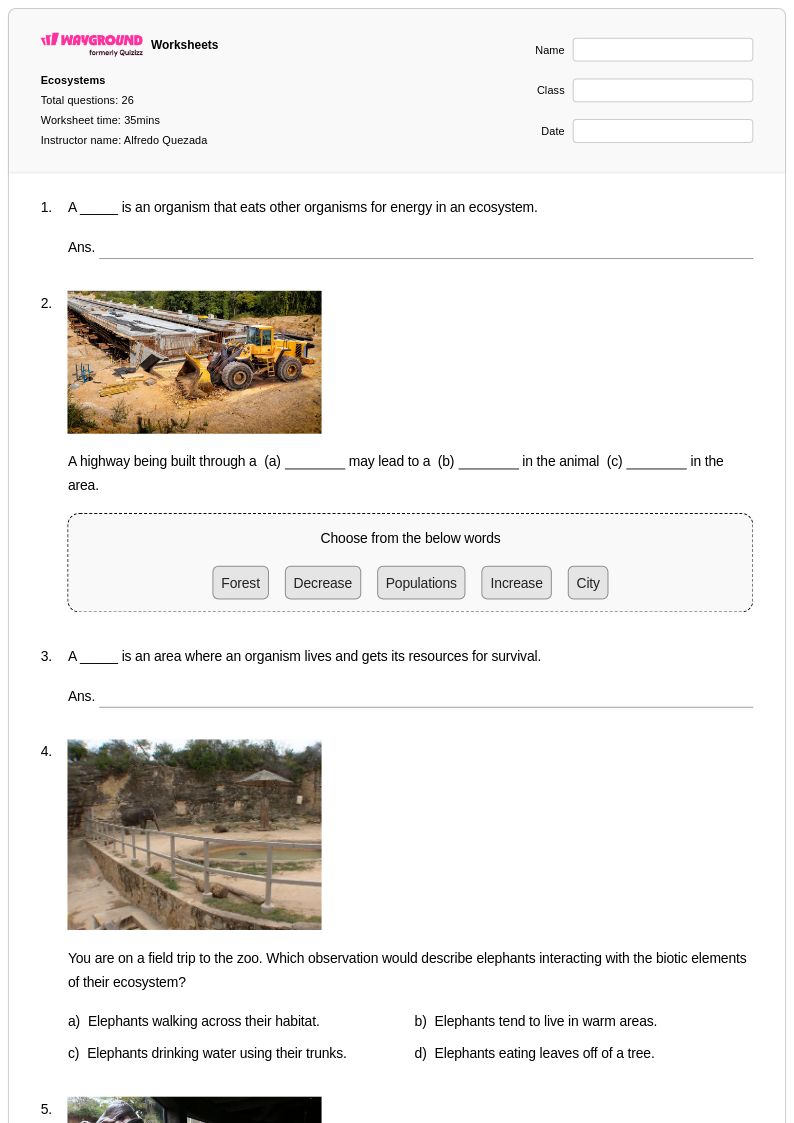
26 Q
1st - 5th
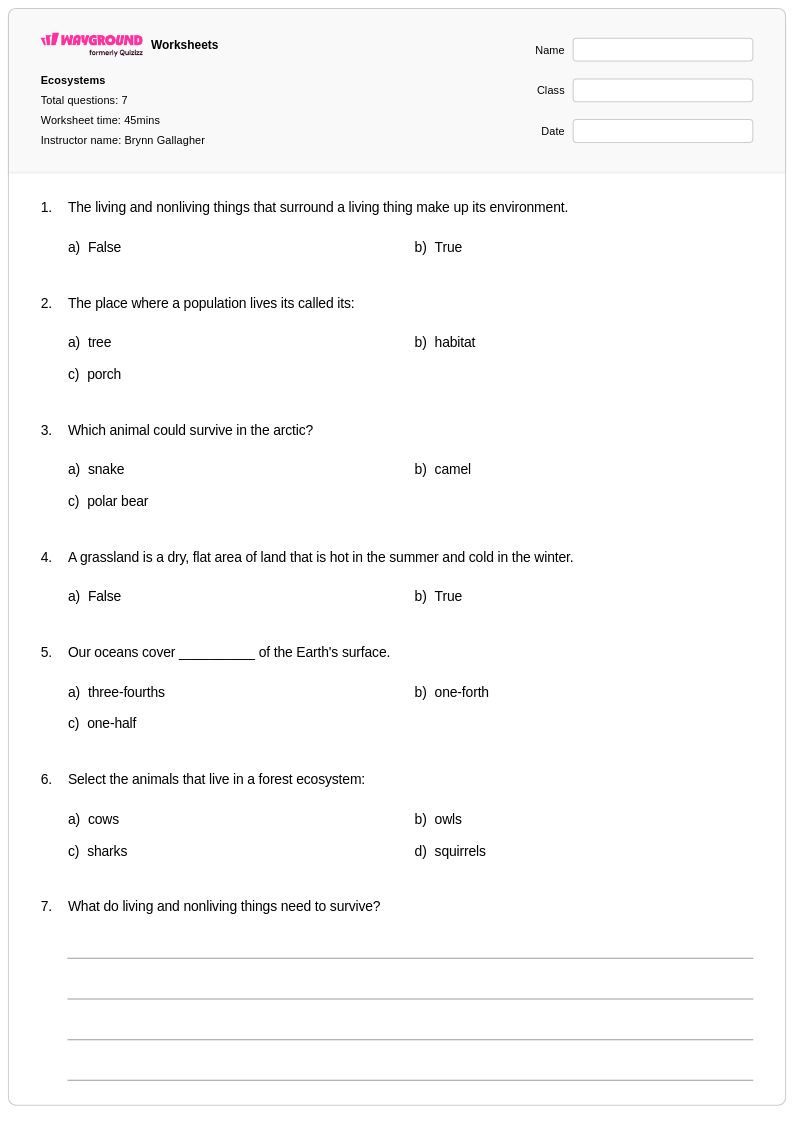
7 Q
3rd
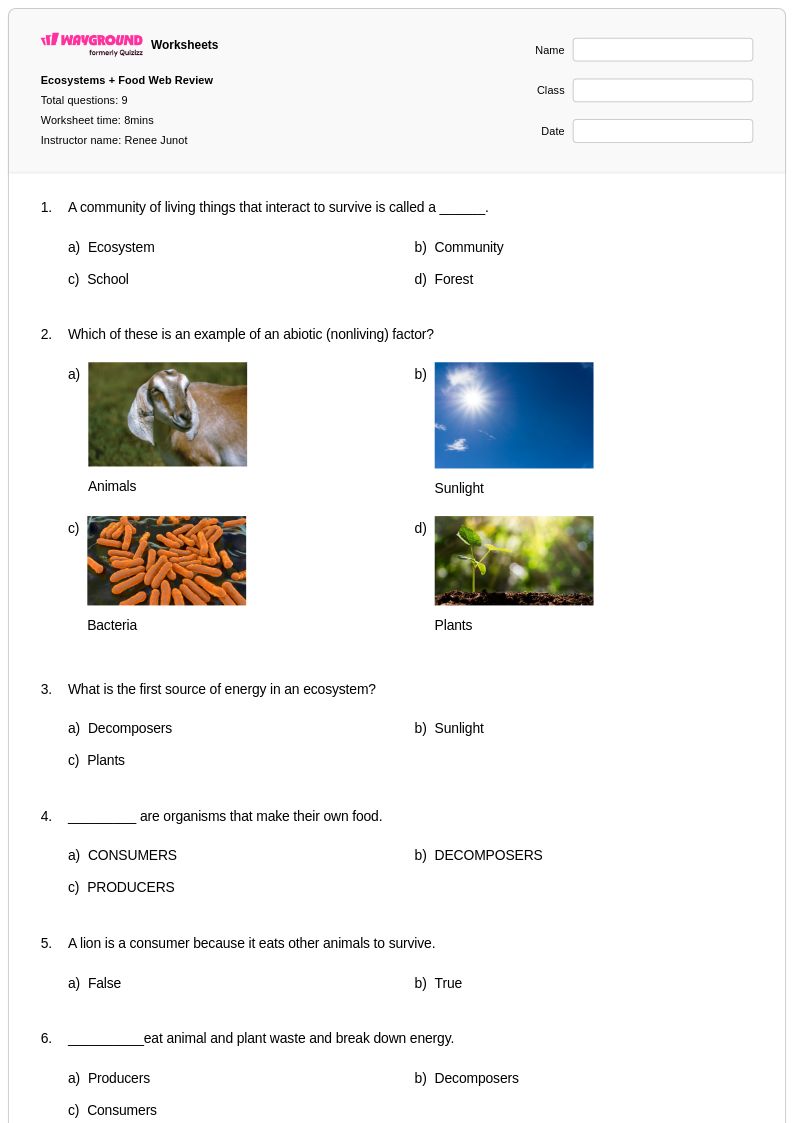
9 Q
3rd - 5th
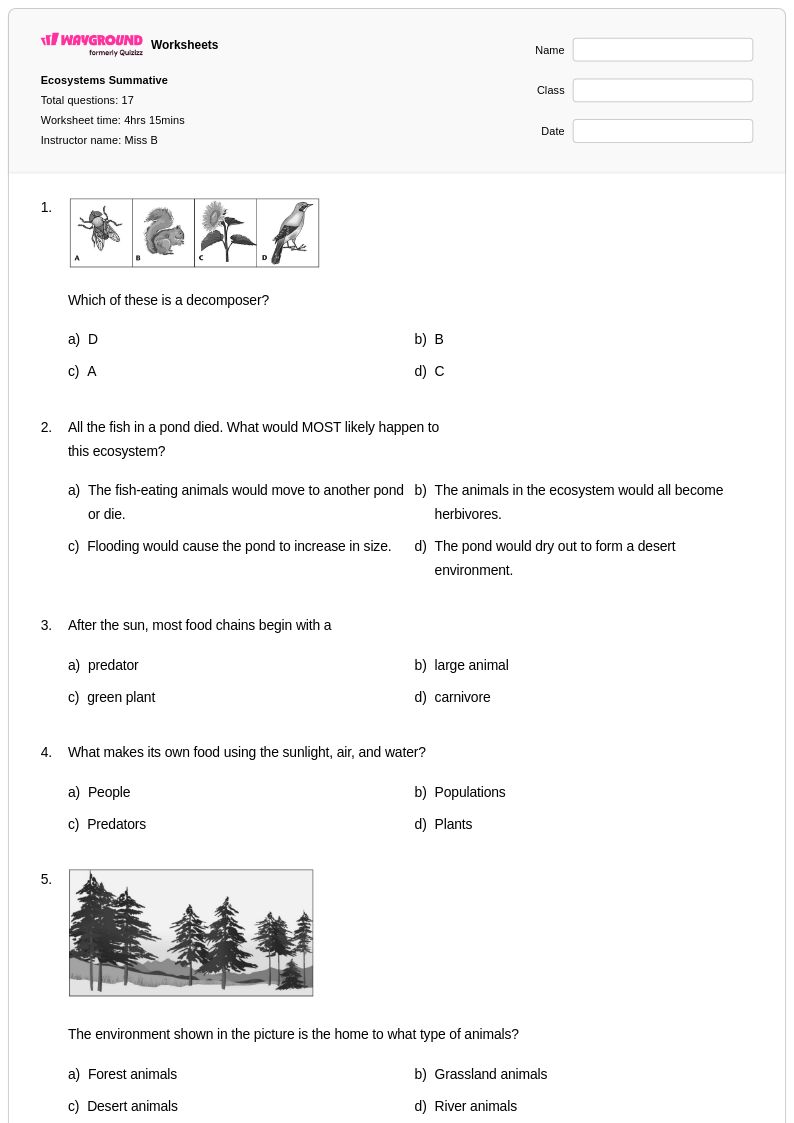
17 Q
3rd
13 Q
3rd
13 Q
3rd
26 Q
3rd
10 Q
3rd
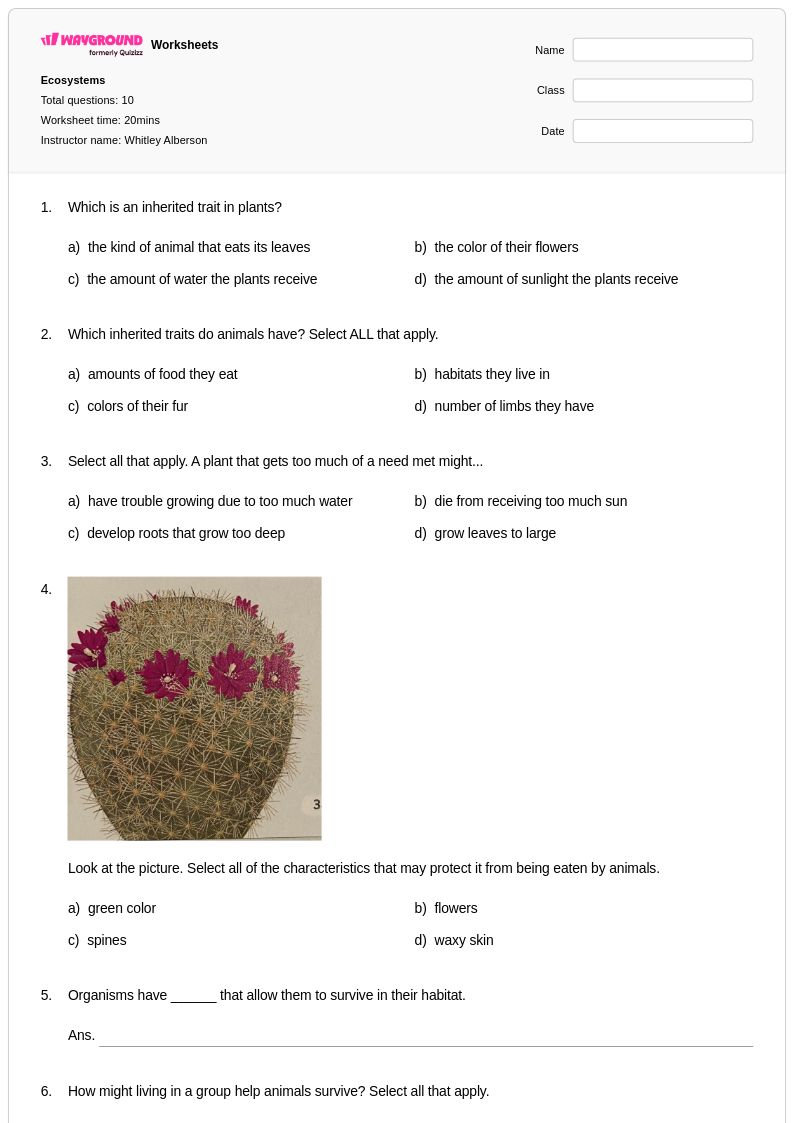
10 Q
3rd
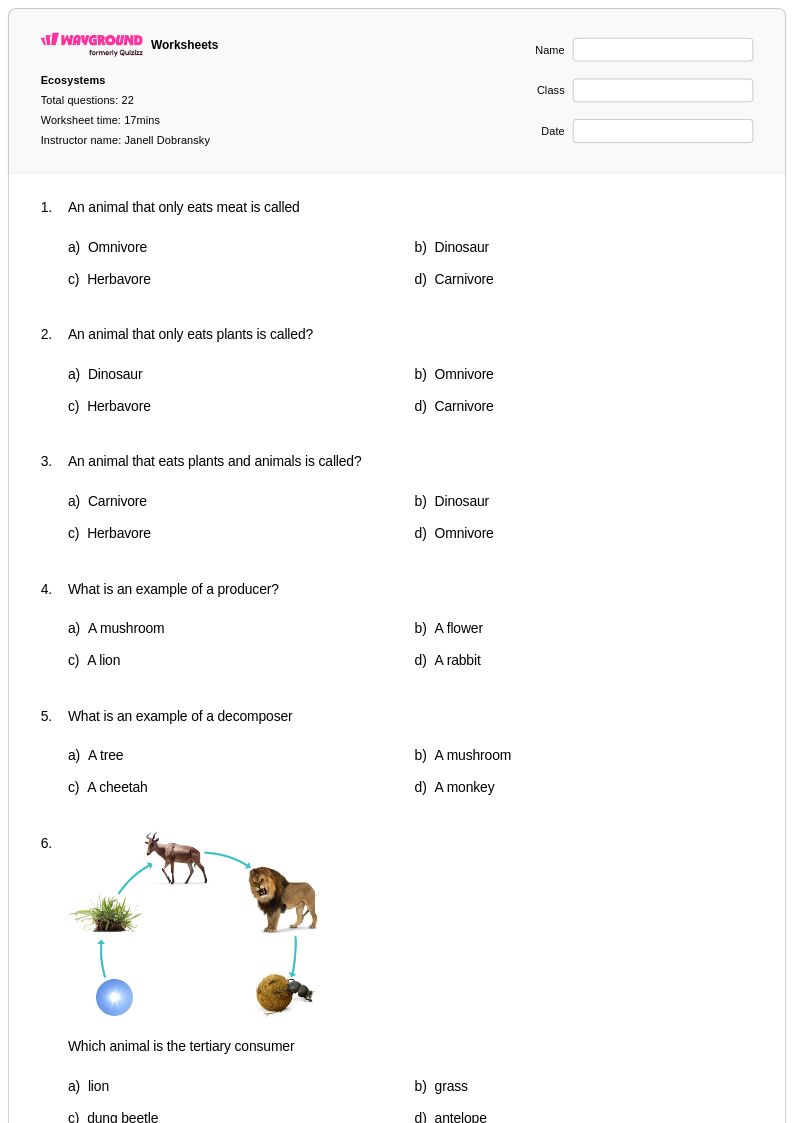
22 Q
3rd
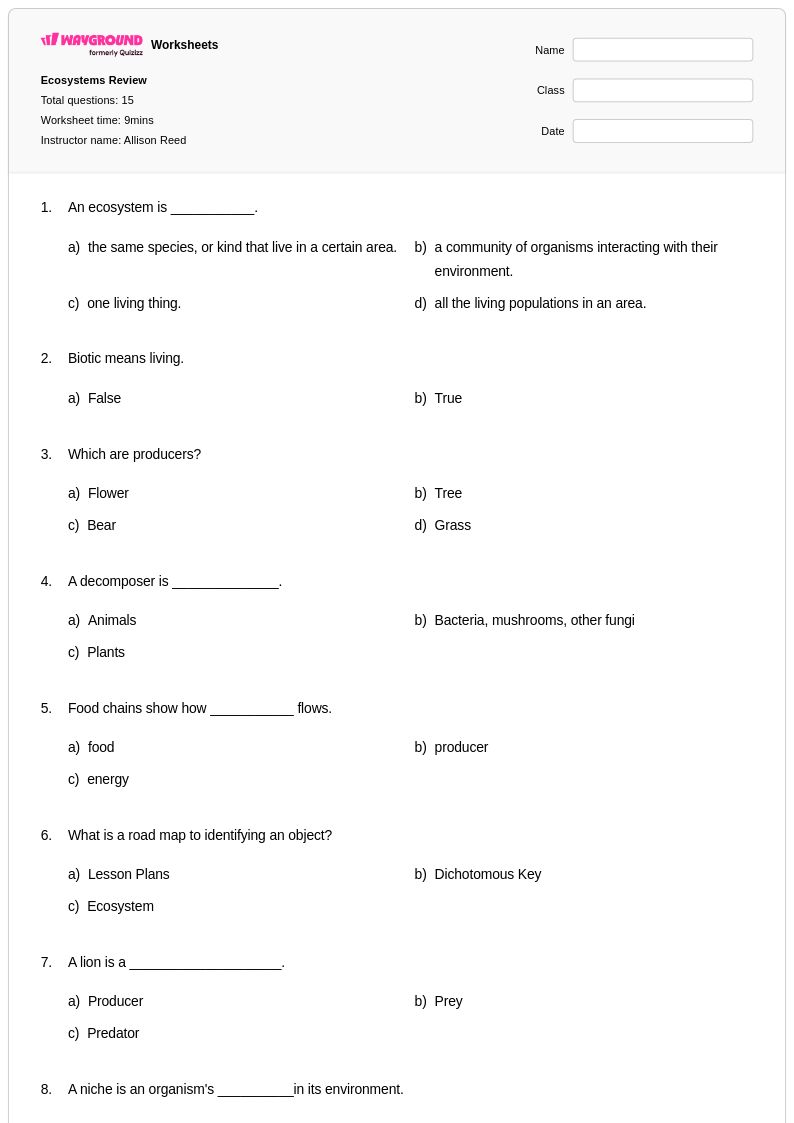
15 Q
3rd - 4th
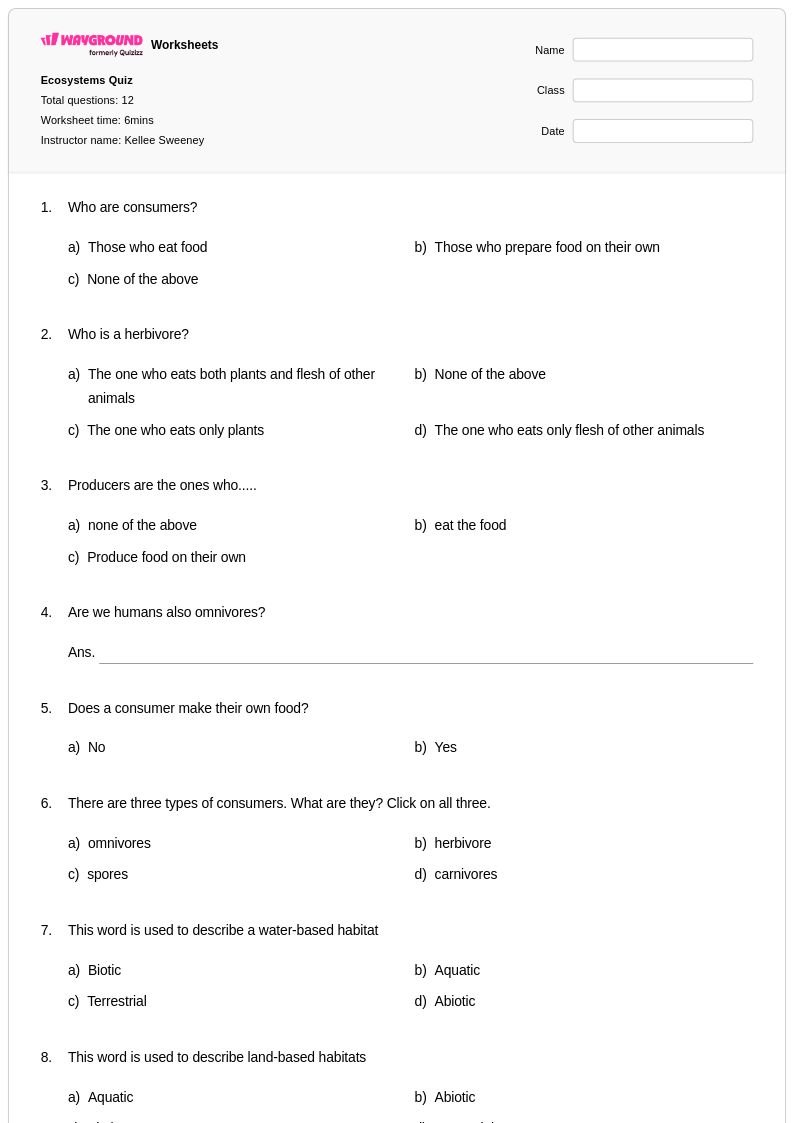
12 Q
3rd
12 Q
3rd - 6th
20 Q
3rd
15 Q
3rd - 4th
18 Q
3rd
20 Q
3rd
7 Q
3rd
15 Q
3rd - 4th
10 Q
3rd - 5th
18 Q
3rd
13 Q
3rd - 4th
16 Q
3rd
23 Q
3rd
Explore Other Subject Worksheets for class 3
Explore printable Ecosystem Services worksheets for Class 3
Ecosystem services worksheets for Class 3 students available through Wayground (formerly Quizizz) introduce young learners to the essential benefits that natural environments provide to humans and other living things. These carefully designed educational resources help third-grade students understand foundational concepts such as how forests clean our air, how wetlands filter water, and how pollinators help plants reproduce to provide us with food. The worksheets strengthen critical thinking skills by encouraging students to identify connections between nature and daily life, while building vocabulary related to environmental science and conservation. Each printable resource includes comprehensive practice problems that guide students through observations of local ecosystems, and many come with detailed answer keys that support both independent learning and teacher-guided instruction. These free educational materials present complex ecological relationships in age-appropriate formats, using visual aids and hands-on activities that make abstract concepts accessible to elementary learners.
Wayground (formerly Quizizz) empowers educators with an extensive collection of millions of teacher-created ecosystem services worksheets specifically tailored for Class 3 science instruction. The platform's robust search and filtering capabilities allow teachers to quickly locate resources that align with specific learning standards and curriculum requirements, while differentiation tools enable seamless adaptation of materials to meet diverse student needs and learning styles. Teachers can easily customize these printable and digital worksheet collections to focus on local ecosystem examples, modify difficulty levels for remediation or enrichment purposes, and access materials in convenient PDF formats for both classroom distribution and homework assignments. This comprehensive support system streamlines lesson planning by providing ready-to-use assessment tools, vocabulary builders, and skill practice exercises that help educators effectively teach the interconnected relationships between natural systems and human well-being while fostering environmental stewardship in young students.
FAQs
How do I teach ecosystem services to students?
What types of practice problems help students understand ecosystem services?
What common mistakes do students make when learning about ecosystem services?
How can I use ecosystem services worksheets to support different learning levels?
How do I use Wayground's ecosystem services worksheets in my classroom?
How do I connect ecosystem services to broader environmental topics like conservation and biodiversity?