Discover free Class 3 life cycle worksheets and printables that help students explore how living things grow and change through engaging practice problems and comprehensive answer keys.
Explore printable Life Cycle worksheets for Class 3
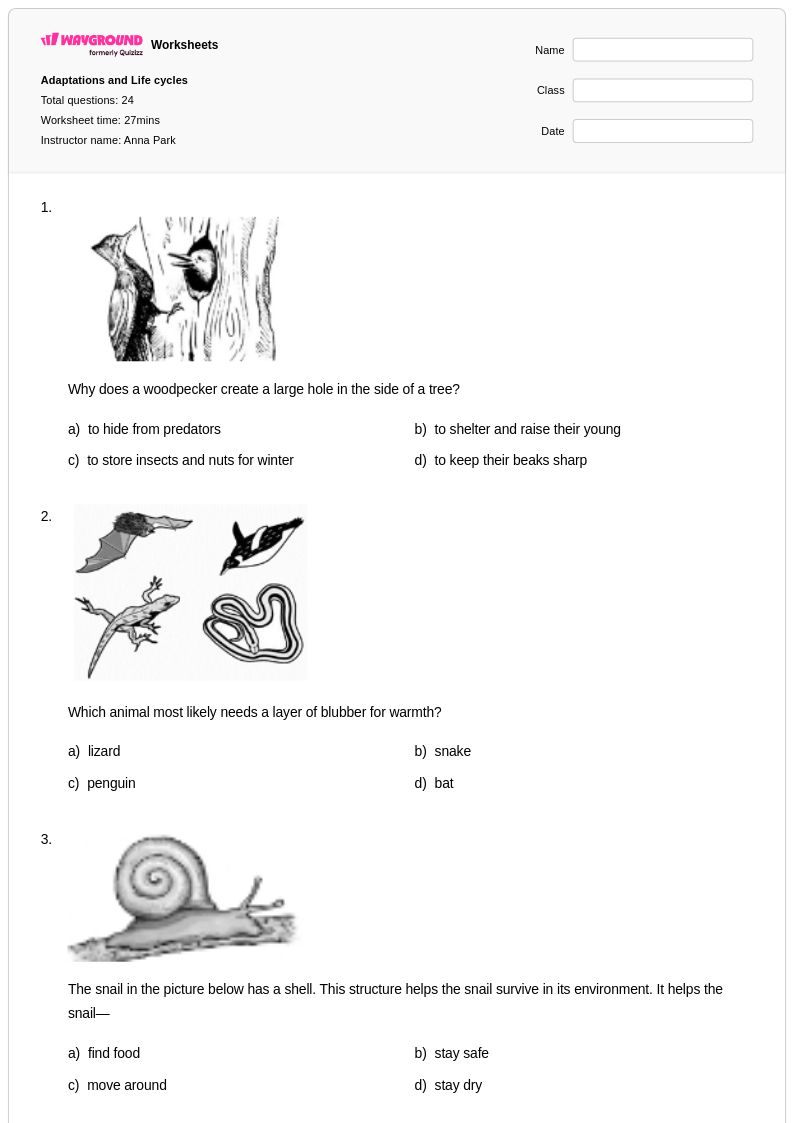
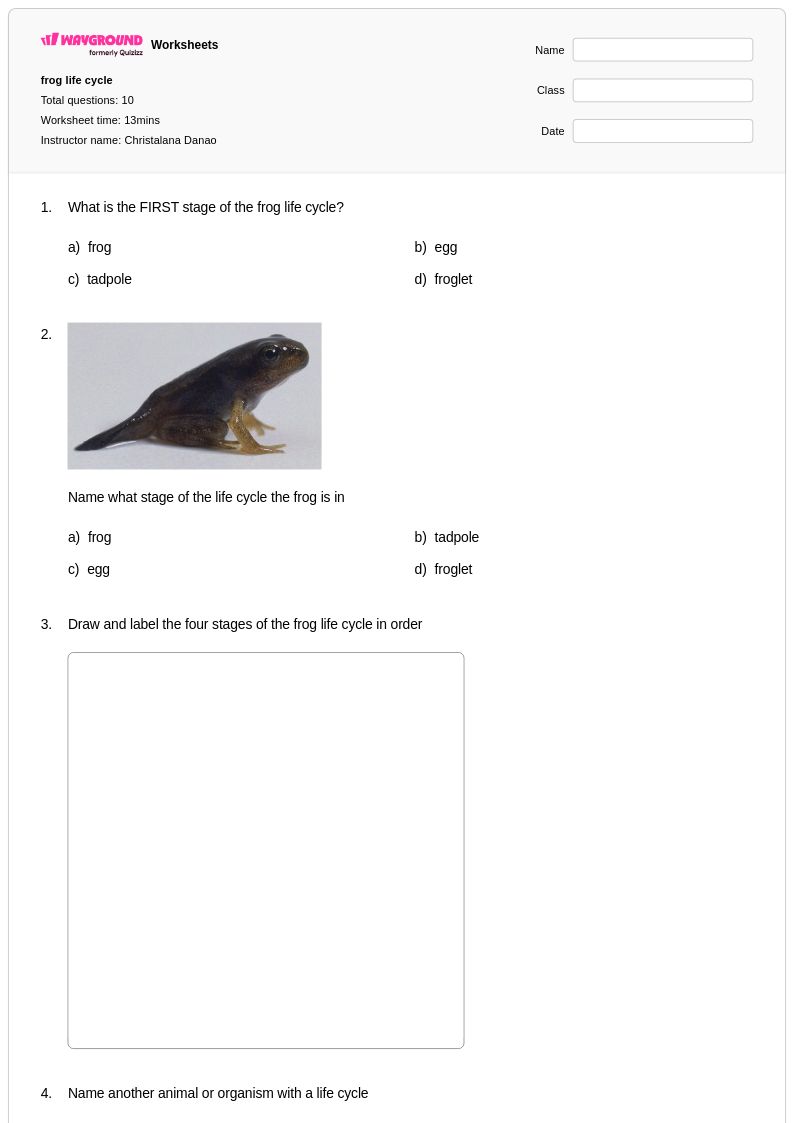
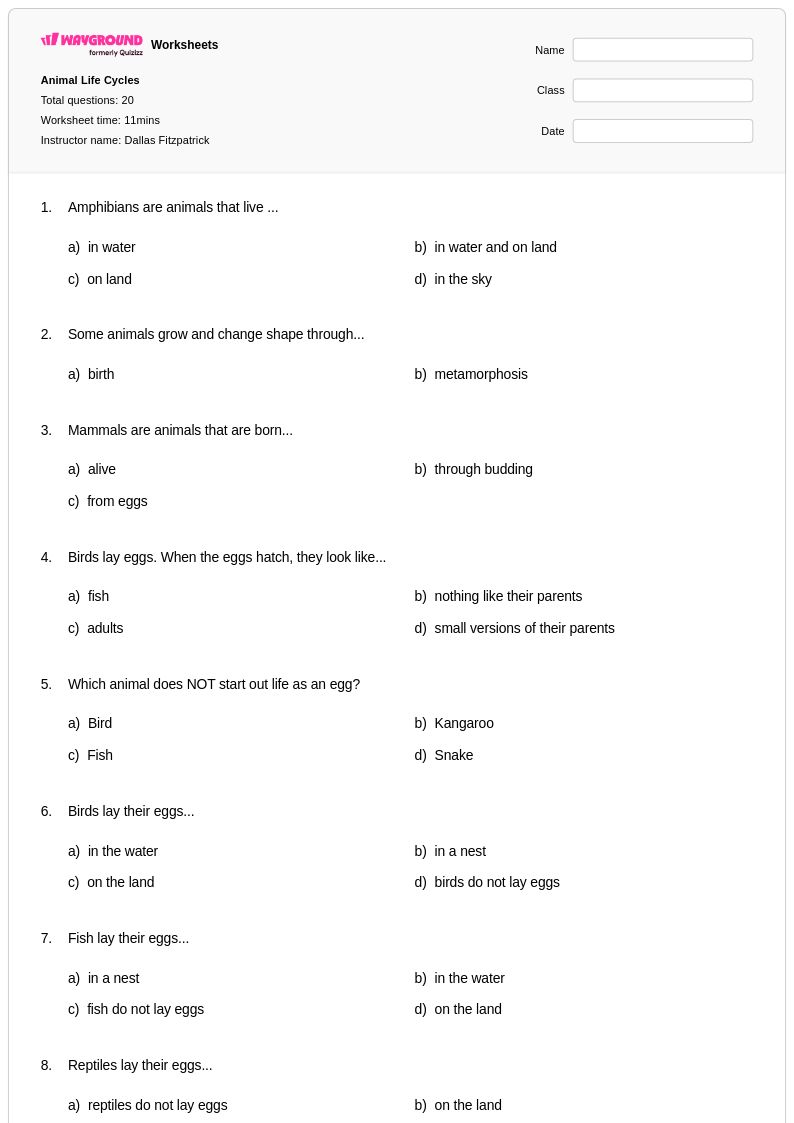
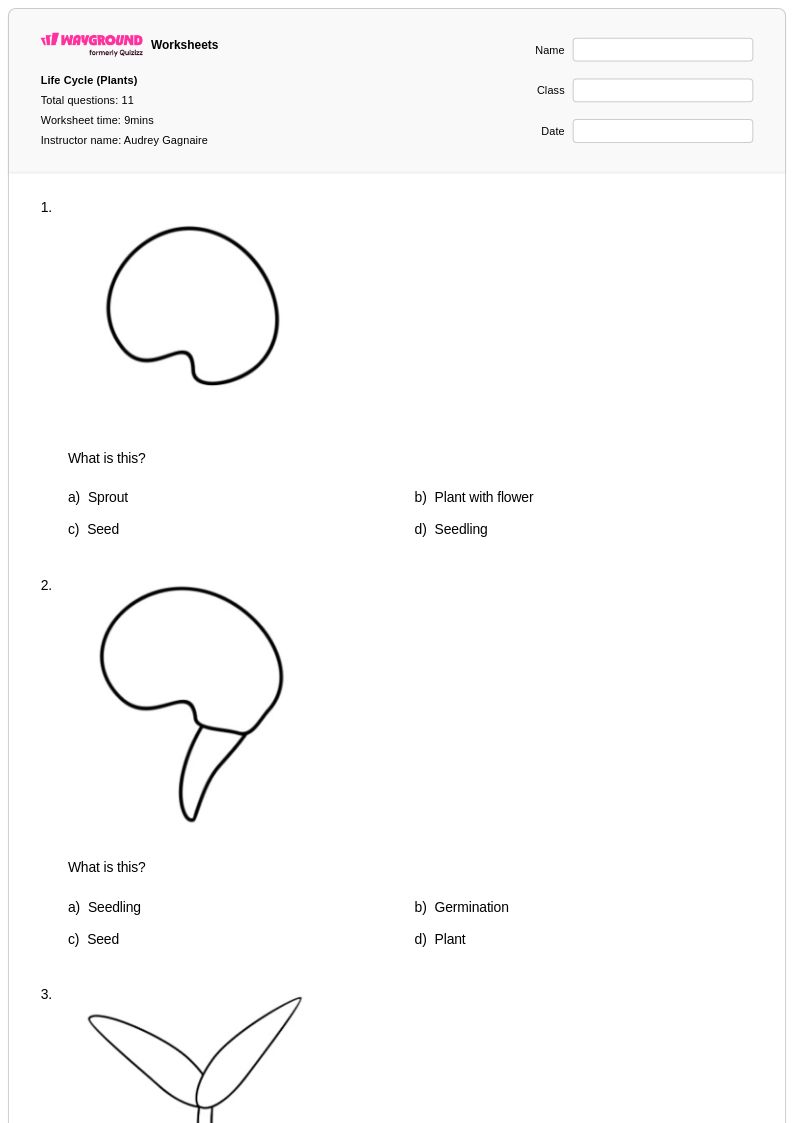
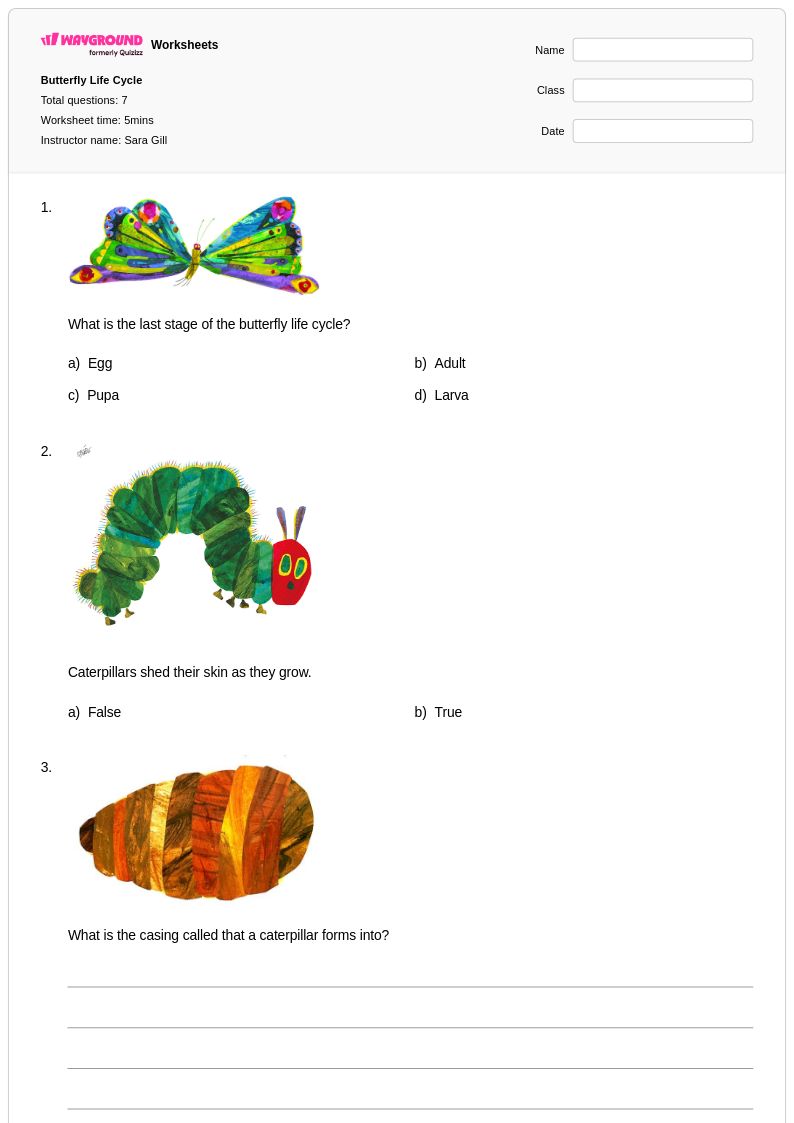
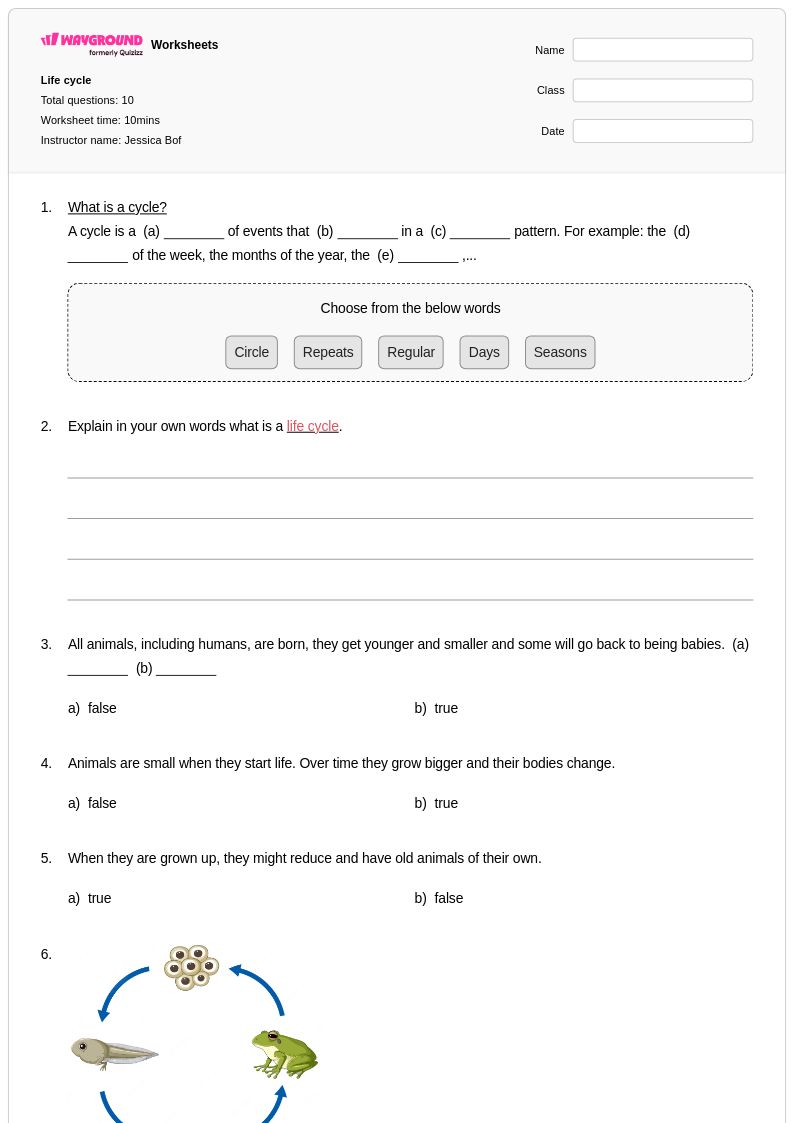
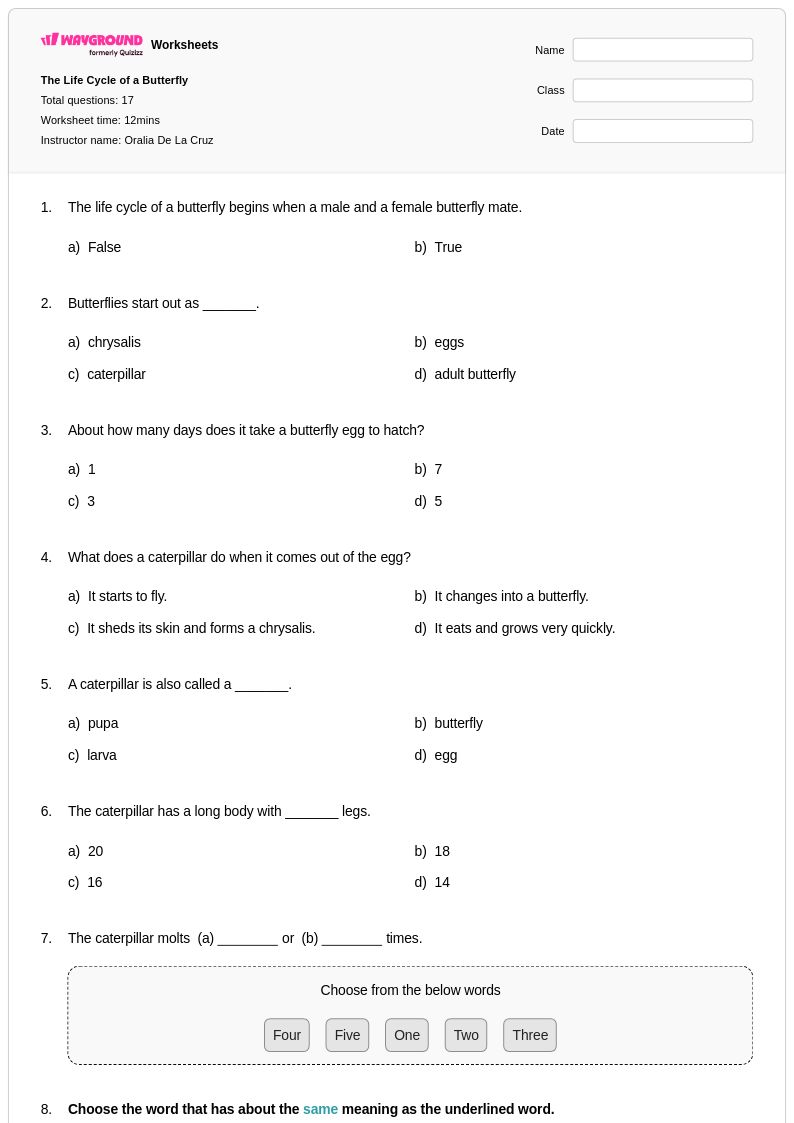
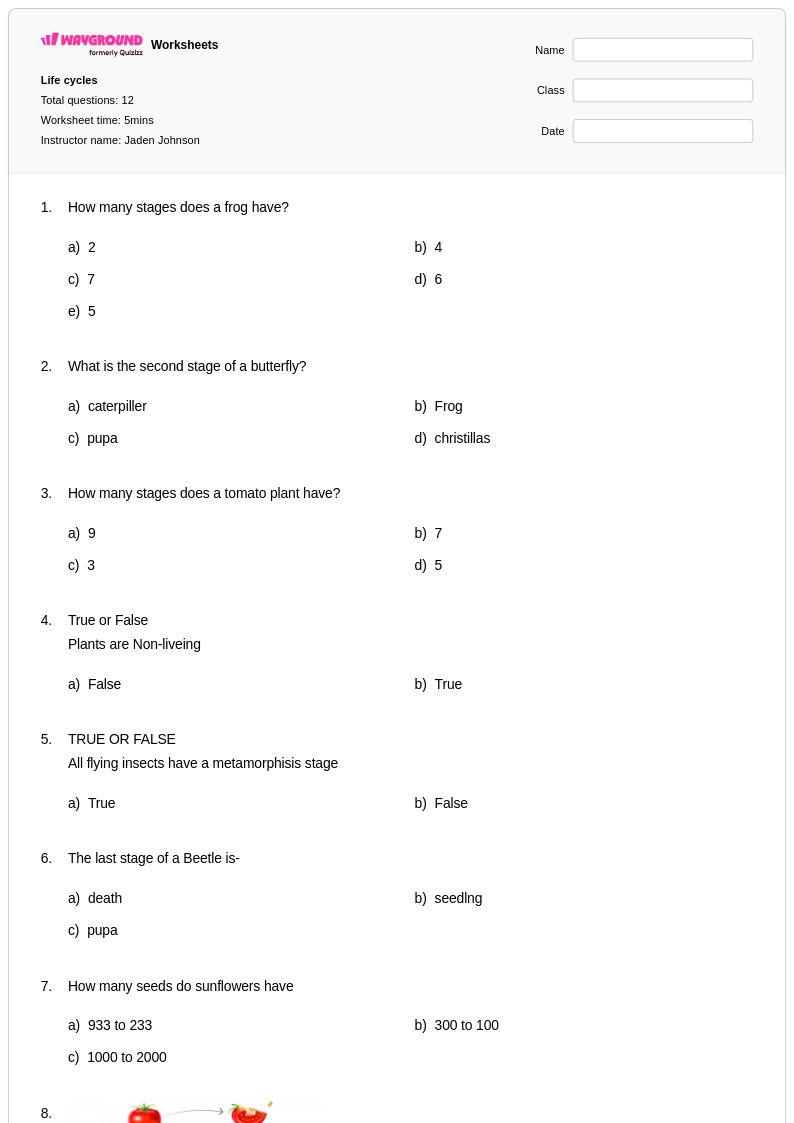
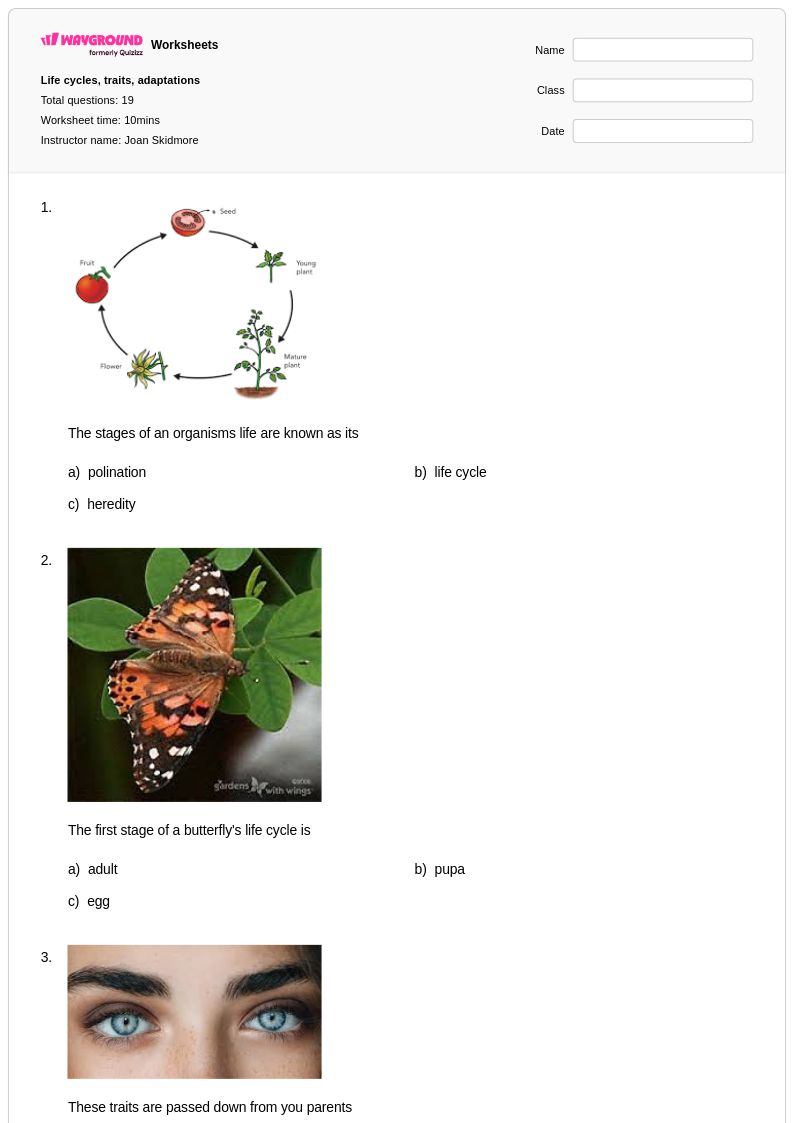
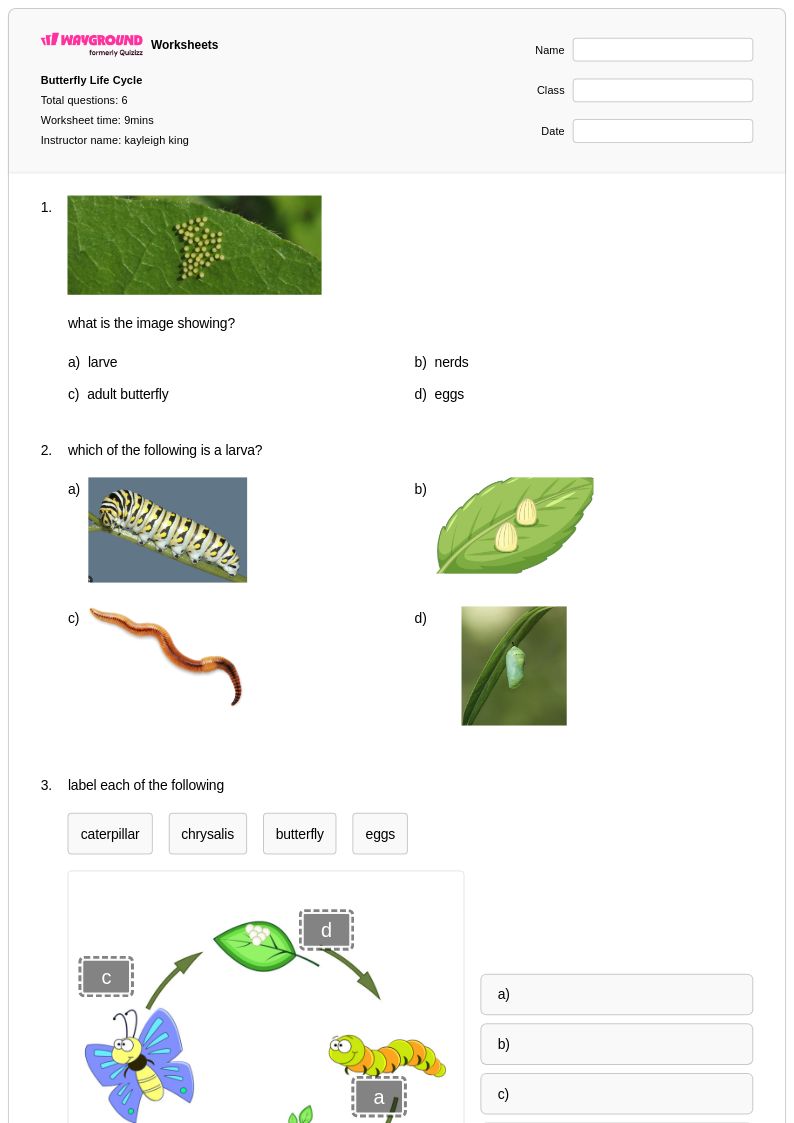
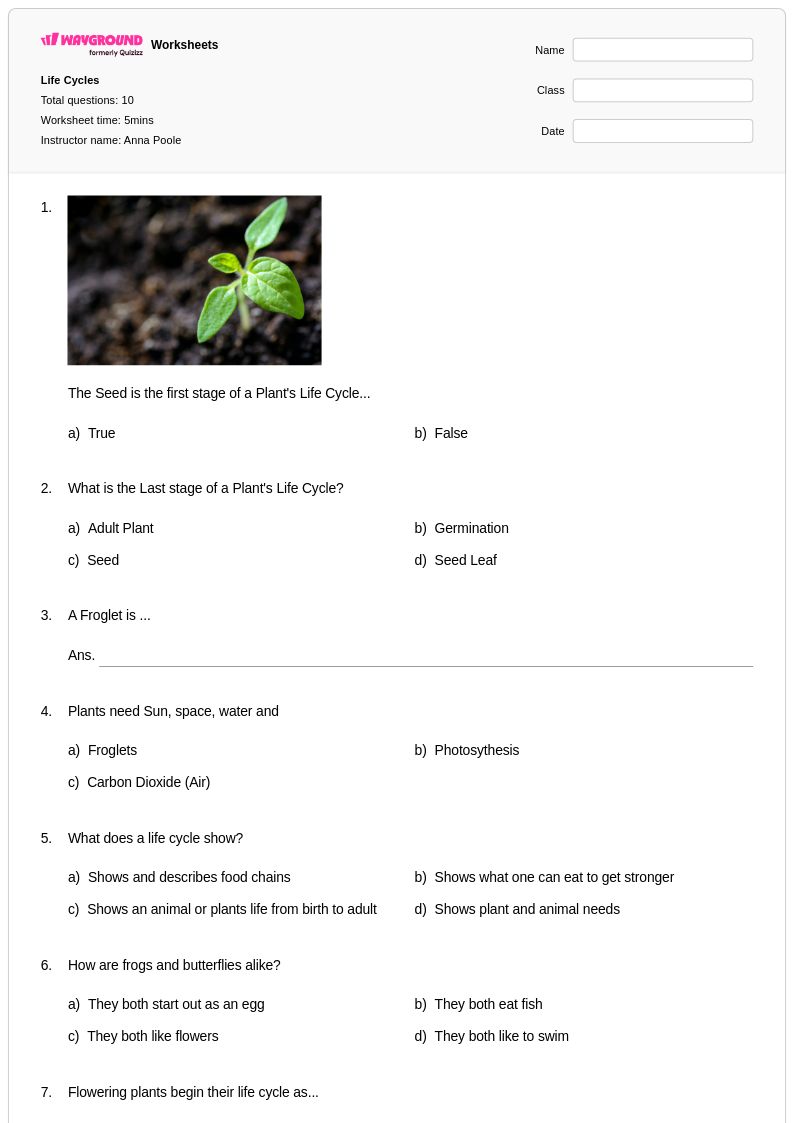
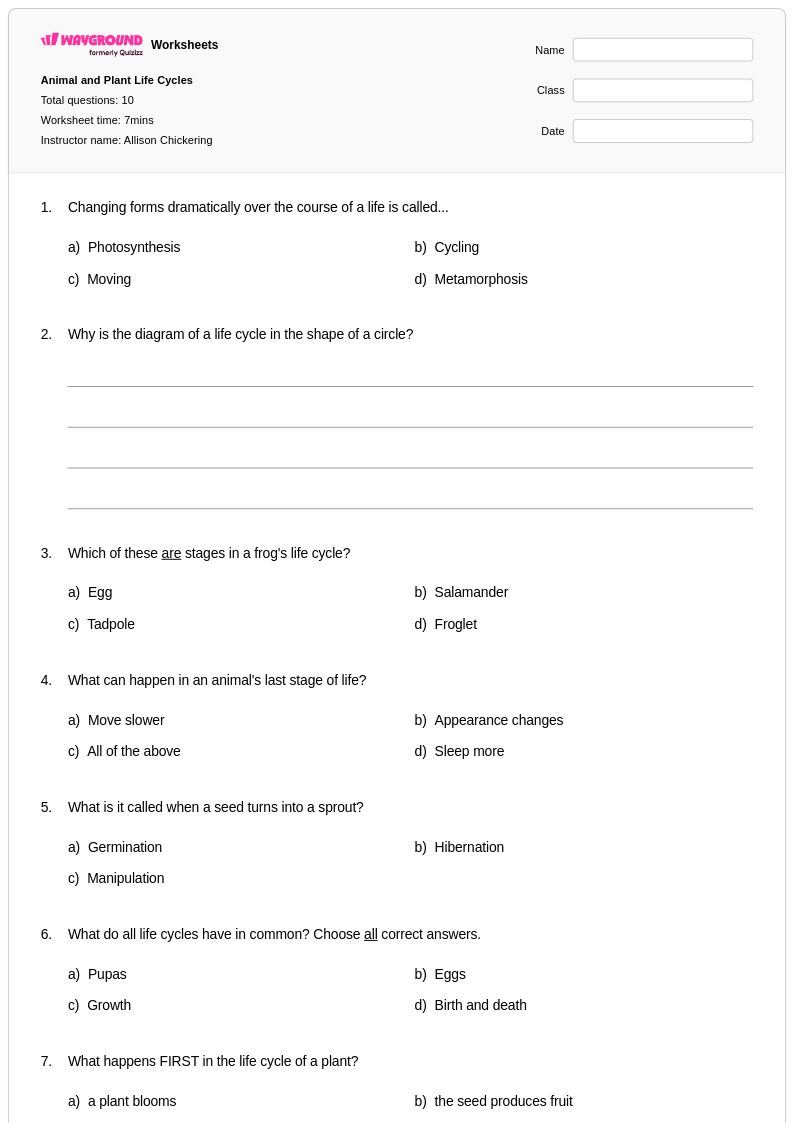
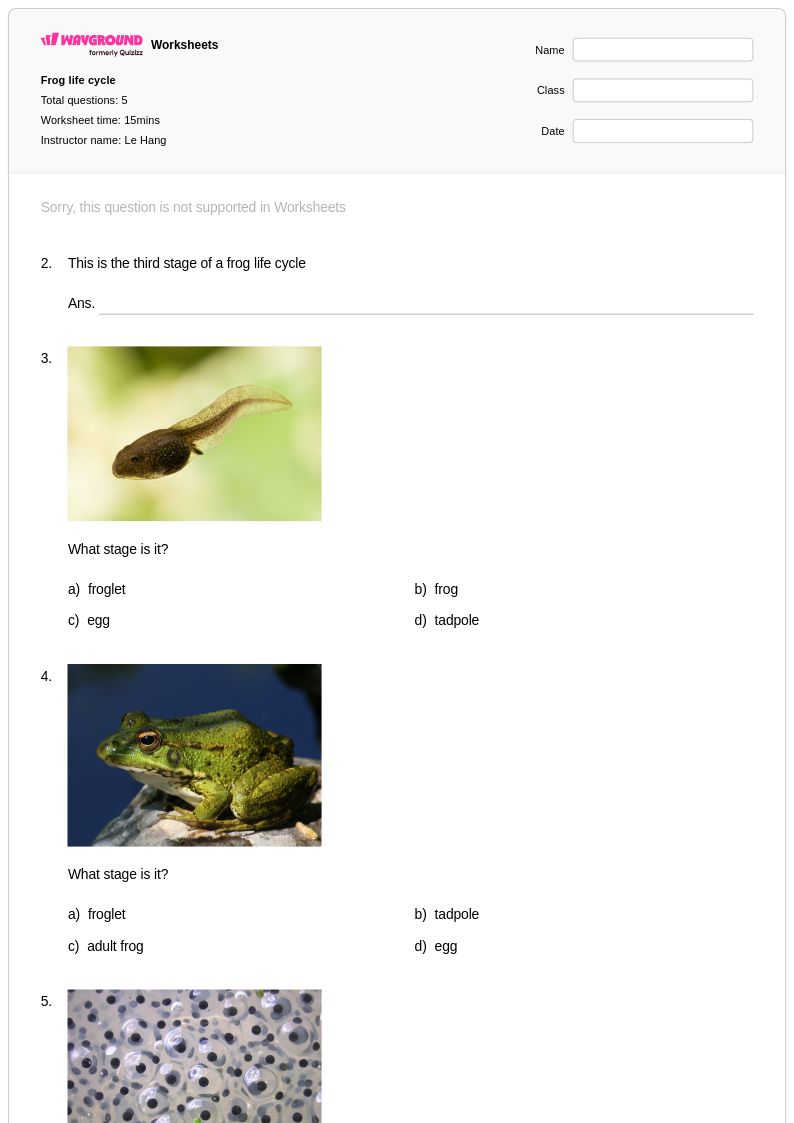
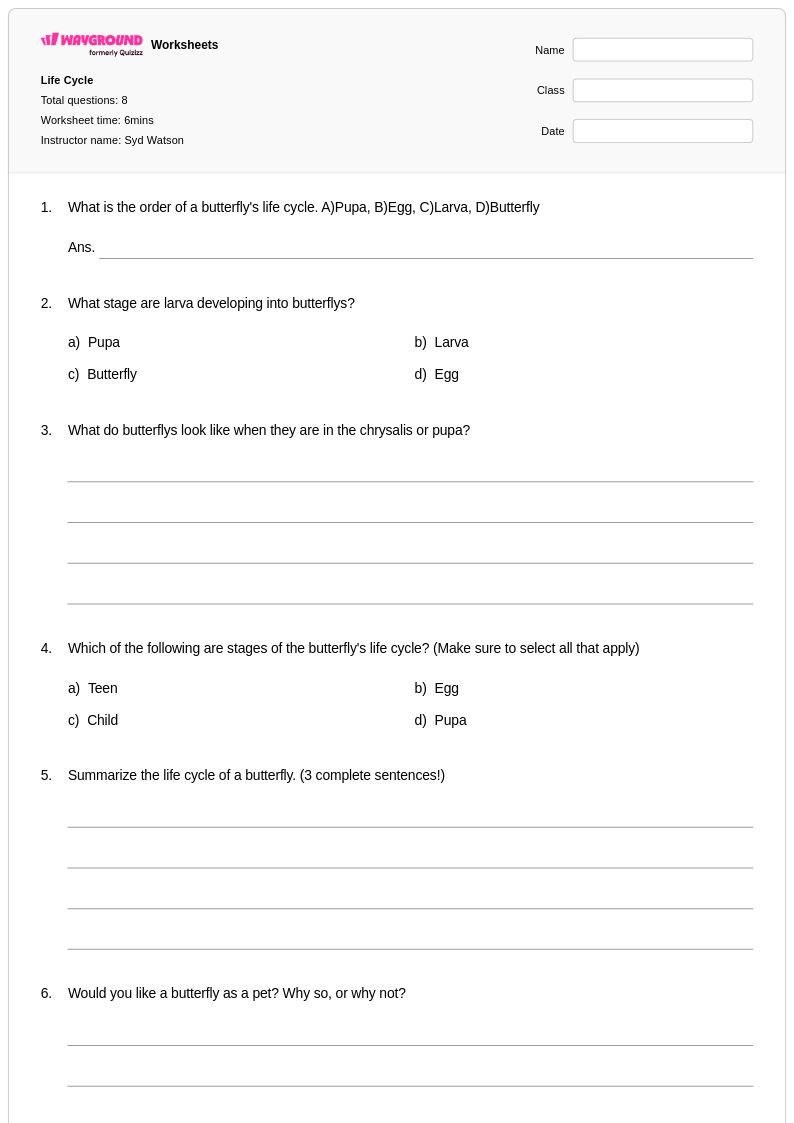
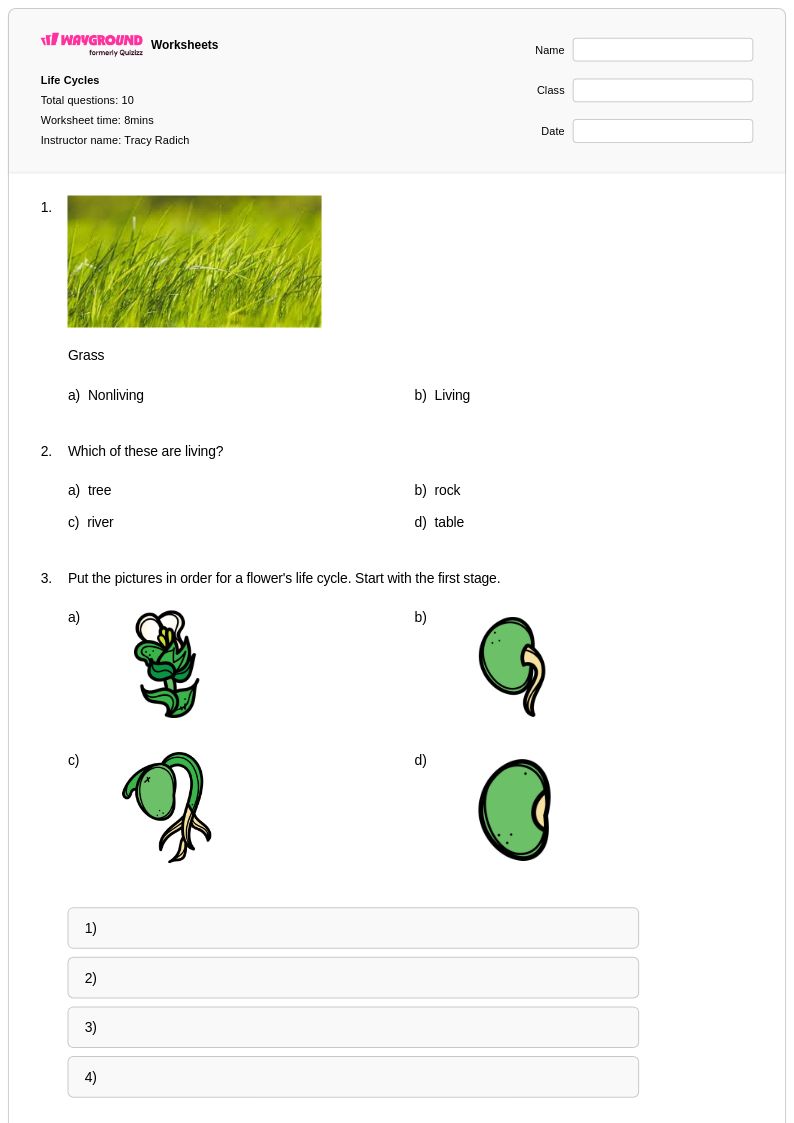
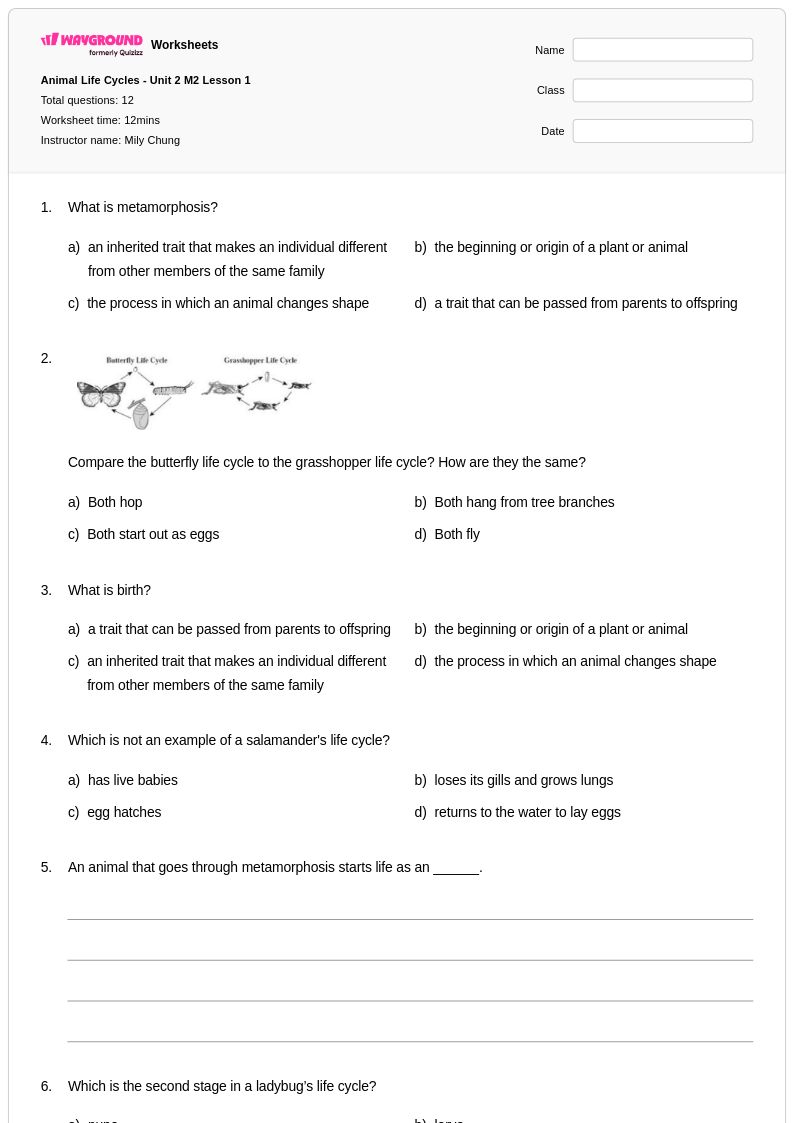
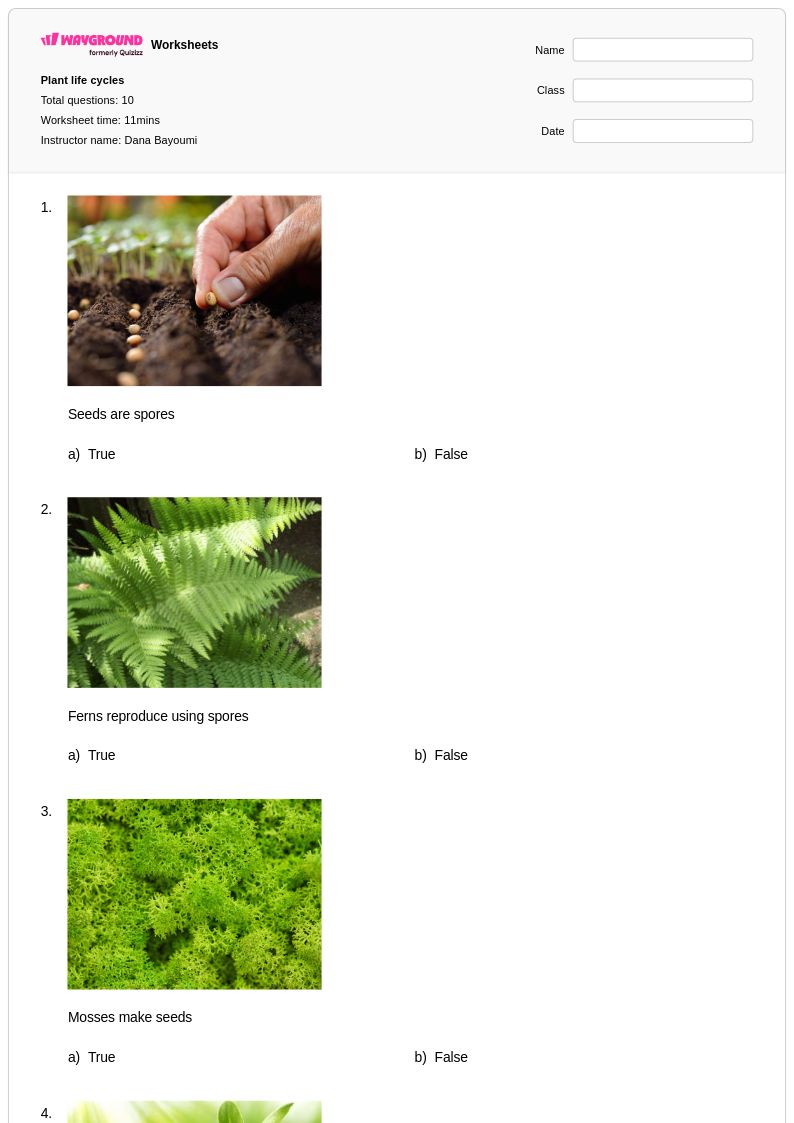
Life cycle worksheets for Class 3 students available through Wayground (formerly Quizizz) provide comprehensive resources that help young learners understand the fascinating transformations that occur in living organisms throughout their development stages. These expertly designed worksheets focus on essential biological concepts such as metamorphosis in butterflies and frogs, plant growth from seed to mature organism, and the cyclical nature of reproduction in various species. Students develop critical observation skills, scientific vocabulary, and pattern recognition abilities as they work through engaging practice problems that illustrate how organisms change over time. Each worksheet collection includes detailed answer keys and is available as free printables in convenient pdf format, making it easy for educators to incorporate hands-on learning activities that reinforce fundamental life science concepts.
Wayground (formerly Quizizz) empowers teachers with an extensive library of millions of teacher-created life cycle resources specifically designed to support Class 3 biology instruction across diverse learning environments. The platform's robust search and filtering capabilities allow educators to quickly locate worksheets that align with specific curriculum standards while offering differentiation tools to meet varying student needs and abilities. Teachers can customize these printable and digital materials, including pdf downloads, to create targeted remediation activities for struggling learners or enrichment opportunities for advanced students. This flexibility supports comprehensive lesson planning by providing multiple formats for skill practice, from interactive digital exercises to traditional paper-based assessments, ensuring that every student can engage meaningfully with life cycle concepts regardless of their preferred learning style or classroom technology access.
FAQs
How do I teach life cycles to elementary students?
Start by anchoring instruction in organisms students can observe directly or have prior knowledge of, such as butterflies, frogs, or plants. Use sequencing activities where students arrange life cycle stages in order before introducing diagrams or comparative analysis. Building from familiar examples to more complex ones, like bacterial division or amphibian metamorphosis, helps students develop a transferable mental model of biological continuity rather than memorizing isolated facts.
What activities help students practice identifying life cycle stages?
Sequencing tasks, diagram labeling, and comparative analysis across multiple organisms are the most effective practice formats for life cycle concepts. Students benefit from being asked to both identify individual stages and explain the transitions between them, which deepens understanding beyond simple recall. Practice problems that require ordering developmental phases or matching stages to descriptions help reinforce the concept that life cycles follow predictable, repeatable patterns.
What mistakes do students commonly make when learning about life cycles?
A frequent misconception is treating life cycles as linear progressions with a fixed endpoint rather than continuous, repeating processes. Students also commonly confuse the stages of different organisms, particularly conflating incomplete and complete metamorphosis in insects. Another common error is assuming all organisms follow the same number of stages, so activities that compare diverse organisms, such as a butterfly versus a grasshopper, are especially useful for correcting this thinking.
How can I differentiate life cycle instruction for students at different levels?
For students who need additional support, reduce the number of stages presented at once and use organisms with simpler life cycles, such as plants or birds, before introducing metamorphosis. More advanced students can engage in comparative analyses across multiple organisms or explore edge cases like alternation of generations. On Wayground, teachers can apply accommodations such as read aloud support, reduced answer choices, and extended time on an individual student basis, ensuring the same worksheet set can serve a range of learners simultaneously.
How do I use Wayground's life cycle worksheets in my classroom?
Wayground's life cycle worksheets are available as printable PDFs for traditional classroom use and in digital formats for technology-integrated environments, making them flexible for homework, centers, or whole-class instruction. Teachers can also host worksheets directly as a quiz on Wayground, enabling real-time student responses and progress tracking. Each worksheet includes a complete answer key, so they can be used efficiently for independent practice, remediation, or formative assessment without additional teacher preparation.
How do life cycle worksheets support science standards?
Life cycle worksheets address core life science standards related to biological growth, reproduction, and the continuity of organisms across generations. Activities that involve sequencing, diagram interpretation, and comparative analysis directly build the scientific observation and pattern recognition skills emphasized in most K-8 science frameworks. Aligning worksheets to specific organisms or complexity levels allows teachers to scaffold instruction in a way that meets grade-band expectations progressively.