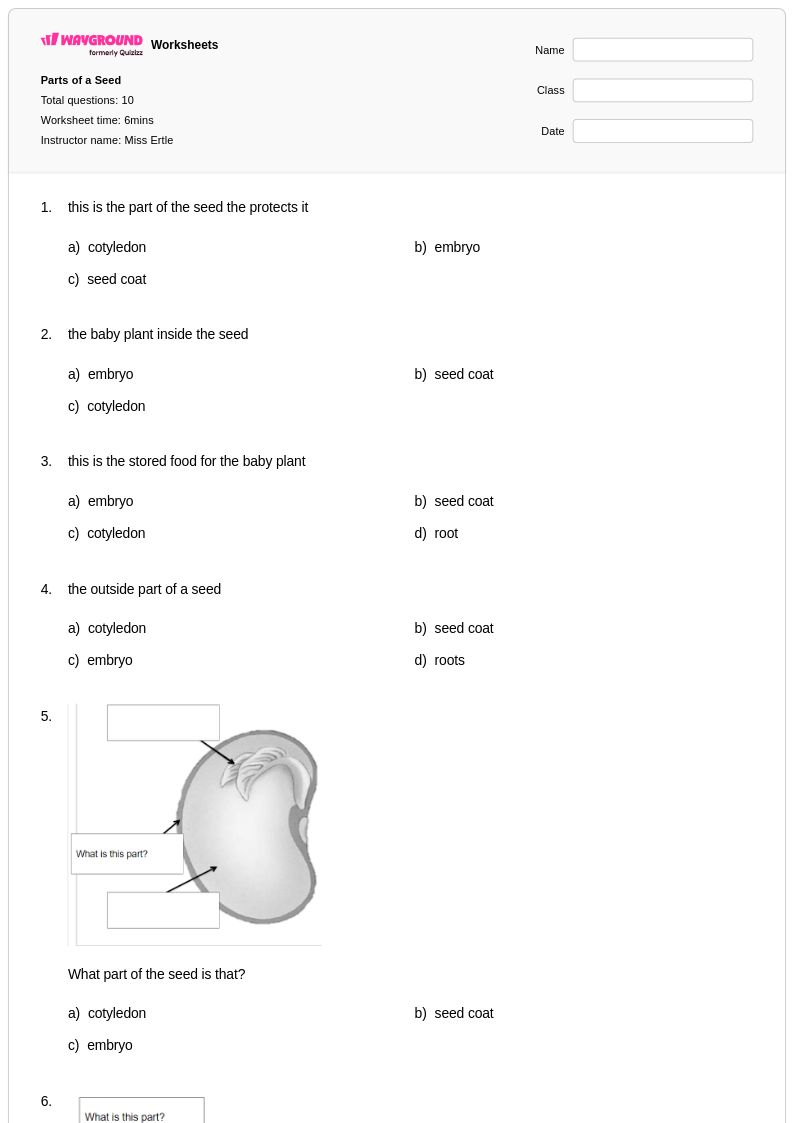
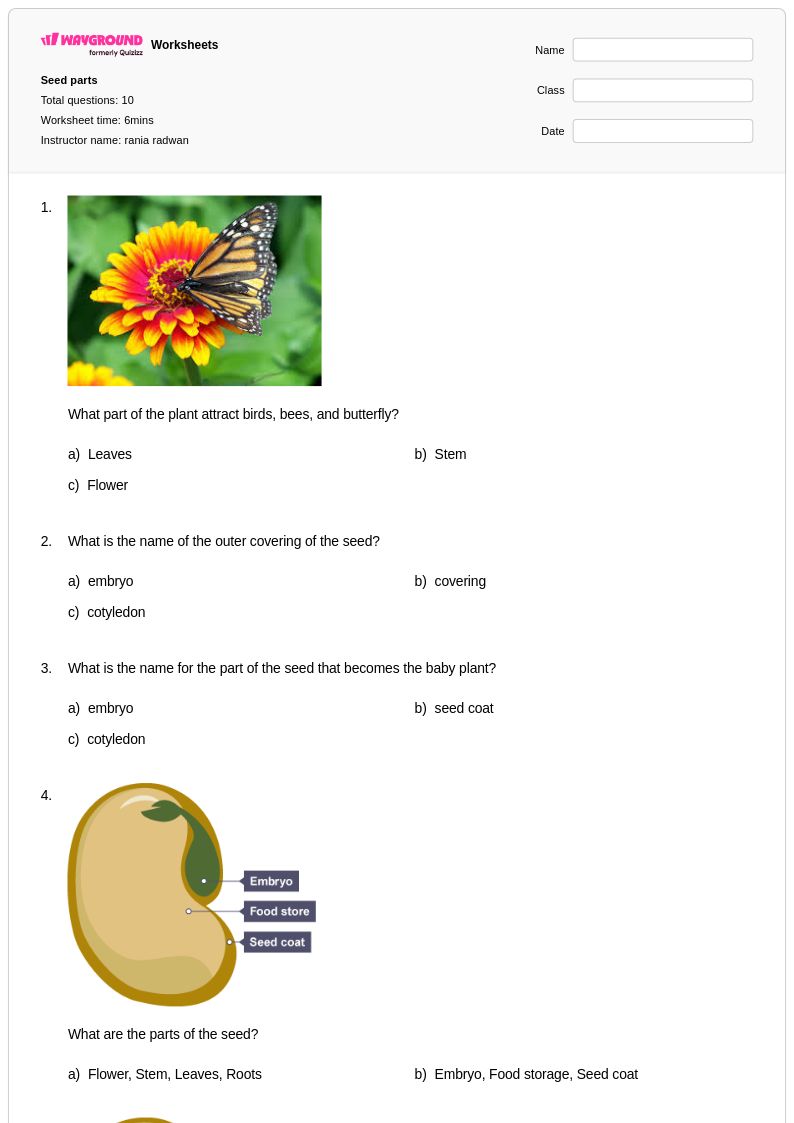
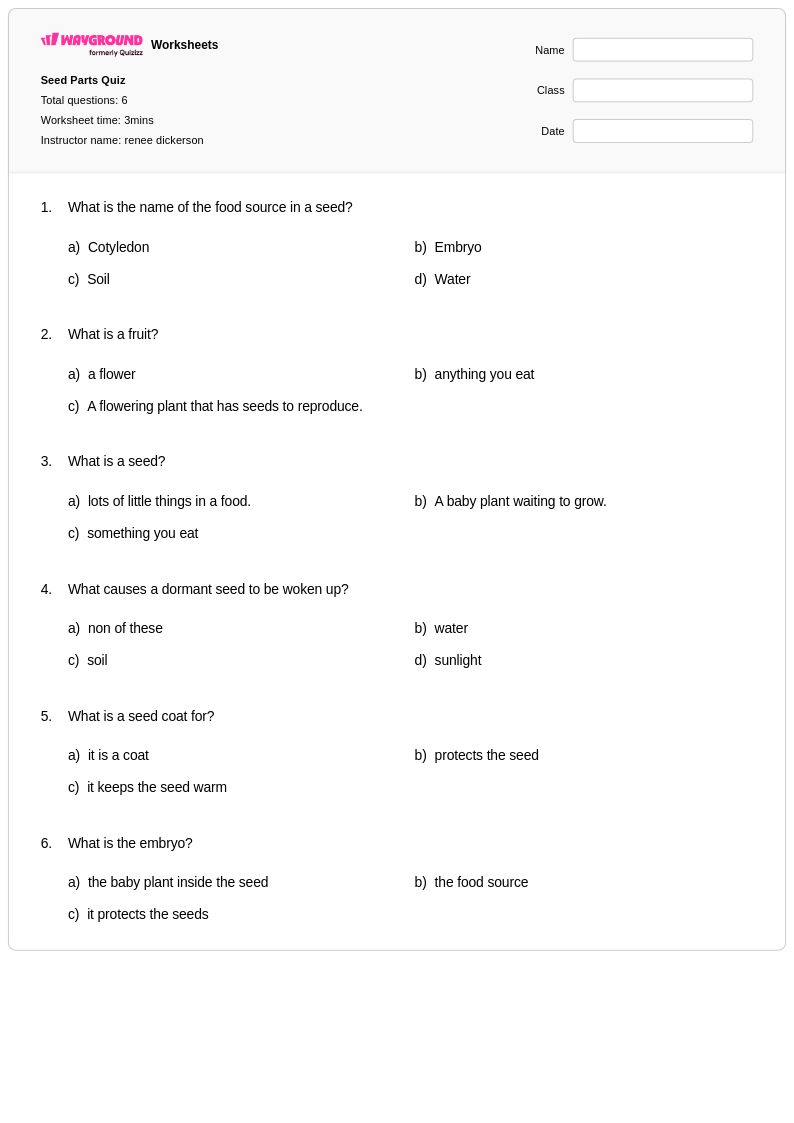
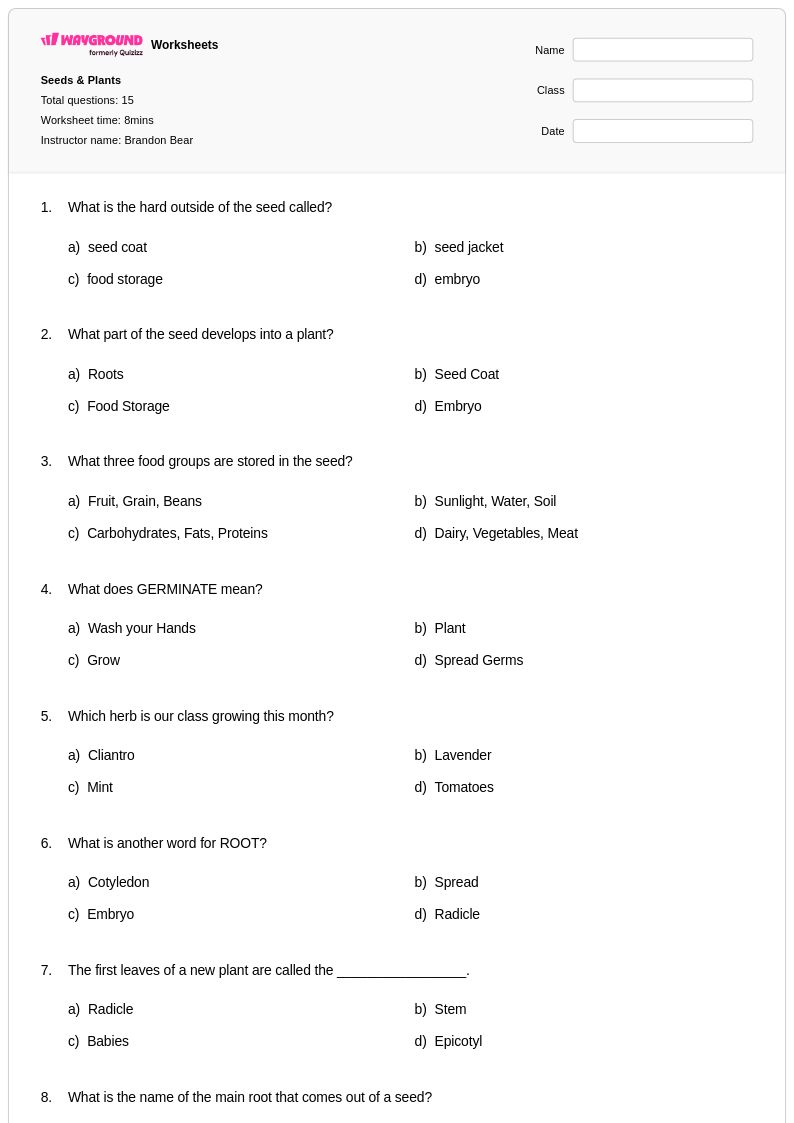
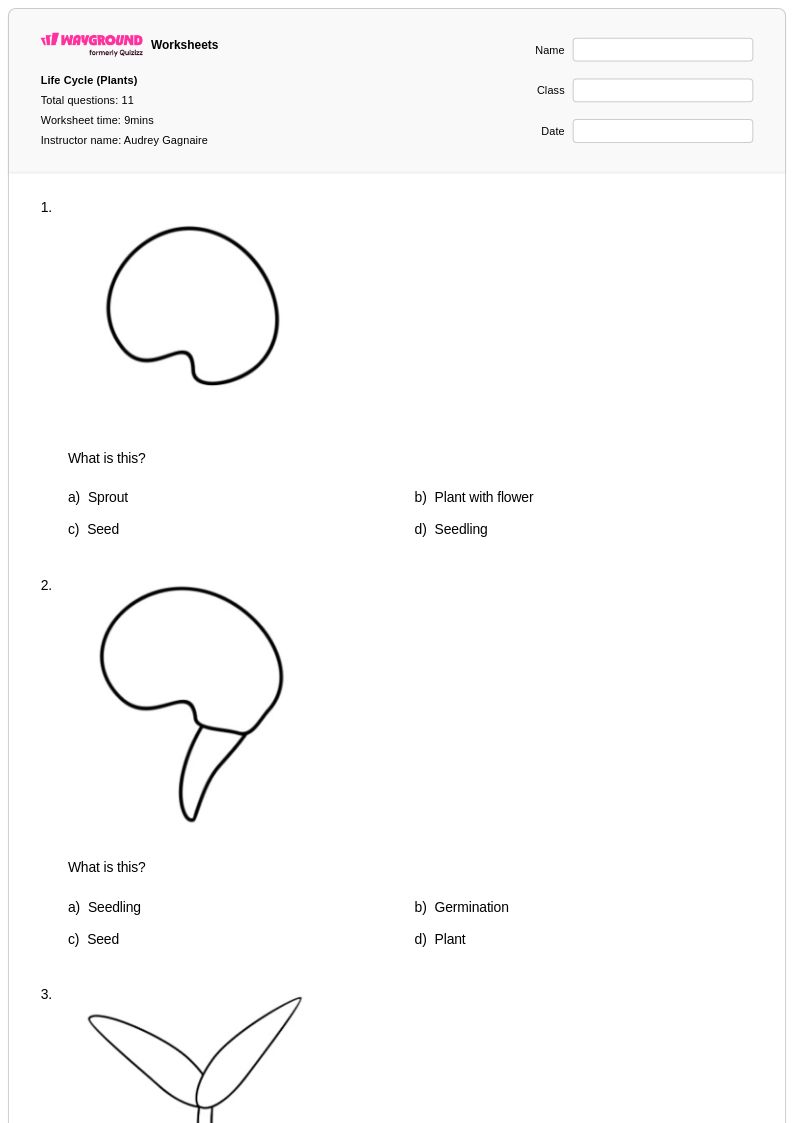
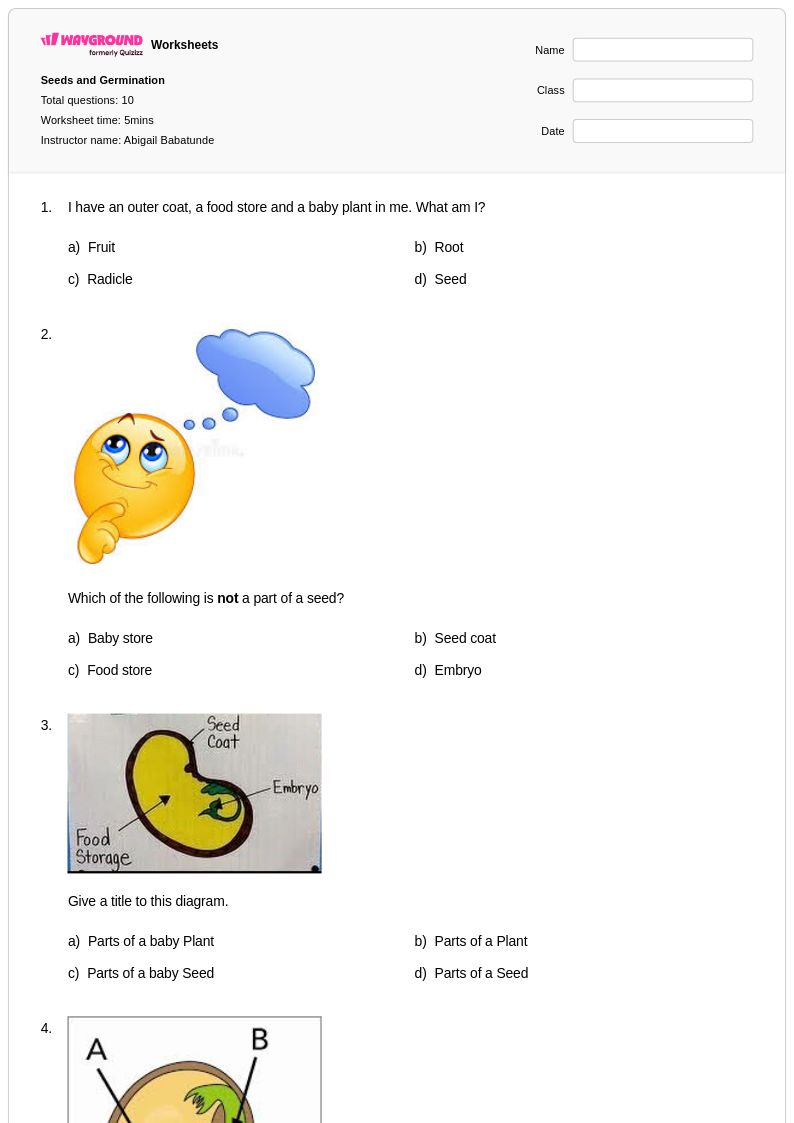
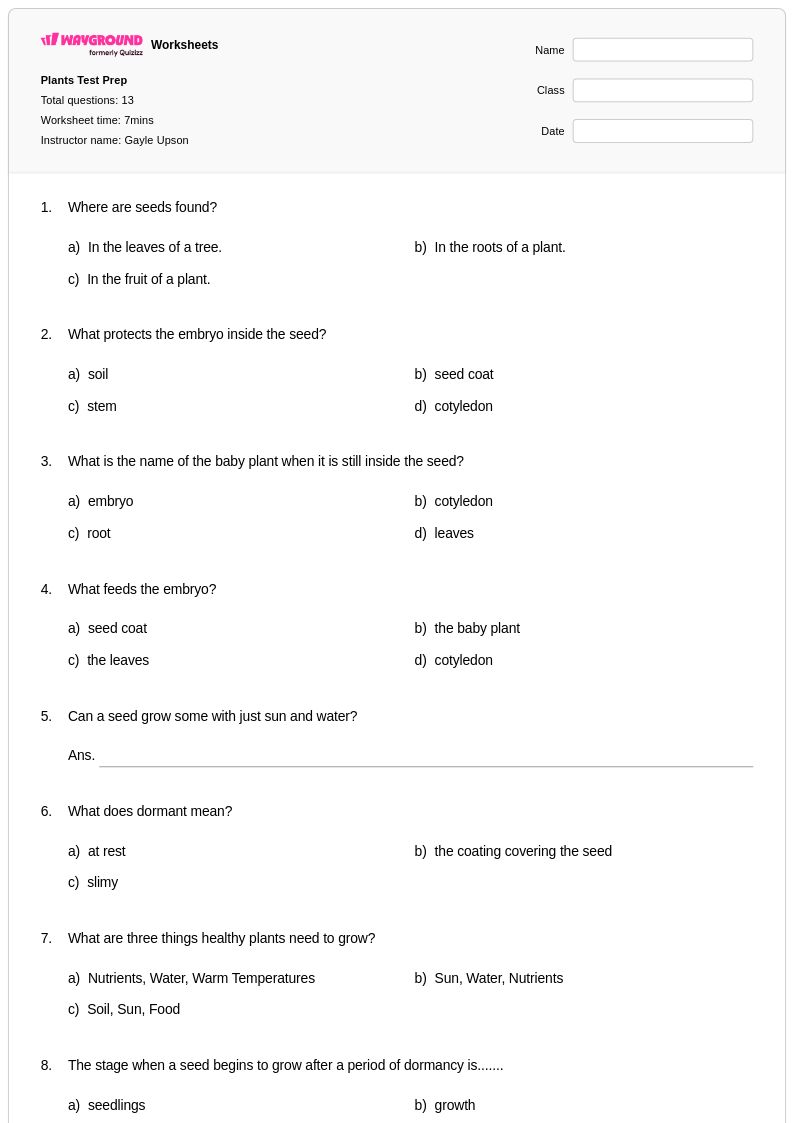
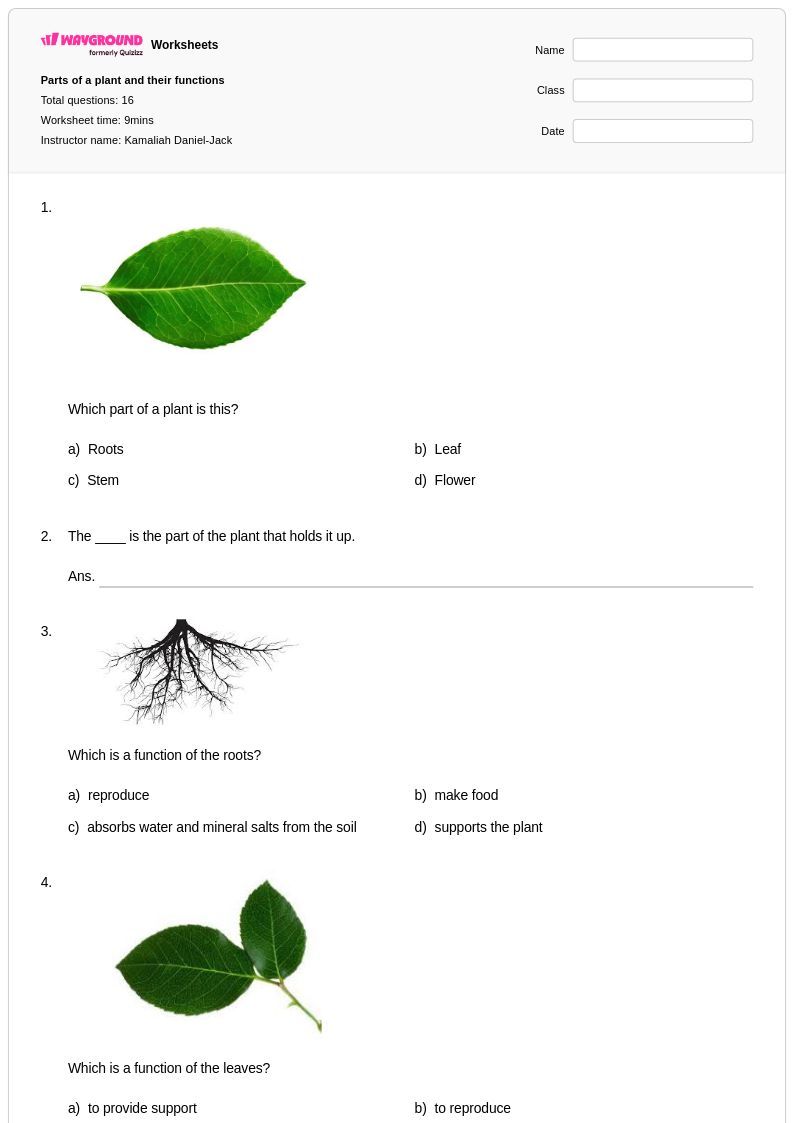
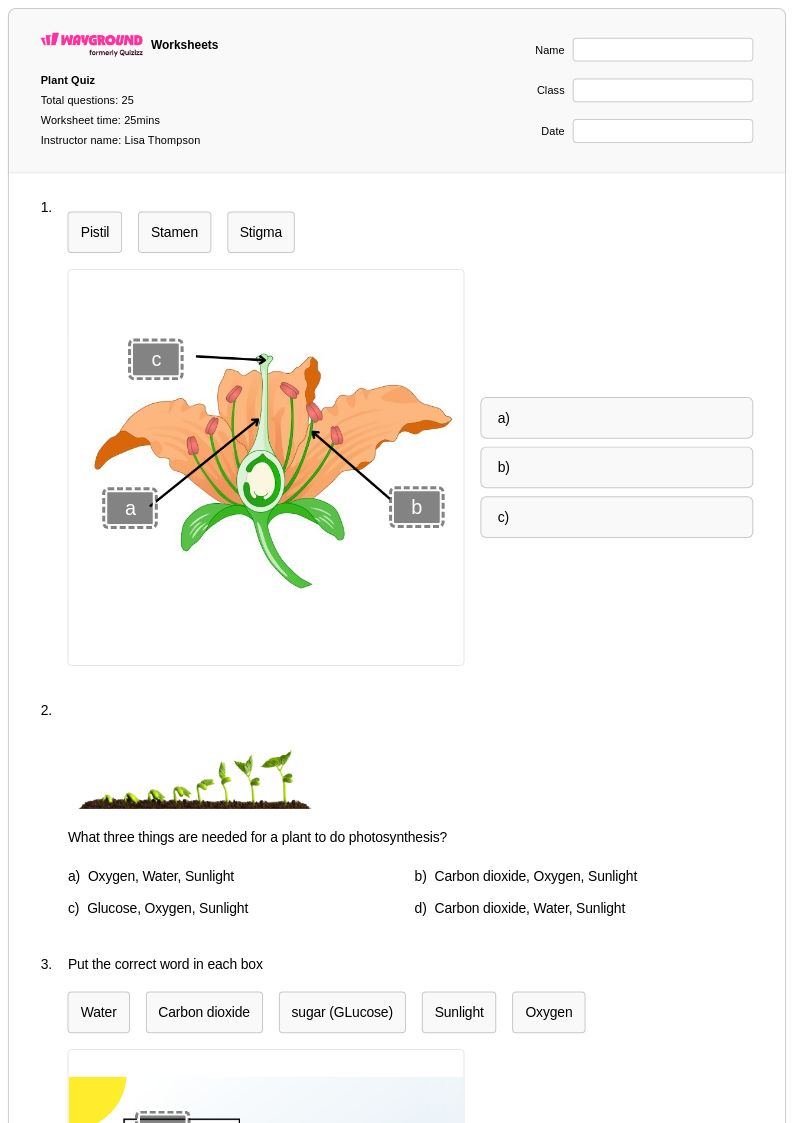
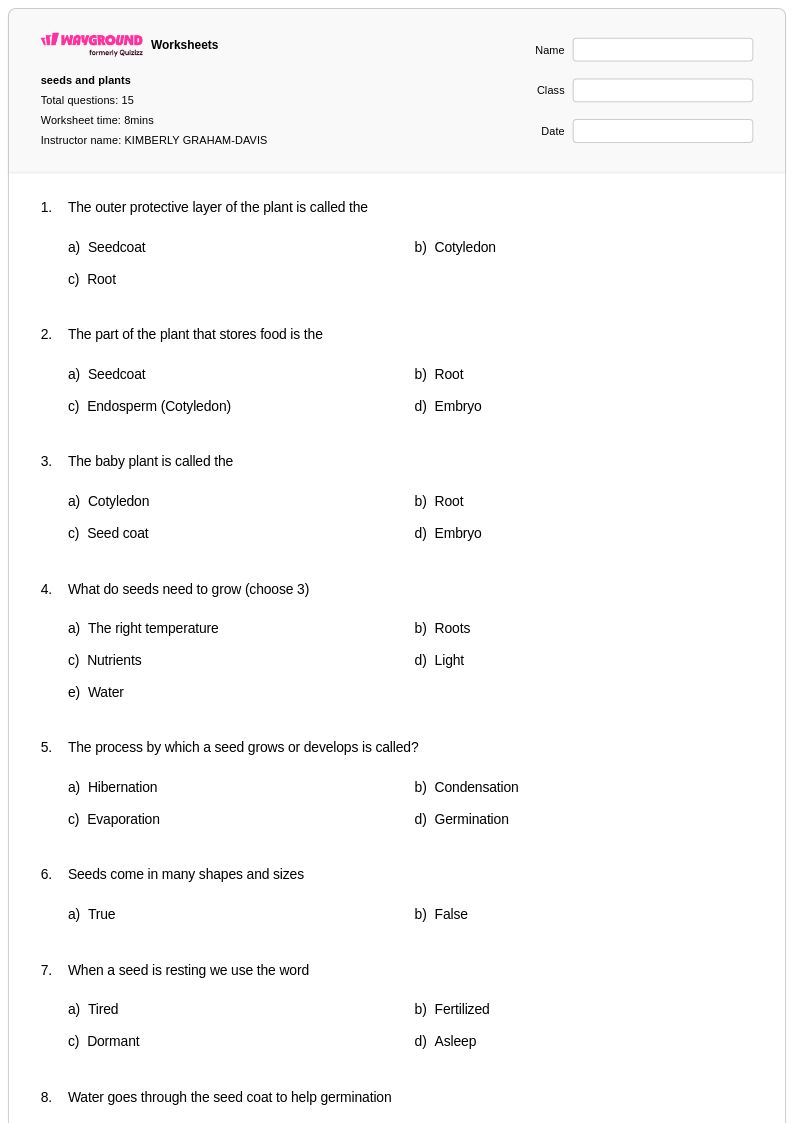
Explore Wayground's free Class 3 seed parts worksheets and printables that help students learn to identify and understand the different components of seeds through engaging practice problems and comprehensive answer keys.
Explore printable Seed Parts worksheets for Class 3
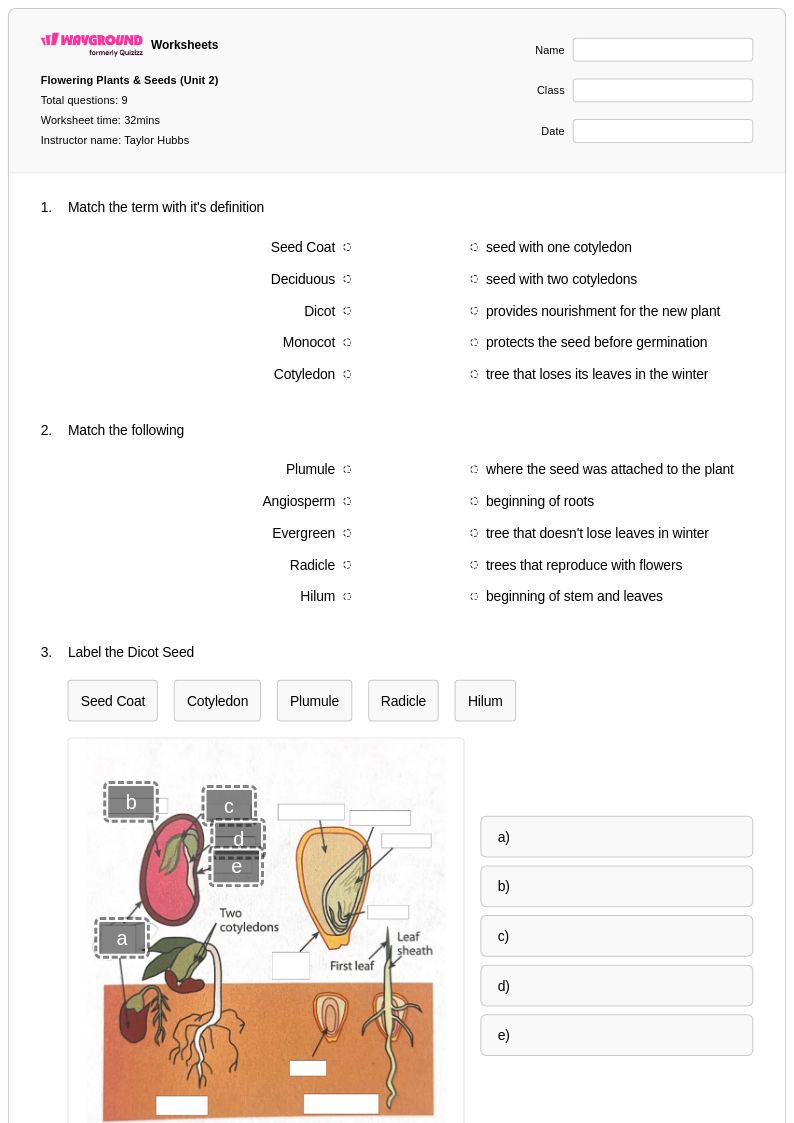
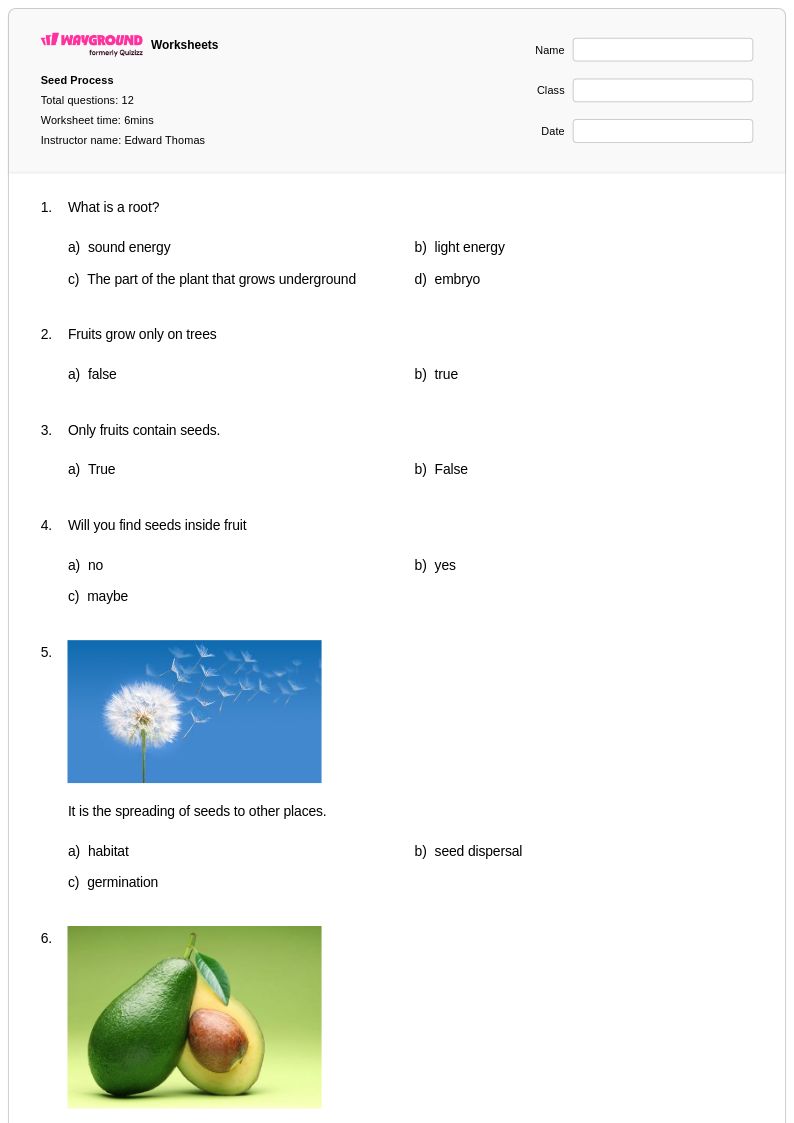
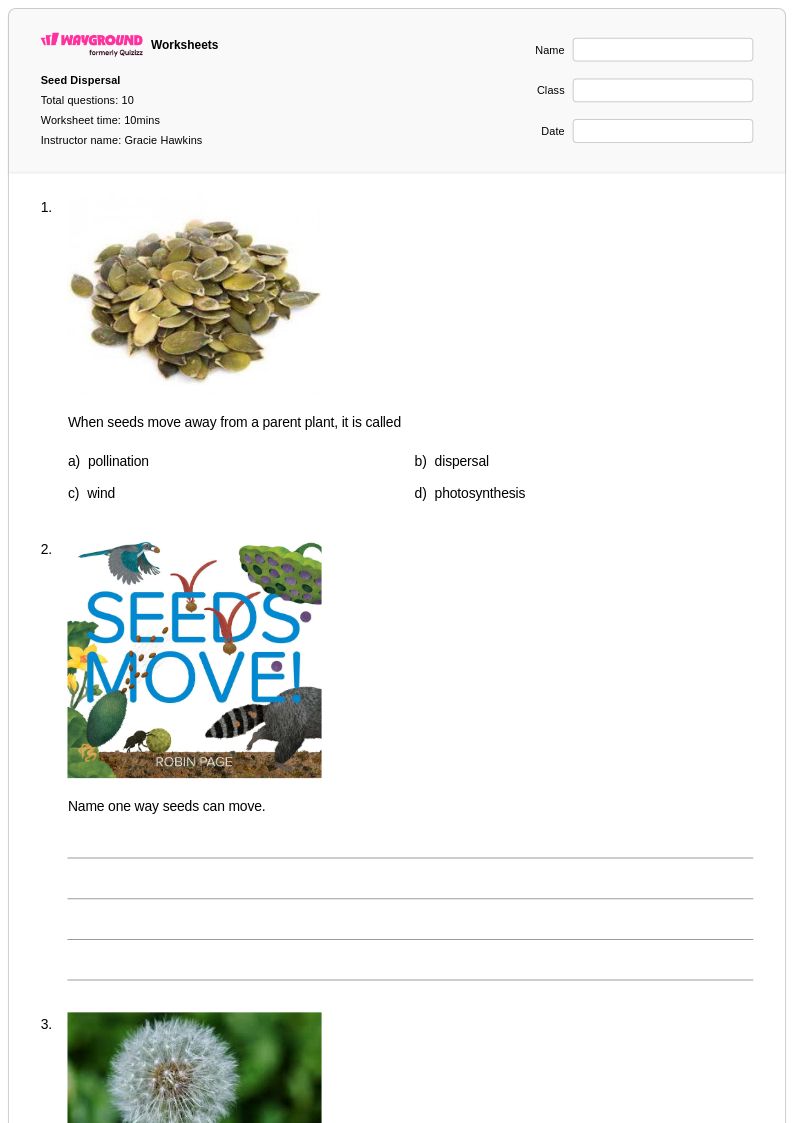
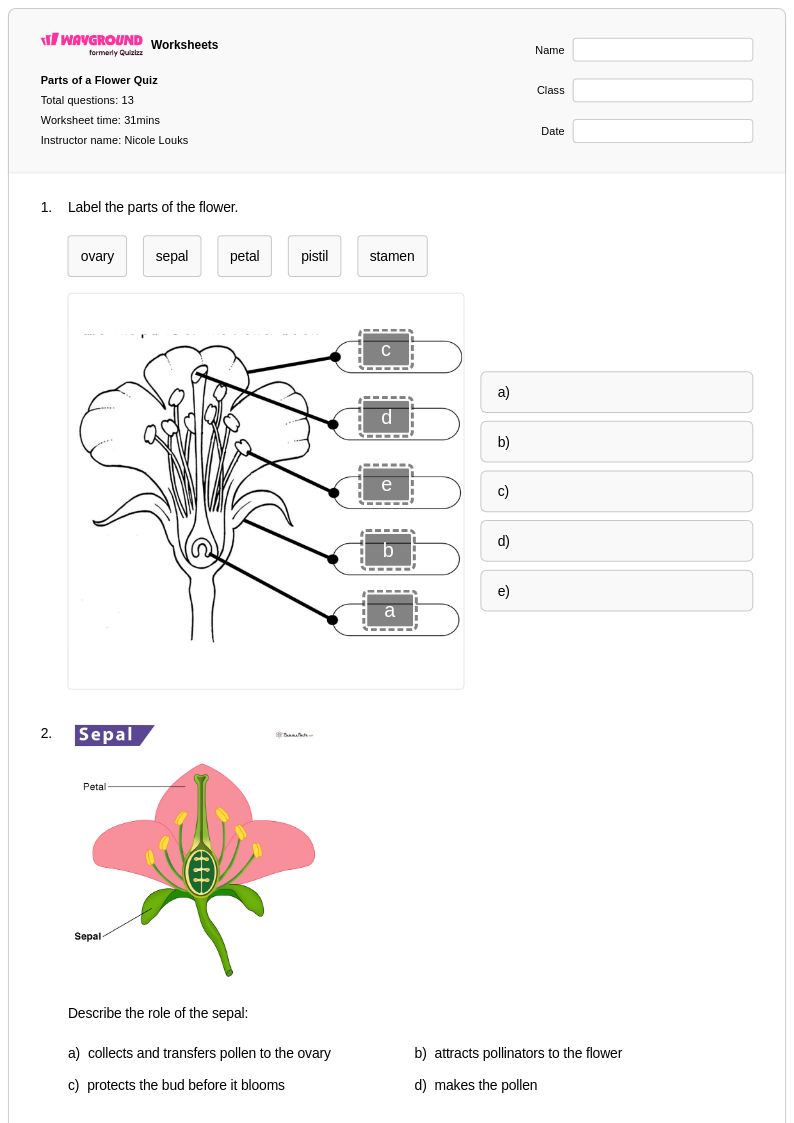
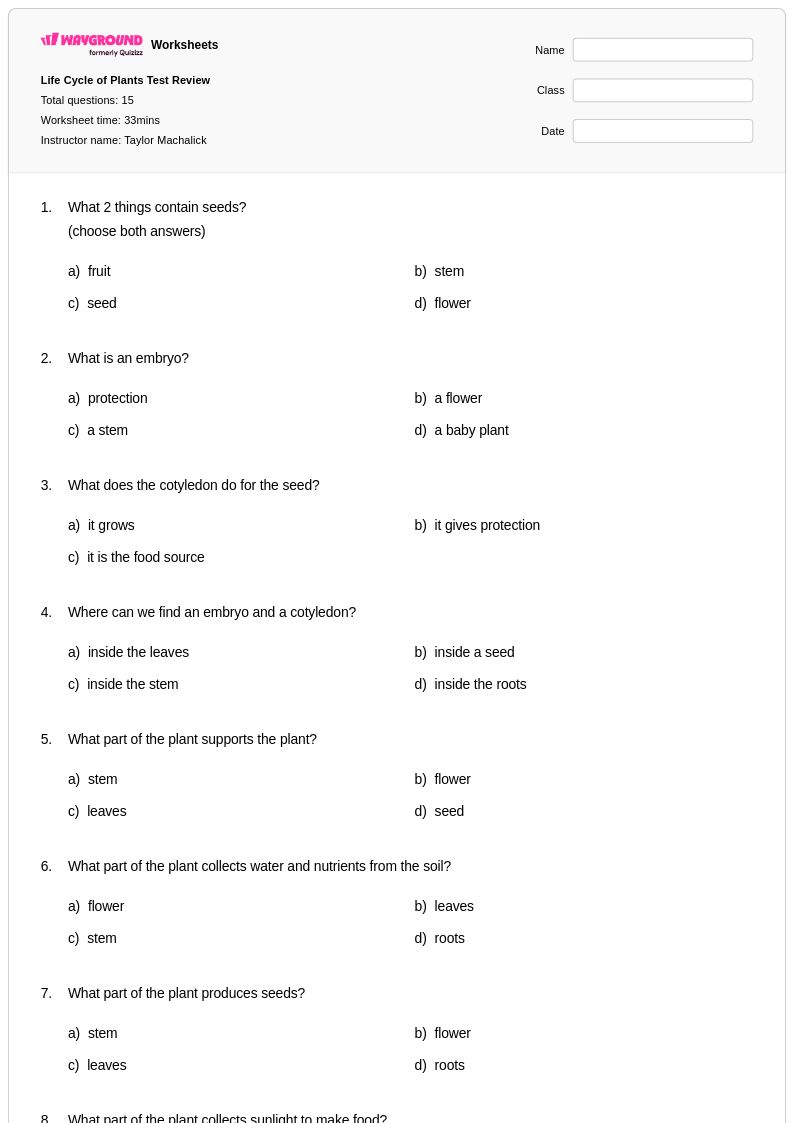
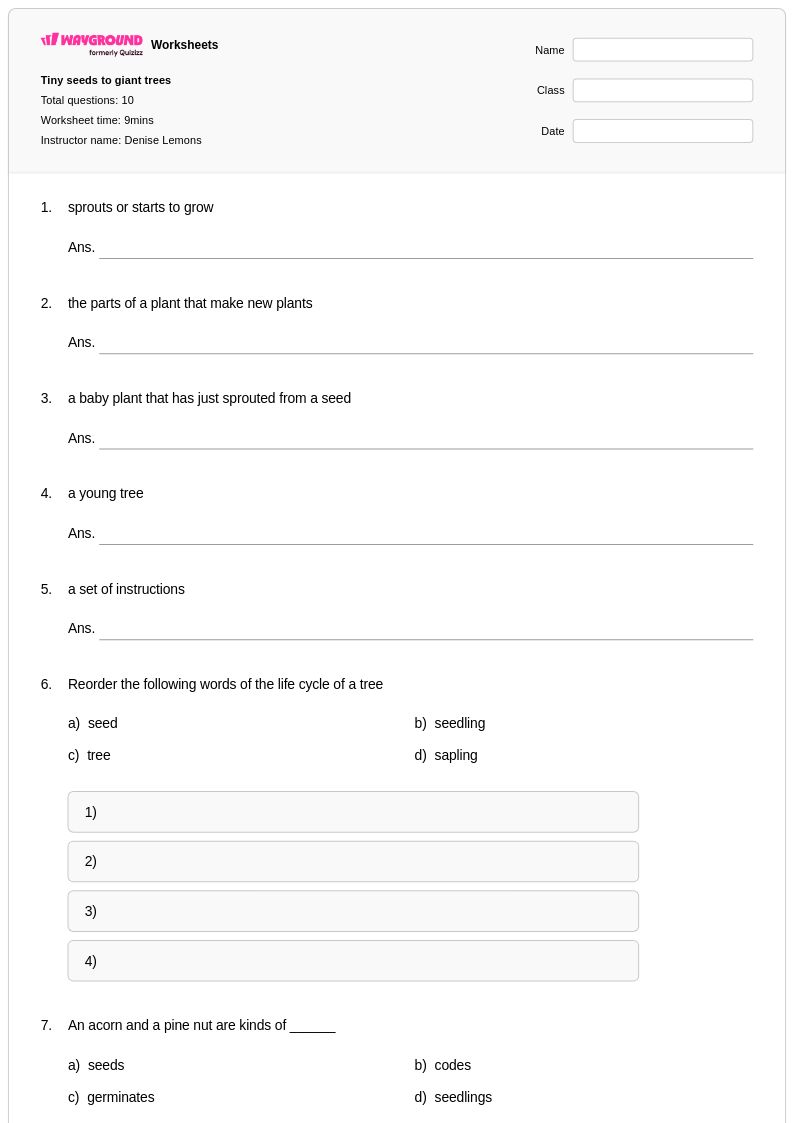
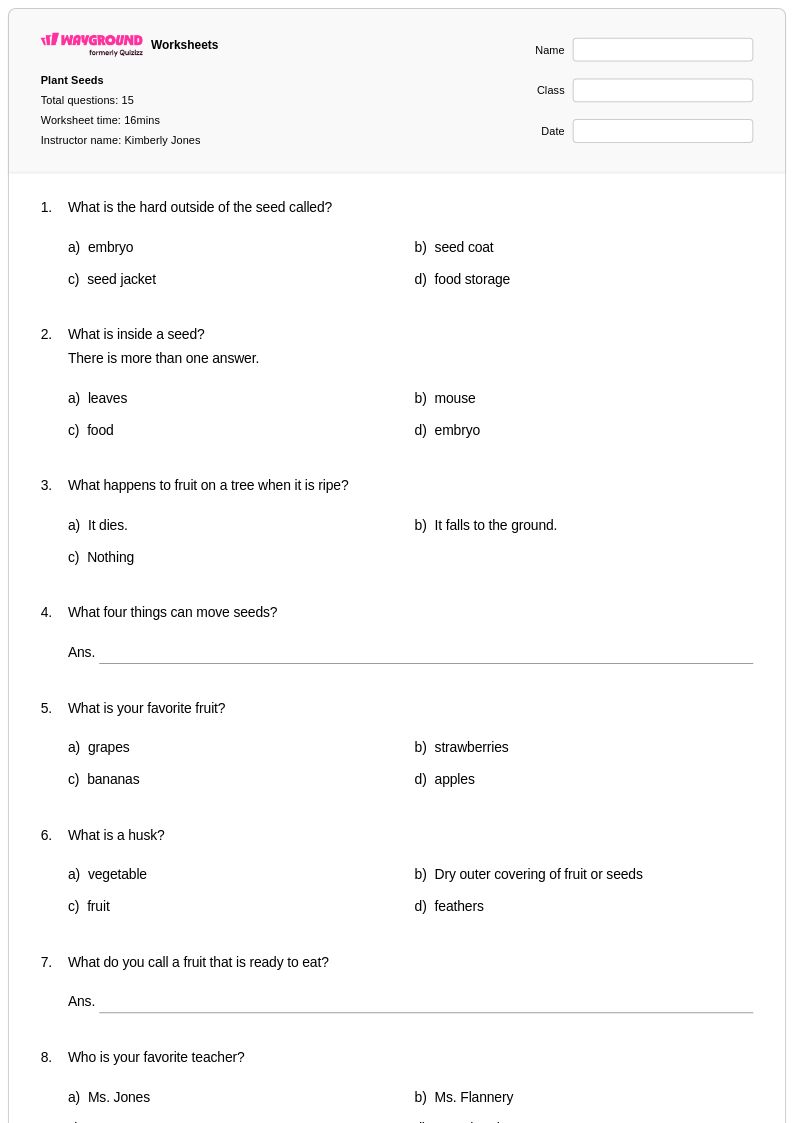
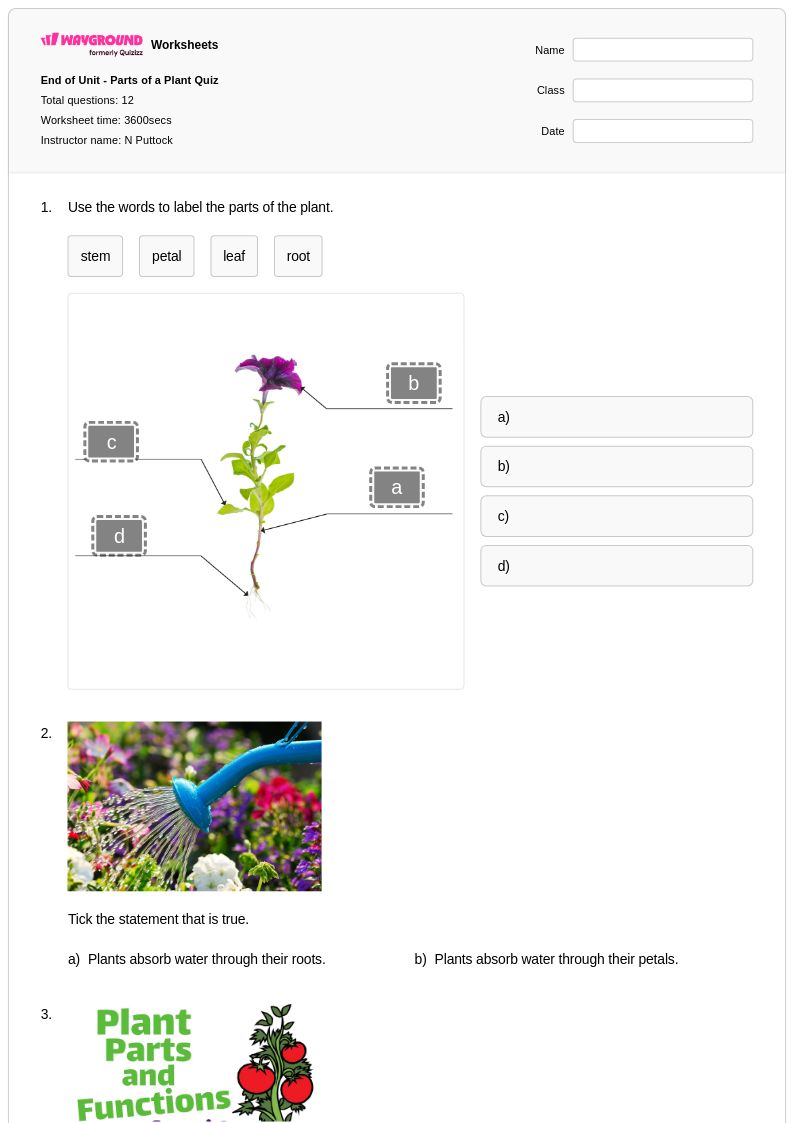
Seed parts worksheets for Class 3 students available through Wayground (formerly Quizizz) provide young learners with essential foundational knowledge about plant biology and botanical structures. These comprehensive educational resources help third-grade students identify and understand the key components of seeds, including the seed coat, embryo, and stored food supply, while developing critical observation and scientific vocabulary skills. The worksheets feature engaging practice problems that guide students through labeling diagrams, matching seed parts to their functions, and exploring how different types of seeds support plant reproduction and growth. Teachers can access complete answer keys and free printable pdf versions that make classroom implementation seamless, whether used for individual study, group activities, or assessment preparation.
Wayground (formerly Quizizz) empowers educators with millions of teacher-created resources specifically designed to support Class 3 seed parts instruction through robust search and filtering capabilities that align with science education standards. The platform's differentiation tools allow teachers to customize worksheets based on individual student needs, offering both remediation support for struggling learners and enrichment opportunities for advanced students. These flexible resources are available in both printable and digital pdf formats, enabling seamless integration into diverse classroom environments and learning modalities. Teachers benefit from comprehensive planning support that includes detailed explanations, varied question types, and progressive skill-building exercises that reinforce understanding of seed structure and function while preparing students for more advanced botanical concepts in later grades.
FAQs
How do I teach seed parts to elementary or middle school students?
Start with a hands-on dissection of soaked bean or corn seeds so students can physically identify the seed coat, embryo, cotyledons, endosperm, and radicle before connecting each structure to its function. Labeling diagrams immediately after the dissection reinforces vocabulary while the visual memory is fresh. Pairing tactile exploration with structured diagram exercises builds the observational skills students need for broader plant anatomy topics.
What exercises help students practice identifying seed parts?
Labeling diagrams of cross-sectioned seeds is the most direct practice exercise, requiring students to match terminology to specific structures rather than simply recall definitions. Analytical practice problems that ask students to explain how each part, such as the cotyledon supplying nutrients or the radicle initiating root growth, contributes to germination deepen conceptual understanding beyond rote identification. Combining both exercise types builds both scientific vocabulary and functional reasoning about plant reproduction.
What mistakes do students commonly make when learning about seed parts?
A common misconception is confusing the cotyledon with a leaf, since cotyledons resemble leaves but function as nutrient-storage organs for the embryo rather than photosynthetic structures. Students also frequently mix up the radicle and the hypocotyl, not recognizing that the radicle becomes the primary root while the hypocotyl becomes the stem below the first true leaves. Explicitly comparing seed-part diagrams to seedling diagrams at the same time helps students see how each structure transforms during germination.
How do seed parts connect to the broader topic of plant reproduction and germination?
Each seed part plays a direct role in germination: the seed coat protects the dormant embryo, the endosperm or cotyledons supply stored energy, the radicle emerges first to anchor the seedling and absorb water, and the embryo itself contains the shoot and root systems in miniature form. Understanding these structural roles gives students a mechanistic explanation for why seeds need water, warmth, and oxygen to germinate rather than treating germination as a mysterious process. This foundation supports later study of plant life cycles, pollination, and ecosystems.
How do I use Wayground's seed parts worksheets in my classroom?
Wayground's seed parts worksheets are available as printable PDFs for traditional classroom use and in digital formats for technology-integrated or remote learning environments, and teachers can also host them as a quiz directly on Wayground. All worksheets include answer keys, so they work equally well for guided instruction, independent practice, or formative assessment without additional prep. Wayground's differentiation tools let teachers customize worksheets to individual student needs, supporting both students who need remediation and those ready for enrichment.
How can I support students with different learning needs when teaching seed parts?
Wayground's built-in accommodation settings let teachers enable Read Aloud for students who struggle with scientific vocabulary in print, reduce answer choices for students who need lower cognitive load on labeling tasks, and grant extended time on a per-student basis. These settings can be applied to individual students without alerting the rest of the class, so differentiated support stays discreet. Because accommodations are saved and reusable, setup is a one-time investment that carries over to future worksheet sessions.