Free Printable Wild Animals Worksheets for Class 3
Discover free Class 3 wild animals biology worksheets and printables that help students learn about animal habitats, characteristics, and behaviors through engaging practice problems with answer keys.
Explore printable Wild Animals worksheets for Class 3
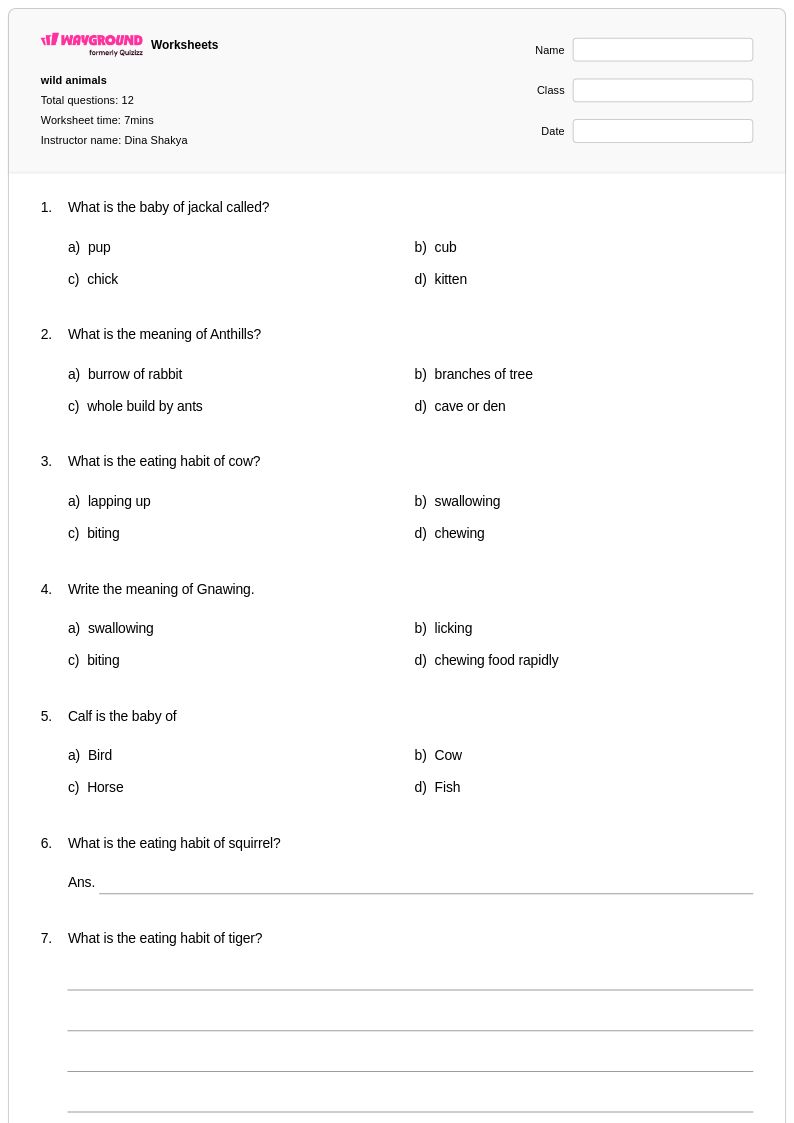
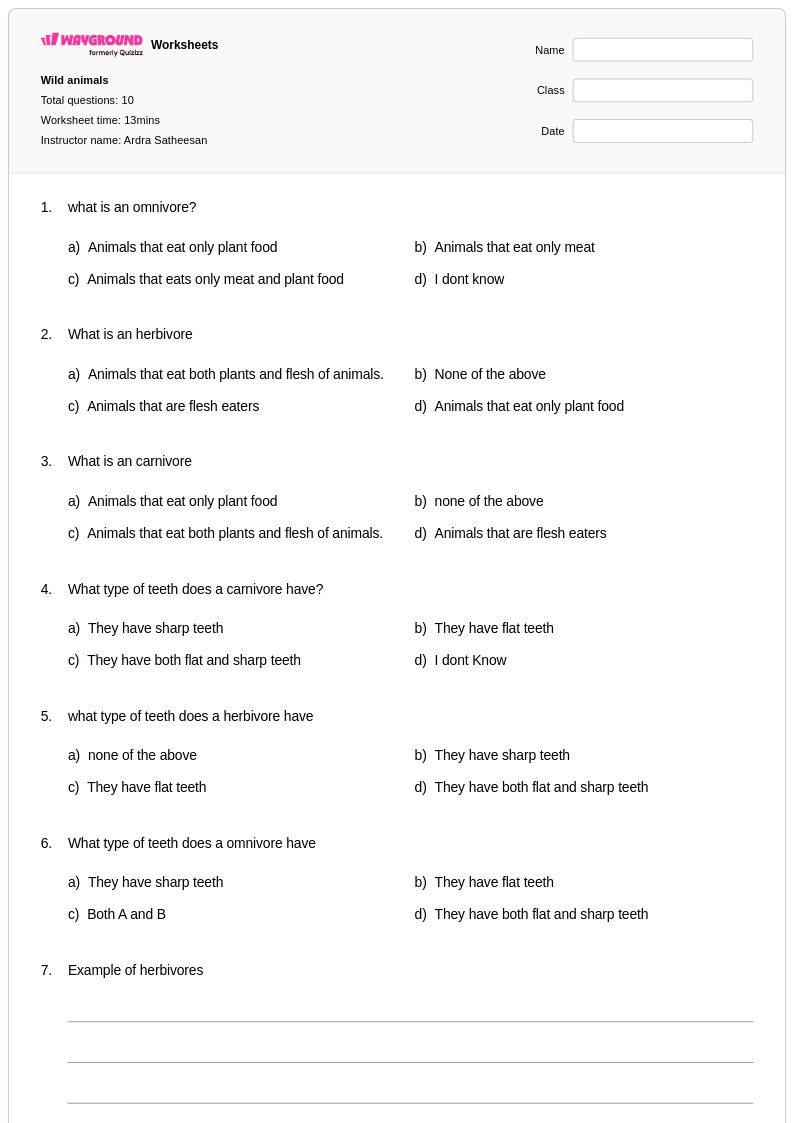
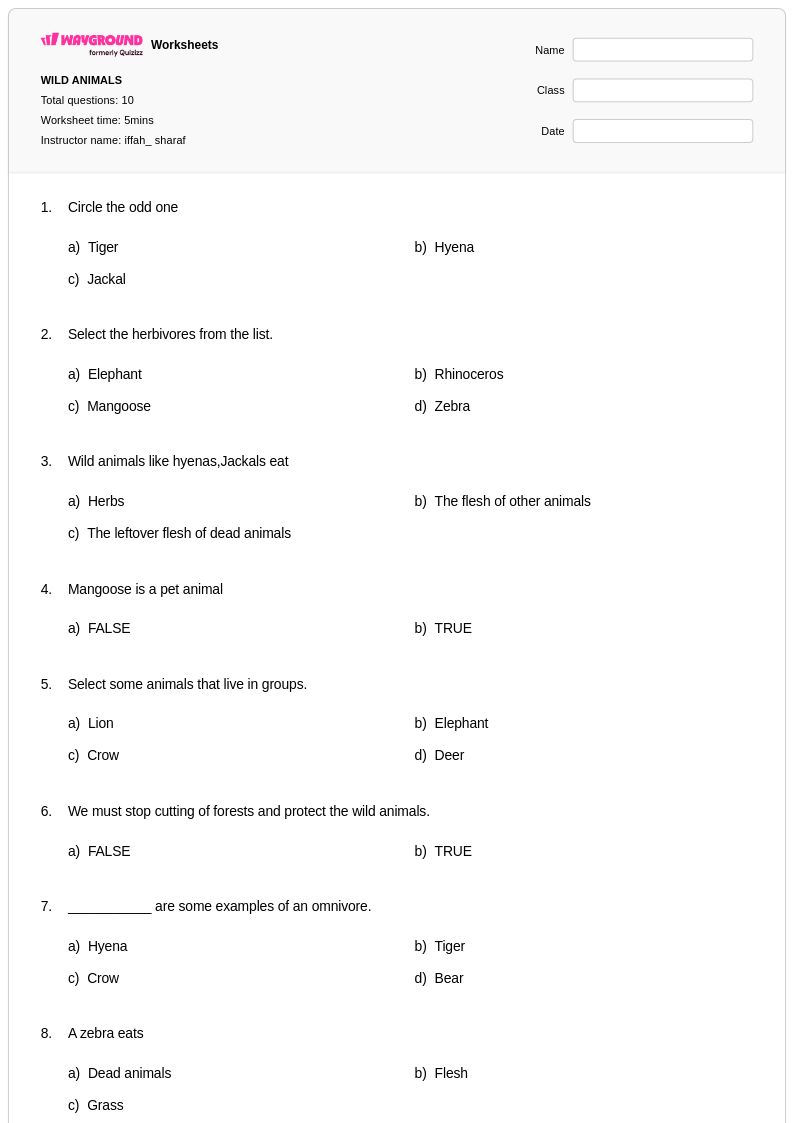
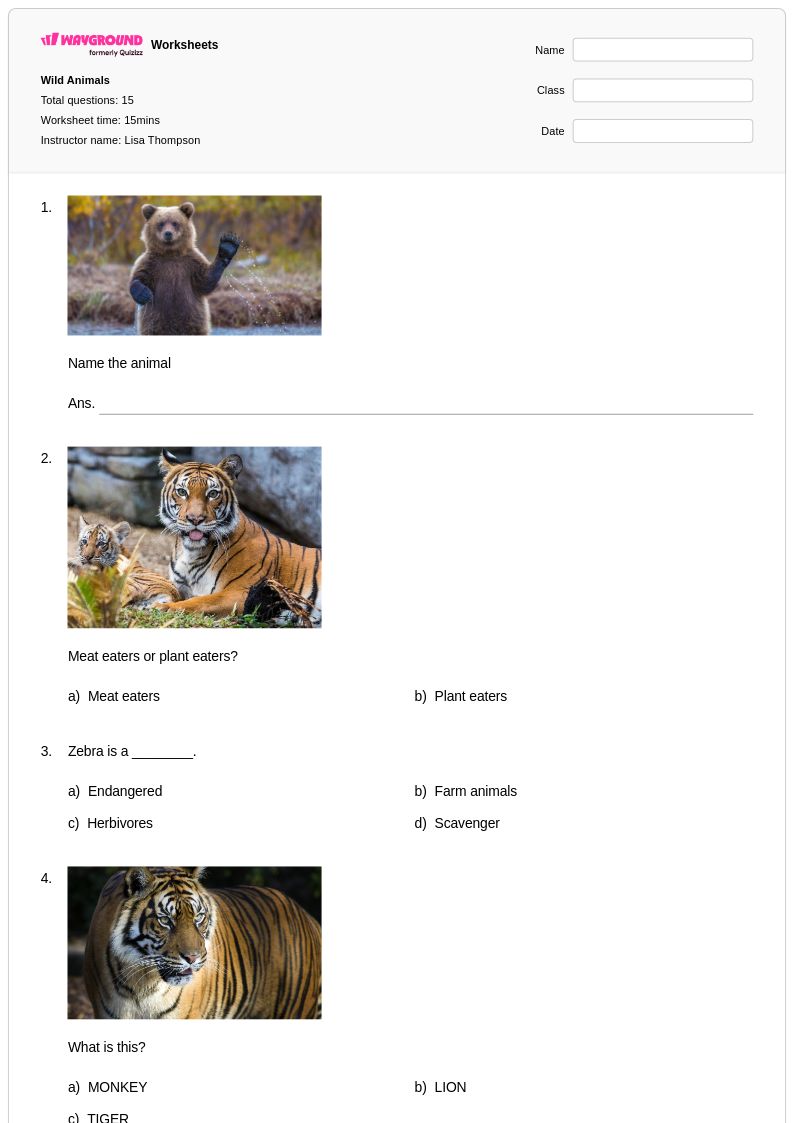
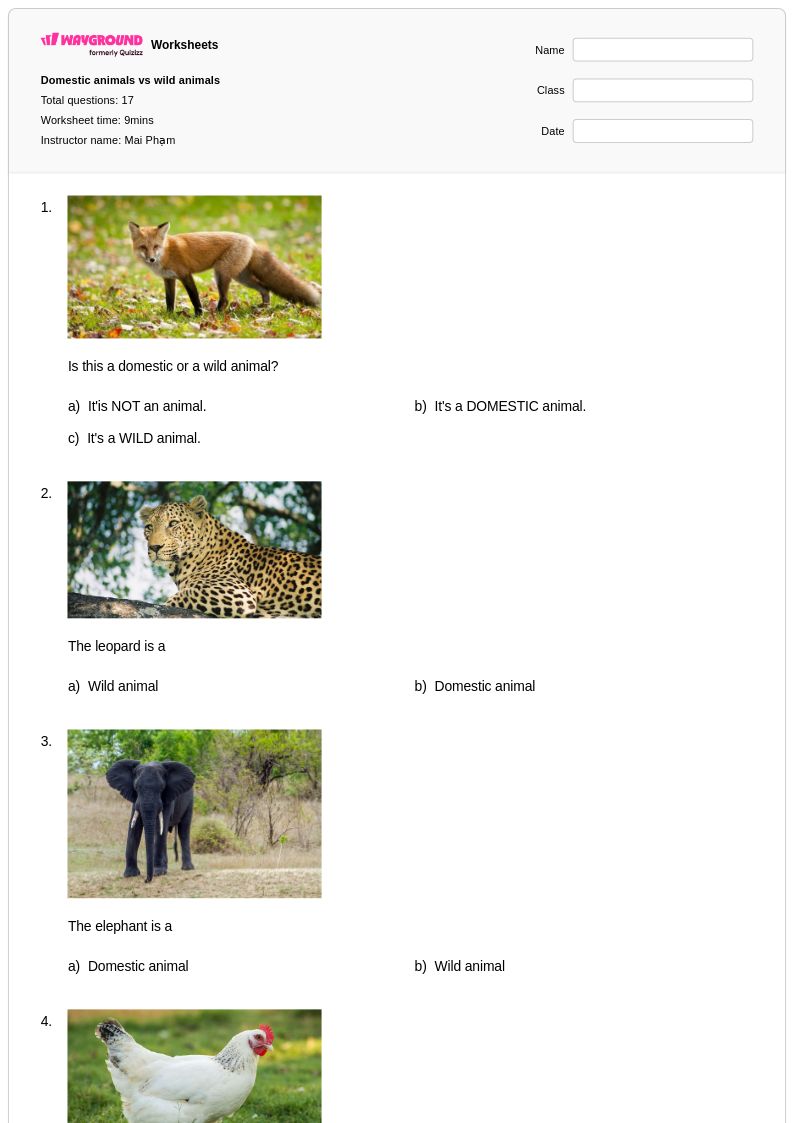
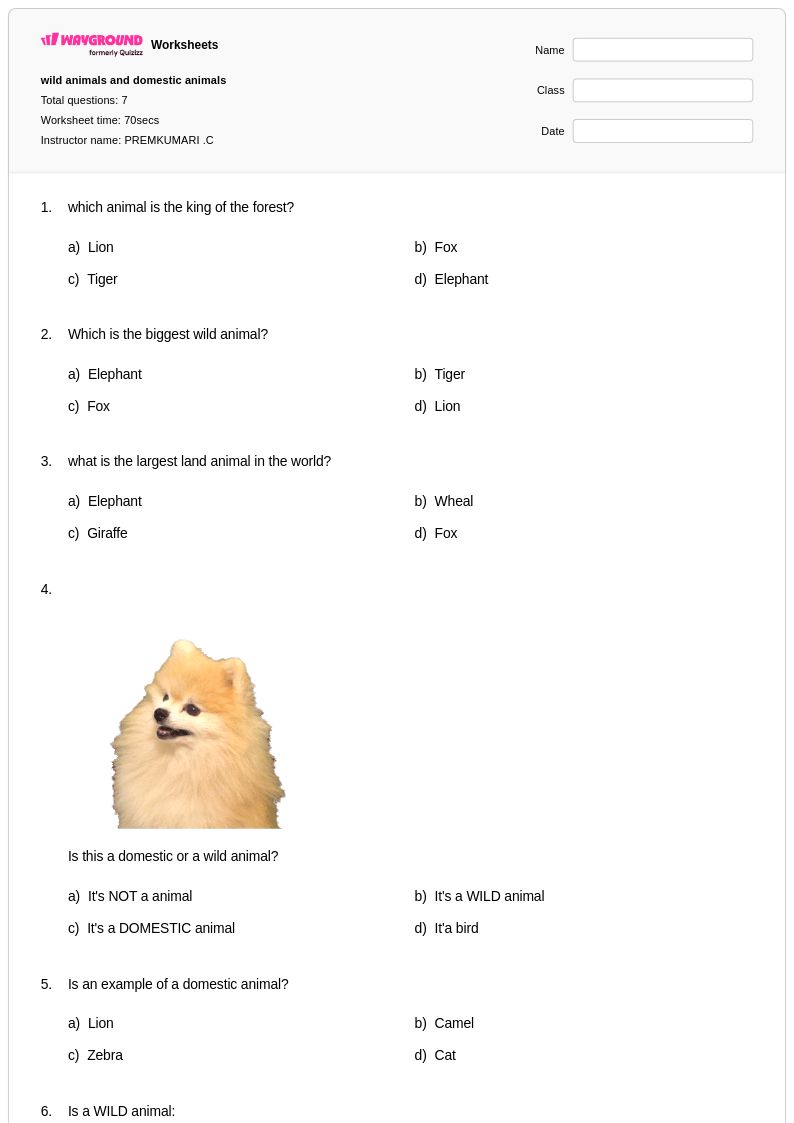
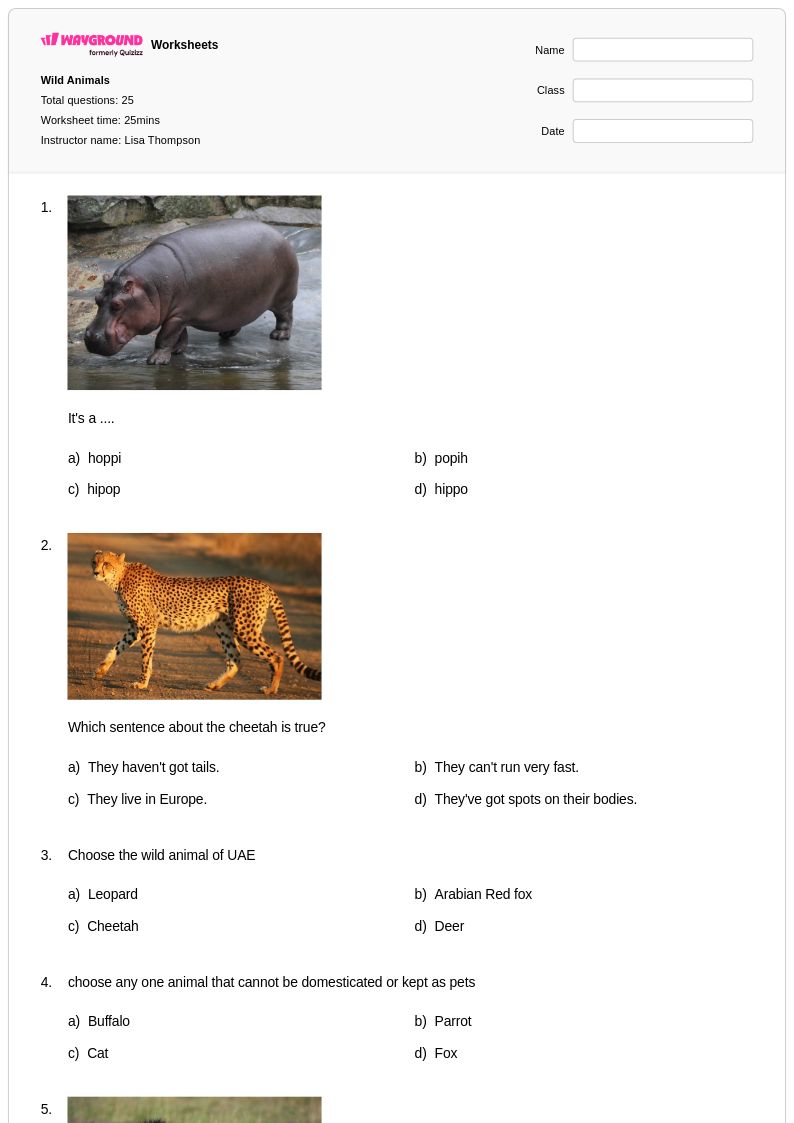
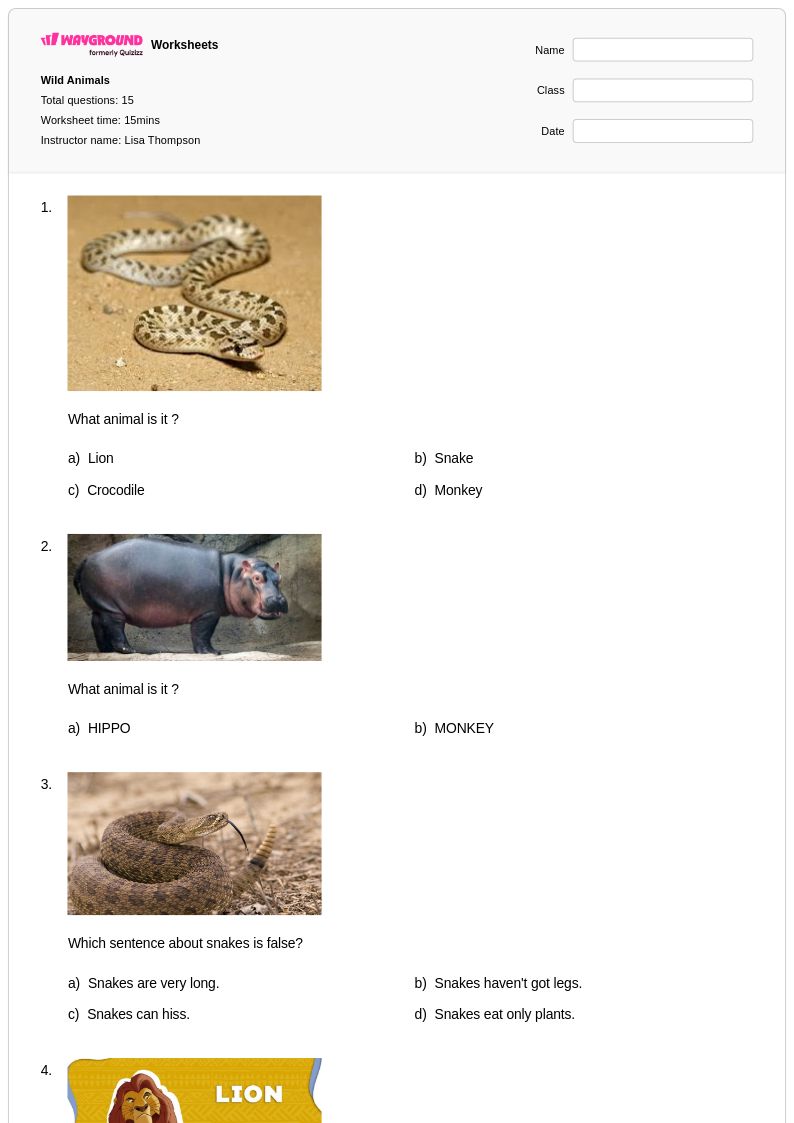
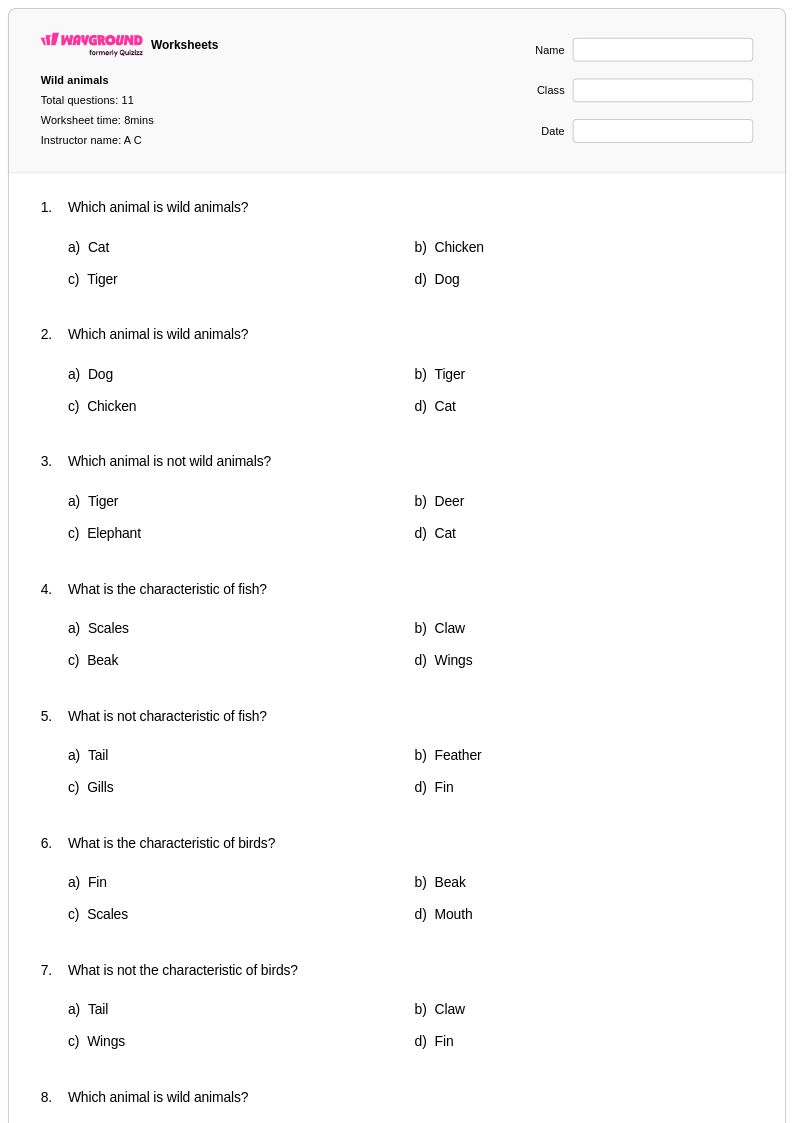
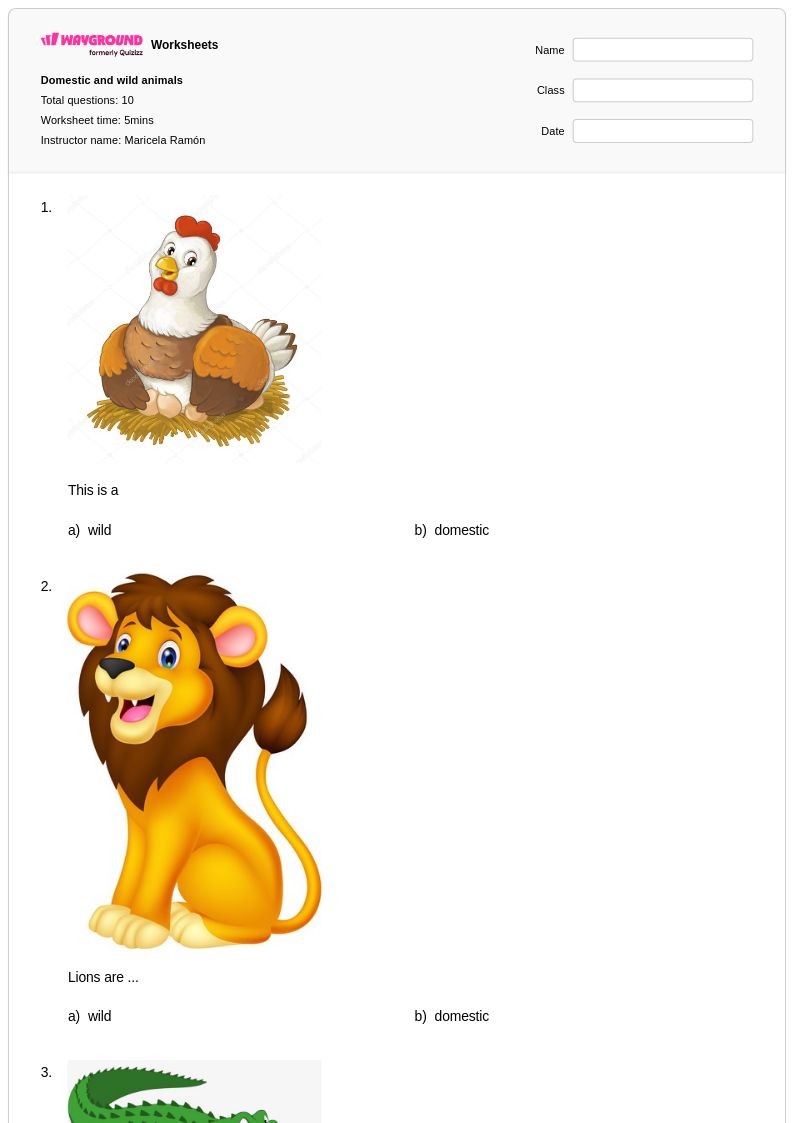
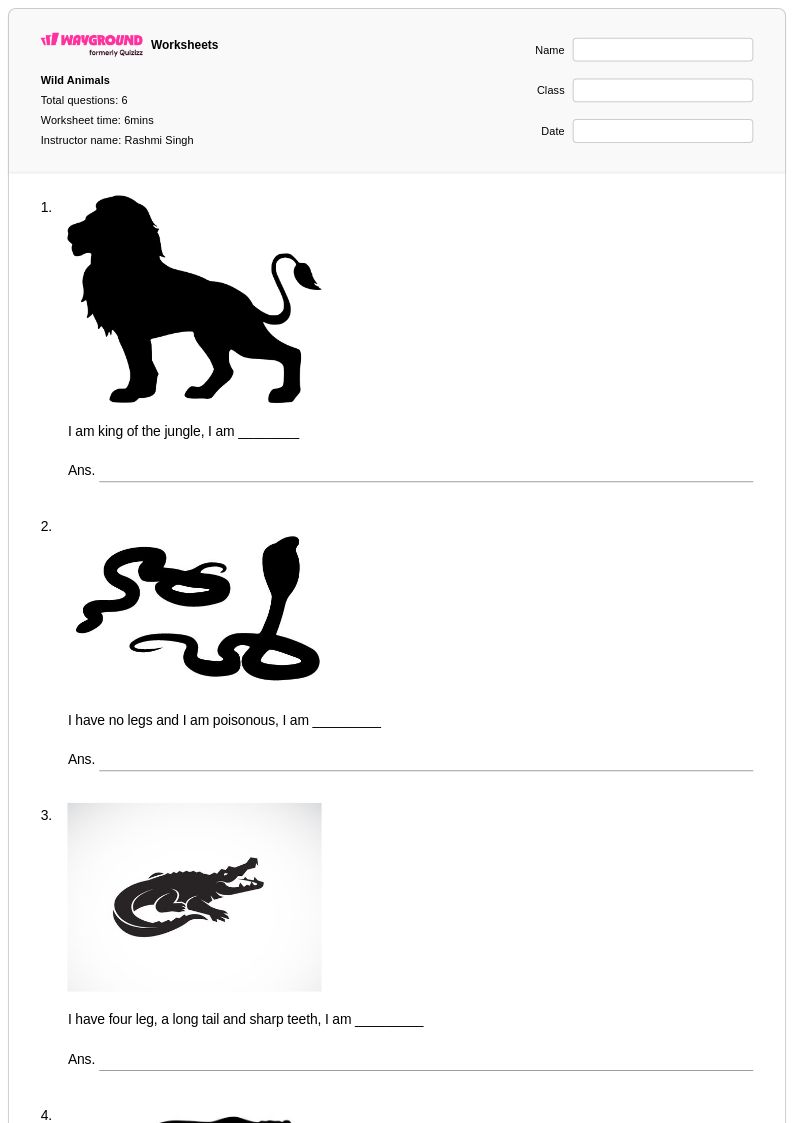
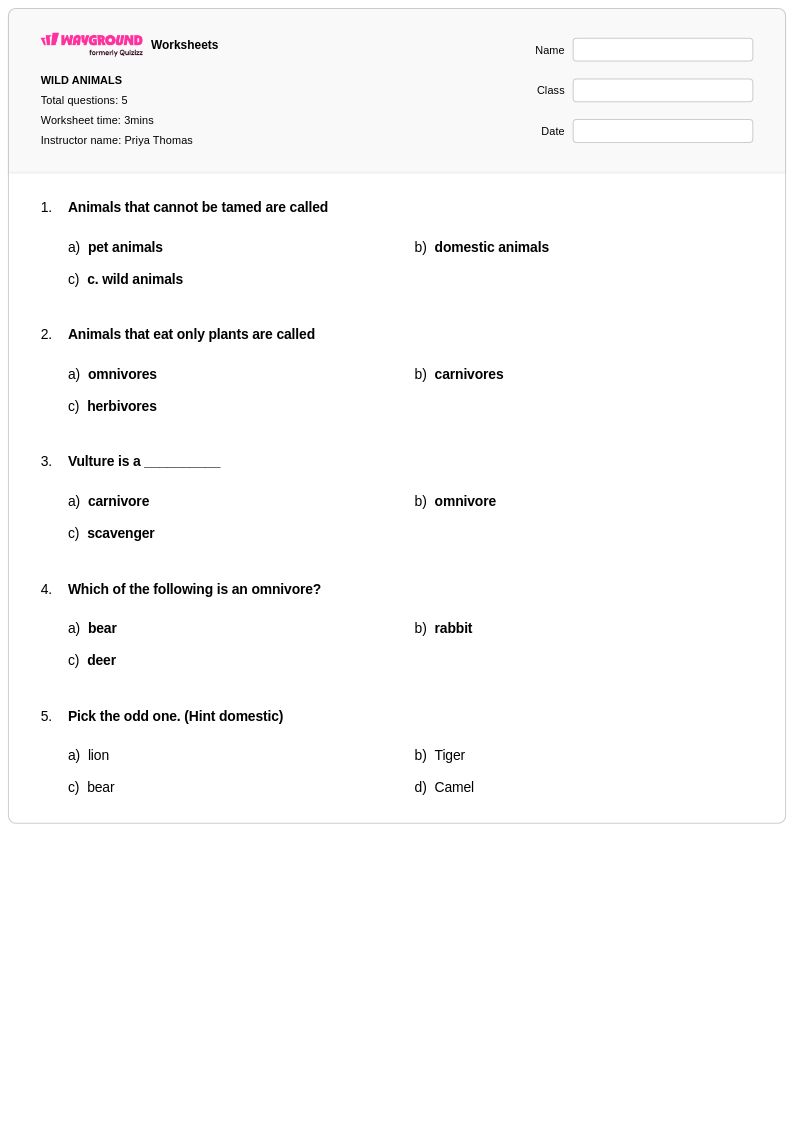
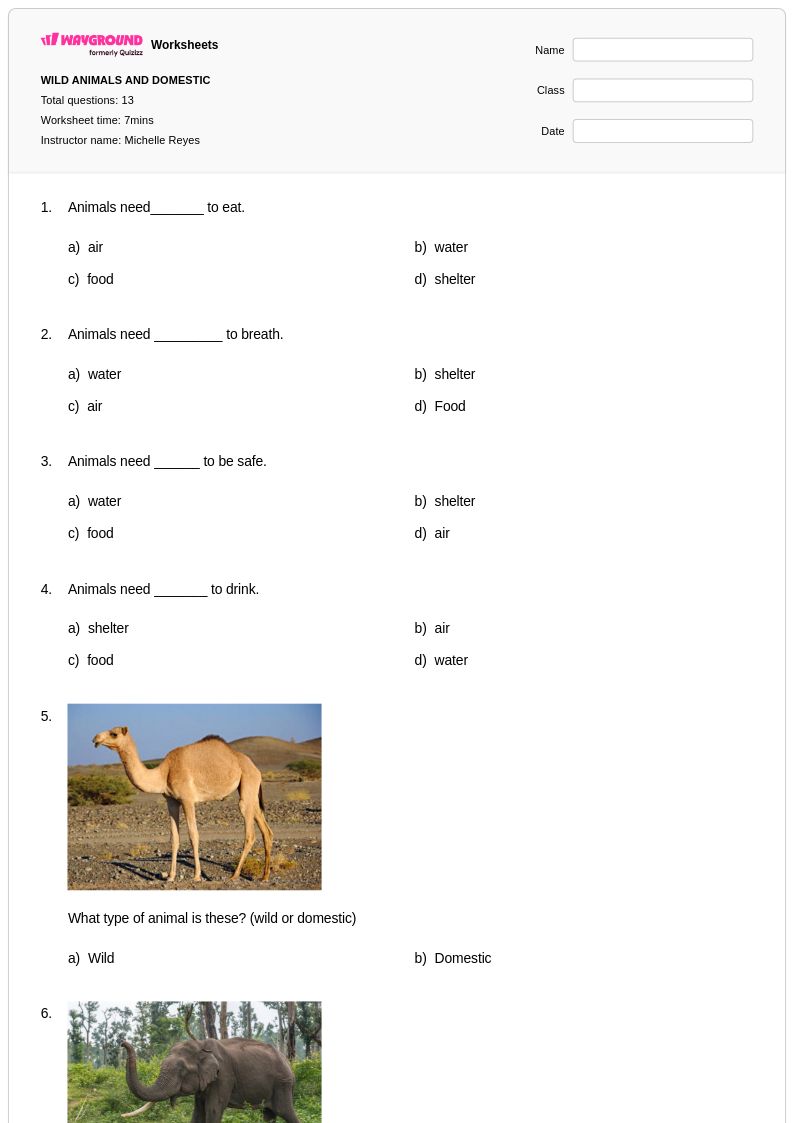
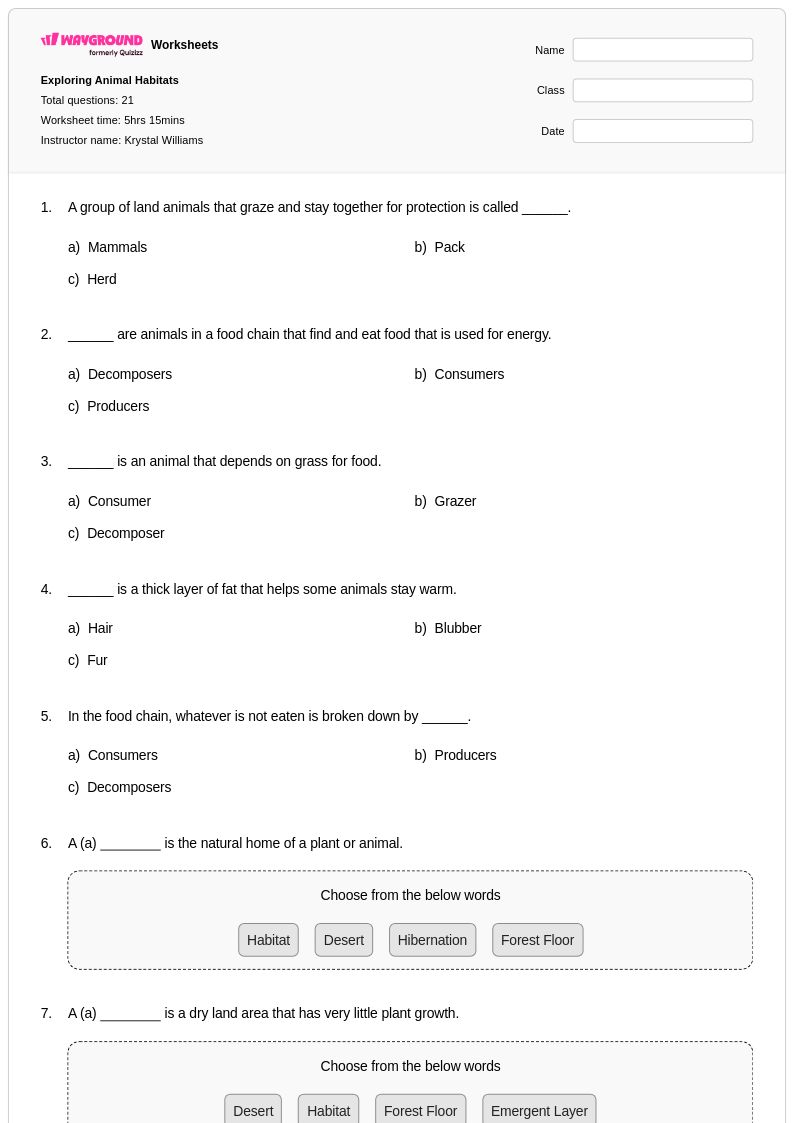
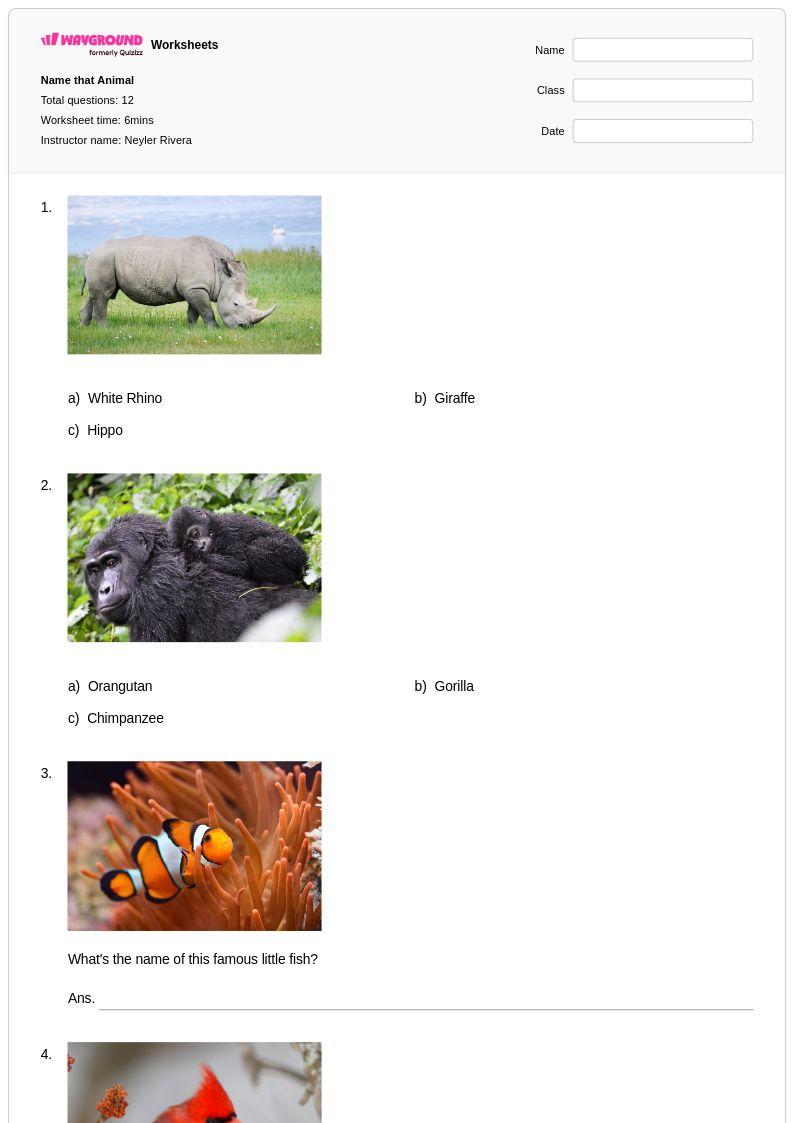
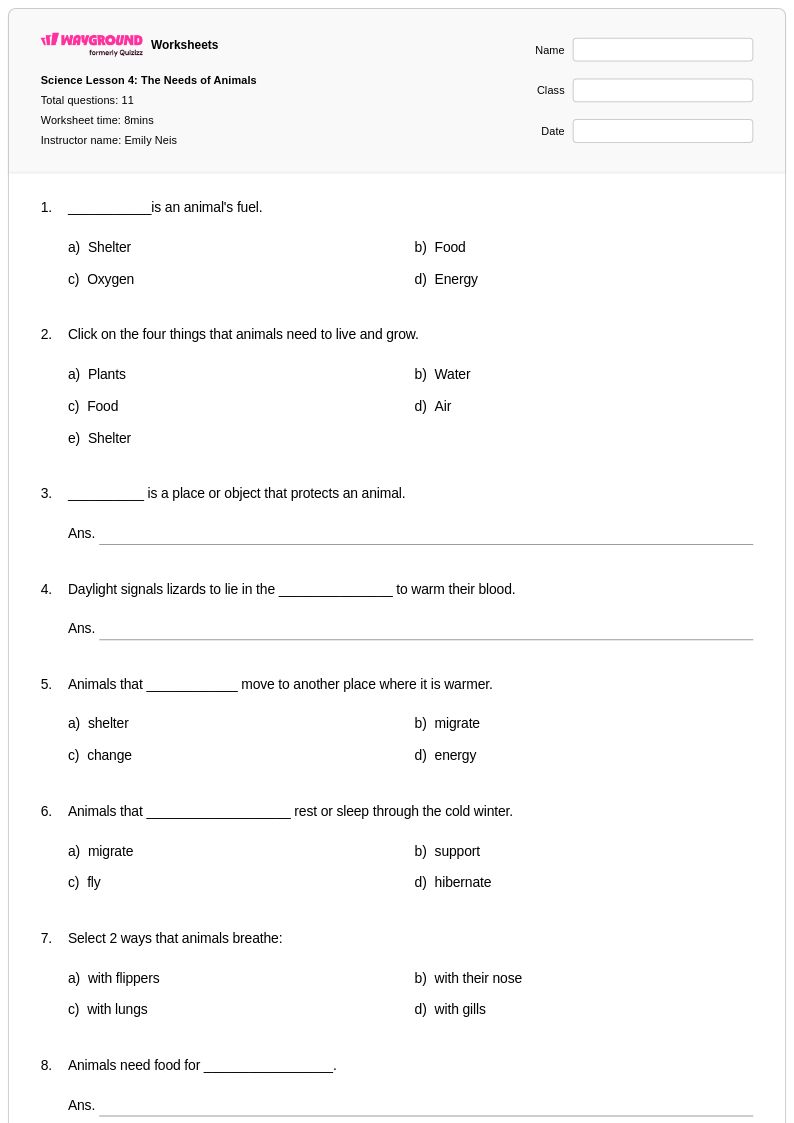
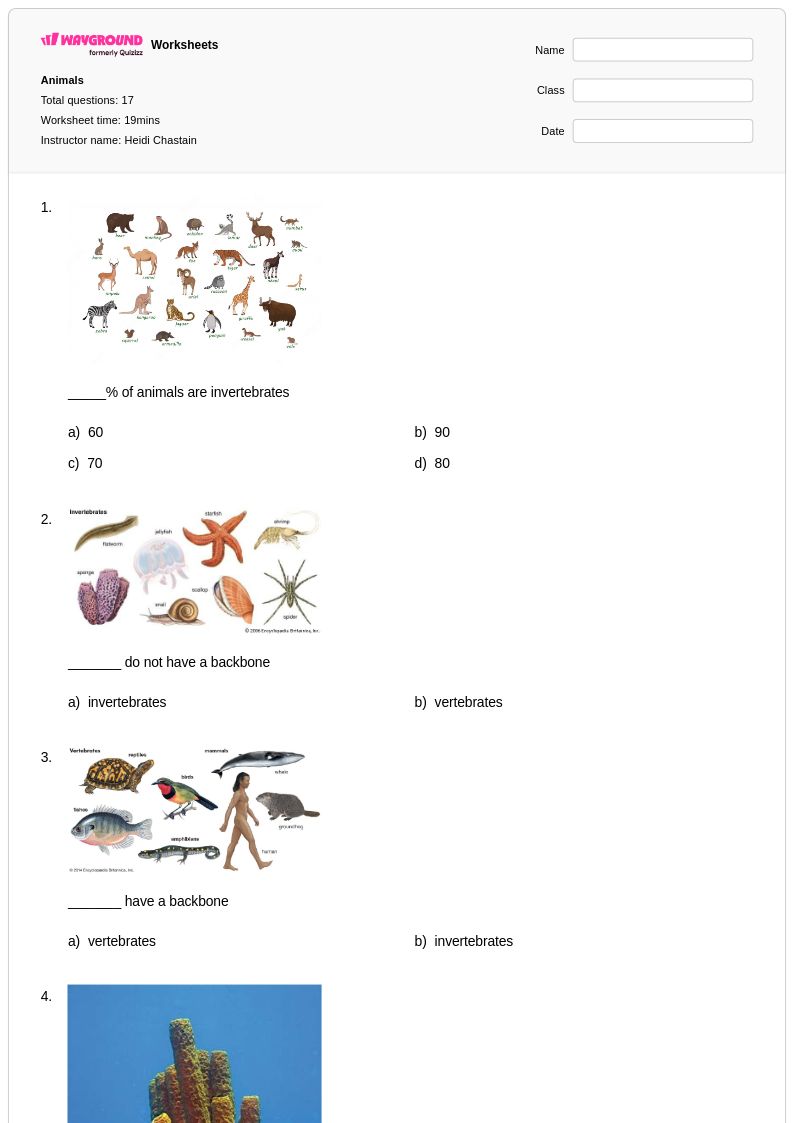
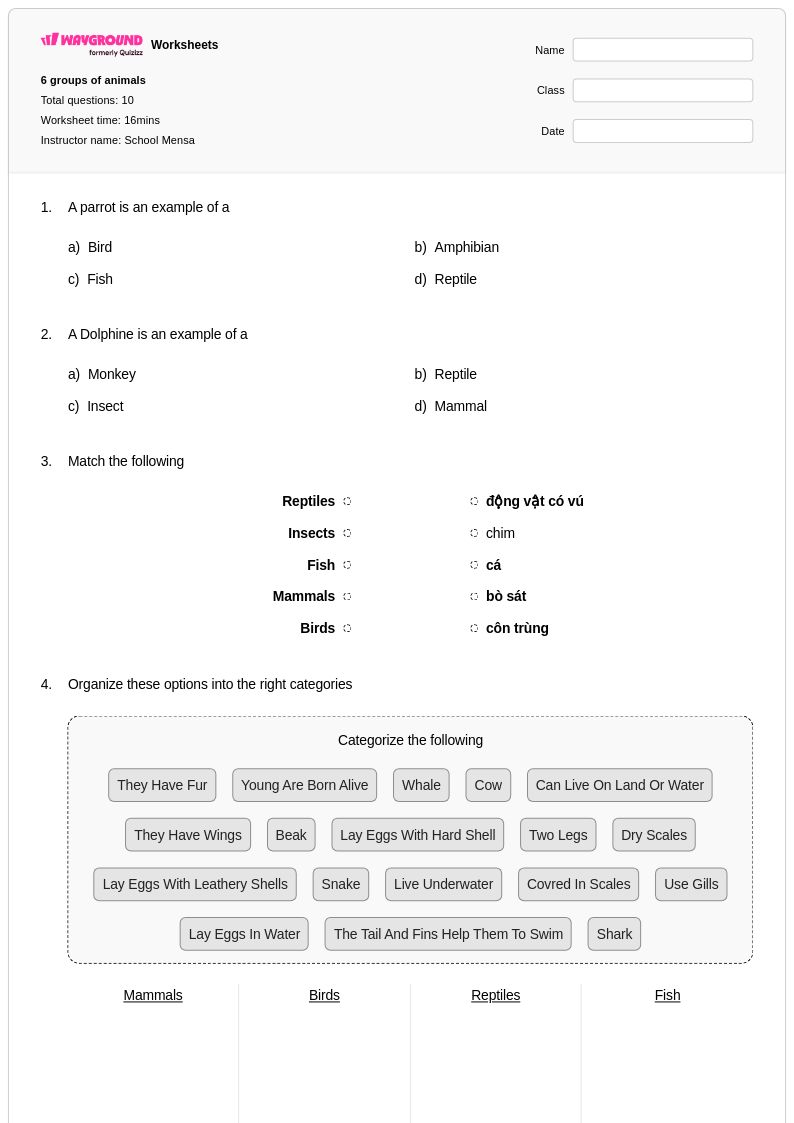
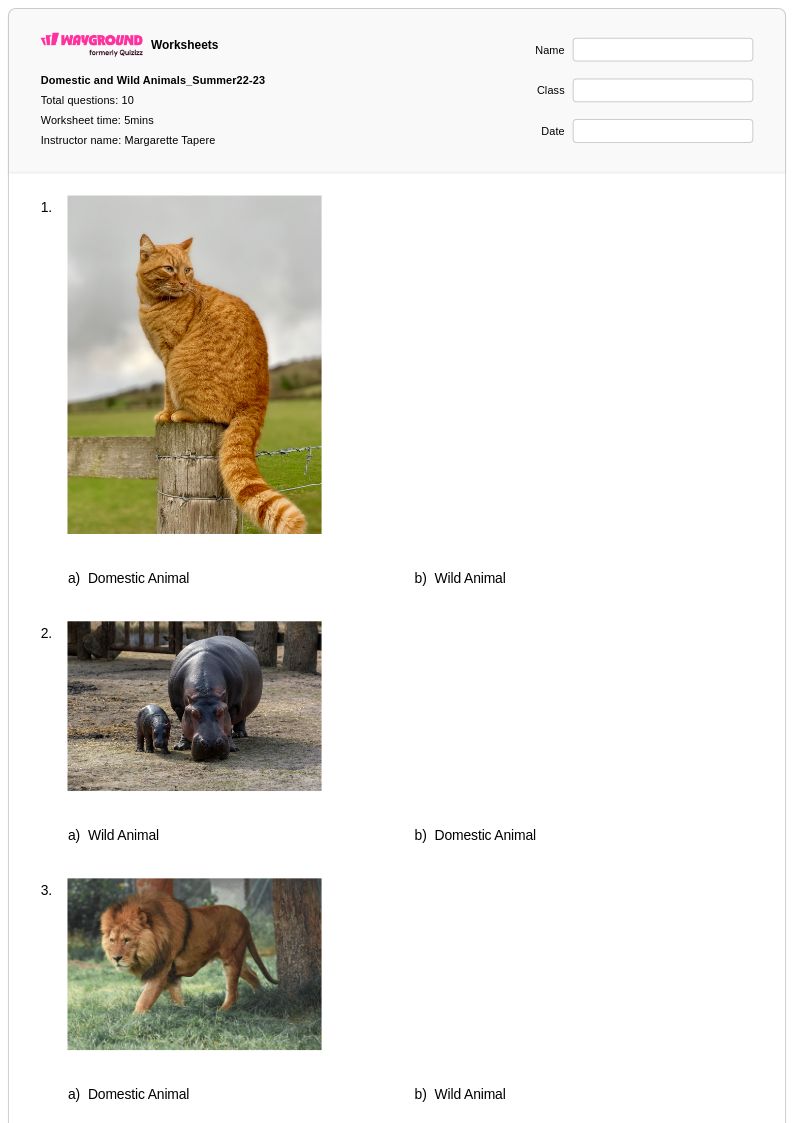
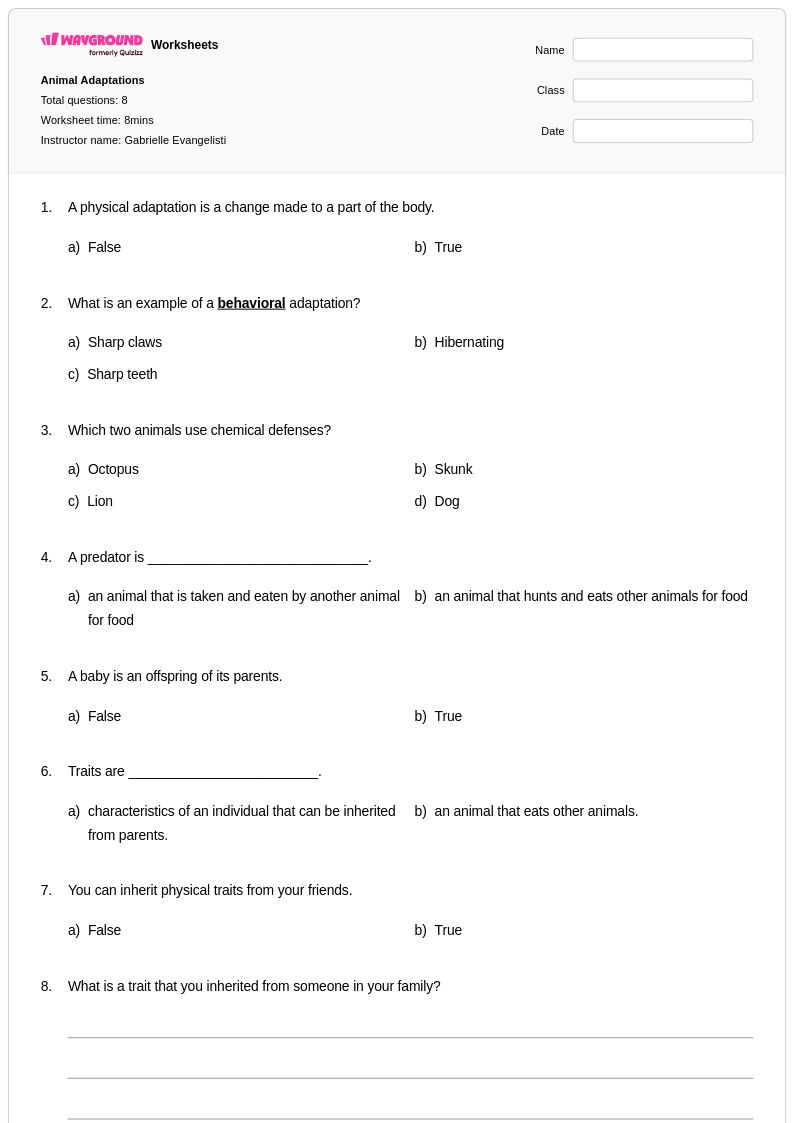
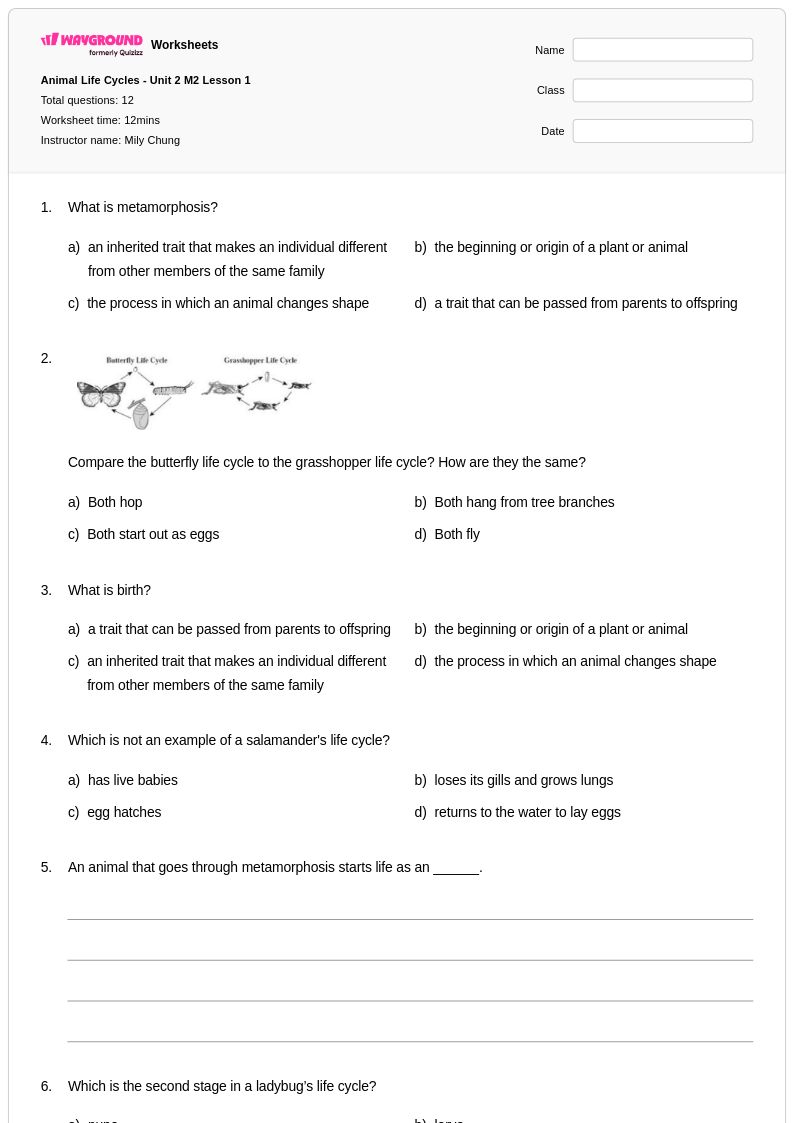
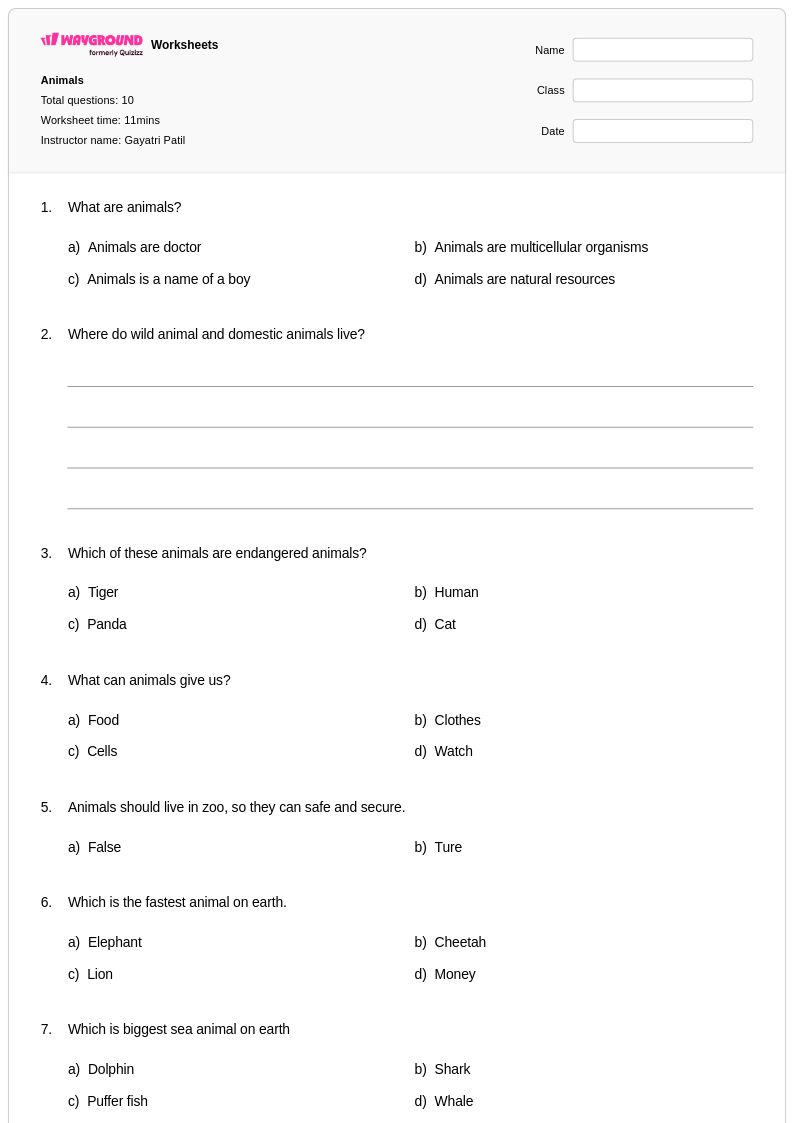
Wild animals worksheets for Class 3 through Wayground (formerly Quizizz) provide young learners with engaging opportunities to explore the fascinating world of wildlife while building essential scientific observation and classification skills. These carefully designed educational resources help students identify different animal species, understand their habitats, and recognize the basic needs that wild animals require for survival. Each worksheet collection includes comprehensive answer keys and is available as free printable pdf resources, making them accessible for both classroom instruction and independent practice. Students work through thoughtfully structured practice problems that encourage them to compare and contrast various wild animals, from forest mammals to desert reptiles, while developing their ability to categorize animals based on observable characteristics and behaviors.
Wayground (formerly Quizizz) empowers educators with millions of teacher-created wild animals worksheets specifically aligned with Class 3 science standards, offering robust search and filtering capabilities that help teachers quickly locate age-appropriate content for their students. The platform's differentiation tools enable teachers to customize worksheets based on individual learning needs, whether providing additional support for struggling learners or enrichment activities for advanced students. These resources are available in both printable and digital formats, including downloadable pdf versions, giving educators the flexibility to seamlessly integrate wild animals content into their lesson planning while supporting diverse learning environments. Teachers can efficiently address remediation needs, provide targeted skill practice, and create engaging enrichment opportunities that deepen students' understanding of animal diversity and ecological relationships.
FAQs
How do I teach wild animals and animal adaptations to elementary and middle school students?
Start by grounding instruction in observable traits — physical features like camouflage, body structure, and specialized limbs — before connecting those traits to survival advantages in specific habitats. Use comparative analysis: have students examine two animals from different biomes and identify how each adaptation solves a survival problem. Anchoring abstract concepts like migration or hibernation to real species students recognize (e.g., Arctic foxes, monarch butterflies) helps build lasting ecological understanding.
What exercises help students practice identifying animal adaptations and habitats?
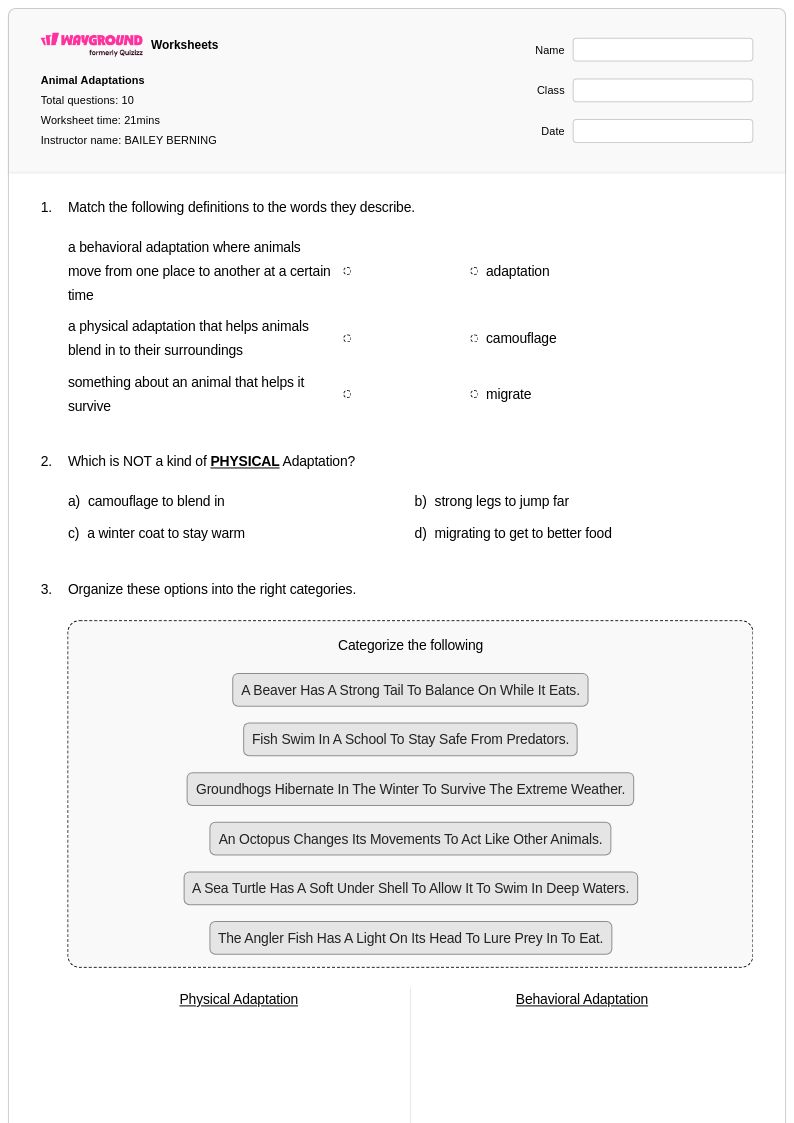
Effective practice exercises include matching animals to their biomes, labeling anatomical features with their adaptive functions, and completing food chain diagrams that show predator-prey relationships within a specific ecosystem. Classification activities that ask students to sort animals by behavior type (nocturnal vs. diurnal, carnivore vs. herbivore) reinforce taxonomic thinking alongside ecological concepts. Wild animals worksheets that combine vocabulary building with diagram-based questions are especially effective for consolidating both scientific terminology and conceptual understanding.
What are the most common mistakes students make when learning about wild animal classifications and ecosystems?
A frequent misconception is conflating habitat with biome — students often describe an animal's habitat too broadly (e.g., 'the jungle') without understanding the specific ecological niche it occupies. Students also commonly confuse food chains with food webs, treating them as interchangeable rather than understanding that webs represent the full complexity of feeding relationships. Another common error is assuming adaptations are intentional or conscious, which requires explicit correction to build accurate evolutionary understanding.
How can I use wild animals worksheets to support students at different skill levels?
Wild animals worksheets can be differentiated by adjusting the complexity of the organisms studied, the scaffolding provided, and the cognitive demand of the tasks. For struggling learners, simplified food chain diagrams with word banks help build foundational vocabulary before moving to open-ended analysis. On Wayground, teachers can apply individual accommodations such as read aloud support, reduced answer choices, and extended time, ensuring students with diverse learning needs can engage meaningfully with wildlife biology content.
How do I use Wayground's wild animals worksheets in my classroom?
Wayground's wild animals worksheets are available as printable PDFs for traditional classroom use and in digital formats for technology-integrated or remote learning environments. Teachers can also host worksheets directly as a quiz on Wayground, enabling real-time student responses and immediate feedback. Each worksheet includes a comprehensive answer key, reducing preparation time and making it straightforward to use for independent practice, guided review, or homework assignments.
How do I connect wild animals lessons to conservation biology and real-world science?
Connecting wildlife biology to conservation begins with helping students understand that habitat loss, climate change, and human activity directly affect the adaptations and survival strategies they are already studying. Use case studies of endangered species — such as the snow leopard or sea turtle — to show how specific adaptations become liabilities when an environment changes rapidly. This approach grounds abstract ecological concepts in current science while building the analytical and vocabulary skills central to zoology and conservation biology curricula.