
Recommended Topics for you
19 Q
3rd - 5th
14 Q
3rd
20 Q
5th - Uni
20 Q
5th - Uni
20 Q
4th
20 Q
5th - Uni
11 Q
5th
20 Q
3rd
10 Q
5th
19 Q
5th - Uni
15 Q
4th - 5th
20 Q
5th - Uni
10 Q
4th
26 Q
5th
11 Q
5th - Uni
12 Q
3rd - 4th
20 Q
2nd - Uni
15 Q
5th - Uni
10 Q
5th - Uni
34 Q
5th
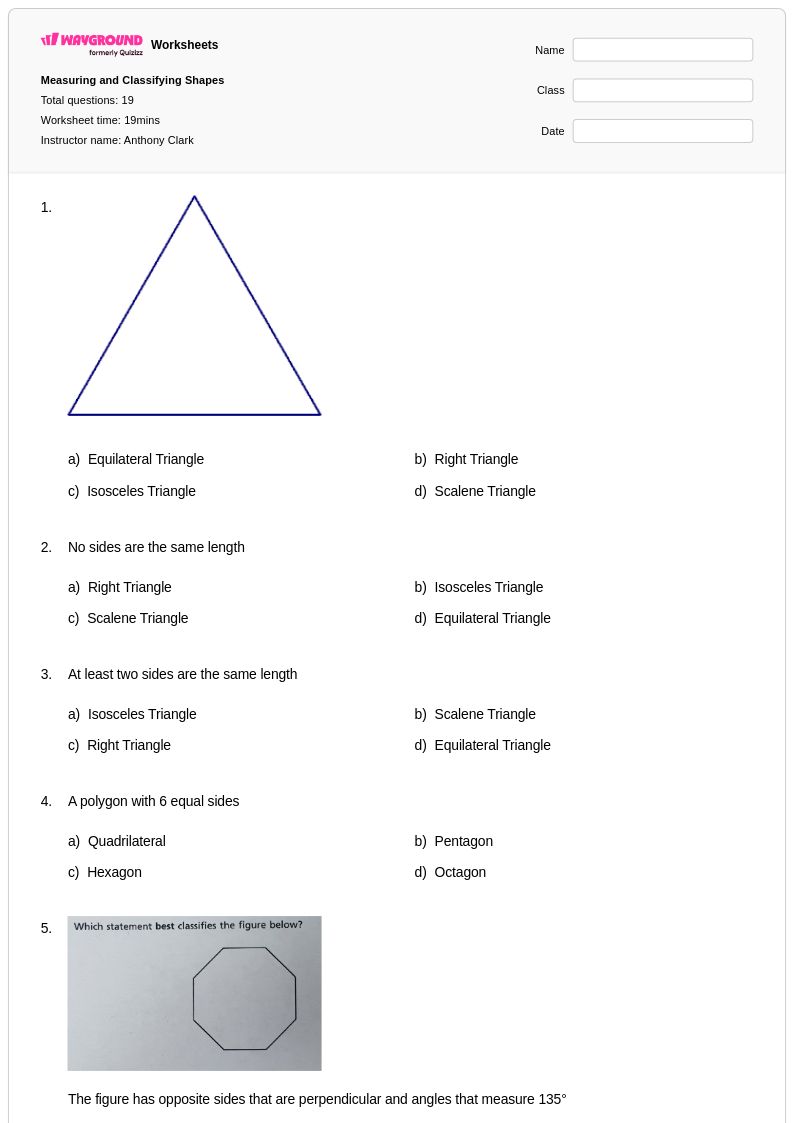
19 Q
5th - Uni
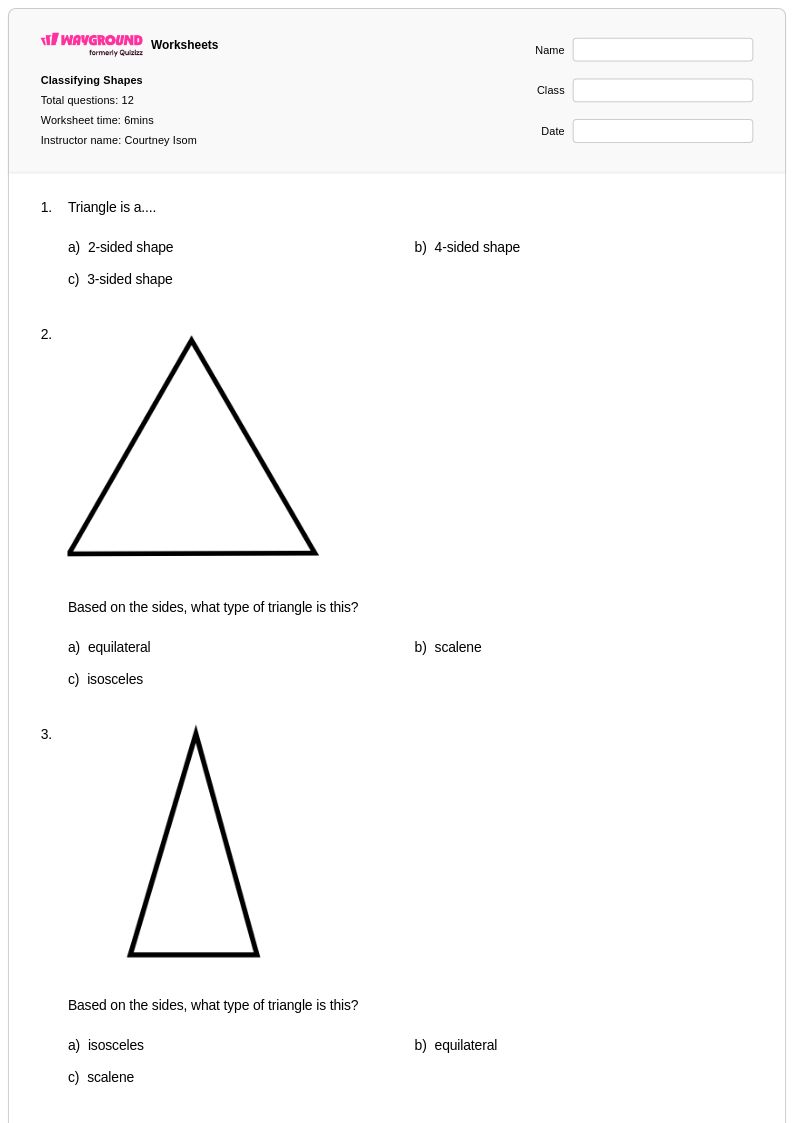
12 Q
3rd - 4th
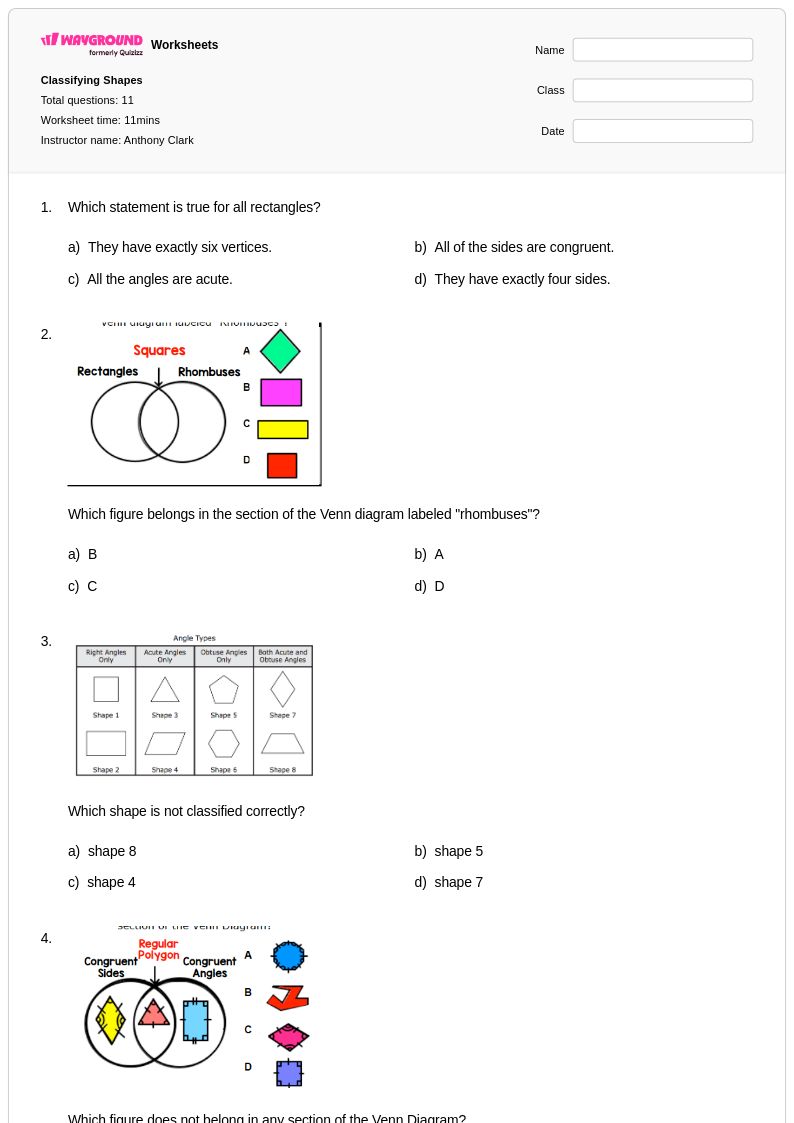
11 Q
5th - Uni
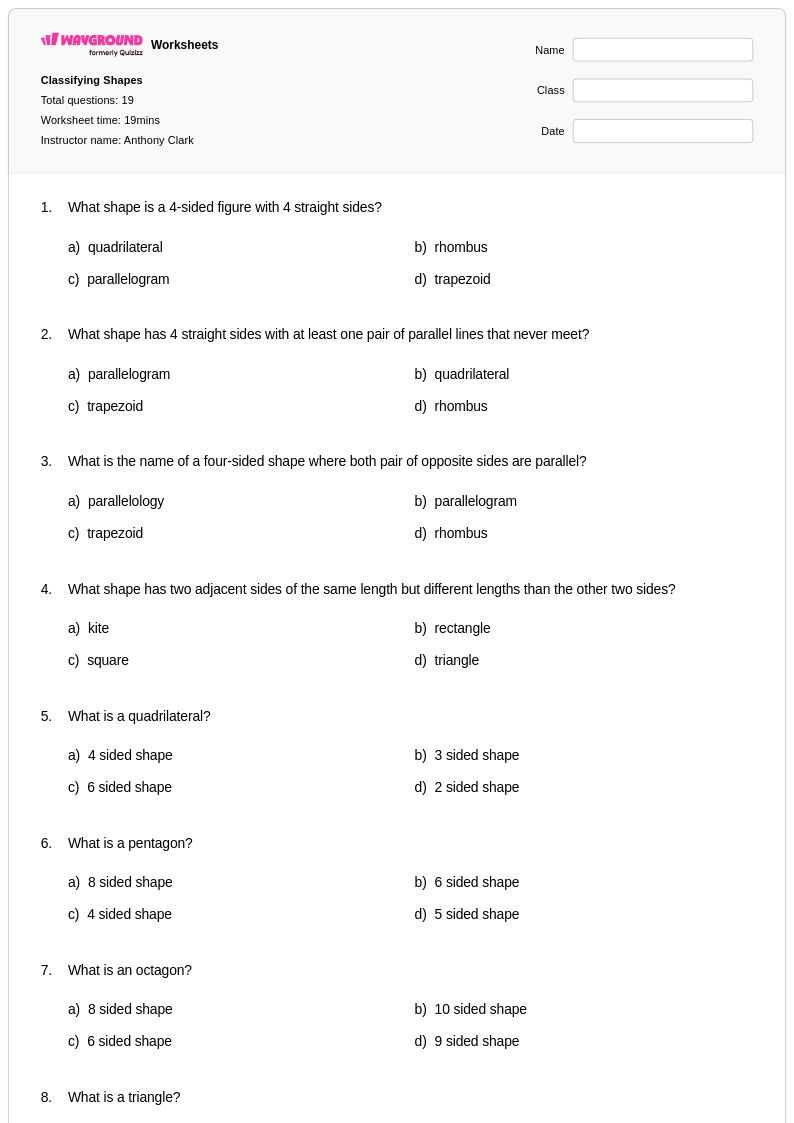
19 Q
5th - Uni
Explore Classifying Shapes Worksheets by Grades
Explore Classifying Shapes Worksheets for kindergarten by Topic
Explore Other Subject Worksheets for kindergarten
Explore printable Classifying Shapes worksheets for Kindergarten
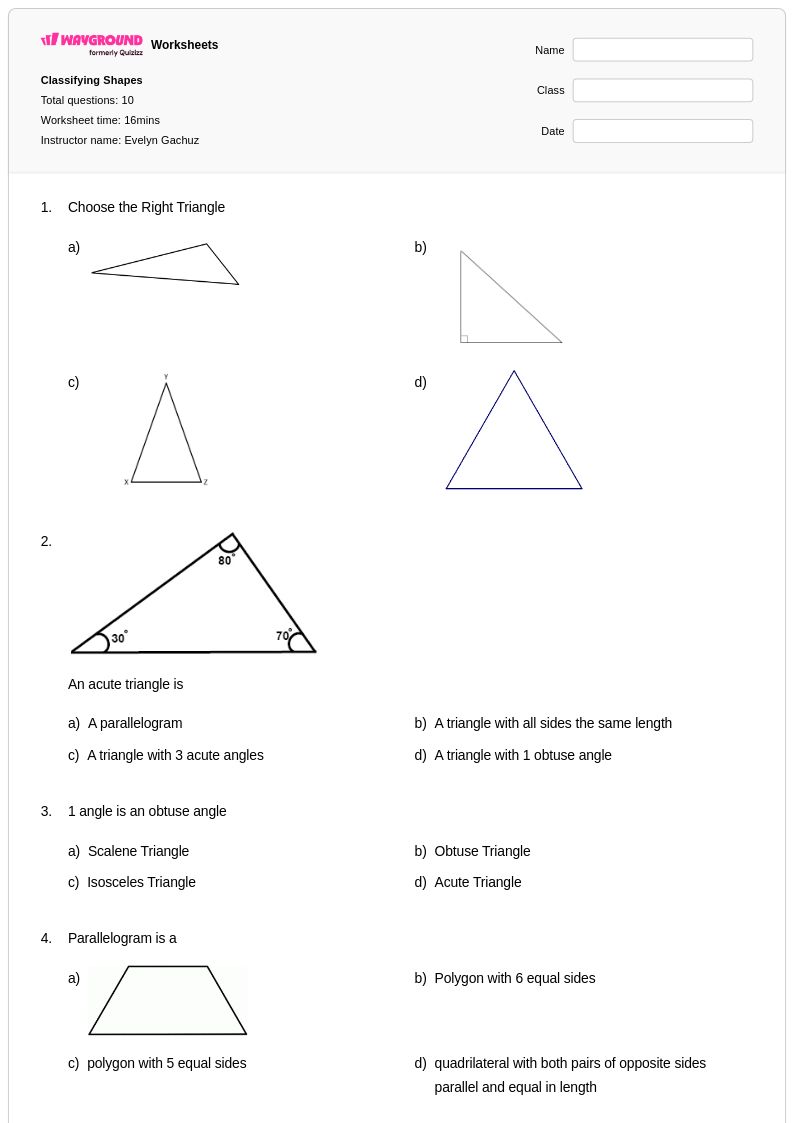
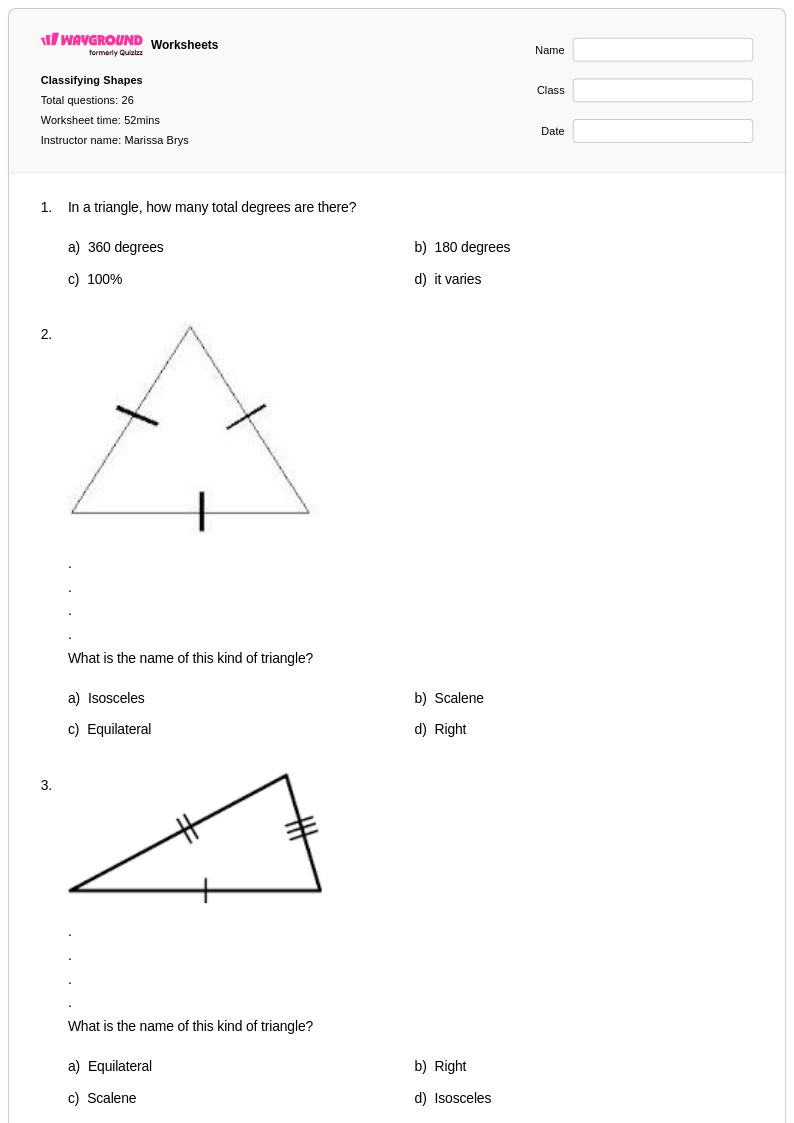
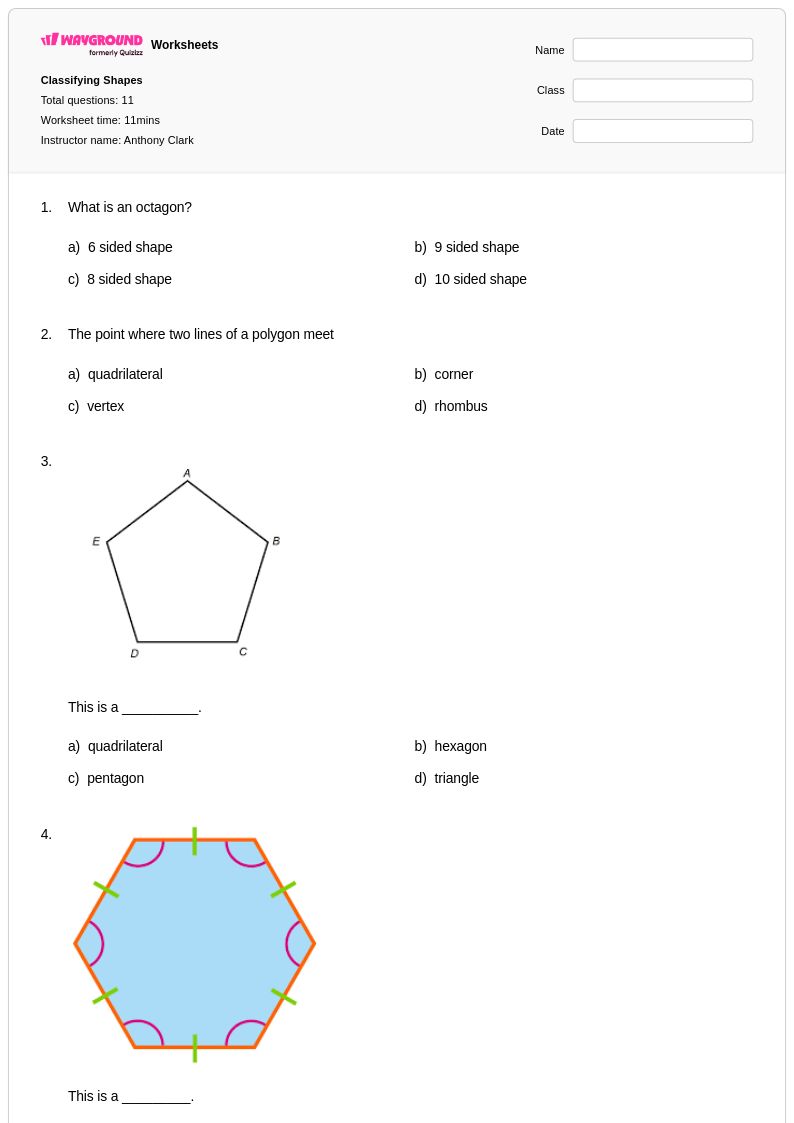
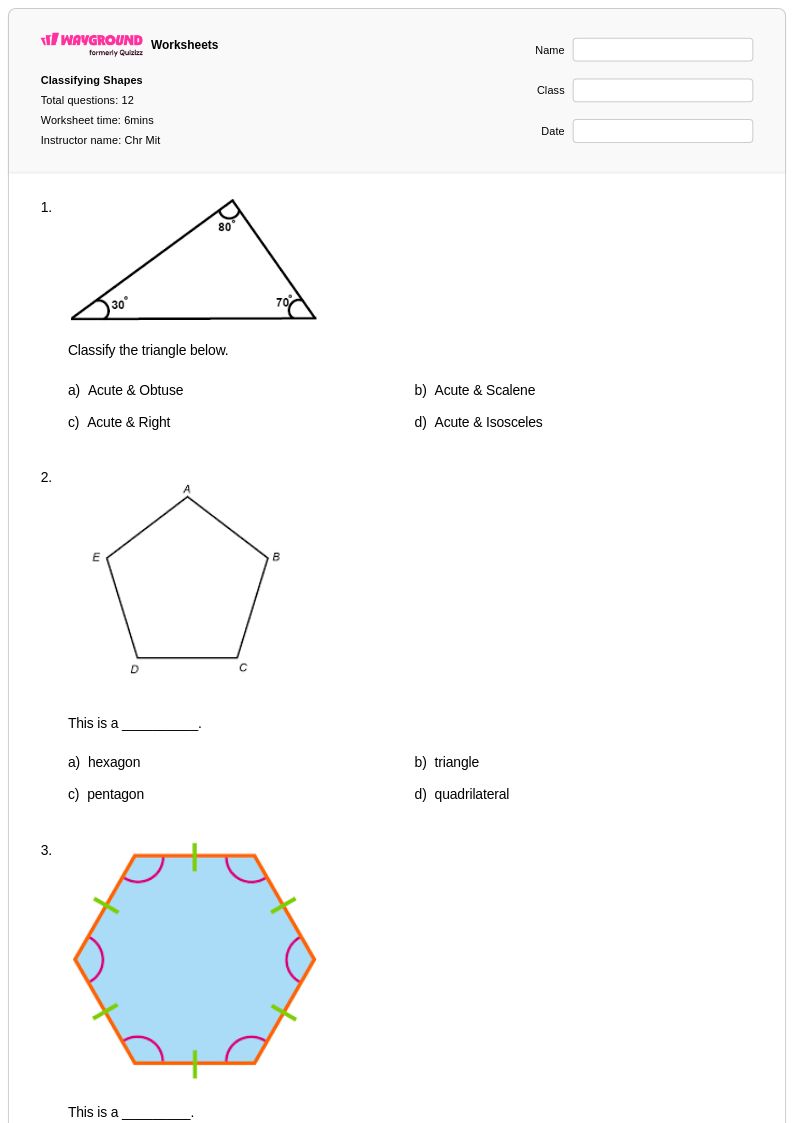
Classifying shapes worksheets for kindergarten students available through Wayground provide essential foundational experiences that help young learners recognize, identify, and categorize basic geometric forms including circles, squares, triangles, and rectangles. These carefully designed printables strengthen visual discrimination skills, spatial reasoning abilities, and mathematical vocabulary development as students learn to distinguish between different shape characteristics such as the number of sides, corners, and overall appearance. Each worksheet collection includes comprehensive practice problems that guide kindergarteners through progressive shape recognition activities, from simple matching exercises to more complex sorting tasks, with answer keys provided to support both independent learning and guided instruction in pdf format.
Wayground's extensive library supports kindergarten teachers with millions of educator-created resources specifically focused on shape classification activities that align with early childhood mathematics standards and developmental milestones. The platform's robust search and filtering capabilities enable teachers to quickly locate appropriate worksheets based on specific learning objectives, skill levels, and classroom needs, while differentiation tools allow for seamless customization to accommodate diverse learners within the same kindergarten classroom. These versatile resources are available in both printable and digital formats, making them ideal for lesson planning, targeted remediation sessions, enrichment activities, and consistent skill practice that builds confidence in geometric thinking and prepares students for more advanced mathematical concepts in elementary grades.
FAQs
How do I teach classifying shapes in kindergarten?
What shape-classification activities work well for kindergarten students?
What mistakes do kindergarteners make when classifying shapes?
How can I use Wayground kindergarten shape worksheets?
How does shape classification in kindergarten align with Common Core math?
What grade do students begin learning to classify shapes?
How can I differentiate kindergarten shape-classification worksheets?