
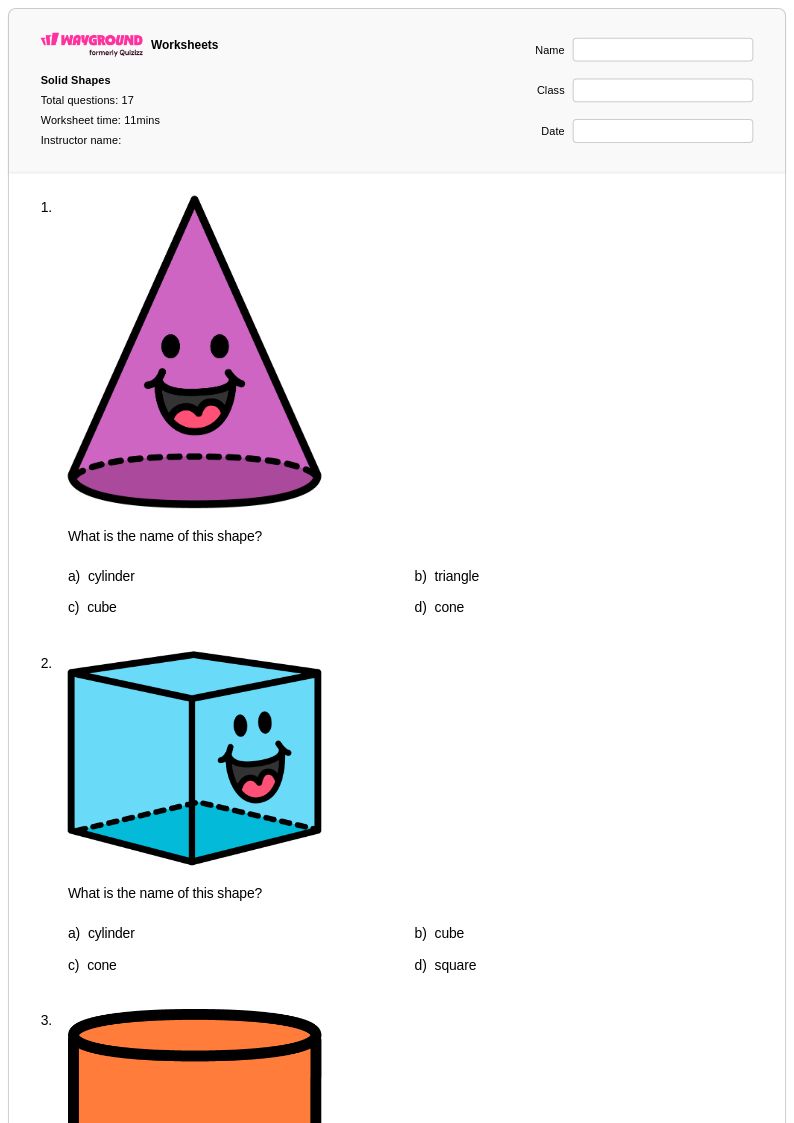
17 Q
KG
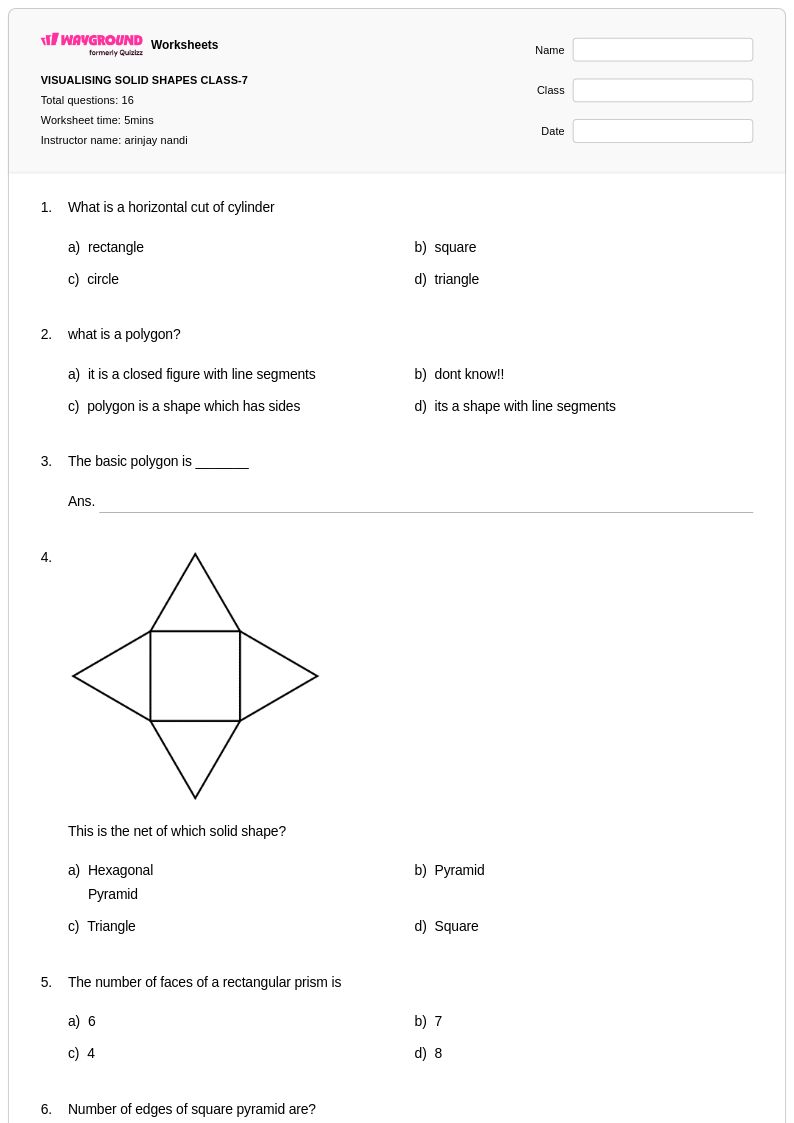
16 Q
7th
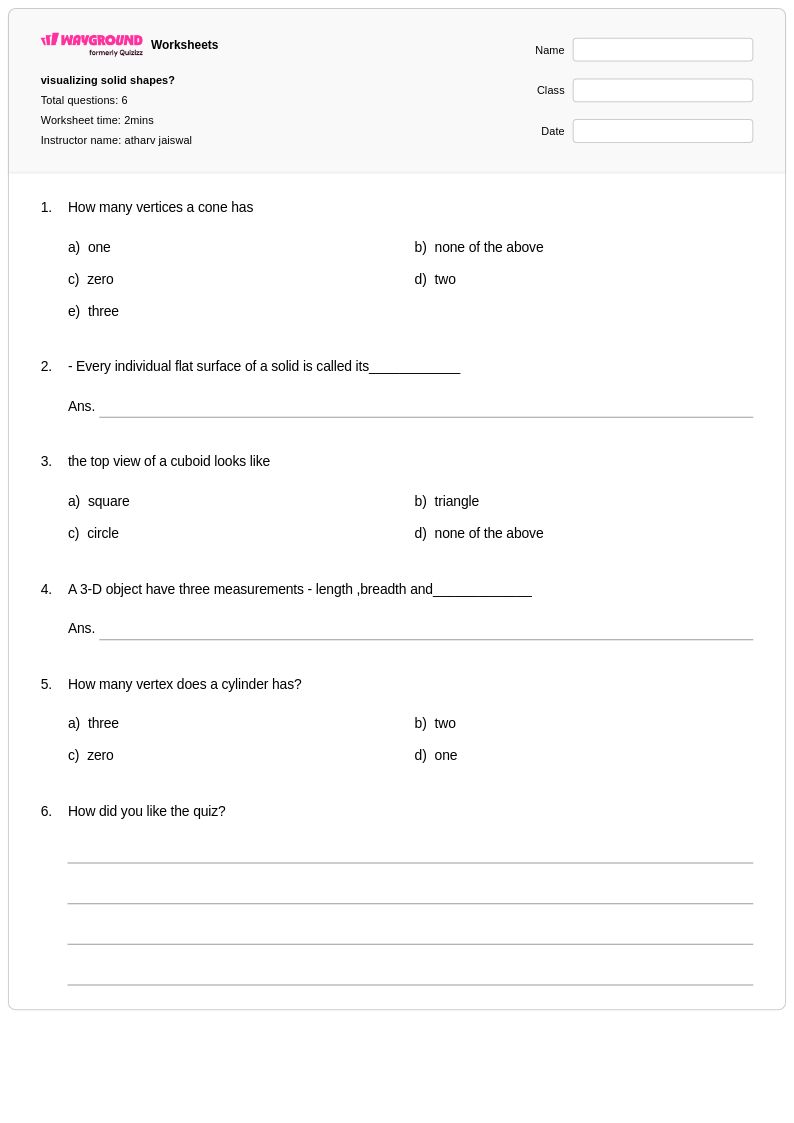
6 Q
7th - 9th
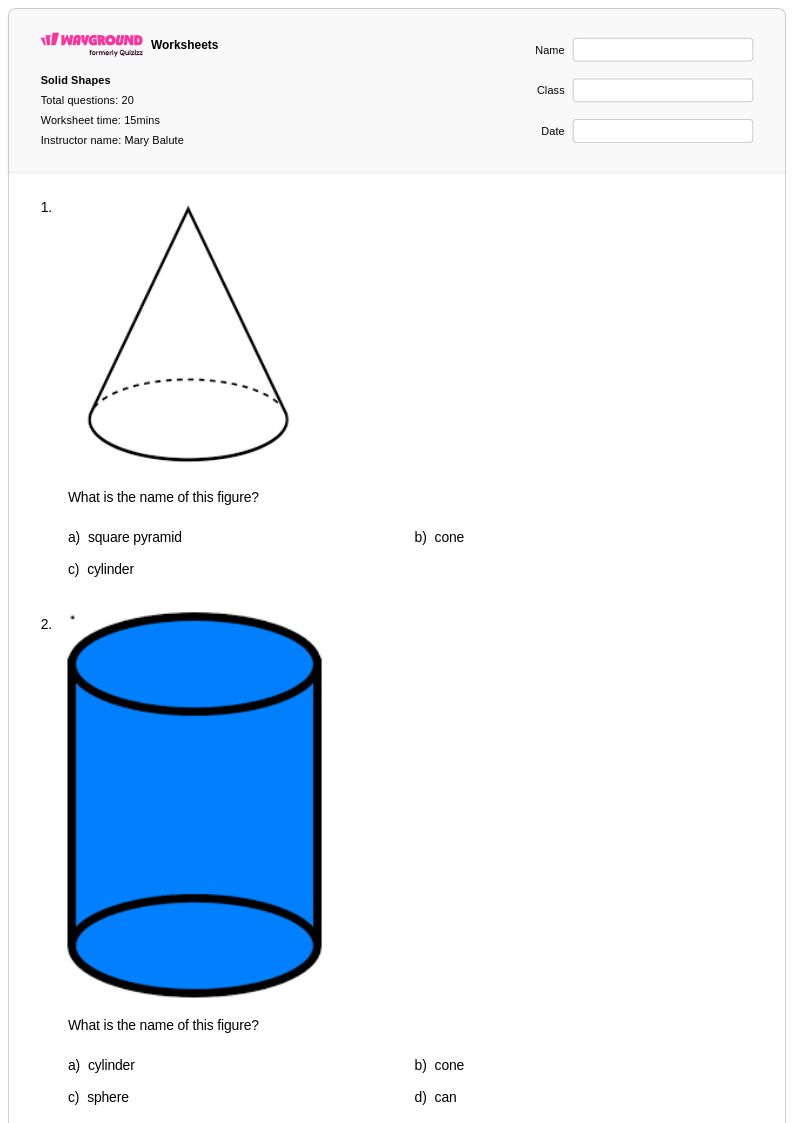
20 Q
1st
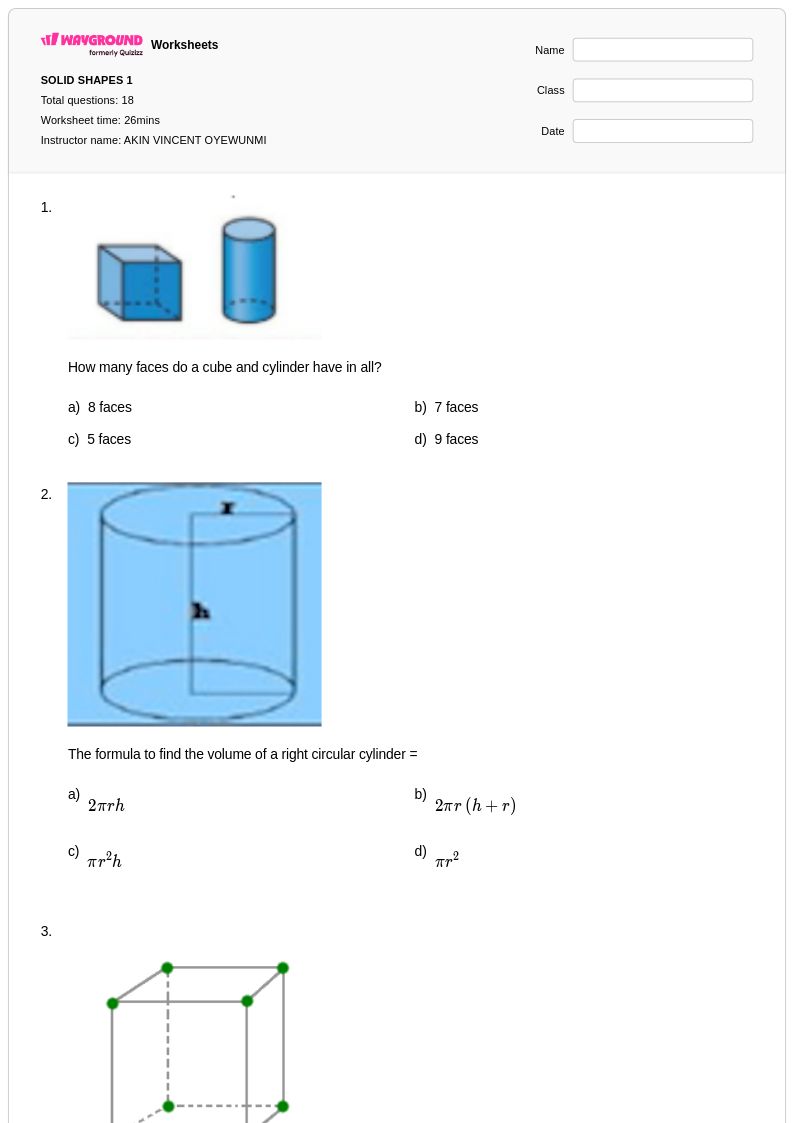
18 Q
9th
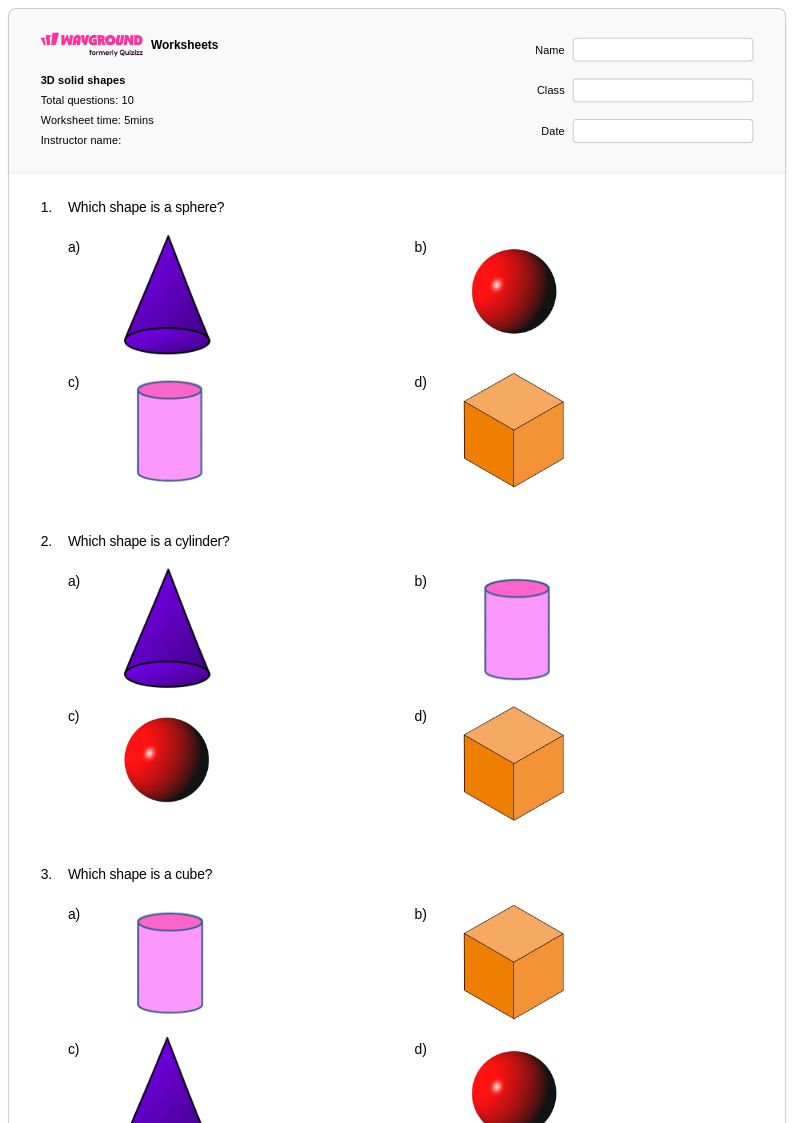
10 Q
1st
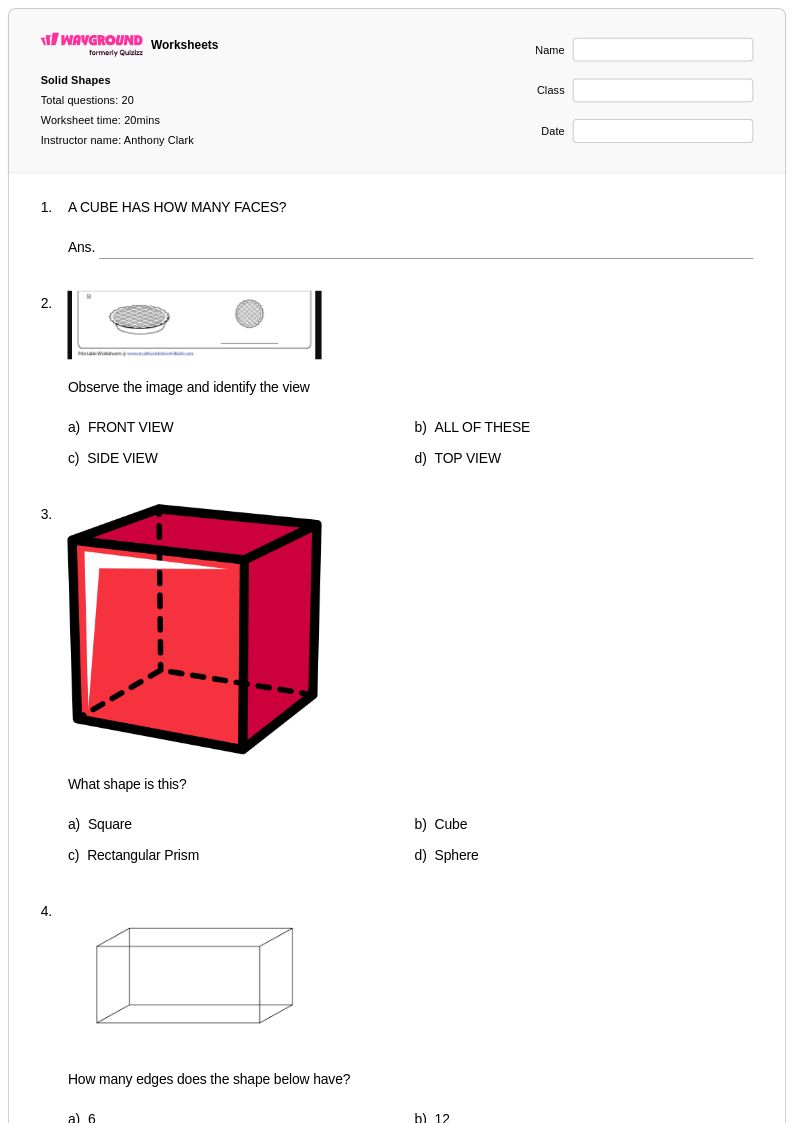
20 Q
2nd - Uni
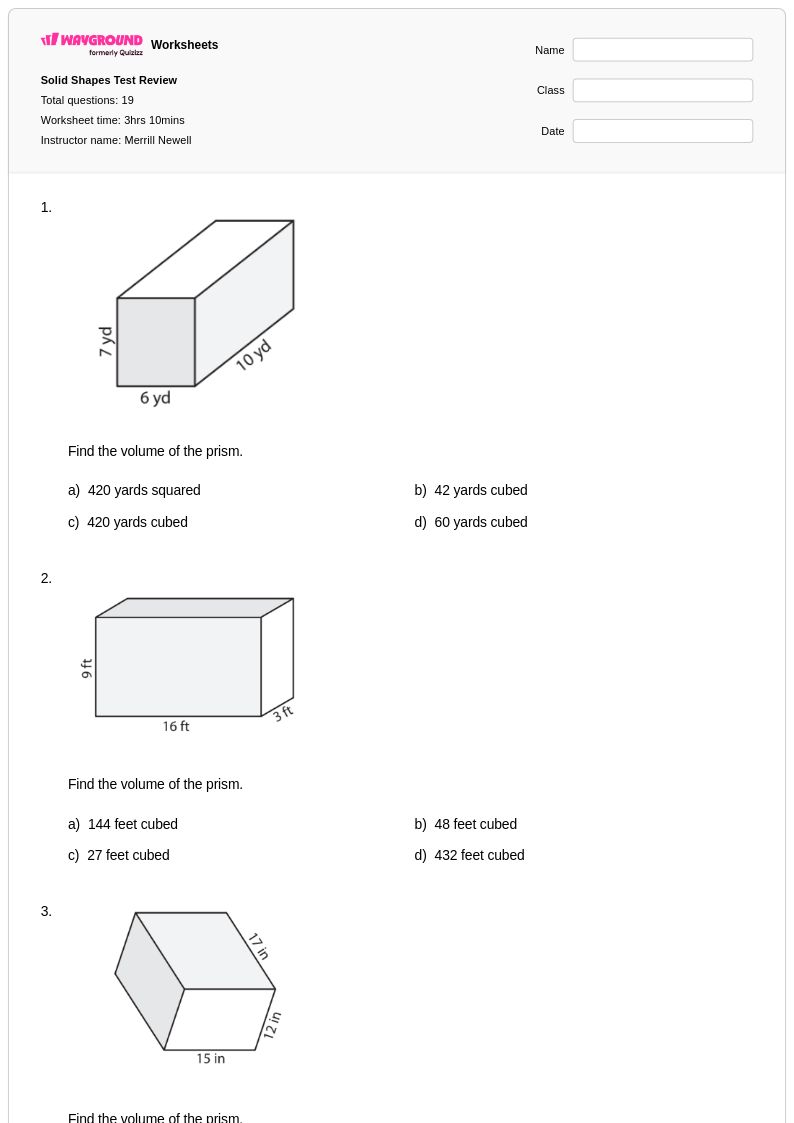
19 Q
5th
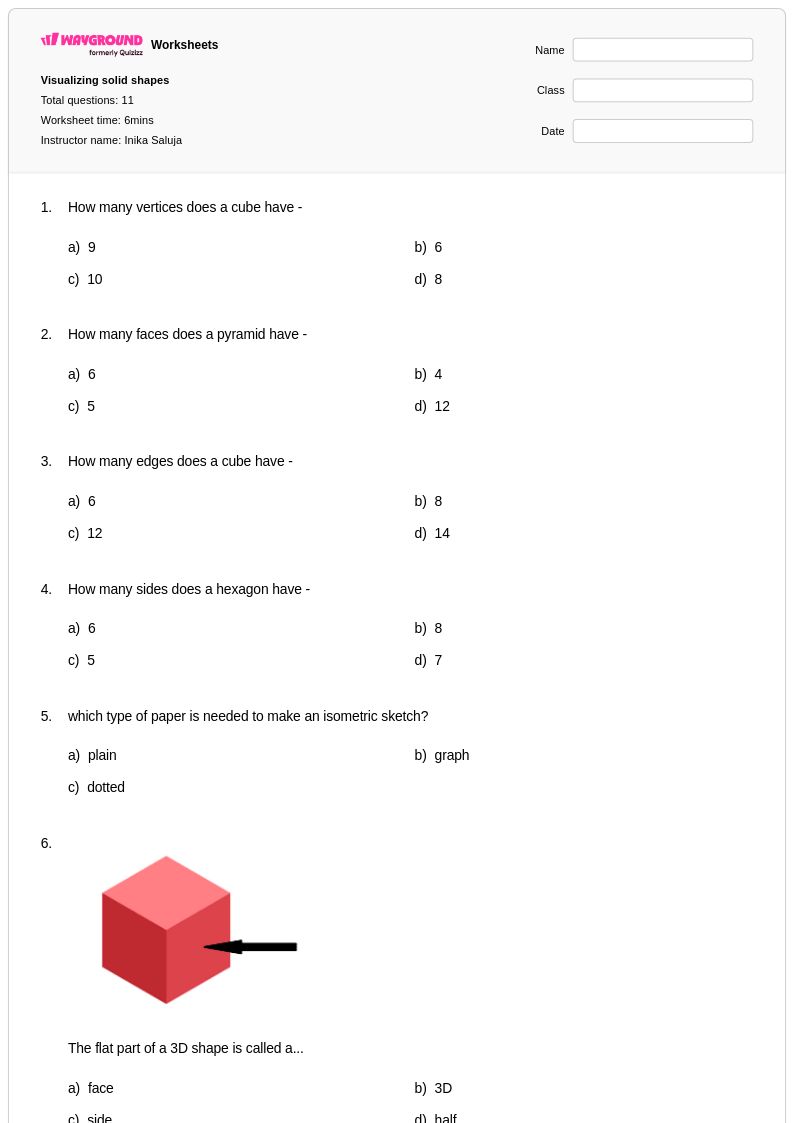
11 Q
7th
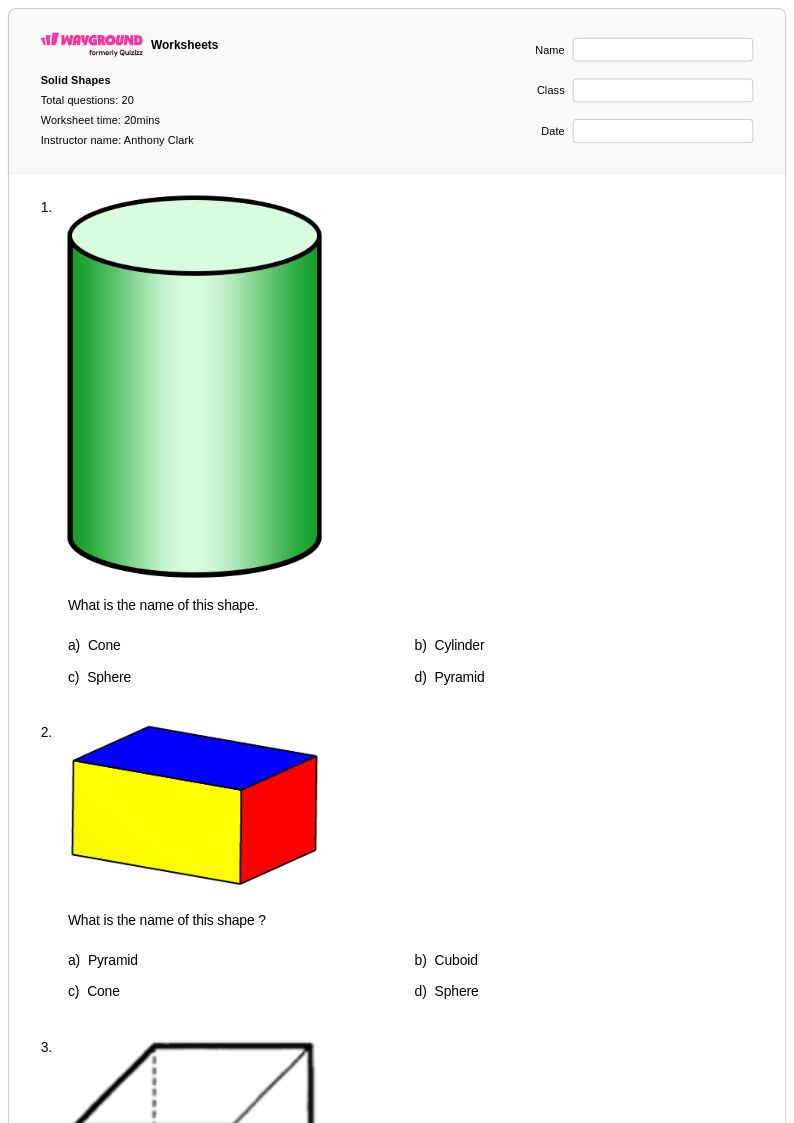
20 Q
2nd - Uni
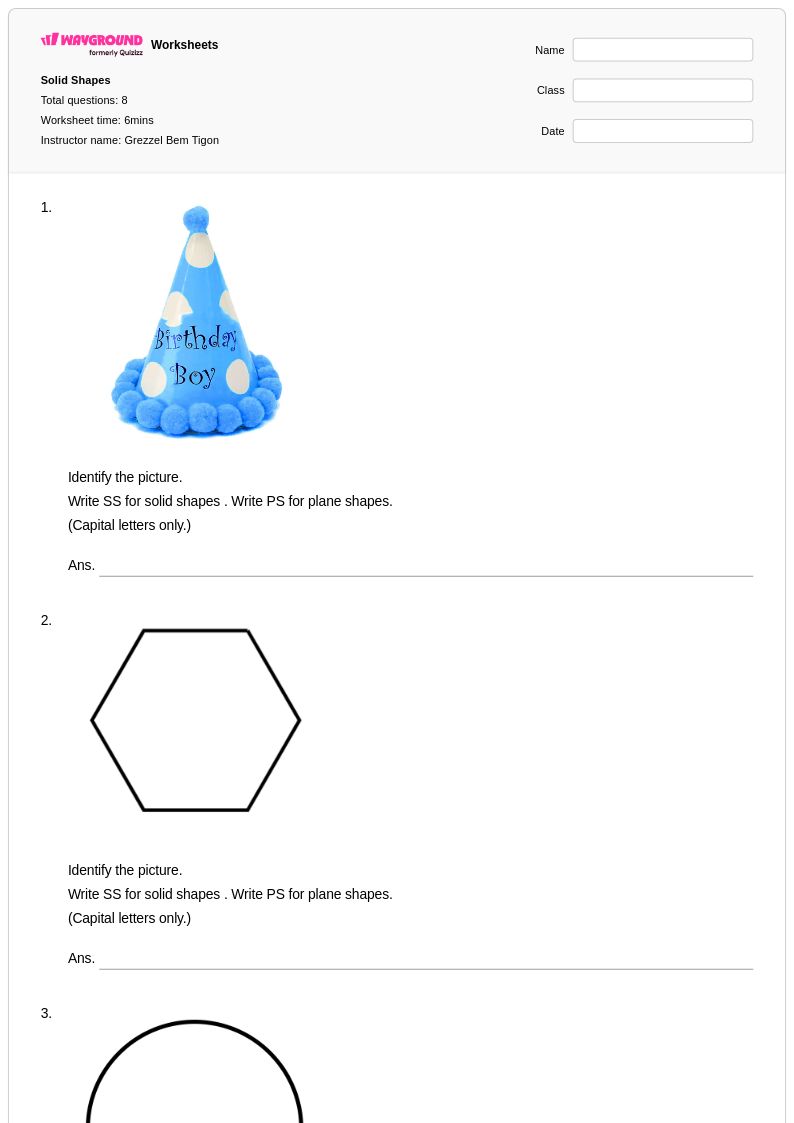
8 Q
1st
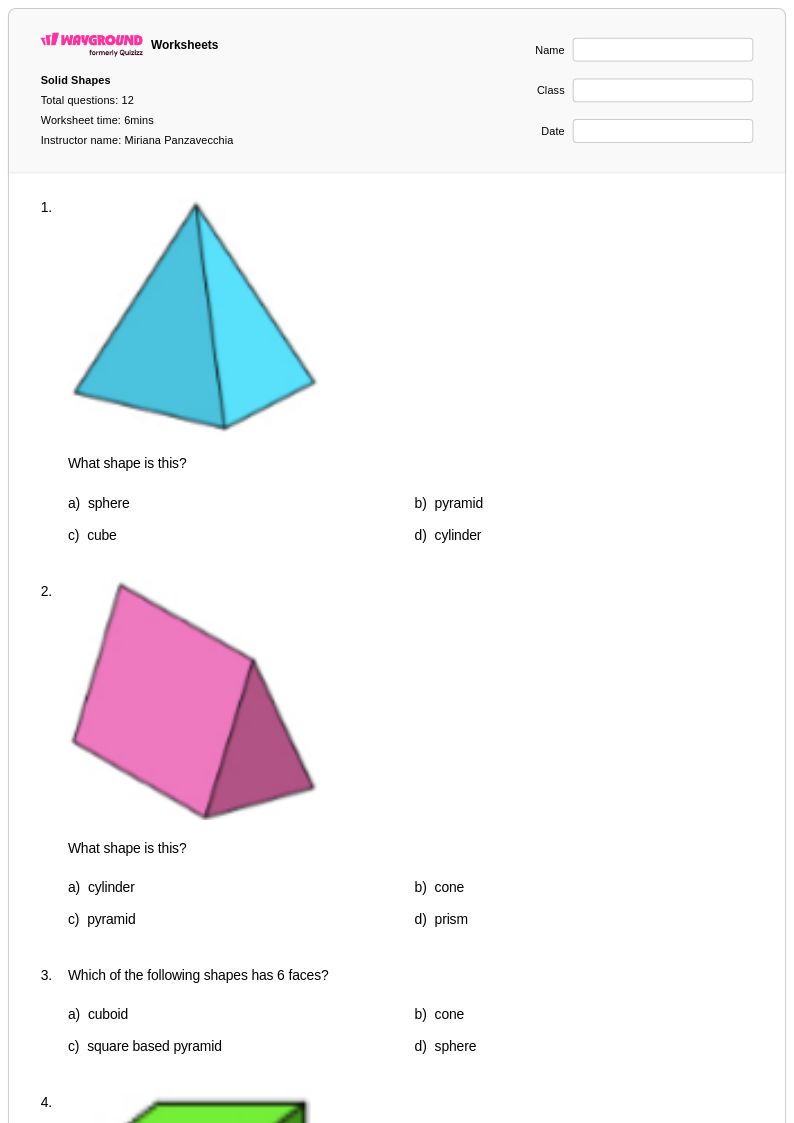
12 Q
4th - 5th
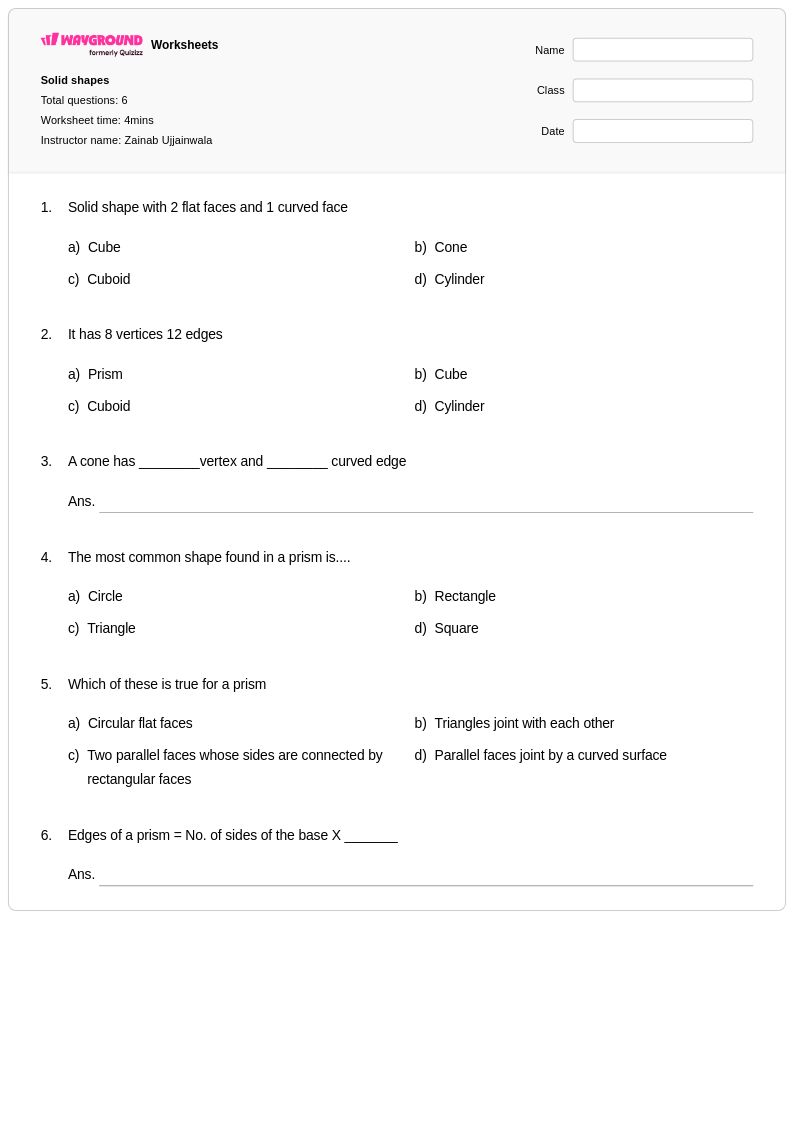
6 Q
5th - 6th
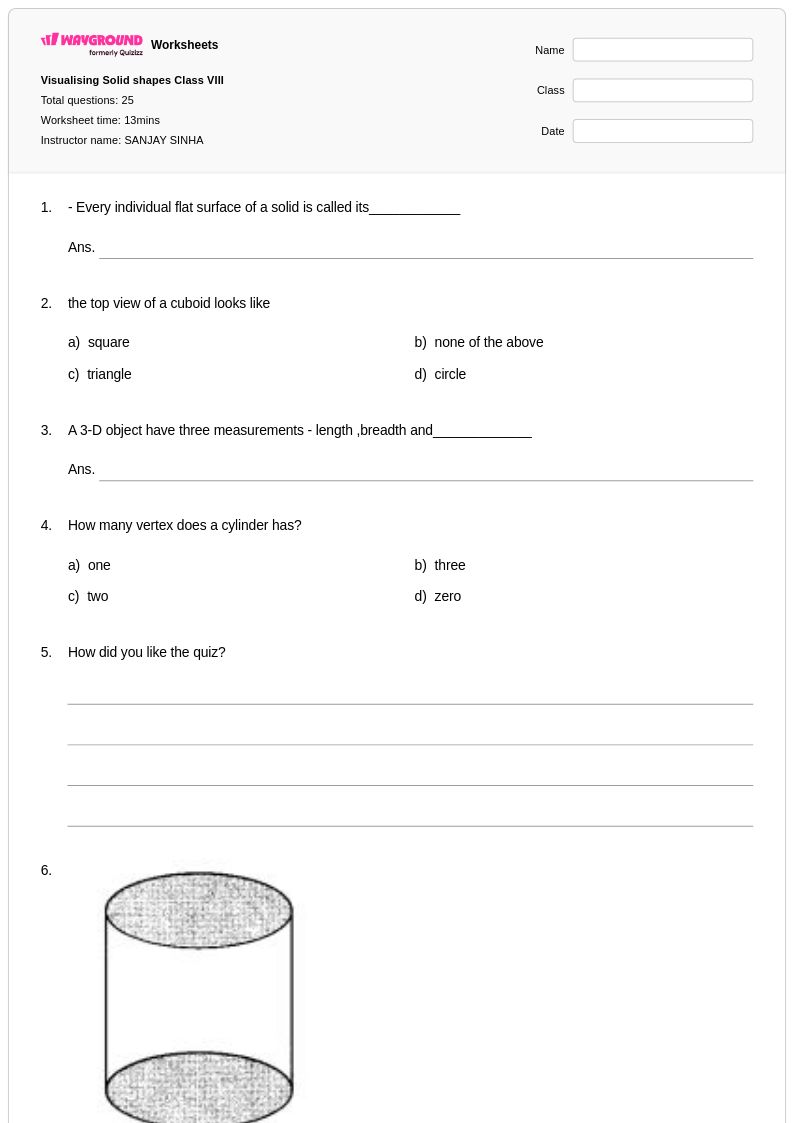
25 Q
8th
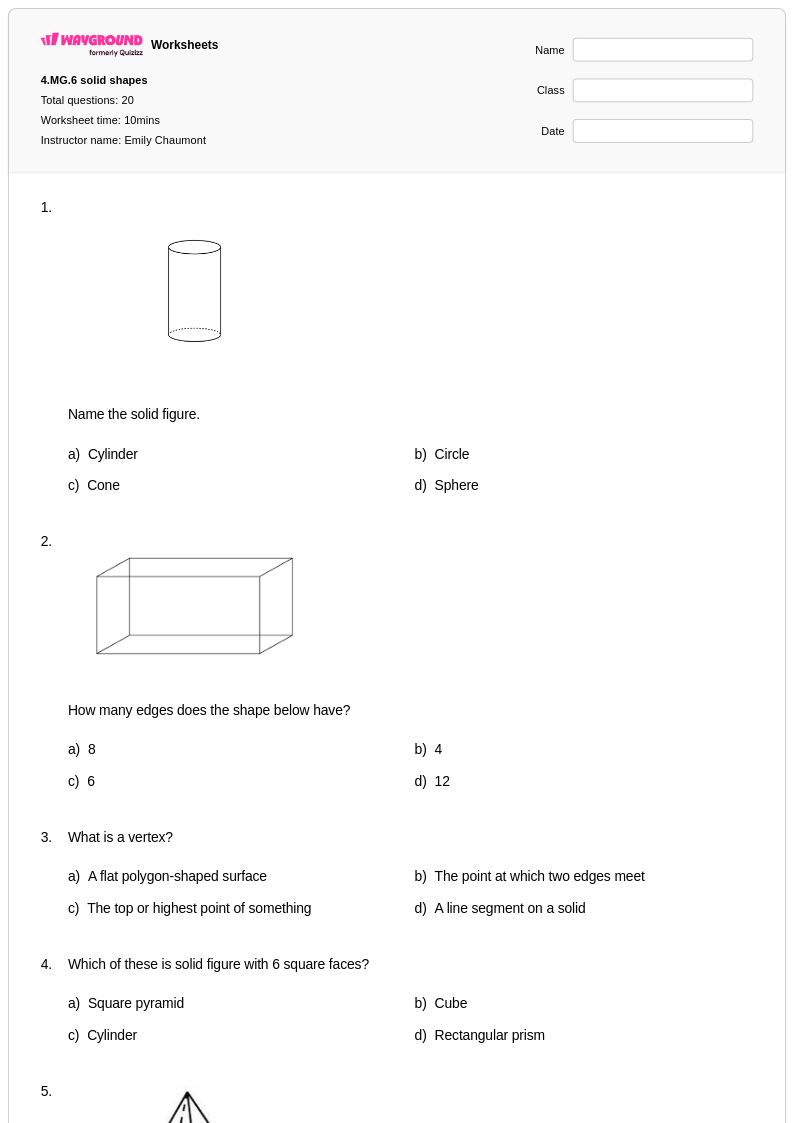
20 Q
4th
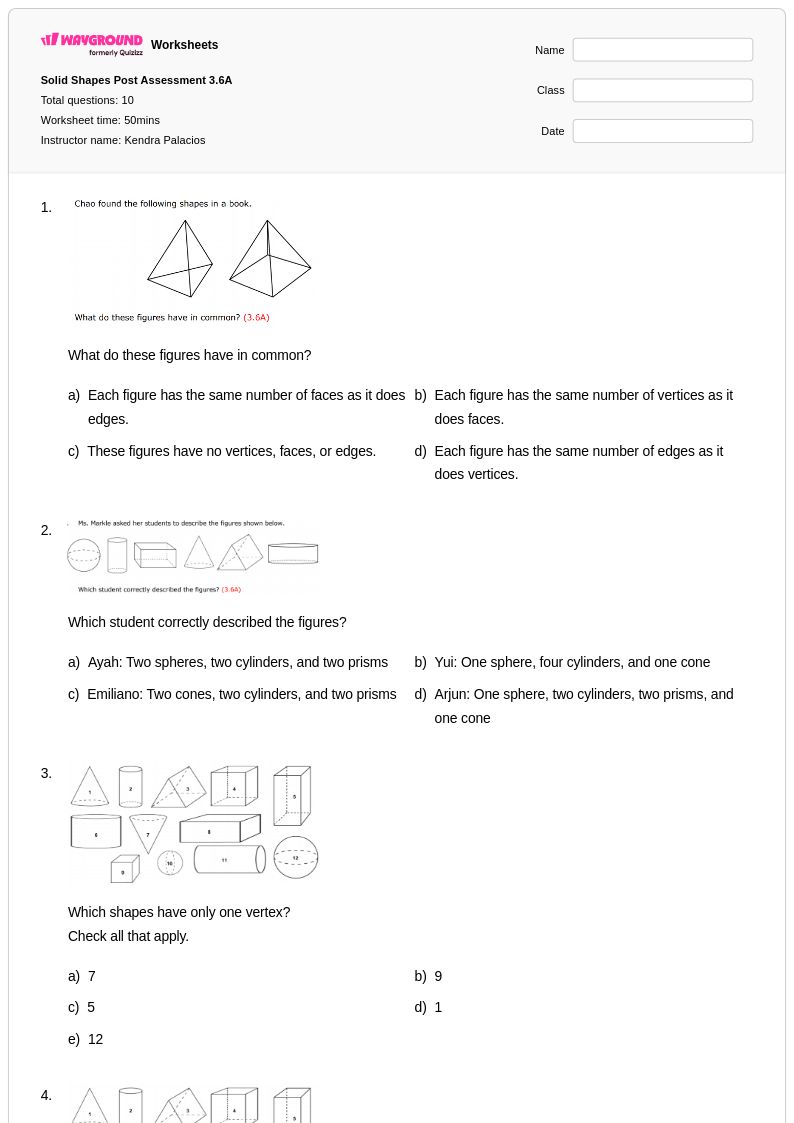
10 Q
3rd
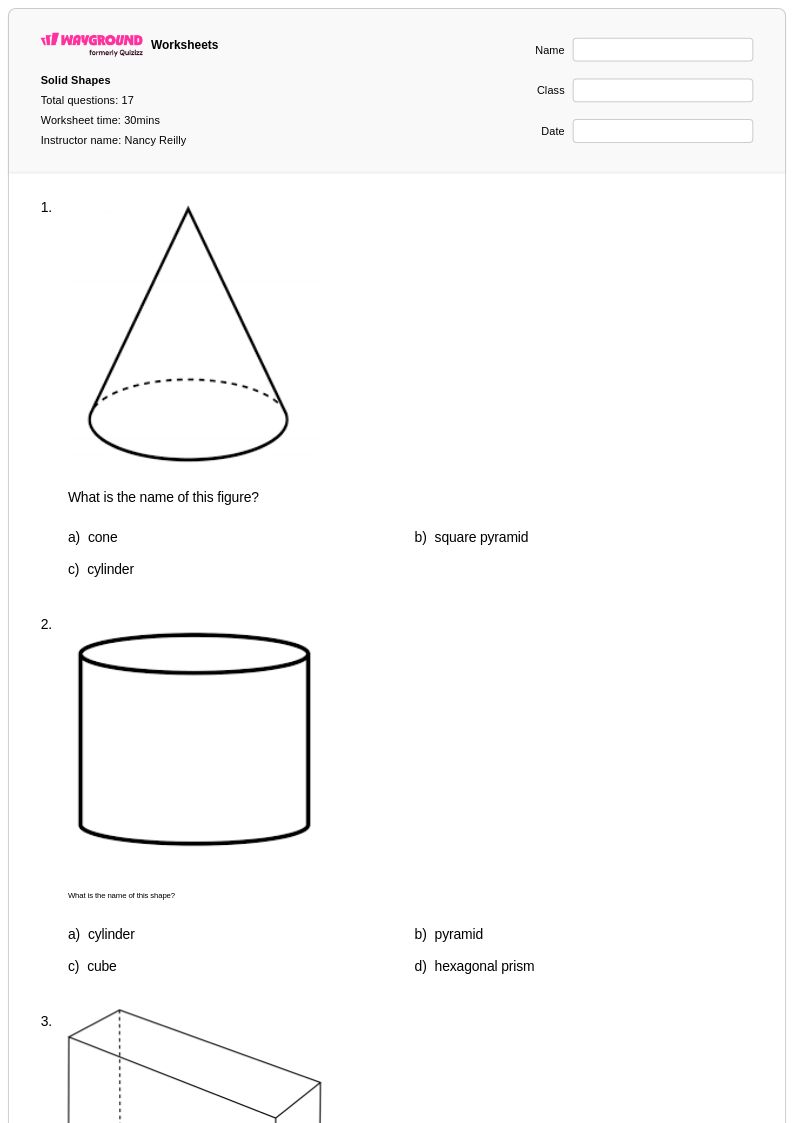
17 Q
1st - 2nd
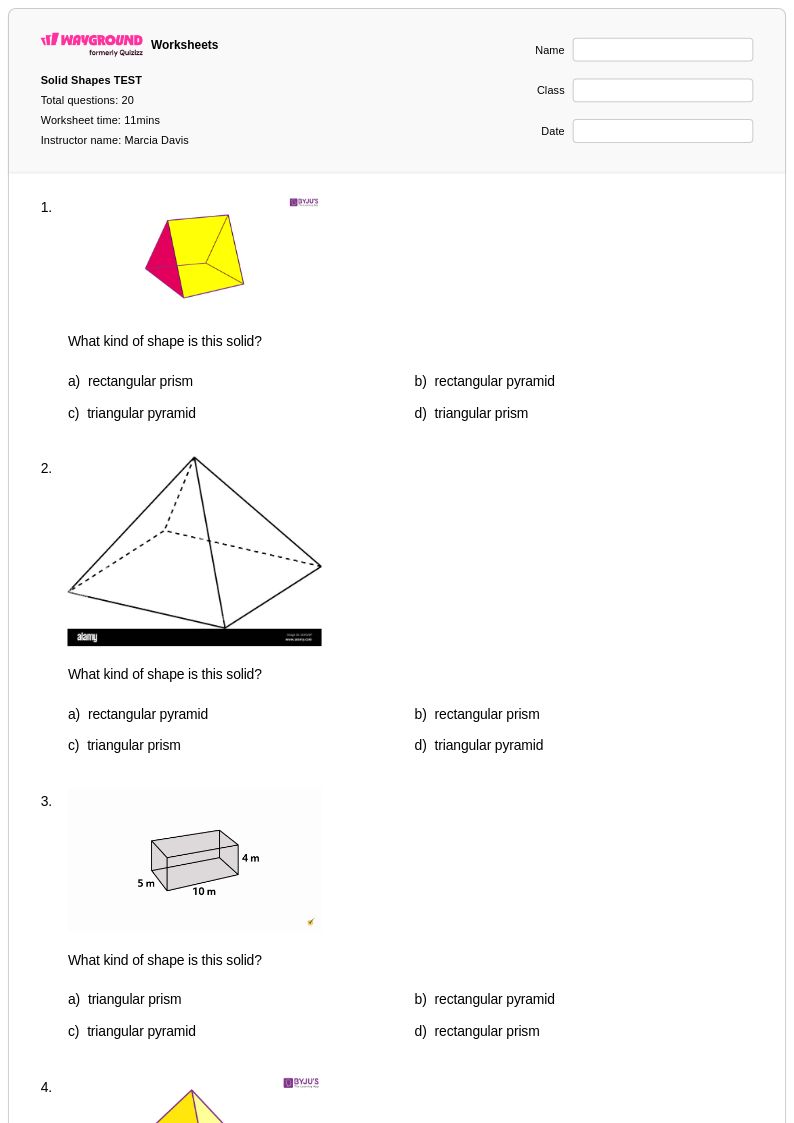
20 Q
10th - 11th
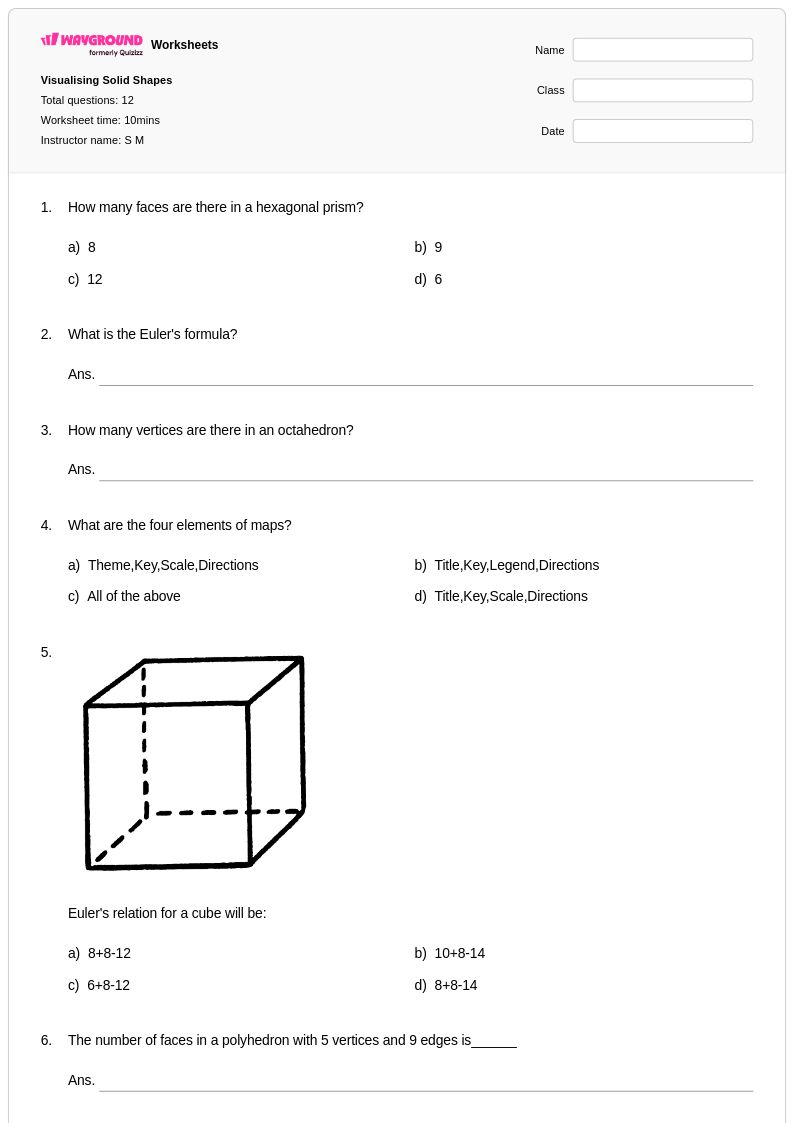
12 Q
8th
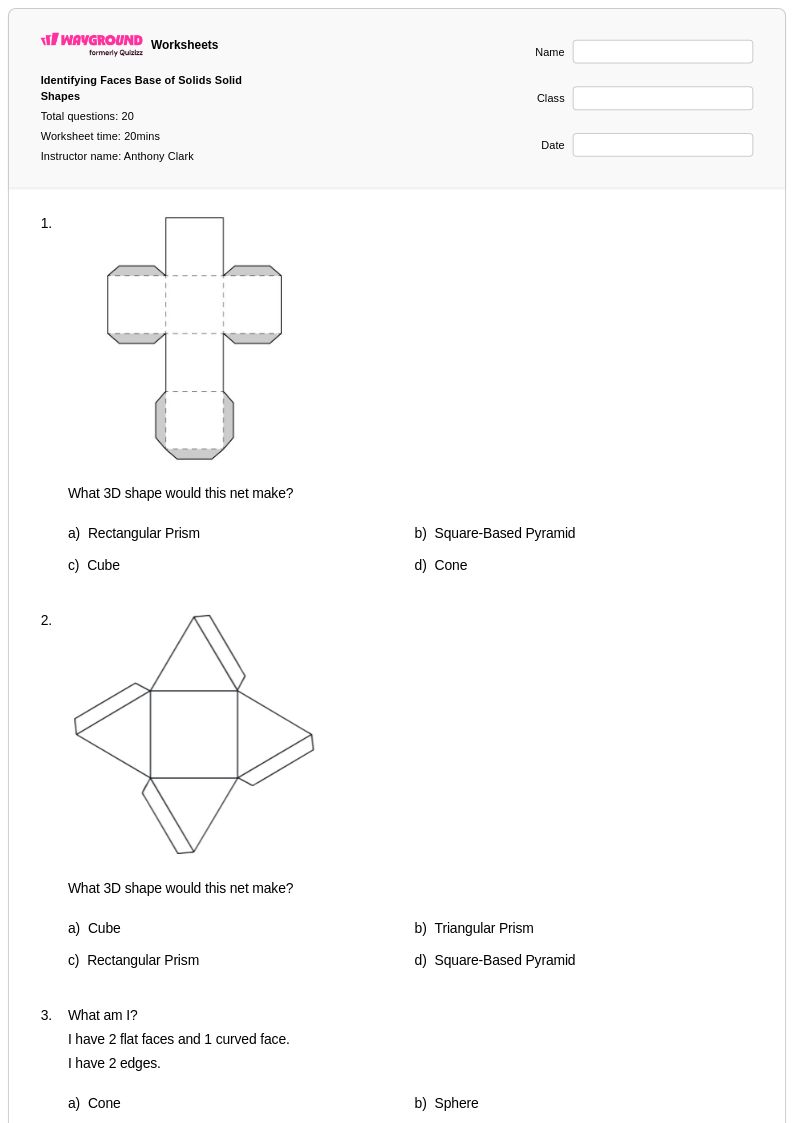
20 Q
2nd - Uni
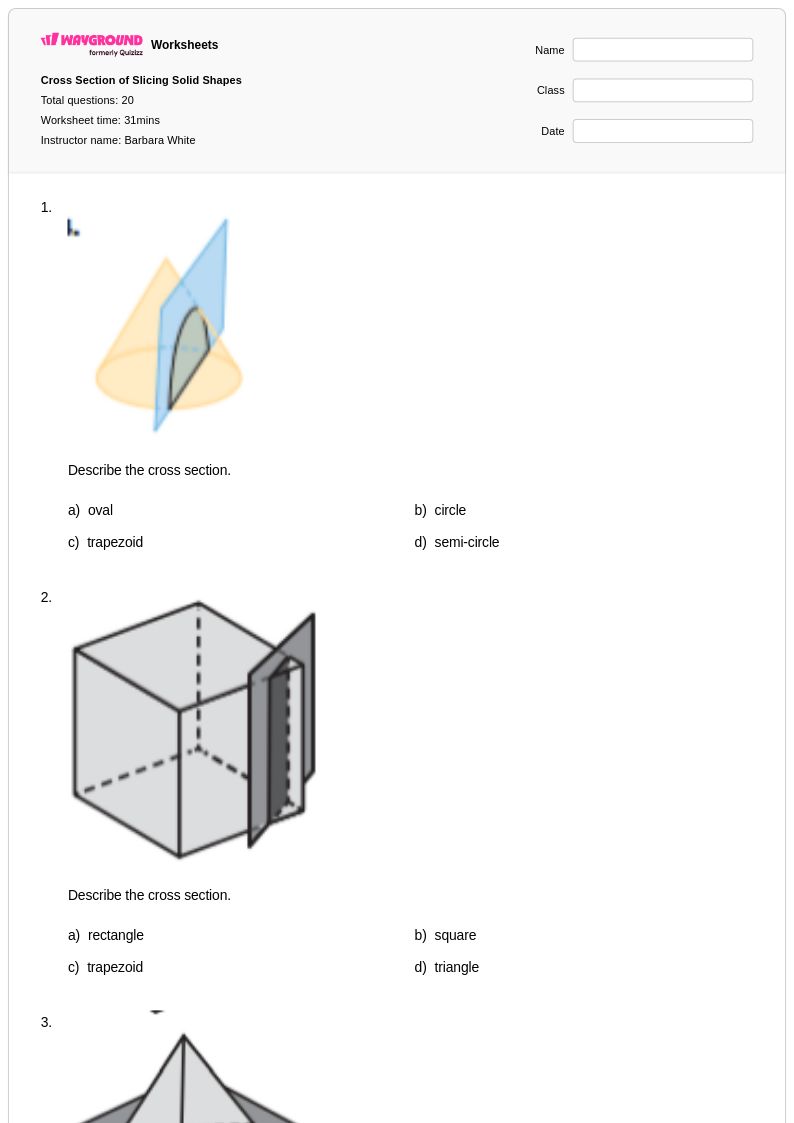
20 Q
8th - 10th
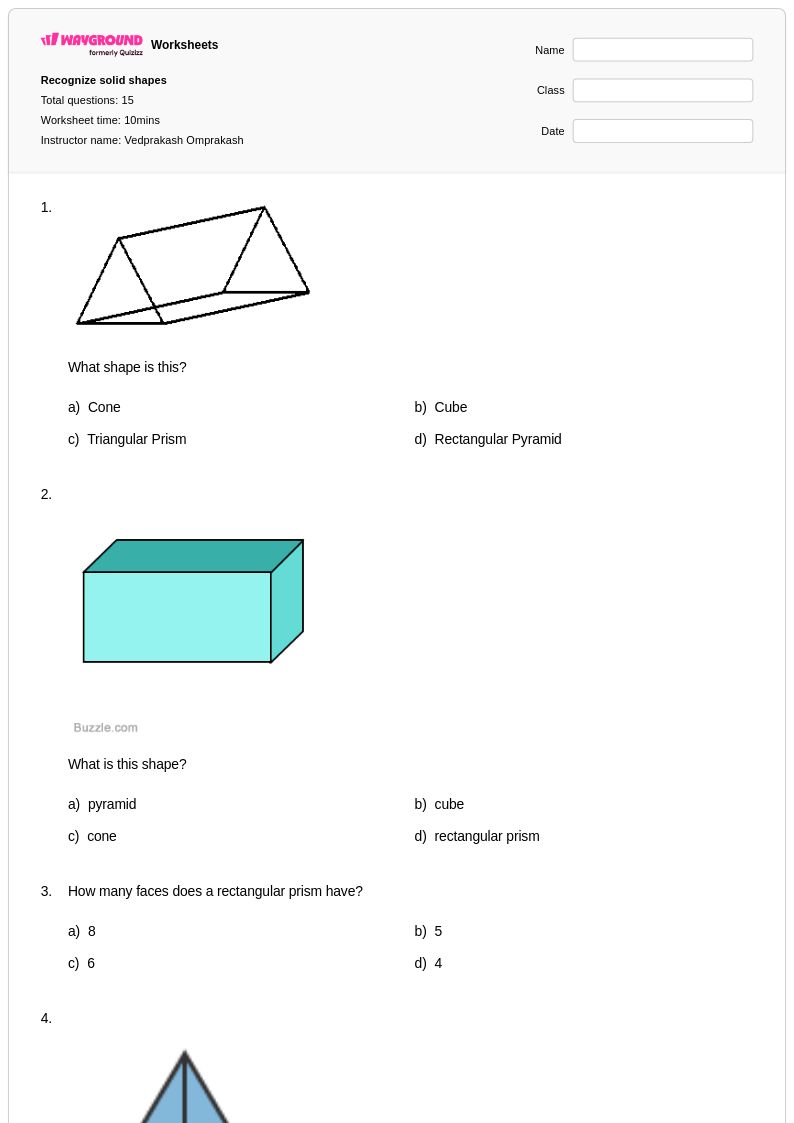
15 Q
7th
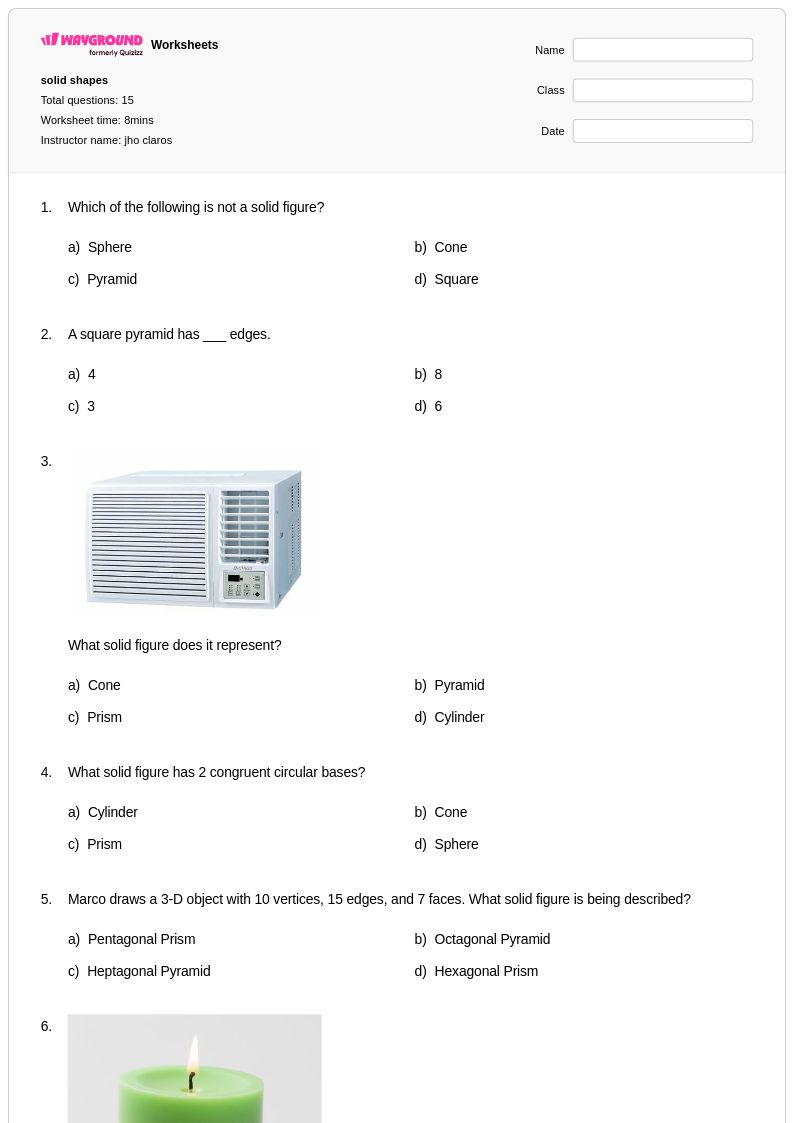
15 Q
6th
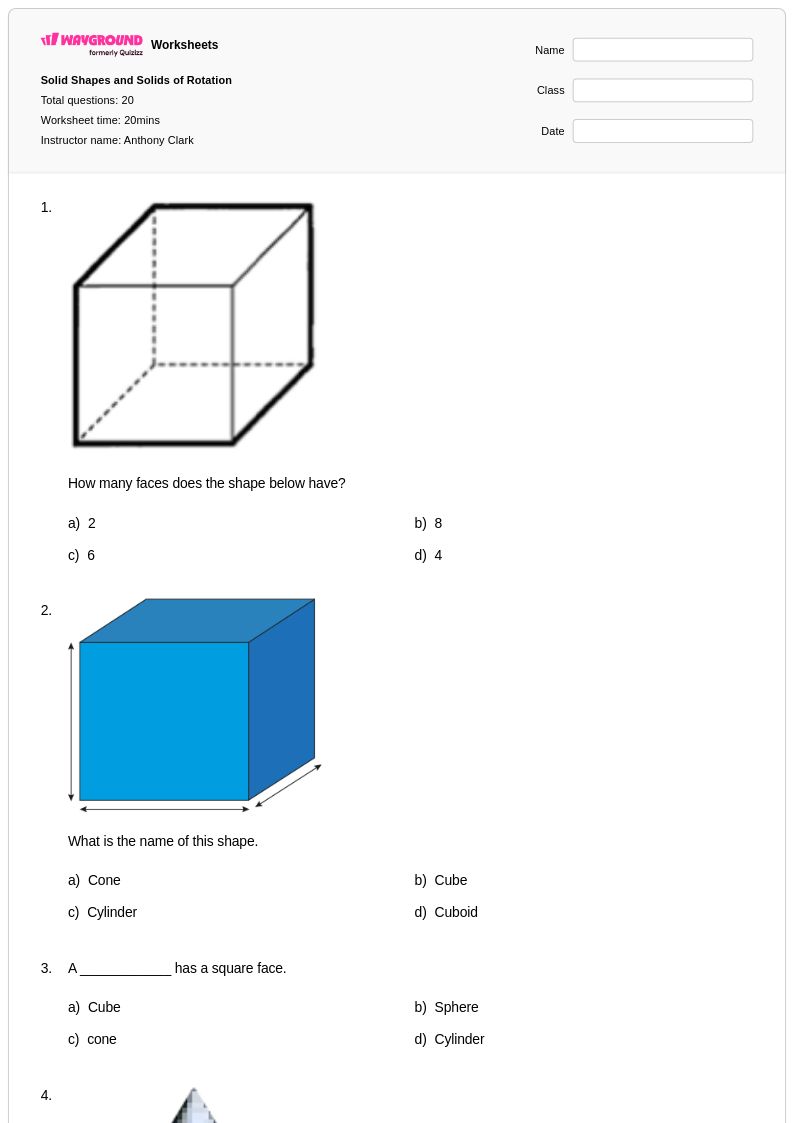
20 Q
2nd - Uni
Explore Other Subject Worksheets for kindergarten
Explore printable Solid Shapes worksheets for Kindergarten
Solid shapes worksheets for kindergarten from Wayground (formerly Quizizz) provide young learners with engaging, hands-on practice identifying and understanding three-dimensional geometric forms. These comprehensive printables strengthen foundational spatial reasoning skills by helping children recognize cubes, spheres, cylinders, cones, and rectangular prisms in both isolated examples and real-world contexts. Each worksheet collection includes structured practice problems that progress from basic shape recognition to more complex sorting and classification activities, with complete answer keys provided to support both independent learning and guided instruction. The free pdf resources emphasize visual learning through colorful illustrations and age-appropriate exercises that build essential geometric vocabulary while developing critical thinking skills necessary for future mathematical concepts.
Wayground's extensive library contains millions of teacher-created solid shapes resources specifically designed for kindergarten mathematics instruction, offering educators powerful search and filtering capabilities to locate materials that align with specific learning objectives and curriculum standards. The platform's differentiation tools enable teachers to customize worksheets for varying skill levels within their classrooms, ensuring that both struggling learners and advanced students receive appropriate challenges through targeted practice opportunities. These versatile materials are available in both printable and digital formats, including downloadable pdf versions that facilitate seamless integration into lesson planning, homework assignments, remediation sessions, and enrichment activities. The comprehensive collection supports diverse teaching approaches while providing consistent, high-quality resources that help educators deliver effective geometry instruction tailored to kindergarten developmental needs.
FAQs
How do I teach solid shapes in kindergarten?
What activities help kindergarten students practice solid shapes?
What solid-shape mistakes are common in kindergarten?
How can I use a kindergarten solid shapes worksheet from Wayground?
How does kindergarten solid-shape work align with Common Core?
How can I support kindergarten students who struggle with solid-shape vocabulary?
What solid shapes should kindergarten students know?