
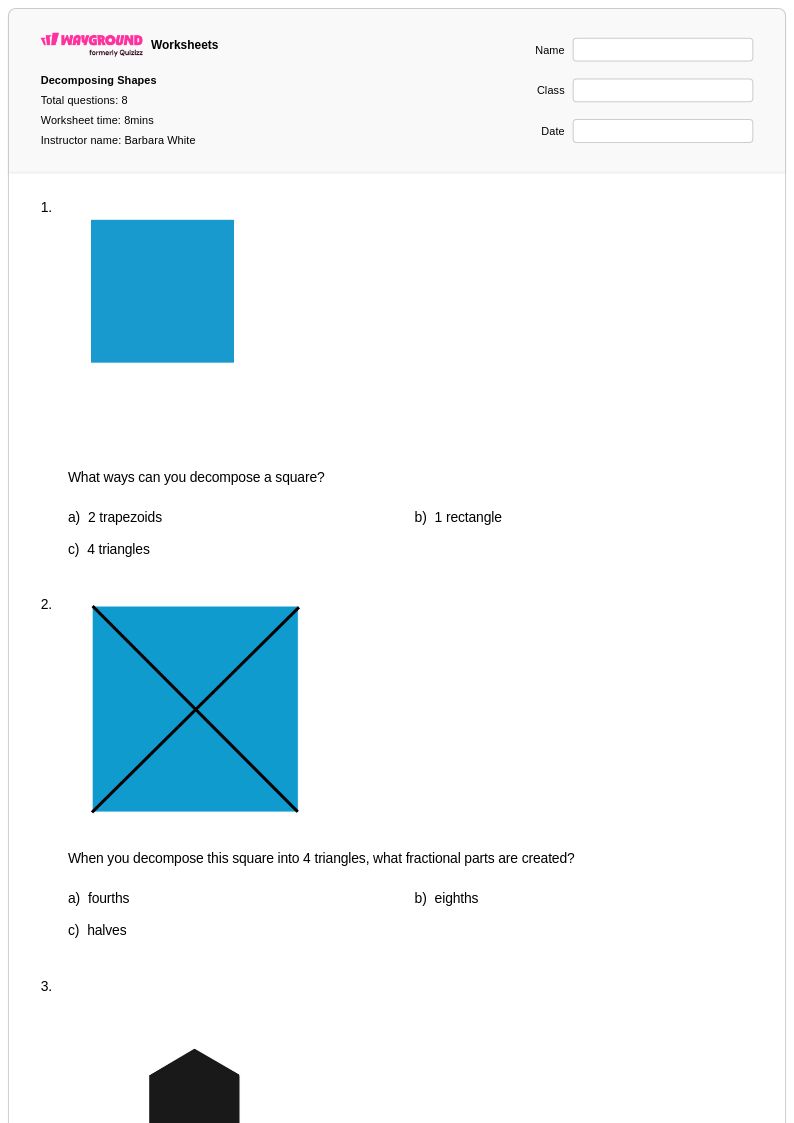
8 Q
2nd - 3rd
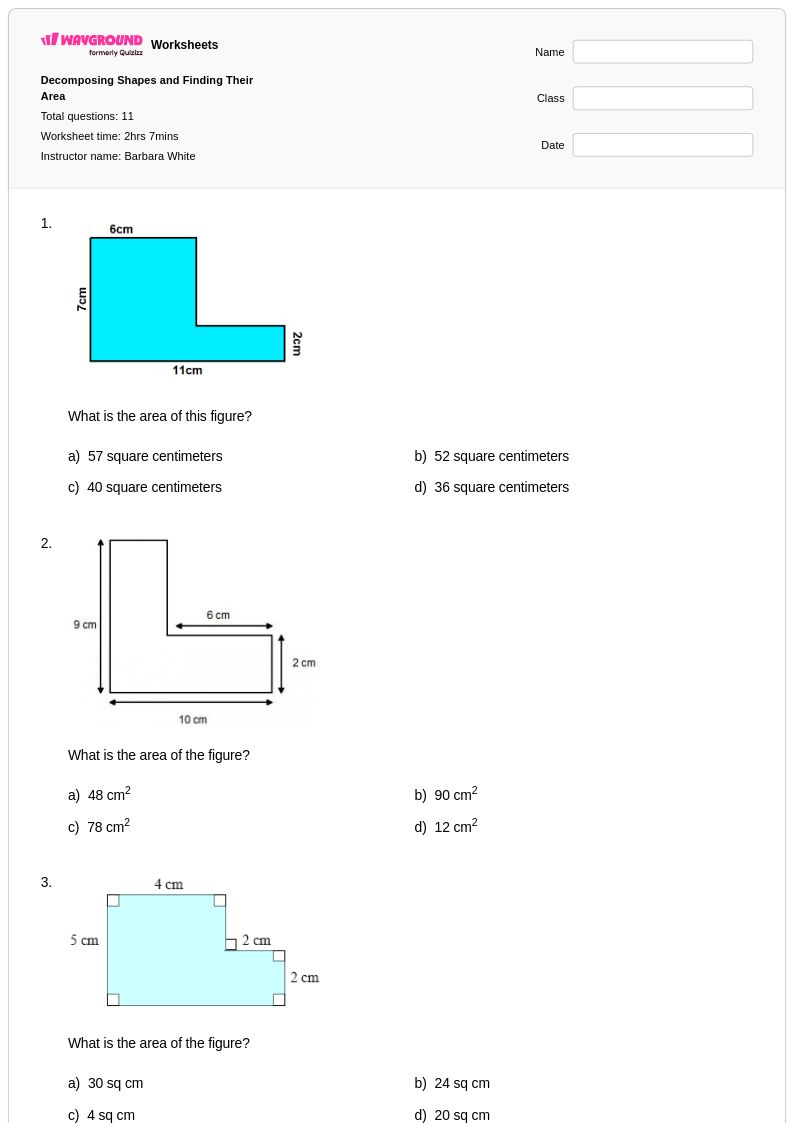
11 Q
4th
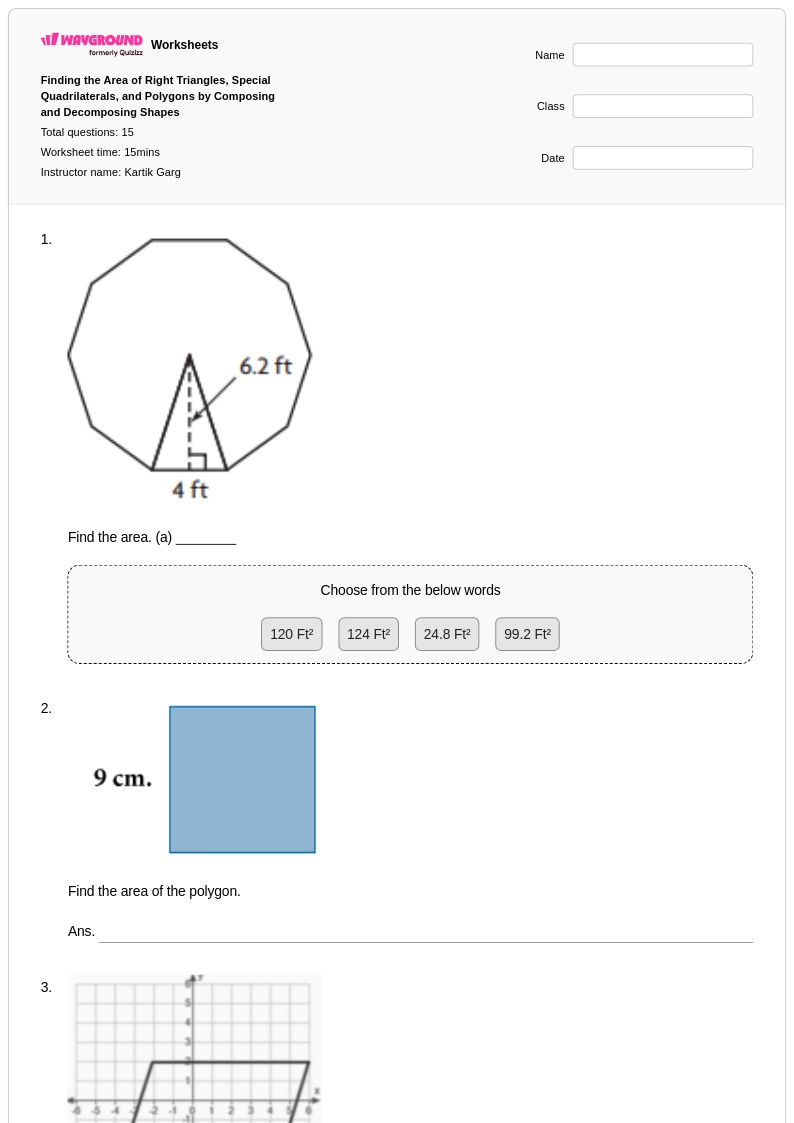
15 Q
6th
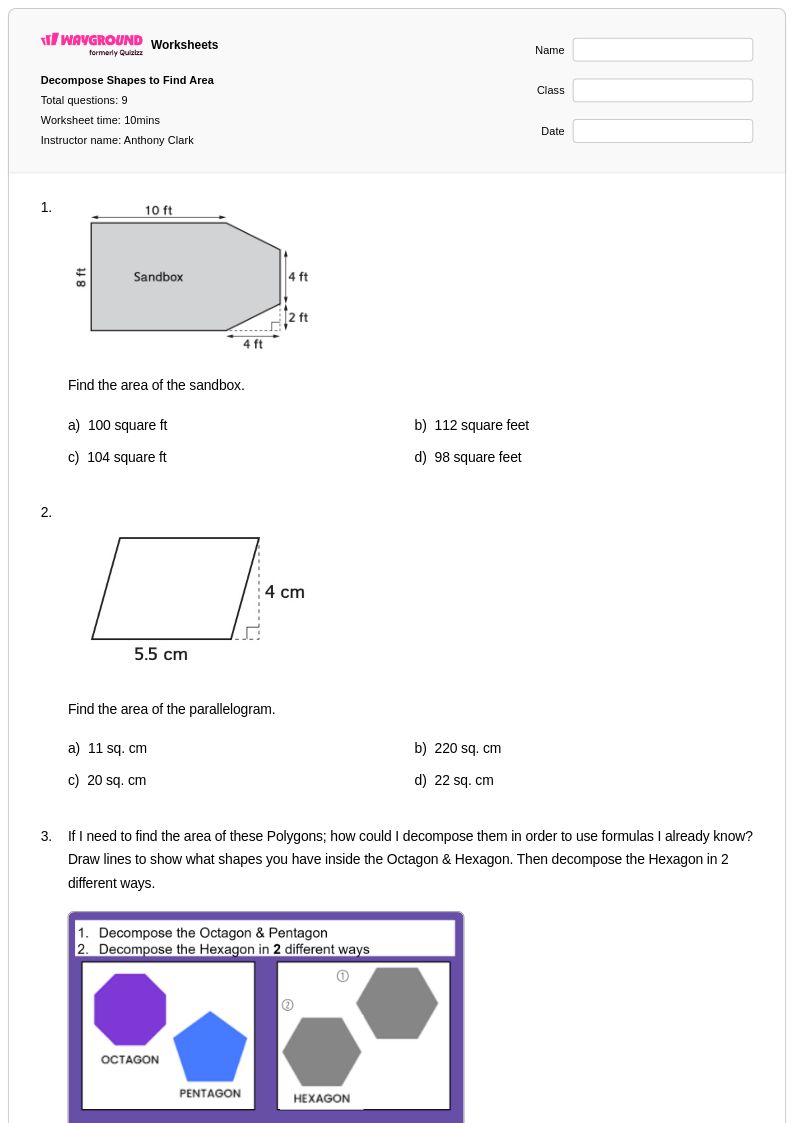
10 Q
6th - Uni
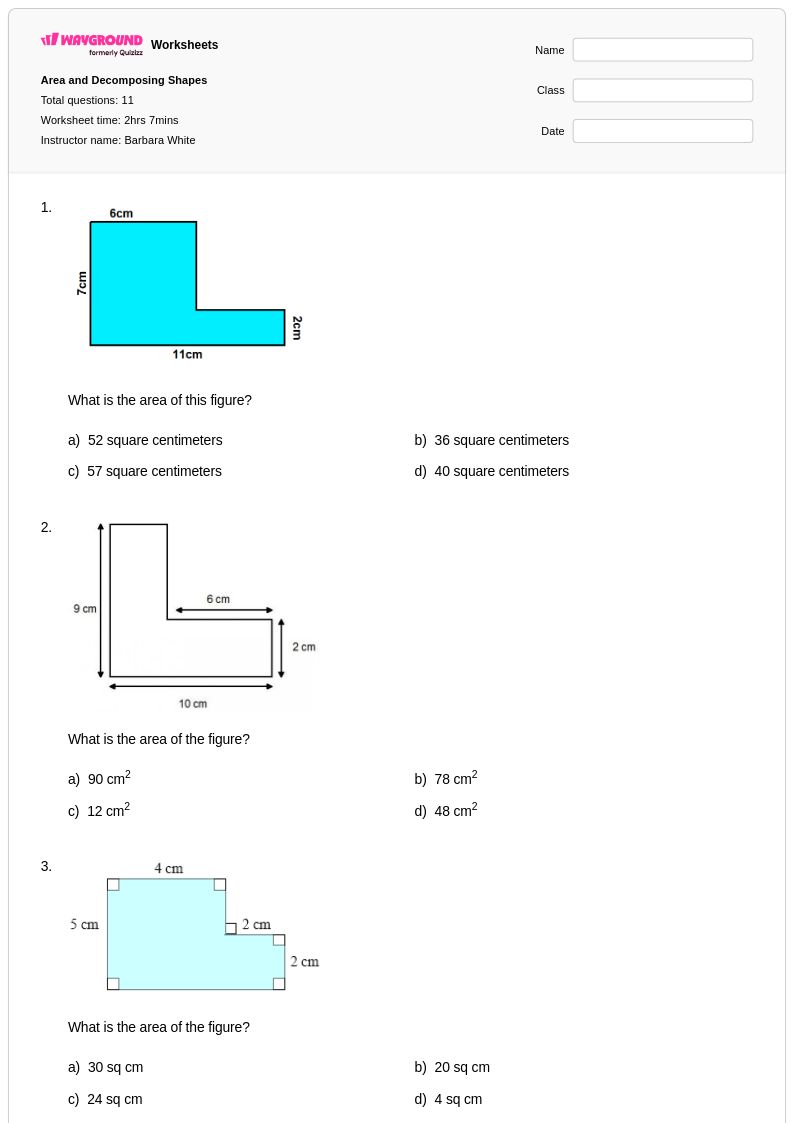
11 Q
4th
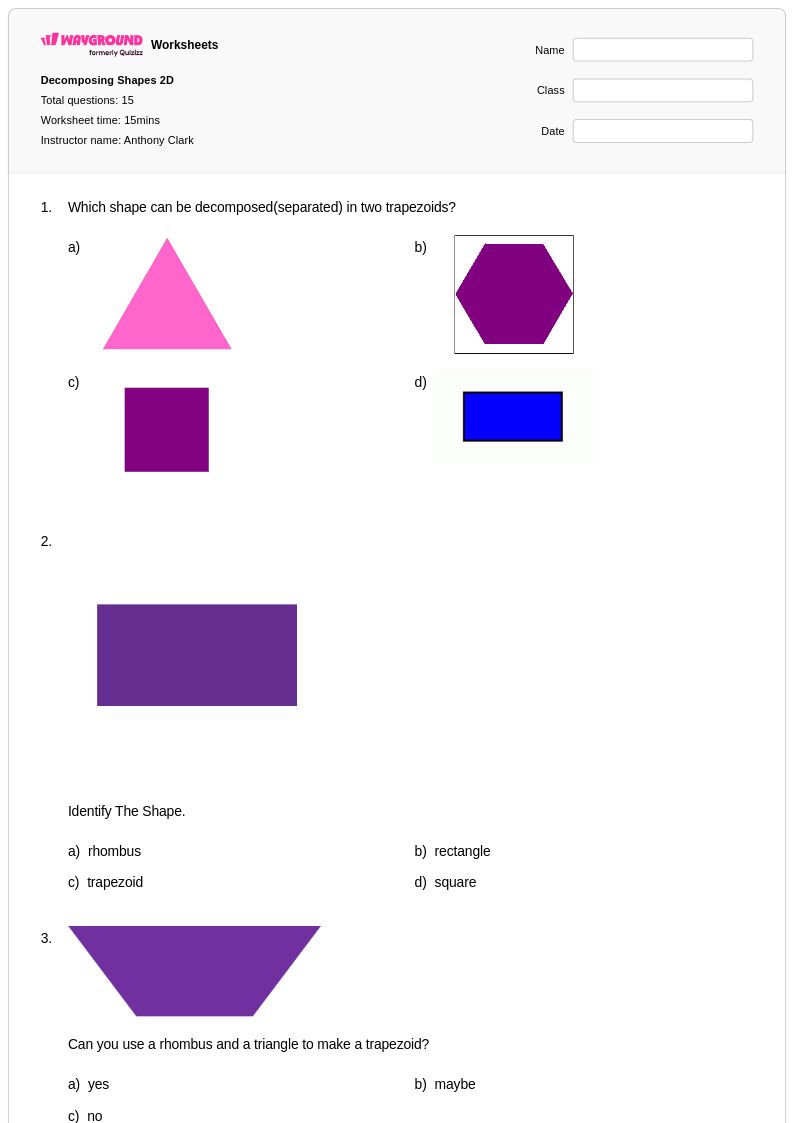
15 Q
2nd - Uni
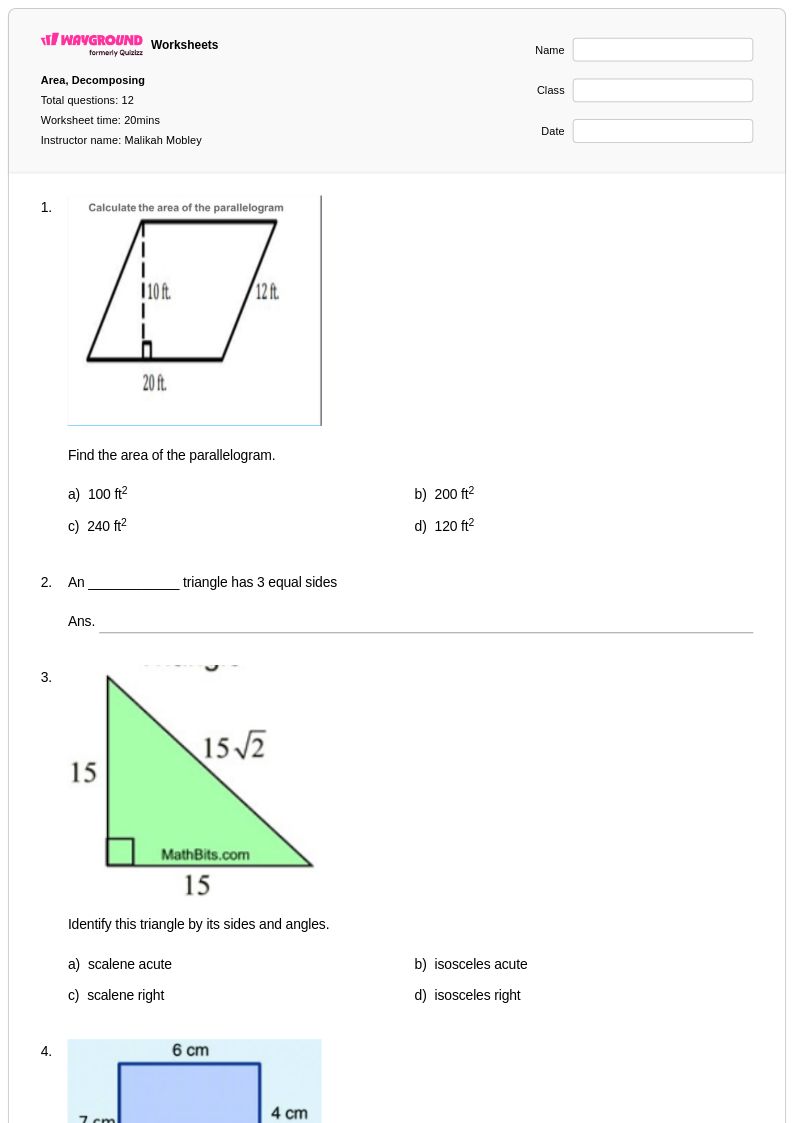
12 Q
6th
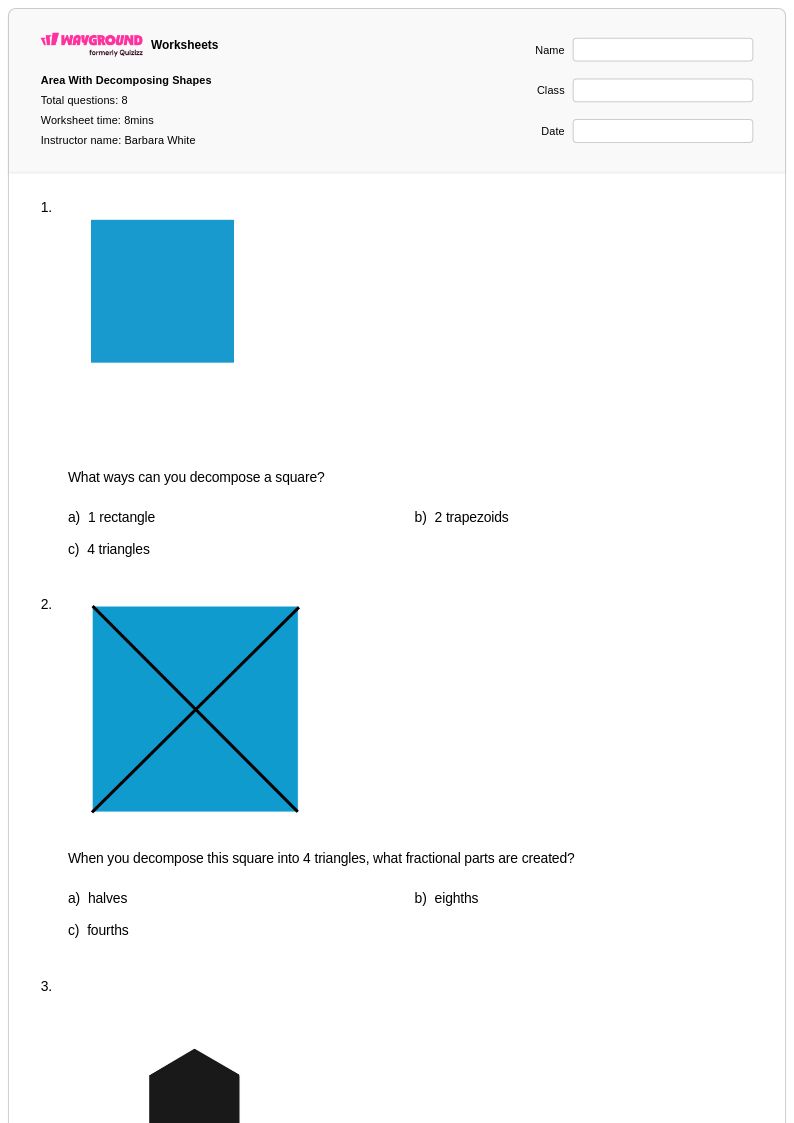
8 Q
2nd - 3rd
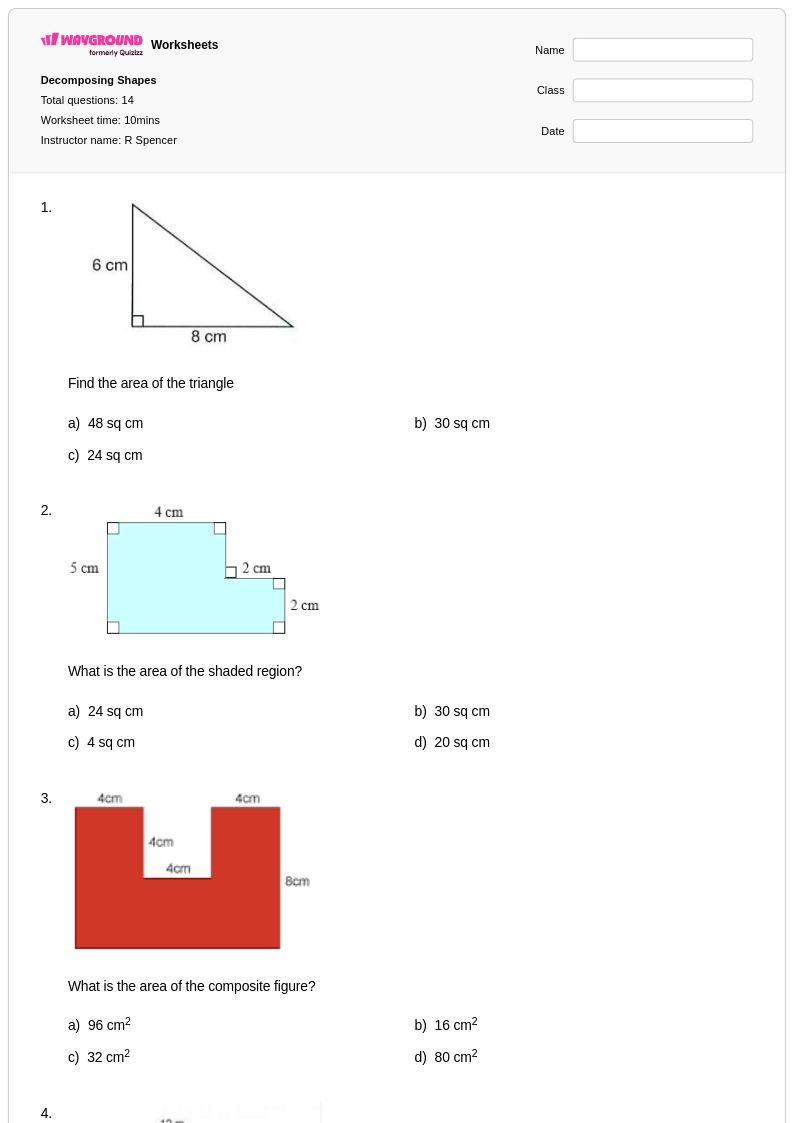
14 Q
6th - 7th
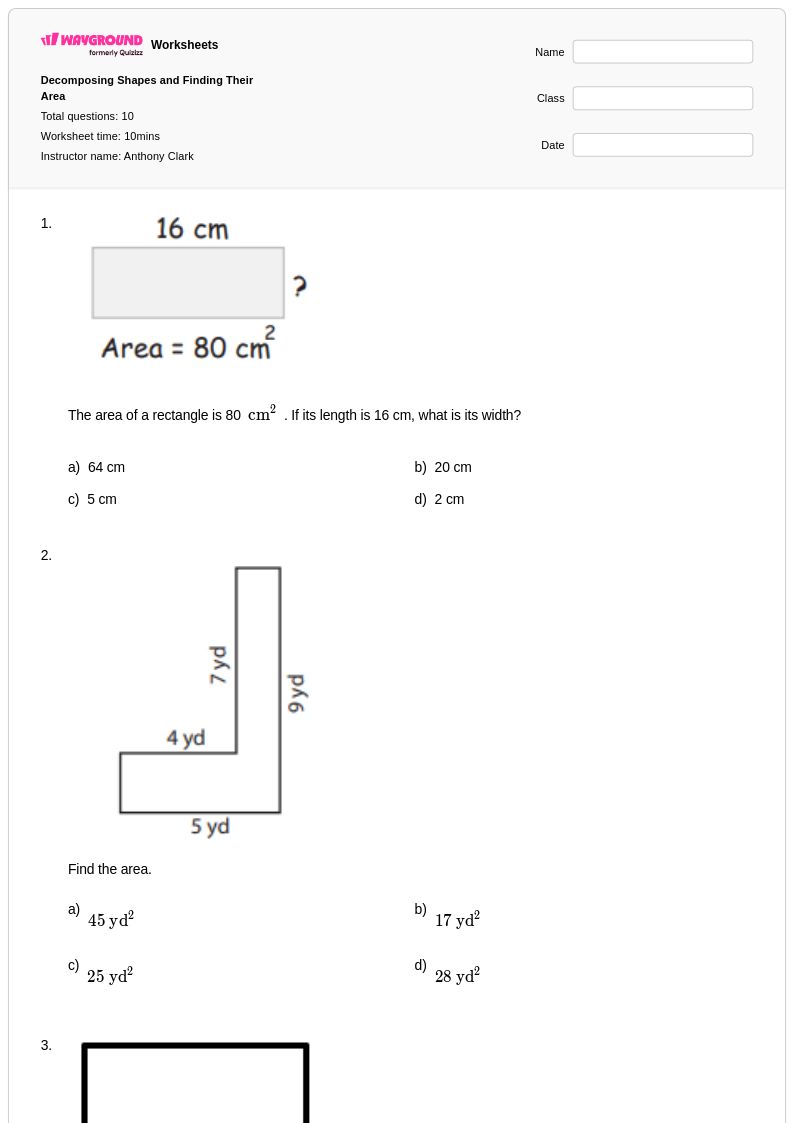
10 Q
6th - Uni
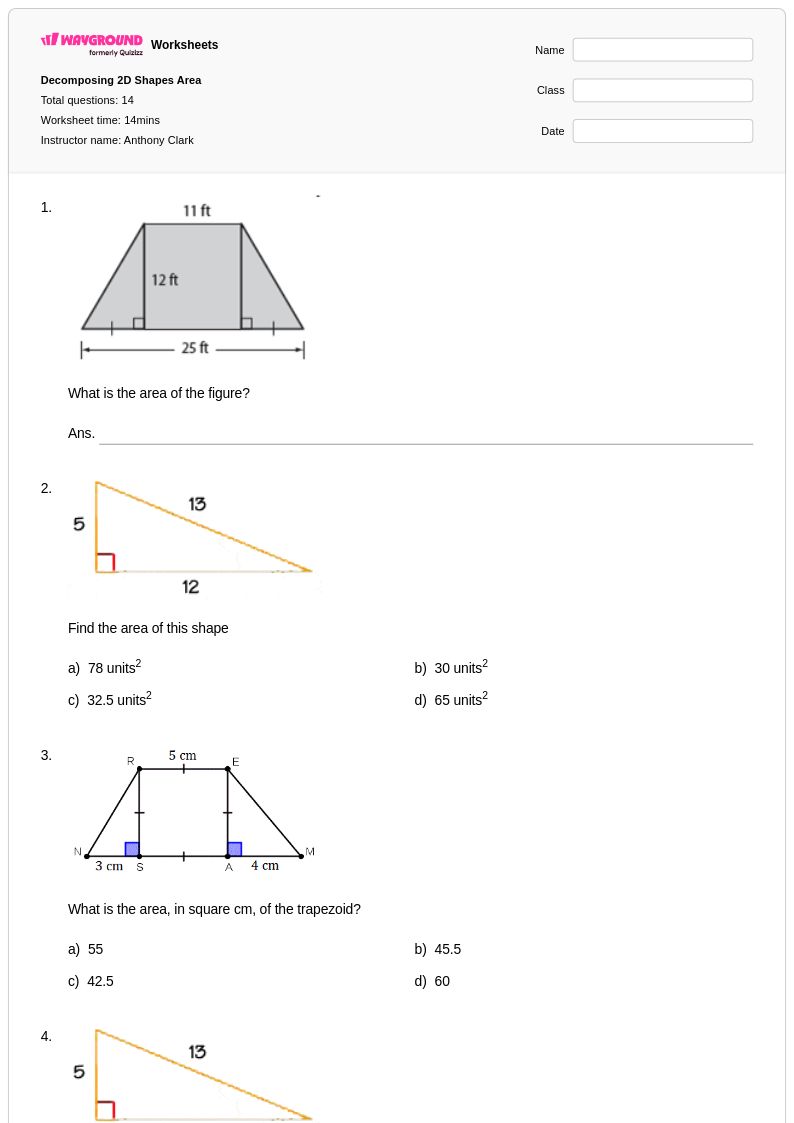
14 Q
6th - Uni
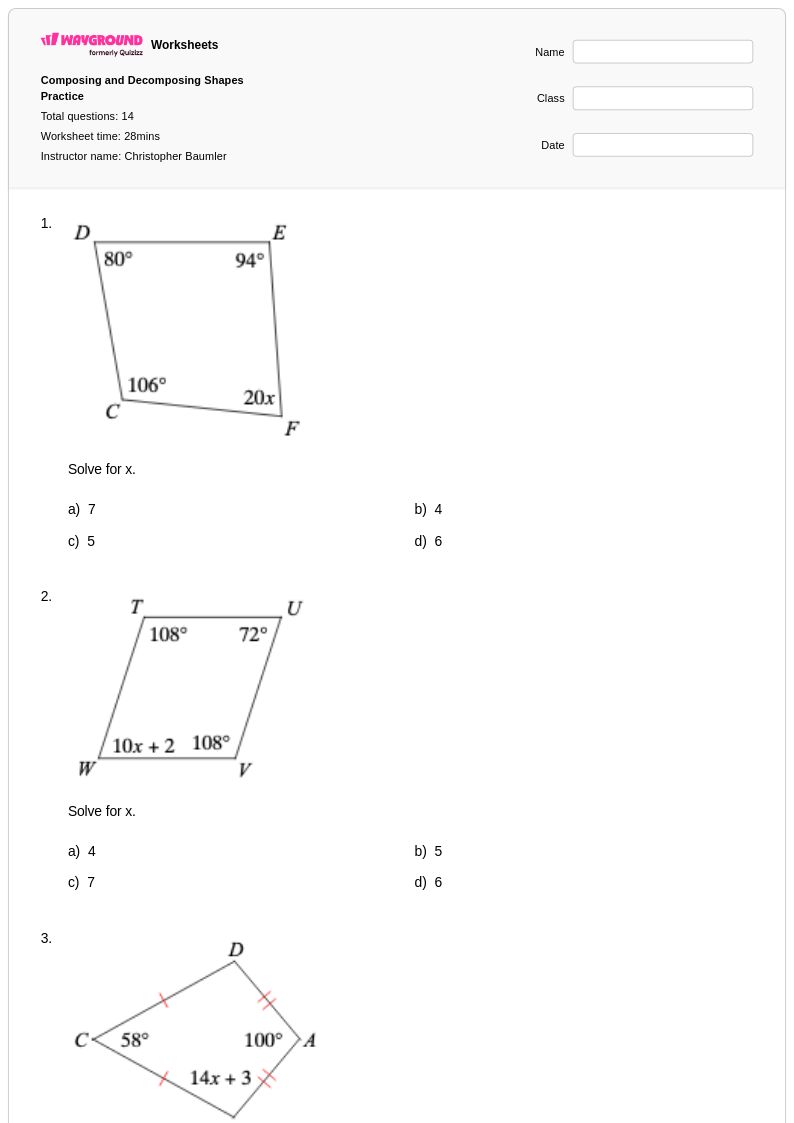
14 Q
9th
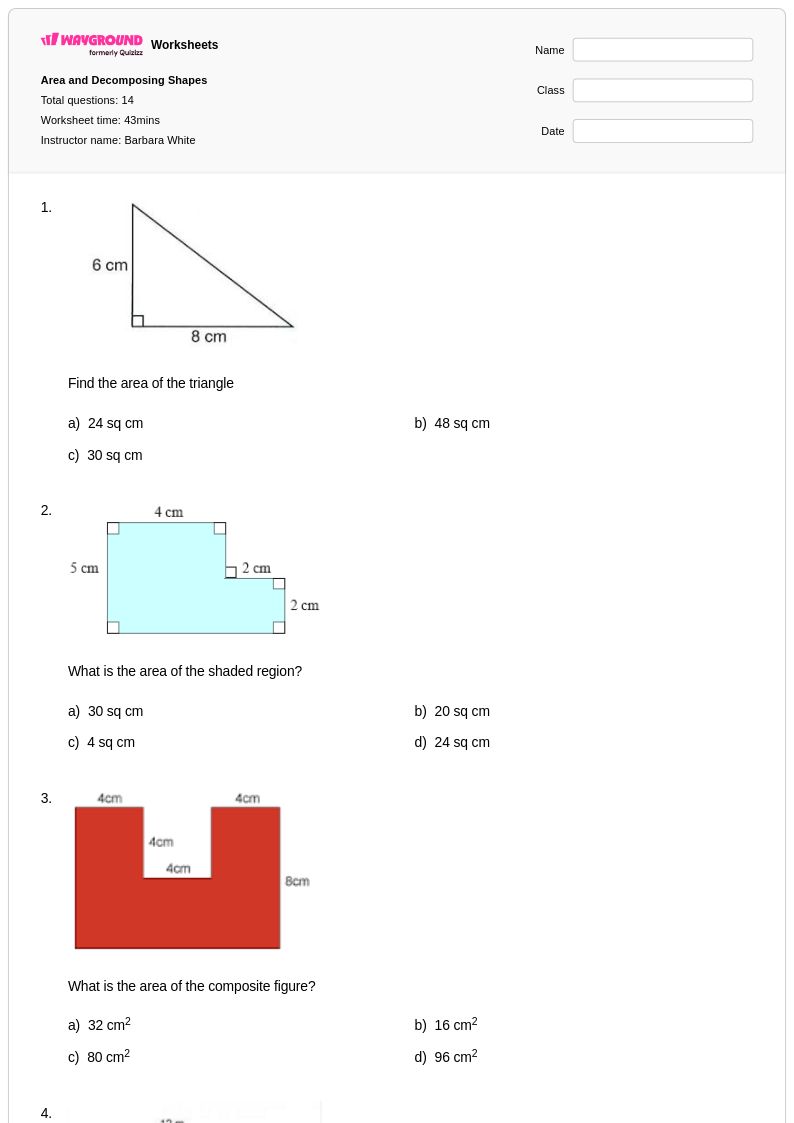
14 Q
6th - 7th
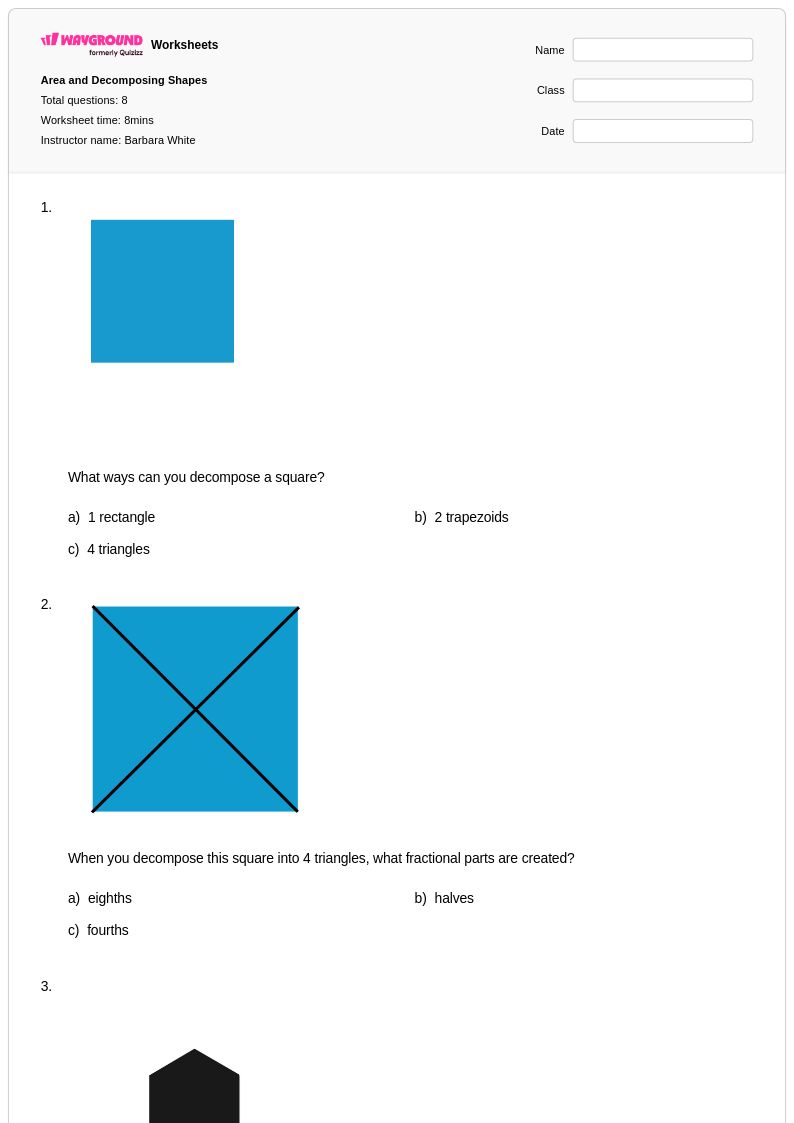
8 Q
2nd - 3rd
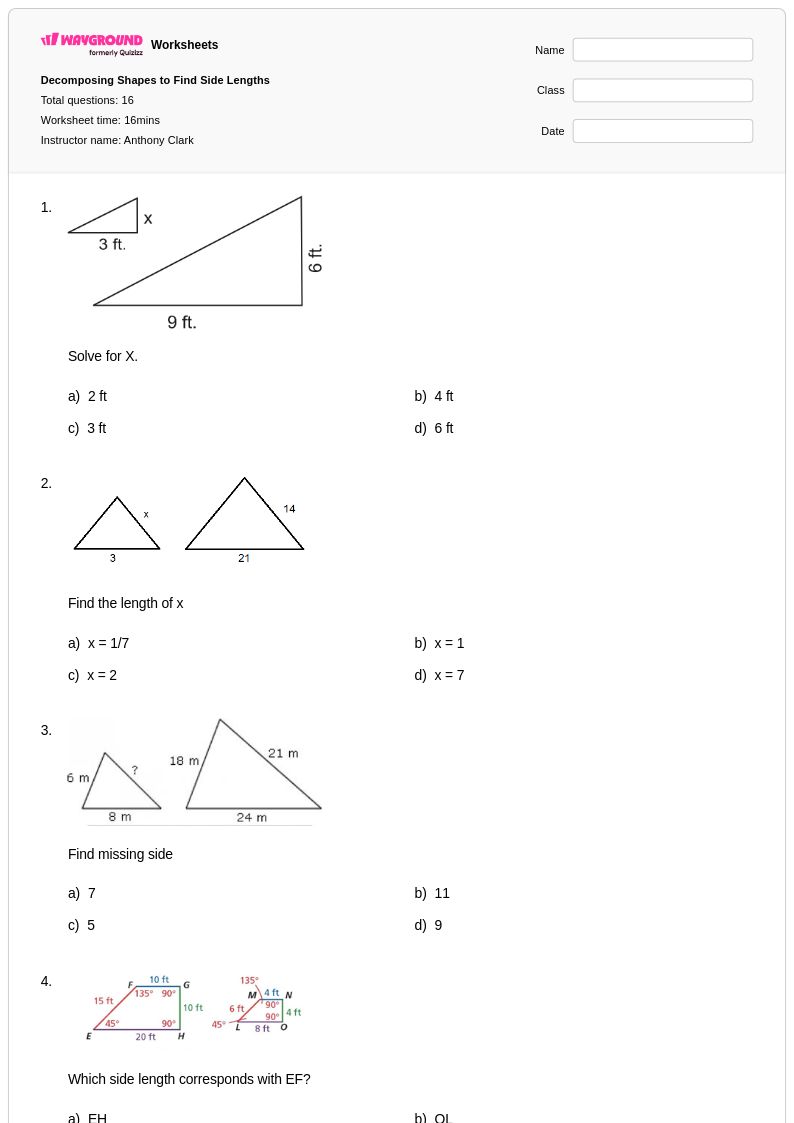
16 Q
9th - Uni
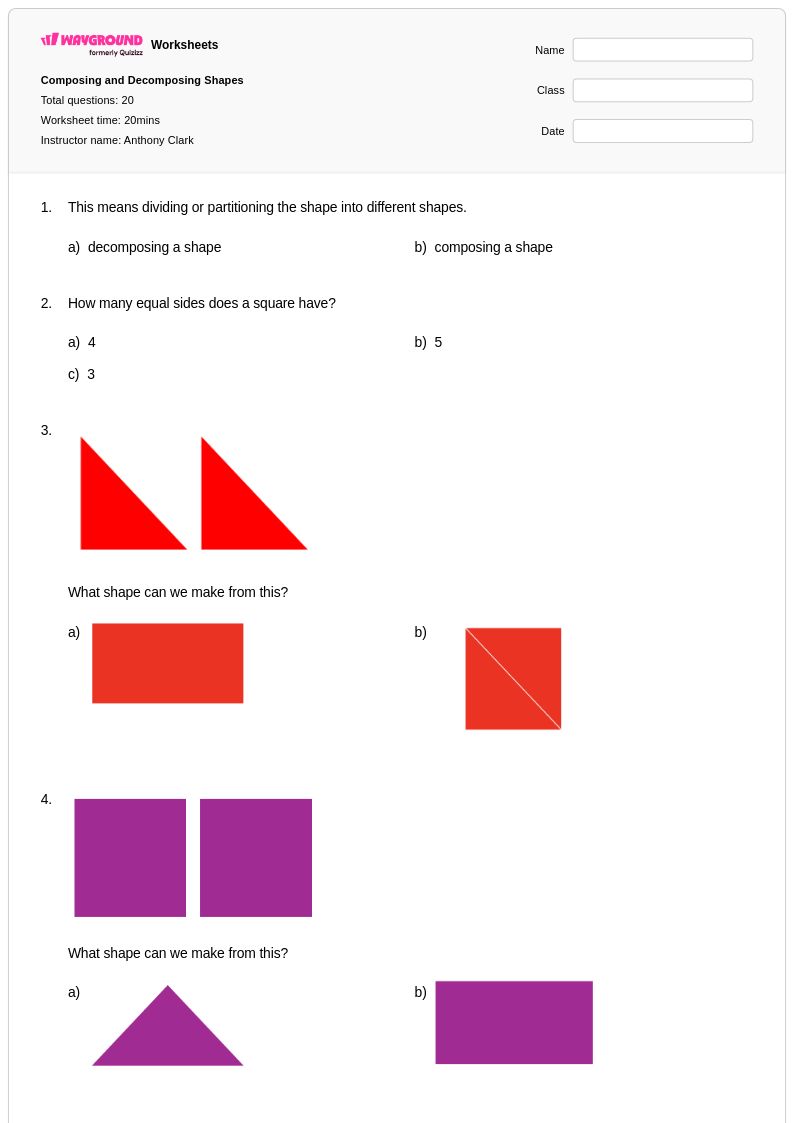
20 Q
1st - Uni
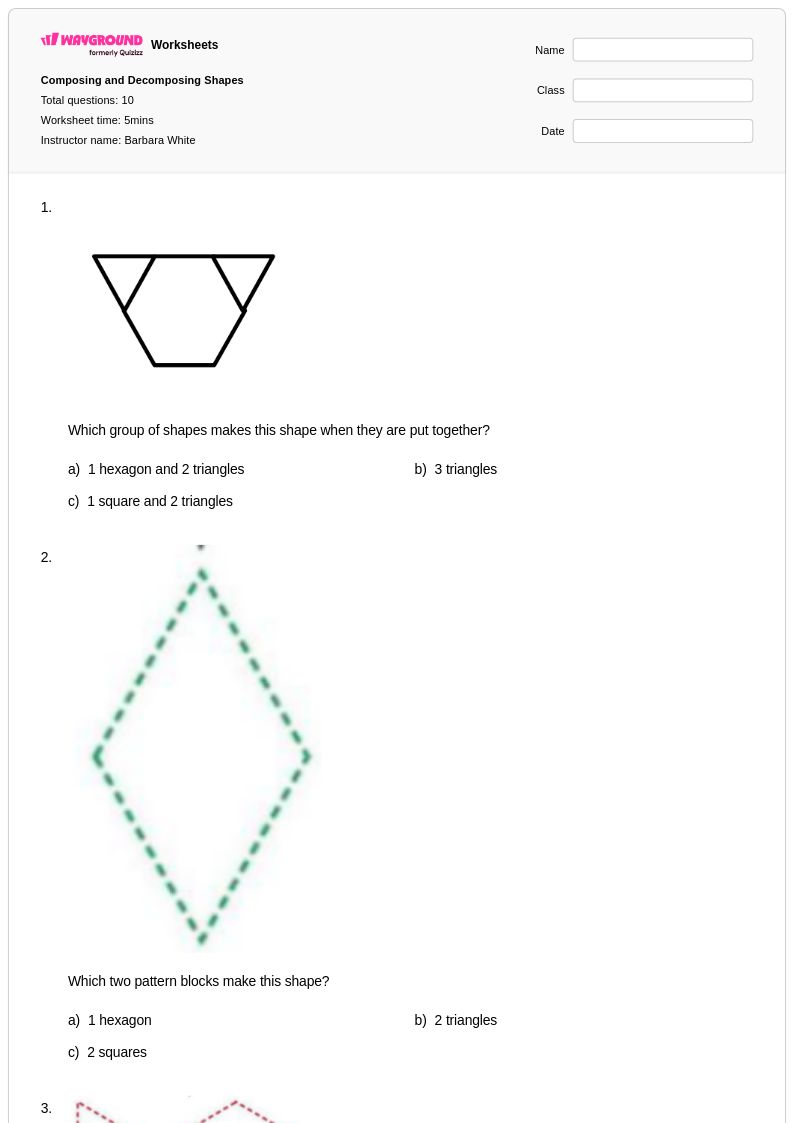
10 Q
1st
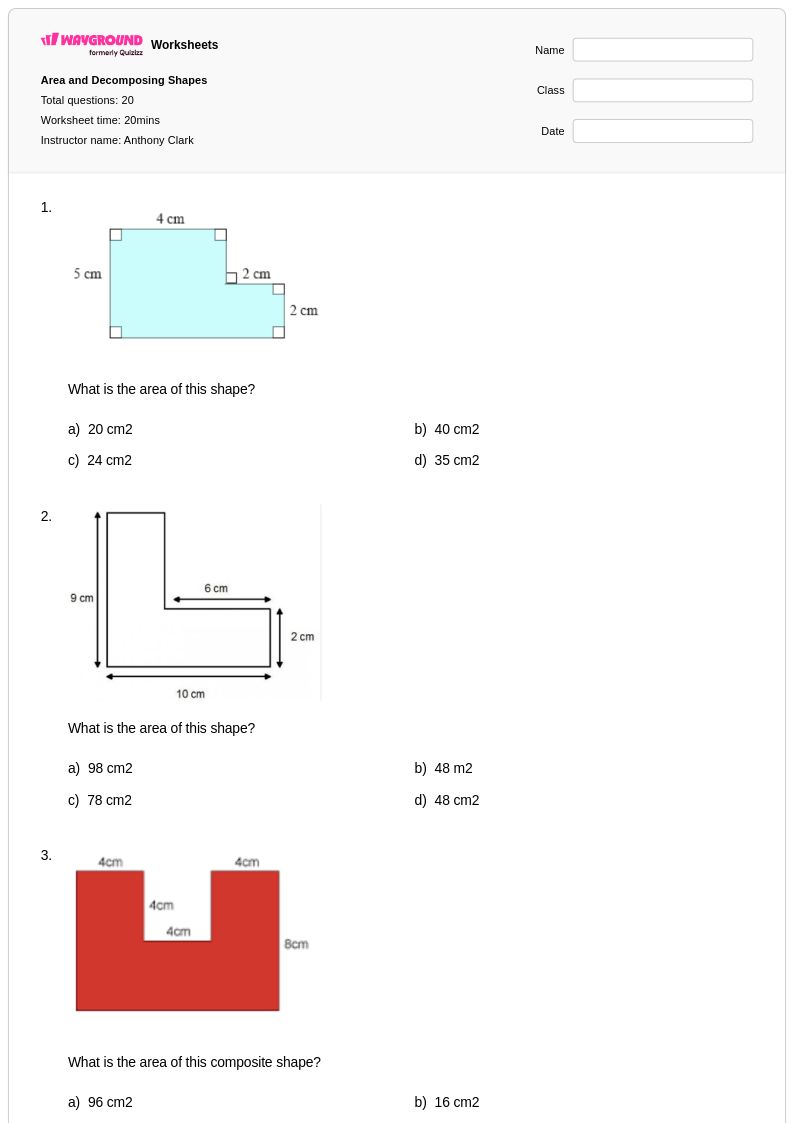
20 Q
8th - Uni
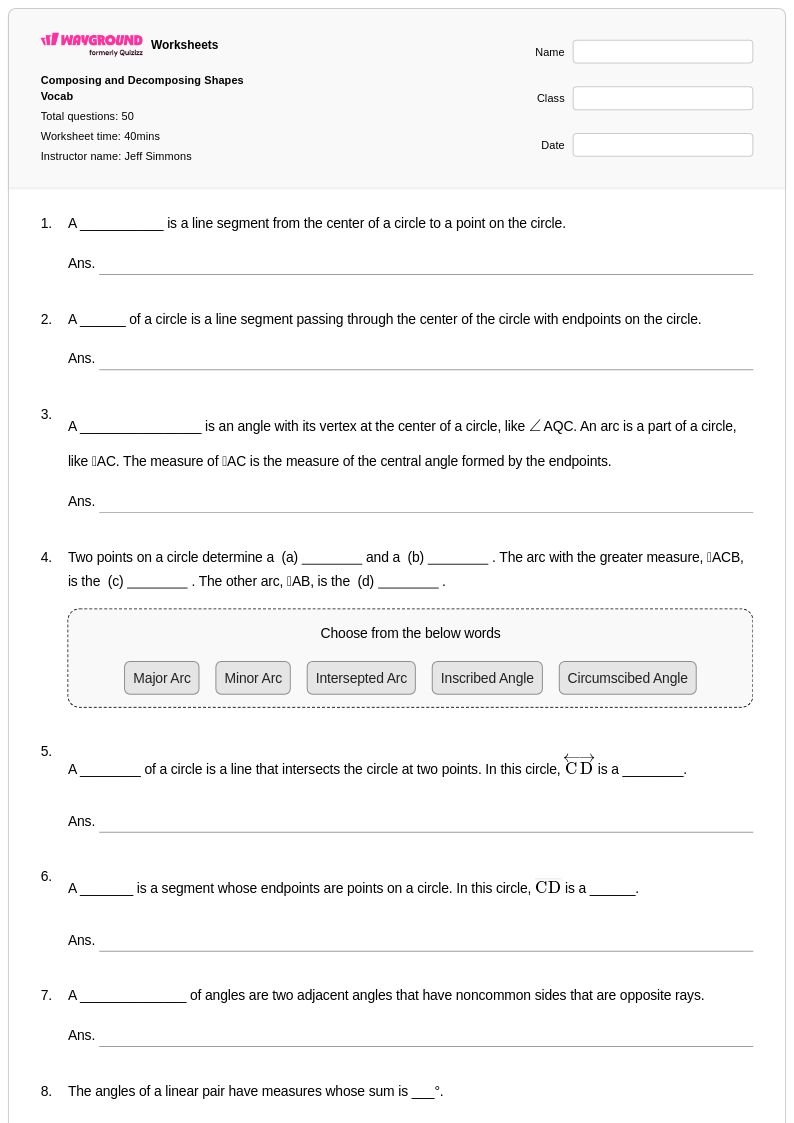
50 Q
9th - 12th
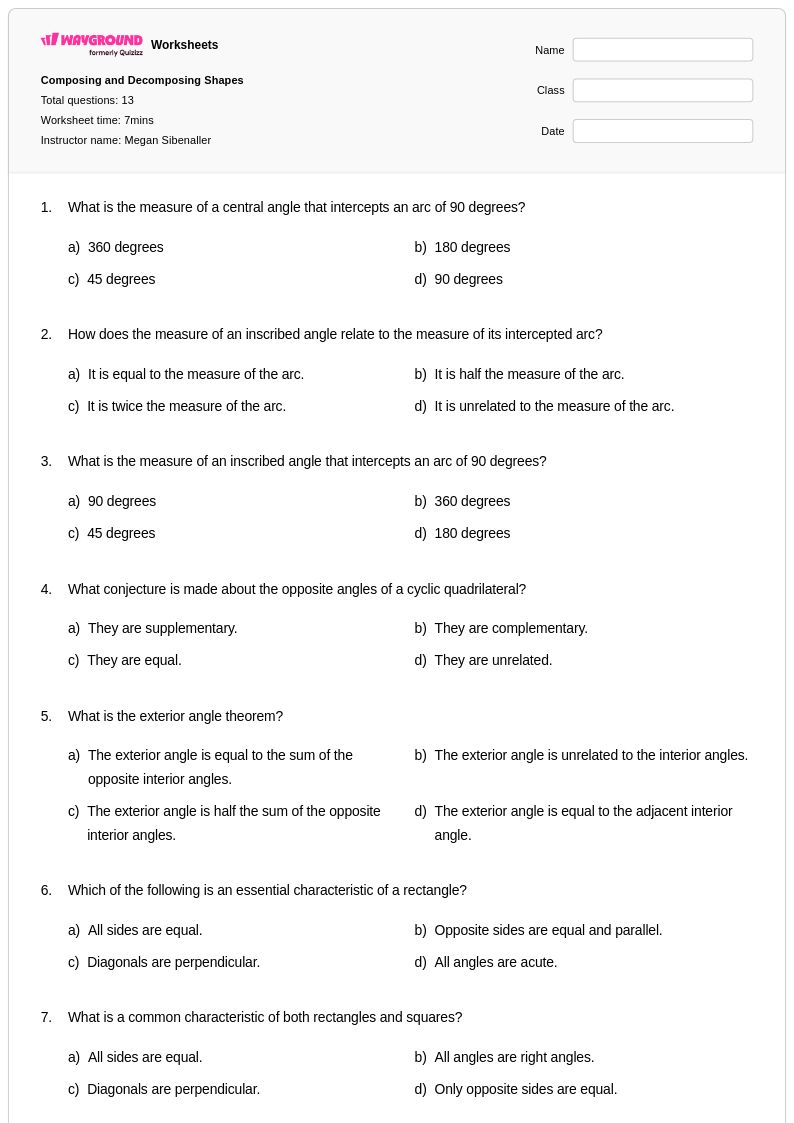
13 Q
9th - 12th
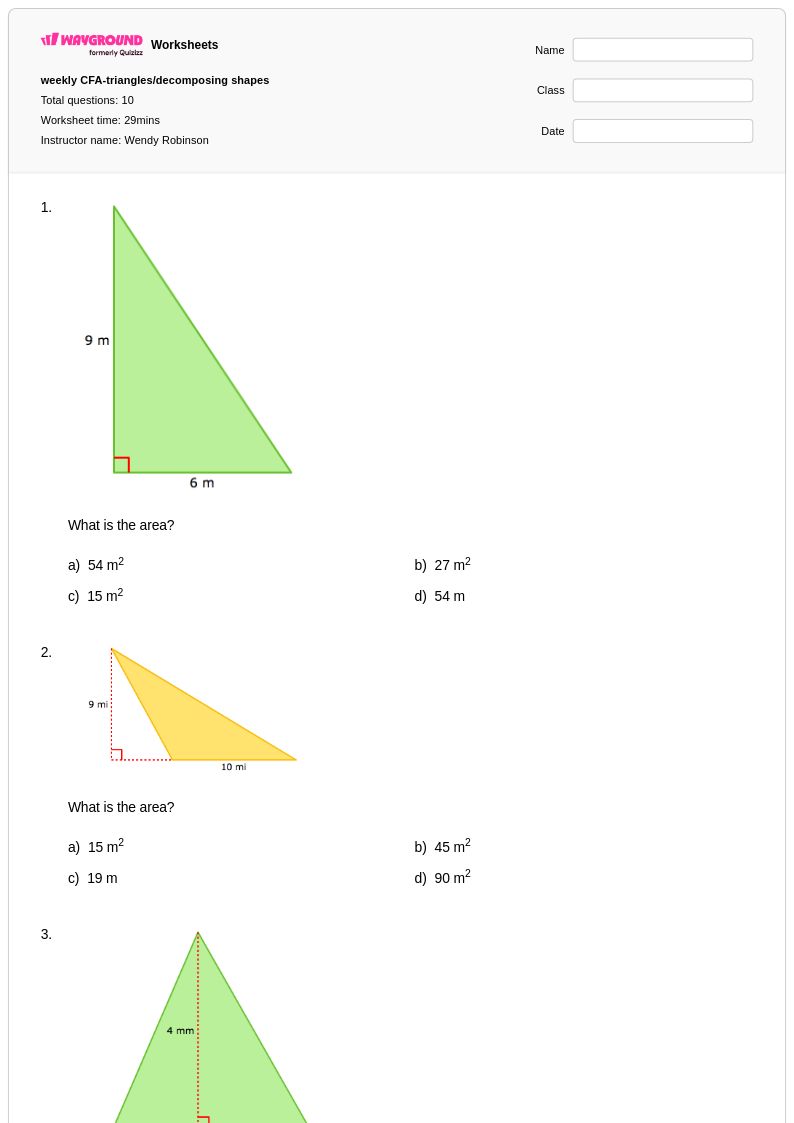
10 Q
5th - 6th
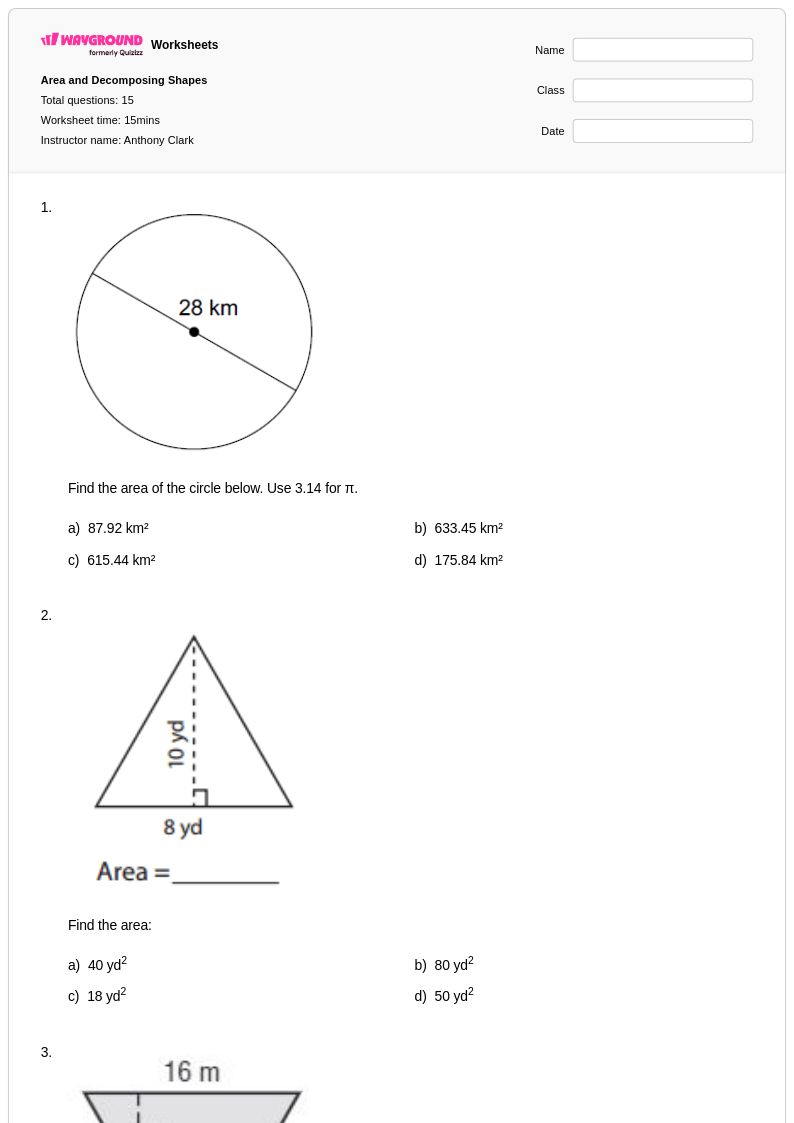
15 Q
8th - Uni
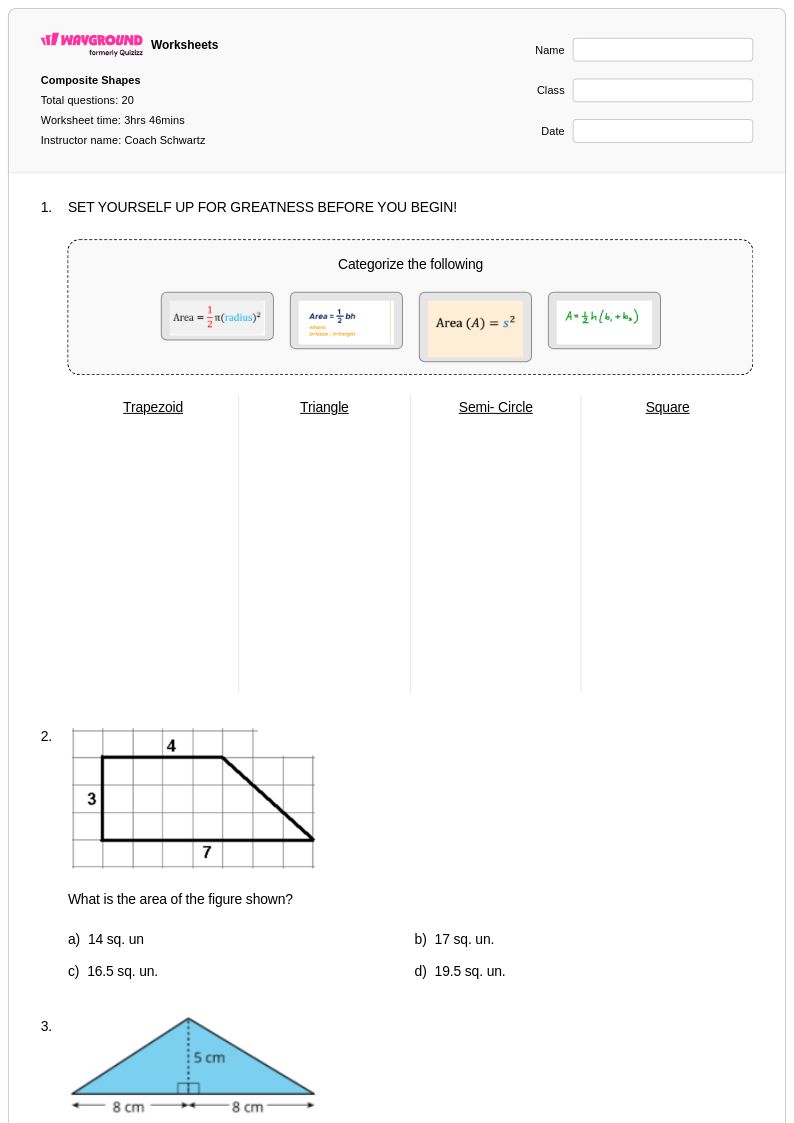
20 Q
7th
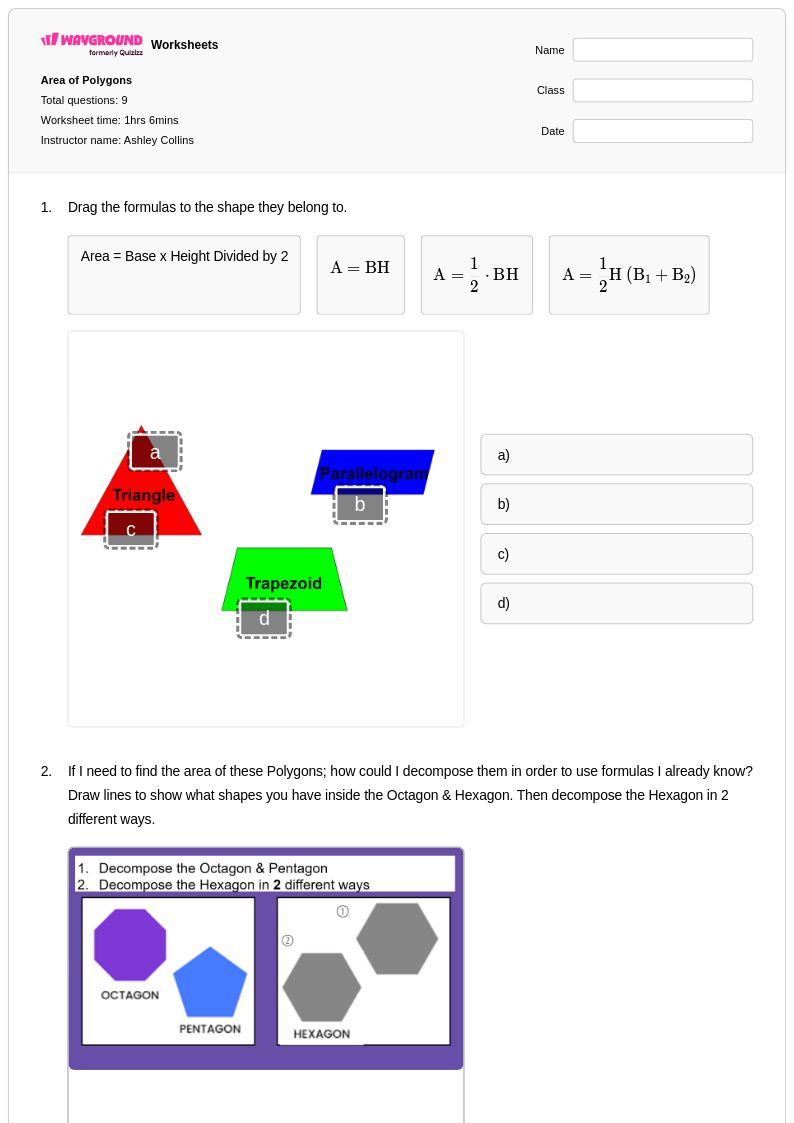
16 Q
6th
Explore Worksheets by Subjects
Explore printable Decomposing Shapes worksheets
Decomposing shapes worksheets available through Wayground (formerly Quizizz) provide students with essential practice in breaking down complex geometric figures into simpler, recognizable components. These comprehensive resources strengthen critical spatial reasoning skills by challenging learners to identify constituent parts within composite shapes, recognize how basic polygons combine to form more intricate designs, and understand the relationships between different geometric elements. Each worksheet collection includes detailed answer keys and offers both digital and printable pdf formats, ensuring accessibility for diverse classroom environments. The practice problems systematically guide students through the process of visual analysis, helping them develop the foundational skills necessary for advanced geometric concepts like area calculation, spatial visualization, and mathematical proof construction.
Wayground (formerly Quizizz) supports educators with an extensive library of millions of teacher-created decomposing shapes resources, featuring robust search and filtering capabilities that allow instructors to quickly locate materials aligned with specific learning standards and student needs. The platform's differentiation tools enable teachers to customize worksheets for various skill levels, making it simple to provide targeted remediation for struggling learners while offering enrichment opportunities for advanced students. These flexible resources are available in both printable and digital formats, including downloadable pdf versions, allowing seamless integration into lesson planning regardless of classroom technology availability. Teachers can efficiently address diverse learning objectives through carefully curated practice sets that support skill development, assessment preparation, and conceptual understanding of how geometric shapes relate to one another within complex figures.
FAQs
How do I teach students to decompose composite shapes?
What exercises help students practice decomposing shapes?
What mistakes do students commonly make when decomposing shapes?
How can I use a decomposing shapes worksheet from Wayground?
How does decomposing shapes fit into the Common Core math progression?
How can I differentiate decomposing shapes practice for mixed-ability students?