Free Printable DNA Transcription and Translation worksheets
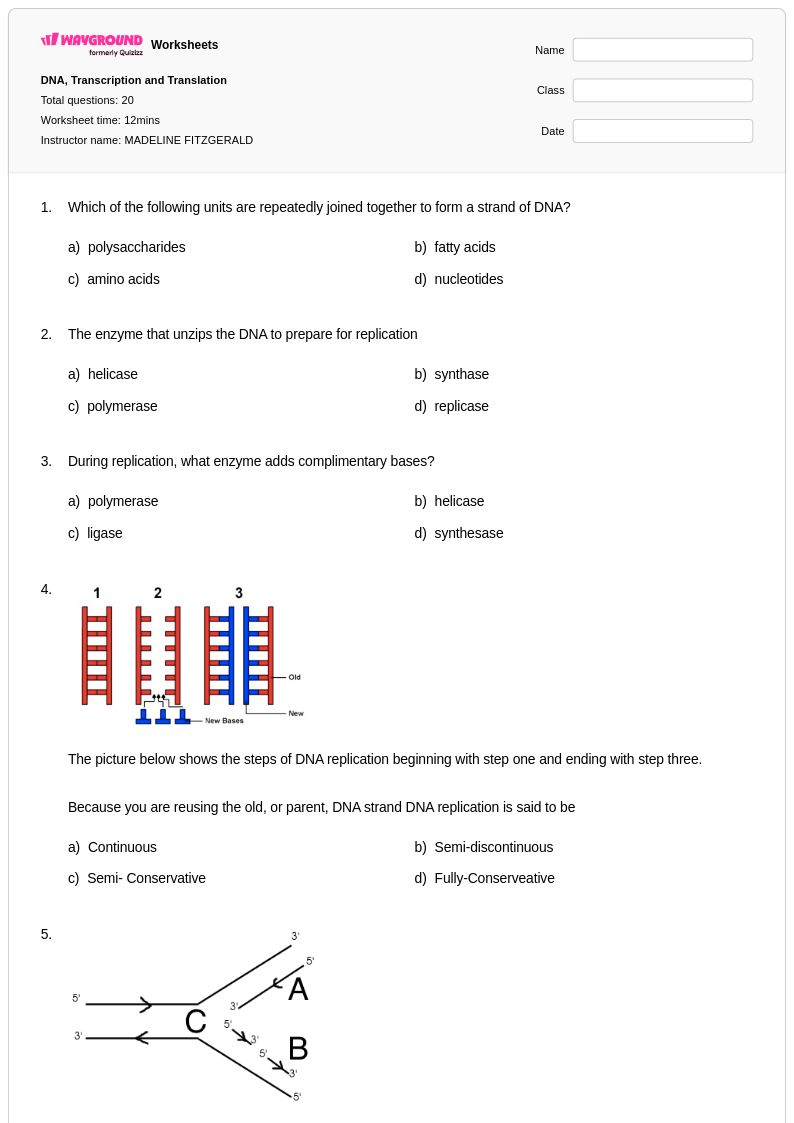
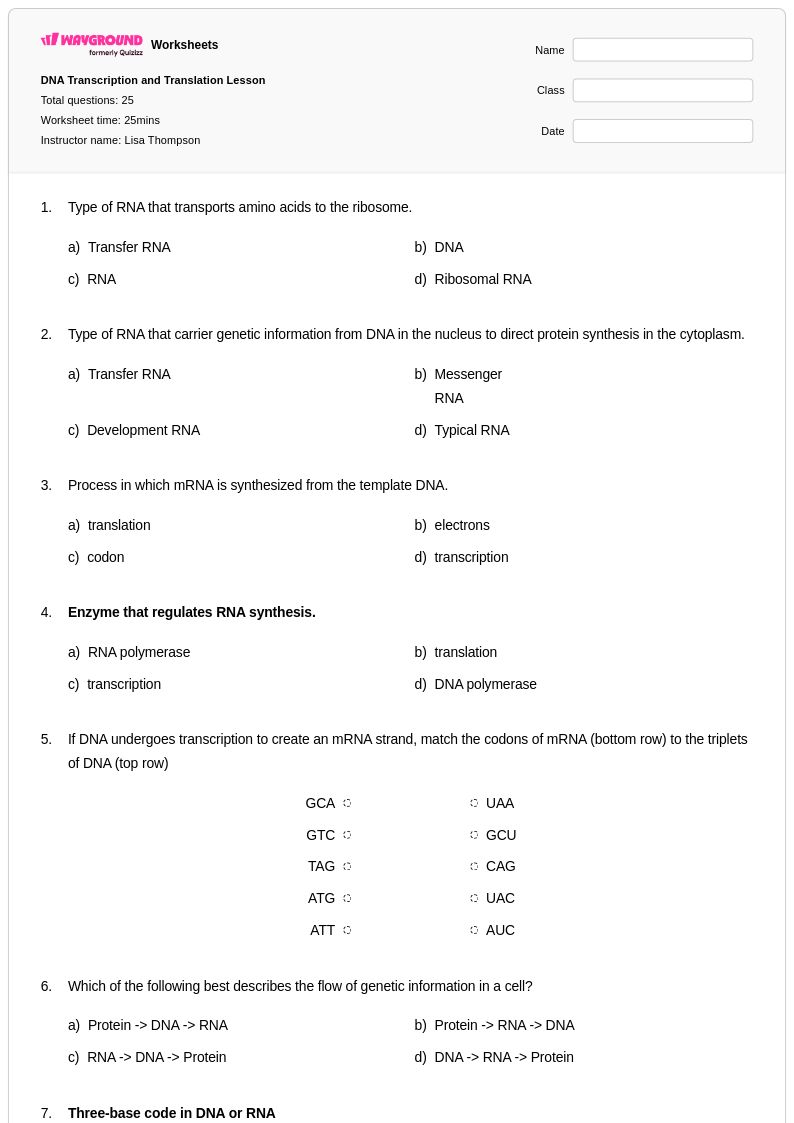
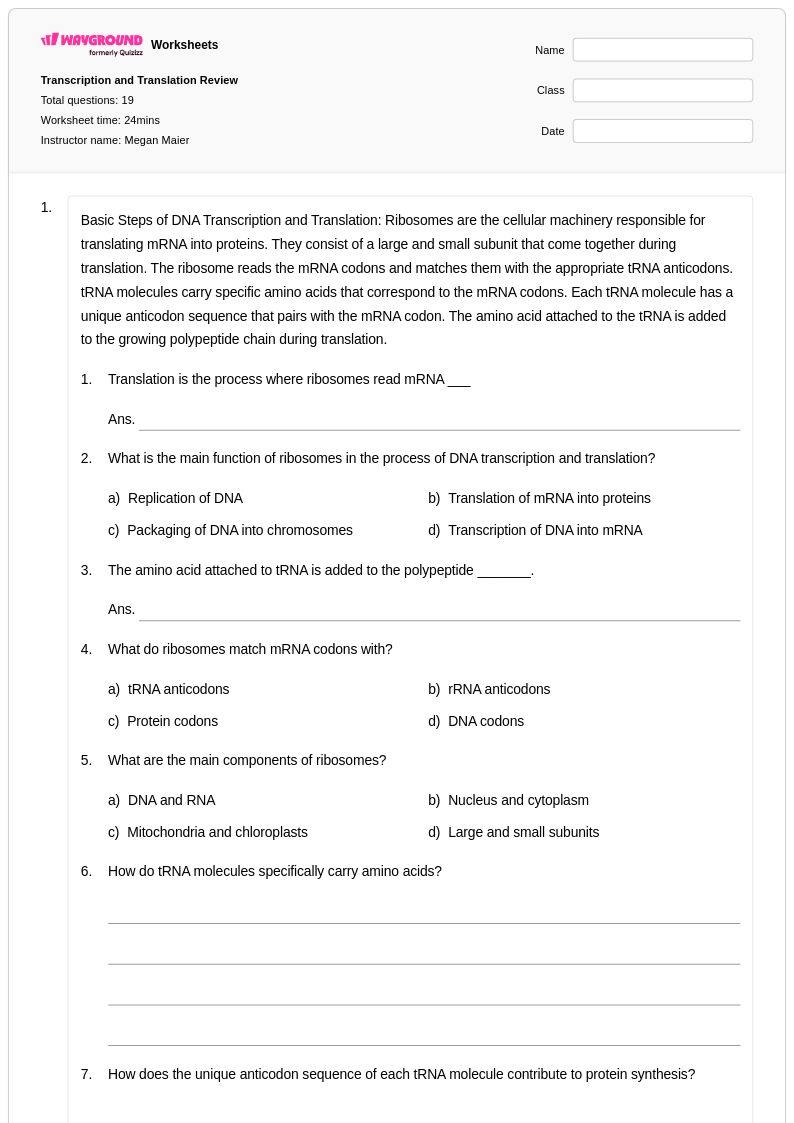
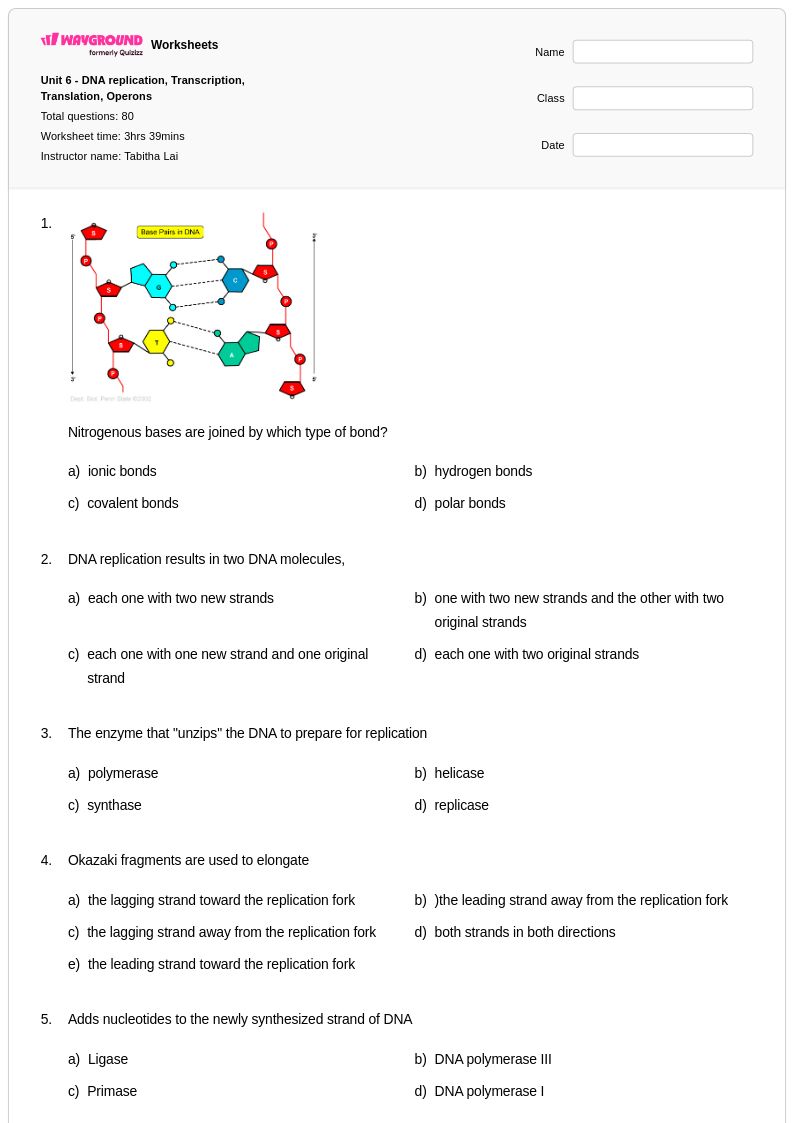
Explore Wayground's comprehensive collection of free DNA transcription and translation worksheets with printables, practice problems, and answer keys to help students master protein synthesis processes in biology.
Explore printable DNA Transcription and Translation worksheets
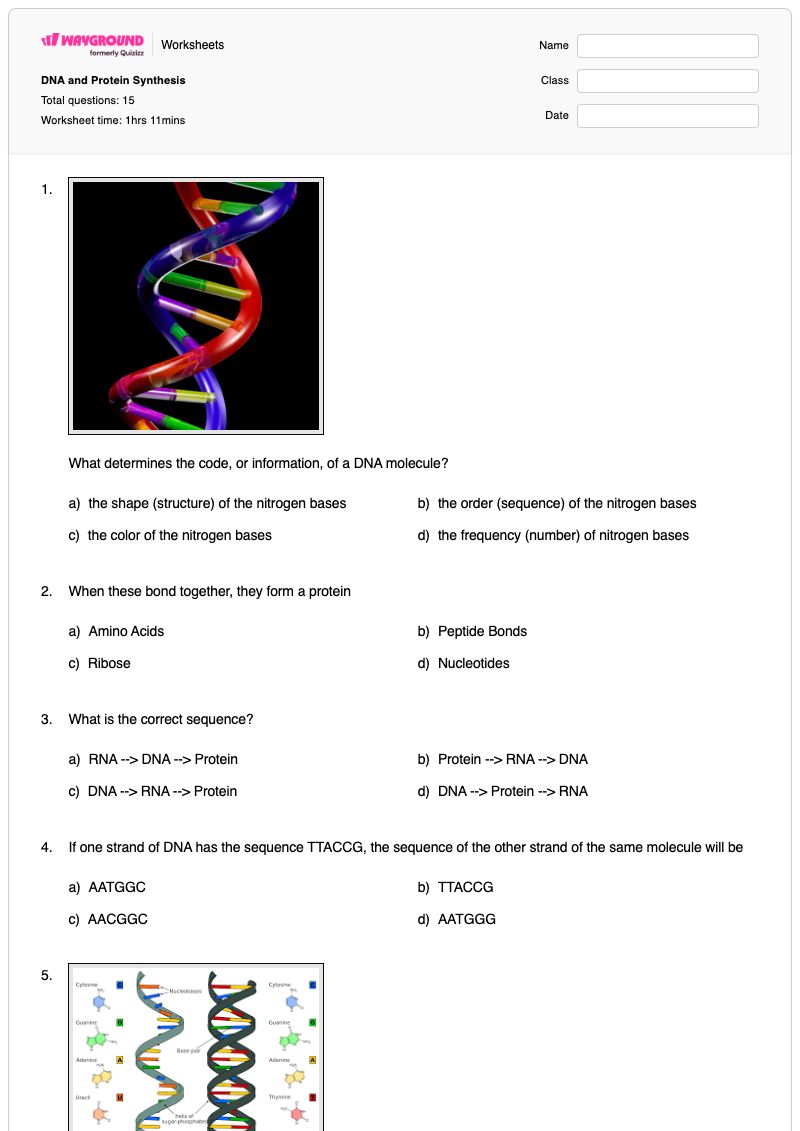
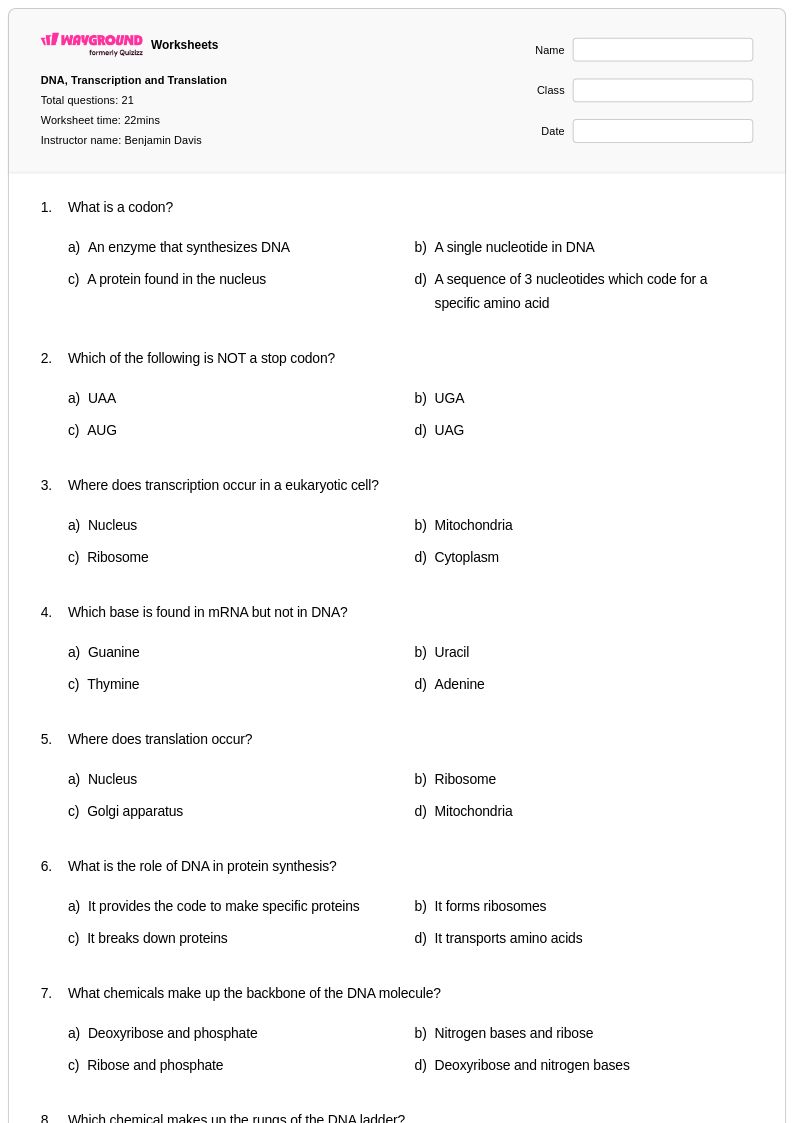
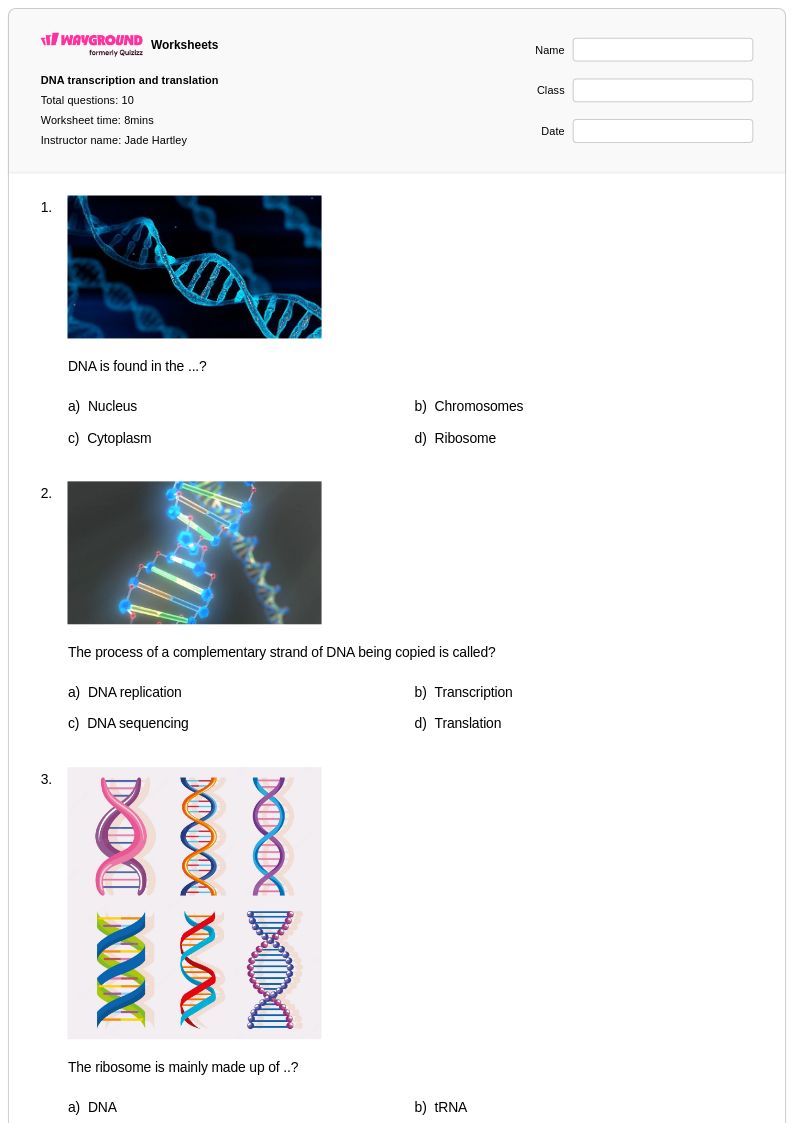
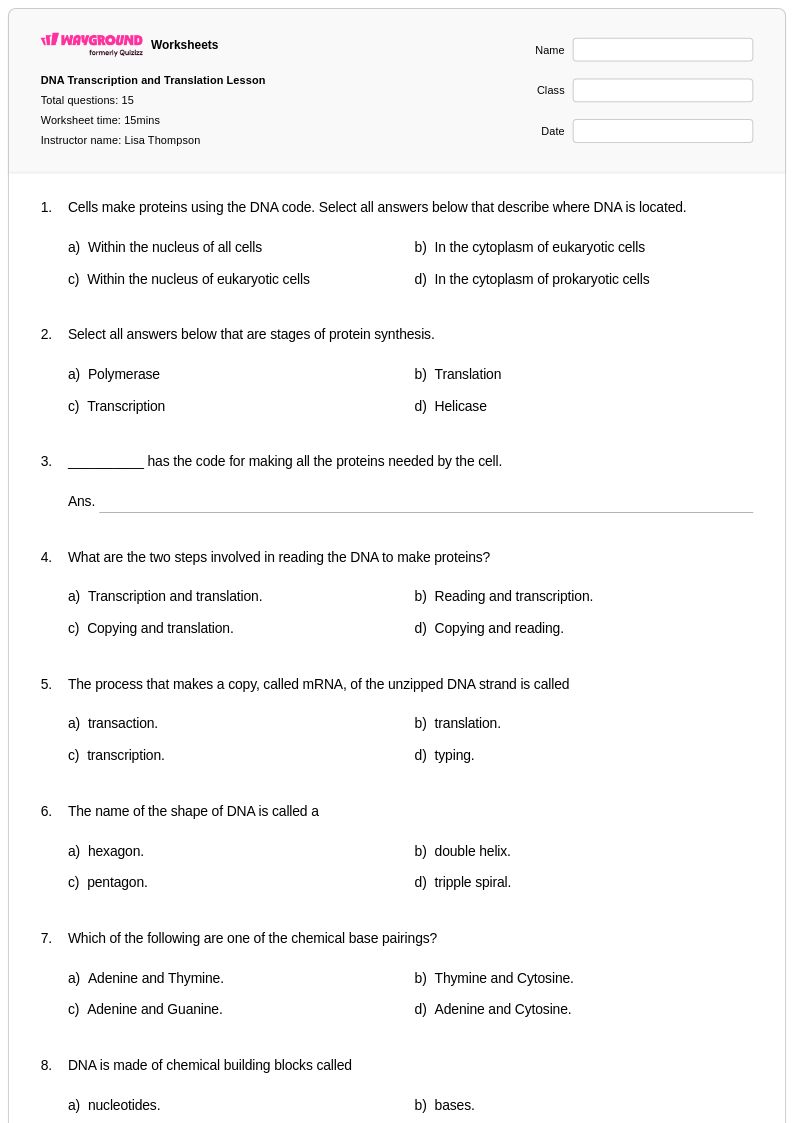
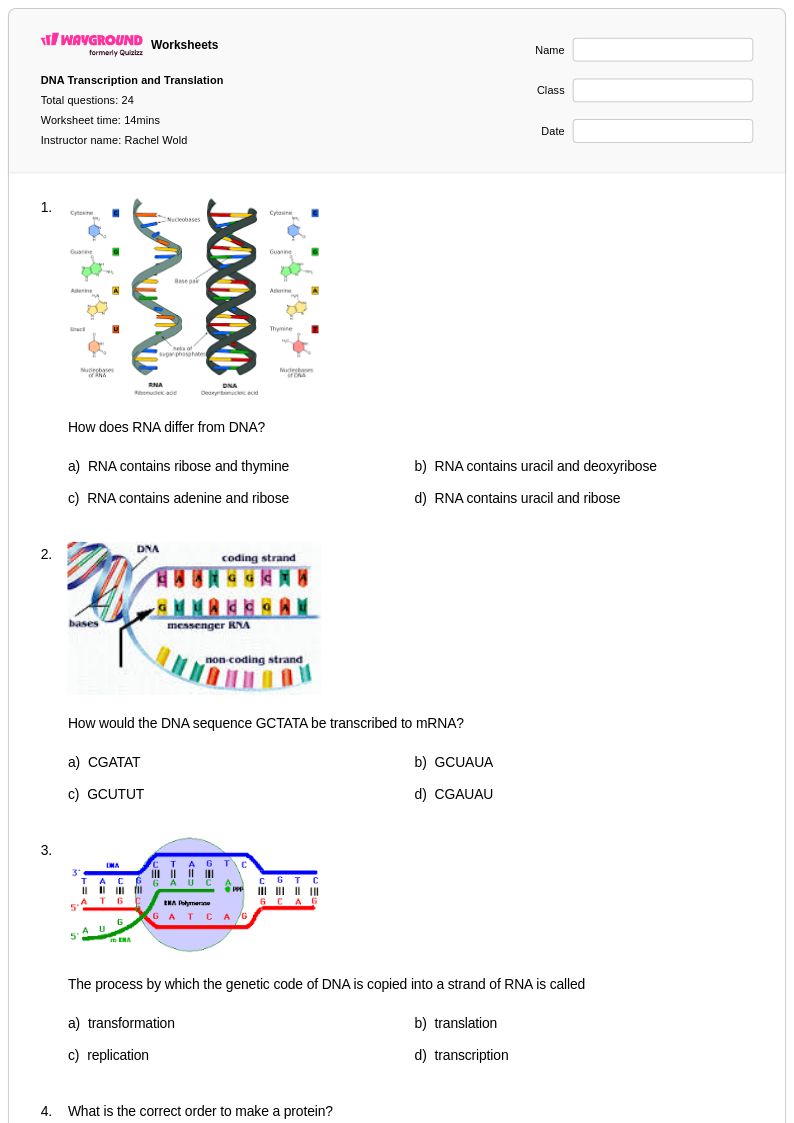
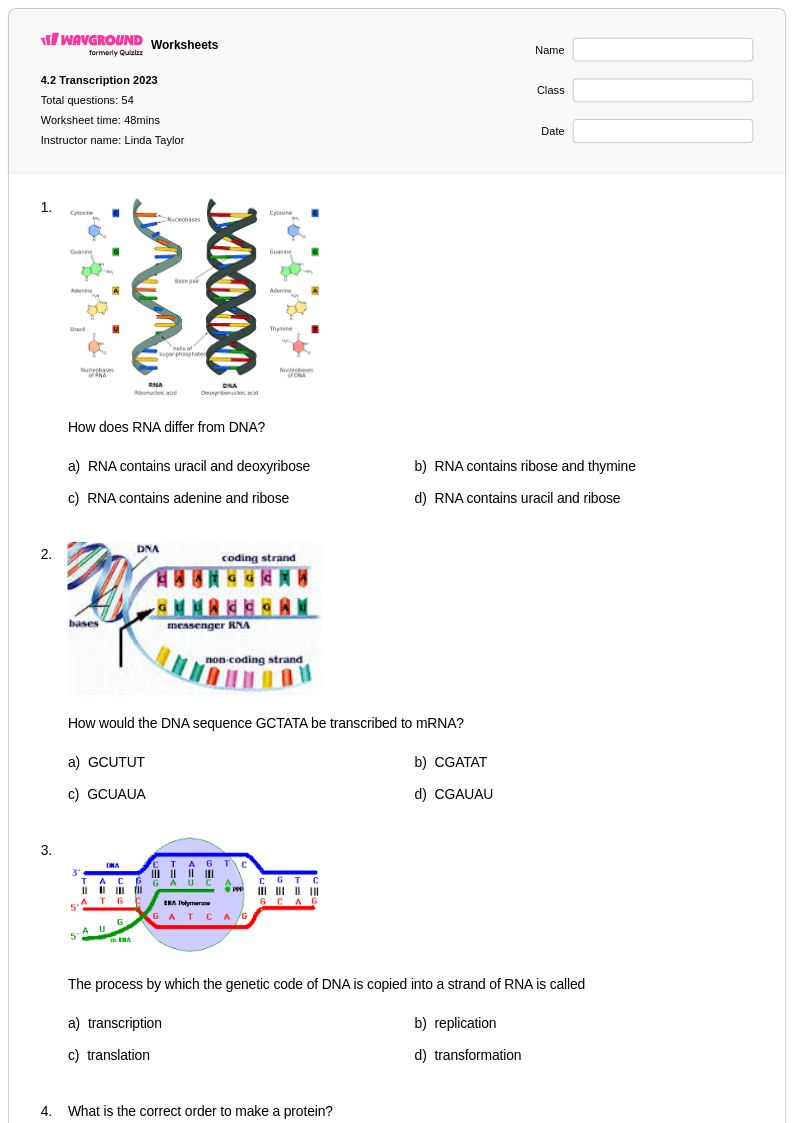
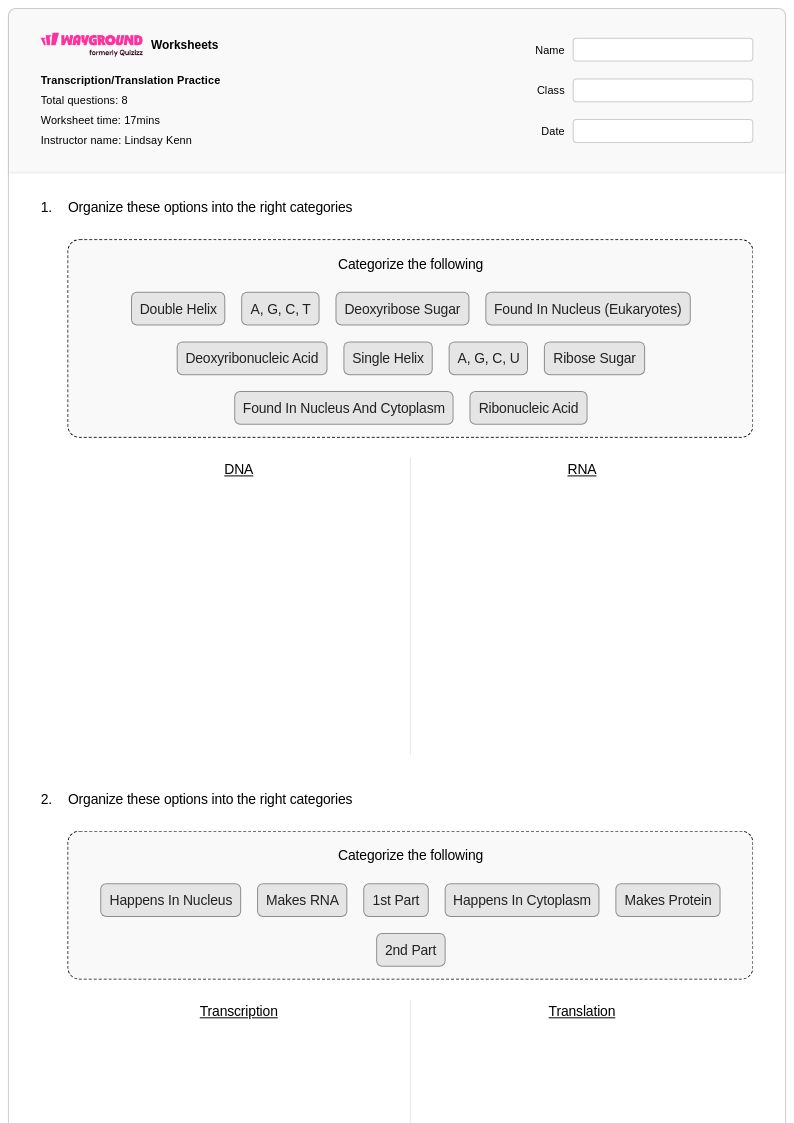
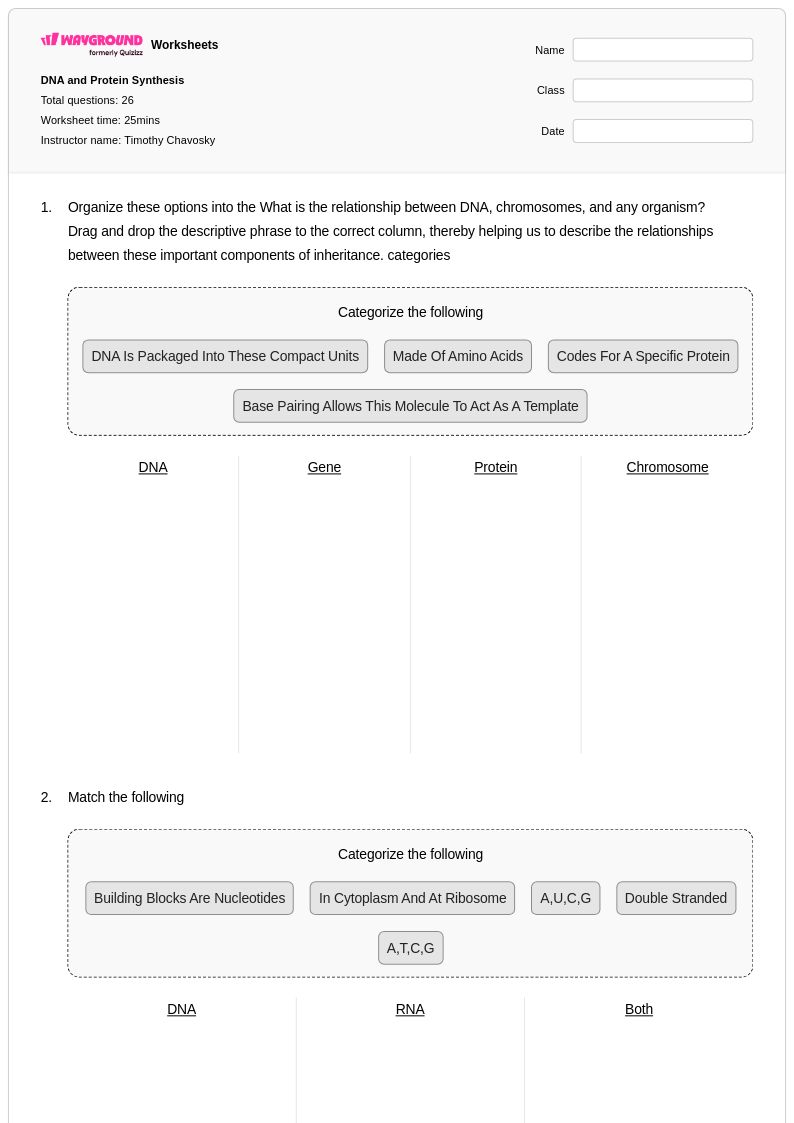
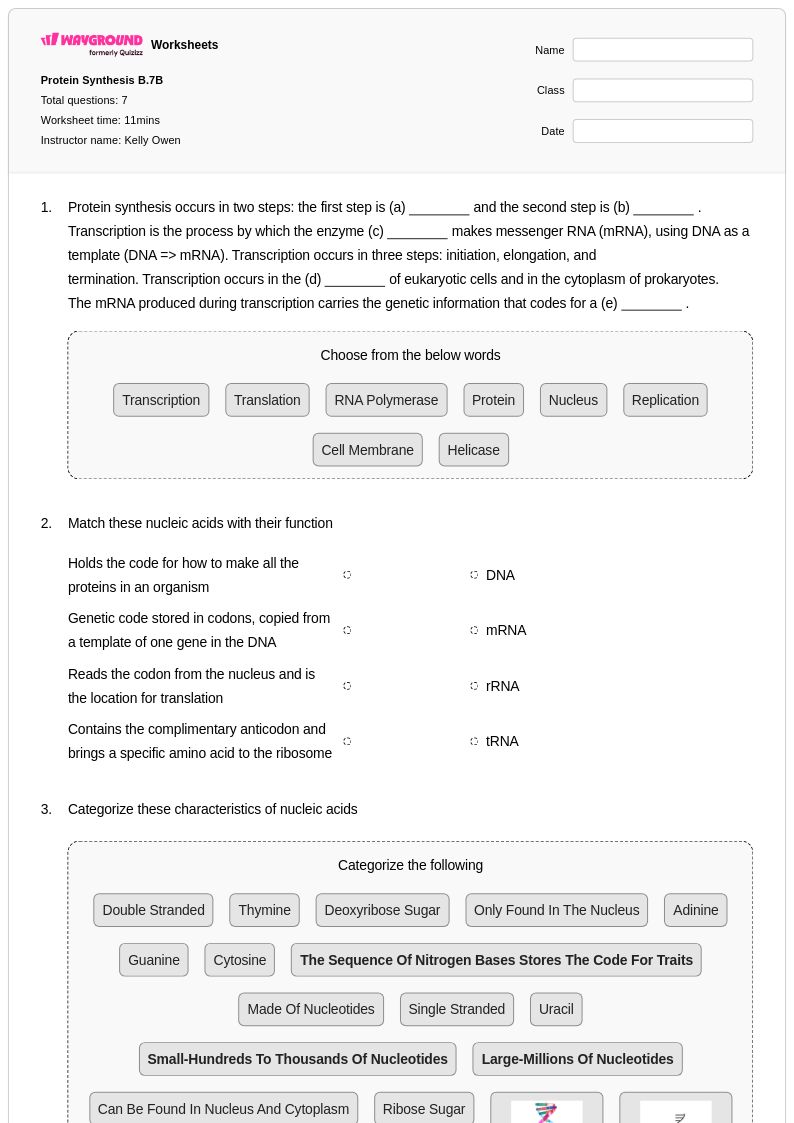
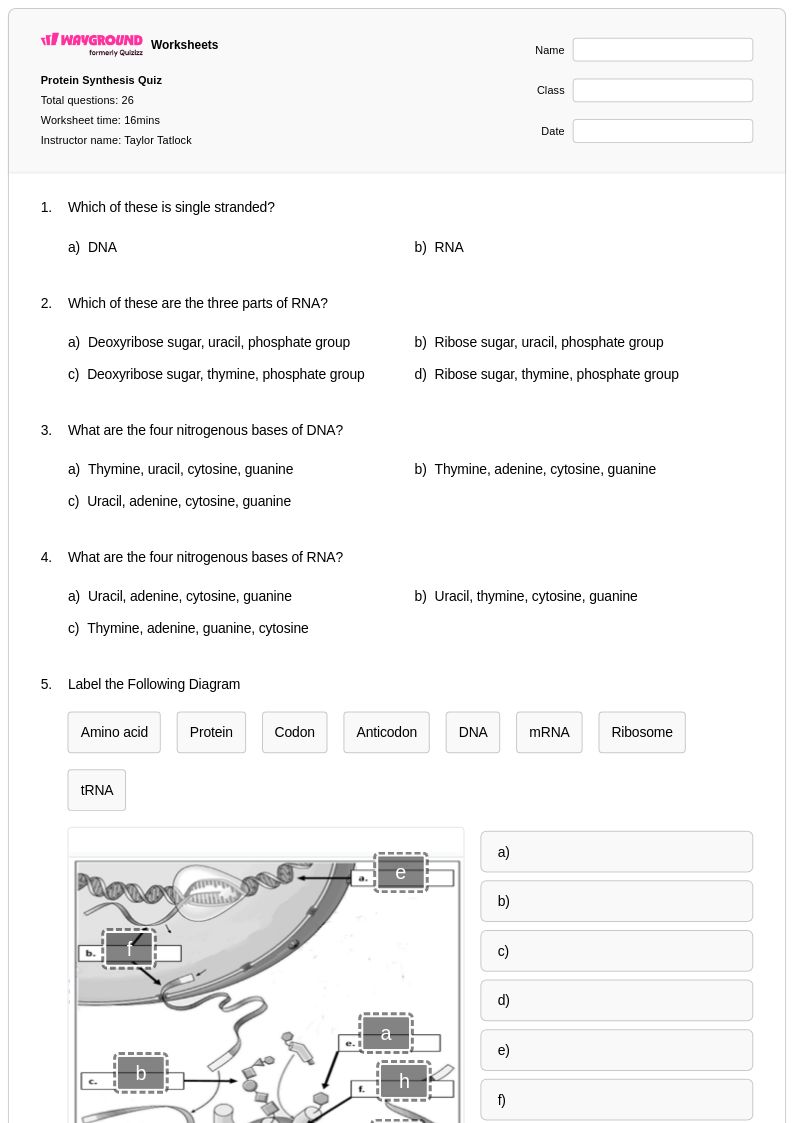
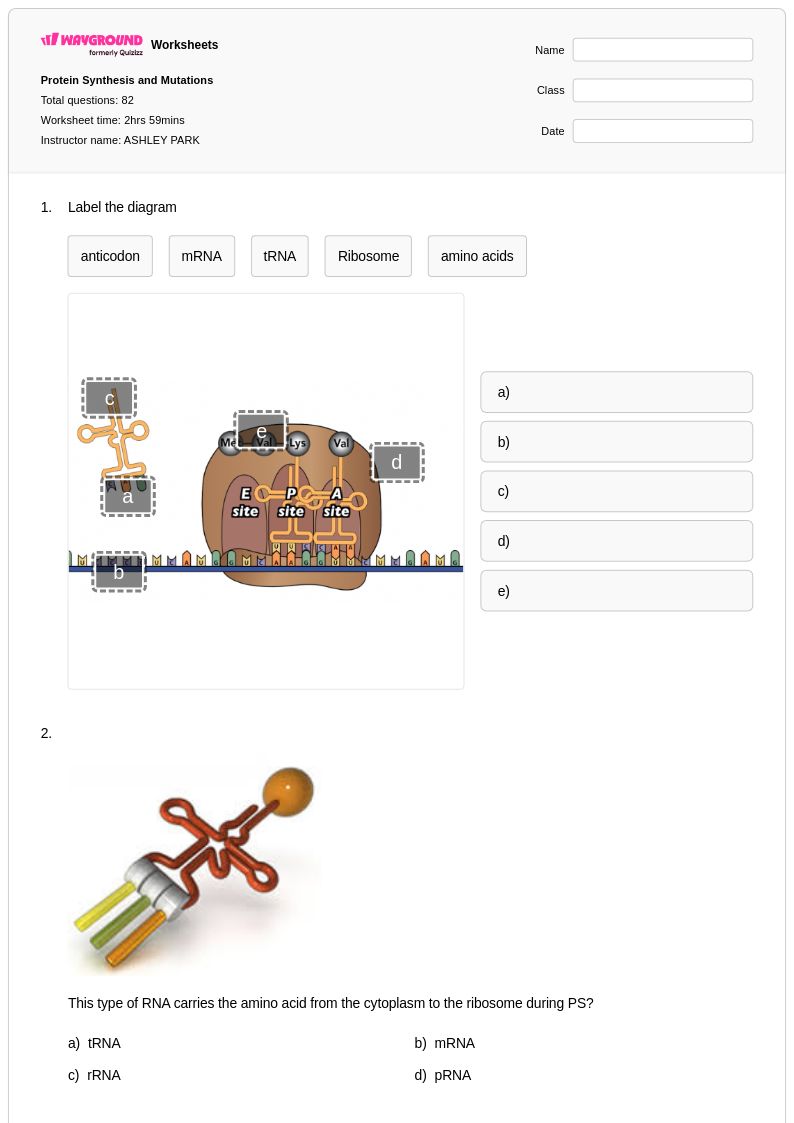
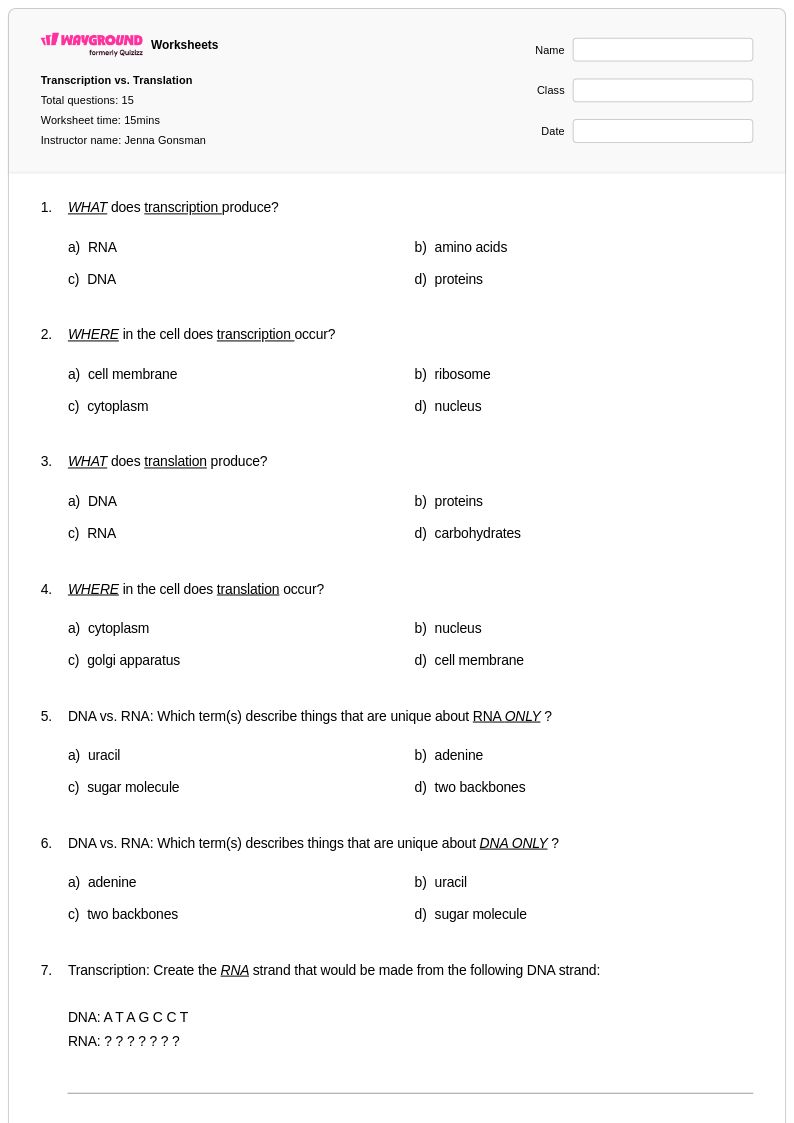
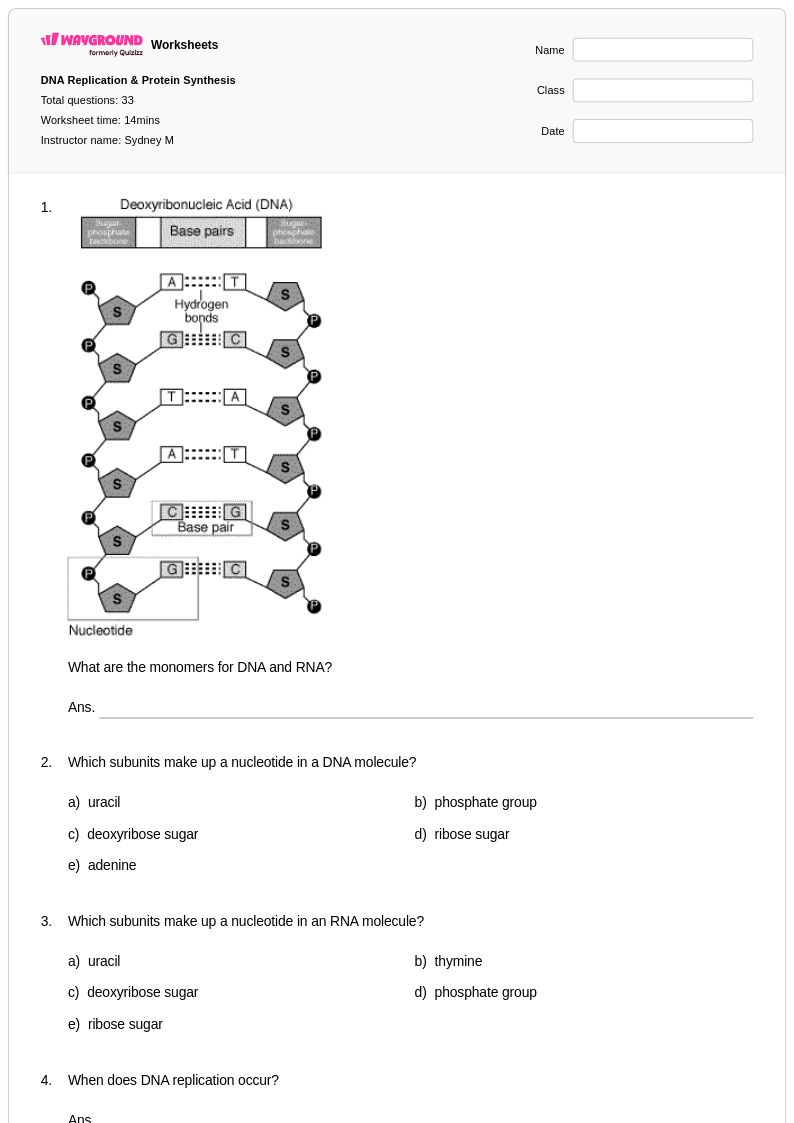
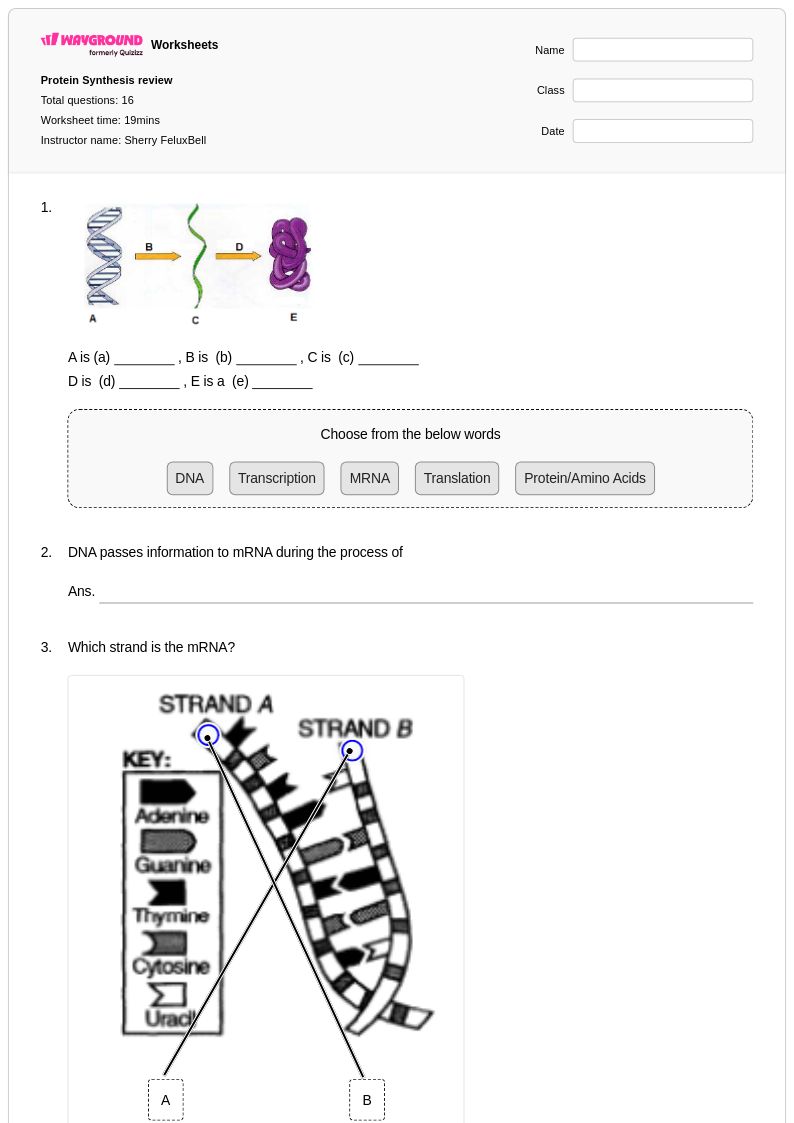
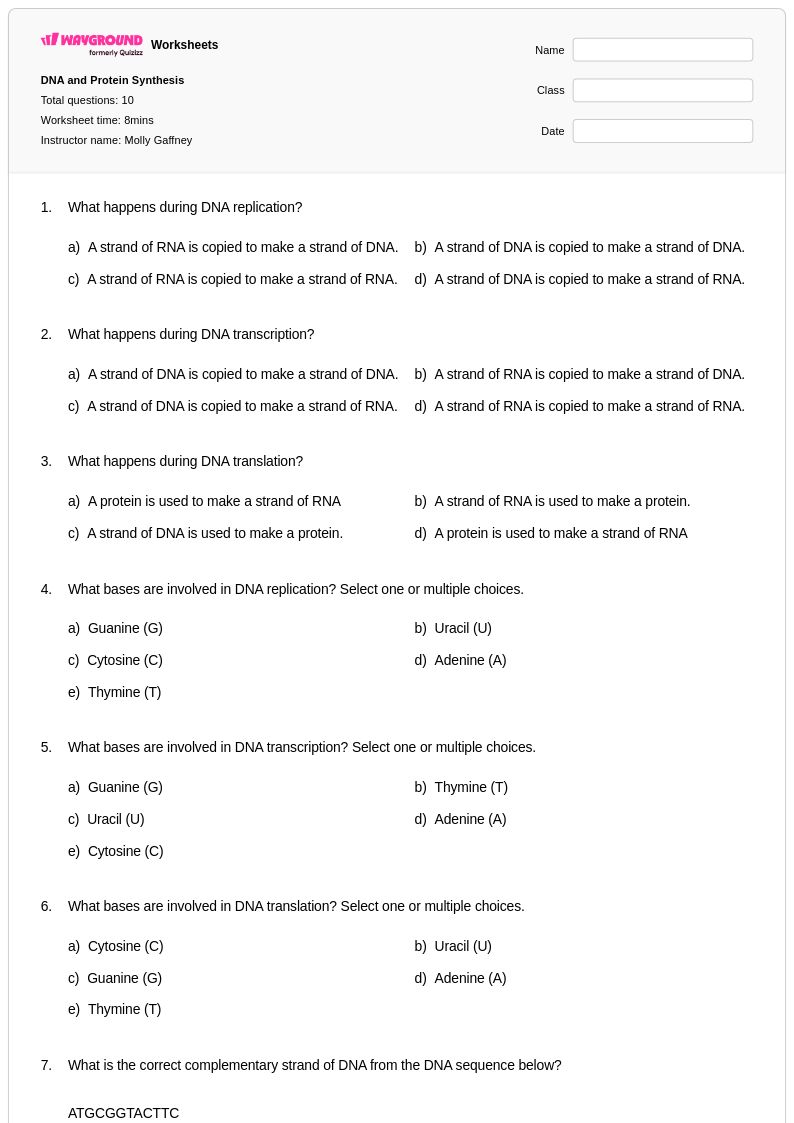
DNA transcription and translation worksheets available through Wayground (formerly Quizizz) provide comprehensive practice materials that guide students through the fundamental processes of gene expression. These expertly crafted resources help students master the intricate steps of transcription, where DNA serves as a template for RNA synthesis, and translation, where messenger RNA directs protein synthesis at ribosomes. The worksheets strengthen critical thinking skills by challenging students to trace the flow of genetic information from DNA to RNA to proteins, analyze codon charts, identify start and stop codons, and predict amino acid sequences. Students benefit from structured practice problems that reinforce their understanding of RNA polymerase function, the roles of different RNA types, and the molecular machinery involved in protein synthesis, with many resources including detailed answer keys and available as free printable pdf formats.
Wayground (formerly Quizizz) empowers educators with an extensive collection of millions of teacher-created DNA transcription and translation worksheets that streamline lesson planning and enhance student learning outcomes. The platform's robust search and filtering capabilities allow teachers to quickly locate resources that align with specific curriculum standards and match their students' varying skill levels. These differentiation tools enable educators to provide targeted remediation for struggling students while offering enrichment opportunities for advanced learners, ensuring that all students can engage meaningfully with complex molecular biology concepts. The flexible customization features allow teachers to modify existing worksheets or create entirely new assessments, while the availability of both printable and digital formats, including downloadable pdfs, accommodates diverse classroom environments and teaching preferences, making it easier to deliver consistent, high-quality instruction in genetic processes.
FAQs
How do I teach DNA transcription and translation to high school biology students?
Start by establishing the central dogma of molecular biology — DNA to RNA to protein — before breaking transcription and translation into distinct, sequential stages. Use visual diagrams to show how RNA polymerase unwinds the DNA template strand during transcription, then shift focus to the ribosome and how mRNA codons are read during translation. Reinforcing each stage separately before connecting them helps students build an accurate mental model of the full gene expression pathway.
What practice problems help students master transcription and translation?
Effective practice problems include DNA-to-mRNA transcription exercises, codon chart readings to decode amino acid sequences, and identification of start and stop codons within a given mRNA strand. Problems that require students to trace a mutation from the DNA level through to the resulting protein sequence are especially valuable because they test understanding at every step of the process. Worksheets that combine multiple question types — fill-in-the-blank, short answer, and codon decoding — give students the varied repetition needed to internalize the molecular steps.
What mistakes do students commonly make when learning transcription and translation?
One of the most frequent errors is confusing the template strand with the coding strand during transcription, which leads students to write an incorrect mRNA sequence. Students also commonly conflate transcription and translation, mixing up where each process occurs — transcription in the nucleus and translation at the ribosome. Another persistent misconception is forgetting that RNA uses uracil instead of thymine, which causes consistent errors in base-pairing problems.
How do I use DNA transcription and translation worksheets to assess student understanding?
Use codon chart exercises and amino acid prediction problems as formative checks after introducing translation, since errors in these tasks reveal exactly where a student's understanding breaks down. Worksheets that require students to construct the full pathway from a given DNA sequence to a final protein sequence work well as summative assessments because every step must be correct to reach the right answer. Reviewing common wrong answers as a class can also turn assessment data into a targeted reteaching opportunity.
How can I use Wayground's DNA transcription and translation worksheets in my classroom?
Wayground's DNA transcription and translation worksheets are available as printable PDFs for traditional classroom use and in digital formats for technology-integrated environments, giving teachers flexibility depending on their setup. Digital worksheets can be hosted as a quiz directly on Wayground, allowing for real-time student submission and streamlined review. Answer keys are included with the materials, reducing grading time and making the resources practical for both independent practice and structured assessments.
How can I support struggling students on transcription and translation activities without slowing down the rest of the class?
On Wayground, teachers can apply individual accommodations to specific students without other students being notified, so differentiation happens seamlessly. Options like Read Aloud support students who struggle with dense scientific vocabulary, while Reduced answer choices can lower cognitive load for students who find multi-step codon problems overwhelming. Extended time can also be configured per student, ensuring every learner has a fair opportunity to work through complex protein synthesis problems at their own pace.