
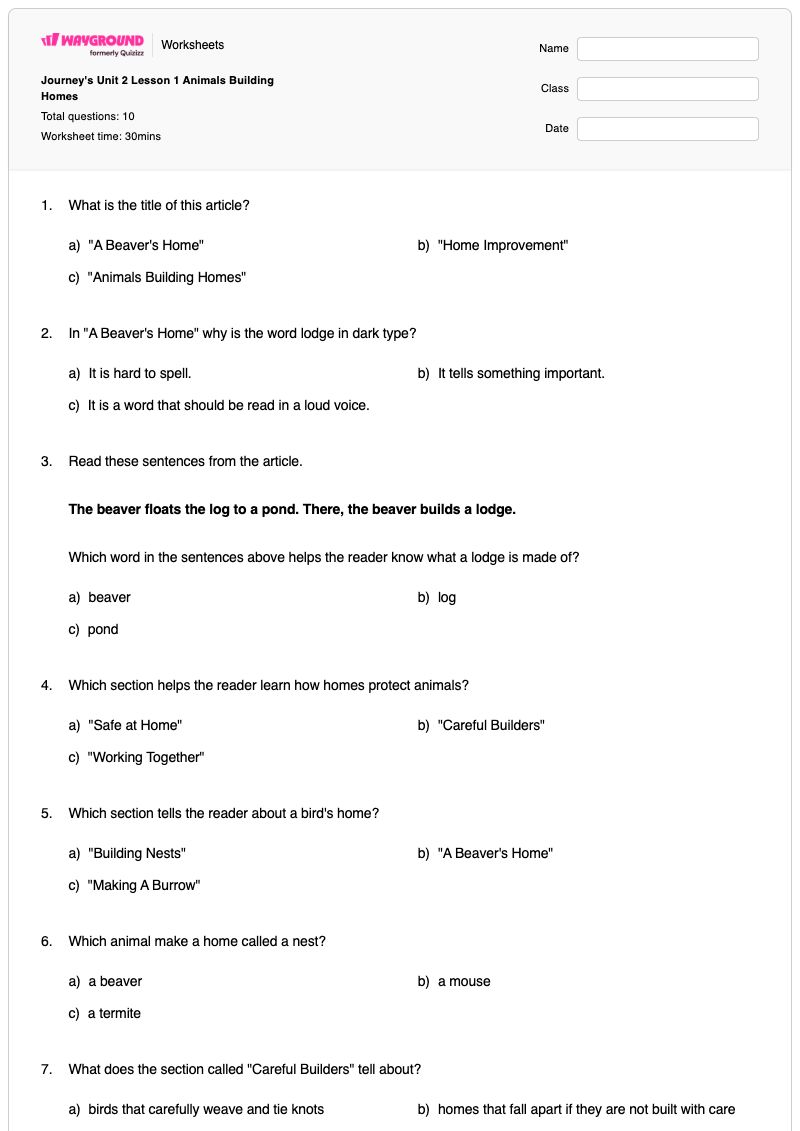
10 Q
2nd
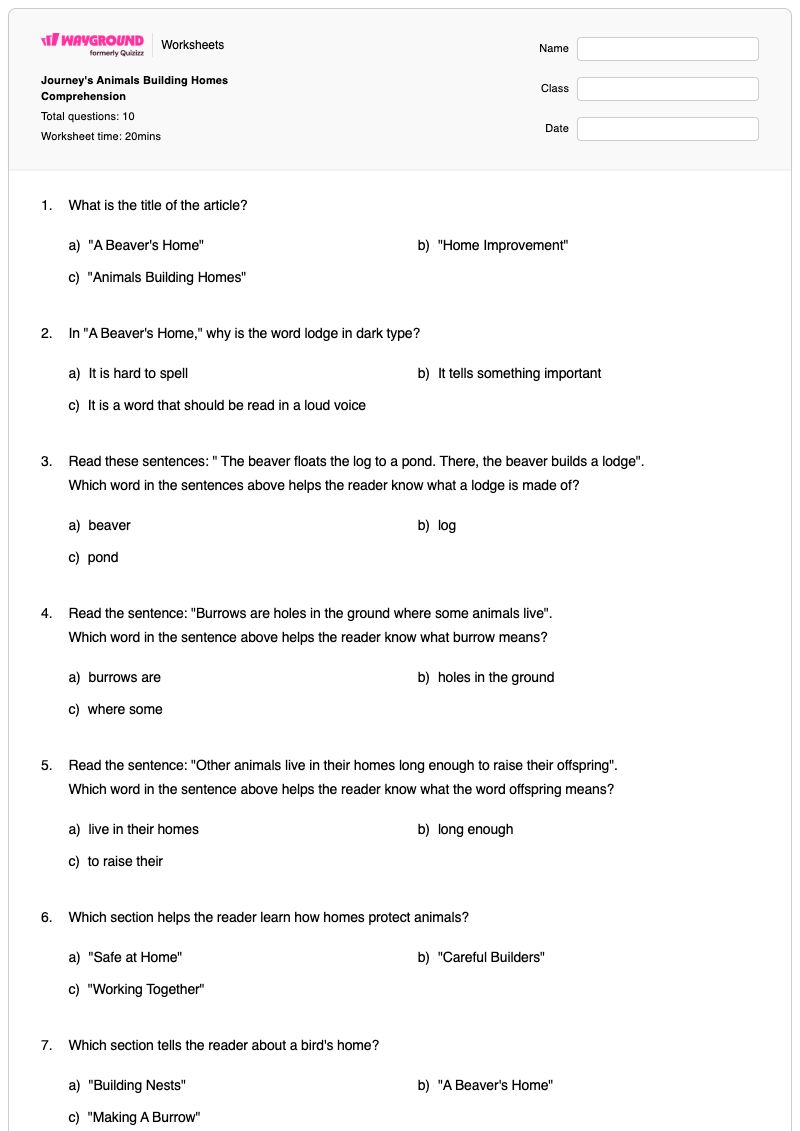
10 Q
2nd
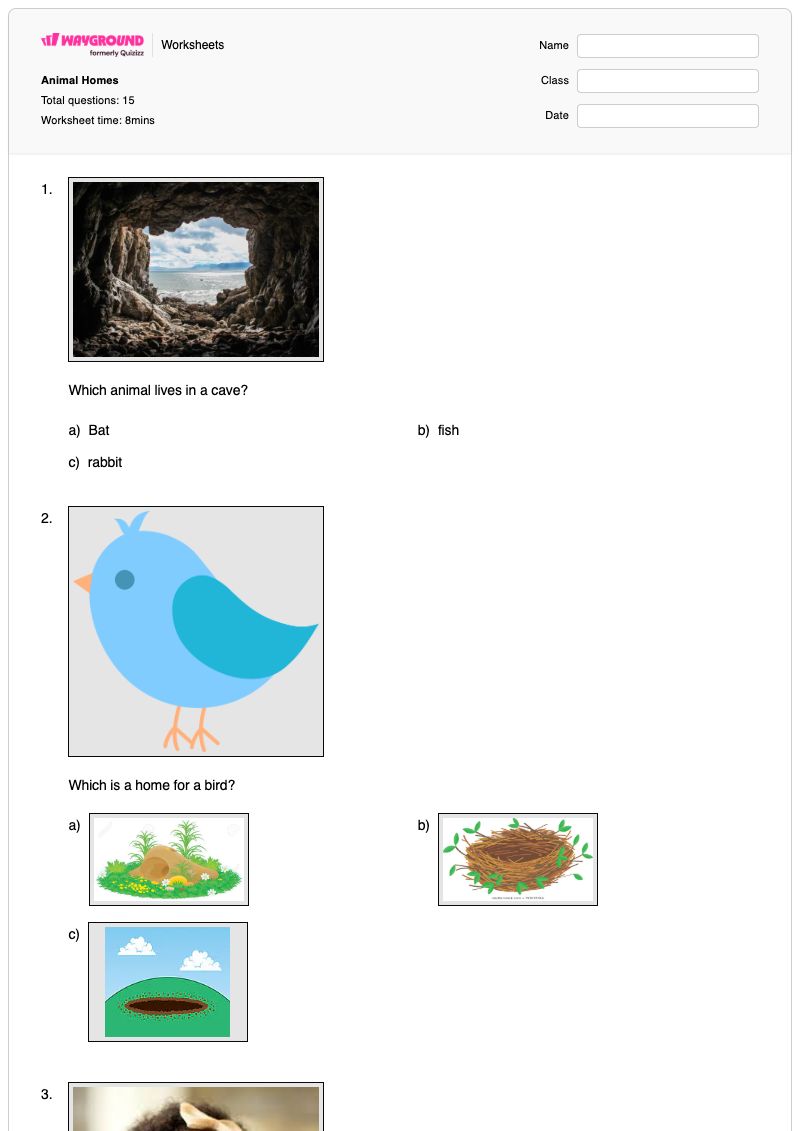
15 Q
1st
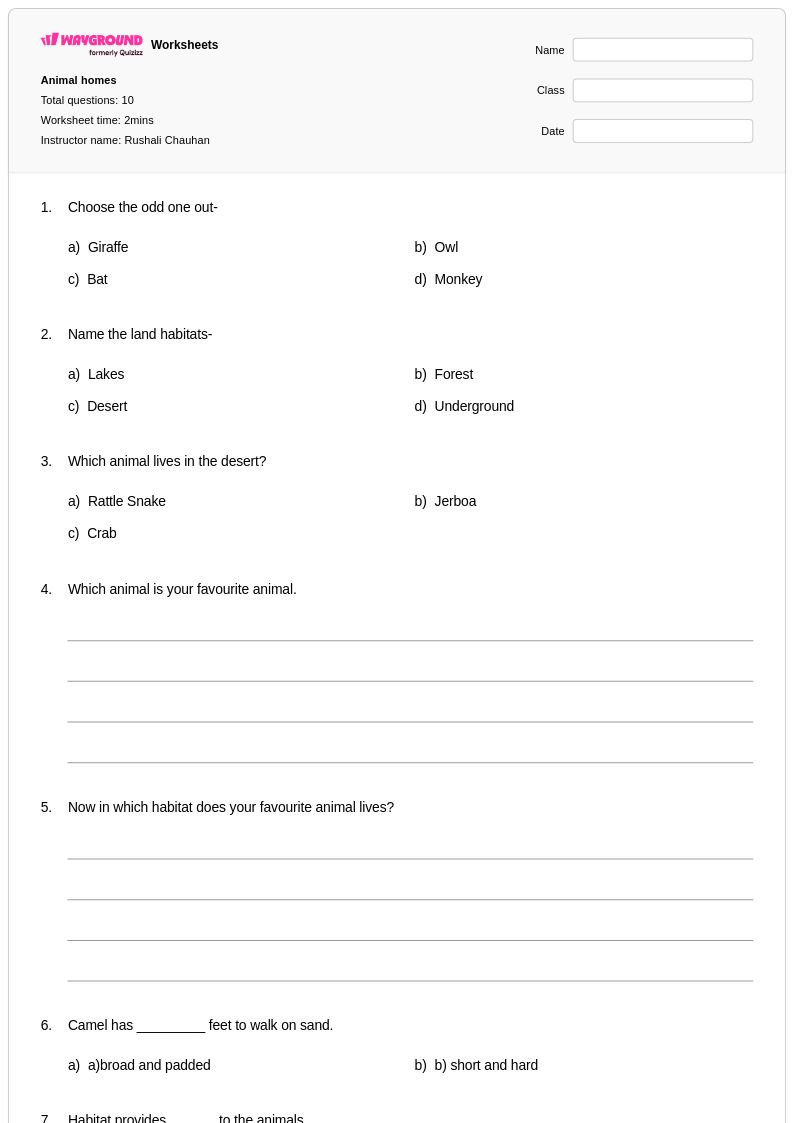
10 Q
1st - 4th
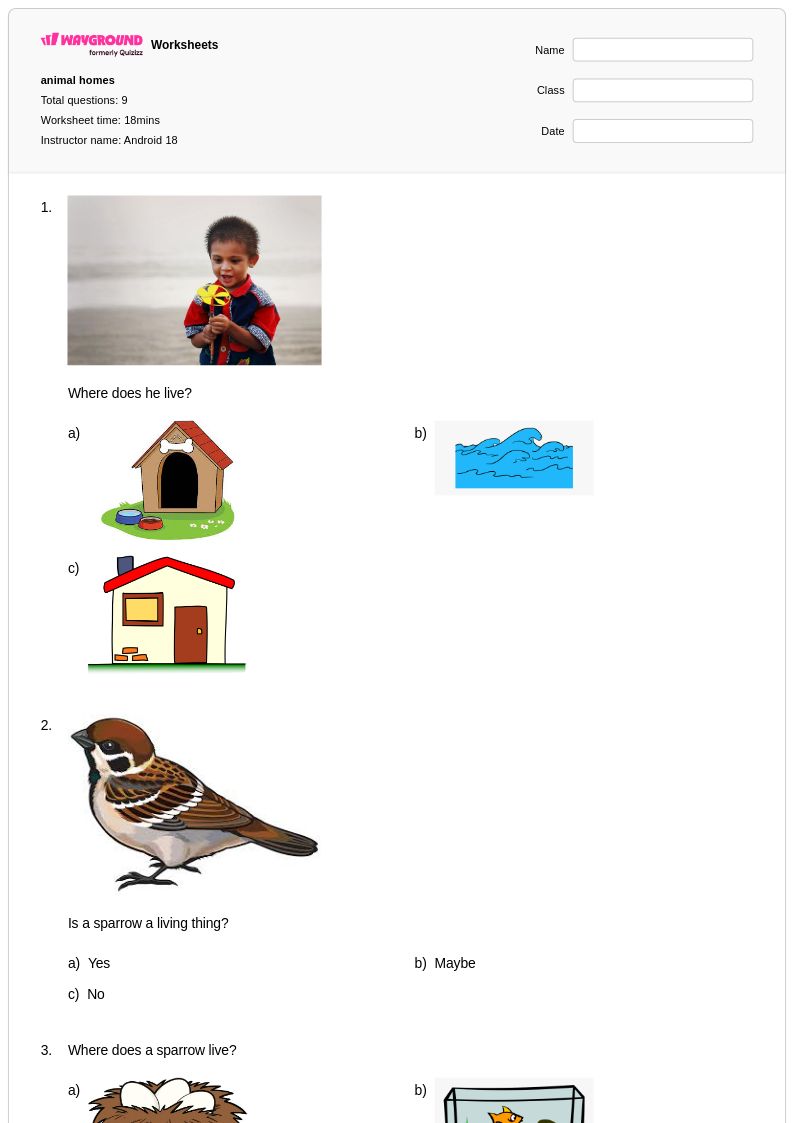
9 Q
KG - 1st
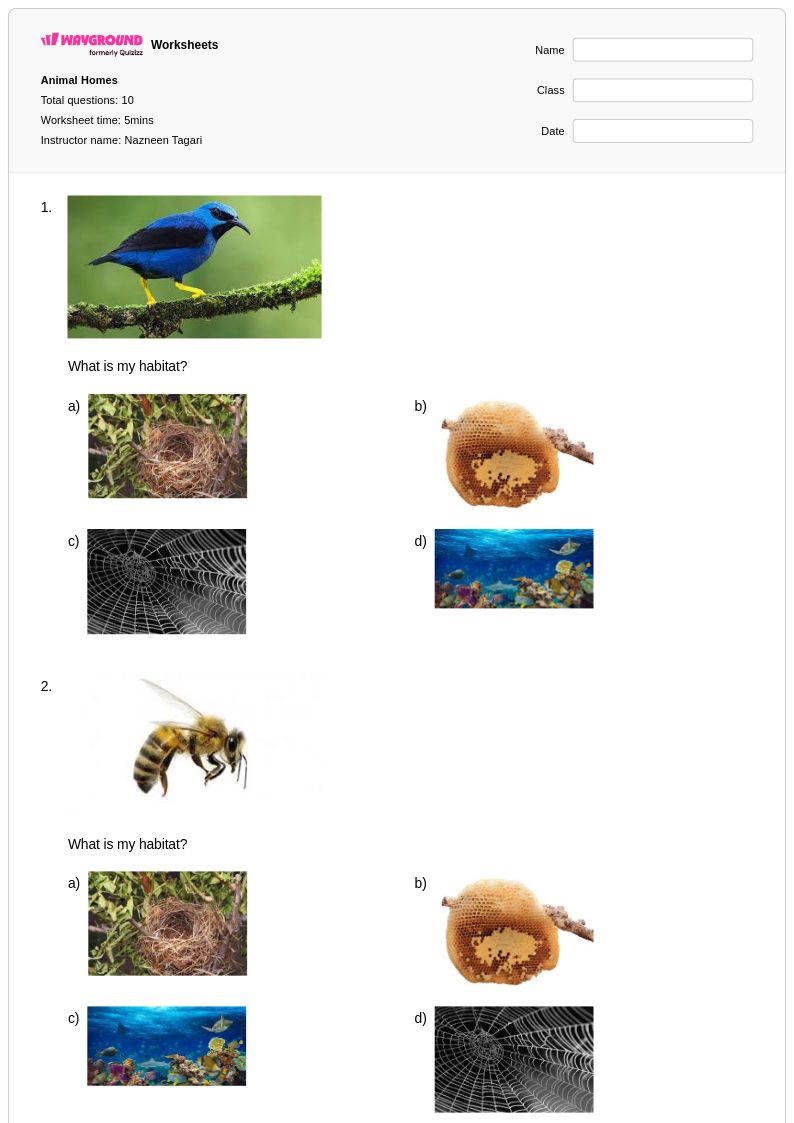
10 Q
KG - 2nd
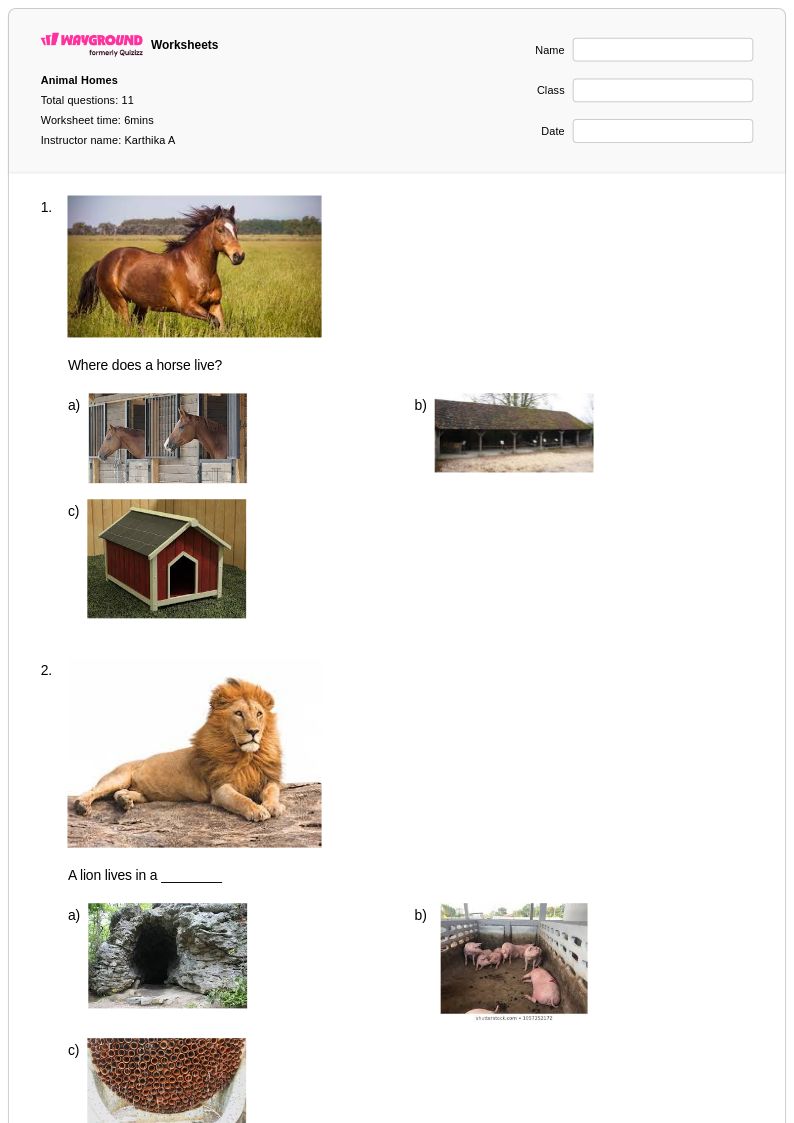
11 Q
KG
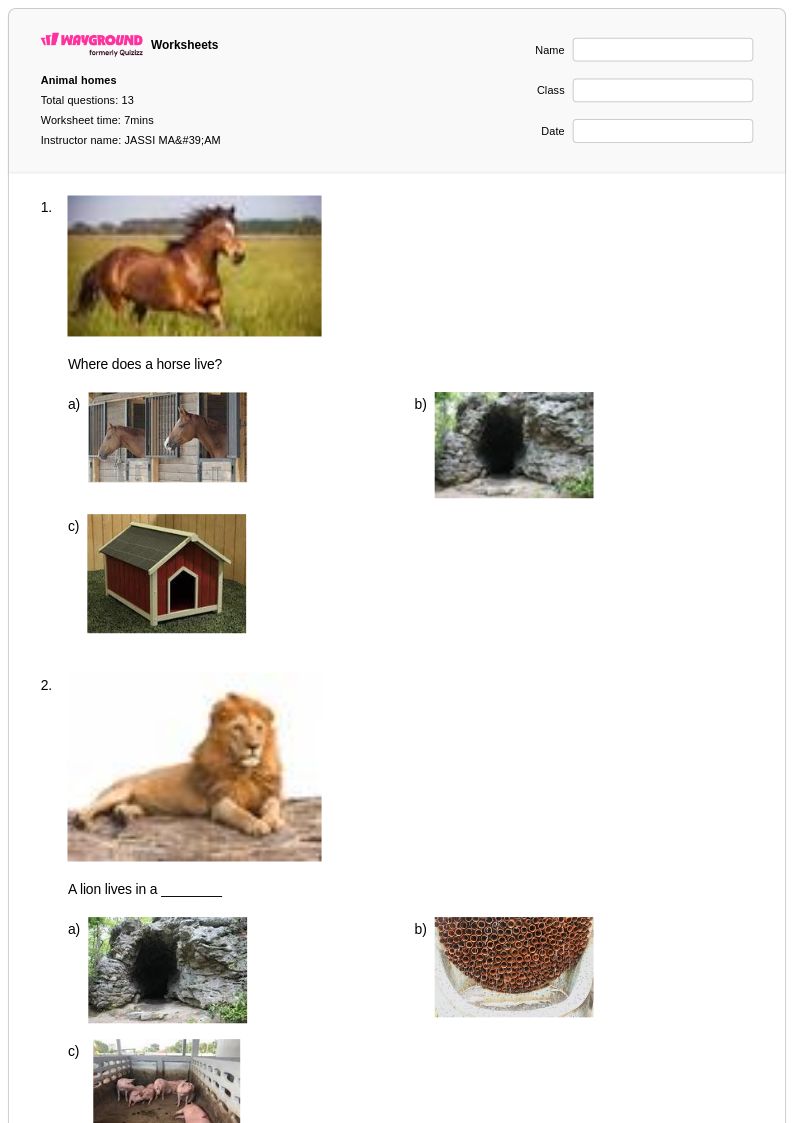
13 Q
KG
20 Q
4th
10 Q
2nd
21 Q
1st
7 Q
4th
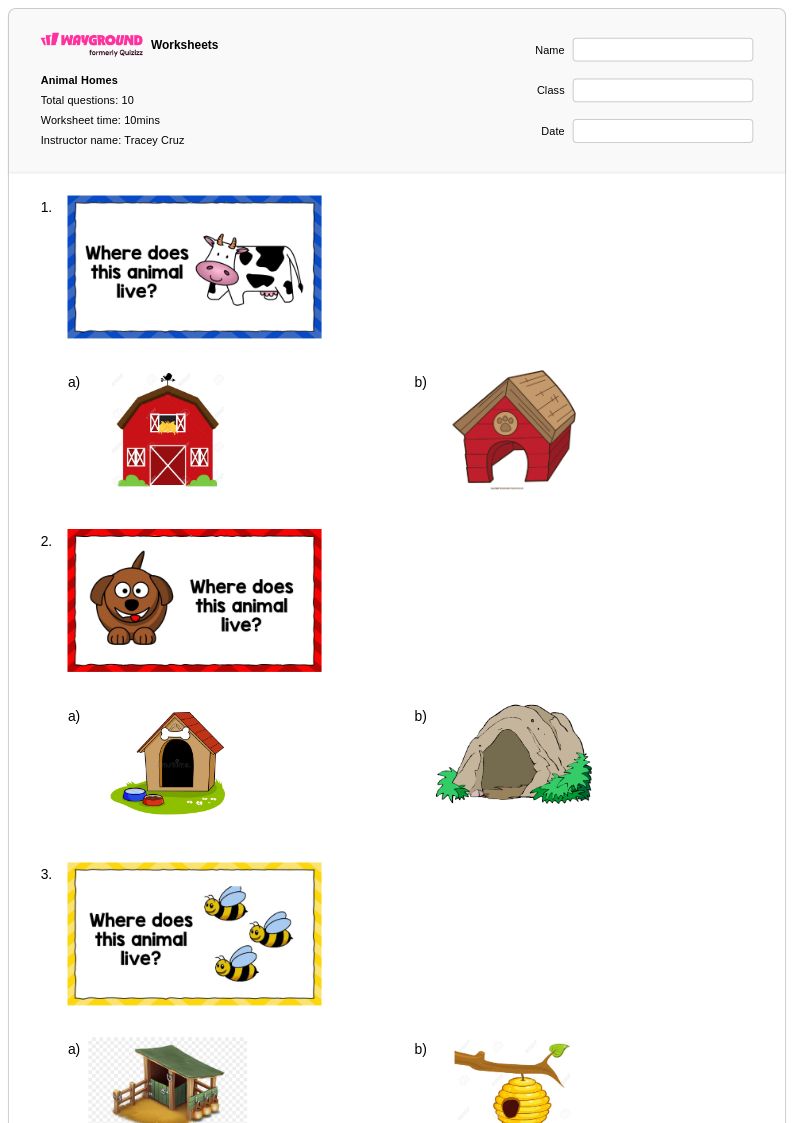
10 Q
KG
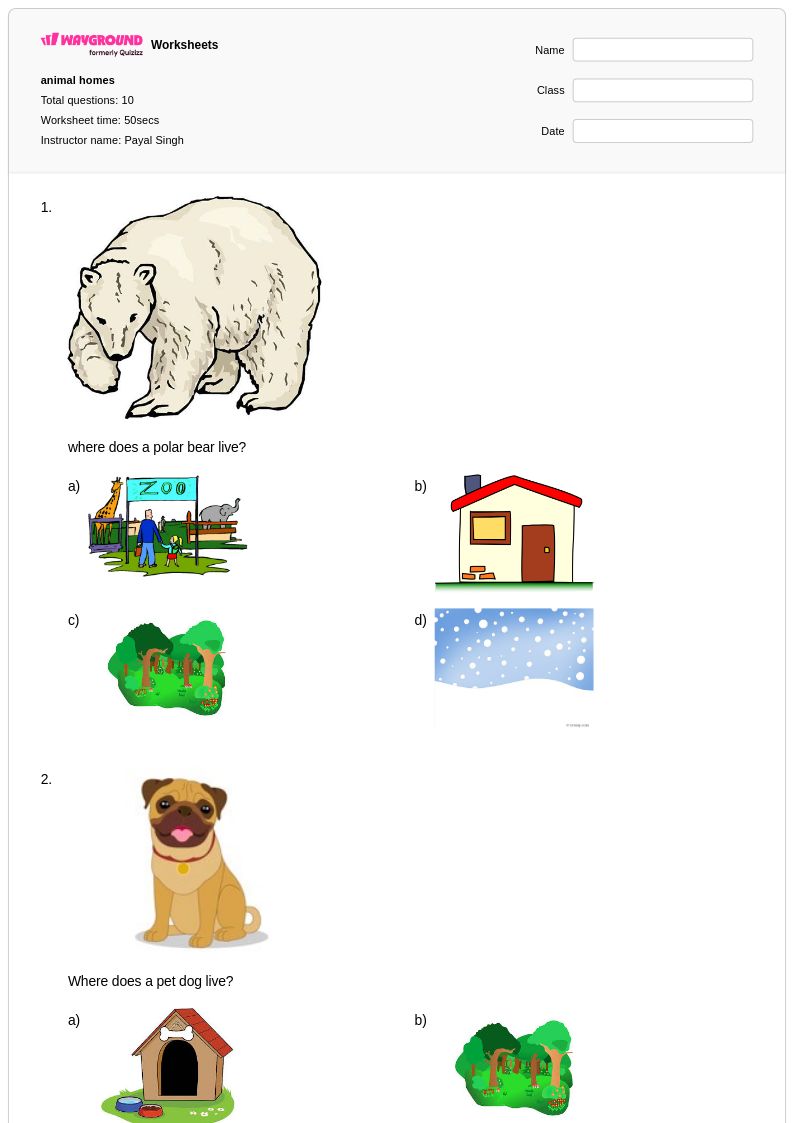
10 Q
4th
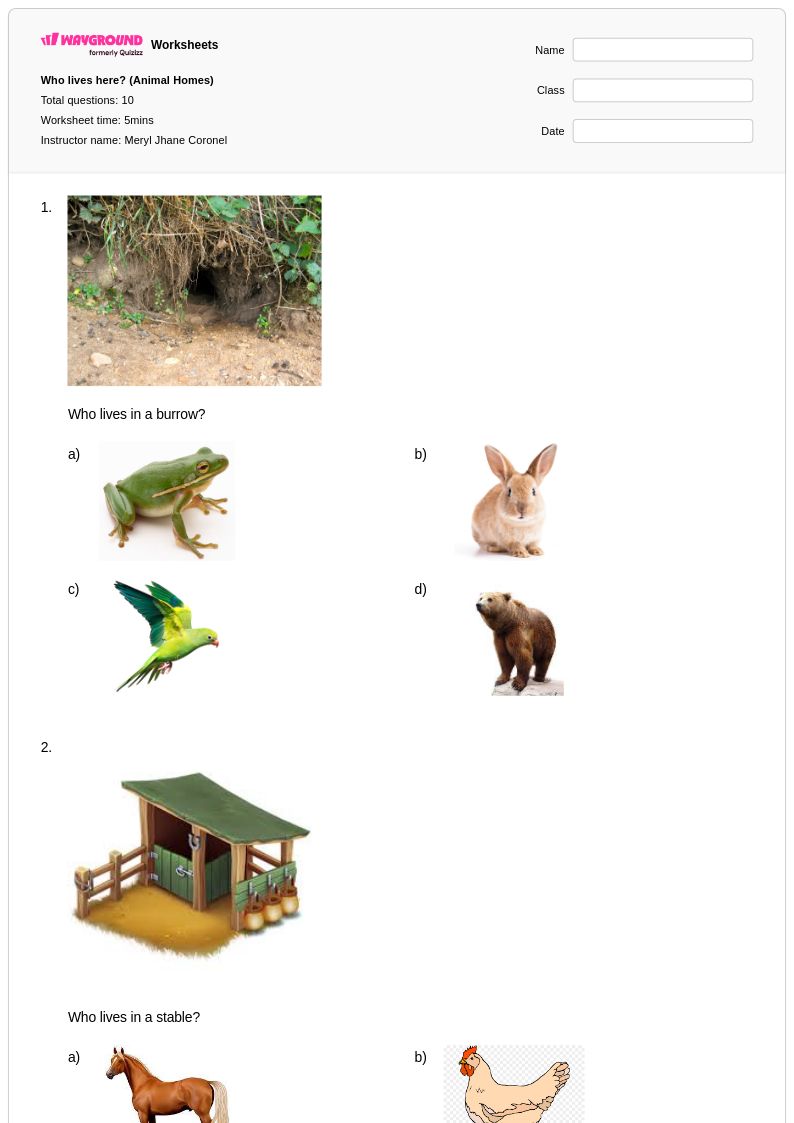
10 Q
KG
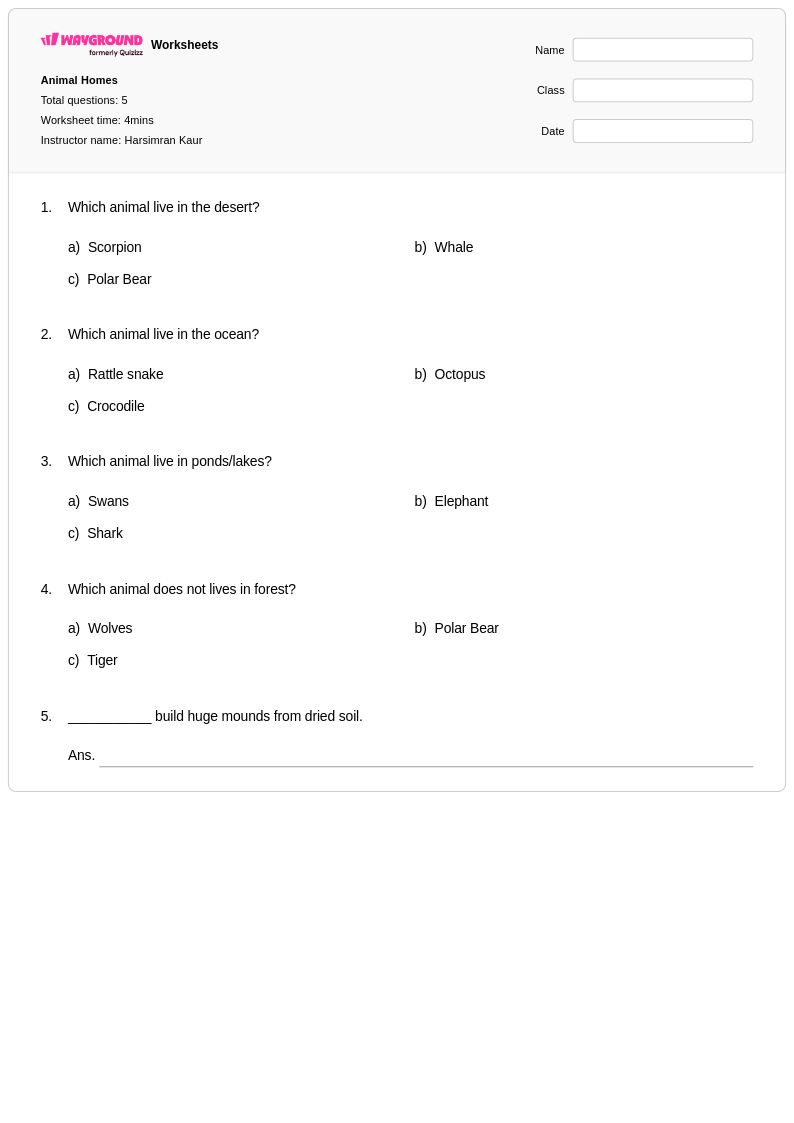
5 Q
4th
10 Q
5th
11 Q
5th
12 Q
4th
15 Q
KG - Uni
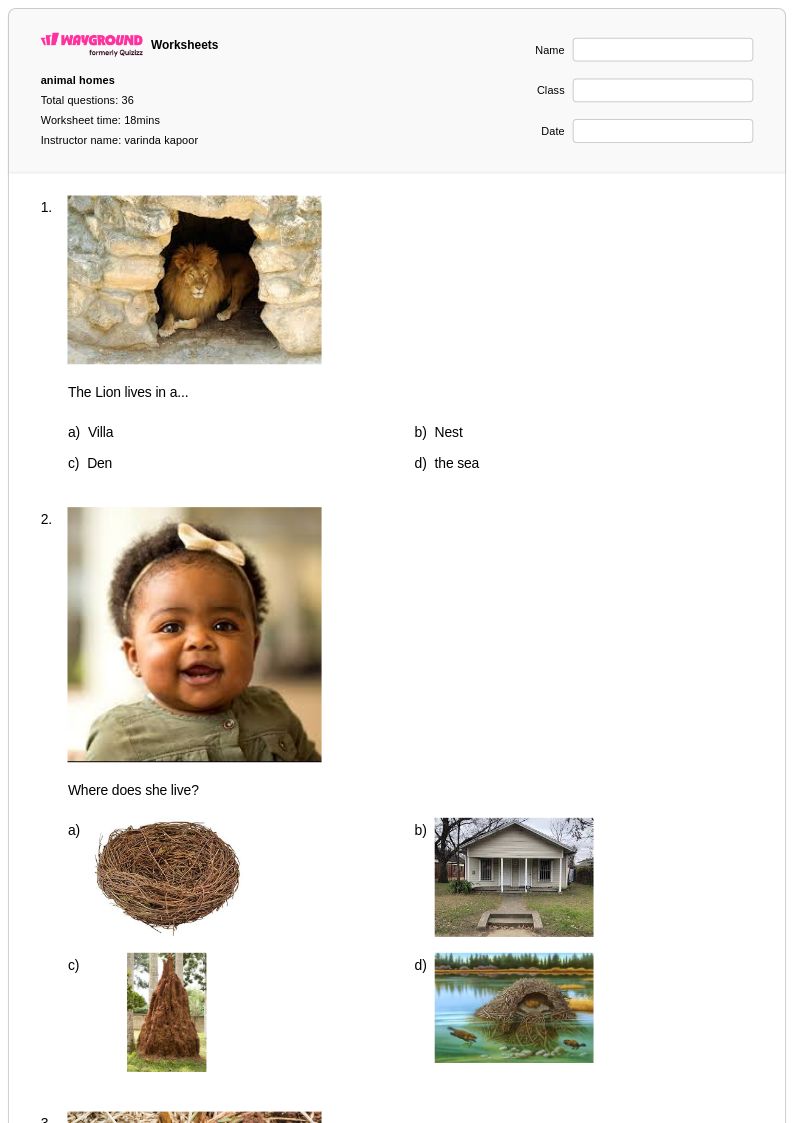
36 Q
KG - 1st
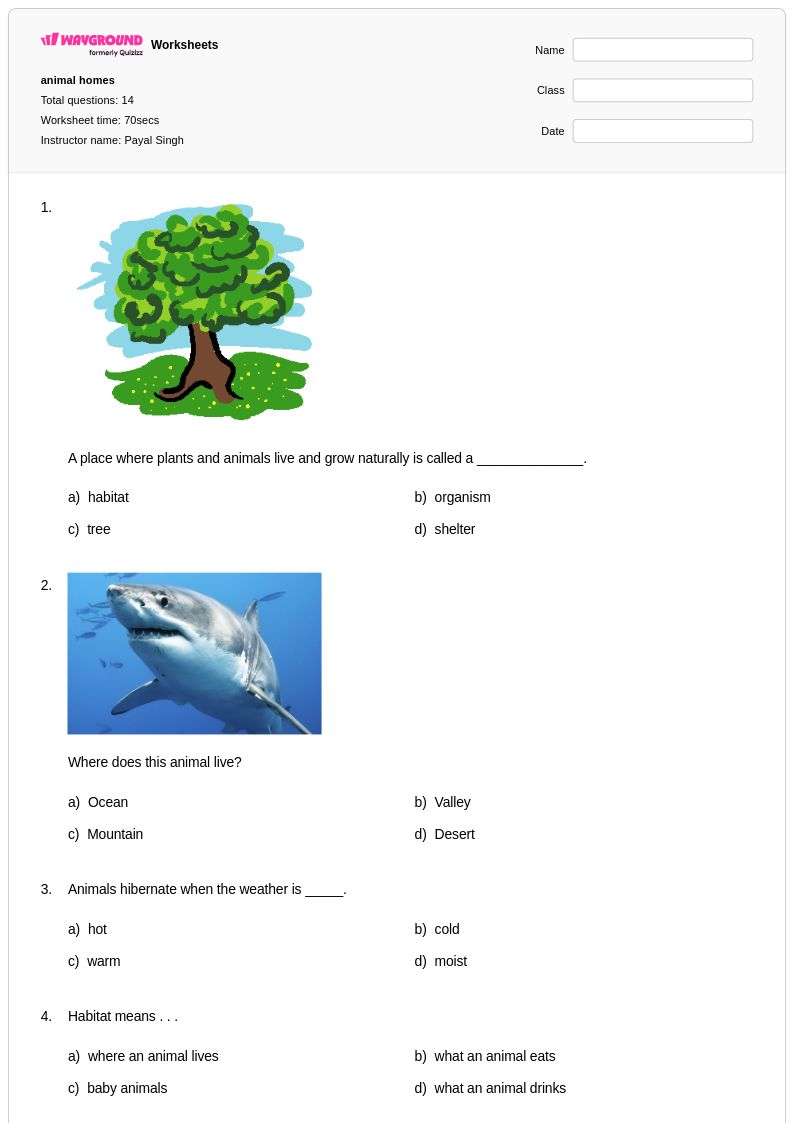
14 Q
4th
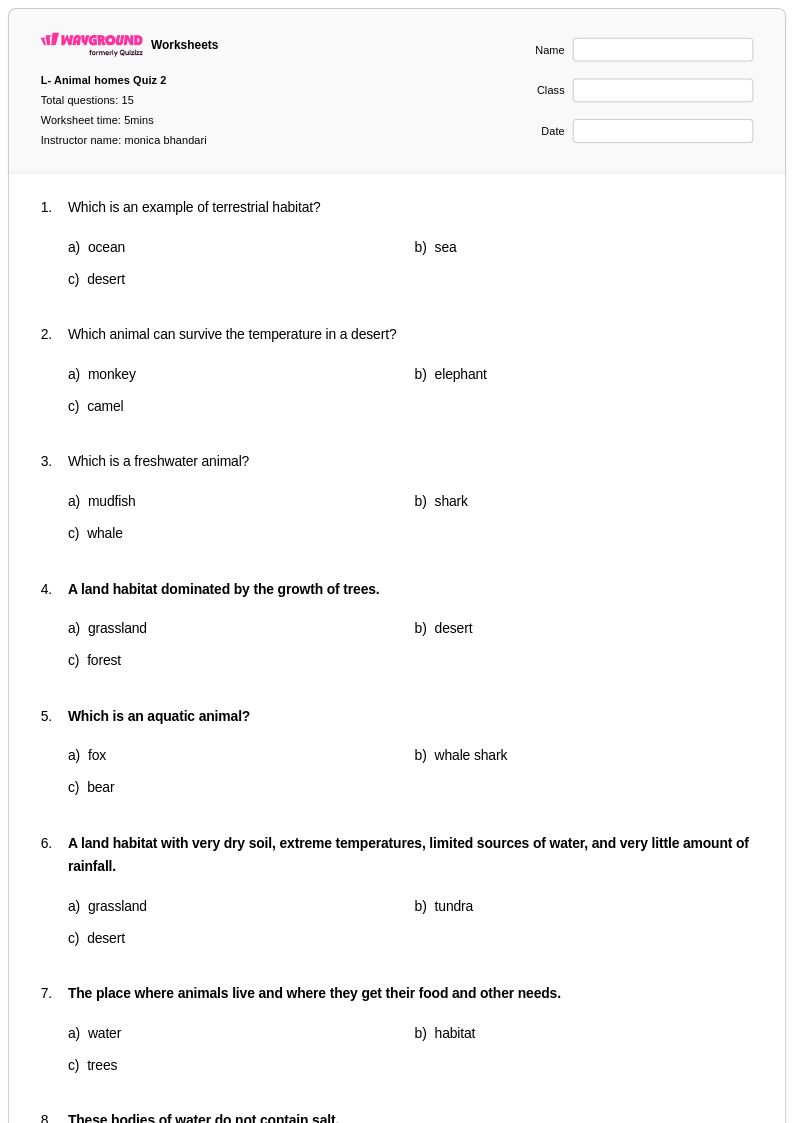
15 Q
4th
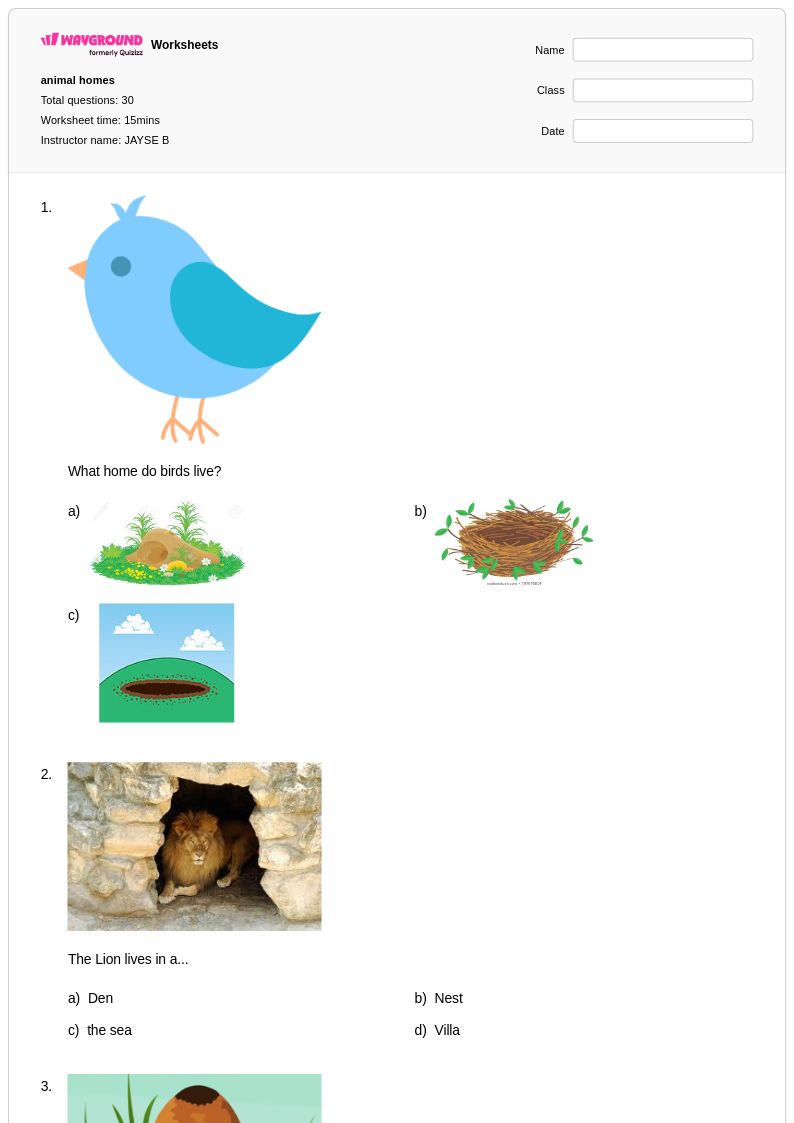
30 Q
4th - 8th
Explore Worksheets by Subjects
Explore printable Animal Homes worksheets
Animal homes worksheets available through Wayground (formerly Quizizz) provide students with comprehensive exploration of how different species create, adapt, and utilize their habitats for survival and reproduction. These educational resources strengthen critical thinking skills as students analyze the relationship between animal anatomy, behavior, and environmental demands that shape dwelling construction and selection. The worksheet collections feature diverse practice problems that challenge learners to identify various habitat types, from intricate bird nests and underground burrows to coral reef communities and tree hollows, while developing scientific observation and classification abilities. Each printable resource includes detailed answer keys that support independent learning and self-assessment, with free pdf formats ensuring accessibility for diverse classroom environments and home study applications.
Wayground (formerly Quizizz) empowers educators with millions of teacher-created animal homes worksheet resources that streamline lesson planning through robust search and filtering capabilities aligned with science education standards. The platform's differentiation tools enable teachers to customize content complexity and format preferences, supporting both remediation for struggling learners and enrichment opportunities for advanced students who need deeper exploration of ecological concepts. These comprehensive worksheet collections are available in both printable and digital formats, including downloadable pdfs that facilitate flexible implementation across various learning environments and technological capabilities. Teachers can efficiently organize skill practice sessions, assessment activities, and collaborative learning experiences while accessing continuously updated content that reflects current scientific understanding of animal behavior and habitat relationships.
FAQs
How do I teach animal homes to elementary students?
What exercises help students practice identifying animal homes?
What misconceptions do students commonly have about animal homes?
How can I use animal homes worksheets to support different skill levels in my class?
How do I use Wayground's animal homes worksheets in my classroom?
How does studying animal homes connect to broader science standards?