Free Printable Levels of Biological Organization worksheets
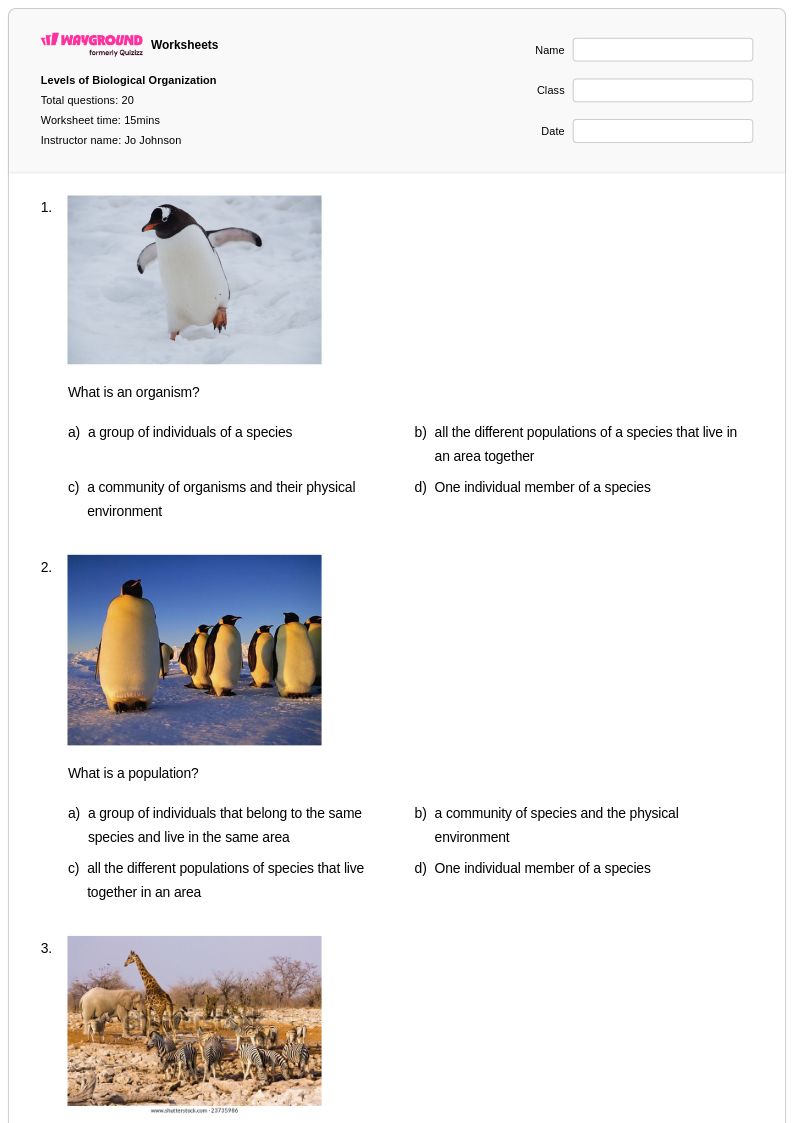
Explore Wayground's comprehensive collection of free biology worksheets and printables focusing on levels of biological organization, featuring practice problems and answer keys to help students master the hierarchical structure of life from atoms to ecosystems.
Explore printable Levels of Biological Organization worksheets
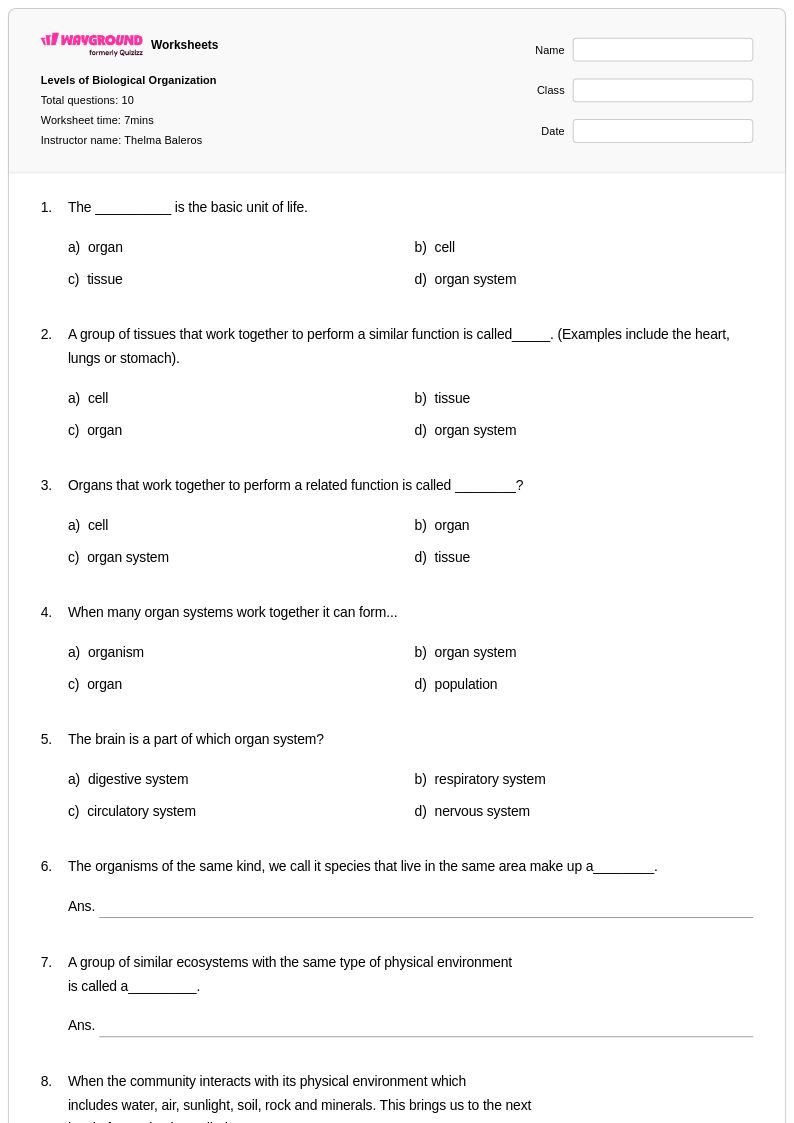
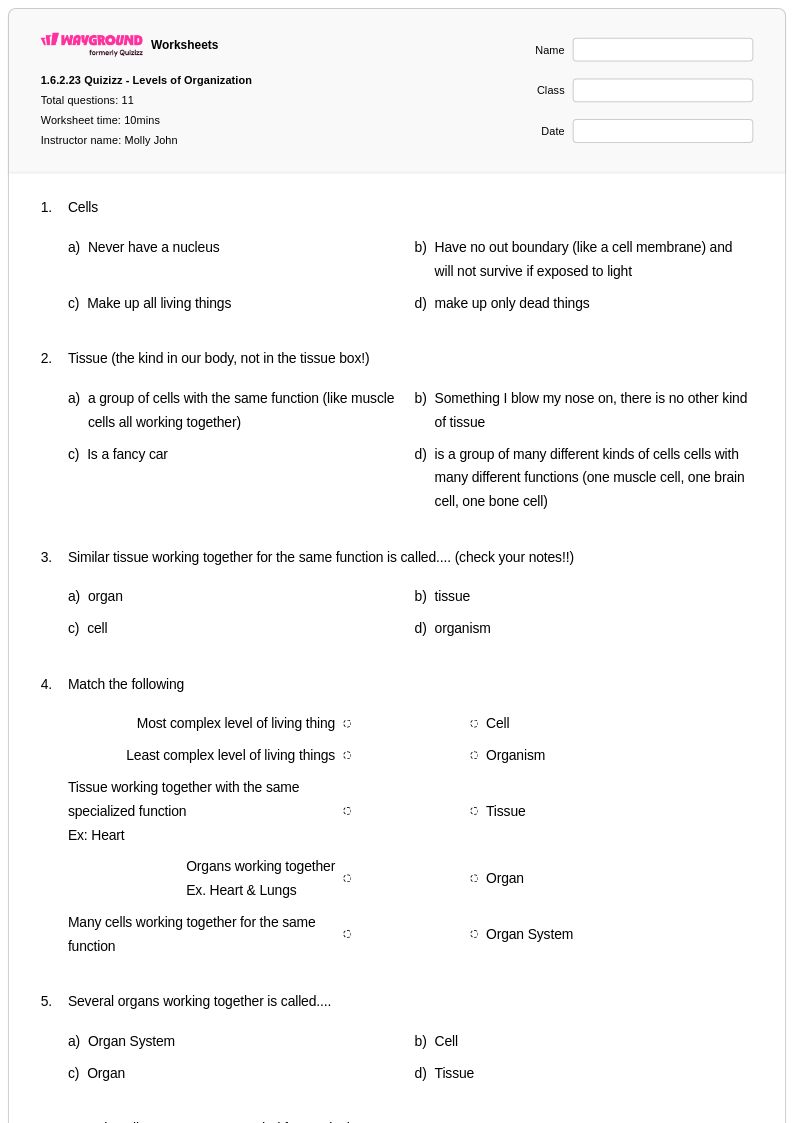
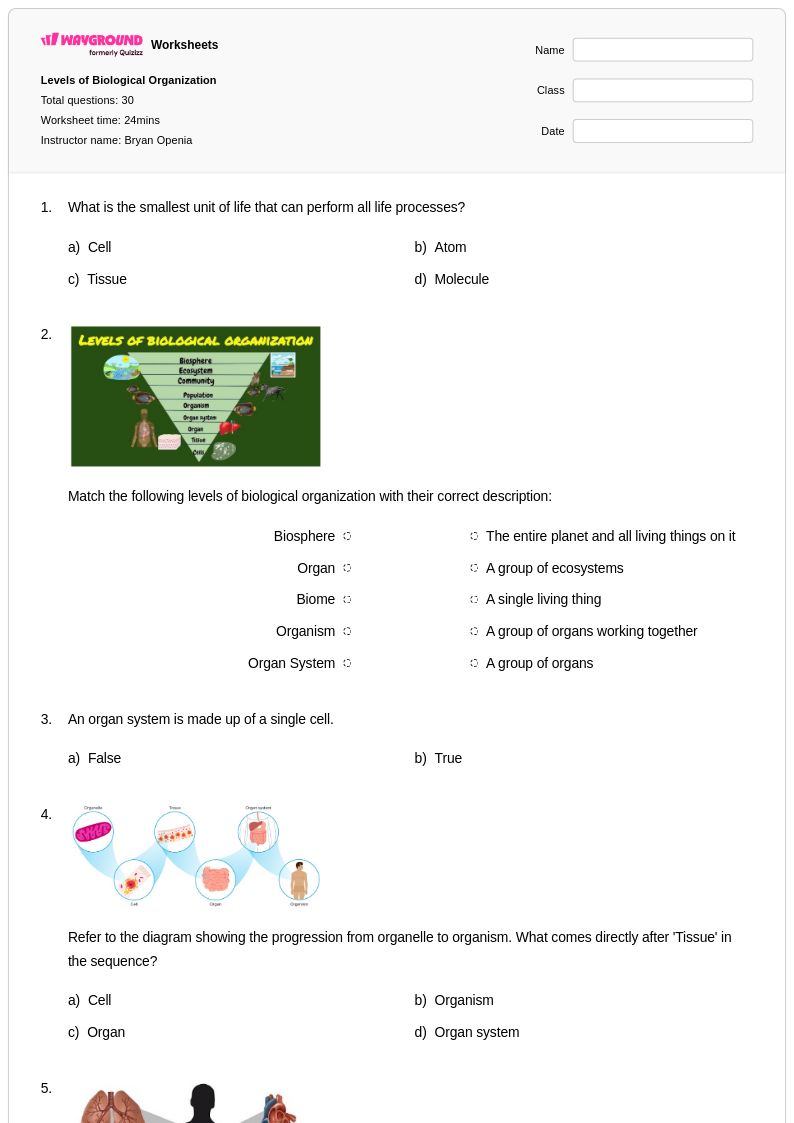
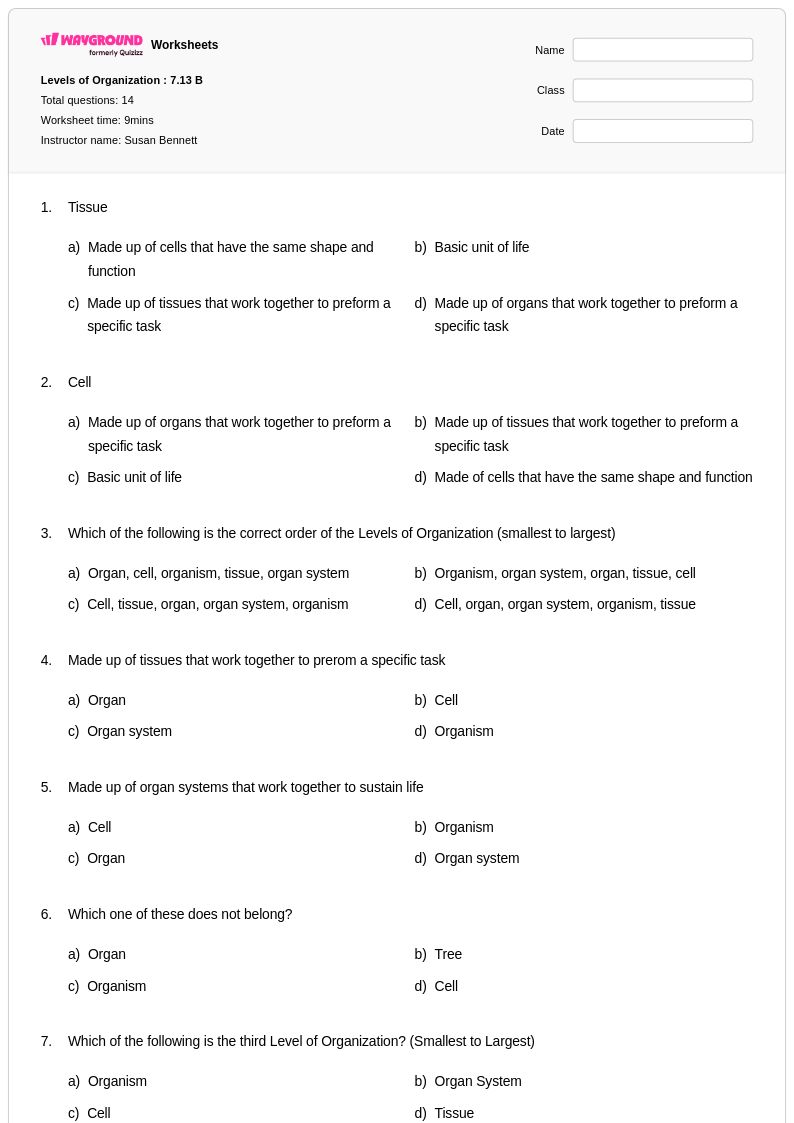
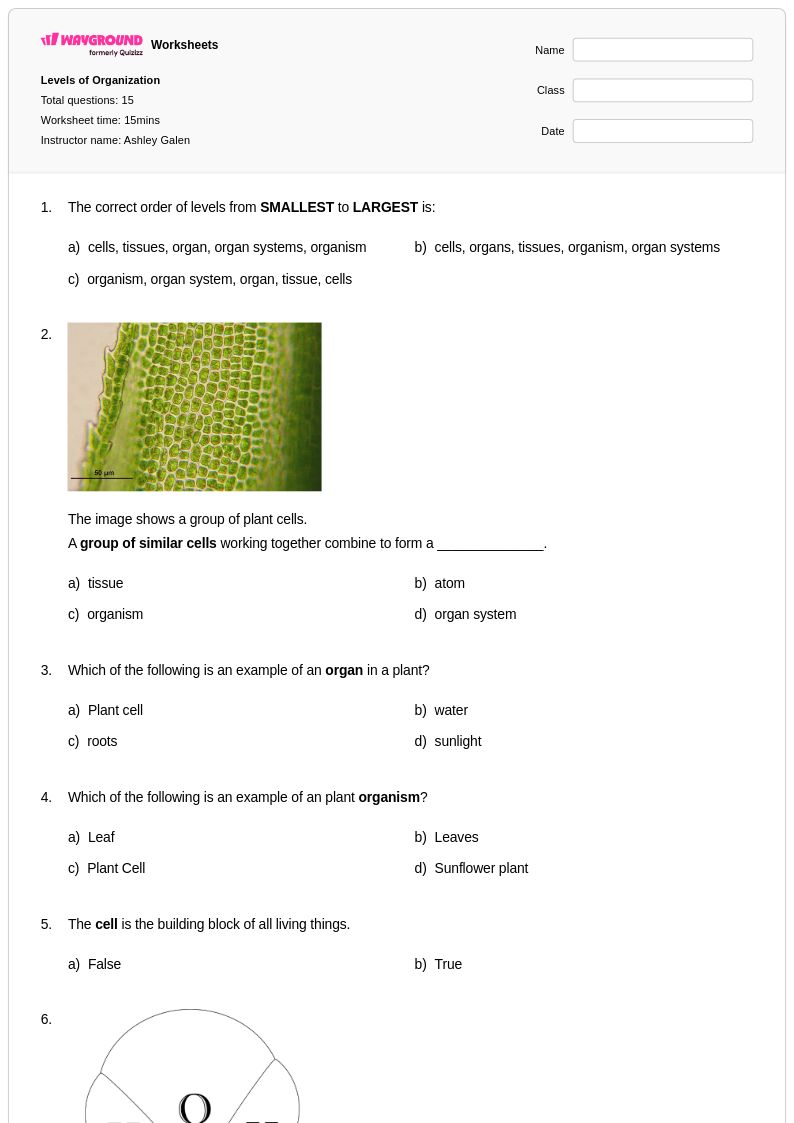
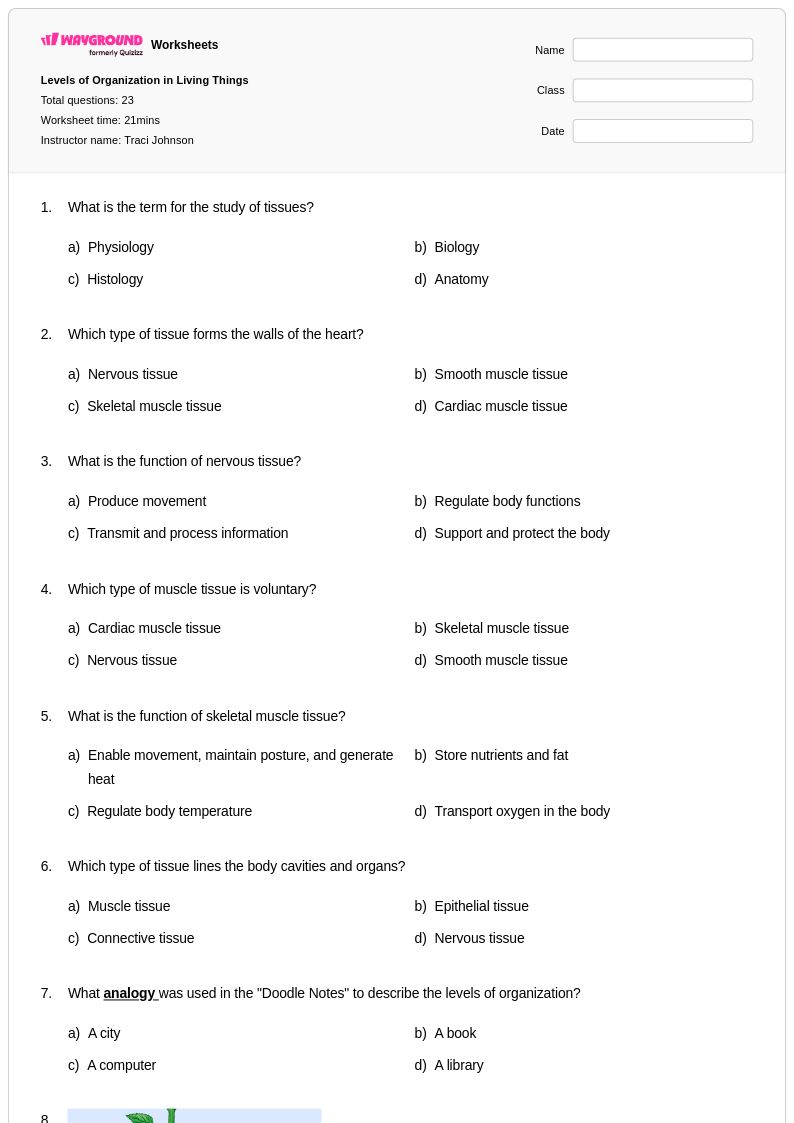
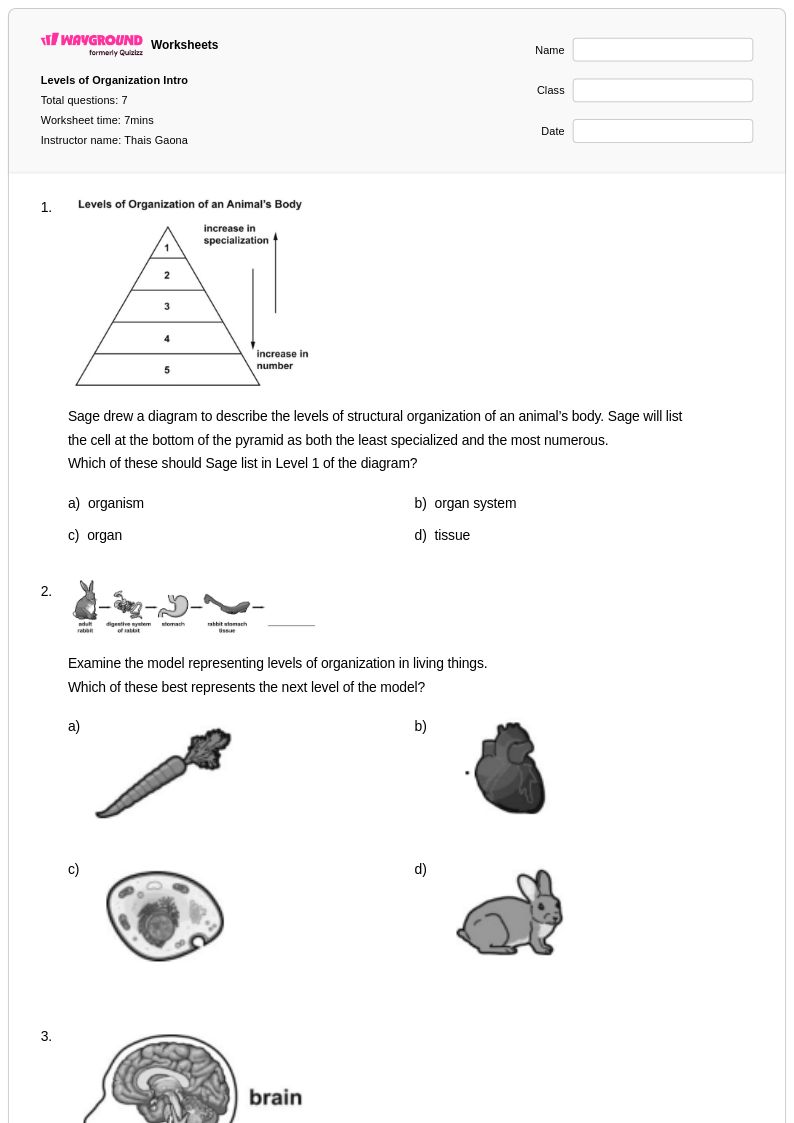
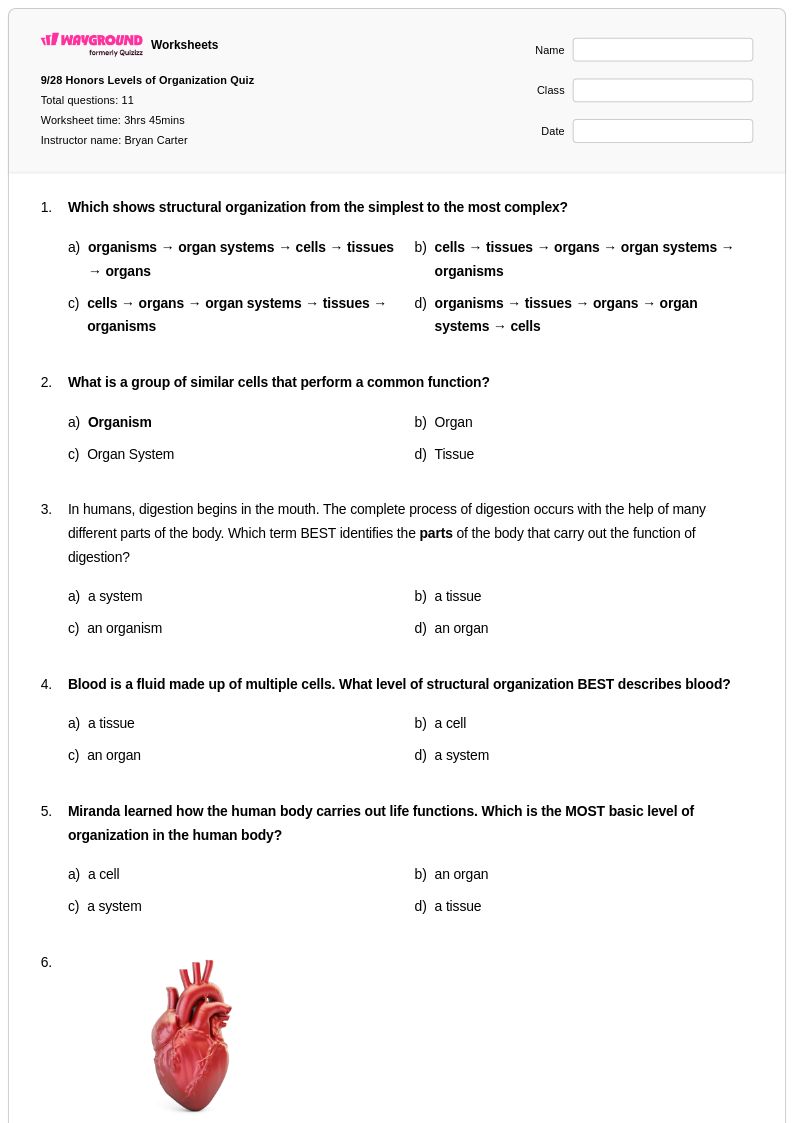
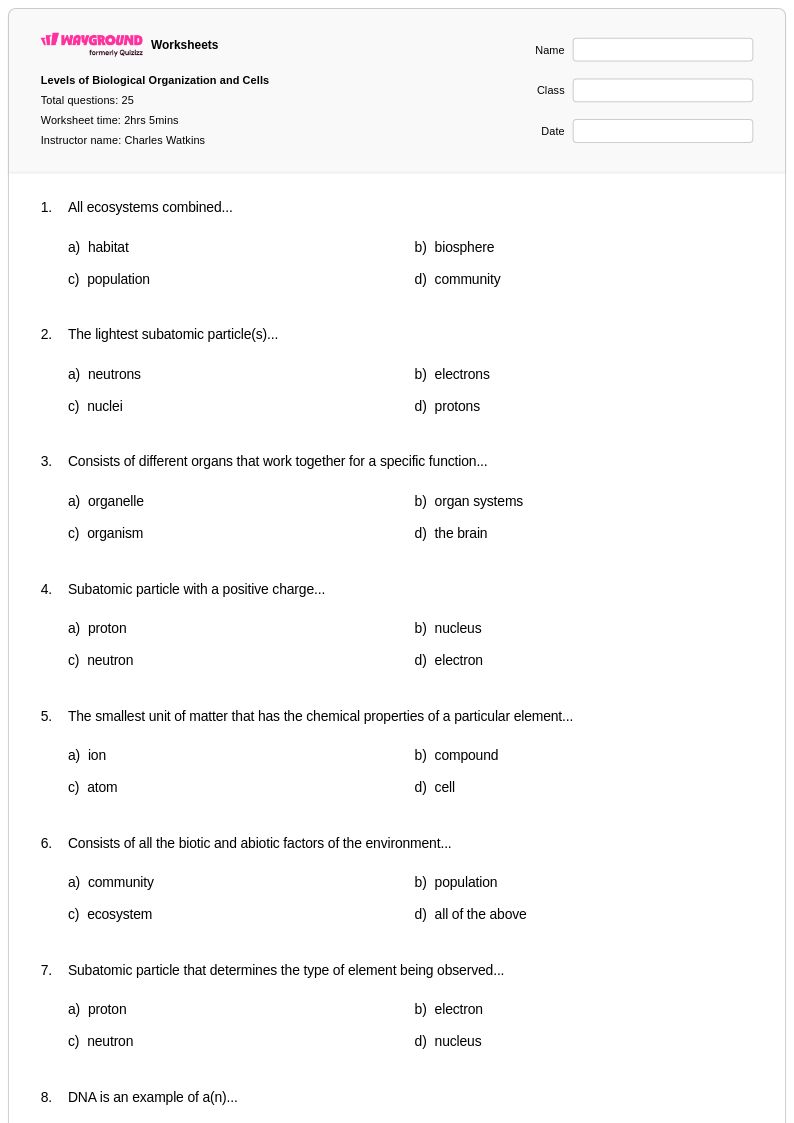
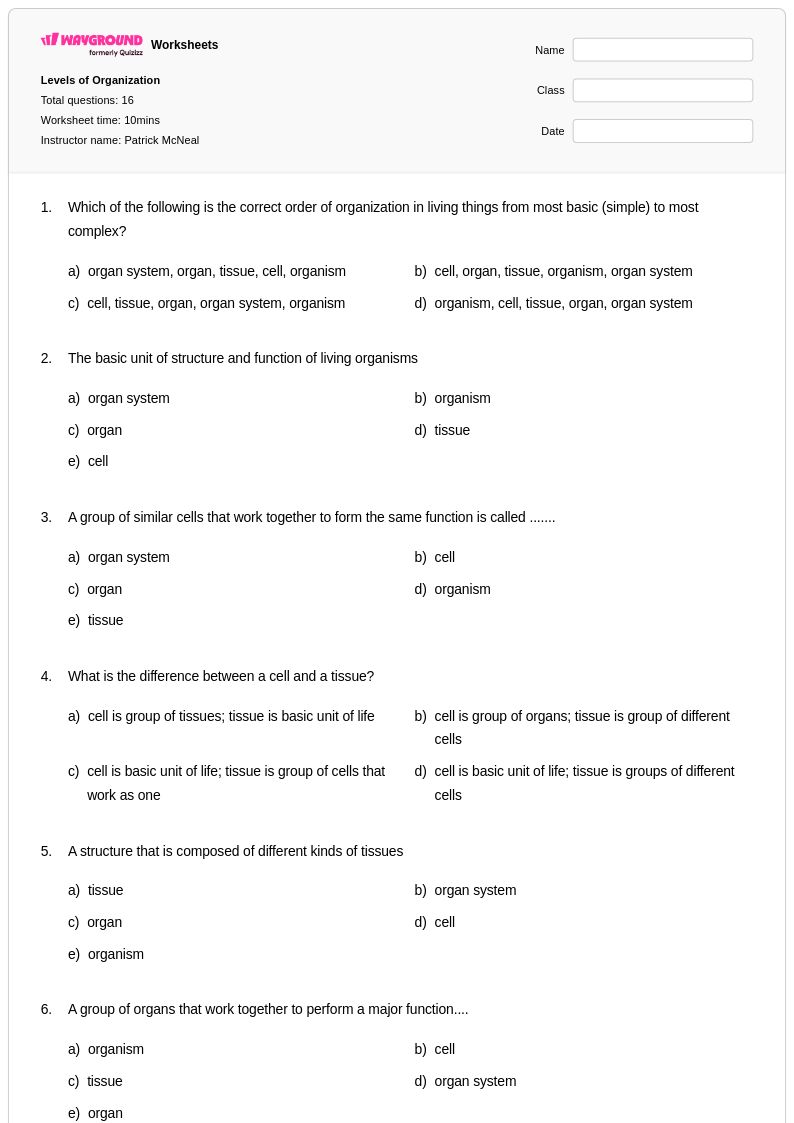
Levels of biological organization worksheets available through Wayground (formerly Quizizz) provide comprehensive practice materials that guide students through the hierarchical structure of life, from atoms and molecules to biospheres and ecosystems. These educational resources strengthen critical thinking skills by challenging students to identify, classify, and analyze the interconnected relationships between cells, tissues, organs, organ systems, organisms, populations, communities, and ecosystems. The worksheets feature diverse practice problems that require students to apply their understanding of how biological complexity emerges at each organizational level, with complete answer keys that support independent learning and self-assessment. Available as free printables and downloadable pdf formats, these materials help students master the fundamental concept that biological systems exhibit increasing complexity and emergent properties at each successive level of organization.
Wayground (formerly Quizizz) empowers educators with millions of teacher-created worksheet resources focused on levels of biological organization, featuring robust search and filtering capabilities that allow instructors to quickly locate materials aligned with specific learning standards and curriculum requirements. The platform's differentiation tools enable teachers to customize worksheets based on individual student needs, while flexible formatting options support both digital classroom integration and traditional printable assignments. These comprehensive collections facilitate effective lesson planning by providing ready-to-use materials for introducing new concepts, reinforcing classroom instruction, and conducting targeted remediation or enrichment activities. Teachers can seamlessly integrate these resources into their biology curriculum to provide students with varied opportunities for skill practice, whether addressing basic cellular organization or complex ecological relationships, ensuring that learners develop a thorough understanding of how biological systems are structured and interconnected across all levels of life.
FAQs
How do I teach levels of biological organization to students?
Start by anchoring instruction at the cell level, since it is the most fundamental unit of life students can visualize, then build upward through tissues, organs, organ systems, organisms, populations, communities, and ecosystems. Using a visual hierarchy diagram helps students see how complexity increases at each level and why emergent properties appear. Connecting each level to a concrete example — such as tracing the heart from cardiac cells to the cardiovascular system to the organism — makes the progression tangible rather than abstract.
What exercises help students practice identifying levels of biological organization?
Classification exercises that ask students to sort real-world examples into the correct organizational level are highly effective, as are sequencing tasks where students arrange a set of biological structures from simplest to most complex. Practice problems that require students to explain why a given example belongs at one level and not another push deeper conceptual thinking beyond simple memorization. Worksheets that mix identification, classification, and short-answer analysis give students multiple ways to engage with the hierarchy.
What mistakes do students commonly make when learning levels of biological organization?
The most common error is confusing organ systems with organisms, or conflating populations with communities — students often blur the boundaries between adjacent levels. Many students also struggle with the concept of emergent properties, incorrectly assuming that each level is simply a larger version of the one below rather than understanding that new functions arise at each step. Targeted practice that explicitly asks students to distinguish between levels, rather than just name them, is the most effective way to address these misconceptions.
How do I use levels of biological organization worksheets effectively in my class?
These worksheets work well as structured practice after direct instruction, as exit tickets to check for understanding, or as independent review tools before assessments. They are available as printable PDFs for traditional classroom use and in digital formats for technology-integrated learning environments, and can also be hosted as a quiz on Wayground for immediate student feedback. Using the worksheets sequentially — beginning with cell and tissue identification before progressing to ecosystem-level relationships — helps students build the hierarchy incrementally rather than trying to absorb all levels at once.
How can I differentiate levels of biological organization instruction for students with different needs?
On Wayground, teachers can apply individual accommodations such as Read Aloud, which provides audio reading of questions for students who need support with text-heavy content, and reduced answer choices to lower cognitive load for students still developing familiarity with the hierarchy. Extended time can be configured per student for those who need additional processing time, and reading mode allows font size and display adjustments for accessibility. These settings are saved and reusable across future sessions, so differentiation does not require repeated setup.
How do levels of biological organization connect to broader biology concepts students need to know?
The organizational hierarchy is foundational to nearly every other area of biology — understanding it allows students to contextualize topics like cell biology, genetics, physiology, ecology, and evolution within a coherent structural framework. Without a firm grasp of how cells form tissues, tissues form organs, and organs form systems, students lack the scaffolding needed to understand how disease, adaptation, or ecological disruption works at multiple levels simultaneously. Teachers who establish this hierarchy early in the course often find that later units require significantly less re-explanation of basic structural concepts.