Explore Wayground's comprehensive earthworm dissection worksheets and printables that guide students through anatomical structures, biological functions, and hands-on learning with detailed practice problems and answer keys.
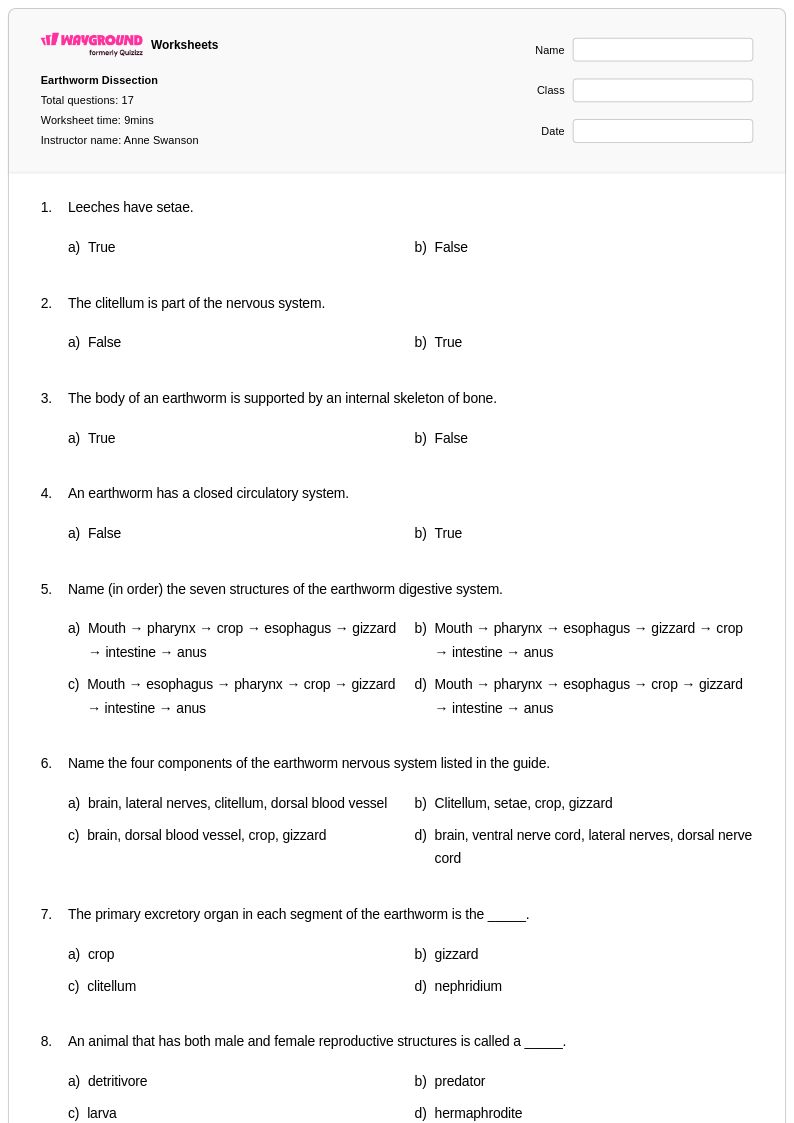
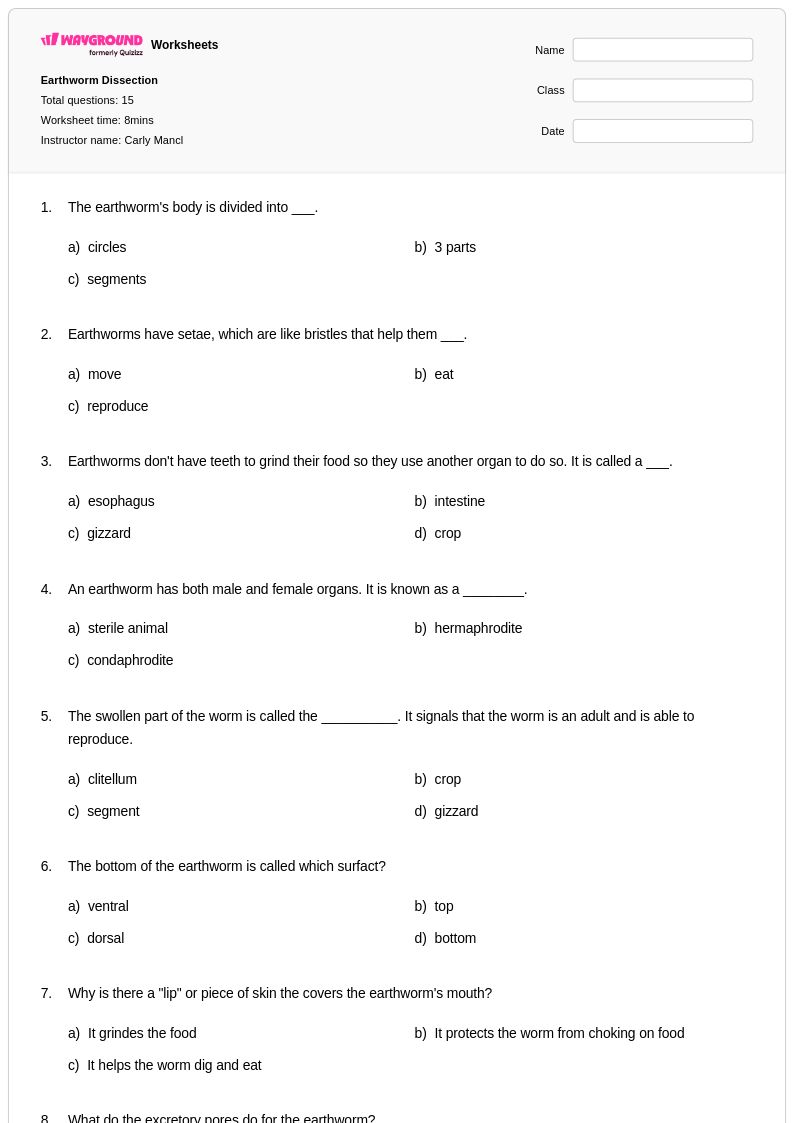
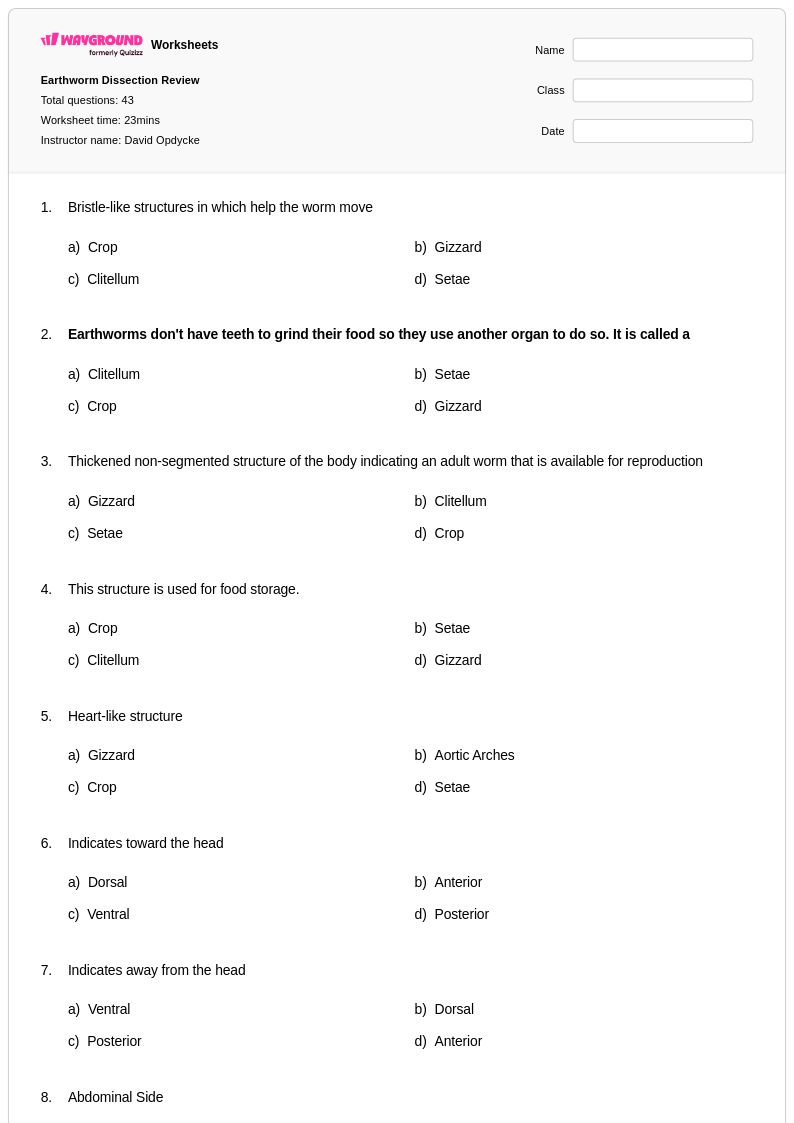
Earthworm dissection worksheets available through Wayground (formerly Quizizz) provide students with comprehensive guides for exploring invertebrate anatomy and understanding fundamental biological structures. These educational resources serve the critical academic purpose of strengthening observational skills, anatomical knowledge, and scientific inquiry techniques as students examine the digestive, circulatory, reproductive, and nervous systems of Lumbricus terrestris. The worksheets typically include detailed diagrams for labeling major structures like the pharynx, crop, gizzard, and seminal vesicles, alongside practice problems that reinforce understanding of segmentation, bilateral symmetry, and organ function. Teachers can access these materials as free printables in pdf format, complete with comprehensive answer keys that facilitate efficient grading and provide students with immediate feedback on their anatomical identifications and physiological explanations.
Wayground (formerly Quizizz) supports biology educators with an extensive collection of millions of teacher-created earthworm dissection resources that can be easily located through robust search and filtering capabilities. The platform's standards alignment features ensure that worksheets meet specific curriculum requirements, while differentiation tools allow teachers to modify content complexity for diverse learning needs and skill levels. These flexible customization options enable educators to adapt dissection guides for both introductory and advanced study, supporting effective lesson planning and targeted skill practice. Available in both printable and digital formats including downloadable pdf versions, these worksheet collections facilitate seamless integration into laboratory sessions, remote learning environments, and remediation programs, while also providing enrichment opportunities for students ready to explore more complex anatomical relationships and physiological processes in invertebrate biology.
FAQs
How do I teach earthworm dissection in a biology class?
Effective earthworm dissection instruction begins with a pre-lab review of invertebrate anatomy, particularly the organ systems of Lumbricus terrestris, including the digestive, circulatory, reproductive, and nervous systems. Teachers should walk students through external features first, such as the clitellum and setae, before guiding them to identify internal structures like the pharynx, crop, gizzard, and seminal vesicles. Pairing the hands-on dissection with a structured diagram-labeling worksheet helps students connect visual observation to anatomical terminology in real time.
What exercises help students practice identifying earthworm anatomy?
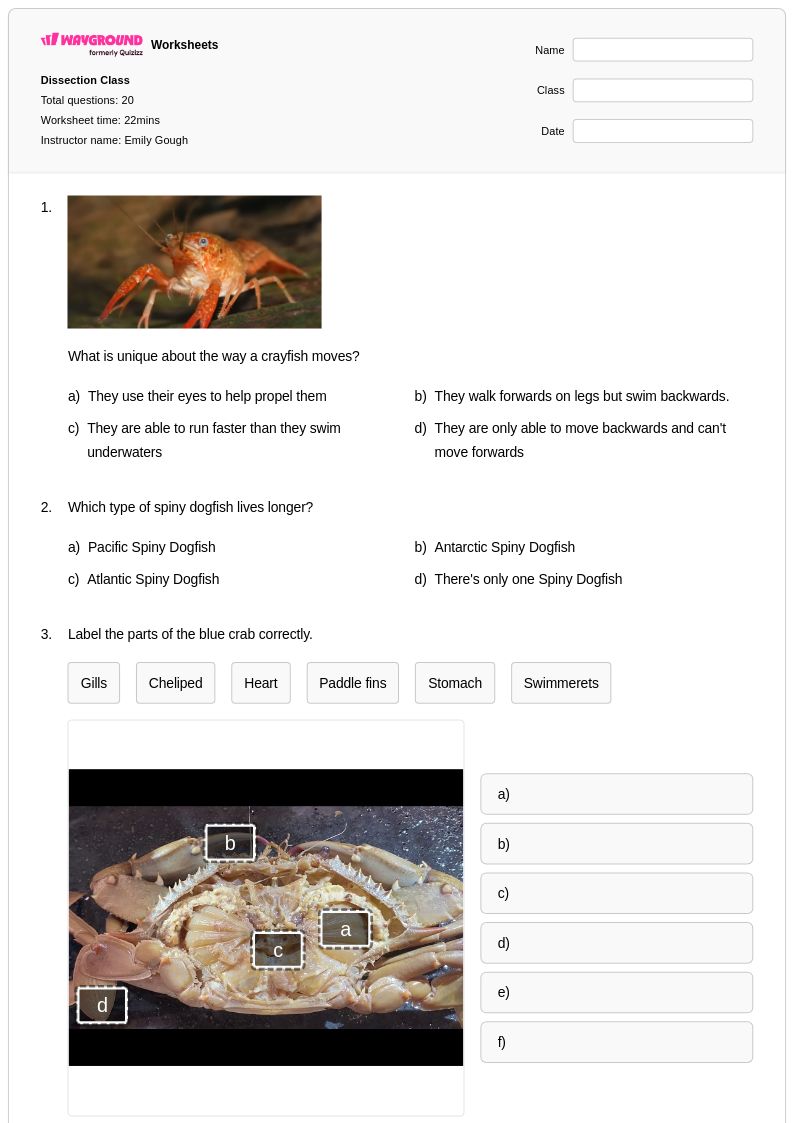
Diagram-labeling activities are the most effective practice format for earthworm anatomy, requiring students to identify and annotate structures such as the pharynx, crop, gizzard, aortic arches, and seminal vesicles on a cross-section or dorsal view. Supplementing with short-answer questions about organ function, segmentation, and bilateral symmetry deepens conceptual understanding beyond rote identification. Practice problems that ask students to explain the role of each digestive organ reinforce the connection between structure and biological function.
What mistakes do students commonly make when dissecting or labeling an earthworm?
One of the most frequent errors is confusing the crop and gizzard, as both are digestive structures located in close proximity — students often mislabel them or conflate their functions, not recognizing that the crop stores food while the gizzard grinds it. Students also struggle to distinguish the seminal vesicles from other pale tissue masses in the anterior region, particularly when dissection technique is imprecise. A common conceptual mistake is assuming earthworms have a simple, undifferentiated digestive tract rather than understanding the functional specialization of each segment.
How do I use Wayground's earthworm dissection worksheets in my classroom?
Wayground's earthworm dissection worksheets are available as printable PDFs for traditional lab settings and in digital formats for technology-integrated classrooms, making them adaptable to both in-person dissection days and remote or virtual learning environments. Teachers can use the digital format to host the worksheet as a quiz on Wayground, allowing students to submit responses directly and receive structured feedback. All worksheets include comprehensive answer keys, which streamlines grading and gives students immediate reference points for self-correction after lab completion.
How can I differentiate earthworm dissection worksheets for students with different skill levels?
For students who need additional support, reducing the number of structures required for labeling or providing a word bank lowers cognitive load while keeping the activity meaningful. Wayground's platform includes built-in accommodation tools such as Read Aloud, which can audio-read questions and diagram labels for students with reading difficulties, and reduced answer choices to support students who need scaffolding on identification questions. Advanced students can be challenged with open-response questions that require them to explain physiological relationships, such as how the aortic arches function analogously to a vertebrate heart.
Is earthworm dissection appropriate for middle school or is it a high school topic?
Earthworm dissection is most commonly taught in middle school life science courses as an introduction to invertebrate anatomy, typically around grades 6 through 8, though it also appears in high school biology as a foundational comparative anatomy exercise. At the middle school level, the focus is usually on identifying major organ systems and understanding segmentation, while high school instruction may extend into deeper physiological analysis and comparison with vertebrate anatomy. The appropriate complexity of accompanying worksheets should reflect this distinction, with introductory labeling tasks for younger students and function-based analysis questions for older learners.