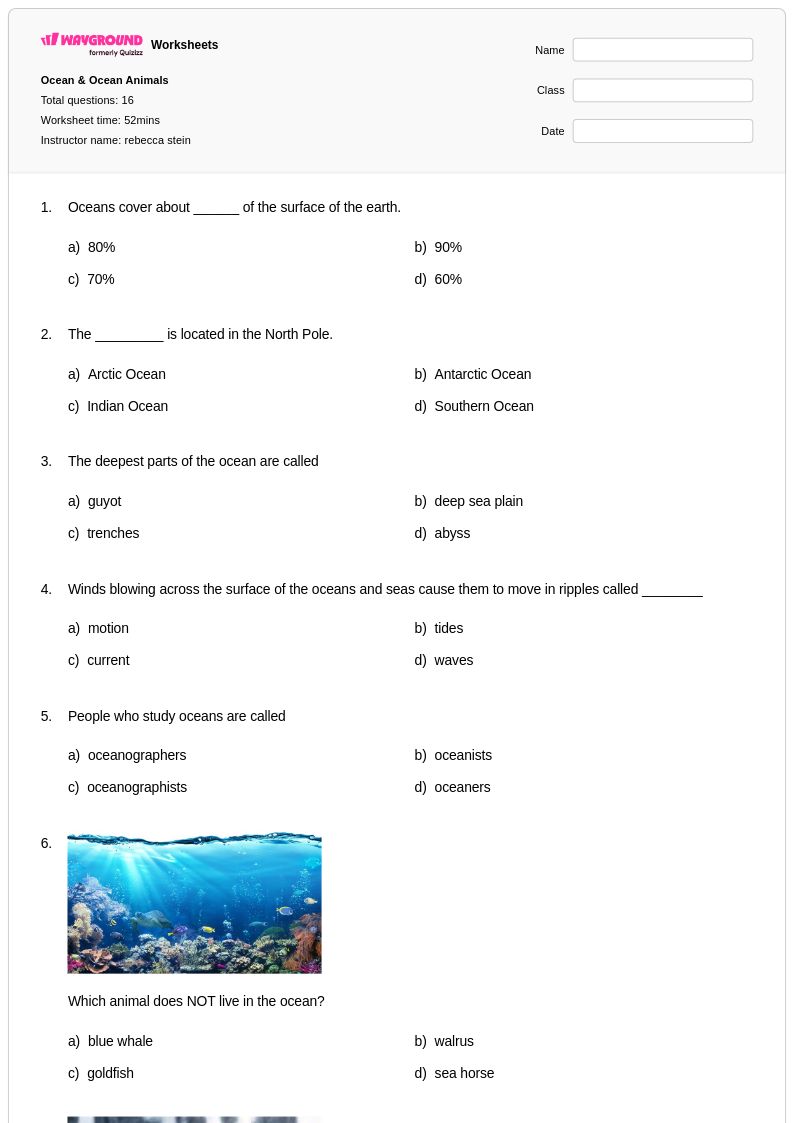
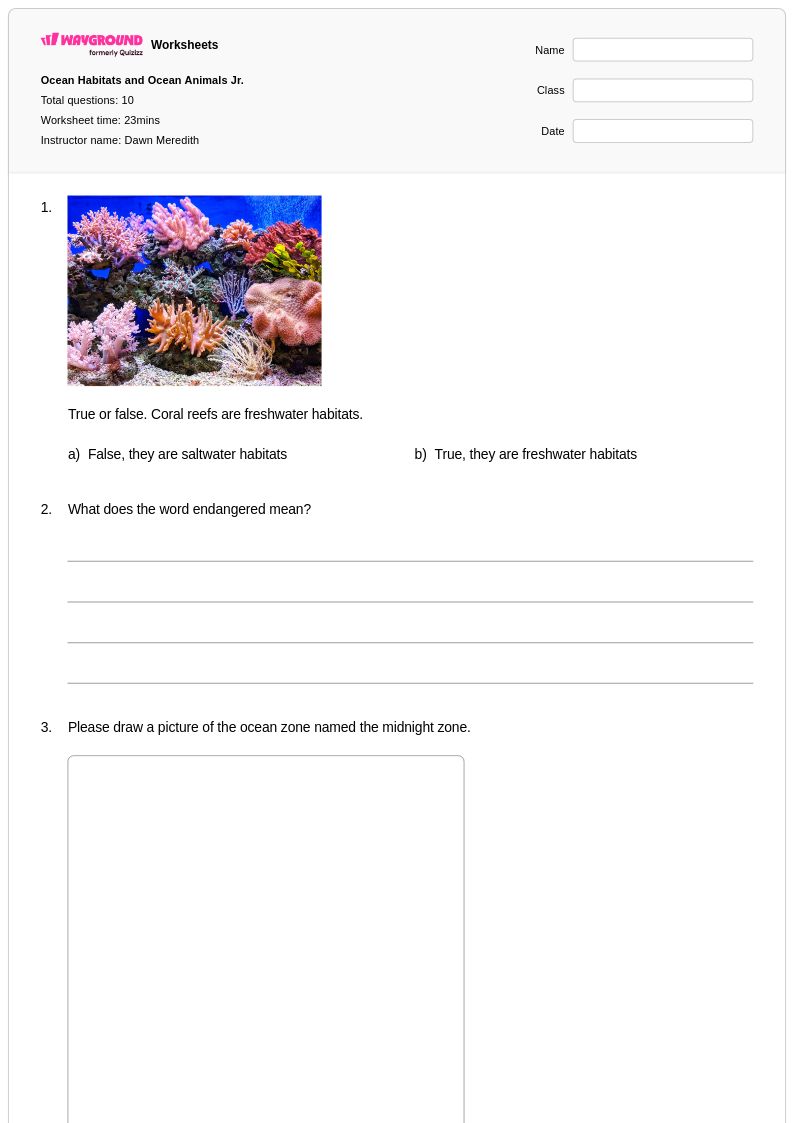
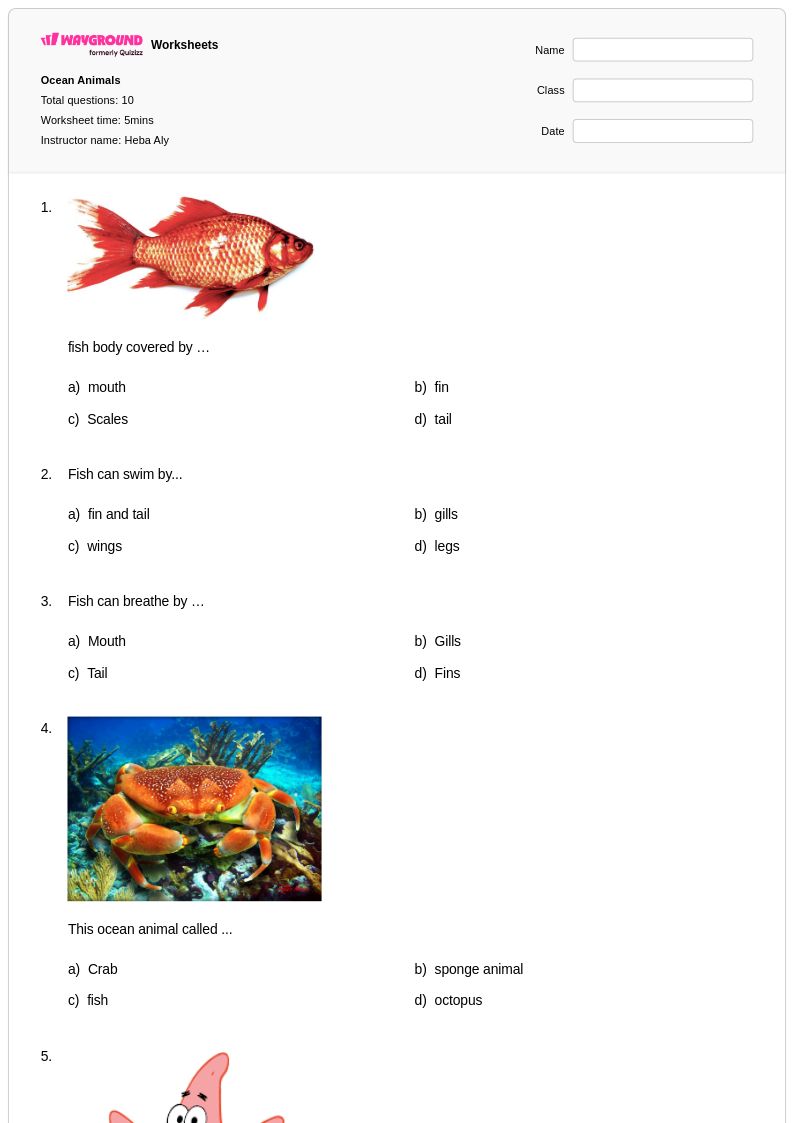
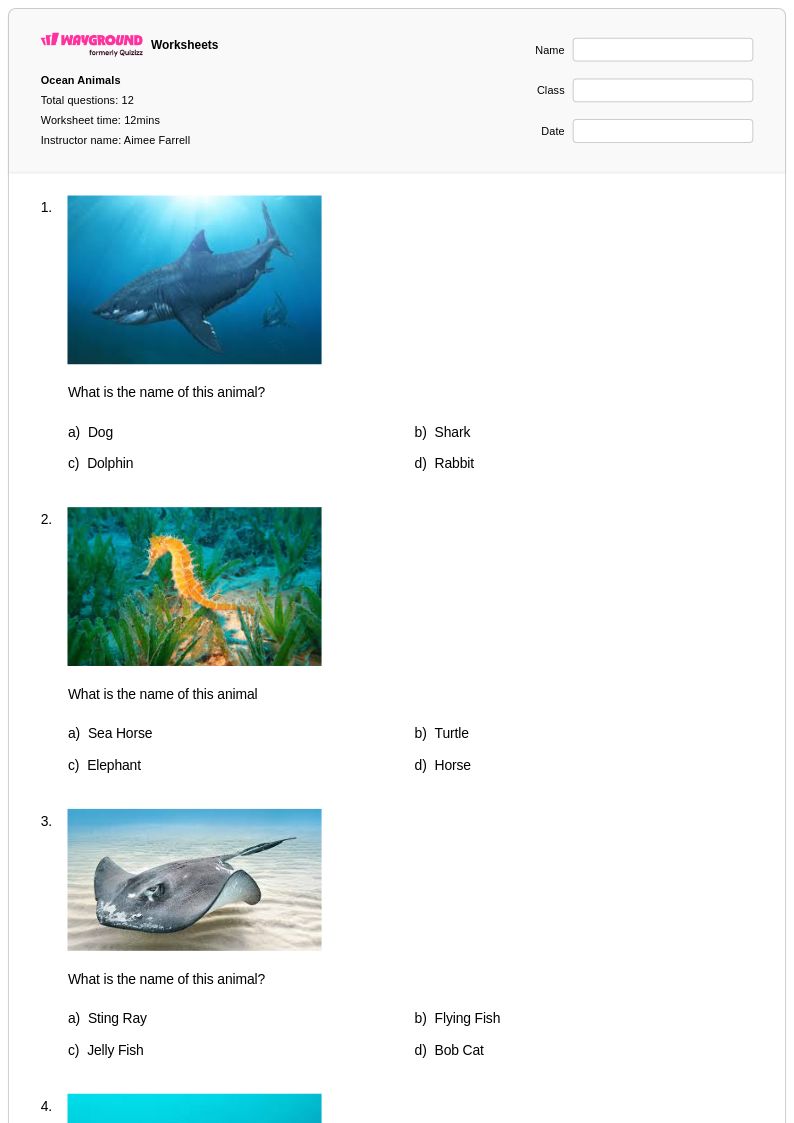
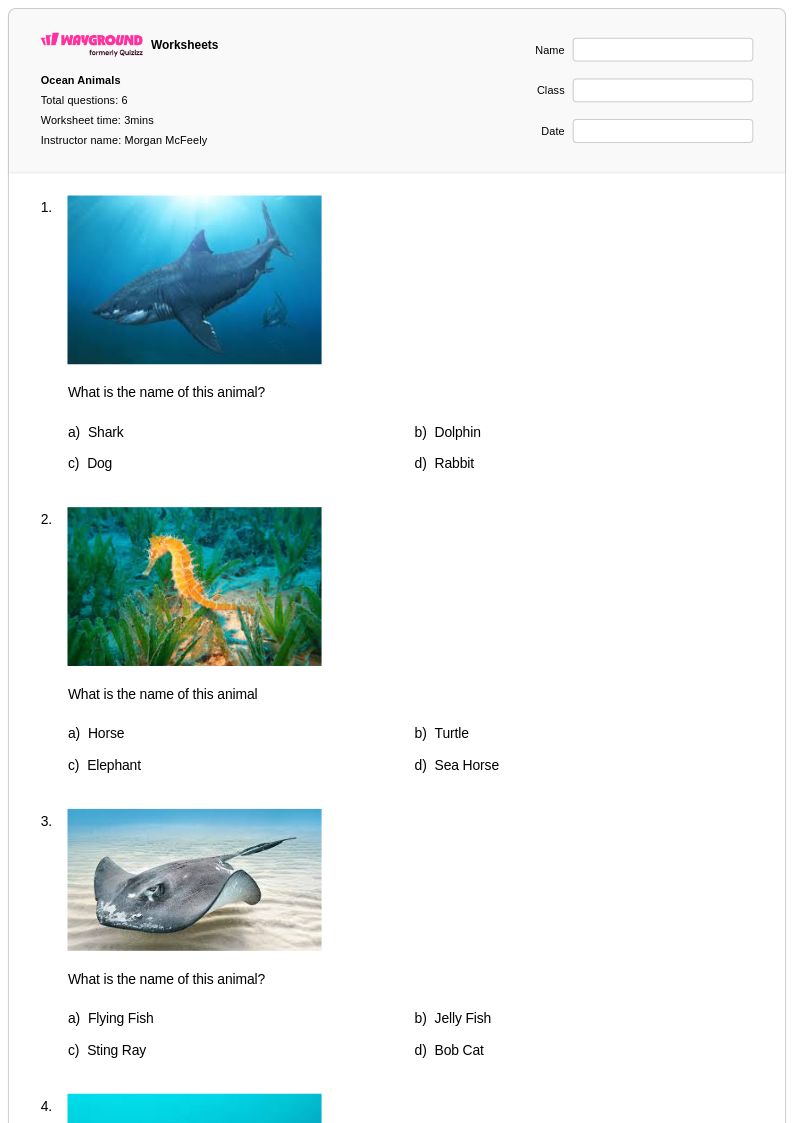
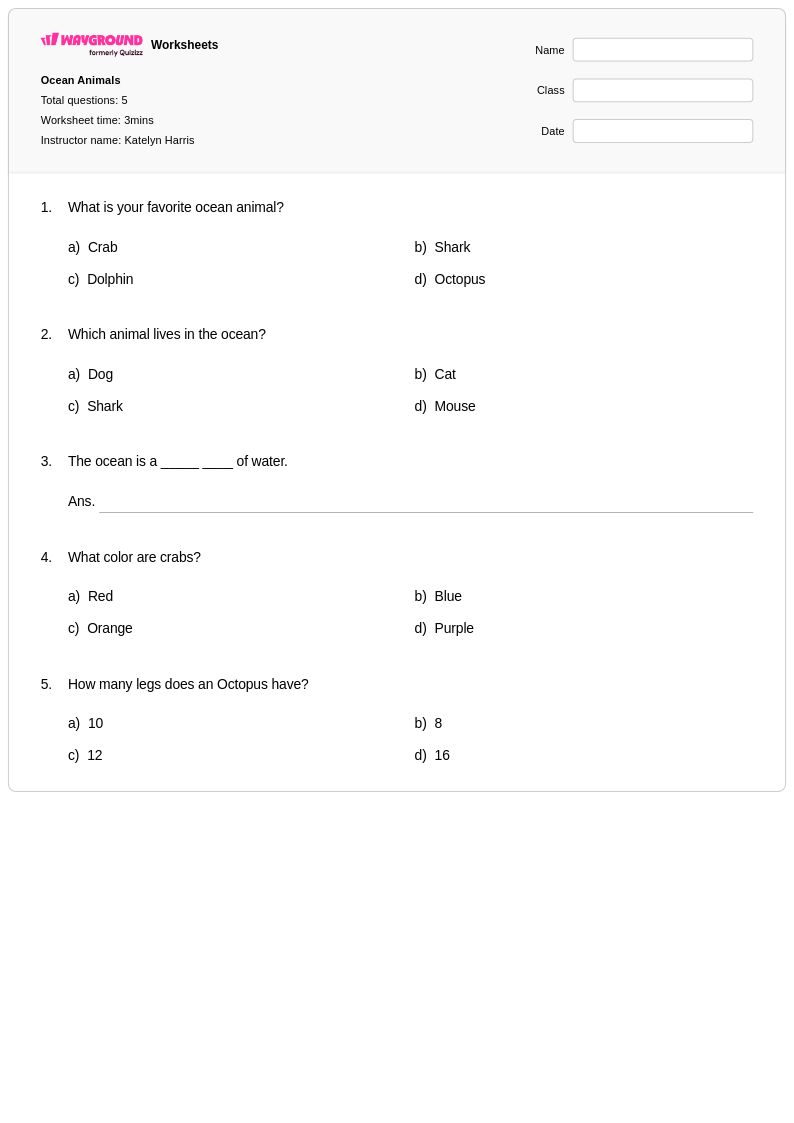
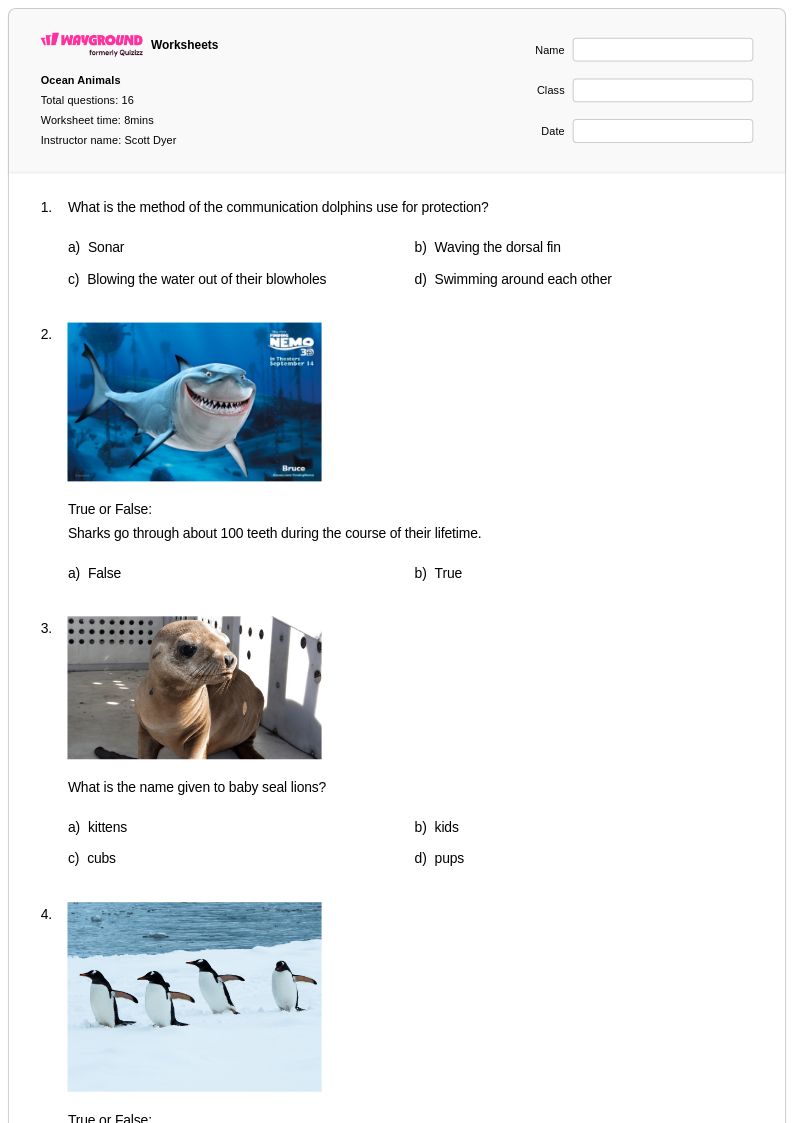
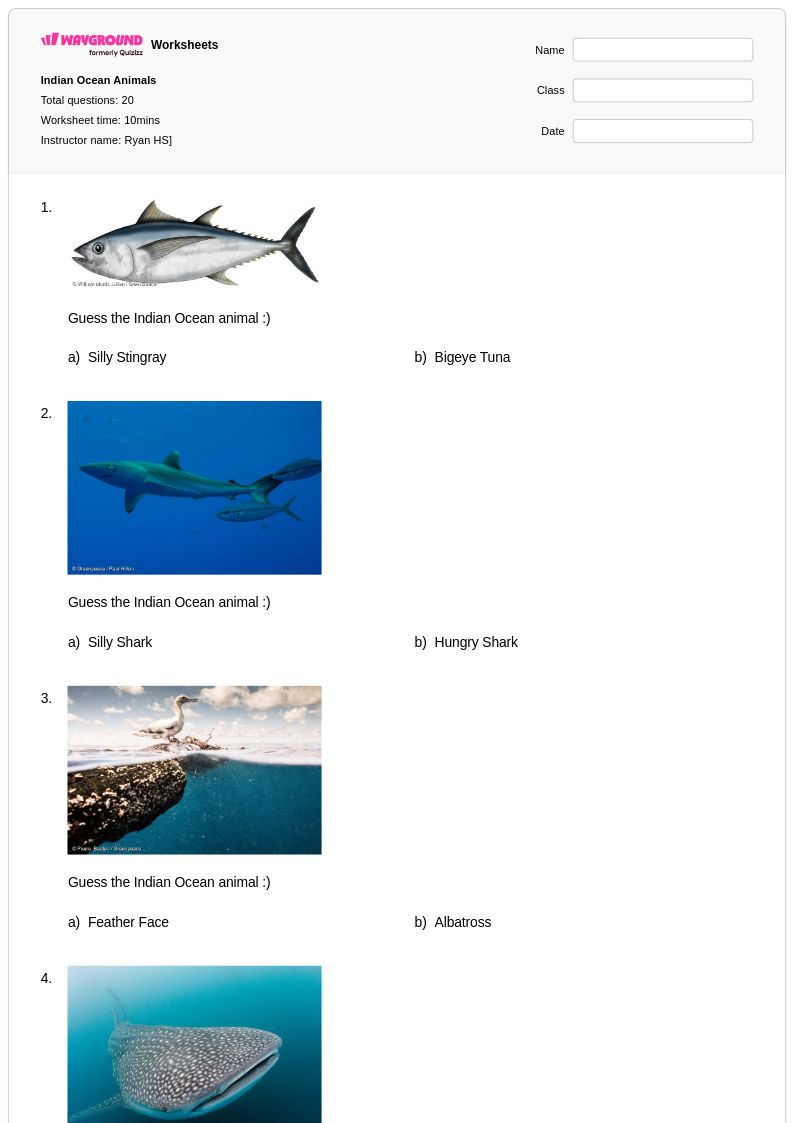
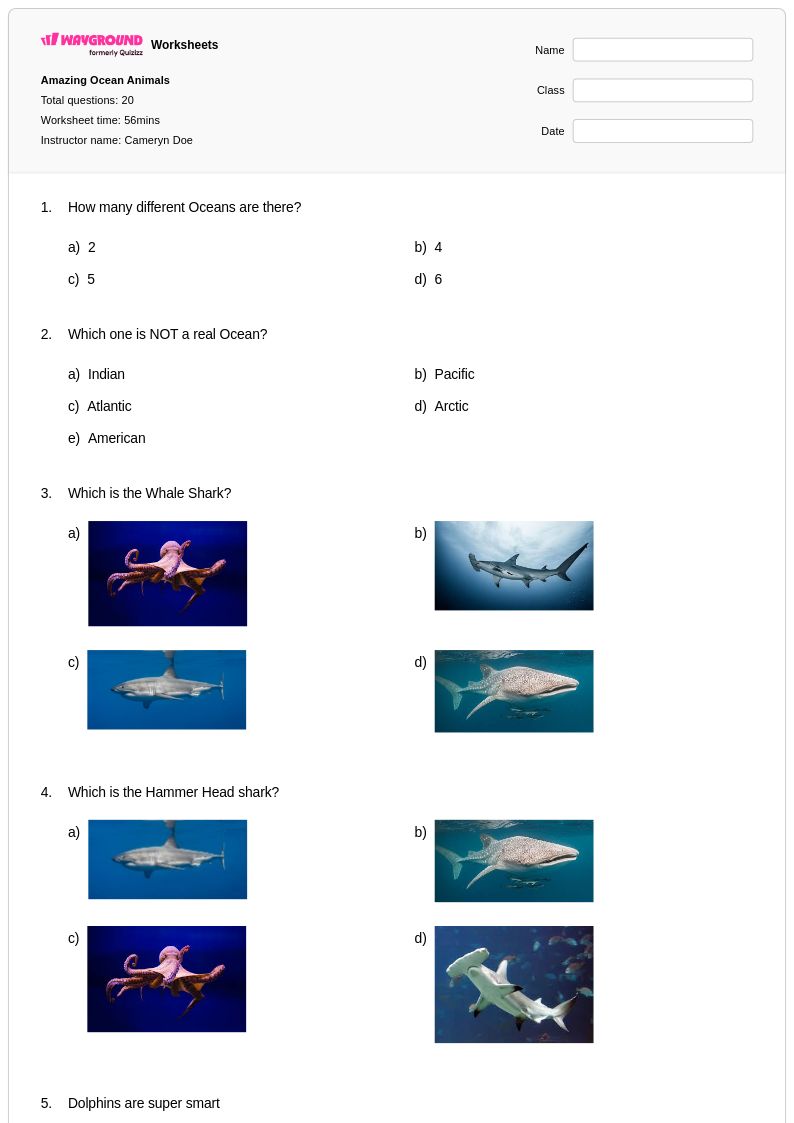
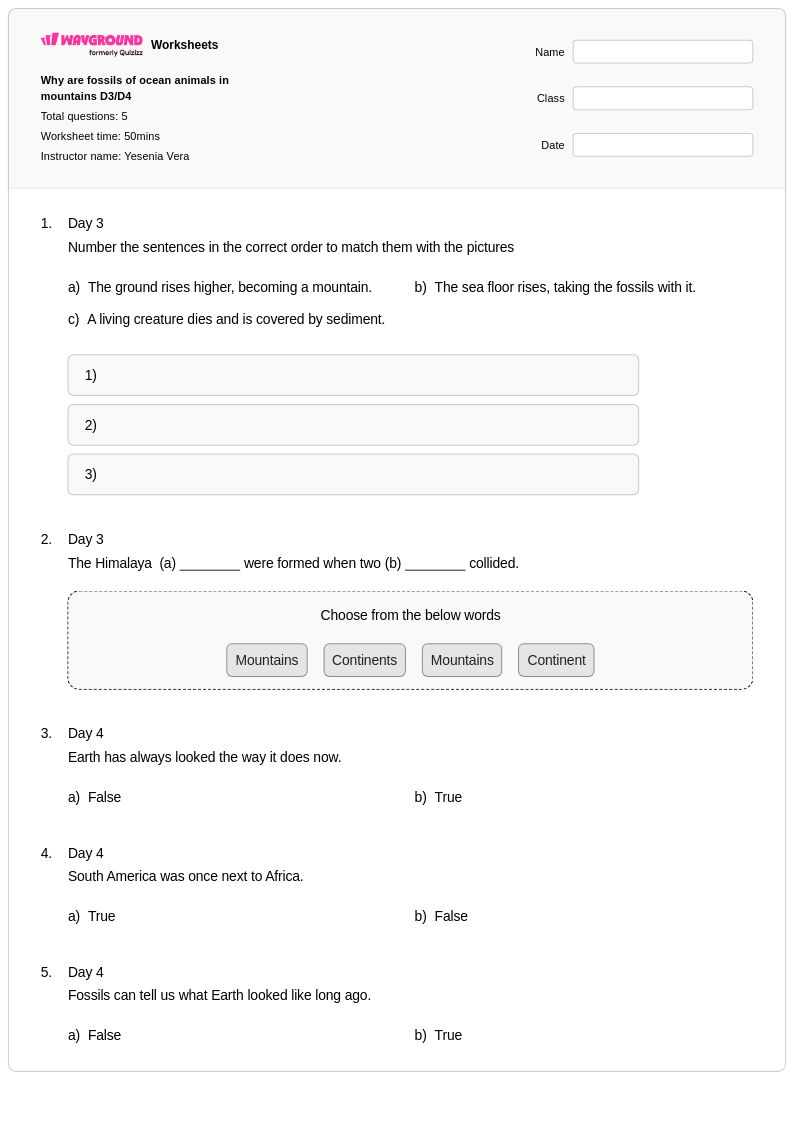
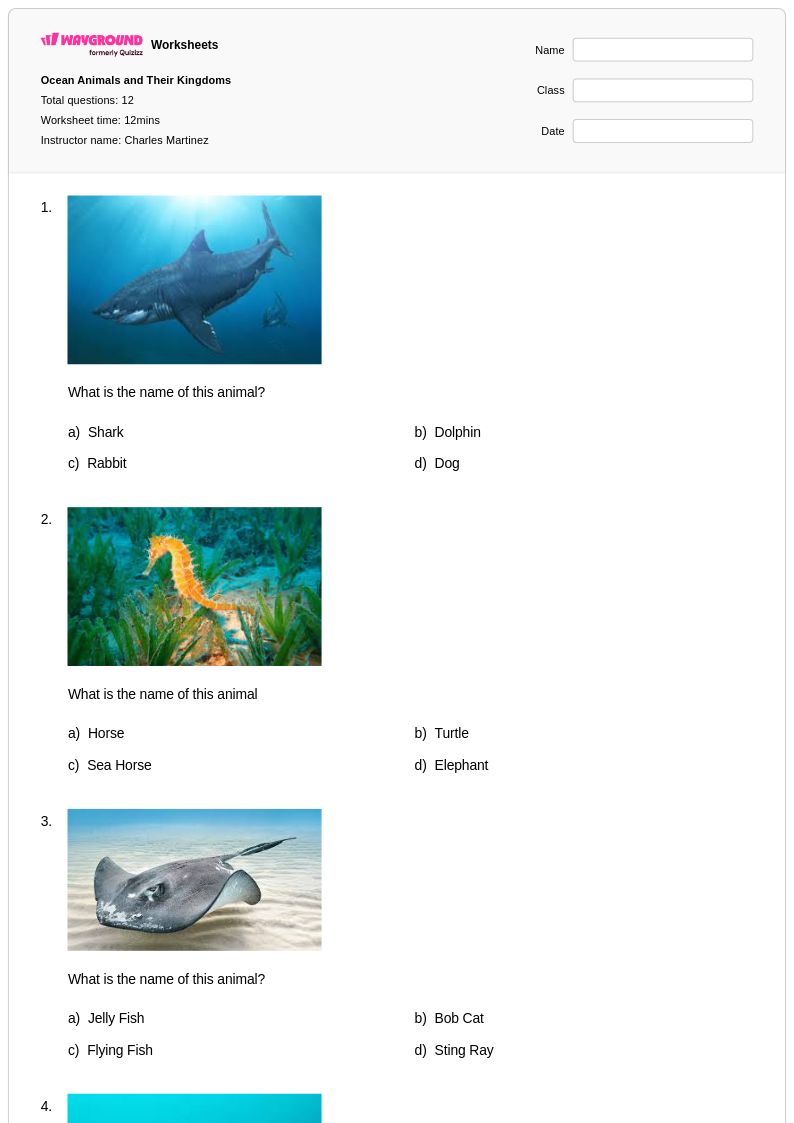
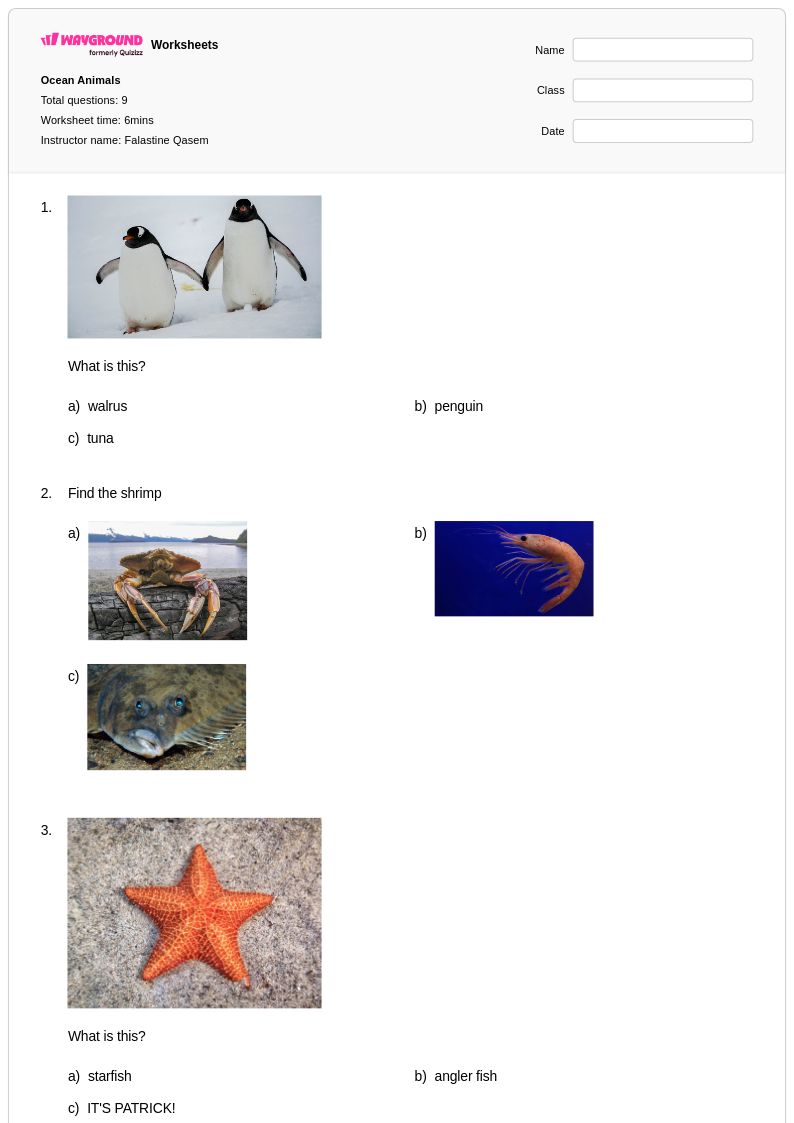
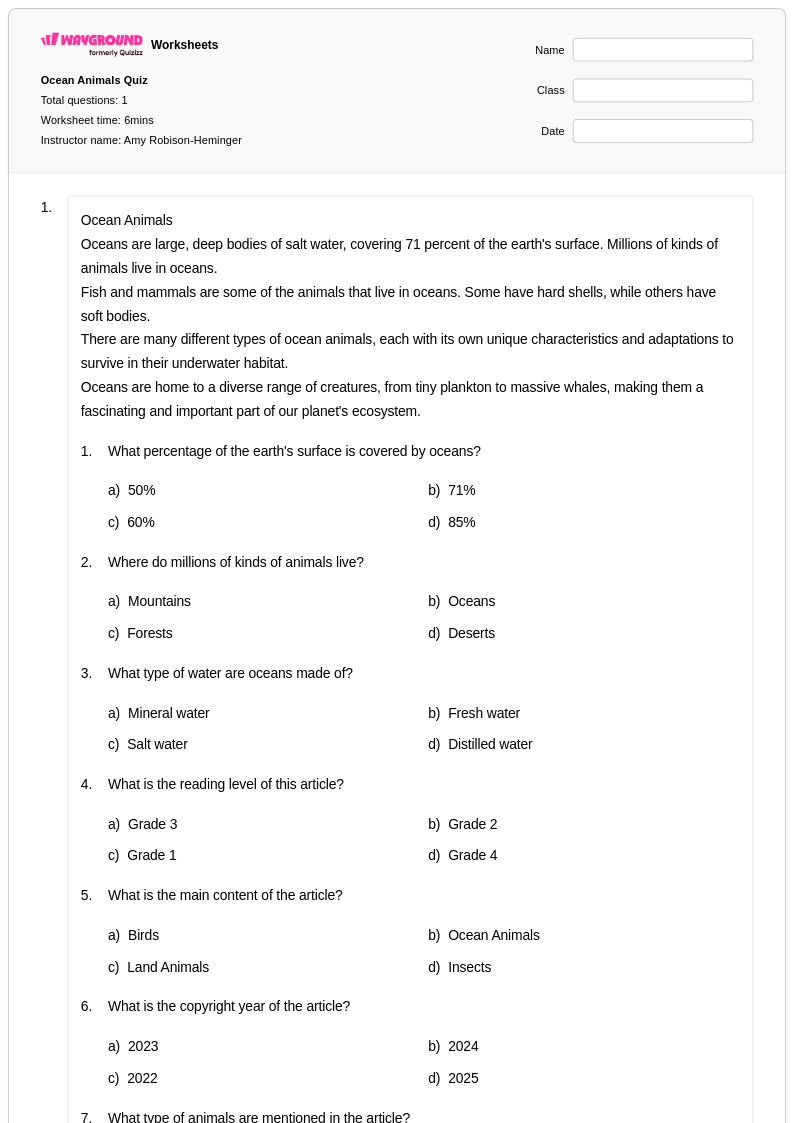
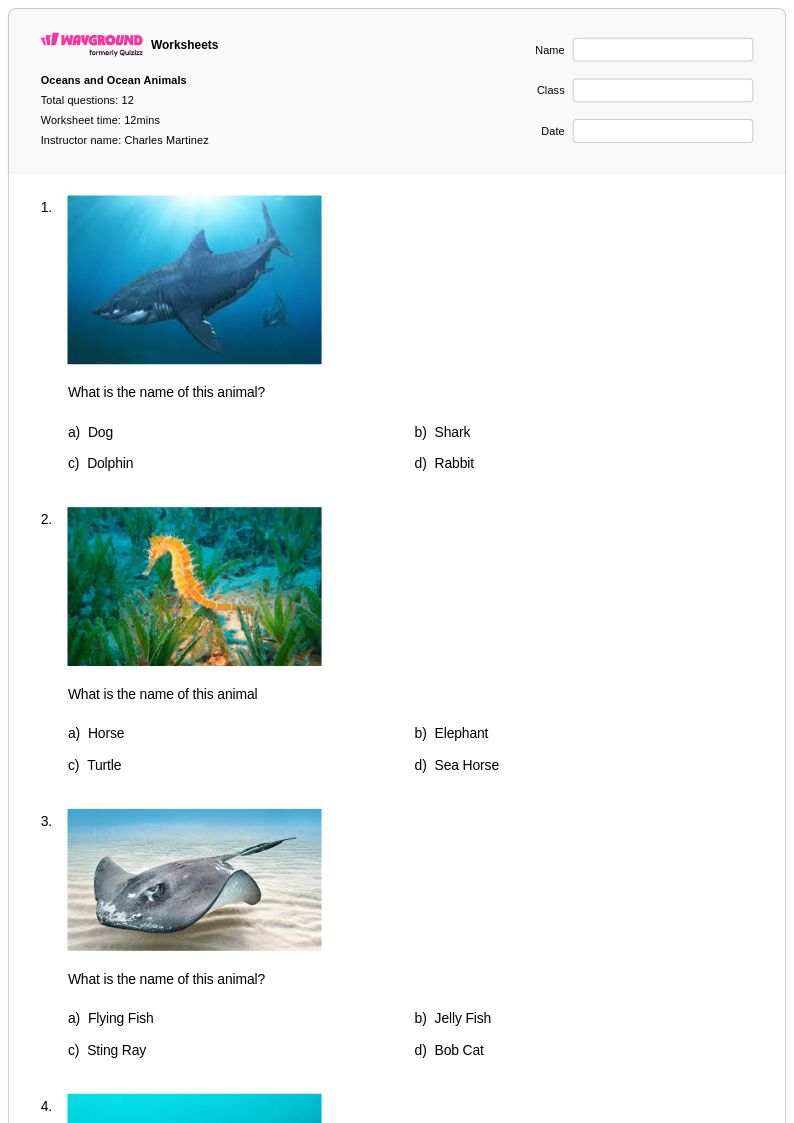
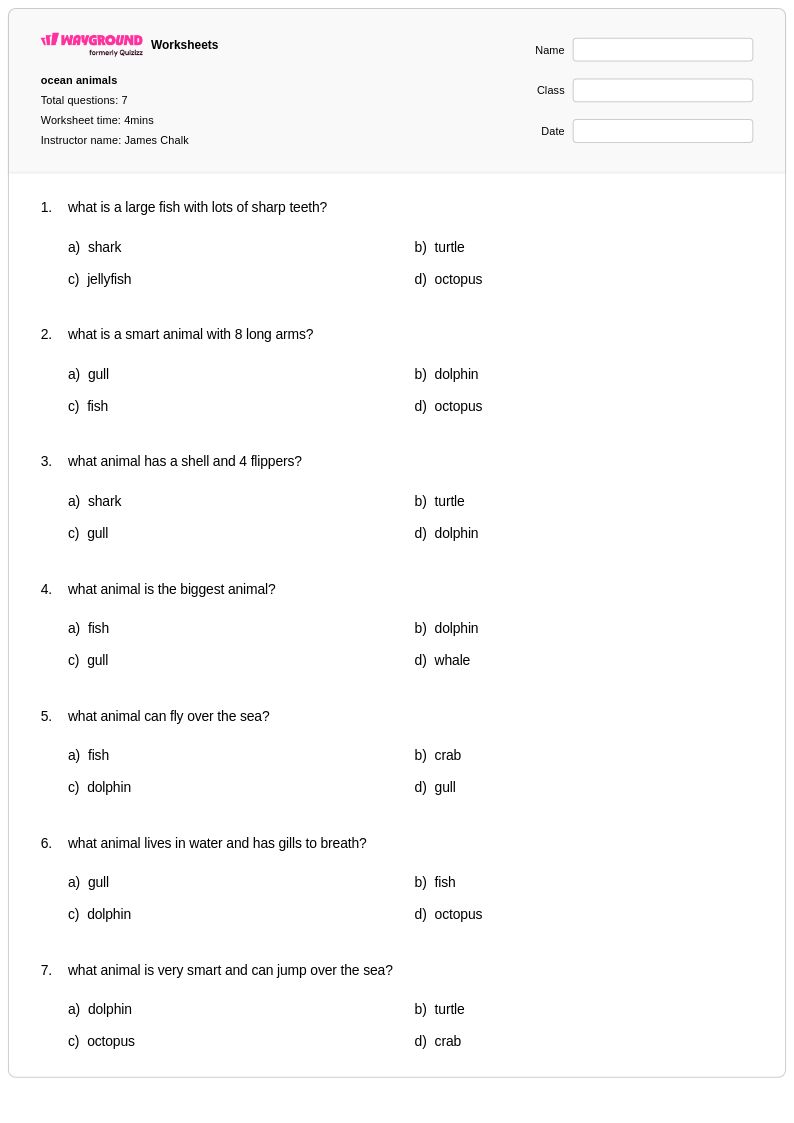
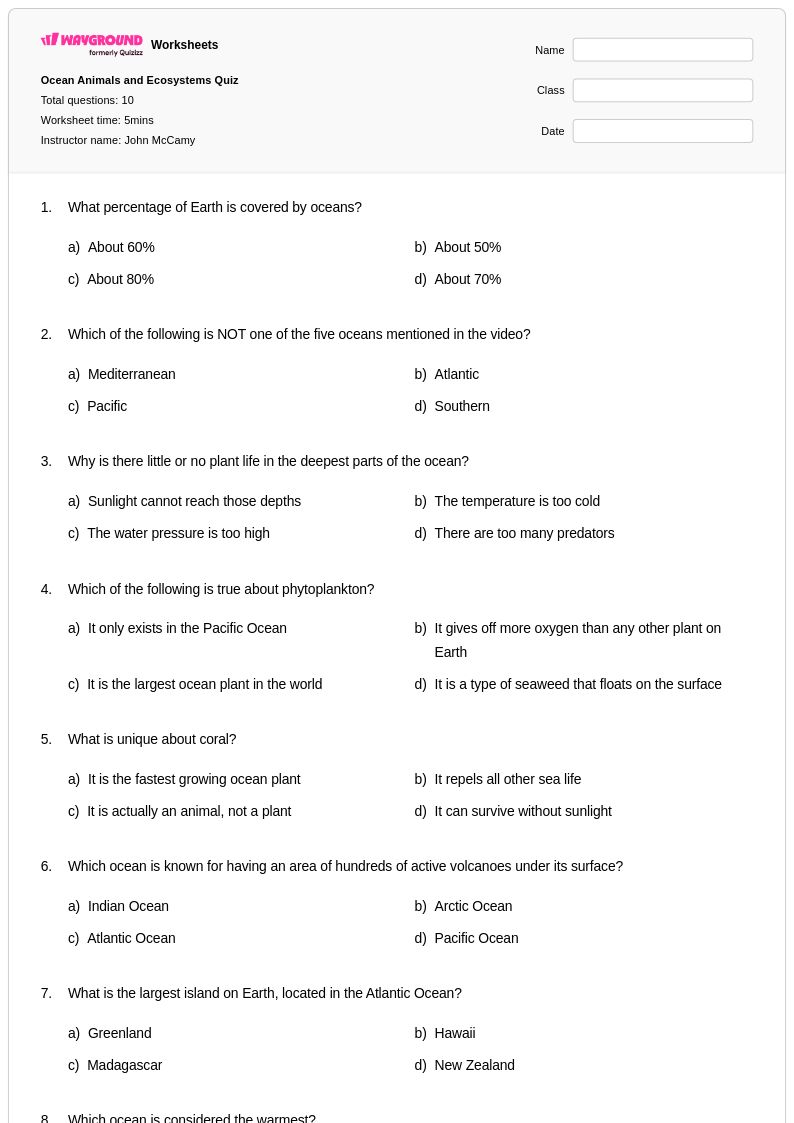
Explore Wayground's free ocean animals biology worksheets and printables that help students discover marine life through engaging practice problems and activities, complete with answer keys and downloadable PDFs.
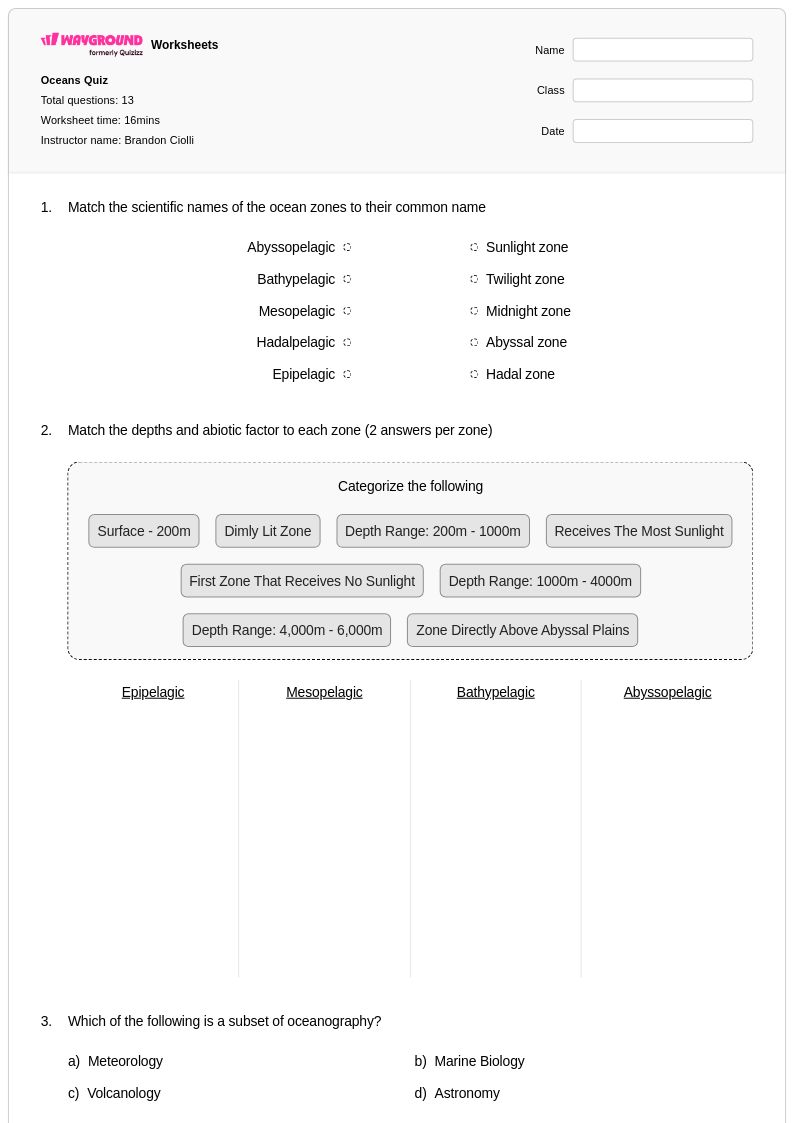
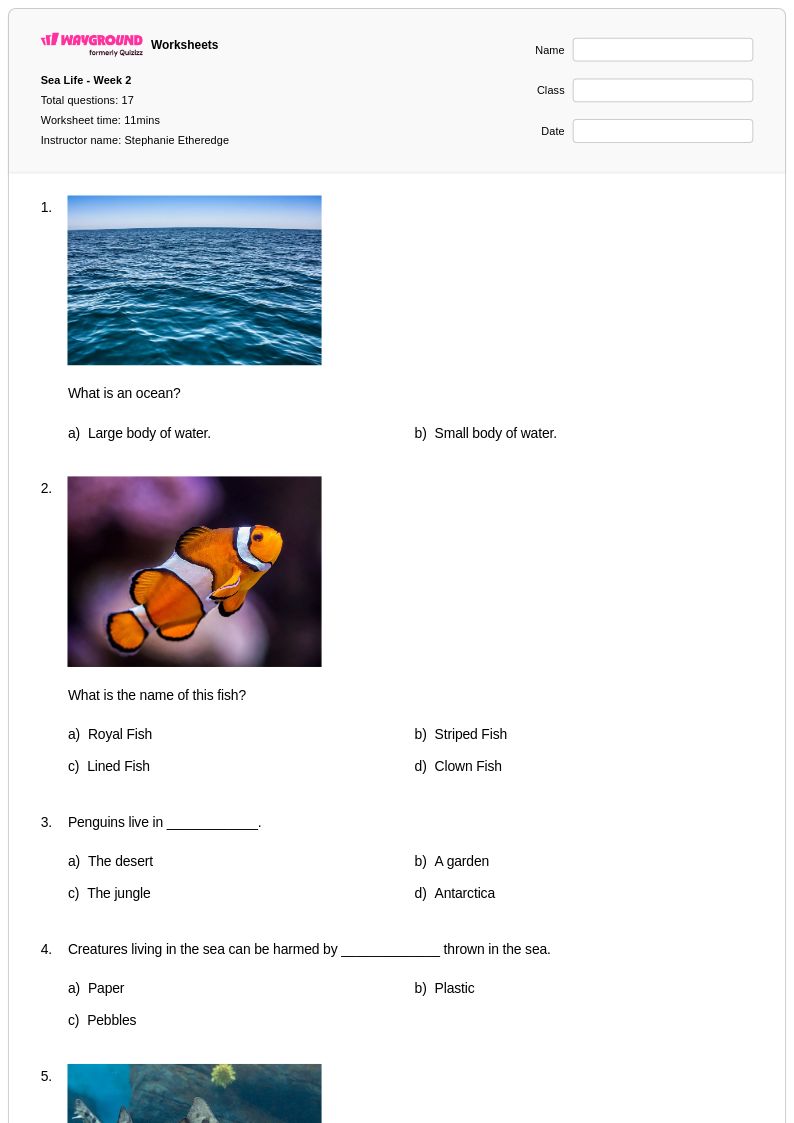
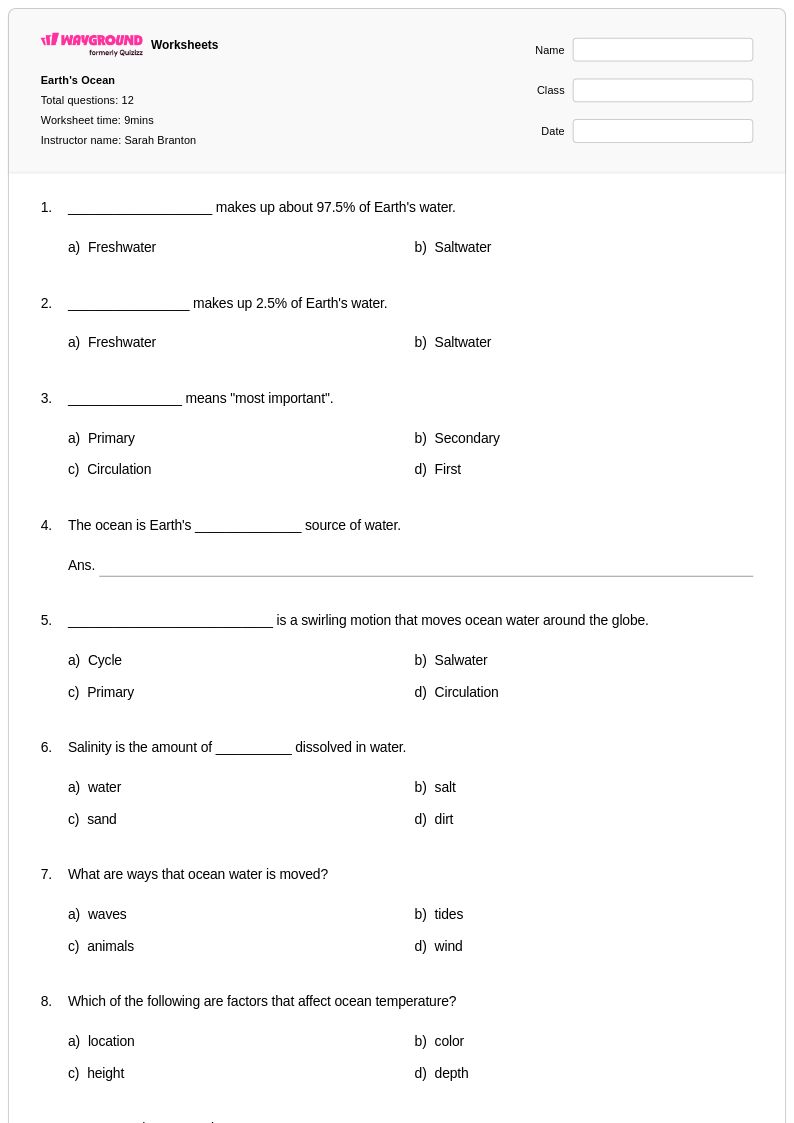
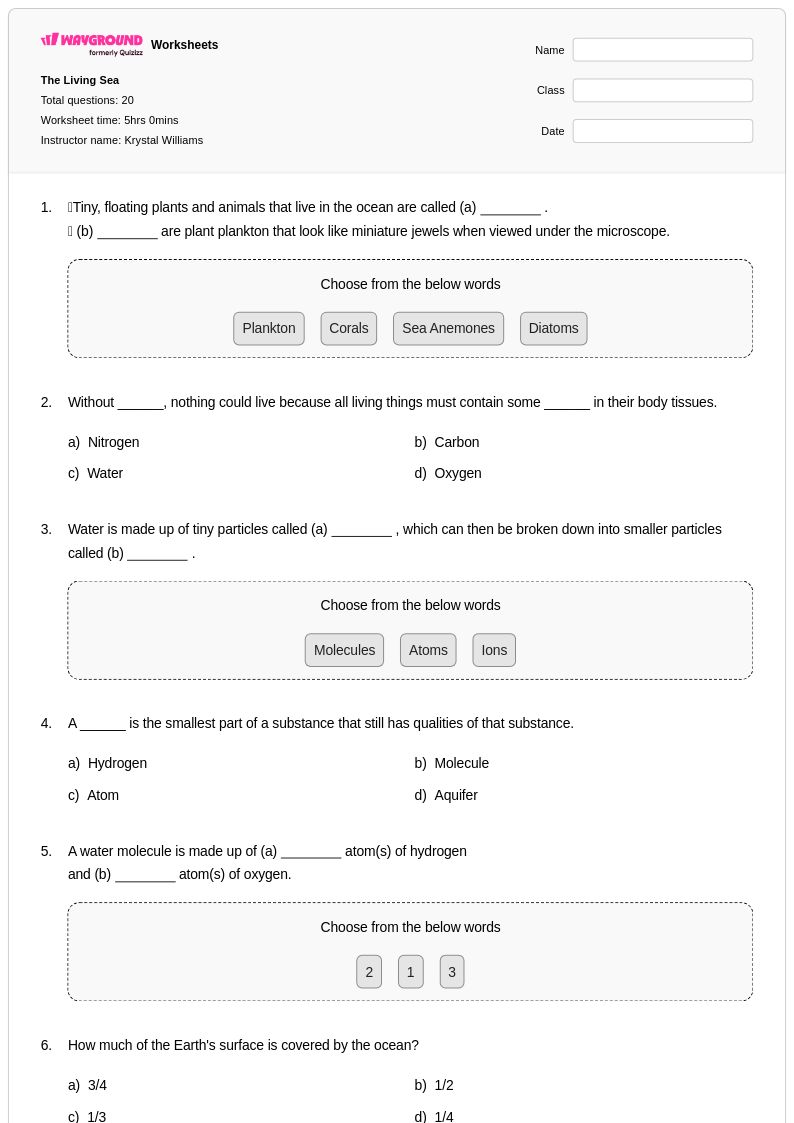
Ocean animals worksheets available through Wayground (formerly Quizizz) provide comprehensive learning resources that immerse students in the fascinating world of marine biology. These expertly crafted materials strengthen critical scientific skills including species identification, habitat analysis, food chain understanding, and adaptation recognition while exploring the diverse ecosystems of our planet's oceans. Students engage with practice problems that cover everything from microscopic plankton to massive whales, developing observational skills and scientific vocabulary through structured activities. Each worksheet collection includes detailed answer keys to support independent learning and comes in convenient pdf format, making these free printables easily accessible for both classroom instruction and home study sessions.
Wayground (formerly Quizizz) empowers educators with an extensive library of millions of teacher-created ocean animals resources, featuring robust search and filtering capabilities that allow precise targeting of specific marine species, depth zones, or conservation topics. The platform's standards alignment ensures these materials support curriculum objectives while differentiation tools enable teachers to customize content complexity for diverse learning needs. These flexible worksheet collections are available in both printable pdf formats and interactive digital versions, facilitating seamless integration into lesson planning whether for whole-class instruction, small group remediation, or enrichment activities. Teachers can efficiently address varying skill levels and learning styles while building students' understanding of marine ecosystems, biodiversity, and the critical role oceans play in our global environment.
FAQs
How do I teach ocean animals to elementary students?
Start by anchoring instruction in familiar animals like dolphins, sharks, and sea turtles before expanding into less familiar species like anglerfish or mantis shrimp. Use habitat zones (intertidal, open ocean, deep sea) as an organizing framework so students can categorize animals by where they live rather than memorizing isolated facts. Connecting animal adaptations to survival needs gives students a conceptual hook that makes new species easier to understand.
What activities help students practice identifying ocean animals and their adaptations?
Species identification exercises that pair images with labeled diagrams build observational skills and scientific vocabulary simultaneously. Adaptation-matching activities, where students connect physical features to survival functions, are especially effective for reinforcing why animals look and behave the way they do. Food chain sequencing tasks help students see marine ecosystems as interconnected systems rather than lists of isolated animals.
What mistakes do students commonly make when learning about ocean animals?
Students frequently confuse fish with all marine animals, assuming that anything living in the ocean is a fish, which leads to misclassification of mammals like whales and dolphins. Another common error is treating the ocean as a single uniform habitat rather than recognizing distinct ecosystems like coral reefs, open water, and the deep sea. Students also tend to underestimate the role of microscopic organisms like plankton in supporting larger marine food chains.
How do I use ocean animals worksheets in my classroom?
Wayground's ocean animals worksheets are available as printable PDFs for traditional classroom use and in digital formats for technology-integrated environments, so they work whether students are at desks or on devices. You can also host them as a quiz directly on Wayground, which allows you to track student responses and review misconceptions in real time. This flexibility makes them practical for whole-class instruction, independent practice, or homework assignments.
How can I support students with different learning needs during an ocean animals unit?
Wayground allows teachers to apply individual accommodations to students without alerting the rest of the class, keeping the experience seamless. For students who struggle with reading, the Read Aloud feature can deliver questions and content audibly, while reduced answer choices can lower cognitive load for students who need additional support. Extended time settings can be configured per student, and font size and display themes can be adjusted through Reading Mode for accessibility needs.
How do ocean animals worksheets connect to science curriculum standards?
Ocean animals content naturally supports life science standards around ecosystems, food webs, organism classification, and animal adaptations. Habitat analysis activities align with standards addressing environmental interdependence, while food chain exercises connect to energy transfer concepts. These topics appear across multiple grade bands, making ocean animals a versatile anchor for both introductory and more advanced life science units.