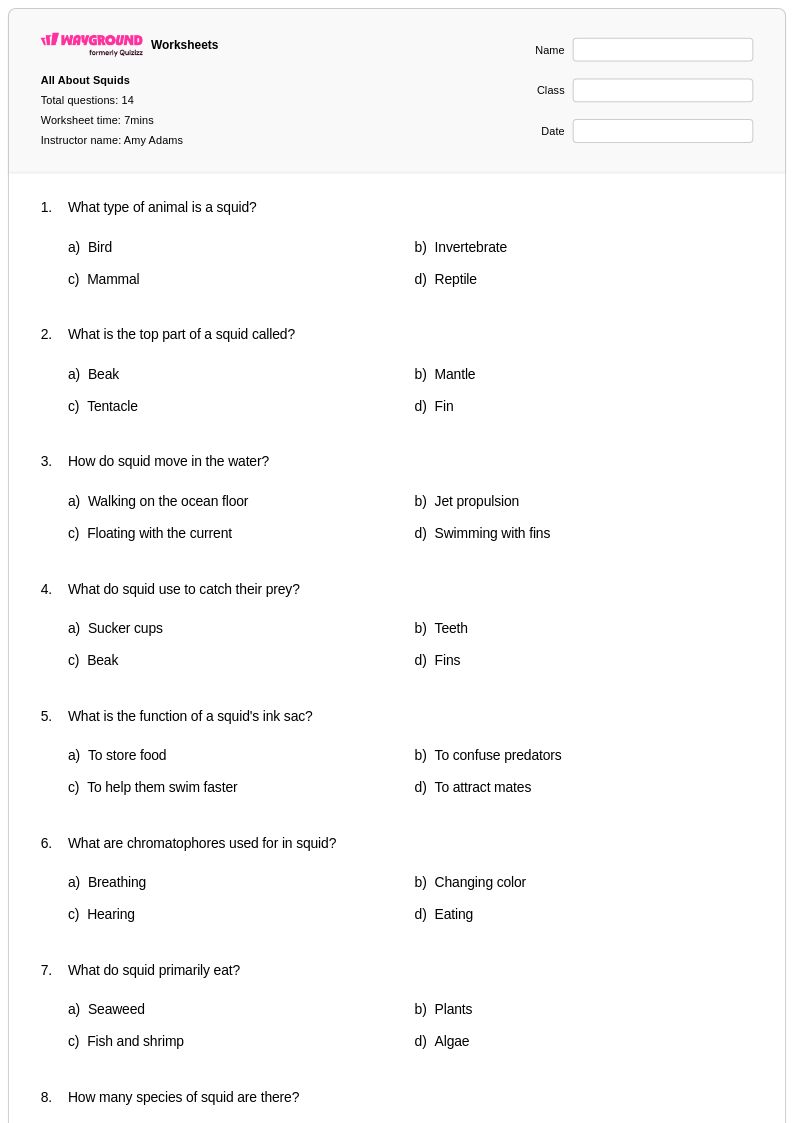
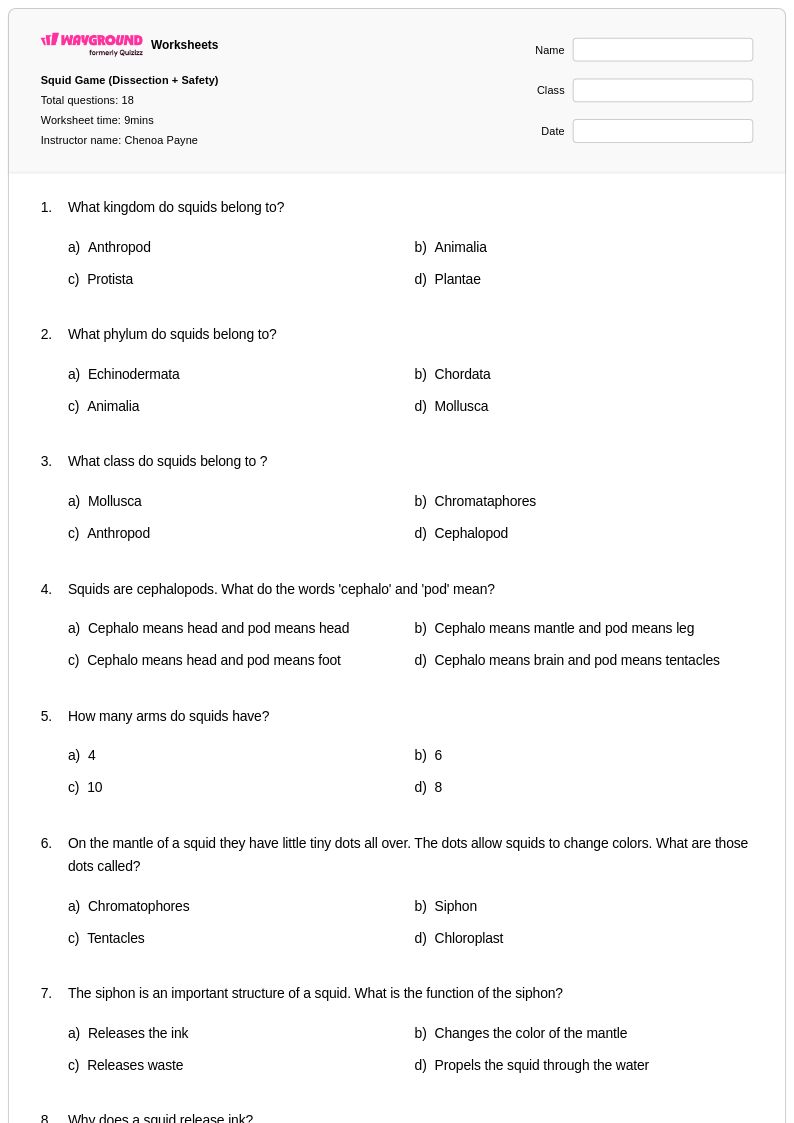
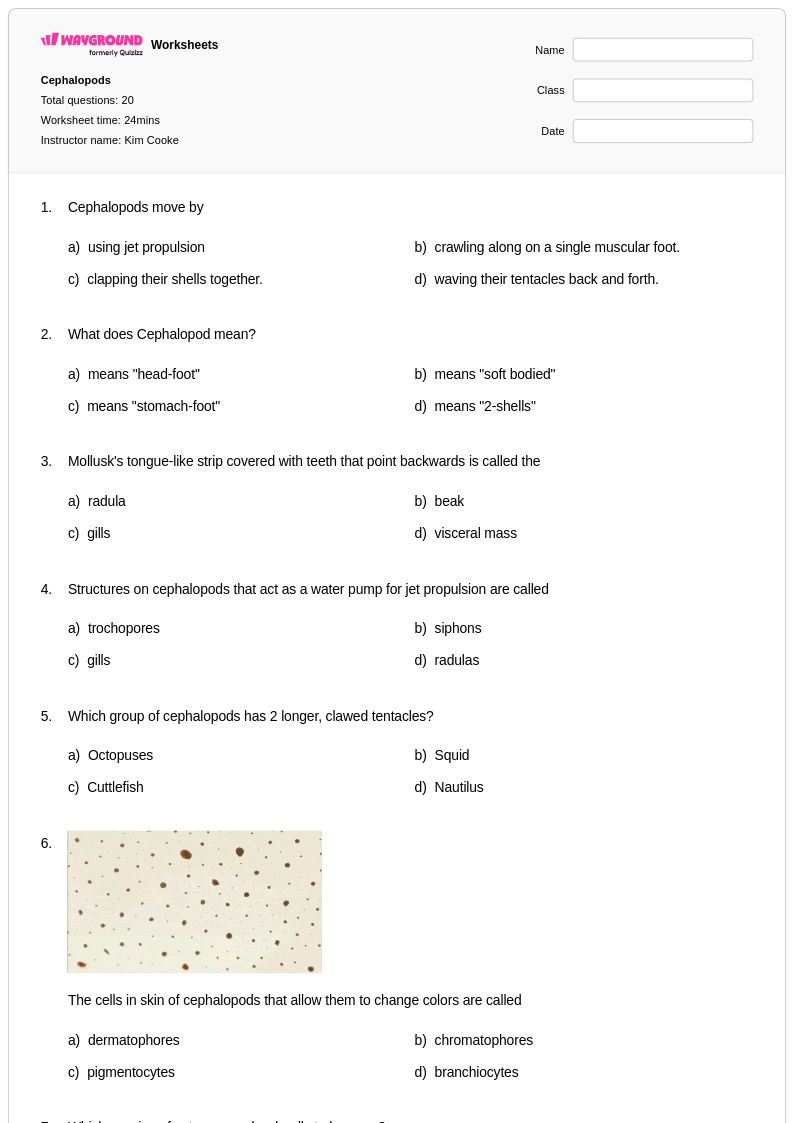
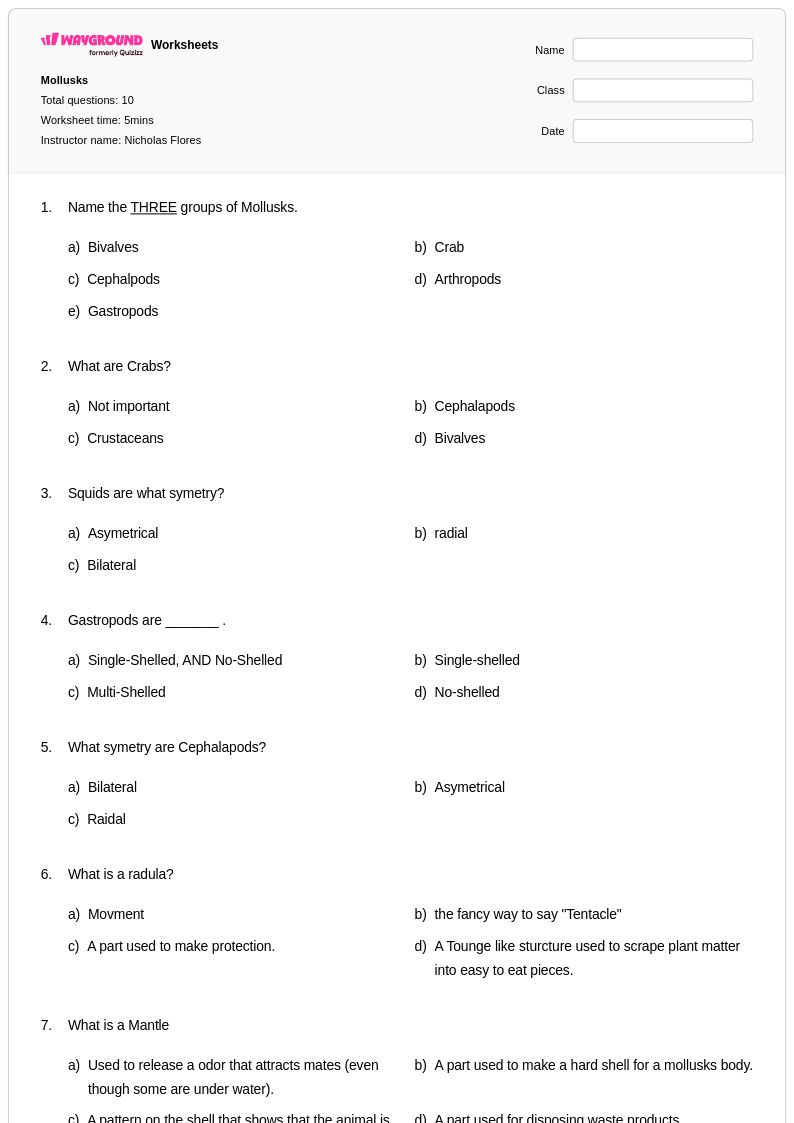
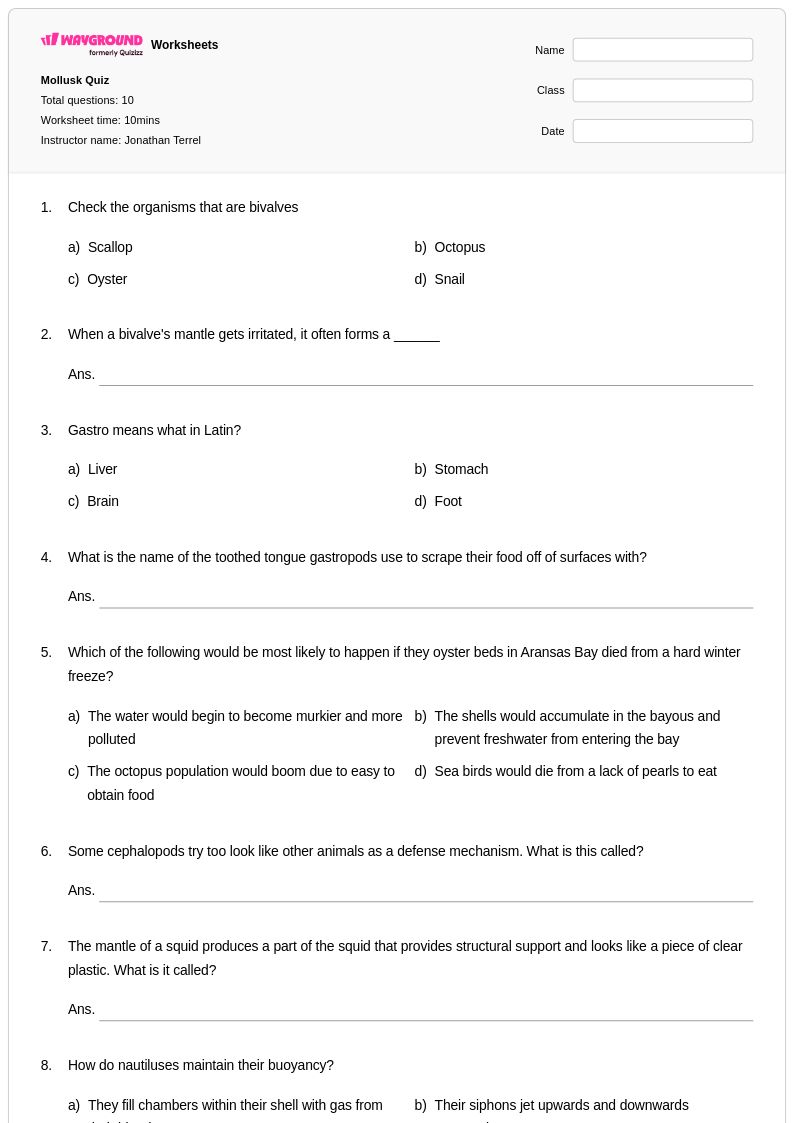
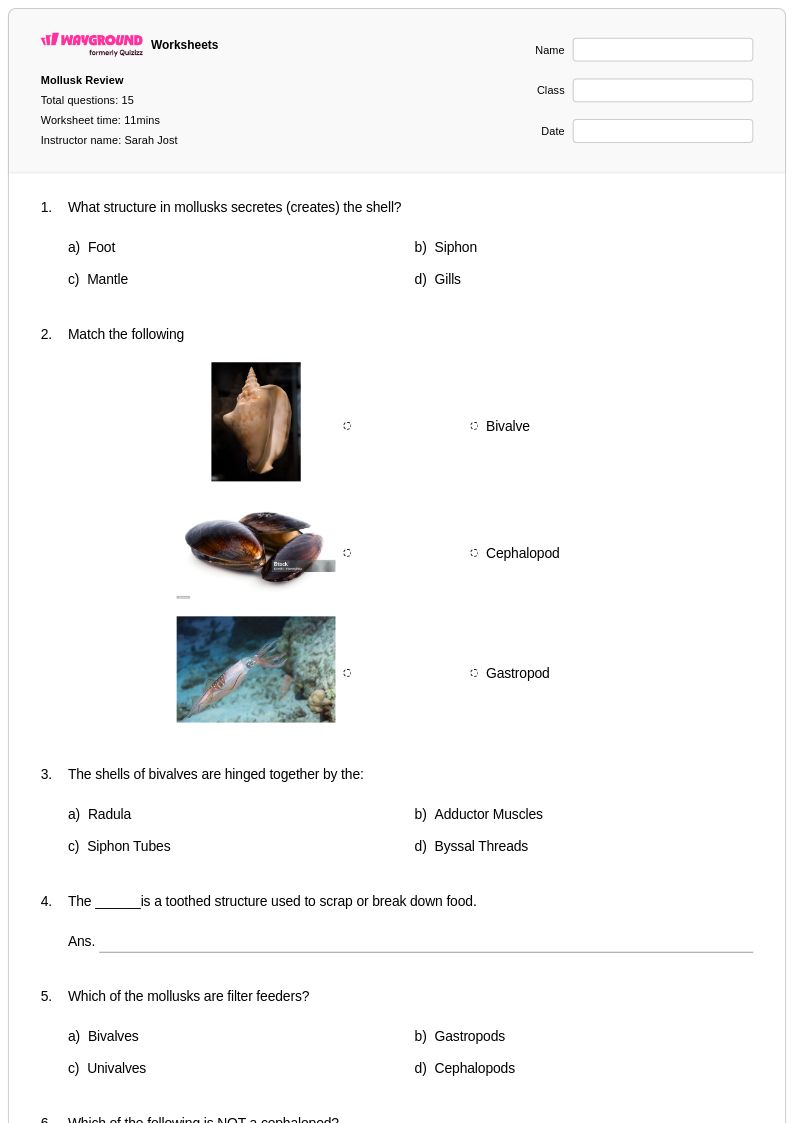
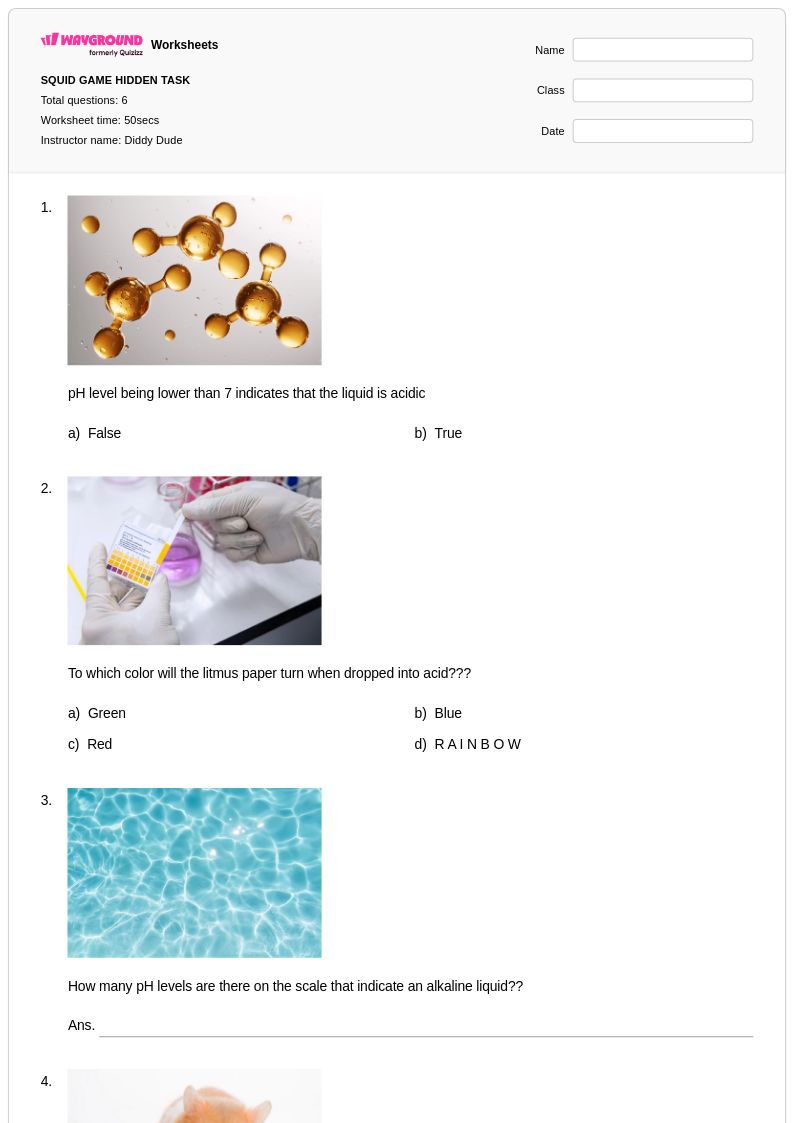
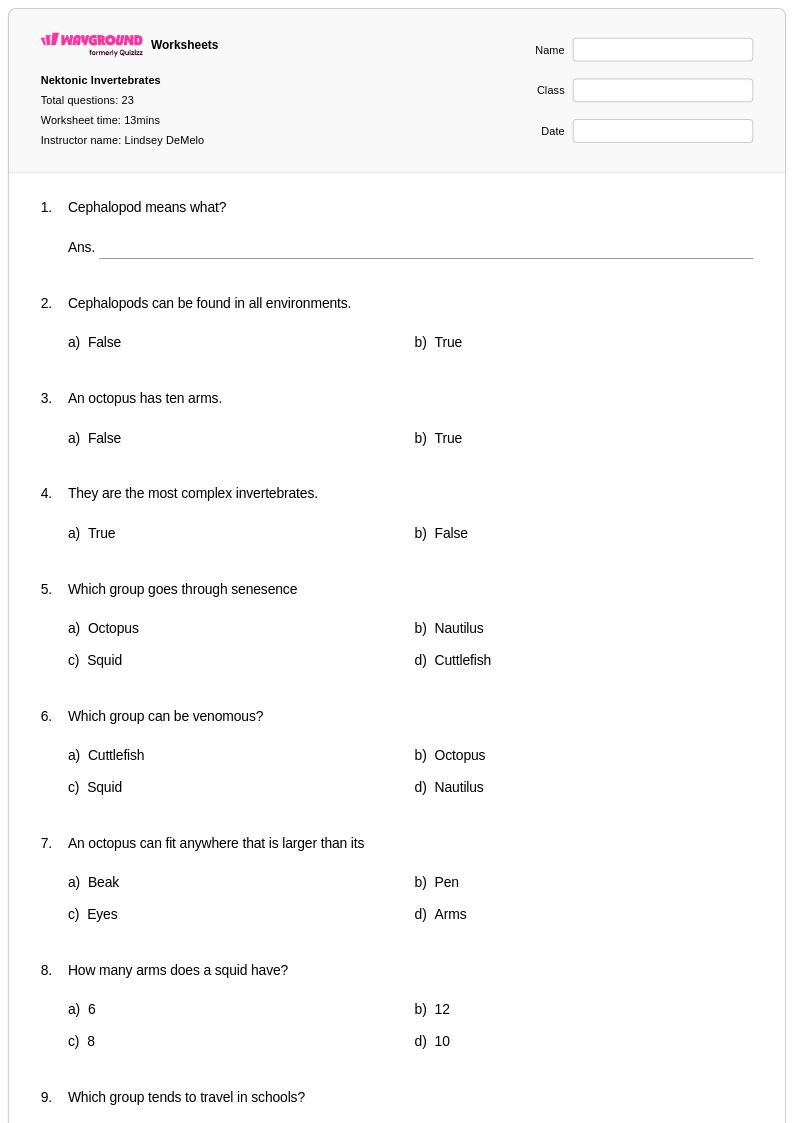
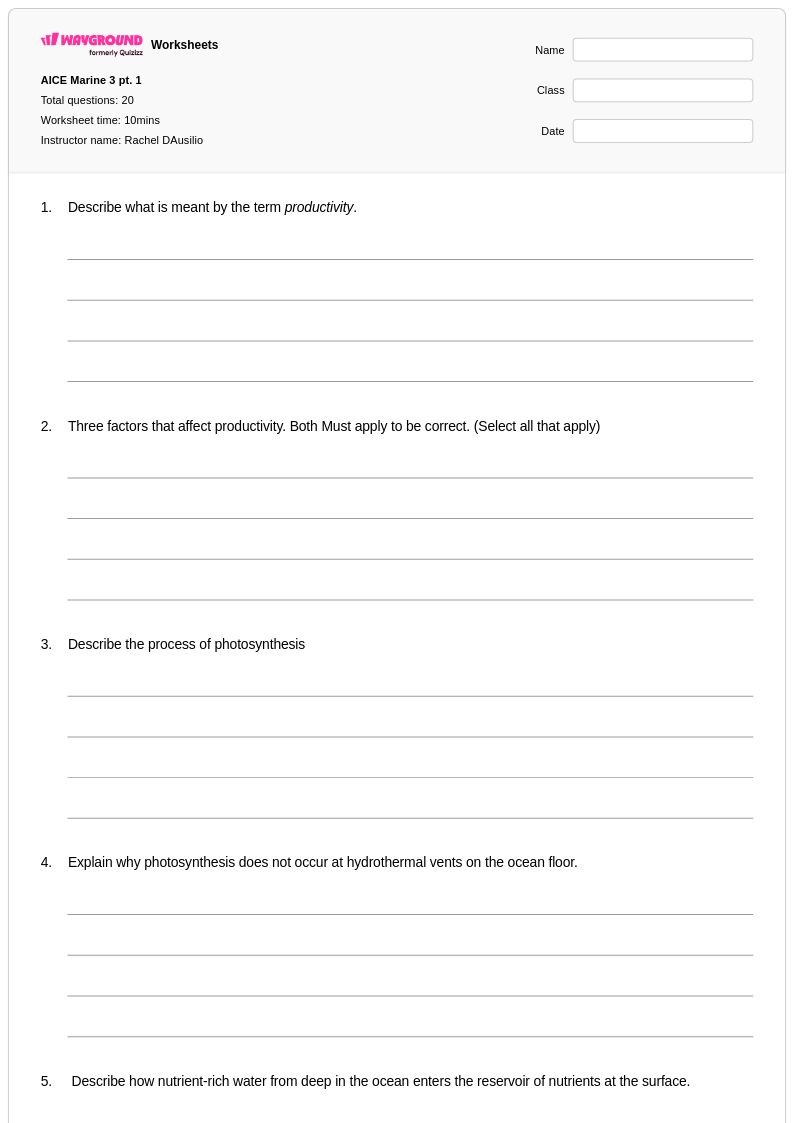
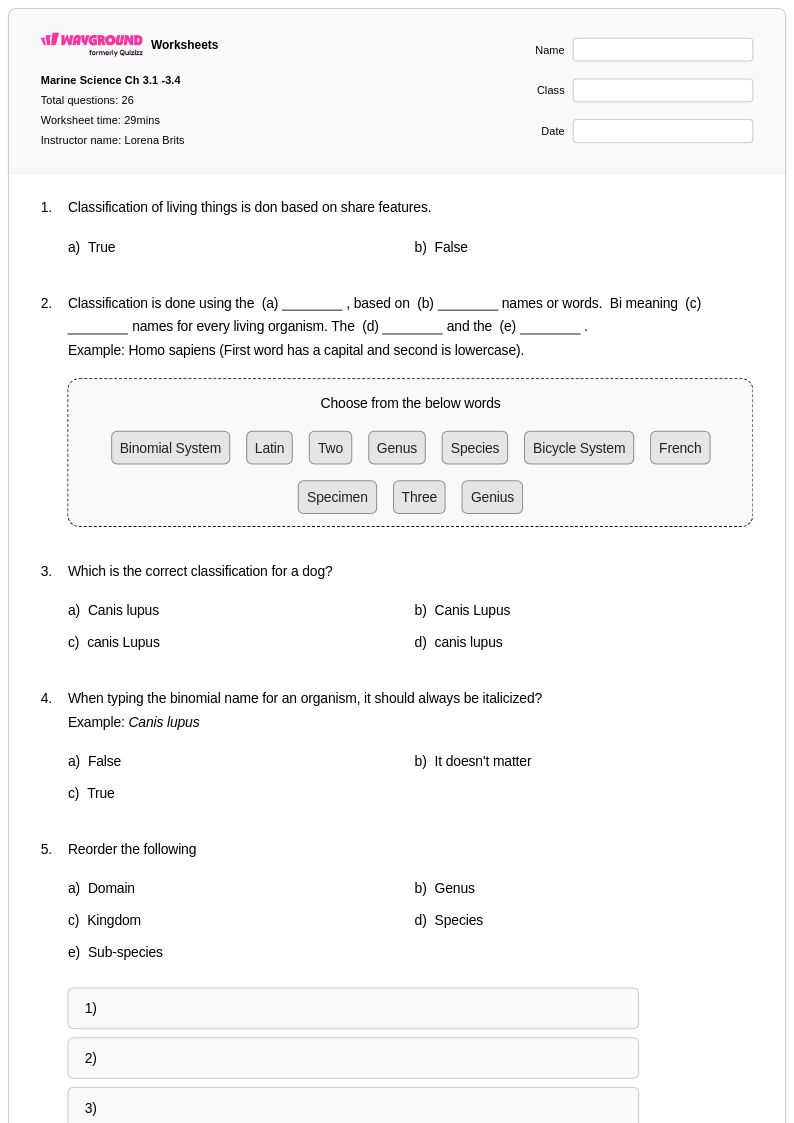
Explore Wayground's comprehensive collection of squid biology worksheets, featuring free printables and PDFs with answer keys to help students master cephalopod anatomy, behavior, and marine adaptations through engaging practice problems.
Squid worksheets available through Wayground (formerly Quizizz) provide comprehensive educational resources that explore the fascinating biology of these remarkable cephalopods. These expertly crafted materials guide students through the complex anatomy, physiology, and behavioral adaptations that make squids among the most sophisticated invertebrates in marine ecosystems. The worksheets strengthen critical scientific observation skills, comparative anatomy understanding, and marine biology knowledge through detailed explorations of squid jet propulsion, chromatophore color-changing mechanisms, tentacle structure, and beak composition. Students develop analytical thinking as they examine how squids' unique nervous systems, including their decentralized brain structure and rapid neural processing, enable lightning-fast predatory responses. Each worksheet includes comprehensive answer keys and is available as free printables in pdf format, featuring practice problems that challenge learners to connect squid adaptations to their deep-sea environments and ecological roles.
Wayground (formerly Quizizz) empowers educators with millions of teacher-created squid biology resources that transform marine science instruction through robust search and filtering capabilities. Teachers can easily locate materials aligned with specific curriculum standards while utilizing differentiation tools to accommodate diverse learning needs and skill levels. The platform's flexible customization options allow educators to modify worksheets for targeted remediation or enrichment activities, ensuring that both struggling students and advanced learners can engage meaningfully with cephalopod biology concepts. Available in both printable and digital formats including downloadable pdfs, these resources seamlessly integrate into lesson planning workflows and support various instructional approaches from hands-on laboratory investigations to independent research projects. The extensive collection enables teachers to provide consistent skill practice opportunities while addressing different aspects of squid biology, from basic anatomical identification to complex physiological processes and evolutionary adaptations.
FAQs
How do I teach squid biology in a middle or high school science class?
Teaching squid biology is most effective when you anchor instruction in comparative anatomy, using squids as a case study in invertebrate sophistication. Start with external anatomy before moving to internal systems, then connect each structure to a specific adaptive function, such as linking the mantle cavity to jet propulsion or chromatophores to camouflage behavior. This structure-to-function approach helps students build transferable marine biology thinking rather than isolated memorization.
What exercises help students practice identifying squid anatomy?
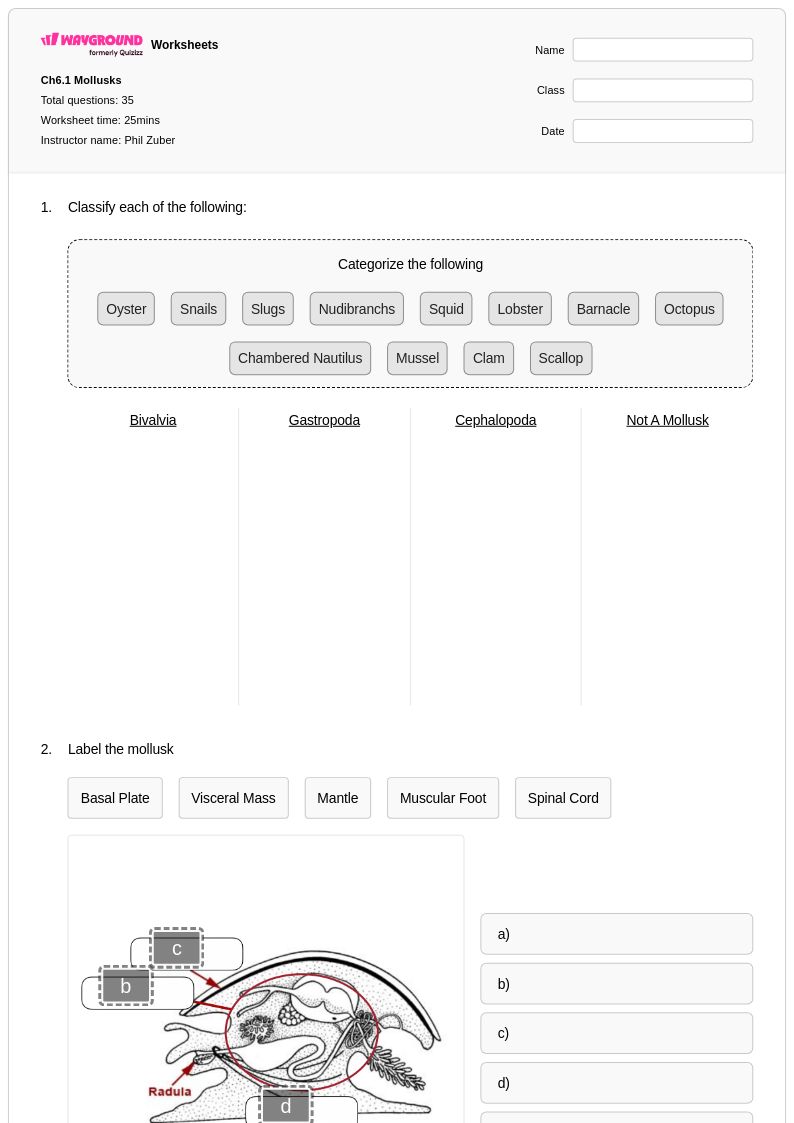
Labeling diagrams of squid external and internal anatomy is one of the most effective practice formats because it requires students to recall and place terms simultaneously. Pairing diagram work with short-answer questions about the function of each structure, such as the role of the beak, tentacles, or ink sac, deepens comprehension beyond identification. Practice problems that ask students to connect anatomical features to behavioral or ecological outcomes are especially useful for reinforcing applied understanding.
What mistakes do students commonly make when learning about squid adaptations?
A common misconception is that squids are simple organisms because they are invertebrates. In reality, squids have one of the most advanced nervous systems among invertebrates, including a decentralized brain structure and rapid neural processing that enables complex predatory behavior. Students also frequently confuse tentacles with arms, not recognizing that squids have eight arms and two longer tentacles with distinct structural and functional differences.
How do squids use chromatophores, and how can I explain this to students?
Chromatophores are pigment-containing cells in squid skin that expand or contract under muscular control, allowing squids to change color and pattern in milliseconds. Unlike the slow hormonal color changes seen in some animals, squid color change is neurologically driven, which is why it is so rapid. Teachers can use this as an entry point into discussing neural control, communication, and camouflage as layered adaptive strategies rather than single-purpose traits.
How can I use Wayground's squid worksheets in my classroom?
Wayground's squid biology worksheets are available as free printable PDFs for traditional classroom use and in digital formats for technology-integrated instruction, including the option to host them as a quiz directly on the Wayground platform. This flexibility makes them suitable for independent practice, lab follow-ups, or formative assessment. Teachers can also use Wayground's accommodation tools, such as read aloud, extended time, and reduced answer choices, to support diverse learners without disrupting the rest of the class.
How does squid jet propulsion work, and what should students understand about it?
Squid jet propulsion works by drawing water into the mantle cavity and then forcefully expelling it through a muscular siphon, generating thrust in the opposite direction. Students should understand this as an application of Newton's third law of motion in a biological context, which makes it a strong cross-disciplinary teaching moment. The siphon is also directionally controllable, meaning squids can maneuver precisely, which is a detail that helps students appreciate the system's sophistication beyond simple escape behavior.