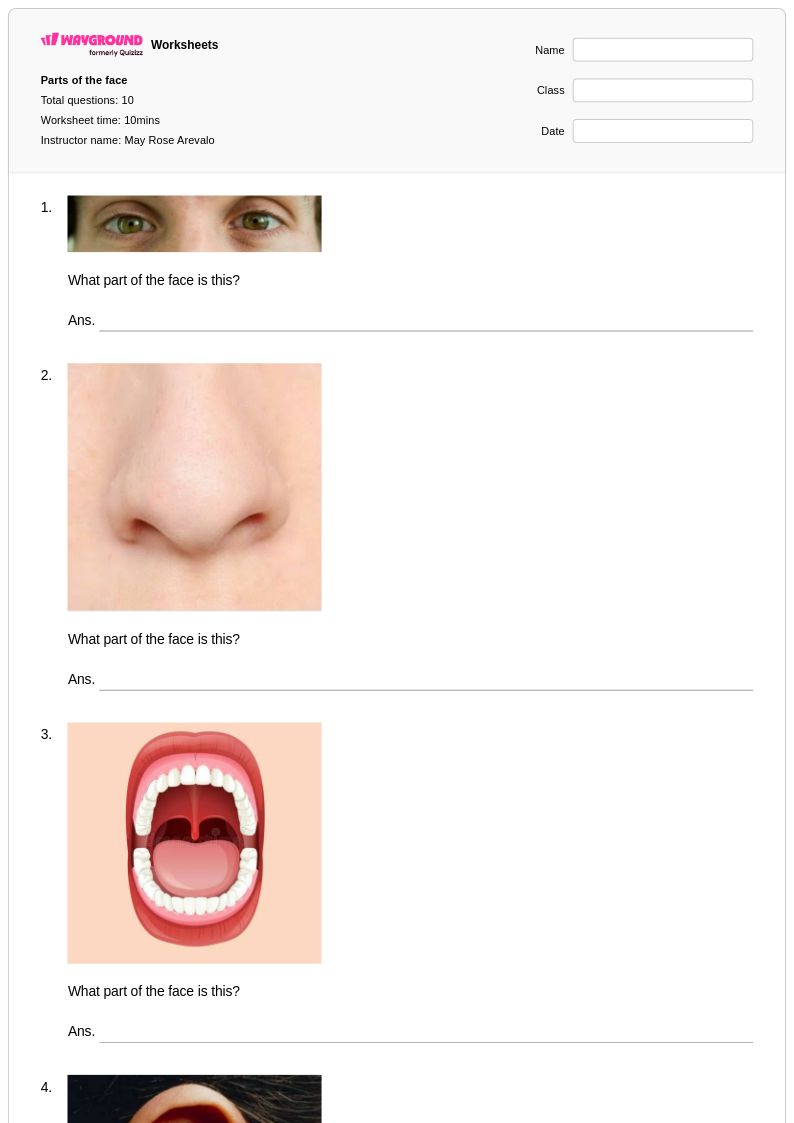
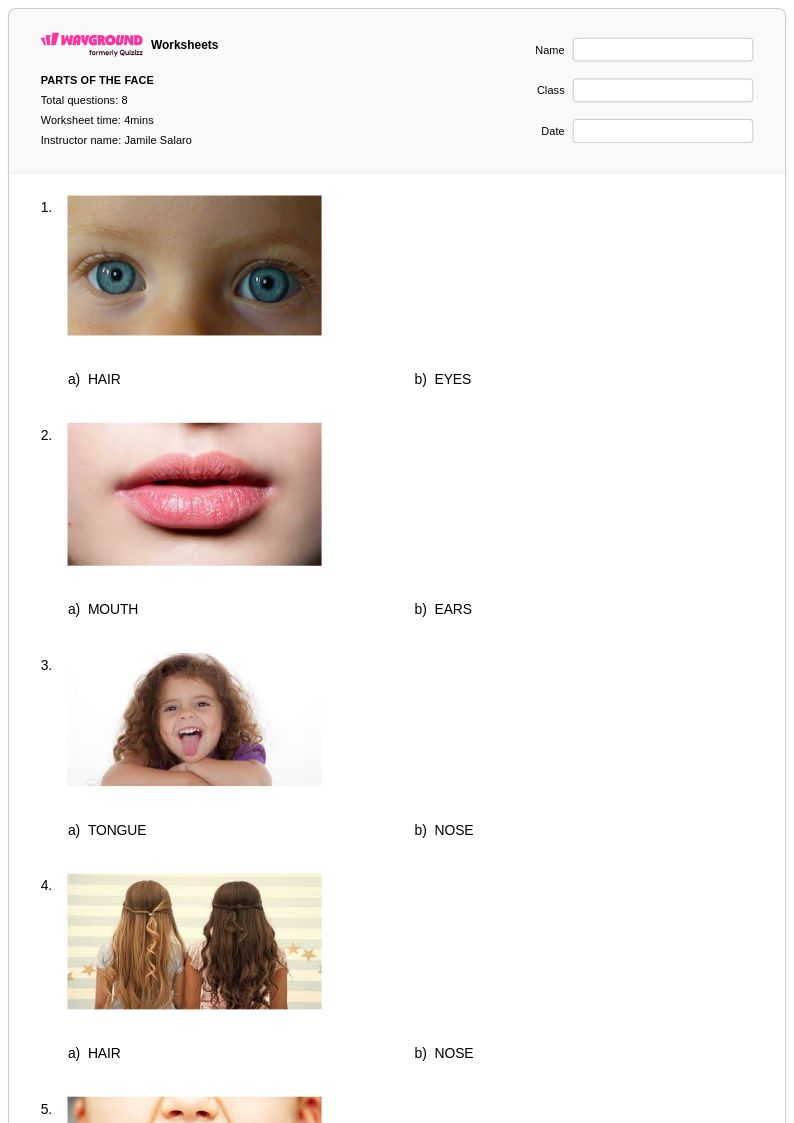
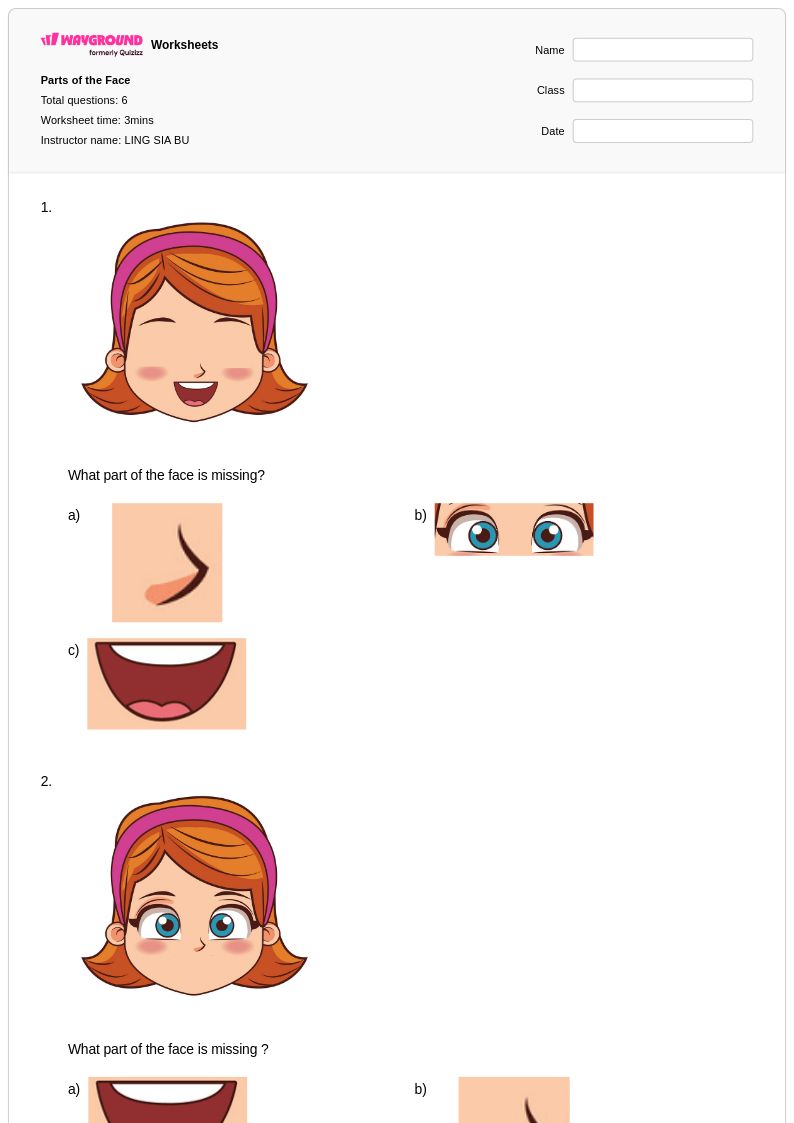
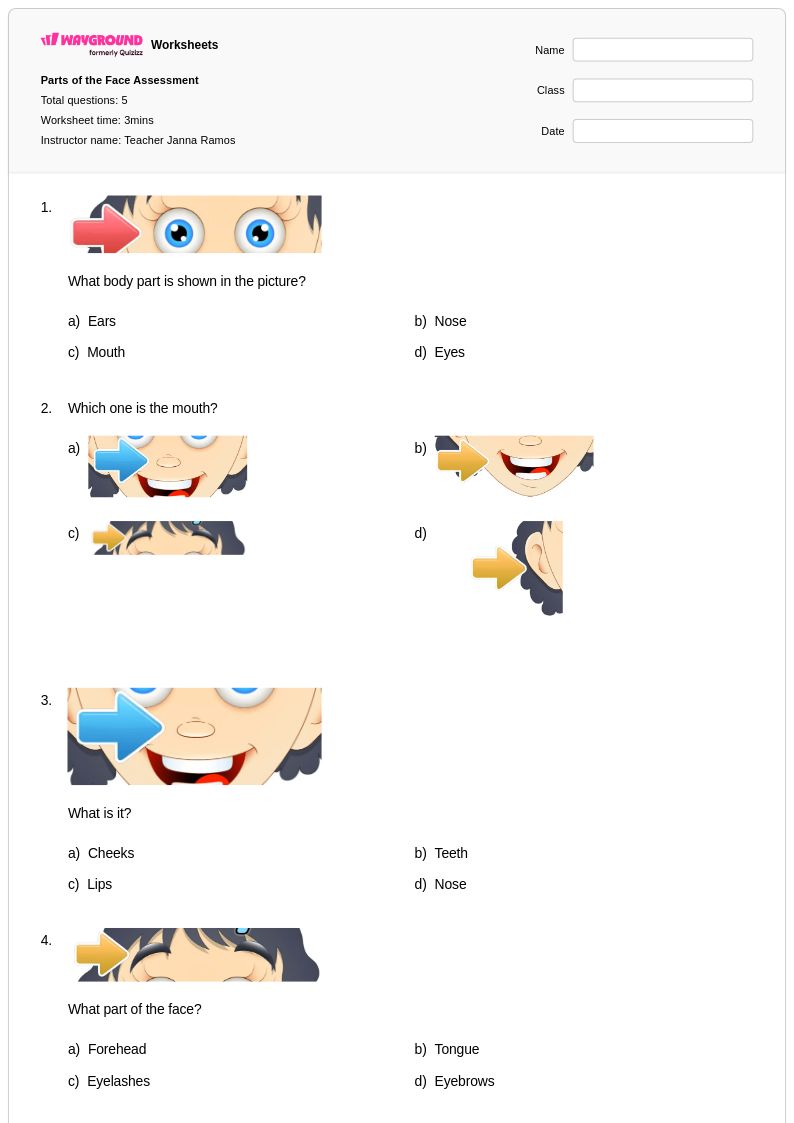
Explore Wayground's free printable worksheets and practice problems focusing on parts of the face, helping biology students identify and learn facial anatomy through engaging PDF exercises with comprehensive answer keys.
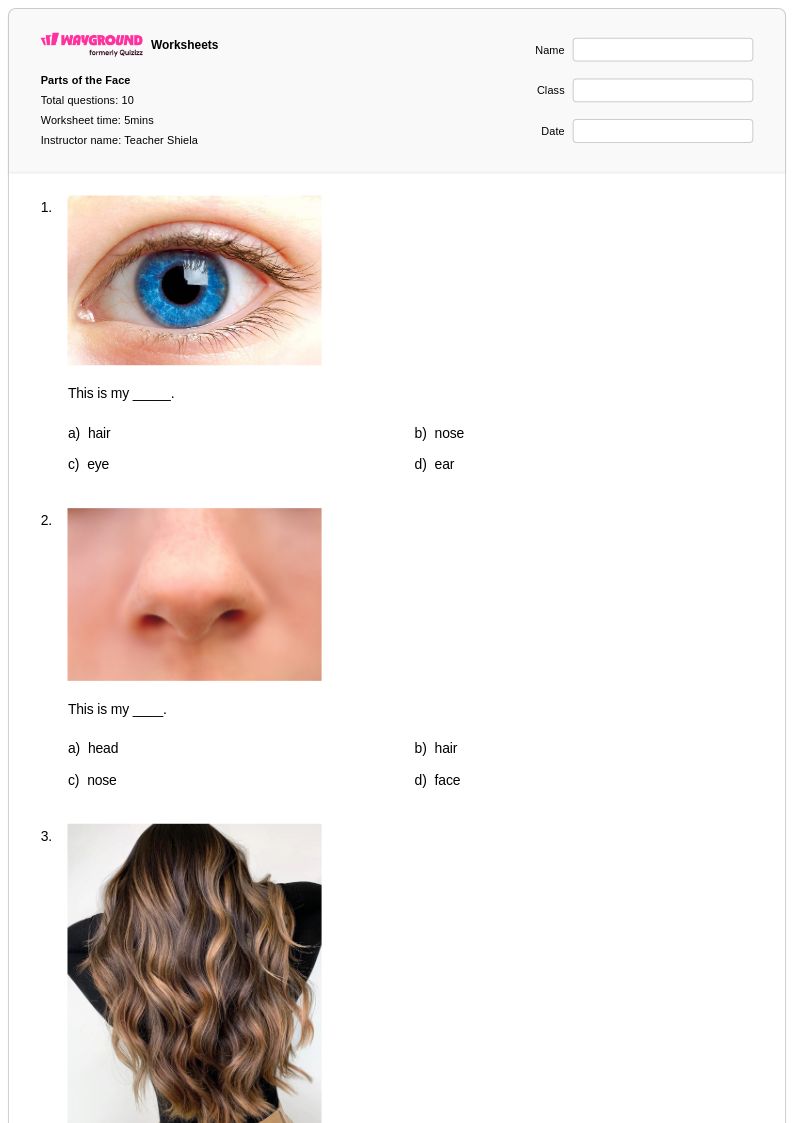
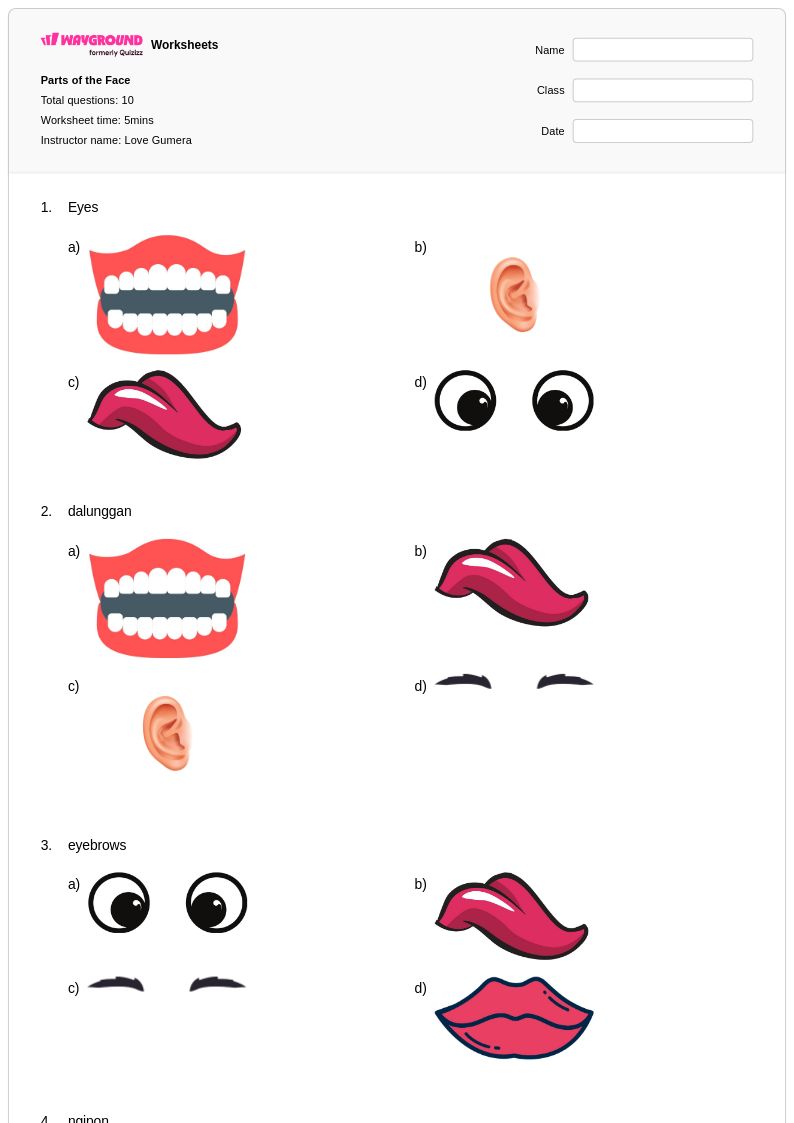
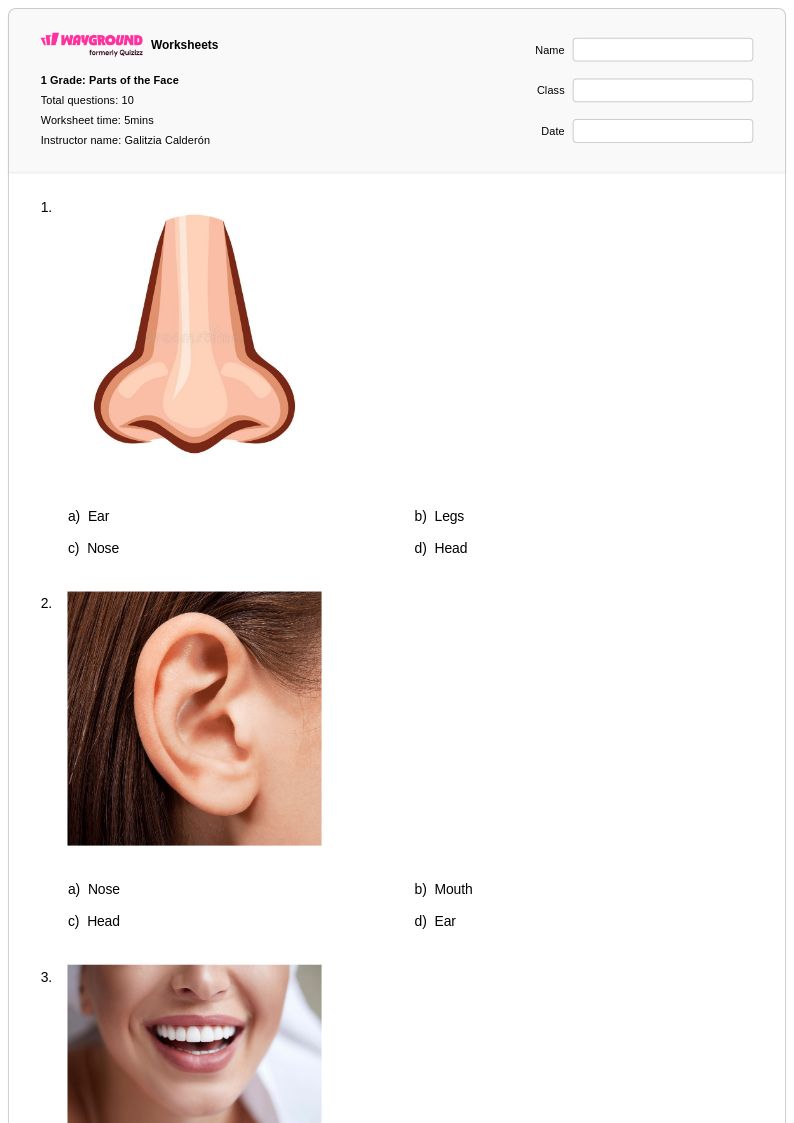
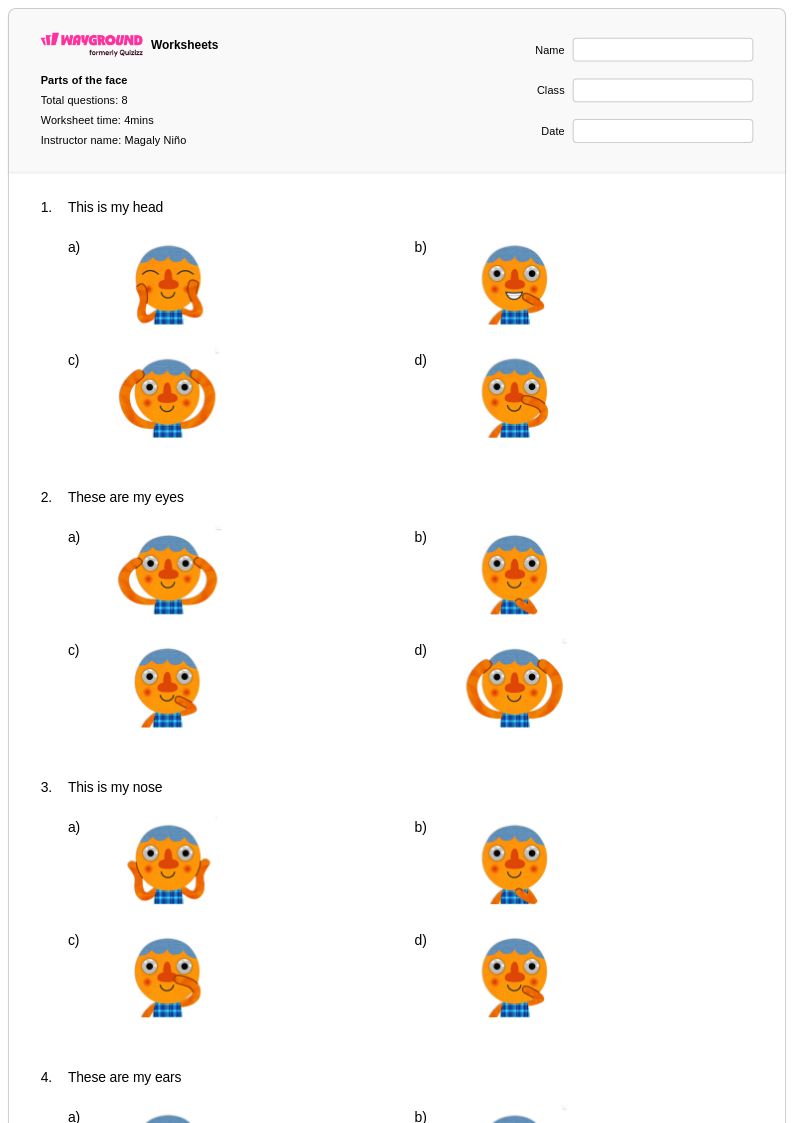
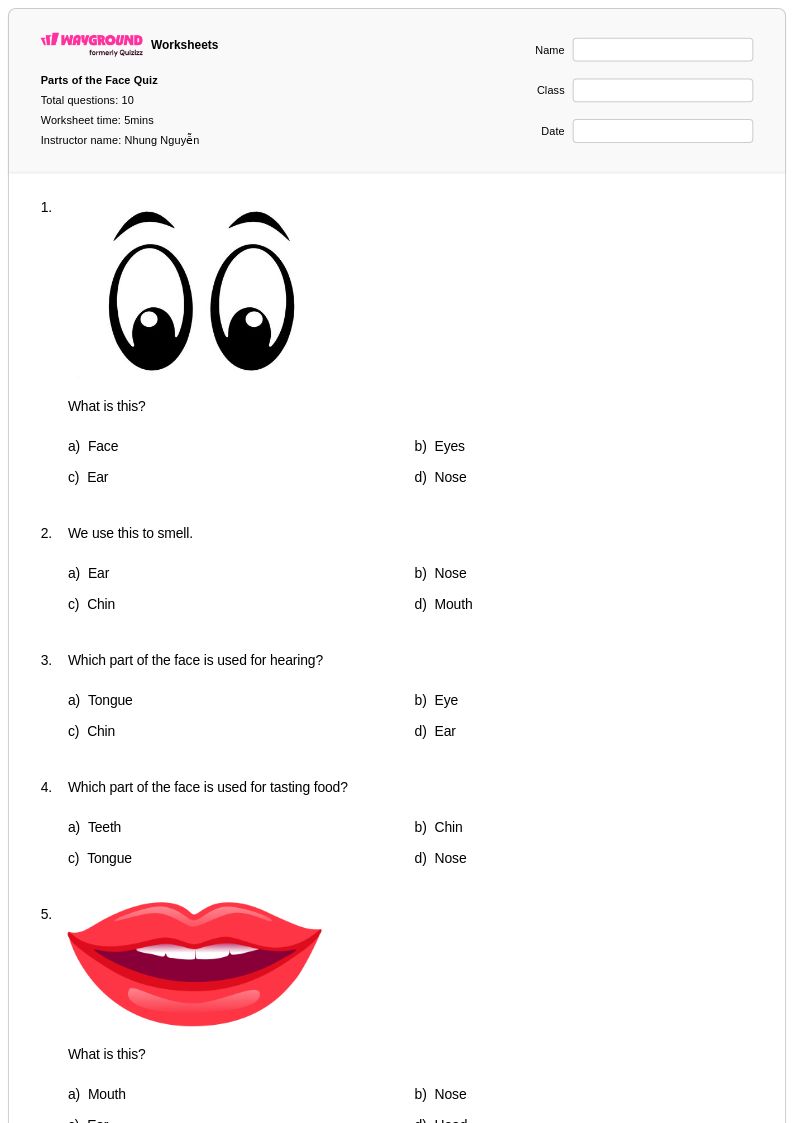
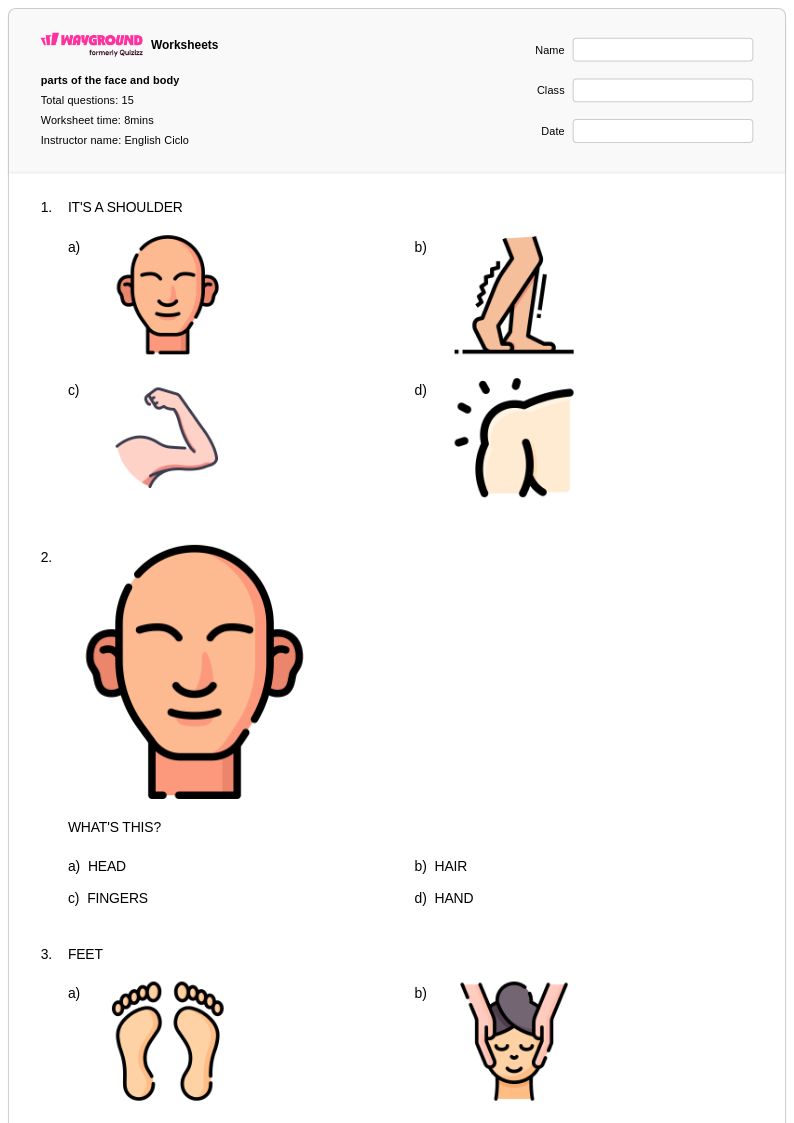
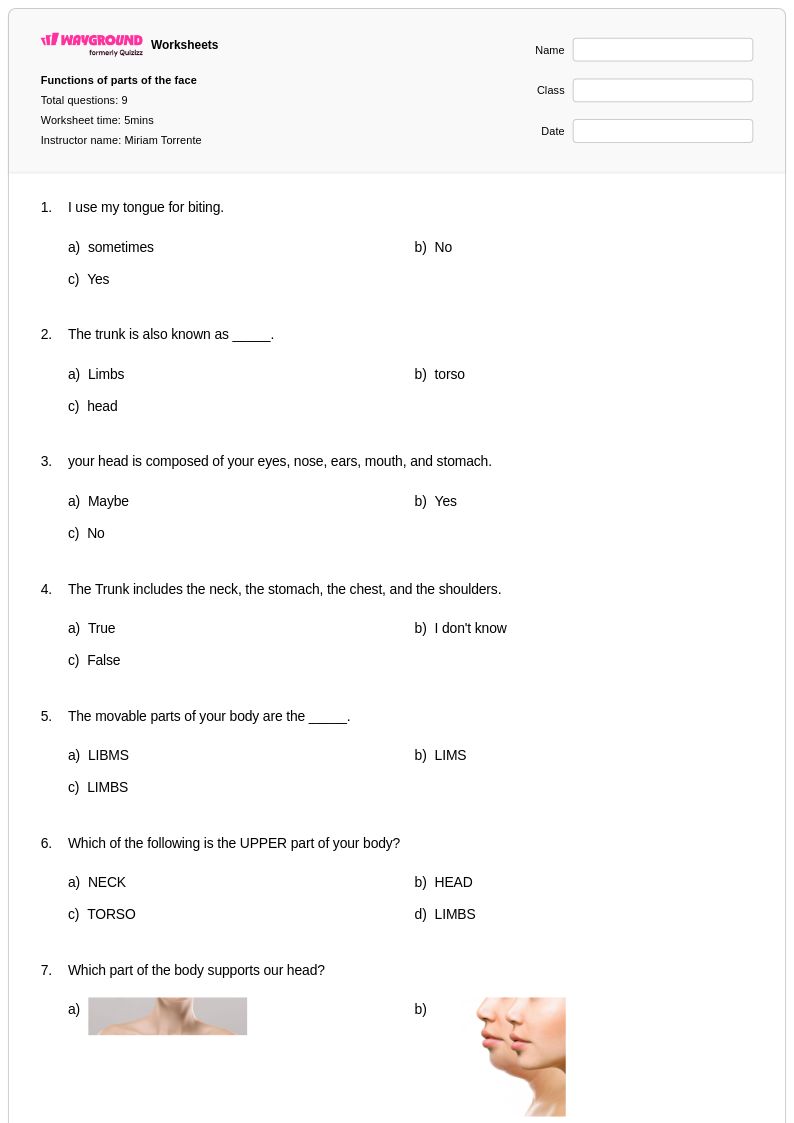
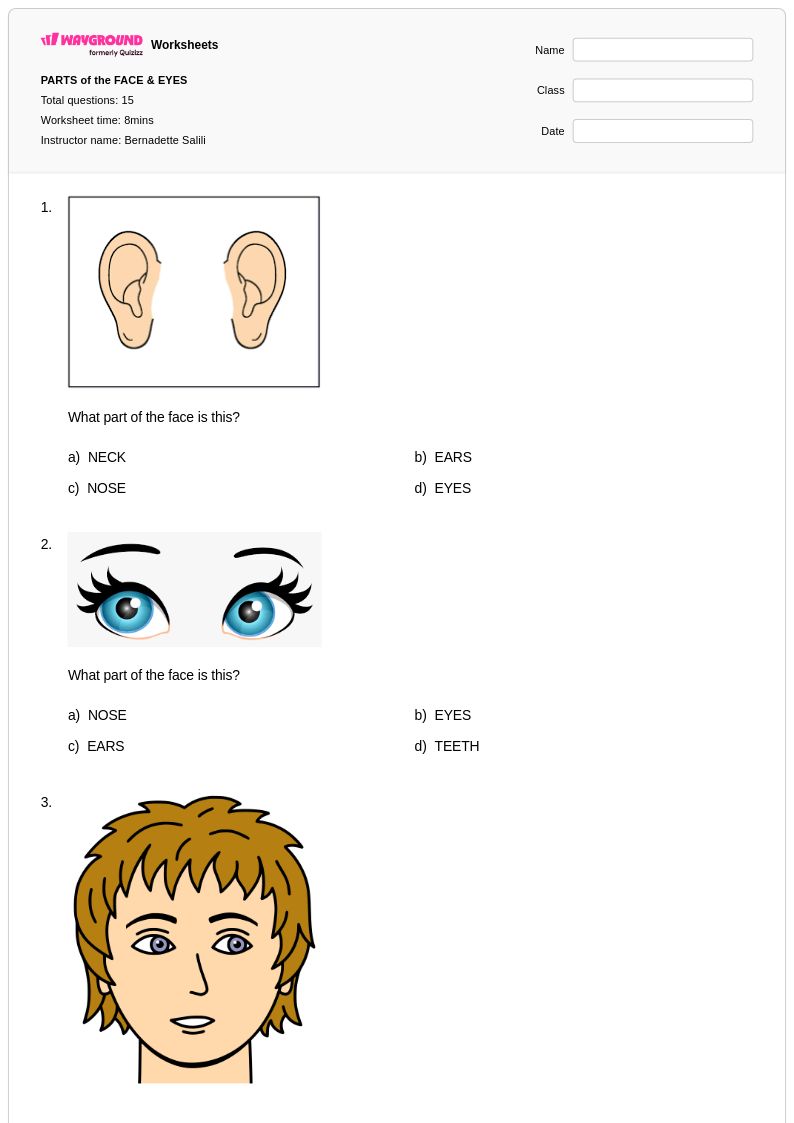
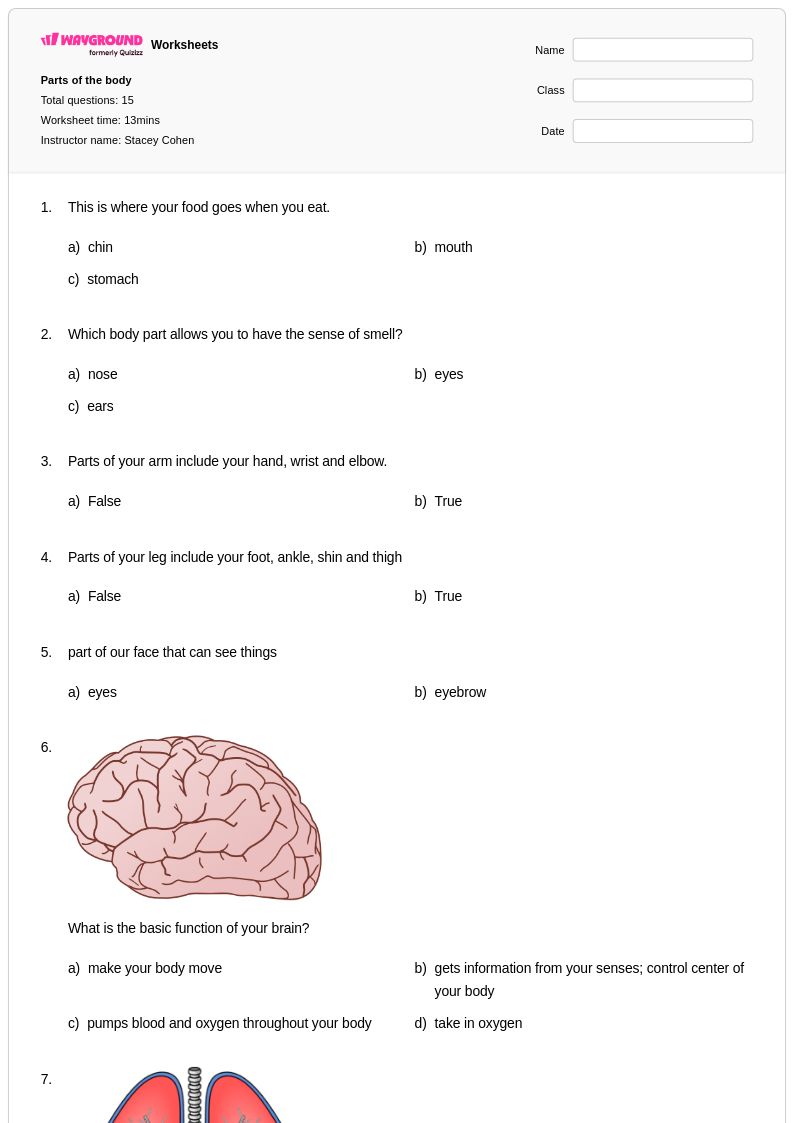
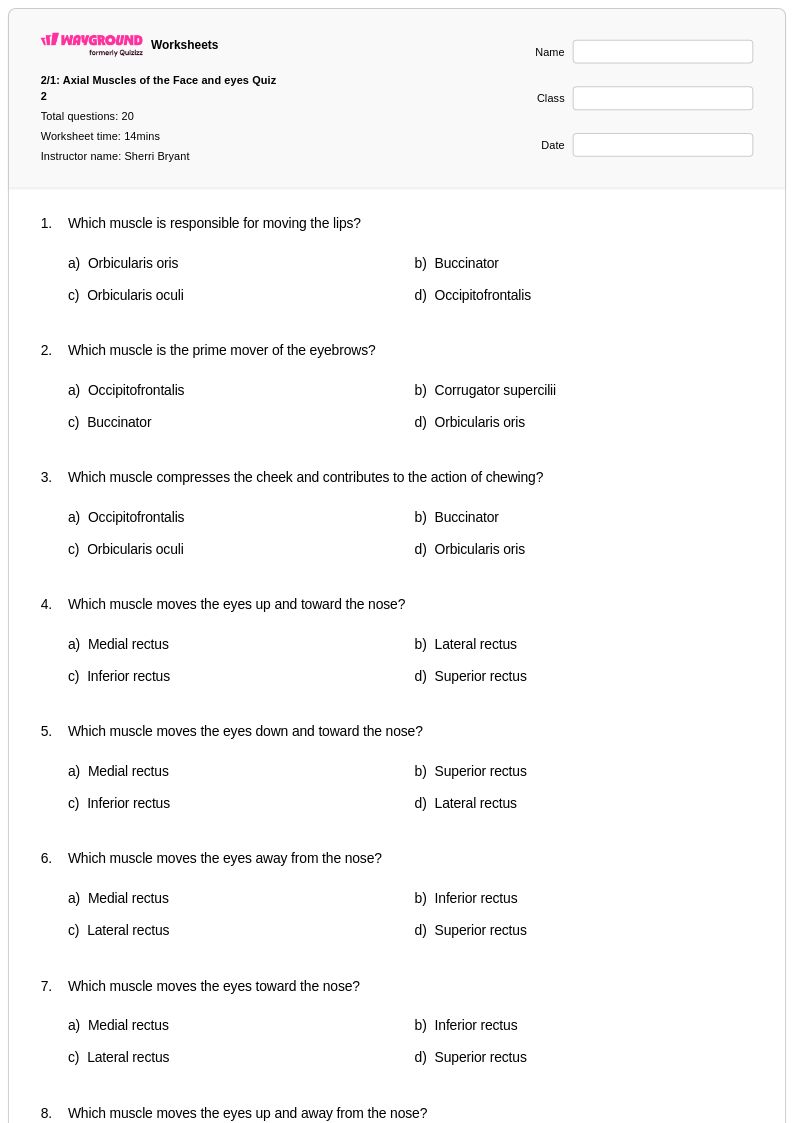
Parts of the face biology worksheets available through Wayground (formerly Quizizz) provide students with comprehensive learning materials that explore the anatomical structures and functions of facial features from a biological perspective. These educational resources strengthen students' understanding of human anatomy by focusing on the identification, location, and biological functions of facial components including the eyes, nose, mouth, ears, and surrounding tissues. The worksheets feature detailed diagrams, labeling exercises, and practice problems that help students master facial anatomy terminology while developing critical observation skills. Teachers can access complete answer keys and download materials in convenient pdf format, making these free printables valuable tools for both classroom instruction and independent study sessions.
Wayground (formerly Quizizz) supports educators with an extensive collection of teacher-created resources covering parts of the face biology content, offering millions of worksheets that can be easily located through robust search and filtering capabilities. The platform's differentiation tools allow teachers to customize materials for various learning levels, while flexible formatting options provide both printable and digital versions including downloadable pdf files for seamless classroom integration. These comprehensive worksheet collections align with educational standards and support diverse instructional goals, from initial concept introduction to targeted remediation and enrichment activities. Teachers can efficiently plan lessons, assign skill practice exercises, and assess student understanding using these versatile biology resources that accommodate different learning preferences and classroom management approaches.
FAQs
How do I teach parts of the face to students?
Start by introducing the major facial features — eyes, nose, mouth, and ears — using labeled diagrams before moving into their biological functions and surrounding tissues. Hands-on labeling activities work well because they require students to actively recall and place terminology rather than passively read it. Building from identification to function helps students develop a more complete understanding of facial anatomy.
What exercises help students practice identifying parts of the face?
Labeling diagrams is one of the most effective exercises for reinforcing facial anatomy vocabulary, as students must match terms to precise locations on an unlabeled figure. Matching and fill-in-the-blank activities that ask students to connect each facial feature to its biological function deepen comprehension beyond simple identification. Repeated practice with varied formats helps students retain both the terminology and the spatial relationships between facial structures.
What mistakes do students commonly make when learning facial anatomy?
Students frequently confuse anatomical terminology with everyday language, for example writing 'eye' when a question expects 'orbit' or a more specific structure like the iris or cornea. Another common error is misidentifying the boundaries between facial regions, particularly around the nose and mouth where multiple structures overlap. Targeted labeling practice with detailed diagrams helps students develop the precision needed to use anatomical terms correctly.
How can I differentiate parts of the face worksheets for students with different learning needs?
For students who need additional support, providing a word bank alongside labeling diagrams reduces cognitive load while still requiring students to make deliberate choices. On Wayground, teachers can assign individual accommodations such as read aloud, which reads questions aloud for students who need it, or reduced answer choices to limit the number of options displayed. These settings can be applied to specific students without affecting the rest of the class, making differentiation practical and discreet.
How do I use Wayground's parts of the face worksheets in my classroom?
Wayground's parts of the face worksheets are available as printable PDFs, which work well for traditional classroom labeling and diagram activities, and in digital formats for technology-integrated learning environments. Teachers can also host worksheets as an interactive quiz directly on Wayground, giving students immediate feedback while generating data on which facial structures or terms need further review. Complete answer keys are included with every worksheet, reducing prep time for teachers.