Explore Wayground's comprehensive collection of free biology worksheets and printables focusing on membranes and transport, featuring practice problems and answer keys to help students master cellular processes and molecular movement.
Explore printable Membranes and Transport worksheets
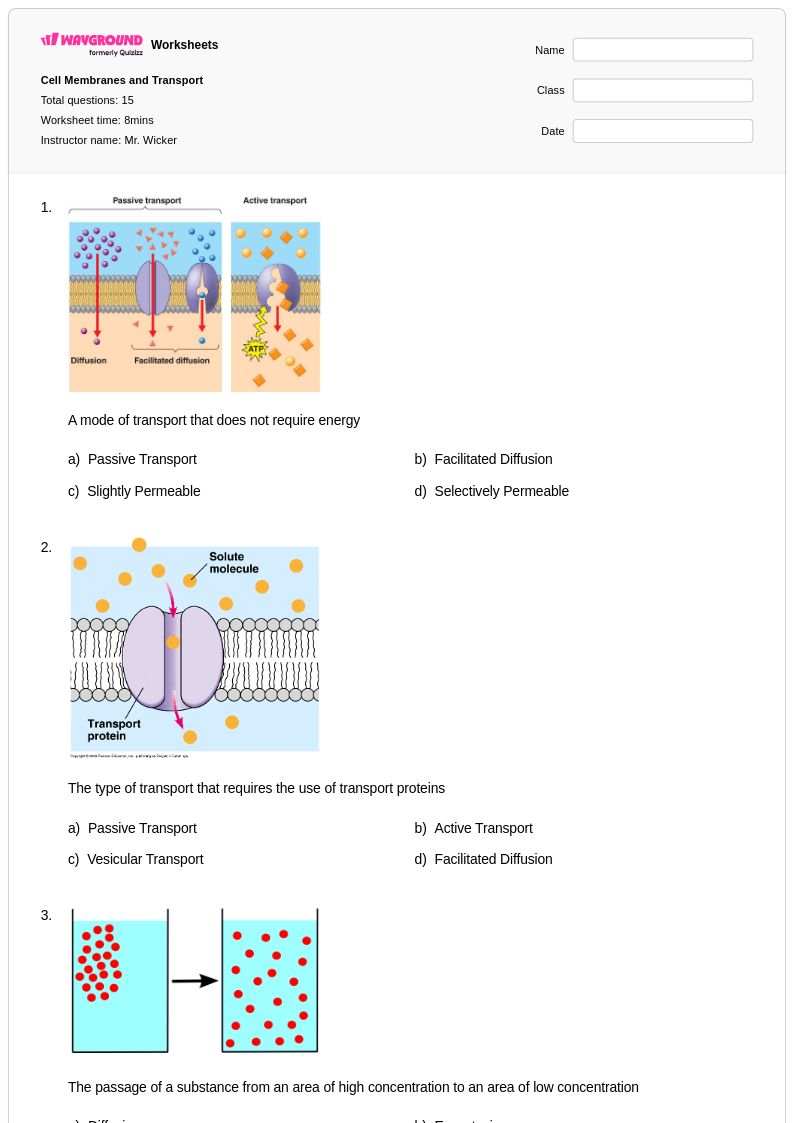
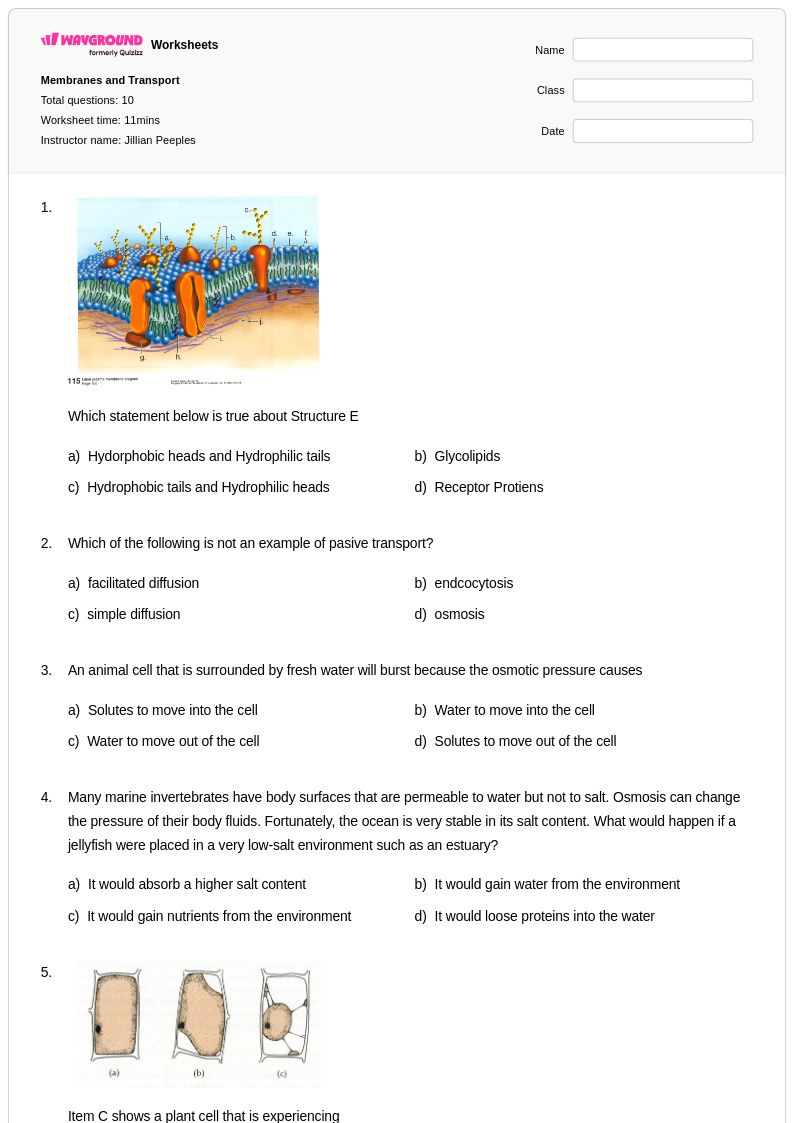
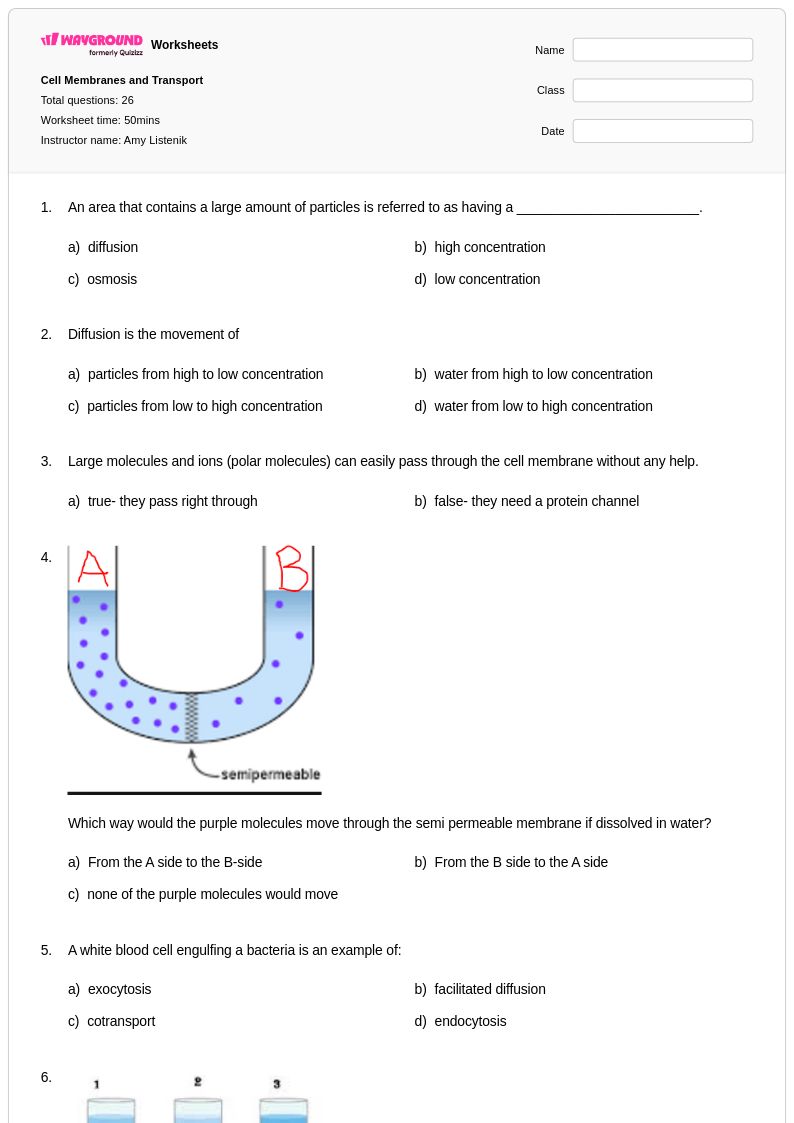
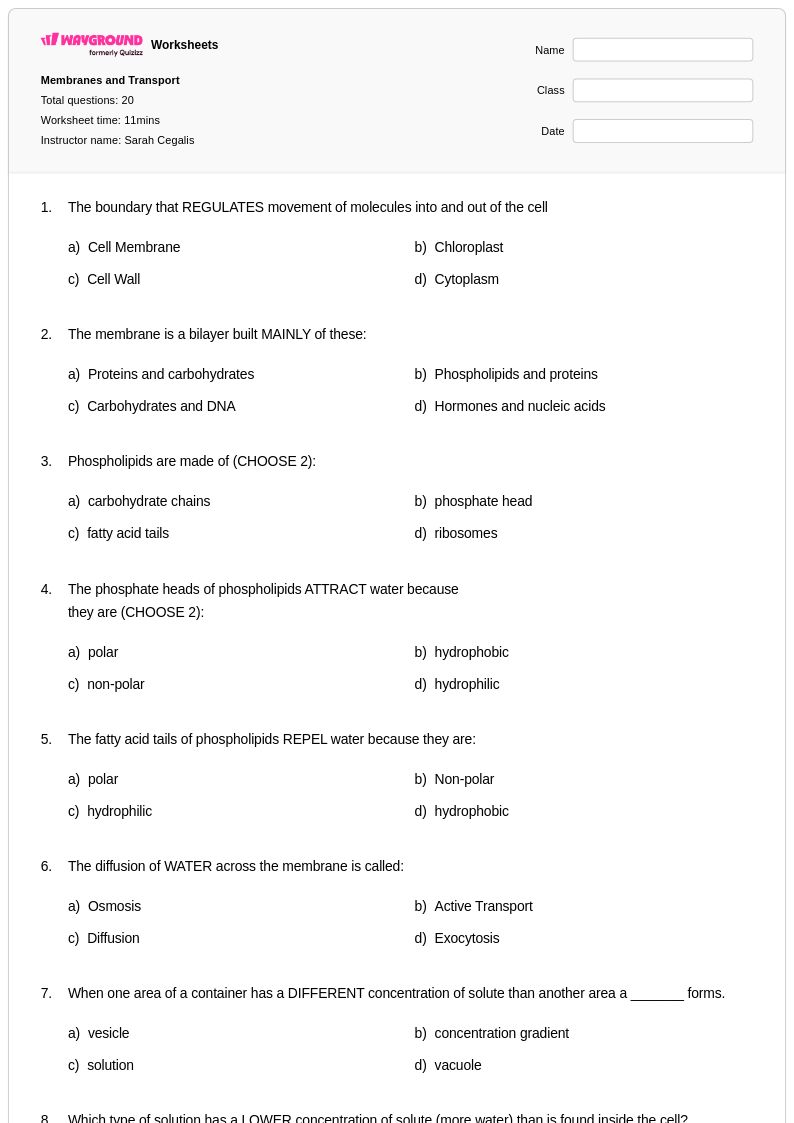
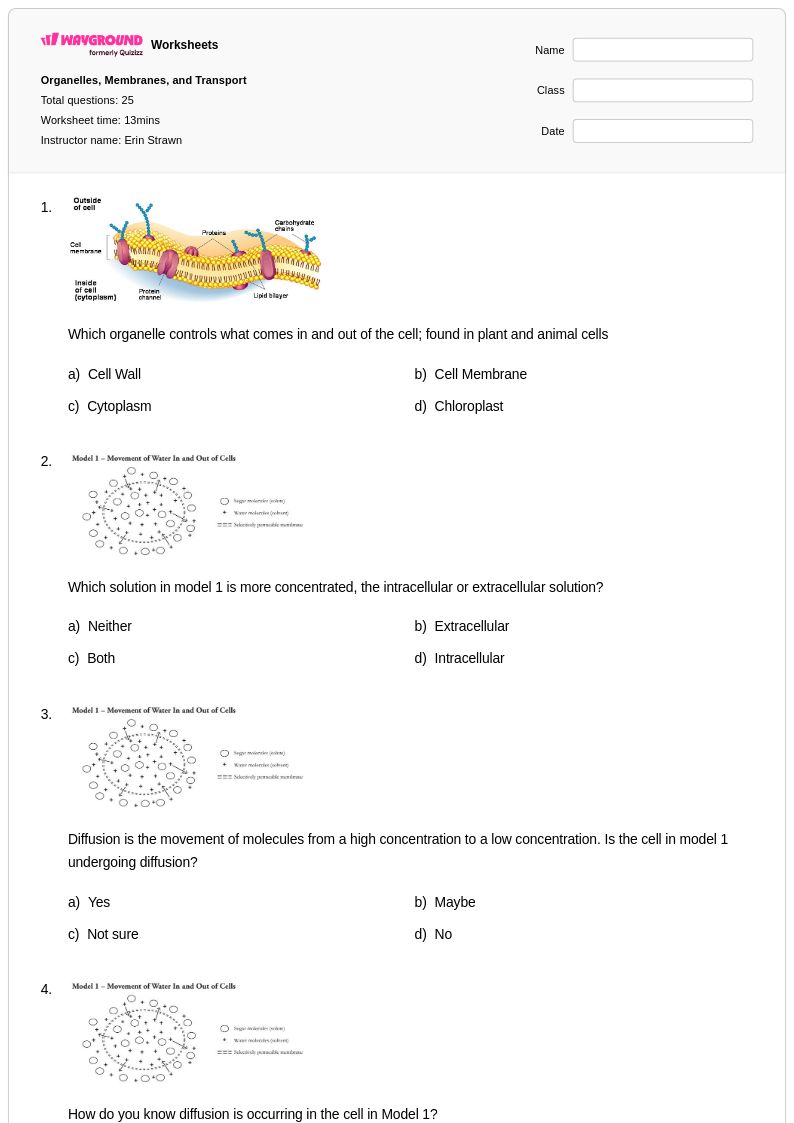
Membranes and transport worksheets available through Wayground (formerly Quizizz) provide comprehensive coverage of cellular membrane structure and function, focusing on the critical processes that govern how substances move into and out of cells. These expertly designed resources strengthen students' understanding of phospholipid bilayers, membrane proteins, and transport mechanisms including passive diffusion, facilitated diffusion, osmosis, and active transport. Each worksheet collection includes detailed answer keys and is available as free printables in convenient pdf format, offering practice problems that range from basic membrane component identification to complex scenarios involving concentration gradients and energy-dependent transport processes. Students develop essential skills in analyzing membrane permeability, predicting molecular movement, and understanding how cells maintain homeostasis through selective transport.
Wayground (formerly Quizizz) supports science educators with millions of teacher-created membrane and transport worksheet resources that streamline lesson planning and enhance student learning outcomes. The platform's robust search and filtering capabilities allow teachers to quickly locate materials aligned with specific educational standards, while differentiation tools enable customization for diverse learning needs and skill levels. These flexible resources are available in both printable and digital formats, including downloadable pdf versions, making them ideal for in-class practice, homework assignments, remediation activities, and enrichment exercises. Teachers can easily modify existing worksheets or combine multiple resources to create comprehensive assessment tools that target specific aspects of cellular transport, from simple diffusion concepts to complex active transport mechanisms involving ATP and membrane pumps.
FAQs
How do I teach the difference between passive and active transport to high school biology students?
Start by anchoring students in the concept of concentration gradients before introducing transport types. Passive transport (diffusion, facilitated diffusion, and osmosis) moves substances down their concentration gradient without energy input, while active transport moves substances against a gradient and requires ATP. Using visual diagrams of the phospholipid bilayer alongside worked examples of specific molecules (like glucose via GLUT transporters or sodium via the Na+/K+ pump) helps students move beyond memorization toward mechanistic understanding.
What are the most common misconceptions students have about osmosis?
The most persistent misconception is that water moves toward a region with 'more water' rather than toward a region of lower water potential or higher solute concentration. Students also frequently confuse the direction of net water movement in hypertonic versus hypotonic solutions. Explicitly comparing osmosis to diffusion and having students predict cell behavior (crenation vs. lysis) in different solute environments helps correct these errors before they become entrenched.
What practice exercises help students understand membrane permeability and molecular movement?
Effective practice includes concentration gradient analysis problems where students predict the direction and rate of diffusion based on molecule size, polarity, and charge. Scenarios involving red blood cells or plant cells placed in solutions of varying tonicity are particularly useful because they connect membrane permeability to observable, real-world outcomes. Practice problems that ask students to distinguish which transport mechanism applies to a given molecule and explain why reinforce both vocabulary and conceptual reasoning simultaneously.
How do I assess whether students truly understand active transport versus facilitated diffusion?
A reliable assessment strategy is to present students with scenarios where energy availability changes, such as a cell treated with an ATP inhibitor, and ask them to predict which transport processes are disrupted. Students who understand the distinction will correctly identify that facilitated diffusion continues while active transport halts. Common errors include assuming that any protein-assisted transport requires energy, which reveals a conflation of the role of carrier proteins with the energy requirements of the transport process itself.
How do I use Wayground's membranes and transport worksheets in my classroom?
Wayground's membranes and transport worksheets are available as printable PDFs for traditional classroom use and in digital formats for technology-integrated environments, making them adaptable for in-class practice, homework, and remediation. Teachers can host worksheets as a quiz directly on Wayground, enabling real-time student responses and immediate feedback. Each worksheet includes a complete answer key, reducing prep time and supporting consistent grading. For classes with diverse learning needs, Wayground's accommodation tools allow teachers to enable features such as read aloud, extended time, or reduced answer choices for individual students without disrupting the experience for the rest of the class.
How do I help students connect cellular transport to the broader concept of homeostasis?
Frame cellular transport as the mechanism by which cells actively regulate their internal environment despite external changes. Use examples like the Na+/K+ ATPase pump maintaining ion gradients for nerve function, or aquaporins managing water balance in kidney cells, to show that transport is not random but tightly controlled. Asking students to explain what would happen to homeostasis if a specific transport mechanism failed helps them internalize the functional significance of membrane proteins and selective permeability.