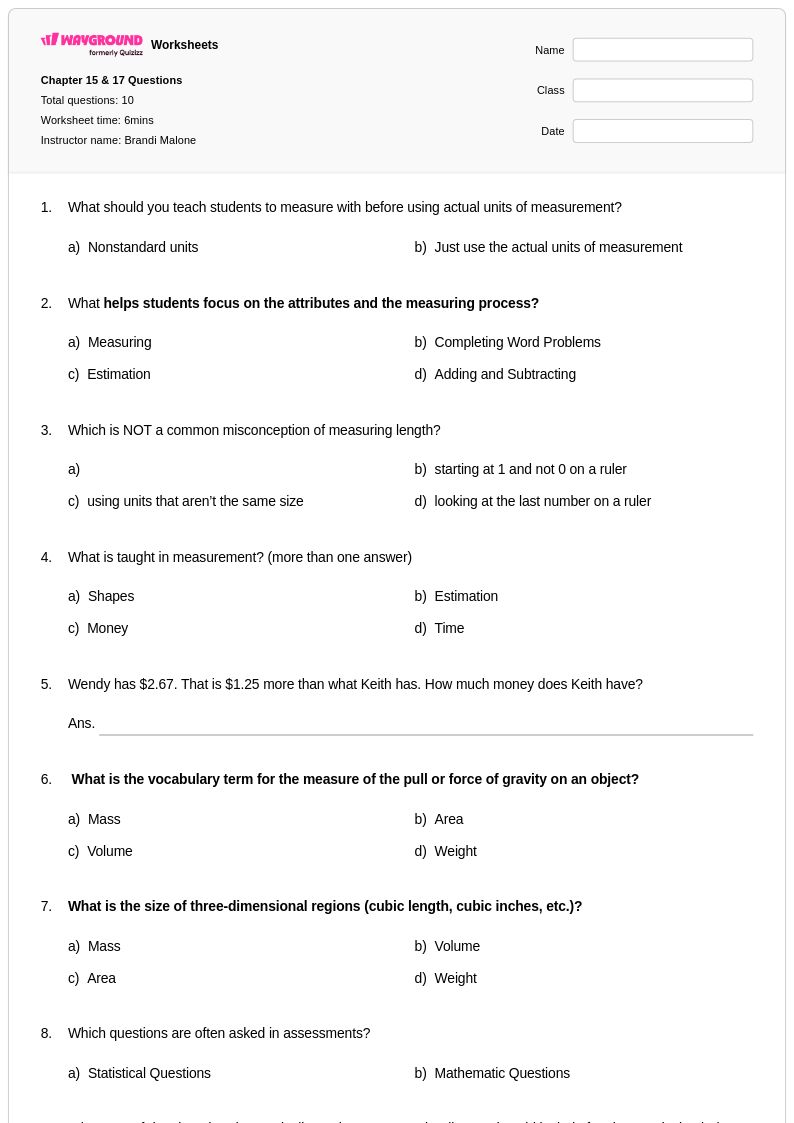
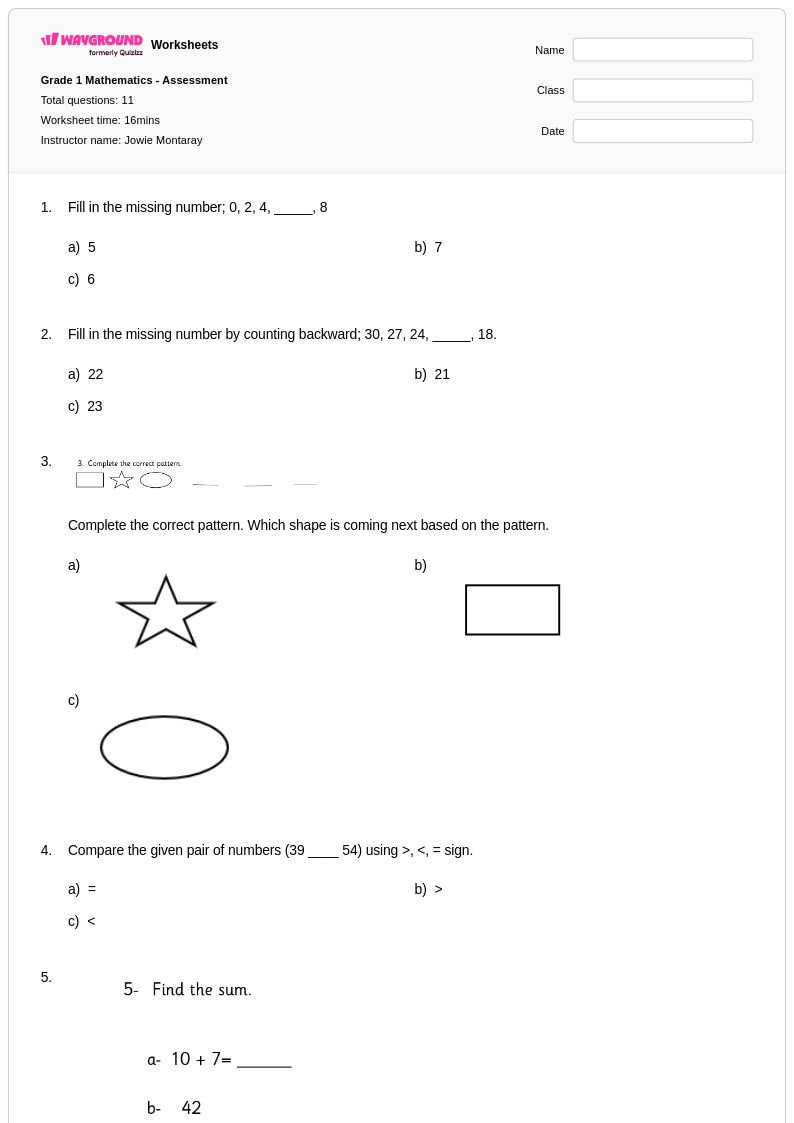
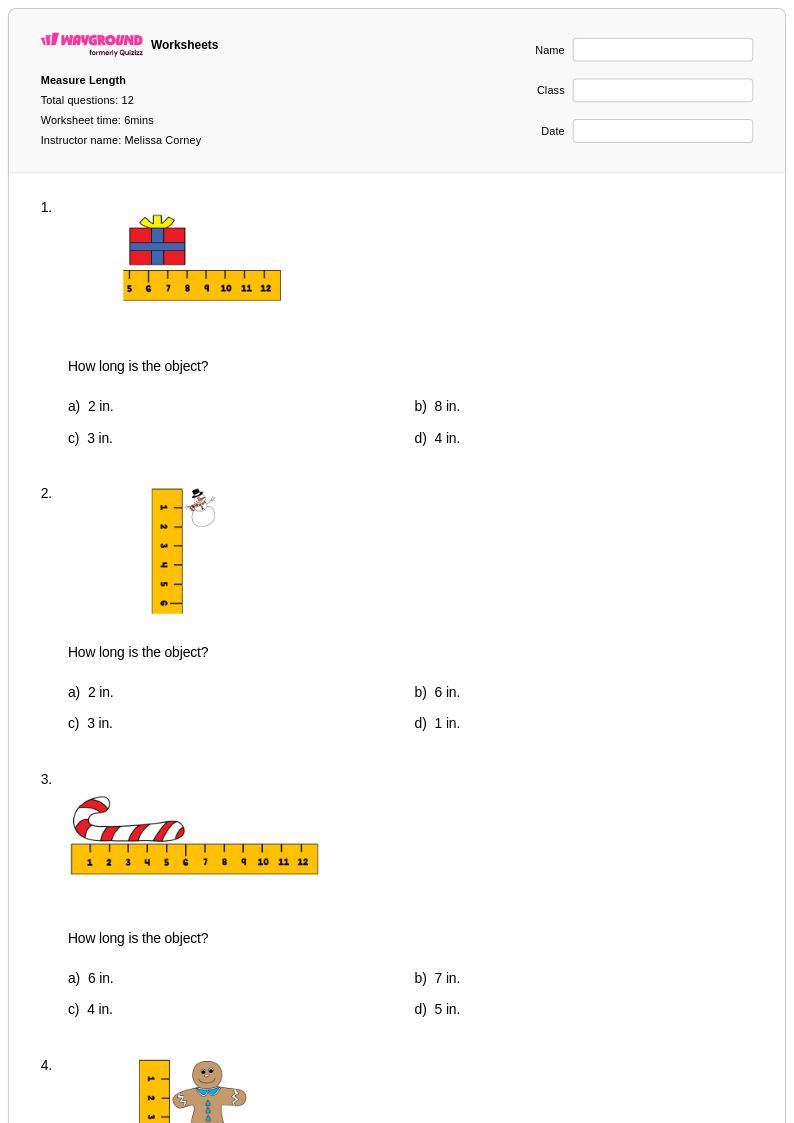
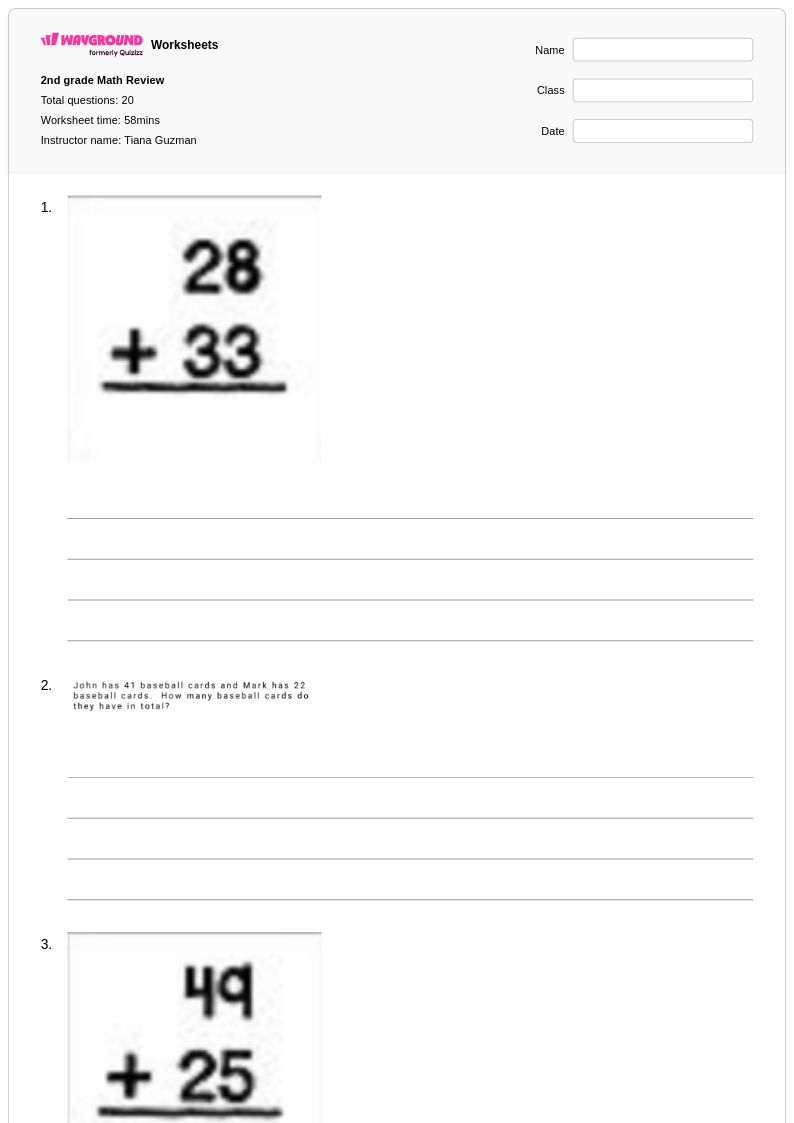
Enhance Class 1 students' estimation skills with Wayground's free printable worksheets featuring engaging practice problems and complete answer keys to build strong mathematical reasoning and number sense foundations.
Explore printable Estimation worksheets for Class 1
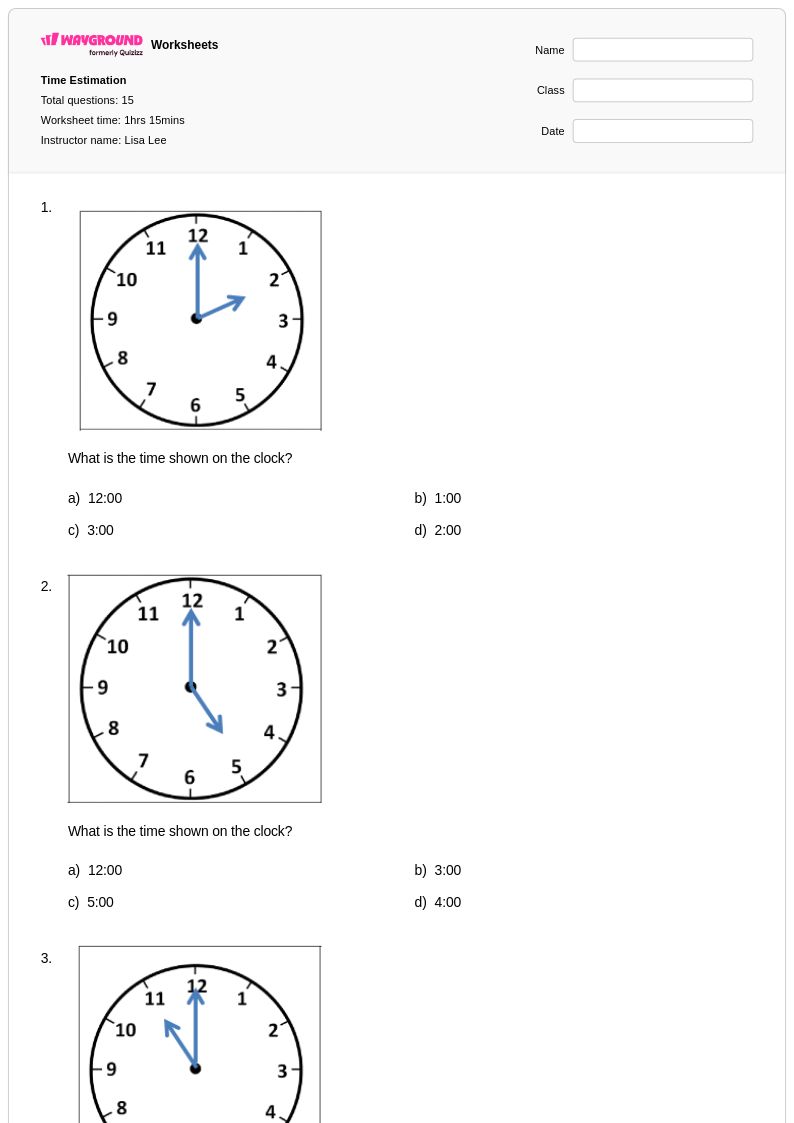
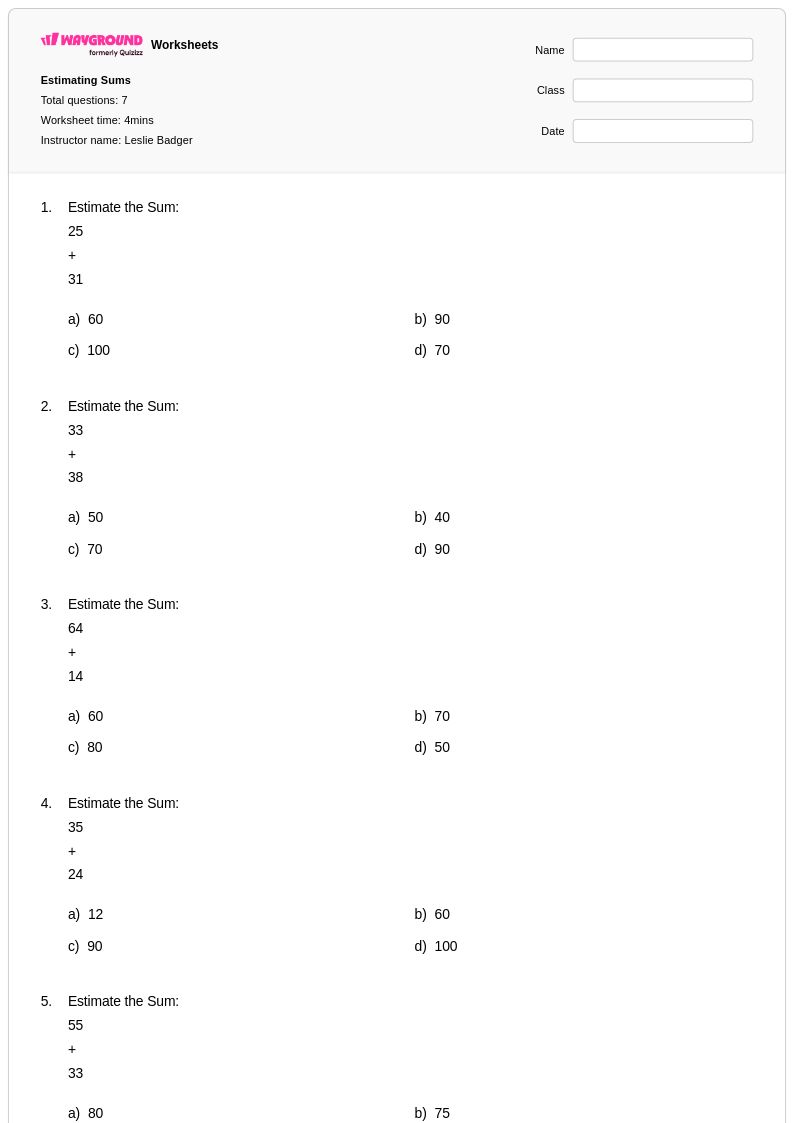
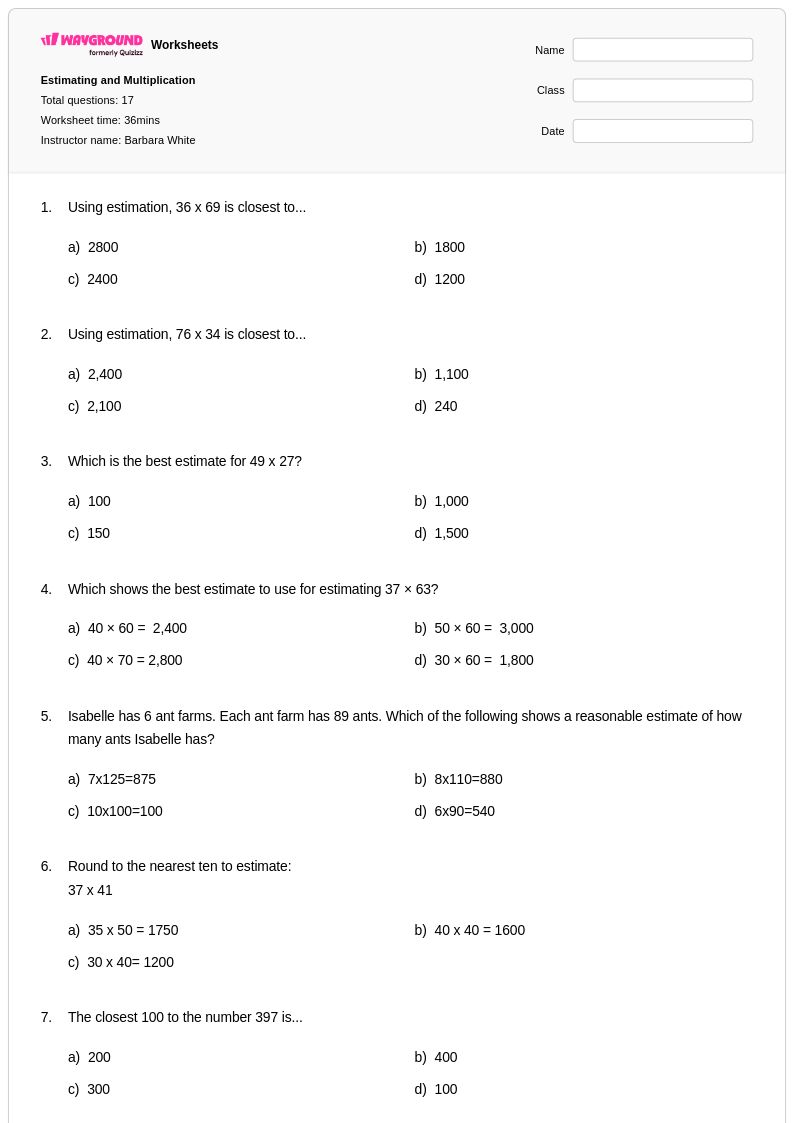
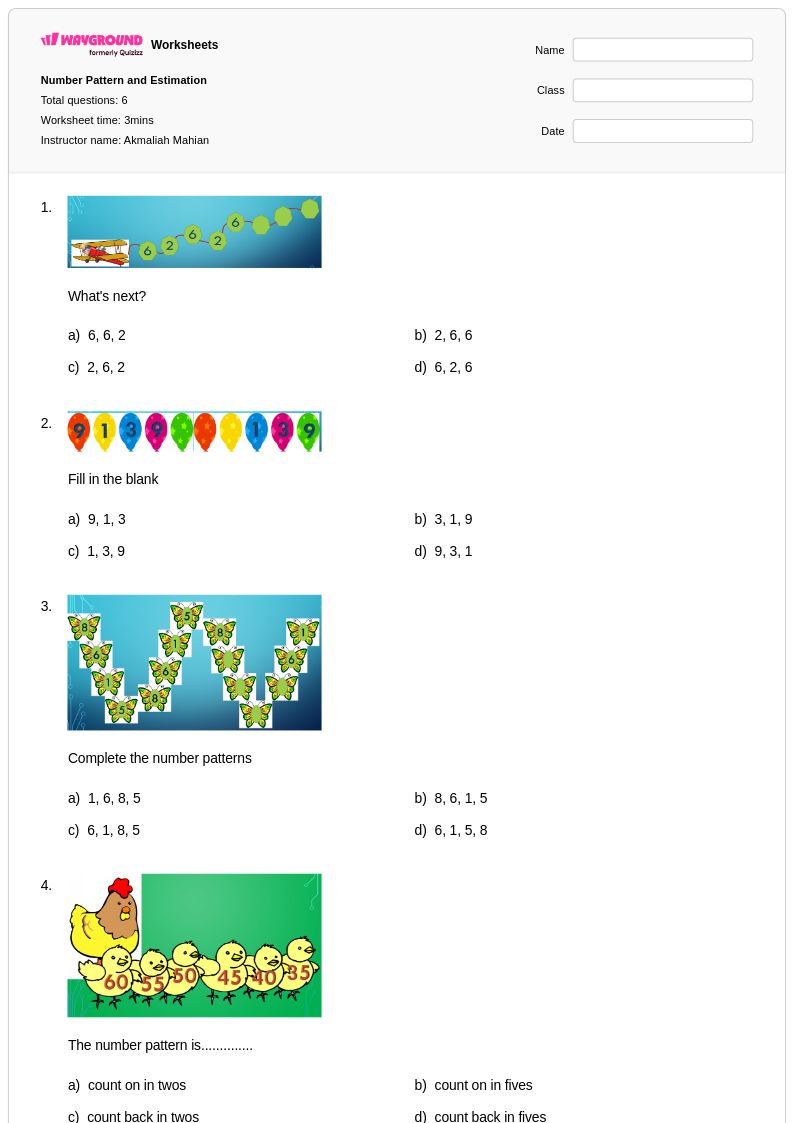
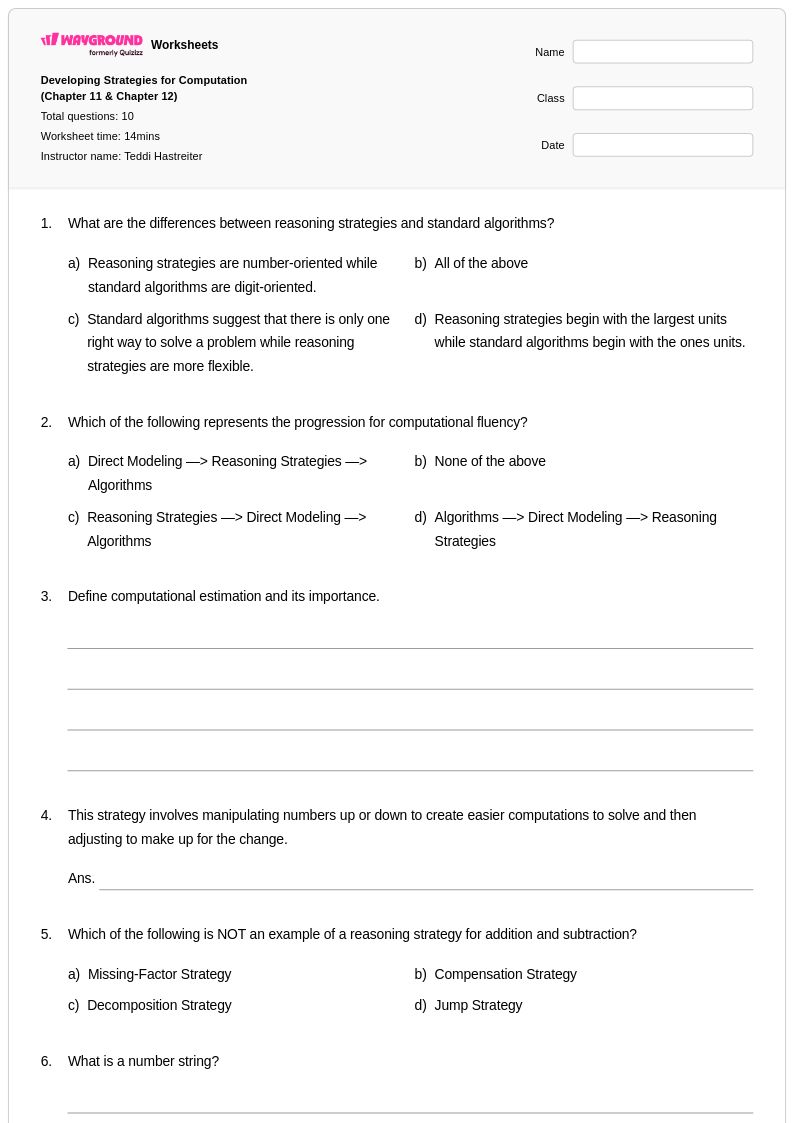
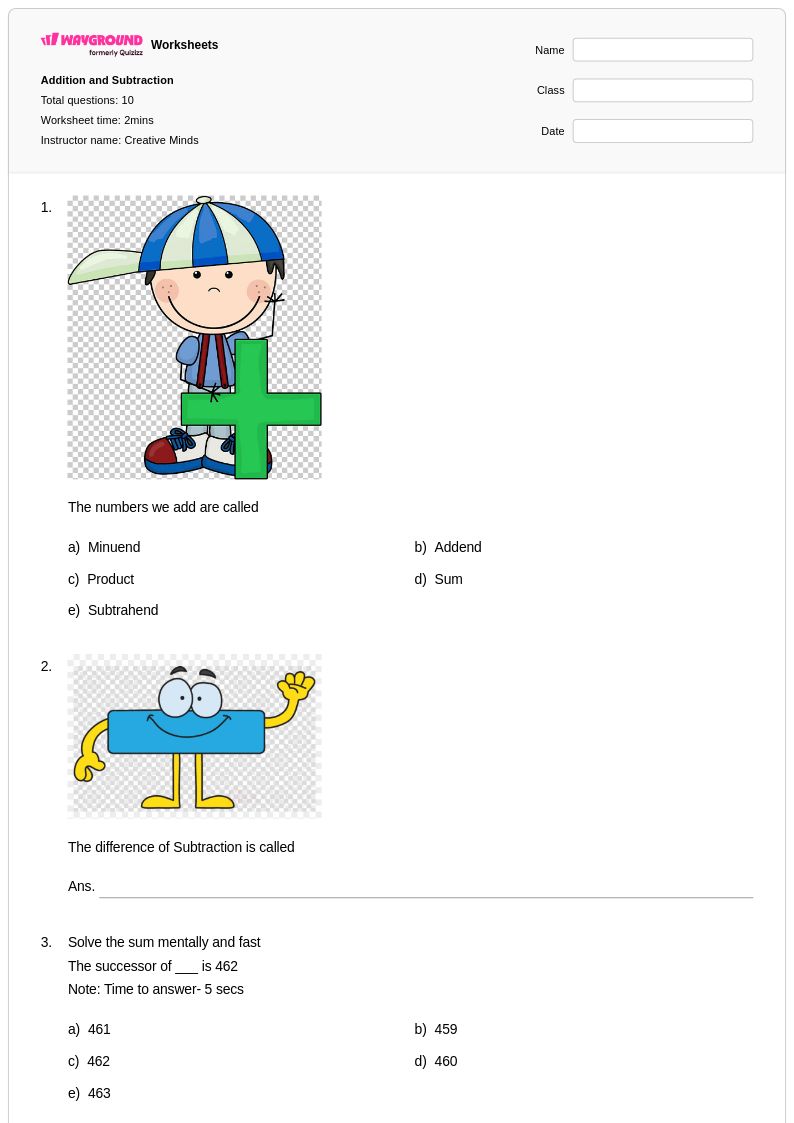
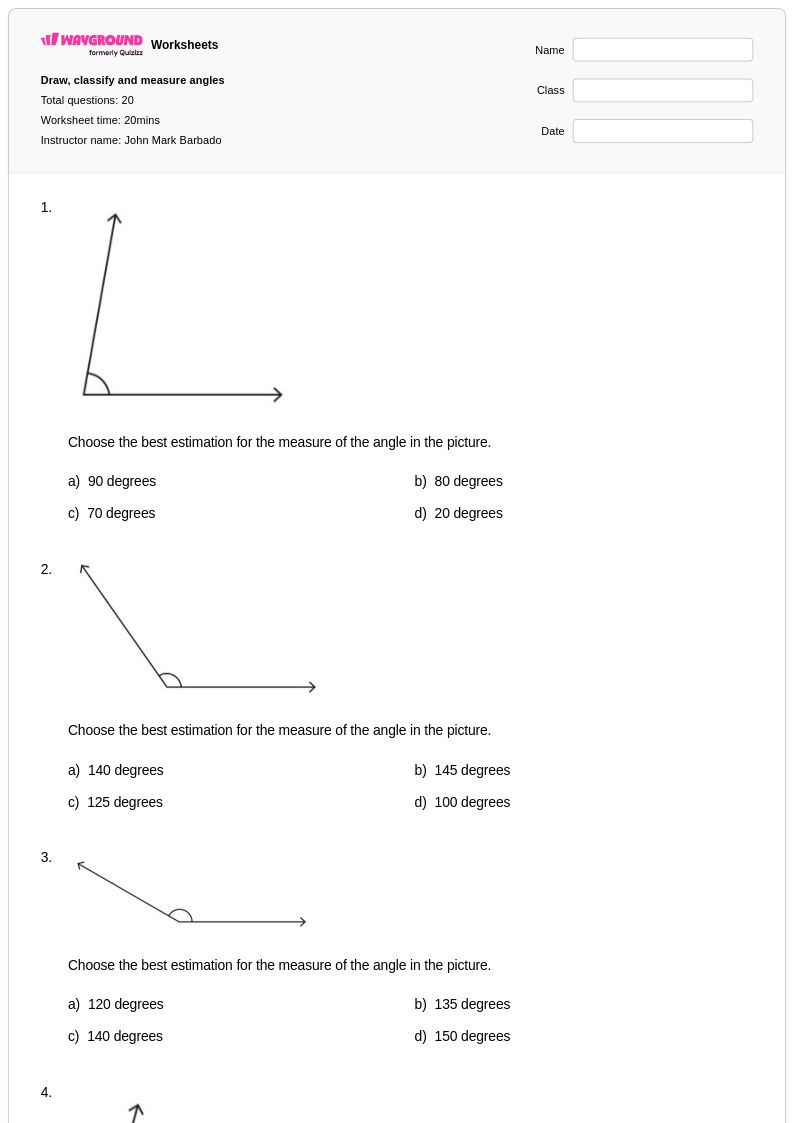
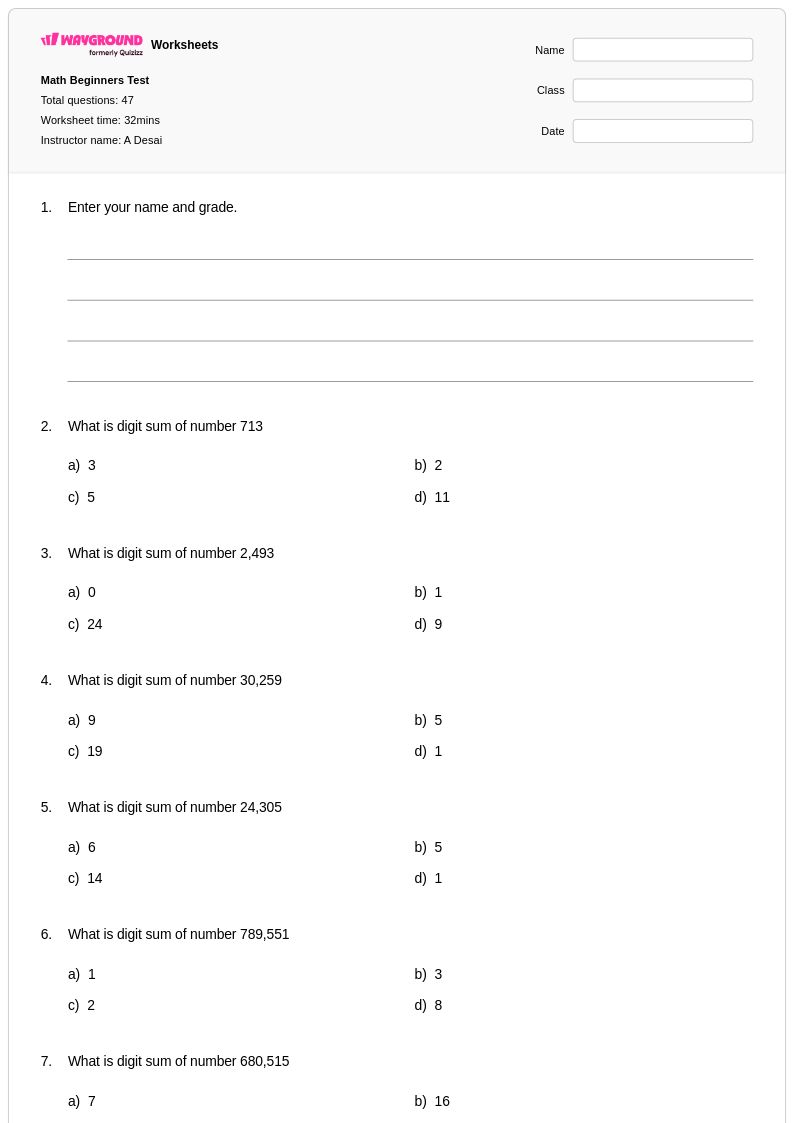
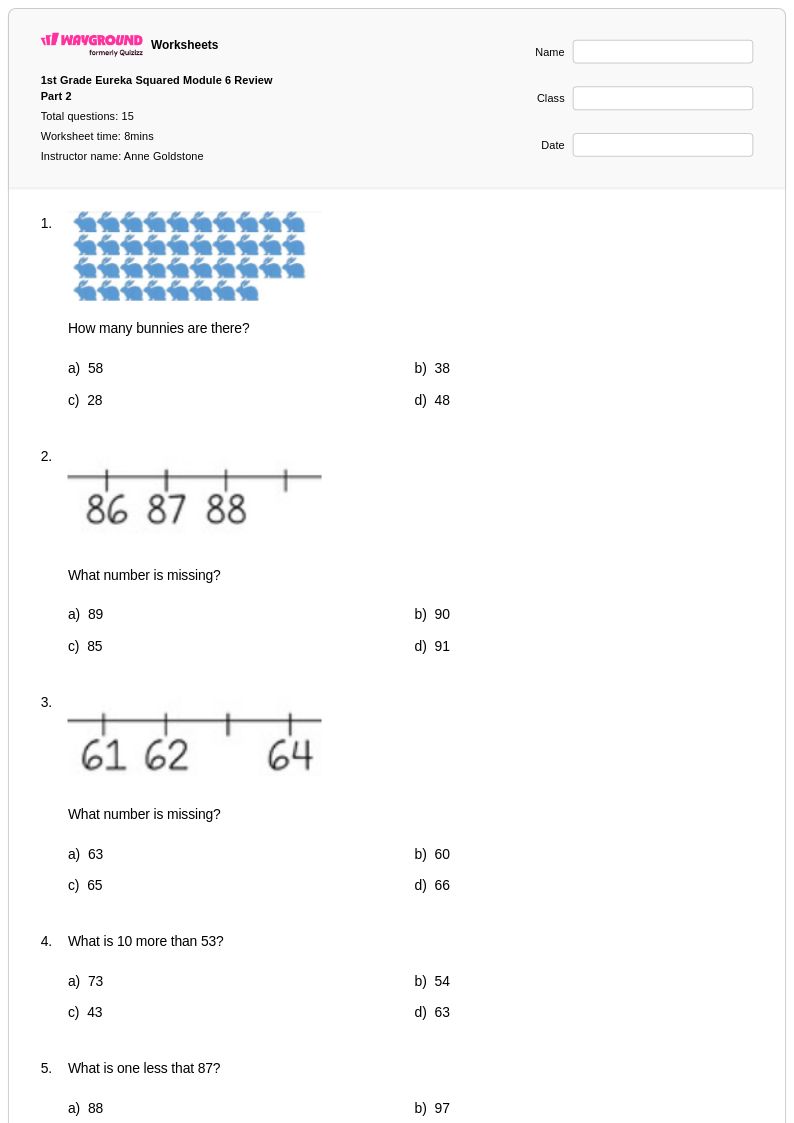
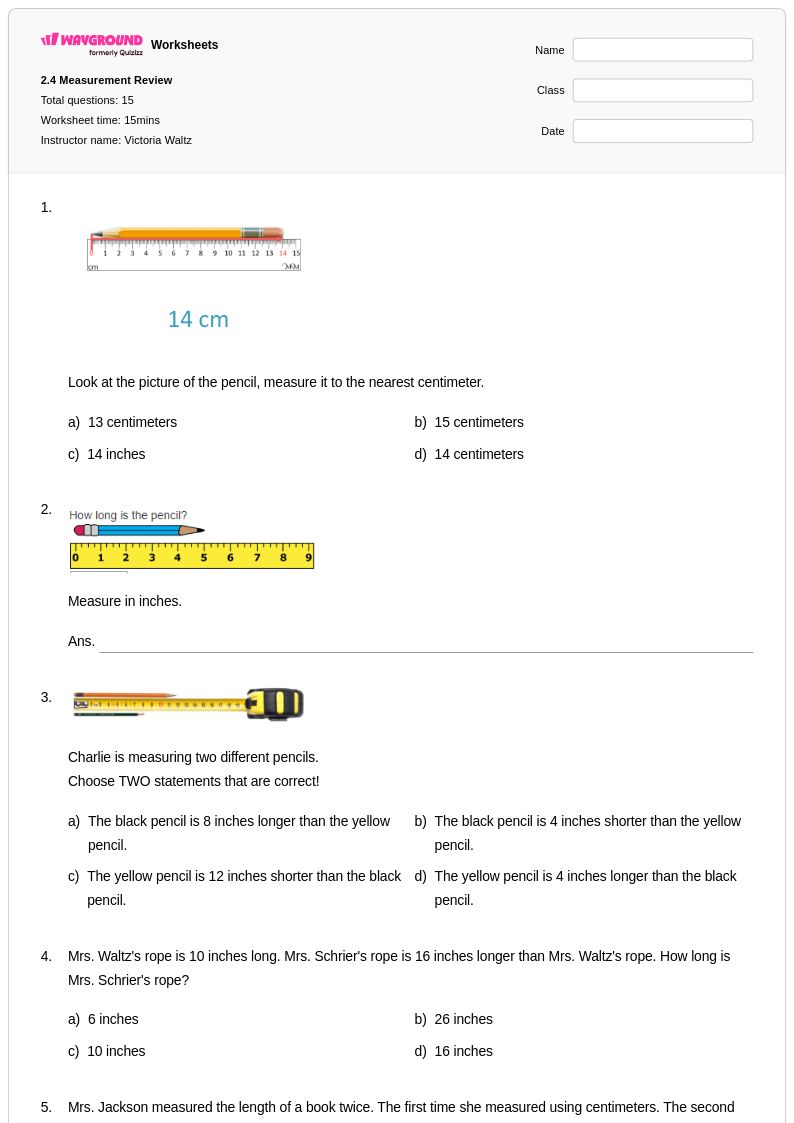
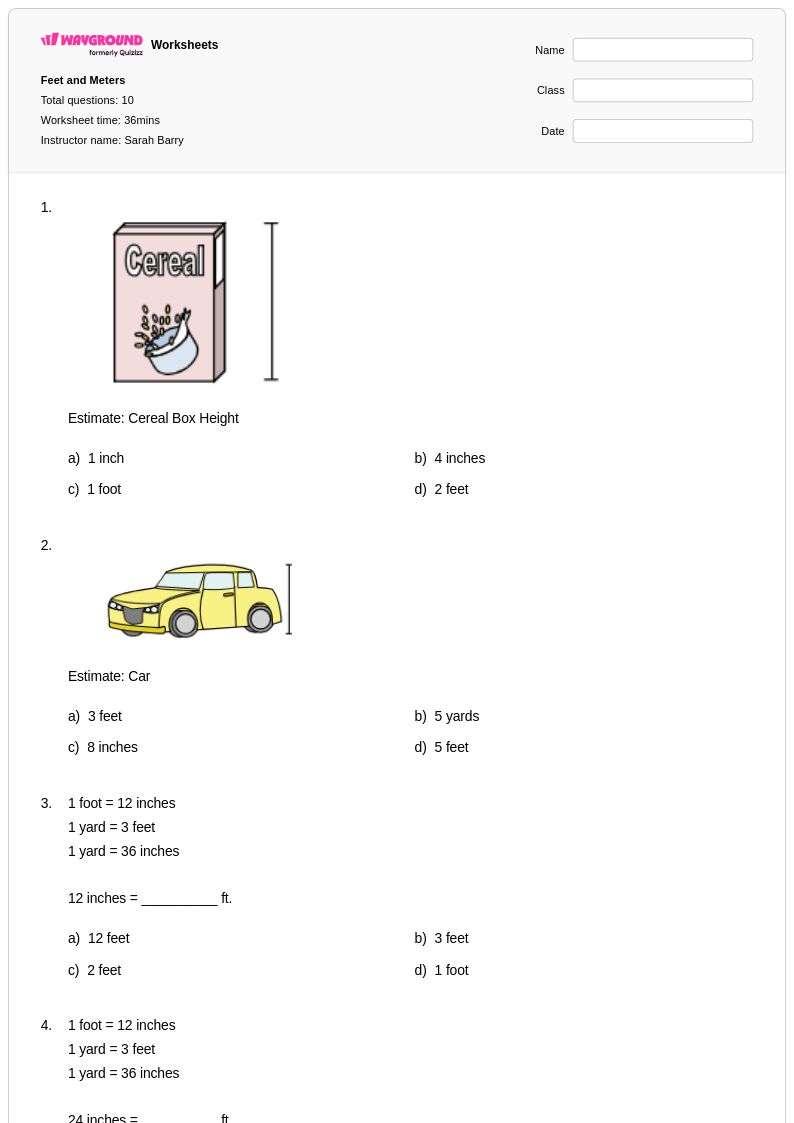
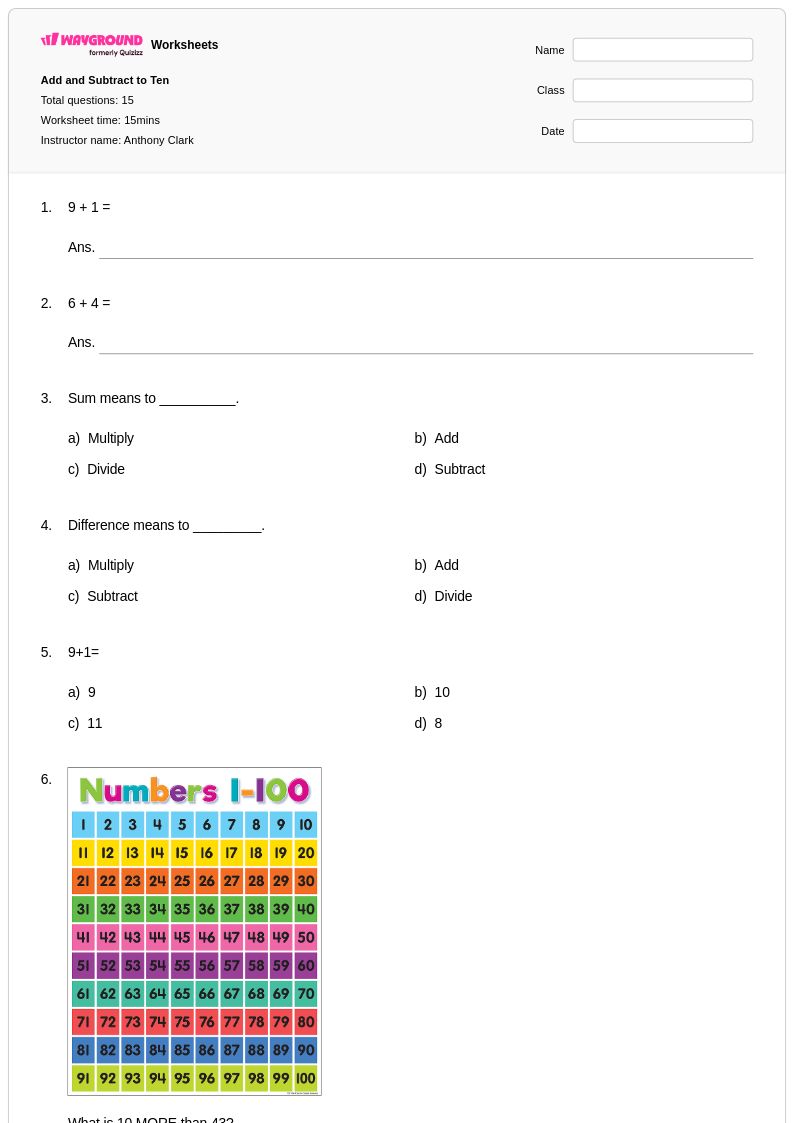
Estimation worksheets for Class 1 through Wayground (formerly Quizizz) provide young learners with essential foundational skills in mathematical reasoning and number approximation. These carefully designed practice problems help first-grade students develop their ability to make reasonable guesses about quantities, distances, and measurements without exact counting or calculation. The worksheets strengthen critical thinking skills by encouraging students to use visual cues, prior knowledge, and logical reasoning to arrive at sensible approximations. Each printable resource includes comprehensive answer keys that allow teachers and parents to efficiently assess student understanding, while the free pdf format ensures easy access and distribution. These estimation activities build confidence in mathematical thinking by showing students that approximate answers can be valuable and appropriate in many real-world situations.
Wayground (formerly Quizizz) supports educators with an extensive collection of teacher-created estimation resources, drawing from millions of high-quality worksheets that can be easily located through robust search and filtering capabilities. The platform's standards alignment ensures that Class 1 estimation materials meet curriculum requirements, while differentiation tools allow teachers to modify content complexity based on individual student needs. Flexible customization options enable educators to adapt worksheets for specific learning objectives, whether focusing on visual estimation, number line approximation, or quantity comparison activities. Available in both printable and digital formats including downloadable pdf files, these resources seamlessly integrate into lesson planning for skill practice, targeted remediation, and enrichment opportunities. Teachers can efficiently address diverse learning styles and pacing requirements while building students' conceptual understanding of estimation as a valuable mathematical strategy.
FAQs
How do I teach estimation to first graders?
First grade is where estimation starts to connect to the number line. Students should practice placing numbers approximately on a 0–20 or 0–100 number line before they're asked to estimate sums or quantities. Use physical benchmarks — a strip of 10 cubes, a line of 5 tiles — so students have a reference point to compare against. The key shift from kindergarten is moving from pure visual guessing to using known quantities as anchors: 'I know 10 looks like this, so this group looks like about 15.'
What exercises help first graders practice estimation?
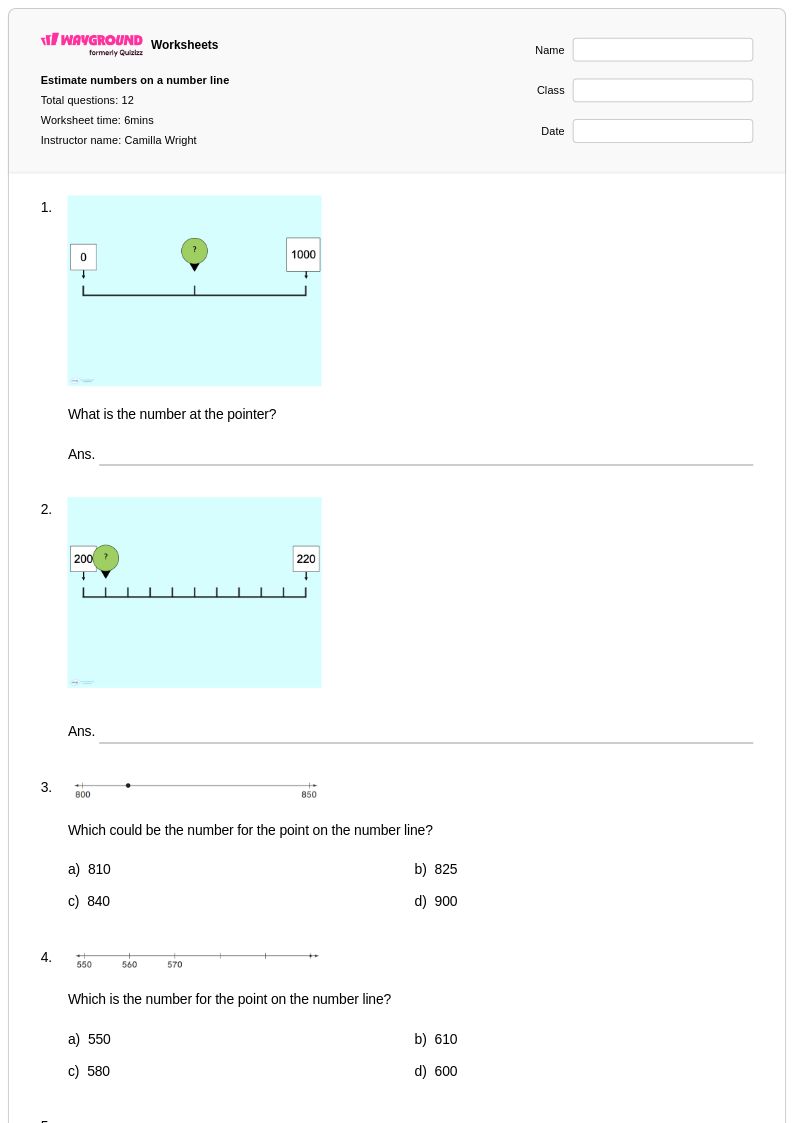
Good Grade 1 estimation practice includes: estimating where a number falls on a number line, comparing two quantities and estimating the difference, and estimating the total of two small groups before counting. Wayground's Grade 1 estimation worksheets cover visual quantity tasks, number line approximation, and simple comparison problems — building from the concrete picture-based work of kindergarten toward more structured numerical reasoning.
What errors do first graders commonly make with estimation?
First graders often count exactly when asked to estimate, especially on picture-based problems — they haven't yet accepted that an approximate answer is a legitimate answer. A second common error is anchoring too rigidly to 10: students who know their tens well will round everything to the nearest 10 even when a different benchmark would be more useful. Watch for students who estimate 'about 10' for quantities ranging from 7 to 14, which signals they're using 10 as a default rather than actually judging the quantity.
How do I use Wayground's Grade 1 estimation worksheets?
You can assign these as a digital quiz on Wayground or print them as PDFs for paper practice — both formats contain the same problems and include a complete answer key. For printed worksheets, the Wayground for Teachers app lets you scan student work to grade it without manually re-entering responses, which saves time when you're reviewing a whole class set.
How does estimation fit into the Common Core progression for Grade 1?
Common Core's Grade 1 standards emphasize understanding the relationship between numbers up to 120 and using that understanding to add and subtract. Estimation supports this directly: students who can judge that 38 + 21 is 'close to 60' are demonstrating the same number-line intuition the standards build toward. This is also the grade where students begin working with two-digit numbers, making it the natural entry point for rounding-based estimation before formal rounding rules are introduced in Grade 3.
How can I differentiate estimation practice for my Grade 1 class?
For students who are still building number confidence, Wayground's worksheet tools let you increase font size and apply wider spacing so the page feels less overwhelming. For students who need reading support during digital sessions, the Read Aloud accommodation reads questions aloud — useful in Grade 1 where decoding ability varies widely and you don't want literacy gaps to interfere with math reasoning. Advanced students can be pushed toward explaining their estimate in writing, which deepens the thinking without requiring a different worksheet.