
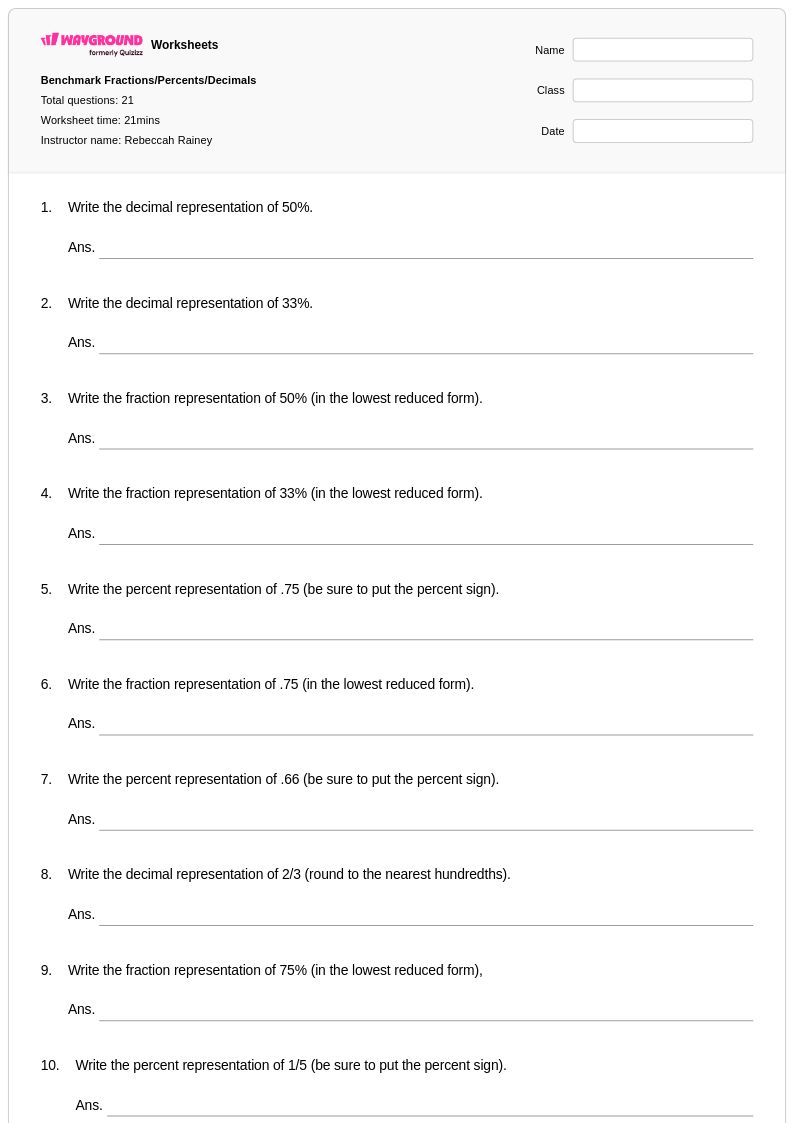
21 Q
6th
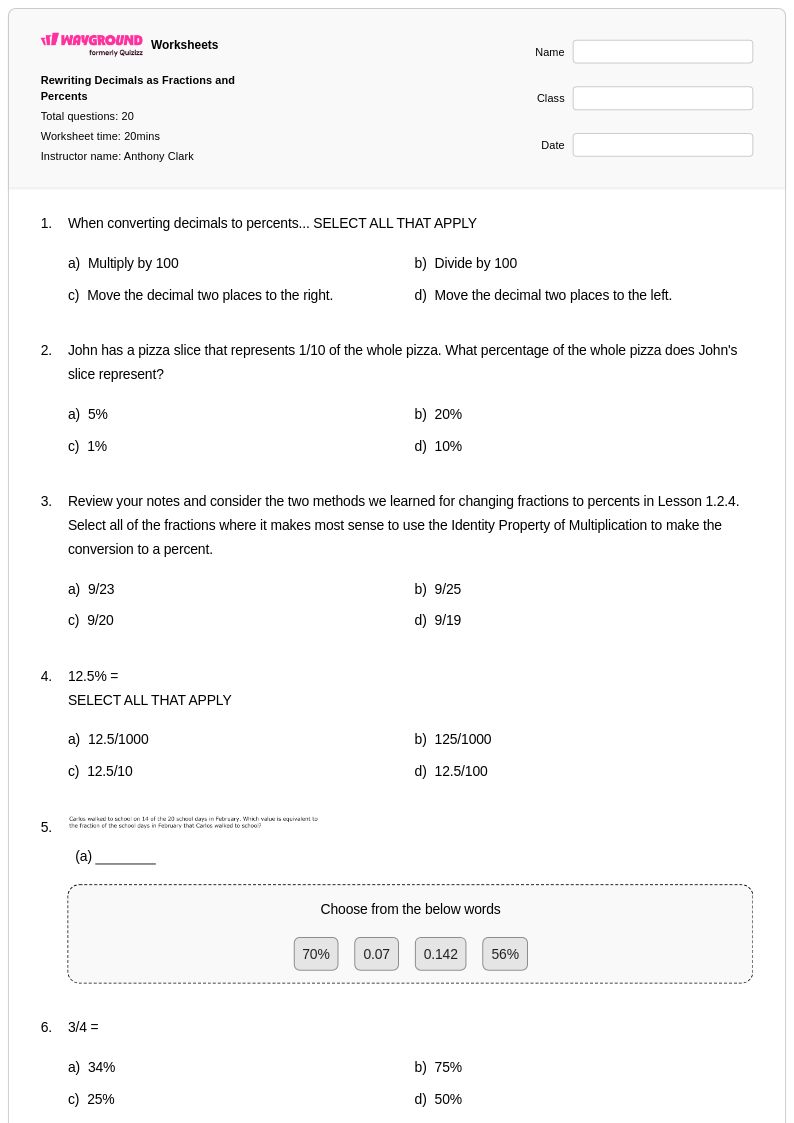
20 Q
6th - Uni
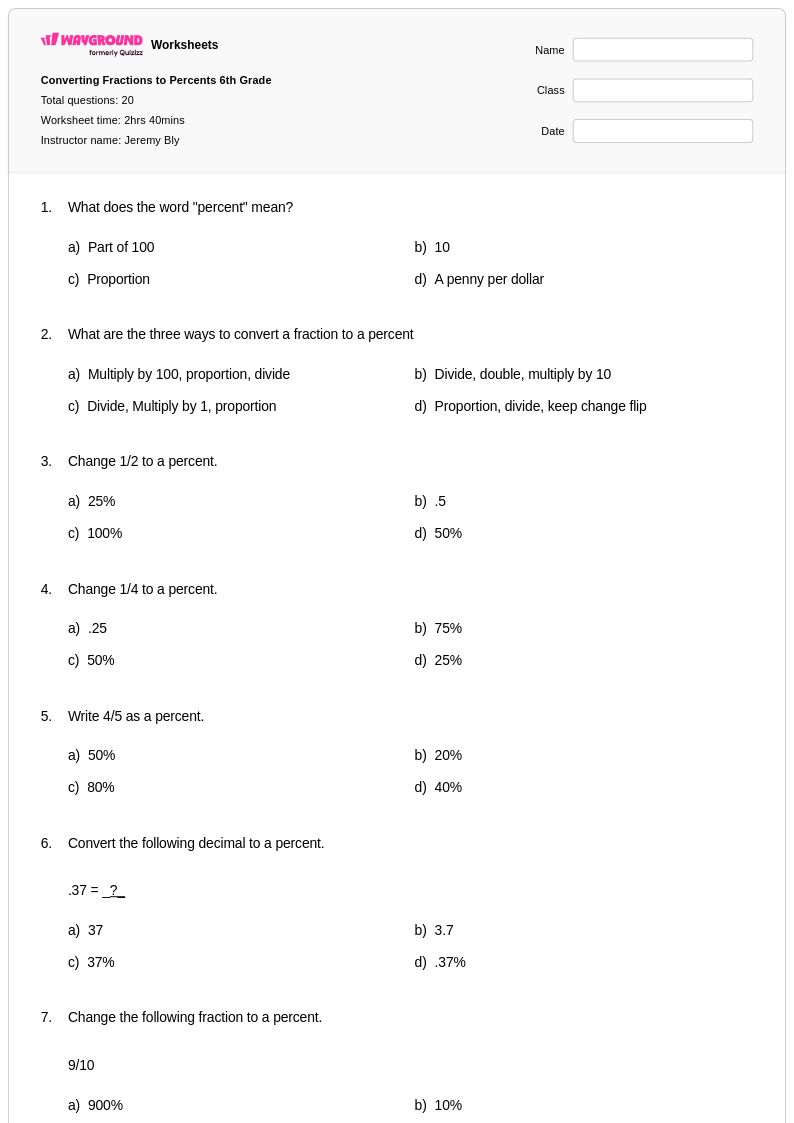
20 Q
6th
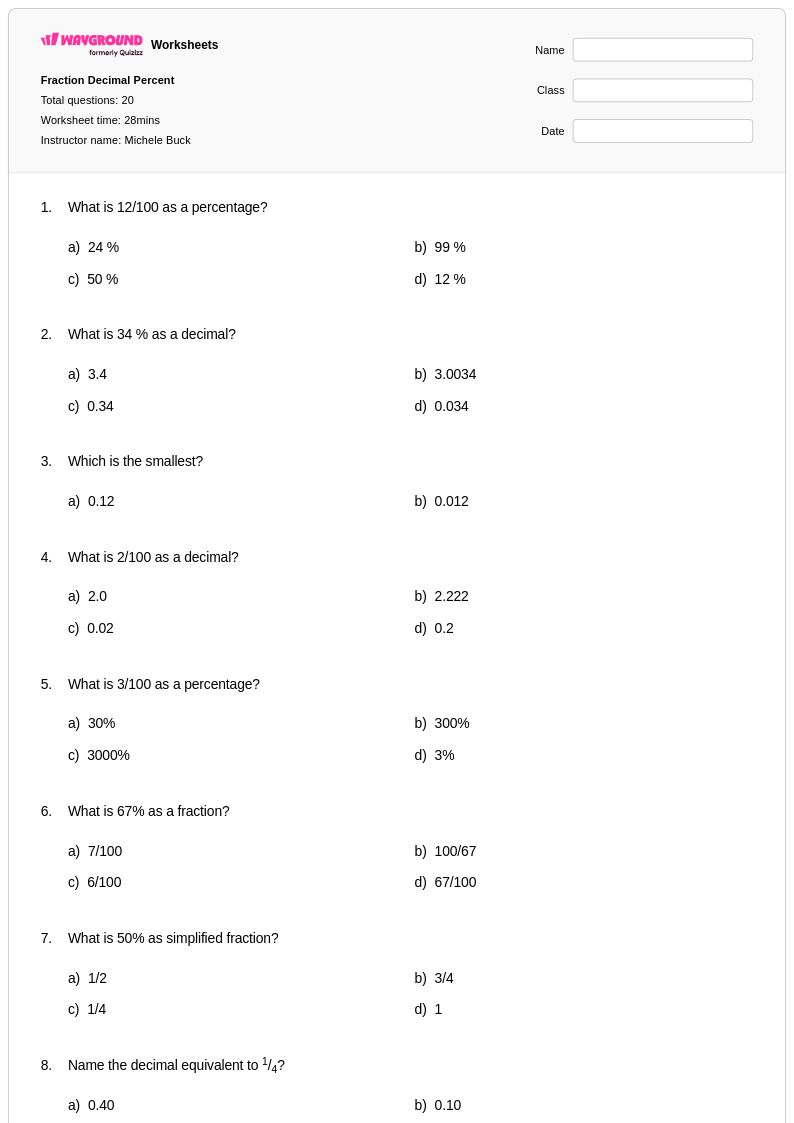
20 Q
6th
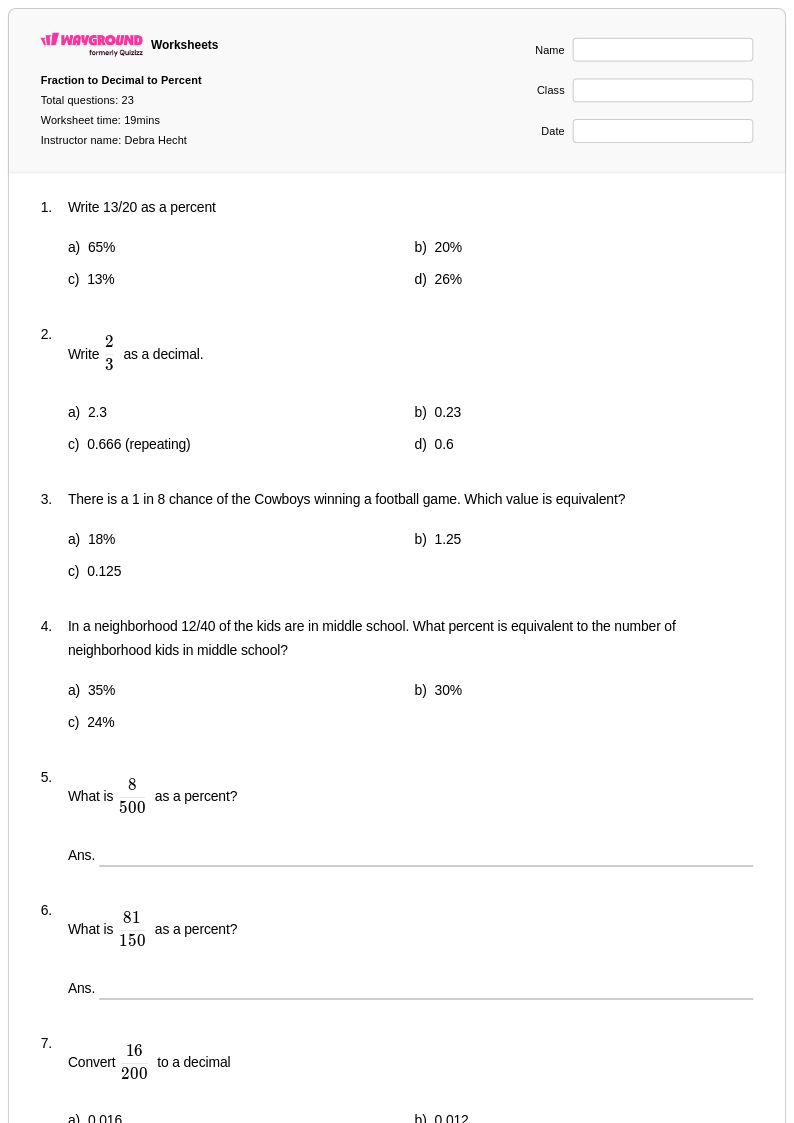
23 Q
7th
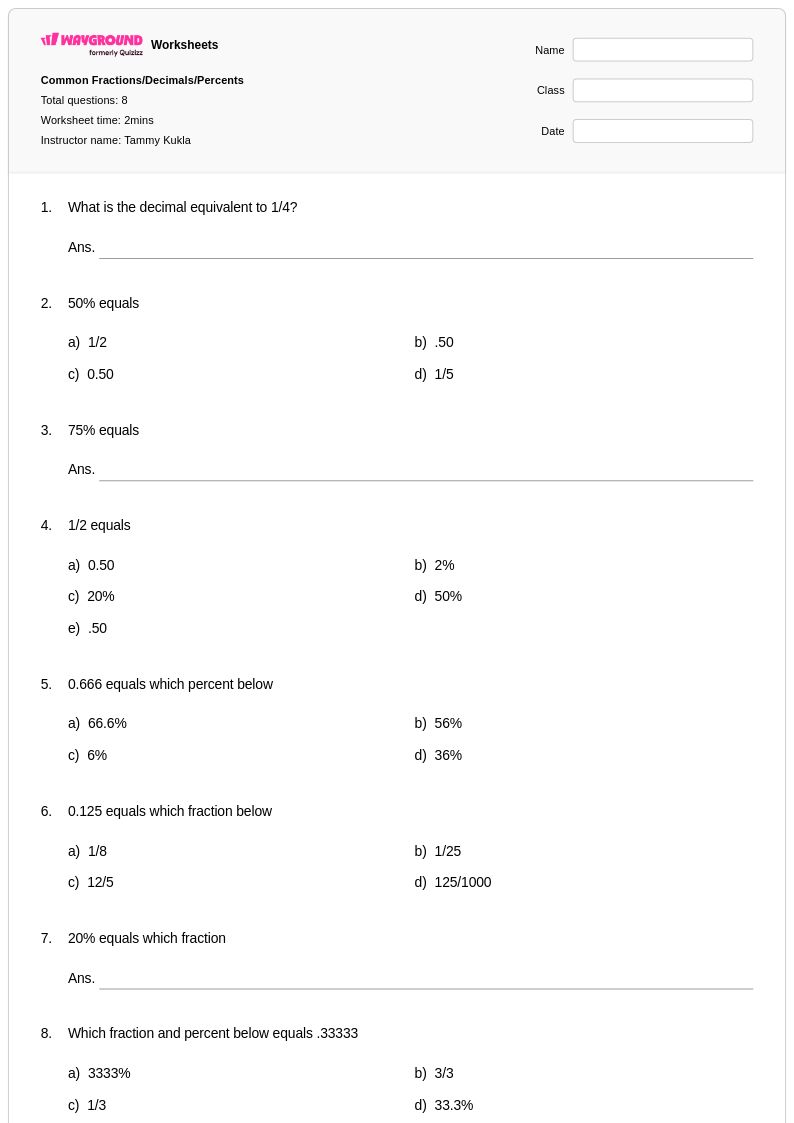
8 Q
6th
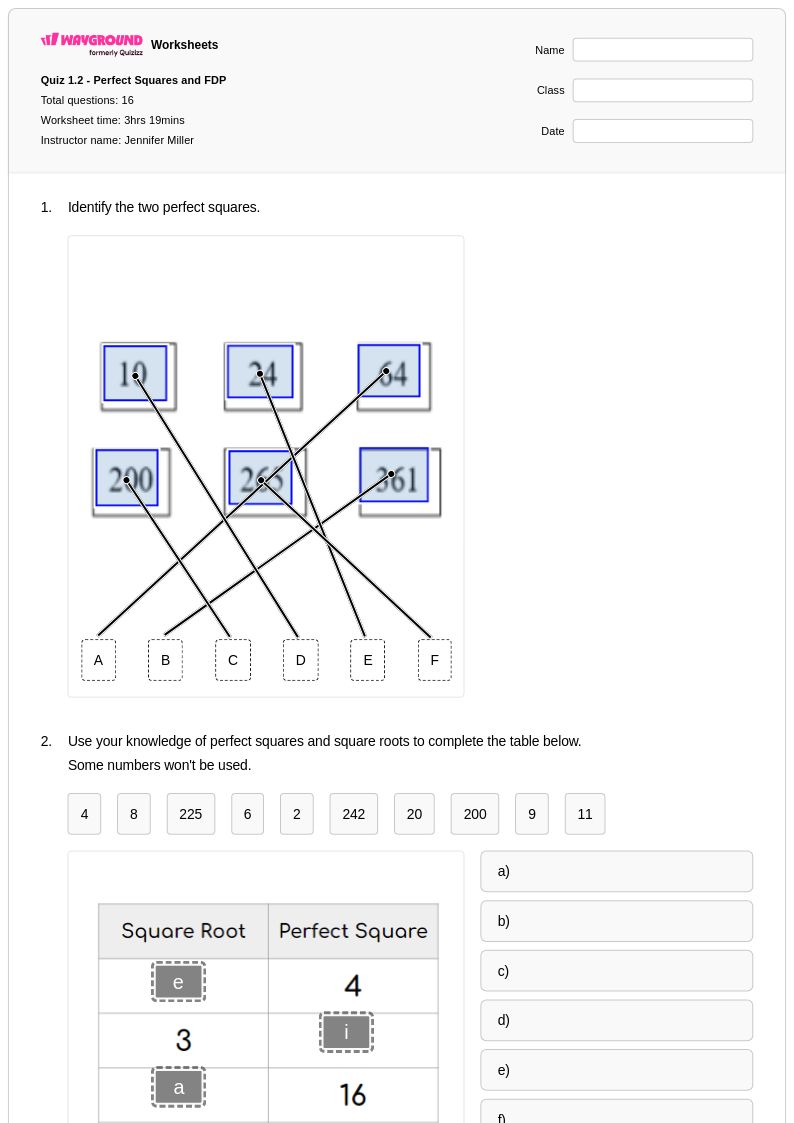
16 Q
7th
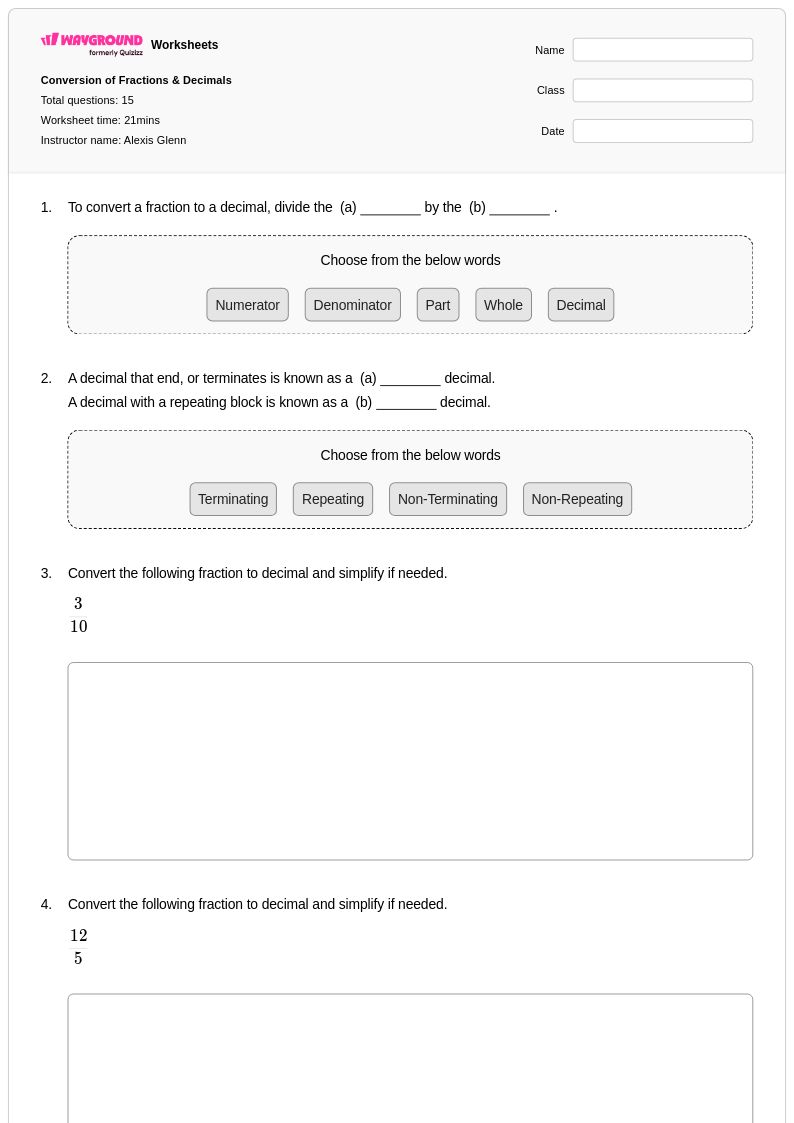
15 Q
8th
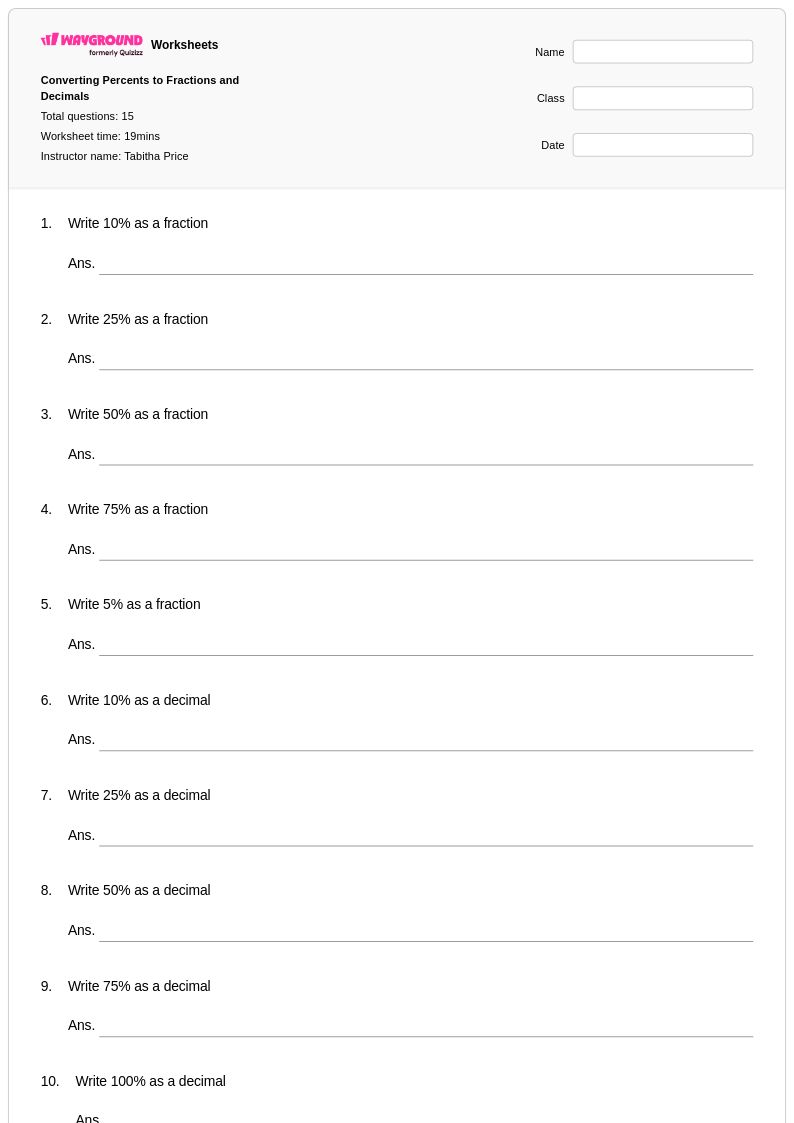
15 Q
5th - 8th
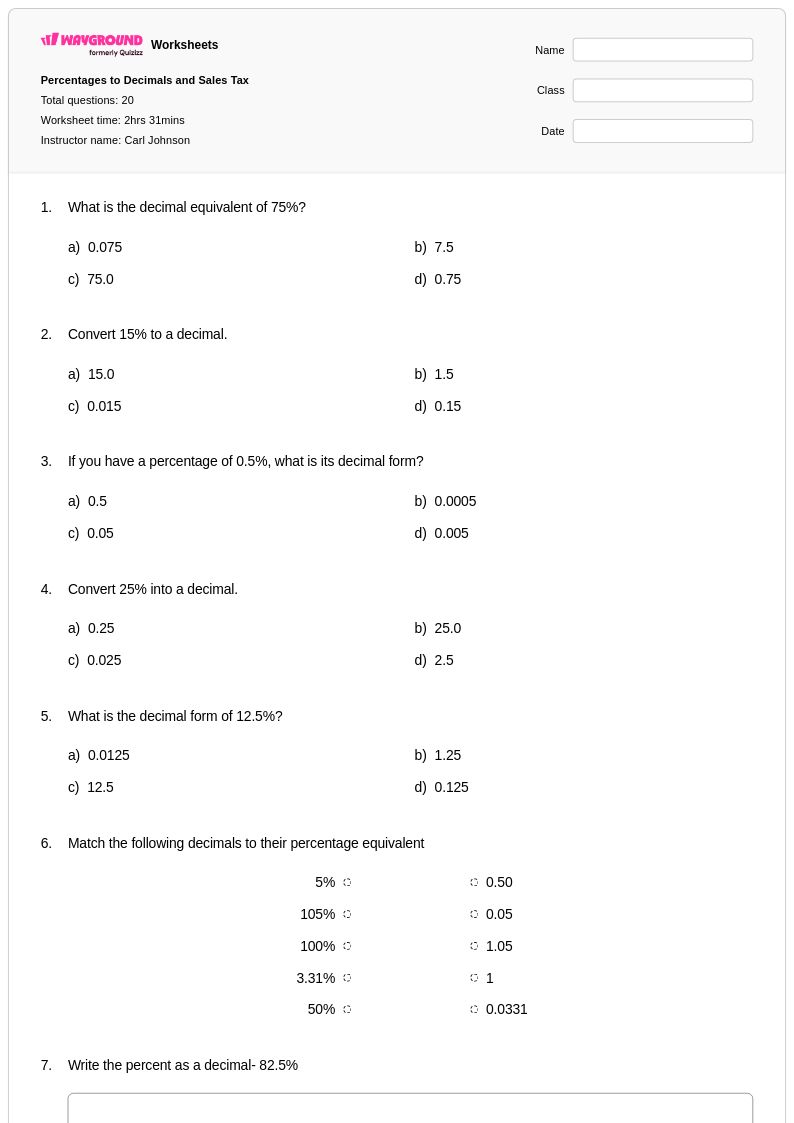
20 Q
7th
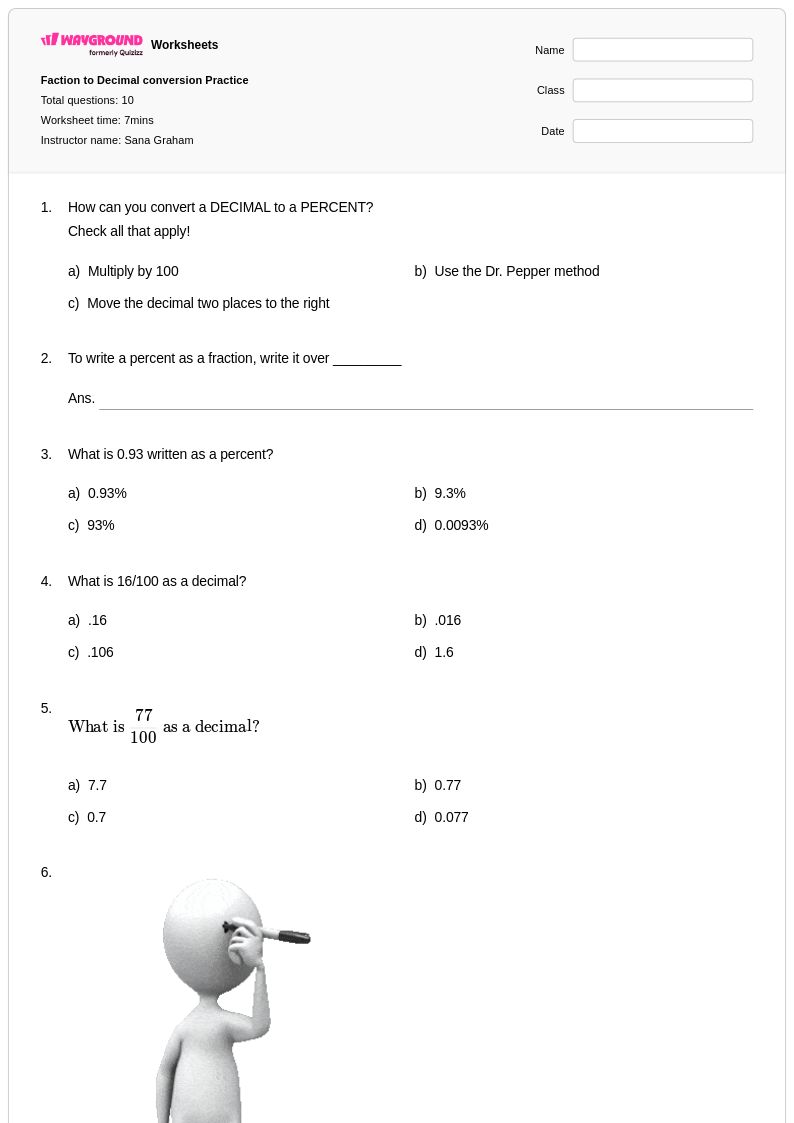
10 Q
7th
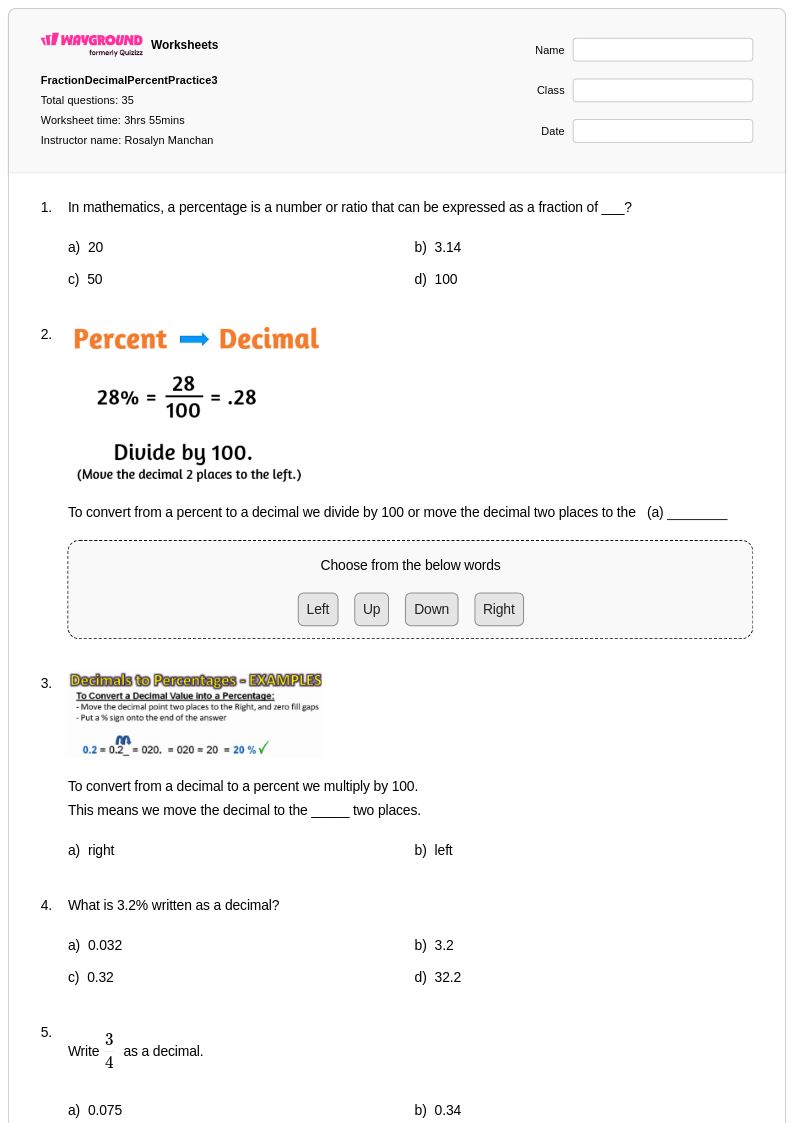
35 Q
6th
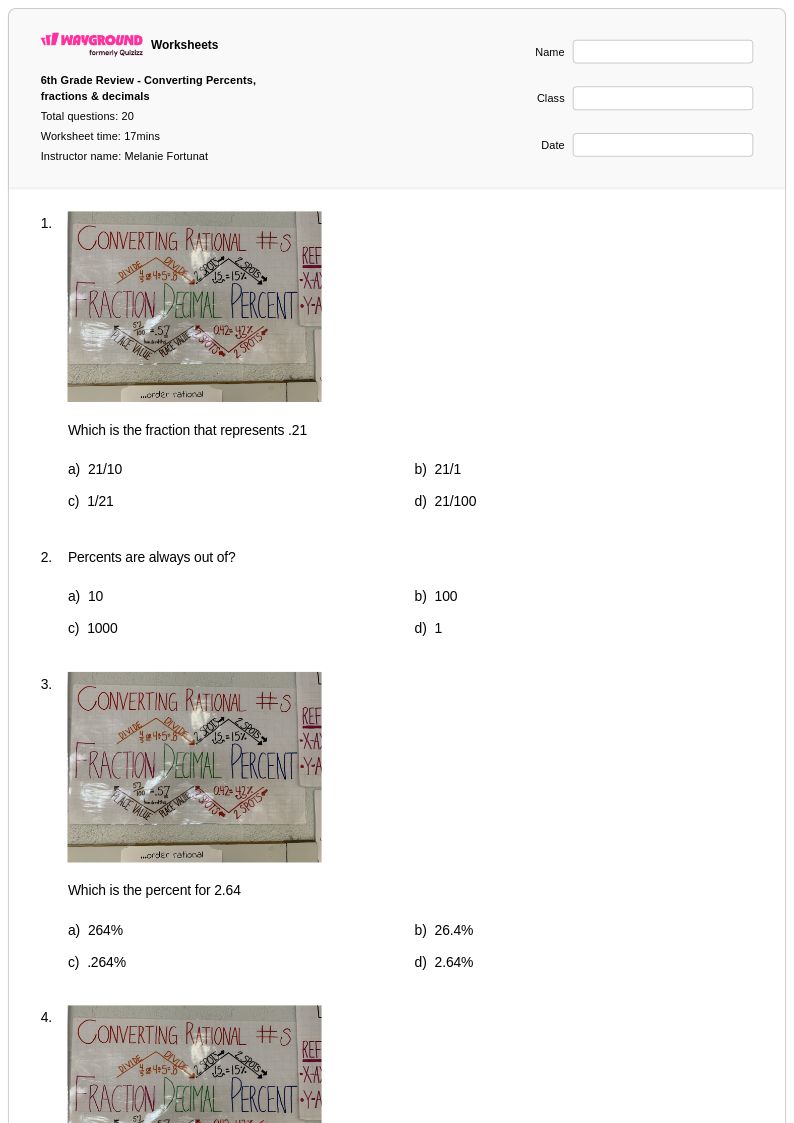
20 Q
6th
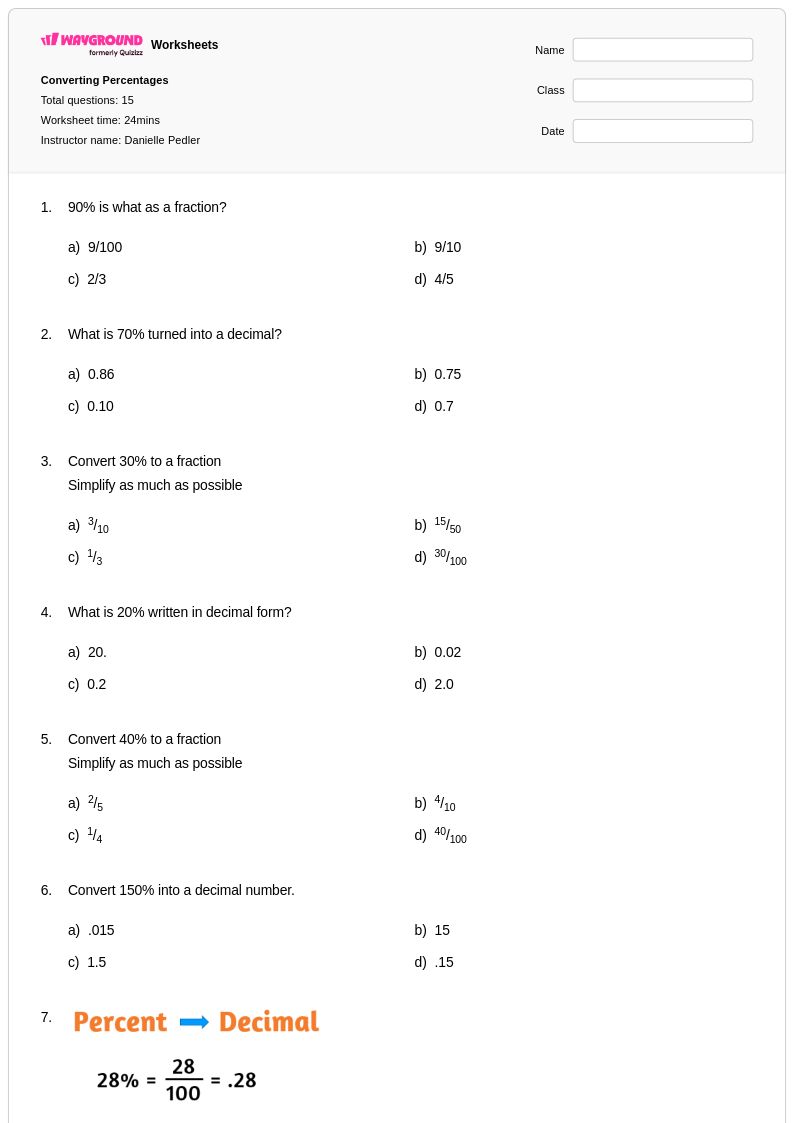
15 Q
7th
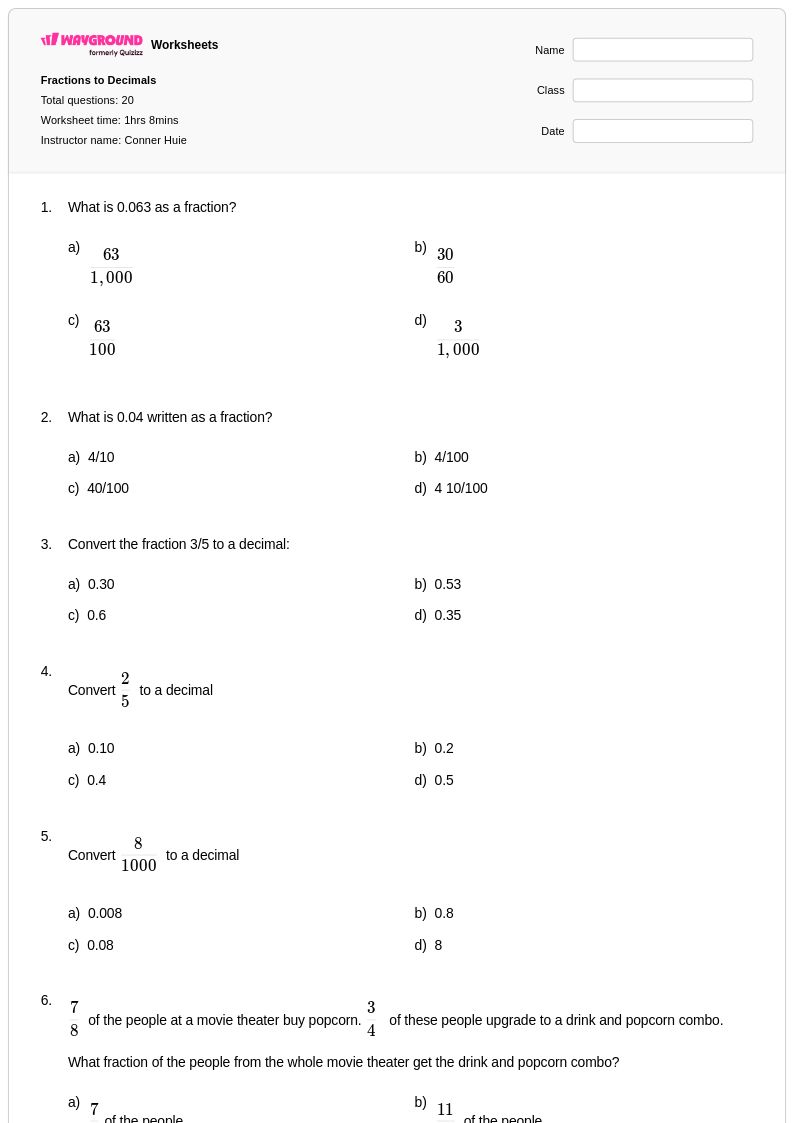
20 Q
5th - 7th
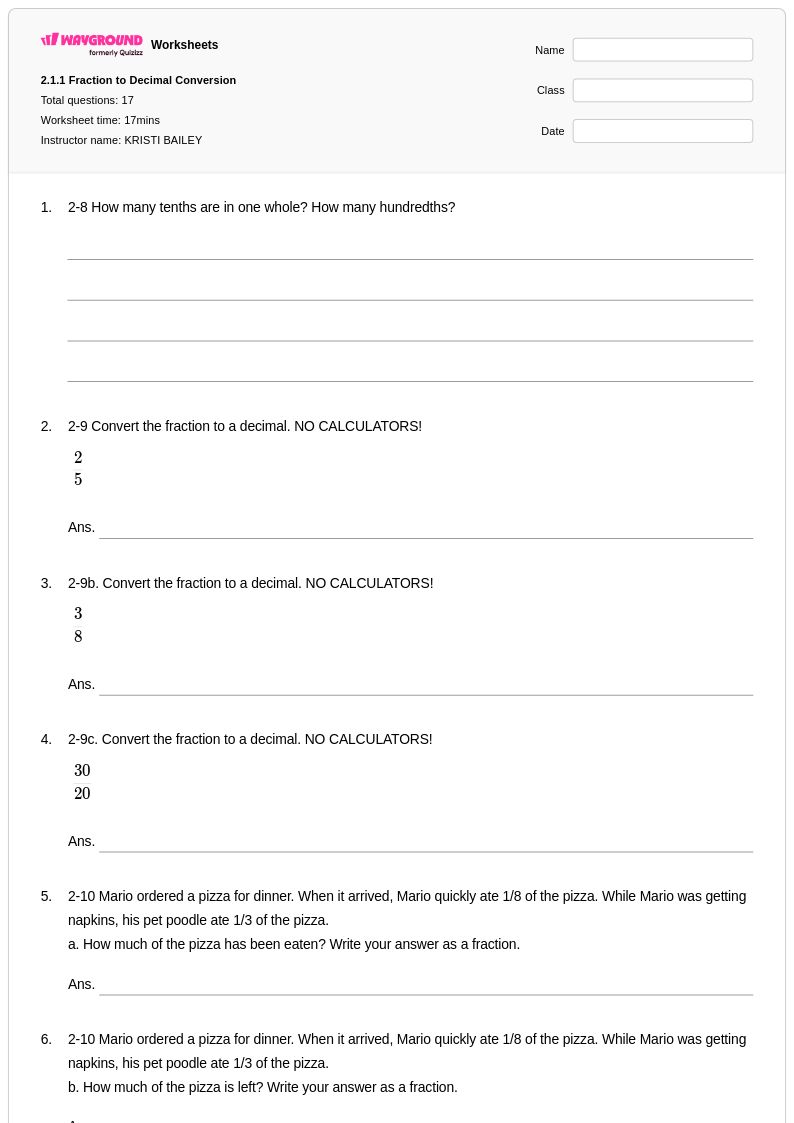
17 Q
7th
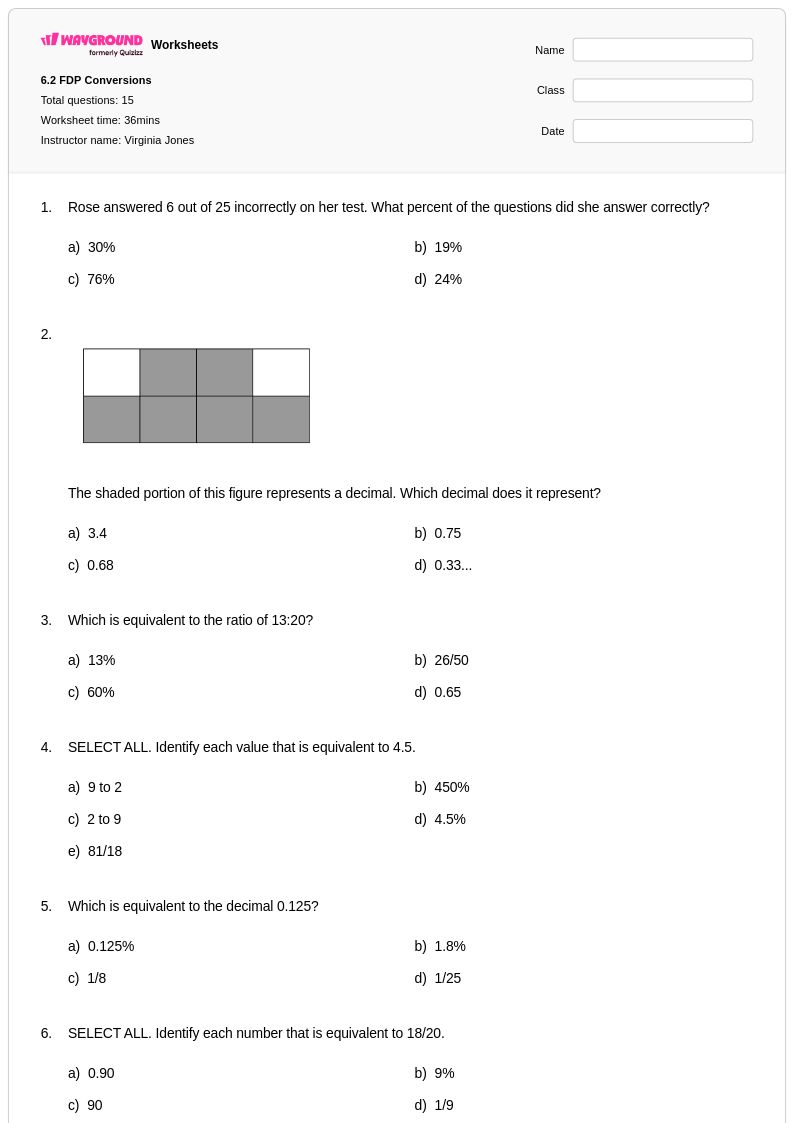
15 Q
5th - 7th
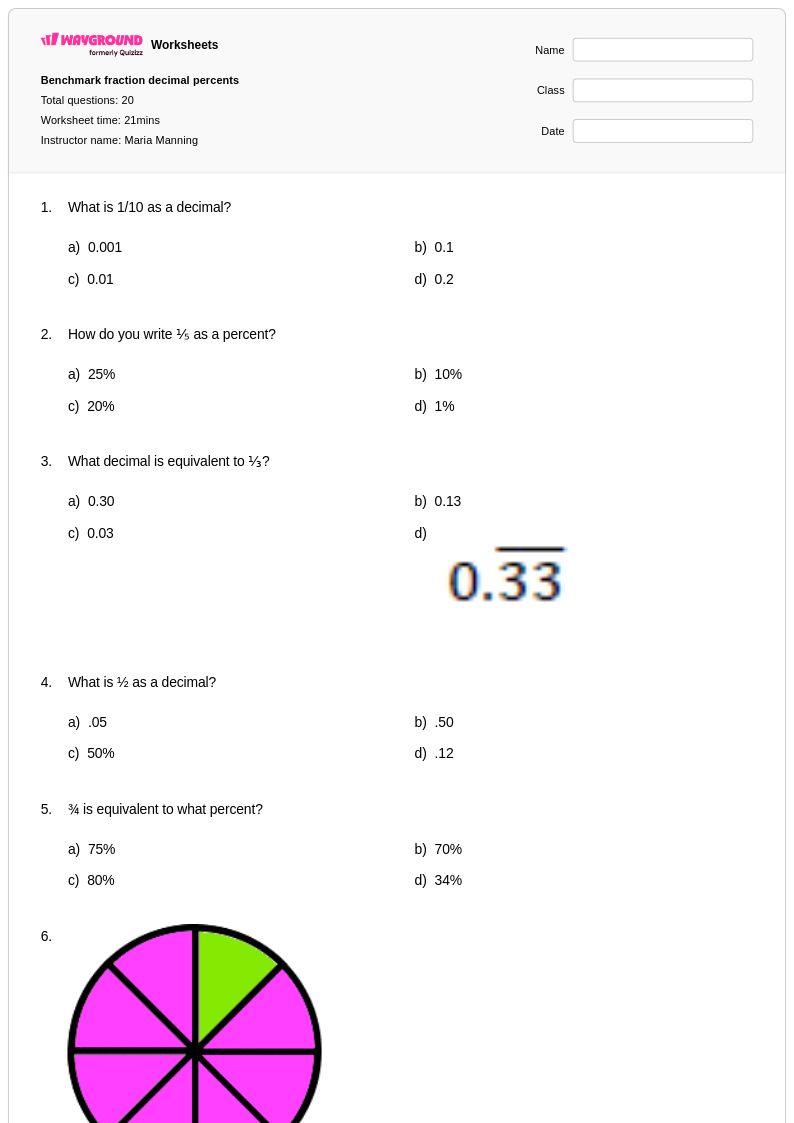
20 Q
5th - 8th
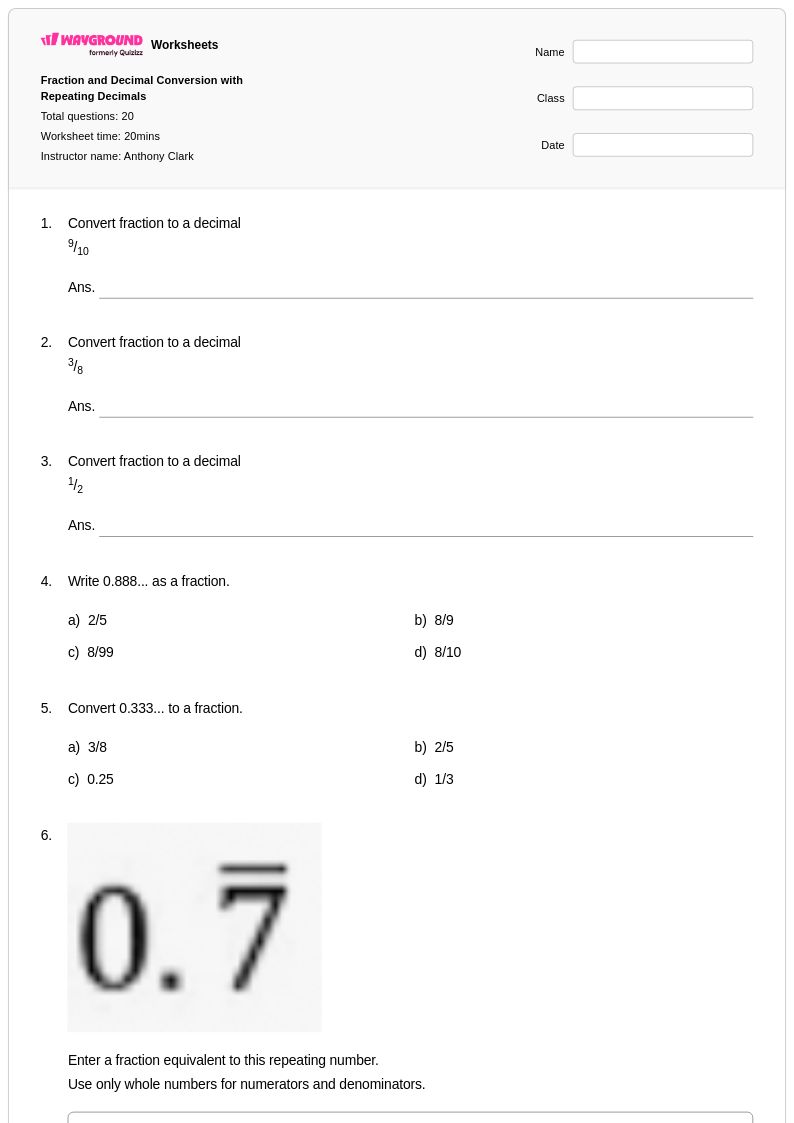
20 Q
6th - Uni
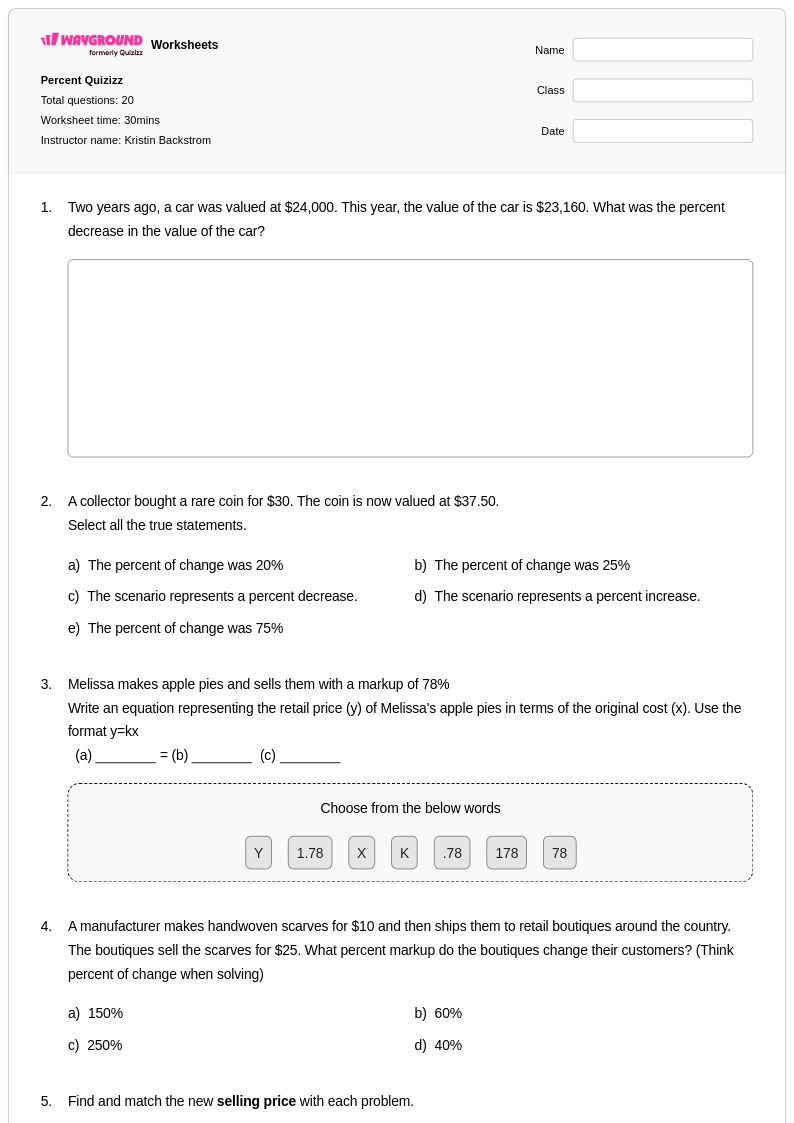
20 Q
7th
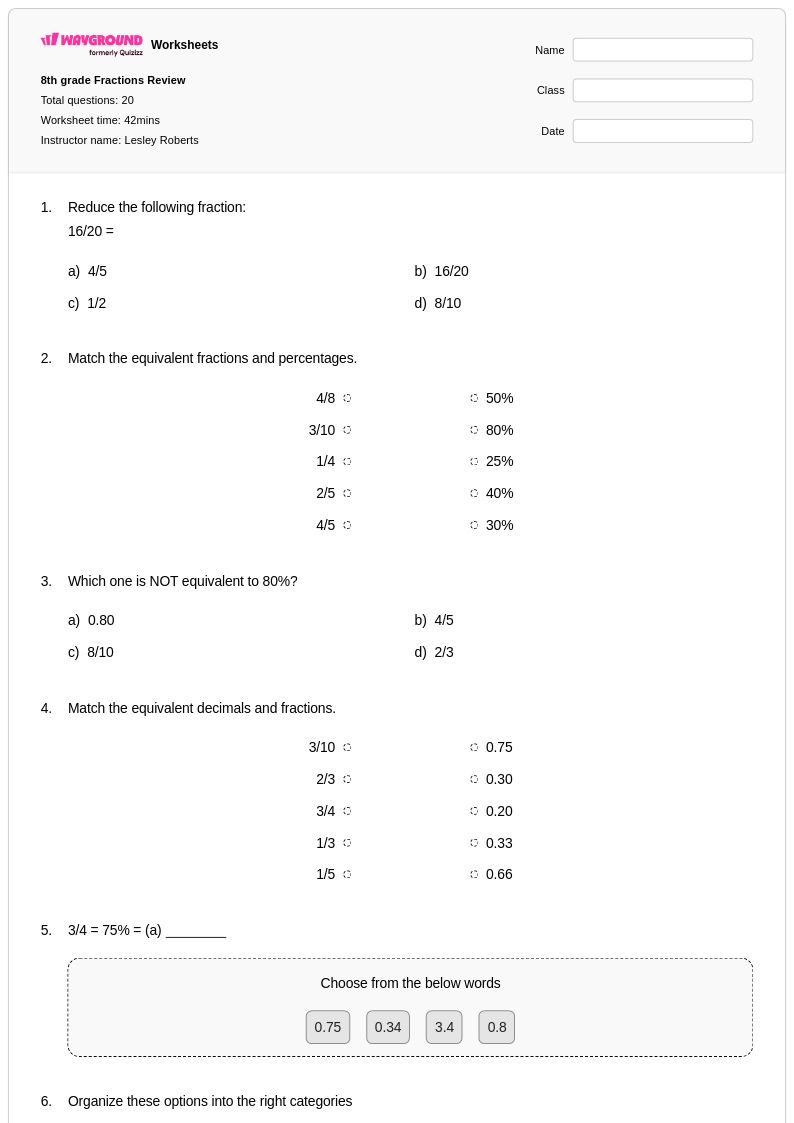
20 Q
8th
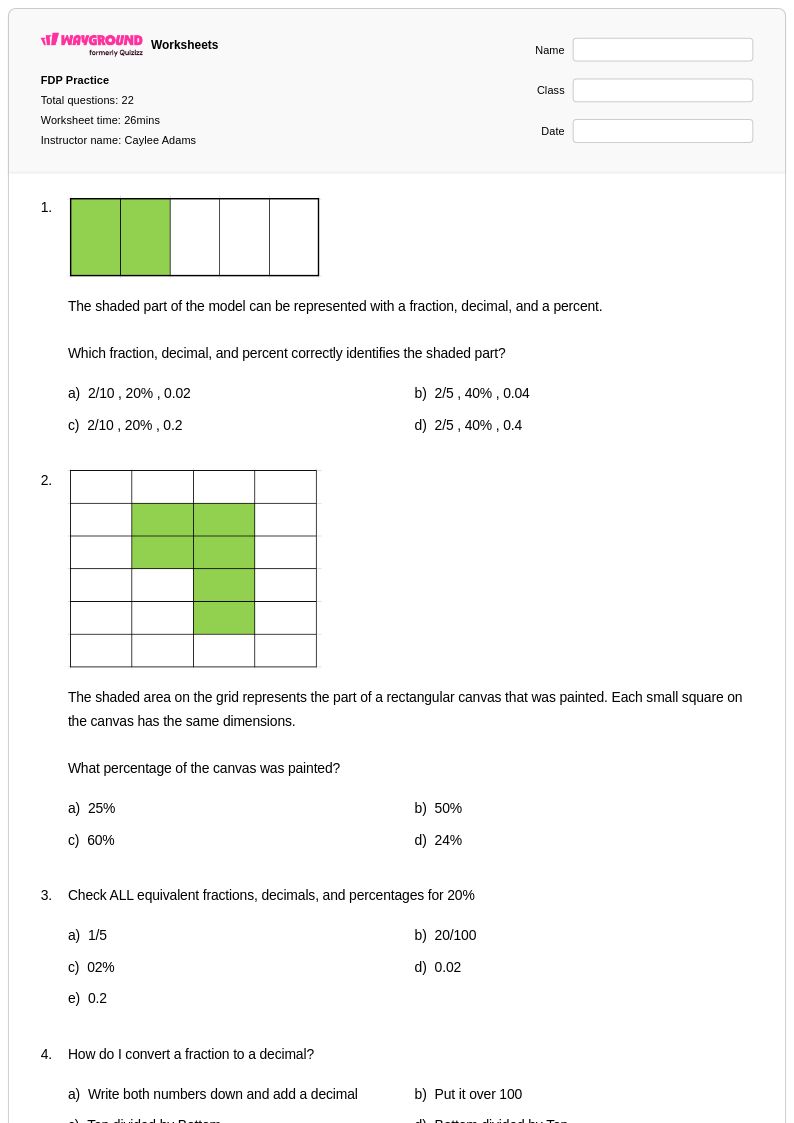
22 Q
6th
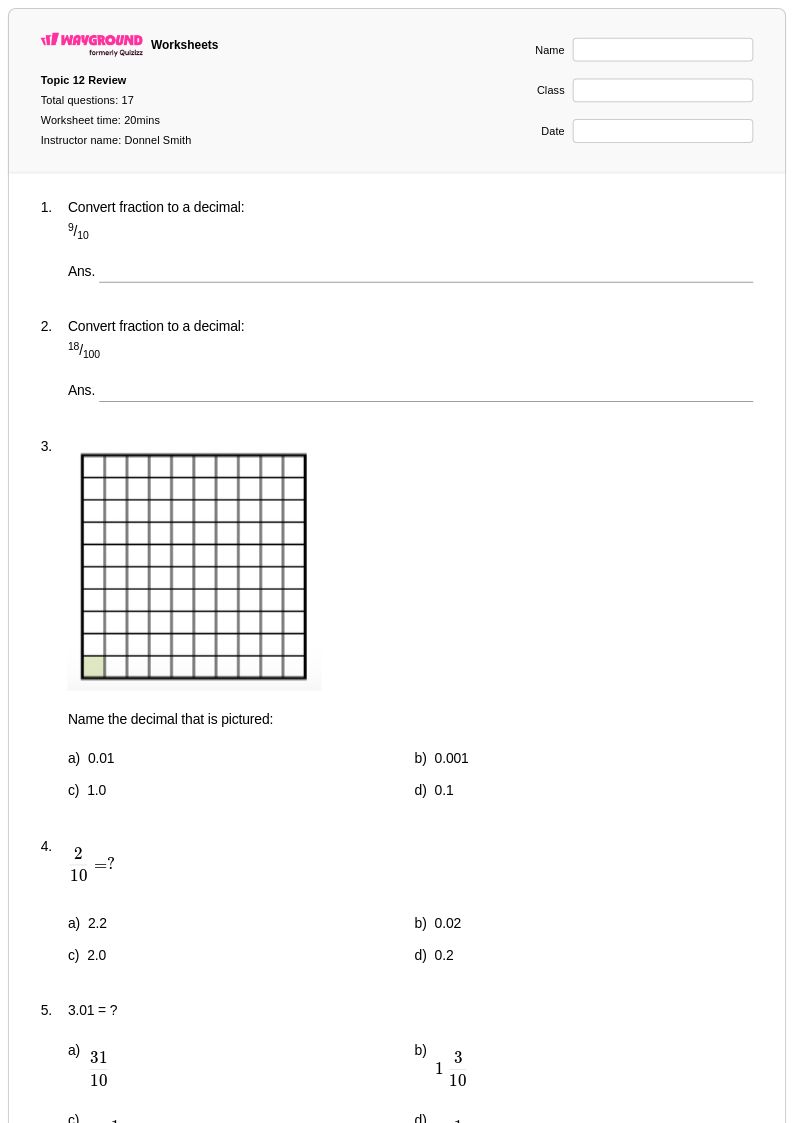
17 Q
4th
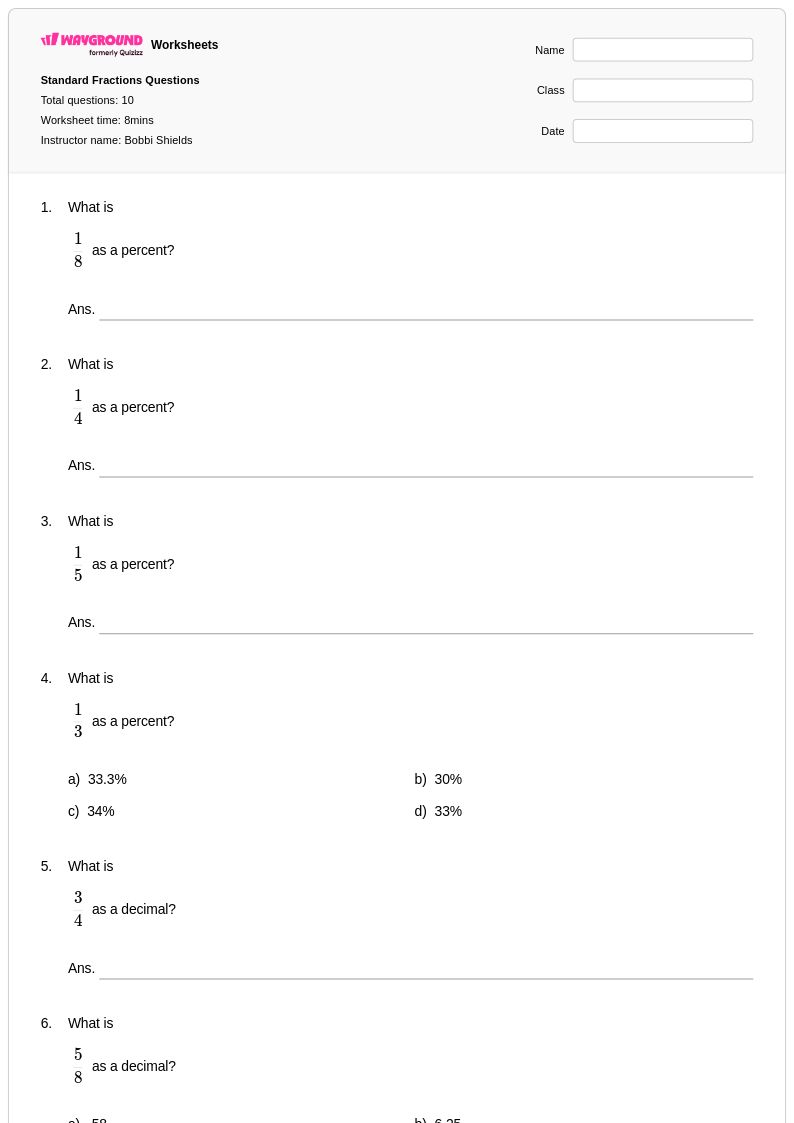
10 Q
6th
Explore Worksheets by Subjects
Explore printable Fraction, Decimal, and Percent Conversion worksheets
Fraction, decimal, and percent conversion worksheets available through Wayground (formerly Quizizz) provide comprehensive practice for students mastering the fundamental skill of translating between these three essential mathematical representations. These carefully designed worksheets strengthen students' number sense by developing their ability to recognize equivalent values across different formats, calculate conversions using systematic methods, and apply proportional reasoning in real-world contexts. Each worksheet collection includes varied practice problems that progress from basic conversions like changing simple fractions to decimals, to more complex multi-step problems involving mixed numbers and repeating decimals. Teachers can access complete answer keys and printable pdf versions, making these free resources ideal for classroom instruction, homework assignments, and independent study sessions where students need targeted skill reinforcement.
Wayground (formerly Quizizz) supports mathematics educators with an extensive library of millions of teacher-created fraction, decimal, and percent conversion resources that can be easily discovered through powerful search and filtering capabilities. The platform's standards-aligned worksheet collections enable teachers to quickly identify materials that match their specific curriculum requirements and student needs. Built-in differentiation tools allow educators to customize difficulty levels and problem types, ensuring appropriate challenge levels for diverse learners during planning, remediation, and enrichment activities. These versatile resources are available in both printable and digital formats, including downloadable pdf versions, giving teachers the flexibility to seamlessly integrate conversion practice into various instructional settings while providing students with consistent opportunities to strengthen their computational fluency and conceptual understanding of equivalent numerical representations.
FAQs
How do I teach fraction, decimal, and percent conversions?
What exercises help students practice converting fractions, decimals, and percents?
What are common mistakes students make with these conversions?
How can I use these fraction, decimal, and percent conversion worksheets?
How does converting fractions, decimals, and percents fit into the math curriculum?
How can I differentiate practice for students struggling with these conversions?