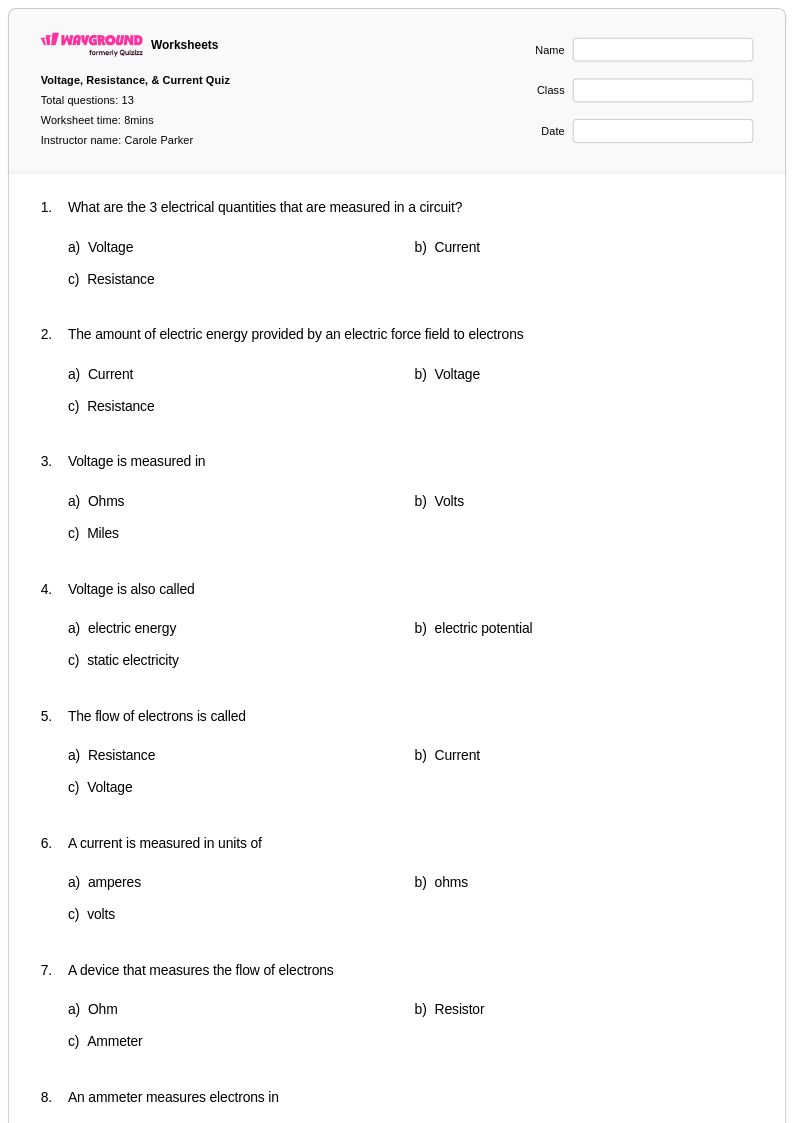
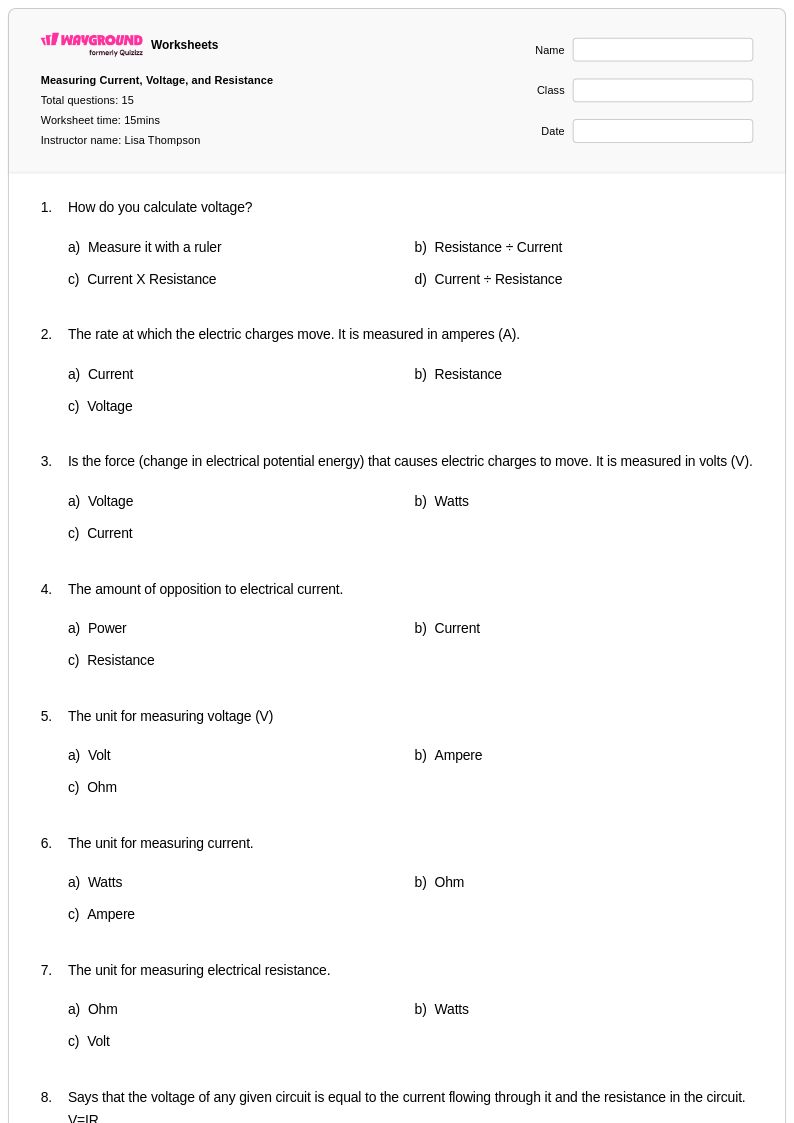
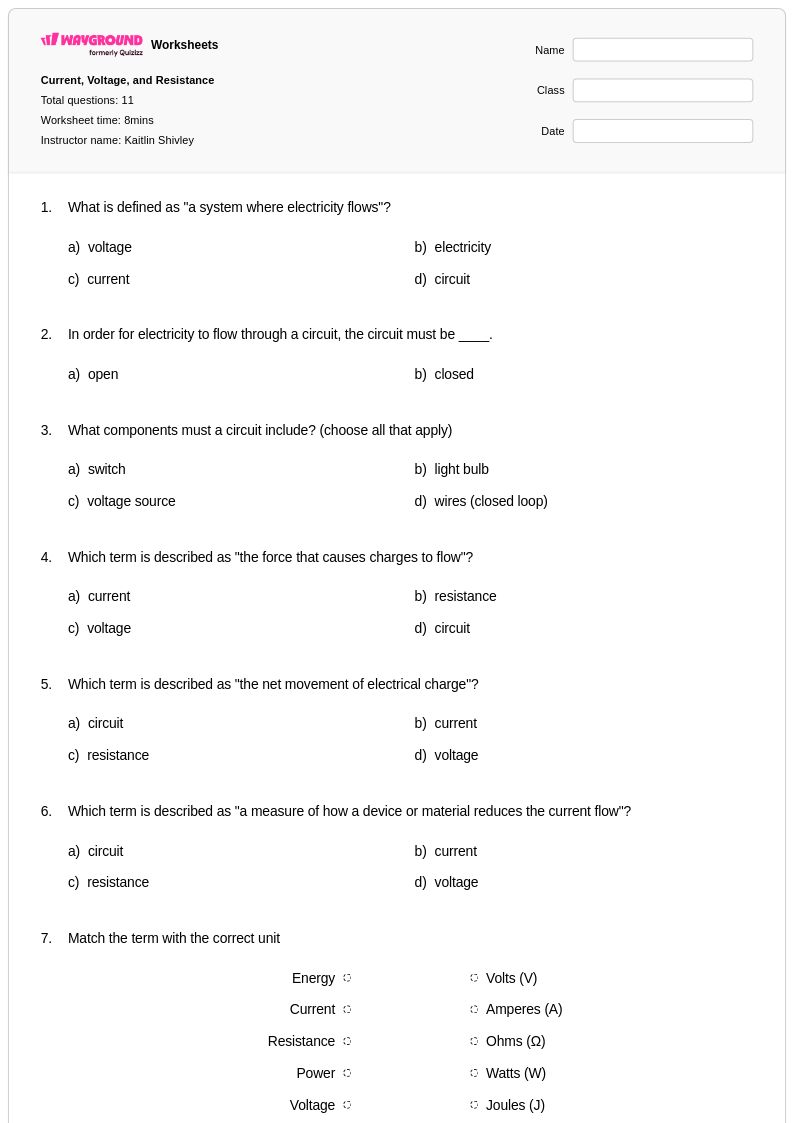
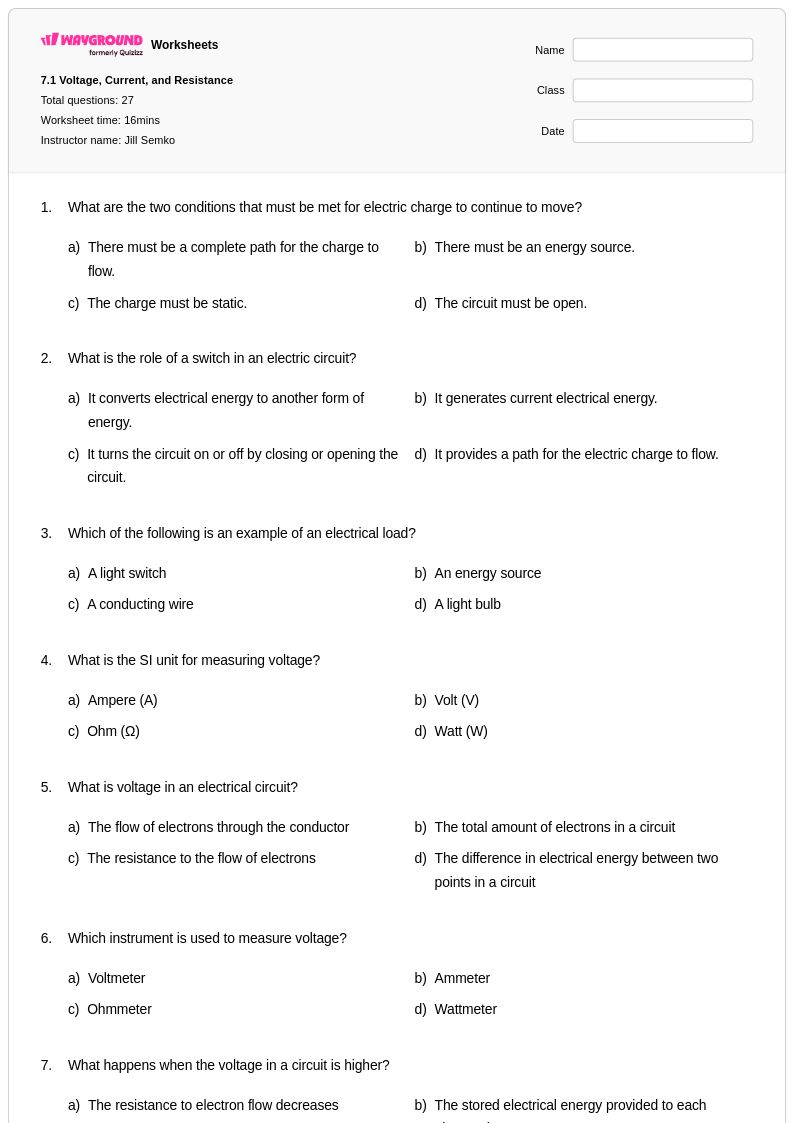
Free Printable Measuring Current and Voltage worksheets
Master measuring current and voltage concepts with Wayground's comprehensive collection of physics worksheets, featuring free printables, practice problems, and complete answer keys to strengthen electrical circuit understanding.
Explore printable Measuring Current and Voltage worksheets
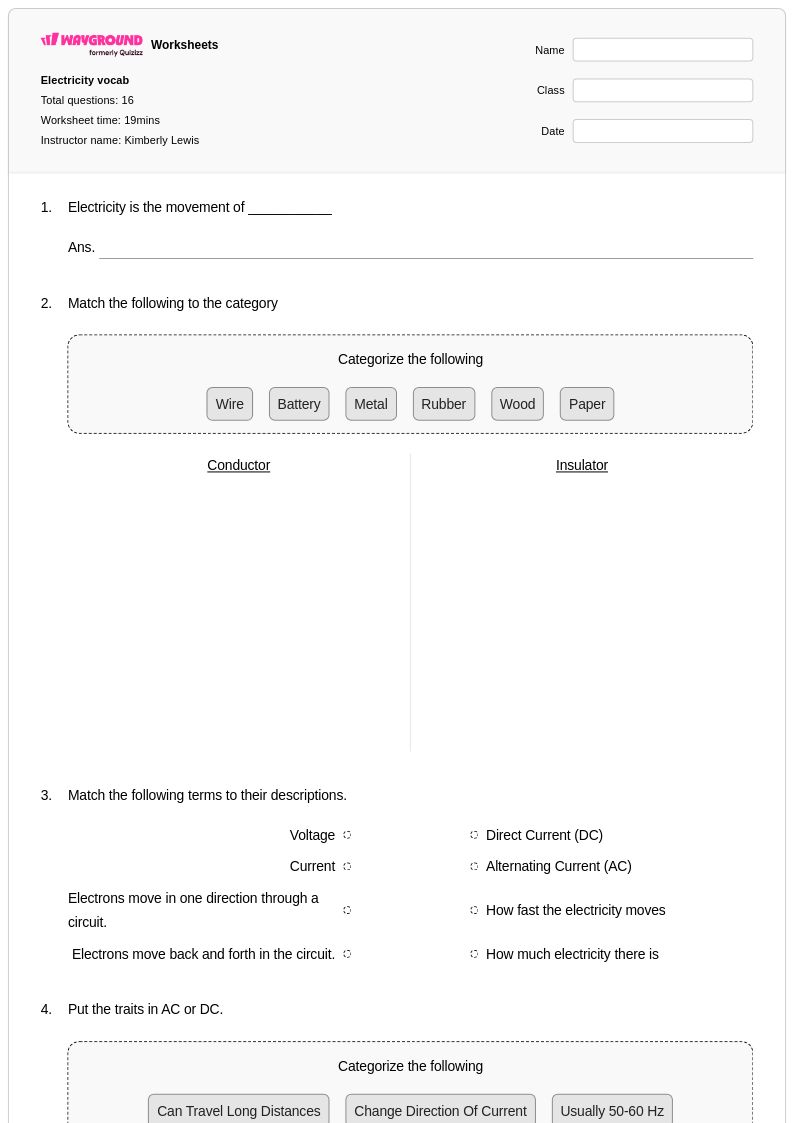
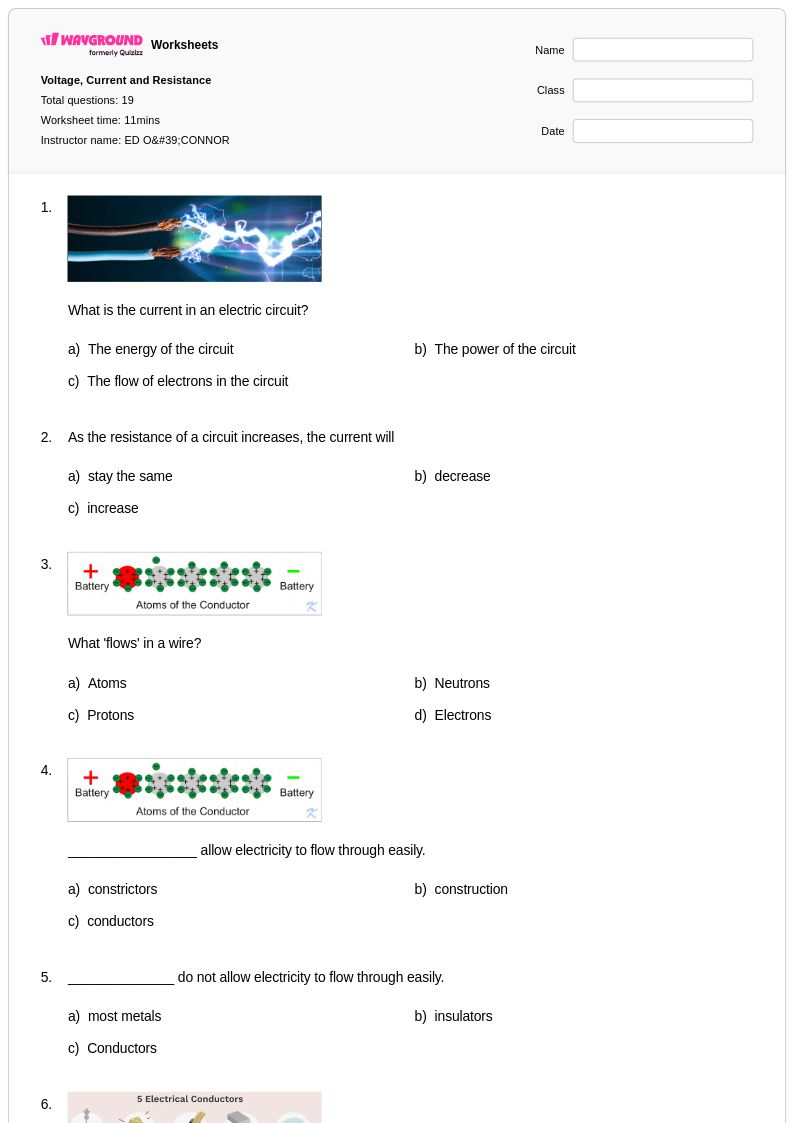
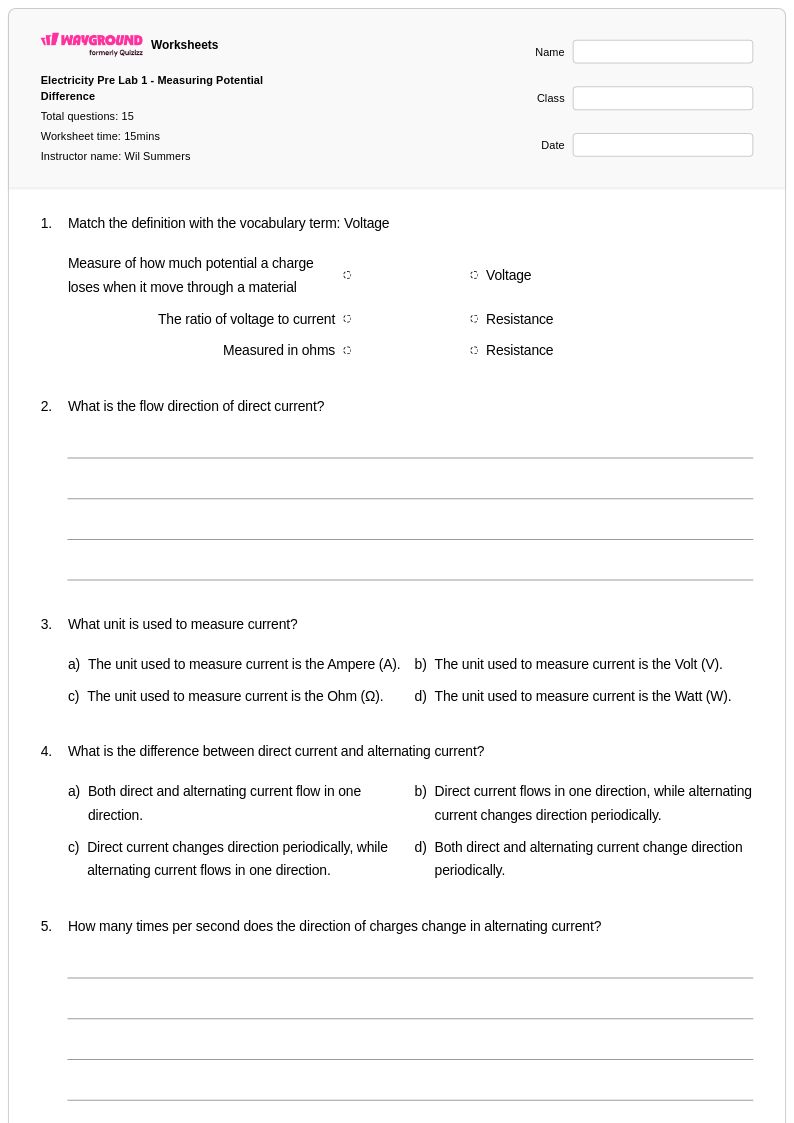
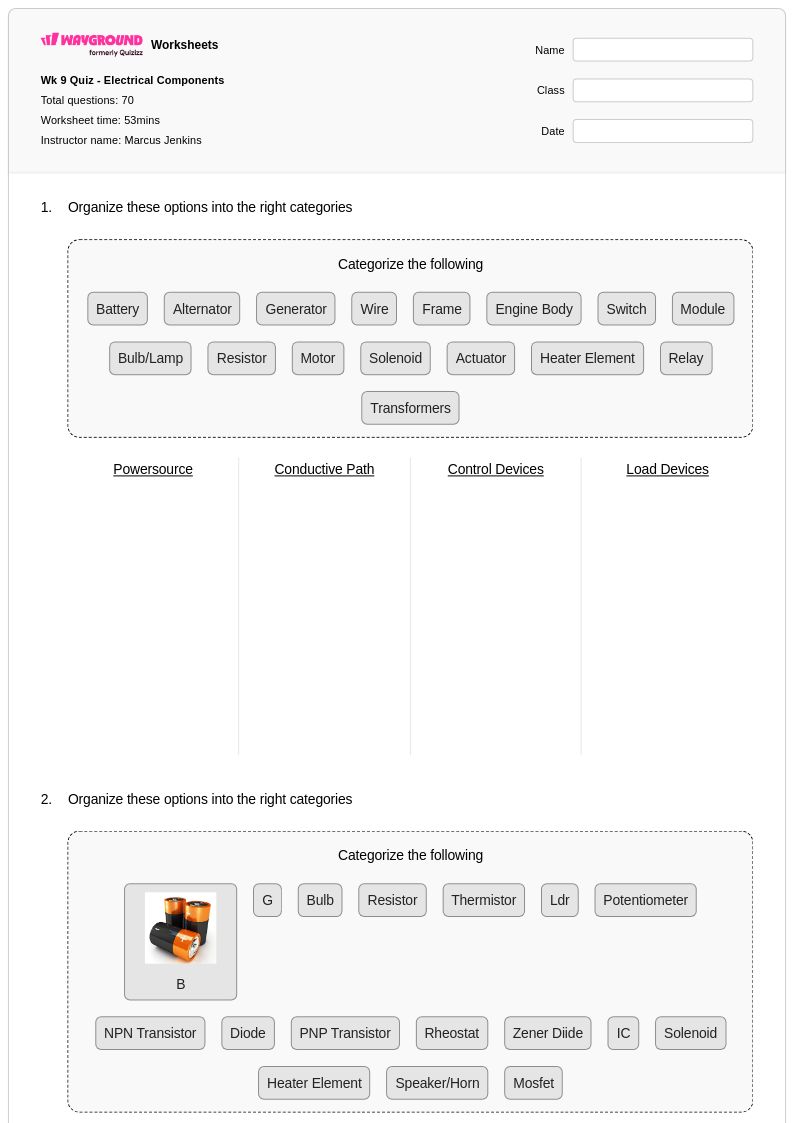
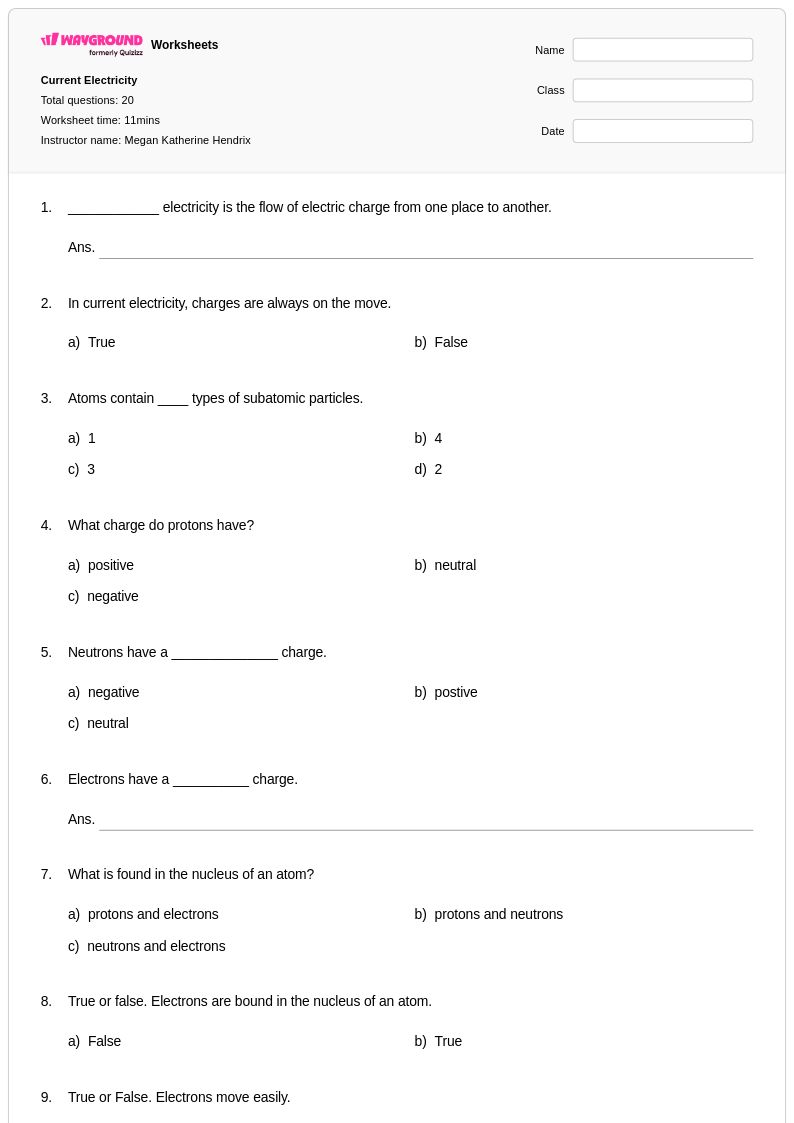
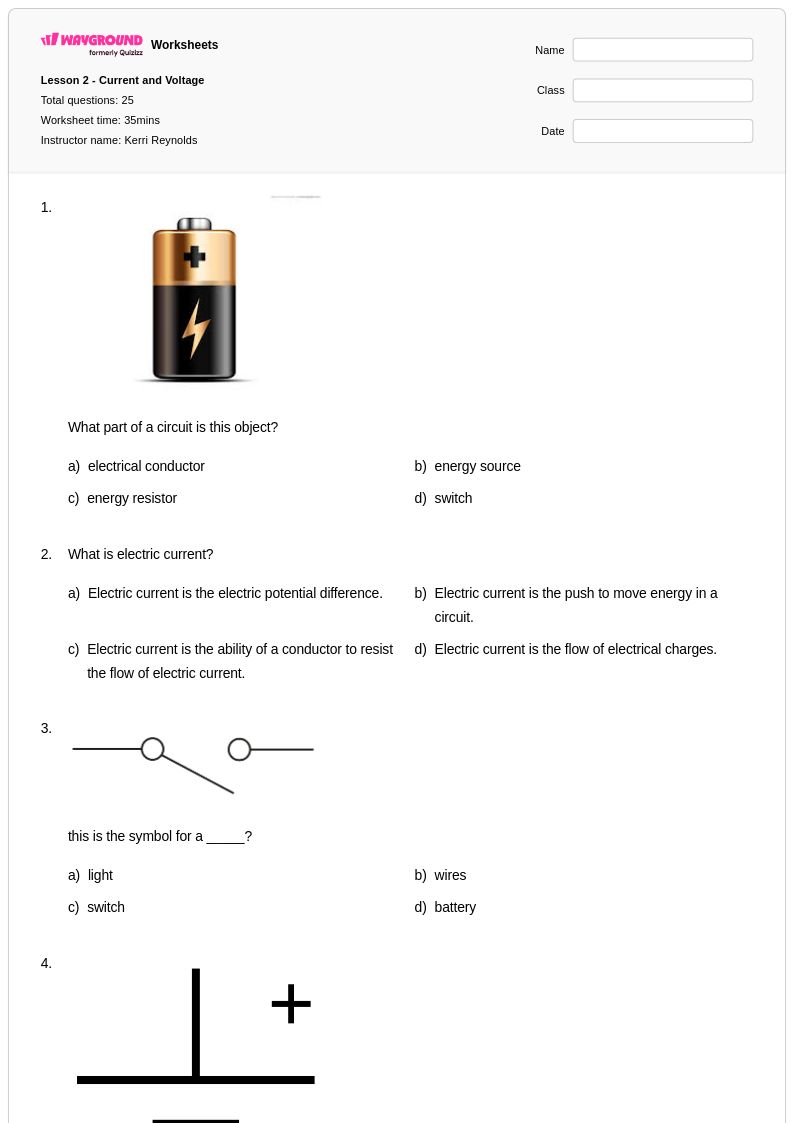
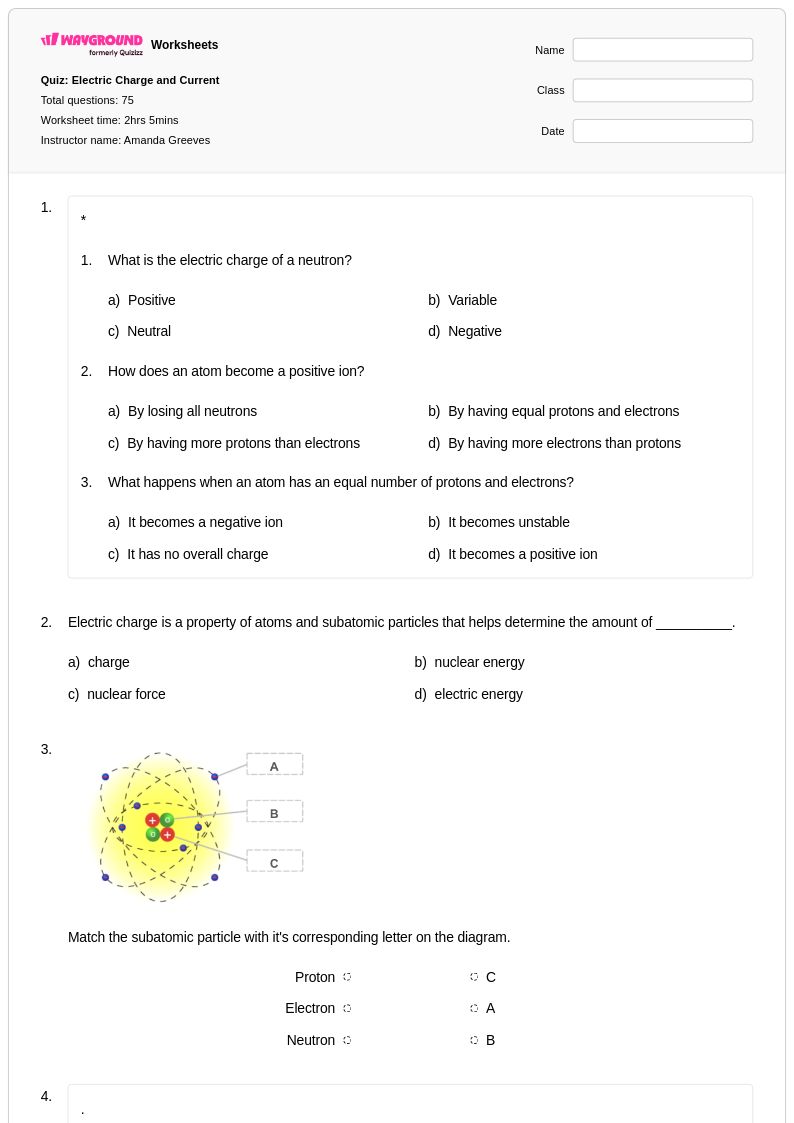
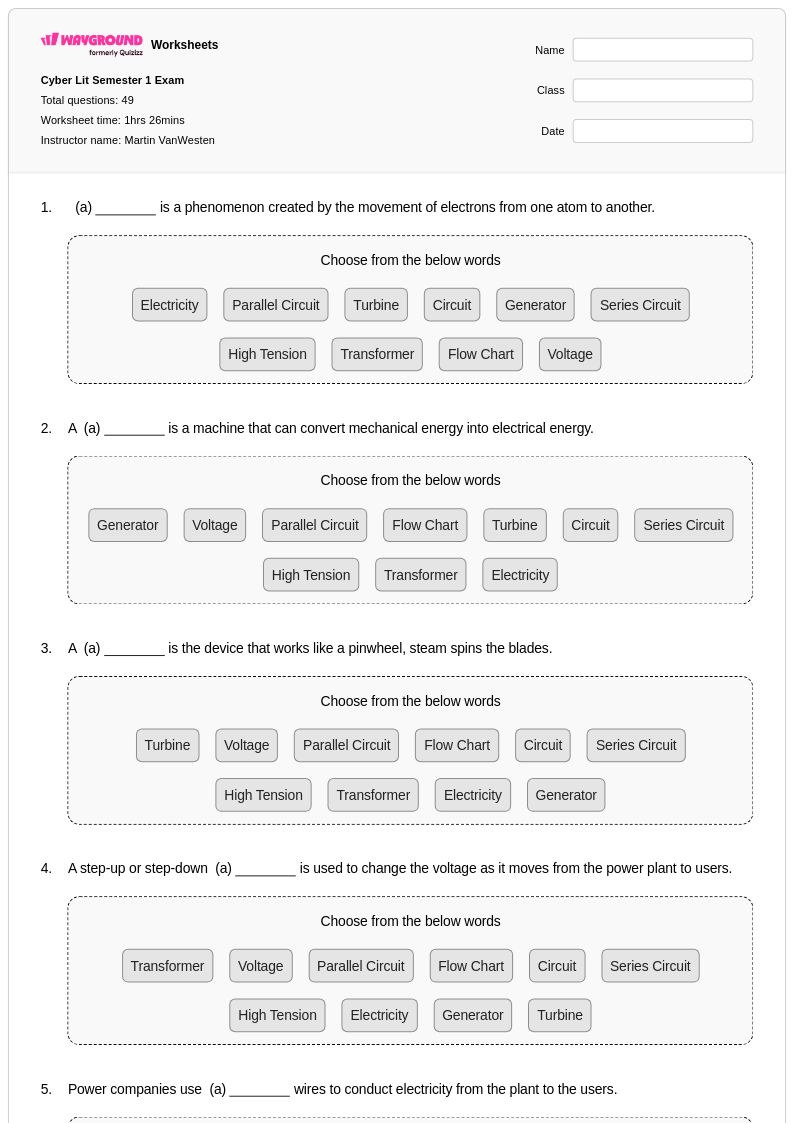
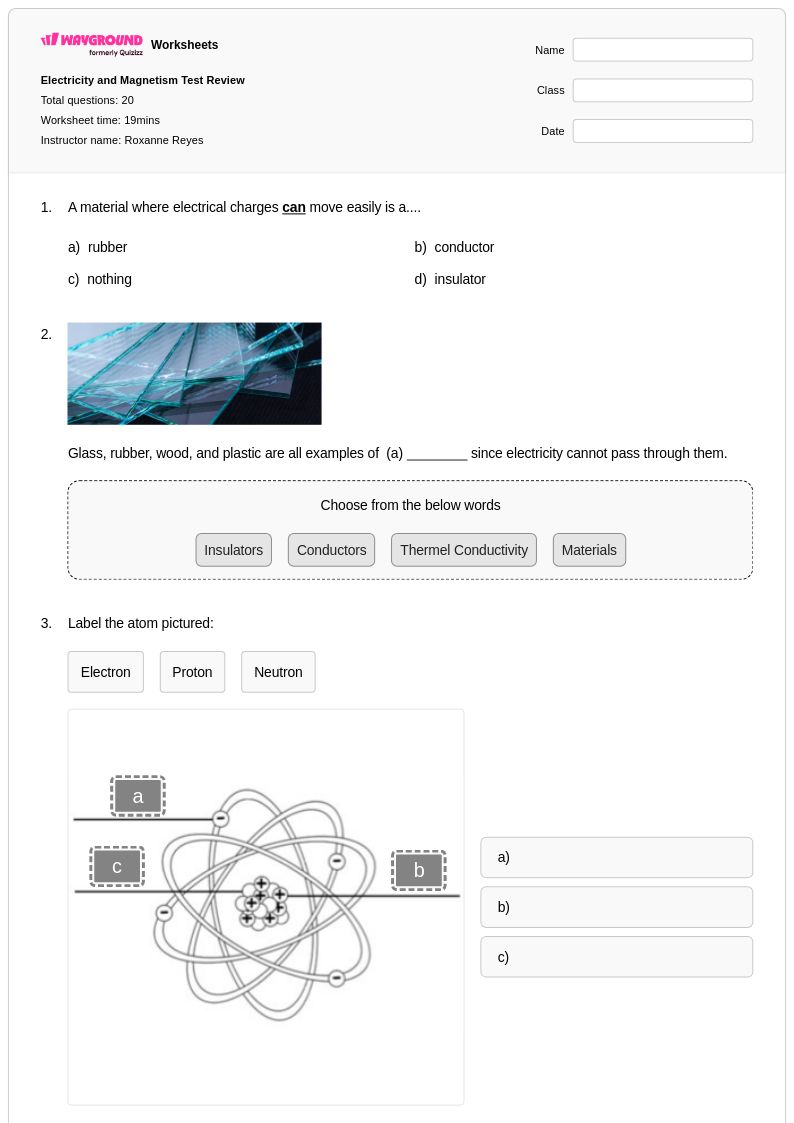
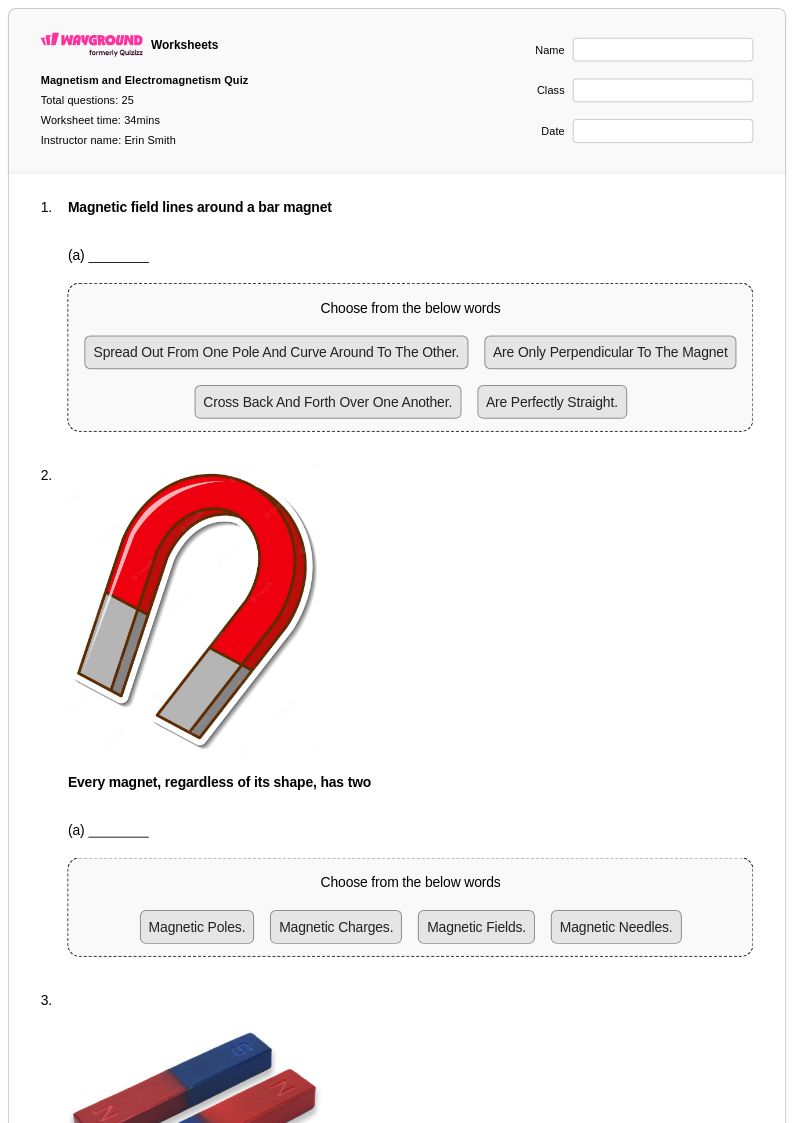
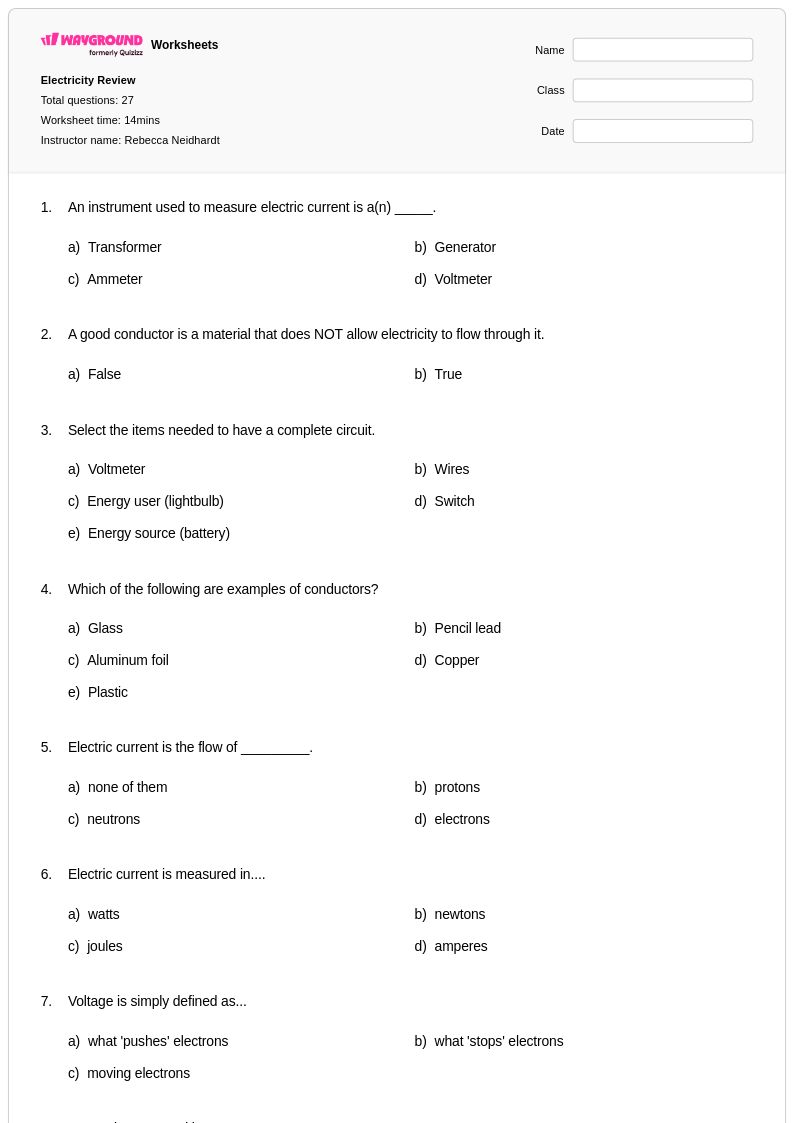
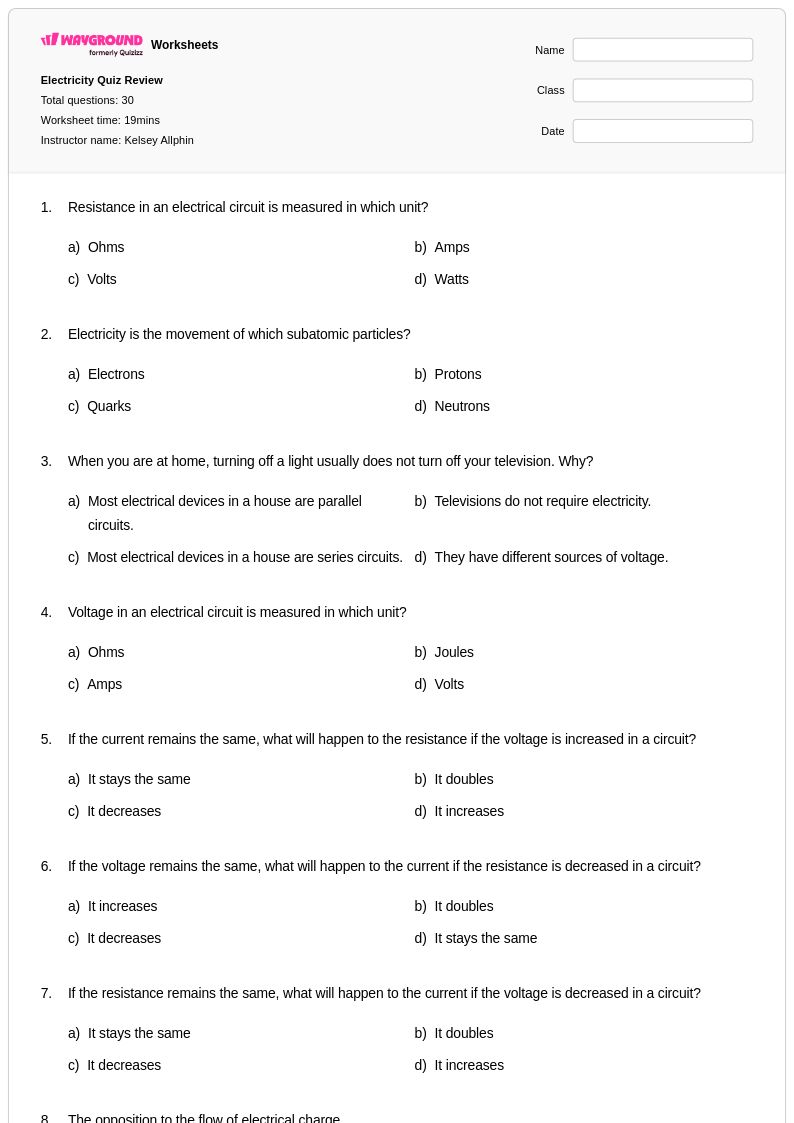
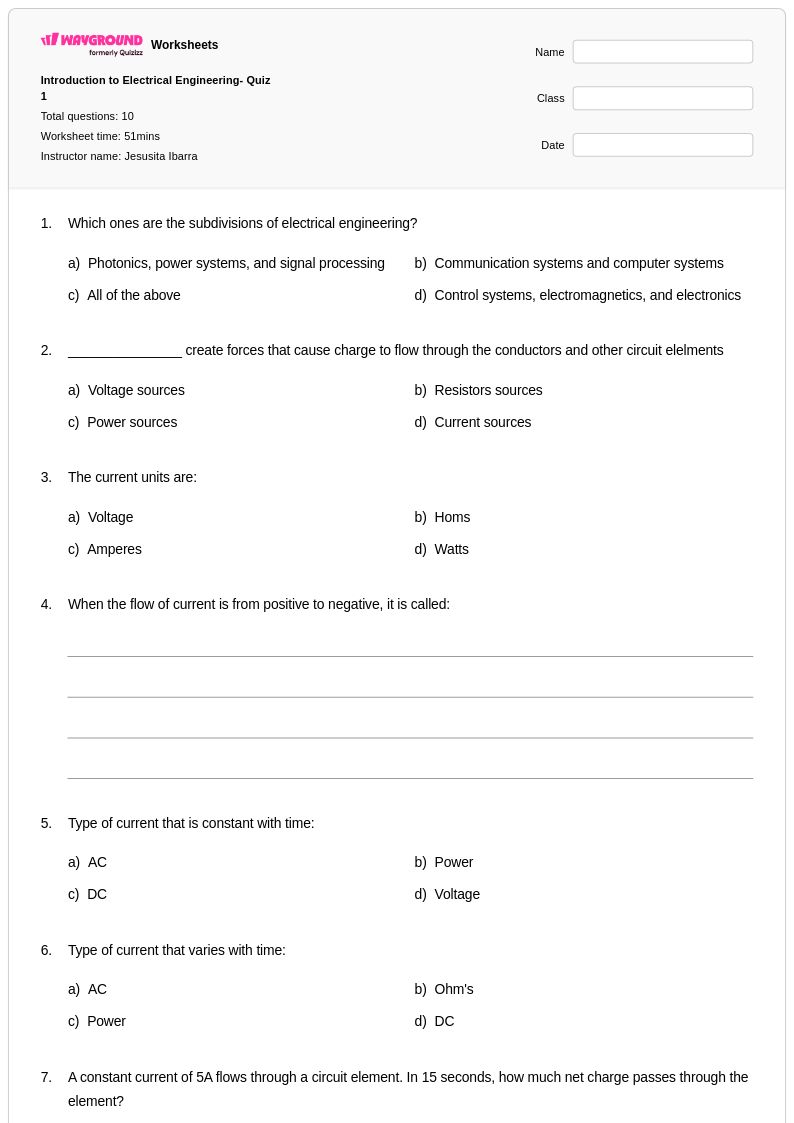
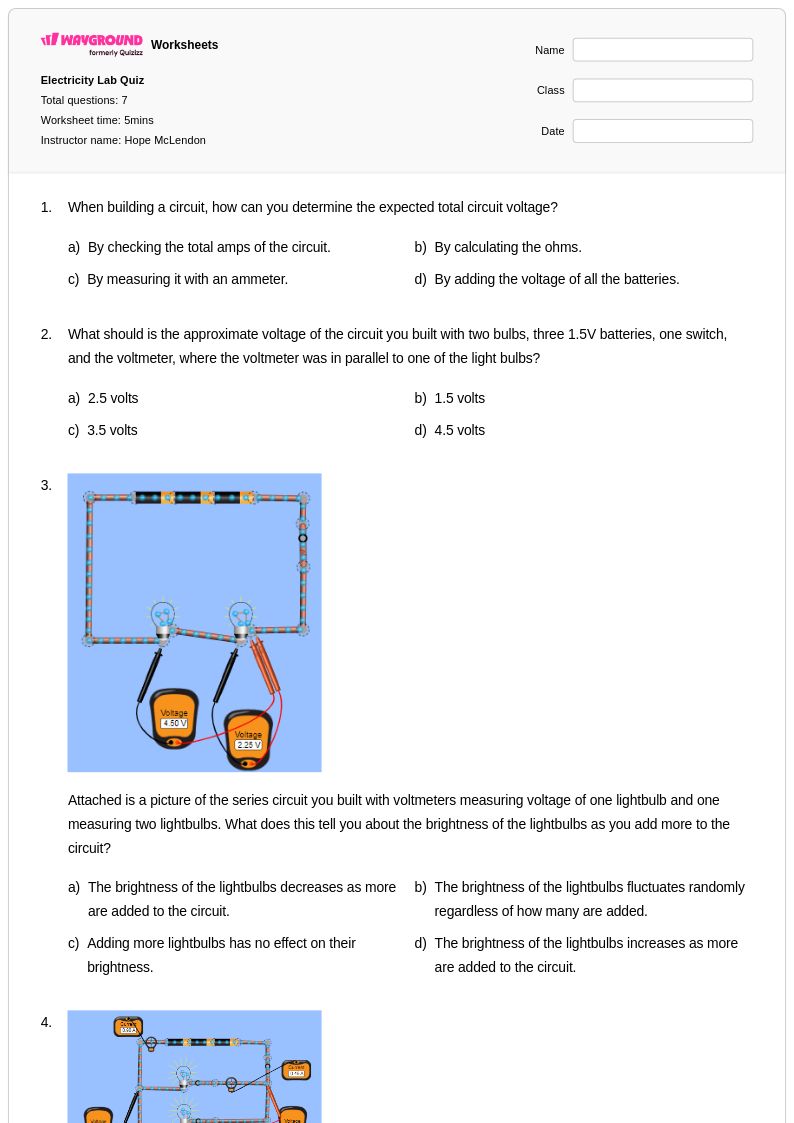
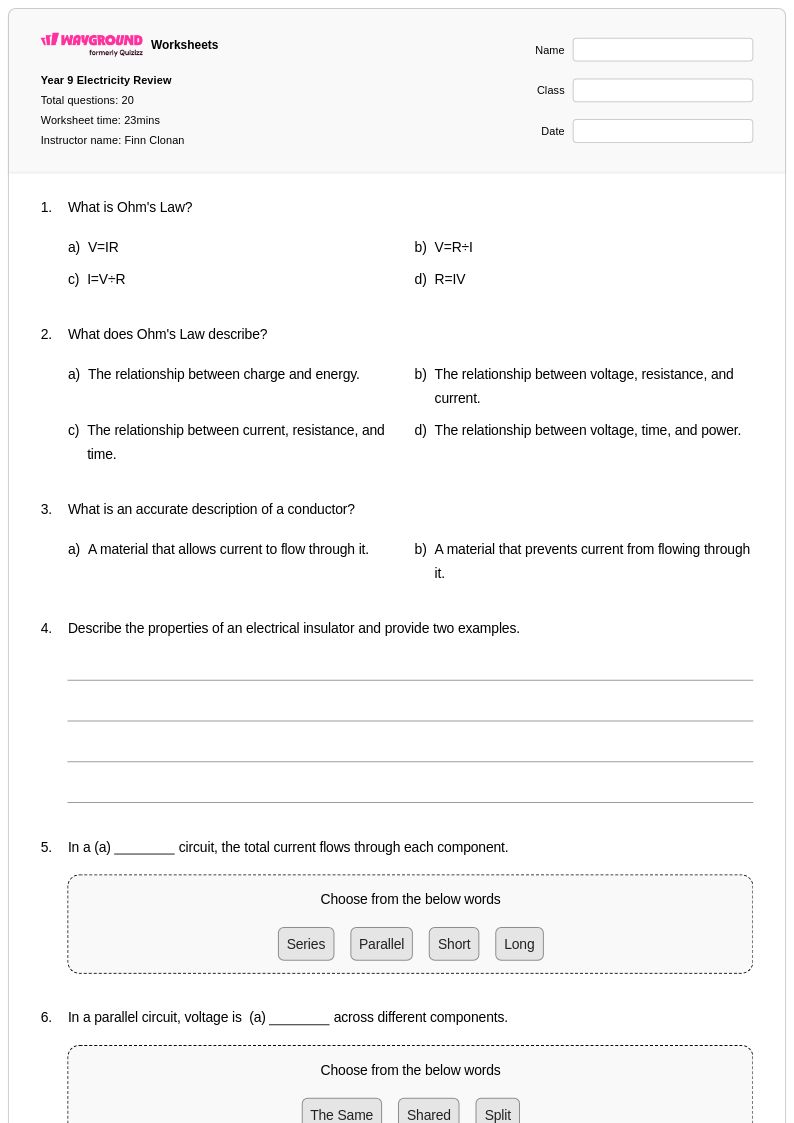
Measuring current and voltage worksheets available through Wayground (formerly Quizizz) provide students with essential hands-on practice in fundamental electrical circuit analysis. These comprehensive resources strengthen critical physics skills including using multimeters, interpreting circuit diagrams, applying Ohm's law, and understanding the relationship between electrical current flow and potential difference across components. Students develop proficiency in reading analog and digital measurement displays, calculating electrical quantities, and analyzing series and parallel circuit configurations through systematic practice problems. Each worksheet collection includes detailed answer keys and step-by-step solutions, with free printable pdf formats that allow educators to seamlessly integrate these materials into laboratory sessions and classroom instruction.
Wayground (formerly Quizizz) empowers educators with millions of teacher-created resources specifically designed for measuring current and voltage instruction, featuring robust search and filtering capabilities that enable quick identification of materials aligned to specific physics standards and learning objectives. The platform's differentiation tools allow teachers to customize worksheets based on student readiness levels, while flexible formatting options provide both printable and digital accessibility to accommodate diverse classroom environments. These extensive worksheet collections support comprehensive lesson planning by offering varied approaches to circuit analysis practice, targeted remediation for students struggling with electrical measurement concepts, and enrichment opportunities for advanced learners ready to explore complex circuit configurations and real-world electrical applications.
FAQs
How do I teach students to measure current and voltage in a physics class?
Begin by grounding students in circuit fundamentals: the difference between current (charge flow measured in amperes) and voltage (potential difference measured in volts). Introduce multimeter use with simple series circuits before moving to parallel configurations, emphasizing correct probe placement for each measurement type. Pairing hands-on lab work with structured practice problems helps students connect procedural skills to conceptual understanding of Ohm's law and circuit behavior.
What types of practice problems help students get better at measuring current and voltage?
Effective practice should span multiple skill levels: reading analog and digital multimeter displays, applying Ohm's law to calculate unknown quantities, and analyzing current and voltage distribution across series and parallel circuit configurations. Problems that present circuit diagrams and ask students to identify correct measurement probe placement are especially valuable because they reinforce both procedural and conceptual understanding simultaneously.
What mistakes do students commonly make when measuring current and voltage?
The most common error is confusing how ammeters and voltmeters are connected in a circuit — students frequently place ammeters in parallel and voltmeters in series, which is the reverse of correct practice. Students also struggle with reading analog scales, particularly when the scale range is not a simple multiple of 10. A related misconception is assuming current is the same throughout a parallel circuit; targeted practice with parallel configurations helps correct this directly.
How can I differentiate measuring current and voltage instruction for students at different readiness levels?
For struggling students, reduce cognitive load by focusing on single-variable Ohm's law problems and simple series circuits before introducing parallel configurations. Advanced learners can be challenged with multi-loop circuits, real-world electrical application problems, and tasks requiring them to design measurement setups. On Wayground, teachers can apply accommodations such as reduced answer choices for selected students and enable Read Aloud for those who need audio support, without other students being notified of these adjustments.
How do I use Wayground's measuring current and voltage worksheets in my classroom?
Wayground's measuring current and voltage worksheets are available as printable PDFs, making them easy to incorporate into lab sessions or homework assignments, as well as in digital formats suited for blended or fully online learning environments. Teachers can also host the worksheets as a quiz directly on Wayground, allowing for streamlined assignment and automatic grading. The included answer keys and step-by-step solutions make these resources practical for both independent student practice and teacher-led review.
How does Ohm's law connect to measuring current and voltage in circuits?
Ohm's law (V = IR) is the mathematical backbone of electrical measurement: it defines the relationship between voltage (V), current (I), and resistance (R) in a circuit. When students measure current and voltage with a multimeter, they can use Ohm's law to verify their readings or calculate the resistance of a component. Fluency with this relationship is essential before students can confidently analyze more complex series and parallel circuit configurations.