Free Printable Rotational Kinetic Energy worksheets
Explore Wayground's free rotational kinetic energy worksheets with printable PDFs, practice problems, and answer keys to help students master the physics concepts of rotating objects and energy transformations.
Explore printable Rotational Kinetic Energy worksheets
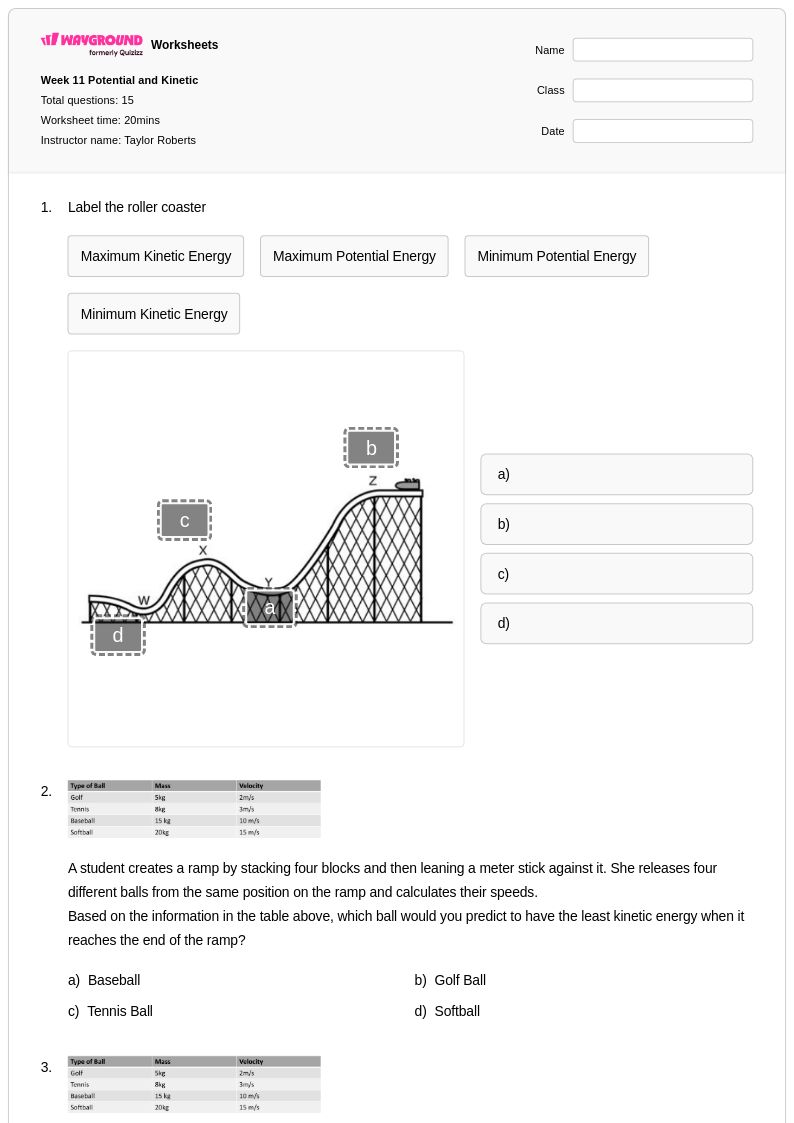
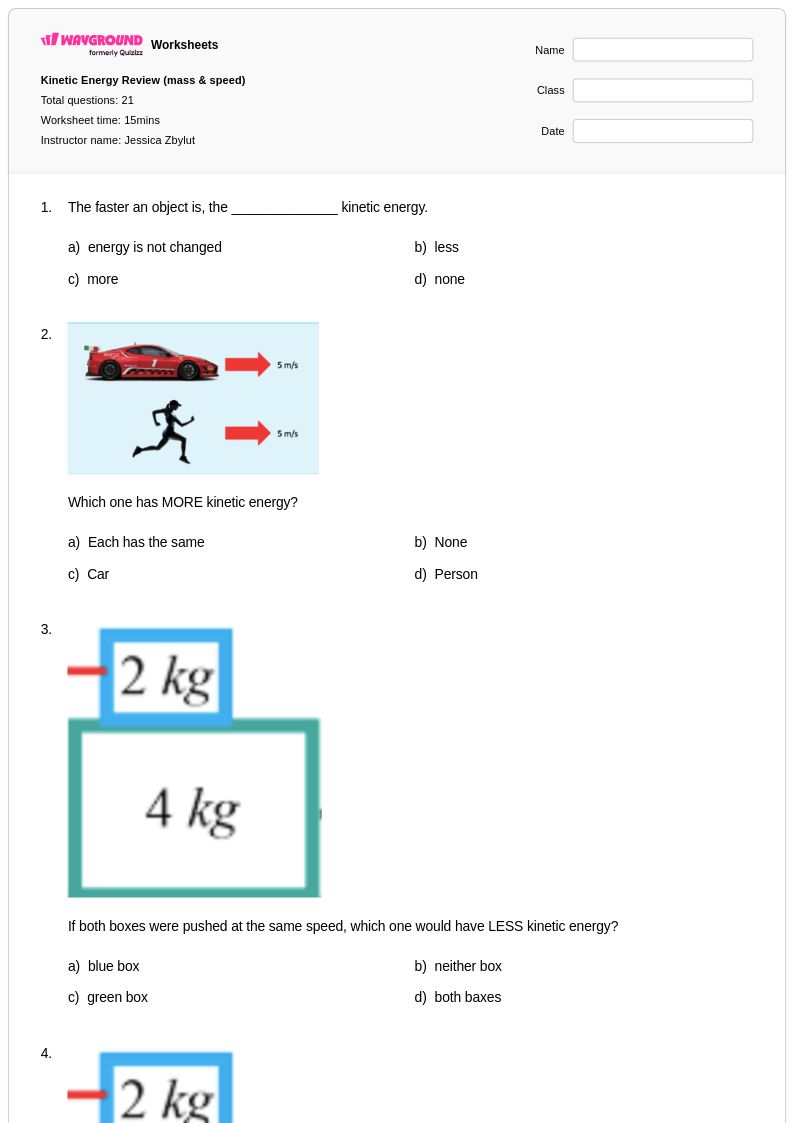
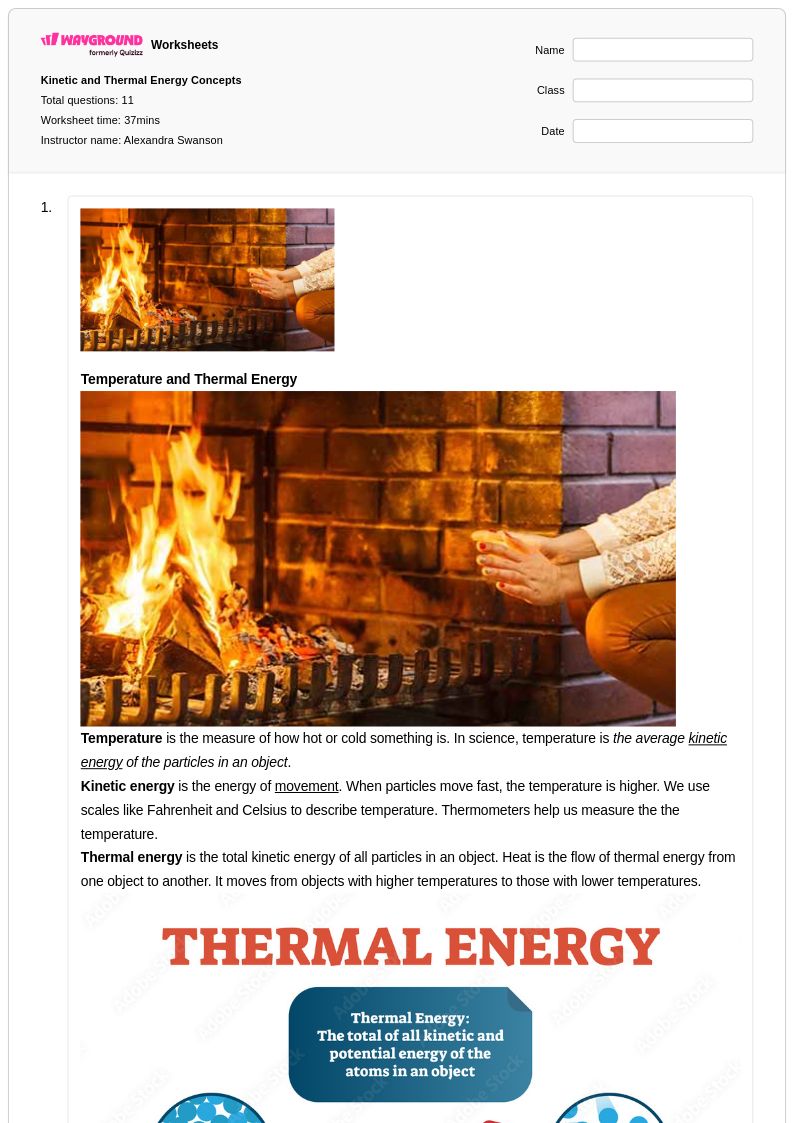
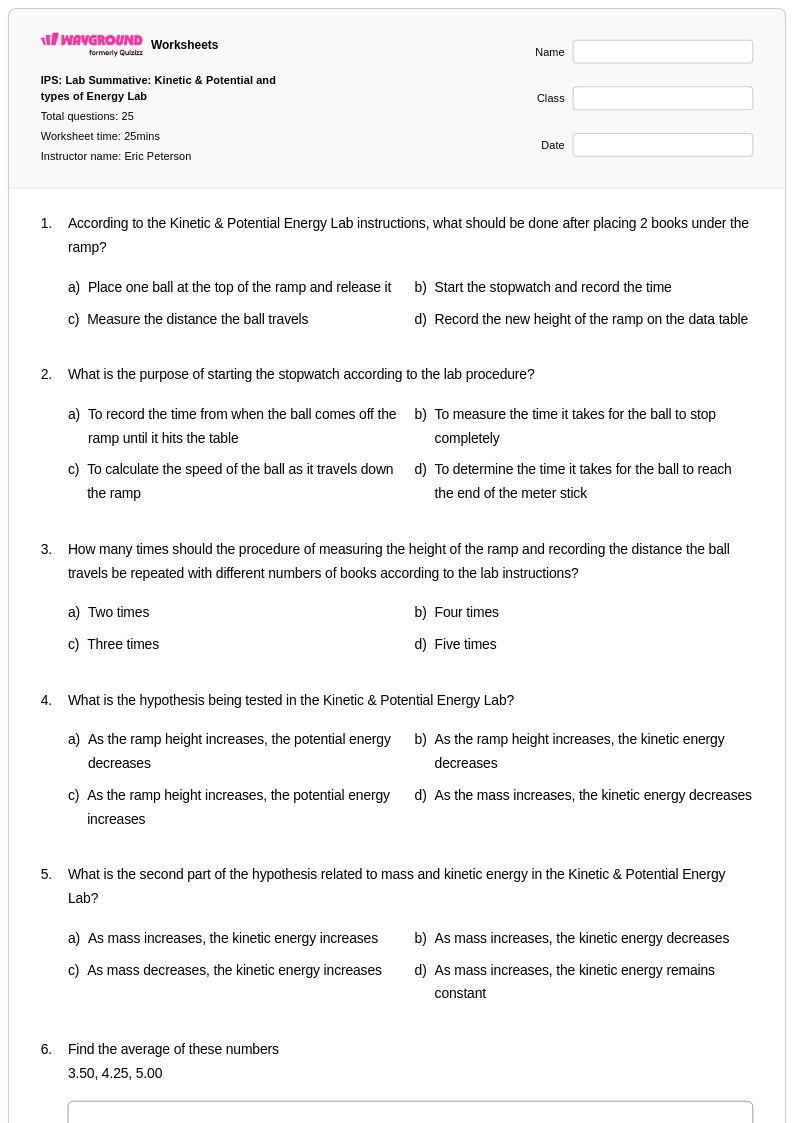
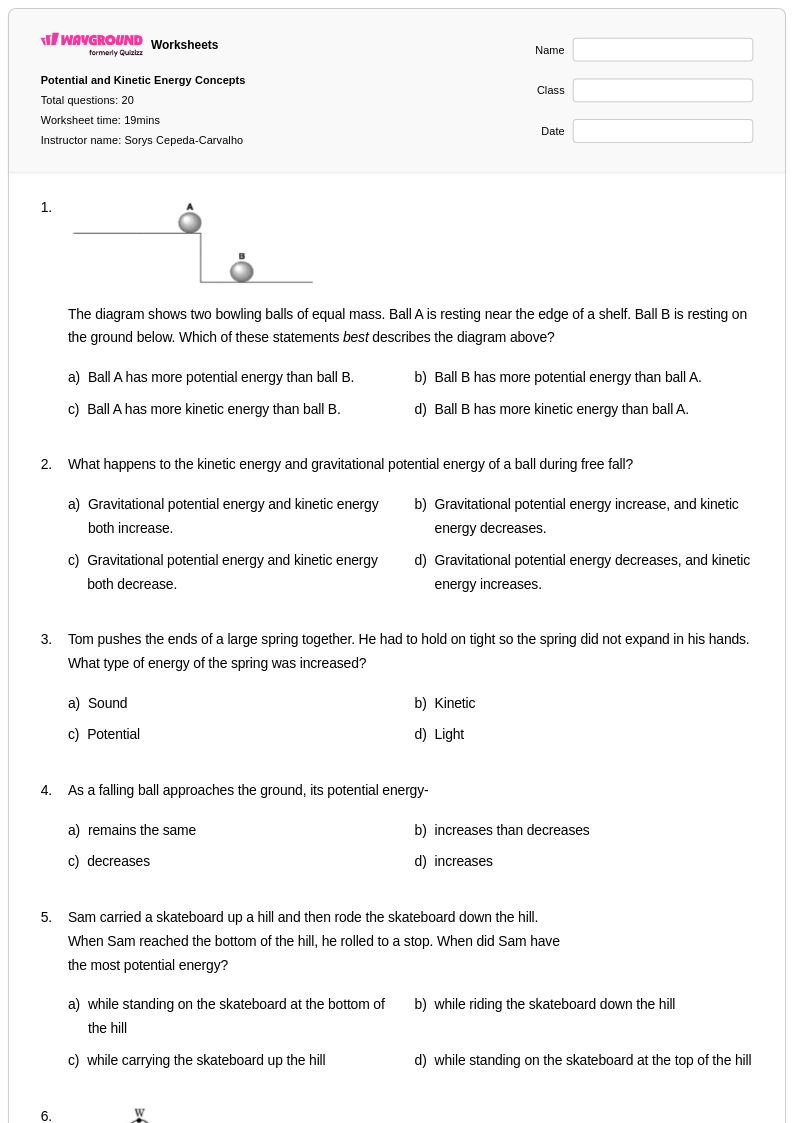
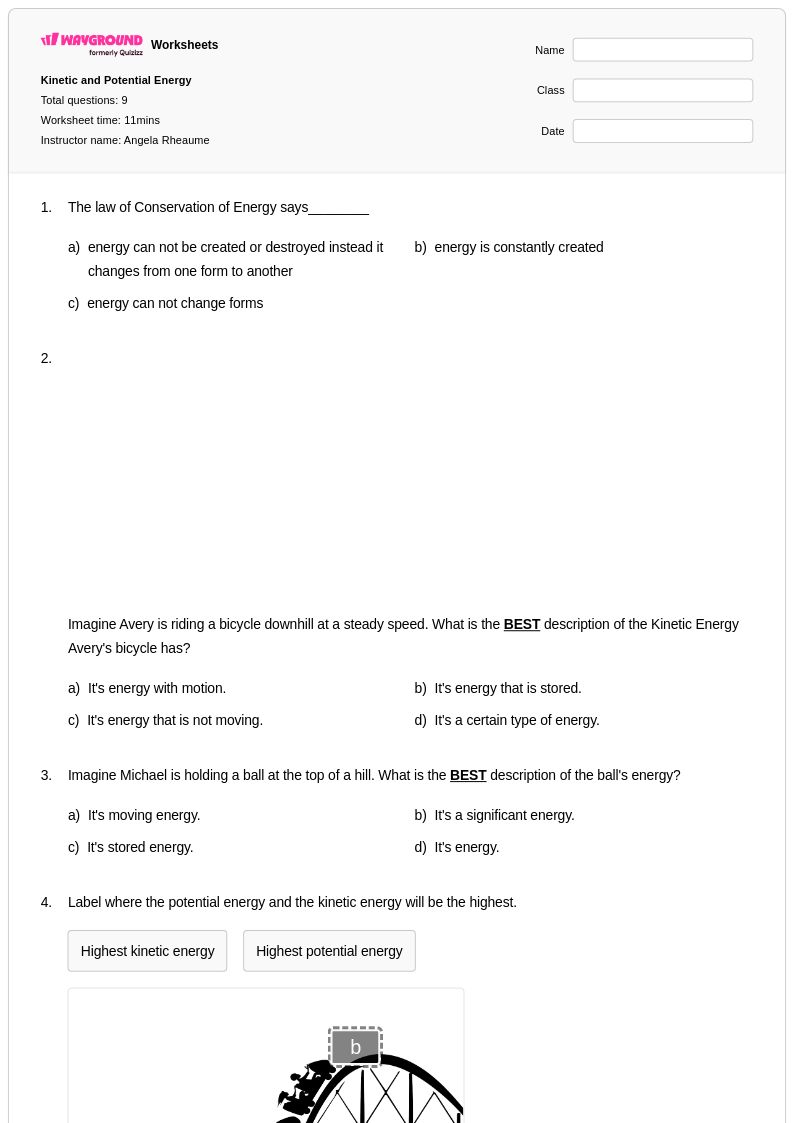
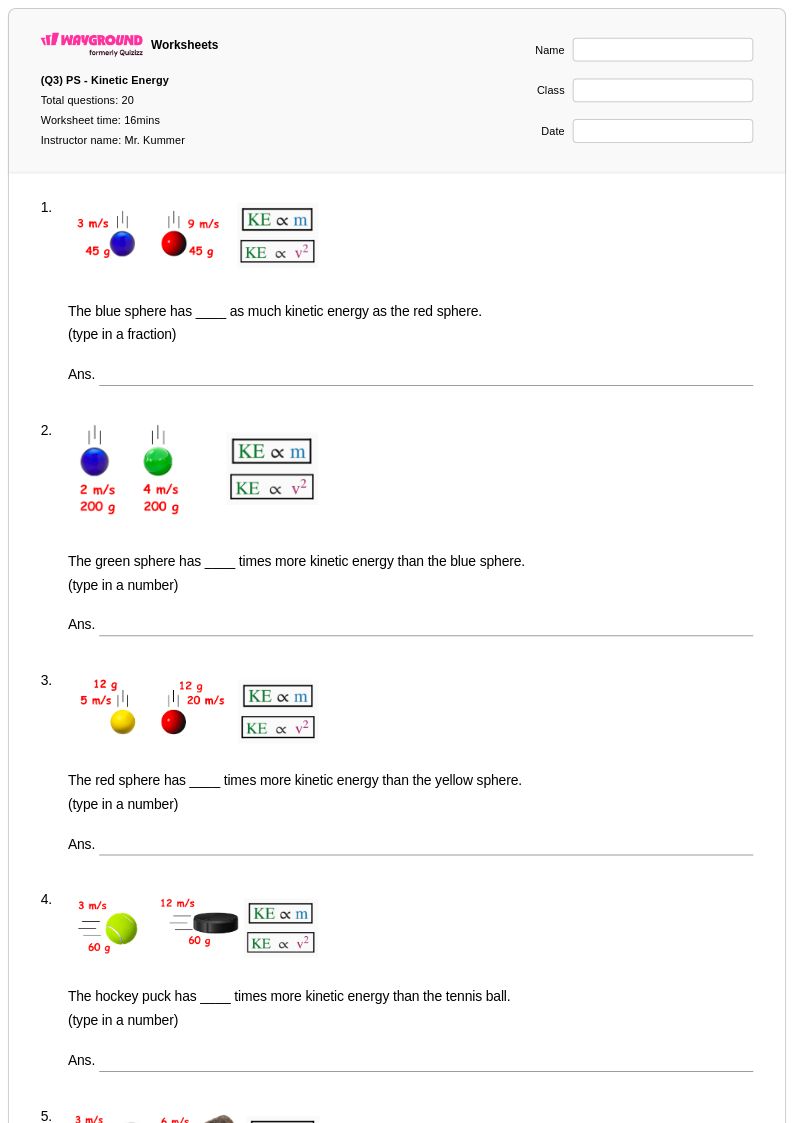
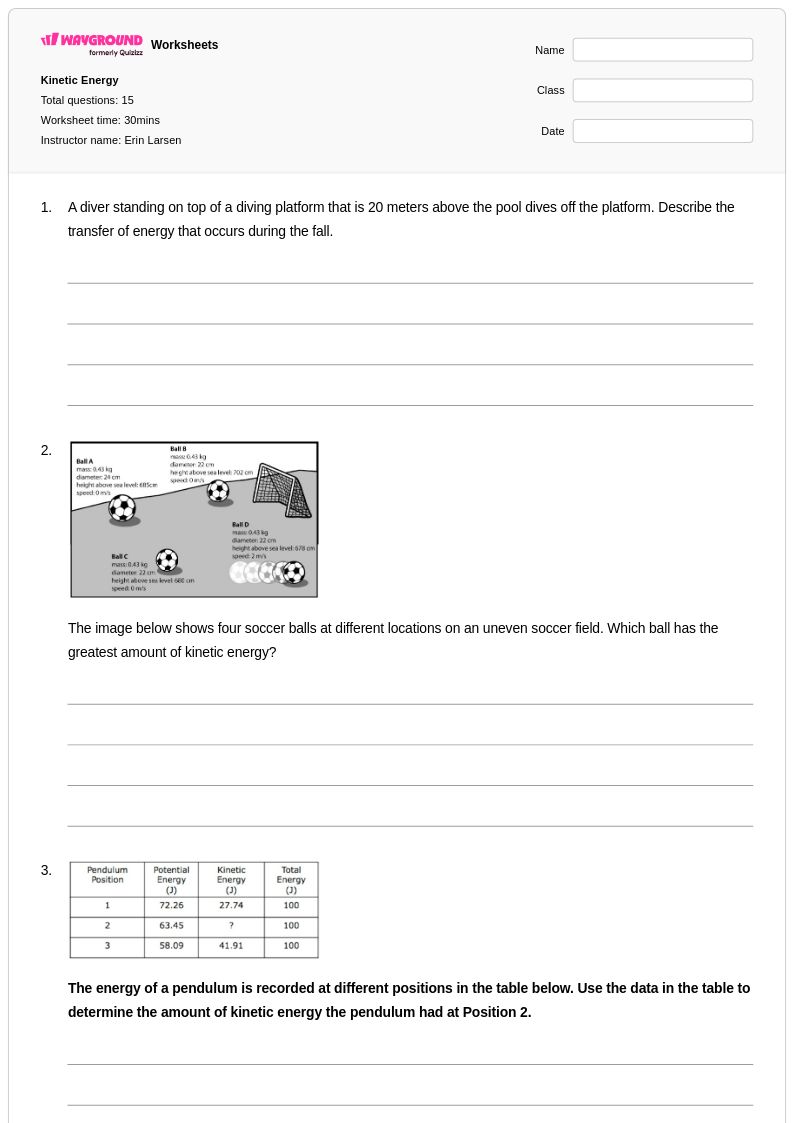
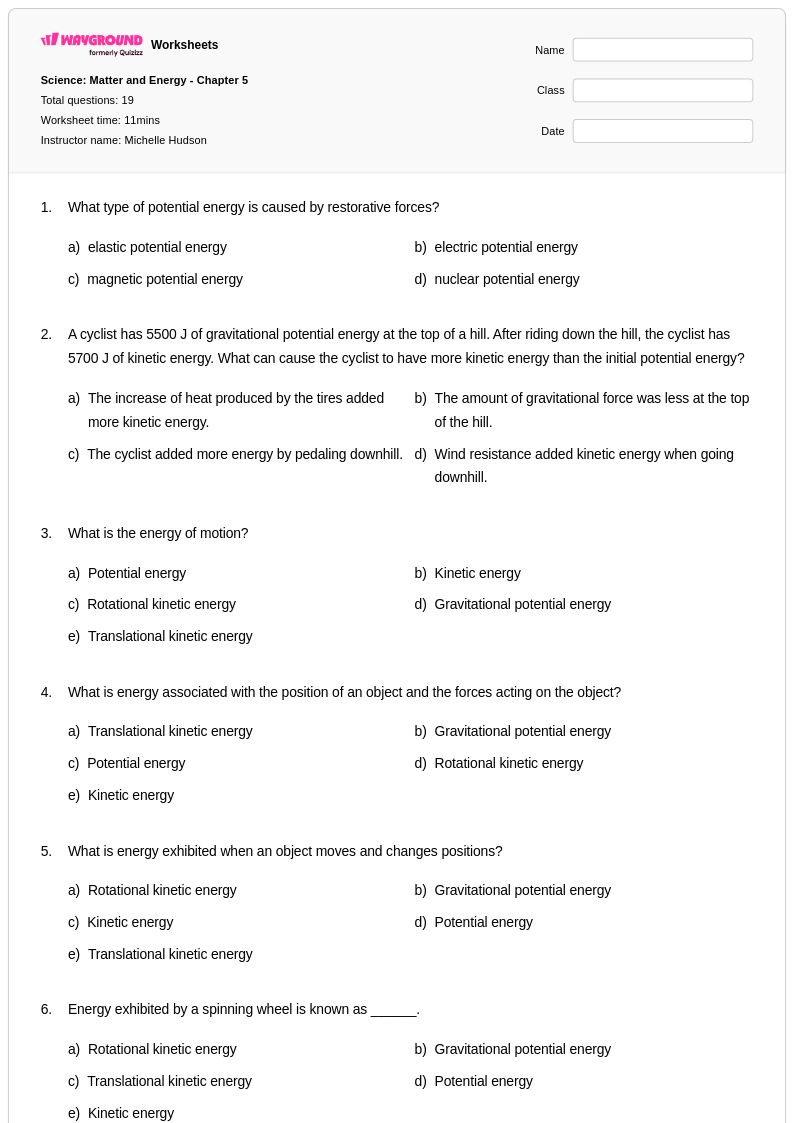
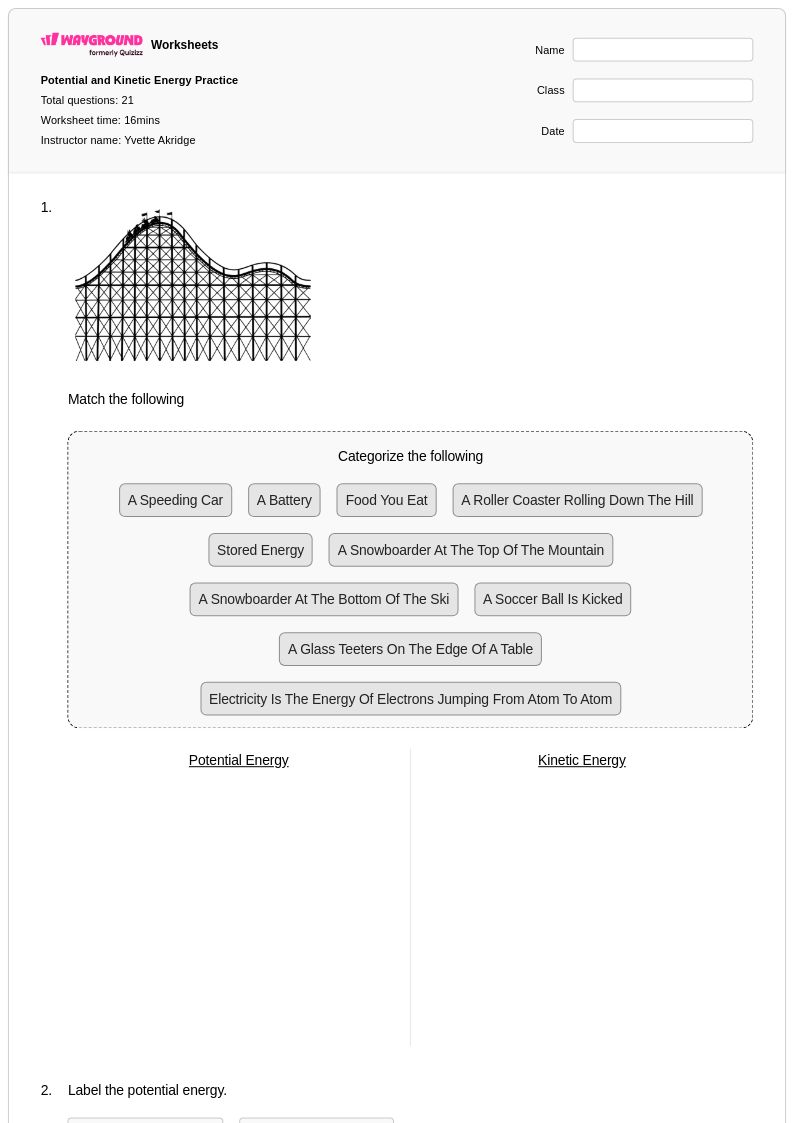
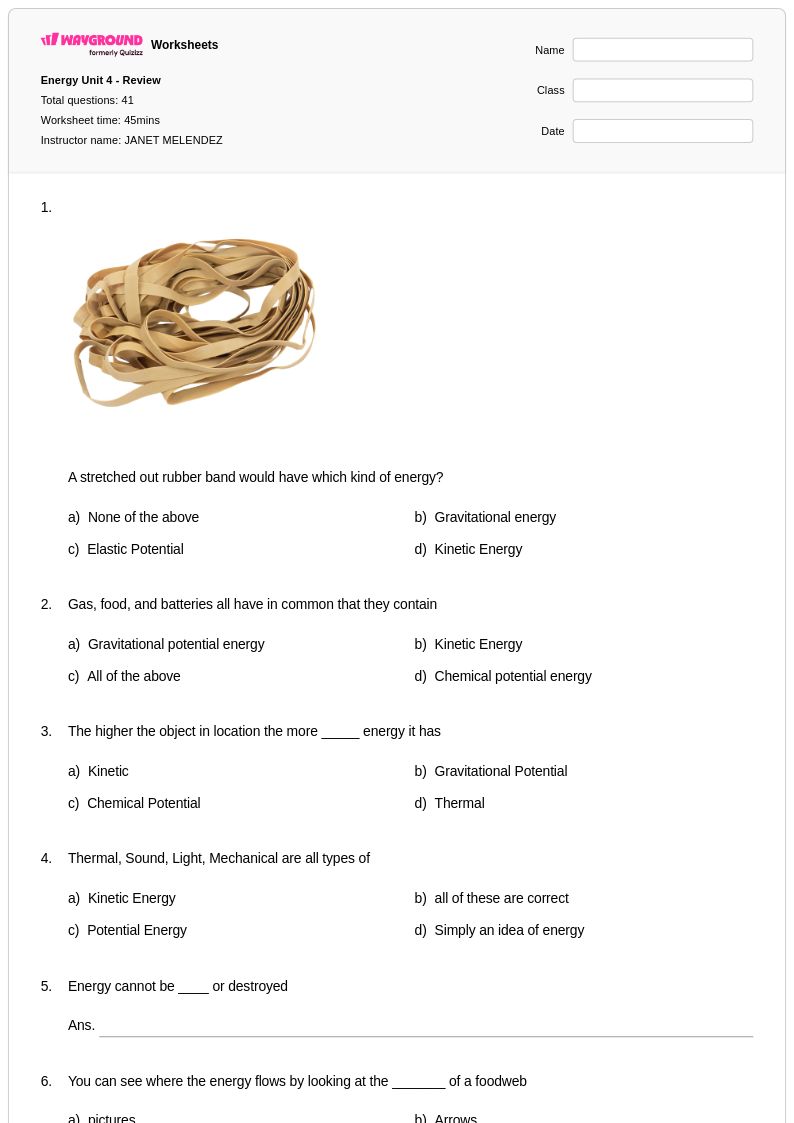
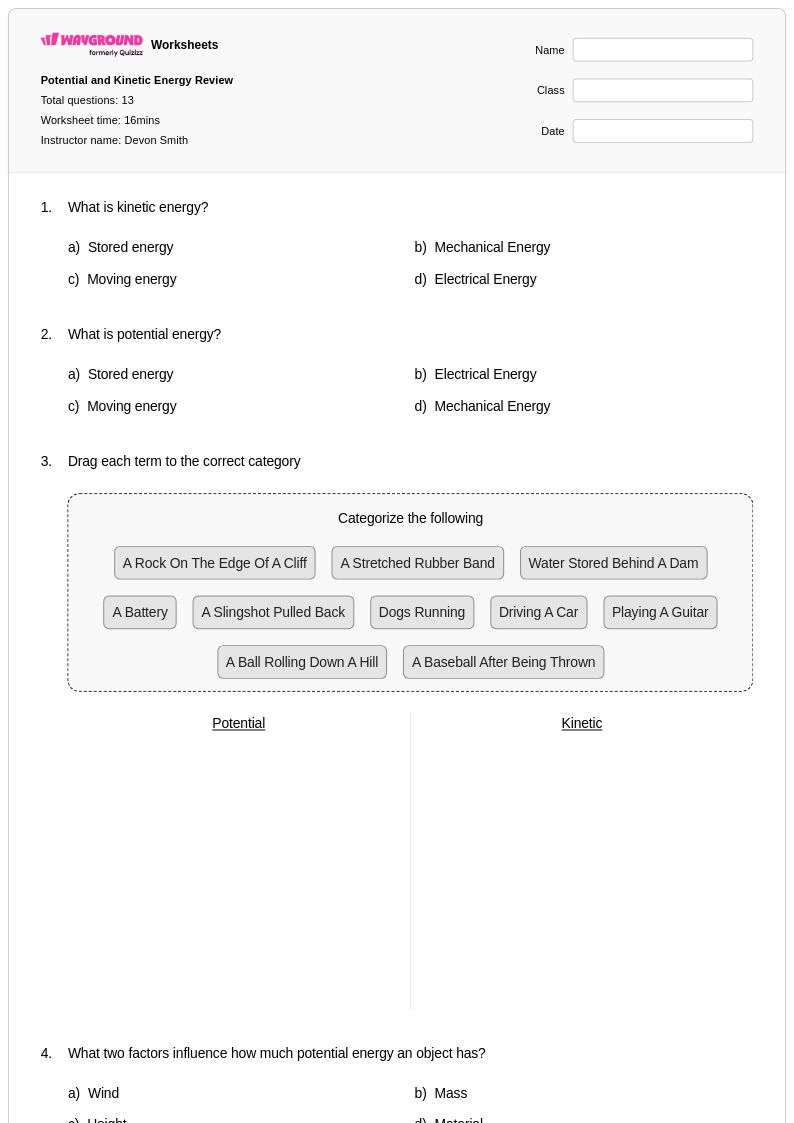
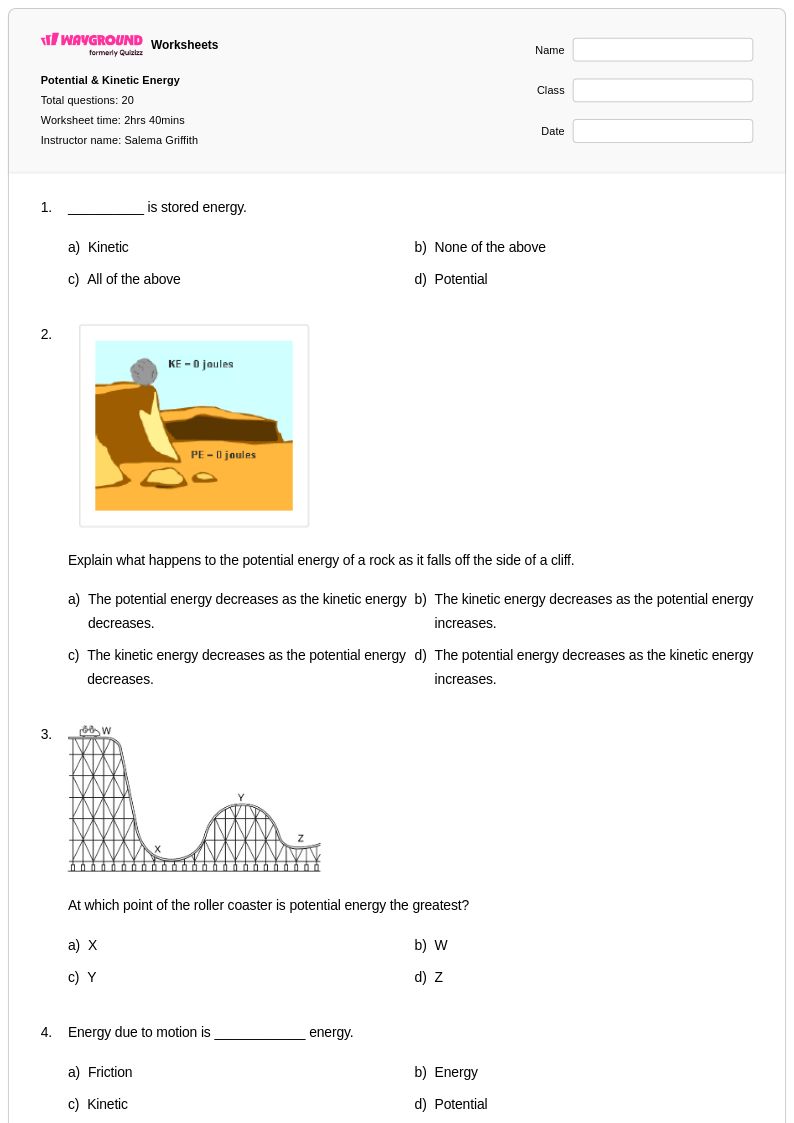
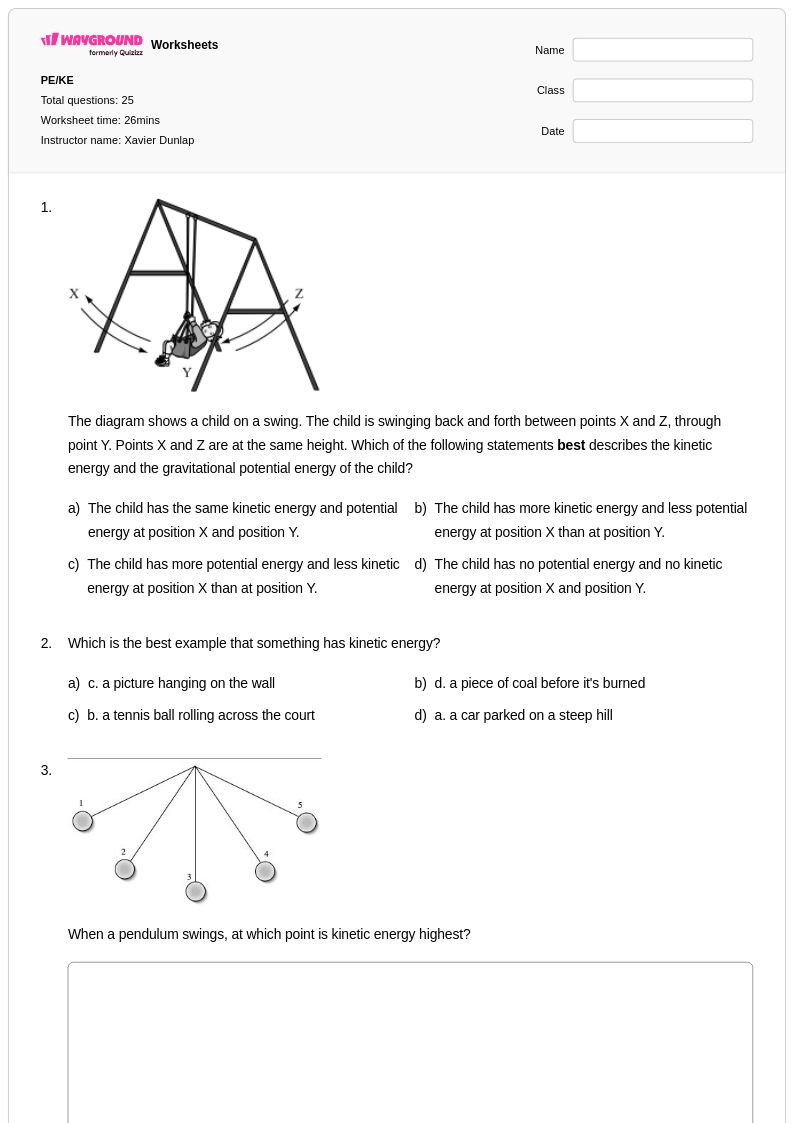
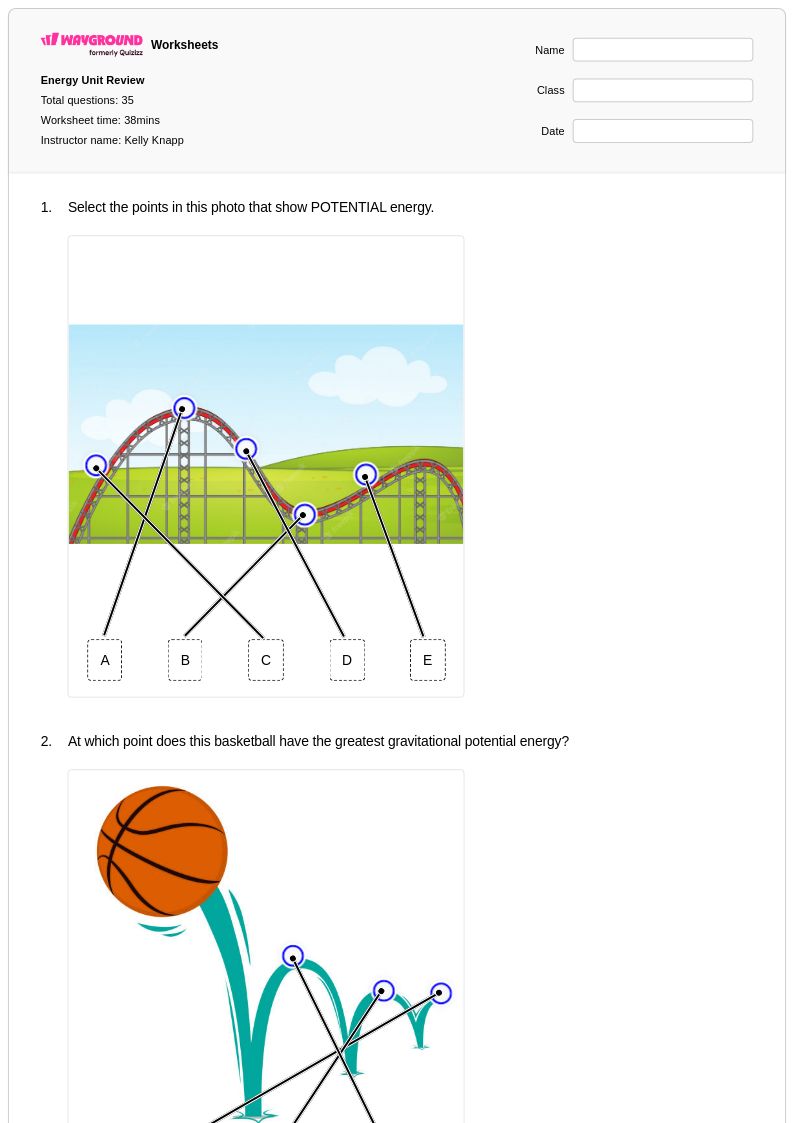
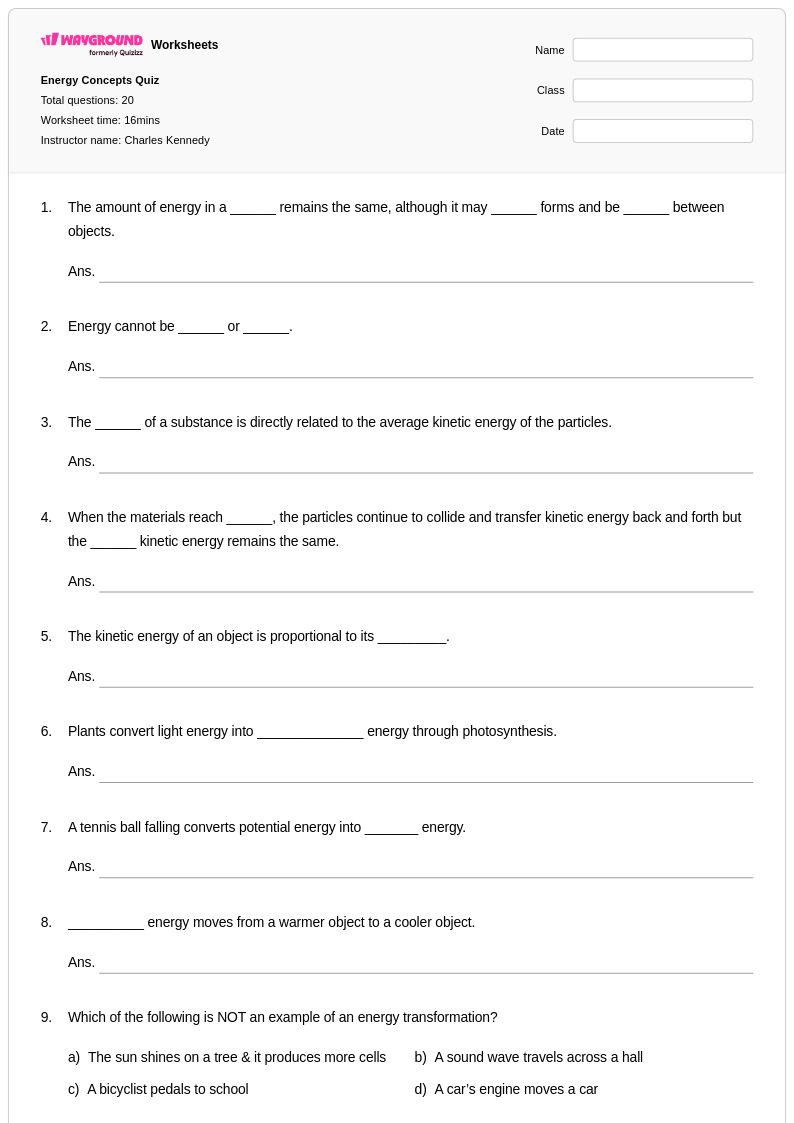
Rotational kinetic energy worksheets available through Wayground (formerly Quizizz) provide comprehensive practice for students studying this fundamental concept in physics. These educational resources focus on developing students' understanding of how rotating objects store energy based on their moment of inertia and angular velocity, with problems covering spheres, cylinders, disks, and other rotating systems. The worksheets strengthen critical problem-solving skills through systematic practice with the rotational kinetic energy formula, unit conversions, and real-world applications involving flywheels, spinning wheels, and rotating machinery. Each worksheet collection includes detailed answer keys and step-by-step solutions, with materials available as free printable pdf downloads that teachers can easily distribute for homework assignments, classroom practice problems, or assessment preparation.
Wayground (formerly Quizizz) supports physics educators with millions of teacher-created rotational kinetic energy worksheet resources that can be searched, filtered, and customized to match specific classroom needs and learning objectives. The platform's extensive collection allows teachers to find materials aligned with physics standards, offering differentiation tools that accommodate varying student skill levels from introductory concepts to advanced problem-solving scenarios. These worksheets are available in both printable pdf format and interactive digital versions, giving educators flexibility in delivery methods while maintaining consistent quality and academic rigor. Teachers utilize these resources for targeted skill practice, remediation sessions for struggling students, enrichment activities for advanced learners, and comprehensive lesson planning that reinforces the mathematical relationships governing rotational motion and energy conservation principles.
FAQs
How do I teach rotational kinetic energy to physics students?
Start by ensuring students are confident with linear kinetic energy before introducing the rotational analog. Build the concept by connecting moment of inertia to mass and angular velocity to linear velocity, so students see the structural parallel between KE = ½mv² and KE = ½Iω². Use physical demonstrations with spinning disks or wheels to make the abstract formula concrete before moving into quantitative problem-solving.
What kinds of practice problems help students master rotational kinetic energy?
Effective practice includes problems involving common rotating geometries such as solid spheres, cylinders, and disks, since each has a distinct moment of inertia formula that students must correctly identify and apply. Problems that require unit conversions, multi-step calculations, and real-world contexts like flywheels or spinning machinery help students build both procedural fluency and conceptual transfer. Scaffolded problem sets that begin with single-variable solving and progress to energy conservation scenarios give students a structured path to mastery.
What mistakes do students commonly make when solving rotational kinetic energy problems?
The most frequent error is applying an incorrect moment of inertia for the object's geometry, for example using the formula for a hollow cylinder when the problem specifies a solid one. Students also commonly confuse angular velocity in radians per second with rotational speed in RPM and fail to convert before calculating. A third common mistake is neglecting to account for both translational and rotational kinetic energy when an object is rolling, which leads to significantly wrong answers in energy conservation problems.
How can I differentiate rotational kinetic energy instruction for students at different skill levels?
For students who are still building fluency, start with problems that provide the moment of inertia value directly so they can focus on applying the formula correctly before memorizing geometry-specific expressions. Advanced students benefit from multi-object systems, energy conservation across rotational and translational motion, and problems involving angular acceleration. On Wayground, teachers can assign reduced answer choices to students who need additional support, reducing cognitive load while keeping the core problem-solving intact, and extended time accommodations can be applied individually without affecting the rest of the class.
How do I use Wayground's rotational kinetic energy worksheets in my classroom?
Wayground's rotational kinetic energy worksheets are available as free printable PDF downloads, making them easy to distribute as homework assignments, in-class practice, or assessment preparation. They are also available in interactive digital formats, which allows teachers to host them as a quiz on Wayground for technology-integrated learning environments. Each worksheet includes detailed answer keys and step-by-step solutions, so teachers can use them for both instruction and independent student practice.
How does rotational kinetic energy connect to energy conservation in physics?
Rotational kinetic energy is a critical component of total mechanical energy in systems involving spinning or rolling objects. When solving conservation of energy problems, students must account for rotational kinetic energy alongside translational kinetic energy and gravitational potential energy, or the energy budget will be incomplete. This makes rotational kinetic energy a gateway concept for understanding more complex dynamics problems, including rolling-without-slipping scenarios and flywheel energy storage applications.