Free Printable Newton's Law of Gravitation worksheets
Explore Newton's Law of Gravitation through comprehensive worksheets and printables that help students master gravitational force calculations, practice problems, and fundamental physics concepts with detailed answer keys and free PDF resources.
Explore printable Newton's Law of Gravitation worksheets
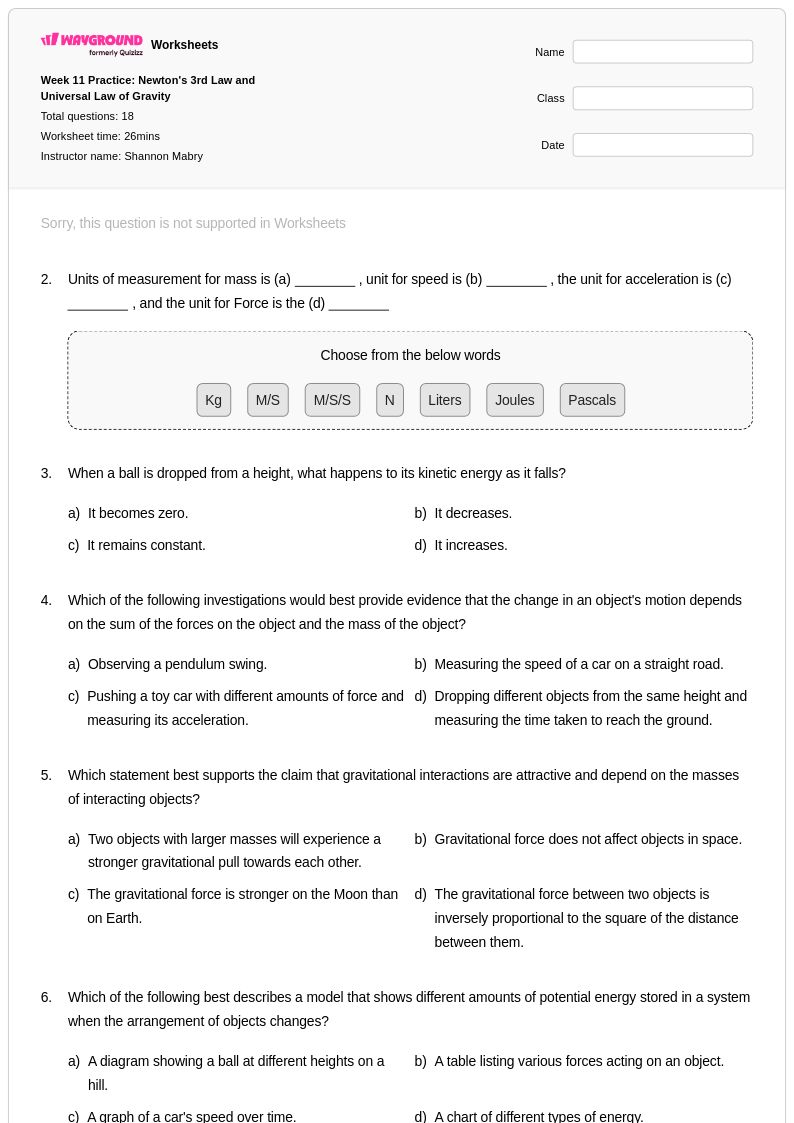
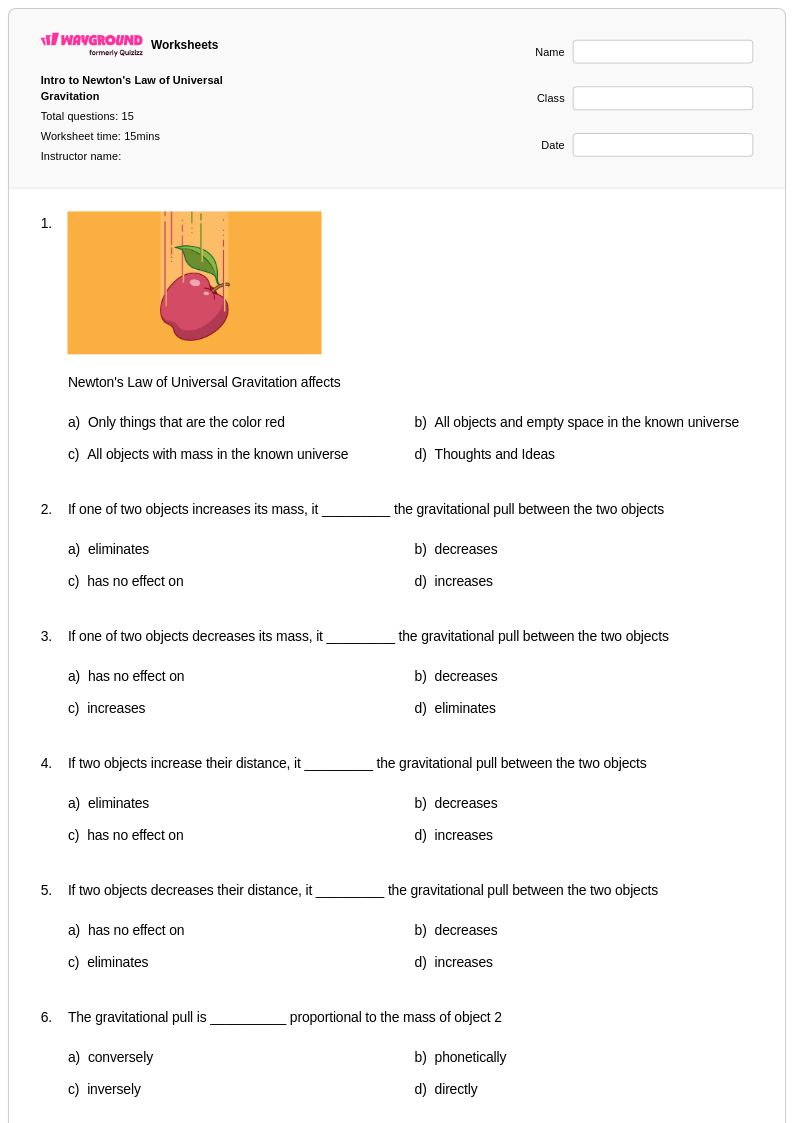
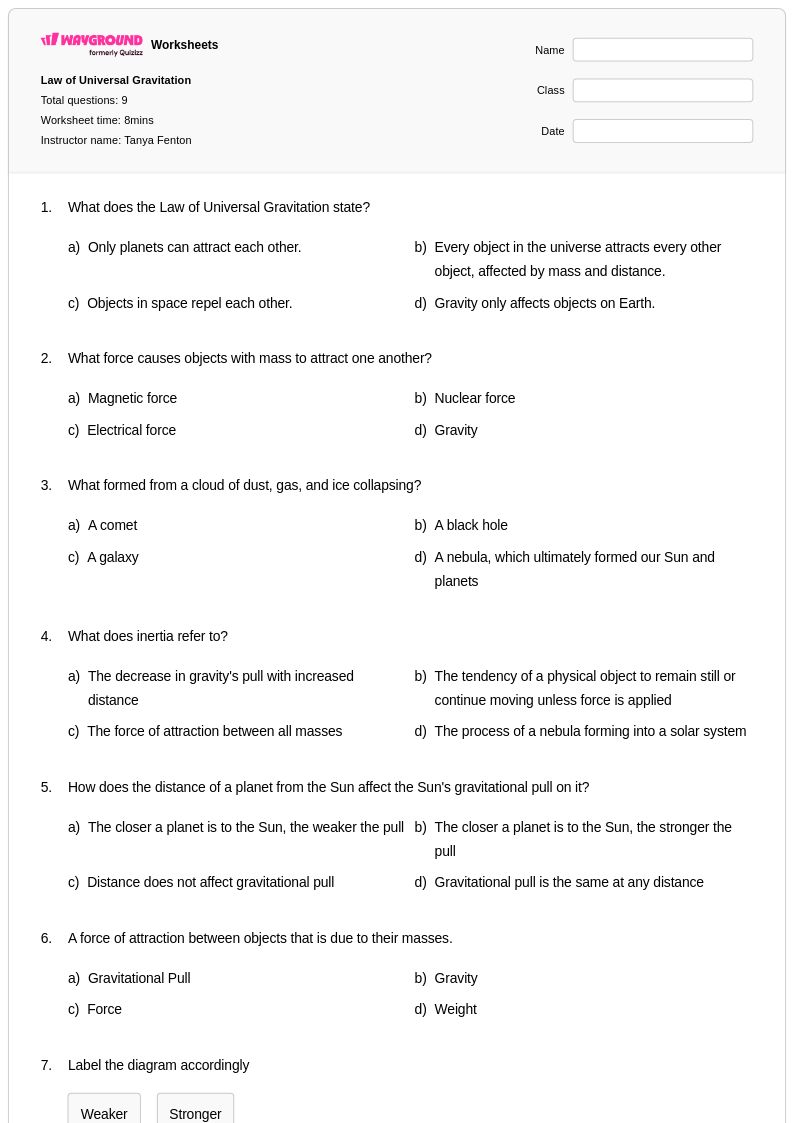
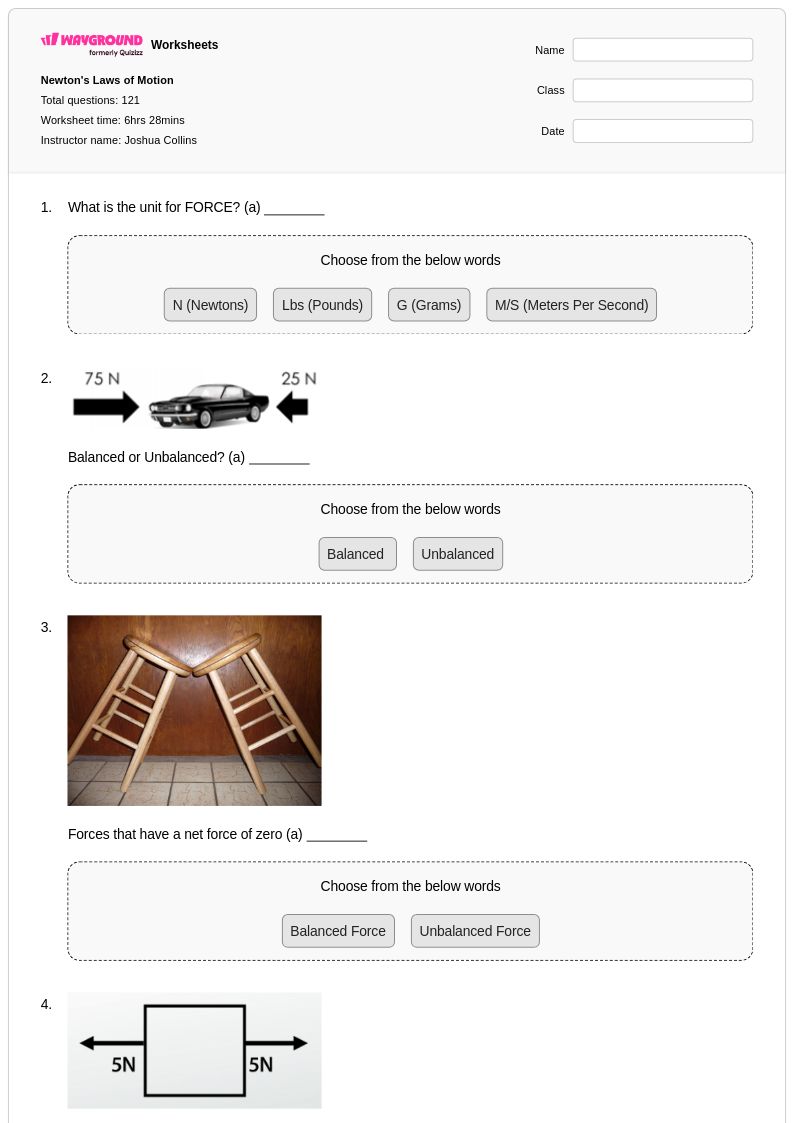
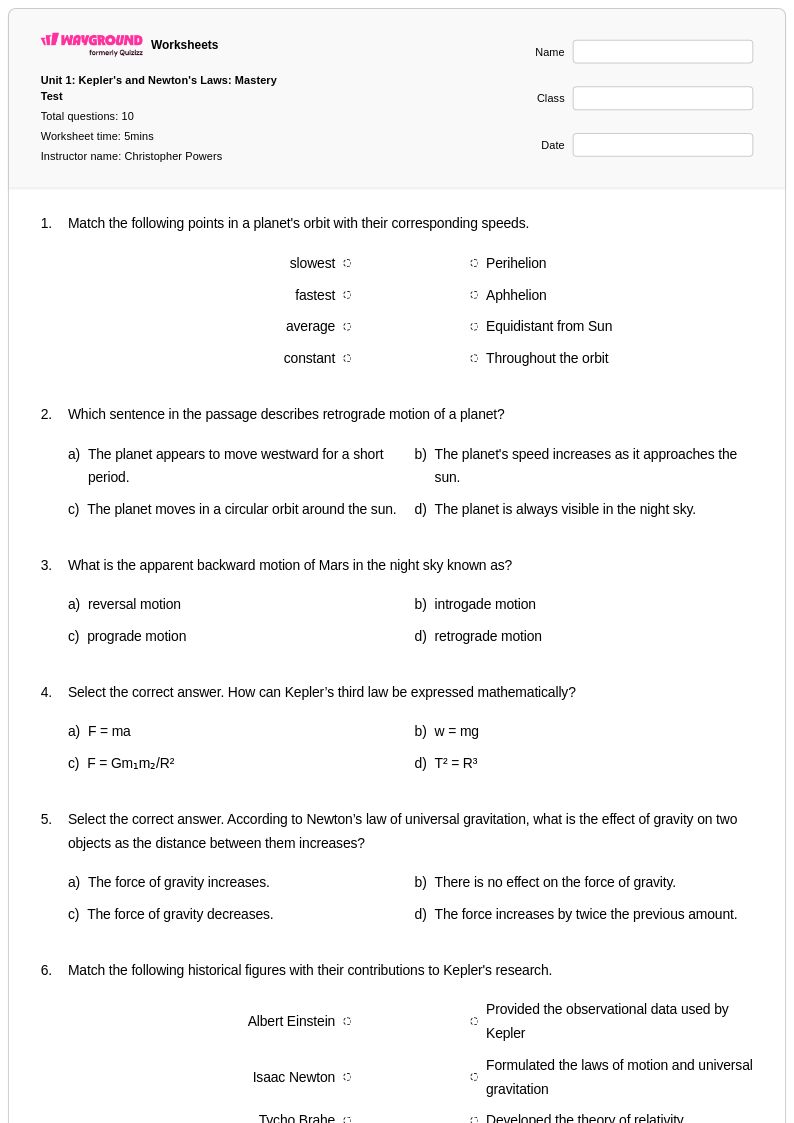
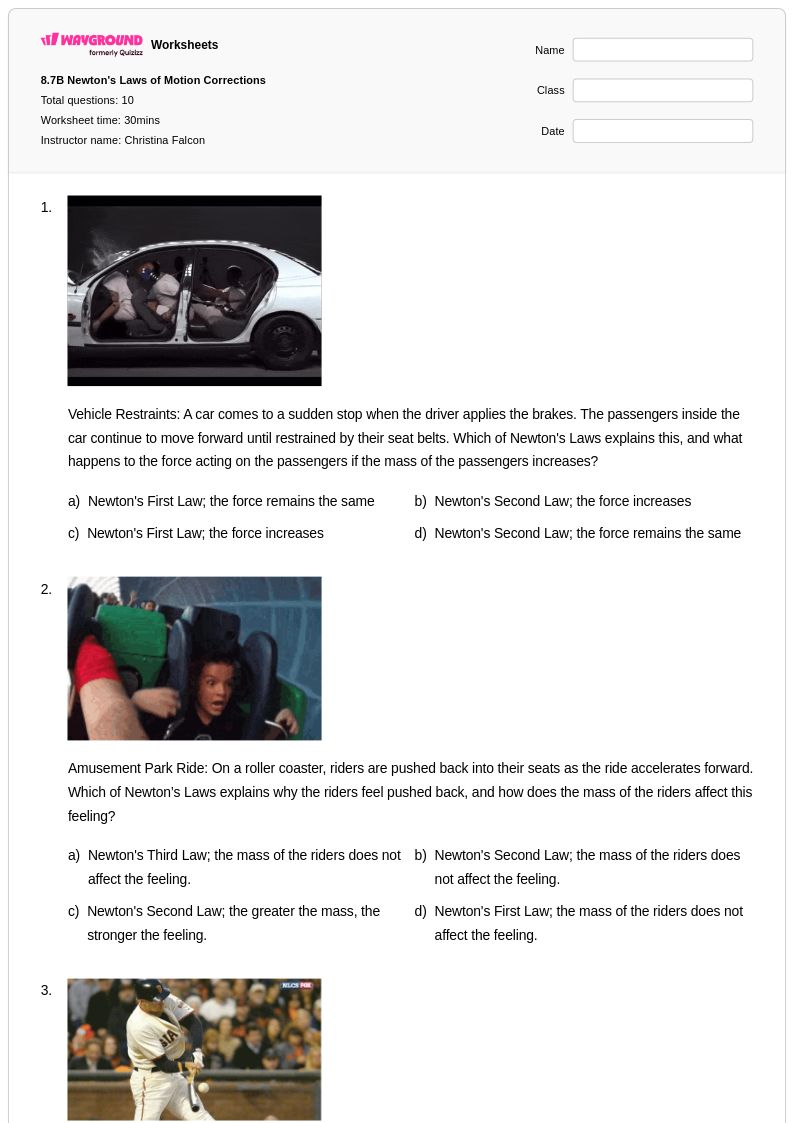
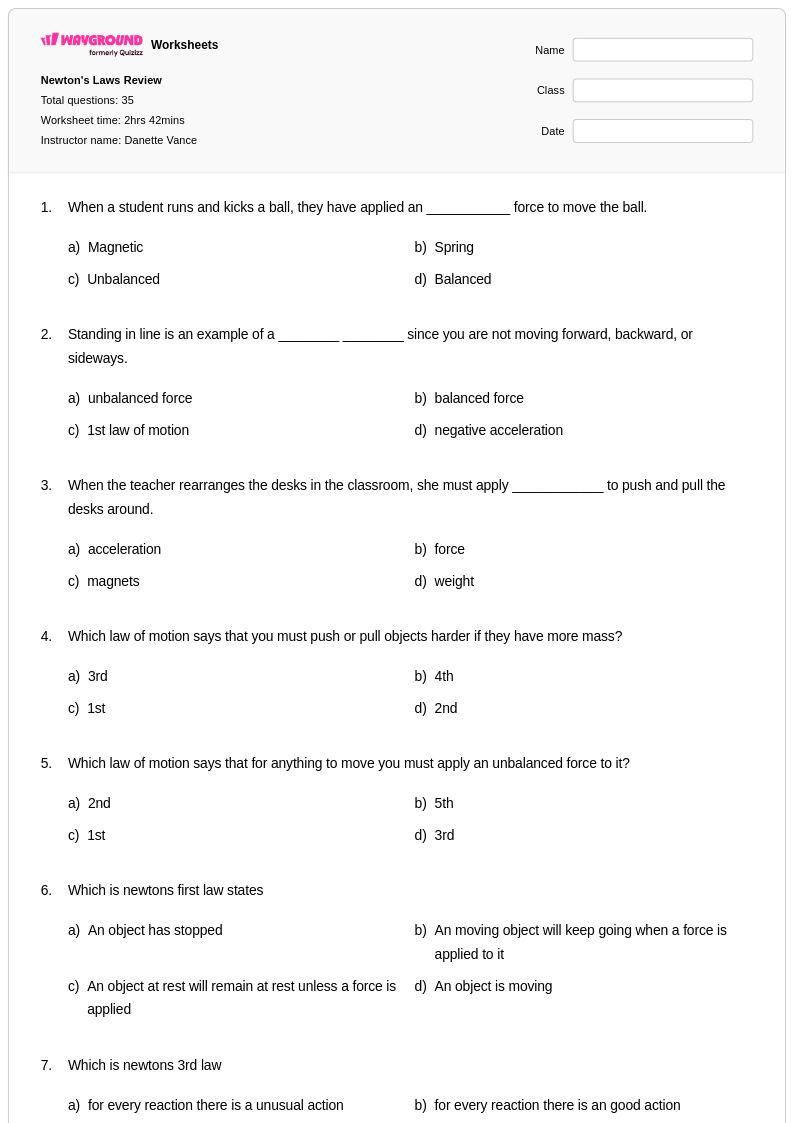
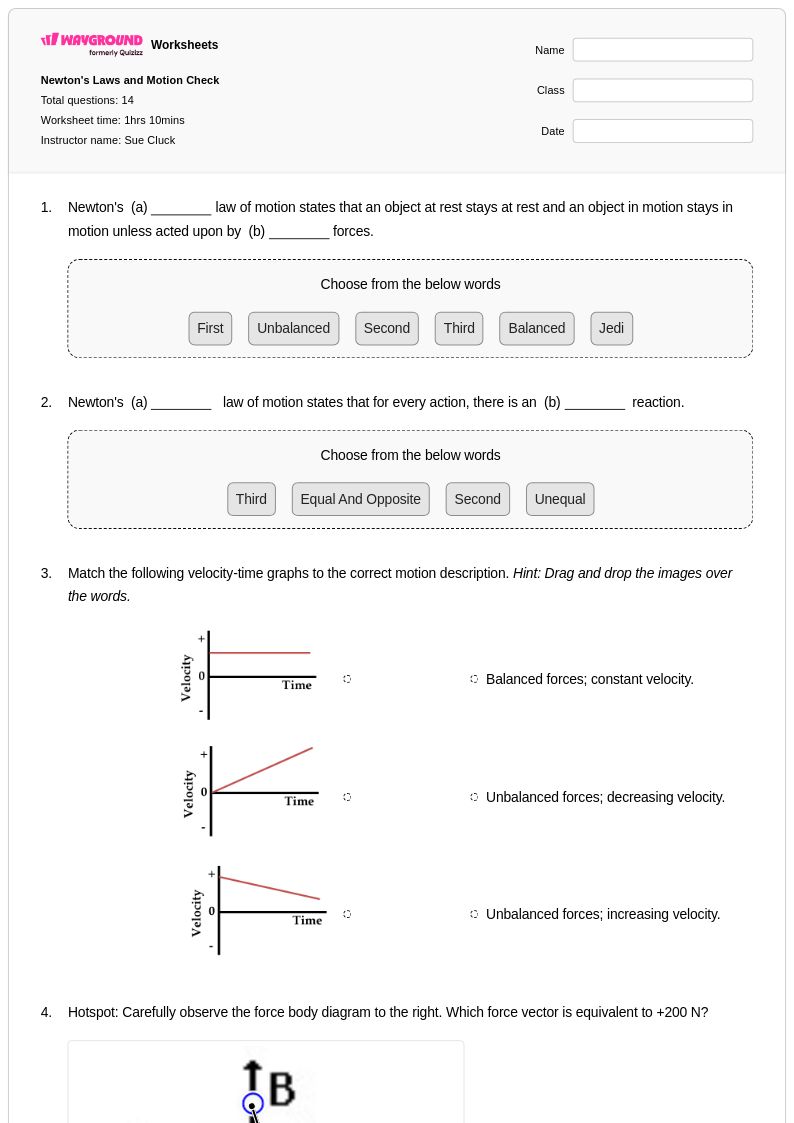
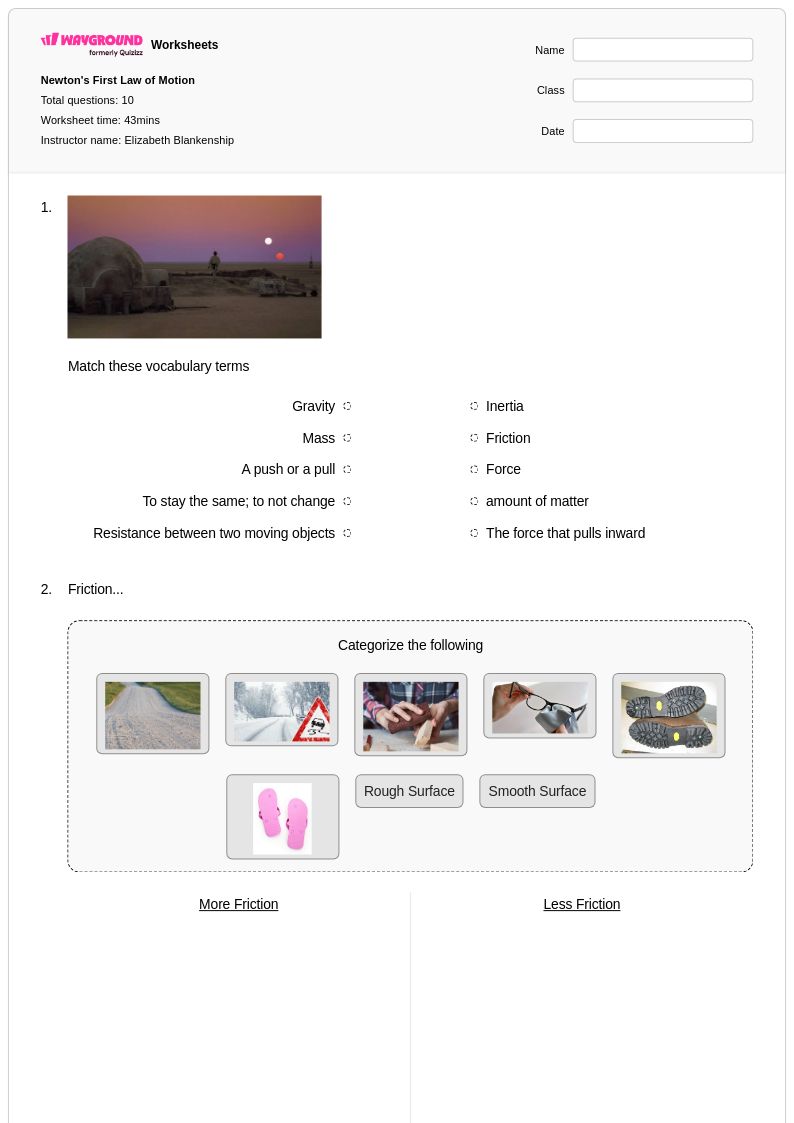
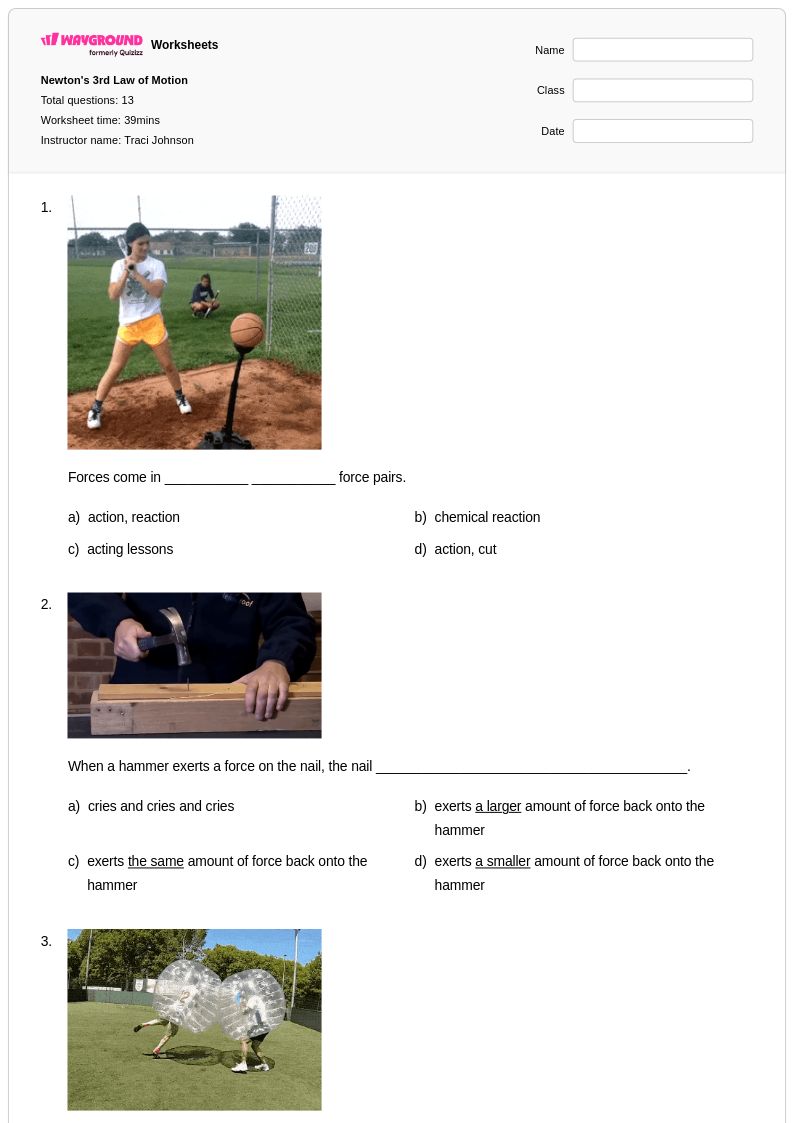
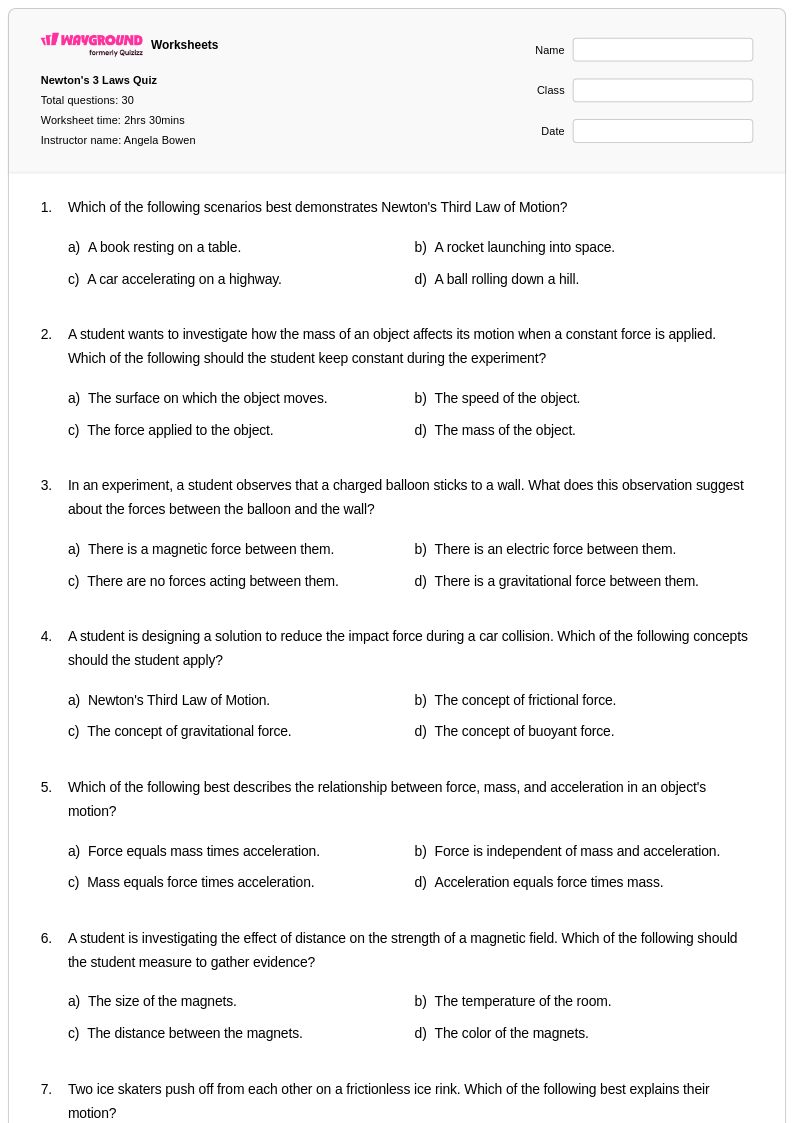
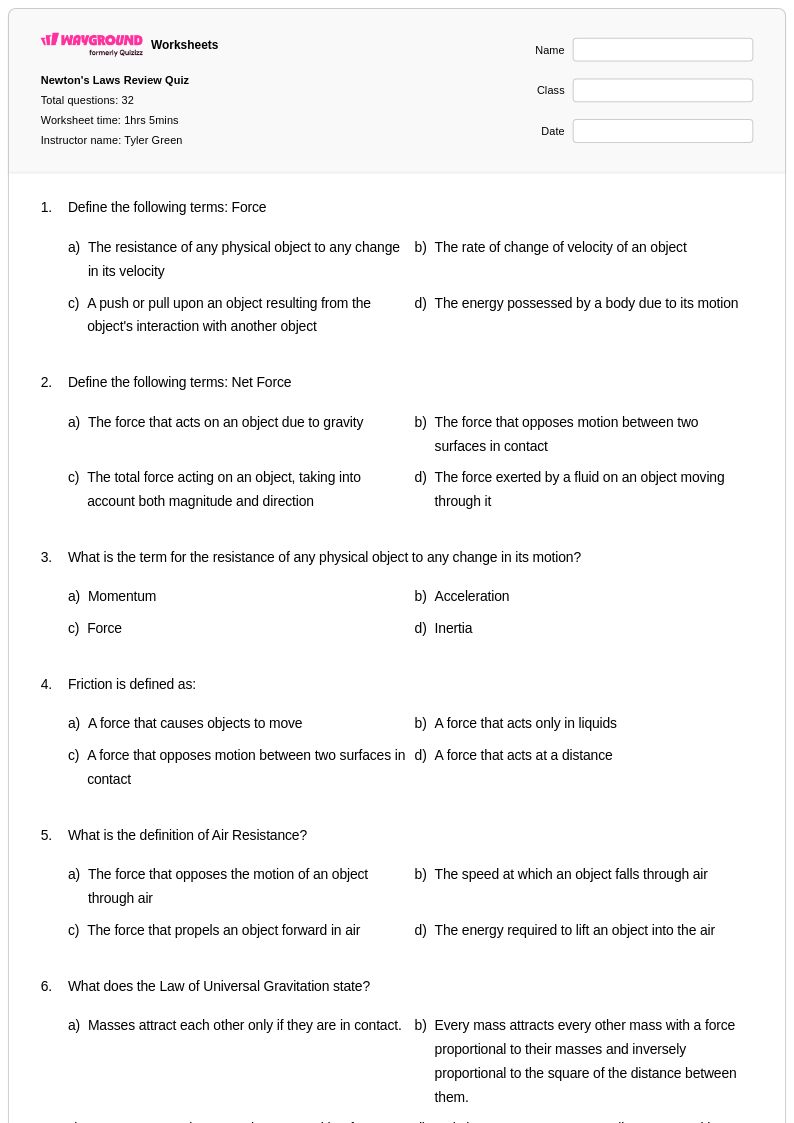
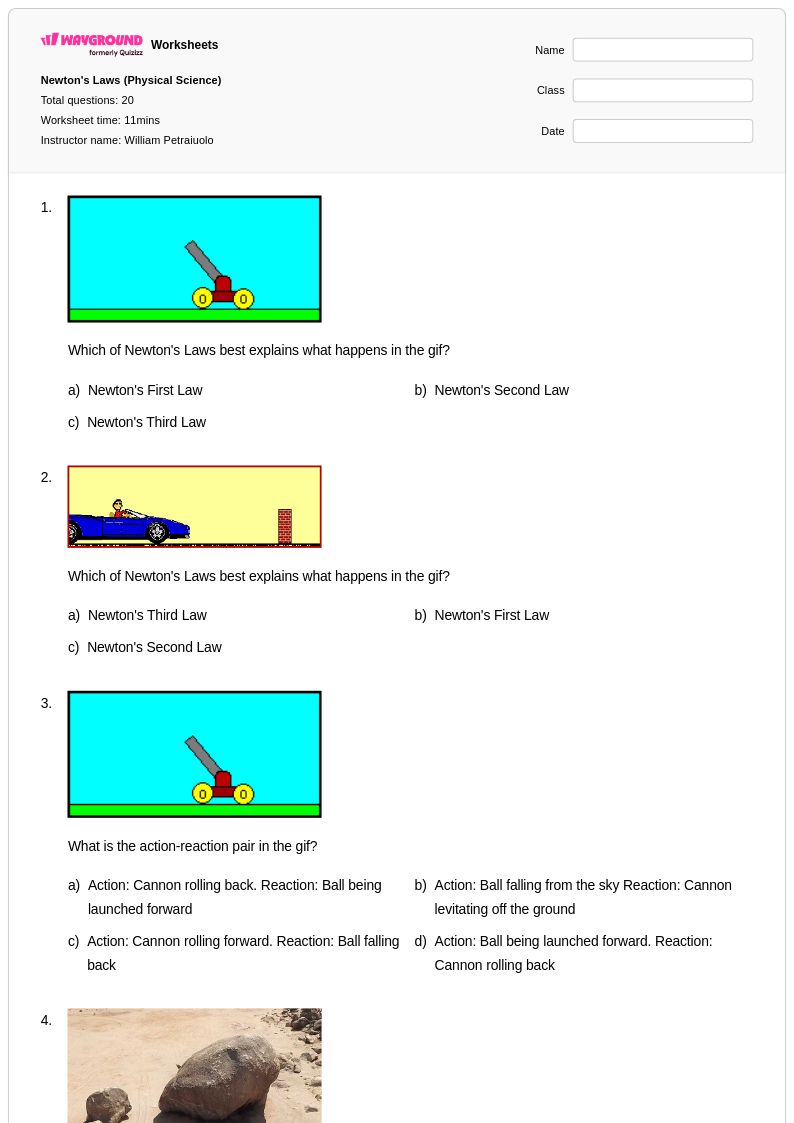
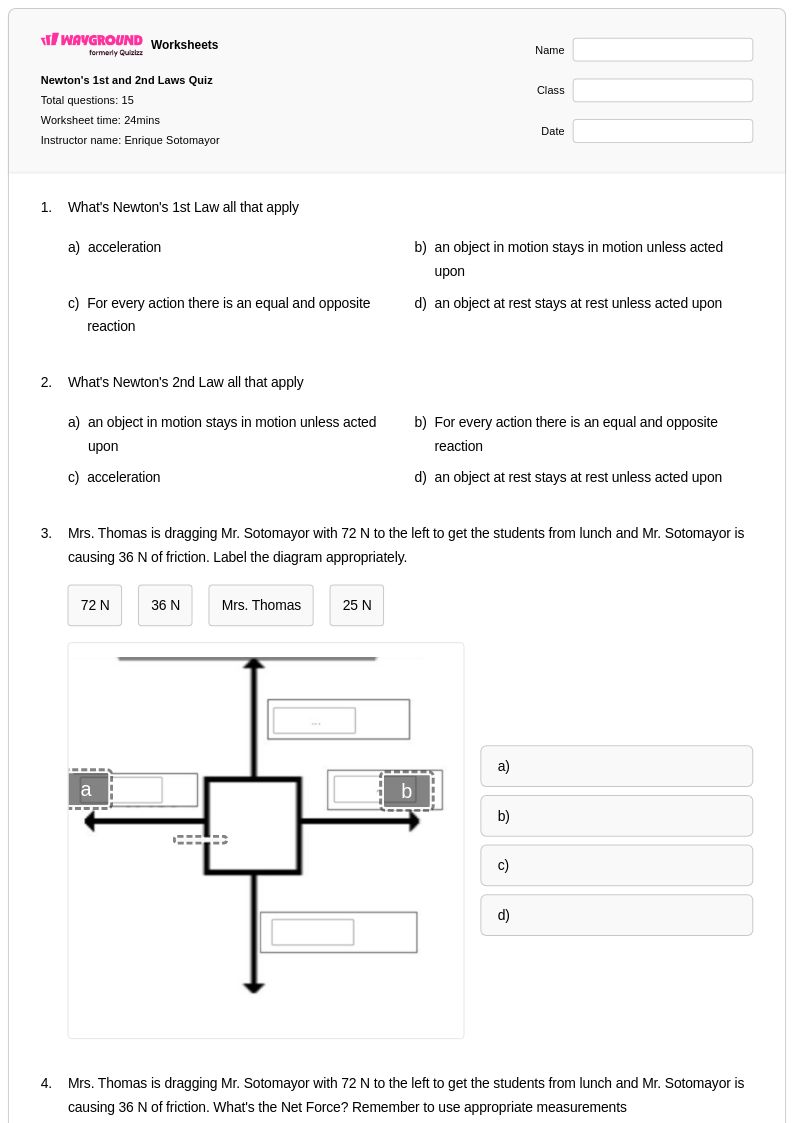
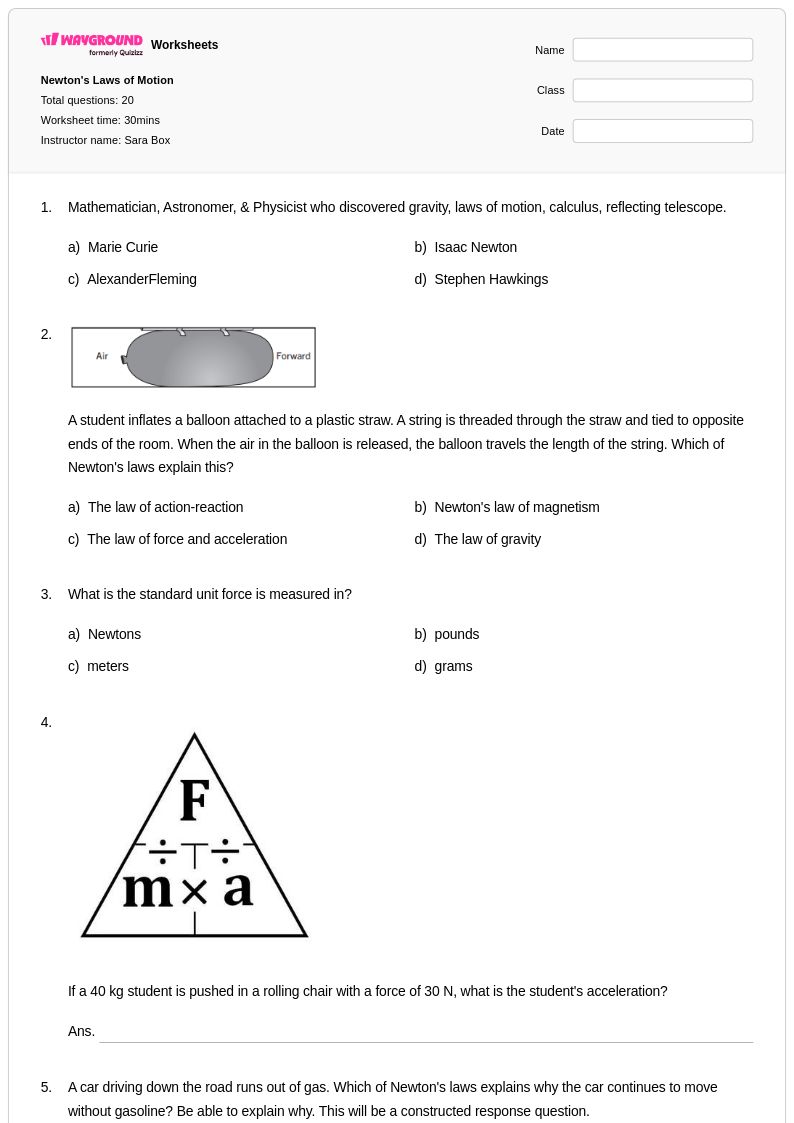
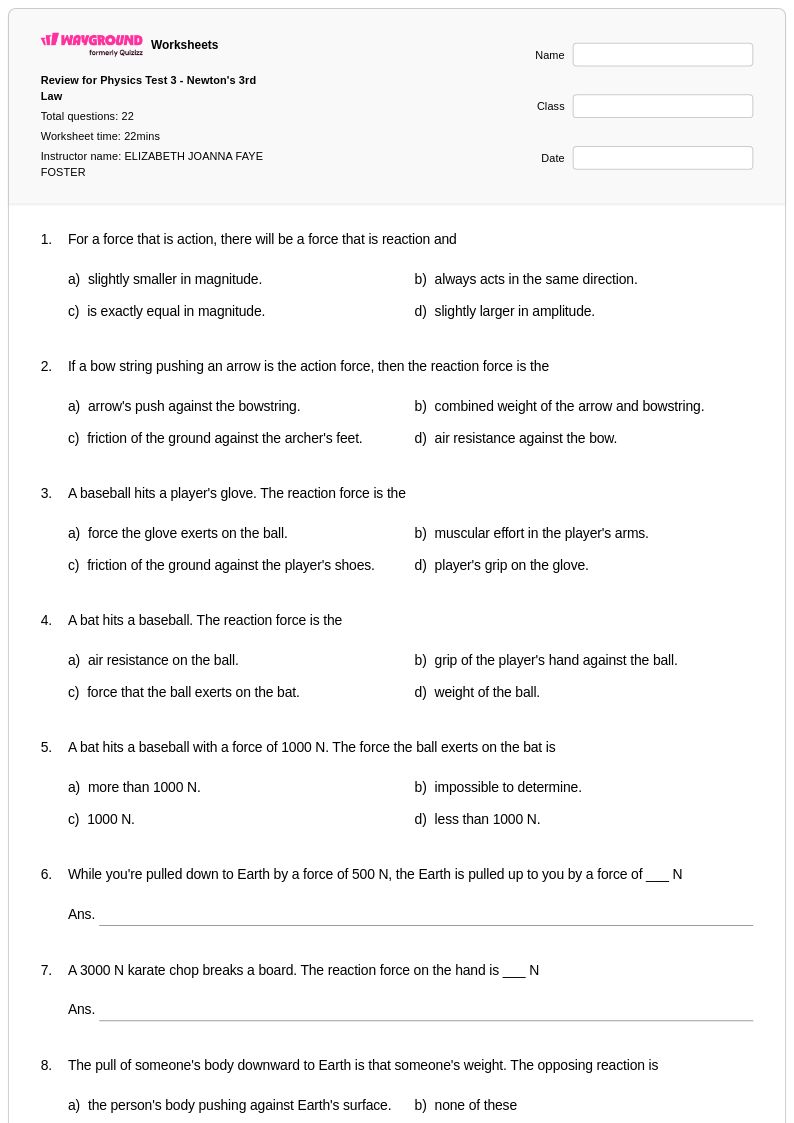
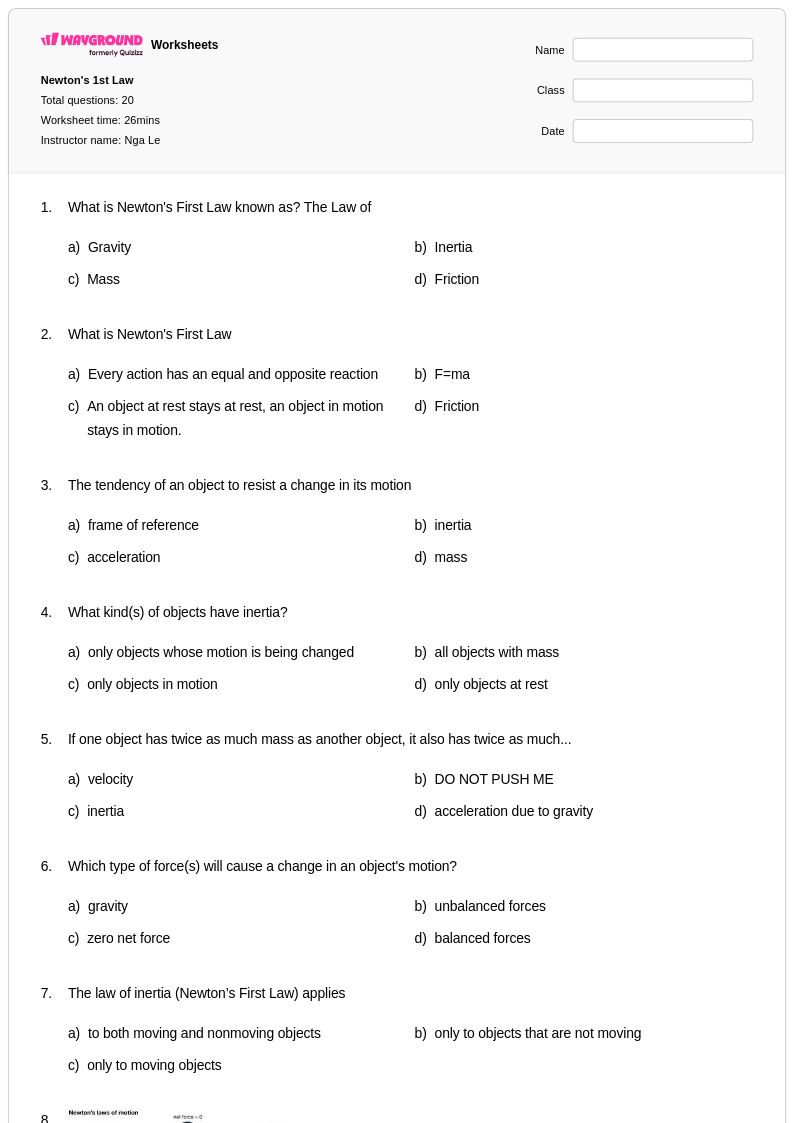
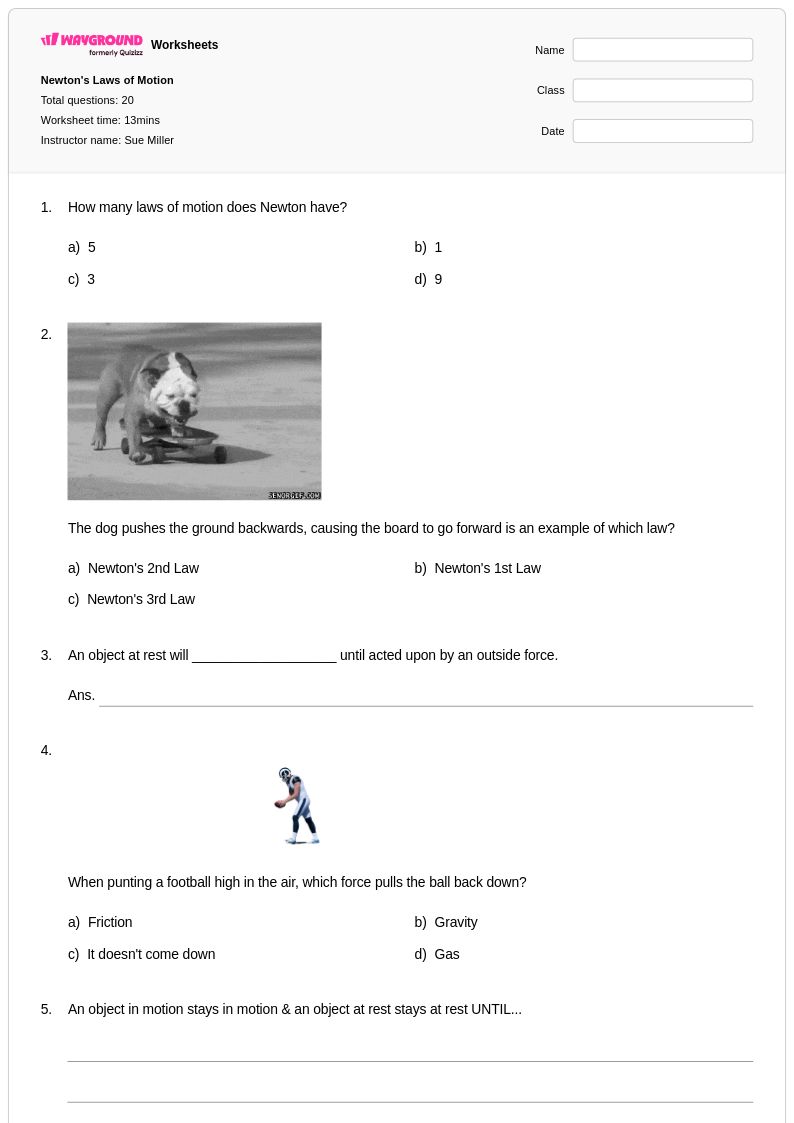
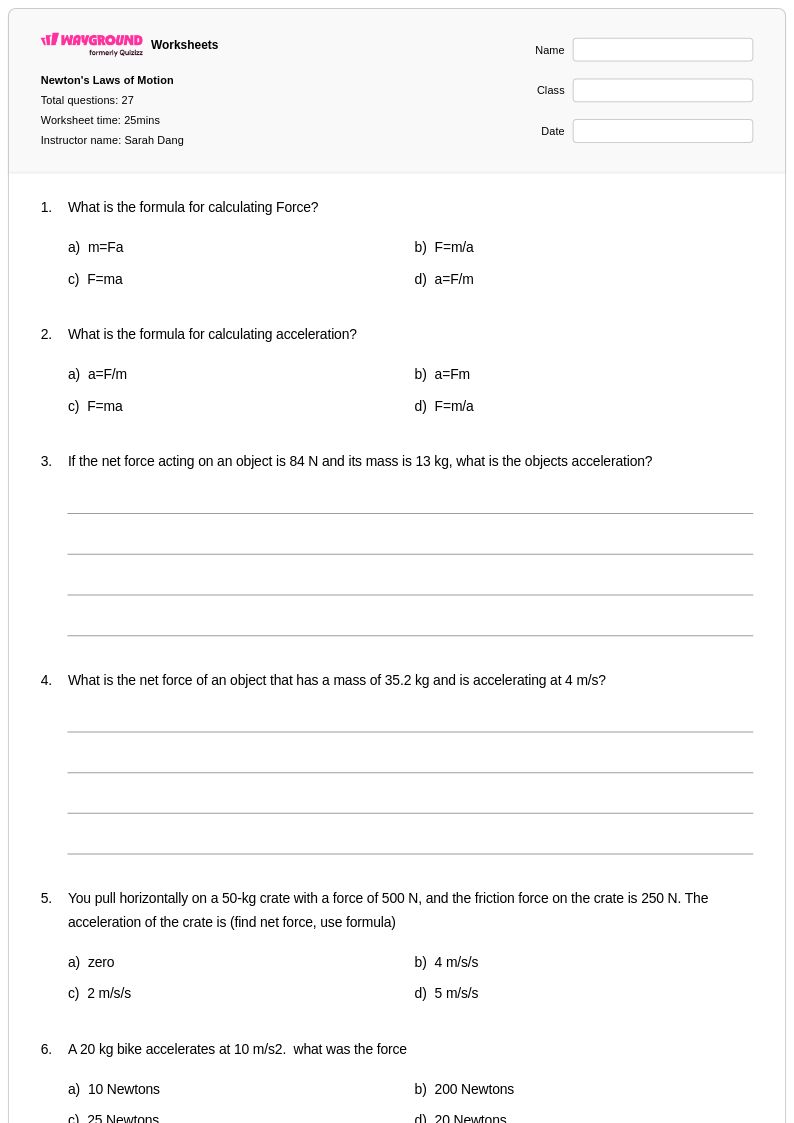
Newton's Law of Gravitation worksheets through Wayground (formerly Quizizz) provide comprehensive coverage of one of physics' most fundamental principles, helping students master the mathematical relationships that govern gravitational forces between objects. These expertly designed resources guide learners through calculating gravitational attraction using Newton's universal gravitation equation, exploring how mass and distance affect gravitational pull, and applying these concepts to real-world scenarios involving planetary motion, satellite orbits, and everyday gravitational phenomena. The collection includes detailed practice problems that progress from basic force calculations to complex multi-step applications, complete with answer keys that enable independent study and self-assessment. Free printable worksheets are available in convenient pdf format, making it easy for educators to distribute materials while ensuring students develop strong problem-solving skills in gravitational physics.
Wayground (formerly Quizizz) empowers physics teachers with an extensive library of millions of teacher-created Newton's Law of Gravitation resources, featuring robust search and filtering capabilities that allow educators to quickly locate materials aligned with specific learning standards and curriculum requirements. The platform's sophisticated differentiation tools enable instructors to customize worksheets for varying skill levels, supporting both remediation for struggling students and enrichment opportunities for advanced learners. Teachers can seamlessly adapt content for different classroom needs, whether conducting skill practice sessions, planning comprehensive unit assessments, or providing targeted intervention materials. With flexible availability in both printable and digital formats including downloadable pdfs, educators can efficiently integrate these gravitational physics resources into any teaching environment while maintaining the high-quality instruction that helps students achieve mastery of this essential scientific concept.
FAQs
How do I teach Newton's Law of Gravitation to physics students?
Start by grounding students in the concept that every object with mass exerts a gravitational pull on every other object, then introduce the universal gravitation equation (F = Gm₁m₂/r²) step by step. Use familiar examples like Earth-Moon gravitational attraction or satellite orbits before moving to abstract calculations. Building from conceptual understanding to mathematical application helps students see the law as a tool for explaining observable phenomena, not just a formula to memorize.
What practice problems should students work through to master gravitational force calculations?
Students should begin with single-variable problems where they solve for gravitational force given two masses and a distance, then progress to problems that require solving for mass or distance as the unknown. Multi-step problems involving orbital mechanics or comparing gravitational forces between different planetary bodies reinforce deeper understanding. Sequencing problems by complexity ensures students build procedural fluency before tackling real-world applications like satellite orbit calculations.
What common mistakes do students make when applying Newton's Law of Gravitation?
The most frequent error is mishandling the inverse-square relationship — students often treat distance as a linear factor rather than squaring it in the denominator, which produces drastically incorrect force values. Another common mistake is confusing mass and weight, leading students to substitute weight (in Newtons) where mass (in kilograms) is required. Students also frequently forget to use the center-to-center distance between objects rather than surface-to-surface distance when setting up problems.
How do I differentiate Newton's Law of Gravitation instruction for students at different skill levels?
For struggling students, start with scaffolded problems that provide the formula and label each variable explicitly, reducing the cognitive load of setup. Advanced learners can be extended with multi-body problems or derivation tasks, such as explaining why gravitational force weakens with distance using the inverse-square law. On Wayground, teachers can apply accommodations like reduced answer choices or extended time to individual students, ensuring differentiated support without singling anyone out in front of the class.
How can I use Newton's Law of Gravitation worksheets from Wayground in my classroom?
Wayground's Newton's Law of Gravitation worksheets are available as printable PDFs for traditional classroom distribution and in digital formats for technology-integrated instruction. Teachers can assign them as independent practice, homework, or formative assessment, and can also host them as interactive quizzes directly on the Wayground platform. Each worksheet includes a complete answer key, making them practical for self-paced study or quick teacher review.
How does distance affect gravitational force, and how do I help students visualize this relationship?
Gravitational force decreases with the square of the distance between two objects, meaning doubling the distance reduces the force to one-quarter of its original value. Graphing force versus distance helps students visualize this non-linear drop-off and builds intuition for why objects farther from Earth experience significantly weaker gravitational pull. Having students calculate force at multiple distances (1r, 2r, 3r) and compare results is an effective exercise for making the inverse-square relationship concrete.