
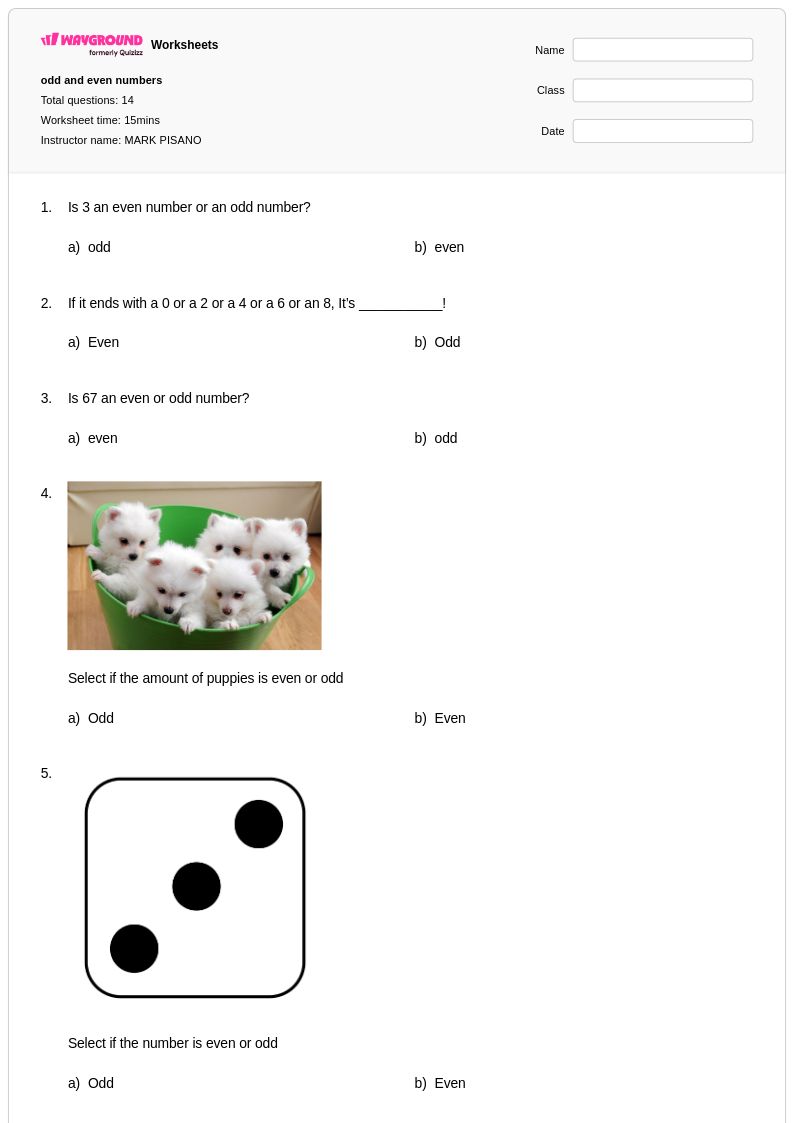
14 Q
1st
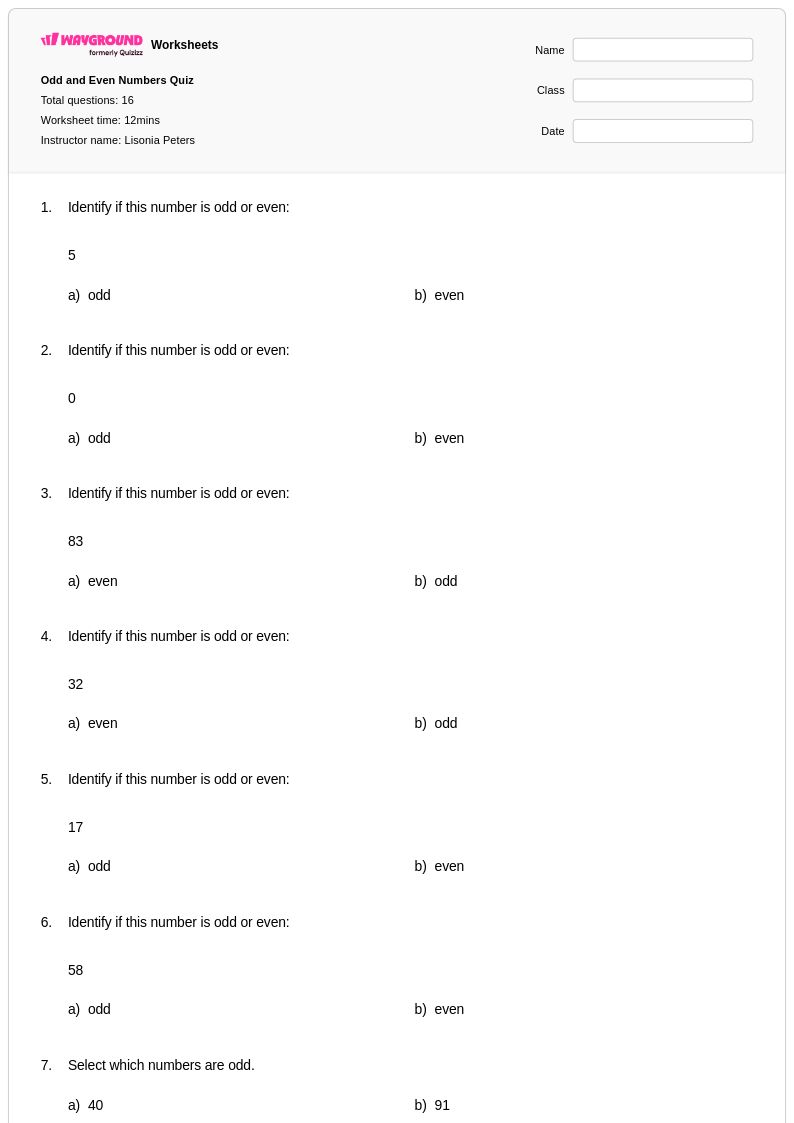
16 Q
2nd - 3rd
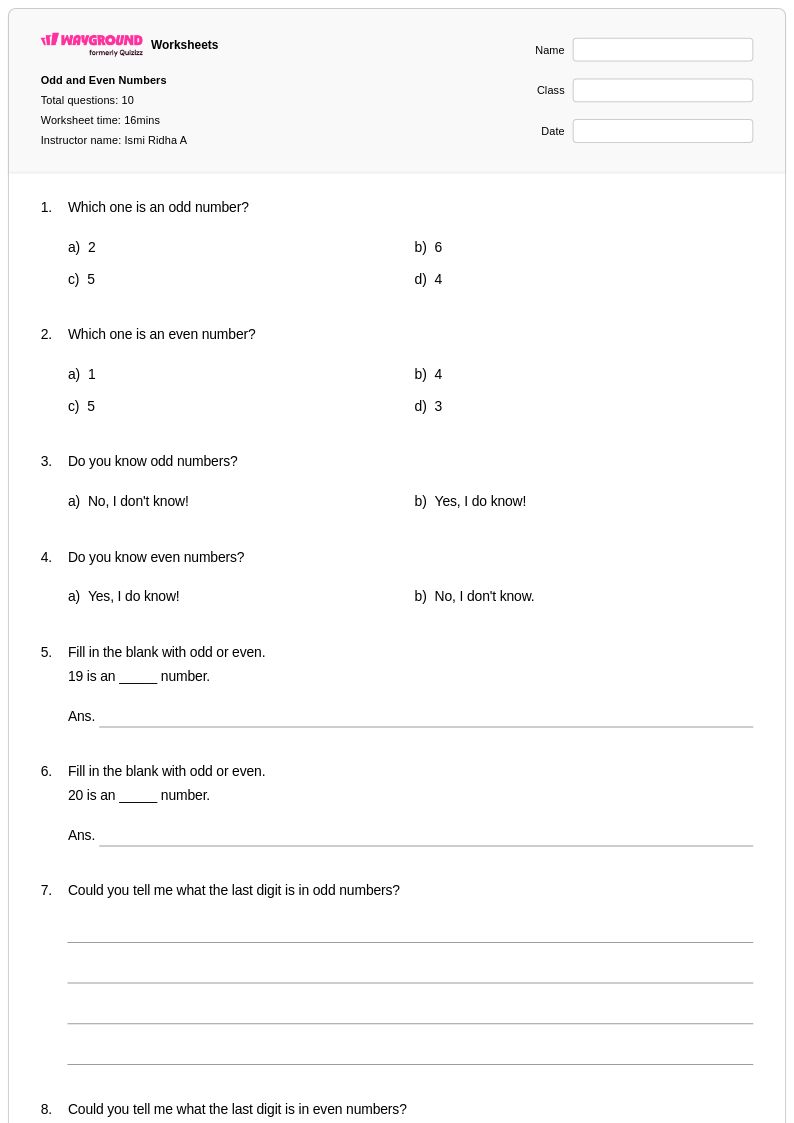
10 Q
2nd
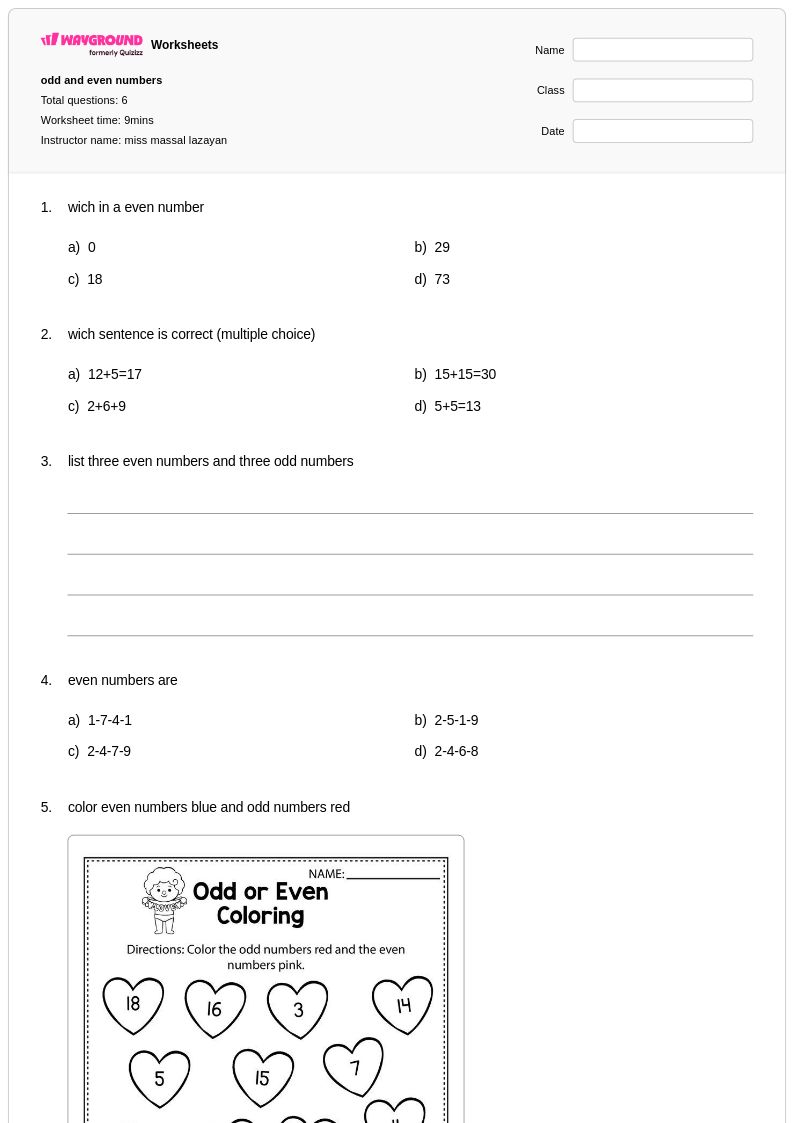
6 Q
2nd
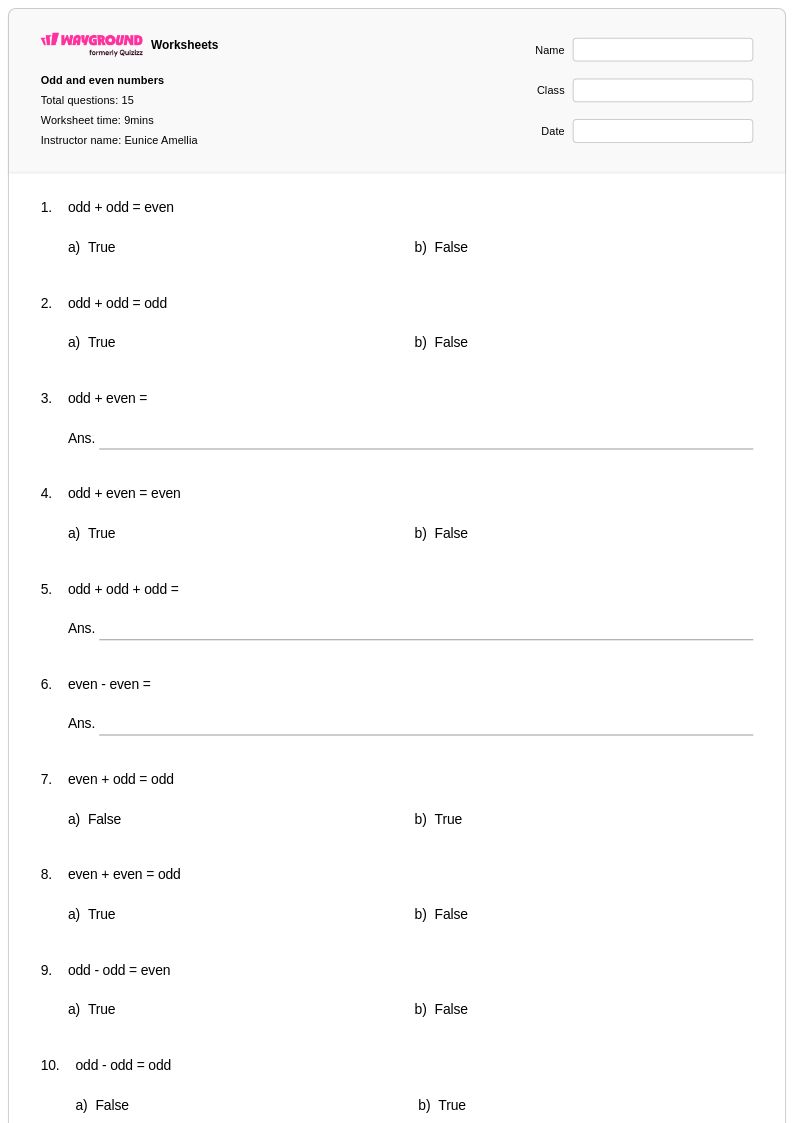
15 Q
4th
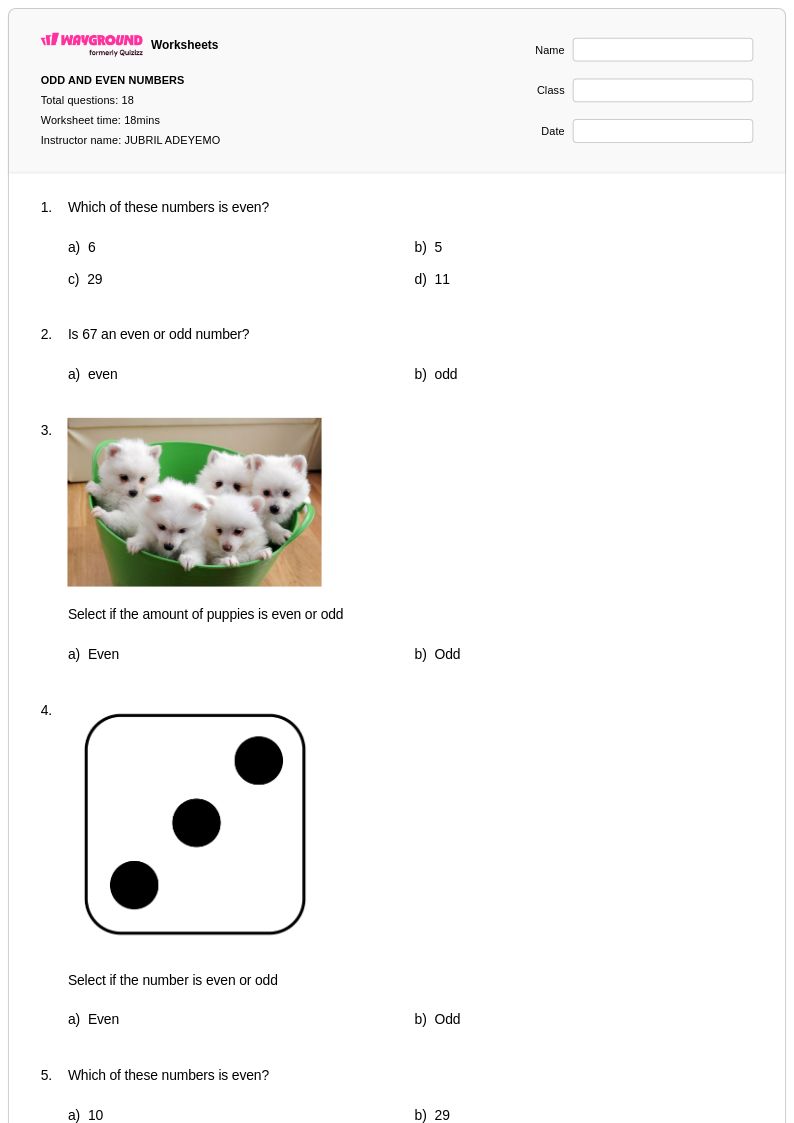
18 Q
2nd
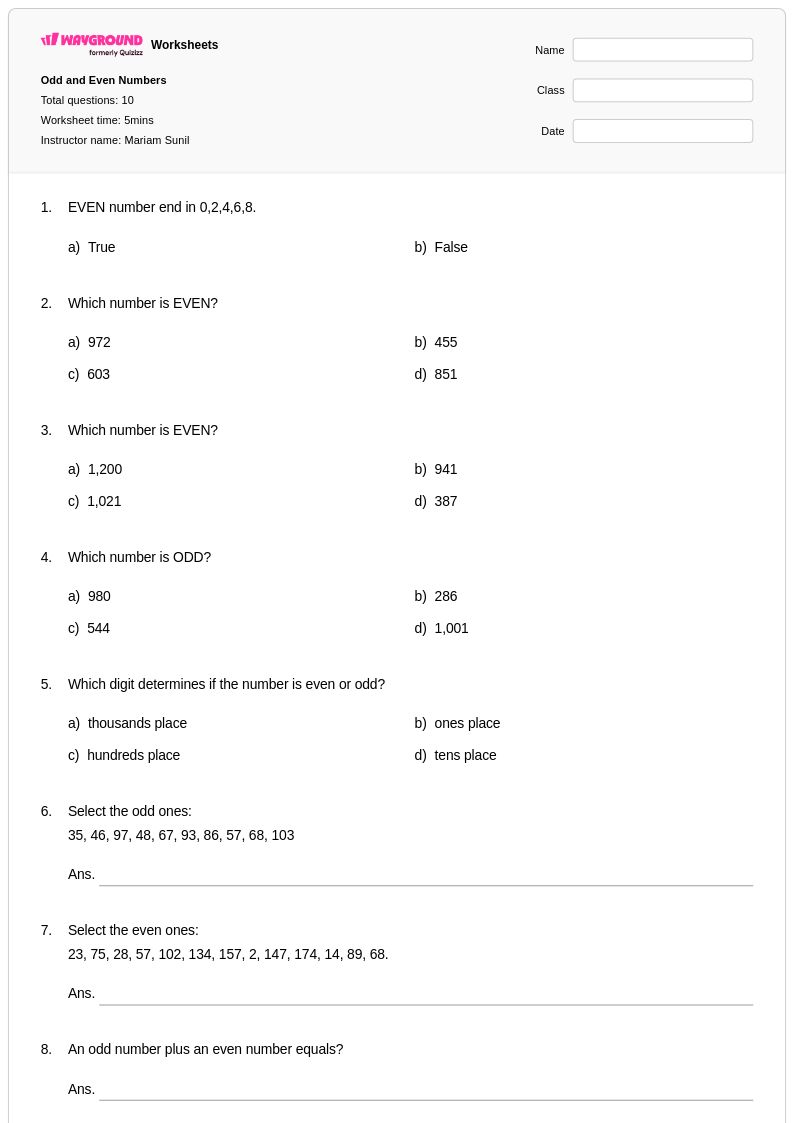
10 Q
4th
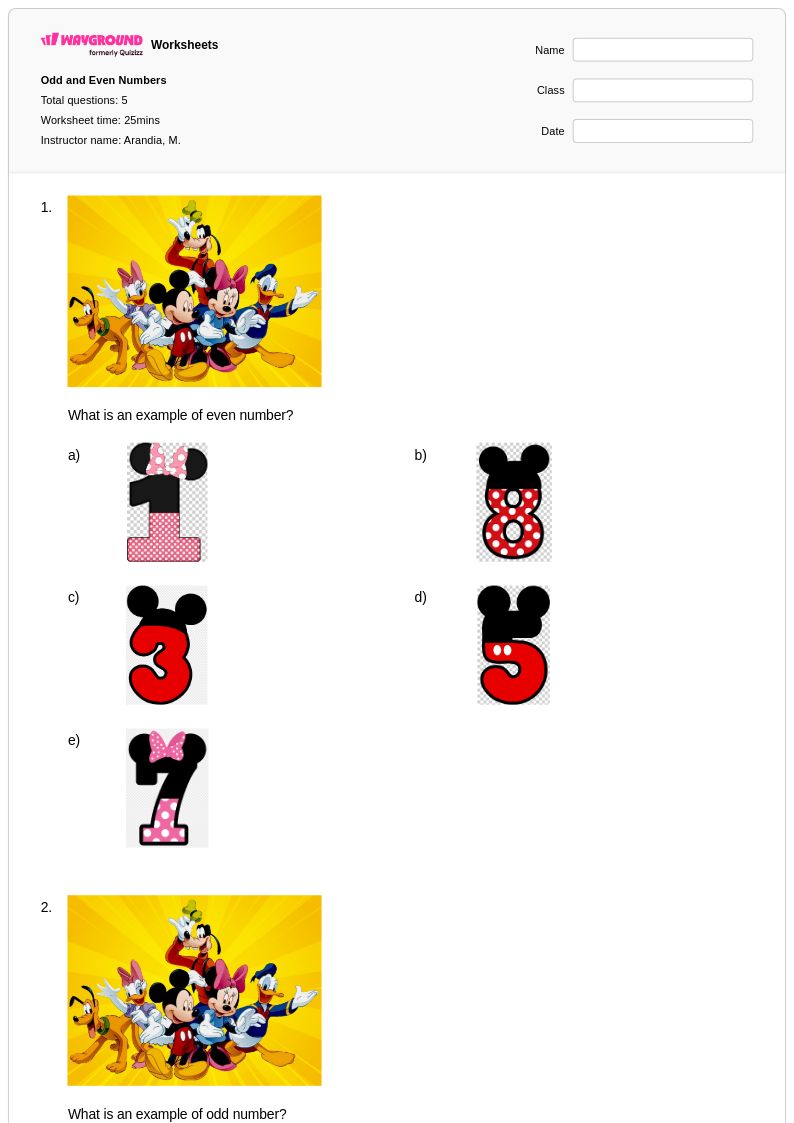
5 Q
2nd
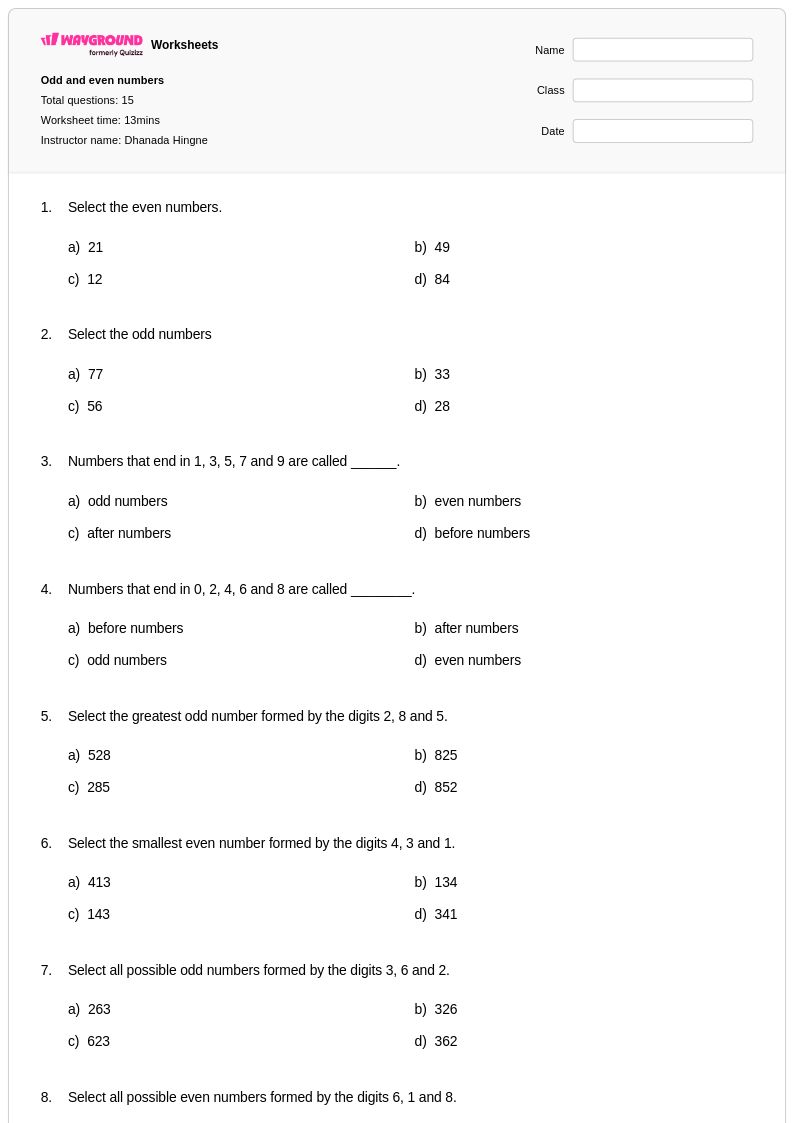
15 Q
2nd
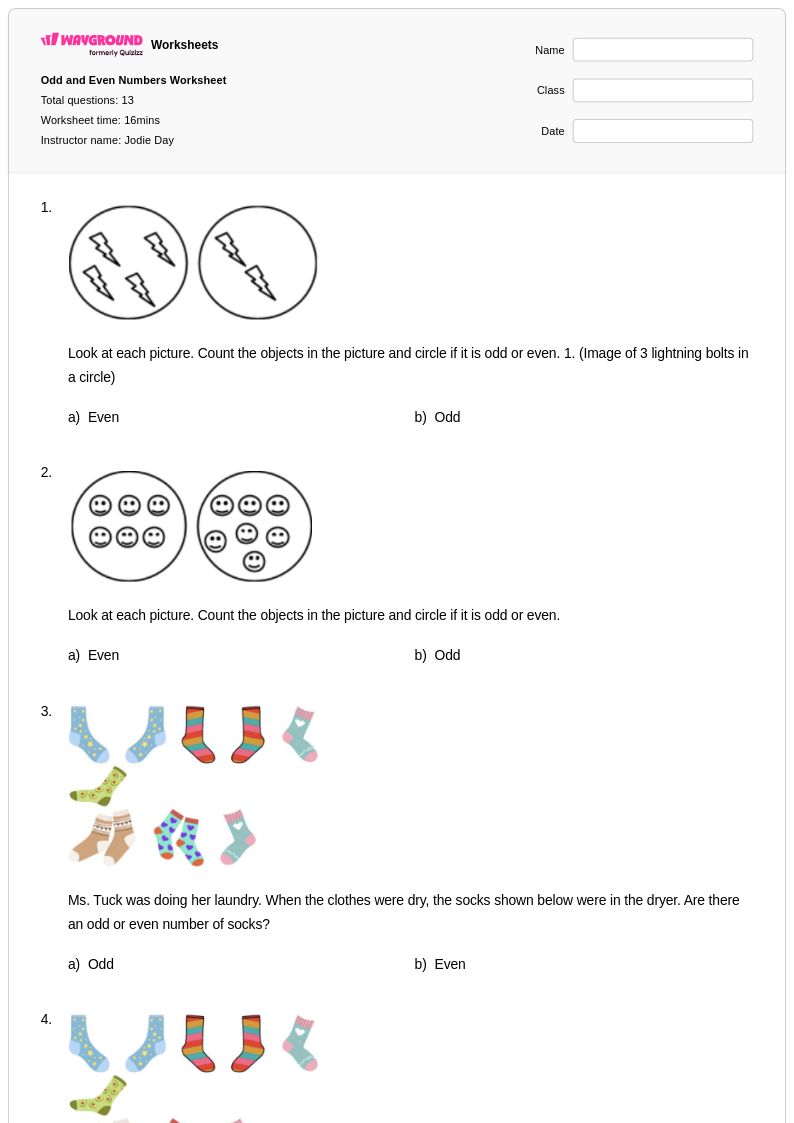
13 Q
2nd
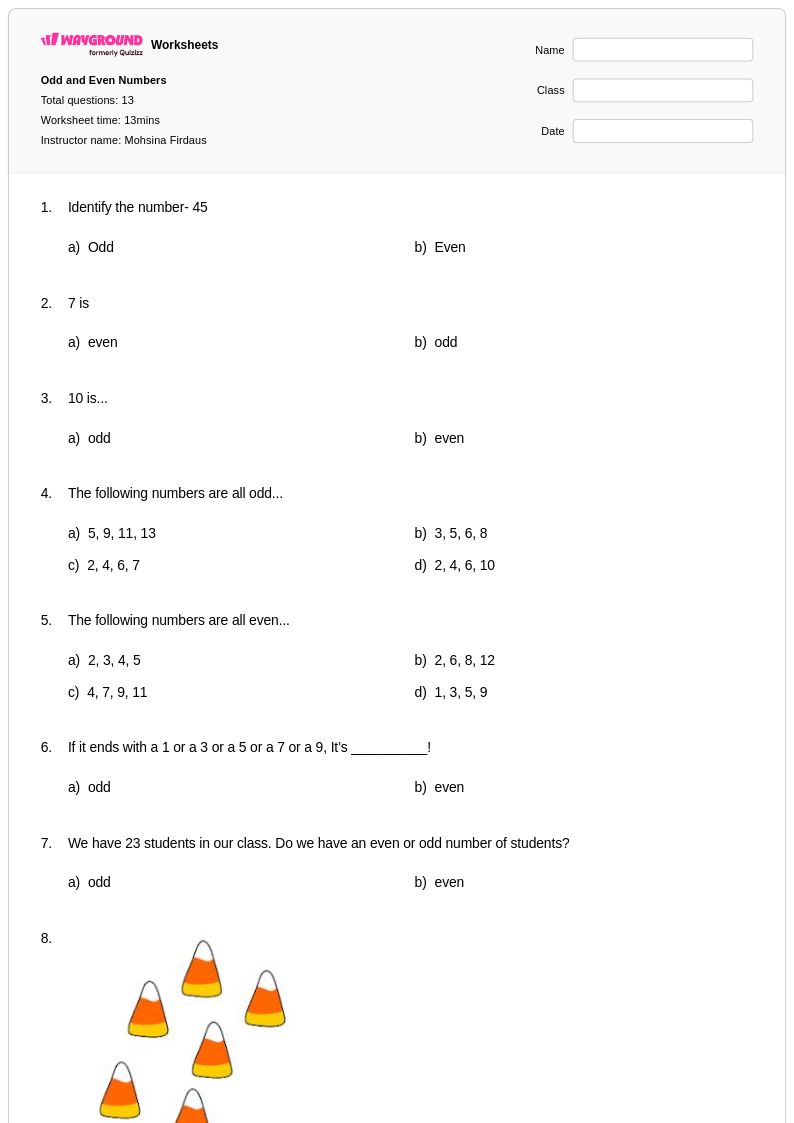
13 Q
1st
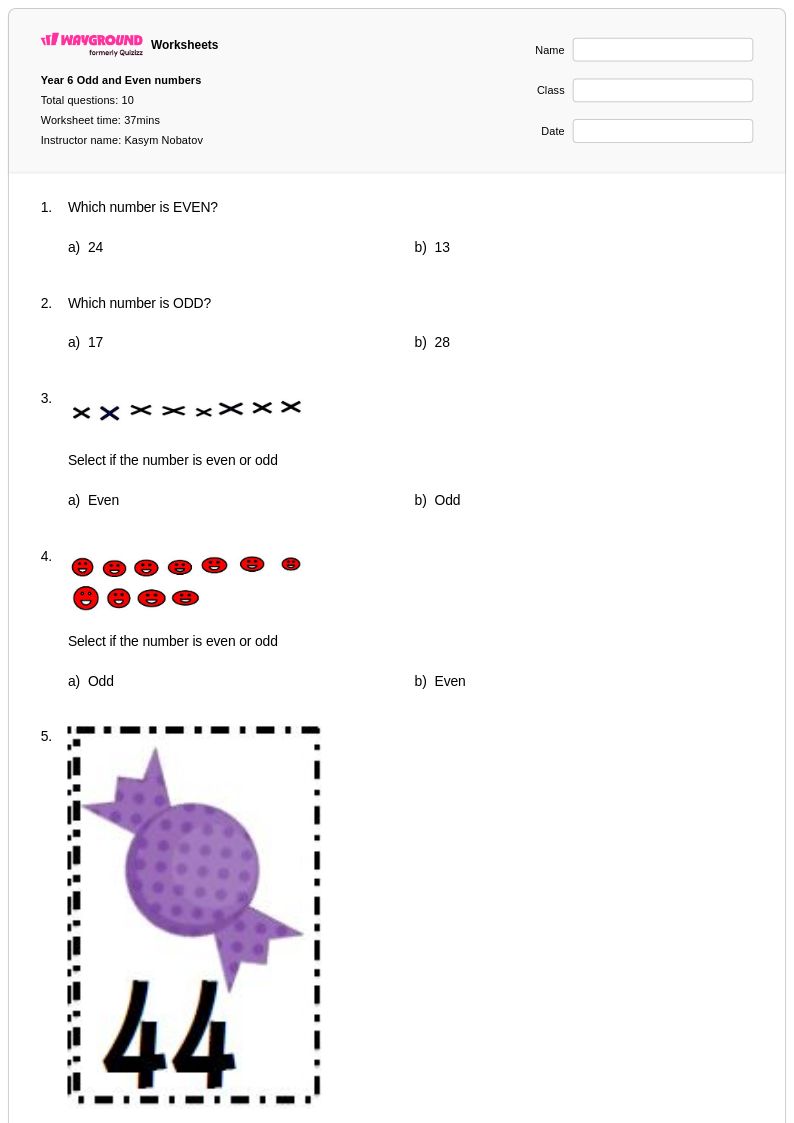
10 Q
4th - 5th
12 Q
2nd
10 Q
4th - 6th
10 Q
3rd
12 Q
3rd
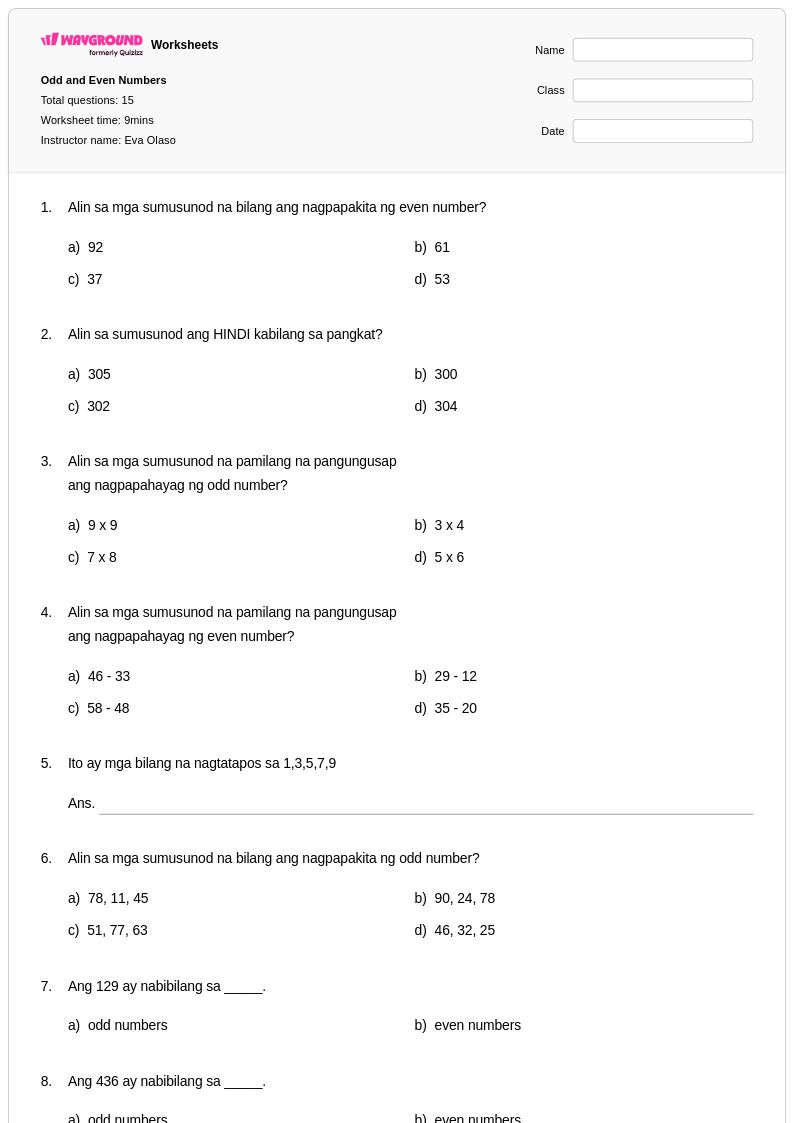
15 Q
3rd
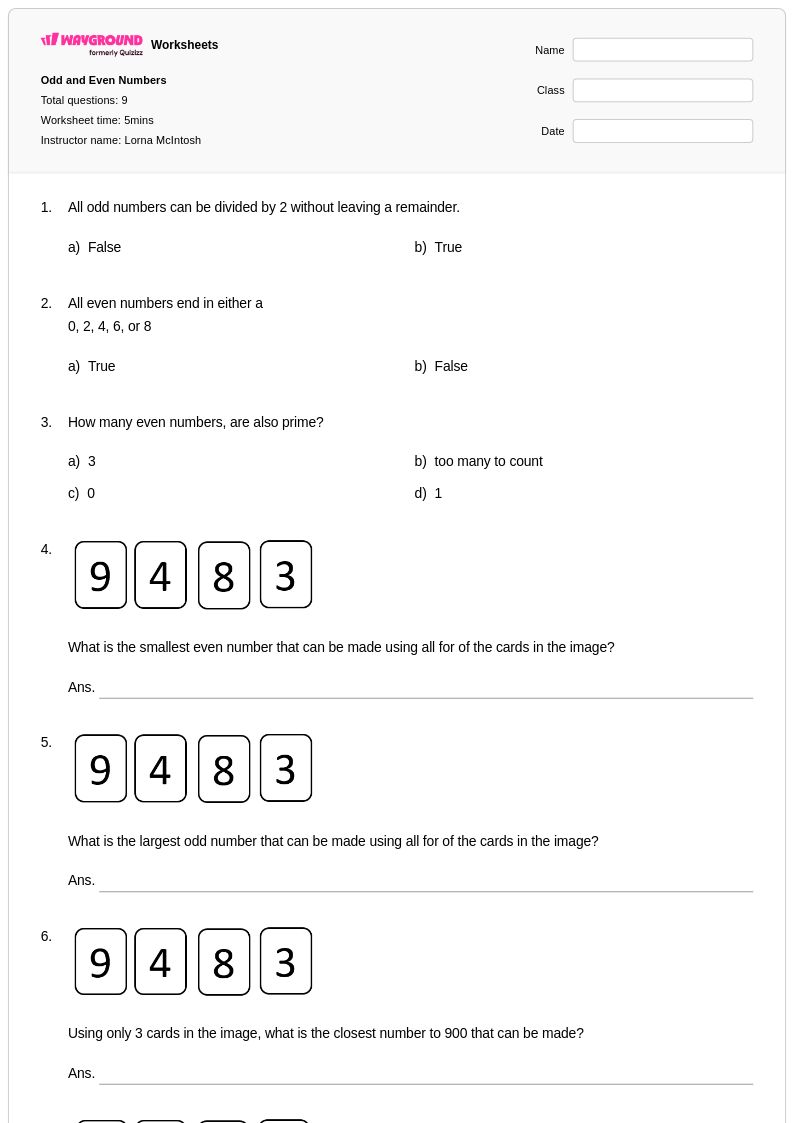
9 Q
3rd
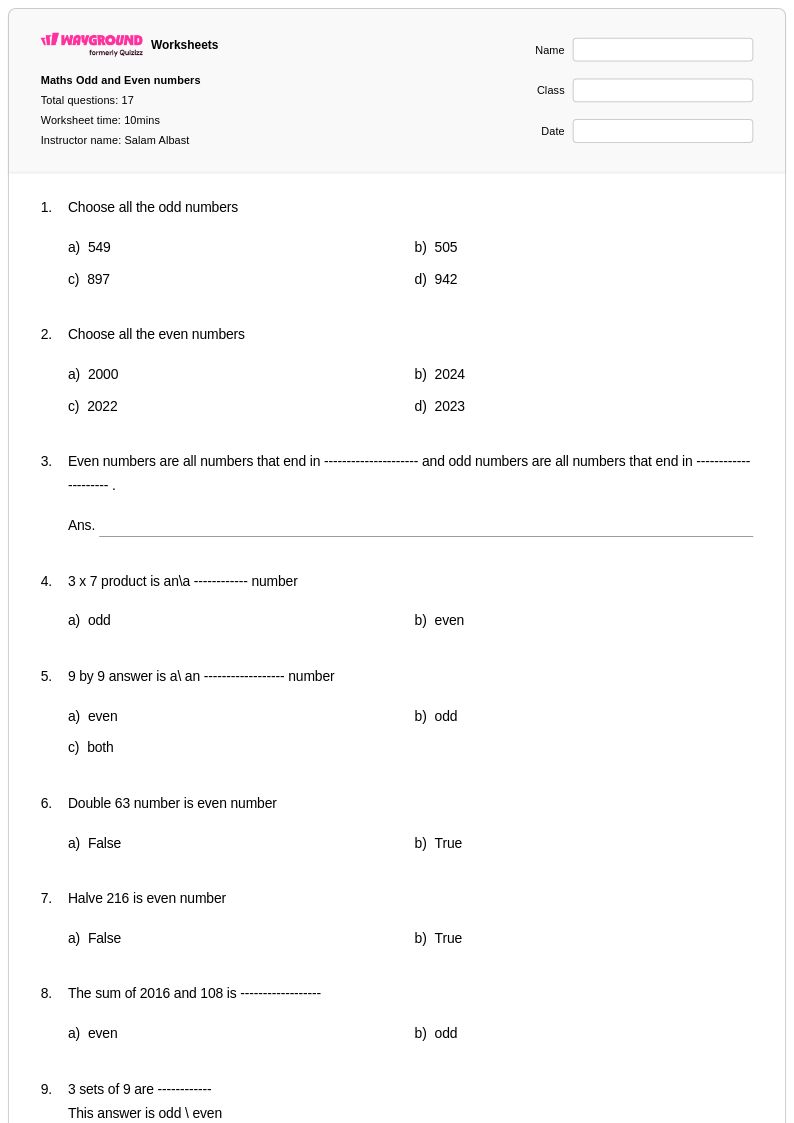
17 Q
3rd
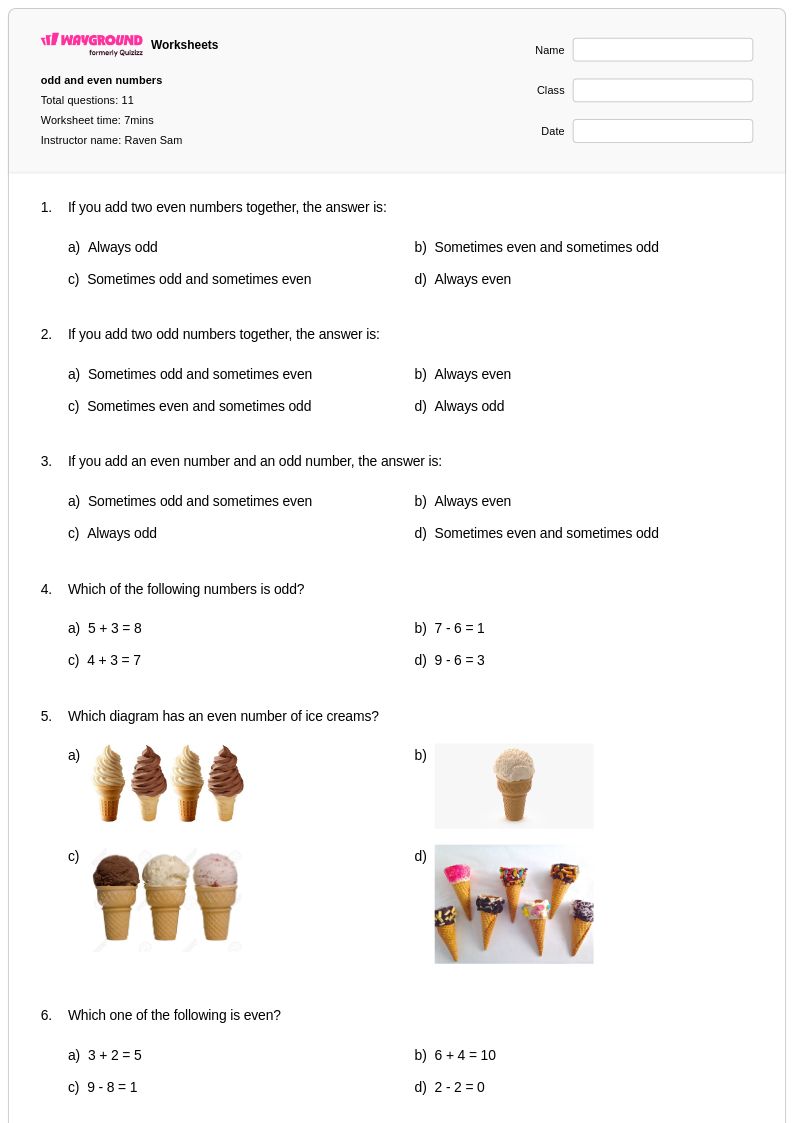
11 Q
1st - 2nd
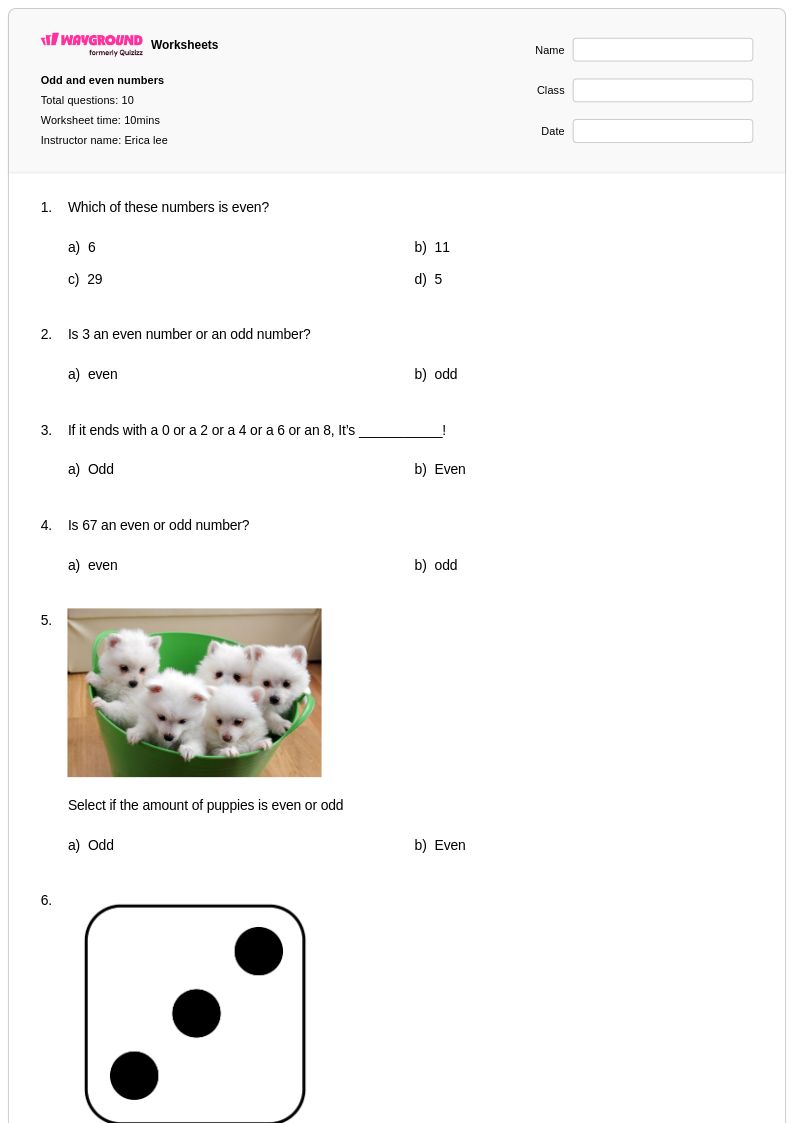
10 Q
1st - 2nd
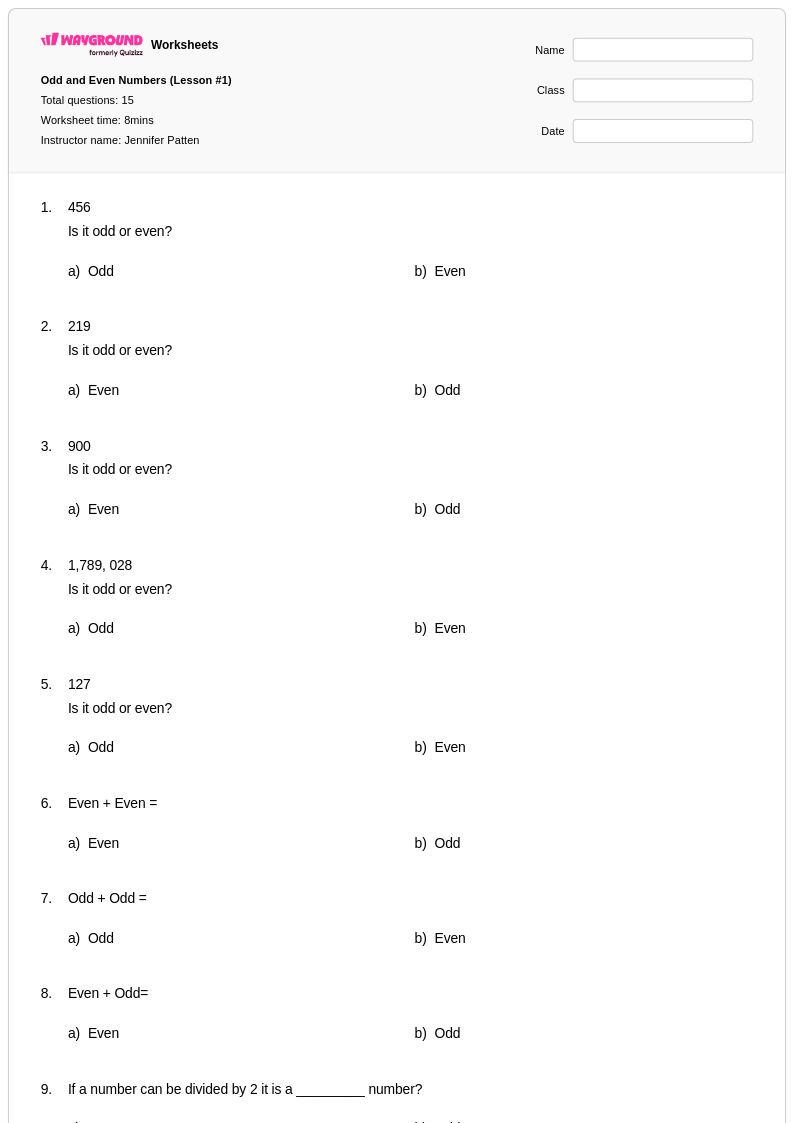
15 Q
6th
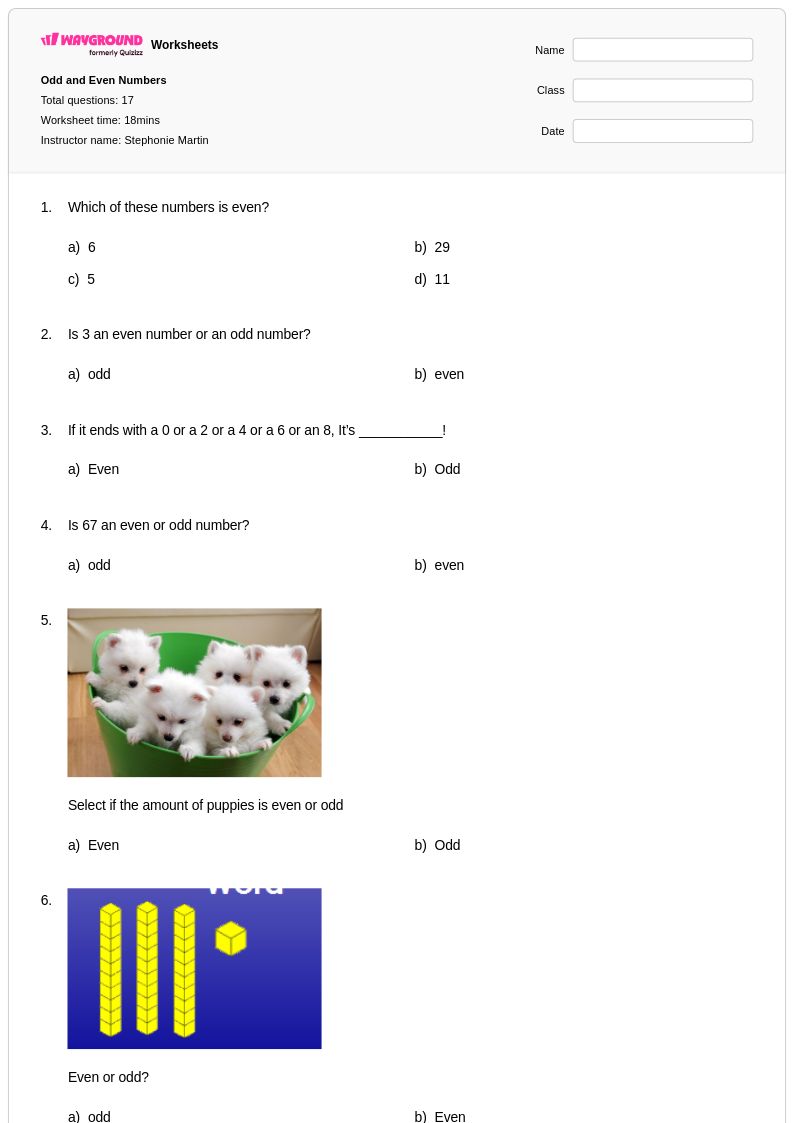
17 Q
1st - 3rd
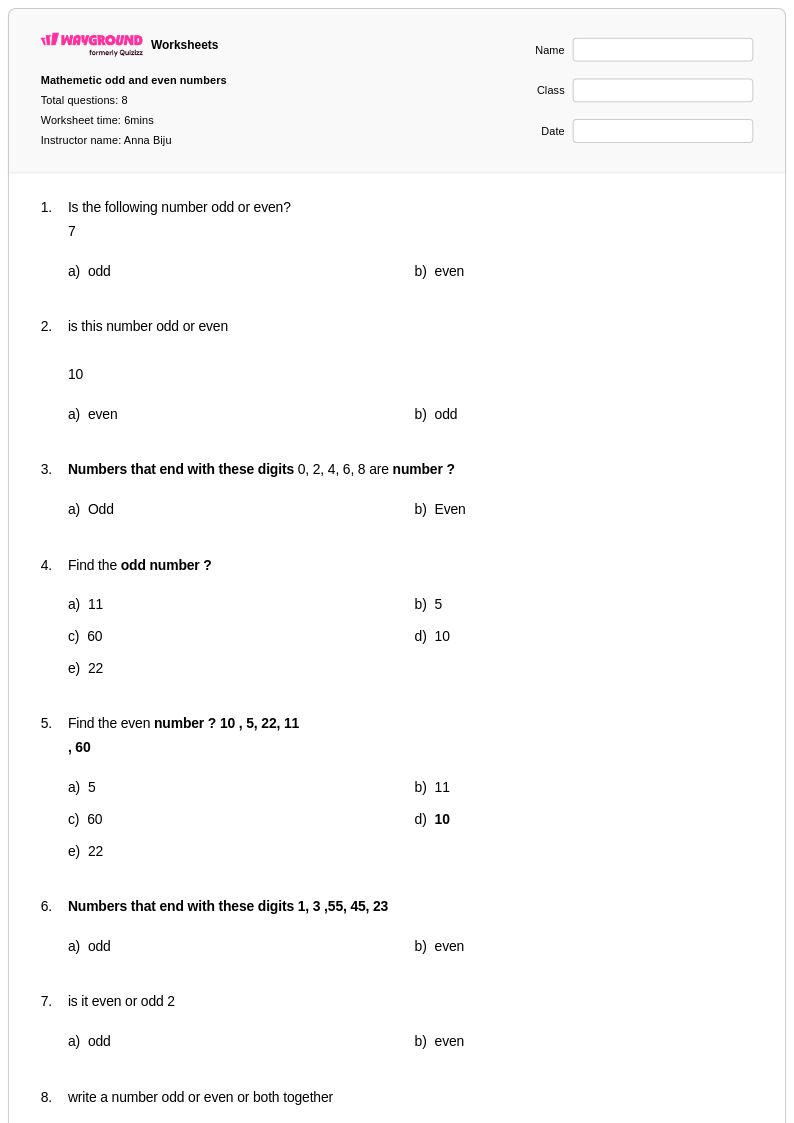
8 Q
2nd
Explore Worksheets by Subjects
Explore printable Odd and Even Numbers worksheets
Odd and even numbers worksheets available through Wayground (formerly Quizizz) provide students with essential practice in recognizing and classifying number patterns based on divisibility by two. These comprehensive printables strengthen fundamental number sense skills by helping students identify whether whole numbers are odd or even through various methods, including visual representations, number line activities, and pattern recognition exercises. The practice problems guide learners to understand that even numbers end in 0, 2, 4, 6, or 8 and can be divided evenly by two, while odd numbers end in 1, 3, 5, 7, or 9 and leave a remainder when divided by two. Each worksheet comes with a detailed answer key in pdf format, enabling independent study and immediate feedback for both students and educators working to reinforce these critical mathematical concepts.
Wayground (formerly Quizizz) supports mathematics educators with an extensive collection of teacher-created odd and even number resources, drawing from millions of high-quality worksheets that can be easily searched and filtered to match specific classroom needs. The platform's robust differentiation tools allow teachers to customize difficulty levels and problem types, ensuring appropriate challenges for diverse learners while maintaining alignment with mathematical standards. These versatile materials are available in both printable pdf format and interactive digital versions, giving educators flexibility in delivery methods for lesson planning, targeted remediation sessions, and enrichment activities. Teachers can efficiently locate resources that address specific skill gaps in number pattern recognition, streamline preparation time, and provide consistent practice opportunities that build student confidence in fundamental number theory concepts.
FAQs
How do I teach odd and even numbers?
What exercises help students practice identifying odd and even numbers?
What are common mistakes when learning odd and even numbers?
How can I use this odd and even numbers worksheet?
How does learning odd and even numbers fit into the curriculum?
How can I differentiate this topic for diverse learners?