Enhance student understanding of partner numbers with Wayground's comprehensive collection of free worksheets and printables, featuring engaging practice problems and complete answer keys to build foundational number sense skills.
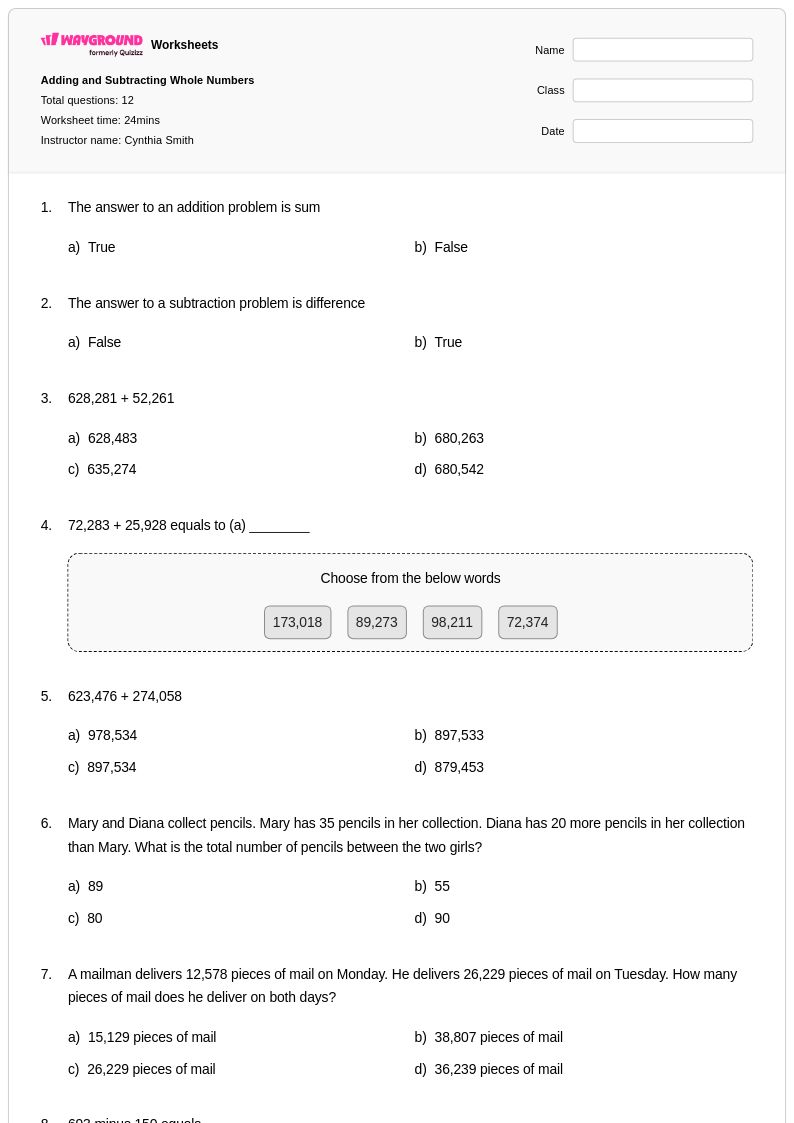
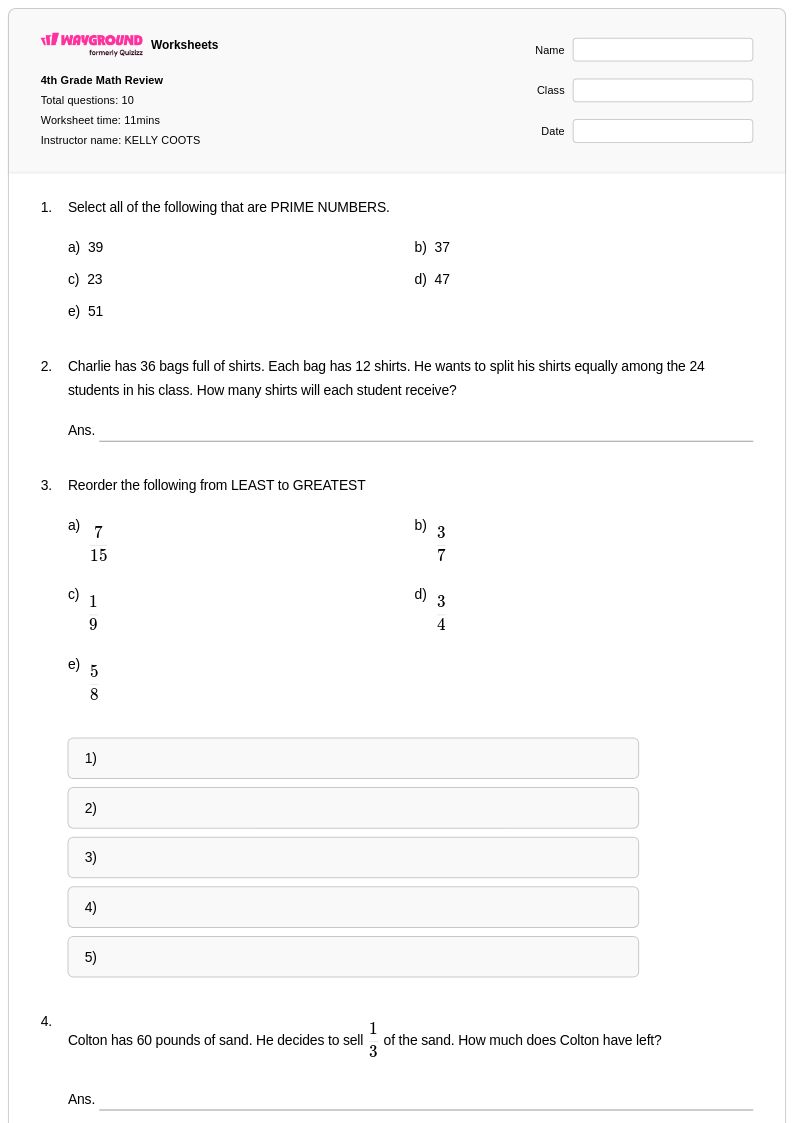
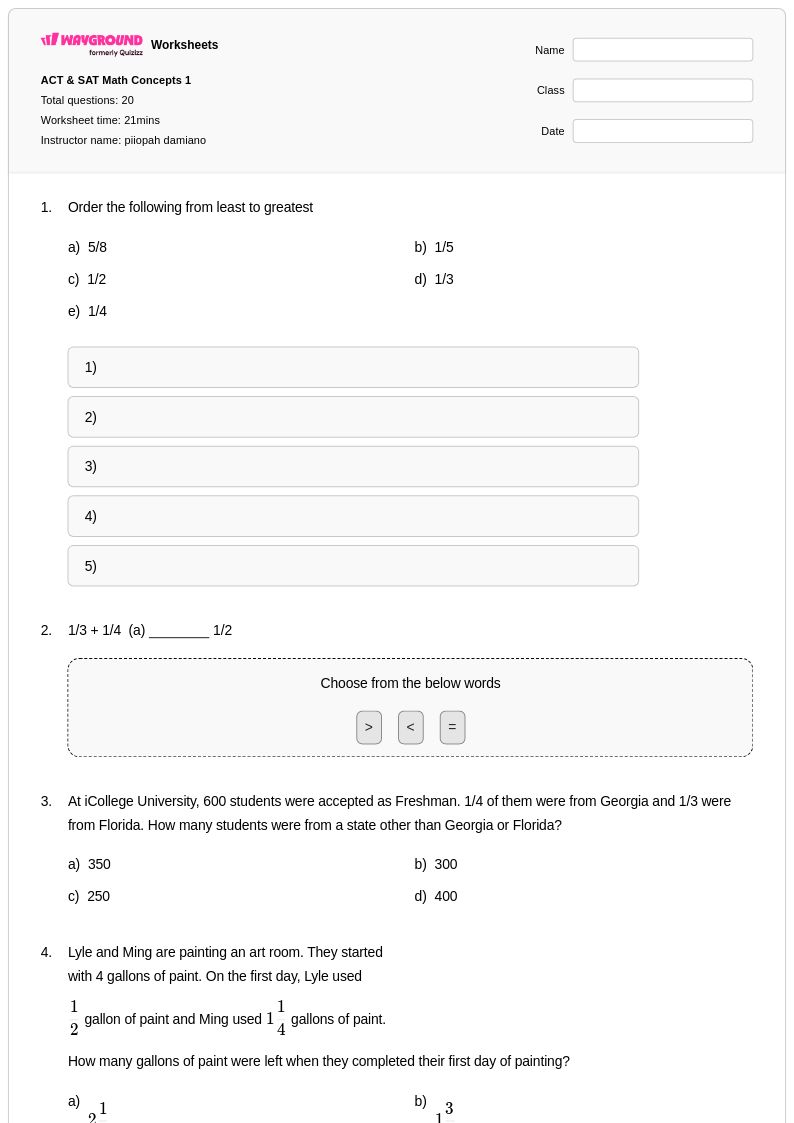
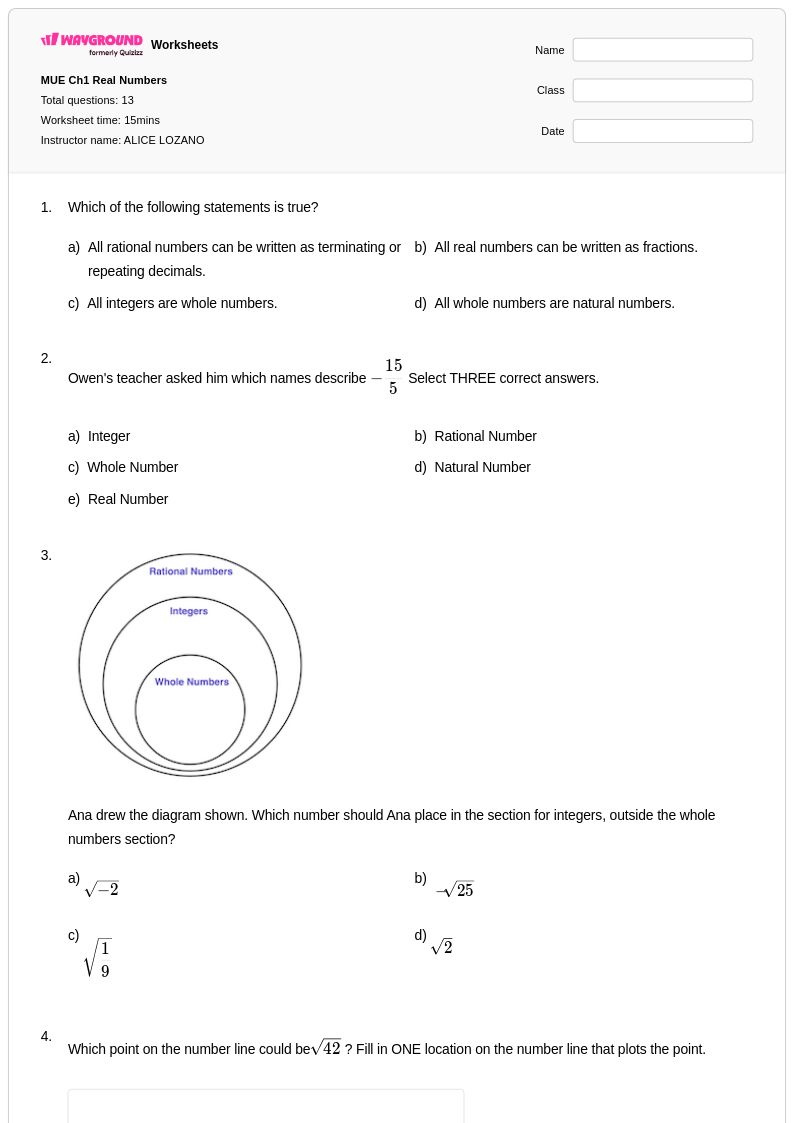
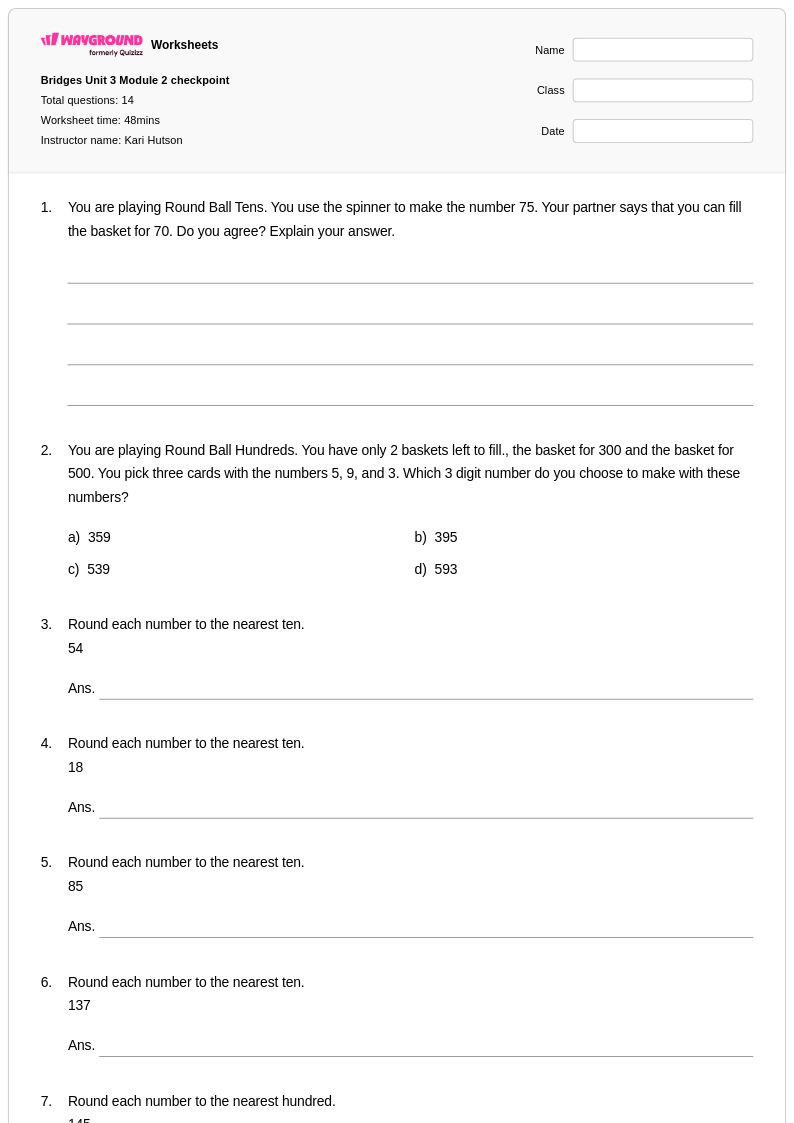
Partner numbers worksheets available through Wayground (formerly Quizizz) provide essential foundational practice for developing strong number sense skills. These comprehensive resources focus on helping students understand number relationships by identifying pairs of numbers that combine to make specific target sums, such as numbers that add to 10, 20, or 100. The worksheets strengthen critical mathematical thinking by requiring students to recognize patterns, develop mental math strategies, and build fluency with basic addition and subtraction facts. Each collection includes answer keys for efficient grading, free printables in convenient pdf format, and practice problems designed to reinforce automatic recall of these fundamental number partnerships that serve as building blocks for more advanced mathematical concepts.
Wayground (formerly Quizizz) supports educators with millions of teacher-created partner numbers resources that can be easily searched and filtered to match specific classroom needs and learning objectives. The platform's robust collection includes materials aligned to mathematical standards, with differentiation tools that allow teachers to customize worksheets for students at varying skill levels. These flexible resources are available in both printable pdf format for traditional classroom use and digital formats for interactive learning experiences. Teachers can efficiently plan lessons, provide targeted remediation for struggling learners, offer enrichment activities for advanced students, and deliver consistent skill practice that builds the number sense foundation essential for mathematical success across all grade levels.
FAQs
How do I teach partner numbers?
Start with concrete objects. Ask students to find all the ways to make a group of 5 with two different colors of blocks (e.g., 1 red and 4 blue, 2 red and 3 blue). Gradually move to pictorial representations like ten frames and number bonds before introducing abstract number sentences. The goal is to help students see that numbers can be broken apart and put back together in different ways.
What exercises help students practice partner numbers?
Effective practice moves from concrete to abstract. Use activities like filling in number bonds, finding missing addends (4 + ? = 10), and identifying pairs that sum to benchmark numbers like 10, 20, or 100. Timed drills can build automaticity once the concept is understood.
What are common mistakes students make with partner numbers?
A frequent error is memorizing facts like "3 and 7 make 10" without understanding the part-whole relationship. This becomes clear when they can't apply the concept to a new situation, like finding the partner for 3 to make 12. Another issue is difficulty generalizing the pattern from partners of 10 to partners of 100 (e.g., not seeing the connection between 3+7 and 30+70).
How do I use this partner numbers worksheet?
This resource is flexible for any classroom setup. You can assign it as a digital quiz on the Wayground platform or download the printable PDF for offline paper-and-pencil practice. Every worksheet includes a complete answer key for easy grading. For paper assignments, you can use the Wayground for Teachers app to quickly scan and grade student work.
How do partner numbers fit into the math curriculum?
Partner numbers are a key component of early numeracy in curricula aligned with Common Core. In Kindergarten and Grade 1, students decompose numbers into pairs (e.g., partners to 10), which directly supports the 'make a ten' strategy for addition. This foundational skill is essential for developing fluency with addition and subtraction in later grades.
How can I differentiate practice for partner numbers?
For students needing support, use Wayground's 'Reduced answer choices' feature on digital assignments to lower cognitive load. For those ready for a challenge, create an alternate version of the worksheet that asks them to find partners for larger numbers (like 50 or 100) or to find three numbers that make a target sum.