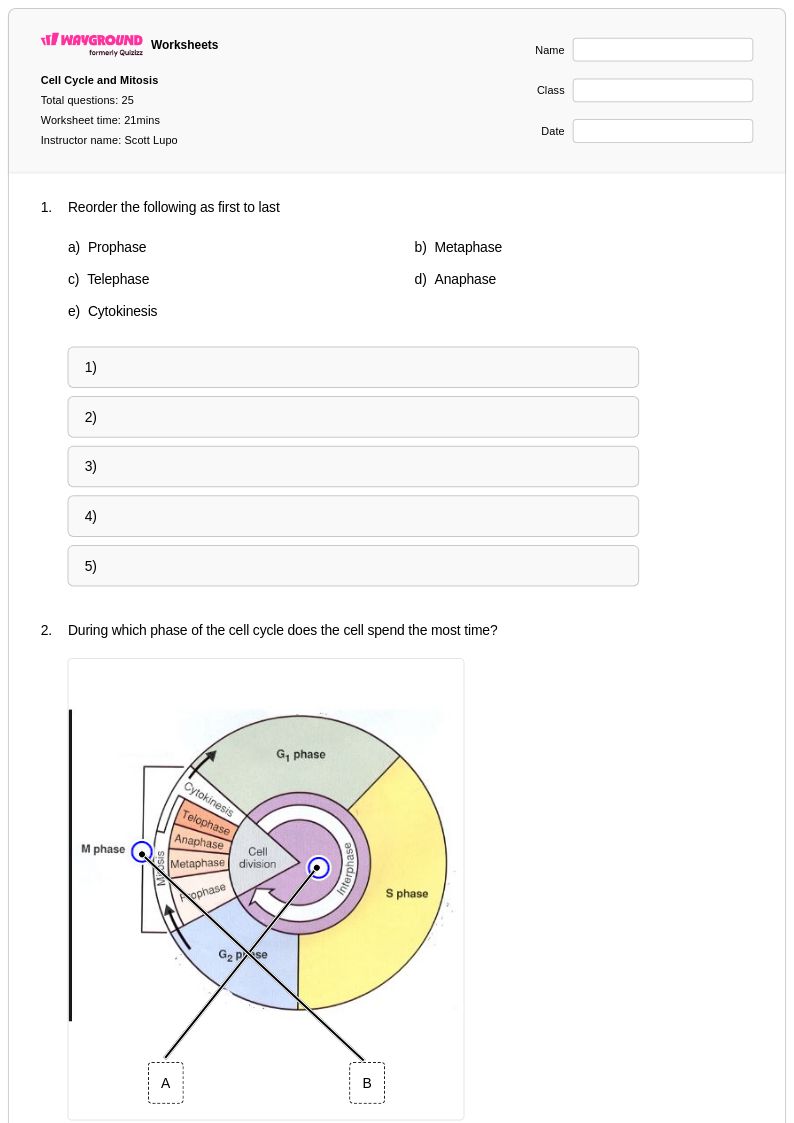
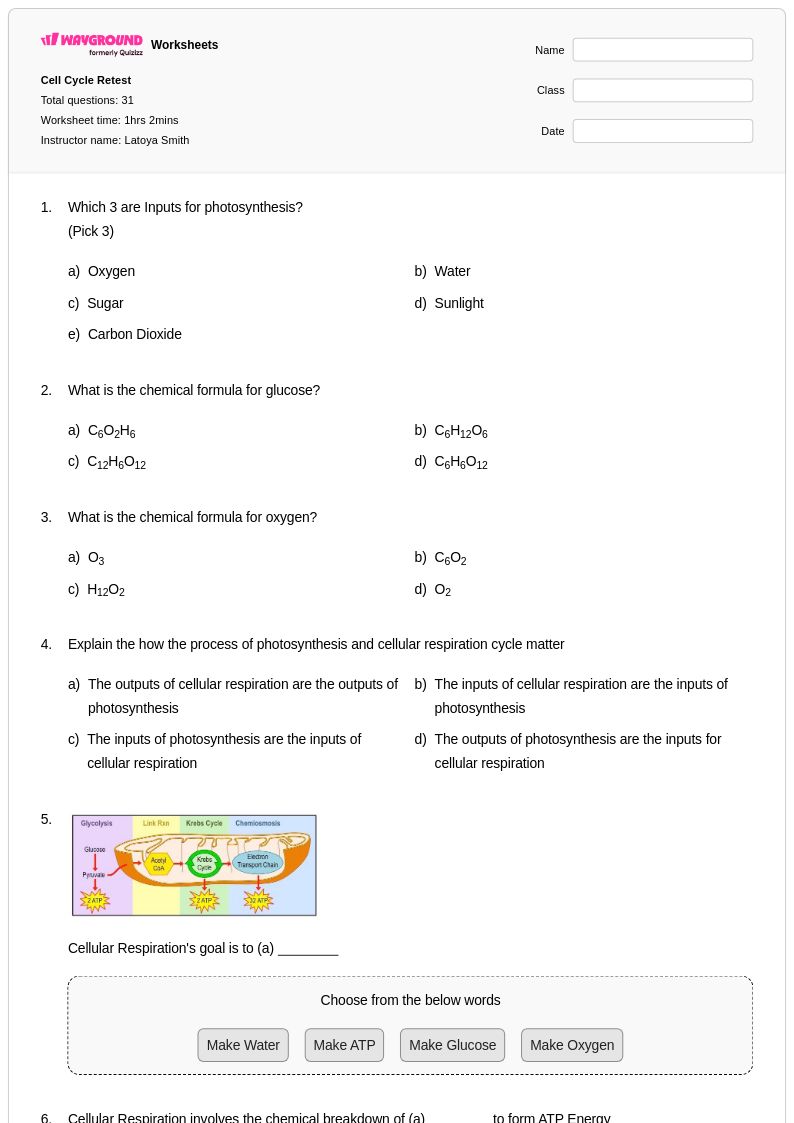
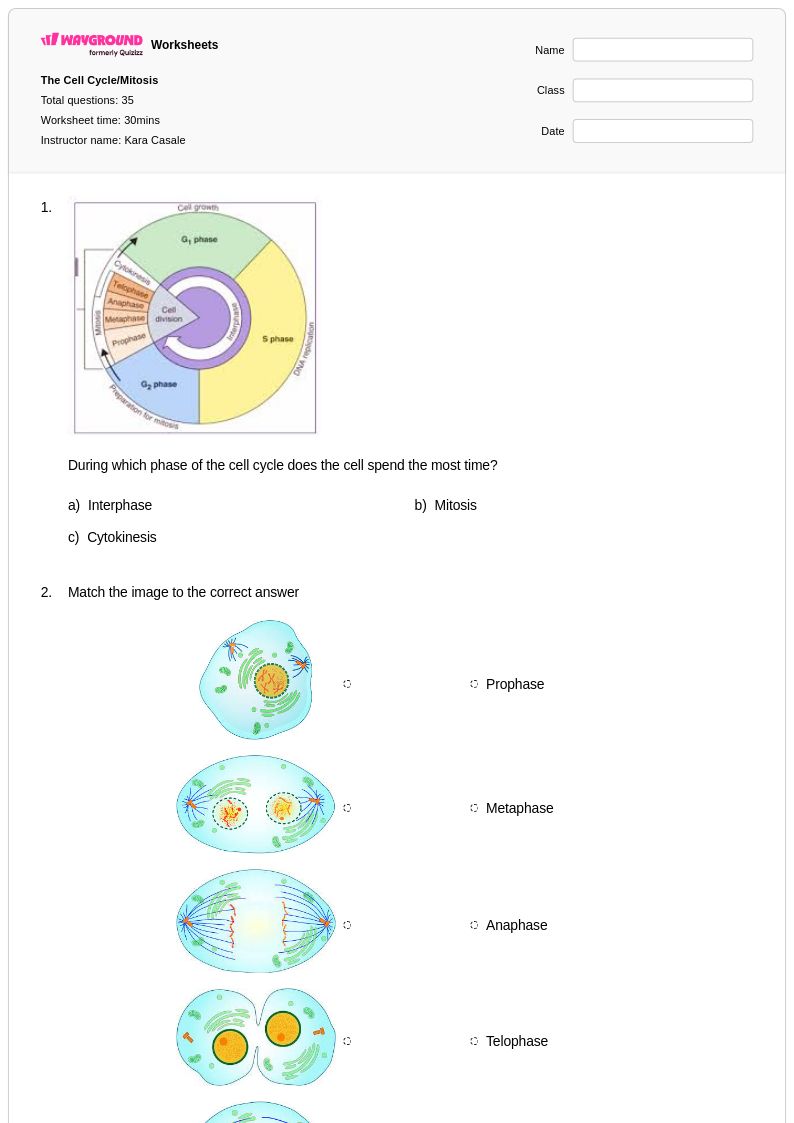
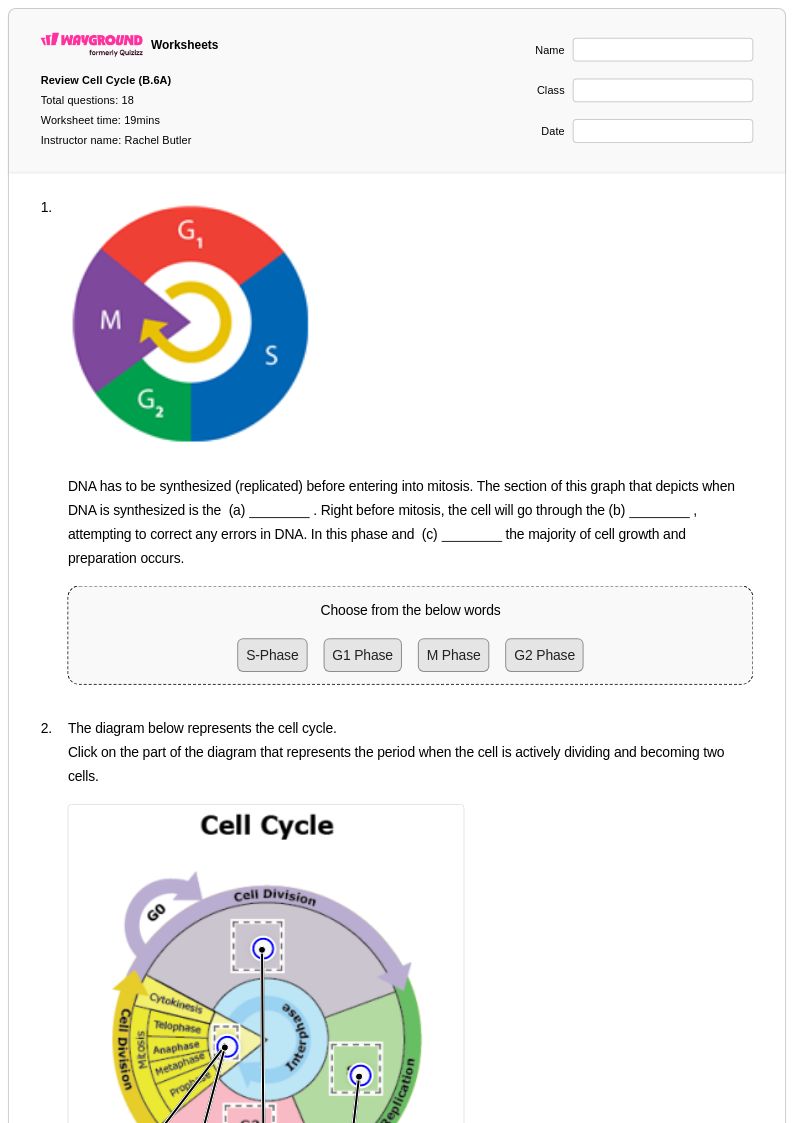
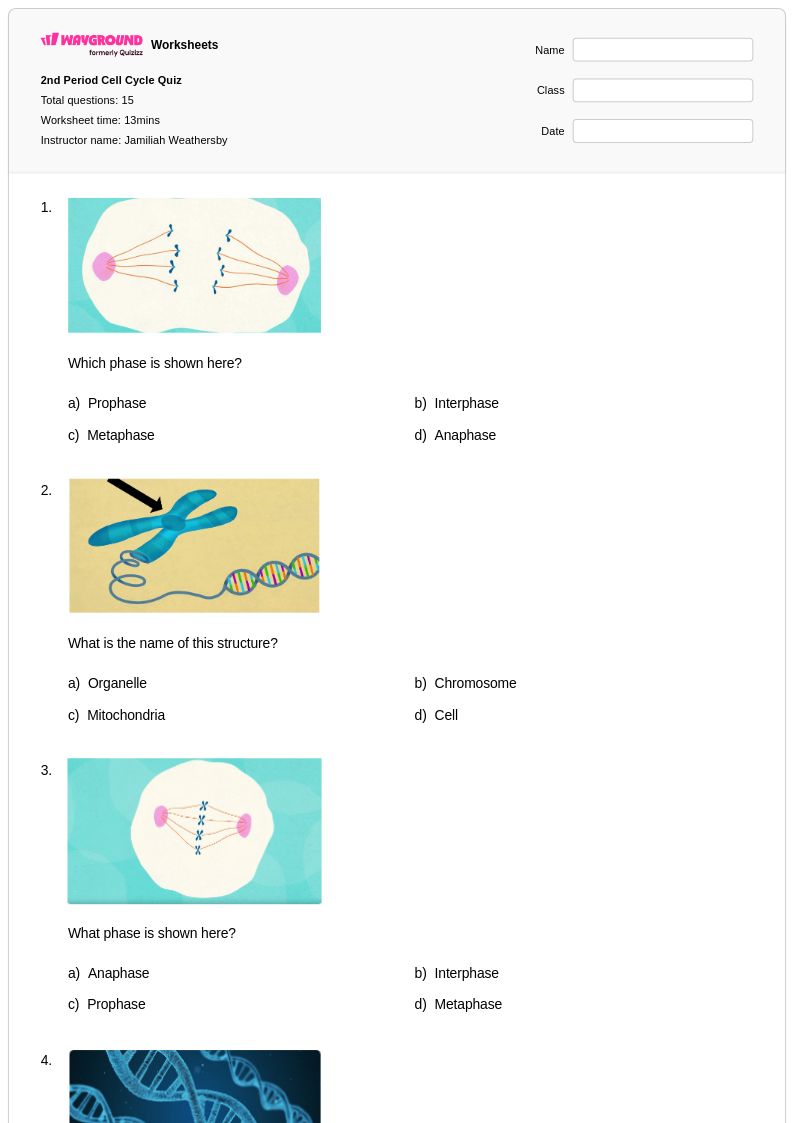
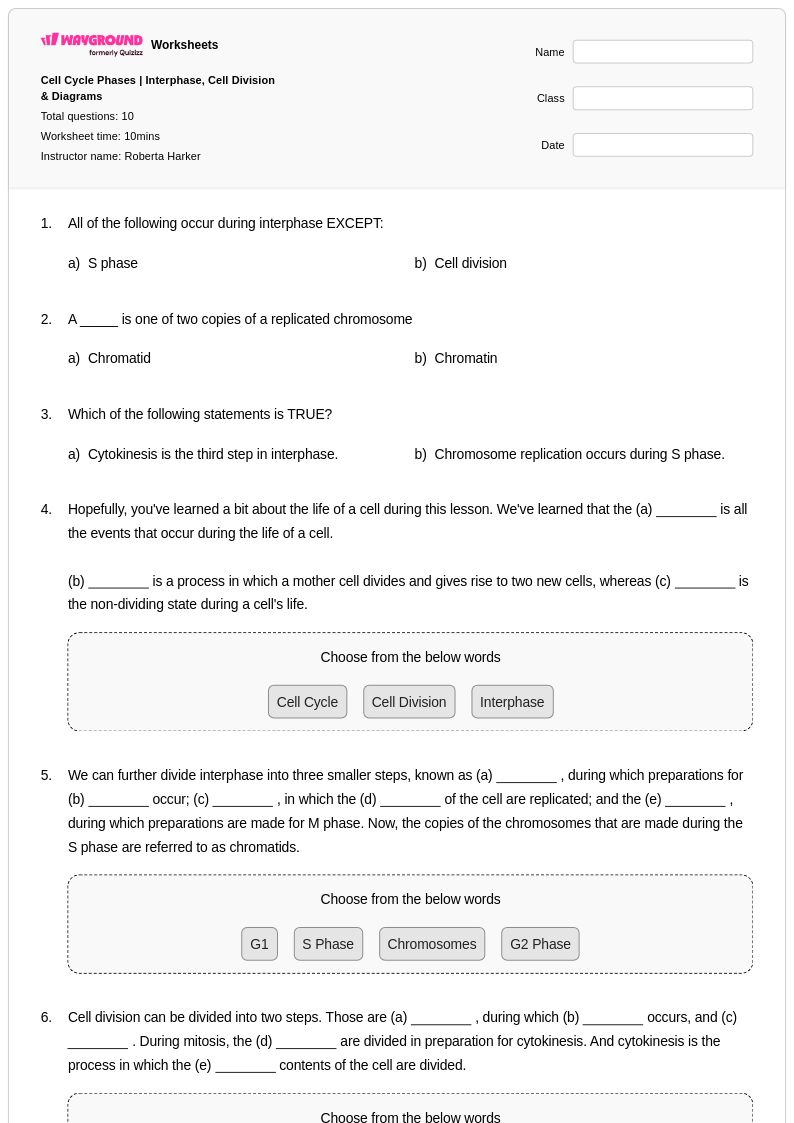
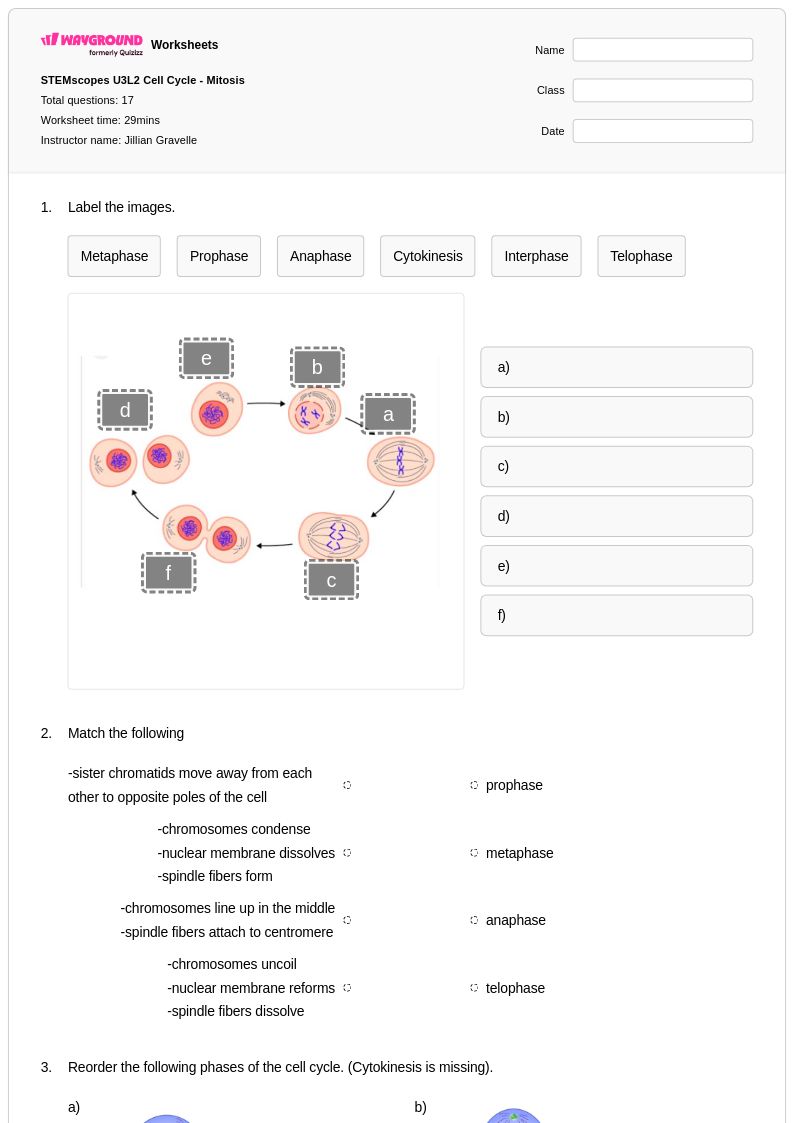
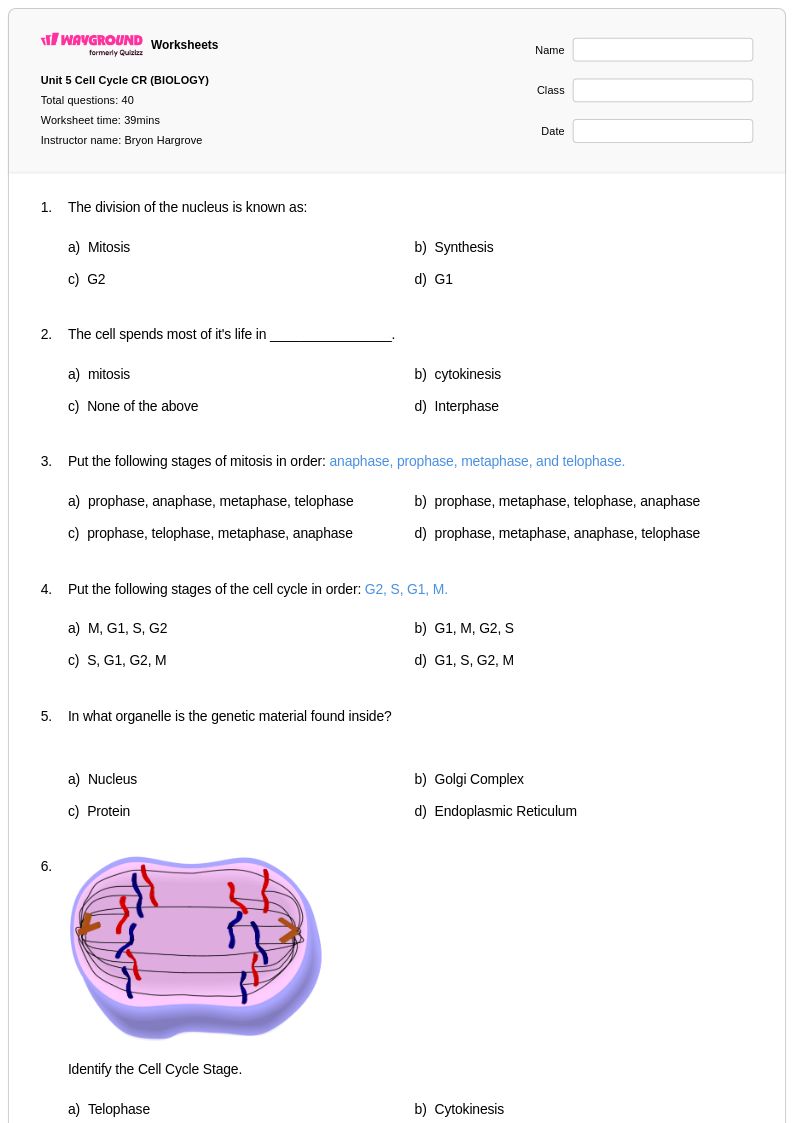
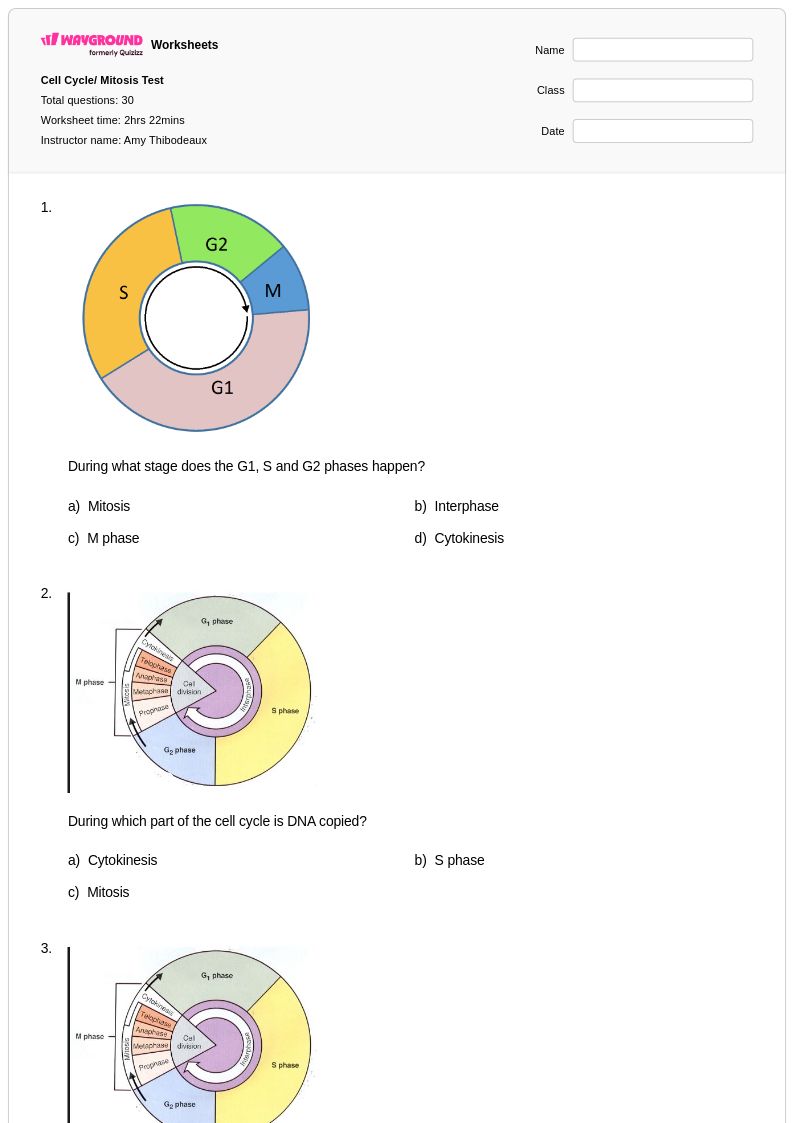
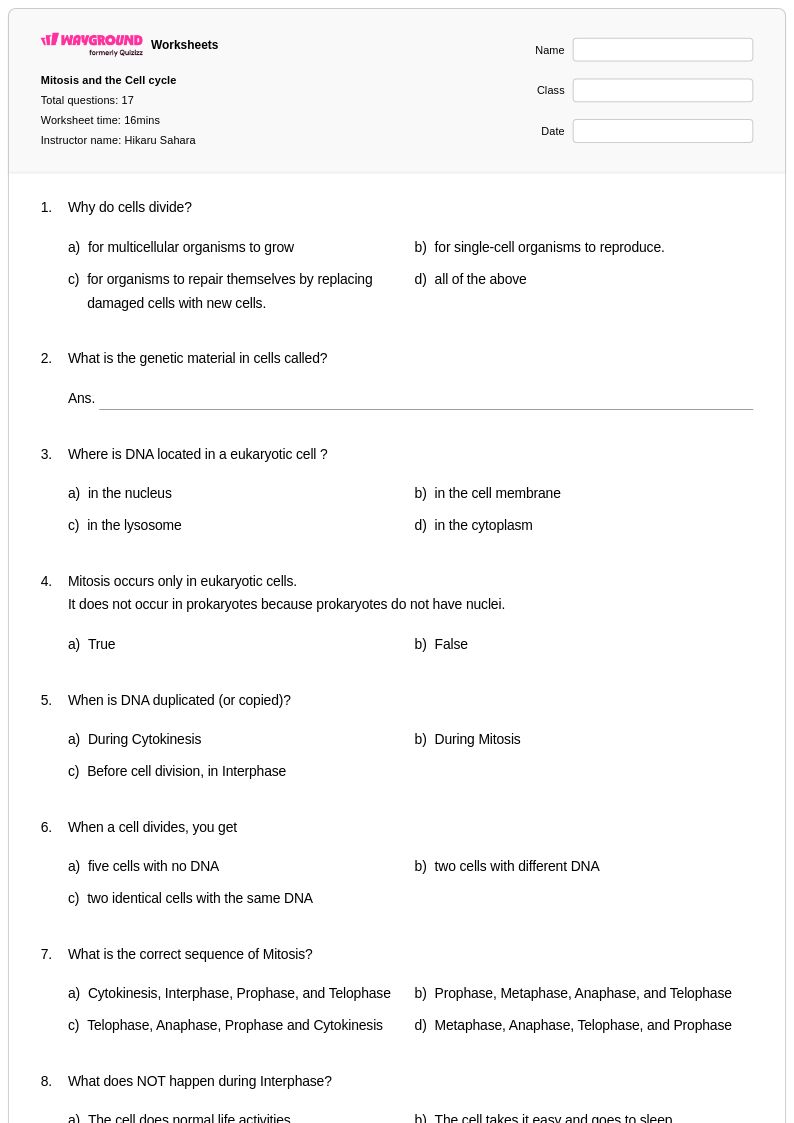
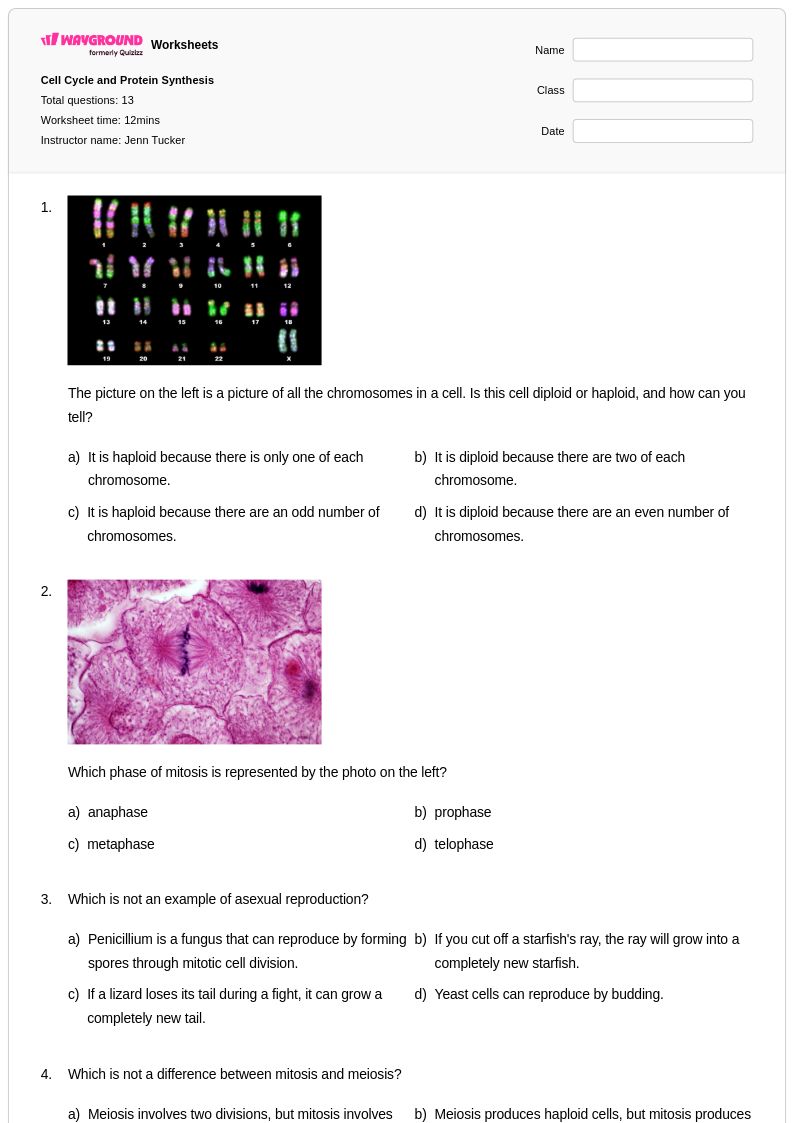
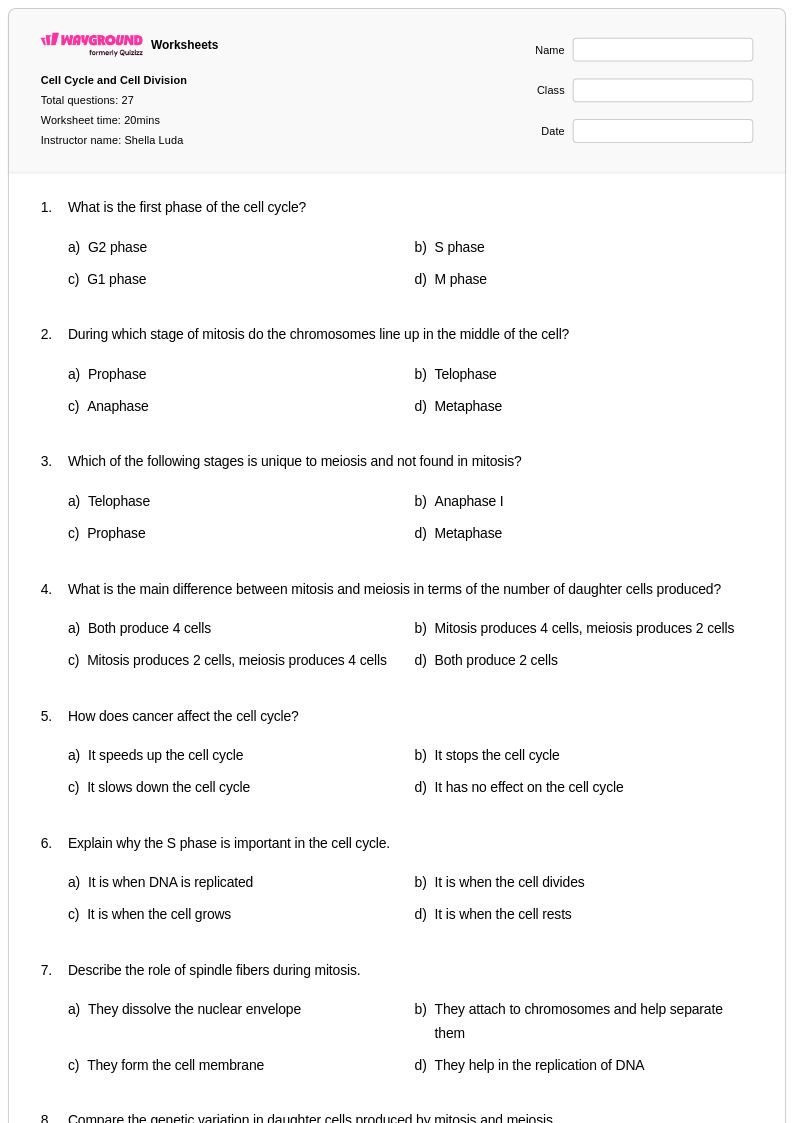
Explore Wayground's comprehensive cell cycle worksheets and printables that help students master mitosis, meiosis, and cellular reproduction through engaging practice problems, free PDF resources, and detailed answer keys.
Cell cycle worksheets available through Wayground (formerly Quizizz) provide comprehensive resources for students to master the fundamental processes of cellular division and growth. These expertly designed worksheets guide learners through the intricate phases of mitosis and meiosis, helping them understand checkpoints, regulatory mechanisms, and the molecular events that drive cellular reproduction. Students develop critical analytical skills by examining chromosome behavior, identifying phase characteristics, and solving practice problems that reinforce key concepts like DNA replication, spindle formation, and cytokinesis. Each worksheet includes detailed answer keys and is available as free printable PDFs, enabling educators to seamlessly integrate these resources into their biology curriculum while providing students with structured opportunities to practice and assess their understanding of this essential biological process.
Wayground (formerly Quizizz) empowers teachers with an extensive collection of millions of educator-created cell cycle resources that streamline lesson planning and enhance student learning outcomes. The platform's robust search and filtering capabilities allow instructors to quickly locate worksheets aligned with specific educational standards and tailored to diverse learning needs. Teachers can effortlessly customize content to support differentiated instruction, whether providing remediation for struggling students or enrichment activities for advanced learners. The flexible format options, including both digital and printable PDF versions, accommodate various classroom environments and teaching preferences. These comprehensive tools enable educators to effectively assess student progress, reinforce complex biological concepts, and provide targeted skill practice that builds deep understanding of cellular processes and their significance in living organisms.
FAQs
How do I teach the cell cycle to high school biology students?
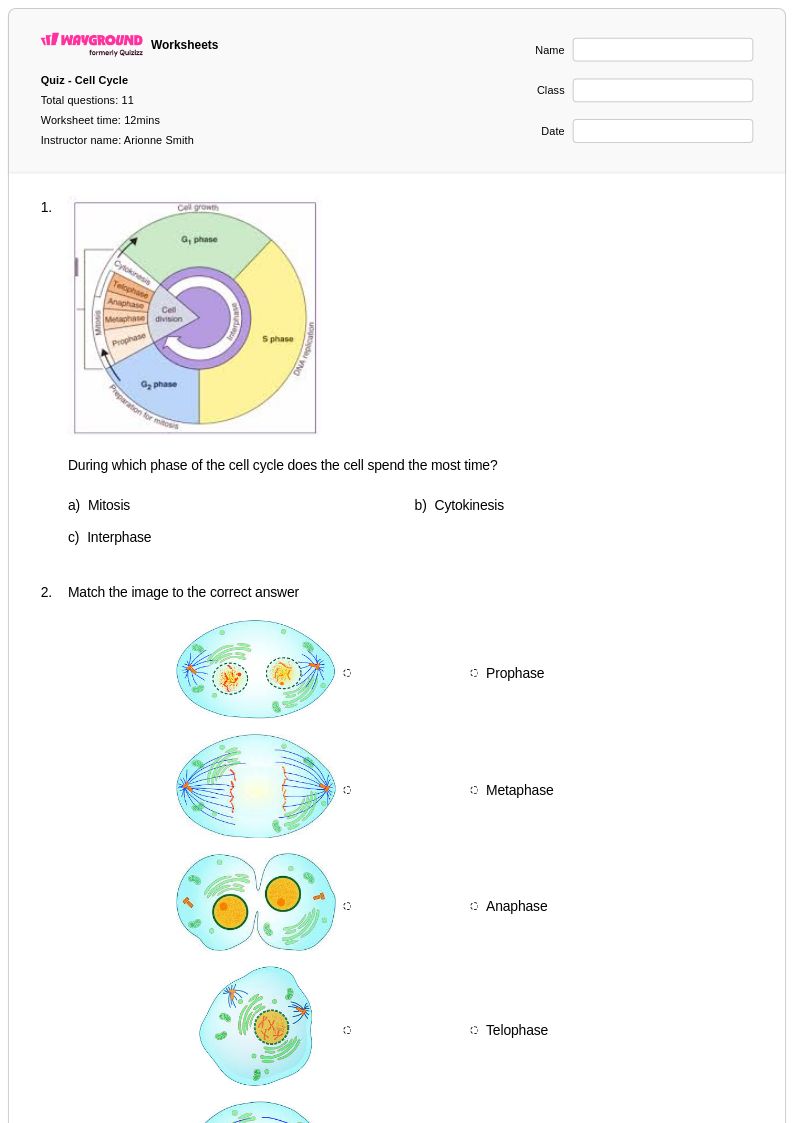
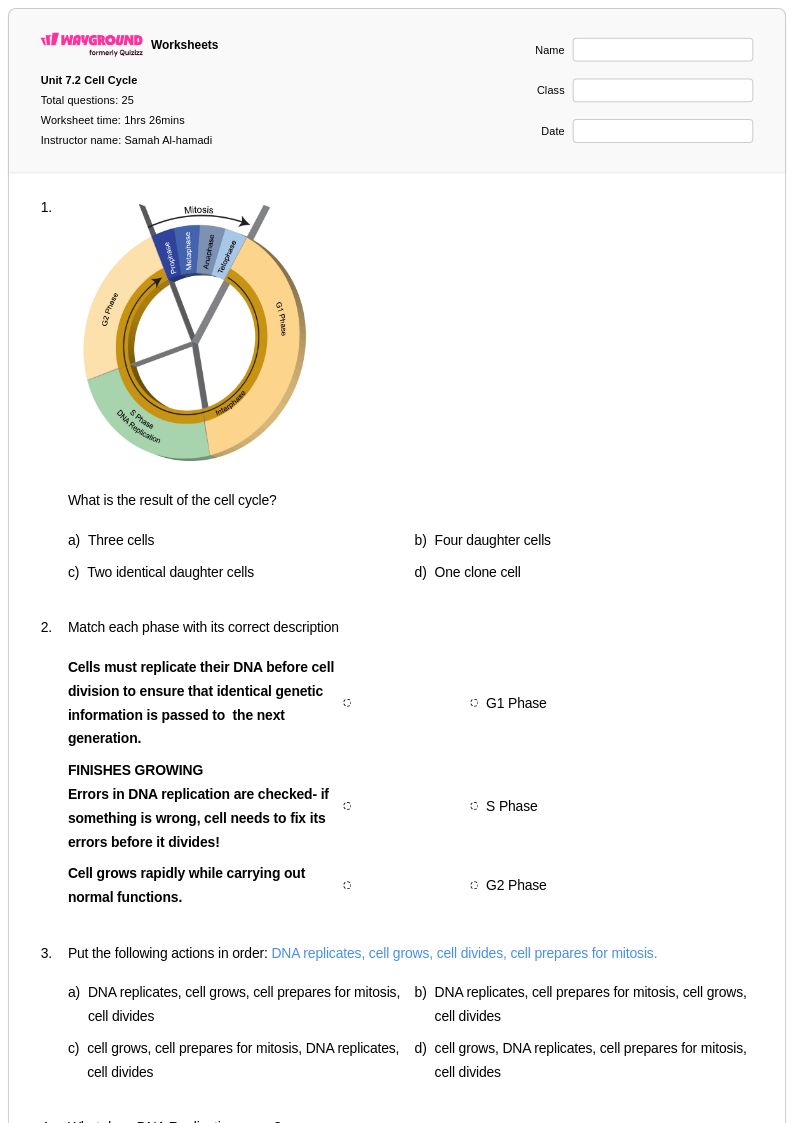
Start by grounding students in the purpose of cell division before introducing the stages sequentially: interphase (G1, S, G2) followed by mitosis and cytokinesis. Use visual aids to show chromosome behavior at each phase, then connect regulatory checkpoints to real-world contexts like cancer biology to make the content meaningful. Reinforcing each phase with labeled diagram activities and phase-identification practice helps students build accurate mental models before moving to meiosis.
What exercises help students practice identifying the phases of the cell cycle?
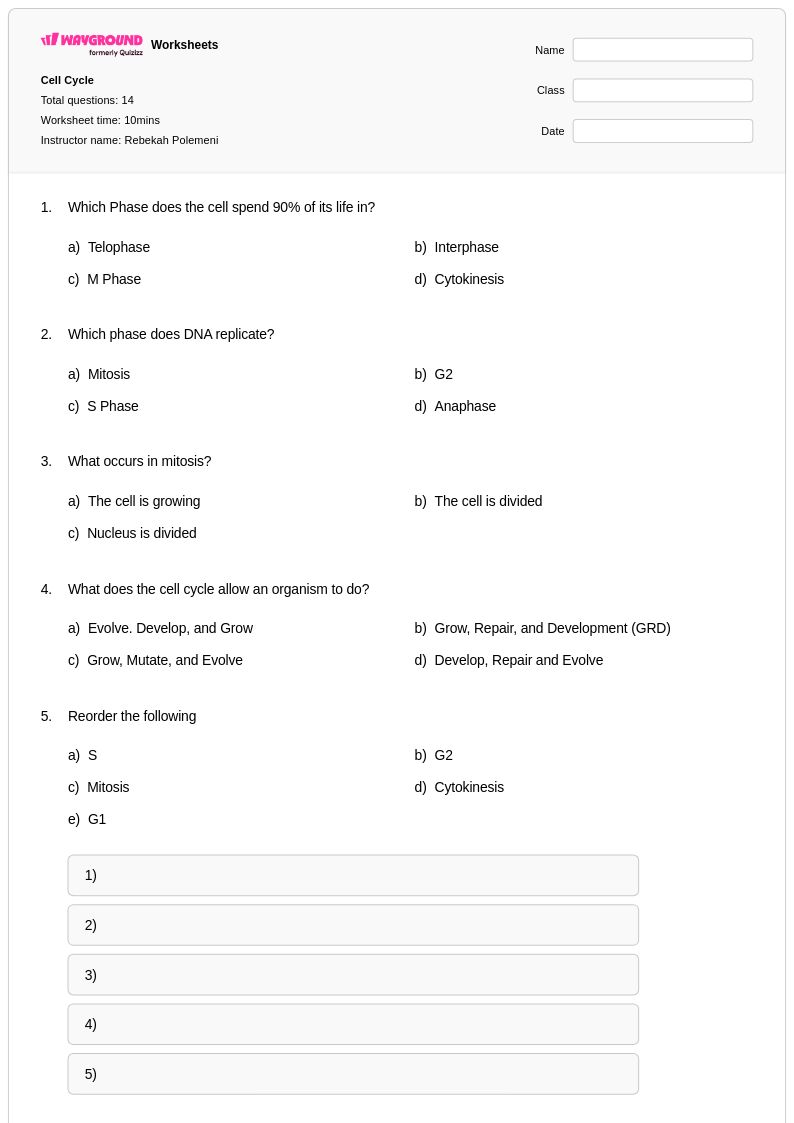
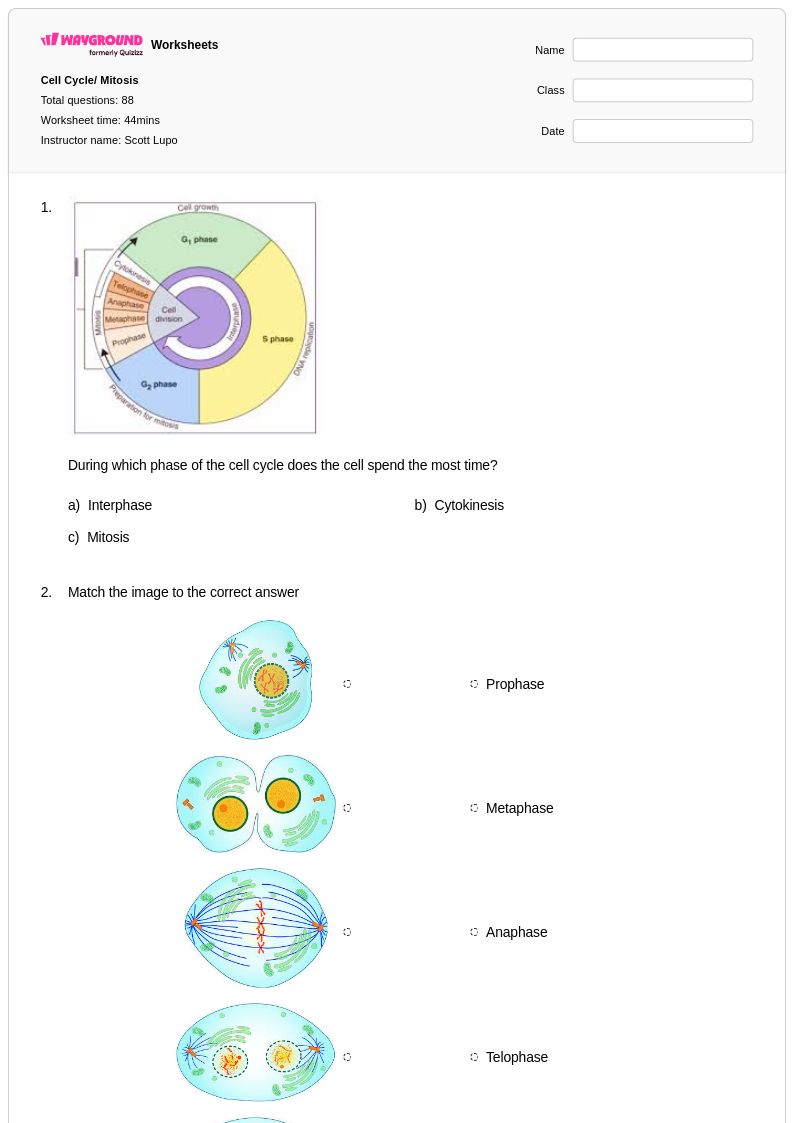
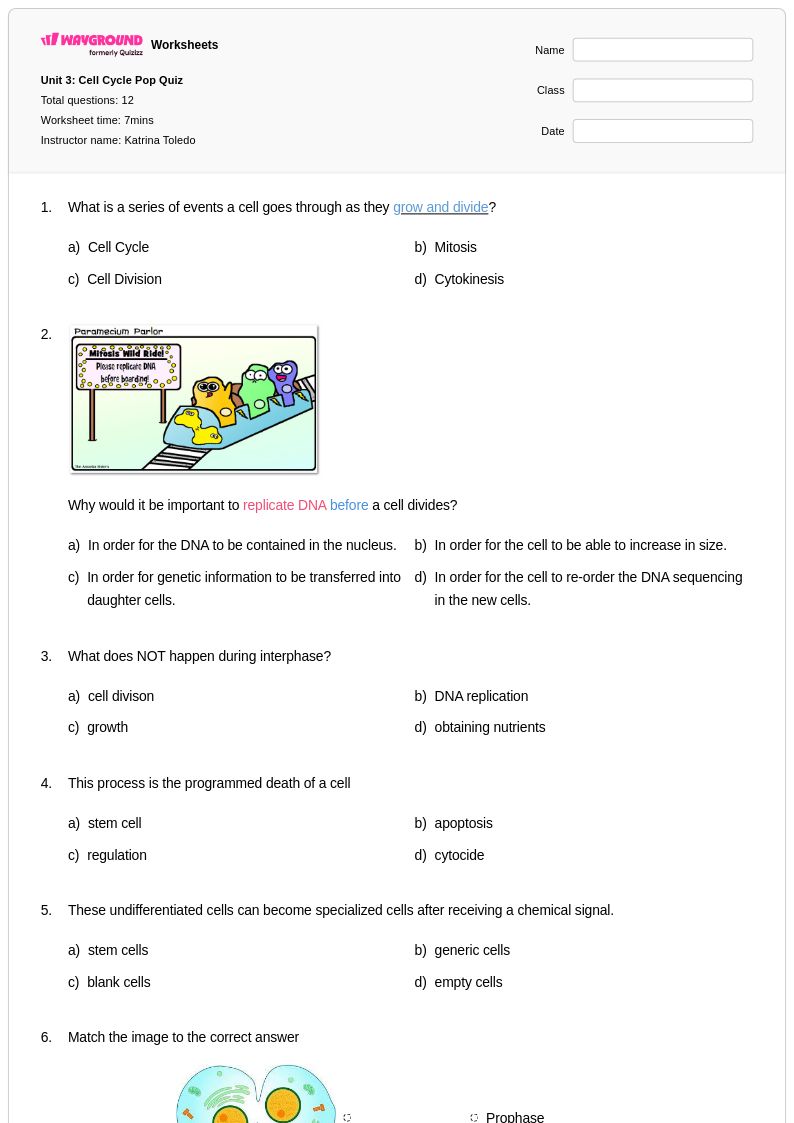
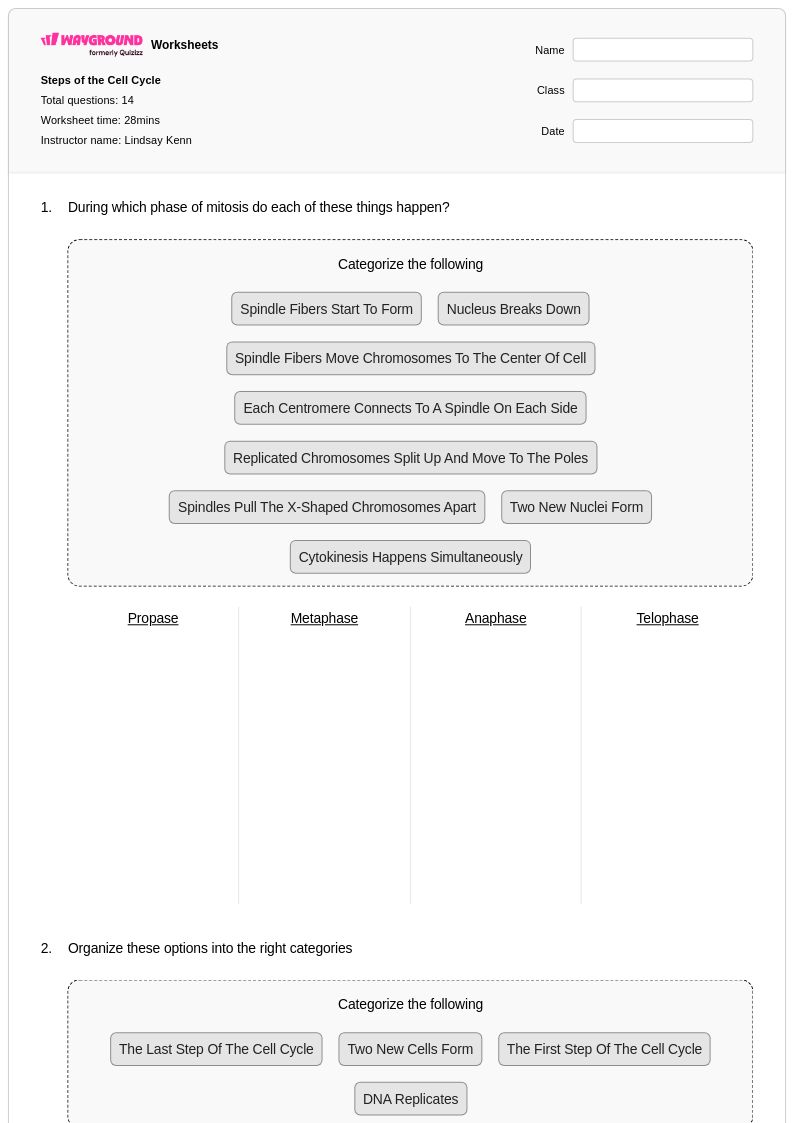
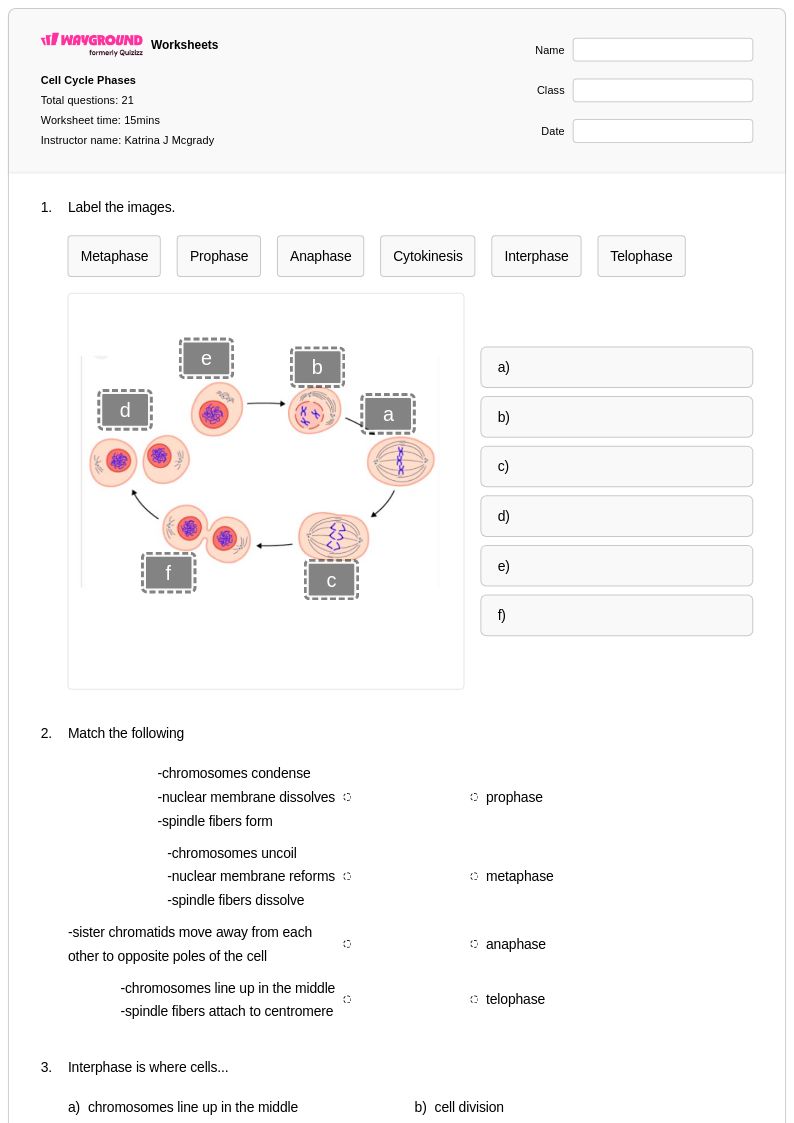
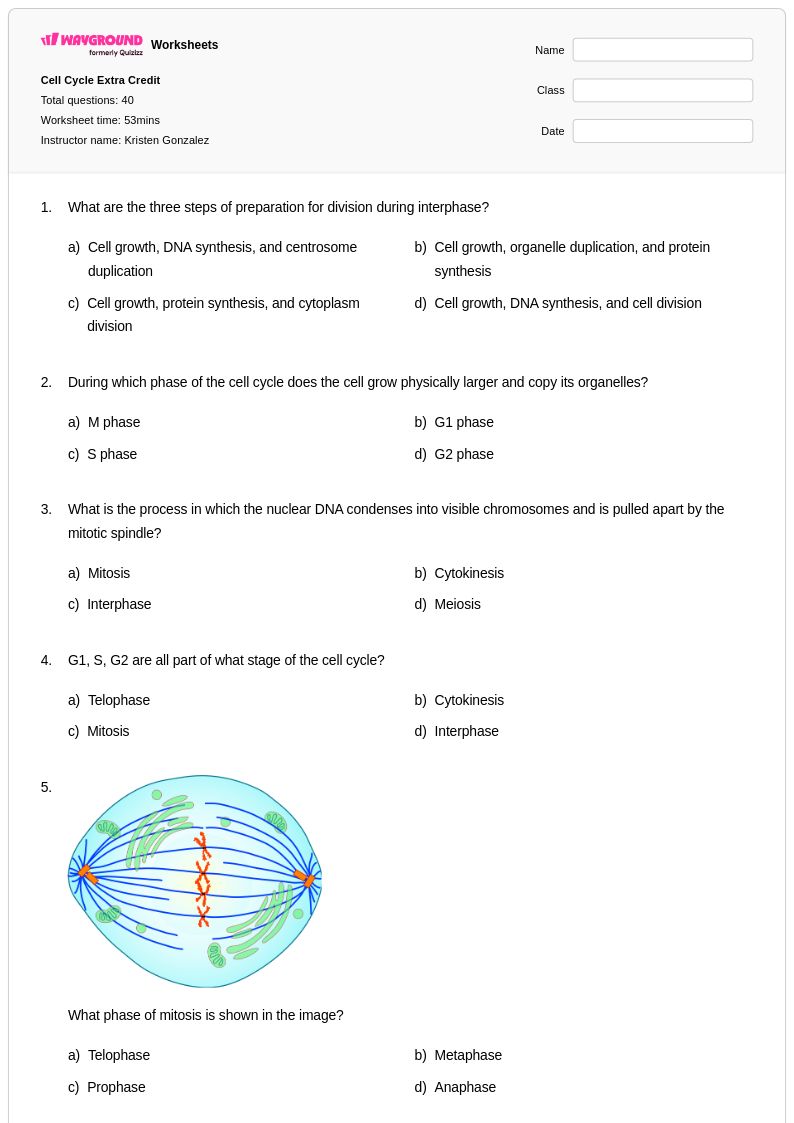
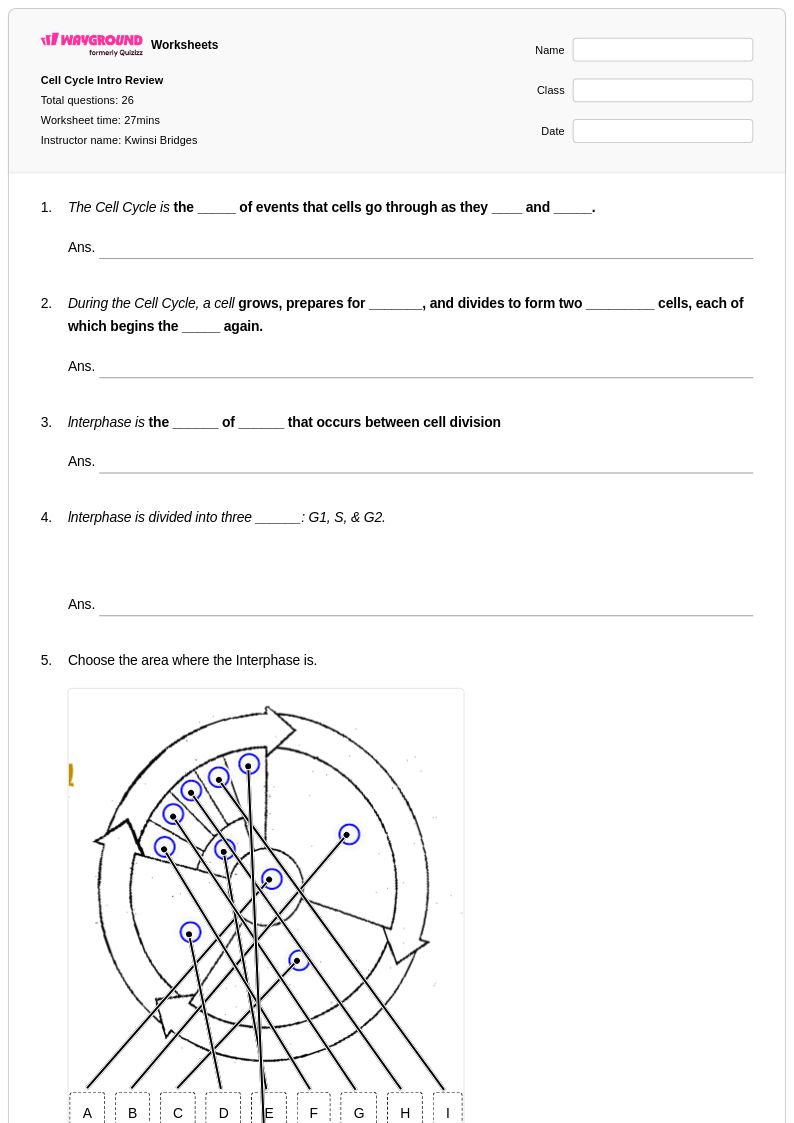
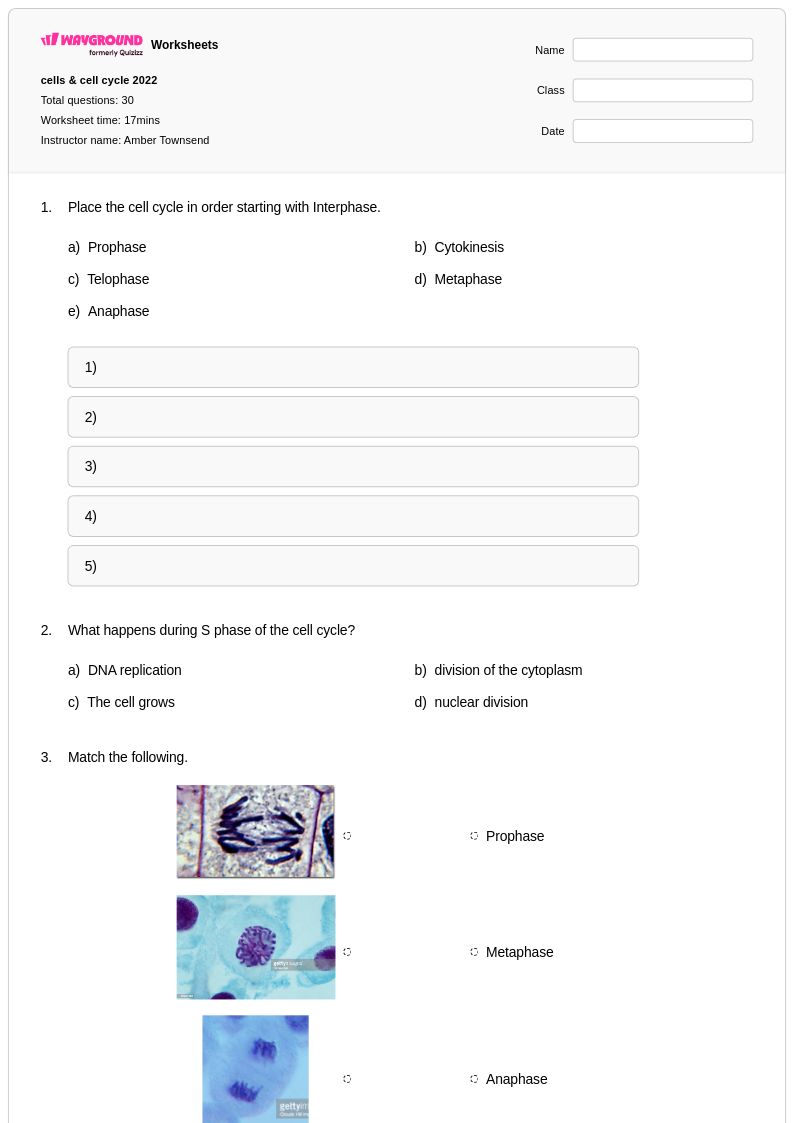
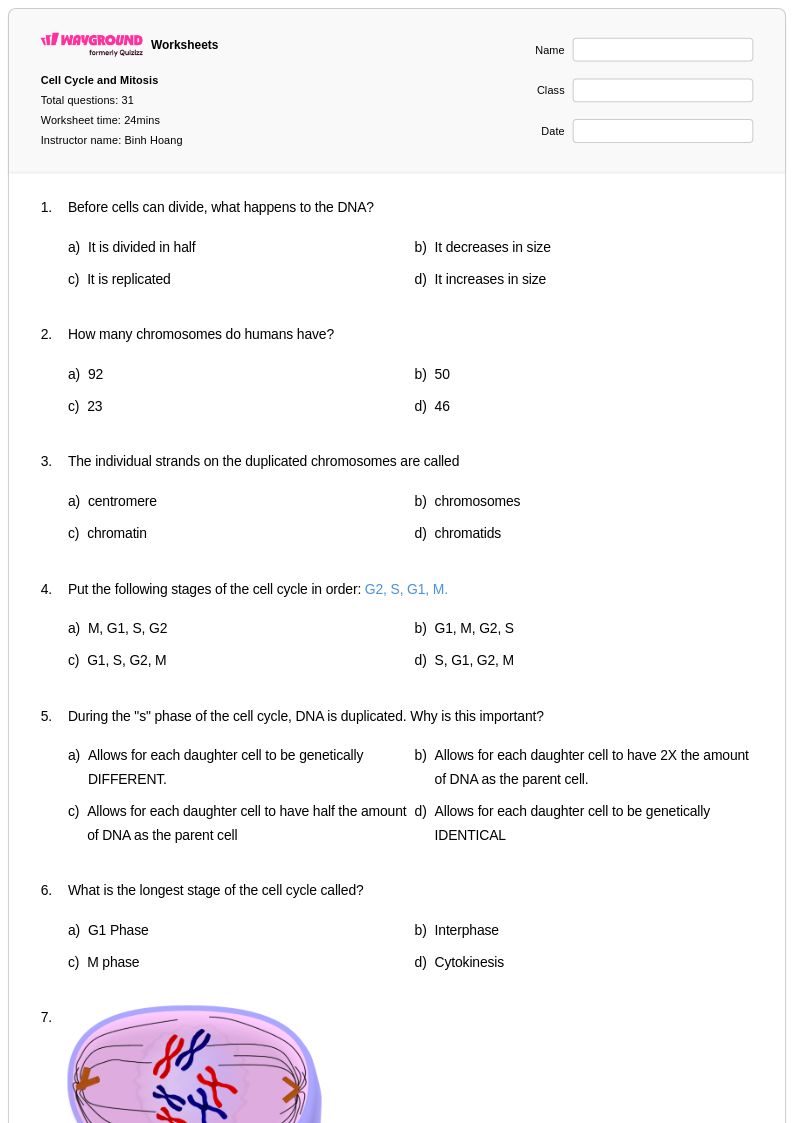
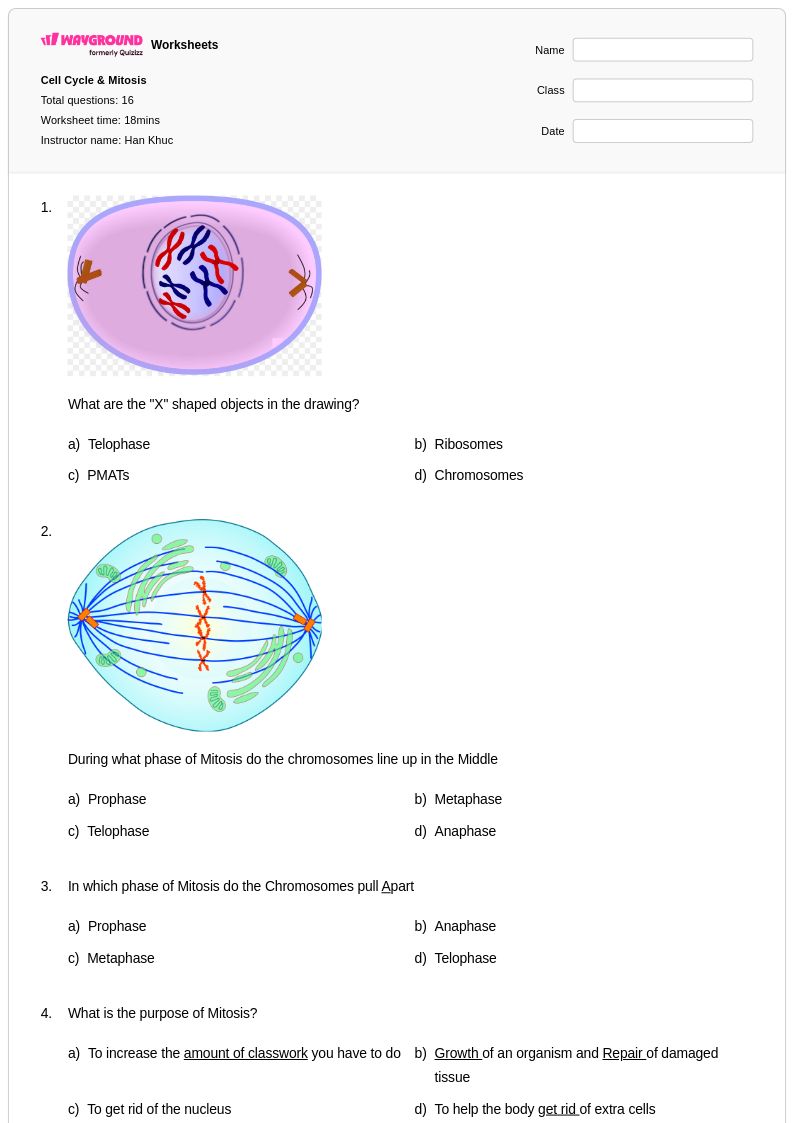
Phase-identification worksheets that present microscope images or diagrams of cells and ask students to name and justify each stage are among the most effective practice formats. Sequencing activities, where students arrange scrambled phase descriptions or images in the correct order, build procedural understanding alongside vocabulary. Practice problems involving chromosome counts, DNA replication timing, and spindle formation reinforce the molecular events that distinguish each phase.
What mistakes do students commonly make when learning about the cell cycle?
One of the most frequent errors is conflating mitosis with the entire cell cycle, causing students to overlook interphase as the phase where the majority of cellular activity, including DNA replication, actually occurs. Students also commonly confuse the roles of mitosis and meiosis, applying the outcome of one to the context of the other. Checkpoint regulation is another persistent misconception, with students often failing to understand that checkpoints actively halt the cycle rather than simply marking transitions between phases.
How do I differentiate cell cycle instruction for students at different skill levels?
For students who are struggling, simplify the progression by focusing first on the interphase-to-mitosis sequence using labeled diagrams before introducing regulatory mechanisms. Advanced learners can be challenged with problems involving chromosome number changes across meiosis I and II, or with analysis of what occurs when checkpoints fail. On Wayground, teachers can apply accommodations such as reduced answer choices or read-aloud support to individual students, allowing the same worksheet to serve a range of learners without alerting the rest of the class.
How do I use Wayground's cell cycle worksheets in my classroom?
Wayground's cell cycle worksheets are available as printable PDFs for traditional classroom use and in digital formats for technology-integrated environments, making them adaptable to in-person, hybrid, or remote instruction. Teachers can also host worksheets directly as a quiz on Wayground, enabling real-time student responses and built-in progress tracking. Every worksheet includes a complete answer key, so grading is efficient whether you're assessing a whole class or reviewing individual student work.
How does the cell cycle relate to cancer, and how can I teach this connection?
Cancer arises when checkpoint mechanisms that normally regulate the cell cycle fail, allowing cells to divide uncontrollably without the usual growth-factor signals or DNA-integrity checks. Teaching this connection contextualizes the abstract stages of the cell cycle in a clinically relevant framework that tends to increase student engagement. Case-study style worksheets that ask students to identify which checkpoint has failed given a described cellular scenario are an effective way to deepen this understanding.