
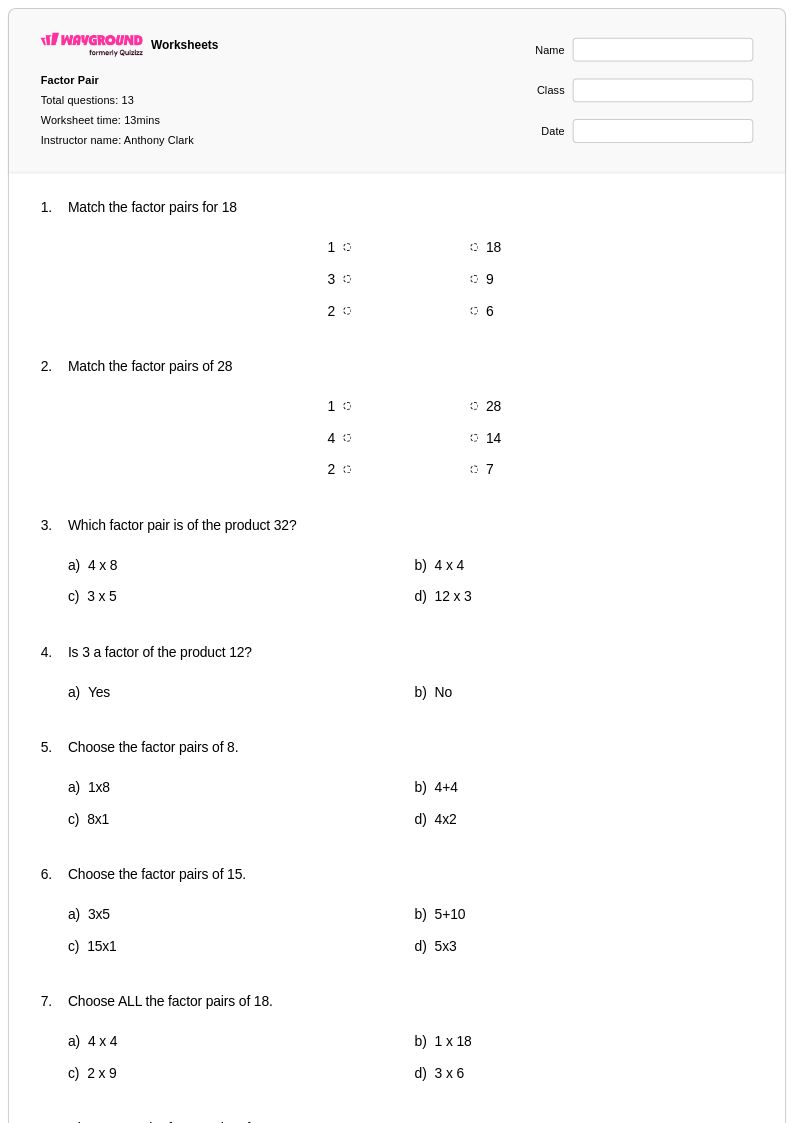
13Q
4th - Uni
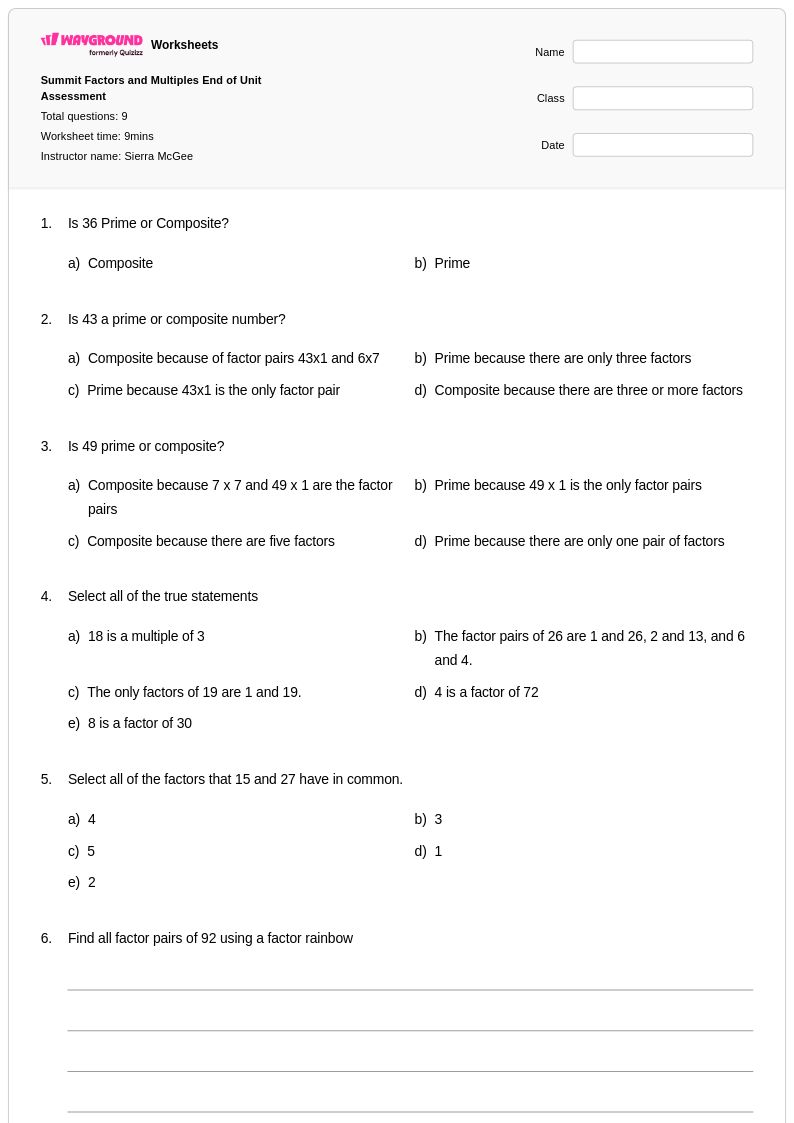
9Q
4th
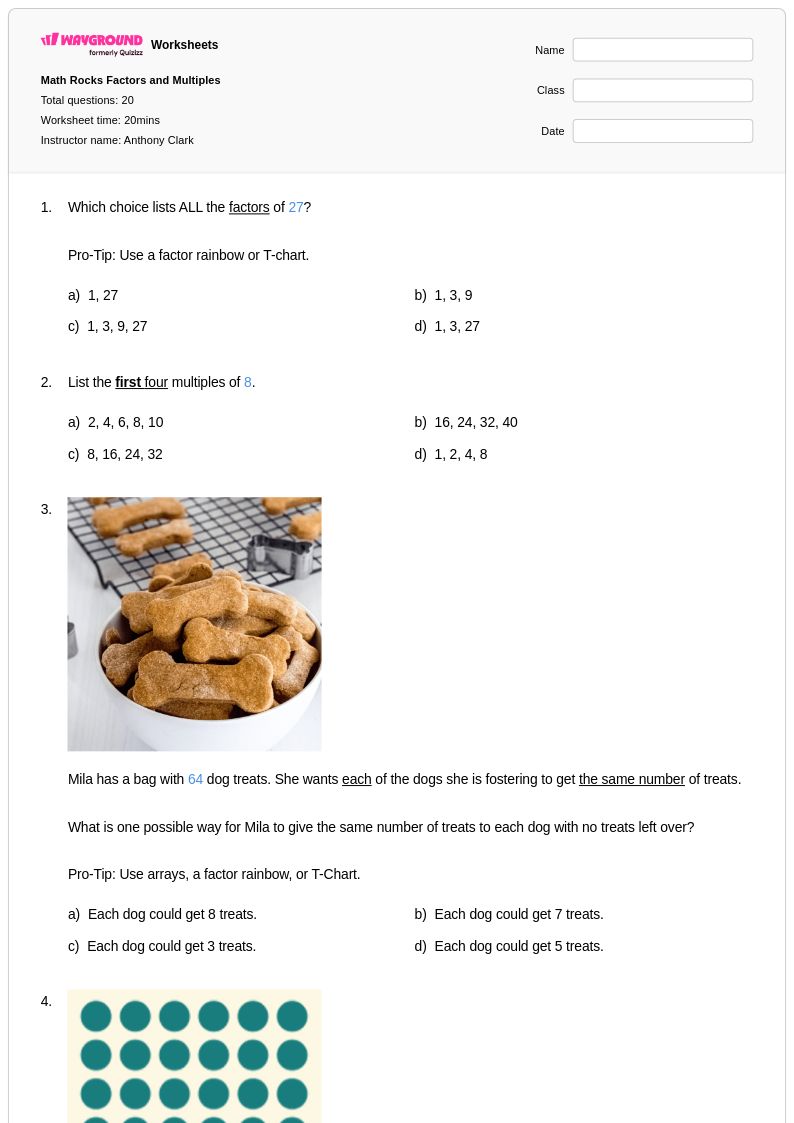
20Q
4th - Uni
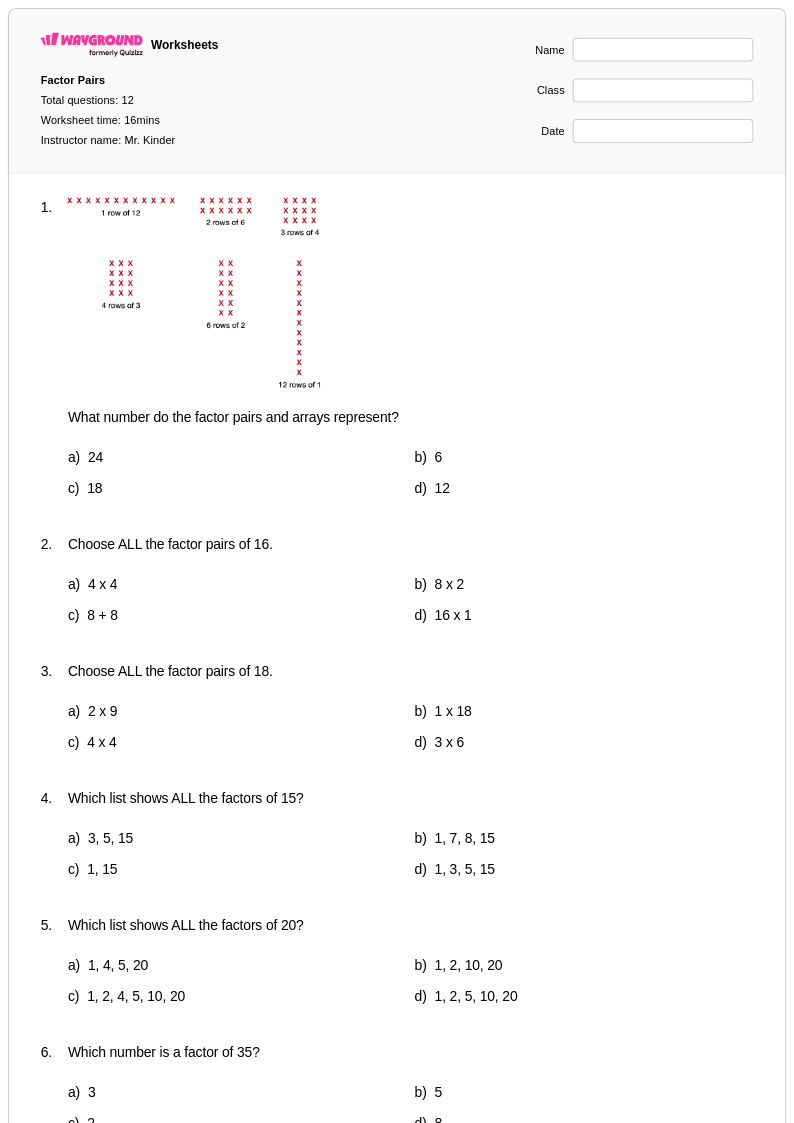
12Q
4th
20Q
4th
15Q
4th - Uni
19Q
4th - 9th
19Q
4th
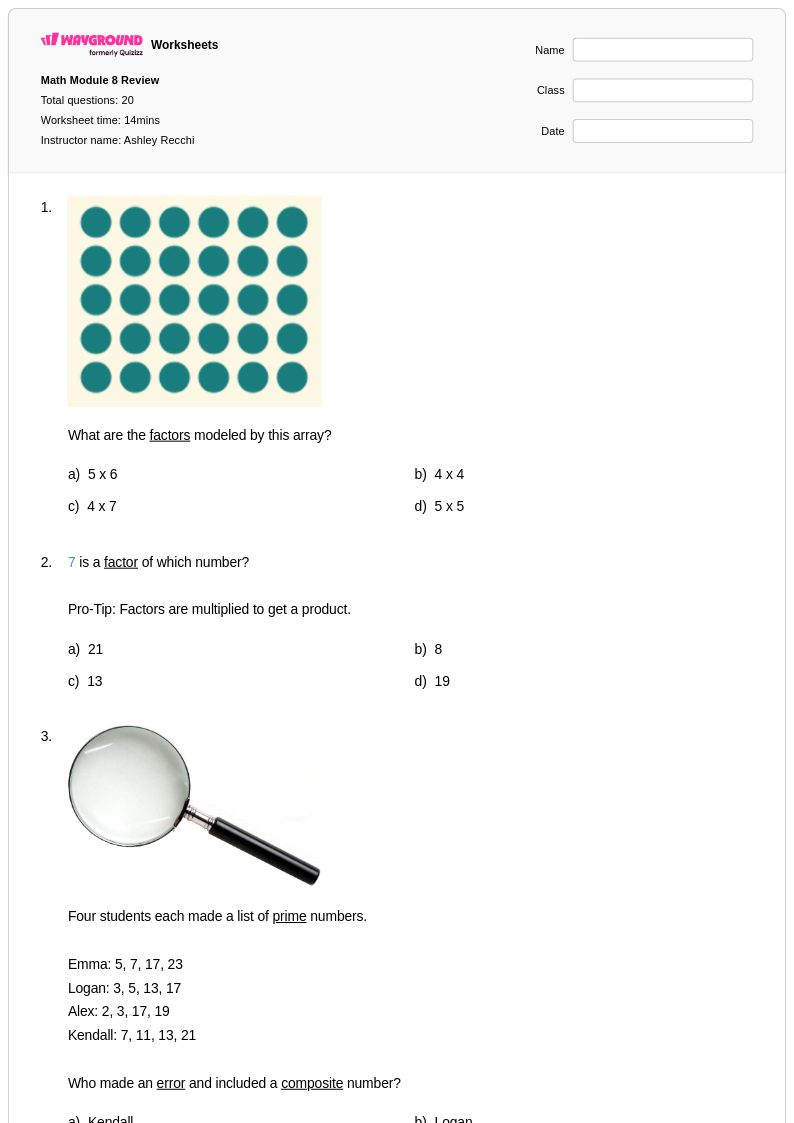
20Q
4th
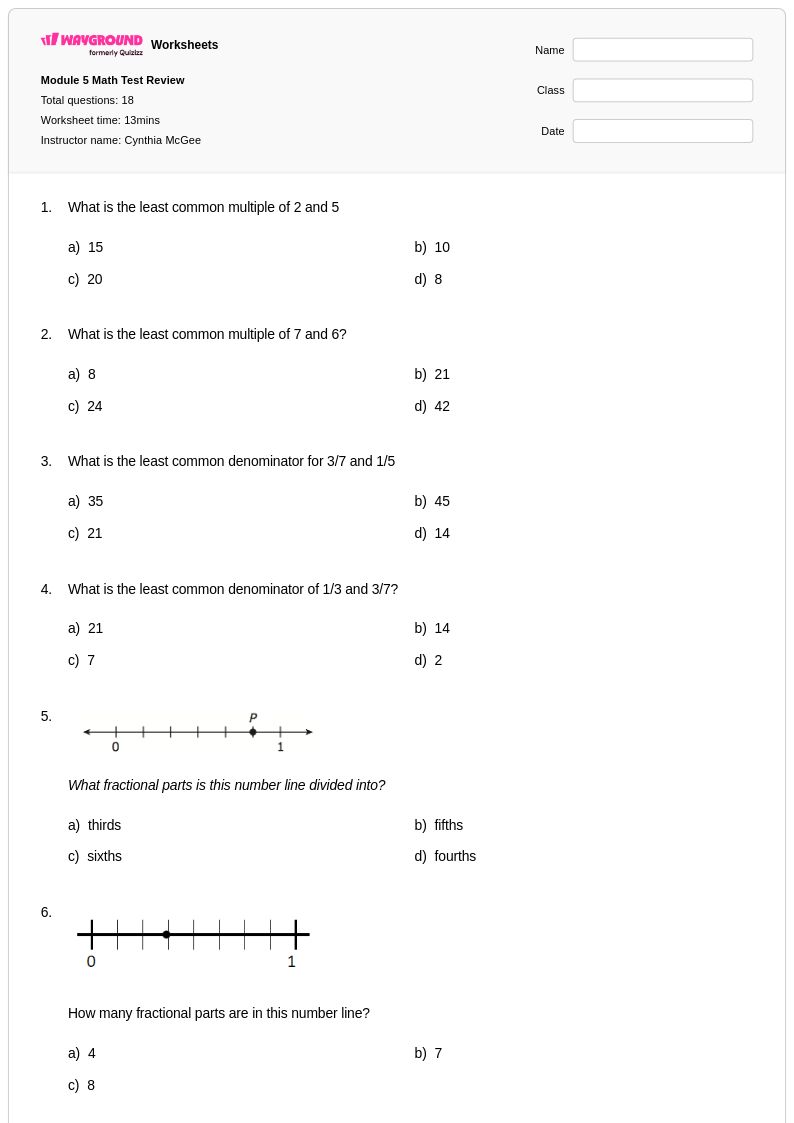
18Q
4th
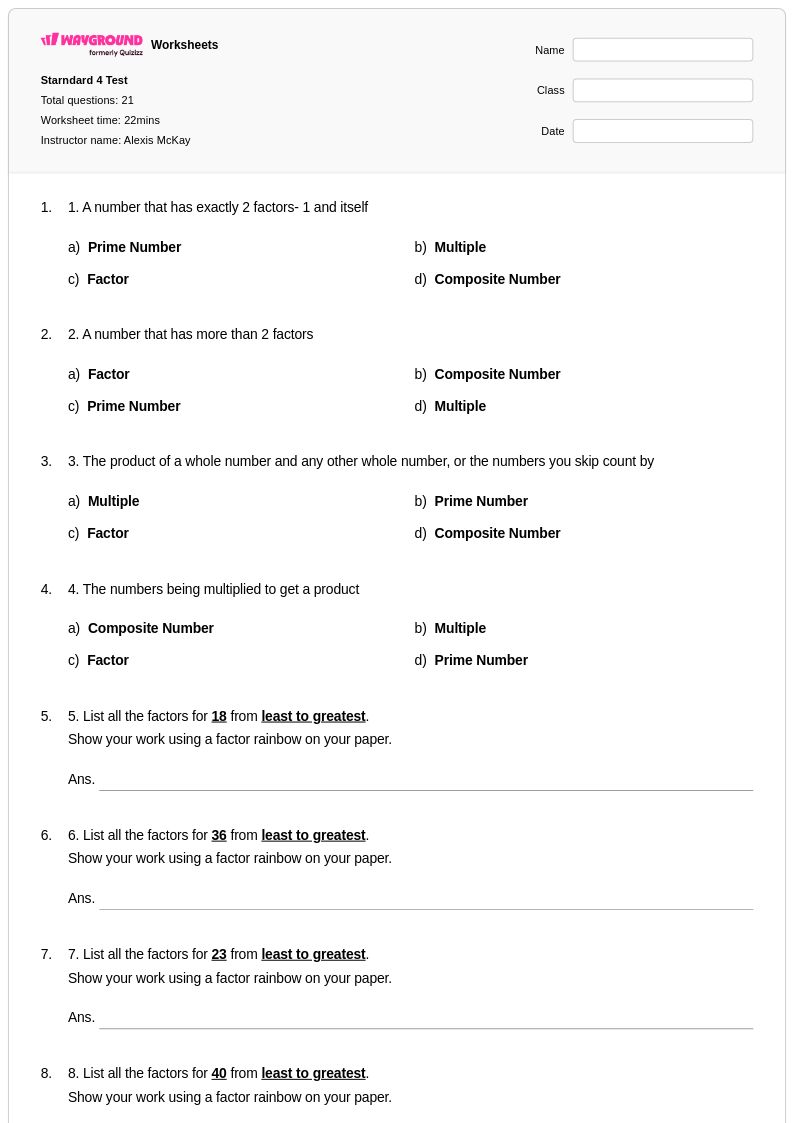
21Q
4th
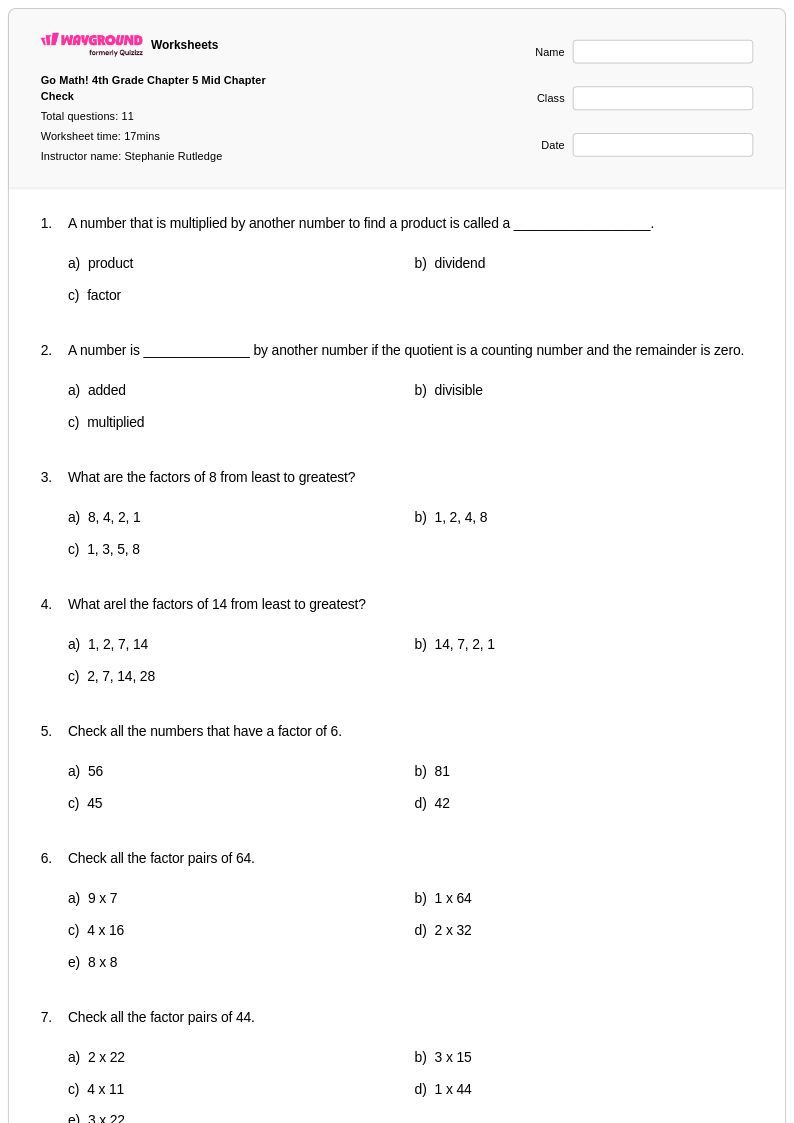
11Q
4th
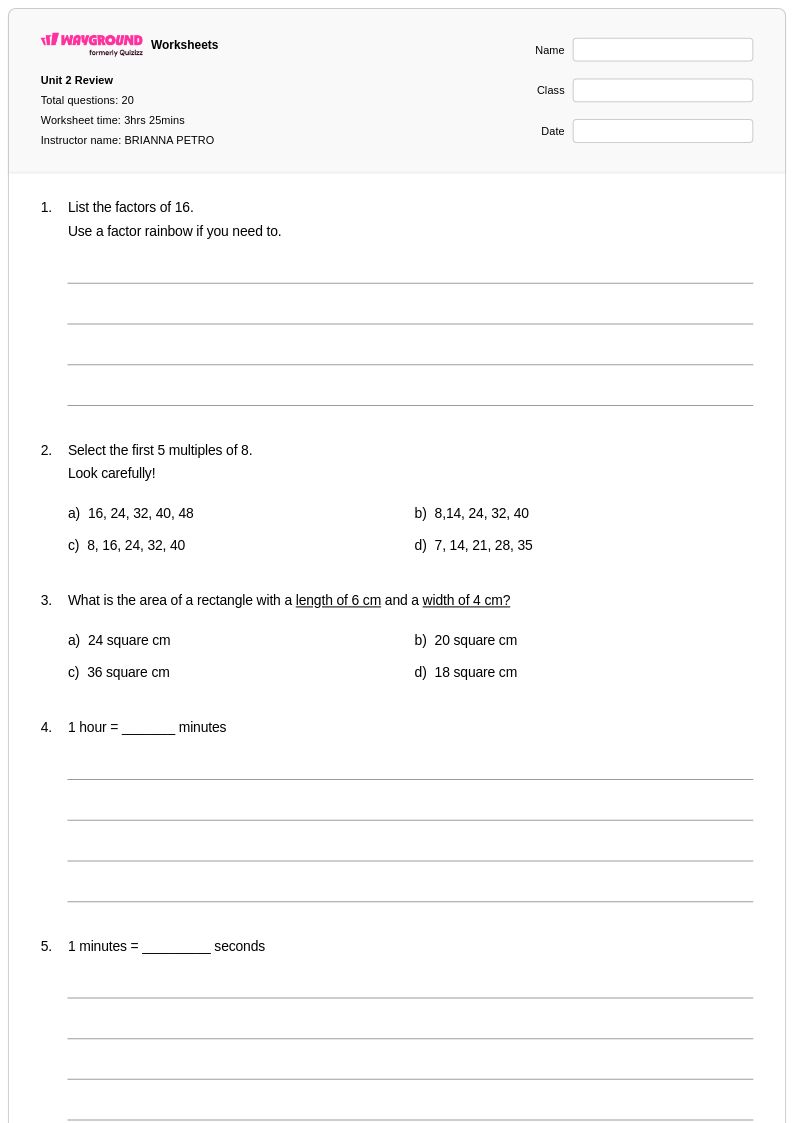
20Q
4th
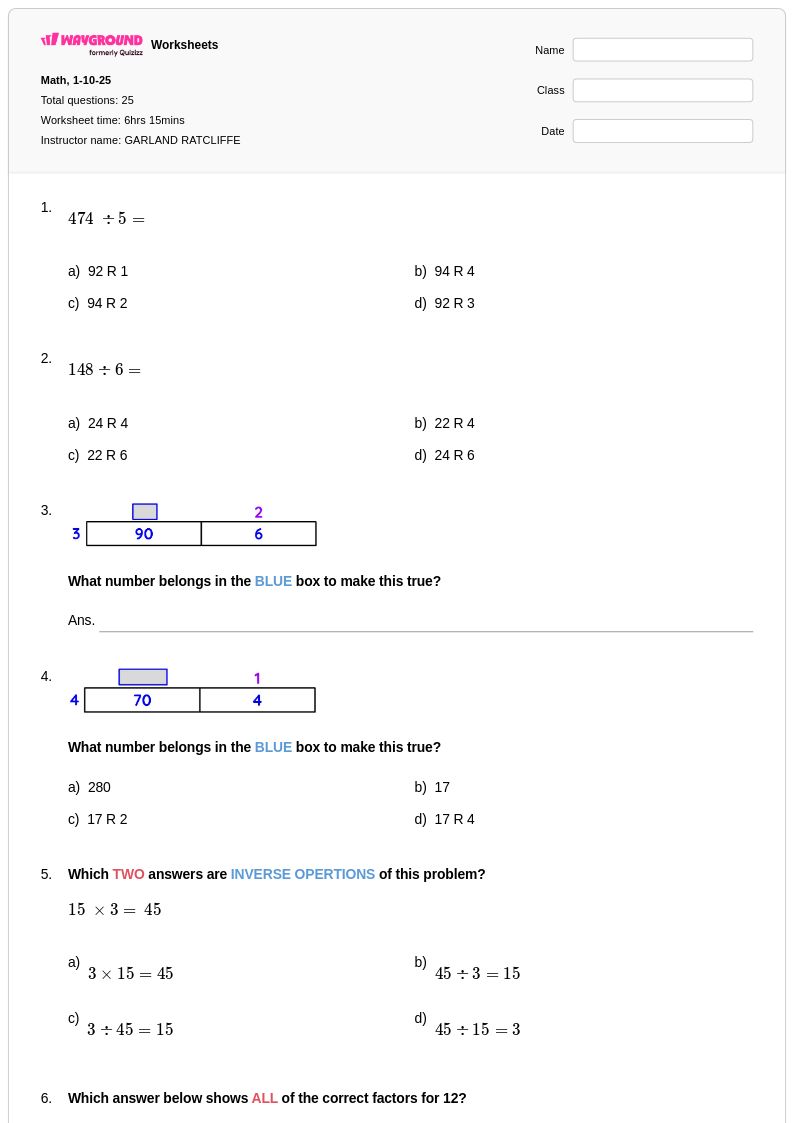
25Q
4th
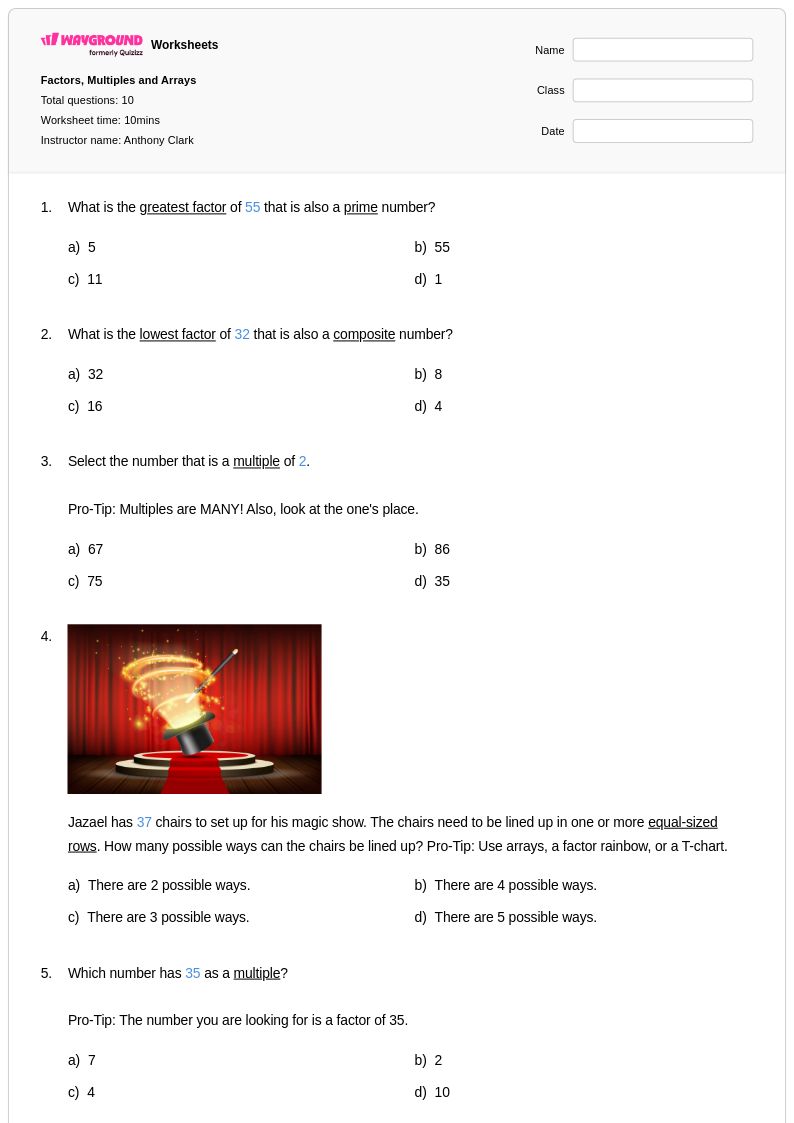
10Q
4th - Uni
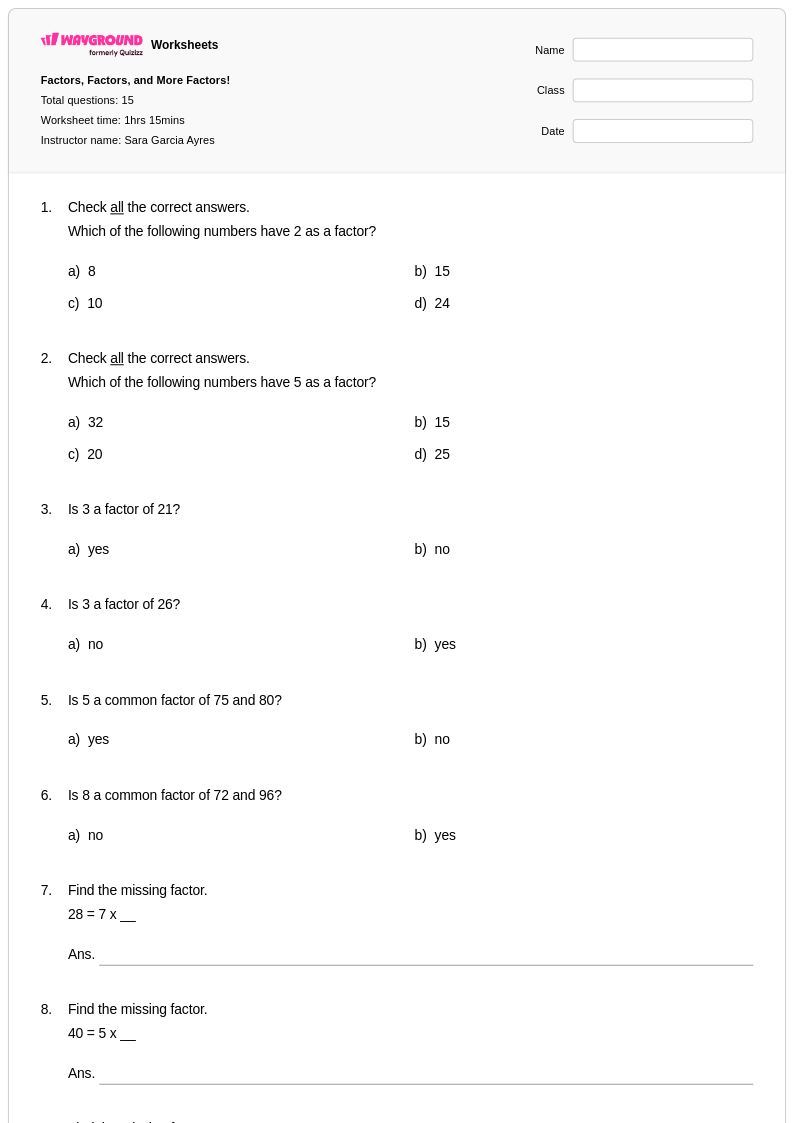
15Q
4th
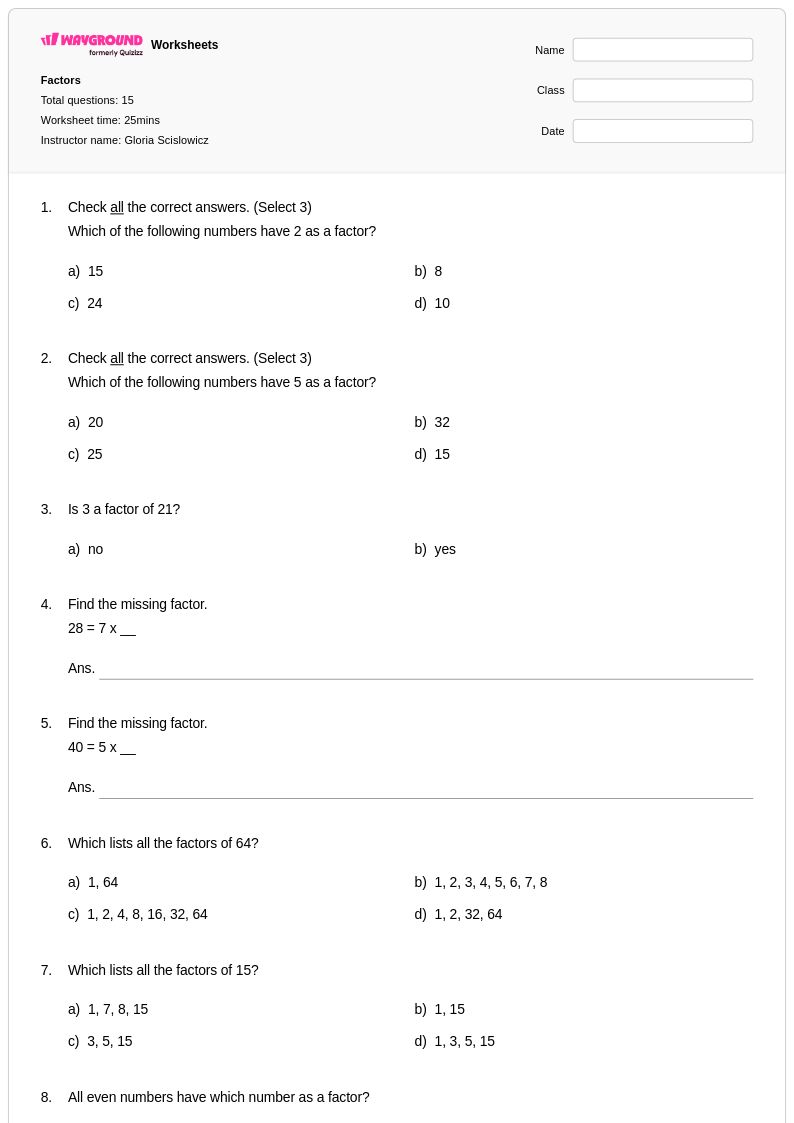
15Q
4th
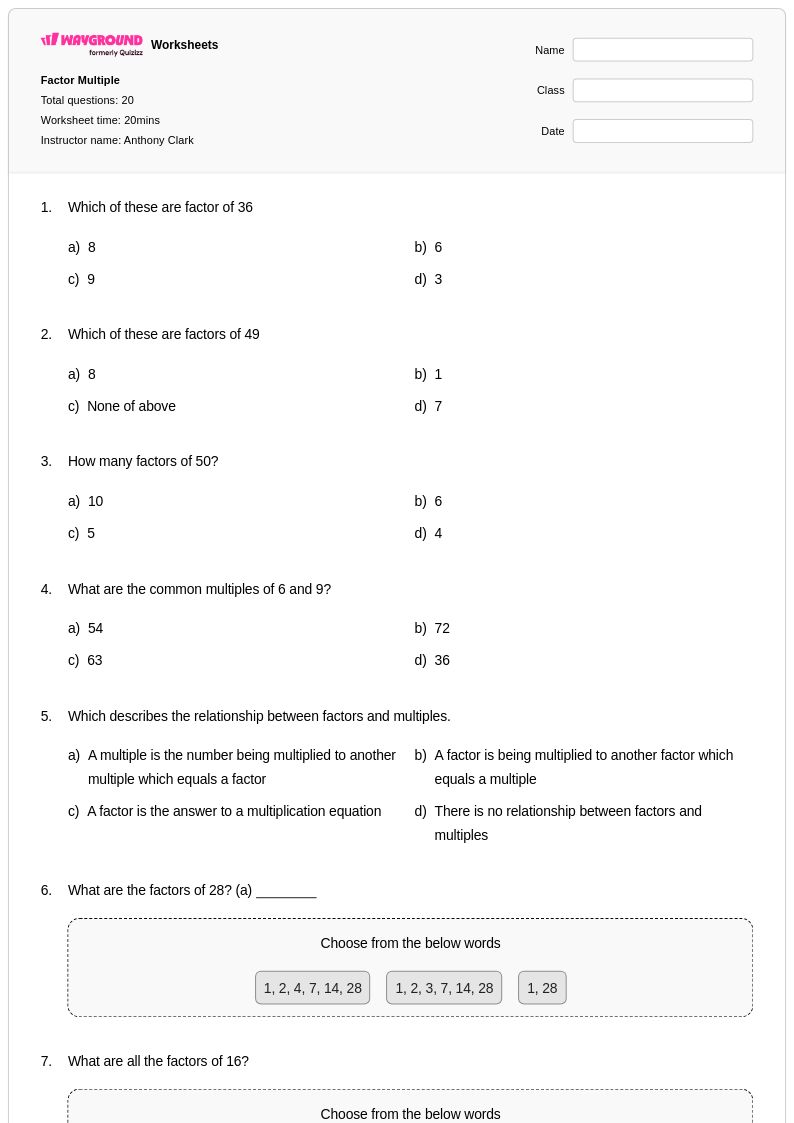
20Q
4th - Uni
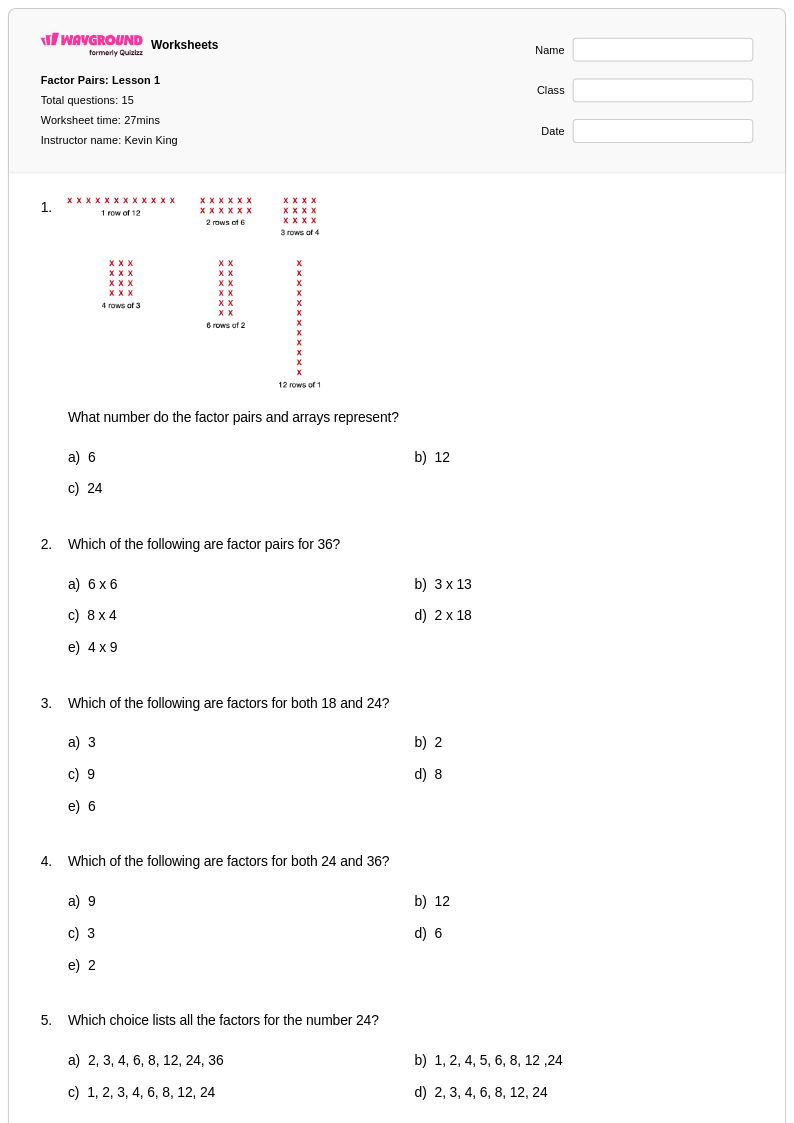
15Q
4th
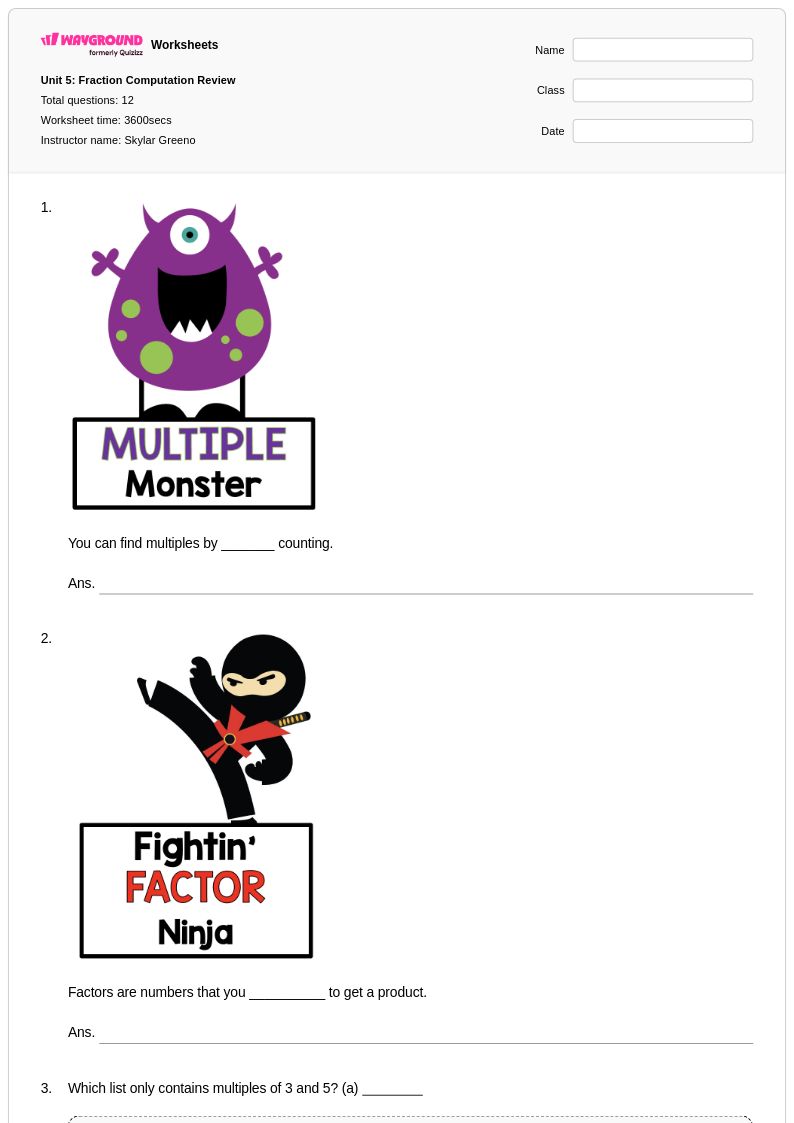
12Q
4th
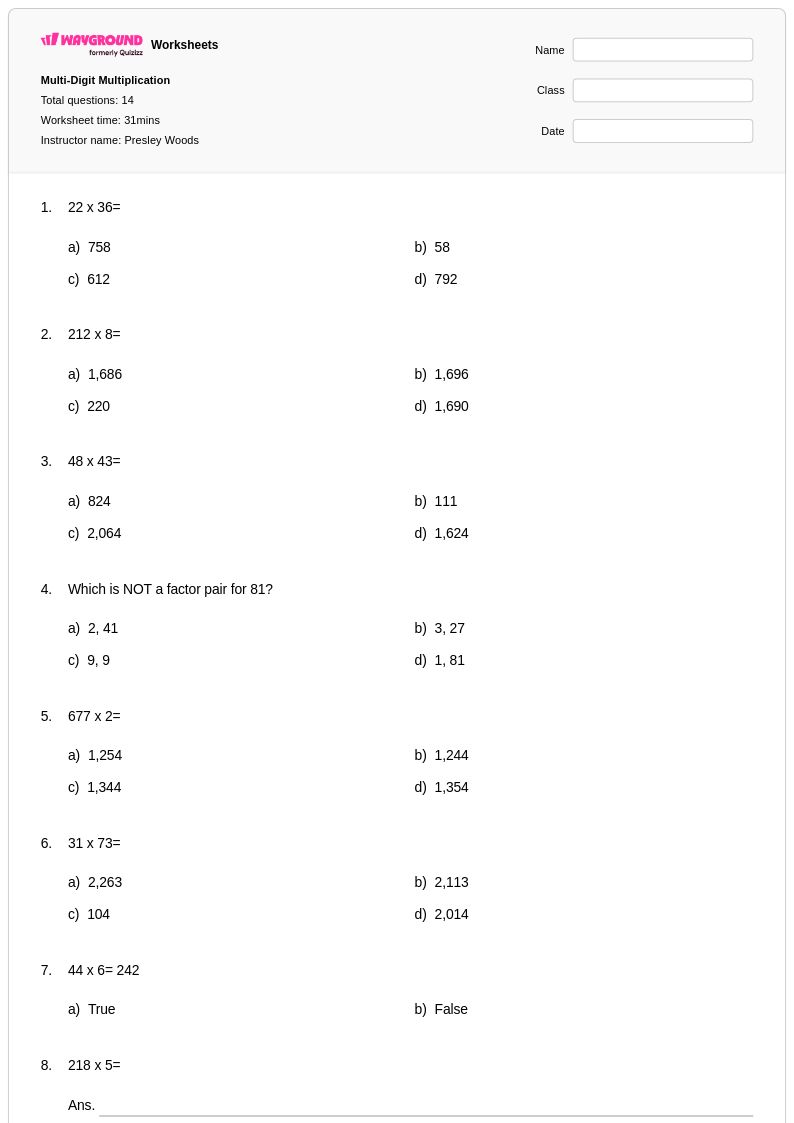
14Q
4th
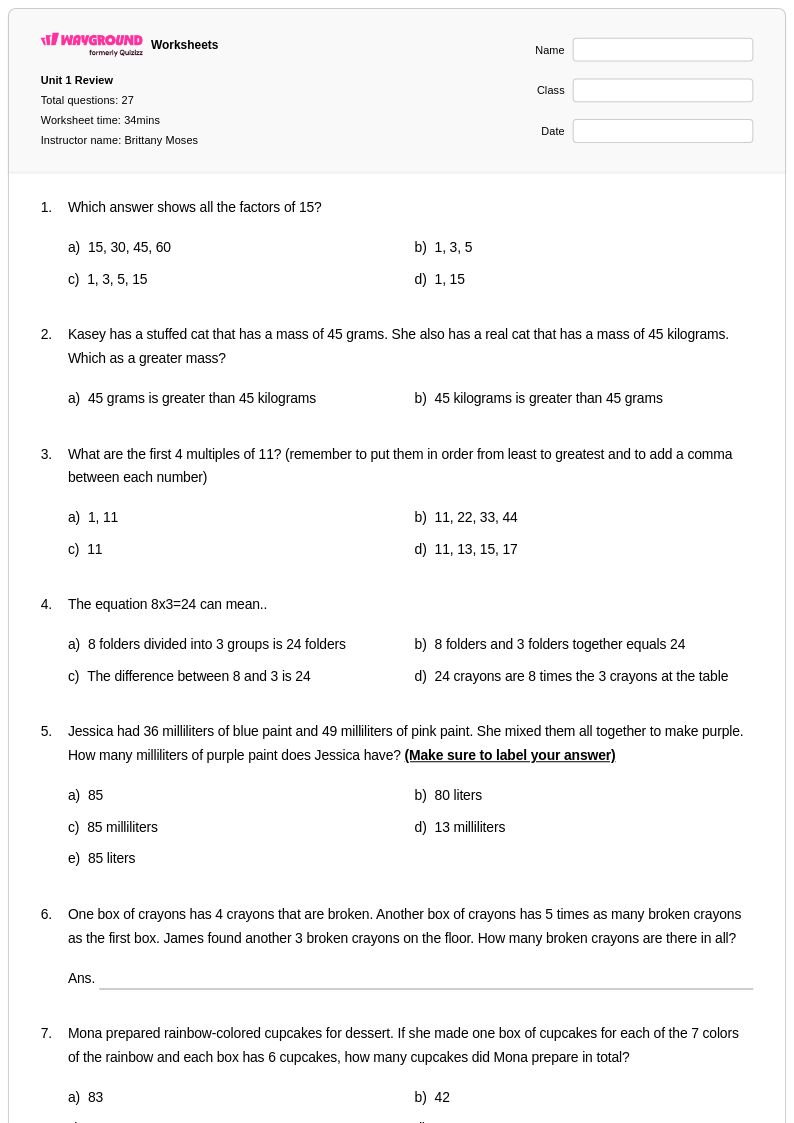
27Q
4th
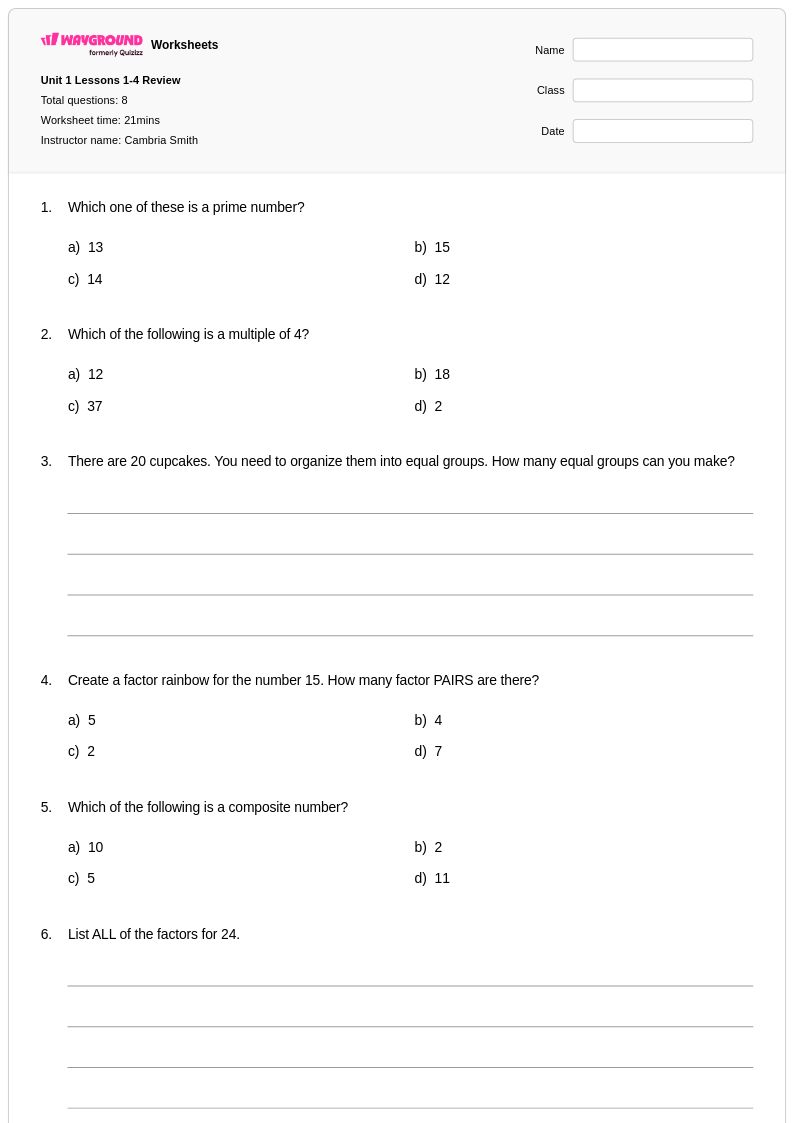
8Q
4th
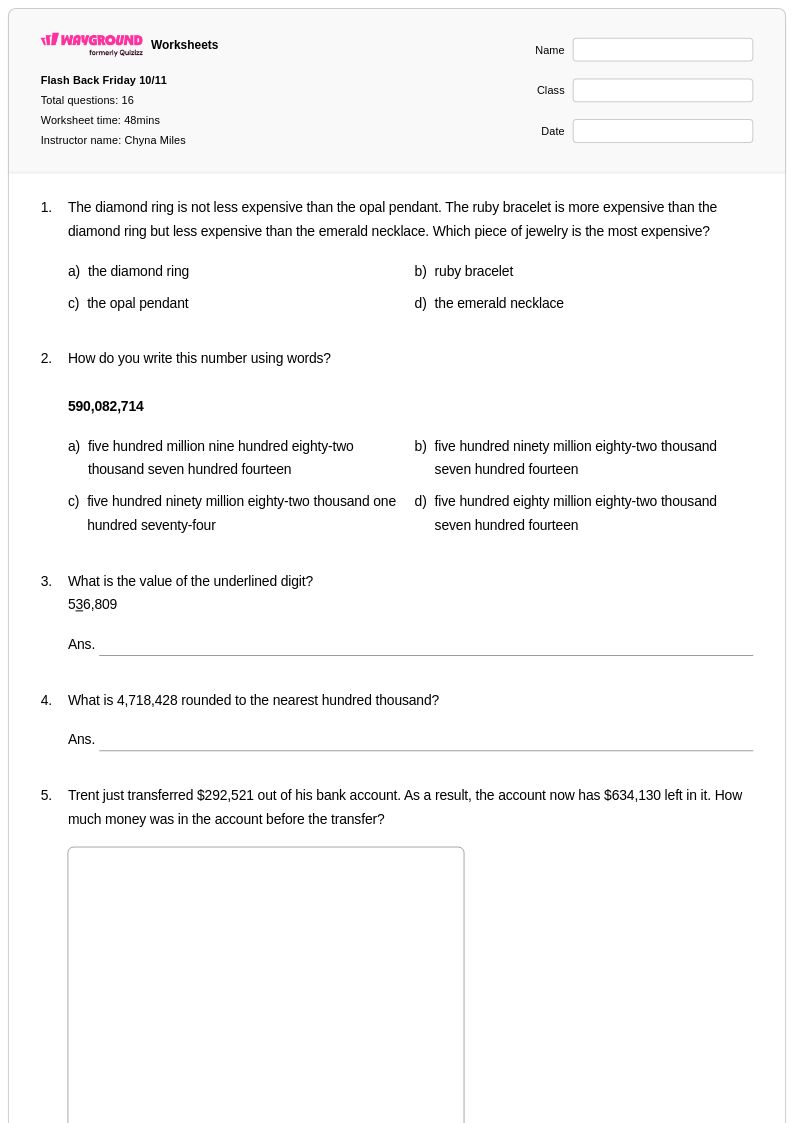
16Q
1st - 5th
Explore otras hojas de trabajo de materias para year 4
Explore printable Factor Rainbow worksheets for Year 4
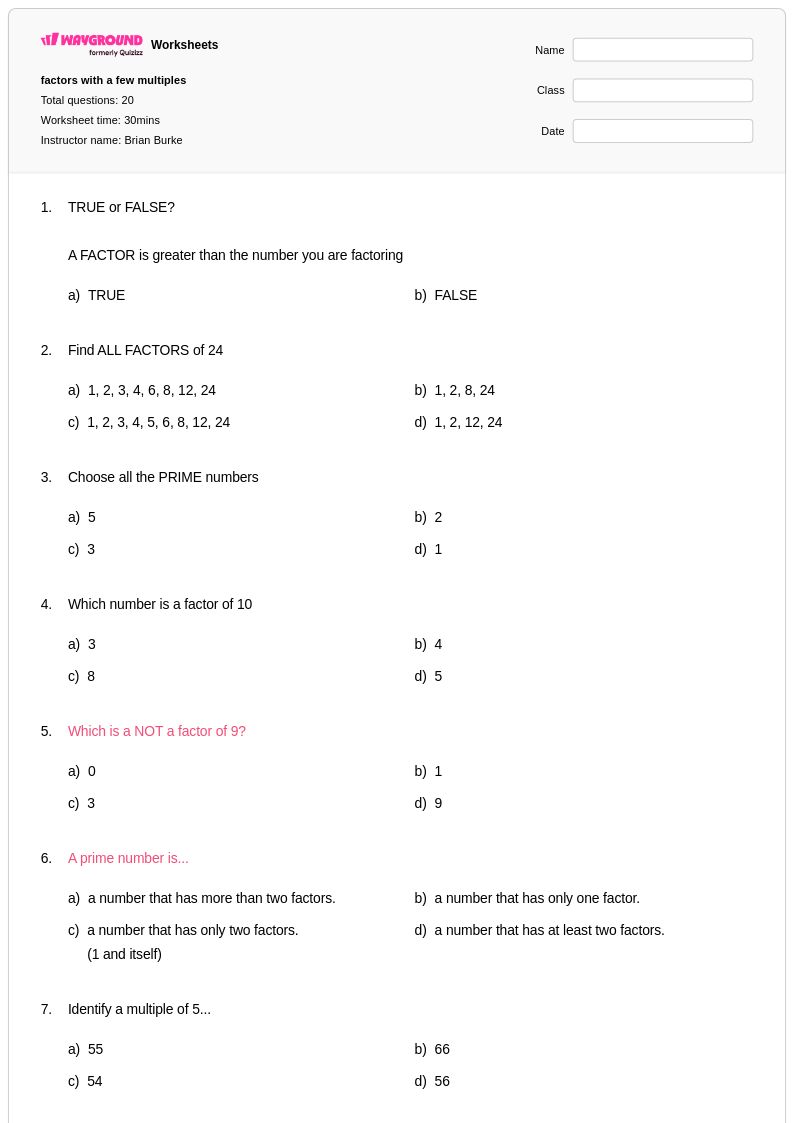
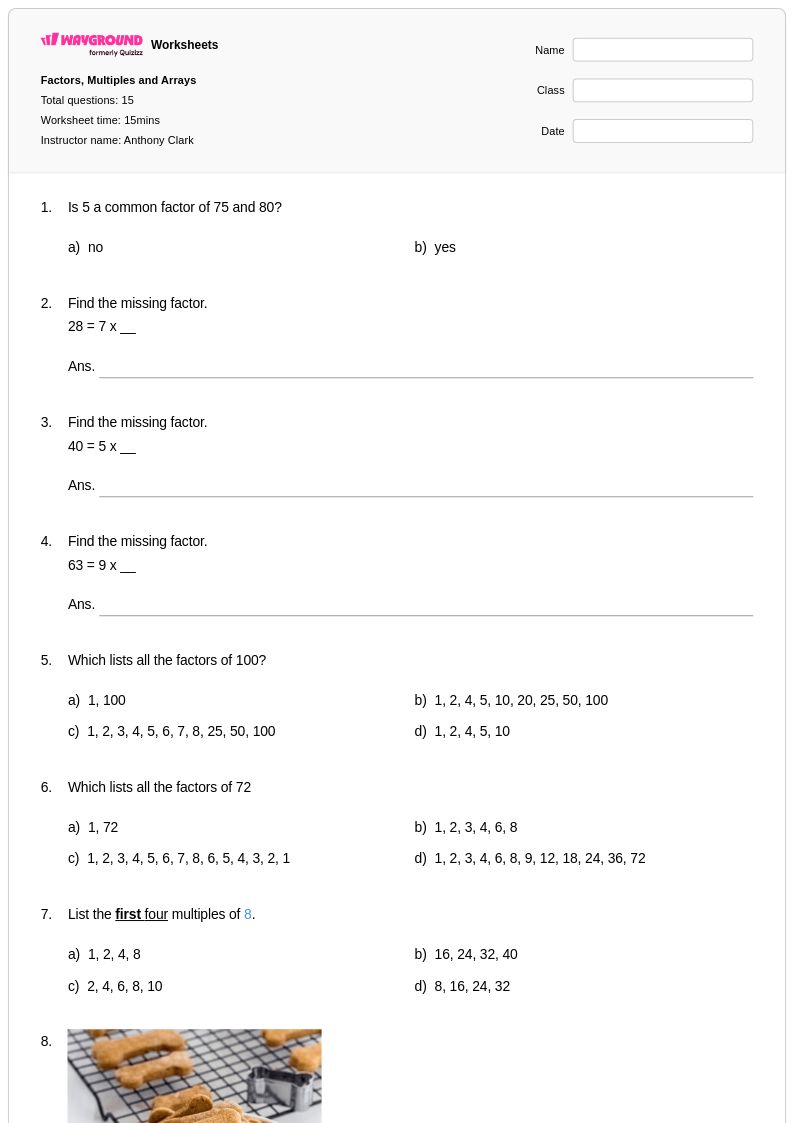
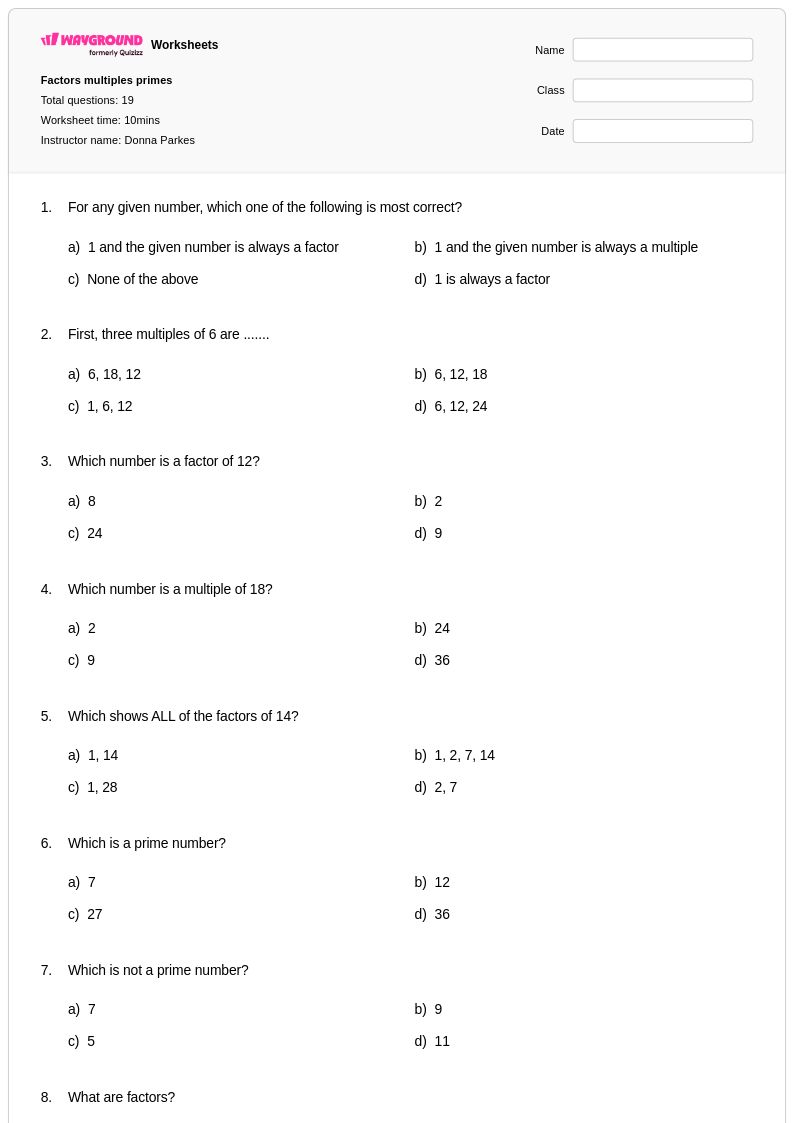
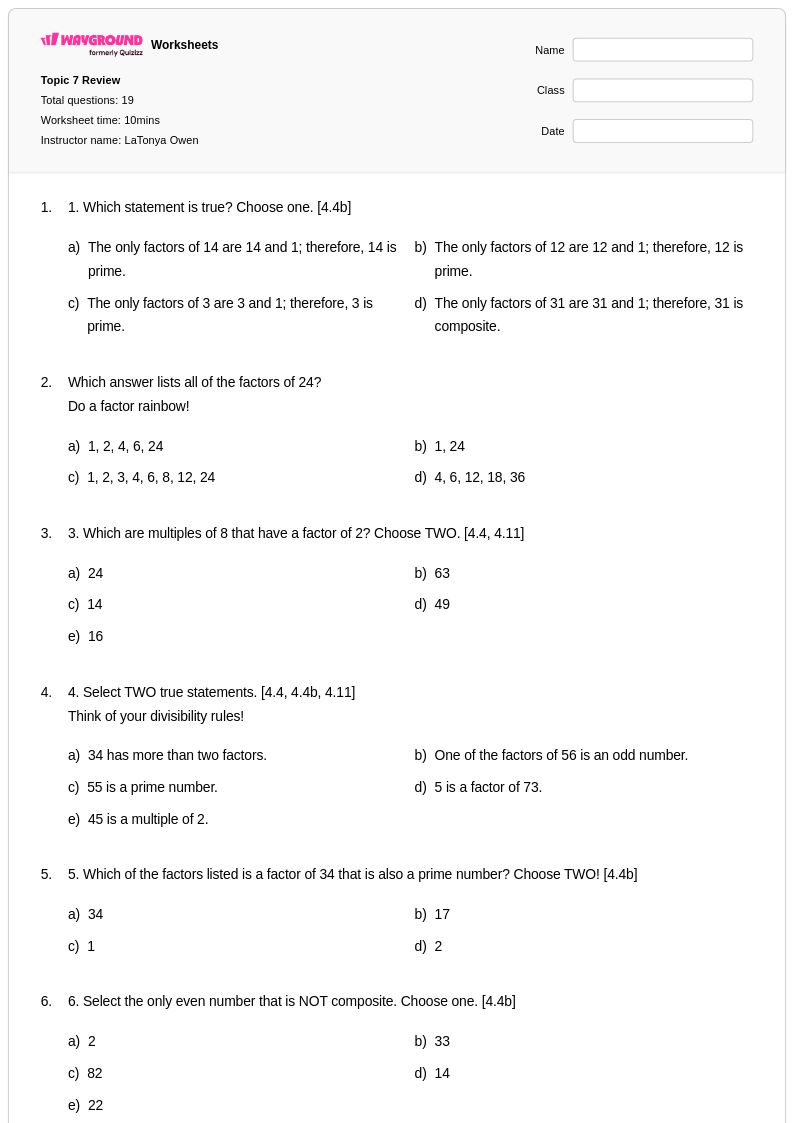
Factor rainbow worksheets for Year 4 students available through Wayground (formerly Quizizz) provide systematic practice with identifying and organizing factor pairs in a visual, intuitive format. These educational resources strengthen students' understanding of multiplication relationships by teaching them to arrange factor pairs in a rainbow or arc pattern above a given number, helping fourth graders recognize that factors come in pairs and develop fluency with basic multiplication facts. The worksheets feature carefully structured practice problems that guide students through creating factor rainbows for various numbers, with comprehensive answer keys that support both independent learning and classroom instruction. Teachers can access these free printables in convenient pdf format, making it easy to distribute targeted practice that builds foundational number sense skills essential for future mathematical concepts.
Wayground's extensive collection of factor rainbow worksheets draws from millions of teacher-created resources, offering educators powerful search and filtering capabilities to locate materials perfectly matched to their Year 4 mathematics curriculum needs. The platform's standards alignment ensures these worksheets support required learning objectives while providing differentiation tools that allow teachers to customize difficulty levels for diverse learners. Whether used for initial skill introduction, targeted remediation, or enrichment activities, these resources are available in both printable and digital pdf formats to accommodate various classroom environments and teaching preferences. The flexible customization options enable educators to modify worksheets for specific student needs, streamlining lesson planning while providing consistent, high-quality practice materials that reinforce factor relationships and strengthen computational thinking skills.
FAQs
How do I teach factor rainbows to 4th graders?
What factor rainbow exercises work best for 4th grade practice?
What mistakes do 4th graders commonly make with factor rainbows?
How do I use these Grade 4 factor rainbow worksheets?
Is the factor rainbow aligned to 4th grade Common Core math standards?
What grade level is the factor rainbow typically taught?