Class 6 amphibians biology worksheets and printables help students explore frog, salamander, and toad life cycles through engaging practice problems, free PDF activities, and comprehensive answer keys.
Explore printable Amphibians worksheets for Class 6
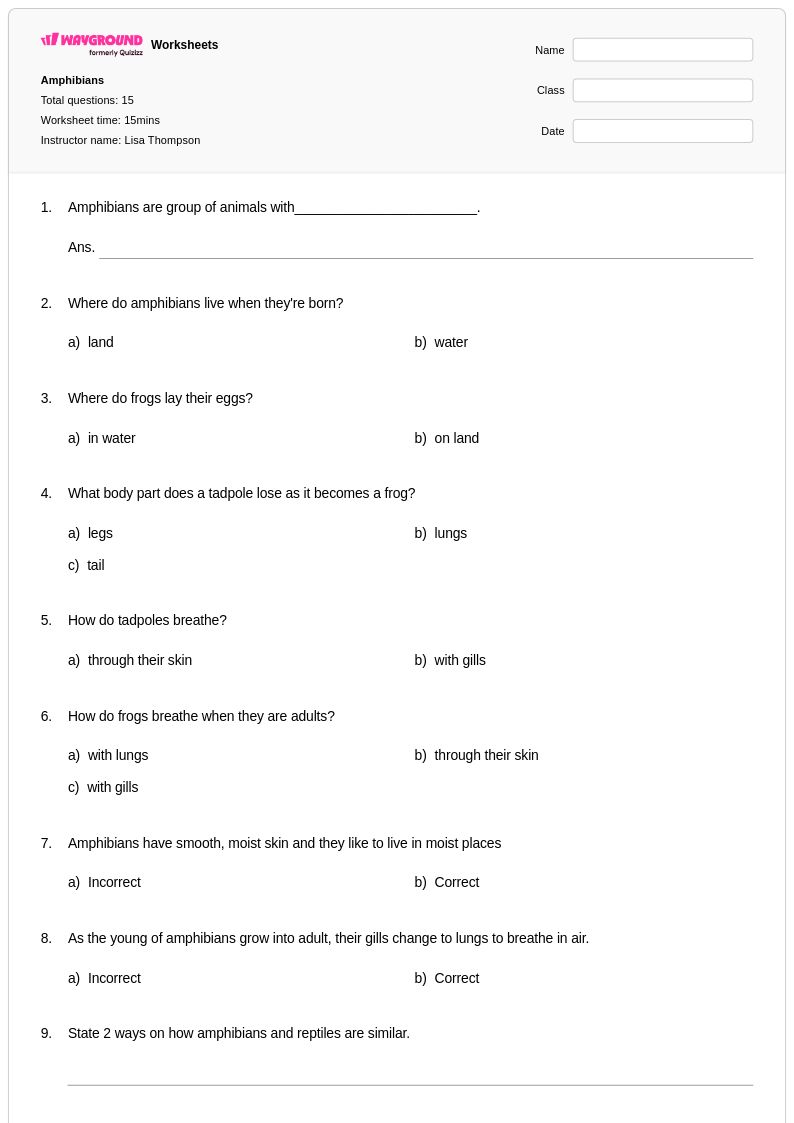
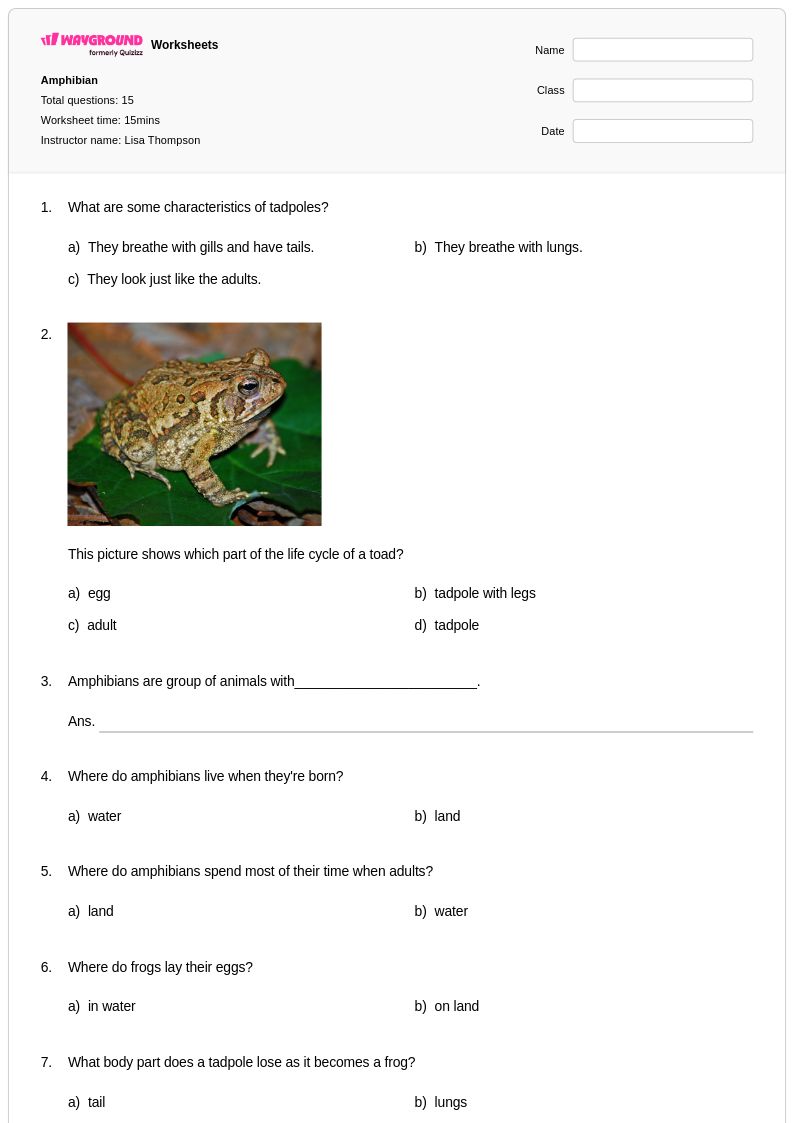
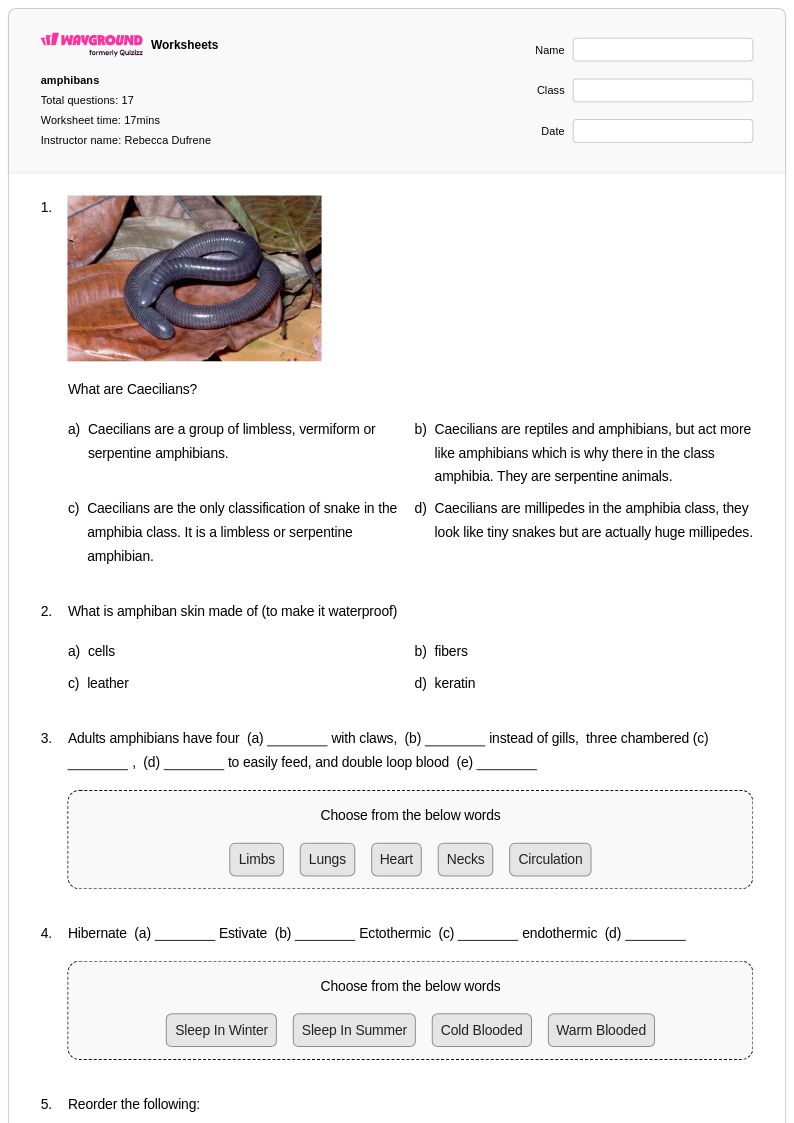
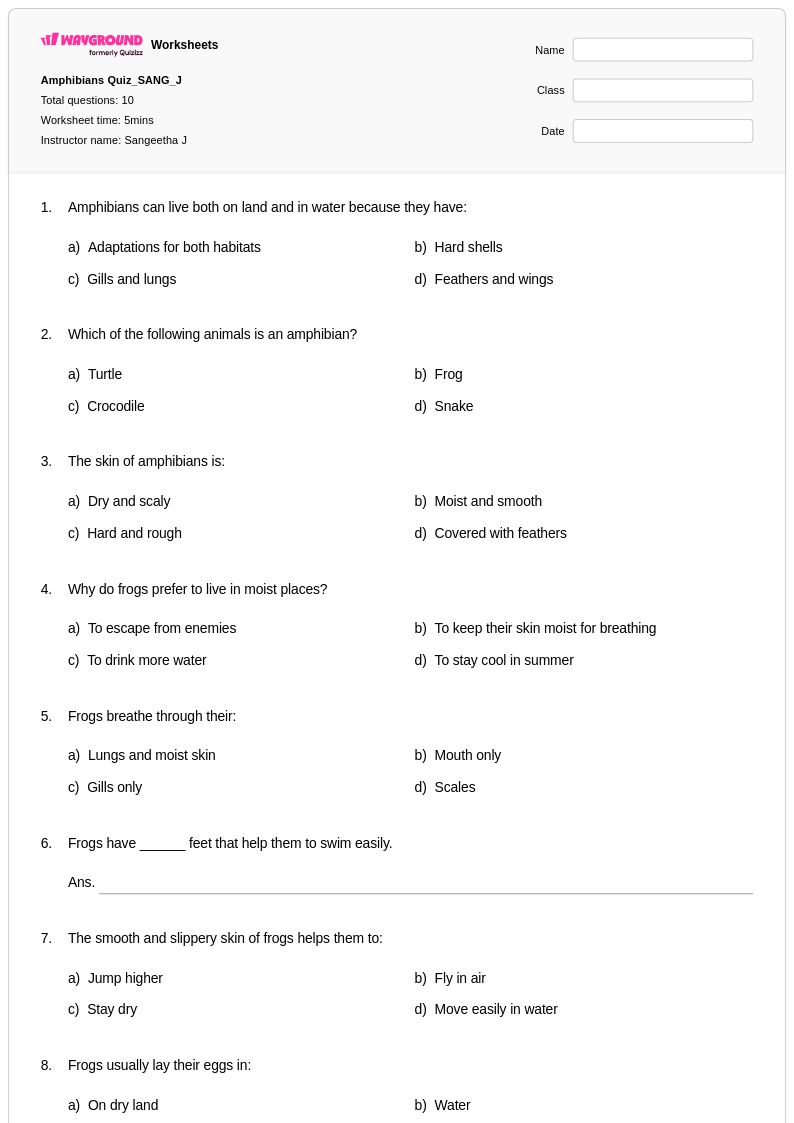
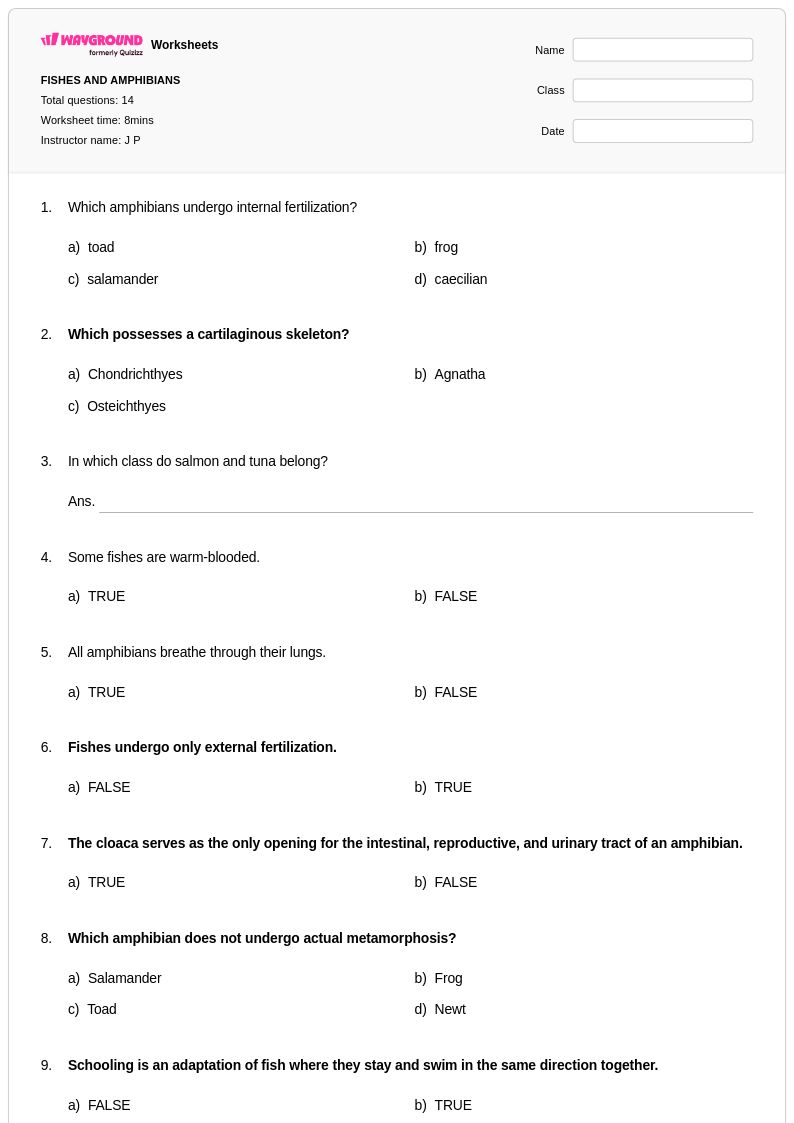
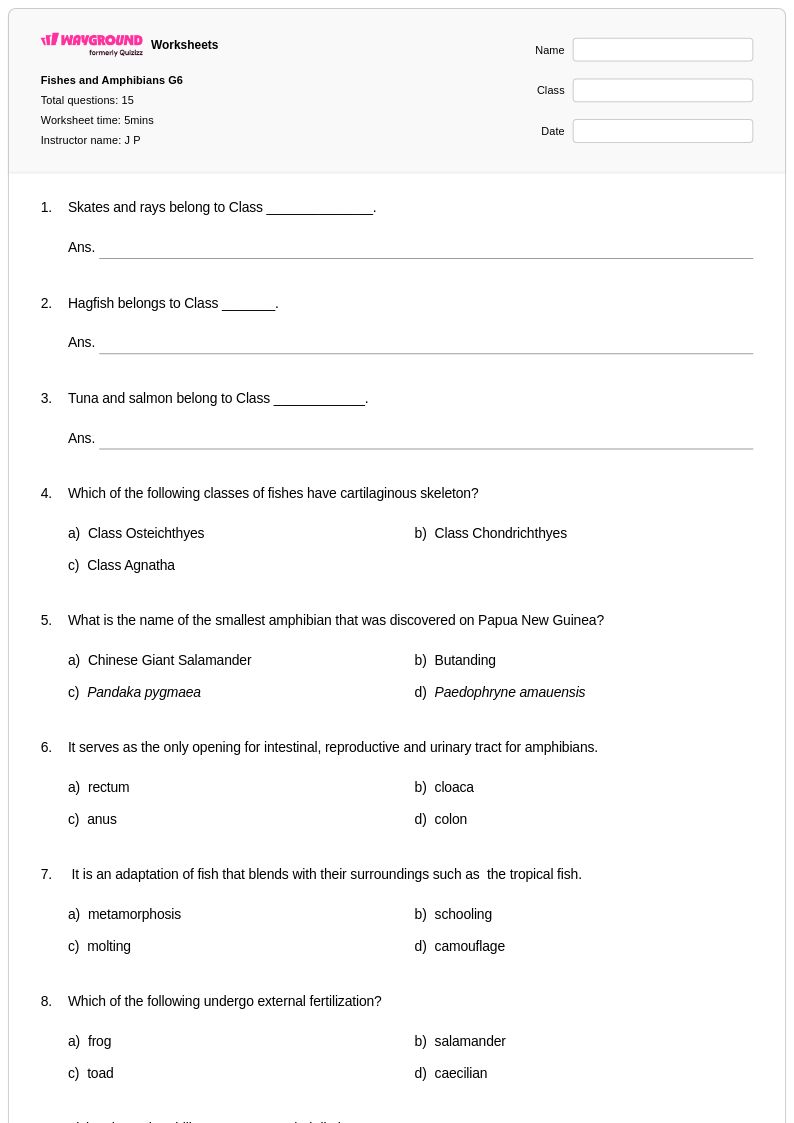
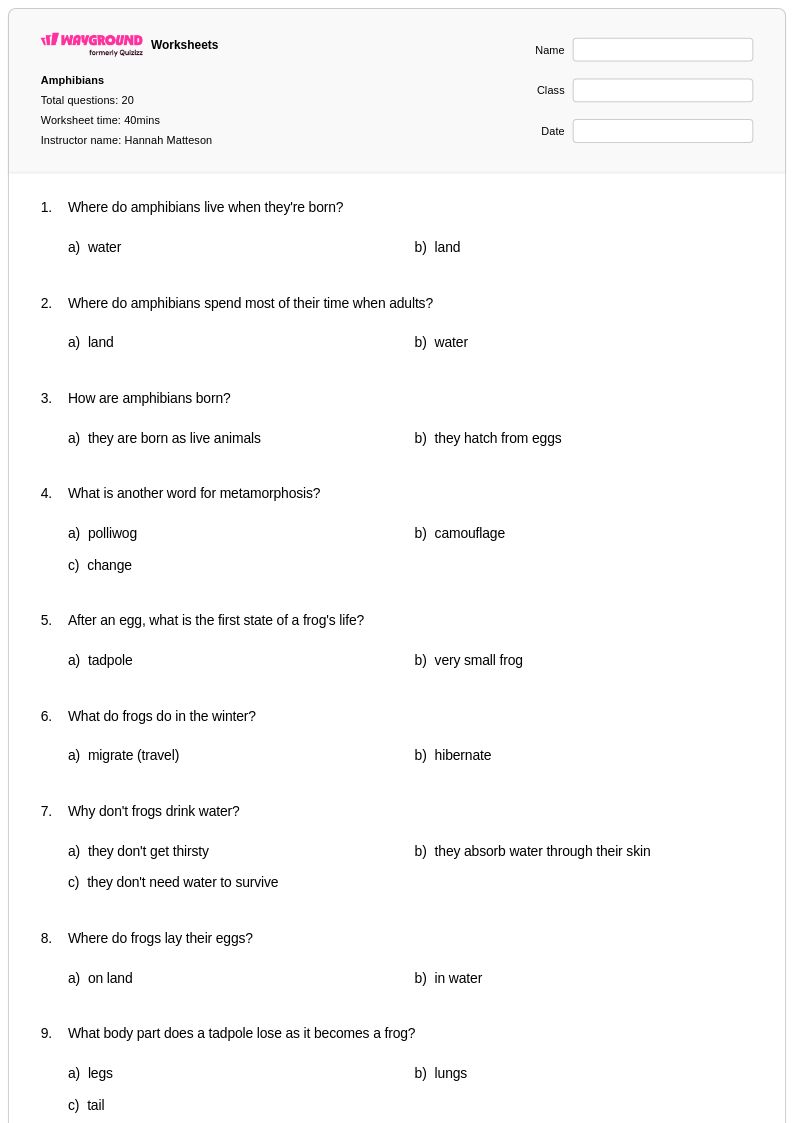
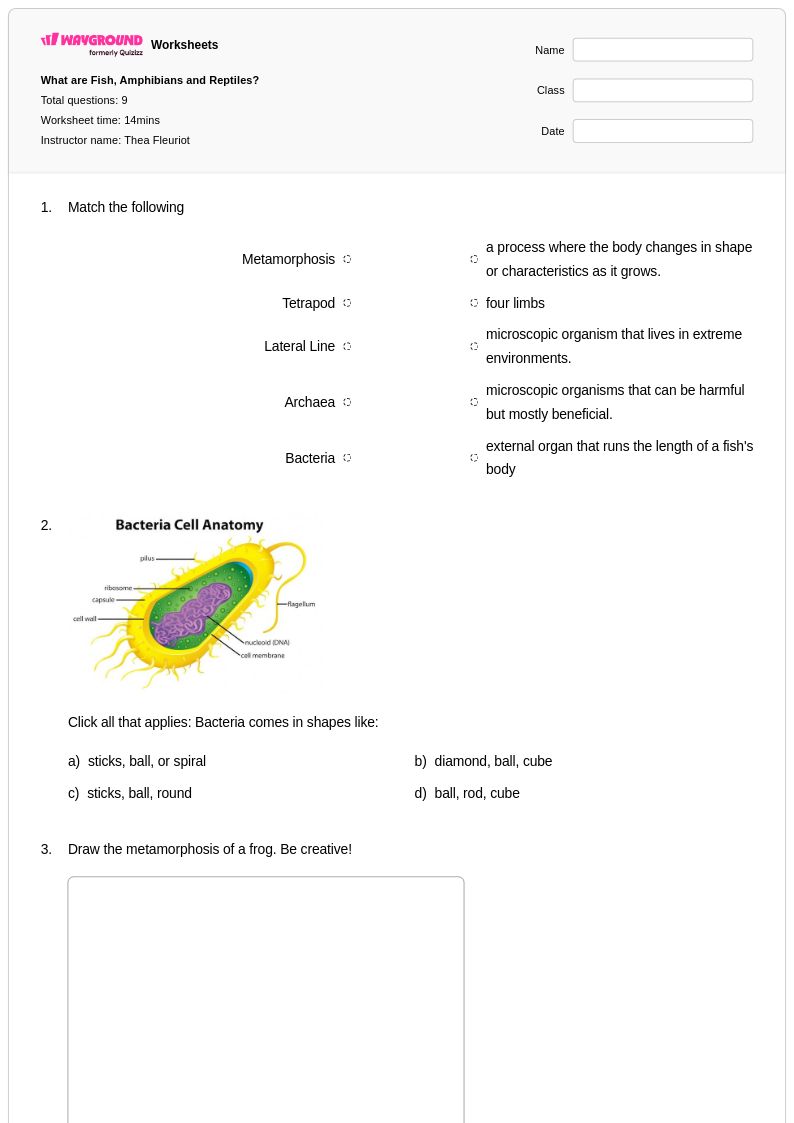
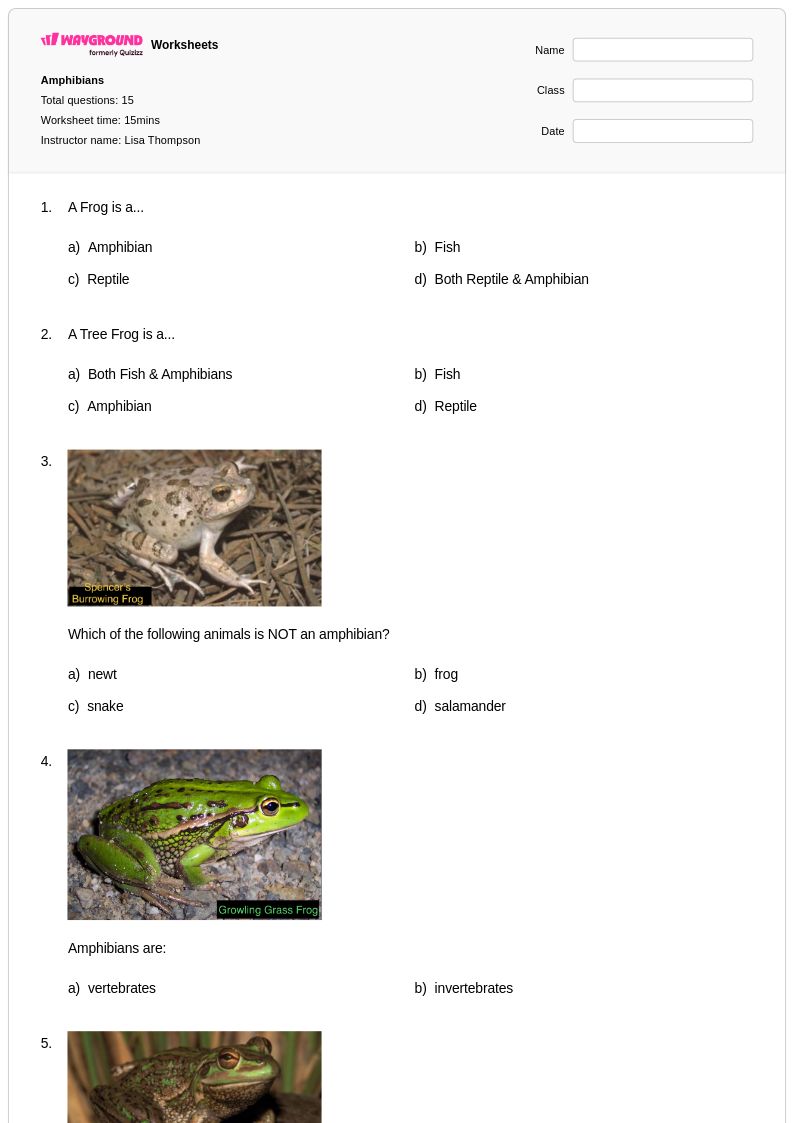
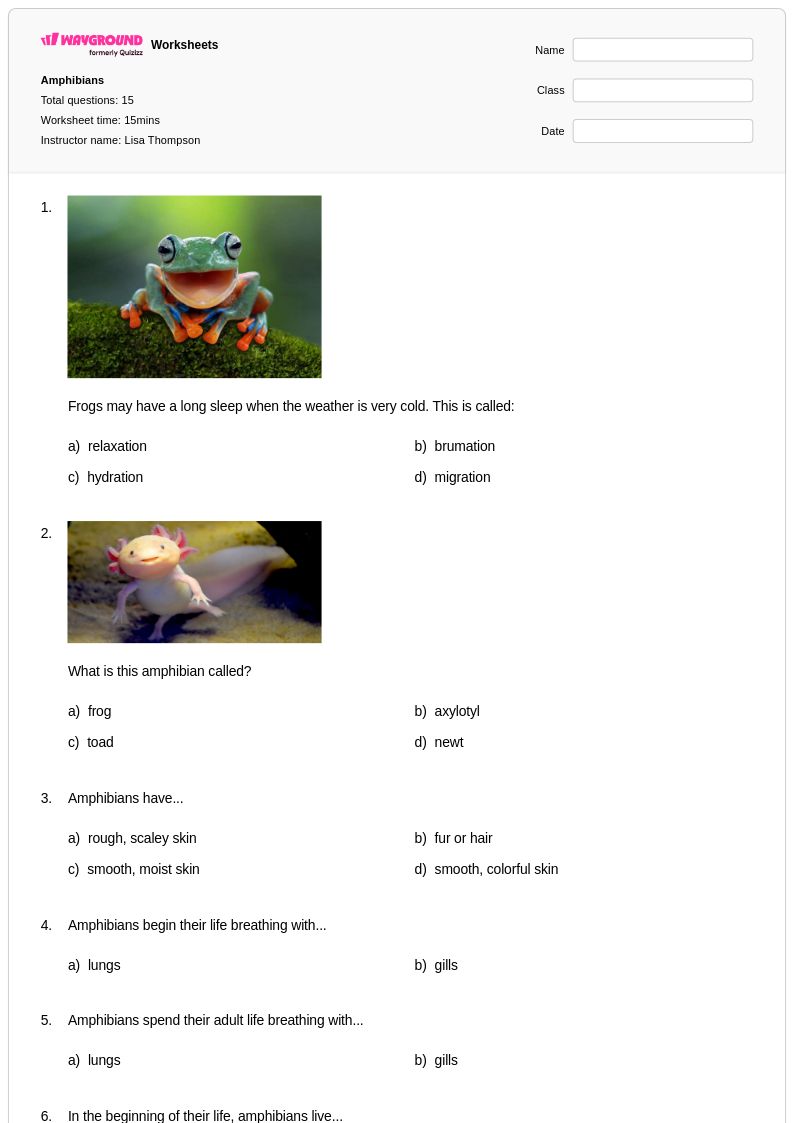
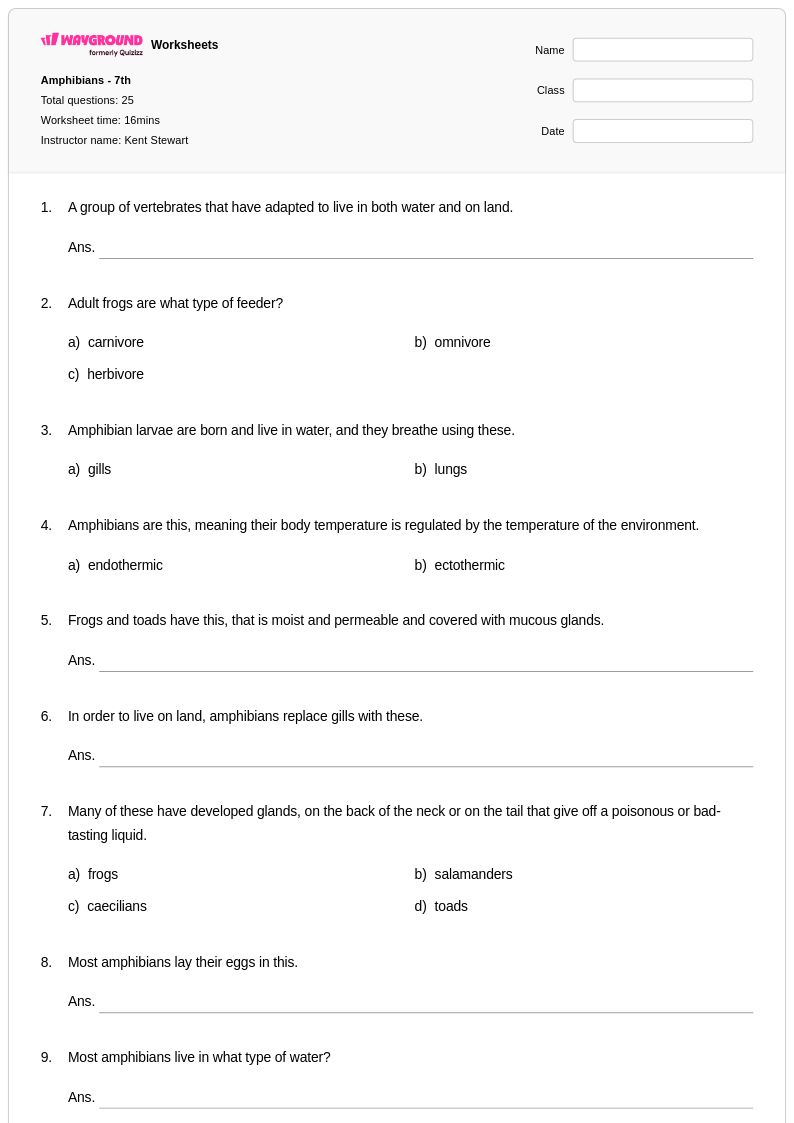
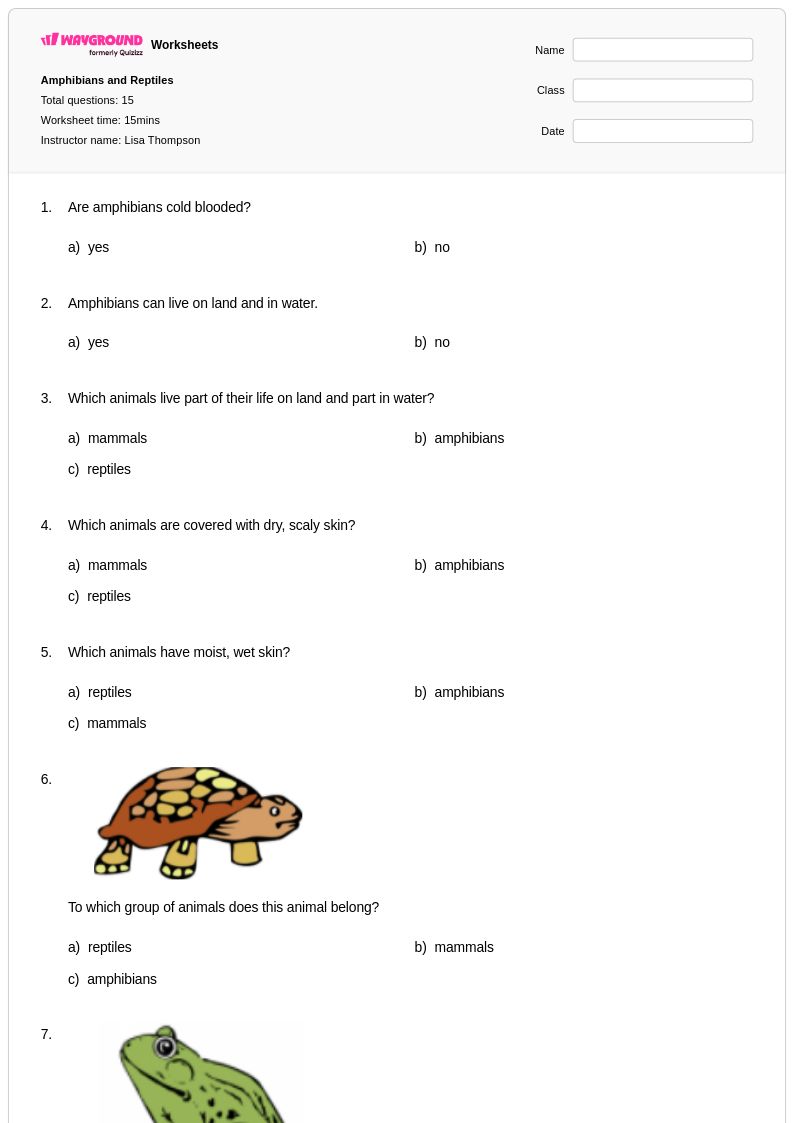
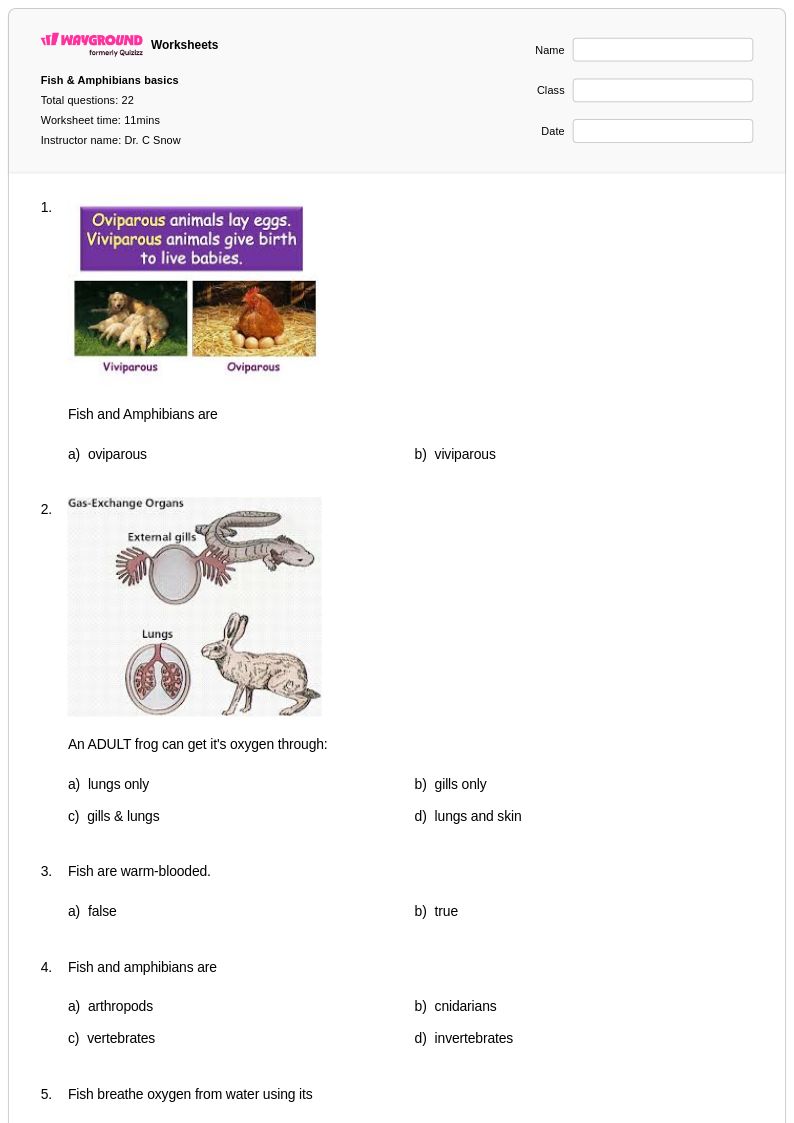
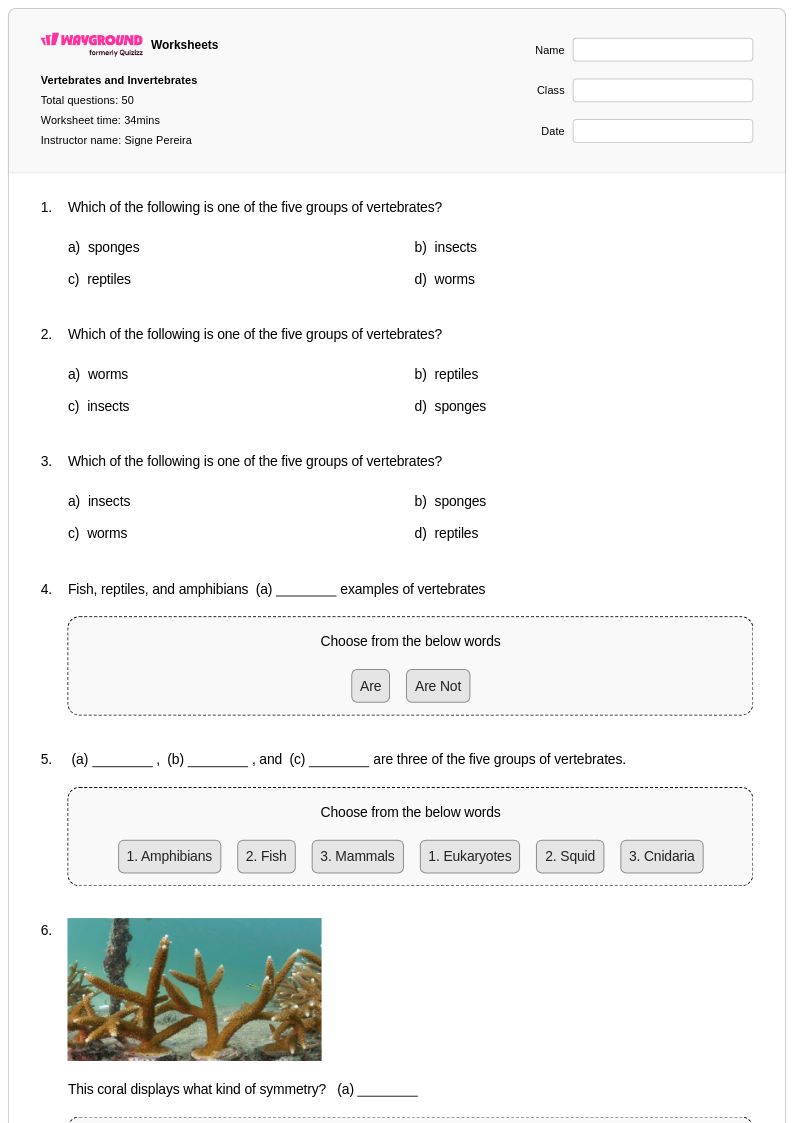
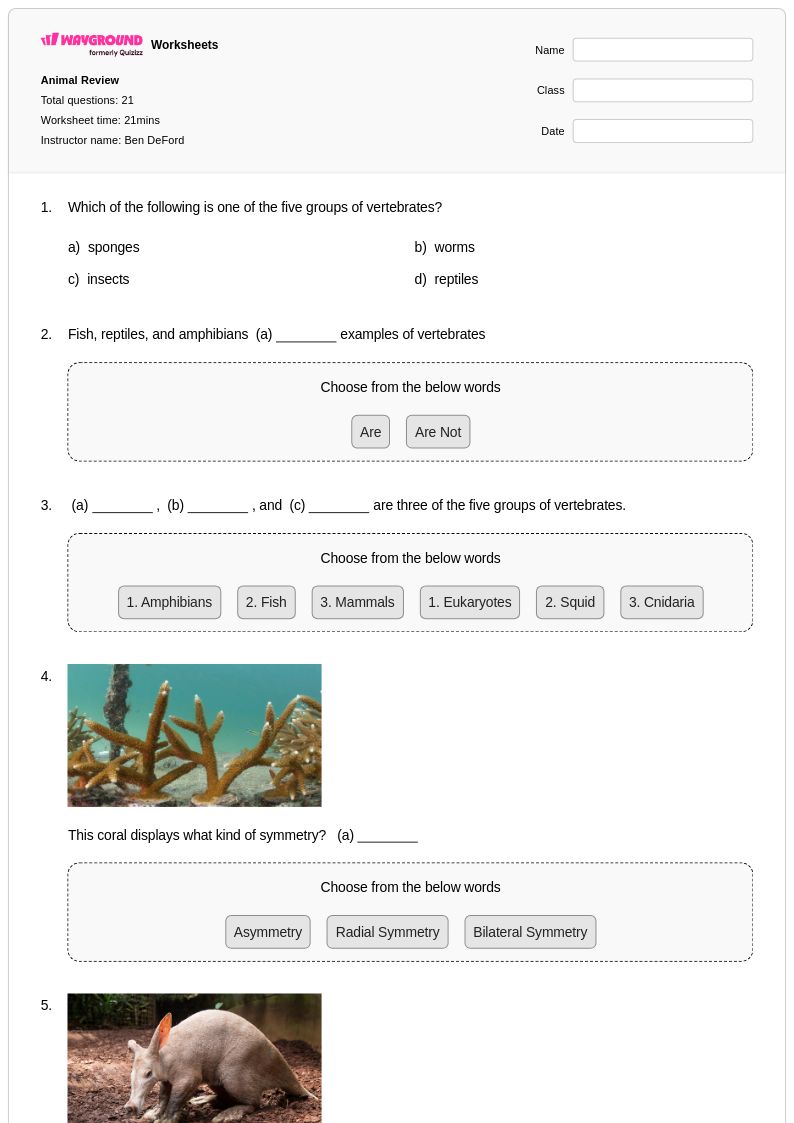
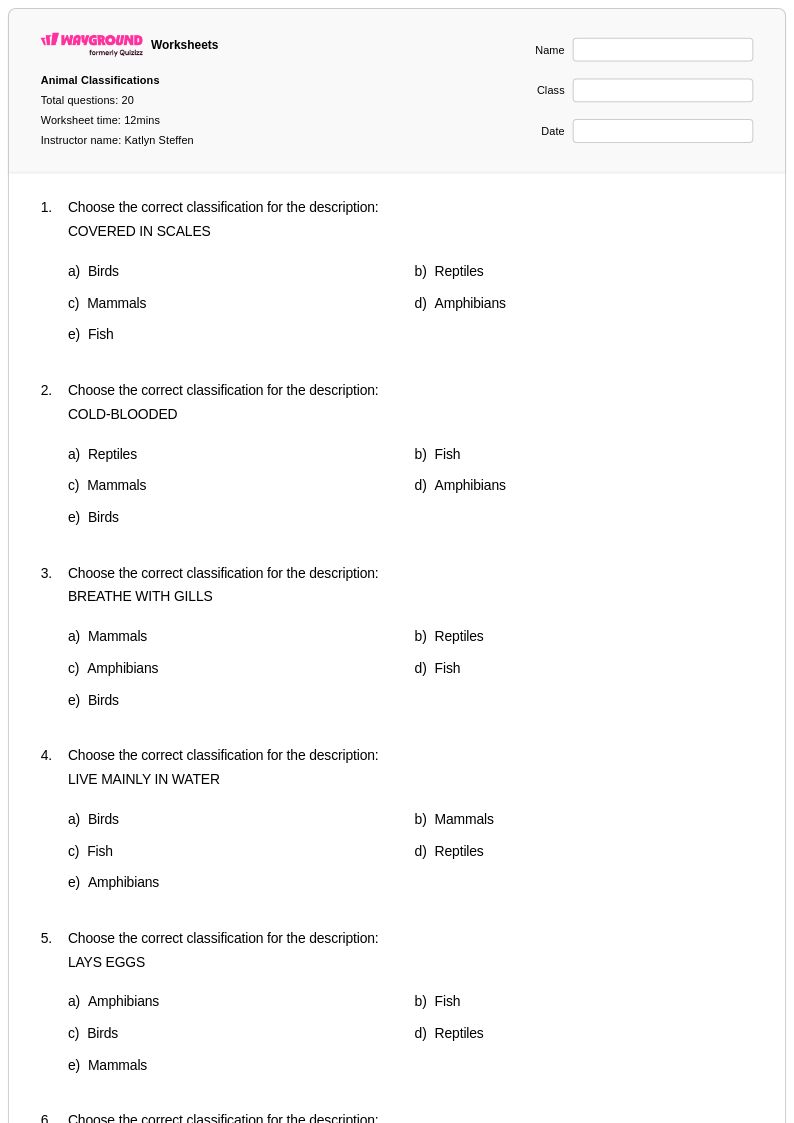
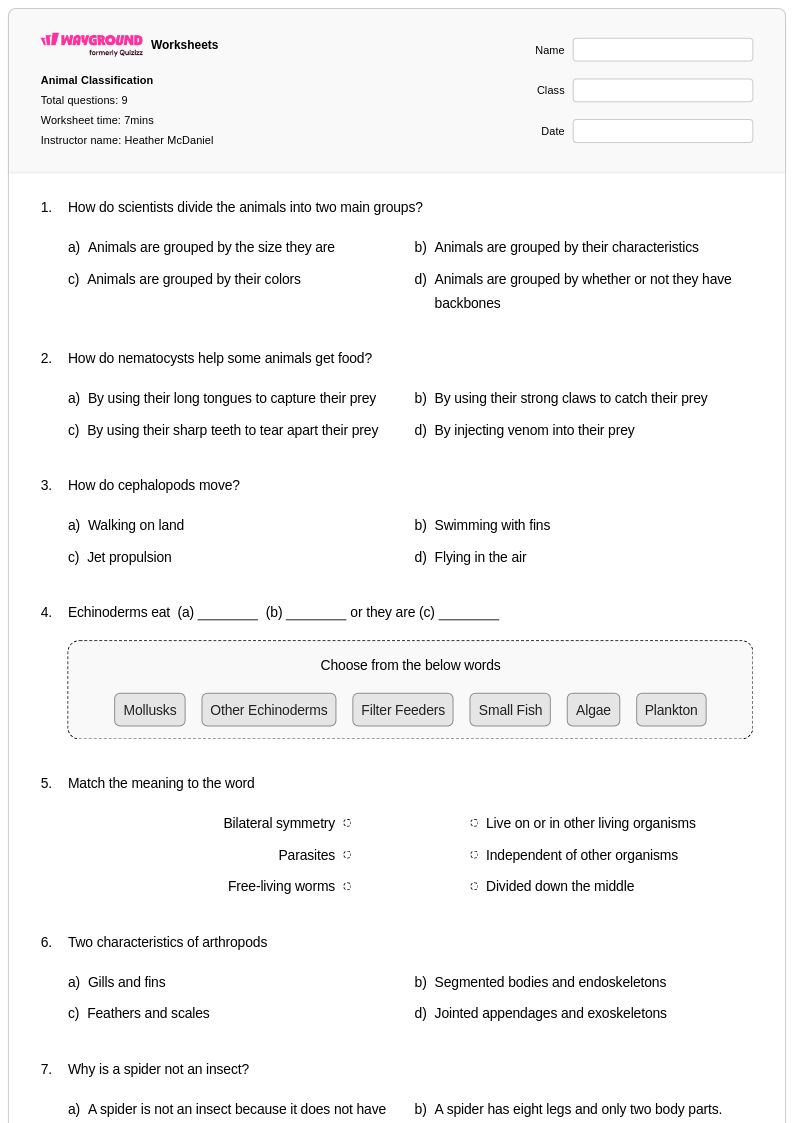
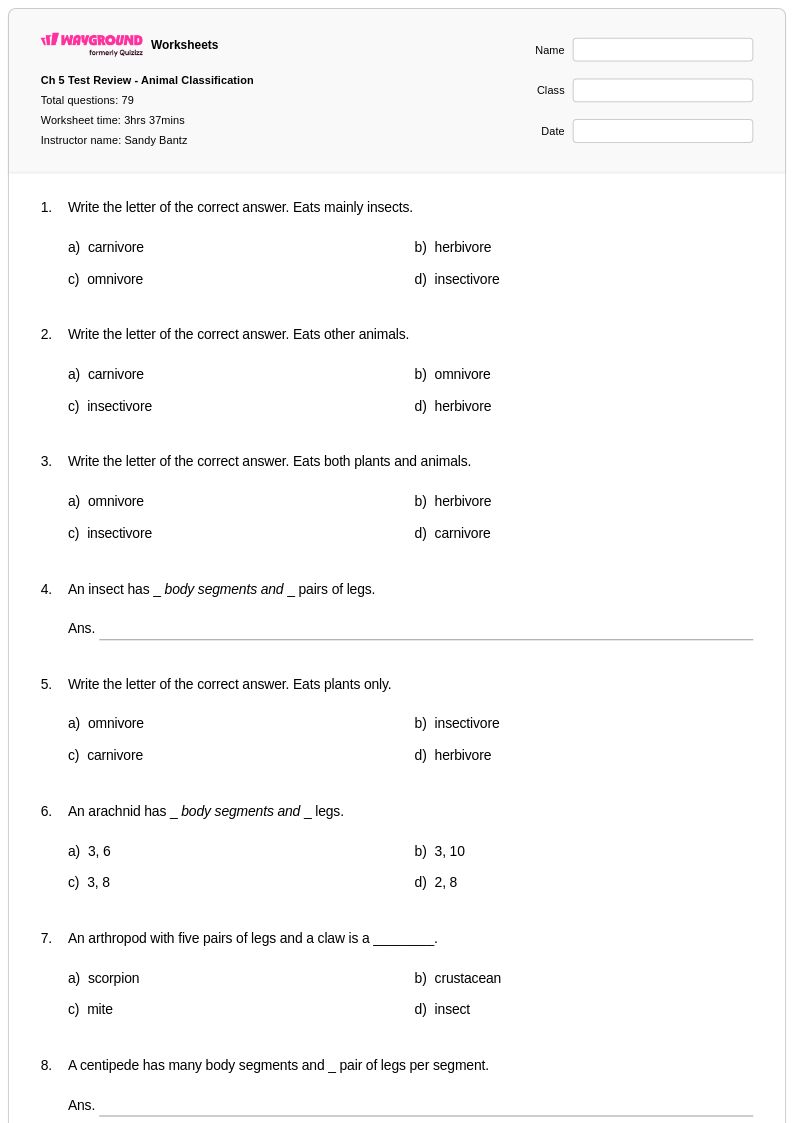
Class 6 amphibians worksheets available through Wayground (formerly Quizizz) provide comprehensive coverage of these fascinating vertebrates that bridge aquatic and terrestrial environments. These educational resources focus on amphibian characteristics, life cycles, habitat requirements, and evolutionary adaptations, helping students understand the unique features that distinguish frogs, toads, salamanders, and caecilians from other animal groups. The worksheets strengthen critical thinking skills through practice problems that explore metamorphosis stages, breathing mechanisms, skin adaptations, and ecological roles. Students engage with free printables that include detailed diagrams, classification activities, and comparative analysis exercises, all supported by comprehensive answer keys that facilitate both independent study and classroom instruction. These pdf resources emphasize hands-on learning through observation-based questions and real-world applications that connect amphibian biology to environmental science concepts.
Wayground (formerly Quizizz) supports educators with millions of teacher-created amphibian worksheet resources that streamline lesson planning and enhance student engagement with Class 6 biology concepts. The platform's robust search and filtering capabilities allow teachers to quickly locate materials aligned with specific curriculum standards, whether focusing on amphibian anatomy, reproduction, or conservation challenges. Differentiation tools enable instructors to customize content for varying skill levels, supporting both remediation for struggling learners and enrichment opportunities for advanced students. These versatile resources are available in both printable and digital formats, including downloadable pdf versions that work seamlessly across different classroom technologies and teaching environments. The extensive collection facilitates targeted skill practice through diverse question types and assessment formats, empowering teachers to address individual learning needs while maintaining rigorous academic standards in life science education.
FAQs
How do I teach amphibians to middle school science students?
Start by establishing what makes amphibians distinct from other vertebrates: their dual-habitat life cycle, moist permeable skin, and ectothermic metabolism. From there, build toward metamorphosis, comparing larval and adult stages in species like frogs and salamanders. Connecting amphibians to their role as environmental bioindicators gives students a real-world framework that makes the content more meaningful and easier to retain.
What are common misconceptions students have about amphibians?
A frequent error is conflating amphibians with reptiles — students often assume both groups are scaly, cold-blooded, and land-dwelling. In reality, amphibians have moist, glandular skin rather than scales, and most require proximity to water for reproduction and skin respiration. Another common misconception is that all amphibians undergo the same type of metamorphosis; in fact, salamanders undergo incomplete metamorphosis while frogs and toads undergo complete metamorphosis with distinct larval stages.
What worksheets help students understand the amphibian life cycle?
Sequencing activities that ask students to order the stages of frog metamorphosis — from egg to tadpole to froglet to adult — are particularly effective for building conceptual understanding. Diagram labeling exercises reinforce the anatomical changes across life stages, while comparison charts help students analyze how breathing mechanisms shift from gills to lungs as amphibians transition from aquatic to terrestrial environments.
How can I use amphibian worksheets to assess student understanding?
Worksheets that ask students to analyze amphibian adaptations or explain how permeable skin makes amphibians sensitive to environmental pollutants work well as formative checkpoints. Error-analysis tasks — where students identify and correct misconceptions in a written passage — reveal gaps in conceptual understanding that multiple-choice questions often miss. Because amphibians connect to broader ecology topics, response prompts about their role as indicator species can also serve as strong summative performance tasks.
How do I use Wayground's amphibian worksheets in my classroom?
Wayground's amphibian worksheets are available as printable PDFs, making them easy to distribute for in-class work or homework, and in digital formats that suit technology-integrated and hybrid learning environments. You can also host them as a quiz directly on Wayground, which allows for faster feedback and easier tracking of student responses. Wayground supports student-level accommodations including read aloud, extended time, and reduced answer choices, which can be applied to individual students without disrupting the experience for the rest of the class.
How do amphibians serve as environmental indicators, and how do I teach this concept?
Because amphibians absorb water and oxygen directly through their permeable skin, they are highly sensitive to chemical pollutants, habitat destruction, and climate shifts — making population changes a reliable signal of ecosystem health. Teaching this concept works well after students understand amphibian skin structure, so they can connect anatomy to ecological vulnerability. Case studies involving declining frog populations or chytrid fungus outbreaks give students concrete, data-grounded examples to analyze.