Free Printable Prokaryotic Cell Worksheets for Class 6
Explore Class 6 prokaryotic cell worksheets and printables from Wayground that help students learn bacterial structure, cell organization, and key differences from eukaryotic cells through practice problems and answer keys.
Explore printable Prokaryotic Cell worksheets for Class 6
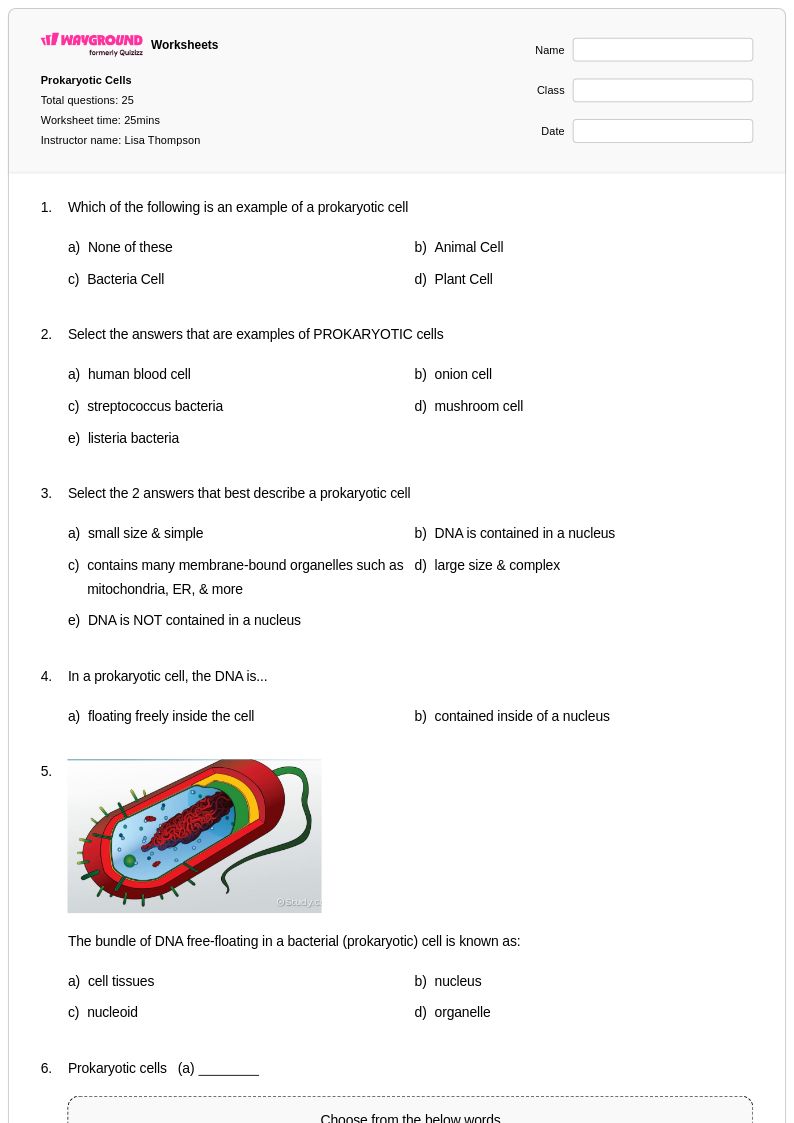
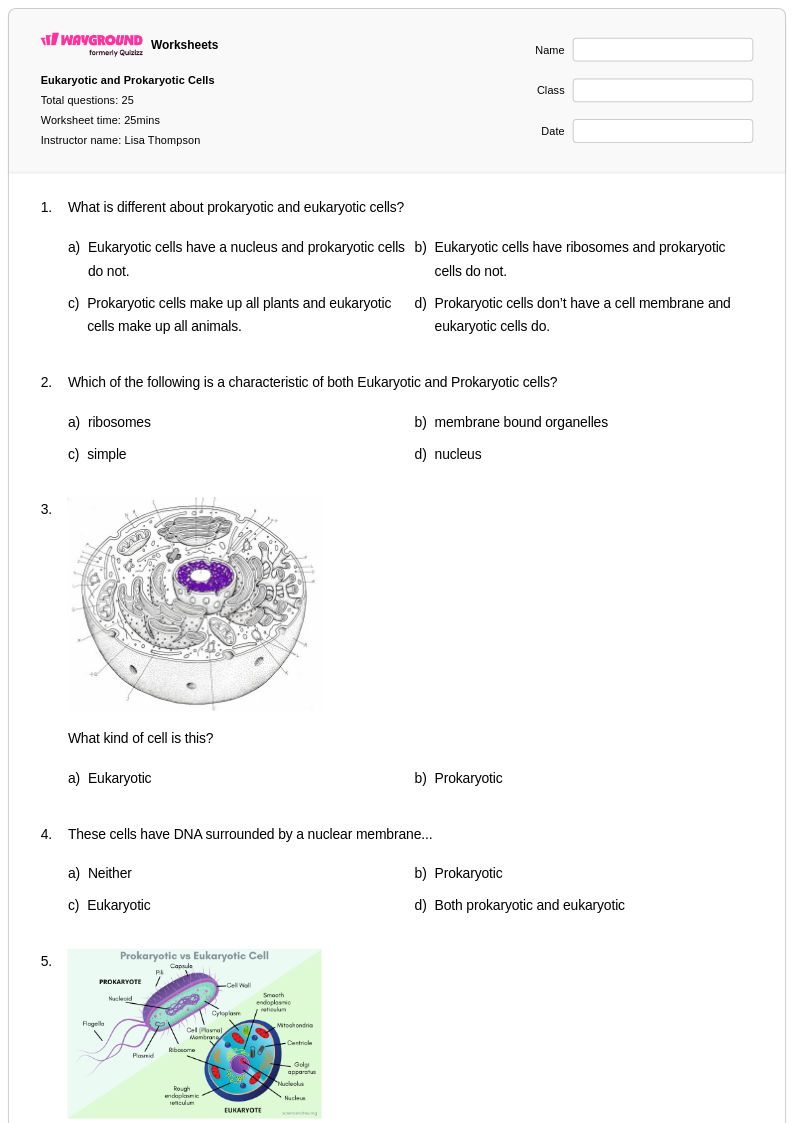
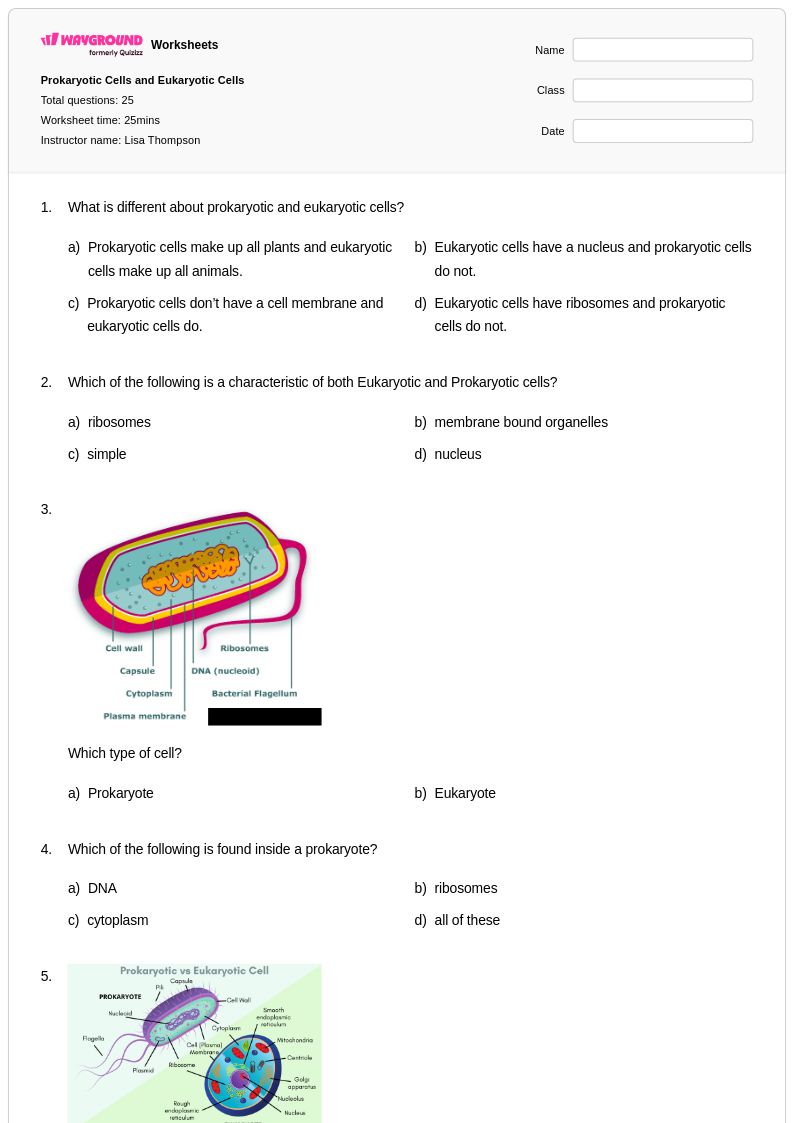
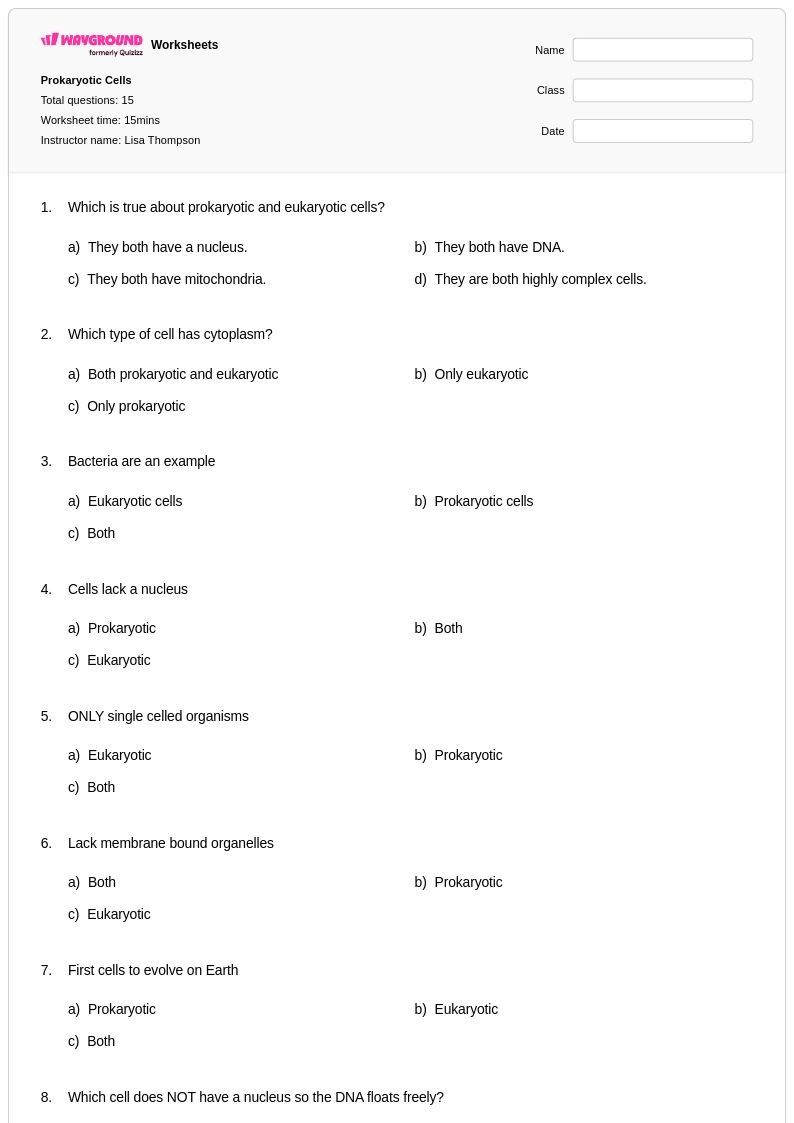
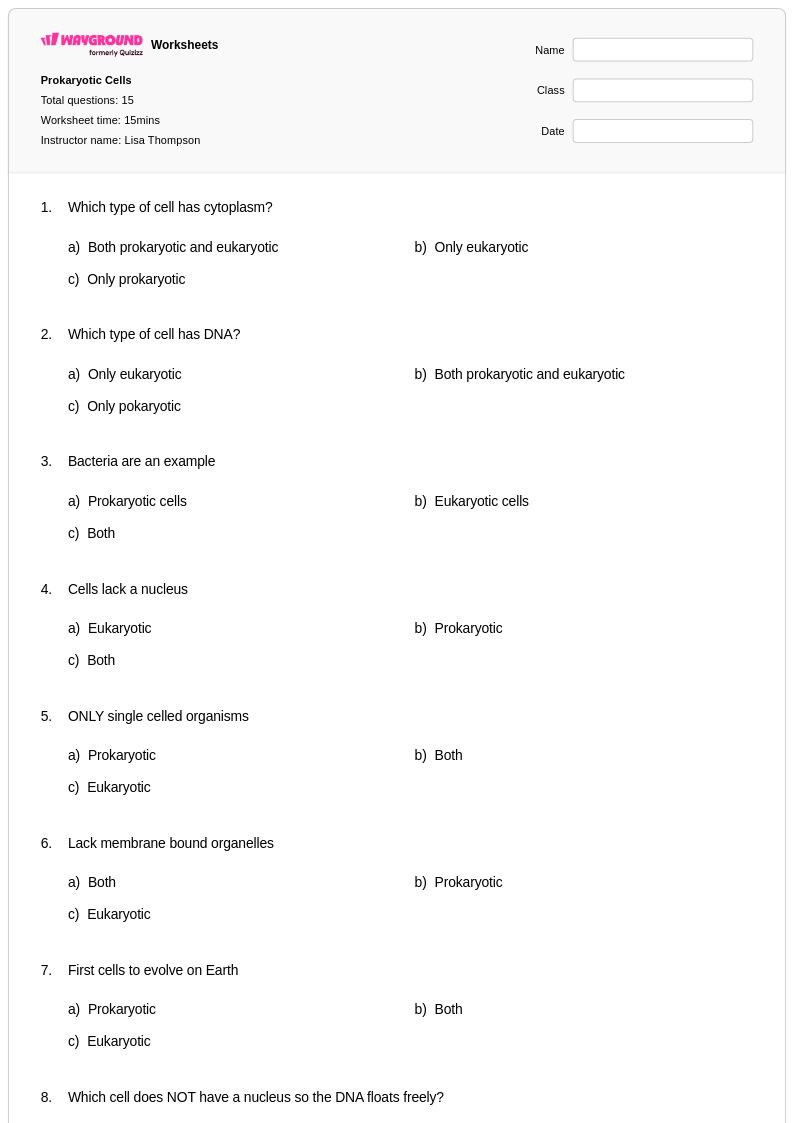
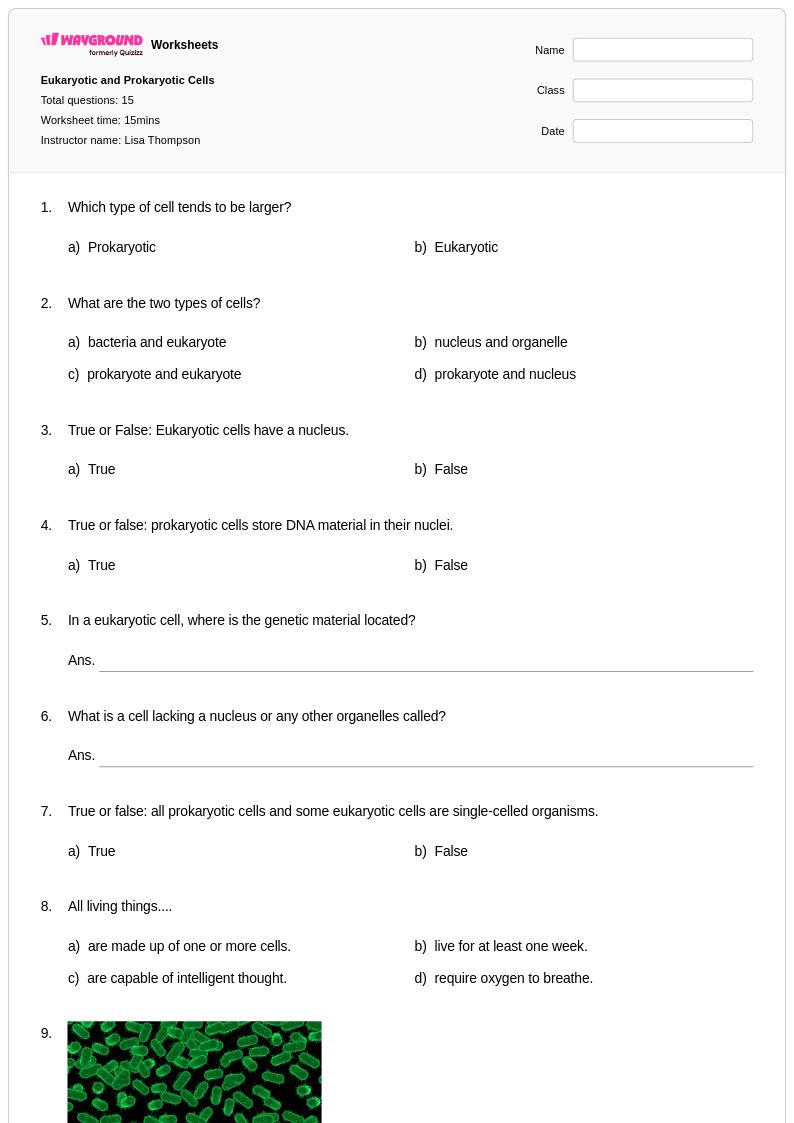
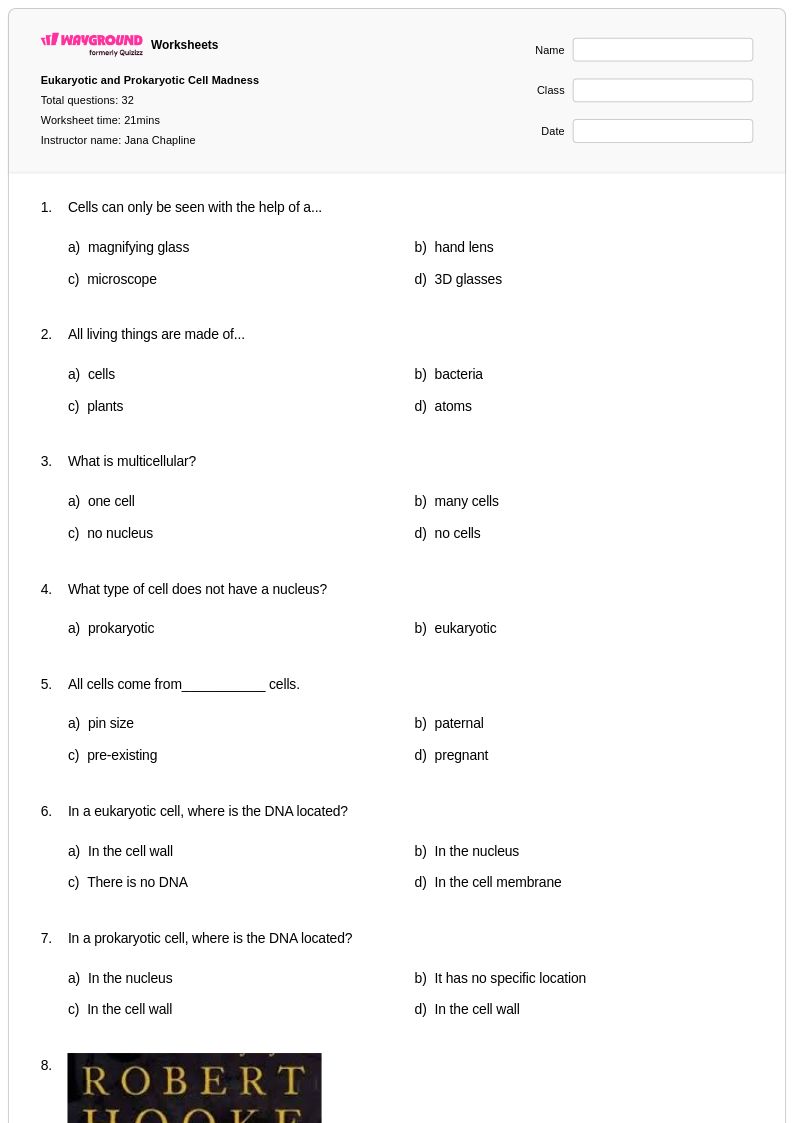
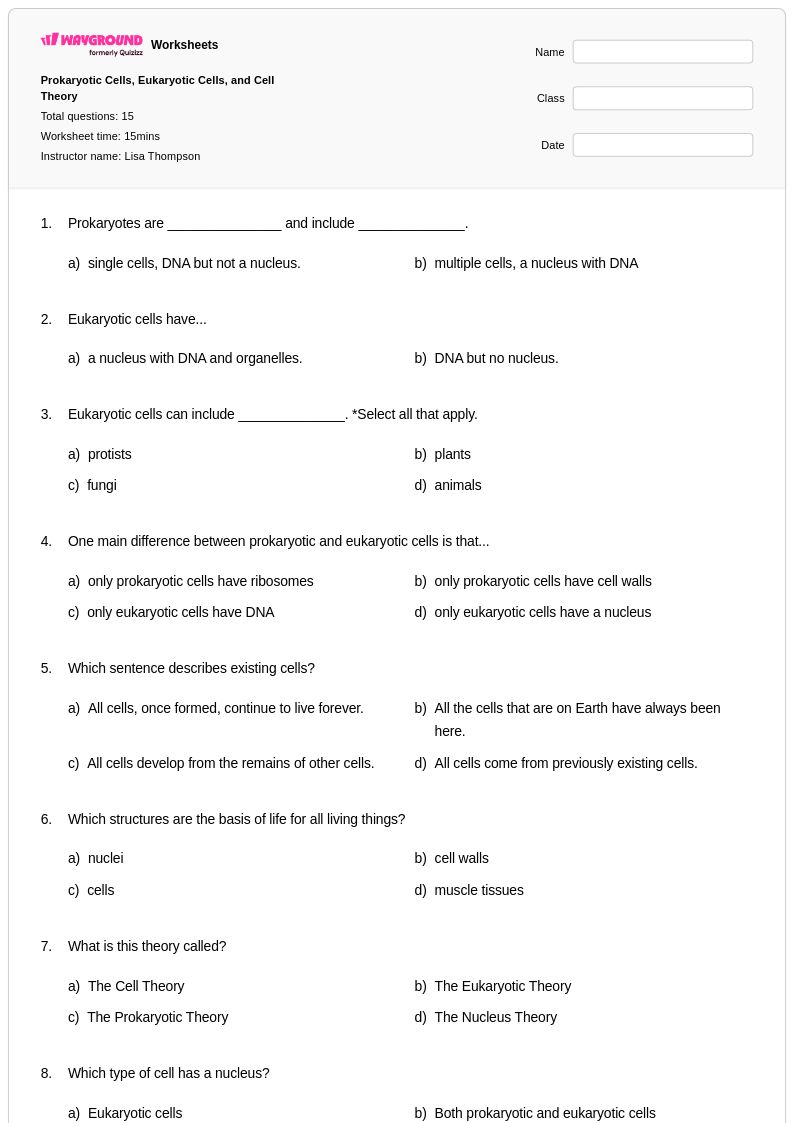
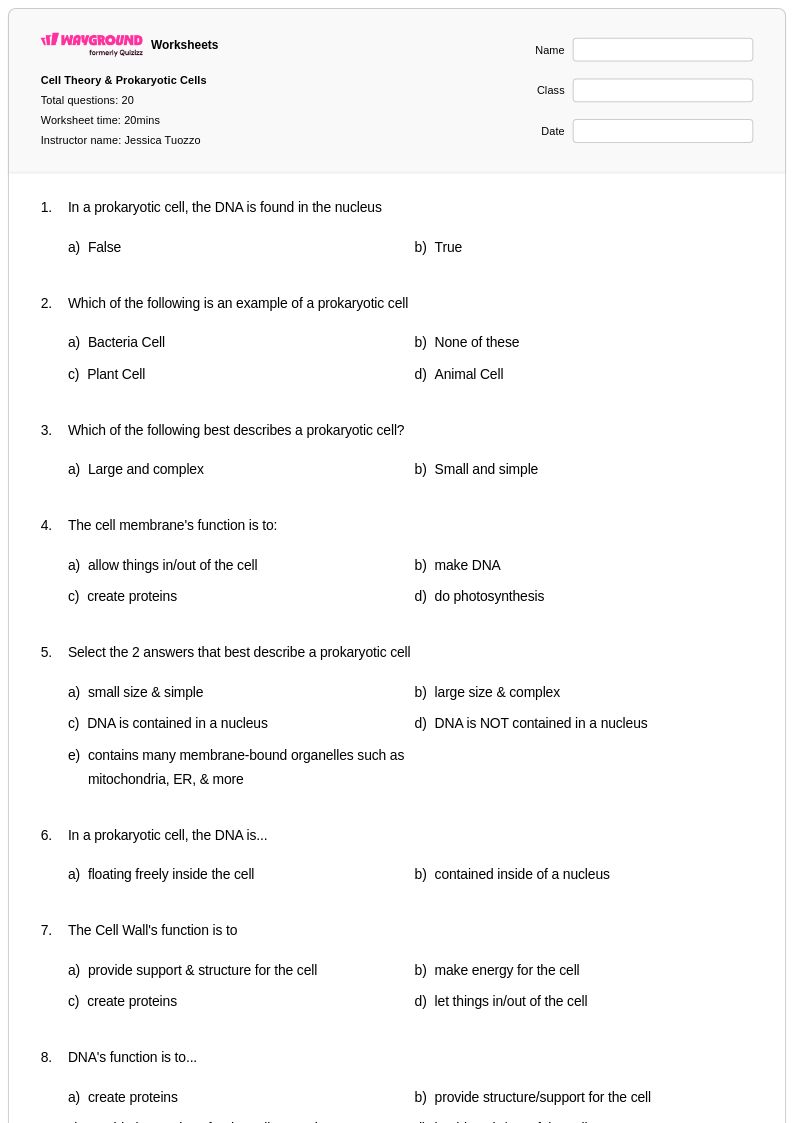
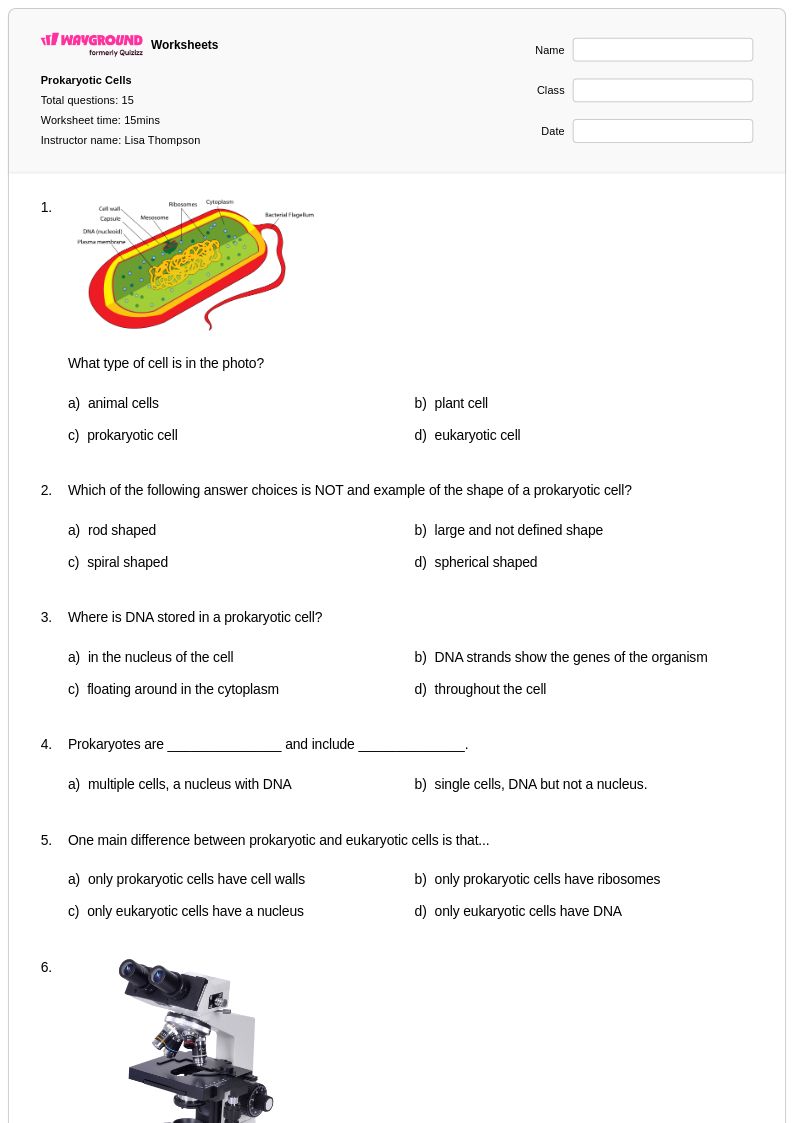
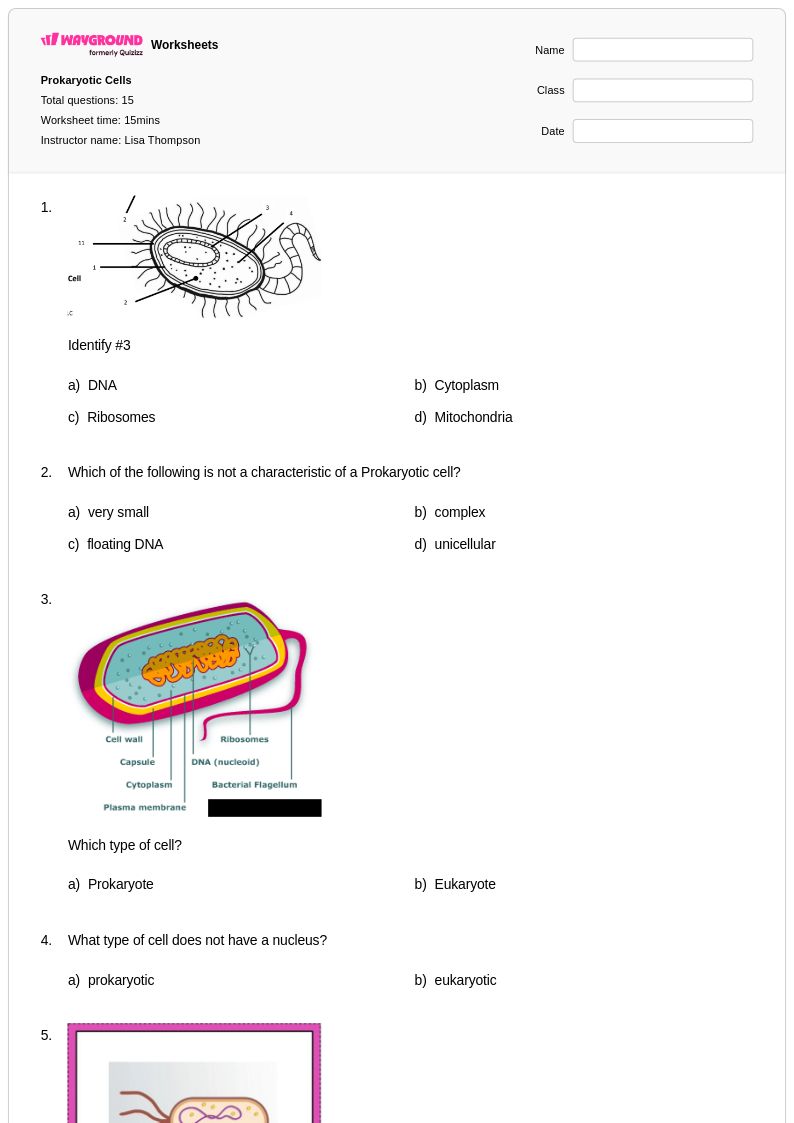
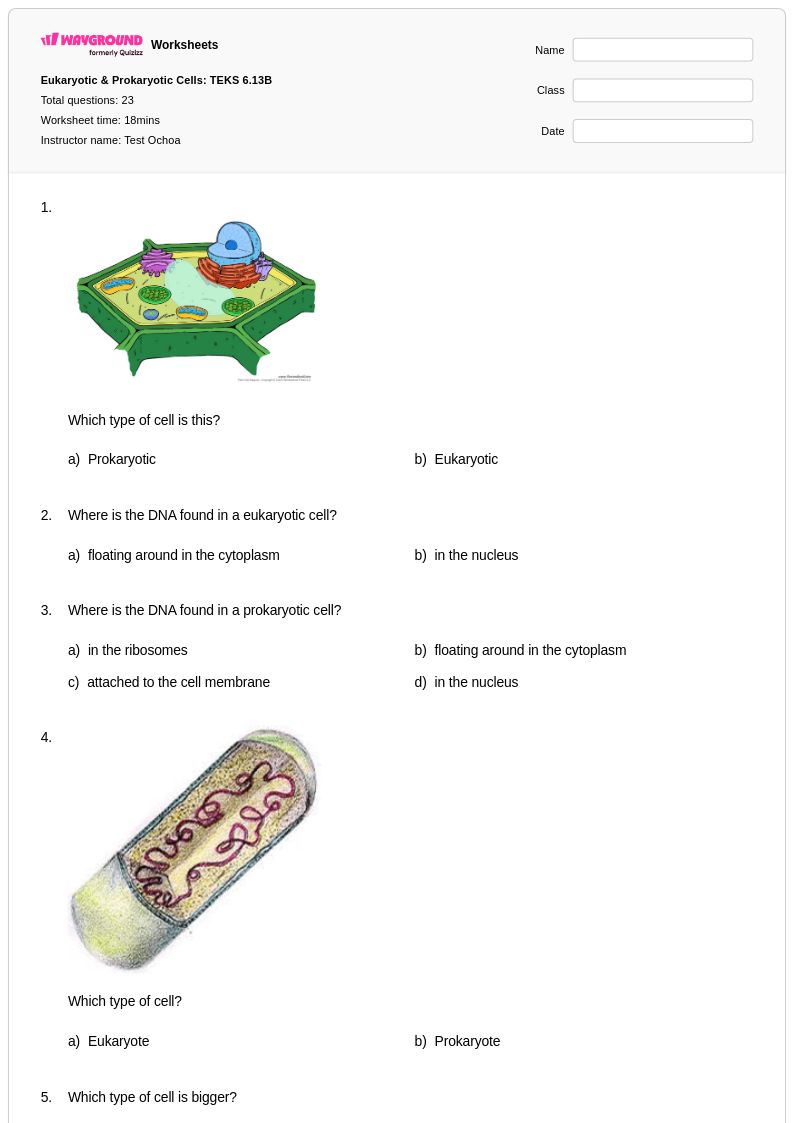
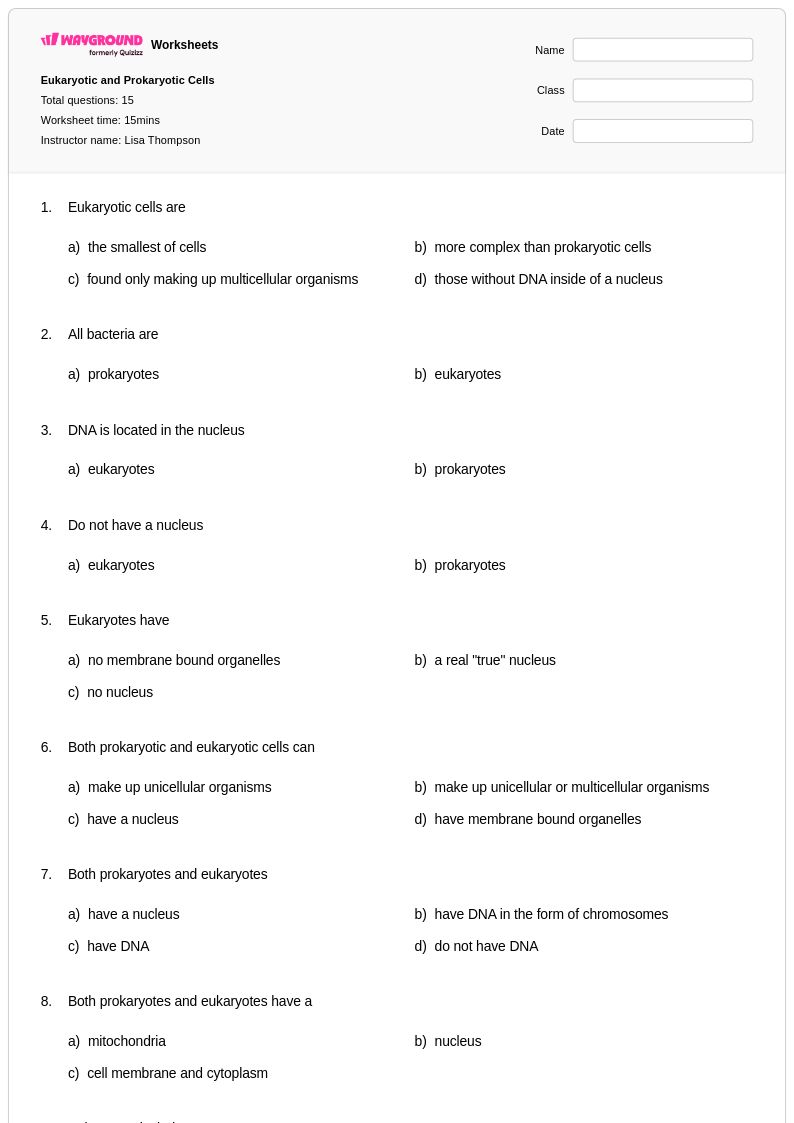
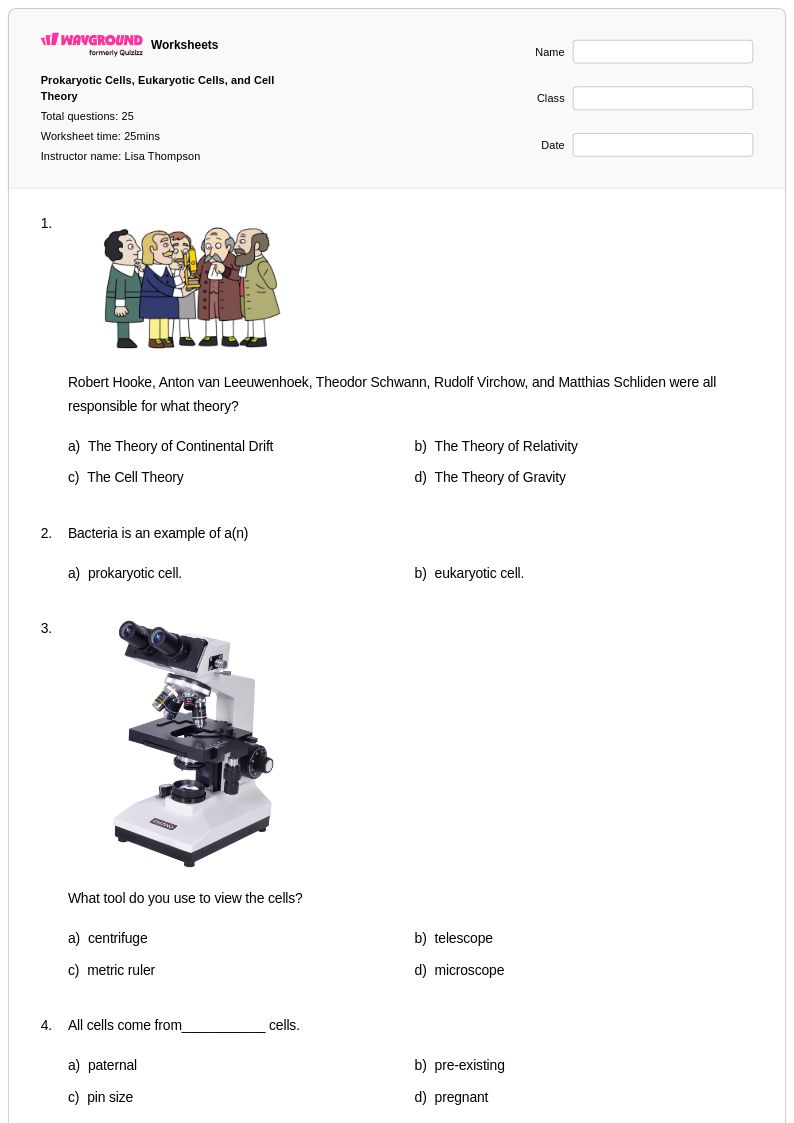
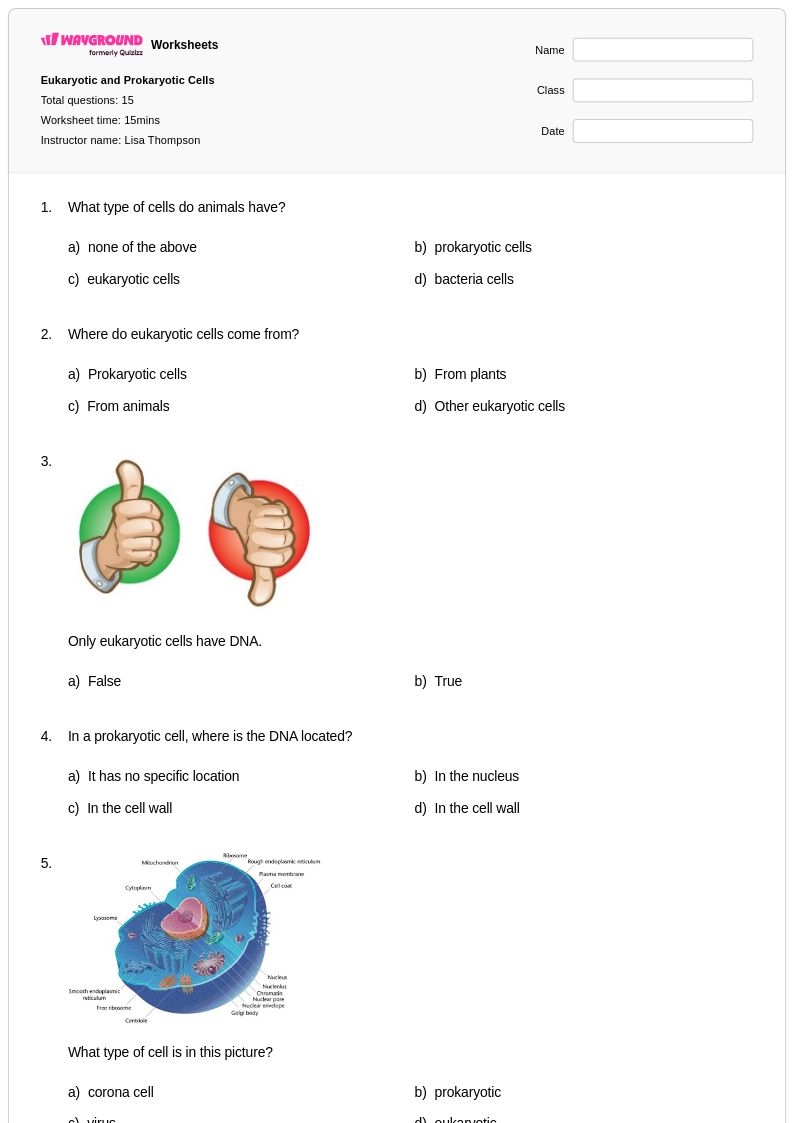
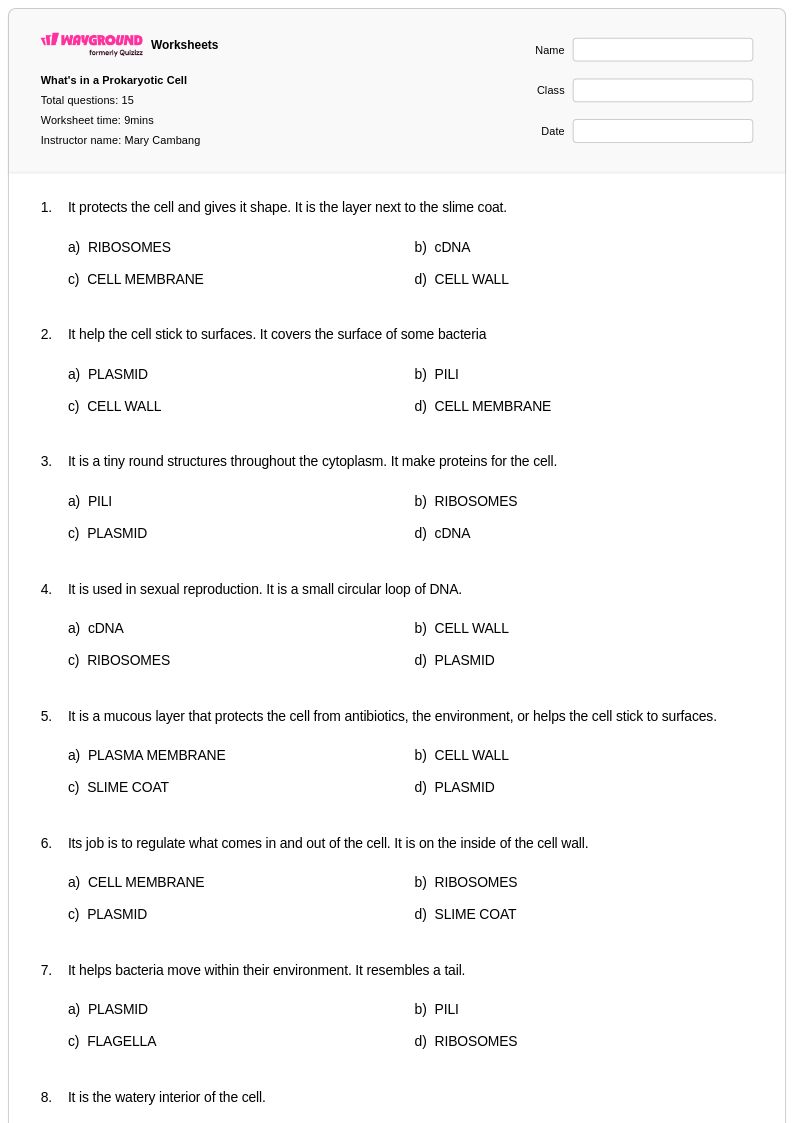
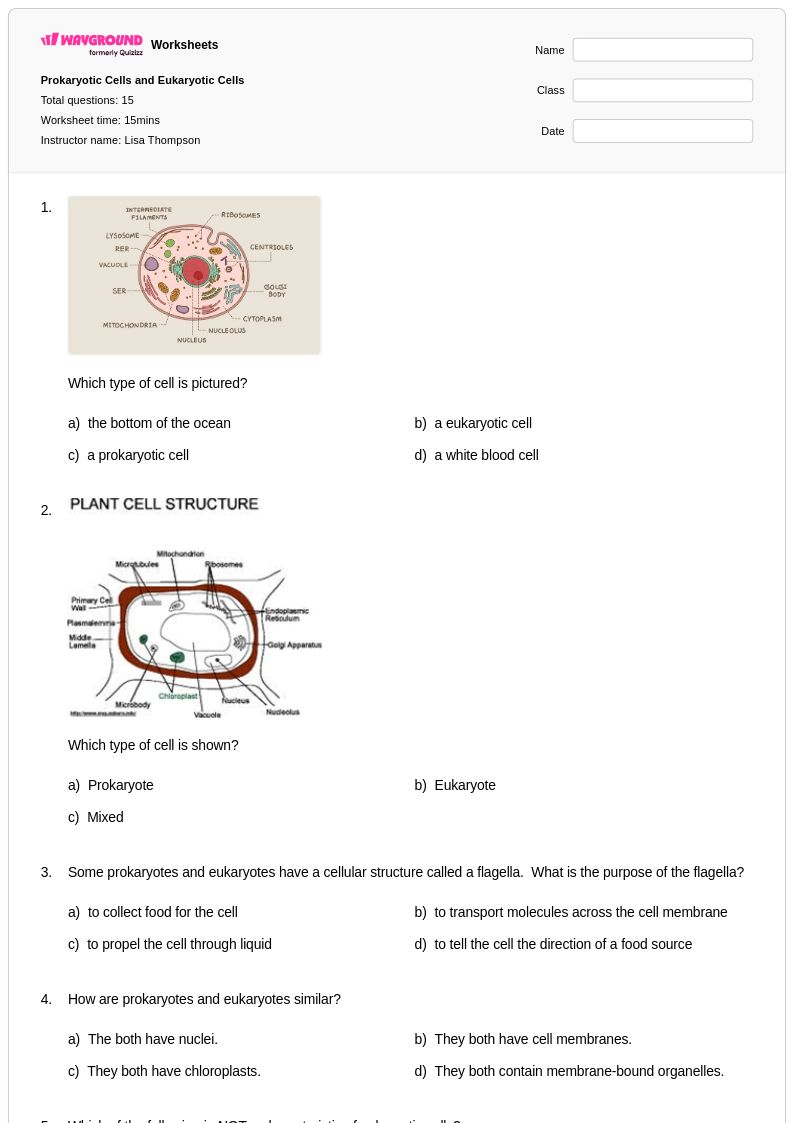
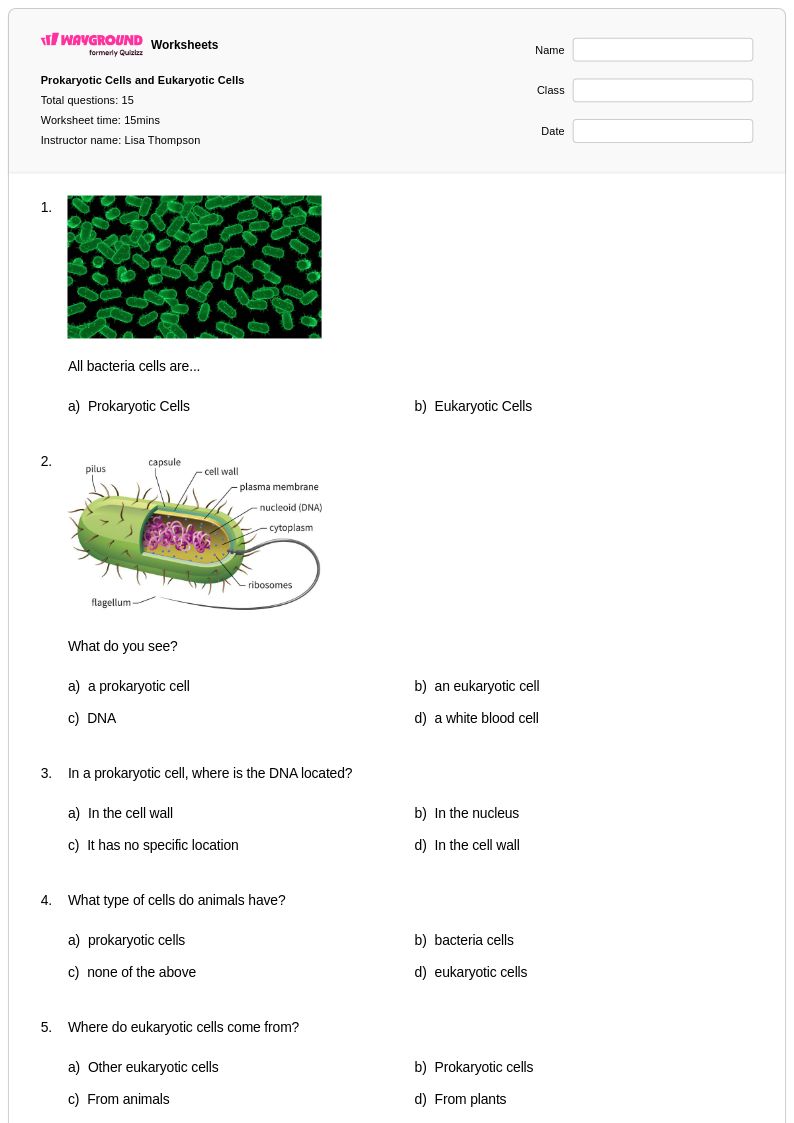
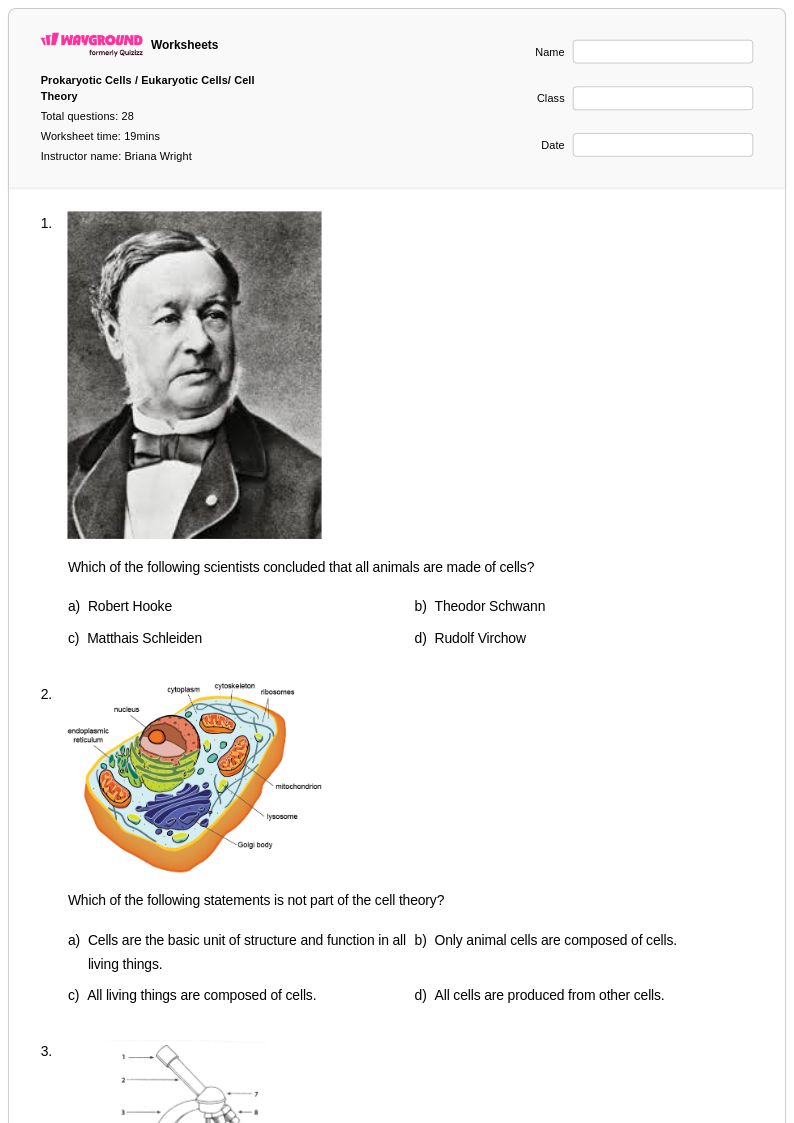
Prokaryotic cell worksheets for Class 6 students through Wayground (formerly Quizizz) provide comprehensive exploration of these fundamental cellular structures that lack a membrane-bound nucleus. These educational resources strengthen students' understanding of bacterial cell components, including the cell wall, plasma membrane, ribosomes, and genetic material organization within the cytoplasm. The worksheets feature detailed diagrams for labeling exercises, comparison activities between prokaryotic and eukaryotic cells, and practice problems that reinforce key vocabulary and concepts. Students develop critical thinking skills through activities that examine prokaryotic cell functions, reproduction methods, and their vital roles in ecosystems. Each worksheet includes an answer key to support independent learning and comes in convenient pdf format as free printables that teachers can easily distribute for classroom or homework assignments.
Wayground (formerly Quizizz) empowers educators with millions of teacher-created prokaryotic cell worksheet resources that can be seamlessly integrated into Class 6 biology instruction. The platform's robust search and filtering capabilities allow teachers to quickly locate materials aligned with specific learning standards and curriculum requirements. Advanced differentiation tools enable educators to customize worksheet difficulty levels, modify content for diverse learning needs, and create targeted interventions for remediation or enrichment purposes. These prokaryotic cell resources are available in both printable pdf formats and interactive digital versions, providing flexible options for traditional classroom settings, hybrid learning environments, or remote instruction. Teachers can efficiently plan comprehensive lesson sequences, assess student understanding through varied practice opportunities, and track learning progress while building students' foundational knowledge of cellular biology concepts.
FAQs
How do I teach prokaryotic cell structure to biology students?
Start by establishing what makes prokaryotic cells fundamentally different from eukaryotic cells: the absence of a membrane-bound nucleus and membrane-bound organelles. Use labeled diagrams to walk students through key structures such as the cell wall, plasma membrane, ribosomes, nucleoid region, flagella, and pili. Comparing prokaryotic and eukaryotic cells side by side early in the unit helps students build a mental framework that reduces confusion later when studying organelle function.
What practice exercises help students understand prokaryotic cell components?
Labeling diagrams of bacterial cell anatomy is one of the most effective exercises for reinforcing structural knowledge, as it requires students to actively recall and place each component rather than passively recognize it. Comparison charts that contrast prokaryotic and eukaryotic cells help students solidify key distinctions, while short-answer questions about the function of structures like ribosomes or the nucleoid region push students beyond memorization toward conceptual understanding. Practice problems that ask students to analyze metabolic pathways unique to prokaryotes, such as binary fission, extend learning into process-level thinking.
What mistakes do students commonly make when studying prokaryotic cells?
The most common misconception is that prokaryotic cells have no internal organization at all, when in fact they have a nucleoid region, ribosomes, and in some cases internal membrane structures like thylakoids in cyanobacteria. Students also frequently confuse the absence of a membrane-bound nucleus with the absence of DNA entirely. Another common error is assuming all prokaryotes are bacteria, overlooking archaea as a distinct domain with its own unique cellular features.
How do I differentiate prokaryotic cell instruction for students at different skill levels?
For struggling students, focus first on the core structural differences between prokaryotic and eukaryotic cells using simplified diagrams and guided labeling activities before introducing metabolic or genetic complexity. Advanced learners can be challenged with content on horizontal gene transfer, the role of plasmids, or how antibiotic resistance relates to prokaryotic cell wall structure. On Wayground, teachers can apply accommodations such as reduced answer choices or read-aloud support to individual students, while the rest of the class works with standard settings, allowing genuine differentiation without singling anyone out.
How can I use Wayground's prokaryotic cell worksheets in my classroom?
Wayground's prokaryotic cell worksheets are available as printable PDFs, making them easy to distribute in a traditional classroom setting, as well as in digital formats suited for device-based or remote learning environments. Teachers can also host the worksheet directly as a quiz on Wayground, enabling real-time student responses and automatic grading. Each worksheet includes a complete answer key, so they work equally well for in-class instruction, independent practice, or homework assignments.
How is a prokaryotic cell different from a eukaryotic cell?
Prokaryotic cells lack a membrane-bound nucleus and membrane-bound organelles, which are defining features of eukaryotic cells. Instead, their genetic material is located in a region called the nucleoid, which is not enclosed by a membrane. Prokaryotic cells are also generally smaller and structurally simpler, though they carry out all essential life functions including reproduction, protein synthesis, and metabolism.