Free Printable Muscle Structure Worksheets for Class 6
Explore Class 6 muscle structure worksheets and printables that help students understand skeletal, cardiac, and smooth muscle types through engaging practice problems, free PDF downloads, and comprehensive answer keys.
Explore printable Muscle Structure worksheets for Class 6
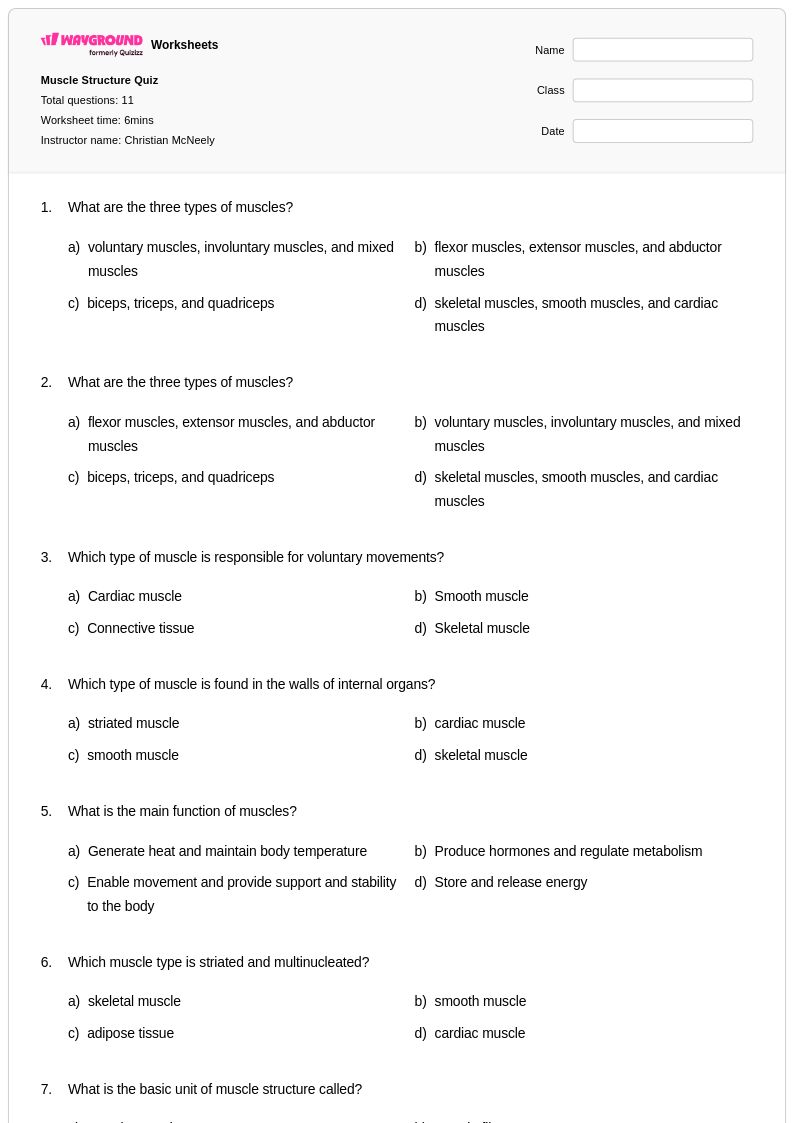
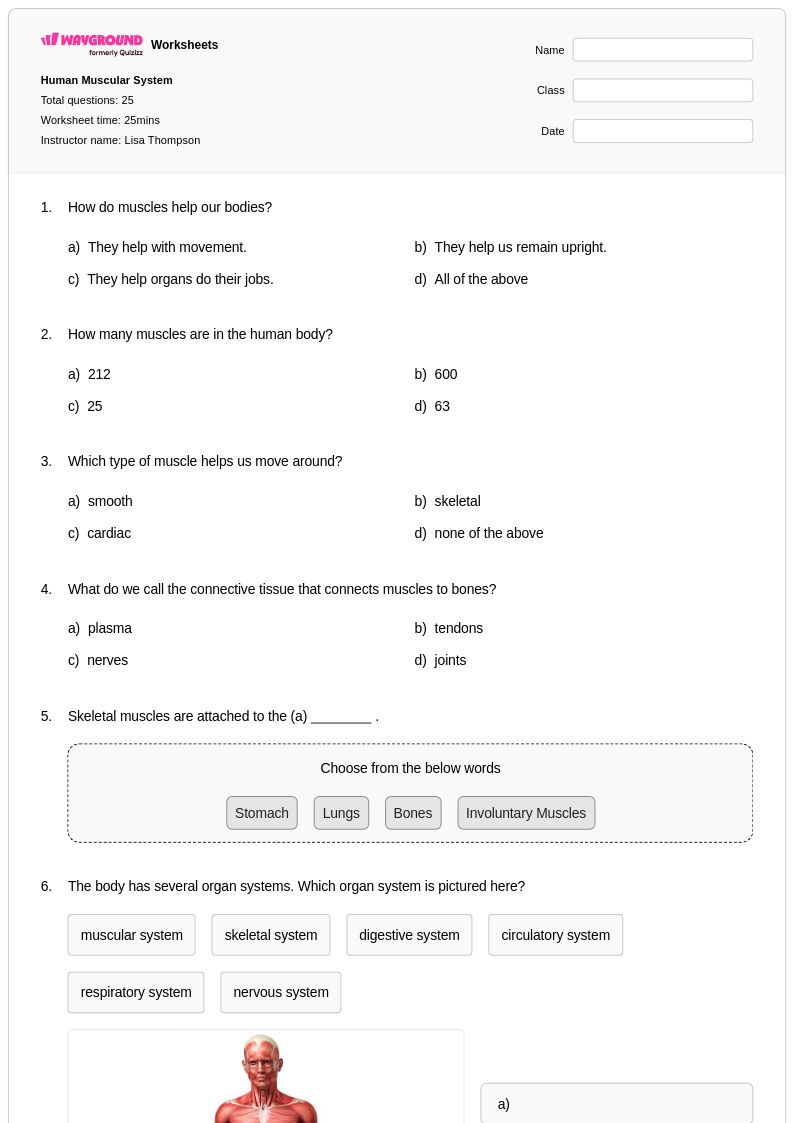
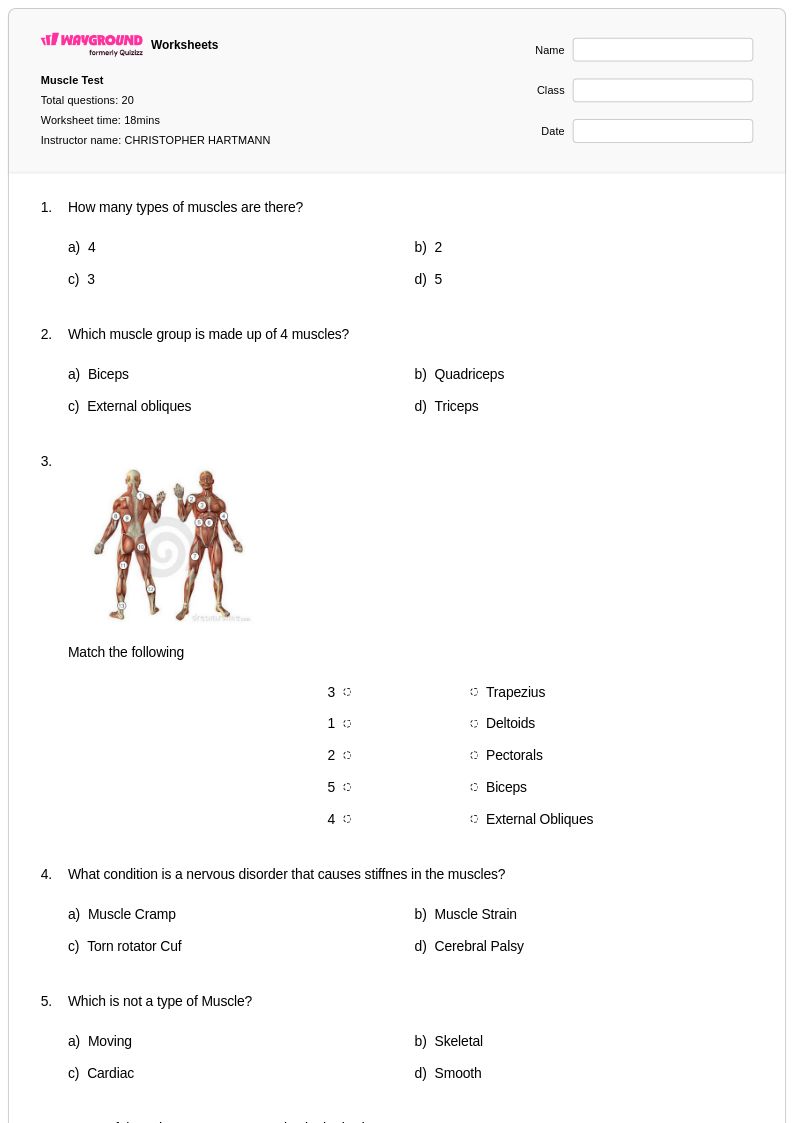
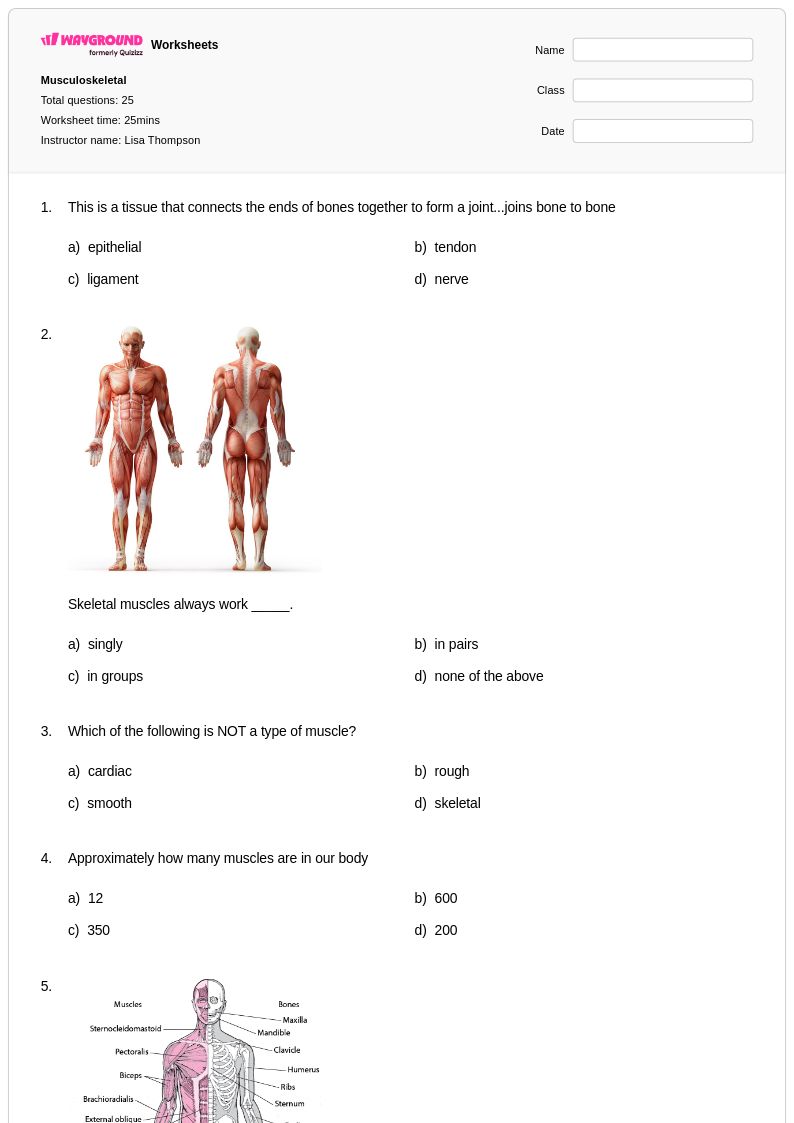
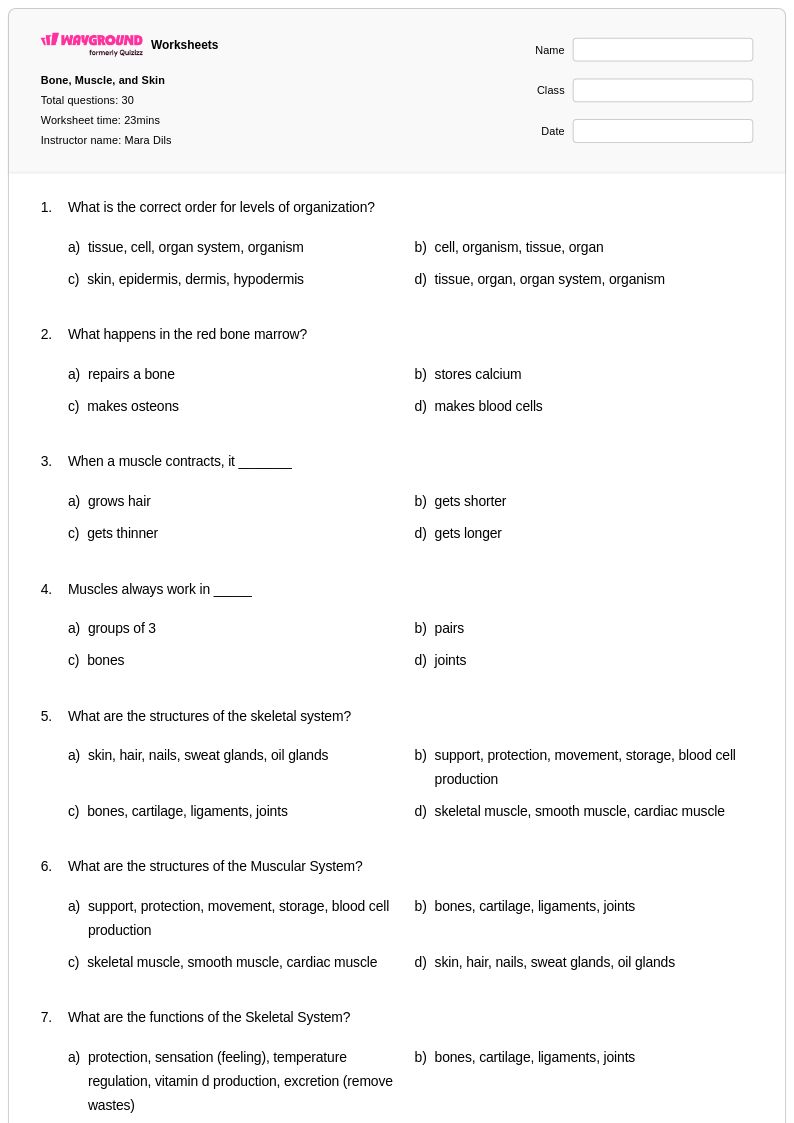
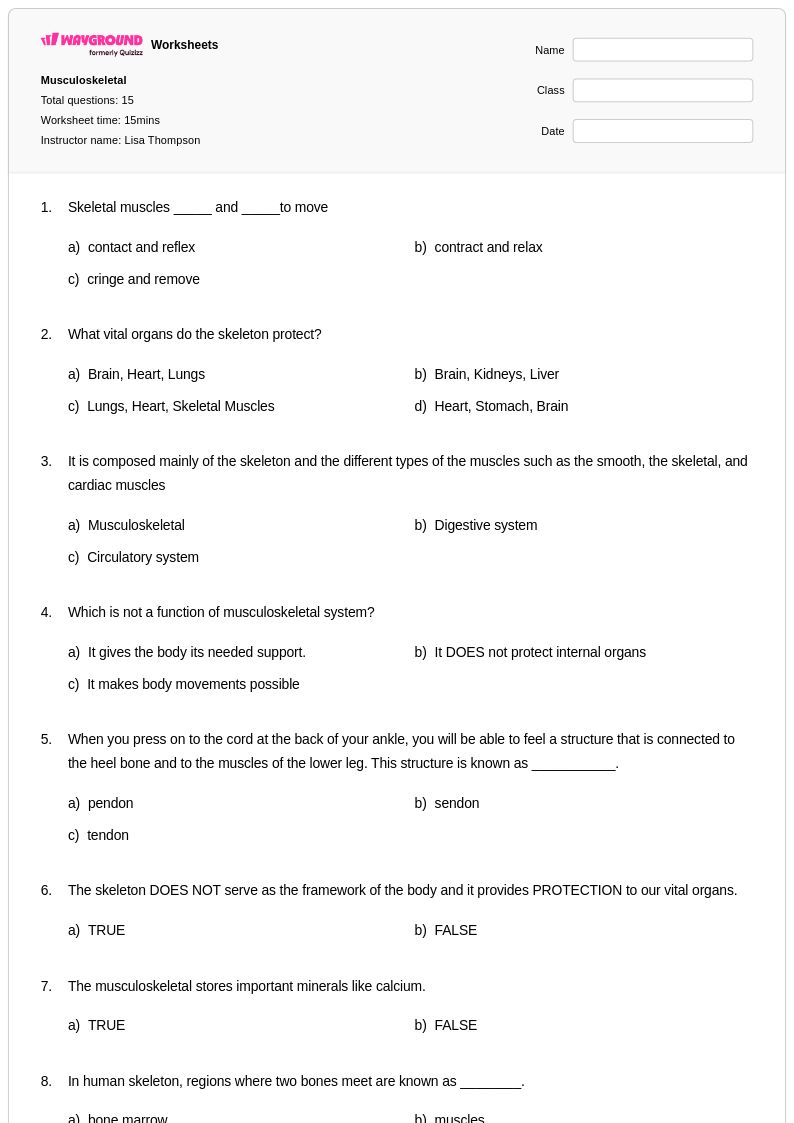
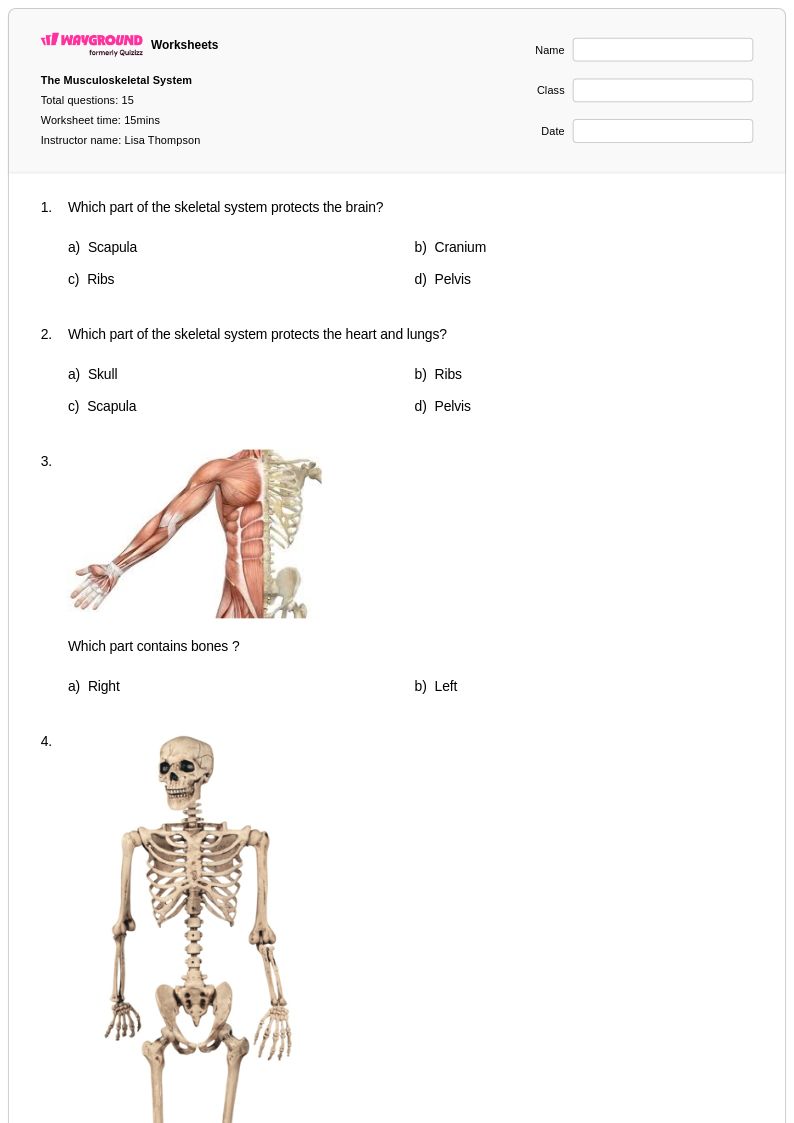
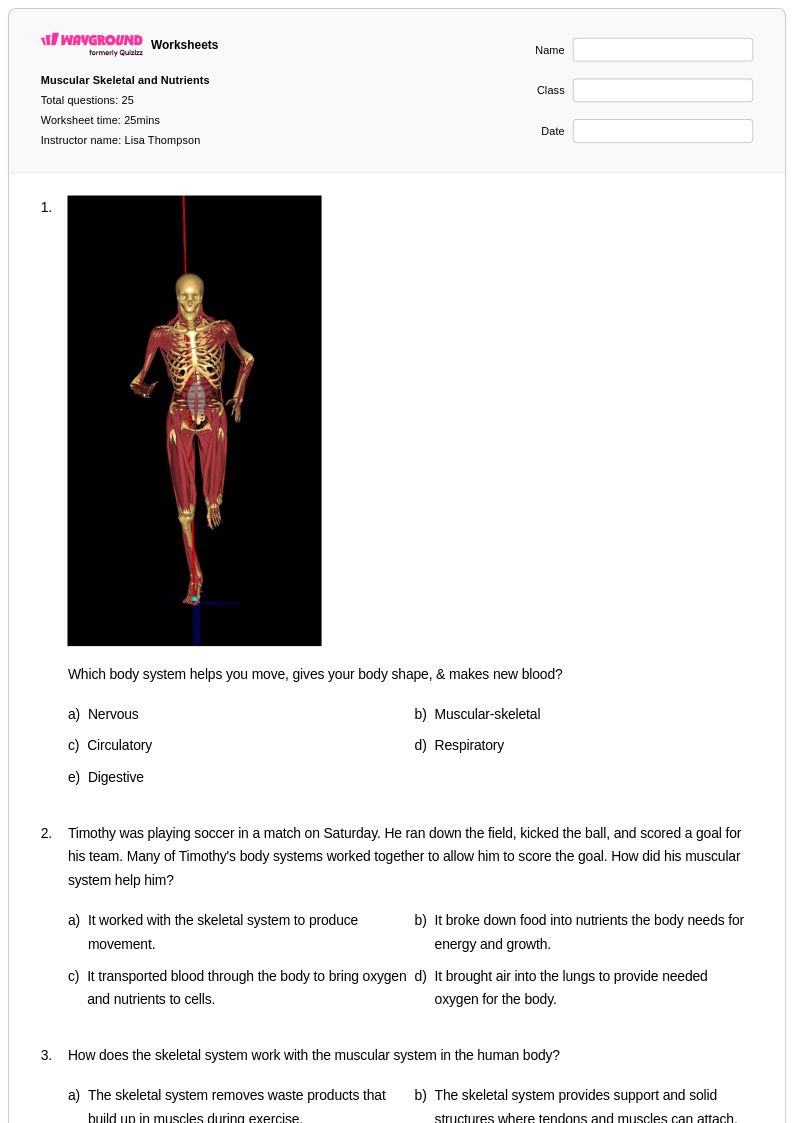
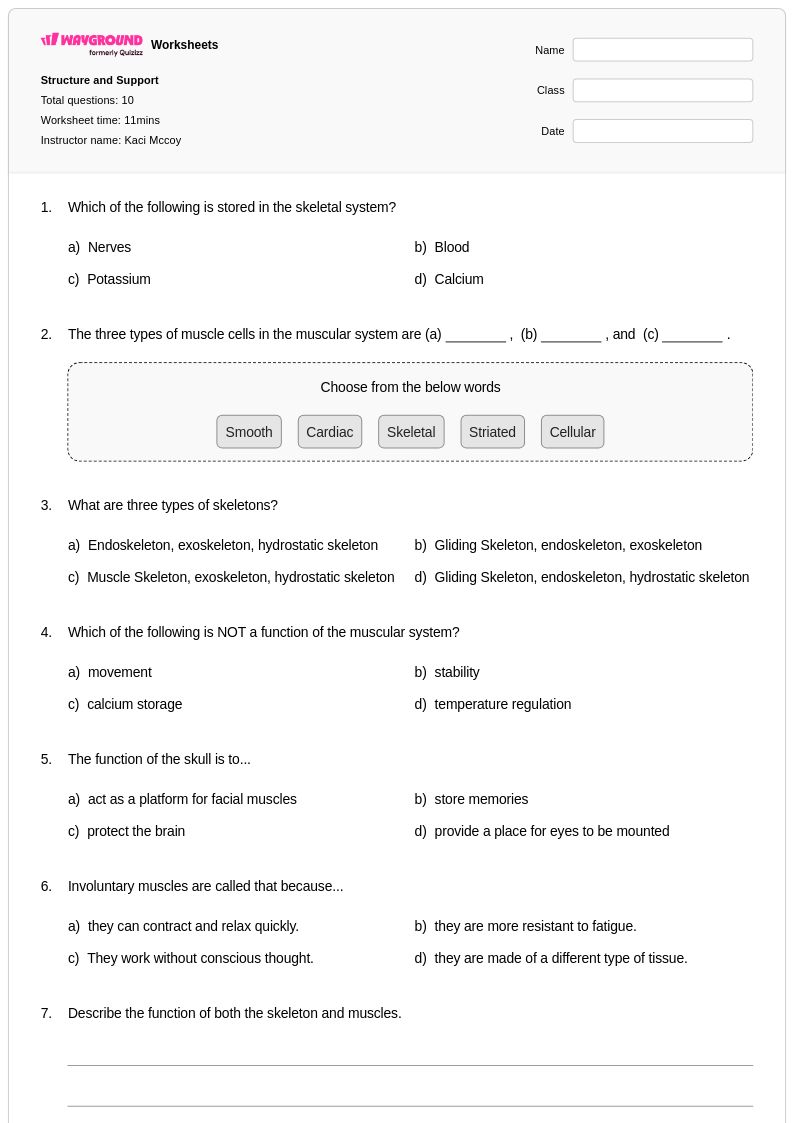
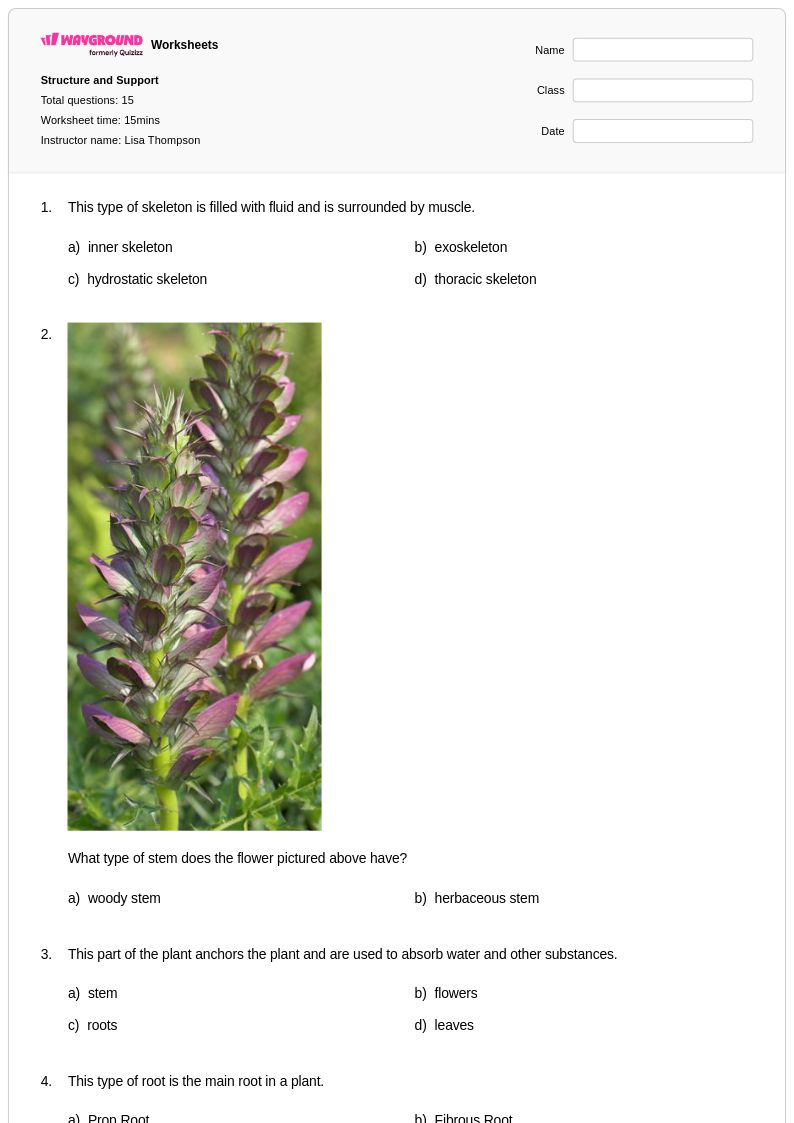
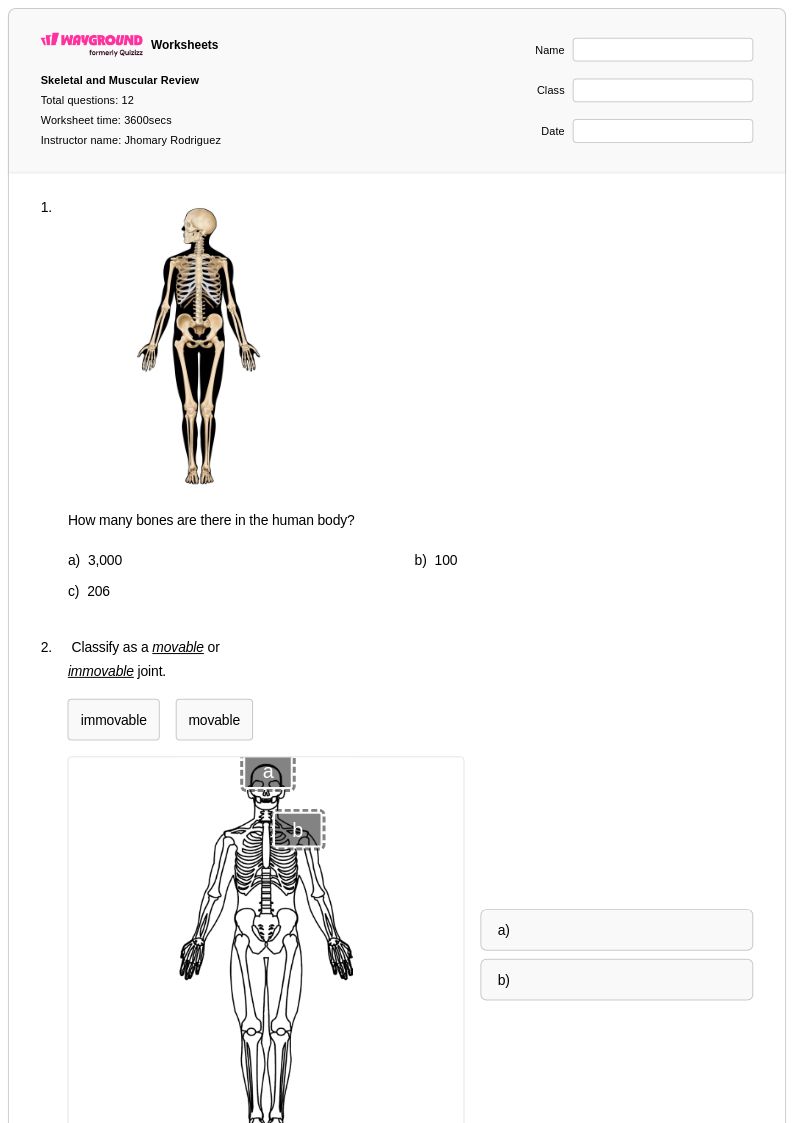
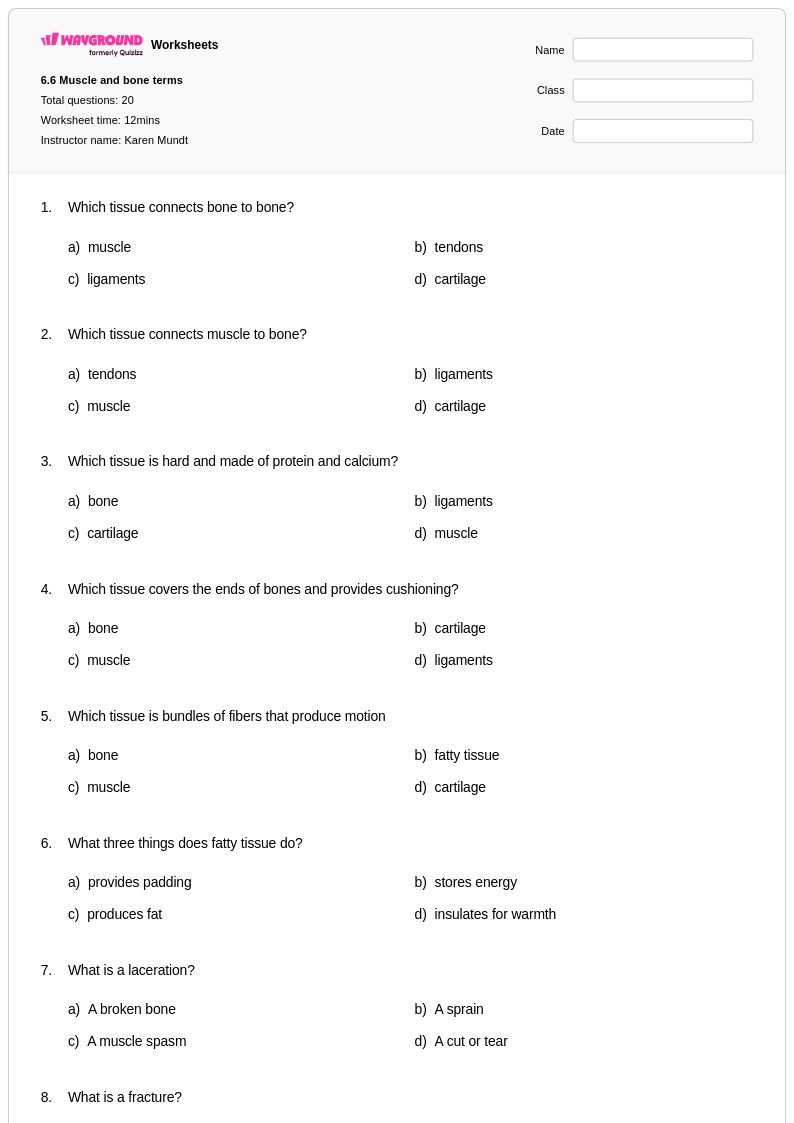
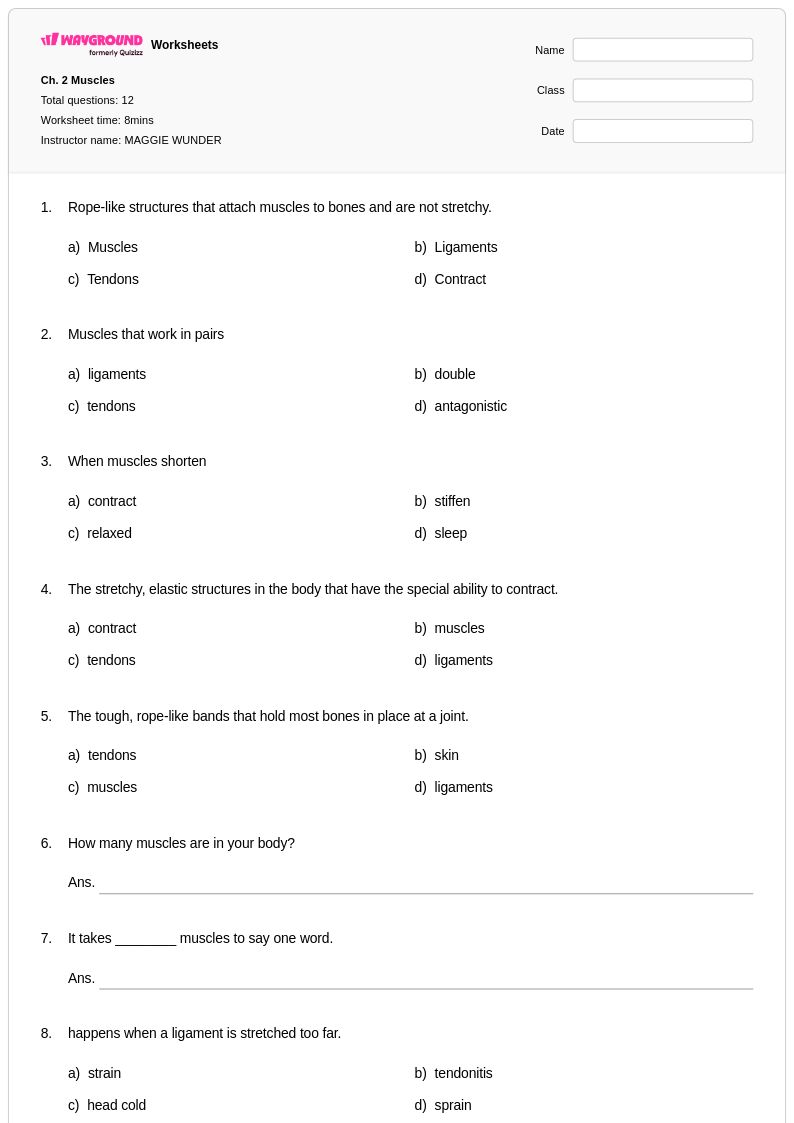
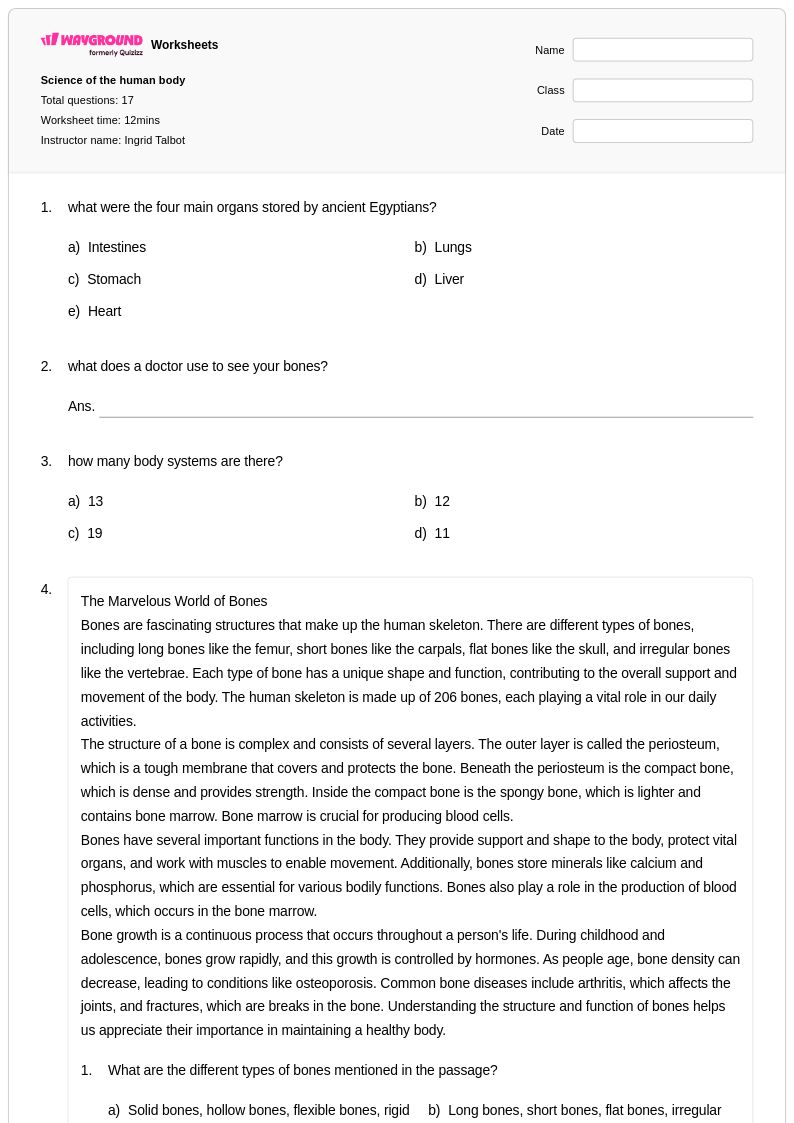
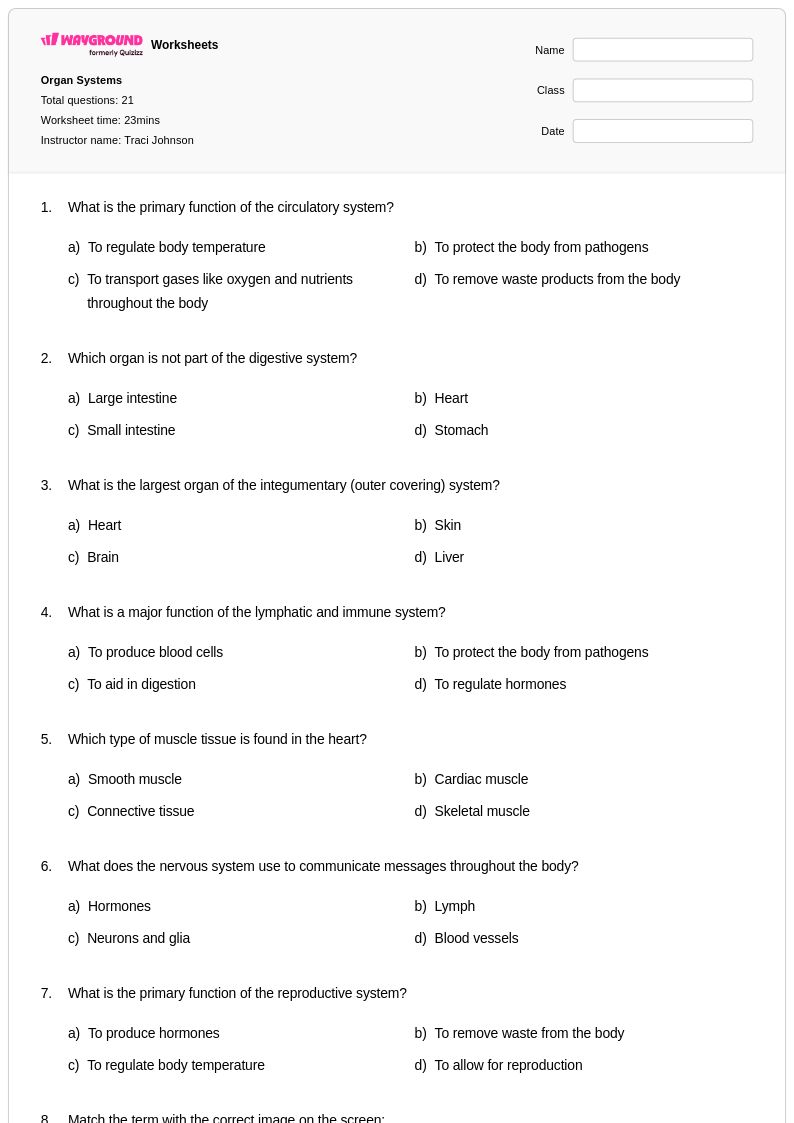
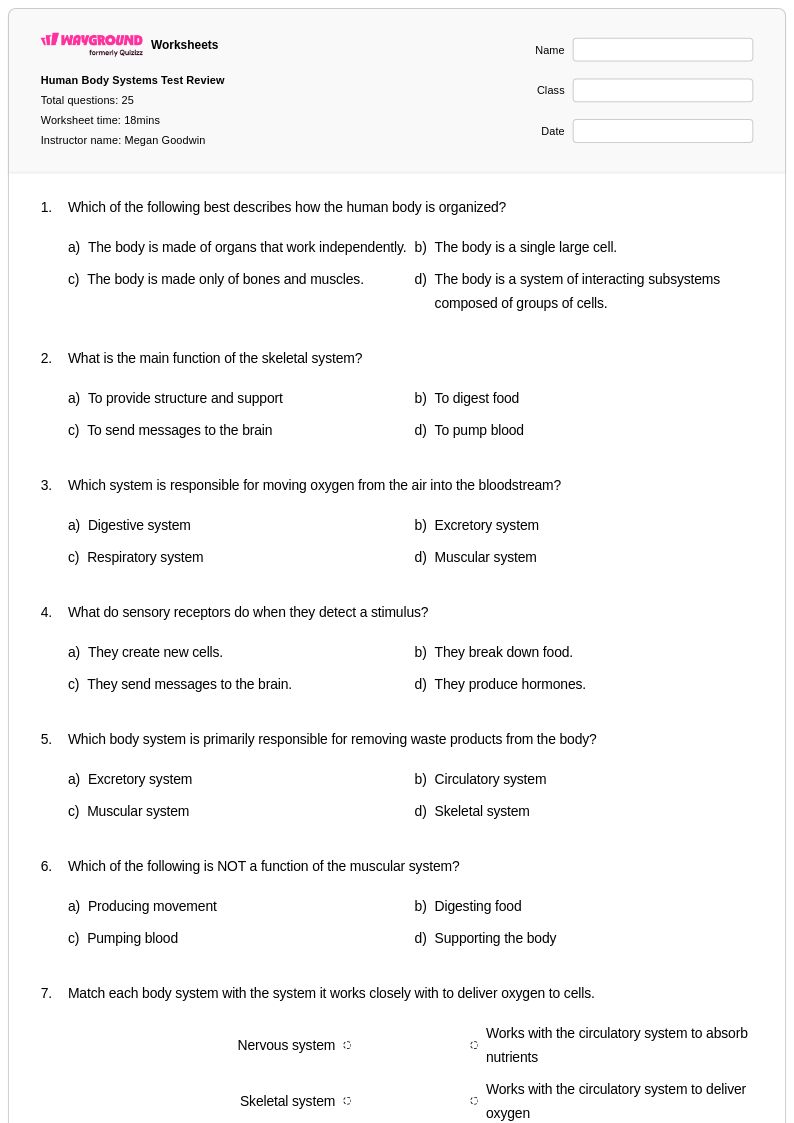
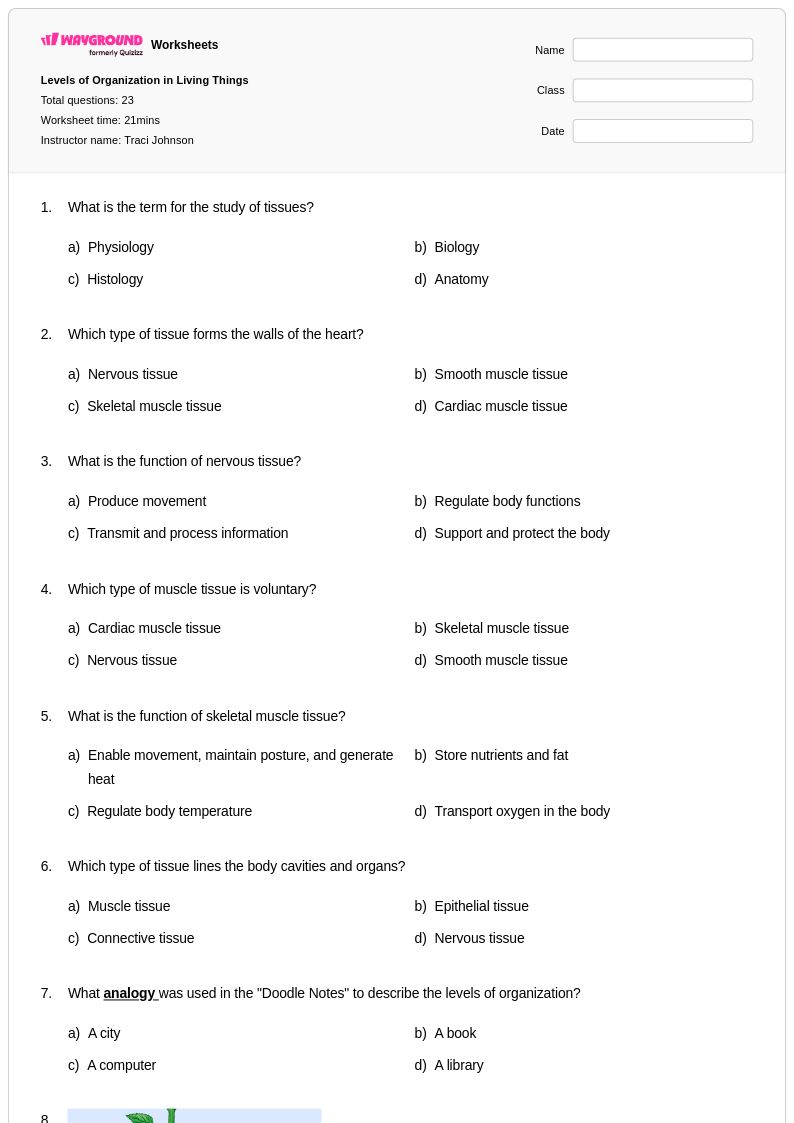
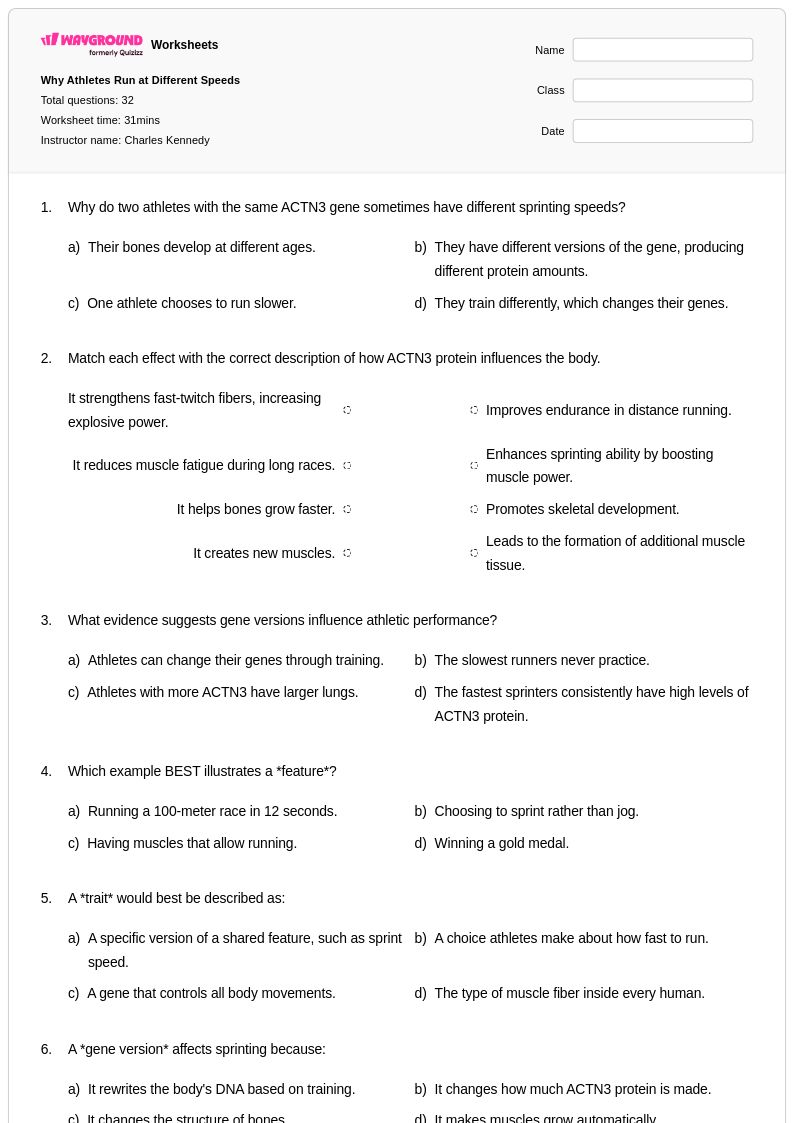
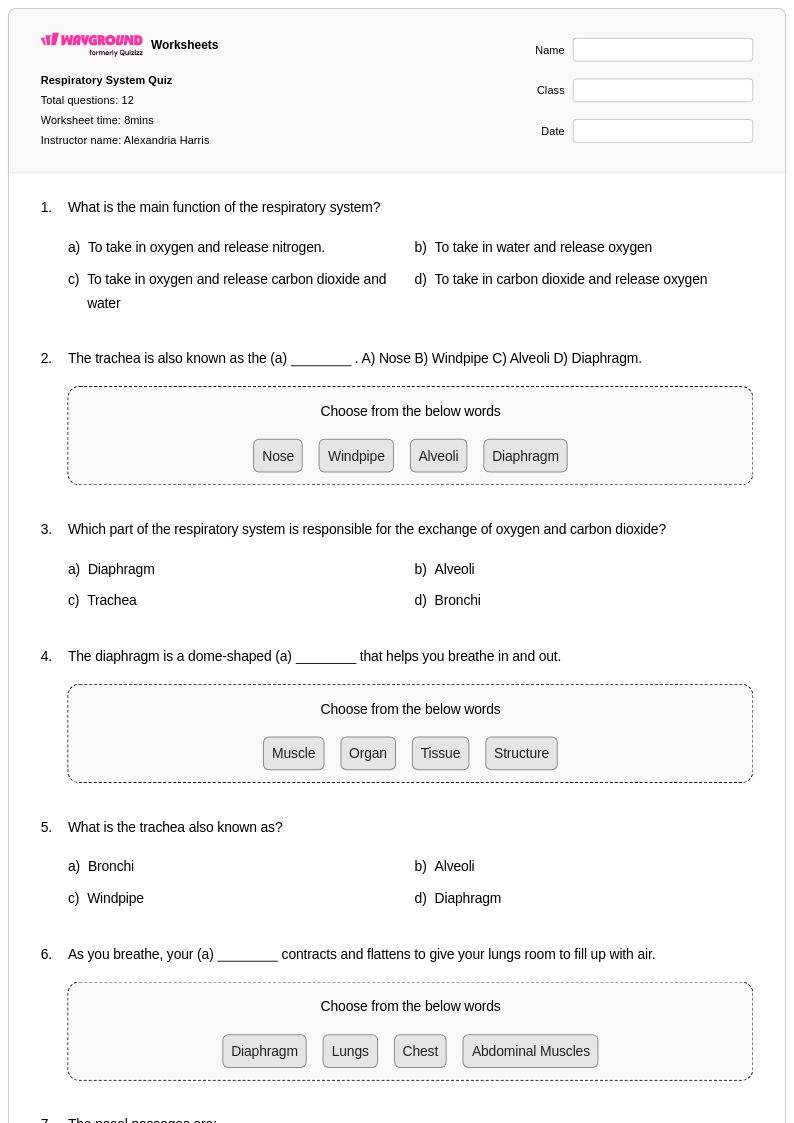
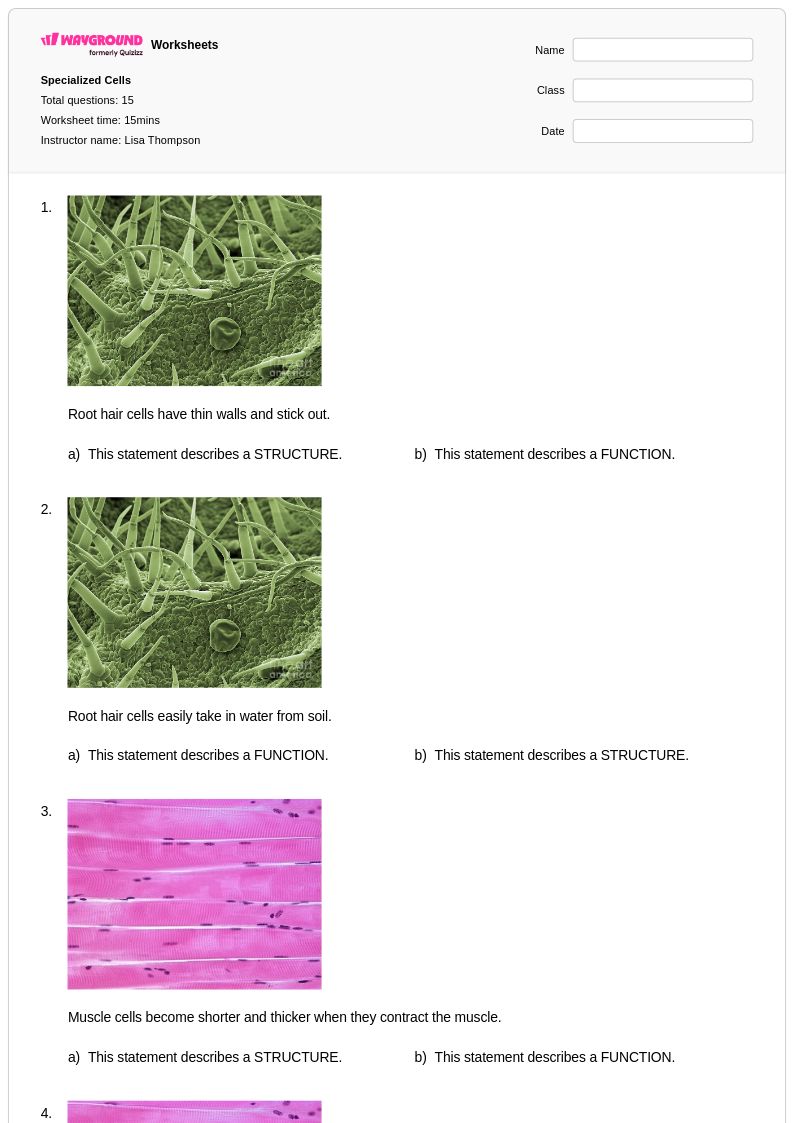
Muscle structure worksheets for Class 6 biology students available through Wayground (formerly Quizizz) provide comprehensive coverage of the fundamental components and organization of human muscular tissue. These educational resources help students develop essential skills in identifying different muscle fiber types, understanding the hierarchical arrangement from individual muscle cells to complete muscle organs, and recognizing the relationship between muscle structure and function. The collection includes detailed practice problems that guide students through the microscopic examination of skeletal, cardiac, and smooth muscle tissues, while printable answer keys enable both independent study and teacher-guided instruction. Students work with free pdf materials that feature cross-sectional diagrams, labeling exercises, and comparative analysis activities designed to strengthen their understanding of how muscle proteins, connective tissues, and blood vessels work together to create functional muscle units.
Wayground (formerly Quizizz) supports educators with an extensive collection of teacher-created muscle structure resources that streamline lesson planning and enhance student learning outcomes. The platform's robust search and filtering capabilities allow teachers to quickly locate age-appropriate materials that align with Class 6 biology standards, while differentiation tools enable customization for diverse learning needs and abilities. Teachers can access millions of professionally developed worksheets available in both printable and digital pdf formats, making it simple to integrate these resources into traditional classroom instruction or remote learning environments. The platform's flexibility supports various instructional approaches, from targeted remediation for students struggling with cellular organization concepts to enrichment activities that challenge advanced learners to explore the molecular basis of muscle contraction, ensuring that all students receive appropriate skill practice opportunities.
FAQs
How do I teach muscle structure to biology students?
Teaching muscle structure effectively starts with distinguishing the three muscle tissue types — skeletal, cardiac, and smooth — before moving into the internal organization of muscle fibers. Build from macro to micro: begin with whole muscle anatomy, then progress to sarcomere structure, myofilaments, and finally the molecular mechanics of the sliding filament theory. Using labeled diagrams alongside written explanations helps students connect visual structure to physiological function.
What exercises help students practice identifying muscle cell components?
Practice exercises that require students to label sarcomere diagrams — identifying Z-lines, actin, myosin, H-zones, and I-bands — are particularly effective for reinforcing muscle cell anatomy. Matching activities that pair structural components with their functional roles, such as linking calcium regulation to troponin-tropomyosin interactions, build deeper conceptual understanding. Sequencing tasks that ask students to order the steps of the sliding filament theory also strengthen procedural knowledge alongside recall.
What mistakes do students commonly make when learning about muscle contraction?
A frequent misconception is that muscle fibers physically shorten by the myosin filaments themselves contracting, rather than understanding that actin and myosin filaments slide past each other while remaining the same length. Students also commonly confuse the roles of calcium, troponin, and tropomyosin in initiating contraction, often misattributing the trigger directly to ATP rather than calcium ion release from the sarcoplasmic reticulum. Explicitly addressing these errors with step-by-step diagrams of the cross-bridge cycle helps correct both misconceptions.
How do I help students differentiate between voluntary and involuntary muscle control?
Connecting muscle type to nervous system control is the clearest instructional approach: skeletal muscle is under voluntary (somatic) control, while cardiac and smooth muscle are involuntary and regulated by the autonomic nervous system. Use real-world examples to anchor the distinction — blinking versus a heartbeat, or swallowing versus intestinal peristalsis — since abstract anatomical categories become more meaningful when tied to bodily experience. Follow-up comparison charts that align tissue type, location, fiber appearance, and control mechanism give students a reliable reference structure.
How can I use muscle structure worksheets in my classroom?
Muscle structure worksheets on Wayground are available as printable PDFs for traditional classroom use and in digital formats for technology-integrated or hybrid learning environments, making them adaptable to a range of instructional settings. Teachers can assign them as independent practice following direct instruction on sarcomere anatomy or the sliding filament theory, or use them as formative assessments to identify gaps in student understanding before moving to more advanced physiology content. Worksheets can also be hosted as a live quiz on Wayground, allowing teachers to gather real-time data on student performance across the whole class.
How do I differentiate muscle structure instruction for students at different levels?
For students who need support, focus first on the three muscle tissue types and basic fiber anatomy before introducing molecular-level concepts like actin-myosin interactions. Advanced students can be challenged with detailed cross-bridge cycle analysis, ATP hydrolysis mechanics, and comparative physiology questions. On Wayground, teachers can apply individual accommodations — including read aloud support, reduced answer choices, and extended time — to specific students while the rest of the class works through standard settings, allowing differentiated access without disrupting the overall assignment.