Free Printable Phylogenetic Tree Worksheets for Class 6
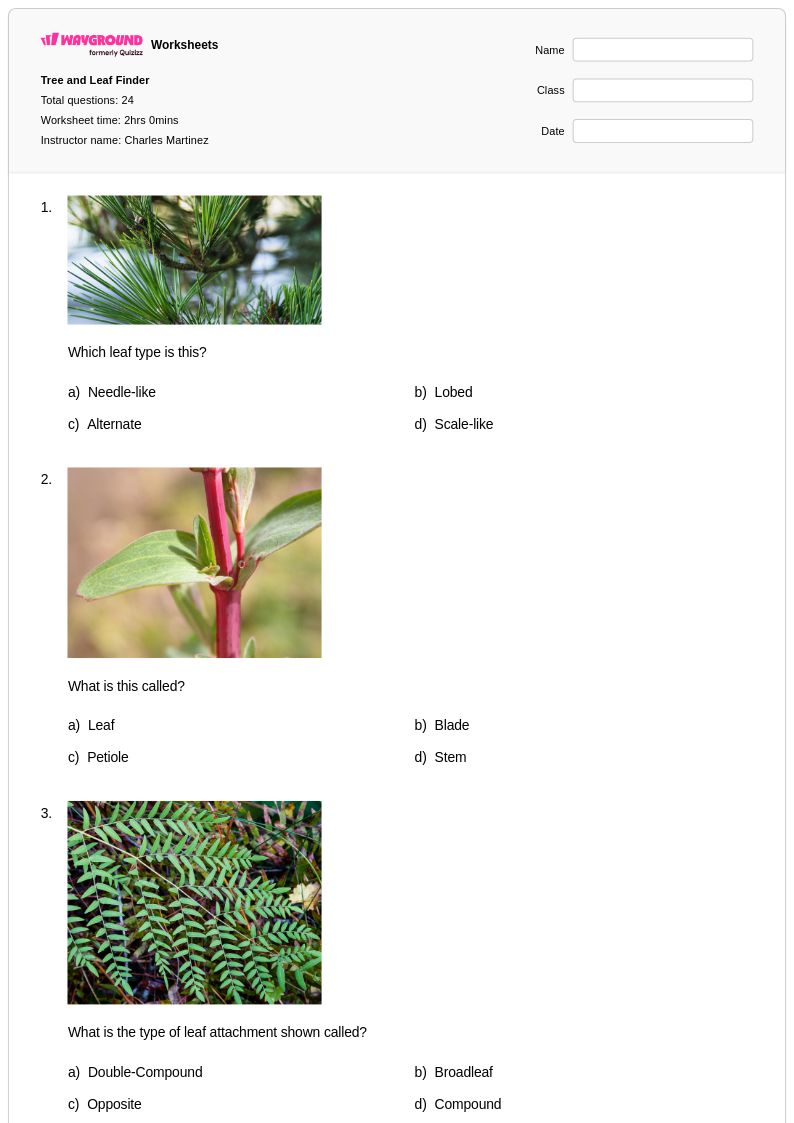
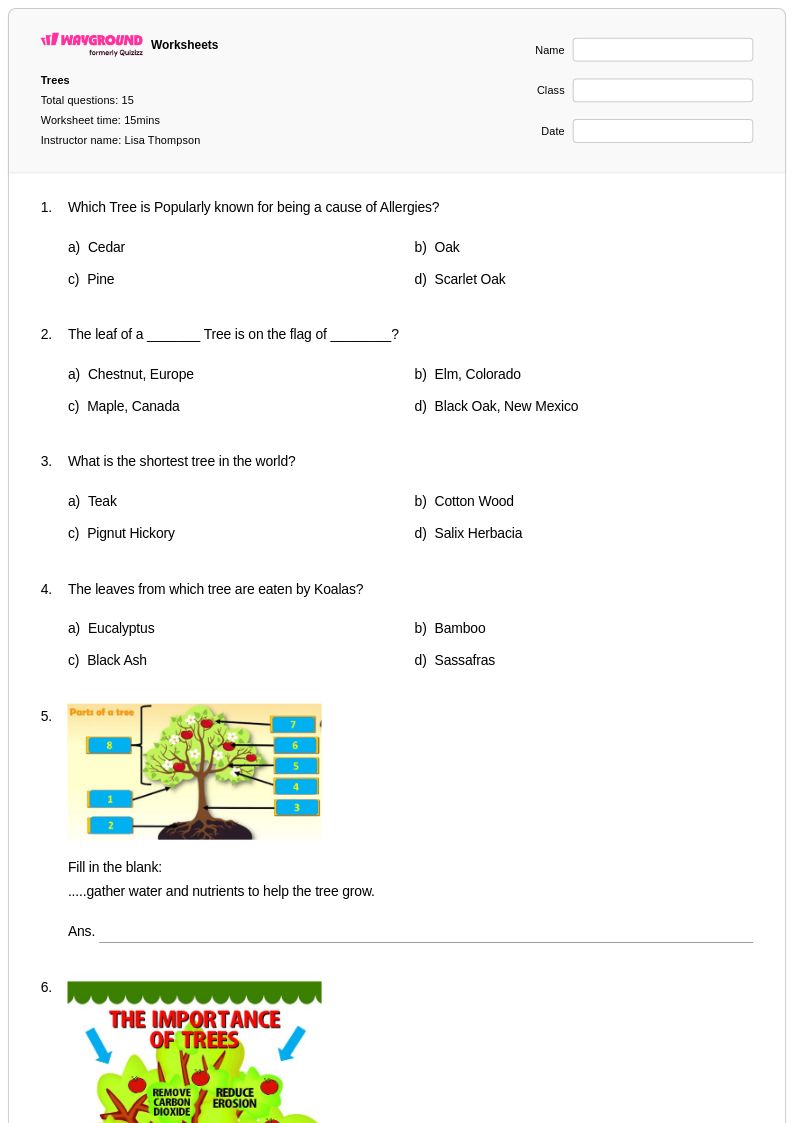
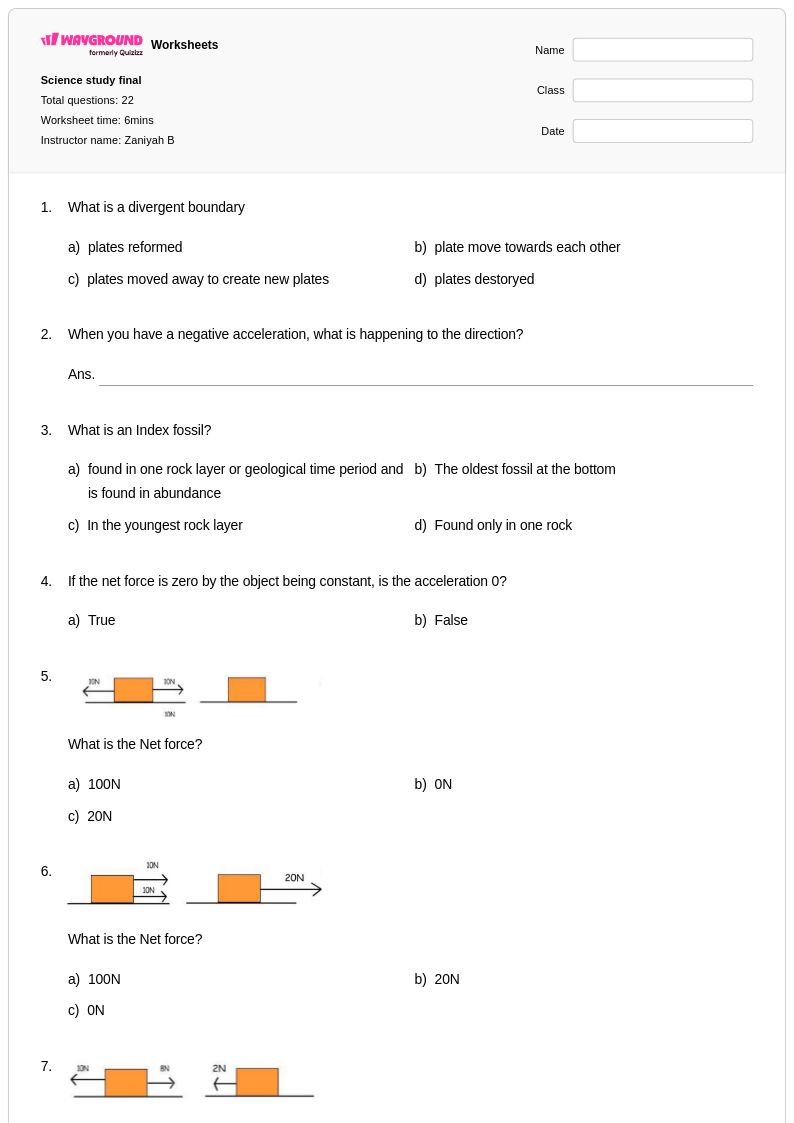
Enhance Class 6 students' understanding of phylogenetic trees with Wayground's comprehensive collection of free biology worksheets, featuring printable PDFs, engaging practice problems, and complete answer keys.
Explore printable Phylogenetic Tree worksheets for Class 6
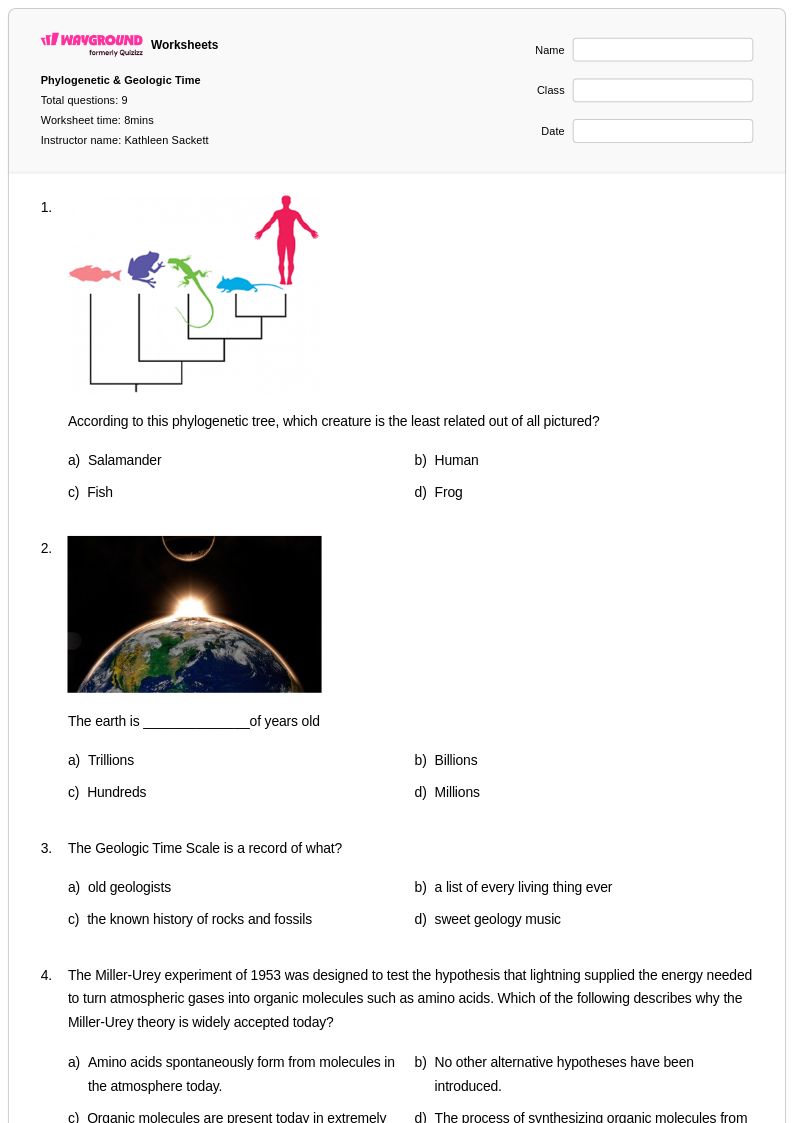
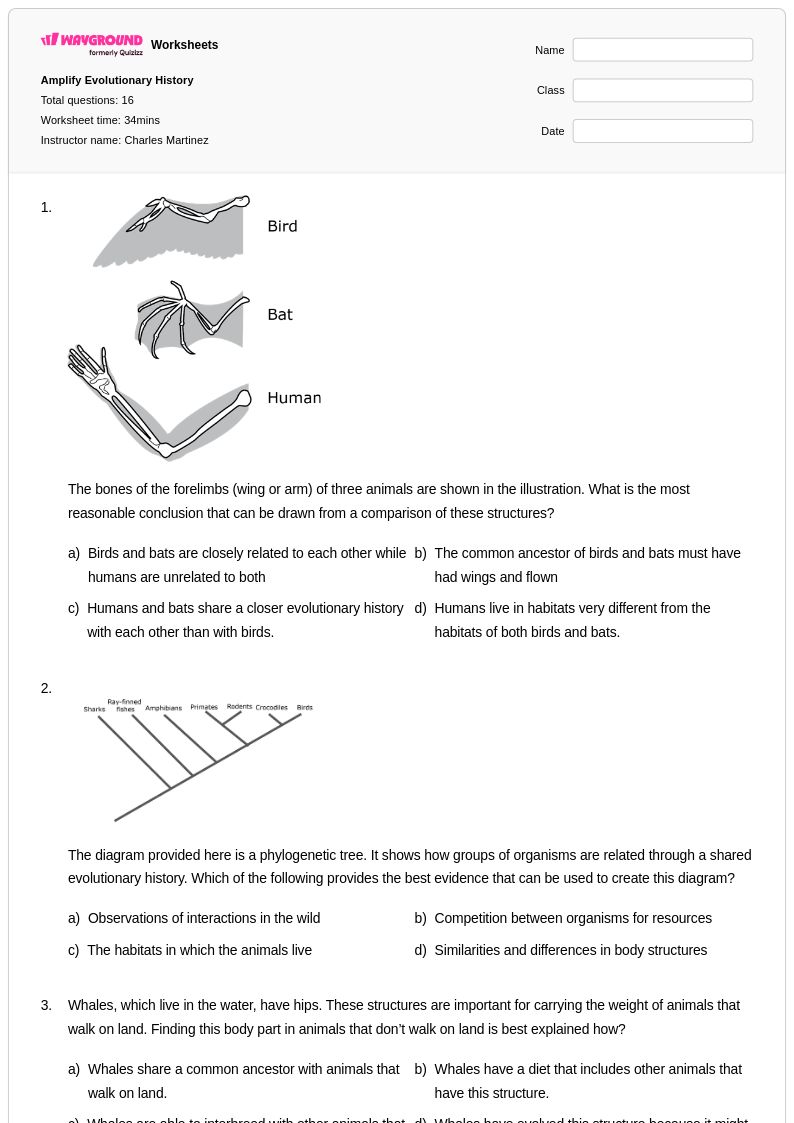
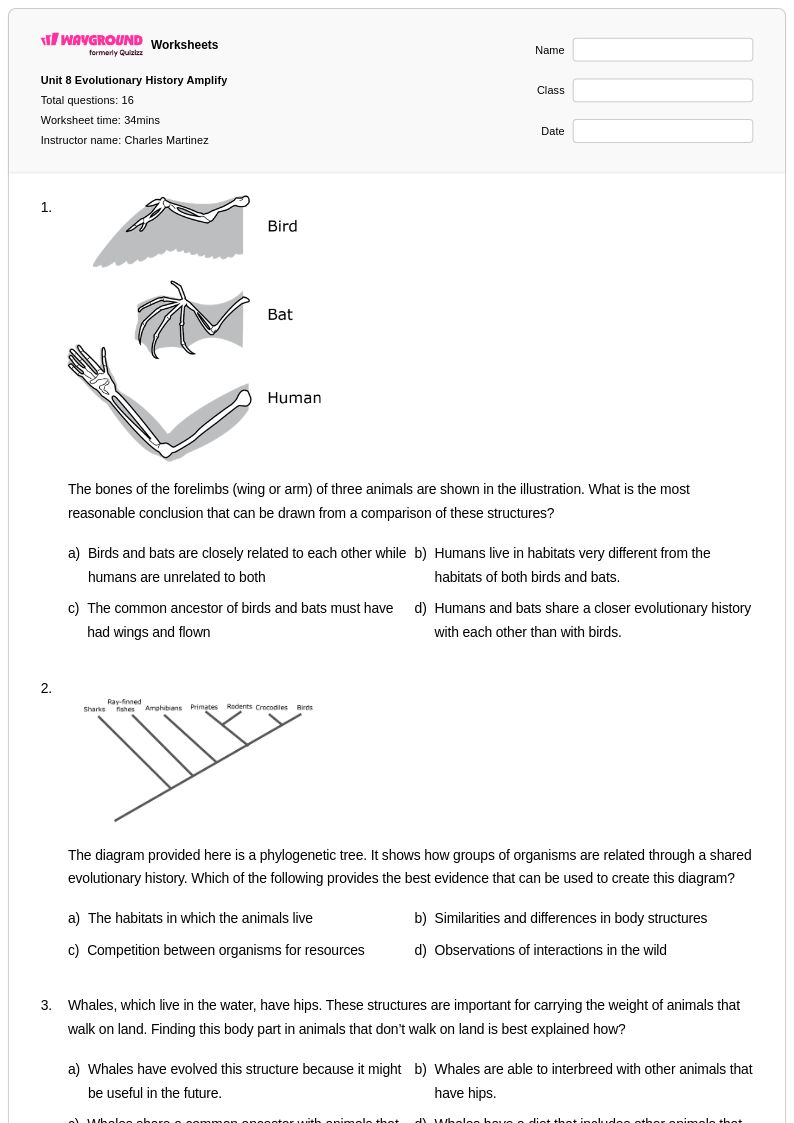
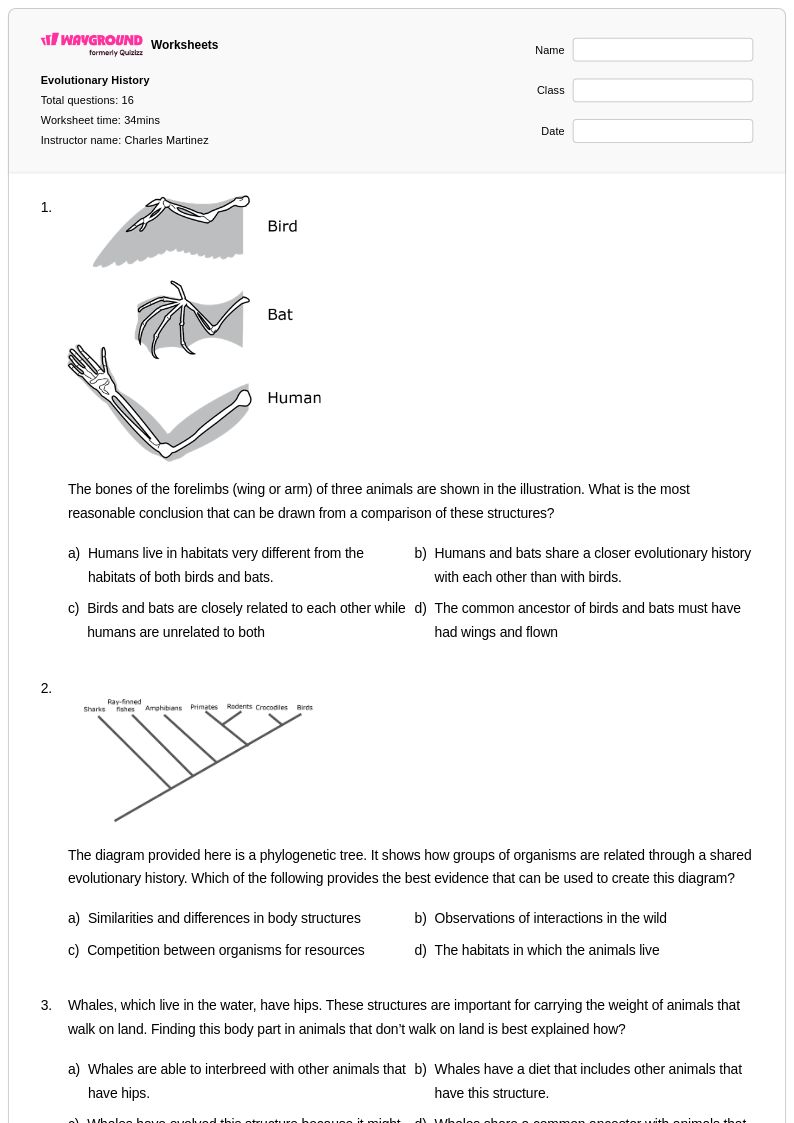
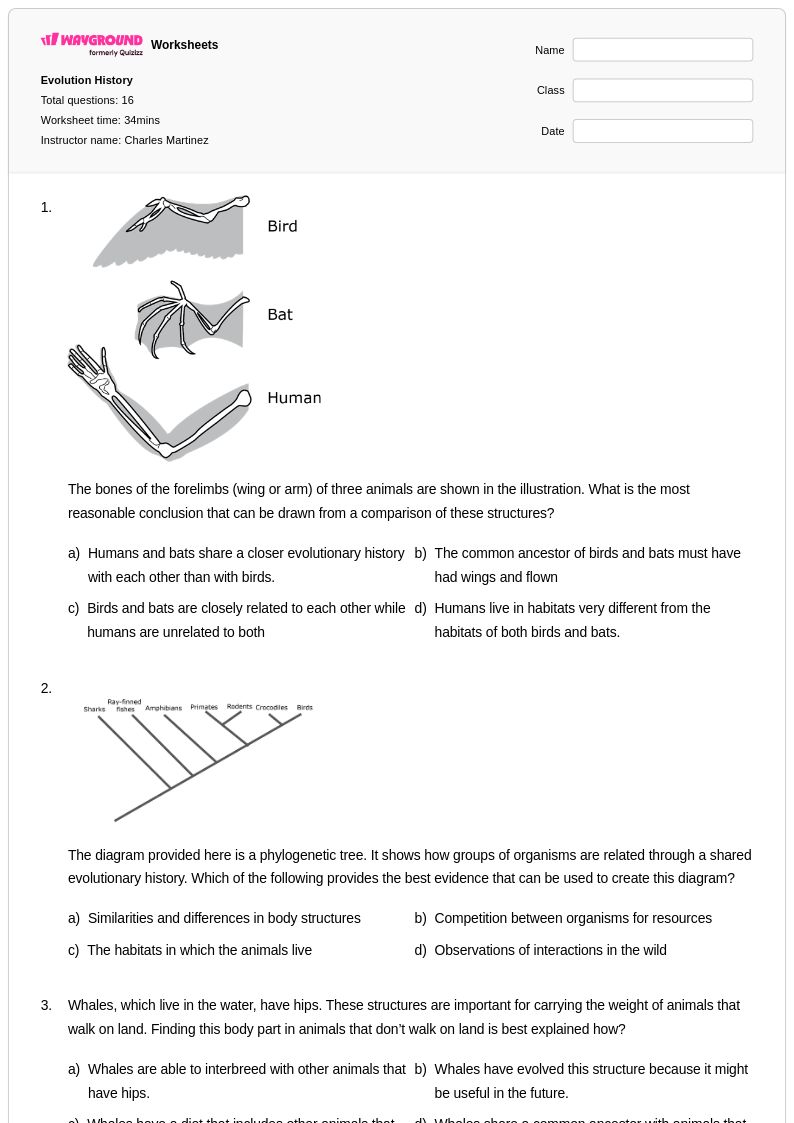
Phylogenetic tree worksheets for Class 6 biology provide students with essential practice in understanding evolutionary relationships and the classification of living organisms. These comprehensive educational resources help students develop critical thinking skills as they analyze branching diagrams that show how different species are related through common ancestors. The worksheets strengthen students' abilities to interpret scientific data, trace evolutionary pathways, and understand the concept of shared characteristics among organisms. Available as free printables and pdf downloads, these practice problems include detailed answer keys that support both independent study and classroom instruction, allowing students to verify their understanding of how scientists organize life's diversity.
Wayground, formerly Quizizz, empowers educators with an extensive collection of millions of teacher-created phylogenetic tree resources that streamline lesson planning and enhance student learning outcomes. The platform's robust search and filtering capabilities enable teachers to quickly locate materials aligned with specific science standards and grade-level expectations, while built-in differentiation tools allow for seamless customization to meet diverse learning needs. These versatile worksheet collections are available in both printable and digital formats, including downloadable pdf versions, making them ideal for in-class instruction, homework assignments, remediation support, and enrichment activities. Teachers can efficiently adapt these resources for various instructional purposes, from introducing fundamental concepts of evolutionary biology to providing advanced practice opportunities that deepen students' understanding of taxonomic relationships and scientific classification systems.
FAQs
How do I teach students to read a phylogenetic tree?
Start by orienting students to the basic structure: nodes represent common ancestors, branches represent lineages, and tips represent present-day organisms or taxa. Teach them to trace shared ancestry by moving from the tips back toward the root, identifying the most recent common ancestor between any two groups. Reinforce the concept that branch length and position indicate evolutionary relationships, not physical similarity, since students often conflate the two. Using cladograms with familiar organisms first helps students build confidence before moving to unfamiliar taxa.
What exercises help students practice interpreting phylogenetic trees?
Effective practice exercises include identifying the most recent common ancestor between two specified organisms, determining which pairs of species are most closely related, and labeling synapomorphies at the appropriate nodes. Students also benefit from exercises where they reconstruct a cladogram from a character matrix, which reinforces the logic behind how trees are built. Practice problems that ask students to distinguish between monophyletic, paraphyletic, and polyphyletic groups push deeper analytical thinking once foundational reading skills are secure.
What mistakes do students commonly make when analyzing phylogenetic trees?
The most common error is reading the tree from left to right and assuming that organisms on the far right are the most 'evolved' or advanced, which reflects a misconception about evolutionary progress. Students also frequently misidentify common ancestors by confusing internal nodes with tip taxa, or assume that two organisms are closely related simply because they appear next to each other on the diagram without tracing the actual branching points. Another frequent mistake is conflating similarity in appearance with phylogenetic closeness, which is why explicitly teaching convergent evolution alongside cladogram interpretation is important.
How do I differentiate phylogenetic tree instruction for students at different skill levels?
For struggling students, begin with simplified cladograms featuring three to four taxa and clear synapomorphies before introducing more complex trees. Scaffolding strategies such as color-coding lineages or annotating nodes with ancestor labels can reduce cognitive load. On Wayground, teachers can apply accommodations such as reduced answer choices and read-aloud support to individual students without affecting the rest of the class, making it easier to support diverse learners within the same assignment. Advanced students can be challenged with character matrix construction tasks or questions involving polytomies and unresolved clades.
How do I use Wayground's phylogenetic tree worksheets in my biology class?
Wayground's phylogenetic tree worksheets are available as printable PDFs for traditional classroom use and in digital formats for technology-integrated environments, giving teachers flexibility based on their setup. In digital mode, teachers can host the worksheet as a quiz directly on Wayground, enabling real-time progress monitoring. Each worksheet includes an answer key, so it works equally well for independent practice, guided review, or formative assessment. The digital format also supports student-level accommodations such as extended time or read-aloud, which can be configured individually without disrupting other students.
How does phylogenetic tree analysis connect to broader biology standards?
Phylogenetic tree analysis is a core component of modern taxonomy, evolution, and comparative biology units, and it connects directly to standards addressing natural selection, common ancestry, and the unity and diversity of life. Reading cladograms also reinforces scientific practices such as data interpretation and evidence-based reasoning, which appear across AP Biology, Next Generation Science Standards, and most state biology frameworks. Teachers can use phylogenetic tree work as an anchor activity that ties together genetics, morphology, and evolutionary history within a single diagram.