Free Printable Human Anatomy Worksheets for Class 6
Explore Class 6 Human Anatomy worksheets and printables from Wayground that help students learn body systems, organs, and structures through engaging practice problems, free PDFs, and detailed answer keys.
Explore printable Human Anatomy worksheets for Class 6
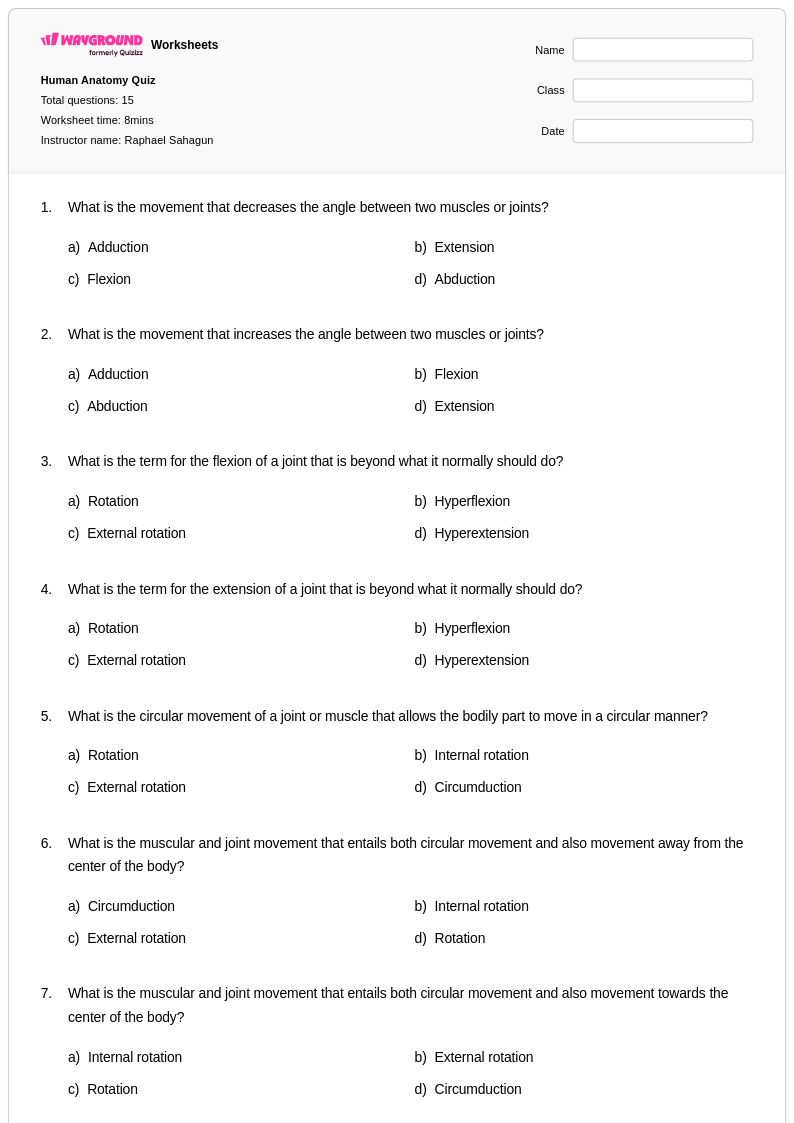
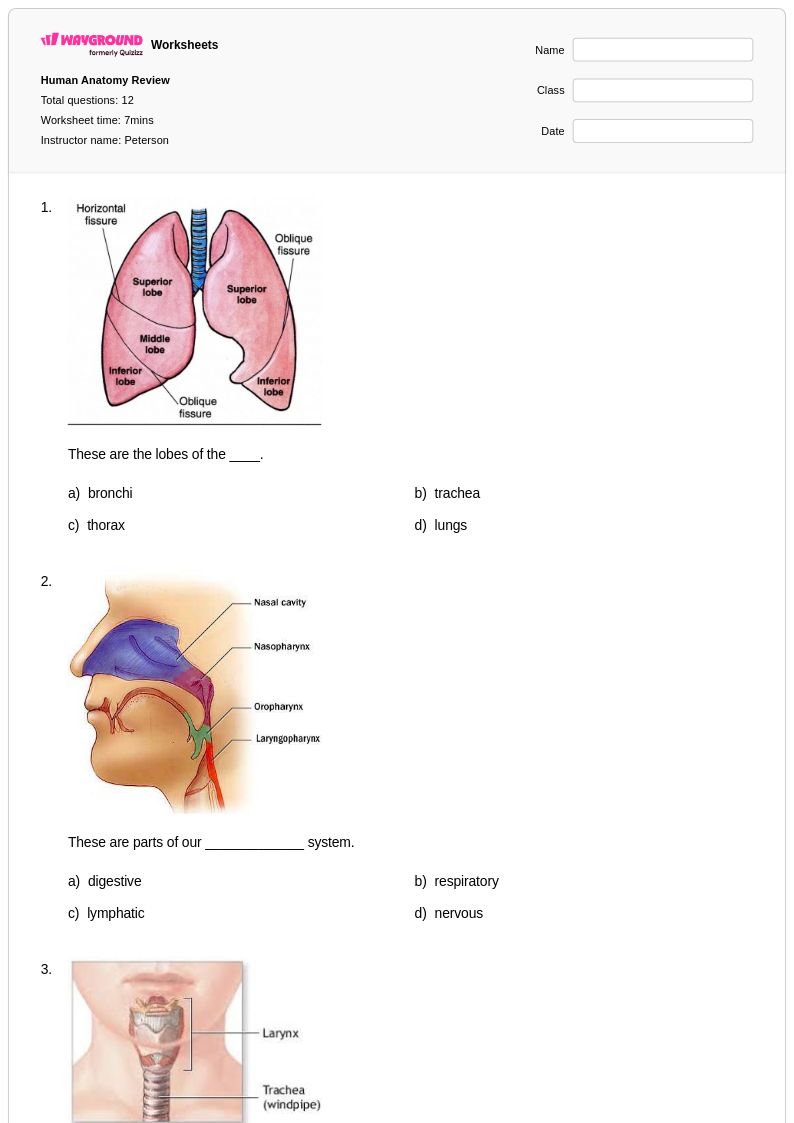
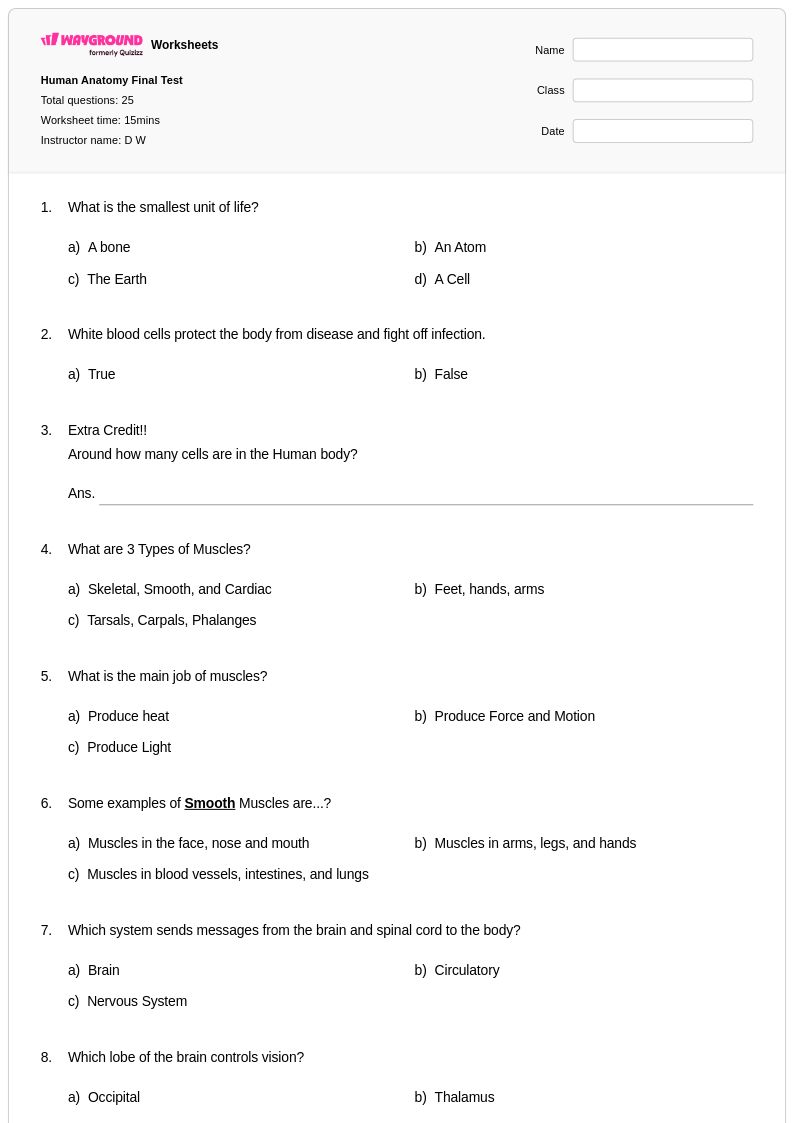
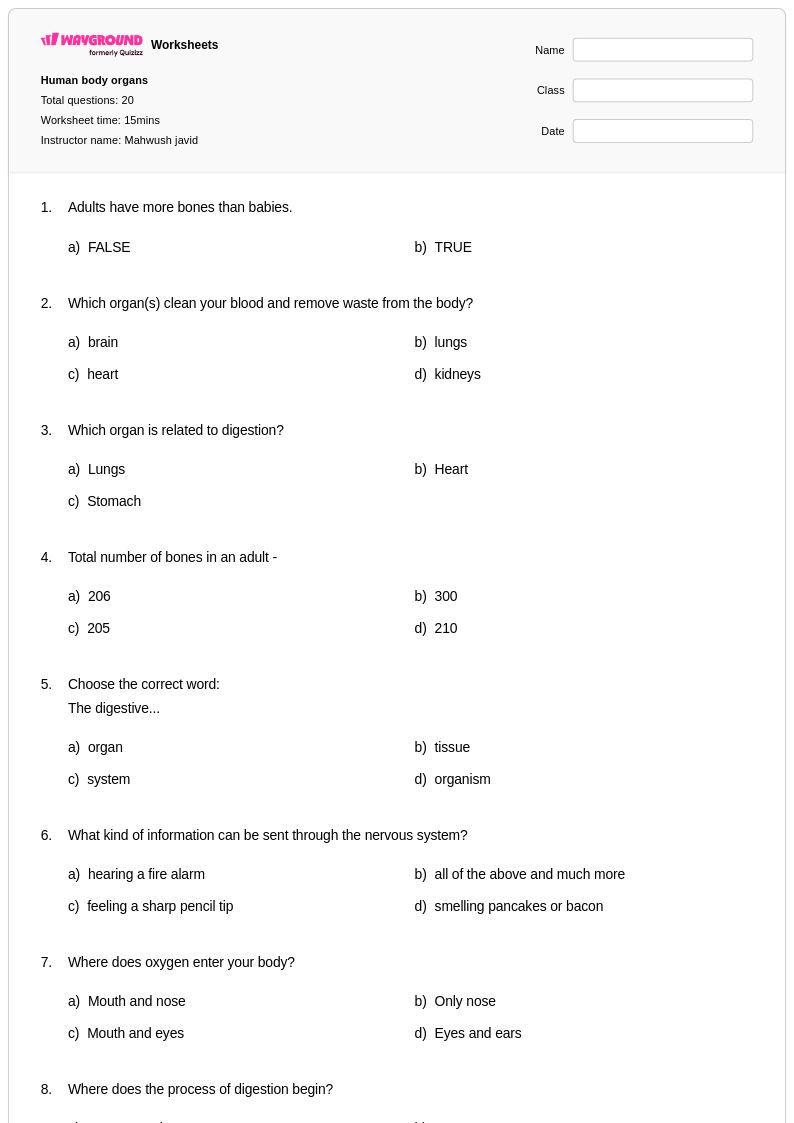
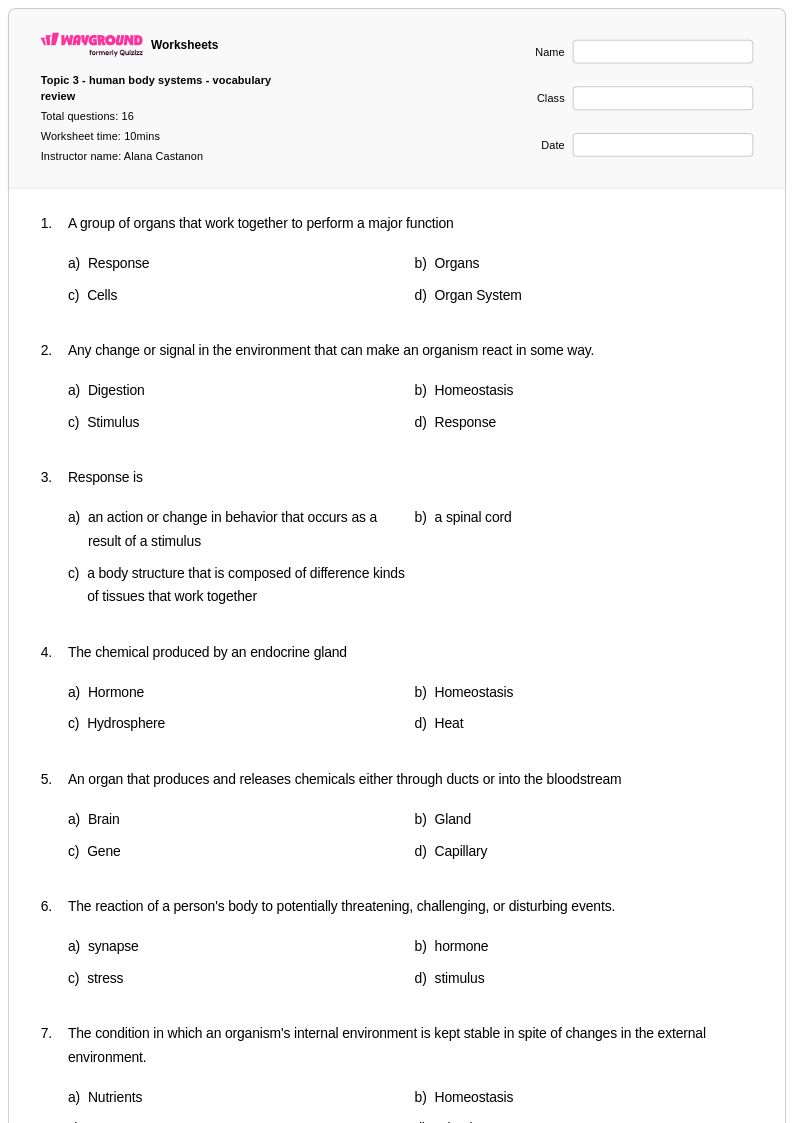
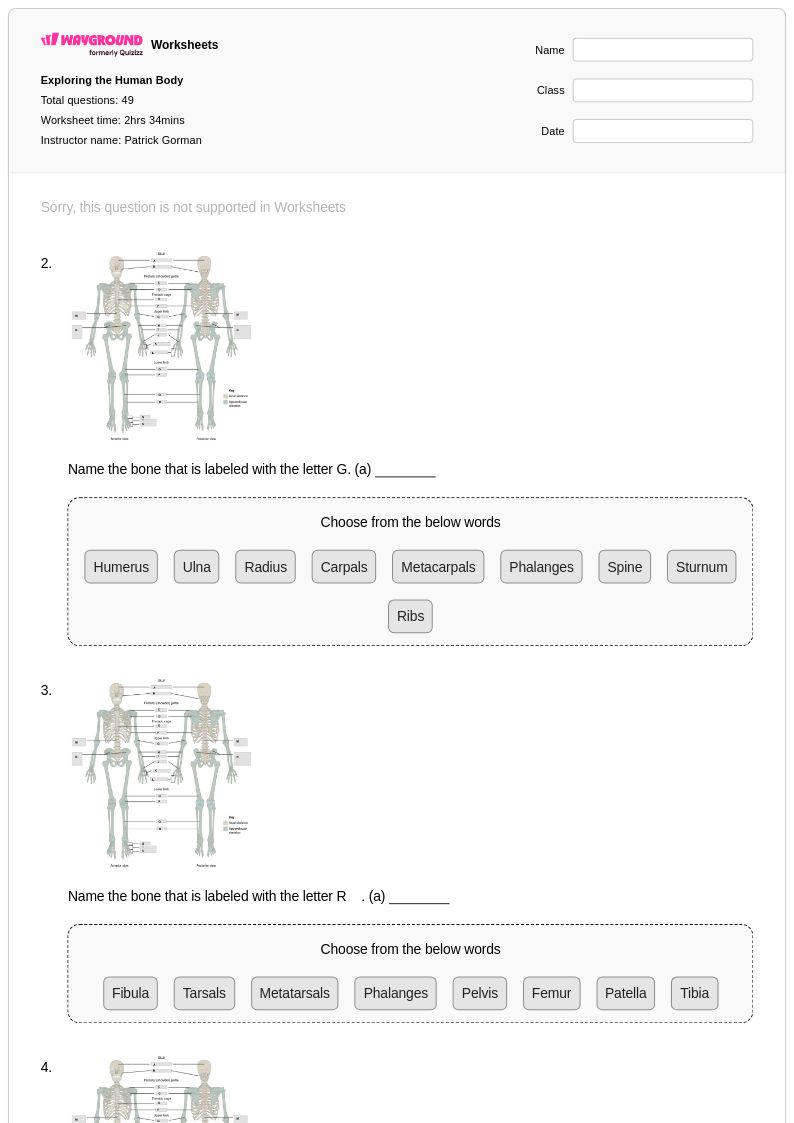
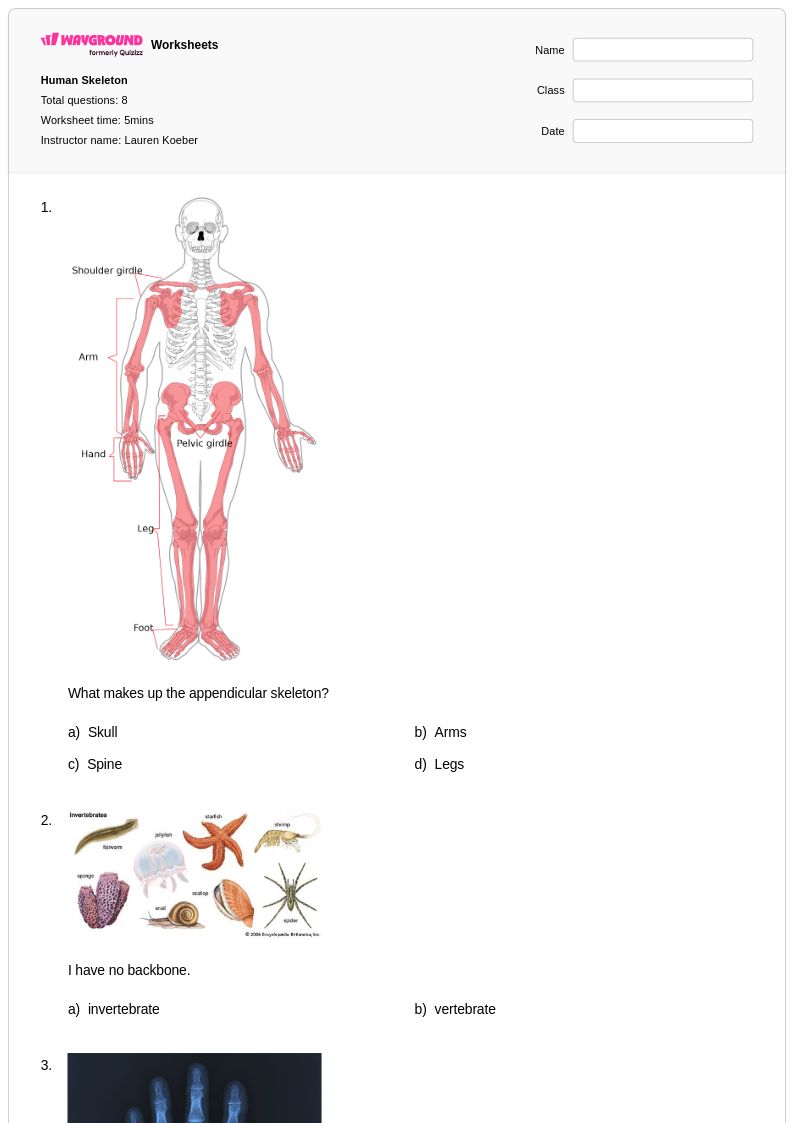
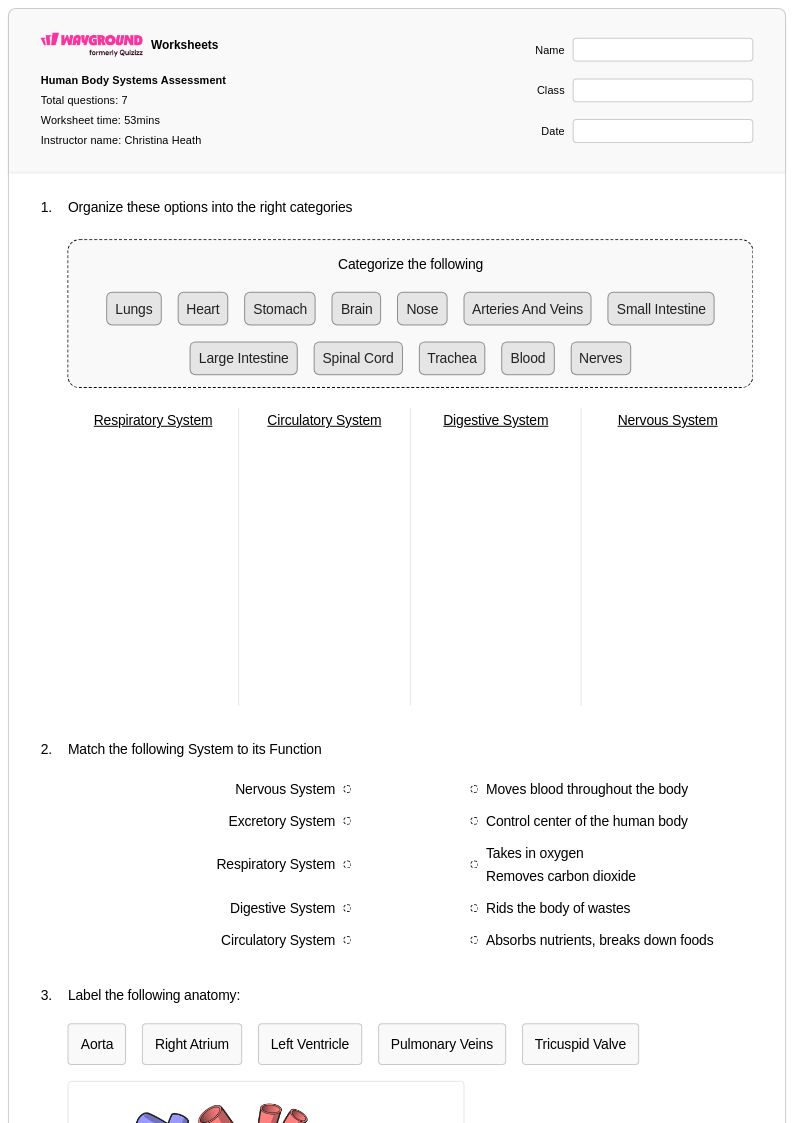
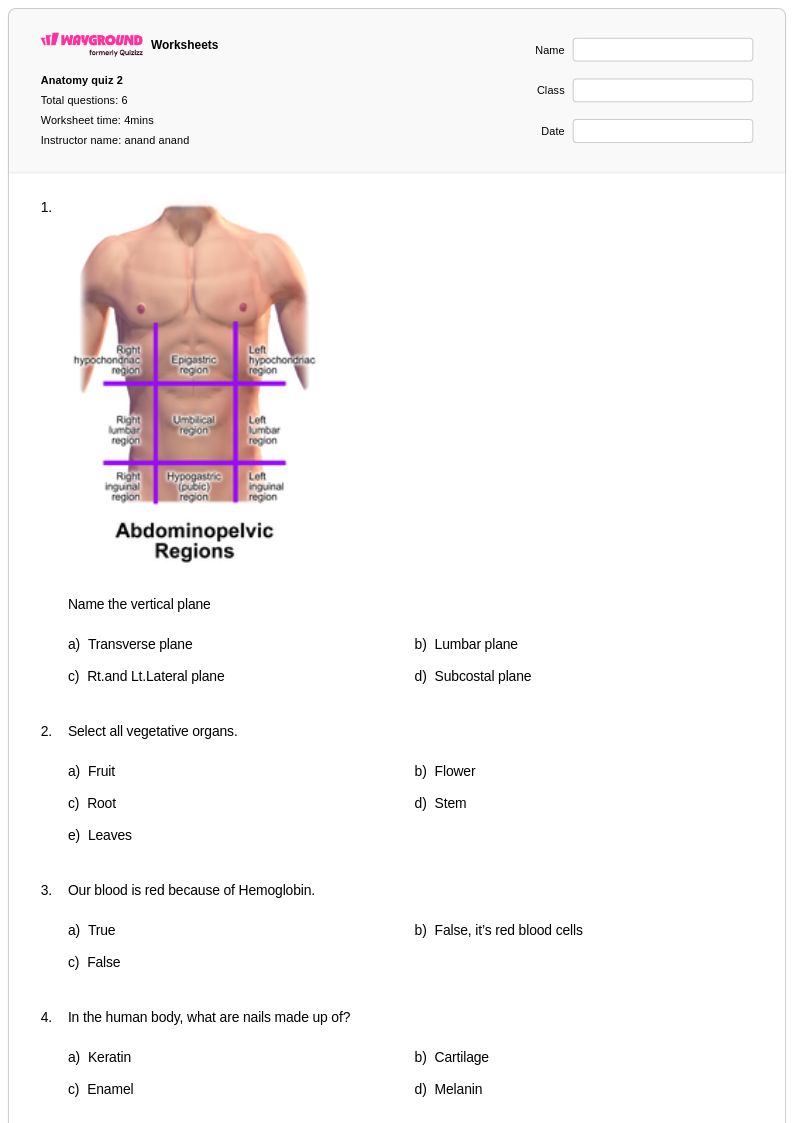
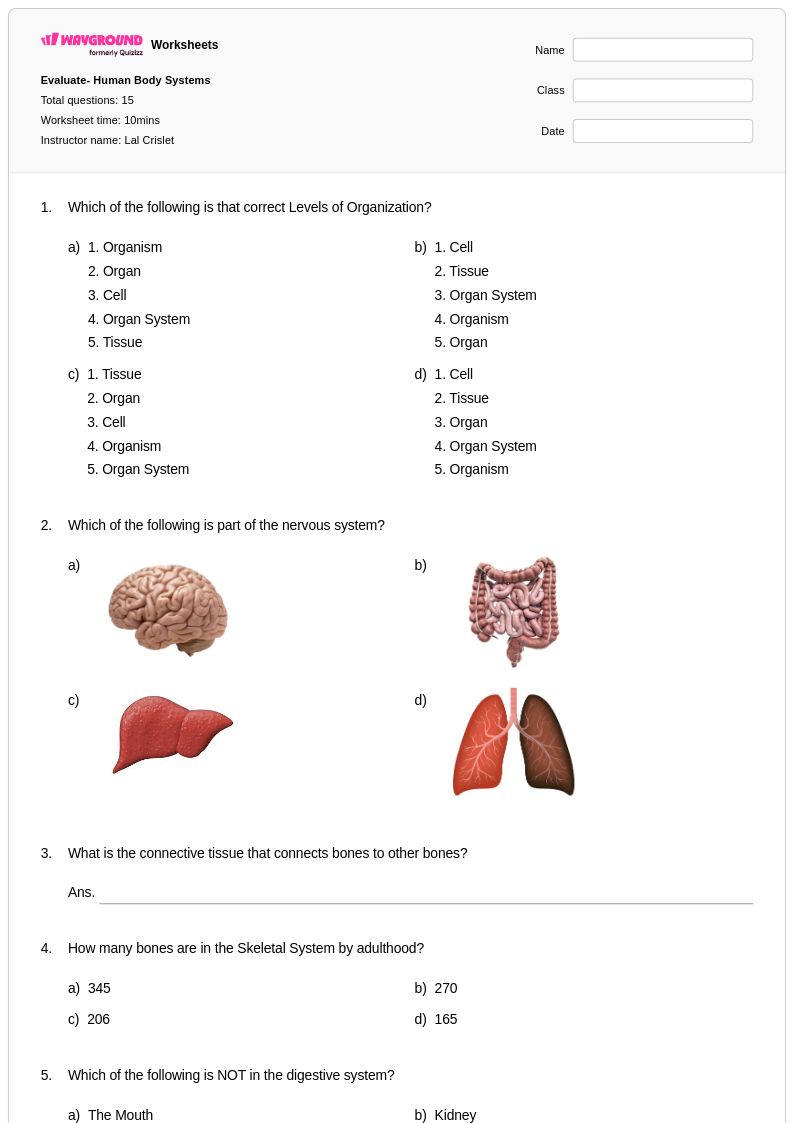
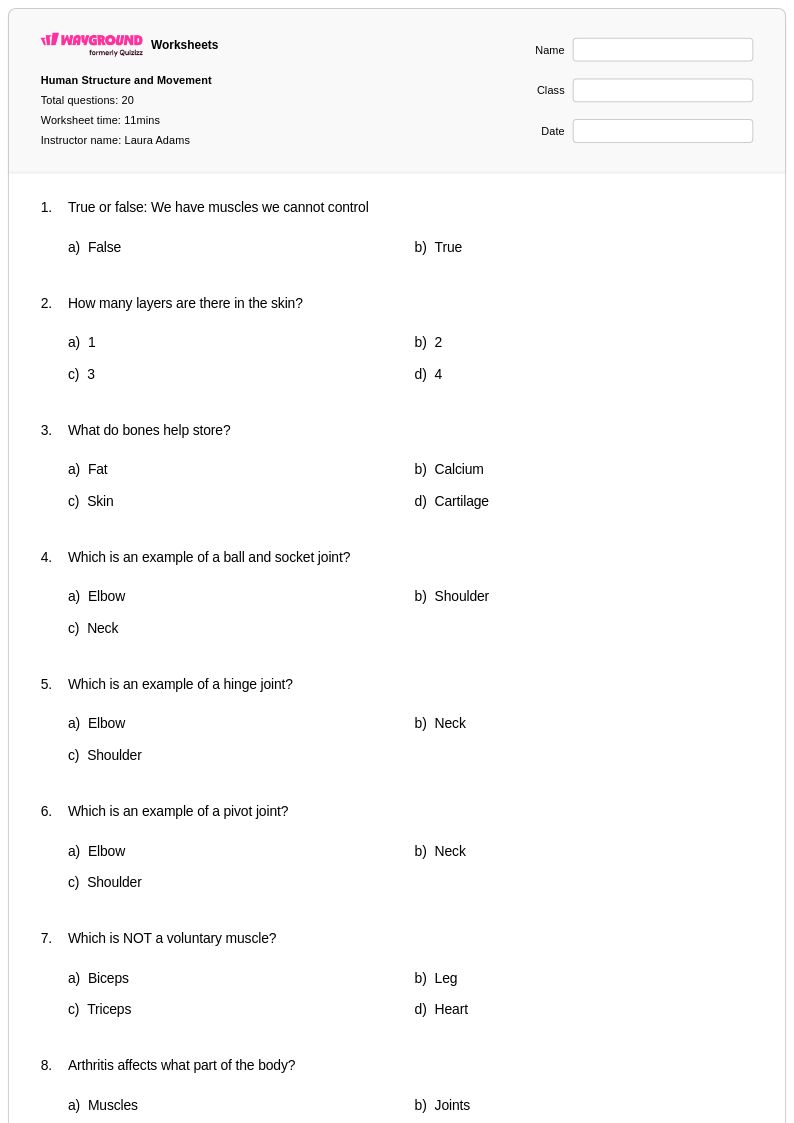
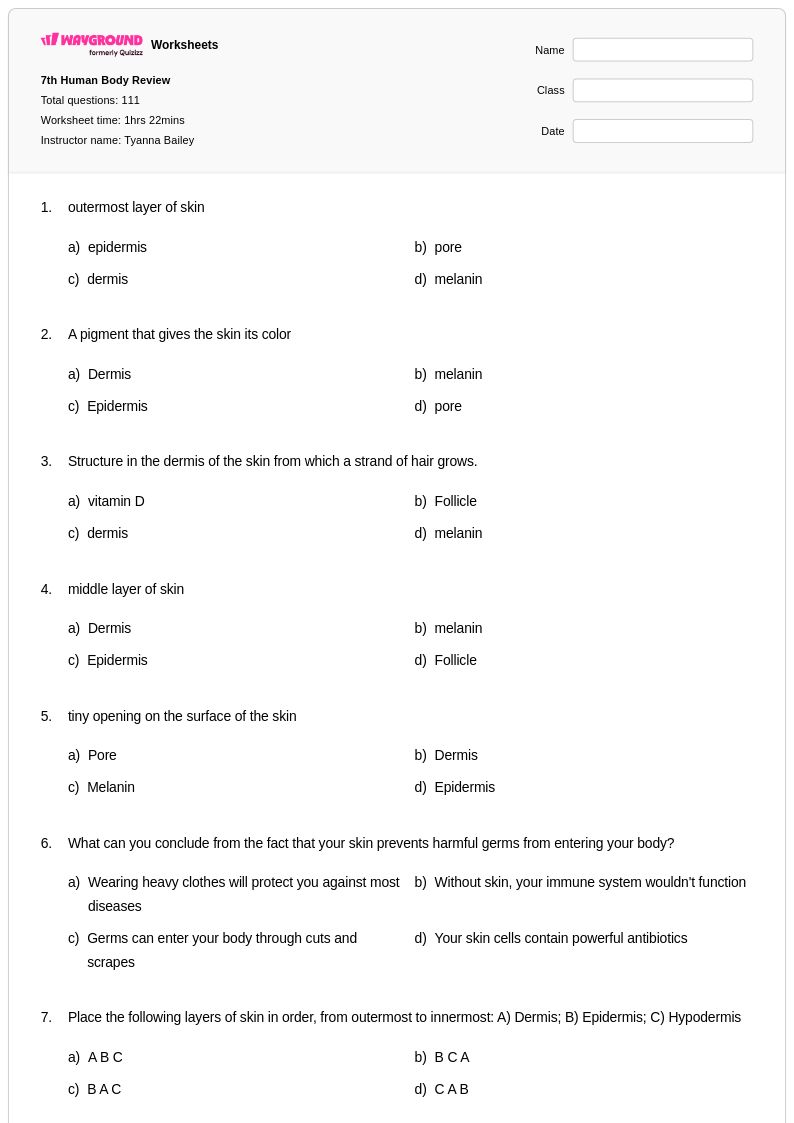
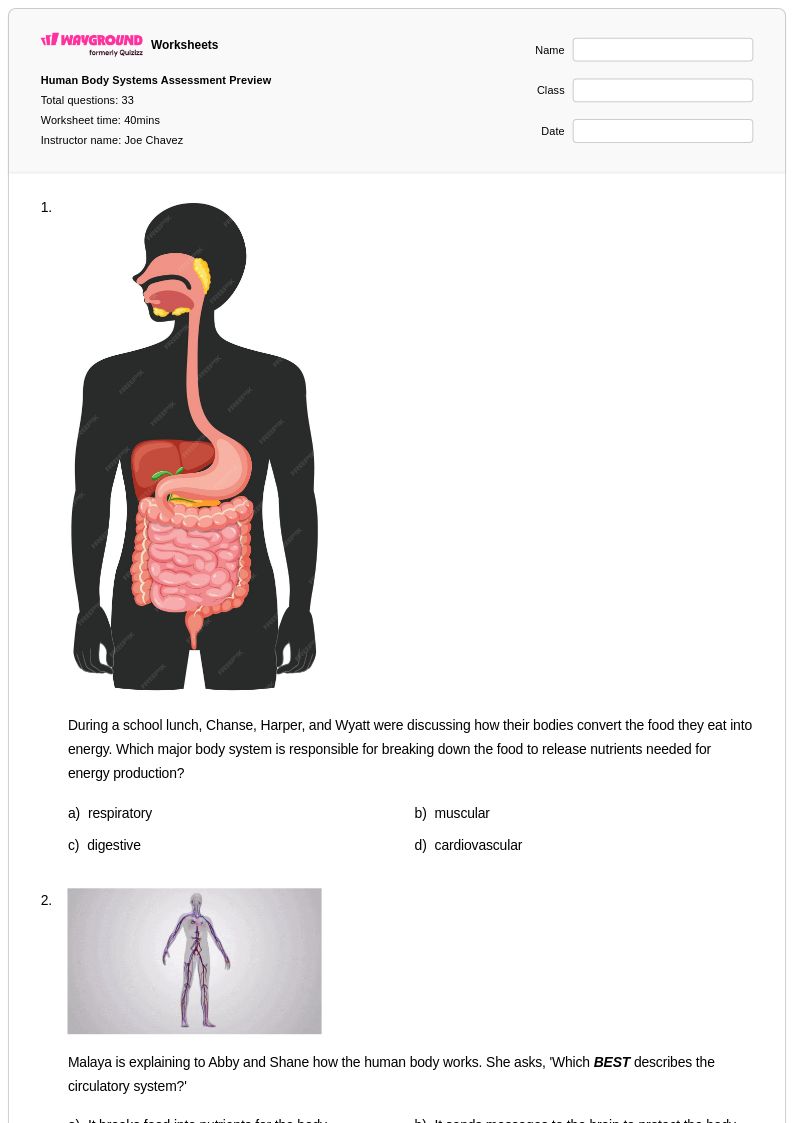
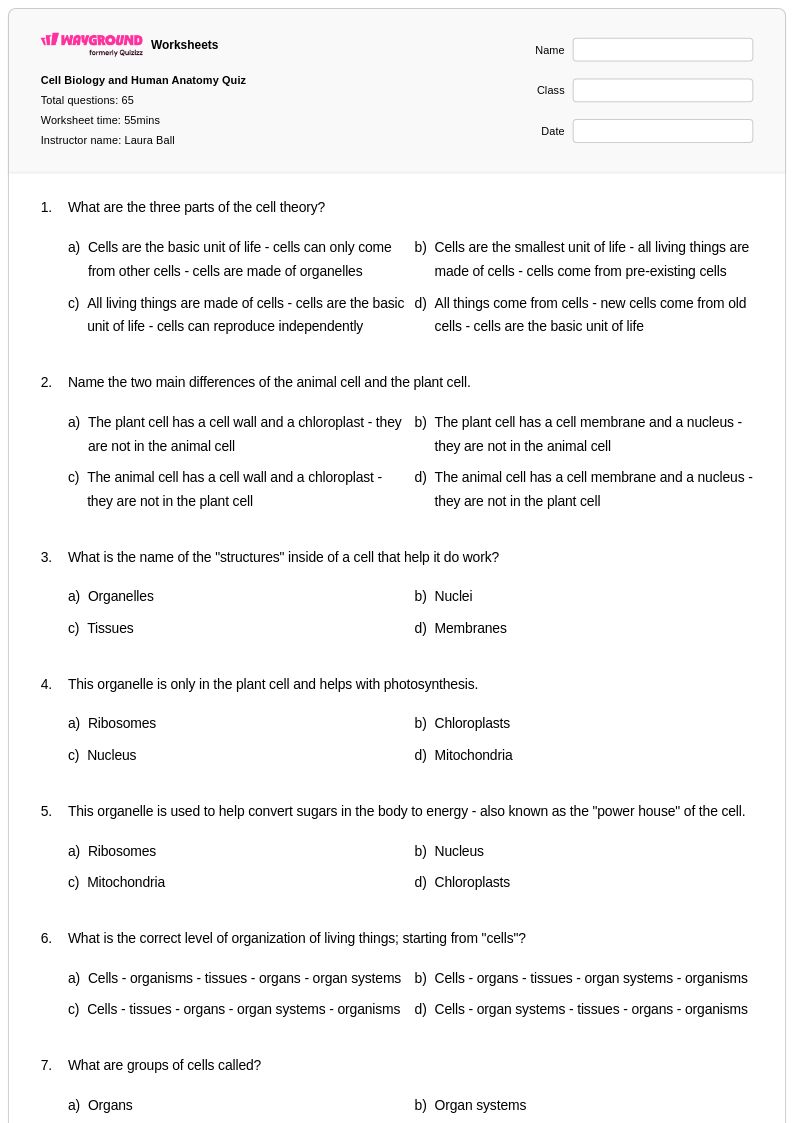
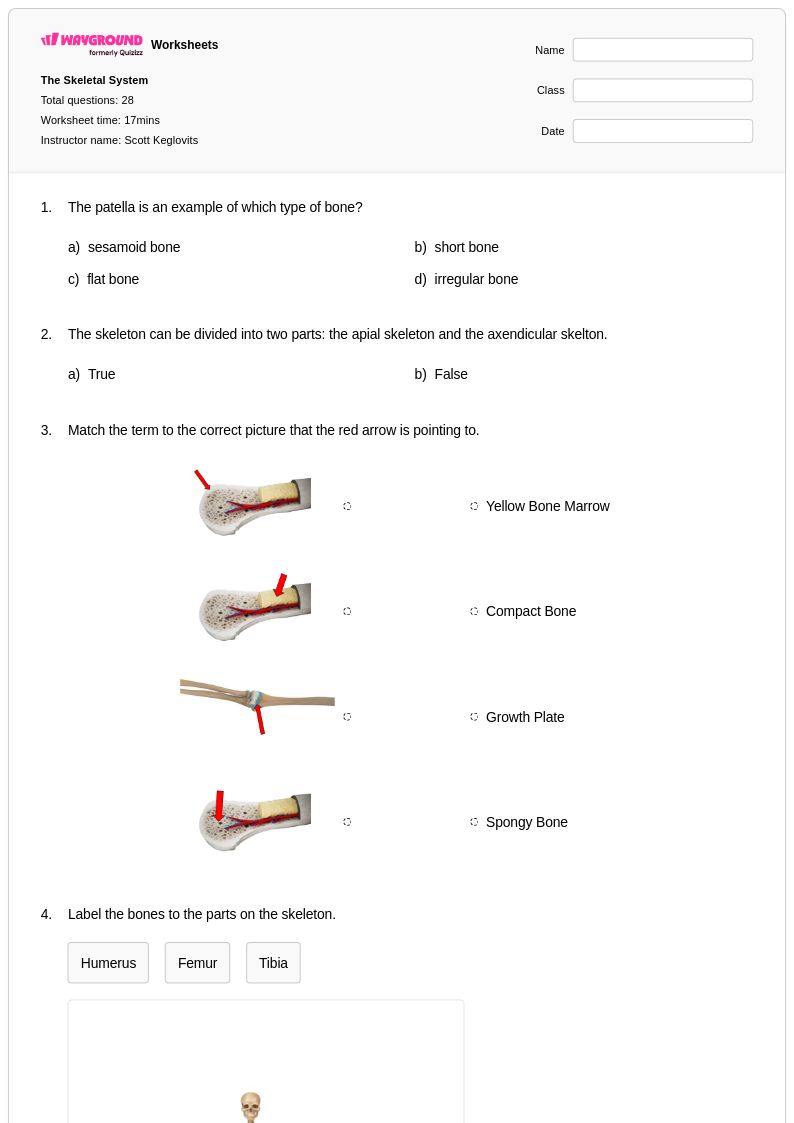
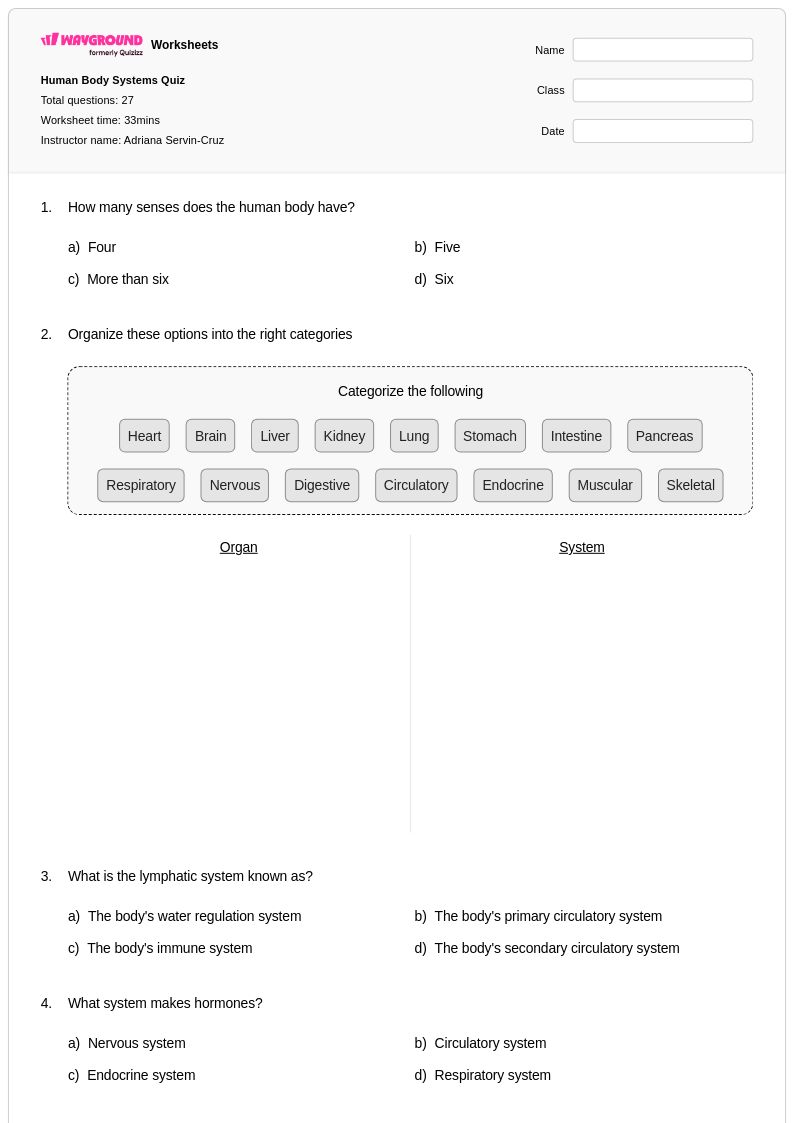
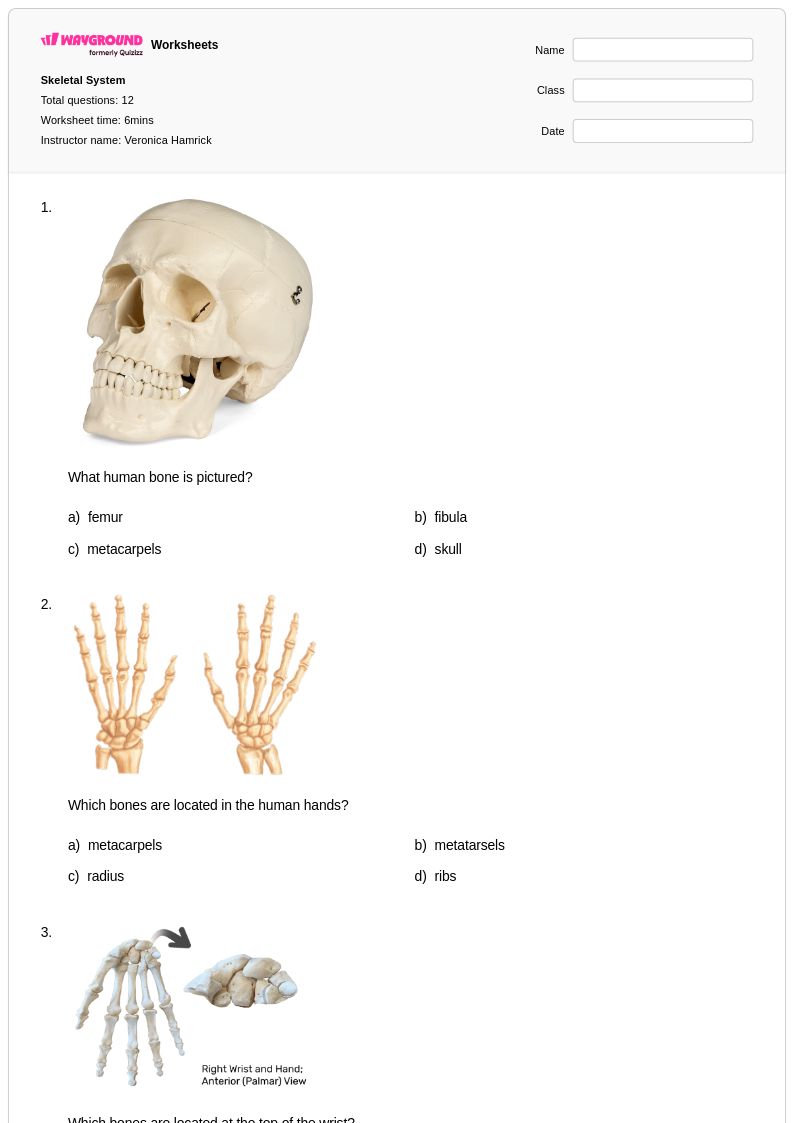
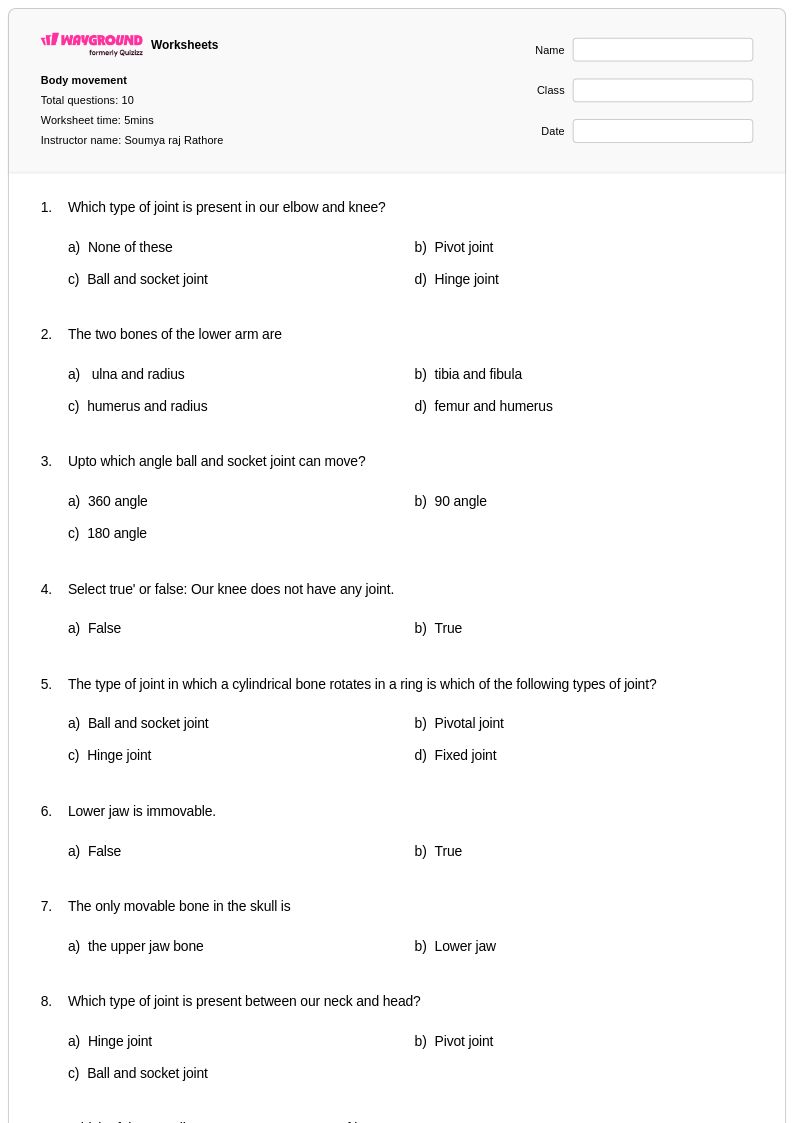
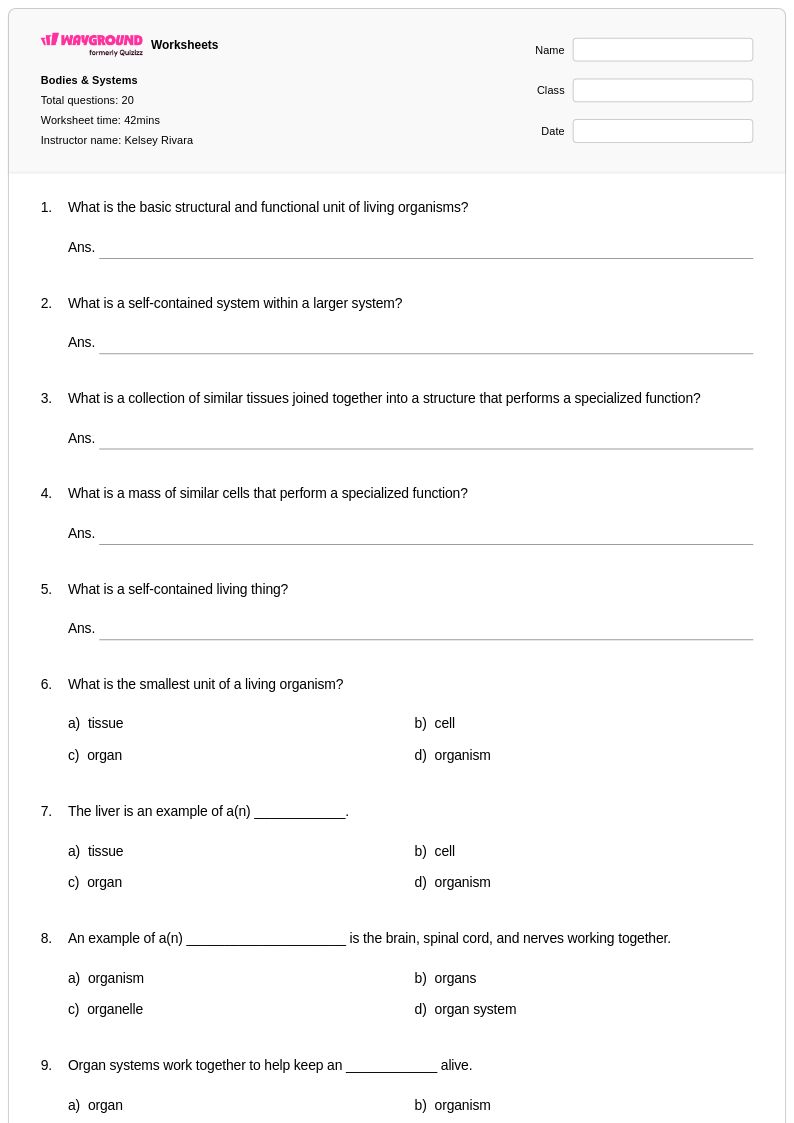
Human anatomy worksheets for Class 6 provide students with essential foundational knowledge about body systems, organs, and physiological processes through engaging visual exercises and structured learning activities. These comprehensive printables available through Wayground help sixth-grade learners develop critical scientific observation skills while mastering key anatomical concepts such as the skeletal, muscular, circulatory, and digestive systems. Students work through carefully designed practice problems that challenge them to identify body parts, understand organ functions, and explore how different systems work together to maintain human health. Each worksheet collection includes detailed answer keys that enable both independent study and guided instruction, with free pdf downloads making these valuable educational resources accessible for classroom use, homework assignments, and supplemental learning at home.
Wayground, formerly Quizizz, empowers educators with an extensive library of millions of teacher-created human anatomy resources specifically designed for Class 6 science instruction. The platform's robust search and filtering capabilities allow teachers to quickly locate worksheets that align with state and national science standards while meeting diverse learning objectives for body systems education. Advanced differentiation tools enable instructors to customize content difficulty levels, ensuring that students with varying abilities can access appropriate challenges while building their understanding of human anatomy concepts. These flexible resources are available in both printable and digital pdf formats, supporting seamless integration into lesson planning, targeted remediation for struggling learners, enrichment activities for advanced students, and ongoing skill practice that reinforces essential anatomical knowledge throughout the academic year.
FAQs
How do I teach human anatomy effectively in the classroom?
Effective anatomy instruction builds from structure to function — introduce each body system by establishing what it is made of before explaining what it does. Use labeled diagrams to anchor vocabulary, then move students toward explaining system interconnections, such as how the circulatory and respiratory systems work together during gas exchange. Consistent use of anatomical terminology from the start helps students develop the medical language they will need in advanced biology courses.
What types of exercises help students practice human anatomy concepts?
Labeling diagrams of organs and skeletal structures is one of the most effective practice formats because it requires students to retrieve and apply anatomical vocabulary in context. Comparative studies — such as contrasting smooth, cardiac, and skeletal muscle tissue — build analytical skills alongside factual knowledge. Structure-function relationship questions push students beyond memorization by asking them to connect anatomical features to physiological roles.
What common mistakes do students make when learning human anatomy?
One of the most frequent errors is treating body systems as isolated units rather than understanding how they interact — for example, students often struggle to explain how the nervous and endocrine systems both contribute to homeostasis. Students also commonly confuse anatomical direction terms, such as medial versus lateral or proximal versus distal, especially when applied to non-standard body orientations. Reinforcing correct terminology through repeated labeling and identification exercises significantly reduces these errors over time.
How can I use human anatomy worksheets to support students with different learning needs?
Human anatomy worksheets on Wayground can be hosted as digital quizzes, which allows teachers to apply individual accommodations such as extended time, read-aloud support for students who need questions read to them, and reduced answer choices to lower cognitive load on selected students. These settings can be assigned per student while the rest of the class receives default settings, keeping the accommodation process seamless and unobtrusive. For students who learn better on paper, the same worksheets are available as printable PDFs, so teachers can match delivery format to each learner's needs.
How do I use Wayground's human anatomy worksheets in my class?
Wayground's human anatomy worksheets are available as printable PDFs for traditional classroom use and in digital formats for technology-integrated environments, giving teachers flexibility in how they deliver practice. When hosted digitally, teachers can assign worksheets as quizzes directly on Wayground, track student responses, and apply individual accommodations such as extended time or read-aloud support. Each worksheet includes a comprehensive answer key, making them practical for both independent student study and teacher-led instruction.
How do I assess whether my students understand human anatomy beyond memorization?
Move beyond identification tasks by asking students to explain why a structure is shaped the way it is — for example, why alveoli have thin walls and large surface areas, or why the left ventricle has thicker muscle than the right. System interconnection questions, where students must trace how a change in one system affects another, reveal the depth of conceptual understanding that memorization alone cannot show. Labeling exercises combined with short written explanations give teachers a clearer picture of where gaps remain.